Underseen Movie: ‘MacGruber’ – The Best SNL Movie in Years

MacGruber movie poster final high resolution

When I went to see “MacGruber” at Grauman’s Chinese Theater in Hollywood back in 2010, I actually saw Jason Sudeikis while standing in line to buy a ticket. His impersonation of Joe Biden is a still a big hit with fans of the show, and he seemed like a very down to earth guy as he blended in with the crowd and talked with others.

Anyway, enough about him. Let’s get on with my review of this particular SNL sketch turned movie called “MacGruber.” About a decade before this one, movies from the long running comedy show were being released all the time, and many proved to be nowhere as funny as the sketches which inspired them. “The Ladies Man,” “Superstar,” or “A Night at the Roxbury” appeared to underwhelm audiences, and I wondered why none of them could come close to matching up with “Wayne’s World” or “The Blues Brothers.”

Now keep in mind, those movies were based on sketches which lasted 3 to 5 minutes on the average SNL episode. With “MacGruber,” we have a movie based on a sketch which typically lasts for a minute at most. We all know from watching this obvious spoof of “MacGyver” that they all end in the same way, with MacGruber failing to diffuse the bomb and it going off, blowing him and his whole team to smithereens. So therein lies the fascination of this movie; Can MacGruber keep himself from blowing up and killing everyone around him for more than a minute? Can he sustain a full-length motion picture when he can barely sustain himself in every control room known to man?

Well, it turns out he can and for around 99 minutes. Before it was released, “MacGruber” was bursting all over with reviews calling it the best SNL movie since “Wayne’s World.” I find this praise to be completely justified as it is consistently hilarious and filled with moments which had me laughing harder than anything I saw in the remake of “A Nightmare on Elm Street,” and that was supposed to be horrific and serious. But while the jinx on SNL movies finally came to an end with “MacGruber,” this same jinx has unfortunately not been broken at the box office. It ended up grossing only $9.3 million worldwide against a budget of $10 million, but it has since become a cult classic. Trust me, “MacGruber” is great fun and contains many gut-busting laughs, and it deserved a much bigger audience than it initially got back in 2010.

Like “Hot Shots Part Deux,” the movie opens with MacGruber (Will Forte) living a post-Rambo type existence in a monastery where he finds peace from all things explosive. But Col. Jim Faith (the late Powers Boothe) brings him back into service when it is discovered his old nemesis, Dieter Von Cunth (Val Kilmer gone wild), has acquired the X-5 nuclear missile and threatens to use it on a highly valuable target primed for utter destruction. Dieter also turns out to be the same man responsible for killing MacGruber’s fiancé, Casey (Maya Rudolph). To say this is all personal for MacGruber is pointing out the obvious. But seriously, what doesn’t this Inspector Clouseau of bomb experts not take personally? If you piss him off, please make sure he doesn’t memorize your license plate.

Forte never does quite convinces us that MacGruber is this great war hero, but that is part of the joke. He does, however, more than make us believe this character he has won more than a dozen purple hearts (how he earned all those is another story). No longer constricted by the dreaded FCC on network television, Forte really lets it loose here, getting away with stuff which would have had NBC and Lorne Michaels drop kicking him out of 30 Rockefeller Plaza if he pulled this off on live television. He also co-wrote the script, and he takes advantage of every opportunity for his character to make a supreme ass of himself while still remaining one you want to root for.

Plus, Forte does sex scenes here like no one else does in movies today, and I am certain no one has tried to match his acting in bed ever since.

Ryan Phillippe co-stars as MacGruber’s right hand man, Lt. Dixon Piper, a dedicated soldier who is of course infinitely brighter than him, and this causes a lot of violent resentment between the two of them. Phillippe does great work in playing the straight man to Forte’s idiotic lunatic. Had he tried to outdo Forte in terms of getting laughs, this pairing never would have worked. Lord knows MacGruber needs a partner, but he would never admit this unless he became incredibly desperate (and he does, so watch out). He also perfects that stony stare you get from some NFL star turned actor, and his funniest moments come when he reacts honestly to just how stupid this Miata-driving explosive expert truly is. Other actors would have overplayed this role, but Phillippe doesn’t thank goodness.

Kristin Wiig reprises her role as MacGruber’s assistant, Vicki St. Elmo. She is great as always, and MacGruber keeps stupidly putting her in such thoughtless situations where her life is in constant mortal danger. The scene in the coffee shop where she is disguised as MacGruber is nothing short of hilarious as she shivers in utter terror, having no clue what to do if things go bad. Still, you want to see Vicki get together with this clueless idiot because giving up this line of work for her music doesn’t make much sense, and this is especially the case when you listen to the songs she wrote.

Then you have Val Kilmer on board as the evil Dieter Von Cunth , and he gets to act all unhinged and crazy in a way he has not for some time. We know the only way MacGruber can defeat Cunth is through sheer luck, and Kilmer’s rubs in his character’s smug intelligence which he has in spades over this heroic douche bag. This represented a comeback for the actor, but it was sadly cut short due to his continuing battle against throat cancer.

“MacGruber” was directed by Jorma Taccone, one third of the Lonely Island comedy troupe which is responsible for all the “SNL Digital Shorts.” I was also surprised to learn he is actually the son of Tony Taccone, the former Artistic Director of Berkeley Repertory Theater. If you are ever in Northern California, be sure to check out a show there as they continue to challenge their audiences as much as entertain them. Anyway, Jorma keeps the proceedings going at a good pace, and he never lets the movie drag during its running time. While he doesn’t do anything groundbreaking with this movie or its formula driven plot, he does succeed in making this kind of satire feel fresh again. This genre has been so burnt out that we’re lucky if anything works as well as it does here.

The audience I saw “MacGruber” with at Grauman’s Chinese treated the whole thing like a rock concert, cheering when the title character first appeared on screen. It was a great crowd to experience this movie with, so it was surprising and depressing it got such a lackluster reception during its opening weekend. Even with competition from “Robin Hood,” “Iron Man 2,” and even “Shrek Forever After,” I figured it would still make a sizable dent at the box office. Still, it did eventually find its audience years later.

“MacGruber” is by no means a classic, and it is far from original, but it is certainly above average for this kind of movie. Saying it is the best SNL movie in years is faint praise. If you’re looking for a terrific comedy which emanated from the classic late-night show, then this is one you should check out. Even if you never laughed much at the skit on SNL, this movie will give you several belly laughs which we all live for. Just be sure not to eat any celery before you see it.

* * * ½ out of * * * *
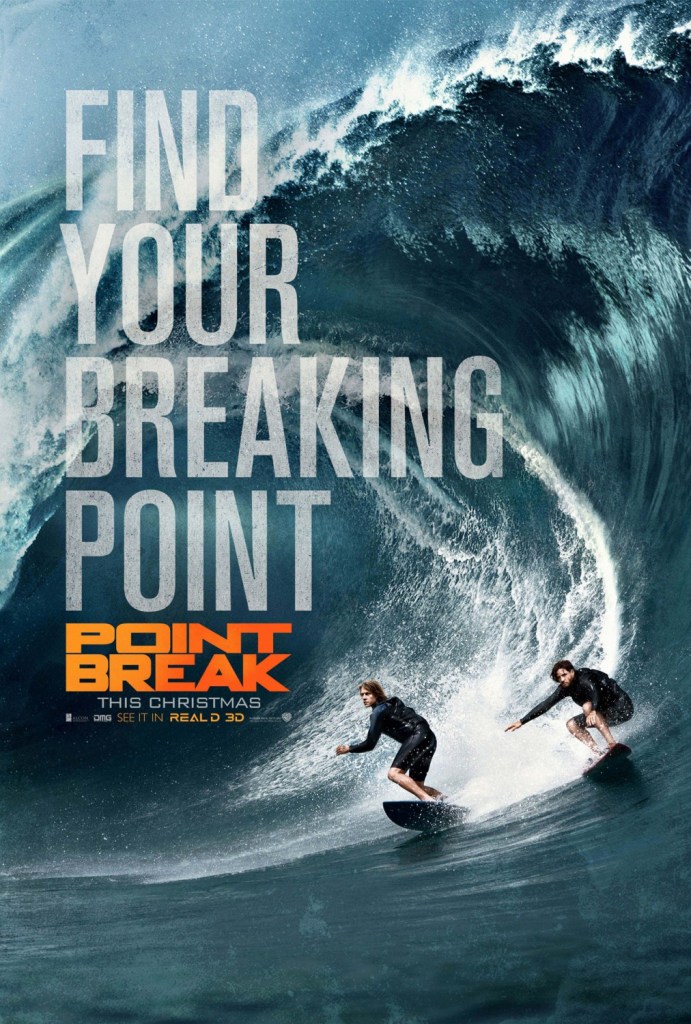
‘Point Break’ Remake is Visually Spectacular But Dramatically Inert

Was the world really pining for a “Point Break” remake back in 2015, especially when it already got an unofficial remake back in 2001? That remake was called “The Fast and The Furious,” and its director Rob Cohen freely admitted on many occasions how its plot was lifted directly from Kathryn Bigelow’s 1991 action film. Nevertheless, the good people at Alcon Entertainment felt an official remake was needed. What results is a film of spectacular visuals, but they all come with a screenplay which is dramatically inert and with actors who barely look like they are having much fun even after all the surfing, rock climbing, snowboarding and wingsuit flying we see them do.

The plot is basically the same as the original, but the characters led by Bodhi (Edgar Ramirez) are not thrill seekers robbing banks to fund their exploits, but instead ecoterrorists who look to play a Robin Hood role in society. Moreover, they are trying to complete the Ozaki 8, a list of eight extreme ordeals designed to honor the forces of nature. FBI agent and extreme sport athlete Johnny Utah (Luke Bracey) picks up on this and becomes determined to infiltrate this gang and bring them down. Of course, this has him going undercover, and we all know what happens to undercover agents in movies like these.

I should note how this “Point Break” starts off with a prologue which has Johnny Utah racing over a steep ridgeline on a motorbike with his friend Jeff (Max Thieriot). But while Johnny lands successfully onto a lone stone column, Jeff does not and ends up falling to his death. As a character in “Cliffhanger” once said, “gravity is a bitch.” Did this remake need such a scene? I think not as the original didn’t. Seriously, how many times have we seen this scenario played out?

One thing I have to say about this remake is it does look spectacular on a visual level. It was directed by Ericson Core who, quite ironically, was the director of photography on “The Fast and The Furious.” He also serves as his own cinematographer here, and he captures some amazing sights whether it’s the waves surfed at Teahupoʻo in Tahiti, the wingsuit flying sequence in Walenstadt, Switzerland, the snowboarding scene shot on the Italian side of Aiguille de la Grande Sassière in Aosta Valley, or the rock climbing which takes place at Angel Falls in Venezuela, Throughout, Core captures the beauty of each location to where I am compelled to visit them as soon as this Coronavirus epidemic is resolved. Yes, I am willing to wait that long.

But while the look of this “Point Break” is spectacular, it does not feel particularly the least bit exhilarating. The beauty of Bigelow’s film was she made you, as an audience member, part of the action. This was especially the case during the skydiving scenes as you felt like you were falling from the sky with the characters. With Core’s remake, I felt like I was watching everything from a distance to where I admired the view, but was never really enthralled by it.

Seriously, none of the actors look like they are having much fun here as they all seem so deadly serious to where you wonder if any of them has a mere understanding of what an adrenaline rush is. Luke Bracey may be a good actor, but his performance as Johnny Utah makes Reeves’ in the original appear all the more stellar. Reeves’ Utah had the good sense to know how scary and thrilling his adventures were to where his screaming while skydiving made complete sense. But to see Bracey remain calm while he falls from a mountaintop so high up makes his silence during such a descent utterly ridiculous and unbelievable.

Then there is Edgar Ramirez who has turned in memorable performances in “The Bourne Ultimatum,” “Zero Dark Thirty” and most especially in the biopic “Carlos.” But as strong an actor as he is, he does not succeed in making Bodhi a compelling character in this remake. Throughout, his face looks like it is etched in stone, and I kept waiting for him to show a little more excitement about his death-defying exploits. Patrick Swayze’s performance in the 1991 film was my favorite of his even if everyone thinks his penultimate role was in “Dirty Dancing,” and Ramirez does not come even close to matching the late actor’s charisma. This is especially evident in the scene where is sailing through some insanely high waves which are the same kind George Clooney and Mark Wahlberg attempted to traverse over in “The Perfect Storm.” Ramirez looks far too collected as he is facing death at any second, and the fact he is able to even get on his surfboard to travel that one last perfect wave is completely unbelievable. Come on, you have to be the least bit scared in a situation like this.

You also have Delroy Lindo and Ray Winstone here as FBI Instructor Hall and Special Agent Angelo Pappas (Gary Busey played Pappas in the original). Both are also playing characters who look like they are having a miserable time due to the challenges and endless frustrations of their jobs, but they should be forgiven as their characters were written as such. Besides, with actors like these two, you can never go wrong.

If there is a bright spot in this remake, it is Teresa Palmer who portrays Utah’s girlfriend, Samsara. She is such a luminous presence in any movie she appears in whether it is “The Choice,” one of the many misbegotten cinematic adaptations of a Nicholas Sparks novel, or “Hacksaw Ridge.” Her first appearance here is unforgettable as she dives into the ocean to where Utah is as compelled to dive after her as we are. Seeing her lay back into Bracey’s arms while in the ocean made me infinitely envious of him as I would have loved to been in his position. Palmer, however, is barely in this movie and is wasted in a role which demands more of her than the screenplay is willing to give. This is a real shame considering she gives this remake its most lively presence.

Bigelow’s “Point Break” cost only $24 million to make while this remake had a budget of around $100 million. Money may buy you impressive sights, but it cannot guarantee any audience an adrenaline ride. Besides, when it comes to filmmakers, male or female, can any of them compete with what Bigelow has to offer? Seriously, there is a reason why she was the first female to win the Best Director Academy Award for her work on “The Hurt Locker.”

When it comes to remakes, filmmakers and studio heads these days seem determined to play things straight. But looking at this remake of “Point Break” serves as a reminder of how it helps to not take things ever so seriously. Furthermore, Bigelow’s film has aged well over the years to where we are more than ready to accept Reeves as an action hero. While it helps to have a ton of money to make any motion picture, the budget on this remake did little to keep us on the edge of our seats. Just remember this the next time you feel like the budget for your flick is not nearly enough.

By the way, James LeGros who played Roach in the original “Point Break” appears here as FBI Deputy Director #2. I just thought you might be interested to know this.

* * out of * * * *

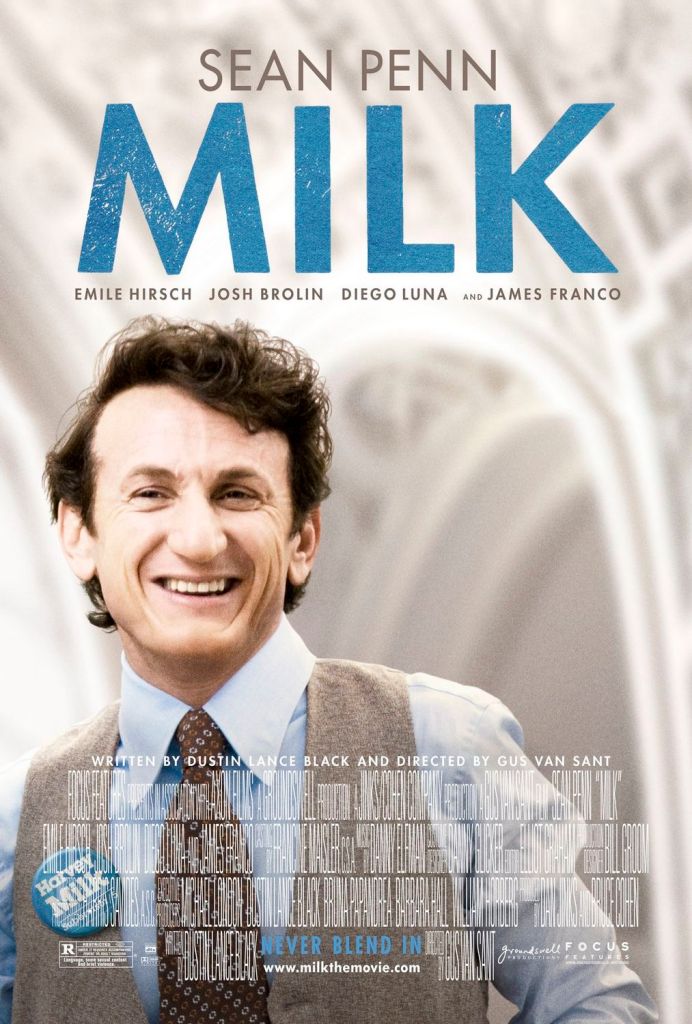
‘Milk’ Celebrates the Life of a Man Who Opened Doors For Many

I keep hearing about how Sean Penn wants to retire from acting and just direct from now on. He keeps saying he never really enjoys acting, so it has to make you wonder why he would keep doing something he doesn’t enjoy. But after watching him give another great performance in “Milk,” I would really like to believe he really enjoyed playing the late gay rights activist and politician Harvey Milk despite the role’s emotionally draining moments. Penn gives us a man who loved life and smiled more often than not. Whether you are gay or straight, I am sure you would have like to have known the real Harvey Milk as he always seemed to be in the best of spirits no matter what he is doing.

Milk” is a longtime dream project of Gus Van Sant, and it looks at Harvey before and after he became America’s first openly gay man ever elected to political office. It follows him from when he moves from New York to the Castro district of San Francisco and the numerous political races he ran in. It culminates with his and Mayor George Moscone’s assassination at the hands of Supervisor Dan White. But don’t worry, I have not given anything away. The movie is an intimate character piece of Harvey as well as those closest to him as he fought for equal rights for all homosexuals in San Francisco and the rest of America.

It was actually quite prophetic that “Milk” was released in the same year California witnessed the depressing and infuriating passage of Proposition 8 which banned gay marriage in the state (it was later ruled unconstitutional in 2010). In the movie, we see Harvey and his friends fighting the good fight against Proposition 6 which was enacted by then California Senator John Briggs with the objective of banning gay men and women from teaching jobs in California public schools. Back then, people foolishly believed there was a connection between homosexuality and pedophilia which was and still is total crap. “Milk” came out at a time when the fight for gay rights was still far from over.

The majority of the action takes place in San Francisco in the Castro market. Anyone residing in or familiar with the history of Castro will see it is to San Francisco what West Hollywood is to Los Angeles. Harvey ends up opening a little camera shop with his lover Scott Smith (James Franco), but he is not greeted with open arms from the local merchants as they are convinced that, because he is gay, he will be closed down in record time. From there, Harvey decides to run for public office in order to find a voice for those who never had one before.

Van Sant does a great job of recreating 1970’s ever so vividly on what must have been a very tight budget. He also successfully interweaves television footage of the time with the actors to where it is not at all distracting. But his biggest accomplishment here is he does not turn Harvey Milk into some sort of superhero, and instead he treats him as a regular human being with flaws and all. Harvey helps those in need of help as much as he can, and he does this to a fault. His political life eventually overtakes his personal life and creates heartbreaking difficulties in his ability to maintain a loving relationship. He is encouraged to give up running for political office after he loses for a second time (he ran for office 4 times before he won), but with each election he makes a bigger impact with more and more voters.

Van Sant was originally planning to make this movie with Robin Williams in the lead several years before, but it did not work out. At first, it almost seems a bit odd to have Sean Penn playing Harvey Milk, but after the movie is over, you realize there is nothing odd about it at all. Penn gives this role an utterly gleeful spirit which I do not often see in his other performances. Most roles he plays are of characters in the pit of despair or of those so cynical about the world that it takes a battering ram to get through the traumatized psyche to get a genuine sense of feeling. This may very well be his most cheerful performance since he played Spicoli in “Fast Times at Ridgemont High.” Penn really captures the spirit of what made Harvey so special, that he wanted to help people and gays around him come out of the closet.

Aside from Penn, there are other great performances to be found. James Franco plays Harvey’s lover, Scott Smith, and he is excellent as he creates a link to Harvey which can never be broken, ever. Franco matches Penn step for step in showing the highs and lows of a relationship between two loving people who struggle constantly to make things work between them.

Another standout performance comes from Emile Hirsch who plays street hustler Cleve Jones, and Harvey ends up encouraging him to help run his campaign. Hirsch gives Cleve a spirit and a determination which can never be easily broken, and he shows no shame in whom he is nor should he.

Other great performances come from Alison Pill who plays campaign manager Anne Kronenberg, a proud lesbian who helps Harvey finally win an election. Diego Luna is also heartbreakingly good as Harvey’s second lover, Jack Lira. An emotionally high-strung man with needs greater than anyone, let alone Harvey, can ever satisfy, Luna holds the screen strongly as he carefully illustrates his character’s constantly unsteady state of mind.

But another truly great performance in “Milk” comes from Josh Brolin who portrays Supervisor Dan White. Ever since 2007, Brolin has made a name for himself with terrific performances in “No Country for Old Men.” With his role as Dan White, he never goes the route of simply demonizing this man whose crime is still absolutely unforgivable to so many. Along with director Van Sant, Brolin gives us a complex portrait of a man brought up through a strong religious background, and who ends up getting so caught up in it to where it blinds him to the deep dark hole he keeps digging for himself. In a sense, his outcome is tragic in its own way, and when you find at the end credits how he ended up leaving this earth, there is no cheering. There is nothing but pity for the man who got a much too lenient sentence thanks to the so called “Twinkie defense.”

You don’t come out of this movie wanting to forgive Dan White for what he did, but the filmmakers never try to make you hate him. Besides, I am not sure Harvey would have wanted anyone to hate him either.

Van Sant succeeds in making “Milk” a largely uplifting motion picture without resorting to manipulative tactics in an effort to tug at your feelings or with an overwhelmingly emotional film score which begs you to shed tears. Truth be told, composer Danny Elfman does a great job of creating music which supports the characters and the movie without ever overdoing it. Van Sant is also served well with a tremendous screenplay by Dustin Lance Black, and he introduces us to the wonderful people in Harvey’s inner circle and makes each one a unique individual worthy of attention.

If there is anything which disappointed me about “Milk,” it is the archival footage of Anita Bryant featured throughout where she talks about how she sees homosexuality as a sin. Anita speaks of how the word of God must be directed, and she is clearly one of many people who have completely misinterpreted what the bible says about homosexuality. The one scene I kept waiting for was when she got a pie thrown in her (even God knows she deserved that). The fact this footage was not shown here was a bit of a letdown.

The real triumph of “Milk” is in how Van Sant makes you see what an inspiration Harvey was to so many people. The movie starts out with him saying, as he is about to turn 40, that he has done nothing with his life. By the end, both Van Sant and Penn make it clear he did so much and is still a huge inspiration to many more than 30 years after his assassination. Come to think of it, he may even be more of an influence to people in death than he was in life.

Many may end up not seeing this movie either because of their misplaced religious views, or because we know it will end with Harvey Milk being murdered. But “Milk” is not a movie about how Harvey died. It is a movie about how he lived, and of how his life is worthy of celebration. His courage did so much for people, and it is still needed in the darkest of times. This was a career high for Van Sant and Penn, and it was one of 2008’s best movies.

* * * * out of * * * *

No, I Haven’t Seen It Until Now: ‘The Grey Fox’

I remember when this film came out in 1982. I was a big fan of movie review shows like “At the Movies” back then, and the scene where Bill Miner tells an unsuspecting passenger about how he used to rob stagecoaches always stayed with me. As a result, when the opportunity came to watch “The Grey Fox,” which Kino Lorber has just re-released in a new 4K restoration, I jumped at the chance. The question was, do I put this film in the “No, I Haven’t Seen It Until Now” category of this website, or in the one known as “Underseen Movies” as it has been said the film only grossed $5 million worldwide. Well, considering how I remember when it was first released 38 years ago, I think the former category makes the most sense.

“The Grey Fox” stars Richard Farnsworth as Bill Miner, a stagecoach robber who eventually became known as “The Gentleman Bandit” after masterminding 26 robberies and for originating the command, “Hands Up!” As the film opens, Bill is being released from San Quentin Prison after a 33-year prison sentence, and he is also heading straight into the 20th Century, a period in time which he may not be the least bit prepared for.

Bill seems to get off to a nice start as he takes a train ride where a fellow passenger shows him a device which peels apples very quickly, and he seems amiable even when he tells this passenger how he once robbed stagecoaches. But while his sister gives him the warmest of welcomes, her husband, well aware of his past crimes, is not quick to show Bill the same kind of welcome. Bill is eager to show him he is worthy of his attention, and the next day he begins a new job which has him shucking oysters.

Things look to be going okay, but then Bill sits down in a movie theater which is playing “The Great Train Robbery,” the classic film which is especially famous for a scene where an actor shot his gun right at the camera. As we look at Bill’s face, we see a passion arise in him to where he becomes intent on resuming his previous career sooner than later. His sister begs him to stay, but he tells her, “I have ambitions in me that just won’t quit.”

Most films from the 1980’s take their sweet time in showing their main character start off being released from prison and adjusting to life as a civilian before giving up and returning to a life of a crime. Back then, you did not need to speed everything along to get to the good stuff, and learning of a character’s history and experiences proved to be rewarding in a way which added to the cinematic experience. Of course, as time went on, filmmakers are obligated to move through the story at a rapid pace even if we do not have time to catch our breath. What is interesting here is how the filmmakers of “The Grey Fox” do not hesitate to move past Bill’s attempts to live as a peaceful civilian in very quickly in order to see him return to his previous occupation as a robber. If there were any other 80’s films which pulled off such a feat, I have yet to watch them.

In many ways, “The Grey Fox” is an anti-western along the lines of Robert Altman’s “McCabe and Mrs. Miller” as Bill’s exploits are not as spectacular as this genre may suggest. His initial efforts to rob trains of their valuables proves to be unsuccessful as he is confronting by those who are not quick to give up anything without a fight. While his exploits may have made him infamous in the past, he is now living in an age which is far more eager to stop crime than celebrate it. As a result, he flees to Canada to see if he can have more success there as his passion for adventure usurps most other desires in his life.

“The Grey Fox” was directed by Phillip Borsos who had previously found tremendous critical acclaim in Canada with his short films “Nails,” “Spartree” and “Cooperage.” “The Grey Fox” marked his feature film directorial debut, and it proved to be a resounding triumph as he created a wonderful character study of a man trying to survive in a time he is not fully prepared to live in as he goes back to what made him famous, or infamous, in the first place. Along with cinematographer Frank Tidy, he perfectly captures the beauty of the Canadian wilderness which anyone can get lost in, and serves to illustrate how isolated Bill has been over the years. I have yet to view this film on the silver screen as the world is still in the grips of the Coronavirus (COVID-19), but I do hope the day will come when I can.

Borsos would go on to direct “The Mean Season” which starred Kurt Russell, and anything with Kurt Russell in it has got to be worth seeing. His last film was “Far from Home: The Adventures of Yellow Dog,” an innocent adventure film which came out at a time when younger audiences were starting to get more cynical about the family movies being released in theaters. I remember when an English teacher I had in college remarked at how the film’s trailer was playing and of her observing teenagers a couple of rows ahead of her who remarked at how it looked “lame.” She would go on to say how our generation was being mediatized to where we had been forever robbed of our innocence.

What a shame Borsos’ life got cut short at the far too young age of 41 following a battle with acute myeloblastic leukemia. He still had a lot to give to us from behind the camera.

But let’s be honest, the real star of “The Grey Fox” is indeed Richard Farnsworth who is unforgettable to where it makes perfect sense why he was cast as “The Gentleman Bandit.” Having started out as a stuntman who later became an actor and appeared in movies such as “Gone with The Wind,” “Red River” and “The Wild One,” he had already been working in show business for years when he got this role. Vincent Canby was correct in describing “Farnsworth” as being “remarkably appealing with a face the camera adores.” The actor, who passed away back in 2000 after a painful battle with cancer, certainly had a face which had life written all over it, and it is the kind of face Hollywood does not value as much as it used to.

Farnsworth creates a lived-in portrait of a man who is famous for being a robber, but who ended up spending more time behind bars than he did robbing stagecoaches. From start to finish, he nails the complexities of Bill Miner who proved to be a genuine, thoughtful, gentleman-like, loving, and at times quite the dangerous individual. And those eyes of Farnsworth’s are beautifully indeed as he lets us into his soul to show a life still yearning for adventure and a connection with someone which can possibly give him something to live for other than robbing trains.

The actor also has some terrific scenes opposite Jackie Burroughs who portrays feminist photographer Katherine Flynn. They have instant chemistry together, and their dialogue feels real, genuine and not the least bit manipulative. When the truth of who Bill is comes to the surface, we can see in Burroughs’ eyes how Katherine cannot simply tear herself away from him. Bill is one of the more unique individuals she could ever hope to meet, and Katherine knows she will likely never meet someone like him ever again, so why stop things there?

Well, it took me almost 40 years to sit down and watch “The Grey Fox” after that movie clip I saw on “At the Movies” was forever burned into my conscious mind. I think it is safe to say it was well worth the wait. Lord knows I would never have appreciated it on the same level when I was 7 years old, so it’s nice to catch up with it now long after my view of movies had evolved to another level. It is a beautiful relic which deserves to be embraced by a new generation of film buffs. I do hope you take the time to see it whether in a theater or by virtual cinema. With this new 4K restoration, it is now more beautiful than ever.

* * * * out of * * * *

Please click here to visit “The Grey Fox” page at the Kino Lorber website.

The Help Does Not Seek To Shamelessly Manipulate Our Emotions

The Help” was released with some controversy back in 2011 as it was based on a 2009 best seller by Kathryn Stockett, a white woman who wrote about African American maids’ experience working in the houses of white people. Many would have preferred to have had a black man or woman write this story, but it is important to note Stockett was herself raised by a black maid who instilled her with a strong confidence which proved to be unwavering, and this was all while her mother was absent from her life. Plus, Stockett, as represented by the character of Eugenia “Skeeter” Phelan, captured the voices of these ill-treated black women with really piercing honesty, and she made herself a vessel for their voices to be heard. From the start, she made it clear to the world that this book was about them and not her.

The movie version comes to us wrapped in a bow of beautiful colors and a very appealing movie poster. I kept think of Rob Reiner’s “Ghosts of Mississippi” which blew the opportunity to make audiences aware of who Medgar Evers was at the expense of some truly bland while characters, and neither Alec Baldwin or James Woods could not save the movie from its inescapable banality. “The Help” looked like it would make the same mistakes, but thankfully it does not. Regardless of whatever flaws it has, it is still a deeply felt motion picture which revisits a painful part of American history people have either forgotten or are sick of revisiting.

At its center is Skeeter (Emma Stone), a recent college graduate who gets a job writing a housekeeping column for the local paper in Jackson, Mississippi. After reuniting with good friends in her hometown, she finds herself perturbed by the senseless racism which has divided the blacks and whites in an almost unspoken way. Skeeter also becomes concerned as to the whereabouts of the maid who raised her, Constantine, as she has vanished without a trace. These events compel her to start writing a book of the travails black housekeepers go through, and she is determined to capture their pride, heartache and deep-seated anger resulting from their thoughtless mistreatment.

This could easily have been a manipulative motion picture filled with cloying emotions, but the filmmakers have given us a variety of characters, black and white that are complex and who never come across as simply caricatures. Each one has their own needs and desires which conflict with those of others, and after a while it becomes clear their problems do not always have to do with race.

The black maid Skeeter leans on the most is Aibileen Clark, played in a powerhouse of a performance by Viola Davis. Just as she did in “Doubt,” Davis inhabits her character with a pride which, while wounded, remains defiantly strong. While her voice projects a kindness and understanding on top of an obedience to her employers, Clark’s face and eyes betray a huge resentment which has long since reached its boiling point.

The next black maid who contributes to Skeeter’s book is Minny Jackson, played in another great performance by Octavia Spencer. She proves to be the most outspoken of the bunch which results in her getting fired quite often, and yet she is reluctant at first to talk with Skeeter about her experiences. We later see Jackson getting her revenge in a way which somehow feels inspired by episodes of MTV’s “Punk’d” or “Jackass.” Spencer gives “The Help” a great sense of humor it might have otherwise not had, and she is every bit Davis’ match.

Minny also develops a highly unusual relationship with the hopelessly naive Celia Foote. Unlike other working relationships, she gets the opportunity to be blunt with Celia and tells her what she needs to hear. I found the friendship between them to be one of “The Help’s” most welcome surprises. Jessica Chastain brilliantly portrays Celia Foote, and she has long since proven to be one of the best actresses working in movies today.

As for Emma Stone, she proved to be a revelation here, and she holds her own against a large number of acting stalwarts. Stone imbues Skeeter with a hard-won independence which never waivers. I love how even in Stone’s eyes you can see her determination in proving how strong a woman Skeeter is and of the sincere goodness in her heart. If she has not proven herself as a dramatic actress before this movie, she certainly did here, and now she has an Oscar to make this clearer to those foolish not to pay attention.

The majority of the white characters in “The Help” could have all been one-dimensional idiots, and while several of them make assumptions which are as ridiculous as they are racist, we see other sides of their personalities as well. One white character who can be seen as the movie’s chief villain is the snobby Hilly Holbrook, played in a truly gutsy performance by Bryce Dallas Howard. Her superiority against the black maids turns out to be driven more by fear than anything else, and realizing this at the film’s end gives Hilly a dimension we weren’t sure she had in the first place.

Howard has done phenomenal work over the years, and she was a good reason to actually see some of M. Night Shyamalan’s movies like “The Village.” She has also given us reasons to sit through “Jurassic World” and its sequel as well as “Spider-Man 3.” While those movies failed to reach the heights of greatness, she gave you a reason to watch them in the first place.

Other great performances in “The Help” come from Allison Janney as Skeeter’s mother, Charlotte, who goes from being a stubborn mother desperate for her daughter to get a man to someone who regrets the decisions she has made in her life. Sissy Spacek is a hoot throughout as Hilly’s mother, Mrs. Walters, who delights in her daughter’s misfortunes as her dad made the unforgivable mistake of spoiling her rotten. One underrated performance comes from Chris Lowell who plays Skeeter’s eventual boyfriend, Stuart. He starts off as an arrogant young man who thinks he has women all figured out, but he later comes to his senses thank goodness.

“The Help” is not perfect and does get a bit too cute at times, but its emotions ring true thanks to the acting and the direction by Tate Taylor who is a longtime friend of Stockett’s. It skirts the conventional narrative to give us something more authentic which is not, if you will excuse the expression, white-washed like so many other Hollywood movies. It covers a subject which we have no choice but to revisit as history repeats itself much too often, and it says a lot about the movie that it jumped from number two to number one at the box office in its second week of release.

* * * ½ out of * * * *

Underseen Movie: The Interrupters – Trying to Stop Violence in America

“The Interrupters” is a truly brilliant documentary which explores violence in America, and of a group of people working desperately to stop it. It covers a period of a year in South Side Chicago, but the events we see could be happening in any other city where violence has long since engulfed its citizens. At its center is the non-profit group CeaseFire (now known today as Cure Violence) which treats violence like an infectious disease, and those employed by it work to stop the violence before it happens. While the description of this documentary sounds bleak, it is full of hope and redemption that most fiction movies can only dream of portraying honestly.

What makes CeaseFire an especially unique group is the workers have been on the wrong side of the law in the past. These are not just citizens wanting to live peacefully, but those who were once as bad as those gang members they are working with and trying to help. They are well-meaning and working to find redemption for their wicked pasts which could easily have destroyed their lives. Among them is Ameena Matthews, whose father, Jeff Fort, was a notorious gang leader. Through finding peace in her Muslim faith and having children, she turned her life around and started helping those who are travelling down the same path she once did.

The most compelling moments in “The Interrupters” involve the workers of CeaseFire themselves. We watch as Ameena struggles desperately to get through to a deeply troubled teenage girl who seems stuck in between going into a life of crime and seriously trying to find a way out of it. Seeing Ameena working with her is understandably exhausting emotionally; we all want the best for this person, but there is only so much that can be done.

Next there’s Cobe Williams who spent much of his years in and out of prison before joining CeaseFire. Cobe manages to get some footing with the toughest of people through his genuinely good nature and disarming sense of humor. Then we have Eddie Bocanegra, who served 14 years in prison for a murder which haunts him to this very day. His attempts in teaching art to children show how sincere he is in his efforts to help them avoid the mistakes he made, some of which can never be undone.

Directing “The Interrupters” is Steven James, the same filmmaker who is responsible for one of the greatest documentaries ever made, “Hoop Dreams.” Not once does Steven try to beat us over the head with statistics showing us how bad things are. We can tell the situation is bleaker than many of us could ever imagine. In capturing the memorials of those slain (most in their teens or early 20’s), we feel the innocence cruelly deprived just by looking at the names listed underneath them.

But perhaps the most powerful scene to be found here comes when a former gang member, now released from prison, visits the barbershop he robbed with friends to apologize for what he did. It is an amazing moment, and one I do not often expect to see (but certainly hope to). You can feel the raw emotions of the employees as they respond to this most unexpected of visits, and if this does not make you believe in the power of redemption, you have a heart made of stone.

“The Interrupters” is a must-see documentary which captures moments that cannot be found elsewhere, let alone in many Hollywood movies which boast about being “based on a true story.” This is real life being shown here, and it is the kind many of us do not see up close. The hope and redemption it captures is completely genuine, and it is a one of a kind cinematic experience in this or any other year. This is a must see!

* * * * out of * * * *

Beyond The Lights is Not Your Average Showbiz Movie

I walked into “Beyond the Lights” expecting it to be some sort of manipulative soap opera which aimed to be “The Bodyguard” for a new generation. What I got instead was a showbiz story which felt surprisingly genuine in its emotions and intentions. It does have that familiar ring of two people from opposite walks of life coming together, but the way their relationship evolves throughout proves to be very entertaining to watch.

When we first meet Noni Jean, she’s a little girl performing in a talent competition and singing Nina Simone’s “Blackbird” which leaves the audience in a state of awe. However, when the judges award her a runner up prize, her mother Macy (Minnie Driver) angrily takes her out of the auditorium and orders her to “chuck” her trophy in defiance. The way Macy sees it, being second best counts for nothing in a world where you need to be number one.

We then move to years later when Noni, now played by Gugu Mbatha-Raw, is on the verge of stardom after having won a Billboard Award even though she hasn’t released an album yet. But after retreating to her hotel room, we come to see how much the pressures of fame are bearing down on Noni as she sits on a balcony ready to jump. Coming to her rescue is police officer Kaz Nicols (Nate Parker) who pulls her back from the edge, literally and figuratively speaking, and two quickly get lost in each other’s eyes. What happens from there is easy to guess.

Initially, Kaz feels somewhat betrayed when Macy pays him off to publicly say Noni did not try to commit suicide, but Noni warms up to him quickly as she can tell he sees something in her others do not.

While they may come from different worlds, Kaz and Noni are going through similar issues. Her mother Macy has been grooming her for stardom ever since she was little, and she has helped turn Noni into the kind of woman every man wants or at least fantasizes about. As for Kaz, his police captain father David (Danny Glover) is grooming him for public office, something he does in fact have ambitions for. However, when you look into Kaz’s eyes, you wonder just how serious he is about politics or if he really wants a different path in life.

Basically, Kaz and Noni are trying to fulfill the desires of their parents, and we have caught up with them as they have long since played a role they feel society wants them to play. In the process, they have lost touch with what they really want out of life, and we follow them as they go through a much-needed period of self-discovery. Watching these two evolve and change from start to finish is deeply involving and, even if the conclusion is never in doubt, we revel in their personal triumphs.

I am not at all familiar with Mbatha-Raw or her work as an actress, and she gives an extraordinary performance here. She is mesmerizing to watch as Noni begins to shed the public persona which has been foisted upon her, and it allows the frightened child inside of her to come out into the open. Also, she has a show stopping moment where she sings “Blackbird” by herself onstage, and you cannot take your eyes off of her for a single second.

Parker also puts in a strong performance as a well-meaning man who respects the law, wants to help people and who has, as his shirtless scenes will attest, spent a lot of time in the gym like any cop should. Looking at the actor’s past which had him involved in political activism, charitable work and working as a wrestling coach, you get the sense he was born to play Kaz. As he wades deeper into Noni’s world of fame, Parker shows Kaz to be someone who keeps his head above water and is not easily seduced by the closed-off world of show business. But there’s also no doubt that the chemistry between him and Mbatha-Raw is very palpable.

Kudos also goes out to Minnie Driver who takes what could have been a one-dimensional stage mother from hell and turns her into a complex character who is far more vulnerable than she lets on. We come to see how Macy has never had it easy, and she is eager for Noni to have everything she never had. But as much as she cares for her daughter, Macy also comes to realize her determination to make Noni a star speaks more about her ambitions than anyone else’s. Driver is a powerhouse as she lets us see how Macy has been wounded by others who had no faith in her when she was young, and it becomes understandable why Macy wants to beat everyone at their own game.

“Beyond the Lights” was written and directed by Gina Prince-Bythewood whose previous films include “Love & Basketball,” “Disappearing Acts” and “The Secret Life of Bees.” I regret to say I haven’t seen those films, but I am certainly willing to see them now based on the work she has done here. Prince-Bythewood succeeds in giving us a showbiz tale which actually feels grounded in reality. The atmosphere at the award shows and parties Noni attends feel authentic, and they never seem like a spectacle to be easily laughed at. She also gives us a number of complex characters who struggle to survive the high pressure world of fame and fortune where people have everything and nothing at the same time.

I also have to applaud Prince-Bythewood for sticking by Mbatha-Raw when studios were insistent on getting a bigger name cast in the role of Noni. Perhaps a music star would have done a good job here, but they also would have brought an enormous amount of baggage with them which would have had an unintentionally negative effect on this movie. Mbatha-Raw has the advantage right now of not having this baggage, and that makes her performance all the more enthralling as a result.

Sure, there are some soap opera dramatics here and there and certain moments do not ring true, but “Beyond the Lights” really did prove to be one of the big cinematic surprises of 2014. It is also another film to add to the list of worthwhile romantic movies. Just as this particular genre looked to be burning out, the movies coming from it are getting so much better. I’m starting to like these kinds of movies again. What’s wrong with me anyway?

* * * ½ out of * * * *

Click here to check out the video interviews I did with Gugu Mbatha-Raw and Nate Parker which I did for the website We Got This Covered.

Mad Max Fury Road – One Of The Greatest Action Movies Ever

I re-watched the original “Mad Max” just before I checked this sequel out, and I was amazed at what spectacular stunts director George Miller was able to pull off on a budget of less than $1 million. Even today, the 1979 movie is exhilarating to watch as Max Rockatansky lays waste to the gang of bikers who coldly and viciously murdered his wife and son. After watching it, I had to wonder what Miller could do with an even bigger budget. Of course, we all came to see exactly what he could with the next two “Mad Max” movies as well as with his segment of “Twilight Zone: The Movie,” “Happy Feet” and the highly underrated “Babe: Pig in the City.”

But all of his previous works came close to completely paling in comparison to “Mad Max: Fury Road,” the first “Mad Max” movie in 30 years, which had Miller working with a reported budget of $150 million and giving us the kind of action movie which effectively redefines the words thrilling, exhilaration, non-stop and spectacle. It’s as furious as movies get, and the real lack of CGI effects makes the action feel all the more wonderfully brutal. For a follow-up which got stuck in development hell for what seemed like an eternity, it was well worth the wait.

There’s a bit of confusion as to whether “Fury Road” is meant to be a franchise reboot or a sequel, but even with Tom Hardy taking over the role made famous by Mel Gibson, I’m just going to consider this a straightforward sequel. And like many of the best sequels, this one does not require you to have seen the previous three movies to understand all of what is going on.

Once again, Max travels the wretched wasteland of planet Earth in his car equipped with the kind of horsepower we would love to convince others we have under the hoods of our own cars, and it doesn’t take him long at all to get captured by people who have long since been driven mad by the desecration and lawlessness surrounding them. Max ends up being brought to a place called the Citadel which is ruled over by Immortan Joe (Hugh Keays-Byrne) and his army of War Boys. Max eventually escapes (it wouldn’t be much of a movie if he didn’t) and comes into contact with Imperator Furiosa (Charlize Theron), a hardened warrior who drives a heavily armed truck known as the War Rig. It is eventually revealed that Furiosa has absconded with Joe’s Five Wives, women selected for the purpose of breeding, and Joe will stop at nothing to retrieve what is now considered Earth’s most valuable property: no oil, not water, but human bodies.

“Mad Max: Fury Road” wastes no time in putting the pedal to metal as it is essentially one long chase movie which never lets up. The plot is fairly thin, but it’s still thick enough to support the tremendous action sequences which involve some of the craziest stunts and crashes this side of a John Woo or a James Cameron film. Seeing real cars actually crash and get demolished provides us with the visceral thrills I don’t get enough of at the local cinema these days. The fact Miller was able to give us such an amazing spectacle even at the age of 70 more than raises the bar for the next generation of filmmakers who have a lot of catching up to do.

I do have to admit I’m a little bummed Gibson didn’t return to play Max. It’s certainly not hard to understand why he was absent this time around, but coming back to play the role which made him a worldwide star would have been the icing on the cake for “Fury Road.” Having said that, Hardy does a terrific job of making this iconic role his own, and he proves to be furiously mad in his own crazy way.

But seriously, “Mad Max: Fury Road” really belongs to Charlize Theron who steals the show as Imperator Furiosa. There should be no doubt as to how phenomenal an actress Theron is as she has given us amazing performances in “Monster” (and no, the makeup did not do the work for her), “North Country” and “Young Adult” and she deserves far more credit than she typically gets. Her toughened up performance as Furiosa brings to mind Sigourney Weaver’s in “Aliens” as she dominates the special effects in a way few actors get the chance to do.

When it was released, many said “Fury Road” had a strong feminist angle to it, and they said this as if it were a bad thing. Then again, those who urged us to boycott this movie for that reason still have not bothered to watch it, so their hypocrisy remains as infinite as ever. What they need to understand is women cannot and should no longer be considered the weaker sex. The fact is they never were.

I also liked how Miller brought back Hugh Keays-Byrne to play Immortan Joe here as he is the same actor who portrayed Toecutter, the villain of the original “Mad Max.” Byrne ends up having to wear this scary looking mask throughout “Fury Road,” so his eyes and his voice do most of the acting for him. But even with these given limitations, Byrne gives us a very threatening and mesmerizing antagonist who is bent on dominating anyone and everyone who has the misfortune of being in his path.

And let’s not forget Nicholas Hoult who plays Nux, the sick war boy who comes to discover what really matters to him in such a desolate world. It’s been fun watching him go from his early days as a child actor in “About a Boy” to where he is presently, and it has been a voyage full of memorable performances. As Nux, he looks to be having the time of his life as he shouts out loud, “Oh what a glorious day!” His energy never lets up from start to finish, and he succeeds in making us care about Nux even though he is not entirely trustworthy when we first meet him.

There are many images here which have stayed with me long after I first saw it on the silver screen. The design of the cars the characters roam the desert in, the Darth Vader-like mask Immortan Joe wears, those guys hanging tightly to totem poles as the vehicles they are tied to travel at breakneck speeds, and, of course, the travelling guitarist known as the Doof Warrior (iOTA) who plays his instrument and shoots fire out of it with reckless abandon. All of this amazing imagery is done to the thunderous score composed by Thomas Holkenborg (a.k.a. Junkie XL) which proves to be as furious as the onscreen spectacle.

It has now been five years since “Mad Max: Fury Road” was first released, and there should be no doubt that it is one of the best action movies ever made. Time has not taken away from the pure adrenaline rush Miller provides us here, nor does the frustration of him losing the Best Director Academy Award to Alejandro G. Iñárritu who won instead for “The Revenant.” For an action movie, this one is a real work of art.

Seriously, there is something to be said for a movie which brought cinematographer John Seale out of retirement to work on it.

* * * * out of * * * *

The Delta Force – Far Better Than The Average Cannon Pictures Release

WRITER’S NOTE: This review was written back in 2008. I am publishing it here because Eddie Pence, vice-host of “The Ralph Report” podcast, recommended it on the Video Vault segment much to Ralph Garman’s unhinged annoyance. Frankly, I am with Eddie on this one. This was a lot of fun!

Ahh, “The Delta Force.” One of my many favorite action movies from the 1980’s! Phil Blankenship and Amoeba Music presented a midnight showing of it at New Beverly Cinema. Although the theater was not as packed as usual, the crowd was super excited to see Chuck Norris kicking terrorist ass like we always expect him to.

The first time I saw “The Delta Force,” I was quite surprised at how well made it was. While there are parts of it which are unintentionally hilarious, the first half is actually well written and directed for the most part. The last half is pretty much what you expected it to be, a cheesy action movie with heroics and explosions. But even on that level, it is a kick ass experience.

At this screening, Blankenship welcomed a very special guest from the movie, Natalie Roth. She played Ellen, the young girl with the Cabbage Patch Kid doll, and she took the time to take questions from the audience. She said Norris and Lee Marvin were both very nice to work with and that Marvin was in bad health throughout the production (this ended up being his last film before his death). Roth also talked about watching this movie several dozen times on the silver screen just to see herself. Funny how she was got let into an R-rated movie considering her age at the time, but anyway.

“The Delta Force” comes to us from the purported king of 1980’s action movies, Cannon Pictures. Led by Menahem Golan, who also directed and co-wrote the screenplay, and Yoram Globus, many of their movies would easily rank in the “so bad it’s good” department while others proved to be utter crap as they were more depressing and pathetic than laughable. They made B-movie stars out of Norris as well as Charles Bronson and Jean Claude Van Damme among others. With all this in mind, you really can’t go into a Cannon Pictures movie with a lot of high expectations. In fact, the lower the expectations, the better. This is why “The Delta Force” is unique in this respect. I usually don’t expect the writing or the acting to be any good in movies like these, and while there is some laughable overacting to be found here, the performances for the most part are spot on.

The film was based on the real-life hijacking of TWA Flight 847 on June 14, 1985, and it uses a lot of those same moments from it like the press conference with the pilot in Beirut. It starts off taking some time to introduce us to the soon-to-be hostages like Shelley Winters and her husband played by Martin Balsam, We also meet Harry (Joey Bishop) and Sylvia Goldman (Lainie Kazan) who are celebrating their silver wedding anniversary, Father O’Malley (George Kennedy) and his two sisters from the church, one played by future “NYPD Blue” star Kim Delaney. In addition, we are introduced to the two terrorists who will hijack the plane, and they are played by Robert Forster and David Menachem.

Now having an American actor play an Arab terrorist would be very unlikely in this day and age, but Forster pulls this role off without it ever being laughable. As Abdul, he makes an excellent villain who’s not just another one-dimensional bad guy, but one who is truly threatening to where you believe it when he says he is prepared to die. “The Delta Force” was made back when Forster’s career was heading into oblivion, but he did finally make his comeback with Quentin Tarantino’s “Jackie Brown,” and we have not forgotten how great an actor he is ever since.

Menachem, on the other hand, never knows when to stop overacting. As Moustapha, his eyes open up so wide to where I was convinced they would pop out of his head and ricochet off of a hostage’s head. He is a kick to watch, but his performance did generate a lot of unintentional laughs from the audience at this midnight showing.

Another strong performance comes from Hanna Schygulla who plays the head flight attendant, Ingrid. She is put in a very difficult position as the terrorists force her to pick out the Jews from the passports taken from all the passengers. This is another actor who shows a lot without saying anything, and her close-ups throughout illustrate how she somehow manages to hold it together even when the situation gets worse and worse. I love the moment she has with Forster before she leaves the plane as he perfectly describes her character:

“Ingrid, you’re a brave woman.”

I know I am going to raise a lot of eyebrows by saying this, Norris is not a bad actor. Many think he is flat out terrible, but I disagree. Granted, he is no Laurence Oliver and even he would openly admit this, but as a film actor he has many strong moments. The strength of a film actor is in showing what your character is experiencing without having to spell it out for the audience. Norris has a lot of moments like these, and he is easily a more competent screen presence than others like Jean Claude Van Damme or Steven Seagal, both who have since been consigned to direct to video hell. Just look at his face towards the end as he mourns the loss of a comrade. Seriously, you can feel his pain.

Having Marvin in this movie certainly gives it more dramatic heft and believability even when things get increasingly ridiculous in the last half. His craggy face tells you all you need to know about the many tours of duty his character has ever experienced. He is perfectly cast as the unsentimental leader of an elite anti-terrorist force who has no time for pity, and who is always looking out for his men except if he has a timetable to keep.

Before I forget, I have to bring up the film’s score by Alan Silvestri who would later go on to compose unforgettable music for movies like “Back to The Future” and “The Abyss.” This is a classic 1980’s score which chiefly utilized the synthesizers of the time. It is a cheesy score, but I still liked it a lot as Silvestri hits some strong emotional notes, and the theme song is one which will stay with you long after the movie is over.

“The Delta Force” is easily one of the best movies Cannon Pictures could have ever hoped to make. Sure, it led to a lot of crappy knock offs and sequels which nowhere as good. “Delta Force 2” was a direct rip off of Timothy Dalton’s last James Bond movie, “License to Kill.” Sure, it had a great and a truly despicable villain in Billy Drago, but sitting through it was painful and excruciating. The less said about “Delta Force 3,” the better.

After all these years, I think “The Delta Force” holds up very well despite looking more and more dated. True, it is one of those movies which can look at and say, “Only in the 1980’s could you have made this,” but I still get a huge kick out of watching it all these years later. It has also led to some great retro t-shirts which you can still see popping up on the internet every day. You may have seen them here and there, and one of them has this on the front:

“I don’t negotiate with terrorists. I blow them away.”

* * * ½ out of * * * *

Capone Aims For Greatness But Instead Becomes a Real Mess

Al Capone was an American gangster and businessman who became a notorious crime boss during the Prohibition Era, and he has long since become a major figure in popular culture. Many actors have portrayed him over the years like Robert De Niro, Rod Steiger, Jason Robards, Ben Gazzara, Ray Sharkey, William Forsythe and F. Murray Abraham to name a few, and it certainly is a juicy role for any actor to take on as he became a character Shakespeare would have been proud to write about. The great Tom Hardy is now the latest to play him in Josh Trank’s biographical film “Capone,” one of the many films meant to be released in theaters but, because of the Coronavirus (COVID-19) epidemic, is instead making its debut on VOD. Whether or not it deserves this particular fate will depend on what you think about the finished product, and this one does come with a lot of baggage.

Whereas many films about Capone focus on his time as a feared crime boss, this one looks at his final year of existence. “Capone” starts off informing the audience of how the famed gangster was sentenced to prison on October 17, 1931 for tax evasion and released a decade later when he was no longer deemed a threat to society. When we first see him here, he is living in Florida with his family and close friends, and we see he is also afflicted with neurosyphilis and dementia which deeply affects the way he sees reality.

Before I go on, I should point out what neurosyphilis really is. According to Wikipedia, it is an infection of the central nervous system which can occur at any age, and “Capone” looks to illustrate how bad this disease can get. While the man is resting in retirement in Palm Island, Florida, his mind is quickly rotting away to where he begins suffering from hallucinations and loses control over his bodily functions. This results in him suffering from some embarrassing situations no one would ever want to be caught in, and I wondered how long he would allow himself to endure such unbearable torture.

I have seen Capone portrayed in many movies like “The Untouchables,” “Road to Perdition” (albeit in a deleted scene), “Mobsters” and “The St. Valentine’s Day Massacre” to where I feel lI know all there is to know about him. With “Capone,” I got to see another chapter which of his life which I was not as familiar with. It may not be as cinematic a story as his days as a feared crime boss, but it does provide us with a different look at a gangster when his mental capacities were fading rapidly. I also cannot think of a single film which has dealt with syphilis this intimately or in depth. Come to think of it, I’m not sure I want to. The word syphilis is an icky word even when you don’t know its meaning.

But as “Capone” goes on, I kept wondering what everyone here was trying to accomplish. Some filmmakers prefer not to spell out the meaning of their movies, and that’s fine. When it comes to this one, however, I am at a loss because everything becomes a huge mess long before the end credits. The filmmakers go only so deep into the gangster’s addled brain, or what’s left of it, and what we are left with is a lot of unpleasantness and a screenplay which could have used a lot more depth. What exactly was the point of showing us all of this? To make us understand how bad any kind of syphilis is? To see if Capone is worthy of forgiveness and redemption. A lot of questions are brought up, but I never found any satisfying answers.

The big draw here is obviously Tom Hardy, and I am prepared to see him in anything and everything. From a distance, he looks to be the perfect actor for this role having portrayed such villainous figures in “Bronson” and “The Dark Knight Rises.” But while he certainly has inhabited Capone as much as an actor can physically, his performance here is deeply flawed as he more often than not slips into caricature which sucks all the naturalism out of what I thought would be a fully formed character. This is especially the case when you take into account how his co-stars Linda Cardellini, Matt Dillon, Kyle MacLachlan and Kathrine Narducci slip into their roles so easily to where I never caught them acting. Basically, everyone seems to be on the same wavelength except Hardy who appears to be acting in a completely different film, and his bombastic portrayal is a shock considering what a reliable actor he usually is.

But when it comes to “Capone,” the person everyone has their eyes on is writer and director Josh Trank. Back in 2012, he made his big Hollywood breakthrough with “Chronicle,” a found-footage thriller which smartly transcended its genre and provided a huge boost to the careers of Michael B. Jordan and Dane DeHaan. Then he followed it up with the “Fantastic Four” reboot which rode a tidal wave of bad press all the way up to its opening, and quickly became a critical and commercial disaster which must have had a devastating effect on him. Thanks to this nightmarish reception, and to Trank’s tweet about there being a better version of the film which may never see the light of day, he looked to be forever consigned to director jail along with other filmmakers who blew their big chance at a long-lasting career. Still, we all love a comeback, and “Capone” certainly looked like it would wipe away the stench from the rare comic book/superhero movie flop.

I certainly wanted “Capone” to be a success for Trank, but while his filmmaking skills have improved, his screenplay is full of elements which never gel into a satisfying or cohesive whole. It is tempting to believe he relates to Capone’s hellish last year as it threatens to be quite similar to the battles he had with studio executives over “Fantastic Four” as the gangster deals endlessly with paranoia over paparazzi hiding in the bushes and of people he believes may be out to kill him. But when the film finally ends, I came out of it unsure what to think. In his attempts to continually go against the Hollywood grain, Trank instead alienates any audience this film hopes to have as he becomes more interested in rubbing our faces in Capone’s diseased state of mind instead of creating a truly compelling narrative.

Well, Hardy will certainly rebound from this misfire sooner rather than later. As for Trank, there’s always a chance at another comeback. I just hope that next time he works harder at creating a motion picture which is not so much anti-Hollywood, but one which transcends another genre the way “Chronicle” did. “Capone” certainly provides us with a unique look at one of America’s best-known gangsters, but when its all over, I could not help but wonder if it was a story worth telling.

* * out of * * * *