Daniel Franzese Talks About ‘Bully’ at New Beverly Cinema
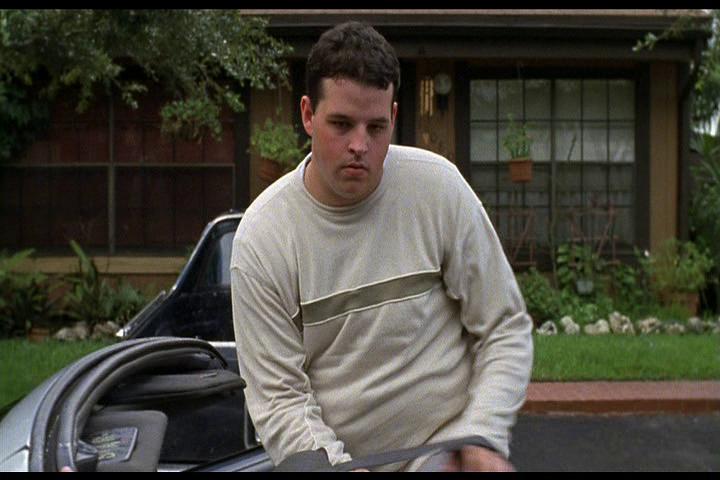
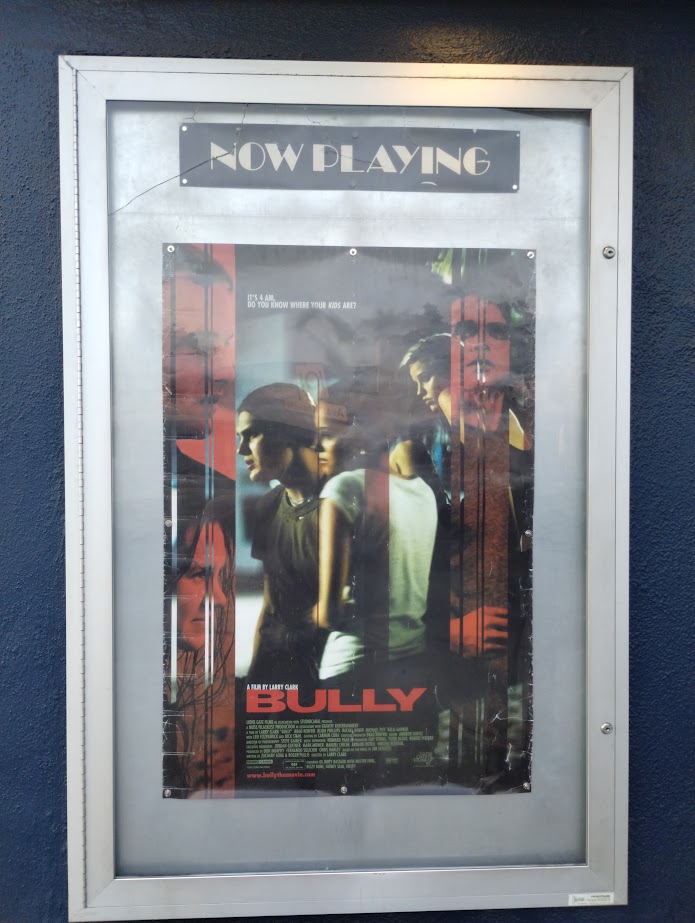
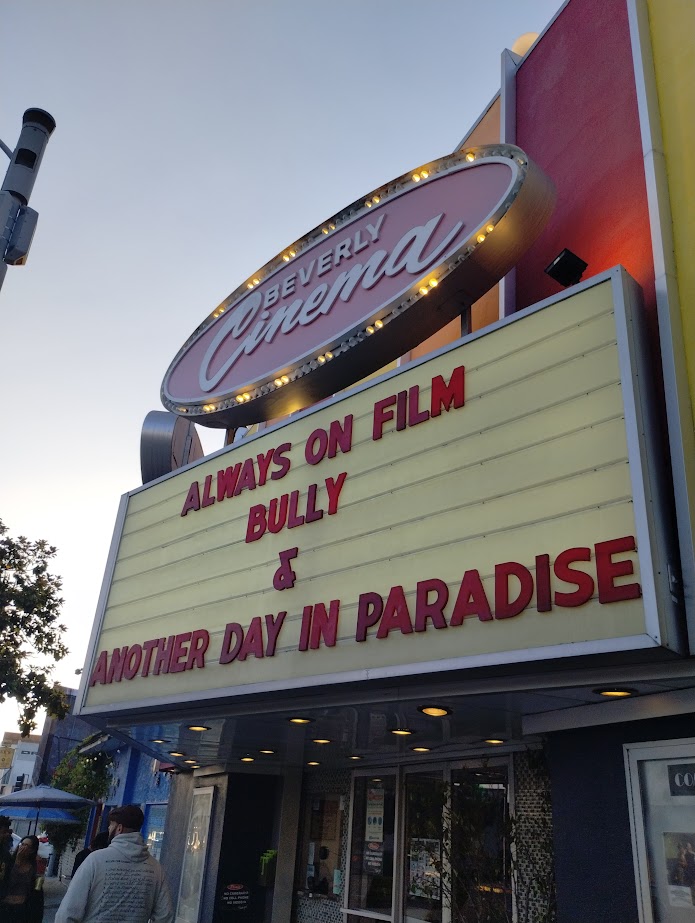
On August 12, 2025, New Beverly Cinema presented a Larry Clark double feature of two of his films: “Bully” and “Another Day in Paradise.” Before “Bully” unfolded on the silver screen, actor and filmmaker Joel Michaely brought out a special guest: Daniel Franzese who played Derek Dzvirk. “Bully” was Daniel’s film debut, and it quickly earned him his SAG card. Daniel thanked Joel for being there and remarked how he killed Joel once in a horror movie entitled “Cruel World” where he shot him in the head.

Daniel said “Bully” was the first time he ever got to hold a screenplay in his hands, and he talked about meeting the casting director, Carmen Cuba, at his audition.
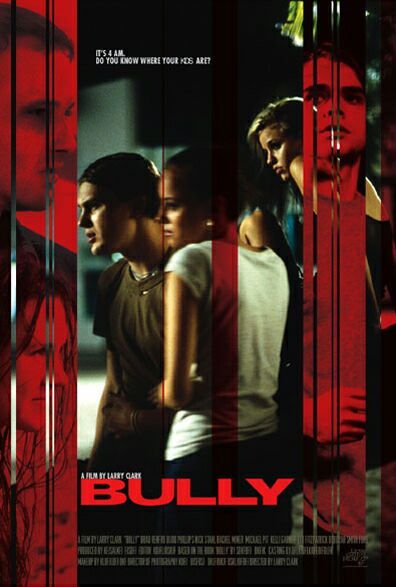
Daniel Fransese: She was like, “Do you wanna see who you are going to play?” I said okay, and she opened up the true crime novel (written by Jim Schutze), and I looked exactly like the guy. And I was just like, oh shit! I can actually get this! So, it was very scary and nerve wracking.”

Rumors are that the set of “Bully” was a crazy one, and being that this was Daniel’s first film as an actor, you can understand and appreciate his feelings at the time.

DF: I’m a pretty easy-going guy, and I am also a theatre guy and a standup comedian. I’m used to being around other people, and I am good at getting along with different personalities. But this movie was next level. we are getting ready to do fittings and start our first day of this movie, and Larry (Clark) is screaming because Brad (Renfro) was in jail for trying to steal a boat. He’s screaming, “This was three years of my life! This kid’s not going to ruin it!” He’s throwing papers and I was like, whoa! That was day one and you can just imagine how the stress level got worse from there.

From there, the discussion went to the late Brad Renfro who played Marty Puccio in “Bully.” Brad first gained worldwide attention at the age of 12 years old when he was cast as Marcus “Mark” Sway in Joel Schumacher’s cinematic adaptation of John Grisham’s “The Client.” Like many people on this planet, let alone actors, he died at far too young an age He was only 25 years old, when he passed away after a drug overdose. Daniel talked about working with Brad.
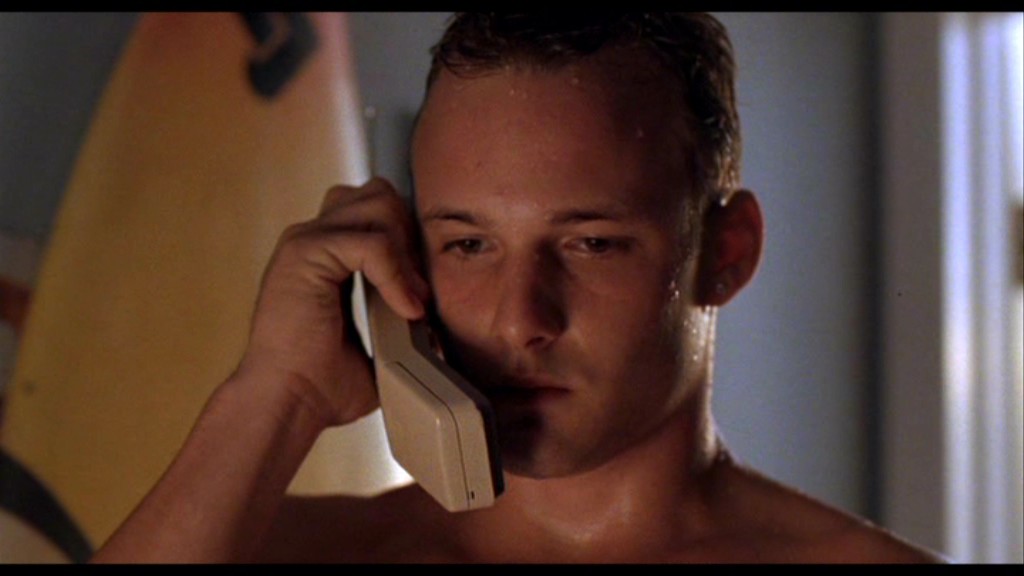
DF: Brad was great. I think he was like one of those golden retriever type people. Not evil, but dangerous. We were doing the table read for the first time, and Brad showed up wearing a white tank top completely soaked in lighter fluid. He came in saying, “I’M TRYING TO GET THE BARBECUE TO GO!” It was like, whoa! He was from Knoxville and had like that “Jackass” sensibility where you didn’t know what he could do, but I don’t think he ever had a mean bone. His intentions were always nice. If anything, he partied too much, and he once told me that at 12, he made hundreds of thousands of dollars to do “The Client,” and he was getting a lot of his drugs and stuff from family members as a kid. I don’t think he got a fair shot. If anything, the reason why I advocate for younger people in Hollywood or talked about my experiences on this movie which were crazy, I was never speaking from a victim place. I was speaking from a place of advocating for people like Brad who didn’t have anyone saying anything for them. I just think, we’re making art. It doesn’t have to be that crazy. We don’t have to be stealing boats or going nuts on sets to produce good material.

After “Bully,” Daniel went on to appear in many films, but he may still be best remembered for playing high school social outcast Damian in 2004’s “Mean Girls.” Like Joel and myself, I wondered what it was like going from an independent film to a studio movie where everybody is expected to be on their best behavior.

DF: I just don’t think the 2000s will be looked upon as a time where it was easy for people on movie sets. I really don’t. People always ask me all the time how to get their kid in Hollywood, and I say don’t. I waited until I was at least in my 20’s (before going to Hollywood), and that’s the only thing which might have saved me. A lot of our contemporaries are not around with us anymore or are in a crazy state. It was a rough time. I can’t say it was easier or better, but I think it’s better now.

Regardless of the crazy set, Daniel made it clear to the New Beverly audience what the experience of making “Bully” was like, and of how the filmmakers strived to capture the spirit of the true story it is based on.
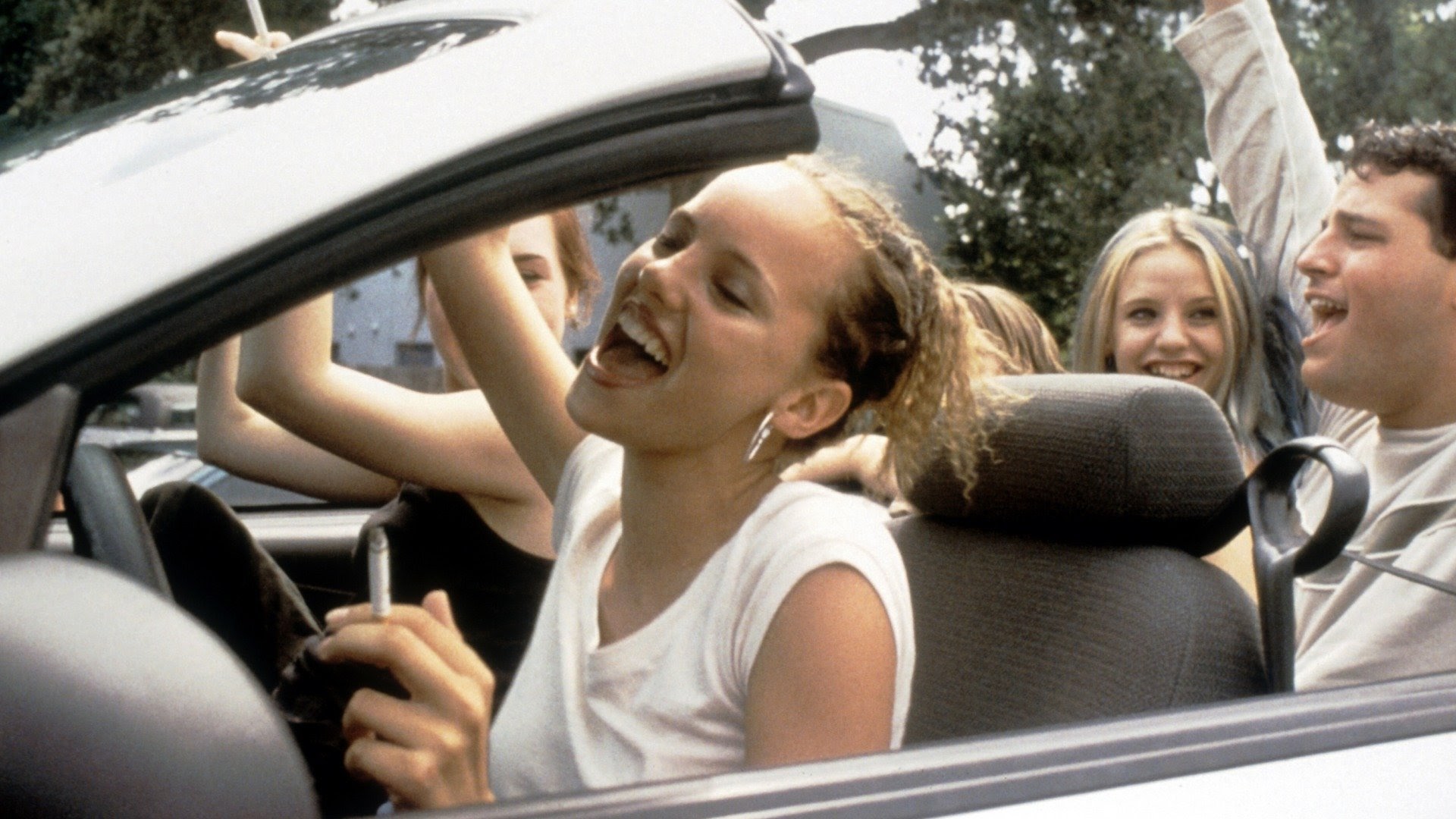
Bully (2001) Directed by Larry Clark Shown in foreground: Bijou Phillips

DF: On a positive note, though, this movie was awesome. It was so fun to make. Larry was cool, the people I was working with were all like people from Thrasher Magazine, it was just like bad ass people. They did shoot in the real locations; it was the real apartment complexes, and it was the real Pizza Hut (we shot in).

Daniel also made it clear how he was the only local hero for hire in Larry Clark’s “Bully.”

DF: They were scouting locations for the gay clubs, and I was just a young kid just figuring that stuff out and performing at the clubs with people I was in musical theatre with and stuff like that. They were like hey we’re making a movie, and I’m like I’m an actor! I had no idea it was going to turn into this. Carmen Cuba, she discovered a lot of people, and I give her all the credit for plucking me out of obscurity and putting me with these people.

An audience member told Daniel that he was from South Florida, and this led Daniel to talk about when he worked at The Gateway Theater in Fort Lauderdale as a kid. a year later, “Bully” premiered there. Daniel found his road from being an usher to a working actor to be honestly insane.

DF: I was there at the theater going, would you like the popcorn combo? I am a movie lover. I worked at Blockbuster (Video), I worked at movie theaters, that’s all I did. Until I was able to support myself as an actor, I was either an usher in theatre or worked at movie theaters. It (“Bully”) was shot in Fort Lauderdale and the whole crew got their premiere at the movie theater where I worked at. So, whoever served me popcorn today, keep writing your scripts.

Like many, Daniel Franzese considers New Beverly Cinema to be one of his favorite places in Los Angeles, and that it was extra special for him to see “Bully” being screened there on 35-millimeter film. To see films presented there in their original format, something often not available to movie buffs in most places, means a lot to him.
Exclusive Interview with Michael Patrick Jann about ‘Alma & The Wolf’

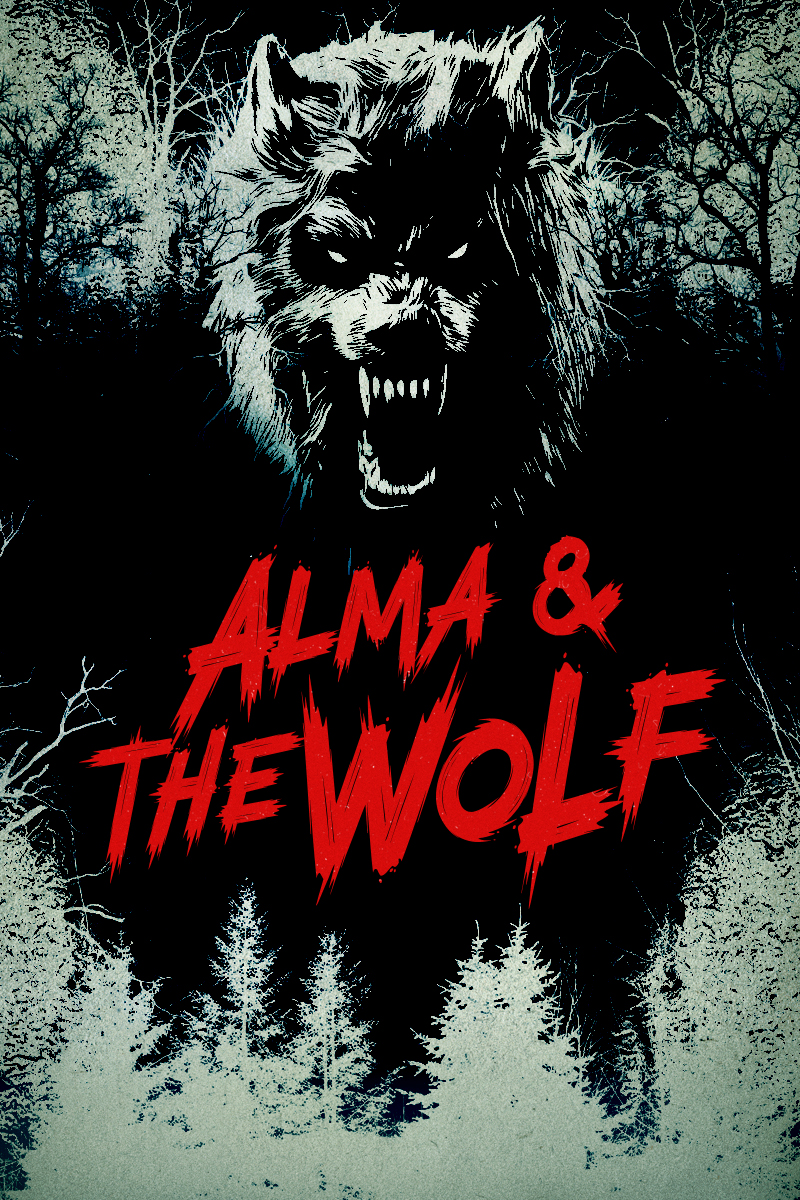
Michael Patrick Jann is best known for his work in comedy and as a cast member on MTV’s sketch comedy show “The State.” In 1999, he made his feature film directorial debut with “Drop Dead Gorgeous” which over the years has developed quite the cult following. With his second feature film as a director, “Organ Trail,” he got out of his comedy safety zone to enter the horror genre. Michael now returns to that genre again with his latest film, “Alma & The Wolf,” which stars Ethan Embry as a troubled police officer who investigates a mysterious wolf attack which happened to a high school classmate of his, Alma (played by Li Jun Li). The investigation becomes even more intense, however, when his son goes missing, and it puts him a collision course with an unbearable truth that can only stay hidden for so long.

I got to speak with Michael one-on-one recently about “Alma & The Wolf,” and we talked a lot about how comedy and horror deal with the various forms of suffering. Also, he discussed the challenges of filming on the Oregon Coast when the weather was really bad and cold, working with animals, and of working with his son, Lukas Jann, who plays Ethan Embry’s son here. In addition, this film also co-stars a classmate of mine from my University of California, Irvine school days, Beth Malone, who plays a rather nosy neighbor. It was great to talk with Michael about what Beth brought to her role and the movie, and it is always great to see her in anything and everything.

“Alma & The Wolf” is now available to rent and stream on select digital platforms. Please check out my interview with Michael down below, and I have also included a trailer for the film as well.

Exclusive Interview with Ethan Embry and Li Jun Li on ‘Alma & The Wolf’

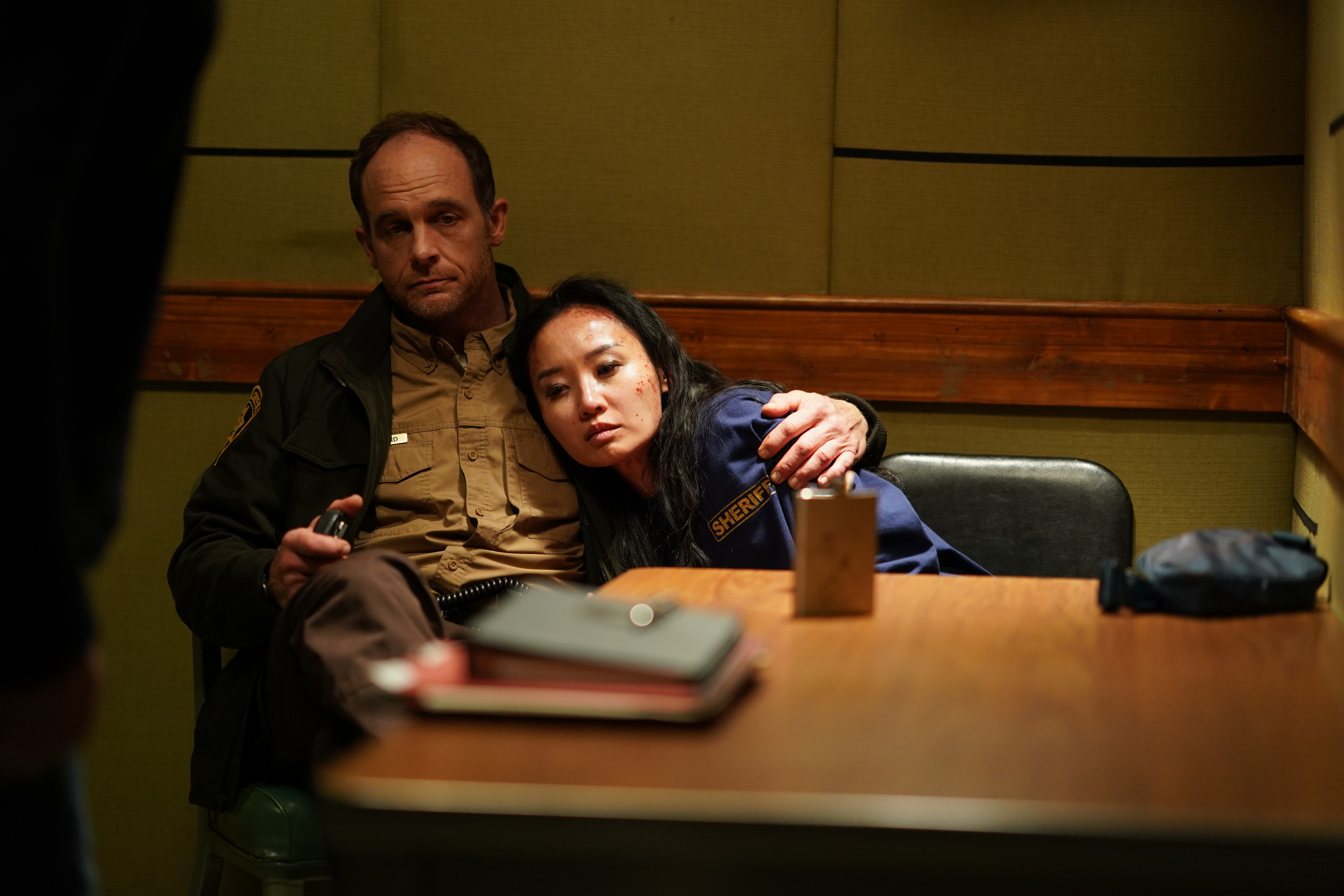
One of the many horror films coming to us in 2025 is arriving this week, and that’s “Alma & The Wolf.” Directed by Michael Patrick Jann, it stars Ethan Embry as Deputy Ren Accord, a very troubled man who has been thrust into a horrifying investigation he may not be fully prepared for. One day while driving on his usual route, he comes across Alma, played by Li Jun Li, who is walking alone in the rain while clutching to what is left of her dog. Alma tells Ren a wolf killed her dog and begs him to kill the wolf for her as an act of revenge. Wolves, however, are protected wildlife in the state of Oregon, so Ren tells Alma he cannot help her that way. But when his son goes missing in the Oregon coast, Ren comes to believe it may have everything to do with the wolf that killed Alma’s dog, and he becomes infinitely determined to find his son and kill the elusive wolf.

I was lucky enough to speak with Ethan Embry and Li Jun Li who are the main stars of “Alma & The Wolf” this past week. Ethan started off his career as a child actor, and he starred opposite Ed O’Neil in the John Hughes written and produced film “Dutch,” and he is best known for his roles in “A Far Off Place,” “Empire Records” and “That Thing You Do.” Li got her start as an actress in the theatre, and she later became known for her role as Iris Chang in the television series “Quantico.” In addition, she has received critical acclaim for her roles as Lady Fay Zhu in Damien Chazelle’s “Babylon” and Grace Chow in Ryan Coogler’s “Sinners.”

Much of my talk with Ethan and Li Li, as she likes to be called, was about acting and their choices. With “Alma & The Wolf,” they were involved in a cinematic production which had a very short production schedule, and I was curious how the speed of it affected their performances overall. Being an actor myself, I found their answers to be deeply informative and fascinating.

“Alma & The Wolf” will be dropped on streaming services starting on June 20, 2025. Please check out the interview below, and I have included a trailer for the film as well.

The SAG/AFTRA Strike Continues on at Warner Brothers Studios

It has been a bit, but I finally made the time to walk the picket line in support of the SAG/AFTRA strike. The WGA strike concluded after 148 days after a tentative agreement with the AMPTP was reached, but many of their members still took the time to join the picket line in continued support of the union’s efforts to gain a fair contract. While I have traveled to different strike locations in the past, this one had me returning to Warner Brothers Studios in Burbank, California. This is because I do not often get over the hill (figuratively speaking) to the other side where the valley is.

Actually, this day, October 2, 2023, is a very significant one as the SAG/AFTRA negotiators are set to meet with the AMPTP in an attempt to end this long-running strike once and for all. In the meantime, we still marched up and down Barham Street to make our presence known. The sun was still shining brightly in the sky, but the temperatures have cooled down a bit and there was a nice breeze going on which we really could have used during July and August.

For me, this day allowed me to catch up with friends I have not seen in the longest time (thanks for nothing COVID). It was fantastic running into Madonna Cacciatore and Robin McWilliams, both of whom have been doing fantastic work as strike captains, making sure everyone crosses the street safely and no one gets hurt. In the past, the three of us trained together for the Los Angeles Marathon as part of Team to End AIDS. More importantly, we ran it in 2011 which became forever known as the monsoon marathon as the rain kept pouring down on us with a vengeance.

I also ran into a former neighbor of mine, a screenwriter whose career has unfortunately taken a hit due to the work stoppage. Fortunately, his wife has a big job which has proven to be all consuming, and this allows him to be a stay-at-home dad to his children. Of course, he would like to get back to work soon.

But even as the SAG/AFTRA strike could be reaching an end, another one is set to begin as the union has a authorized a strike against video game companies. I included a quote near the end of this video I edited about my day on this picket line from Ralph Garman, a longtime voiceover artist and host of “The Ralph Report,” who voiced his frustrations with doing video game work, and his remarks speak volumes about how performers are endlessly being taken advantage of.

Please check out the video below and be sure to make a donation to those artists in need.

Who is Billy Jack?

“Billy Jack” is a movie I have heard about time and time again, and it was on July 30, 2012, when I finally got to see it for the first time. Billy Jack is a half-Indian Green Beret Vietnam veteran whose experiences have molded him into this protector who is out to defend those who cannot defend themselves. Tom Laughlin, who played Billy Jack and directed all the movies this character was in, seems inseparable from Billy Jack as both are out to protect those individuals who were sworn by their government to protect them, but which have failed to do so. While no more “Billy Jack” movies have been made in the longest time, Laughlin still fought for the rights of others throughout his life.

The character of Billy Jack was first introduced to audiences “The Born Losers” which was inspired by the real-life incident where members of the Hell Angels got arrested for raping five teenage girls. “The Born Losers” proved to be the first of Laughlin’s movies which was embedded with a layer of social criticism and an anti-authority tone which remained constant throughout each “Billy Jack” film ever made.

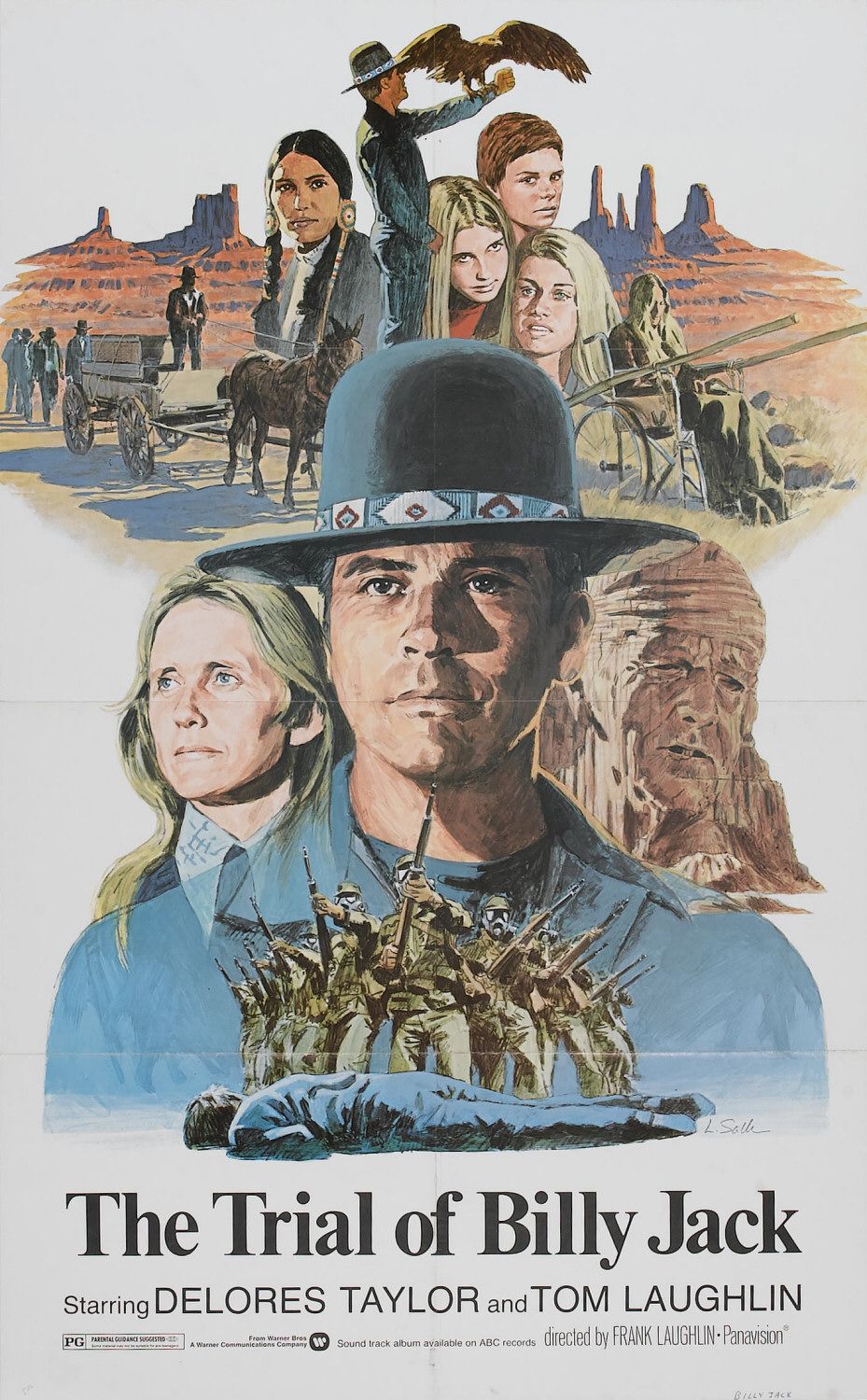
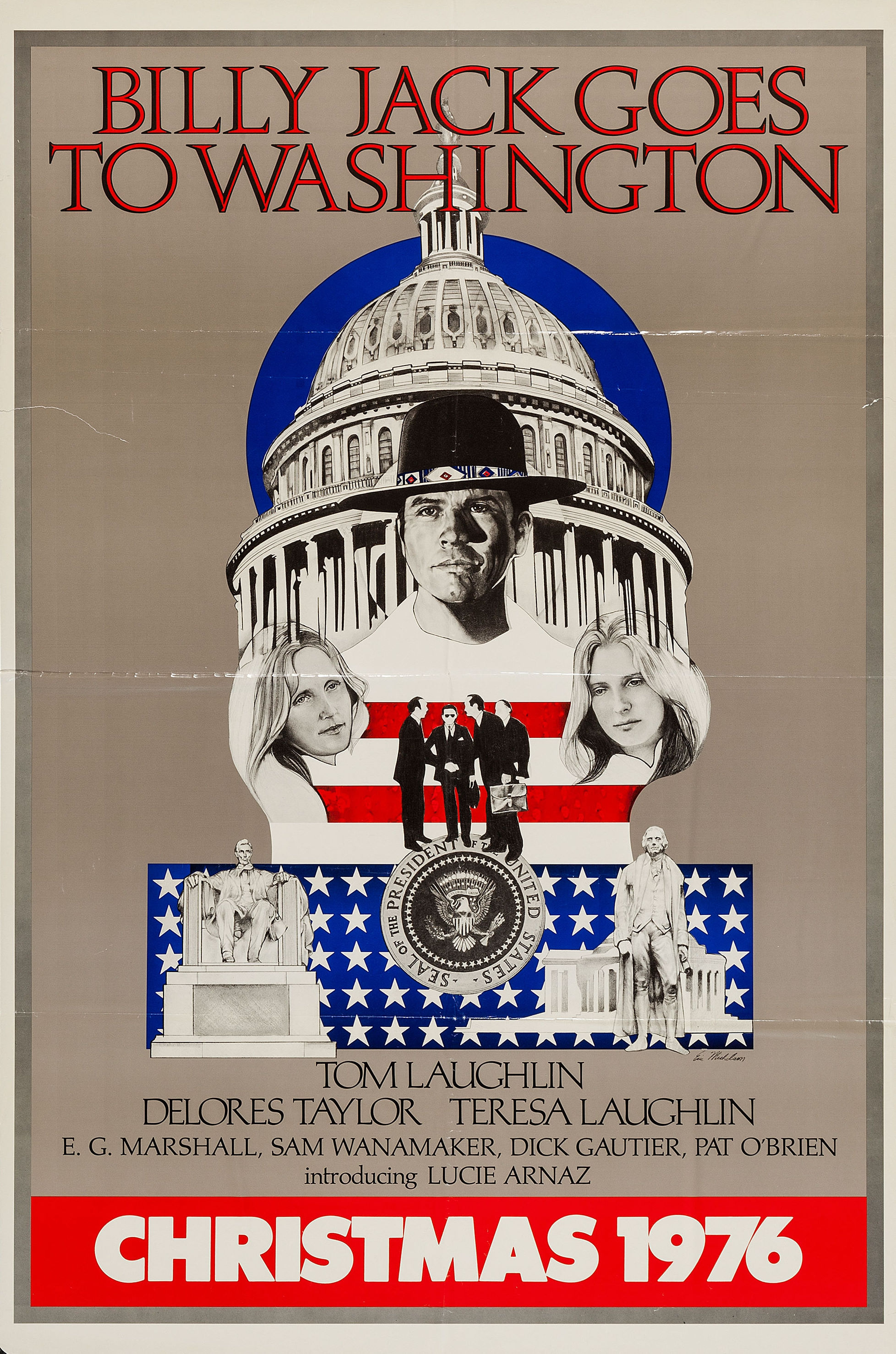
The movie “Billy Jack” came after “The Born Losers,” and it was a response to the conflicts Native Americans often found themselves caught up in. Its sequel, “The Trial of Billy Jack,” was a comment on the anti-war protests which were met by violence from the National Guardsmen who fired upon those protesters, and its follow up, “Billy Jack Goes to Washington,” has the title character battling against senators who are more interested in representing the interest of those representing nuclear power than the people. Even his unfinished sequel, “The Return of Billy Jack,” had political overtones as Billy went to New York to fight those supporting child pornography.

Taking this into account, Laughlin appears to be the first liberal action movie hero as his politics played a big part in each film he made. Then again, calling him a liberal may not be entirely fair as he has gone from one political affiliation to another over the years. In the end, he does not need a particular political label as his goals remain the same; fighting for the rights of ordinary Americans who are not always heard in the way they should be.

All these political and human rights interests greatly informed each movie Laughlin did, and this of course led to many conflicts between him and movie studios. When it came to “Billy Jack,” the movie’s original distributor, American International Pictures (AIP), refused to release it unless Laughlin removed all the political references featured in it. Laughlin, of course, refused to remove them, and he and his wife Delores Taylor, who played Jack’s girlfriend and schoolteacher Jean Roberts, ended up stealing the movie’s sound reels and held them hostage until AIP gave them back their movie.

Warner Brothers ended up releasing “Billy Jack” in 1971, but it failed at the box office and Laughlin sued the studio to get back the rights as he was upset at the way it was promoted. He ended up re-releasing the film himself, and it ended up grossing over $40 million at the box office against a budget of $800,000. Adjusted for inflation, it remains one of the highest grossing independent films ever made.

“Billy Jack,” however, was not without controversies as critics assailed its apparent hypocrisy. In his review of the movie, Roger Ebert said that “Billy Jack seems to be saying that a gun is better than a constitution in the enforcement of justice. Is democracy totally obsolete, then? Is our only hope that the good fascists defeat the bad fascists?” Leonard Maltin ended up saying about the movie that “seen today, its politics are highly questionable, and its ‘message’ of peace looks ridiculous, considering the amount of violence in the film.”

Still, many embrace Billy Jack as a character and the movies he appears in, and this was proven by the large turnout at New Beverly Cinema which cheered him on as soon as he made his first entrance in the movie which is named after him. Seeing Billy grimace at and intimidate the bad guys who were foolish enough to end up in his path had us endlessly entertained, and this remains the case so many years after the film’s initial release.

Laughlin ended up leaving Hollywood to found a Montessori preschool in Santa Monica, California which later became largest school of its kind in the United States. He would eventually turn his attention to politics and psychology as they became the tools with which he could fight injustice. Looking at his life back then and now, it becomes clear how Laughlin and Billy Jack are in many ways the same person as they fight for those whose rights are in danger of disappearing.

Laughlin passed away in 2013 in Thousand Oaks, California at the age of 82. Back in 2007, he announced he was planning to make another film featuring Billy Jack, but this did not happen for a number of reasons. Still, had he made another film with that character, I have no doubt many filmgoers would have welcomed it with open arms.

SAG/AFTRA and WGA Strike on the National Day of Solidarity

It was another day on the picket line as SAG/AFTRA and the WGA continue their long-running strike against the AMPTP. The fight for a fair contract and better pay rages on even as it looks as if no end is in sight. But, then again, it was not really another day as this was the National Day of Solidarity which not only brought these two unions together, but many others including the AFL-CIO, IATSE and Liuna to name a few. In addition, they were also fighting for safer working conditions, restrictions on AI technology, and to be given the respect they deserve as it is their works which help to generate these amazingly high profits for CEOs who have far too much money to ever spend in a lifetime.

There was also a big rally held outside of Walt Disney Studios in Burbank, California. I did my best to film as much of it as I could, but I also got the feeling that now would be a good time to buy a new tripod for my camcorder (the one I currently have is out of commission). Surprisingly, it turned out to be a reunion of sorts for the cast of “The West Wing” as Martin Sheen, Richard Schiff and Bradley Whitford spoke out in support of the strike and for the importance of solidarity in this fight. Sheen was especially powerful as he reminded us all why he got to play the President of the United States on the show for several years, back in a time where a single season of television lasted 22 episodes (remember that?).

Another great speaker was Kerry Washington who talked about how her dream of wanting to be an actor seemed to be impossible because it meant wanting to be famous and be on billboards and magazine covers. But then she said she learned about unions and how they made her dream both a possibility and a reality as it allowed her to make a living. But now, with the advent of streaming and changes in the industry, making a living, let alone a healthy one, has ceased to be possible, and that is unacceptable. Her words rang out loud and true:

“We’ve come to a point in our history where just being a working actor — coming to work every day, devoting oneself to this craft, dedicating oneself for the entertainment and the joy of others — means I can’t make a fair living. It’s not OK. It’s not OK for other people to benefit from our hard work and sweat. It’s not OK for other people to benefit while we work 16-hour days. It’s not OK for other people to benefit when we put our vulnerability and our hearts on the line. It’s not OK for other people to benefit while we do the hard work. That’s not OK.”

But for me, my favorite speaker of the day was “Hellboy” himself, Ron Perlman, who reminded us all as he does on his Twitter (oh, sorry, X) and Instagram feeds that he does not take shit from anybody.  He made this clear right from the start as he said out loud, “I have been a union man my entire mother-fucking woke life.” Not once did he show a single shred of complacency as he laid out how those in power want to break us down:

“The thing is, however much they take will never be enough. So, what they need to do is make us feel small. Devalue us. Gaslight us with the thought that if we don’t walk in line lockstep we can be replaced because any motherfucker can do what we do. … If they’re claiming that they’re losing money, they just made a fucked-up model, that’s all. Don’t blame me for that.”

It was a great day to be on the picket line as thousands of union workers came together to continue the fight for a fair contract and a healthy living wage. I also got to catch up with some friends who I have not seen in years which, in this post-pandemic world, I am deeply grateful for. Granted, the extreme heat took a lot of me to where I had to go home and take a much-needed nap, but it did not stop me or so many others from showing up in Burbank.

As I have stated in the previous articles I have written about the SAG/AFTRA and WGA strike, I am not a member of either union and the video I edited below is not endorsed by them. Still, I am very proud to have joined the picket line as what is currently going on with artists is just a small example of what is happening to the working class at large. These days, I am often reminded of what the late great George Carlin once said about those with all the money and power:

“They want obedient workers. Obedient workers, people who are just smart enough to run the machines and do the paperwork. And just dumb enough to passively accept all these increasingly shittier jobs with the lower pay, the longer hours, the reduced benefits, the end of overtime and vanishing pension that disappears the moment you go to collect it.”

At this time in history, we want to work, but we also want a healthy living wage. It’s hard enough these days to find a job, let alone which pays enough and comes with benefits. No one should have to work two jobs just to survive, and wages need to start keeping up with the cost of living and that evil beast known as inflation. Those in power continue finding ways to eliminate the human equation in the business world, and we cannot allow this to continue. We will not be exploited anymore.

Please check out the video below and be sure to contribute to those union members in need.

Walking the Picket Line Outside of Warner Brothers Studios

So, it was another day on the picket line for me as I walked outside of Warner Brothers on August 18, 2023. It is now day 35 of the strike for SAG/AFTRA, and day 109 for the WGA. The picket hours have been reduced to go from 9 a.m. to 12 p.m. as the heat continues to be brutal and unforgiving, and the unions clearly want to make sure no one suffers from heatstroke.

After picketing outside of Paramount Studios and Netflix, I felt the time had come to go over the hill, so to speak, and check out what was going on in the valley. Picketing has ceased at Universal Studios due to them not providing enough safety for union members exercising the right to protest. As a result, the crowd outside of Warner Brothers proved to be especially huge as the sidewalks were crowded, and strike captains had to keep telling people to keep moving as there were parents with strollers trying to get through. And while there were sidewalks you could cross at, there were others which were off limits as cars kept coming up and down Barham Boulevard. Like me, many of them were desperately trying to find a place to park.

It was also a big day for Latino actors (Latino/a/x) as they made their presence known and partied on like there was no tomorrow. Their energy proved to be infinitely infectious as many joined in with their dancing and singing while also chanting loudly, “This corporate greed has got to go!” And if you looked closely, you could see actress Frances Fisher (“Unforgiven” and “Titanic”) walking the picket line as well as the Mandalorian and Captain America who was carrying a sign saying, “I can do this all day.”

Once again, a big thank you to the strike captains for keeping everyone safe and hydrated. To date, this has been the busiest picket line I have been to yet, so their jobs were a lot tougher than usual as a result. The temperature was in the high eighties, so even a warm lime La Croix was refreshing in this climate.

Check out the video below, and please consider making a donation to those in need.

WRITER’S NOTE: For the record, I am not currently a member of SAG/AFTRA or the WGA. The video I have put together here is not officially endorsed by either union.

Walking the WGA and SAG/AFTRA Picket Line at Paramount Studios

On July 20, 2023, I did something I had been meaning to do for a long time: walk the picket line alongside members of the Writer’s Guild of America (WGA) and the Screen Actors Guild – American Federation of Television and Radio Artists (SAG/AFTRA). Both unions are in a furious labor dispute with the Alliance of Motion Picture and Television Producers (AMPTP) as streaming has forever changed the landscape of entertainment. The residual deals many actors and writers previously enjoyed are no longer such a thing, and streaming services have not been quick to give out the numbers of viewers or streams their programs have received thus far. Also, with artificial intelligence (AI) on the rise, many careers threaten to be rendered obsolete as those with all the money keep finding new ways to eliminate the human equation. Plus, when you compare the amount of money someone like Bob Iger makes to the average worker, one cannot help but be infuriated by the infinite corporate greed on display. As John Carpenter once said, the 1980’s never left us.

Signing up to walk in the picket line was very easy, and you do not have to be a member of either union to participate. Considering the continued divide between the haves and the have nots and the dangers posed by AI, I encourage you to participate as the technology itself poses dangers not just to acting and writing careers, but to careers in other fields as well. Clearly, many people still need to watch the first two “Terminator” movies to understand what happens when AI becomes self-aware.

It was a privilege to be walking with these people, union and non-union alike, along Melrose Avenue outside of Paramount. It quickly became clear to me of how everybody was looking out for one another, and this was great considering the hot temperatures we are currently enduring. The temperature reached up to around ninety degrees at one point, and there was only so much shade we could hide in. Paramount does not have any Ficus tress outside their studios, but if they did have any, they would already have had them trimmed.

Big applause goes out to the strike captains who made sure everyone was safe and kept everyone in line, and to all those who donated food, water, snacks and tons on sunscreen for us to utilize. You can never wear enough sunscreen on a day like this. I also have to say how much I appreciated everyone crossed the street both safely and legally. These days in Los Angeles, no one seems to know how to cross the friggin’ street anymore.

With the video I shot and edited above, I wanted to show the harmony of the strikers on display as this event has brought Los Angelenos together in ways I have not seen outside of the LA Marathon. Also, this video shows how everyone was looking out for one another, and how everybody was respectful of the rules set out for them. These visuals really do speak for themselves more than words can. Granted, writers can say a lot about the strike too, but we need to pay them more first.

If you are interested in helping out in the strike or want to make a donation, please visit the following websites by clicking down below:

Writers Guild of America

SAG/AFTRA

Motion Picture & Television Fund

Entertainment Community Fund

WGA on Strike

WRITER’S NOTE: For the record, I am not currently a member of the WGA or SAG/AFTRA. This video is my creation alone and is not endorsed by either union or any other organization.

Knock, Knock – The First Trailer for ‘The Matrix Resurrections’ is Here

It is September 9, 2021, and I knew exactly what I needed to do: have breakfast and watch the first trailer for “The Matrix Resurrections.” But of course, breakfast would be second as this particular trailer could not come soon enough. All I can say is, wow! Keanu Reeves, looking more like John Wick than Neo, is back. Lana Wachowski is back. Carrie-Anne Moss is back, and no, she does not look to be playing a grandmother here.

The first thing I want to point out about the “Resurrections” trailer is how excited I am at how part of this movie takes place in San Francisco. It all looks so beautiful here, and it feels like it has been forever since anyone shot anything there. Part of me expected those digits to descend down the screen, but the trailer instead opens up with Thomas Anderson (Reeves) talking with a therapist (played by Neil Patrick Harris) about these strange dreams he has been having. From there, we see him taking what I guess are anti-depressants, and they are blue pills. And one other thing, Harris is wearing blue glasses in his session with Thomas. Coincidence?

What blew me away about this trailer was that it has a unique look to it. Sure, there are many images from the original featured, but “Resurrections” is made to look like its own thing and not a simple repeat of what came before. While its story line feels a bit similar to the original as Mr. Anderson is slowly waking up to the world around him, there is a different feeling this time around.

Quite wisely, this trailer only tells us so much about what we will be seeing this December. Lana Wachowski is not about to give everything away which is smart, and we are left to ponder the reality this sequel takes place in. As a result, I am left with a string of questions I am eager to see answered:

Will this sequel take place following the events of “Matrix Revolutions,” or is this a whole new timeline featuring the same characters?

Is Thomas Anderson (a.k.a. Neo) too woke to use a cell phone while in an elevator?

Why does Neo recognize Trinity but Trinity does not recognize Neo?

Will the bullet time effects be utilized frequently in this film?

Is Morpheus, now played by Yahya Abdul-Mateen II, meant to be a younger version of the character previously played by Laurence Fishburne?

Is this a prequel instead of a sequel?

Christina Ricci is co-starring in “Resurrections,” but did we see her in this trailer?

Is Thomas/Neo dumping those blue pills into the sink meant to be smack in the face to big pharma?

Do we really want to see this on HBO Max instead of on the big screen where it belongs?

Was Keanu Reeves shooting the fourth John Wick movie while filming “Resurrections?” Is this why Neo looks like John Wick?

Is Trinity pregnant with Thomas’/Neo’s baby? Well, whatever the case, she certainly does not look to be a grandmother in this installment.

With Johnny Klimek and Tom Tykwer taking over music scoring duties from Don Davis, will Juno Reactor be along for the ride as well?

Lastly, why is everyone stunned that Laurence Fishburne does not appear in this trailer? For crying out loud, it was announced he would not be appearing in it ages ago! Besides, he will be reunited with Reeves in the next John Wick sequel, so stop complaining!

Suffice to say, I am as excited for this sequel as I am for “Halloween Kills.” As a result, I need to keep my expectations in check as they can be easily ruined for all the wrong reasons. I have enjoyed all “The Matrix” movies, and I include the third one even though its ending really sucked. With this trailer for “The Matrix Resurrections,” we look to be getting something as striking and visually spectacular as the original which wowed us back in 1999. I cannot wait, and I am about to say something I have not said in years: Christmas can’t come soon enough!

Check out the trailer below:

Alfred Hitchcock’s ‘Psycho’ – 60 Years Later and Shower Curtain Sales Have Still Not Recovered

I did not become aware of Alfred Hitchcock’s “Psycho” until its first sequel, “Psycho II,” was released back in 1983, 23 years after the original. Of course, I didn’t watch this sequel at the time as I was just a kid, but I do remember its movie trailers and the title cracking up on the big screen as it played before the feature presentation of “Return of the Jedi.” This image really freaked me out, and it was just as well I didn’t see the classic film which inspired it until many years later. When I rented and watched it on VHS with my older brother, we did not  see what the big deal was as we had long since been spoiled by the “Friday the 13th” and “Nightmare on Elm Street” movies with all the blood and gore a hormonal teenager could ever want or endure.

Well, it turns out watching it once was not nearly enough. Whether or not you think “Psycho” is Hitchcock’s best movie ever, it is often the one he is remembered best for making. After 60 years, it remains a great study of how a director can maintain suspense throughout the entire running time of a movie, and of a master playing the audience all the way up to the last frame. This becomes even more apparent when you watch it for a second and third time. Hitchcock puts you into the mindset of Marion Crane as she drives out of town after embezzling some money, and then he completely changes the dynamic of the story once Norman Bates arrives.

With “Psycho” now at its 60th Anniversary, we have another chance to go behind the scenes to see how this horror classic was made. It also represents another opportunity for Universal Pictures to release a new digital edition of the movie so they can fleece a few more dollars from our wallets. There has already been a Blu-ray release which made it look exquisite, and there has got to be a 4K Ultra HD version at some point. Anyway, looking back at the history of this classic proved to be one of the most interesting research projects I have taken on in years as there is much to be said about what went on behind the scenes.

“Psycho” originated as a novel written by Robert Bloch which itself was based on Wisconsin serial killer Ed Gein, a man whose horrific exploits would inspire many horror movies to come. Hitchcock acquired the film rights through his agent for $9,000, and he chose to film it after two projects he was working on for Paramount Pictures, “Flamingo Feather” and “No Bail for The Judge,” fell through. But Paramount did not want to help Hitchcock out on this one either as they were quoted as saying they found Bloch’s novel “too repulsive” and “impossible for films.” The executives refused to finance the production, and they even went as far as telling Hitchcock their soundstages were unavailable because they were being used for other projects. Of course, this proved to be a bold-faced lie as their production schedule was already in a slump at the time.

Undaunted, Hitchcock was still determined to bring “Psycho” to the silver screen, and he even offered to defer his normal director’s fee of $250,000 in exchange for 60% ownership of the movie’s negative. Still, executives would not grant him the financing he desired, so he continued to go through several different cost-cutting measures before getting a budget of no more than $1 million to make the movie his own way. Hitchcock had planned to make the film fast and cheap anyway, and he employed the crew members of his television series “Alfred Hitchcock Presents” who were already skilled at doing the same. He also succeeded in casting proven stars Janet Leigh and Anthony Perkins at a quarter of their usual salaries.

Bringing down the budget also meant shooting the film in black and white, but this was fine with Hitchcock as he wanted to film it that way as to make the shower scene come across as less gory, and he was also a big fan of “Les Diabolique” which was also shot in black and white.

Like “Psycho,” “Les Diabolique” was remade many years later. Unlike the originals, both were filmed in color. Even more unlike the originals, they received mercilessly scathing reviews upon their separate releases.

In filming “Psycho,” Hitchcock started off by making it as objective an experience as possible, and we feel what Marion goes through as the voices in her head fill her with guilt and doubt over what she has done. To help emphasize this effect, Hitchcock shot much of the movie with 50 mm lenses on 35 mm cameras. By doing this, the camera was said to mimic normal human vision. As a result, you are not just watching the movie, you are experiencing it. This even goes on after Marion has gone and the story turns its focus to Norman Bates. When he pushes her car into a nearby swamp, you share in his anxiety when it does not completely sink. That’s the thing; like Norman, you want the car to sink, and it makes one feel like a voyeur just as Hitchcock intended.

Then, of course, you have the famous shower scene, and after all these years it remains one of the most talked about and heavily dissected moments in cinema history. I am sure you all know the details regarding it: it was shot over six days from 77 different camera angles, and the scene features around 50 cuts in the three minutes which it lasts. Not much is shown as you never see the knife penetrating Marion’s flesh, and there is no gore other than the blood (chocolate syrup was used) going down the drain along with the water. Indeed, it is what you do not see which makes the scene feel so violent. Like Spielberg later did with “Jaws,” Hitchcock dared the audience to use their imagination in regards to what they thought they saw here. This is one of many reasons why this scene has stood the test of time, and it was also the first time a director killed off his leading lady in the middle of a movie. Back in 1960, audience members could not help but wonder where things could possibly go from there, and shower curtain sales have never been the same since.

I also cannot go on without mentioning the infamous score composed by the great Bernard Herrmann, and it remains one of the scariest pieces of music ever applied to a motion picture. Throughout his career, Hermann proved brilliant in composing film scores which really captured the psychology of the characters. This proves to be as true about “Psycho’s” score as it was with Hermann’s work on “Cape Fear” and “Taxi Driver.” It was a surprise to learn how this score almost didn’t come about as Herrmann balked at Hitchcock’s request to take the job on a reduced salary. Somehow though, Herrmann agreed to the terms and ended up writing music for a string orchestra as opposed to a full symphony which would have included brass and woodwind instruments. This is now clearly seen as a masterstroke on his part as the screeching of violins captures the sheer terror which overtakes Marion and the audience during the infamous shower scene.

Although “Psycho” is now recognized today as a classic, it actually received mixed reviews upon its release. Some admired the buildup of tension, but others questioned the psychological elements as being less effective. It even made one critic, C. A. Lejeune, so offended to where she walked out of the movie before it was even over, and she soon after resigned from her position as film critic for The Observer. Looks like Norman’s mother did not just claim victims onscreen!

When you look at the history of cinema, it is important to keep in mind how movies we see these days as classic were not necessarily treated this way upon their original release. It is over the passing of time where movies get re-evaluated or seen in a different light, and none can ever truly be perfect (although some do come very close to it). “Psycho” was a game changer as it came about during the Motion Picture Production Code which was heavy in its censorship of violence and sex in American films. With “Psycho,” Hitchcock flirted with showing nudity as well as gore, and this later opened up doors for filmmakers to exploit these elements with far more detail. Without “Psycho,” there may never have been a “Halloween” which by itself inadvertently sparked a whole wave of slasher movies. And without “Halloween,” there certainly would not have been a “Friday the 13th” as Jason Voorhees, like Norman Bates, also had serious mommy issues.

The cultural impact of “Psycho” lasts on to this very day. There are only so many movies which could have a sequel made to it several decades later. “Psycho III” followed a few years later, and a prequel came about because some just thought it would be a good idea to show how Norman Bates got to be the shy psycho we know him to be. There was even a failed television pilot called “Bates Motel” which starred Bud Cort as Alex West, an asylum inmate who befriends Norman and later inherits the motel and the house where mother lived (Anthony Perkins wanted nothing to do with that one). It also inspired a shot-for-shot remake by Gus Van Sant which seemed almost every bit as odd as Norman himself. The only purpose of it seemed to be proof of how remakes will never be able to recapture what made the original so good. But if they make money, the studios will clearly not mind the critical bashing even if it proves to be justified.

Television would later take another shot at the “Psycho” franchise with another version of “Bates Motel,” and this one starred Freddie Highmore as Norman Bates and Vera Farmiga as his mother. This version ended up lasting five seasons and proved to be very compelling as our fascination with the dark side of human nature is always stronger than we ever bother to realize. While some may have said enough already with “Psycho,” this show proved there was more life to it than we cared to initially realized.

Even today, you cannot hear screeching violins and not think of “Psycho.” Filmmakers reference it today like Wes Craven did in “Scream,” and there are dozens of movies out there which have done the same. That shower scene has been spoofed lord only knows how many times, my favorite being on “The Simpsons” where Maggie ended up attacking Homer with a mallet after watching one Itchy & Scratchy cartoon. Another great one came about during one of Billy Crystal’s Oscar montages where he was in the shower and ends up getting accosted by Kevin Spacey who plays his “American Beauty” character of Lester Burnham. Turns out it was not the same shower Marion got stabbed in, but instead the one where Lester often experienced the highlight of his day.

Leigh never looked at taking showers the same way again, and it would be ages before she ever took one. Perkins would forever be typecast in roles similar to Norman Bates, but he said he would still have done “Psycho” even if he knew this would be the case. Many filmmakers (Brian DePalma especially) have tried to use the tricks Hitchcock employed in this and his other films to varying degrees of success. Still, there is no topping what Hitchcock did with this classic 1960 movie, and it remains the one so many other suspense and horror movies are judged by. Hitchcock’s powers of manipulation remain very hard to duplicate after all these years, and this illustrates what he meant when he was quoted as saying, “I enjoy playing the audience like a piano.”

Cla