Exclusive Interview with Dana Ben-Ari on her Documentary ‘Breastmilk’

breastmilk-documentary-poster

The documentary “Breastmilk” marks the directorial debut of Dana Ben-Ari, and it deals with a subject we think we know a lot but really don’t: breast feeding. It follows first-time mothers of different ages and backgrounds as they deal with the breast feeding process in various ways, and it documents the successes and struggles they are forced to endure. While some are pro-breast feeding, others find themselves relieved at not having to go through with it. But throughout “Breastmilk,” Ben-Ari never judges the families and prefers to present their stories as objectively as possible. Sure, there are a number of instructional videos, books, experts, lactation experts and do-it-yourself guides you can find on YouTube, but there really hasn’t been a film which explores real people going through this process before this one.

I got to speak with Ben-Ari while she was in town to do press for “Breastmilk,” and I congratulated her on making a documentary which will appeal to both women and men. It certainly promotes a lot of discussion on breast feeding, and it will be interesting to hear what people who see this documentary have to say about it. We talked about what drew her to make “Breastmilk,” how she went about choosing its participants, what surprised her most about the making of it, and the importance of including gay couples in this debate as well.

Ben Kenber: What was your main inspiration for wanting to make this documentary?

Dana Ben-Ari: Well I am a mother myself and I am pro-breastfeeding, and I’ve seen many women in many families struggle and go through these similar experiences. I thought that this would be fun and interesting to explore on camera because I think that it is part of a larger conversation around feminism, and I thought that voicing and making these experiences visible would be very helpful and important.

BK: In regards to the people who participated in this documentary, how did you go about selecting them?

DBA: We posted various flyers and we posted on parent sites and groups and word-of-mouth and friends. We had an overwhelming amount of emails and stories shared, and then we realized that we wanted to find pregnant women who were carrying their first child so that we could have a more immediate first time experience. We started with that, and then I wanted to have a few other families participate in the conversation because I thought that families with slightly older kids, as you see sprinkled throughout the film, just provide a little bit of a different perspective than the young families who are going through it for the first time. That’s how we came out with that balance.

BK: Have you kept in touch with the participants since you finished making this documentary?

DBA: Yeah, a few of them came to one of the Saturday night screenings and then the Sunday screening. We’ve been in touch. A few people have moved out of New York, but the ones in New York try to come to the screenings when they can.

BK: Were there any really big surprises while you were making this documentary?

DBA: I learned a lot about filmmaking because this is my first film, so that was quite interesting. I had a great cinematographer (Jake Clennell) who taught me how to be in the room but still respect the space and the experience, and we really learned a lot about being patient and giving that families time. What also stood out was how vulnerable all of these families are and how women are still oppressed.

BK: One woman talks about how women are still made to feel bad about their bodies, and that’s a shame. You get the feeling that people who say that probably don’t understand what the experience is like, and we are seeing that experience in front of us. They are doing the best they can.

DBA: Right. All of these families are doing the best that they can.

BK: One of my favorite scenes is when a white couple goes to one of the black mothers and gets bags of breast milk. It reminded me of picture I saw in a magazine where a heart from a white person was placed next to a heart from a black person, and you see that there’s no difference between them. It’s the same thing with the breast milk because, in the end, milk is milk. How did you come to get that scene?

DBA: We knew that we wanted to show some donations, and I looked for women who were looking for milk donations. One of the women that we had been following did have a lot of milk that she wanted to donate, and I asked her if she wanted us to help her find somebody. So we followed the adoptive mother through a number of attempts, and then we also had this one. We had a couple more milk donations scenes that didn’t make the cut, and we were just left with this one which was really a great scene because so much gets covered. There’s so much you can discuss from that one little moment, and that was very natural actually (those reactions).

BK: Was there anything in particular that you wanted to capture but were unable to for one reason or another?

DBA: Not so much. I’m quite happy with everything. We packed so much in. I wish we’d have more time to develop more stories, but as far as 90 minutes go I think we covered quite a lot. There’s so much there that I think people may not have thought of, and it just inspires these questions and their interest.

BK: Going back to what the cinematographer told you about respecting the space, can you talk a little bit more about that?

DBA: He is very good and very talented at what he does, but he also is very good at being very social and knows how to make people feel comfortable. But then also, as a mother myself, I had some experiences with what some of these families were going through, and I really did not get too involved in their journey. So even if some couples were arguing over a formula I really stayed out of it, and that was something he and I discussed that we were not going to get involved in. We were just going to let things play out. Of course, if somebody had asked me privately off camera certain things I would tell them, but we really didn’t want to affect their decisions and their experiences. So I think we did a good job with respecting their choices and their decisions.

BK: I also liked how the documentary dealt with gay couples, both male and female, and you sort of wonder how certain couples deal with that or not being able to give their children breast milk (men can’t, but they do keep trying). It’s great to see them in the groups because what they go through is no different from what anybody else is going through. Was that what you were hoping to show?

DBA: Yeah, I loved that too. I think it’s like dropping certain things without an editorial just to make people think about what is family and what is community and what does it mean to be male, what does it mean to be female, all of those questions. While there are some differences, the similarities sometimes are really much greater than we realize. I think that those are wonderful moments in the film, and I think it’s important to include a diverse group because our country is diverse. If we just focused on the one or two examples I think we miss a lot.

BK: A couple of days ago I saw the movie “Neighbors” which stars Seth Rogen and Rose Byrne, and there is a scene where Seth gets sprayed with Rose’s breast milk. I was reminded of that when you show the montage of women squeezing the breast to show how much milk can come out of them, and it made the scene from “Neighbors” seem more realistic as a result. What was it like filming that montage?

DBA: Oh that was a lot of fun (laughs). That was a lot of fun and a lot of women had not really had that experience before, so we left those women feeling very satisfied that they got something of the experience. But really, this movie is about community and the body and how we’ve become and how nice it is for women to get reacquainted with their bodies and also just accept themselves as women. That was one of those celebratory moments in the film and humorous as well.

BK: Are you planning a follow up documentary to “Breastmilk” or do you have different plans for the future?

DBA: Well I have some ideas but not a follow-up to this. Some people are asking if there’s going to be a “Breastmilk 2;” no, I don’t think so. But I hope to be involved in something fun again soon. I do have to see this through, you know? It’s the first film so I have to do the short film tour and be available for press as much as possible.

BK: How involved were the executive producers, Ricki Lake and Abby Epstein, in the making of this documentary?

DBA: Well they came on after everything was done, and they’ve been very helpful and supportive in promoting it. That’s really more of our relationship, promoting and reaching a wider audience. They’ve been great.

I really want to thank Dana Ben-Ari for taking the time to talk with me. “Breastmilk” is now available to watch on DVD, Blu-ray and Digital. Click here to view the movie’s website for more information.

Save

Exclusive Interview with Jeff Feuerzeig and Laura Albert on ‘Author: The JT Leroy Story’

Of the plethora of excellent documentaries to come out in 2016, one of the most fascinating to watch is “Author: The JT Leroy Story.” Directed by Jeff Feuerzeig, it chronicles the rise and fall of literary sensation JT Leroy whose rough and tumble childhood crafted him into a writer of such books as “Sarah” and “The Heart Is Deceitful Above All Things,” the latter of which was adapted into a film by Asia Argento. However, it was eventually revealed that JT Leroy did not in fact exist and was actually an avatar for former phone sex worker turned housewife, Laura Albert. Following this revelation, Albert was considered a fraud and many believed she concocted nothing more than an elaborate hoax. But with this documentary, Albert seeks to set the record straight over how JT Leroy came into existence for her, and she makes it clear that what happened was in no way a hoax.

The beauty of “Author: The JT Leroy Story” is it never judges Albert for a second. The documentary simply lets her tell her side of the story which proves to be more complex than we could ever have imagined. Considering her dysfunctional childhood, it is understandable she needed an outlet of some kind to vent her pain and frustration with life, and with JT Leroy she found a way to express things she was unable to as herself.

author-the-jt-leroy-story-poster

It was a real pleasure to talk with Feuerzeig and Albert while they were in Los Angeles, and the two of them talked at length about what possessed them to take on this project and of what went into its making. Albert’s insights into her writing process were especially fascinating as she actually found herself predicting the future through her books.

Check out the interview above, and be sure to catch “Author: The JT Leroy Story” when it arrives in theaters in Los Angeles on September 9. You can also check out a trailer for the documentary below.


Tippi Hedren Looks Back at ‘The Birds’ and Working with Alfred Hitchcock

The Birds Tippi Hedren

Fans of Alfred Hitchcock were in for a treat when they packed the Grauman’s Chinese Theatre in Hollywood for a screening of his 1963 horror classic “The Birds.” The movie was being shown in honor of its 50th anniversary, and among the evening’s guests were two of its stars: Tippi Hedren who played the confident socialite Melanie Daniels, and Veronica Cartwright who had one of her earliest roles as Cathy Brenner. Much of the Q&A which preceded the movie, however, was directed at Hedren who talked about how she got cast in “The Birds” and of the overall effect Hitchcock ended up having on her career.

There has been this misconception about “The Birds” where many assumed it was filmed in black and white and not color. A lot of this had to do with people first watching the movie on their black and white television sets at home, and this understandably made the experience of watching it a bit different for them. Hedren reflected on what people have told her regarding this issue.

“I’ve had people say oh, I am so delighted that they colorized ‘The Birds,’ and I said uh no, we filmed it in color.’ And they said no, no, no, I saw it in black and white. Soon the argument kept growing, and I finally said no, you saw it on a black-and-white TV! And they went, yes’ Case closed” Hedren jokingly said.

Even today “The Birds” continues to pack movie houses all over the country and Hedren admitted she remains astonished at how it has a life of its own. She still does publicity for the film and talked of how it can still draw a crowd after so many years. Some of the other screenings she spoke of actually happened not long before this one.

“It took a little while for me to realize that this movie really has something that’s unique and powerful,” Hedren said. “We had a screening at a theater in Detroit, Michigan that sold out, and it didn’t have many seats in it. In Texas I was at a theater that was built in the 30s in El Paso, a beautiful, beautiful theater with 2500 seats, and there was a film festival there. Just before the screening of ‘The Birds,’ the director of the festival came to the stage and said ‘ladies and gentlemen, this theater has been sold out four times: once for ‘Gone with the Wind,’ ‘The Wizard of Oz,’ ‘E.T.’ and tonight ‘The Birds.’”

“The Birds” actually marked Hedren’s film debut as an actress, and she previously had a very successful career as a model which later led her to do commercials. Hitchcock saw Hedren in a diet soda commercial, and this led him to cast her in the movie. This opportunity came at a crucial time for Hedren as she had just moved back to Los Angeles with her daughter Melanie Griffith and was experiencing some problems.

“I rented a very expensive home in Westwood thinking I would continue my career as a fashion model and doing commercials, and it wasn’t working and I’m thinking okay, what do I do now? I don’t know how to type,” Hedren said. “Shortly after that on Friday the 13th of October 1961, I received a phone call from Universal asking if I was the girl in the diet soda commercial, and I said yes. So I was put through a four or five-day suspense thriller of who is the producer who was interested in me. Finally, I was asked to go to MCA, a big organization or agency, and it was there that the agent said, ‘Alfred Hitchcock wants to sign you to a contract. If you agree with the terms and sign it, we will promote you.’ So we went over to his office, and he (Hitchcock) opened the door and stood looking very pleased with himself. It literally changed my life.”

One audience member asked Hedren about the very strange birthday gift Hitchcock gave her daughter Melanie. Many have heard this story over and over, and it has always sounded tremendously creepy. The question, however, gave Hedren the opportunity to set the record straight about what really happened.

“My daughter was presented with a box when Hitchcock took us to lunch, and it was a wooden box and Melanie opened it and it was an incredible doll of me in the green suit that I wore in ‘The Birds,’” Hedren said. “The face was so perfect that it scared her to the point where she kind of freaked out. Everybody made it sound like it was Hitchcock playing a dirty trick or doing something really nasty to Melanie and that wasn’t it. It was supposed be a very, very beautiful gift and it just went awry. She was so affected by it that it was put away somewhere, and I unfortunately don’t even know what happened to it.”

But the one thing which has cast a heavy shadow over the legacy of “The Birds” is the fact Hitchcock sabotaged Hedren’s career after she starred in “Marnie.” During that time, Hitchcock became deeply obsessed with her, but she kept refusing his advances which led to him exerting a control over her no director should have over anyone. Hedren explained what happened between her and Hitchcock very calmly and without a hint of regret.

“As you know, I became the object of his obsession,” Hedren said. “It started later in the filming of ‘The Birds,’ and then by the end of filming ‘Marnie’ it was to the point where I couldn’t stand it anymore. I was tired of being followed around all the time. It all came about when I was asked to go to New York to be on ‘The Tonight Show’ to accept an award, and I asked for two days off. There was a demand put on me if I chose to take those two days off, and I was so offended with it and I said I have to get out of this contract and I have to get out of it now. As soon as ‘Marnie’ is over, I am done. And he (Hitchcock) said, ‘Well you can’t. You have your little girl to support, your parents are getting older…’ And I said anybody who loves me doesn’t want me to be in a situation which I’m unhappy. I want to get out!’ And he said, ‘I’ll ruin your career,’ and he did.”

“He didn’t let me out of the contract,” Hedren continued. “He kept paying me my $600 a week, and I wouldn’t hear for a very long time after that that many directors had asked to have me in their films, and it was so easy for him. All he had to say was she isn’t available, and it was that easy and it was done. It was hurtful, but at the same time I walked away with my head held high. He ruined my career but he didn’t ruin my life.”

The audience at Grauman’s Chinese applauded her last sentence, and it was clear to everyone she never lost her pride or self-respect in spite of what Hitchcock did. While her career was never the same after “Marnie,” she still managed to keep working in both film and television.

While we may have come out of the evening very upset at the cruel way Hitchcock treated Tippi Hedren, we could not deny “The Birds” still remains a very effective and unnerving horror movie a half a century after its release. The fact it holds up so well speaks volumes of not just Hitchcock’s brilliant direction, but also of Hedren’s beautifully confident performance. She remains such a sublime presence to watch in this classic film, and she deserves as much credit as Hitchcock does for its enduring success.

The Birds movie poster

Save

Tom Hiddleston Discusses ‘I Saw The Light’ and Singing Like Hank Williams

I Saw the Light movie poster

We all know him as the villainous Loki from the Marvel Cinematic Universe, but now British actor Tom Hiddleston takes on his most challenging role yet as iconic country singer Hank Williams in “I Saw the Light.” Written and directed by Marc Abraham, the movie starts with Hank getting married to the lovely and business savvy Audrey Williams (Elizabeth Olsen), and it follows him from there as he works his way from singing on the radio to becoming a big time star at the Grand Ole Opry. The movie also shows the pain, challenges and addictions he suffered through which led to him creating some of the most memorable country music and his premature death at age 29.

In preparing to play Hank Williams, Hiddleston had to learn his songs and sing them himself. Working extensively with musical coach and veteran country singer and songwriter Rodney Crowell, Hiddleston immersed himself in Hank’s music and worked tirelessly to match his vocals to Hank’s as much as he could. There’s no doubt it was a difficult process for the actor, but watching him in “I Saw the Light” makes you see the tremendous effort he put into his performance.

I attended the movie’s press conference at the London Hotel in West Hollywood, California where Hiddleston was joined by Abraham and Olsen. I was very interested in how Hiddleston managed to get past all the technical aspects of the singing to where he could put all the rehearsal behind him and just sing his heart out. Izumi Hasegawa, a reporter for What’s Up Hollywood and Hollywood News Wire asked him which of Hank’s songs was the hardest to sing, and this would later lead in to my question for him.

Tom Hiddleston: The most challenging song was probably “Lovesick Blues.” “Lovesick Blues” is, I think, of all the songs Hank sang, the hardest, and he probably sang that the most. It was a huge hit for him. He once went up on stage somewhere, it’s on an album called “The Lost Concerts,” and he’s about to introduce it. He says, “I’m going to play a little song for you. I sang this 13,000,001 and a half times and it’s earned us quite a few beans and biscuits.” It was obviously this real hit maker for him and he sang with such control and such authority that he must have done it in his sleep, and I had to accelerate that process because it’s a very technically difficult song. You are yodeling and you are jumping octaves, and so to be on pitch in every note of that song was really challenging. I had days where I felt like I was bashing my head against a brick wall because Rodney Crowell and I would do take after take after take because if I was rhythmically precise the pitch was off, but if the pitch and the rhythm were right Rodney would say, “Well, you weren’t really feeling it. I kind of lost your sincerity, I lost the twinkle, so could you put that back?” And then I’d have the twinkle and I’d go off rhythm again. So yeah, that was probably the most challenging.

Ben Kenber: Clearly you did a lot of vocal work in preparing to sing like Hank Williams. When do you think you got to the point where you stopped worrying about the singing technicality and started to feel the songs instinctually?

TH: It goes back to what I was saying about “Lovesick Blues.” We had to pre-record certain tracks because of the way we were going to shoot them. If Marc was covering a concert performance, it meant he was going to be cutting from wide shots to close-ups to handheld which meant that we had to be very technically precise about the musical track and therefore couldn’t play it live in order for it to cut in. So we had to pre-record the tracks which I would then play and sing along to myself. They each had to have different atmosphere because some of them are radio station tracks, some of them are studio tracks, some of them are live concert performances, and there were some that came very quickly and very easily to me and some that didn’t. I had recorded “Why Don’t You Love Me” in about an hour. It took me about 10 days to record “Lovesick Blues” and I can’t explain why (laughs). Rodney and I used to say that it was like swimming through the ocean, and that I would have to swim for miles and miles through seaweed in order to get to clear water. And that’s how it felt vocally; there would be cracks and strains in my voice. Singing is a physical thing, and once your body and your resonance and your lungs are sufficiently warm, you can actually get to a place where it feels like you’re up at altitude where you are finally in control of the airplane if that makes sense. It’s a fascinating experience for me because I still believe singing is the most naked form of emotional expression. Actors can hide behind characters, writers can hide behind their writing, painters can hide behind paintings, but singers are purely open. The reason we revere the greatest singers is because we feel a raw power to the transmission of their emotions whether it’s Johnny Cash or Amy Winehouse or Nina Simone or Hank Williams or whoever it may be for you. That was challenging because even though there was a technical discipline to it in manipulating my baritone voice to sound like Hank’s tenor, there was still a commitment to emotional sincerity which was really new for me.

Following Hiddleston’s response, Abraham spoke up about what he specifically wanted for this movie.

Marc Abraham: I just want to add something to that because it was a big deal when we decided how we were going to do the music. From the very moment I wrote the script and decided to make the movie, I was intent that we would not have any lip-synching and that whoever played the part was going to have to sing it. I didn’t know they would be able to do it as well as Tom did. I was hoping that would happen, but what’s important to understand and that Tom understood and Elizabeth to some extent when she was even pretending to sing badly even though she gets mad at me for saying she can sing well (she can). Tom and I both knew from the very beginning that he would never sound exactly like Hank Williams. I know Hank Williams like my mother knows her kitchen. There are people who can imitate Hank Williams better than Tom Hiddleston can imitate Hank Williams because he is a natural baritone and Hank’s a tenor, and that’s just reality. What Tom was able to do was to create the feeling not just in his voice and replicate the sounds and the modulations and to get close enough for us, but to inhabit the character. So in the end it didn’t matter that he didn’t sound exactly like Hank Williams. What we wanted was for you to feel that he was Hank Williams, and that was magic. The magic was that he got so close to the music and put so much energy and time and devoted himself so deeply to becoming that character and bring his vocal representation that close, knowing from the very beginning he couldn’t be exactly like Hank. It’s not possible. That was what was really important, and that’s why we didn’t lip-synch it because then you are watching it and you may think you know what it sounds like, but in the end you feel it and you see that character at play and you see Hank singing “Your Cheating Heart” which is done live. That’s Hank Williams.

I want to thank Tom Hiddleston and Marc Abrahams for sharing their thoughts on the making of “I Saw the Light.” The movie is now available to own and rent on DVD, Blu-ray, and Digital.

Copyright Ben Kenber 2016.

Wes Craven Gives a Live Commentary on ‘A Nightmare On Elm Street’

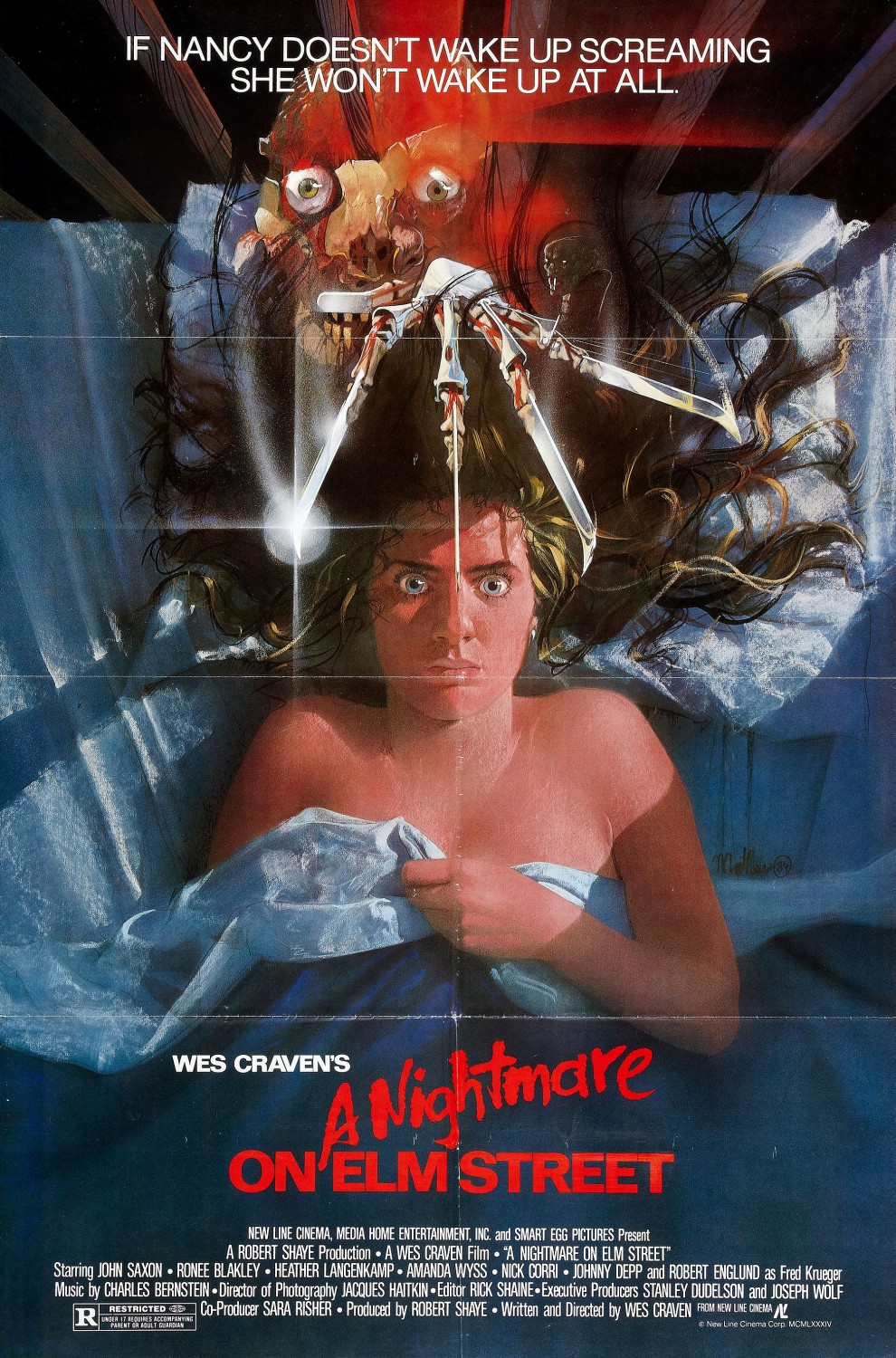
A Nightmare on Elm Street original poster

It has been a year since filmmaker Wes Craven passed away after a long fight with brain cancer. Despite the fact he was 76 years old, it still feels like he left this world far too soon. The following article is about a screening of perhaps his most famous film which I attended seven years ago, and it remains one of the most enjoyable, informative and entertaining screenings I have ever attended in Southern California.

Wes Craven made a special appearance on March 29, 2009 at the Aero Theatre in Santa Monica for a special screening of the original “A Nightmare on Elm Street.” This horror classic was released back in 1984 by the then fledging distributor New Line Cinema, and it remains one of the great horror classics of all time. This screening was sold out as Craven was there to do a live commentary of the film, and he was joined by director Mick Garris who started things off by saying, “I hate those people who talk through the movie!”

What shocked everyone the most was that the 35 mm print of “A Nightmare on Elm Street” was in pristine condition to where it looked like it had never even been run through a film projector before. Both Craven and Garris gave their compliments to the Aero Theater for getting their hands on such a beautiful print, and the audience applauded in agreement.

Garris started off with the question Craven must get every single day of his life: “Where did you get the idea for this movie?”

Laughingly, Craven said the idea for “A Nightmare on Elm Street” came when he was watching late night television, and a story came on regarding a young man who had died after having horrible nightmares. This case led to a series of articles in the Los Angeles Times about the boy and how he told everyone there was a man inside his dream trying to kill him. His father, a doctor, kept giving him sleeping pills to help him rest more easily. But when the police found the boy’s lifeless body, they also found all the sleeping pills his father gave to him underneath his bed. He never took a single one.

Craven also said the film was inspired by a dream sequence he did in “The Last House on the Left” where a character named Weasel has this nightmare where he is strapped down on an operating table with the parents of one of his victims hovering over him in and dressed in scrubs. The husband ends up taking a hammer and a chisel and places the chisel right on Weasel’s front teeth. The hammer comes down with a thrashing blow, and Weasel suddenly wakes up. Craven said when people talk about “Last House on the Left,” it is always this particular scene they bring up which astonishes him. Turns out it stayed with him to the point where someone suggested he make a movie out of a dream. Guess what happened next.

Craven also made it clear that “A Nightmare on Elm Street” was not inspired by any specific episode of “The Twilight Zone.” Instead he said he was trying to establish the world of dreams as he finds them, as we all do, endlessly fascinating. Throughout the movie, he discussed the subject of dreams at length and talked of how they have no rules to them. Dreams seem to revolve around the violence and darkness we experience in the world either through the news or firsthand, and Craven discussed how they seep into our subconscious all the time by saying, “If we were ever fully conscious of all the bad things that were happening to us, it would be too painful for us to handle.”

When Craven he took his script to every studio in Hollywood, he said the executives all rejected it because they found it to be ridiculous. But even as he got more and more broke, he kept shopping it around until he met Robert Shaye, the head of New Line Cinema, at a party in New York. Back then, New Line Cinema existed merely as a storefront in downtown New York, and it would have gone bankrupt had this movie not been successful. Indeed, New Line Cinema will forever be known as the house Freddy Krueger built.

Craven also remarked about how he didn’t know much about signing contracts at the time when he signed with Shaye to “A Nightmare on Elm Street.” Since he was already so broke and filled with doubt of what he could do, he felt he had no choice but to sign the contracts given to him. But what he thought would be a 50-50 situation turned out not to be the case, and from that point on New Line Cinema owned the movie and Freddy Krueger. The realization of this brought forth many hisses from the audience.

But when he was asked to make another “Nightmare” movie, which became “Wes Craven’s New Nightmare,” Craven asked for profit participation in the franchise he did not previously have. Shaye later told Craven he agreed that he was not treated fairly, and the deal between him and New Line got restructured to where Craven got what he rightfully deserved.

Garris pointed out how “A Nightmare on Elm Street” had an amazing cast for a genre film and asked Craven about his casting process. Craven replied he looked for actors who didn’t have a lot of credits to their name in the hope of getting people who could act more naturally. This was actually Johnny Depp’s very first movie, and Craven recalled how incredibly nervous Depp was throughout the shoot. Depp did manage to get a friend of his to help him out, and that same friend got cast as a coroner.

Of all the young actors, the most experienced was Amanda Wyss who played Tina. Amanda also starred in “Better Off Dead” as the girlfriend who thoughtlessly breaks John Cusack’s heart.

In casting Heather Langenkamp as Nancy Thompson, Craven said he chose her because she was basically “solid peasant stock” (the audience was shocked at this description) and looked like an “every woman.” This was what he wanted for this part, and Langenkamp turned in an excellent performance playing a character everyone could relate to. Nancy was also the first of many strong female characters Craven would utilize in his movies.

Garris then asked Craven how he created Freddy Krueger. Craven replied the inspiration for Freddy arose when he came across a homeless guy with a bowler hat who was shuffling his way slowly down the sidewalk, his face a mask of nasty scars. He said the sight of this man creeped him out a lot, and the image of the man stayed with him long after he vanished. The name Freddy came from a kid who Craven said used to beat him up at school, and he was at one time going to be based on a janitor he remembered from school who frightened him and his classmates. He was also adamant that Freddy not have a mask since this had already been done to death in the “Halloween” and “Friday The 13th” movies.

Krueger was also originally envisioned as being older, but this changed when Robert Englund came in to read for the part. Unlike other actors who were reluctant to portray such a dark and evil character, Englund was not intimidated by it and was willing to be serious with the material. Craven said Englund took a great delight in playing Freddy, and his audition convinced him the character did not have to be an old man for it to work. When an audience member asked if there was some sort of sound device or technique used to make Freddy’s voice sound deeper, Craven answered by saying, “Robert’s voice was all Robert’s.”

The budget for “A Nightmare on Elm Street” was around $1.8 million, but a big chunk of financing fell through two weeks into the shoot, putting the cast and crew in a position where they would not get paid. But once Shaye explained the situation to them all, not one crew member left the set. When the movie opened, it earned back its $1.8 million budget in just one weekend.

Craven also described how the special effects were created and what inspired them:

  • During the scene where Nancy falls asleep in her high school English class and sees Tina being dragged away in a body bag, the trail Tina leaves behind her was inspired by the slime trails left by snails.
  • When Nancy gets stuck on the stairs while running away from Freddy, the goo she steps in was actually oatmeal.
  • When the centipede comes out of Tina’s mouth, it apparently got lost on the set and the bug wranglers couldn’t find it. When the crew broke for lunch, none of them came back.
  • When Nancy cornered Freddy in the downstairs basement and set him on fire, the man doing the stunt was Craven’s racquetball partner.
  • In regards to the montage of Nancy setting up the traps to take Freddy down, the book she uses as a manual was actually a World War II manual on booby trapping.

Craven didn’t hesitate to bring up the constant fights he had with the Motion Picture Association of America (MPAA). When Tina’s bloody body, after being dragged over the ceiling, is dropped on the bed, the splash of blood when she landed was quite enormous. The MPAA asked him to cut down the scene to avoid an X (now NC-17) rating. Craven recalled these experiences as both very painful and never ending for him as they occurred with just about every film he made (“Music of the Heart” might have been an exception).

Those fights with the MPAA continued on with “Scream,” and Craven admitted he was baffled why none of the members realized that it was a satire. They even suggested the third act be completely cut, and this illustrates one of the many horrendous suggestions the MPAA comes up with when they judiciously give ratings.

One audience member asked Craven why he used teenagers instead of adults in the movie, and he replied very simply, “Adults would never have watched it.”

One of the funniest moments of the evening was during the scene where Freddy attacks Nancy’s mother, and how her burnt corpse descends into the mattress beneath her. Craven didn’t even try to hide the fact this was one of the least successful special effects in the movie. Regarding John Saxon, who played Nancy’s father, and his expression in the scene, Craven said, “John’s not upset that his wife just died. It was the special effects that tore him up!”

Charles Bernstein composed the movie’s unforgettable and unnerving score, and Craven praised his work as Bernstein had very little money to work with. Craven said he wrote the “1, 2, Freddy’s coming for you” poem, and Bernstein put music to it and took it from there.

As the evening continued on, we got to know more about Craven more as a person. In regards to his career as a horror filmmaker, he told Garris it was all a roll of the dice. When his good friend Sean S. Cunningham asked him to make “The Last House on the Left,” Craven remembered telling him, “I don’t know anything about making a scary movie.”

The audience was also surprised to learn Craven was not allowed to see movies as a kid, and it was not until much later that he finally got the nerve to sneak out of his parents’ home to see one. He credits “To Kill a Mockingbird” as the movie which changed his life and said the original “Texas Chainsaw Massacre” frightened him to death and left him in an unnerved state for months. But even after he had kids of his own, Craven said he never really changed as a director or in the kind of films he made.

When a movie of his opens in theaters, Craven said he always gets out of town as soon as possible. Life can get very miserable if your movie turns out to really suck. When Garris asked Craven if he got to see “A Nightmare on Elm Street” when it opened, Craven made it clear he hates watching his movies in a theater because he is usually driven mad by problems with the sound and projection.

There has never been any doubt Craven is an extremely intelligent filmmaker and human being. To hear him talk about the themes embedded in “A Nightmare on Elm Street” as well as the importance of horror movies made this live commentary all the more fascinating. Freddy Krueger became so popular with audiences because bad guys are far more interesting than the good guys. Another way of looking at this is of how the devil is more interesting than God because he is not bound by any moral obligations, and there is no rule he is not willing to break.

The way Craven sees it, horror is good for you as it forces you to deal with the chaotic. While other filmmakers are busy making “torture porn” movies, which Craven is not a fan of, he said he never tries to make horror look cool. Eventually, we all have to deal with the chaos of life, and we cannot spend the rest of our lives hiding from reality. If you watch the news, violence surrounds us in our everyday lives and gets deeply rooted in our subconscious mind. Horror films are affected by current events of the time they were filmed in

One of the best points that Craven made was that if you don’t know what darkness is inside of you and turn a blind eye to it, then you are in deep trouble. You cannot hide away from your dark side, and you need to be fully aware of what extremes people will go to in order to survive.

In the end, this is what makes Nancy so brave; she is the only one in “A Nightmare on Elm Street” capable of dealing with reality. This is in direct contrast to Nancy’s mother, Marge (Ronee Blakley), an alcoholic who hides vodka bottles in different parts of her house. She also becomes overly protective of her daughter by having metal bars put up on the doors and windows. Her way of dealing with reality is not healthy, and it is endemic of the other characters as they are not handling it very well either. But in the end, kids need to know they have allies in their parents, and Nancy manages to find one in her father.

“A Nightmare on Elm Street” still holds up after all the years despite the dated styles and special effects. Garris said he loved how everything keeps building up and of how there is an increasing sense of dread throughout. This movie taps into those terrifying dreams we all had when we were young, and this is just one of the reasons why it remains so terrifying to this day; it deals with the never ending fascination we have with dreams, and it creates a world for them to exist where anything can happen.

Rest in peace Wes Craven.

Copyright Ben Kenber 2015.

Molly Shannon revisits Mary Katherine Gallagher and ‘Superstar’ in Los Angeles

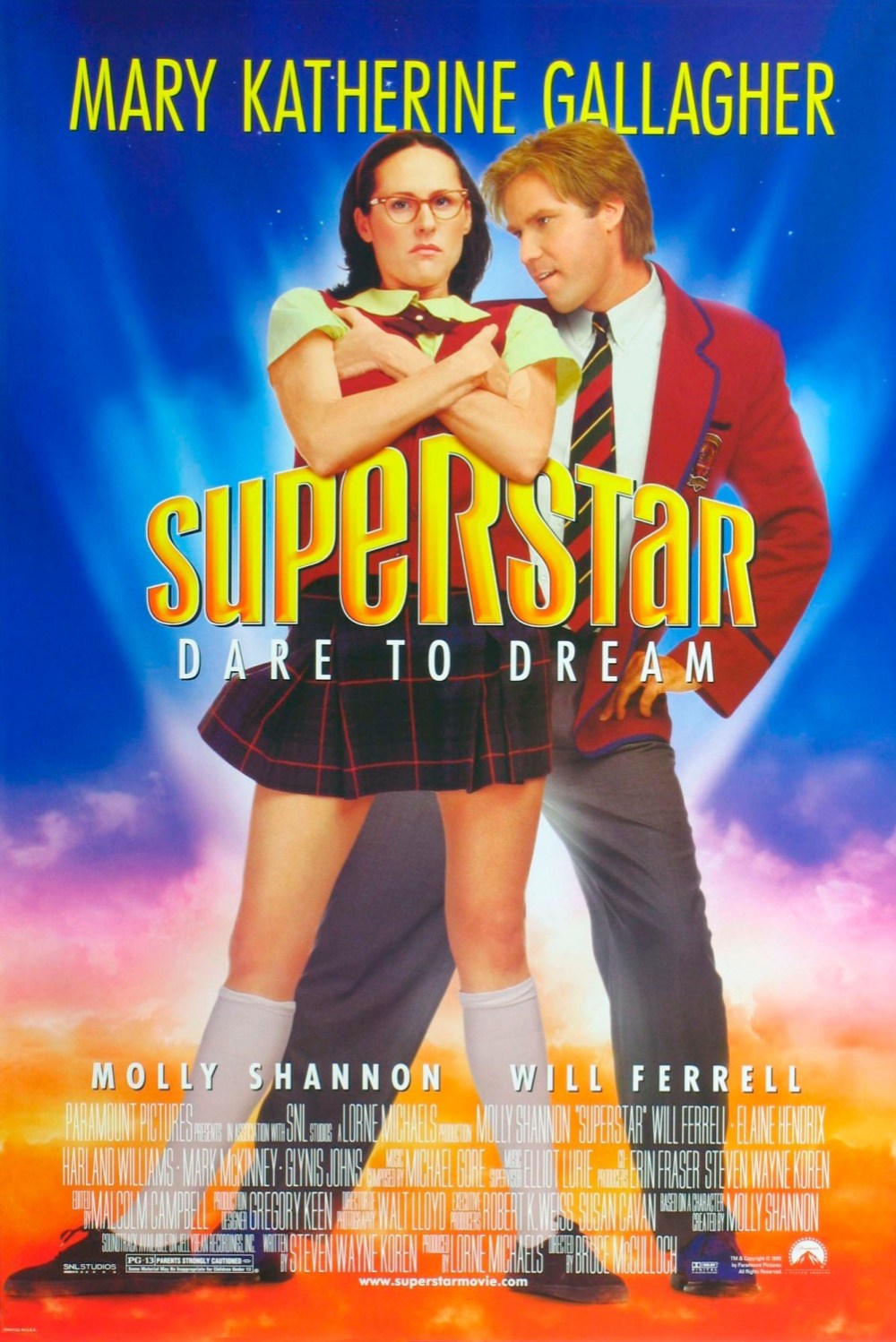
Superstar poster

Molly Shannon had quite the run on “Saturday Night Live,” giving us such hilarious characters like the 50-year-old Sally O’Malley, self-proclaimed “Joyologist” Helen Madden, “Goth Talk” co-host Circe Nightshade and “Delicious Dish” co-host Terri Rialto. But her best character by far was the social outcast Catholic schoolgirl Mary Katherine Gallagher whose severe mood swings and love of TV movies she would always do monologues from still have us in hysterics to this day. Mary’s popularity became so huge to where she eventually got her own movie called “Superstar” in which she attempts to live out her dream of getting a kiss from the most popular guy at school, Sky Corrigan (Will Ferrell). Despite a middling reception upon its release in 1999, the movie has since earned a cult following.

Shannon got to revisit Mary Katherine Gallagher and “Superstar” when American Cinematheque, in partnership with Alamo Drafthouse, screened the movie at the Egyptian Theatre in Hollywood. Joining her was the movie’s director Bruce McCulloch and its screenwriter Steve Koren. Shannon, who hasn’t aged much since her “SNL” days, was all smiles and showed no hesitation in doing Mary’s signature “Superstar” pose to the delight of the audience.

The first question on everybody’s mind was how Shannon came up with Mary Katherine Gallagher, and she replied the character was originally a version of herself, albeit a very exaggerated one. Like Mary, Shannon attended Catholic school, was never really comfortable there and got very nervous when going to confession. She also said the idea for Mary putting her fingers into her armpits came from a friend of hers she used to go on vacation with in Palm Springs. They were at the age where body odors began emanating from their bodies, and Shannon’s friend got her to smell her armpits and vice versa. Shannon also added she is no longer a practicing Catholic.

McCulloch, best known for being on “The Kids in the Hall,” originally turned down the opportunity to direct “Superstar.” Shannon at the time was co-starring opposite Drew Barrymore in “Never Been Kissed,” and Barrymore begged her to go after him and stop the airplane he was on from taking off. McCulloch said his reason for turning down this movie was because he was scared he wouldn’t be able to deliver the goods. He was also concerned he would be taking on another person’s project as well as their life and a significant part of that person’s career. Still, Shannon managed to track McCulloch down and he agreed to direct.

Koren had worked with Shannon on “SNL” and had written the Mary Katherine Gallagher sketches, so it seemed appropriate that the two of them wrote the screenplay for “Superstar.” Actually, it was Lorne Michaels who was “really into the movies,” as Koren put it, who wanted to see Mary get her own film. Koren said when writing the screenplay, it came down to thinking about the history of Mary and where she came from. After that, it was about giving the screenplay a three-act structure and going through a number of rewrites to where they had too much material. In the end, McCulloch said they managed to simplify things by making “Superstar” into a girl movie about finding yourself and of Mary getting her first real kiss.

McCulloch remarked how Shannon never wanted to stop even after shooting 11 takes of the same scene due to the ferocious energy she brought to Mary. He found this to be refreshing as other actors he worked with were not like that. In fact, he even recalled when he finished a third take with an actor and wanted to do another, and the actor looked at him and asked, “Don’t you have it yet?”

One of the many things we love about Shannon’s portrayal of Mary is how fearlessly she threw herself into the physical comedy and crashes into any and every object in her path. Shannon said she grew up watching John Ritter on “Three’s Company” which became a huge inspiration for her. She also added she always made sure to stretch out beforehand and that physical comedy can be very dangerous when doing it with another person.

Shannon also confirmed that when it came to making out with the tree, it was never sterilized beforehand. McCulloch even added he “had to pull her off that goddamn tree” more often than not.

As for her favorite moments in “Superstar,” Shannon said one of them was when Mary was watching the television movie “The Boy in the Plastic Bubble” starring John Travolta as it proved to be her escape from sadness. She also loved the scene where Mary was in her bedroom talking about her breasts as it reminded her of when she was a little girl and thought about “bras” and “big boobs” most of the time.

When “Superstar” was released in 1999, Shannon admitted to seeing it in the theater “so many times.” She kept thanking God for the opportunities given to her, and she reveled in the audience’s reaction to the movie. At one particular showing, she remembered a little boy who saw her and then quickly looked at the screen and then back at her. He leaned over to his mom and said, “Mom, I think that’s the girl in the movie.”

Each of the night’s guests had worked on “SNL,” and an audience member asked how hard it was for them to leave the show. McCulloch recollected that after a season or two he wasn’t sure if he wanted to come back, and he later moved on “The Kids in the Hall.” Koren replied he left when he was hired to be a writer for “Seinfeld,” and it was very tough on him emotionally to move on from “SNL.” As for Shannon, she said she loved the show and wanted to leave while still in love with it. She had nothing planned when she left, and her reasons for leaving were more personal as her father was dying from cancer. Quitting the show allowed her to spend more time with him before he passed away.

It was great to see such an enthusiastic audience come out to see “Superstar” at the Egyptian Theatre. Shannon proved to be a delight as she has lost none of her enthusiasm for Mary Katherine Gallagher or acting. It was also a lot of fun to see McCulloch and Koren share their insights about the movie’s making as it proved to be better than its reputation suggests. As for where Mary would be today, Shannon is convinced she would be in a lot of therapy, but she also hoped Mary would have found love. Regardless, there’s no denying that after all these years, Mary is still a superstar.

Copyright Ben Kenber 2016.


Sarah Hyland and Graham Phillips Discuss EDM and ‘XOXO’

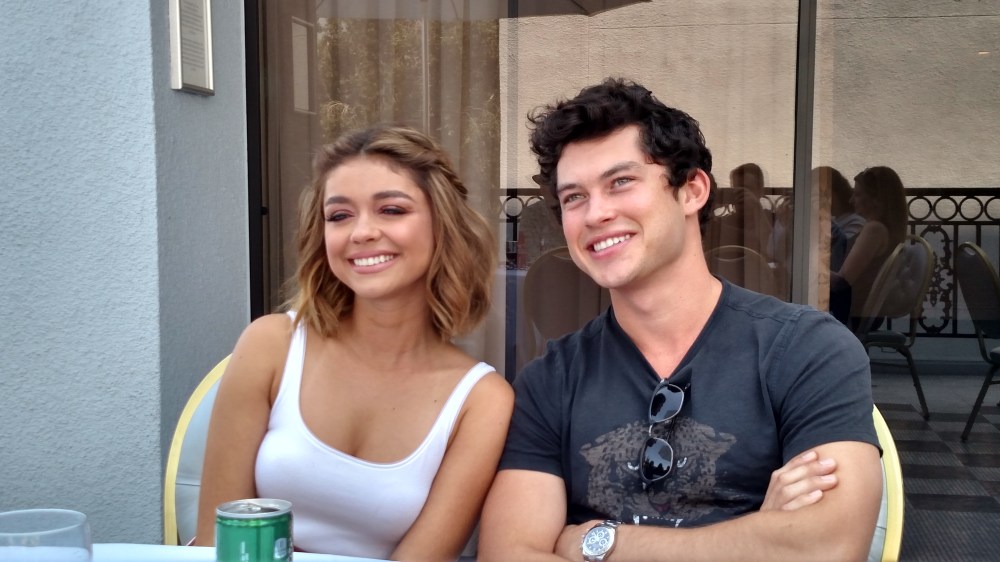
XOXO Sarah Hyland and Graham Phillips

The Netflix drama and music film “XOXO” follows six strangers whose lives collide at a most vibrant EDM festival. Among those strangers are Krystal (Sarah Hyland) who is hoping to find true romance in a place she expects to find it, and Ethan (Graham Phillips) who is about to make his DJ-ing debut at the biggest EDM festival of them all, XOXO. During their time there, Krystal and Ethan come to find now what they wanted, but what they need most as will the other characters around them.

“XOXO” offers a cinematic glimpse into the world of EDM which has gone from being played in illegal underground rave parties to becoming a major part of musical festivals around the country. We see all the characters get dressed up in exotic costumes as if they are headed to another planet, and drugs of all kinds are in heavy supply to where some innocent fans don’t realize right away when they have just been given some. Either way, they are all there to experience the glorious emotions EDM gives off, and none of them can wait for the bass to drop.

Both Graham Phillips and Sarah Hyland recently dropped by the London Hotel in West Hollywood, California to talk about their experience making “XOXO.” Courtney Fairhurst Howard from Sassy Mama in LA asked them both if they had knowledge of EDM music and if they had attended any EDM festivals before shooting began. This would soon lead into my question about the preparation Graham underwent to become a truly talented DJ.

Sarah Hyland: I have been a fan of EDM music for a while. I had never been to a rave so to speak, but I have been to places like Coachella where there’s always rave tents. So I kind of experienced something like that before, but it was really cool to just indulge myself in this culture. It was great. I learned a lot from it, and it was a lot of fun.

Graham Phillips: I too have enjoyed EDM for a really long time. I’ve sort of been drawn to more of the sweeping symphonic vibe of EDM like Above & Beyond or Madeon. Whenever they can integrate some organic sounds as well into all the electric sounds, I tend to really like that. I came from a musical theatre background as did Sarah, so maybe that’s why. I actually started DJ-ing my freshman year in college just to meet the social chairs of the eating clubs at Princeton and just because as a freshman male you’re the bottom of the social ladder and you can’t really get access to any of these clubs until you’re in a fraternity. And so I learned to DJ and they needed DJ’s so I was like okay, I will learn to DJ. I like the music anyways. I did start liking it more and more, and I started to throw some parties in Orange County with some of my friends who actually liked the music even more than I did. They were the people who were finding these new tunes as they were coming out. I loved hosting parties and still do, and that’s sort of what it grew from. I guess sophomore year it kind of petered out, but when I got this script at the end of my sophomore year I found it so funny because this was just what I experienced but on a much smaller level. Actually Chris, the director, didn’t even know that I had any DJ-ing experience when he cast me, so that was kind of a fun surprise for him. He didn’t have to teach me everything.

Ben Kenber: Was there any specific research you had to do in terms of understanding the equipment your character uses?

GP: I actually used almost all my own equipment for this. I just brought it to the set and asked if I could please use this instead of something completely foreign (to me), and they were like yeah, sure. It didn’t require a lot of research for me which was really nice because a lot of the shots we grabbed at real festivals where we had a five-minute slot onstage in front of 80,000 people. So when you have just a small amount of time to get the shot, the last thing you want to be doing is fumbling around with the knobs. It was nice that I had some background in it.

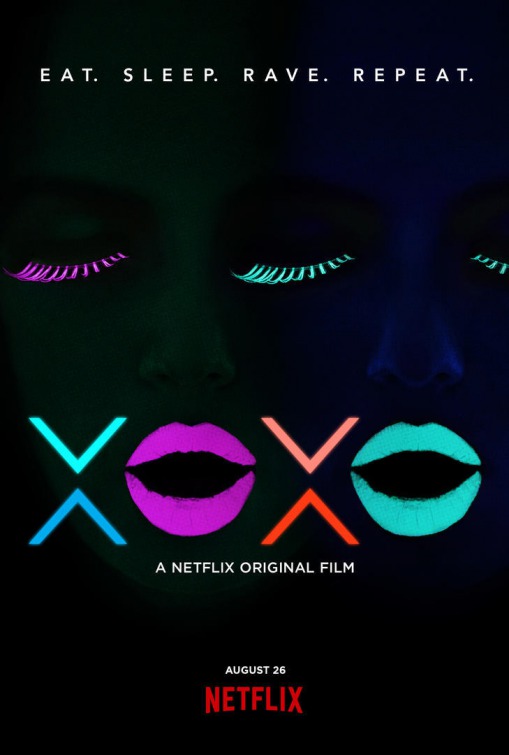
It was great to learn how Phillips had plenty of experience in DJ-ing before filming “XOXO,” and his expertise with it certainly shows when you watch the movie. “XOXO” is set to debut on Netflix on Friday, August 26. Please be sure to check out the poster and the trailer below.

XOXO movie poster


Margo Martindale and John Krasinki Discuss an Unforgettable Scene in ‘The Hollars’

The Hollars poster

We all know John Krasinski from his role as Jim Halpert on the American version of “The Office” as well as in movies like “Away We Go” and “13 Hours: The Secret Soldiers of Benghazi.” Now he steps behind the camera to direct his first film since “Brief Interviews with Hideous Men,” and it is called “The Hollars.” In addition to directing and producing this film, Krasinski also stars as John Hollar, a struggling New York City graphic novelist who ends up returning home upon learning his mother Sally (Margo Martindale) has a brain tumor. Once he arrives, John is forced to deal with his past which he has yet to put behind him as well as the possibility that his mother may not be around for much longer.

Both Krasinski and Martindale stopped by the London Hotel in West Hollywood, California to talk about their experiences making “The Hollars.” Martindale showed up first and remarked how she had been travelling to a lot of different places recently. Among those places was San Francisco, and she was stunned to see so many people there wearing jeans and jackets during the summer season. I quickly told her of a quote I heard from the movie “48 Hours:”

“The coldest winter I ever spent was the summer I spent in San Francisco.”

Suffice to say, she and everyone else got a big kick out of that quote.

Once Krasinski came and joined Martindale, the press conference was underway and I asked them both about a specific scene where Martindale ends up acting a monologue (you’ll know it when you see it) which she renders in an amazingly vivid fashion. I asked her how she prepared to deliver this monologue, and her answer revealed there was more to what we saw and the movie’s screenplay written by James C. Strouse.

Margo Martindale: I learned it (laughs), and then I let it happen, and John (Krasinski) wrote it.

John Krasinski: Yeah, it was one of the only scenes that I actually wrote into the script because it was based on an experience that my dad had talked about, so it was bringing a personal spin to it. I talked to Margo about it, and it was just a really special thing to put in there. One of the things I hope for this movie is that you connect to this movie because it relates to your own family, and that the people in the movie stop being family in the movie and starts to become a projection of your own family. So I think innately we put a lot of different stuff from our own families into this movie, and so that was a particular thing I put in.

MM: It’s a beautifully written monologue, and I think probably that you gave me more and more direction on that…

JK: Yes.

MM: Because I needed to know where you wanted it to land and where I was coming from and why was I saying this. So we talked a lot about it, John and I, and I think I probably did that more than any… I don’t know.

JK: I think you did. It was a pretty new addition to the script, so Margo was very good to ask where it was coming from because she knew it was personal.

Please believe me when I say Margo Martindale’s performance is worth the price of admission to see “The Hollars” when it arrives in theaters on August 26.

Copyright Ben Kenber 2016.

Exclusive Interview with Eva Husson about ‘Bang Gang (A Modern Love Story)’

Bang Gang (A Modern Love Story),” just by looking at its trailer, seems like the French version of “Kids,” but that’s not even remotely true. Based on a true story, a fact we don’t discover until the end credits, it follows a group of ordinary teenagers who live in the suburban neighborhoods of France and participate in sex parties they refer to as “bang gangs.” In the center of the sexual shenanigans is the beautiful George (Marilyn Lima), one of the main organizers of these parties and who experiences some intense inner turmoil. After being spurned by her would-be boyfriend Alex (Finnegan Oldfield) who goes after her best friend Laetitia (Daisy Broom), George begins feel increasingly isolated from everyone around her even as the parties become increasingly reckless. In short, this story will not end well. Or will it?

This movie marks the feature film directorial debut of Eva Husson whose previous credits include the short films “Hope to Die” and “Those for Whom It’s Always Complicated.” Many consider her one of many directors to emerge from the world of music videos, but she will be quick to silence you on that. Born in France, Husson earned an M.A. in English literature from the Sorbonne, and she would later move to America to pursue an M.F.A. at the American Film Institute. She did make some music videos along the way, but her focus has always been on writing and directing feature films.

With “Bang Gang,” Husson has pulled off an impressive debut filled with strong performances by a mostly non-professional cast, and she is aided by the lush cinematography of Mattias Troelstrup as well as the atmospheric music score by White Sea.

I got to talk with Husson while she was in Los Angeles to promote “Bang Gang (A Modern Love Story” which she described as “a movie about teenagers falling in love in the midst of a sexual apocalypse.” She explained how she pulled off the long tracking shot at the movie’s beginning which lasts for several minutes, why she put the term “based on a true story” at the movie’s end instead of the beginning, and she pointed out how the project was inspired by stories involving American teenagers and not French ones. She also spoke of why she had her cast watch Paul Thomas Anderson’s “Boogie Nights” and Lars Von Trier’s “Melancholia” before the film shoot began.

Please check out the interview above. 

AN ULTIMATE RABBIT NOTE: This video interview was recently updated to eliminate any copyright issues which were never intended, and to make it available to the widest audience possible.

Bang Gang poster

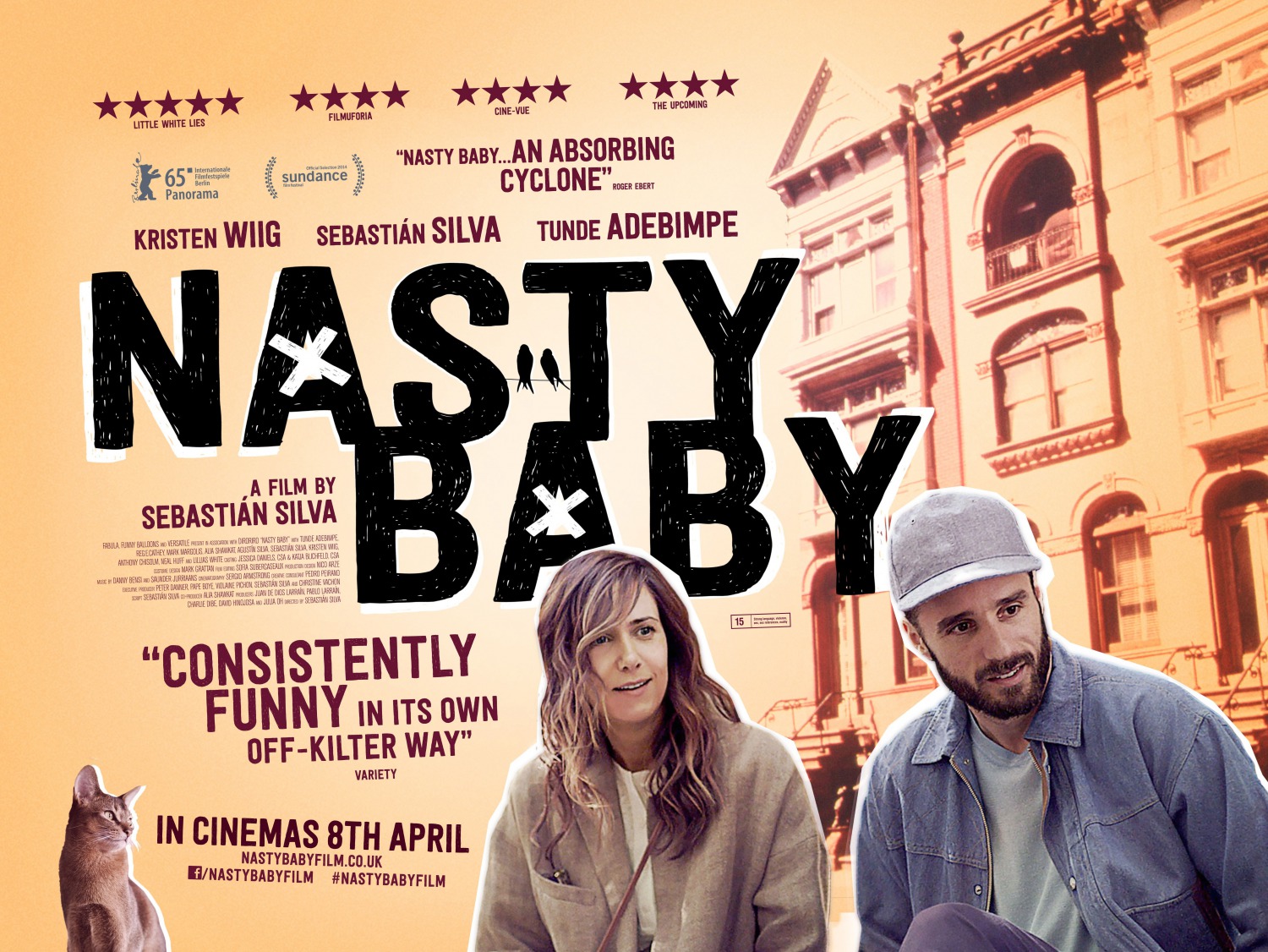
Kristen Wiig and Sebastián Silva Discover a Cinematic Freedom in ‘Nasty Baby’

Nasty Baby UK poster

After winning various awards on the festival circuit including the Teddy Award for best LGBT-themed feature film at the 65th Berlin International Film Festival, “Nasty Baby” finally made its way to American audiences. The movie stars Sebastian Silva, who also wrote and directed it, as Freddy, an experimental artist based out of Brooklyn, New York who is desperate to have a baby with his boyfriend Mo (Tunde Adebimpe). Joining them on this quest for parenthood is their best friend Polly (Kristen Wiig) who plans to be the surrogate mother for the couple, and we watch as they deal with various complications and obstacles which keep them from starting a family. But when an especially annoying neighbor known as The Bishop (Reg E. Cathey) constantly harasses them, it leads to a terrifying situation which could destroy all their plans forever.

Kristen Wiig and Sebastian Silva were on hand recently for the “Nasty Baby” press conference which was held at the London Hotel in West Hollywood, California, and they were both very descriptive about what went into the making of this movie. We all know Wiig of course from her endlessly hilarious years on “Saturday Night Live” and for acting in and co-writing the wonderful comedy “Bridesmaids.” Silva’s previous directorial efforts include “The Maid,” “Crystal Fairy & the Magic Cactus” and “Magic Magic.”

One thing that struck me in particular was how freed up the actors appeared to be onscreen as the movie was shot mostly with a hand held camera. I couldn’t help but think that the actors had an easier time moving around and performing scenes this way than they would have on any other film set as they didn’t have to worry about being in the right position at the right time. They were all just let loose and trusted that the cameraman would capture their best moments with no problem. I ended up asking about them about this aspect of filmmaking.

Ben Kenber: This movie was shot mostly with a hand held camera, and it felt like this gave the actors a lot more freedom to move around that they would not have had on a regular movie set. Would you say that you found a special freedom in acting with this way of filming?

Kristen Wiig: Yeah, I did. Sergio (Armstrong, the director of photography) was amazing. You just sort of feel like you can be those people and do the scenes and he’ll kind of find you. If you wanted to do it again he would kind of figure out where to go. There was a lot of freedom. There weren’t a lot of marks we had to hit.

Sebastian Silva: Yeah, there were no marks at all. All of the actions of course are written and all the scenes so we know the locations and everything that needs to happen. But there are a lot of times where we didn’t use the slate, and then we would move from a wide shot to a close up without cutting ever. I was acting, I had never acted before, but I feel that for actors not to be cutting all the time that it is also so much fun because scenes and takes usually don’t last more than four minutes. It’s usually like ‘action’ and then it’s like four minutes that the actor gets to do his or her thing, and then it’s like ‘cut,’ makeup and then they don’t really get to enjoy performing as much as like when you’re improvising a take and go for as long as 35 minutes sometimes, right?

KW: Yeah.

SS: Yeah, it was a lot like that, changing things as we were shooting without cutting. It was fun.

BK: I imagine that not having to worry about hitting your marks frees you up a lot.

KW: Oh yeah, definitely (laughs).

The one thing they always taught in those acting on camera classes is that the camera is always your friend and will never let you down. It certainly didn’t let Wiig or Silva down during the making of “Nasty Baby” as the both inhabit their characters more than play them, and it never feels like you are watching a movie. Instead, it feels like you are watching real life unfold, and this is not an experience you often get at the movies.

“Nasty Baby” is now available to watch on YouTube, iTunes and Amazon Video.

Copyright Ben Kenber 2015.

Nasty Baby American poster