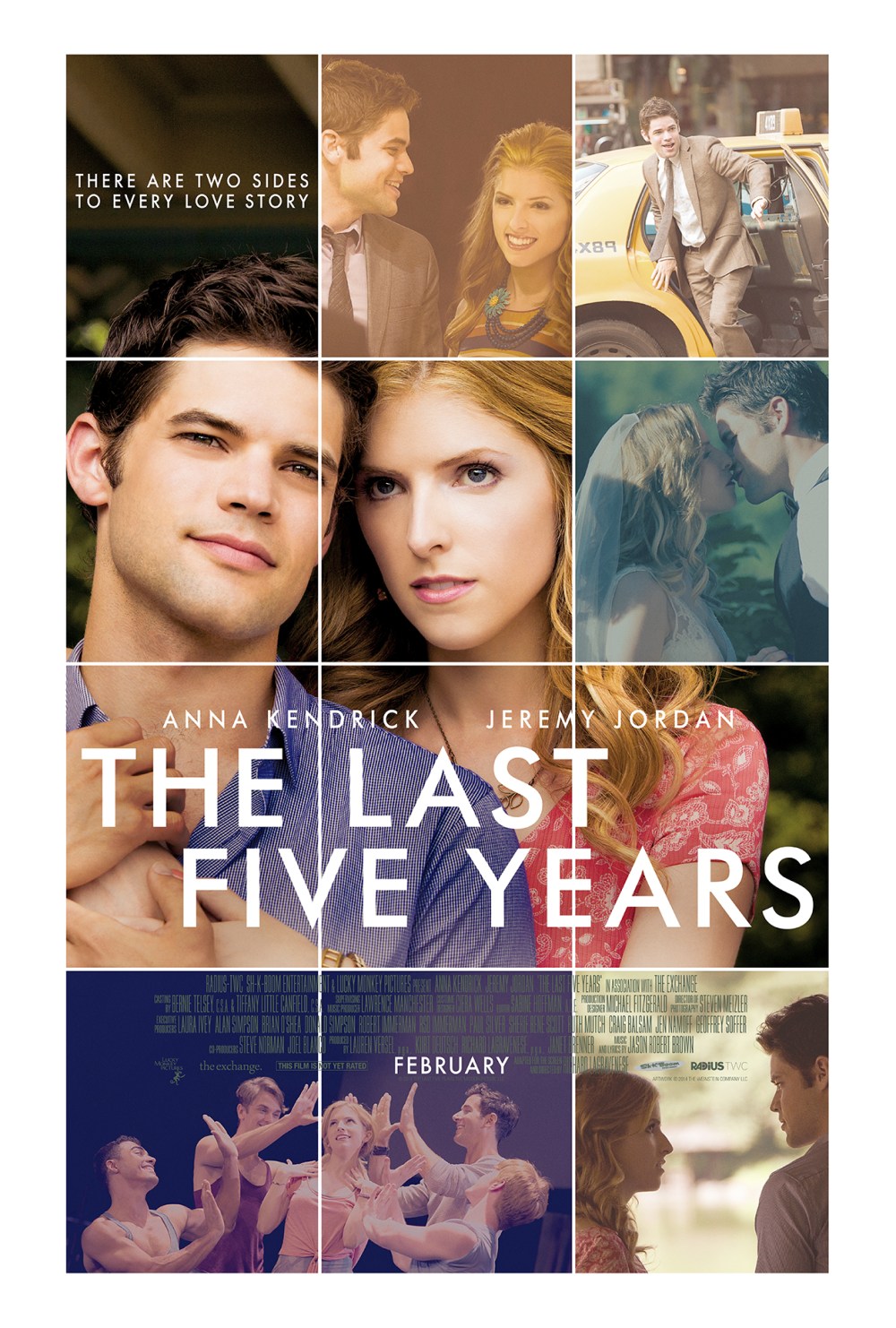
It should be no secret by now that Anna Kendrick has quite the singing voice. Whether it’s the independent musical film “Camp,” “Pitch Perfect,” “Pitch Perfect 2” or “Into the Woods,” she consistently dazzles us with her singing whether she’s appearing on the silver screen or on Broadway. In “The Last Five Years,” Richard LaGravenese’s adaptation of Jason Robert Brown’s Off-Broadway show, she plays Cathy Hiatt, an aspiring actress who falls madly in love with the very talented writer Jamie Wellerstein (played by Jeremy Jordan). But as Jamie’s star quickly rises, Cathy finds herself struggling in her acting career to where she begins to feel invisible around Jamie. Essentially, “The Last Five Years” looks at a relationship’s exhilarating highs and its emotionally draining lows, and it proves to be a musical which is far more character driven than one which thrives on spectacle.
I was lucky enough to attend the press conference for “The Last Five Years” held at the Four Seasons Hotel in Los Angeles, California, and Kendrick was in attendance along with Jordan and LaGravenese. I was particularly interested in how Kendrick was able to keep the songs she sang fresh for her in each take. By this, I mean how she kept the songs alive for her to where she wasn’t just giving us something which felt emotionally dead or sounded over-rehearsed. You can perform a song or a monologue so many times before it becomes stale and uninteresting, and you have to keep shaking things up so you don’t end up looking like a robot.
According to “The Last Five Years’” IMDB page, Kendrick had to sing “Still Hurting” 17 times straight through. I brought this up during the press conference and LaGravenese quickly said it was because of all the different camera setups which had to be done for the scene, and this led Kendrick to joke about how much easier it would be to make movies without the camera. When it came to keeping “Still Hurting” fresh from take to take, her answer was complex to where it sounded like she is still trying to figure out how to do that.
Anna Kendrick: You know, if I trained at RADA I might actually be able to verbalize that kind of thing and the fact is I didn’t and I have only learned by working, and I’ve been working since I was a kid,” Kendrick said. “I don’t know and to try to put it into the words would be to destroy the thing. I guess you try to find a balance between going into the material and going to a personal place because you never want to tip it too much in one direction. I feel like I drew a lot of energy from the support of the crew who were unbelievably compassionate and understanding, and nothing gave me greater inspiration than seeing the 40-year old dolly operator in his classic Hawaiian t-shirt listening in. He had the same earpiece in his ear that I had, and watching his face as he counted and I could feel his body counting, all these people are honoring a thing that you’re trying to do and that gives you an unbelievable reserve of energy.
So, after all these years as an actress, it still sounds like this is something she is still working on, and that’s okay. An actor’s, or actress,’ work is never done as the best ones continue to work at their craft year after year to improve upon it dramatically (no pun intended), and it was refreshing to hear Kendrick admit she doesn’t have all the answers because most actors do not. If you think you’re the only one who is struggling with trying to keep a piece you have performed several times fresh and meaningful for yourself, you’re not. Every actor does whether it’s a movie, a play or a TV show they’re working on, but they keep going because they’re passionate about their work. Kendrick may have accomplished a lot as an actress so far, but her work as an actor is never done. Once it is, she may have to retire.
“The Last Five Years” is now available to own and rent on DVD, Blu-ray, and Digital.
Whether she has the lead in a movie or is just playing a supporting role, you can always count on Joan Allen to give a compelling performance. In ‘Room’ she plays Nancy, a mother reunited with her daughter, Joy (Brie Larson), who was kidnapped years before. She also discovers Joy is now a mother herself to five-year-old Jack (Jacob Tremblay), a product of the abuse she suffered while in captivity. As thrilled as she is to have her daughter back in her life, Nancy now has to face the immense struggle of acclimating Joy back into the life she was taken away from and forging a relationship with her surprise grandson. It’s a journey full of awkwardness, but also one which comes to be filled with hope.
Allen appeared at the “Room” press day held at the Four Seasons Hotel in Los Angeles, California and talked about her experience making the movie which was one of the most acclaimed movies of 2015. While it deals with such dark themes as kidnapping, abuse and captivity, she also feels “Room” examines the many truths of parenthood. I asked her what kind of research she did to better understand her character and the nightmarish situation she is forced to endure.
Joan Allen:I just did some reading about abductions and parents. I looked up in particular Terry Probyn who is Jaycee Dugard’s mother. I was hoping to speak with her but I wasn’t able to make that happen, but she had some YouTube footage of what it was like to be reunified. She said one thing that was very helpful to me, that it was a very difficult thing to reunify and you need a lot of help in order to do it. In fact, she and her daughter have created a foundation that helps people and families in this situation unify not only from abduction cases but veterans who had long periods away in the war zone where they’ve been traumatized. It’s very difficult for families to find a way when they’ve had such radically different experiences for extended periods of time and are sad and traumatized by them. And I’m a mother of a 21-year-old and have been sufficiently scared enough by various choices she’s made in life (laughs) to understand what that’s like, to feel that scared for your child and how it’s a ripple effect. It’s certainly not an ouch contest. If it were, the mom would have the biggest ouch. But everybody has huge ouches and that’s just the way it is, and what I’m so moved about by all the characters including Jack is that everybody is trying to move forward and they don’t really know how. They are just not really a throw in the towel kind of people. There is that forward movement, no matter how hard it is, to try and figure it out and to be loving and to try and understand the best way to move forward and get closer to a whole family life back because it’s a tremendous loss. It’s a tremendous devastation to not have that. But they are characters that do try and that do move forward and there’s a tremendous amount of love there, and that’s why I think that the story really reflects that.
“Room” is now available to own and rent on DVD, Blu-ray, and Digital.
Brie Larson is best known for her performances in movies like “Short Term 12,” “Scott Pilgrim vs. The World,” “21 Jump Street” and “Trainwreck,” and she also has a singing career and released an album entitled “Finally Out of P.E.” But if you’re not familiar with whom she is, that’s alright because you won’t be able to forget her after watching her emotionally exhausting performance in Lenny Abrahamson’s “Room.” She plays Joy (a.k.a. Ma), a young woman who was kidnapped several years ago by a man who tricked her into helping him find his lost dog. Joy has since been imprisoned in that man’s garden shed located in his backyard, and she occupies it with her son Jack (Jacob Tremblay). But as time flies by, Joy becomes increasingly determined to escape the prison she and her son have been forced to grow up in, but the outside world provides them with even more challenges than they could ever have expected to endure.
Larson was at the “Room” press day held at the Four Seasons Hotel in Los Angeles, California where she was lauded by many reporters for her brave acting. I read how, when she accepted the role of Joy, she decided to lead a more reclusive life and reduce her social interaction with others in order to better understand her character’s mindset. I asked her what that preparation specifically entailed, and her answer proved to be endlessly fascinating.
Brie Larson:I really love the myth about my reclusive life (laughs). The words that have been used today have been so interesting. How it started was in trying to understand those two years of basic silence of being alone in this place, and I meditate so I was little familiar with trying to get to mental silence and how hard that is. And then I had some friends who had been on silent retreats and I was fascinated by the reactions because some of them could go 10 days and they do it every year and it’s just this time that they absolutely love. You’re not allowed to speak and you’re not allowed to look at anybody because that’s also seen as a form of communication. There’s no connection to the outside world. But I had other friends who couldn’t last 24 hours. They just panicked and left and so there was this sense of just sitting with yourself and imagining Ma at 17, 18 and 19 years old sitting with herself in the way most teenagers don’t. That’s a period of time where it’s all fleeting. It’s all just getting away from everything and wanting to move out and pushing away a parent. In some ways I felt that period of time to be this bizarrely mature experience and set in a horrible setting, but in a way that she has to come to terms with who she is now and this new individual that she’s become that is completely separate from her friends, from her home and from her parents, and it’s the time right before she has a child which becomes her next identity as being a mother. So for myself, it was just seeing what that mental chatter felt like and if it was something to feel that painful moments of it, to feel eureka moments. They were moments that I remembered from my childhood that I had forgotten that were so beautiful and other moments that I completely had forgotten that were more painful. And so having that time to just very simply reflect I felt became a huge part of getting to know her better. But it wasn’t like painful. I found it kind of fun to be honest. I didn’t mind it.
Larson later won, and deservedly so, the Oscar for Best Actress for her performance, and it has since opened up a number of opportunities I can’t wait to see her take on. “Room” is now available to own and rent on DVD, Blu-ray, and Digital.
“The Founder” recently had its press conference in Los Angeles, California, and it took place the week before President Barack Obama is set to leave the White House and Donald Trump will move in. While no one brought up their political views during this press conference, the movie felt more timely than perhaps its filmmakers intended as it illustrates the birth of unrestrained capitalism. Considering we have a die-hard capitalist set to be the next President of the United States, it’s hard not think about the corporate world and corporations as we watch Michael Keaton play Ray Kroc, a salesman from Illinois who discovered a different kind of restaurant run by Maurice and Richard McDonald and eventually turned it into a billion-dollar franchise. But in the process, Ray convinces just about everyone around him that he was the one who founded McDonald’s, and he eventually steals the brothers’ business right out from under them.
Directed by John Lee Hancock, “The Founder” deals with a number of different subjects like capitalism (sustainable and unrestrained), business, greed, the corporate world, etc. The movie also makes you wonder if it is even remotely possible to run a corporation without losing your heart and soul in the process. But most of all, it makes you see how everyone doesn’t see the American Dream in the same way.
Laura Dern also stars in the movie as Ray’s wife, Ethel, and it was fascinating to hear her talk about the elements in the story which were hiding just beneath the surface. Also, she talked about seeing the movie with her daughter and how they reacted to a key scene involving the McDonald brothers.
Laura Dern: The piece that interested me, which was probably the piece I knew about Ray Kroc or McDonald’s, was this question of the introduction of the filler. I was fascinated that the film pointed it out, but also this question of how did it turn from real food to how we can make a fast buck and potentially poison people. What is that? And the subversive question which interested me the most was this question of, can capitalism hold compassion, and what is that story? And so, that moved me so much when John (Lee Hancock) first spoke to me about it, and hearing all these amazing people were involved. I would just love to add because I thought it was so incredible, I got to see the film last night with my daughter who is just turning 12, and to hear from her perspective, because I like to think it’s politically subversive and a commentary on this question of empathy versus corporations and can there be a place for both; I was talking about my favorite shot which just brings me to tears of these two gentlemen with their arms around each other watching the McDonald’s section of their sign be removed. I was talking about it, and when we go in the car my daughter said, “Mom, you know when those brothers were holding each other at the end?” I said, “Yes.” She goes, “That’s how I felt after (President Barack Obama’s) farewell address. We just don’t know what’s next.” And that was the film to me, and I just loved for a 12-year-old the details of the story, the point was she got what I think you all intended, and I was really moved by that.
John Carroll Lynch (above on the right) co-stars as the hard-working Maurice McDonald who is excited to see his brother’s restaurant become an even bigger success than it already is. He excitedly spoke about what he knew about Ray Kroc, but more importantly, he described how Ray’s level of thinking has become the typical kind of thinking for everyone in this day and age.
John Carroll Lynch: I knew Ray Kroc in kind of the way that Michael (Keaton) was talking about. I thought of him as the founder even though I knew there were the brothers before him. I also knew that he had owned the (San Diego) Padres, and I also knew that after his death particularly that his wife gave away massive amounts of money, and I would hear her name on National Public Radio all the time. So, that was my personal relationship with it, but knowing the story a little bit and seeing the things that are absolutely bedrock, admirable American traits of entrepreneurship, of persistence, of salesmanship, of a sense of seeing something and how far it can go, of vision, all of those things are incredibly attractive. And what I love about the way the movie unfolds was how there’s a moment when he could tell the truth about the origin of the company, and you might not feel so badly about what happens if he could just give somebody else credit. If he could just be humble enough to go, there were these two brothers who had this amazing idea, and I figured out a way how to make it on every street in America with this other guy’s help. He could have said any of those things, but every moment he has any opportunity to tell the truth, he can’t do it because he needs to be the guy. There’s also a moment in the story where you watch him kind of digest the lie over time, and it becomes the truth to him. That is very indicative of where we are right now which is what we are told is in some ways, to many of us, more important than the actual truth, and we just want to believe the easy part of what’s said and not the hard parts, and I include myself in that. I don’t want to have to deal with the hard parts. I don’t want to have to deal with the fact that people are destroyed or land is destroyed. I really, really like Egg McMuffins (everybody laughs), and that’s where my dilemma is.
Now whatever you may think about McDonald’s before and after you see “The Founder,” their breakfast menu is simply delicious. Even if eating there threatens my cholesterol levels, I have to have a Sausage McMuffin with Egg or an Egg White Delight every once in a while.
Then there was Keaton who talked at length about how the meaning of the American Dream has changed drastically over time into something which is largely unrealistic. The more he talked about it, the more one had to wonder if it even exists in its most simple form anymore. With wages failing to catch with cost of living increases, you have to wonder if it is even within one’s reach these days.
Michael Keaton: I did some press early on in Europe. I heard it there and I heard it from a few journalists from outside the U.S. yesterday, and this morning on the phone they bring it up. It’s interesting because the U.S. journalists don’t bring this up, and that is the issue of the American Dream. This is fascinating to me unless I missed something. We can go on and on about consumerism, waste, greed, etc., etc. Their perception of what the American Dream is, and let me be a little more specific, not to miss the issue with such a generalization, when they talk about the American Dream, they do it in relation to billions and mansions, and they kind of make the assumption of an extravagant lifestyle of private jets, owning islands and everything. That’s fascinating to me because my concept of the American Dream, unless I missed something here, in its simplest form, is work hard enough and there will be a job available and you can buy a house, and you can buy a car to get you back and forth from work so where you can afford that house, and have couple of kids who can attend a good school, you get a good vacation maybe, and maybe a second car. Unless I missed something, that ain’t a bad thing. I think that’s what it was. That’s not what the perception is. It’s this other thing. I want to say it is an ugly thing. I have no problem with billionaires, especially billionaires like Bill Gates who do the things they do or my friend Yvon Chouinard who I keep referring to. Pick one. There are a bunch of them out there. But there’s this other perception out there. Am I nuts? That’s not what the idea was.
Now while these discussions might have taken away from talking about the making of “The Founder,” they stayed with me long after the press conference had ended. The movie is largely about capitalism and of how it can be exercised in both healthy and unhealthy ways, and it’s hard not to think about our dysfunctional relationship with the corporate world in the new millennium. Whatever way you want to look at it, “The Founder” is a compelling cinematic experience which chronicles the rise of a franchise we are all very familiar with and which plays a significant part in our lives whether we want it to or not.
“The Founder” opens in theaters this Friday, January 20th. Be sure to check it out!
Poster and photos courtesy of The Weinstein Company.
Check out the video, courtesy of Movie Maniacs, to view the entire press conference.
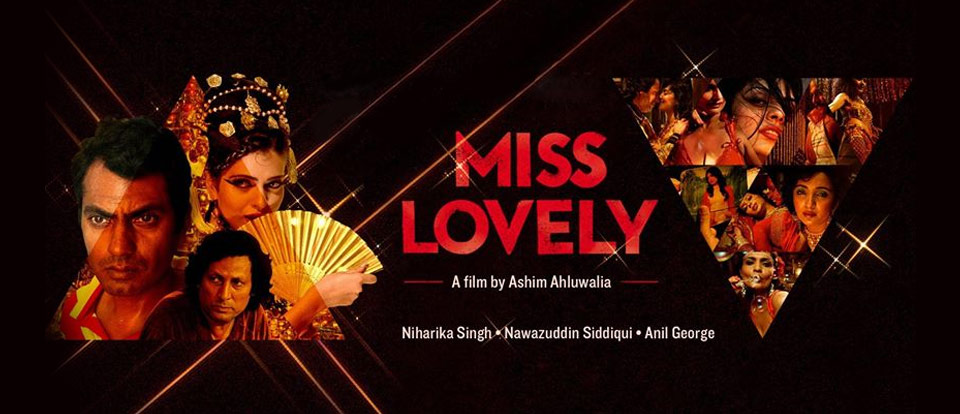
On the surface, “Miss Lovely” might look like a typical Bollywood movie, but this couldn’t be further from the truth. It’s a Hindi feature film which digs deep into the sordid back alley of India’s film industry of the 1980’s which churned out countless horror and soft-core porn movies. In the midst of this sleazy atmosphere are the Duggal brothers, Sonu (Nawazuddin Siddiqui) and Vicky (Anil George), who are among the most prolific producers of trashy C-grade films for Mumbai’s underground market. But while Vicky has no problem with what he does, Sonu is desperately looking to escape this underground reality. When he meets the beautiful actress Pinky (Niharika Singh), Sonu sees not only his chance for escape but also the opportunity to make a real romance movie with her as the star. But as he works to make this a reality, he ends up going down a road from which there is no return.
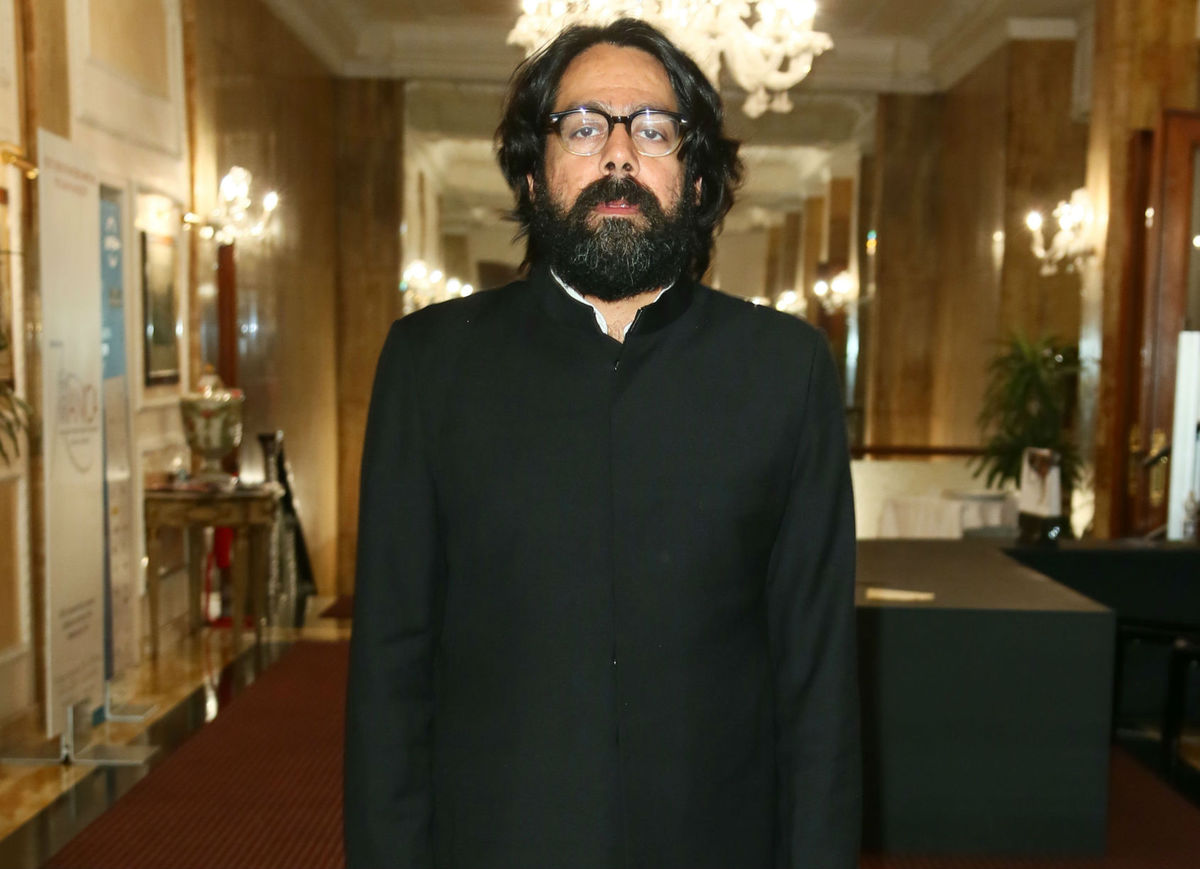
“Miss Lovely” was directed by Ashim Ahluwalia who is said to be part of a new generation of Indian filmmakers who prefer to avoid working with Hindi film stars, and his films have been described as unconventional in how they blur the lines between documentary and fiction. This is certainly the case here as Ahluwalia’s film deals with an industry he has seen up close, and he invites us to journey into its murky depths. It was originally supposed to be a documentary, but when Ahluwalia couldn’t get those working in the C-grade film industry to be involved, he decided to make a fiction film instead. What results is an unforgettable motion picture which is as unsettling as it is intoxicating to sit through, and it’s one of those movies I sarcastically describe as being good fun for the whole family.
I got to speak with Ahluwalia while he was out to promote “Miss Lovely,” and he was super excited to talk about it as the movie looks at an industry which has long ceased to exist due to changes in technology and the widespread availability of pornography on the internet. It was fascinating to hear him talk about this as filmmakers today are dealing with a shift in technology from film to digital, and it’s a shift many are not quick to embrace.
Ben Kenber: I was blown away by it and it was not at all what I expected. It’s more of a movie you experience than just watch.
Ashim Ahluwalia: Exactly. I think that’s really a good way to describe it.
BK: I especially liked how you shot this movie on Kodak Super 16 and 35mm film as it gives the movie a really rough feel which in turn captures the sleazy nature of the business these characters are engulfed in.
AA: Yeah, it was also about the end of celluloid. The whole period that these films were made in was kind of the end of celluloid and then you have VHS replacing it. In a way, that was the precursor to the digital age and this whole way of consuming sleaze I guess. It just moved to the internet in the 2000’s and then that was the end of that. So I think a lot of it has to do with this material that was so critical in the way these films are made and consumed. It’s crazy to think that they were shooting that sleaze on 35mm (laughs), and now people would just die to get their hands on that kind of access to celluloid, so it’s pretty much part of what the film is about.
BK: Now some have suggested that “Miss Lovely” is part of a new wave of Indian cinema. How do you feel about the reaction this movie has had so far?
AA: It has random individuals doing random things and they’re not really connected, and that has more to do with the fact that now people are more exposed to cinema and they’re getting excited by what’s happening in the rest of Asia and the possibility of digital, etc. I think this whole idea was kind of overblown. It was sort of a moment when they were trying to tie everything together. I think “Miss Lovely” is a very odd film honestly. It’s not unique. It’s not odd just to India; it’s just odd generally because it’s such a hybrid film. It’s just taking very comfortably in a way that most art-house movies don’t just take it from the musical, taking from a 50’s noir, taking from sex horror, taking from porn, maybe documentaries or experimental films and stuff like that. I don’t think it represents a new specific type of film from India, but I think this is definitely a moment where there is new stuff and it’s not just Bollywood, Bollywood, Bollywood.
BK: To be honest, I’m not too familiar with Bollywood films…
AA: Well you’re lucky (laughs).
BK: I think the closest I’ve come to Bollywood so far is “Slumdog Millionaire,” but I’m not sure if that counts.
AA: Well yeah but it’s borderline Bollywood honestly. New Bollywood is kind of like that.
BK: How difficult was it to re-create the Mumbai of the 1980’s as you remember it?
AA: It was really hard because most of the places were being bulldozed as we were shooting them. So sometimes at a location, half the building was already knocked down and we just got them to hold for like a week until we shot a scene. It was literally shooting the last remnants of that kind of 80’s one-hour hotels and cabaret halls and stuff. I would say that about 60 or 70% of the locations are gone now and it’s not even been two years. It becomes kind of a document of those places and that kind of time. It doesn’t exist anymore.
BK: I read that you were not looking to romanticize or do a parody of the 1980’s. How did you manage to keep yourself from doing that?
AA: Well I think there’s sort of like a hipster 1980’s thing and I really wanted to stay away from that. I didn’t want to just make like fetishes of all those little 80’s objects. For me, the reason is because I spent a year and a half hanging out with a lot of these people from the C-grade industry because I initially wanted to make a documentary. So, by the time I was done with that one-and-a-half-year period, it was very hard to poke fun at anyone because these are people that you spent so much time with and saw so intimately. It was hard to caricaturize them.
BK: During the movie, we don’t see a lot of the real world outside of the one the Duggal brothers inhabit. When it does intrude on their sleazy underworld, you feel almost as lost as the characters do as they desperately try to escape their circumstances.
AA: Yeah, it’s kind of claustrophobic. I wanted the film to be like this kind of maze that you were trying to get out of and you can’t. The whole point is this kind of escape ends up being a fantasy of a film that could maybe get you out of there, but it’s sort of like endless passageways that lead into other passageways. It’s just a very interior, claustrophobic kind of environment which I think, for me, I relate to that. When you work sometimes in film you feel like that. You don’t have to really only work in secret cinema, but sometimes a bad day job can be like that. So, I think that idea of you were always trying to escape but you can’t, I like that somehow.
BK: This is your first feature film as a director, and your previous film was a documentary. What was the transition like for you from making documentaries to directing an actual feature film?
AA: The first film I made was “John & Jane” and that was a documentary, but it was shot on 35mm and looks more like a dystopian sci-fi film than a documentary. Somebody told me that my documentaries look more like fiction and my fiction looks more like documentaries, so I’m really interested in this idea of what a fiction film is and what a documentary is. “Miss Lovely” is not a conventional or traditional film. It’s still quite loose in terms of its language and it’s quite experimental, so I don’t find much difference. I feel like I could slip in and out between these two worlds quite easily in some ways.
BK: You once said that the raw energy of these C-grade filmmakers reminded you of why you set out to make films in the first place. What was it specifically about them that reminded you of that?
AA: Well I think what happens is that when you start working in any capacity like in an industry or an environment, what ends up happening is that you become quite jaded as a filmmaker. You’re just like always thinking about how do I get money, do I put it in this thing, if I put this person in it then I get this money and then if I work with that person then I get this distribution, etc. I think what ends up happening is that you lose that energy and spirit of why you really love cinema. You don’t watch films anymore because you’re so jaded by it. But when I experienced these guys making films, although the films are very bad admittedly, the way that they would make the films would be so like run and gone. It would be like, “Oh are we running out of film stock? What we do? The actor’s not available? Get another actor to stand in for the guy.” So the character is now played by a different actor, or if you don’t have a shot then you put a stock shot in, or the police are coming into the building so you have to finish the scene like within 15 minutes. The whole anarchic energy of the way the films are made really reminded me of what independent film should be; just making it with such passion. It’s like the passion is going to make the film happen. It really inspired me in a way to just make something which I really love with some degree of madness and passion which I think sometimes gets filtered out of you.
BK: I’m always waiting for the independent film world to explode again like it did in the 1990’s.
AA: Yeah exactly, and then you see how it’s just been co-opted and it feels like such a tired kind of thing.
BK: The characters in “Miss Lovely” are basically composites of the people you met in this industry. You said you originally wanted to do a documentary, but a lot of the people you talked to didn’t want to be involved in it because of the illegal nature of what they were doing. How accurate is this movie to those types of filmmakers?
AA: A lot of the people that were going to be in the documentary initially, I got them to just play themselves in the background. So all the background characters are all like real C-grade people. All the secondaries are actually people that, when I cast them in a fiction film, were like, “Okay I’ll do it.” But they didn’t want to be in the documentary somehow. So, a lot of those real elements I just kind of brought back into this movie in another way through another backdoor and just brought the realism back into it.
BK: That’s surprising to hear that they did find a way to be in this movie without compromising their true identities.
AA: Yeah, and as long as they were in costume they felt like they weren’t revealing too much of themselves, but they were playing themselves essentially. That just gave the whole thing a bona fide genuine authentic atmosphere that is just almost impossible to re-create artificially with actors who don’t know anything about that world. I felt it just brings another energy to it.
BK: The cast is just spot on with their performances. What was the casting process for “Miss Lovely” like?
AA: Well a lot of them are real people that, when you meet them, are so performative anyway. There’s a midget casting director, the little guy, and when I met him he was just so charismatic when he was talking to me about what he did. He is actually a casting director in real life, so he just had to do what he always does and he was really comfortable. A lot of them were really comfortable around the cameras somehow. It’s almost like they were waiting all their lives to be in front of the camera, and suddenly they just did that thing. And of course, if I gave somebody lines, finally they would never remember the lines but they would do their own thing which would be better than the lines I wrote. I would be like, “Yeah let’s just keep that. It’s much better.”
BK: All the actors seem to have a wonderfully natural quality whenever they appear onscreen. It’s like there inhabiting the roles instead of just playing them, and it really sucks you into the atmosphere of the movie even more.
AA: Well that’s because a lot of them really are those people, so that’s partly it. And the others who were more professional actors were now having to match their performance with someone who’s so bona fide and so real that they are like, “S—t! I need to get better at what I’m doing because I’m looking fake now in relation to this person.” So, putting nonprofessional and then professional actors in the same space together creates a very interesting dynamic.
BK: “Miss Lovely” reminded me a bit of the Coen Brothers’ film “Barton Fink” as both movies have protagonists who really want to make a difference in the industry they’re working in, and then they see their dreams get shattered in the worst way possible.
AA: Yeah, I like that film a lot actually. That’s a very atmospheric film. The atmosphere is very much a character in the film, and it’s not just about the narrative. It’s just about the texture of that space and stuff. It’s a good reference I think.
BK: Another movie reminded me of was “Boogie Nights” and the scene where the producers are talking to Burt Reynolds about switching from celluloid to videotape since it’s a lot less expensive.
AA: Yeah. I think probably there are similar interests from filmmakers because we grew up in a certain time and a certain place, and you’ve seen this shift happen to digital and it’s such a radical change in terms of what it means to make a movie or what a film even is. I think it’s all about a certain generation of filmmakers grappling with the shift.
I want to thank Ashim Ahluwalia for taking the time to talk with me. “Miss Lovely” is now available to own and rent on DVD, Blu-ray, and Digital.
“May in the Summer” may look like the typical romantic comedy on the surface, but it’s really much more than that as it delves into a culture many of us have not seen. Cherien Dabis who wrote, directed and stars in this movie as May Brennan, a sophisticated New Yorker and an acclaimed author who travels to her childhood home in Amman, Jordan to prepare for her wedding. But shortly after reuniting with her sisters and her divorced parents, May begins to question whether she should go through with the marriage after experiencing a number of familial and cultural conflicts.
It was a pleasure talking with Dabis while she was in Los Angeles. While she talked at length about her movie, she also described just how much Jordan has changed from when she was a child. In addition, she spoke of the challenges she faced of acting and directing at the same time, what she was proudest of being able to capture onscreen about Jordan, and she talked about how actors Bill Pullman and Alia Shawkat came to be cast.
Ben Kenber: What I really liked about “May in the Summer” is that it gives us a unique look into a culture that most people have seen from a distance, and in some cases a rather biased distance. How was it for you capturing Jordan on film?
Cherien Dabis: It was great. Jordan’s a country I know very well. I’ve been traveling there since I was a kid. My parents are Palestinian and Jordanian and I was born and raised in the US, but we would return to Jordan almost every summer. For the last three decades I’ve watched the country grow and change so much that it’s been really shocking the amount of growth and change. I knew I always wanted to do something there because what I find really particular to Amman specifically is that it’s not only become super westernized, but it’s also quite Americanized. There’s a lot of American schools popping up, there are a lot of young people who are speaking English with an American accent, there’s so much American culture and American products; there’s fast food chains and Starbucks. So it’s just the side of the Middle East that I didn’t think people would find really surprising, and I wanted to feature that and to be able to feature the country and parts of the country that I’d been going to since I was young and places where I really discovered myself. It was really, really cool.
BK: You both acted in and directed this movie. Initially, you were looking to cast someone else in the role of May, correct?
CD: Yeah, I didn’t write the role for myself. I spent about a year looking for someone to play the part and I wasn’t finding someone who I felt was really authentic to the culture and language, but also someone who really embodied the spirit of the character. At the same time, I kept getting people, like random people, who would suggest that I consider myself for the part. It was really shocking to me that people kept saying that to me, but enough people said it that I just finally was like okay, this somehow feels like I am meant to do this. I am meant to consider this, that maybe this is part of my journey. I think ultimately that’s what I found. I very hesitantly put myself forward. I put myself on tape, I watch myself back and it’s always such a trip to do that for the first time. It took a little while for me to find a sense of objectivity or at least as close to objectivity as I could, but I saw something there that was raw enough that felt like I could work with it and that embodied the spirit of the character and what I had been looking for, and I surprised myself a little bit. So I called myself back, I made myself go through this rigorous casting process only to discover that wow, I think I might be able to do this. It was kind of an amazing journey and one in which I kind of paralleled May in a way. May is on this journey of self-discovery, and by putting myself in the film I was also on a journey of self-discovery in having to make myself vulnerable just like the character in the film. And when I realized that I was like oh God, now I really have to do it. It really feels like the right choice for the film, but it was a tough one to make given all of the hats that I was wearing.
BK: In terms of acting, did you have someone looking out for you when you stepped in front of the camera?
CD: I did. When I made the choice to do it, I brought on someone who became a very good friend. He’s an acting teacher in Brooklyn and he became somewhat of an acting coach to me. So I worked with him for about a year and a half before making the film, and it was great because my training was really about getting as much experience in the skill of acting and directing and not back and forth in directing myself. It is a very specific skill and I wanted to have as much experience in it as I could before getting to set, and it was really important that I did that because I would’ve been a mess if I hadn’t. But he came to set and he was there for me. He was sort of my eyes and by then we had a short hand because we had been working together for so long, so it was really great to have them there.
BK: I really loved how the Dead Sea looked in this movie. It’s just beautiful to the point where the name seems a little contradictory considering how lively the atmosphere out there seems.
CD: Right, and yet strangely appropriate given what’s on the other side of the Dead Sea. It’s (Palestine) so close. The Dead Sea’s so small and narrow, and the other side of the shore is the West Bank. It’s sort of shocking when you’re standing there looking out and you’re at a resort where there are these really beautiful infinity pools and spas and food and drinks and people partying by the pool. It’s a very contradictory paradoxical experience, and that was something I wanted to capture in the film.
BK: What would you say you were the proudest of being able to capture in this film about Jordan and its culture?
CD: That’s a really good question. I think the surrealism almost of being in a place. I have not seen that yet in a film, and I do think that what sets this movie apart from other Middle Eastern films, or Middle Eastern themed films, is that it really explores family. It’s a story about family and it’s a story that’s really relatable about relationships, and it looks at divorce but through a wedding. In some ways, it’s a sort of a divorce drama disguised as a wedding comedy. So it’s this really relatable film that’s set in this really specific part of the world, and it shows a part of that world that we don’t ever really get to see. The surrealism of that world I think is really interesting. Being in a place like Jordan which is just surrounded by conflict is at times really surreal because you can find yourself living this totally seemingly normal existence where you are going to cafés with friends or going out to dinner. You’re just going about your work, your life and you’re interacting with family, and then a fighter jet flies by and it rocks your entire world and you suddenly remember where you are and you remember that anything could happen at any moment. It gives you this incredible sense of perspective on your life where suddenly what you’re going through is not so bad and your problems seem really trivial and you remember the greater suffering in the world. I think it affects you in your life and your choices and who you are in a way that’s very unique to that part of the world, and that’s something I really wanted to capture and I think that’s something that’s there in the film. It’s something that I don’t think you get to see very often.
BK: We see a number of women in “May in the Summer” wearing a full hijab (a veil which covers the head and chest). Is it something that’s still imposed on women in Jordan or is that something women do by choice?
CD: Both. I think a lot of women do it by choice, but for a lot of women it’s not a choice. It’s imposed on them by their families or by society or by the culture. I do think this is a movie that looks at expectations like that. Our main character is definitely on a journey of self-discovery where she’s trying to figure out what kind of future she wants. She’s trying to strip away a familial expectation, a parental expectation or a societal expectation or even a political expectation, and she’s really trying to connect with her own inner voice and her own truth. That’s the only way she can really move into her own future, so it looks at those levels of expectations.
BK: Bill Pullman plays your character’s father and it’s great to see him here. Was it hard getting him cast in this movie?
CD: Surprisingly not and I was really presently surprised by that. My producer sent the script to his agent and he really responded to the script and the role. He’s just a very adventurous spirit so he wanted to travel to Jordan, he wanted to have that experience and he really wanted to go to Petra which was amazing. He was just fabulous. The moment he arrived in Jordan he just immersed himself in the culture and he wanted to just soak it all in. He was making friends right and left and he was having dinner with people he just met on the street. Within the first day of shooting, he knew everyone’s names. He was really just a special, special person and I’m so glad that he came over and wanted to be a part of that. People appreciated him so much for being so open in the culture.
BK: Alia Shawkat, who plays your sister Dalia, is also wonderful here, and she was also terrific in “The Moment” where she acted opposite Jennifer Jason Leigh. How did you go about casting her?
CD: Well I had worked with Alia on my first film, “Amreeka.” I was a huge fan of hers from “Arrested Development.” I just loved her. My executive producer on “Amreeka” actually told me that she’s half Iraqi which I had no idea, but I was very excited by that because I’m always looking to cast very authentically. So when I found that out I approached her for a role in my first feature, and when I met her she just so was that character in my first feature. When I worked with her I just absolutely loved her. We had a great time and we became friends and we kept in touch. When I conceived of the idea for “May in the Summer,” I immediately thought of her for the role of the sister, Dalia. She just has such a similar voice to that character; witty, sarcastic and subversive.
BK: Was there anything that you wanted to put into “May in the Summer” but were not able to for one reason or another?
CD: Well there are always things like that. You quickly realize when you’re making independent films that you have limited resources and there always comes a time when you have to make really painful decisions, and I definitely did on this film. I had to cut things out that I think would’ve added a lot of fabric and texture. There were a number of sequences, one where May goes downtown and we see a whole other part of the Middle East and we see it go from the really nice sort of upper-class neighborhood to the more downtown, shoddy kind of refugee camp neighborhoods. We are more used to seeing that probably on the news, and I wanted to show that transition and a little bit more of the society and give a little bit more of the political context of Jordan and the refugee situation. But ultimately the heart of the story is this family, and I had to keep the essence of that story. When I had to make those difficult decisions, Fort Lee a lot of that texture had to be cut out because we just didn’t have the time or the resources to capture it.
BK: My understanding is there’s a film industry growing in Jordan right now.
CD: Yeah that’s right, there’s definitely a burgeoning film industry. The Royal Film Commission in Jordan is great; they’ve been there for I think about 10 years now and they help facilitate production. They were enormously helpful to us and the crews are gaining a lot of experience. Kathryn Bigelow’s last two movies were shot there and a lot of the people I worked with worked on those movies. Also, John Stewart’s movie (“Rosewater”) was shot in Jordan which was another great experience for the country. It was exciting to be a part of that, to be a part of the really up-and-coming film community.
My thanks to Cherien Dabis for taking the time to talk with me. “May in the Summer” is now available to own and rent on DVD, Blu-ray, and Digital.
I was invited to attend a special press screening of the 2014 “Godzilla” at Grauman’s Chinese Theatre (it’s now called TCL Chinese Theatres, but I prefer to call it Grauman’s), and it proved to be a huge improvement over Roland Emmerich’s 1998 debacle. Following the screening, we were treated to a Q&A with the movie’s director Gareth Edwards and the CEO of Legendary Pictures, Thomas Tull. The two of them discussed how they saw this version of the giant monster, the first time they became aware of who or what Godzilla was, and of how their film mirrors the current events of today.
There have been dozens and dozens of “Godzilla” movies made since 1954, most of them made in Japan by Toho Company Limited. There have been a couple of American movies made about this enormous monster as well, but they didn’t fare well to say the least. “Godzilla 1985” was universally panned by film critics and died a quick death at the box office. As for Roland Emmerich’s “Godzilla” which came out in 1998, I still cringe at the thought of its existence as it was amazingly awful. But when it came to making the 2014 version, Edwards made clear he was not about to let fans or critics down.
“We were trying to put more into it than just a simple monster movie because the original was definitely a metaphor for Hiroshima and Nagasaki and a very serious film. So we were inspired to try and reflect that,” Edwards said. “We police the world and go, ‘You can’t have nuclear power. You can’t have it. But we can have it, and we have nuclear weapons.’ And what if there were a creature that existed, creatures that were attracted to radiation? Suddenly the tables would be turned, and we’d be desperately trying to get rid of that stuff.”
From there, both Edwards and Tull described the first time they saw Godzilla. Hearing Tull talk about his first exposure to the Japanese monster came to illustrate just how big of an effect monster movies had on him when he was growing up. As for Edwards, he ended up describing his first exposure as being embarrassing.
“First time I saw it, it was the ’54 version,” Tull said. “I was probably around 7 years old. Where I grew up in upstate New York, what I looked forward to every year was the Friday after Thanksgiving when the local TV station would play ‘Godzilla’ marathons all day. That was my favorite thing of the year. I had the incredible fortune of making movies out of all the stuff I loved as a kid: ‘Batman,’ ‘Superman,’ Watchmen’ and now ‘Godzilla.’ Somehow the magic genie made it happen. This is really special to me.”
“In the U.K. when we were kids growing up, they had the Hanna Barbara cartoon. Not many people know that in America. I thought it was a worldwide thing,” Edwards said. “But it was basically Godzilla and I guess his son, Godzuki, and it would fly; it was all very cute. When you’re a kid it was great. I got offered this amazing opportunity. People in the U.K, they like to take the piss out of their friends, so just to mock me they would always refer to it as Godzuki. They’d be like, ‘How’s Godzuki going? Have you been to any Godzuki meetings?’ And I used to play along with it to the point where my phone learned how to spell Godzuki more than Godzilla. So when we used to have regular emails about the film, I’d type Godzilla and it would automatically change it to Godzuki. And for a while, I thought I might get fired.”
Edwards said while he and Tull were in the process of putting the movie together, the Tōhoku earthquake and tsunami, also known as the Great East Japan Earthquake, occurred which decimated much of Fukushima and caused serious accidents at nuclear power plants. Now when horrific events like this occur, Hollywood is quick to distance itself from them for fear of appearing like they are profiting from them. But considering the genres “Godzilla” covers, there was enough of a reason not to ignore the serious events happening around the world.
“There was a point where it felt like, well, maybe we shouldn’t set it in Japan. Maybe we shouldn’t deal with radiation or anything like this,” Edwards said. “We had genuine conversations for quite a while and we talked to a lot of people, and knew a lot of people, who were Japanese obviously working with Toho. And after a while the general consensus was that the 1954 version, the whole point of that movie, and science fiction and fantasy in general I think, they have this opportunity to reflect the period that they’re made in, and so it was thought as long as we did it respectively and the city and the events in our film are not about anything that happened in Japan. So, we felt it kind of appropriate to acknowledge some of these issues as we were figuring out the storyline.”
“When I was a kid, my dad used to have an encyclopedia on the twentieth Century, and on the front cover was Hiroshima, JFK’s assassination, Hitler, all the major events of the twentieth century,” Edwards continued. “I used to look at it and think none of that happened in my lifetime. Nothing significant like that has happened in my lifetime. Maybe nothing like that ever will. And then in the last ten years with the obvious things, it’s nearly impossible to genuinely sit down and say, ‘OK, I want to do a monster movie. I want to try and treat this like it really happened. What would it look like? How would people react and not be infected by the imagery over the last ten years, whether it be the natural disasters or even some of the terrorism?’ So that kind of infected the film a little bit. But we tried to do it in a way that, first and foremost, it’s entertainment. You’re here to see a Godzilla. But I personally like a little meat on my bone, so within that there’s obviously this other imagery and meaning that you can pull from as much as you want or as little as you want.”
Before this, Edwards had only one directorial effort to his name, the 2010 film “Monsters.” It had a budget of only $500,000 and, in addition to directing it, he also worked as writer, cinematographer and the visual effects artist which may explain why it didn’t cost much to make. With “Godzilla,” he had the backing of a major studio and an estimated budget of $160 million. Talk about one heck of a promotion! This has got to put the fear of God into any filmmaker making this kind of transition, but Edwards sounded like he has handled big budget moviemaking very well.
“It’s a massive, massive deal,” Edwards said. “It’s not just a once in a lifetime opportunity; it’s a once in a million-lifetime opportunity to be able to get to do this. The way I dealt with it was to forget we were doing it and just convince ourselves, which was kind of very easy to do, that we’re just in this bubble; it’s just us, and we’re just making a movie that we want to sit and watch, something that will give us goose bumps. And it’s kind of this selfish passion project in the way you kind of approach every day. Because I’d get paralyzed if I really thought about the number of people who would end up seeing the film and all the publicity and press that would come from it.”
“But it’s such a great opportunity,” Edwards continued. “I grew up since I was a little kid desperate to be a film director, and the second they mentioned it I was just like, I could never live with myself if I ever turned this down. I mean, I love monster movies. My first film was a monster movie. This is the ultimate monster movie. So how could you live with yourself having not made ‘Godzilla’ when you had that opportunity?”
Even before its release, “Godzilla” had already sparked conversations about a sequel or a potential franchise. This is not a surprise as movie studios are always looking for the next big movie trilogy to thrust at movie fans eager to pay their hard-earned money for. Edwards, however, said it was his intention to make a stand-alone movie, something I was very pleased to hear. As for Tull, with Legendary Pictures having been purchased by Universal Pictures, he was asked if a sequel would be released by either Universal Pictures or Warner Brothers, the latter which is distributing this movie. In the end, Tull could only say the following:
“We have a little rule: we can’t talk about anything else until this comes out and works,” Tull said. “It’s a little superstition I have. All I can say is, we’re passionate fans of the universe and we love Godzilla and some of those other folks do too, so if this comes out and works we’ll figure it out.”
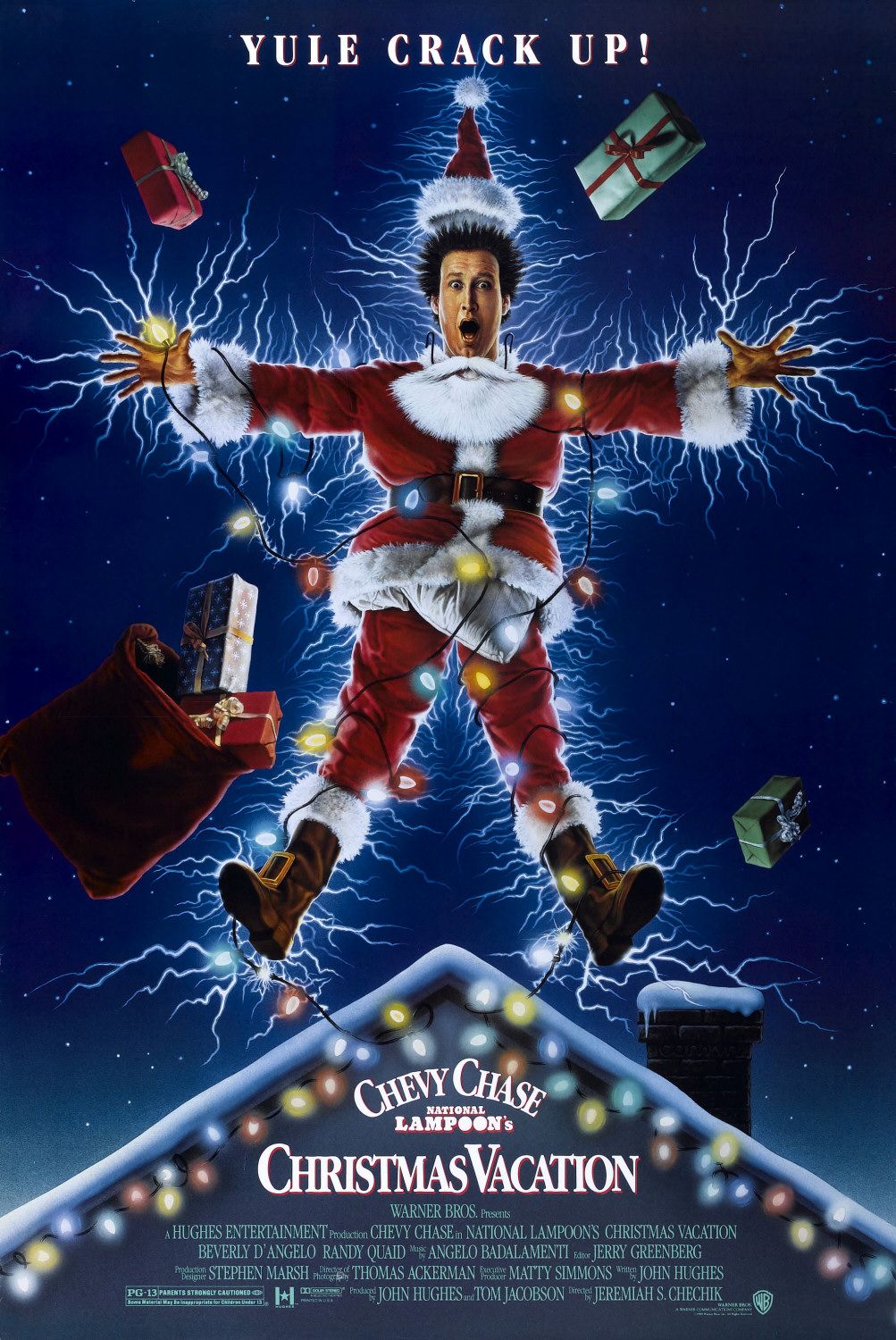
Jeremiah S. Chechik was the special guest at Arclight Studios in Hollywood a few years ago when they hosted a screening of his directorial debut, “National Lampoon’s Christmas Vacation.” The third and most beloved in the “Vacation” franchise has long since become a holiday classic, and it is the Christmas film many families watch during the holiday season instead of “A Christmas Carol” and “It’s a Wonderful Life.” After the movie was over and the end credits were all done, Chechik quickly came up to the front of the audience before anyone could introduce him and said, ”I haven’t seen it since the day it opened!”
The screenplay was written by the late John Hughes and was inspired by an article he wrote for the National Lampoon Magazine called “Christmas ’59.” Chechik tipped his hand to Hughes’ wonderful writing and went on to say it was originally written as a stand-alone movie. Warner Brothers, however, read it and immediately wanted to integrate it into the “Vacation” franchise.
When asked how he got the job to direct, Chechik explained he was directing what he described as “high profile” commercials back in a time when it was unusual to go from doing commercials to directing feature films. His work eventually got him discovered by Steven Spielberg who ended up giving him an office at Amblin Entertainment. This brought a lot of awareness to his visual style, and both Chase and Hughes soon became adamant he would be the one to direct the next “Vacation” movie.
With this being his first film, Chechik said he was determined not to back down on actors who wanted to exert their power over him. While it’s tempting to think he and Chase didn’t get along as Chase’s reputation for being hard to work will never disappear, Chechik said they actually had a great working relationship on set. This came after he admitted to not being a big fan of Chase’s comedy as he described it as being “very broad.” Chechik described Chase as having a very strong point of view, a very clear intention of what the movie is about, and they worked together to find things which worked.
Chechik did say, however, that he and Beverly D’Angelo had many arguments, some of which he described as being “very heated,” on set. Still, he said all the bad blood between them is now water under the bridge.
“Christmas Vacation’s” budget was $27 million, and its shooting schedule lasted for 60 days. Much of the movie was shot in Breckinridge, Colorado while other scenes were shot the following summer at Warner Brothers in Burbank, California. Chechik was happy to say Hughes had his back throughout the whole production. When the movie went through previews, the studio heads pressured him to cut the scene where the cat got electrocuted. Chechik claimed he resisted the pressure and kept it in because he thought it was funny (and it was) and that he was more of a dog person anyway. The test audiences also loved the scene, and the studio heads didn’t bother keeping this moment out of the movie’s trailer.
Chechik said “Christmas Vacation” worked so well because we truly cared about Clark Griswold and what he went through. The mood of certain scenes was very important to him, especially the one with Chase in the attic where he watched home movies of past Christmases with tears filling his eyes. Looking at this made Chechik point out the way comedy should be done in movies:
“Funny beats funny,” he said. “If everyone thought the set pieces were funny but they didn’t care about the main character, then the movie won’t work.”
With the squirrel scene, he said a trained squirrel was brought onto the set and there was also a trainer there for the dog featured in it as well. Chechik said the filmmakers “storyboarded the hell out of it” and were eager to start filming it, but when he arrived on set that day he was confronted with the grim faces of the trainers and line producers. After shuffling around for a bit, they informed him the squirrel had died. The squirrel trainer went on to say they don’t live for very long anyway as if that could have possibly softened the blow.
So, they went out and got another squirrel for the scene which they ended up drawing out onto the set with food. From this, Chechik said he learned how to roll with things and use improvisation. About every scene in “Christmas Vacation” had a certain amount of improvisation in it, he pointed out.
As for the most difficult scene to shoot, Chechik said it was the dinner table scene where the whole family begins their Christmas Eve celebration. He did not hesitate in telling everyone that having 9 to 11 actors in a scene is a really bad idea. The blocking proved to be very complicated, and it became such a nightmare as it took days and days for him to get the scene right.
Here are some other “Christmas Vacation” trivia Chechik let us know about:
In the scene with the two granddads snoring in front of the television, the actors playing those roles really were fast asleep.
Mae Questal, who played Aunt Bethany, was the voice of Betty Boop.
Chevy’s angry rant on his boss was done exactly as it was written in the screenplay.
It was really nice of Chechik to come out and talk with us about “Christmas Vacation,” a movie he succeeded in making a timeless classic and, as he put it, “very postcardy.” When asked why he hasn’t seen the film since it first came out, he said he just wanted to let it go and let it live. It certainly has had a long life since 1989, and the series continued on with “Vegas Vacation” and “Vacation” which starred Ed Helms and Christina Applegate. In response to one audience member who said his family watches it every year, Chechik replied, “I like your family!”
The Ultimate Rabbit would like to wish Kirk Douglas a very happy 100th birthday. It is an age few people ever reach, and this is a man who has survived so much in his lifetime: Hollywood, anti-Semitism, a stroke, a helicopter crash and, tragically, the loss of a son. Still, Douglas persevered in spite of many obstacles thrown in his path, and in his 90’s he continued to work as an actor and a writer. The man who was Spartacus has reached a milestone which needs to be celebrated, but it should be no surprise he has lasted as long as he has. Happy Birthday Kirk!
The following article is of an appearance he made in Hollywood a few years ago in which he talked about one of his most enduring motion pictures.
“The best actors disappear into their roles, but icons always keep part of themselves onscreen. Every one of his characters makes hard choices as a figure of integrity. Not always a good guy, not always a bad guy, but a real guy.”
Those were the words writer Geoff Boucher used to introduce legendary actor Kirk Douglas who made a special appearance at the Egyptian Theatre on September 19, 2012. American Cinematheque was screening “Lonely are the Brave” in honor of the movie’s 50th anniversary, and Douglas was greeted with a thunderous and deserved standing ovation. Douglas thanked the audience for coming to see this movie which he made fifty years ago. He also added, “Don’t ask for your money back!”
Boucher pointed out how Douglas has made so many great movies, but this one in particular really stands out. In the movie, Douglas portrays John W. “Jack” Burns, a cowboy from the Old West who refuses to become a part of modern society. “Lonely are the Brave” is based on the book “The Brave Cowboy” written by Edward Abbey, and Douglas recalled being so intrigued by the character and his horse (Whiskey) and how the book spoke strongly about the difficulty of being an individual today. Douglas did, however, say his major problem was by the end of the movie the audience was “rooting for the horse instead of me!”
There was also talk about Dalton Trumbo who wrote the screenplay for “Lonely are the Brave” and whom Douglas had previously worked with on “Spartacus.” Trumbo was one of the Hollywood Ten who refused to answer questions from the House Committee on Un-American Activities regarding their alleged involvement with the Communist Party, and he ended up spending 11 months in prison for contempt as a result. It was Douglas who helped Trumbo get a screenwriting credit on “Spartacus,” and he said he hated the injustice of what Trumbo was put through. Douglas’ latest book “I am Spartacus! Making a Film, Breaking the Blacklist” deals with this extensively.
Douglas made it clear how after reading Abbey’s book, he felt there was no one who could do a better job of adapting it than Trumbo, and it is said he found Trumbo’s screenplay for “Lonely are the Brave” to be perfect to where he didn’t change a single word of it.
Boucher also brought up that Douglas had some problems with “Lonely are the Brave” when it came out, and this was especially the case with the movie’s title:
“The book was called ‘The Brave Cowboy’ and I didn’t want that title,” Douglas said. “I wanted to call it ‘The Last Cowboy,’ but the studio which had the money insisted on ‘Lonely are the Brave.’ And I said, what the hell does that mean?”
Douglas has more than earned his status as an acting legend in Hollywood. Old age has not slowed him down one bit as he just finished a one-man show, released a new book, and took the time to appear at the Egyptian Theatre to talk about “Lonely are the Brave” which really is one of his very best movies. He finished his talk that evening by expressing his respect for actors who help other people, and of how he finds it sad that the media prefers instead to concentrate on the more “racy” things they do.
Boucher remarked at the amazing journey that Douglas has made from being “The Ragman’s Son” to going to all the places he has been and of having worked with all the great people he has worked with, and he commended the actor’s career for being guided not just by talent but integrity. That sentiment was shared by everyone in the audience in attendance as we were all very happy to see Douglas there, and he told them he was “glad and happy” they all came to see him and “Lonely are the Brave” which came out fifty years ago.
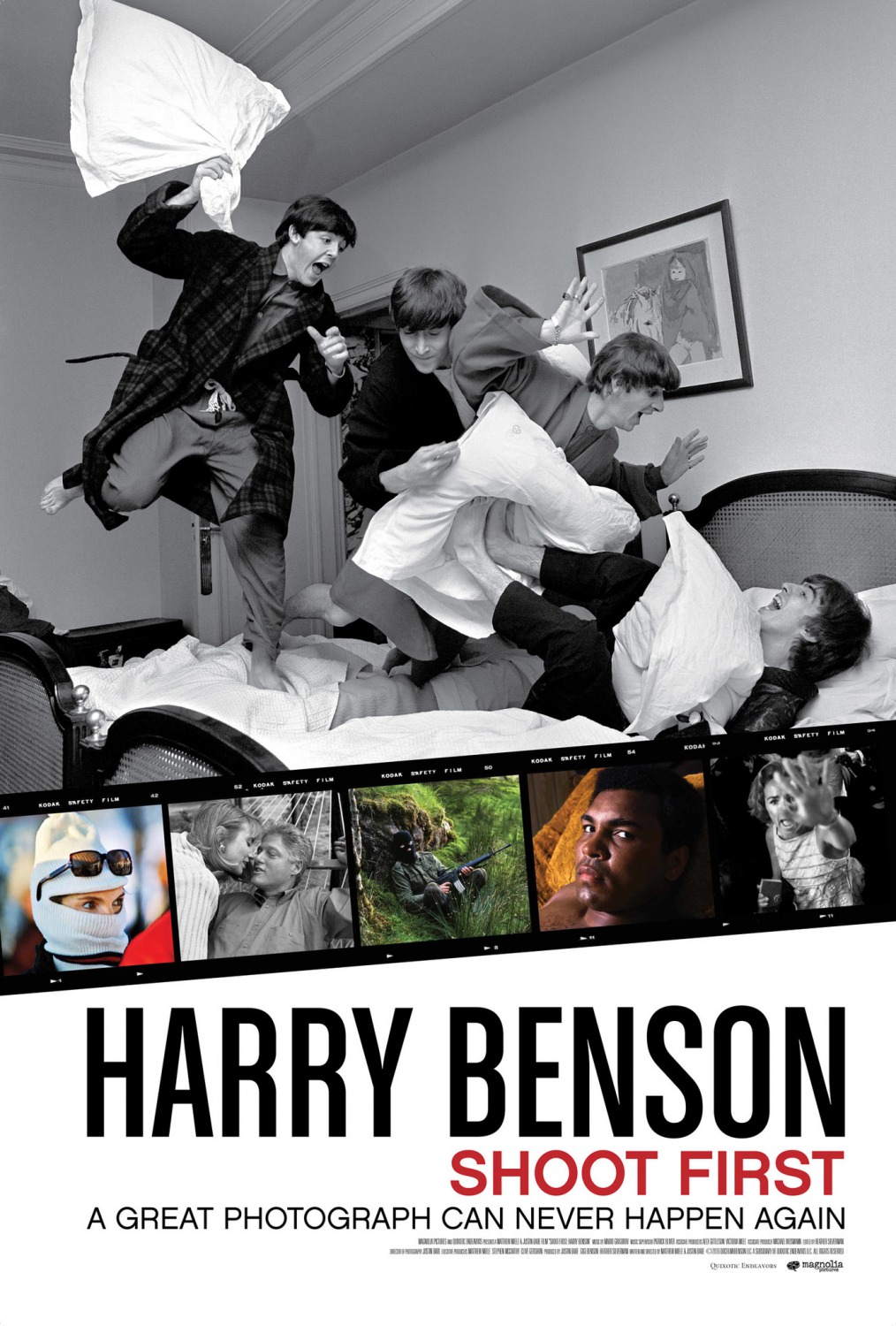
The documentary “Harry Benson: Shoot First,” directed by Matthew Miele and Justin Bare, looks at the life and work of renowned photographer Harry Benson who shot and captured unforgettable images of many famous figures such as The Beatles, Michael Jackson, Muhammad Ali, Donald Trump, and Hillary and Bill Clinton. What is especially striking about his photography is how wonderfully intimate and vivid his photos are. These are not just still images made to promote a new project of some kind, but instead are ones which show celebrities at their most natural and down to earth. Looking at Benson’s photographs today, it feels like you are going back in time and arriving at a place which feels so incredibly real.
I had the opportunity, along with Rama Tampubolon of the website Rama’s Screen, to talk with Benson and Miele about how this documentary came about and how it evolved from start to finish. Benson also told us stories of how he got the photo of Paul McCartney, John Lennon, George Harrison and Ringo Starr who were in the midst of a pillow fight, and of the haunting images he captured of Robert Kennedy before and after he was assassinated.
“Harry Benson: Shoot First” is another terrific documentary in a year filled with them, and it is a must see for pop culture fans and anyone interested in photography. It opens on December 9 at the Laemmle’s Monica Film Center in Santa Monica, and it is also available to watch on Amazon Video, VOD and iTunes.
Please check out the interview above, and be sure to watch the documentary’s trailer below.





 The Ultimate Rabbit