Exclusive Interview with Ira Sachs about ‘Love is Strange’
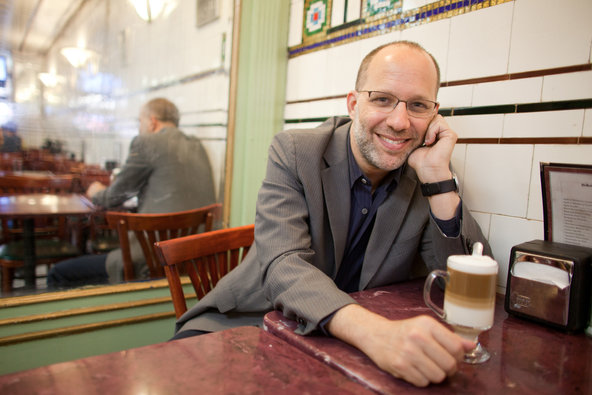
Ira Sachs photo

Ira Sachs’ previous films have dealt with the dangers of being in love and how it can feel like an illusion, but his latest film “Love is Strange” has him dealing with love in a more positive fashion. It focuses on a gay couple, George and Ben (played by Alfred Molina and John Lithgow), who have been together for over 30 years. When gay marriage is made legal in New York, they finally get married and are super excited about starting a new chapter in their lives together. But things quickly change for them quite drastically when the Catholic school where George teaches decides to terminate his employment upon discovering he married Ben, and this forces them to spend time apart for the first time in years as they search for cheaper housing.

I very much enjoyed talking with Sachs over the phone while he was doing press for “Love is Strange.” The movie not only chronicles the challenges these newlyweds face, but of the impact that their situation has on the family and friends closest to them. During our interview, I asked Sachs how he goes about keeping his characters in the movie down to earth, why he decided not to get political considering the issues involved, and why he decided this time to make a different movie about love than he had previously.
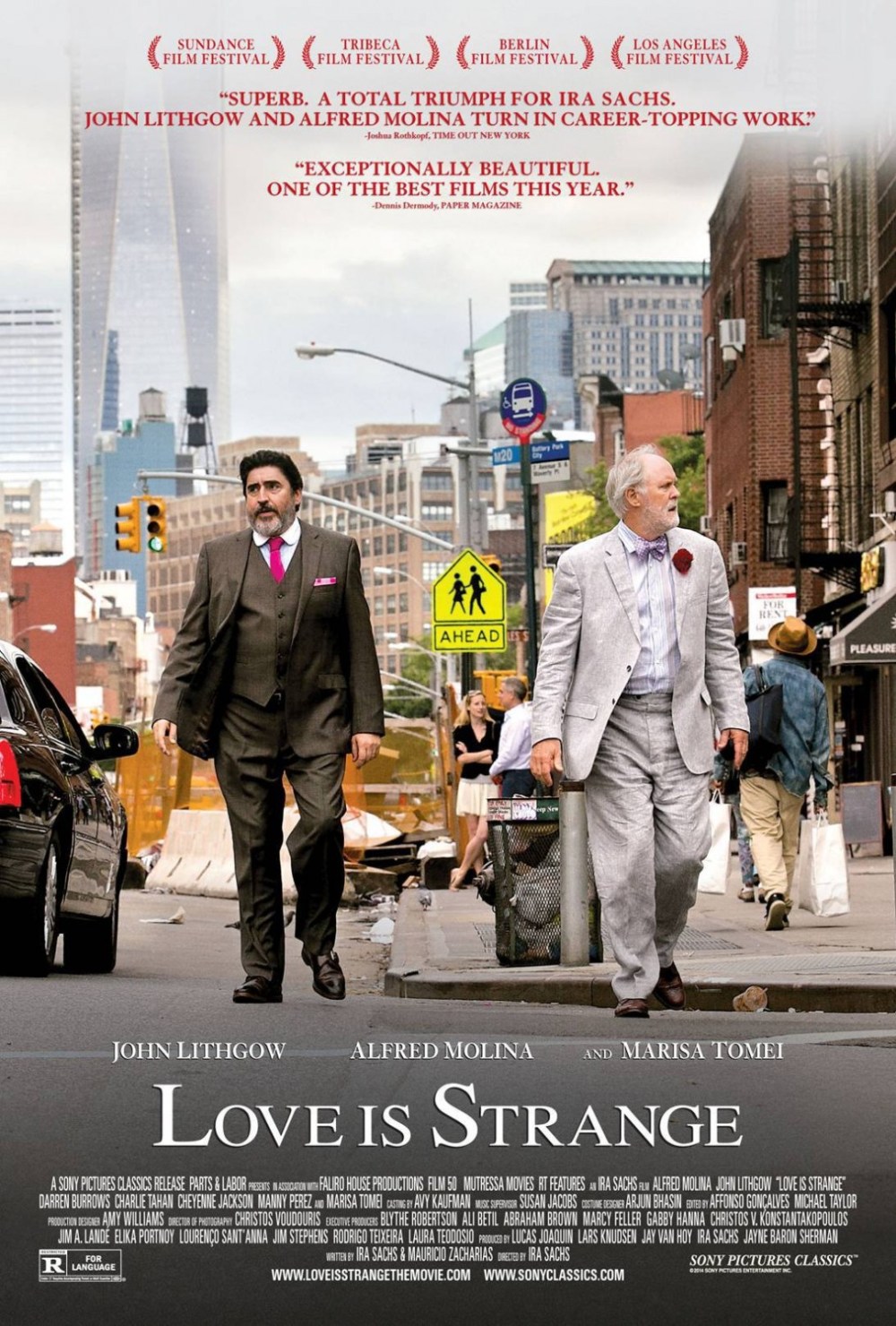
Love is Strange movie poster

Ben Kenber: This movie has such a wonderfully organic feel to it. How do you go about keeping the characters in the story feeling so down to earth?

Ira Sachs: That’s a nice question. I try to be as open as possible to my collaborators and to the city and to the situations that are in front of me. I think of directing as not so different to acting in a way in that my job is to listen and respond organically and authentically, and you have to do that 1000 times a day when you make a film. But if you situate yourself in a place which is most open and attentive, you have to be very observant as well. I think it creates something that has the organic feeling you’re describing.

BK: John Lithgow and Alfred Molina are both brilliant in this film, and they have been friends for a long time. The rapport they have together onscreen feels just wonderfully natural. Did you have to do a lot of directing with them, or did you just let them loose?

IS: We made a pact, the three of us, that we were going to create a certain kind of texture for their relationship that was going to be different than what either actor had been asked to do in a long time. There was a level of realism and naturalism and simplicity that the roles called for. These are really modest man, Ben and George, but they maintain a confidence as individuals that I felt was very much what I witnessed in John and Alfred, and I wanted the film to share that confidence. So we had this kind of agreement that everything would be kept to a very delicate tone, and both actors are known for their larger qualities in terms of performance. What I wanted to do was rein that in, and I think that allowed for some new things to appear.

BK: What I really admired about “Love is Strange” is it could have been a polemic about intolerance and that, even with gay marriage now a reality in many states like New York, we still have a way to go for achieving equality in life. But this movie is more humane and very objective in how it views the different forces which threaten to tear these two characters apart.

IS: My interest as a director is to depict the intricacies of relationships and of intimacy, and that includes romantic relationships as well as family and community. In this case it also includes the city of New York. I set out to make a romantic film about New York. I’m also as a director at bit of a historian meaning that my job is to be accurate about the time that I live as well as my characters, so the kind of pulled from the headlines quality just gives the film shape in a certain way. I like to think of myself as a neo realist, someone who is interested in making the ordinary of everyday lives extraordinary. For me that should in addition also include some amount of documentation of the details of these characters’ lives in a way that’s very specific.

BK: One performance in particular I really wanted to point out was Charlie Tahan’s who plays the temperamental teenager Joey. It’s always great when you get an exceptional performance from a child actor because they are not always easy to get, and the character has a nice arc throughout the movie. What was it like working with Charlie?

IS: Well, to me he is the revelation of the film because we don’t know him, and what we’re actually discovering is the birth of a great, great actor. I felt like there was conversation when we were shooting the film about Leonardo DiCaprio in (“What’s Eating) Gilbert Grape;” it’s that kind of performance. It’s so open and so honest and so raw and so easy. There’s just this ease and I think that was something that impressed all of us, more experienced filmmakers and actors on set, about Charlie was how naturally it came. He is an experienced child actor. He’d been in “Charlie St. Cloud” with Zac Efron. He was the voice of the kid in “Frankenweenie” so he worked with Tim Burton. He wasn’t plucked from nowhere, but he came in and gave an audition that was breathtaking.

BK: Charlie said you really knew how to write for kids and that you really understood them and what they went through. Did Charlie stay close to the script and was there anything specifically that he added to it during shooting?

IS: Well the script is a blueprint for the emotions you hope to reveal, so actors add everything. I’m quite specific about the script and it is a very written film and it’s constructed through the screenplay, and yet I search for a kind of emotional improvisation on set that has to be very, very fresh and real. So I don’t rehearse my actors before we start shooting. We talk, we spend some time with each other, but I’ve never heard the line said nor have the other actors. What it gives the movie is a kind of freshness. I think two words that should be banned from the set are “subtext” and “motivation” because when you’re speaking to those things, you’re trying to pin down the impossibly ineffable of any one moment.

BK: Another performance I really loved in this movie was Marisa Tomei’s. Not only does she bring a naturalness to her role, but she’s also able to communicate so much without saying a word. What was it like watching her pull that off?

IS: She’s like this quiet storm because she’s so focused as an actress. There’s a scene where she has no dialogue and she’s in bed with her husband and she’s got a lot on her mind, and as a director you just watch and you think, “She’s writing paragraphs for me.” She thinks so much while doing so little. I think what was exciting about this role for Marisa, and I think what makes people connect to it, is that she was allowed to play a woman of her experience and her intelligence, and she wasn’t asked to do anything other. In this case, Marisa is the fulcrum of the story; she’s the generation in the middle. The film is really about these multiple generations: the older couple, Marisa and her husband (played by) Darren Burrows who were very much in the middle of their lives, and Charlie Tahan who’s playing in adolescent learning about love for the first time. But it all kind of centers on Marisa and she is in a way a stand-in for me, the artist who is watching these things and trying to figure out how to act.

BK: Your previous films “Delta” and “Keep the Lights On” tend to deal with love as an impossibility or an illusion among other things, but “Love is Strange” sees it in a much different light. What made you decide to do a story on love in this particular way?

IS: I think I’ve changed a lot in the last 10 years. My previous films were all about characters trying to understand themselves, and they were films of self-discovery. I think it was very much what I personally was involved in, trying to understand who I am and become comfortable with who I am, and that took a long time. In my 40’s things have been different and I feel much more at ease, and I think that has created the possibility of new kinds of relationships. I’m married and my husband and I are raising children, but it’s not just the kind of signifiers that imply change. It’s something much more internal, and I think the film is about the internal qualities of love which are so distinct for each of us.

BK: Since this is a low budget independent movie, I imagine you had very little time in which to shoot it in. How did this affect you overall as a filmmaker?

IS: I’m a producer on all my films as well as the writer and director, and I always create the situation where I have the economic means to create the aesthetic objects that I need so my sets are very calm. I’ve made films that cost $200,000 and I’ve made ones that cost multi-million dollars, and the experience is not too different. If you’re doing your job right as a filmmaker, you have what you need.

BK: Regarding Alfred Molina’s character of George, it’s interesting because the Catholic school he teaches at doesn’t seem to mind his relationship with Ben much until the two of them get married. Later on in the movie, George has a great line where he says, “Life has its obstacles, but I’ve learned early on that they will always be lessened if faced with honesty.” What inspired that line?

IS: I think it speaks to the heart of the film. The film is in some ways about education with a small e. What do we teach each other? What is our responsibility? How as a culture do we carry on our values? What do we share in relationships and as parts of family? Also, the film speaks to how loss impacts individuals not just in terms of rights but in terms of experience. You can imagine George as a teacher being somewhat, to me, like what Alfred Molina is as a person which is you want to be your best self around him, and those are the kinds of people that I have known whether it be my parents or… I was very close to a sculptor who was 99 when he died, and at 98 he began his last work which was of a teenager with his backpack, and to me the idea that he was reaching for creative opportunities at that age was something I could learn a lot from. I feel that the film talks about those kinds of educations, and I think that when you’re young you don’t realize that your parents are people and that your grandparents are also. I think this film is about perspective and how we begin to recognize that people in our family are actually human beings with their own stories.

I want to thank Ira Sachs for taking the time to talk with me. “Love is Strange” is now available to own and rent on DVD, Blu-ray, and Digital.

Photo courtesy of the New York Times. Poster courtesy of Sony Pictures Classics.
Exclusive Interview with Alfred Molina about ‘Love is Strange’

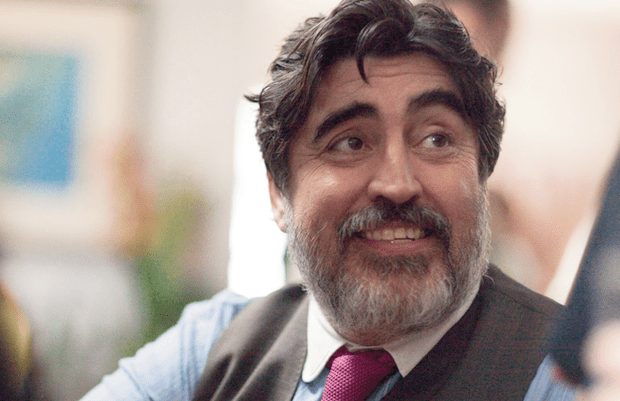
Alfred Molina Love is Strange

He has played a variety of characters in movies like “Raiders of the Lost Ark,” “Prick Up Your Ears,” “Boogie Nights,” “Spider-Man 2” and “Not Without My Daughter” to where it seems like he can play anybody (and he probably can). Now Alfred Molina takes on a more intimate role in Ira Sachs’ “Love Is Strange” where he plays George, a Catholic school music teacher who, as the movie starts, marries his lover of 39 years, Ben (played by John Lithgow). They have a joyous ceremony, but once word reaches the school of George’s wedding, they subsequently fire him. This leads to a great deal of upheaval in the newlyweds’ life as they are forced to sell their apartment and spend time apart for the first time in years as they search for more affordable housing. The situation weighs very heavily on George to where he feels like he’s failing Ben and everyone around him.

It was a great pleasure to speak with Molina while he was doing press for “Love Is Strange.” It turns out that he and Lithgow have been friends for many years, so the fact that they have great chemistry onscreen should be no surprise. In addition, I also asked Molina about how sees the world of independent filmmaking today, why Stanley Kubrick’s “Spartacus” inspired him to become an actor, and of what it was like to shoot this film without any rehearsals.

Love is Strange movie poster

Ben Kenber: Since you and John Lithgow have been friends for a long time, did the chemistry you two developed onscreen come easy to you?

Alfred Molina: Yes, it did. I think the advantage of being friends with John, having had a relationship as friends, helps us both in a way. For me, it just meant there was shorthand already in place. There was an ease and a rapport and a relaxation between us that was very easy and also very conducive and helpful for the roles we were playing. I think we would’ve still enjoyed the fact that we are friends if we had been playing adversaries in a movie or a good guy, bad guy. But the fact that we were playing a couple in a long-term relationship, I think our history as friends only helped and sort of aided that.

BK: What I really liked about this movie is that what the characters go through is quite ordinary, but it takes on a different feeling here. We don’t see enough movies these days about regular ordinary people, and the problems the characters go through here feel quite epic.

AM: Yeah. People lose their jobs, people lose their homes and it’s always bad news. But it happens very often for the most trivial of reasons, and I think the fact that Ira Sachs and (co-writer) Mauricio Zacharias created a couple who, by their very ordinariness, when this crisis happens to them, it takes on epic proportions. And like most crises that happen to ordinary people it becomes huge because normally in our own lives we don’t have the power or the means to overcome them quite so easily. It takes time and I think the fact that George and Ben are, for all intents and purposes, a very ordinary and a very anonymous couple adds to the strength of this story.

BK: I also wanted to congratulate you on receiving the Spotlight Award from the Creative Coalition at Sundance for your work in independent films. How do you think the world of independent films is faring today? Has it gotten easier to make them or harder?

AM: Well, I think it all depends on one’s perspective. Independent moviemaking is always a challenge. I think whenever you’re working on projects that don’t have immediate commercial appeal and you’re working outside of the studios, especially on low budget films where you’re really scrambling to raise $2 or $3 million to make a movie or however much it is, you’re working under all kinds of restrictions and challenges and the biggest one of course being time. You don’t have time. You very often don’t have time to absorb any mistakes or any accidents or anything that happens that kind of works against your schedule, so it’s always a challenge. But I think the fact that there are so many independent movies finding an eager audience means that there’s something being done right and well. There is an audience out there for good stories. There’s an audience out there for well-made, well-crafted, sincere movies about real people in real situations, and I think the reason why there’s an audience is because of the way cable TV, for instance, has welcomed movies. So many directors and writers and actors are now working on cable shows because that’s where some of the best movies are being made where young directors are getting the chance to make their films and tell their stories. The relationship between the product and the audience has changed a lot. There was a time when you were working on television that you were very much the guest in someone’s house. But now cable has changed all that because you’re paying for it. Also, our TVs have gotten bigger so it’s like watching a movie, and if you’ve got a 50-inch screen in your front room, the ratio is pretty typical of a small movie house. You can be watching movies at home and I think that changes the dynamic between the product and the audience, and there’s an audience out there for small films. The independent industry lurches from one crisis to another, and in those ups and downs there’s some great movies being made.

BK: I’ve talked with a lot of indie filmmakers recently and they usually get a shooting schedule that’s 30 days if they’re lucky, but those schedules keep getting shorter as time goes on.

AM: That’s right, yeah, because making movies gets more and more expensive. But there will always be an independent director, writer, actors who want to continue to work in that milieu because ultimately that’s where the most interesting stuff is happening. I can only speak for myself, but I think that’s where the best films are being made.

BK: Your character of George has a great line in this film where he says, “Life has its obstacles, but I’ve learned early on that they will always be lessened if faced with honesty.” I think it’s very interesting in that George teaches at a Catholic school and has for many years, but the school doesn’t always respect the individual that he is.

AM: Absolutely, and I think that’s a great shame for anyone who’s in the same position as George; losing your job or losing your home or being chastised by society in some way because of who you choose to love and who you choose to spend your life with. As a heterosexual that’s something I’ve taken completely for granted. I can take it for granted that I can love whoever the hell I want and no one can stop me, but my gay friends have only recently begun to enjoy that right. So I think that’s why lines like that in the movie are terribly important and very, very resonant not just for gay men and women but for everybody. I was talking today with John (Lithgow) about how… He’s only been to a few gay weddings in recent years, but we both found them incredibly moving. Weddings are moving anyway. Anybody who confidently stands up and says I want to spend the rest of my life with this other person is making a very dramatic and a very moving and emotional statement, but when it’s two gay people you know that it’s not just full of the romantic and emotional power of the moment. It’s full of years, sometimes decades, of struggle to reach that point, so it has even more significance.

BK: That’s a very good point. In recent years, we’ve had movies like this and “The Kids Are All Right” which are about gay couples, but the fact the couples are gay becomes irrelevant because they deal with the truth of what married life is like and the struggles which come with it.

AM: You ask anyone who’s active in any kind of human rights or equal rights campaign and I’m sure they would say that their ultimate goal is to no longer have to have conversations like this where one sexuality is no longer relevant. Whenever I come across any kind of vaguely homophobic sentiments I’ve gotten to ask people, “When did you first realize that you were straight?” It’s amazing the reaction that gets because they don’t know how to answer, and the truth is that no one should have to put up with being asked that.

BK: I once read that you said you have to believe in what you’re saying in the same way your character does. Whether it’s Mother Teresa or Adolf Hitler you’re playing, you have to portray them honestly and accurately regardless of whether they were good or bad. A lot of actors like to change material to where it suits them better, but I liked what you said because it goes the fact that the part is not about you, it’s about the character you’re playing.

AM: I’ve always regarded my job as being about serving the character regardless of who the character is. At a certain point taking on a job and then once you signed the contract and taken the money then saying “oh by the way I don’t think my character would say this” or “I don’t think my character would be like this,” that’s a conversation that one should have before you sign the contract and take the money. Once you have committed to something, you should be committing to the same things that everyone’s agreed on. Just as an act of creativity, you’ve got to give the same amount of dedication to whether you’re playing Adolf Hitler or Mother Teresa.

BK: I also read you were inspired to become an actor after watching the movie “Spartacus.” What was it specifically about the movie which inspired you so much?

AM: You know, I don’t know myself. It was so long ago and I must’ve been about nine years old when the film came out. I just remember coming out of that film just knowing that’s what I wanted to do. I don’t mean I wanted to be a gladiator, but I just wanted to be doing that; making films, being in films. I’m not quite sure what it was that prompted that, but it was a very powerful feeling.

BK: There were no rehearsals of scenes when it came to filming “Love is Strange.” How did this affect you as an actor?

AM: Well it was an interesting process really because normally you have rehearsals and work things out. I would hate for you to think that it was due to a lack of preparation; it wasn’t that. Ira Sachs, our director, came to the project impeccably prepared. What he didn’t do though was that he didn’t have us rehearse the scene and then play into the camera what we had rehearsed. He just wanted us to go into the take with the camera running and to just discover it in the moment. That was a very refreshing way to work, I loved it. I’m looking forward to doing it again. It’s very rare that directors give you that kind of freedom and also, given the fact that we were under the severe constraints in terms of time and money, it worked out well.

BK: “Love is Strange” seems to give the audience a very unique look at New York whereas other movies tend to portray it as a crime ridden place among others things. Would you say this movie gives a more accurate view of New York than other recent films have?

AM: Well, I think it’s as accurate a view of New York as any other movie. I don’t think the view of the city that the movie has is a negative one by any means. The city looks beautiful in this movie especially in that last sequence with that sunset and the two young characters on their skateboards. It’s a beautiful, beautiful ending to the film. Because it’s the most photogenic city in the world, any film that takes place in New York has to deal with New York as a character in the film. There’s nothing nondescript about New York. It’s a unique looking place. No other city in the world looks quite like it, so I think it’s something any filmmaker has to embrace.

BK: The interesting thing about the way Ira Sachs frames this movie is that it could’ve taken a huge political stance but he doesn’t which feels quite appropriate. He’s not taking issue with anybody, but he’s takes good observations of the Catholic doctrine and how it affects certain people.

AM: Yeah, absolutely. It’s not a political film; it’s not a diatribe on the state of gay culture or the Catholic Church. It’s a domestic story. It’s a love story set against some real events that happened to real people, and I think it makes some very wry observations about the city and about New York real estate and about the conditions a lot of people live under. It’s not a message movie. What drives the movie is a kind of deep humanity.

I want to thank Alfred Molina for taking the time to talk with me. “Love is Strange” is available to own and rent on DVD, Blu-ray, and Digital.


Gregg Araki Grows as a Filmmaker with ‘White Bird in a Blizzard’

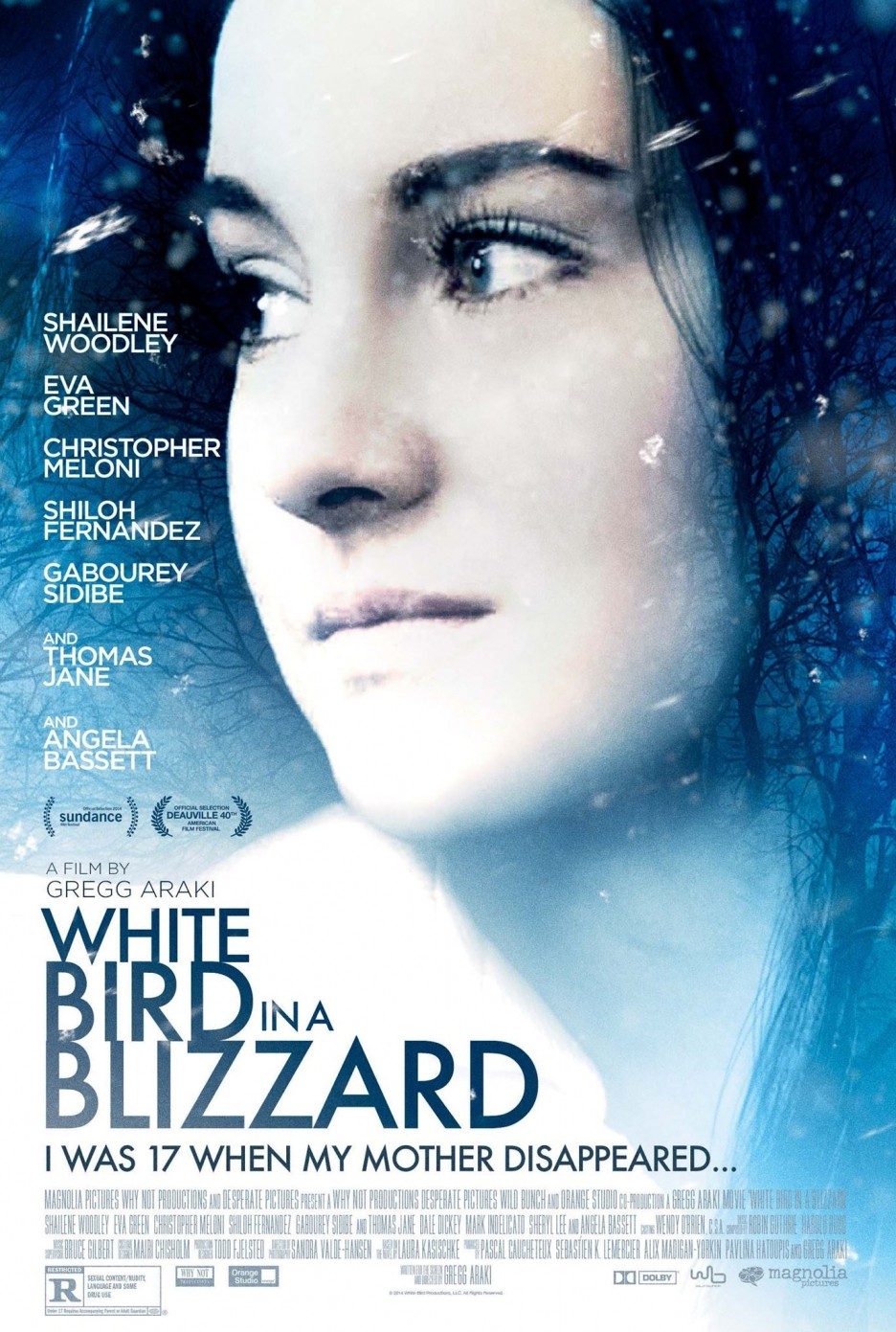
White Bird in a Blizzard movie poster

With “White Bird in a Blizzard,” Gregg Araki deals with the life of an adolescent once again. Based on the book of the same name by Laura Kasischke, it takes place in the 1980’s and stars Shailene Woodley as Kat Connor, a young woman whose mother ends up disappearing from her life. This happens at the same time she is discovering her sexuality with the next-door neighbor, Phil (Shiloh Fernandez), and she doesn’t seem too phased by her mother’s sudden absence. Her father, Brock (Christopher Meloni), has long since become a complete wimp, and his emotional repression prevents him from dealing with this situation in a rational manner. We follow Kat as she goes from high school to college, and eventually, she comes to see just how deeply affected she was by her mother’s disappearance and becomes determined to find out what happened to her.

Many of Araki’s films deal with the lives of teenagers, and he deals with them in a way which feels both honest and emotionally raw. “White Bird in a Blizzard” is the latest example of this, but while it deals with similar themes, it also feels somewhat unique to what Araki has given us before. He appeared at the Four Seasons Hotel in Los Angeles, California for the movie’s press conference, and I asked him if his view of adolescence has evolved much from one movie to the next. Araki replied it definitely has.

Gregg Araki: Back in the 90’s I did a series of three films (“Totally Fucked Up,” “The Doom Generation” and “Nowhere”) that I have become sort of famous or infamous for that were kind of a trilogy about being a teenager. It was called the “Teenage Apocalypse Trilogy” and they were very unhinged in a way and a little bit chaotic. I made those films 20 years ago and I definitely feel like in that time I’ve become older for sure and I think more mature and I’m more developed. I don’t really think I had a film like “White Bird” in me then. The analogy I make is that in this film I did called “The Doom Generation” which is also about young people, those kids have no parents. They have no house and they have no family; it’s just these kids doing crazy stuff. And in this movie Shailene does play somebody who is 18 and Shiloh (Fernandez’s) character is 18, and so they have their teenage moments and they meet in a Goth club and dance and they have that sort of carefree youth about them. But at the same time, this film is so much more about the family. Kat’s relationship with her mother or father, her parents’ marriage and just that whole world that, to me, like “American Beauty” or “The Ice Storm,” is about the world of the American dream and what is underneath the surface of it all. To me, that’s much more this film than my earlier movies about young people.

It’s always great to see a movie which takes adolescence seriously, and “White Bird in a Blizzard” does qualify as one. It also allows Woodley the opportunity to give another great and honest portrayal of a teenager just like she did in “The Descendants” and “The Spectacular Now,” and it shows how Araki, even at the age of 54, still truly understands what teenagers go through. But moreover, it shows how far Araki has come as a filmmaker, and it will be interesting to see where his career goes from here.

“White Bird in a Blizzard” is now available to own and rent on DVD, Blu-ray, and Digital.

Here is a video interview I did with Araki, Woodley and Chris Meloni which I did for the website We Got This Covered.

George Lazenby on Why He Played James Bond Only Once

George Lazenby as James Bond

More than 40 years after “On Her Majesty’s Secret Service” was released, George Lazenby still has the dubious distinction of having the shortest tenure as James Bond. To many, he’s the joke of the franchise and referred to by others as “the one that failed.” Whether or not you agree with this, everyone still wonders why he ended up starring in only one 007 movie. Did critics rip his performance to shreds in the press to where it was too painful to continue? Did he have other plans? Well, he told a sold-out audience at the Egyptian Theatre in Hollywood why his tenure as Bond lasted only for a single film.

Lazenby said he does and doesn’t regret doing more Bond movies and that, after all these years, he still doesn’t know why he got the part. The producers did, in fact, want him to play Bond again and even offered him a contract to do several more. The 70’s, however, were just around the corner (“On Her Majesty’s Secret Service” was released in 1969), a time of long hair and bell bottoms, and his agent informed him the Bond franchise would not last beyond the 60’s. Although we know this was clearly not the case, Lazenby listened to his agent.

Lazenby also admitted he was happier as a model in Paris and didn’t like getting up early in the morning. When the movie was released, he had already grown a beard to hide from the public. But once he became unrecognizable, he had a little trouble getting into the premiere.

The things Lazenby did enjoy included going to fine restaurants whose owners invited him back and said, “The check’s on us.” It also got him instant access to nightclubs where he fearlessly jumped onstage with the dancing girls as if it were perfectly allowable. At one club he even told the head bouncer, “Send the girls to my place for a drink!” Now he didn’t think the bouncer would honor this request, but sure enough, there were 20 girls waiting for him and his buddies at the hotel. The next morning, four of them were still hanging around.

Albert R. Broccoli remarked that had Lazenby done more James Bond films, he would have been seen as the best actor to have portrayed 007. While many still consider him the least of the Bond actors, he still has many fans who considered his performance in “On Her Majesty’s Secret Service” terrific, and he still holds the record for being the only Bond who could perfectly throw his hat onto the hook. To quote a line from the beginning of the movie, “This never happened to the other fellow.”

George Lazenby Reflects on Playing 007 in ‘On Her Majesty’s Secret Service’

On Her Majestys Secret Service movie poster

After all these years, George Lazenby is still the only actor to play James Bond in just one movie, “On Her Majesty’s Secret Service.” While nowhere as respected as Sean Connery or Daniel Craig, Lazenby still has his share of fans who gave him a standing ovation when he appeared at the Egyptian Theatre in Hollywood. The evening’s moderator, Stephen Rubin, proclaimed Lazenby was a “terrific James Bond,” and if he had to do just one Bond movie, he picked the right one to star in.

After five movies, Connery quit playing Bond as he had grown tired of what he described as “impossibly long schedules.” Lazenby was not the first choice to replace Connery as he had no acting experience other than doing commercials, and Lazenby claimed he got considered for Bond when the late Cubby Broccoli spotted him at a haberdashery getting a Connery-like haircut.

Directing this 007 adventure was Peter Hunt who apparently got the job as a Christmas present from the Broccoli family. Lazenby described him as tough and that he got his way most of the time. He also admitted lying to Hunt about being an actor, and when Lazenby later told him he wasn’t, Hunt went crazy and fell down on the floor laughing. Once he composed himself, he told Lazenby, “Stick to your story. I’ll make you the next James Bond!”

The two of them, however, had a falling out on the first day of shooting, and Lazenby said Hunt didn’t speak to him again for nine months. According to Rubin, Hunt’s challenge in getting a performance out of Lazenby was to “piss him off.” Rubin also remarked how tough the last scene must have been for Lazenby as it’s the most emotional in the Bond franchise, and Lazenby said he did one take with tears and that Diana Rigg, who plays Contessa Teresa di Vicenzo in “On Her Majesty’s Secret Service,” bit him to get the desired emotion in another which he said wasn’t needed.

One thing’s for certain, Lazenby’s work in the action sequences was nothing short of excellent. On top of holding several black belts in martial arts, he credited a lot of his toughness from living in Australia where you “smack your mate.” Sounding almost Russell Crowe-ish about his birthplace, Lazenby said he could take care of himself once he got the first hit in, and back then he was too stupid to be afraid.

Regarding his fellow cast mates, Lazenby said Rigg thought he was a “complete idiot,” and she got pissed at him after he beat her in a game of chess. She also didn’t want him mucking around with other girls during filming, a promise Lazenby admitted he was unable to keep. He was discovered having a tryst with a receptionist, and when asked if she was memorable, Lazenby replied, “She was!”

Telly Savalas played Bond’s arch nemesis Ernst Stavro Blofeld, and Lazenby described him as a “great guy who loved to gamble.” When Lazenby got a raise from $100 to $1,000 a week during shooting, Savalas saw his money and asked, “Hey, do you play poker?” Lazenby also said Savalas used to bet everything he had including his house.

Even if Lazenby is still considered the worst actor ever to portray James Bond, it certainly didn’t seem to be the case considering the standing ovation he got upon entering the Egyptian Theatre. He gave us a 007 at his most relaxed in “On Her Majesty’s Secret Service,” and this makes his interpretation of the role the most unique in the long-running franchise.

Michelle Monaghan and Ron Livingston on the Making of ‘Fort Bliss’

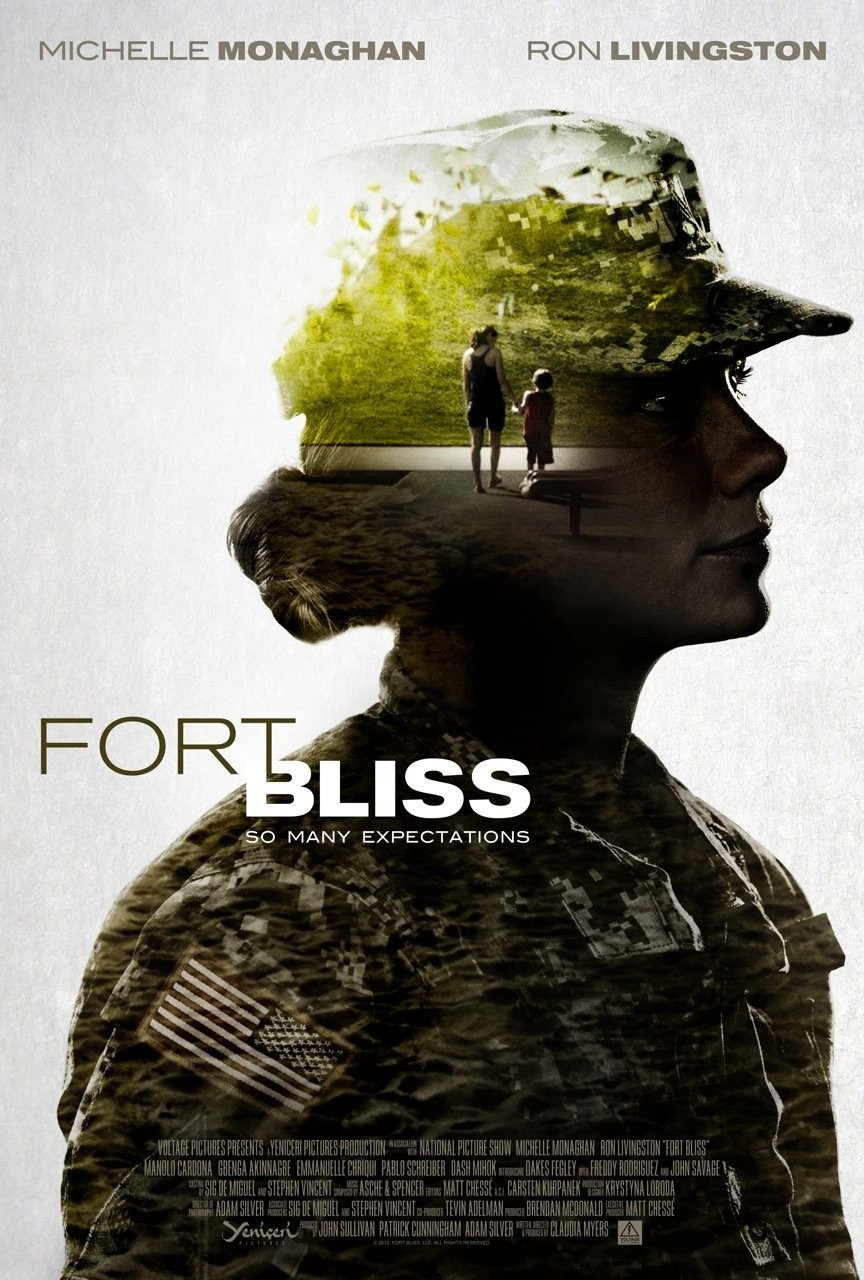
Fort Bliss movie poster

Claudia Myers’ “Fort Bliss” deals with something we don’t see much in movies: the challenges of being a female soldier and a single mom at the same time. The movie stars Michelle Monaghan as U.S. army medic Maggie Swann who has just returned home after serving a tour of duty in Afghanistan. But instead of arriving to greet her son Paul (Oakes Fegley) at the air base, she instead finds him back at home with his dad, her ex-husband Richard (Ron Livingston), and stepmom, and he doesn’t really remember her much. From there, Maggie works to repair the bond between her and Paul before her duties in the military threaten to tear them apart yet again.

Both Monaghan and Livingston dropped by the SLS Hotel in Los Angeles, California for the “Fort Bliss’” press day, and it was fascinating to hear about their experiences making this particular movie. This was a very low budget production, so there wasn’t much time for anyone to waste. I always wondered how actors deal with the lack of time because we are led to believe they are used to working on movies which allow them to take a nap in their trailers between takes while the crew sets up for the next shot. But while having fewer resources can seriously affect some actors, Monaghan and Livingston did not let any limitations stand in their way.

“There’s something really exciting about the idea that they just don’t have time to micromanage you in your performance, so there’s a lot more responsibility to just show up,” Livingston said. “Your first take on it is gonna be the take that goes into the movie by and large unless it’s really egregious because there’s not a lot of time to waste tinkering with it, you know?”

“It is true that you don’t have a lot of time to play with it,” Monaghan said. “I think that’s why the prep time becomes so essential for an independent film. It’s your responsibility as an actor or a director or a writer to really play your part. You can’t just turn up and expect all these experts to show you something on the day. That’s really, really important. That’s a part of our job, and also we shot this movie in 21 days. It was so incredibly exciting because we were living, eating and breathing it. We shot in two different locations in and around Los Angeles and then Fort Bliss (in El Paso, Texas) with the help of the Army. With all their resources, the production value looks by far more than what we had for it.

“21 days with combat sequences is pretty incredible,” Livingston noted.

Again, I imagine some actors would have preferred to have more time to prepare for the roles, but they don’t always have that opportunity. When it comes down to it, they have to work with what they are given instead of complain about what’s working against them. For Monaghan, the fact there wasn’t a lot of down time on the set of “Fort Bliss” didn’t affect her too much.

“There’s not (a lot of down time), but I always tend to find that I feel the strongest about performances in general when they’re shot in that way because you’re in it,” Monaghan said. “You are in the thick of it, and to say that I go to sleep at night and dream about the character and the role, you are. It’s 21 days where you’re attacking it for that period of time, and you don’t have time to think about it. Good things tend to come from that.”

One of the best scenes in “Fort Bliss” comes at the beginning when Maggie and dozens of other troops are returning home from Afghanistan. It looked like the production succeeded in hiring the best background extras they could find as they looked so incredibly enthusiastic in welcoming the soldiers home, but it turns out there was a lot more authenticity involved than we realized.

“When you see the coming home scenes at the beginning, it was truly people of soldier’s families, military wives, husbands, and children that two days prior had just welcomed one of those big planes home,” Monaghan said. “Fort Bliss sent out an email saying, ‘Would you guys come back two days later to shoot a scene?’ So they brought back all their signs and it was amazing. The military band was there and even the Harley Davison guys came back and all the former vets with their bikes and everything. Everybody was so proud to be there. That’s so profound to be able to have that experience and to feel that energy of what it’s like and everybody hugging one another. To be able to have that access and that resource was so invaluable. We constantly had that throughout the process of filming. I say this film has been so blessed, but it has. I’m so grateful to everybody in how far reaching the efforts that everybody has gone to.”

“Fort Bliss” may be coming in under the radar, but it is truly deserving of your attention. It deals with the female perspective of war and how women still have a stigma attached to them whenever they serve in the military. Many expect women to stay at home and be a mother to their children instead of fighting wars overseas, but life continues to be more complicated than we expect it to be, and nothing is ever that simple.

You can also check out this video interview I did with Monaghan and Livingston which I did for the website We Got This Covered.

Haley Joel Osment Comes of Age in ‘Tusk’

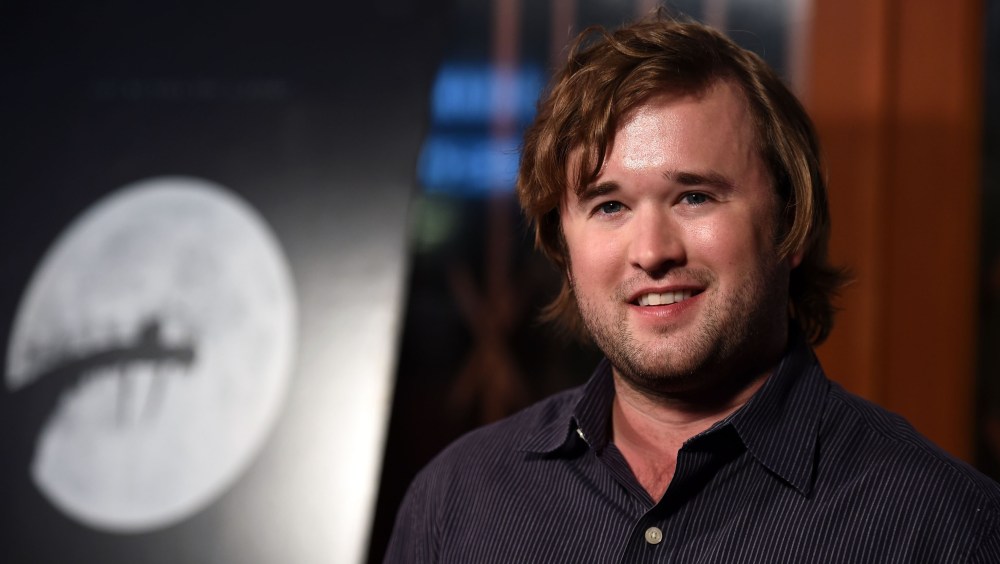
Tusk Haley Joel Osment

It feels like it has been forever since we have seen Haley Joel Osment in anything. Ever since his unforgettable Oscar-nominated performance as Cole Sear in “The Sixth Sense,” he has gone on to do memorable work in Steven Spielberg’s “A.I.,” “Pay it Forward” and “Secondhand Lions” in which he co-starred with the actor who beat him out for the Best Supporting Actor Oscar, Sir Michael Caine. But after that, he disappeared to where we thought he had become just another child actor who couldn’t make the transition to an adult acting career like Kurt Russell and Jodie Foster did.

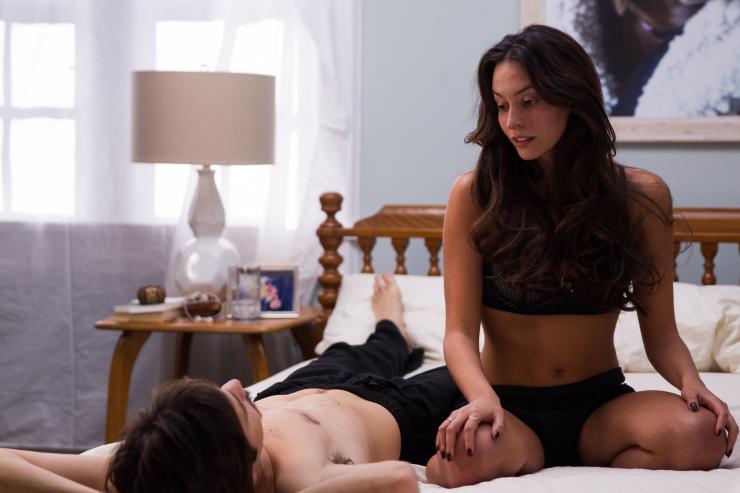
Well, it turns out he was away at New York University studying experimental theater, and this later led to him making his Broadway debut in a revival of David Mamet’s “American Buffalo.” These days he does a lot of voiceover work, he has a recurring role on the Amazon series “Alpha House” and he is starring in Kevin Smith’s latest film “Tusk.” In it, he plays Teddy Craft who, along with his friend Wallace Bryton (Justin Long), hosts a podcast show called “The Not-See Party.” When Wallace suddenly goes missing while he’s in Canada, Teddy and Wallace’s girlfriend Ally Leon (Génesis Rodríguez) travel there to find him, and what they discover is… Well, just see the movie.

Osment looks like he’s having a lot of fun as Teddy, and you really get the sense he is a natural for podcasting. “Tusk” is certainly one of the weirder and more original movies to come out in a while, and he explained what drew him to it.

“The writing was so good,” Osment said of Smith’s screenplay. “The characters were clear and then he (Smith) kind of does this cool thing where, once he got to know us on set, he would just generate material based on just starting to know us more. He wrote that great monologue for Genesis and an extended podcasting scene for me and Justin. He will answer any question you ask him, but his big thing was always saying ‘remember to have fun’ and stuff like that. He isn’t someone saying, ‘Hey, remember to get this part of the character’ or something. He trusts his actors to do that.”

For me, I was very interested in how Osment made the transition to becoming an adult actor. It’s never easy, and Hollywood does have a reputation for chewing up actors and spitting them out. But Osment has come out on the other side looking like a wonderfully down to earth human being, and he remains a terrific actor after all these years. When I asked him how tough his career transition was, his response was simple and to the point.

“As an actor, I feel really lucky because I have been lucky enough to have a lot of experiences on sets and still be relatively young,” Osment said. “It’s fun because your body is kind of your instrument and, if you’re getting old over a period of time and everything, I just remember doing characters as a kid. Now being an adult and having a romantic interest and things like that, the variety is just really exciting so I guess I feel lucky.”

Seriously, it’s great to see Osment keeping busy. I imagine we will see a lot more of him soon, and it will be interesting to see where his career goes from here.

Genesis Rodriguez is Ready for her Closeup in ‘Tusk’

Tusk Genesis Rodriguez

She has left her mark in a number of Telemundo telenovelas as well as in movies like “Identity Thief,” “The Last Stand” and “Casa de mi Padre,” but in Kevin Smith’s “Tusk,” Génesis Rodríguez shows the world just how good of an actress she can be. She plays Ally Leon, the girlfriend of Wallace Bryton (Justin Long), and she tries to make him see what a selfish person he has become thanks to the fame his podcast “The Not-See Party” has brought him. But as much as Ally criticizes his shortcomings, she is reduced to tears when she accepts the fact they come to mirror her own.

“Tusk” has been the subject of a lot of talk ever since Smith announced it as his next project. The idea came about from an episode of “SModcast” where he and co-host Scott Mosier read an ad about a man offering a rent-free situation for a tenant who is willing to dress up as a walrus and make walrus sounds all day long. It makes for one of the more unique movies, and many were eager to find out what exactly drew the actors to be in it.

Rodríguez was at “Tusk’s” press day held at the London Hotel in West Hollywood, California, and she was asked about her initial reaction to Smith’s screenplay.

“Reading the script, I made the big mistake of reading it at midnight,” Rodríguez said with a laugh. “I know, big mistake, so I couldn’t go to sleep. I literally thought about the walrus all night. I started listening to The Beatles and it was just like I went ‘goo goo goo goo joob’ totally. And then afterward I heard the SModcast episode and then I became obsessed with the idea. It was like, okay, this is the kind of movie I want to do. It’s clearly not a remake (laughs) so it’s good to be a part of something so unique and so different and to leave your little mark on such I thought was gonna be, the minute I read it, a cult favorite whether you hate it or love it. It’s that kind of movie. It’s memorable, that’s for sure (laughs).”

For me, the highlight of Rodríguez’s performance was her close-ups in which she confesses to Long her confused emotions which are tearing her apart. It turns out Smith, once he got to know her better, wrote a monologue for her to perform, and she ends up performing it in a truly riveting fashion. Seeing the stream of emotions crossing her face during this close-up held my attention to where everything else around me went completely silent. I was eager to learn how she pulled this monologue and the close ups off, and her answer implied it involved her not knowing one specific thing.

“Thankfully, I didn’t know how close up they were,” Rodríguez said of the cameras. “It kind of freaked me out, but I just let the dialogue guide me to an emotion and I tried to make it as honest as possible. I’ve never had that shot to really show that side of myself in the movies, so I just wanted to do Kevin justice, and he took a chance on writing me that monologue. I hope I did him proud.”

The way I see it, Rodriguez did Smith proud.

Save

Paul Verhoeven and Company Revisit ‘Total Recall’ in Hollywood

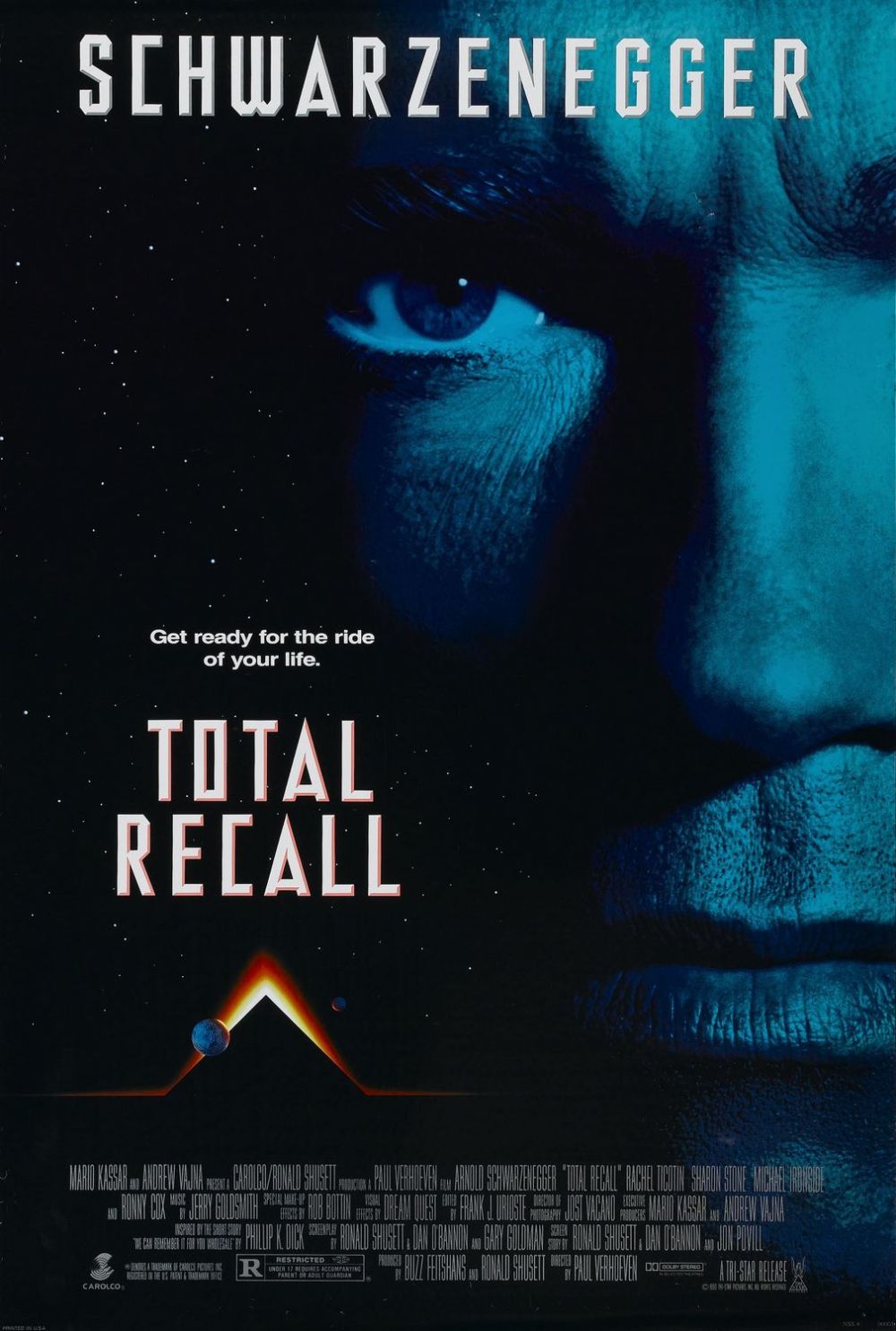
Total Recall movie poster

On Friday, August 24, 2012, Dutch filmmaker Paul Verhoeven dropped by the Egyptian Theatre in Hollywood where American Cinematheque screened a 70mm print of his 1990 movie “Total Recall.” Joining Verhoeven for a Q&A after the movie was two of its screenwriters, Ronald Shusett and Gary Goldman. They discussed the rigors of making the movie, and of how the script eventually made its way out of development hell.

As we all know by now, “Total Recall” is loosely based on the Philip K. Dick short story “We Can Remember It for You Wholesale.” Shusett said he and the late Dan O’Bannon, writer of “Dark Star” and “Alien,” bought the rights to the story back in 1974, and they completed their first draft in 1981. From there it was set to be made into a movie, but the project kept falling apart time and time again. Filmmakers like Bruce Beresford and David Cronenberg had worked on it for a long time but eventually pulled out due to creative differences or studios canceling the project because of its enormous budget.

“Everything kept falling through over and over again,” Shusett said. “Sets were built, but then the project kept getting canceled because it was too expensive. Back in 1990, this was considered to be the most expensive movie ever made. I wanted to keep all those sets that were built from being torn down, and I asked one studio executive how I could save them. He responded that I should change the movie’s name to ‘Partial Recall.’”

Verhoeven got involved in “Total Recall” because Arnold Schwarzenegger had picked him to direct after seeing “Robocop.” Schwarzenegger had actually been interested in doing the movie for a long time and had encouraged Carolco Pictures producer Mario Kassar to buy the rights to it from Dino De Laurentis whose film company had gone into bankruptcy. The movie had already gone through many drafts, and it took one specific scene to pique Verhoeven’s interest:

“I came to the scene where Dr. Edgemar (played by Roy Brocksmith) visits Arnold’s character on Mars and tells him that he’s not really here,” Verhoeven said. “In that moment you are not sure if what you’re seeing is real or a dream, and that got me really excited because none of the movies I had made in Europe ever had a scene like that. What Edgemar tells Arnold is that what he is experiencing is not true, so we had to prove it wasn’t true again.”

Working with Carolco Pictures on “Total Recall” was “paradise,” Verhoeven said, as they never forced anything on the filmmaker other than actors they hand-picked to star in their movies. He also said the beauty of Carolco is that they never subjected him or the movie to test screenings. Verhoeven went on to make “Basic Instinct” and “Showgirls” for Carolco, and then the gigantic flop that was “Cutthroat Island” ended up forcing the company into bankruptcy.

Schwarzenegger was set to be the star of “Total Recall” no matter who directed it, and Verhoeven said he was perfectly fine with that. Changes in the story had to be made though as his character was originally an accountant. Verhoeven and the screenwriters ended up changing his profession to that of a construction worker as they all agreed you could not go around Arnold.

Verhoeven also pointed out how having Schwarzenegger in “Total Recall” made the movie “very light” which was great because, as put it, “the straight way of telling the story would not have worked.” This has been further proved by Len Wiseman’s remake of the movie which even Verhoeven admitted “wasn’t good.”

The main problem with adapting any Philip K. Dick story to the silver screen is that they are basically told in two acts, and finding a third act proved to be very difficult.

“I got really scared because there had already been forty drafts written, and we could never seem to figure the third act out,” Verhoeven said. “It eventually came down to Hauser (Schwarzenegger’s secret agent character) always being the bad guy as it gave us somewhere to go.”

One audience member asked Verhoeven how Sharon Stone got cast in “Total Recall:”

“Sharon came in the first day of casting, and after a half hour I was convinced she would be perfect as Lori,” Verhoeven said. “Once we were filming the movie, however, I came to realize what she could do as an actress. After one fight scene where she almost kills Rachel Ticotin’s character and Arnold aims a gun right at her, she quickly changes moods in what seemed like a heartbeat. It was Sharon’s final scene before her character was shot that made me want to choose her for ‘Basic Instinct.’”

Goldman told the audience movies like “The Matrix” and “Inception” wouldn’t have happened without Verhoeven’s pushing the idea of the dream in “Total Recall.” The audience applauded this sentiment loudly, and the movie still holds up well more than twenty years after its release. It’s a shame the producers of the recent remake failed to realize what made the original so good as one of them described Verhoeven’s movie as being “kitsch.” That producer is now eating their own words in the wake of the remake’s critical and commercial disappointment.

Nicholas Meyer Talks About ‘Star Trek II: The Wrath of Khan’ at New Beverly Cinema

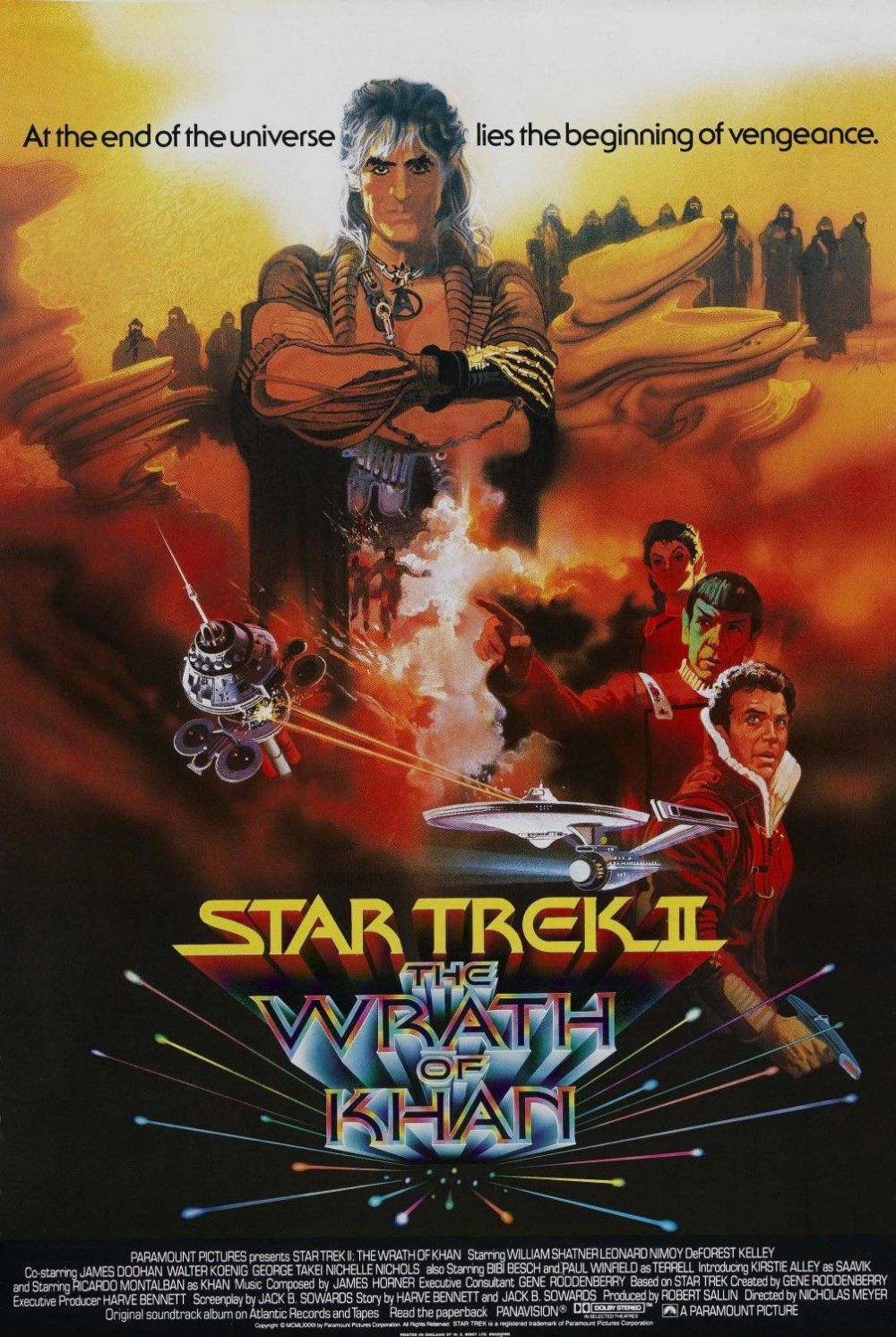
Star Trek II movie poster

Nicholas Meyer was the guest of honor at New Beverly Cinema on August 12, 2012 where “Star Trek II: The Wrath of Khan” was being shown. This classic sequel was being screened as a double feature with John Carpenter’s “The Thing” as part of the New Beverly’s tribute to movies from the summer of 1982. Meyer thanked the sold-out audience for showing up and admitted it was “preferable to being outside in this weather” where the temperature was inching closer to triple digit territory.

Actually, seeing Meyer appear in person for a screening for “Star Trek II” was a bit of a surprise. Last year, American Cinematheque presented a film program of the first six “Star Trek” movies, but Meyer politely declined to appear for the “Star Trek II” screening because he felt his head would explode if he was asked another question about it. In a sense, you have to be sympathetic to him because this is now a 30-year-old movie, and he has probably been asked every conceivable question about it. Meyer even went out of his way to tell audiences at the start, “I’m sorry if you’ve heard all these stories before. These stories can also be found in my memoir entitled ‘The View from The Bridge: Memories of Star Trek and a Life in Hollywood.’”

Meyer recalled how, after directing “Time After Time,” he wanted to do an adaptation of a Robertson Davies novel and would not consider anything else. But one evening while he was “flipping burgers” in his backyard, Meyer said a friend of his, an executive at Paramount Pictures, encouraged him to meet with producer Harve Bennett about the new “Star Trek” movie. Meyer ended up asking his executive friend, “Is that the show with the man with pointy ears?”

He met with Bennett who had gotten his start as a television producer on shows like “The Mod Squad” and “The Six Million Dollar Man,” and Meyer said they both remain friends to this day. Bennett ended up getting Meyer to watch “Star Trek: The Motion Picture” and episodes of the original “Star Trek” series so he could get familiar with the show and its characters.

Watching the show, Meyer said, “reminded me of something I loved as a kid” but he couldn’t recall what exactly. But it was late one night when he woke up at 4 a.m. in the morning that Meyer suddenly remembered: “Star Trek” reminded him of Captain Horatio Hornblower, a fictional sea captain who sailed the sea during the Napoleonic Wars in novels written by C.S. Forester. Meyer then envisioned this movie as “Captain Hornblower in space,” and from there he said he got a “hard on for doing a space opera.”

Four drafts had already been written for “Star Trek II,” and Bennett told Meyer Paramount was currently waiting on number five. Meyer said he had asked Bennett for the fifth draft and eventually got it after a delay, describing it as being 180 pages long and that he didn’t understand what he was reading. Meyer said he then asked Bennett if he could read the fourth draft, and he said Bennett ended up telling him, “Look kid, you don’t understand, all those previous drafts were just attempts at making a second ‘Star Trek’ movie.”

Meyer said he then suggested to Bennett they get all the previous drafts, read them over and then make a list of things they liked so he could try and weave them into a new script. The only problem was Industrial Light & Magic needed a script in 12 days so they could prepare the special effects for the opening. Meyer said he then asked Bennett, “What opening?”

“Star Trek II” already had a date it was set to arrive in theaters on, and this made writing a new script problematic. Bennett said it would take too much time to make Meyer a deal to get an additional writing credit, and Meyer ended up telling him, “Look, forget about the deal, forget about the writing credit, forget about the money. We don’t work on this new script now, there will be no movie.” Among the ideas kept from the previous drafts were the Genesis Device, Lieutenant Saavik (played by Kirstie Alley), and Captain Kirk as a dad.

When asked about what it was like working with the “Star Trek” actors, Meyer responded, “Have you seen the movie ‘Galaxy Quest?’ That movie was made for me!”

Meyer said the actors were very helpful in terms of crafting the script as they had already inhabited these characters for many years. Much of the talk, however, was on William Shatner whom Meyer described as “a very good actor.” Meyer also said Shatner was “very protective” of Kirk and that he is always the hero and in your face. In directing Shatner, Meyer described him as getting better the more he did a scene because he started getting bored to where he stopped striking an attitude and just became Kirk. This led Meyer to creating excuses to shoot scenes with Shatner over and over again like saying, “The sound’s not right there…”

There was also much talk about the late Ricardo Montalban who played Khan, and Meyer recollected he gave Montalban a copy of “Moby Dick” when they first met to talk about the movie. As an actor, Meyer said Montalban “hit all his marks” perfectly, but that he had to rein the actor in during Khan’s introduction. The character’s opening scene sounded like a rant, Meyer said, when Montalban first performed it, and he ended up taking the actor to the side and told him about a famous piece of acting advice once given by Sir Laurence Olivier:

“You shouldn’t show the audience your top because if you do, then you will have nowhere to go.”

When asked why Kirk and Khan never shared a scene together, Meyer said he didn’t realize this was the case while he was writing the script, and he found it impossible to put them together in a two-shot. Meyer then joked that these characters have Skype and that their conversations had to take place this way. He also answered the question he is most asked when it comes to talking about Montalban, “Yes, that is his real chest.”

Looking back at “Star Trek II: The Wrath of Khan” these days, it does appear to represent one of Hollywood’s first attempts at a franchise reboot as the original, while a commercial success, was not well-received critically. While he probably has answered every conceivable question regarding this movie, it was still great to see Nicholas Meyer at New Beverly Cinema as he has been responsible for some of the very best “Star Trek” movies made so far, and his talent as a writer and director remains strong to this day.