The Ultimate Rabbit’s Favorite Podcasts

Everybody has a podcast these days to where there are far too many to catch up on. However, there are a few which I refuse to miss as they lighten up my day which usually has me wondering how I can continue to survive in an insanely cruel world. Considering that I spend a good portion of the day in my car, they are my go-to whenever I go place to place, and these are the ones I am always determined to be up to date on.

The Ralph Report

Created and hosted by actor, podcaster and voiceover artist Ralph Garman, “The Ralph Report” is the first podcast I listen to each day. This podcast came about after Garman was unceremoniously laid off from the “Kevin & Bean Show” on the KROQ-FM after 18 years, and you can find it on the Patreon platform. It’s never political, and Garman is just aiming to take you away from your daily troubles for an hour and change.

Garman is joined by his “vice host,” standup comedian Eddie Pence who was a classmate of mine at Second City in Los Angeles and has quite the reserved palate when it comes to food, resulting in a daily segment where a certain food is talked about and whether or not Eddie will eat it. Also on the show is Garman’s wife, Jen Stewart (a.k.a. Queen J) who helps run on the visual part of the podcast known as “Garmyvision,” and she also has the most infectious laugh of any human being I have ever met.

Among my favorite segments on “The Ralph Report” include one-hit wonders where Garman talks about a band or a singer who reached the top just once and never experienced the same level of success ever again (the episode on Bobby “Boris” Pickett’s “Monster Mash” is classic). Others include “Sex U” which discusses sexual practices in ways that are both informative and educational to where I wonder if other sex education classes offered anywhere could ever be this informative. And there is the “Video Vault” segment on Fridays where Garman and Pence recommend movies many people have not seen or heard about. Garman always has the classiest of choices, while Pence tends to recommend those which only he seems to enjoy. Still, maybe Pence is right to find the good in such films as “Megaforce” and “Leprechaun 4: In Space.”
WTF with Marc Maron

Now granted, this one just came to an end, but there are still 16 years of episodes for you and I to catch up on. Hosted by stand-up comedian and actor Marc Maron, “WTF” is not so much an interview show as it is a conversation between him and his guest. What started as a simple podcast, back when the term was in its infancy, turned into one of the biggest as Maron got to have great talks with such people like Jodie Foster, Spike Lee, Louis C.K. and even President Barack Obama who came back to do the final “WTF” episode. We also got to hear Maron deal with his sobriety and daily anxieties which have resulted in crippling emotions and catastrophic thinking for him, something I can very much relate to as anxiety has been the bane of my existence.

Fresh Air

If there is a single person who has come to influence the way I interview actors and filmmakers about their projects, it is most definitely Terry Gross. Few other people can ask such intelligent questions about the arts, movies, politics and sports than her, and that’s the reason why she has remained so popular for the past few decades. In the past few years, “Fresh Air,” which airs from WHYY in Philadelphia, has brought other hosts who occasionally sit in for Terry like Dave Davies, Tonya Mosley and David Bianculli who, like me, has a great love for the classic television series, “Homicide: Life on the Street.

Inside of You with Michael Rosenbaum

Actor Michael Rosenbaum, best known for playing Lex Luthor on the TV series “Smallville,” started his podcast “Inside of You” back in 2018, and it has talking with fellow celebrities he has worked with as well as those he admires. He has made it clear to all that this podcast is no way political, and much of his questions deal with mental health which makes it a must for people like me. I also like how he talks with people who usually don’t get to appear on other big-time podcasts like Gates McFadden, Barbara Crampton or Jonathan Frakes to name a few. I especially liked his talk with Gates as she took the time to discuss her role on “Star Trek: The Next Generation.”
The Everything Sequel Podcast

If there is any kind movie which is especially difficult to make, it is the sequel as it more than likely to pale in comparison to the original. But perhaps there a few sequels which can improve upon their predecessors, and that’s where “The Everything Sequel Podcast” comes in. Hosted by Michael Christopher Shantz, a classmate of mine from my UC Irvine days, and Tom Steward, they thoroughly dissect every follow-up to an original film we know and love to where nary a single detail is left out.

Recently, both Michael and Tom took great delight in dissecting the sequels to Wes Craven’s “A Nightmare on Elm Street,” and they came to agree that “Freddy’s Dead: The Final Nightmare” was the best of the bunch (of course they didn’t).
The Sackhoff Show

I have had an enormous affection for Katee Sackhoff ever since she portrayed Starbuck on SyFy’s “Battlestar Galactica,” and I have followed her career from there and continue to do so. Like “Inside of You with Michael Rosenbaum,” Katee uses her podcast to talk with those actors she has worked with on different projects as well as those she has a deep admiration for. Her interviews with her fellow “Battlestar Galactica” actors like Jamie Bamber, Edward James Olmos, Tricia Helfer, Mary McDonnell and James Callis prove to be endlessly fascinating as they discuss not just how their brilliant remake of a classic science fiction show stands on its own, but of how they continue to deal with the fame it all brought them.

But in addition to all of that, Katee talks about her struggles and adventures at being a wife and mother of two children, and of how she continues to rise above her circumstances to be the best person she can be in all the madness life has to offer.

Homicide: Life on the Set/Homicide: Life on Repeat

As I said earlier, I am as big a fan of “Homicide: Life on the Street” as David Bianculli is. With the classic show having finally arrived on the streaming services Peacock and Tubi, a couple of podcasts have emerged to look at what went on in front of and behind the camera, and both have proven to be deeply informative and enthralling in equal measure.
Homicide: Life on the Set” is a largely look at what went on behind the scenes of the Baltimore cop show, and it is hosted by Susan C. Ingram, a camera assistant on the show for six years, and Chris Carr who is a director and podcaster based in London. So far, they have had great interviews with the show’s assorted editors, directors of photography, and actors like Melissa Leo, Reed Diamond and Daniel Baldwin, the latter of which proved to be incredibly lively and exceptionally entertaining.
Homicide: Life on Repeat” features two actors from the show: Kyle Secor who played Tim Bayliss, and Reed Diamond who played Mike Kellerman. So far, they have covered “Homicide’s” first season which lasted nine episodes which Secor starred in, and which sparked Diamond’s intense desire to get a role on this show. They have also taken the time to interview key figures involved in the show’s creation such as Paul Attanasio and Tom Fontana who executive produced this show along with Barry Levinson.

Now if there are any other podcasts I can possibly add to this list, I will do so at a near or future date. I shudder to think at what I could have left out.

‘World’s Greatest Dad’ is a Twisted Black Comedy for Father’s Day Viewing

Worlds Greatest Dad movie poster

World’s Greatest Dad,” which was written and directed by comedian Bobcat Goldthwait, was one of those small movies from 2009 which got released under the radar. It does star the late Robin Williams, but it never got the same level of marketing some of his others got that year, namely “Night at the Museum: Battle of the Smithsonian” and the god awful “Old Dogs.” But those who have a deep love for twisted humor should enjoy this one, and it features one Williams’ last great performances before he prematurely left the land of the living.

Along with Jody Hill’s “Observe and Report,” 2009 was quite a year for black comedies which managed to mine comedy out of the most sensitive of subjects. Williams plays Lance Clayton, a failed writer and poetry teacher who is the antithesis to Mr. Keating from “Dead Poet’s Society.” The class he teaches is not at all popular, and he is unable to inspire his students or make them seize the day. Lance dreams of publishing one of his novels and of becoming rich and successful, but this success has eluded him throughout his life. Of course, once you look at the kind of novels he writes, it becomes sadly understandable why he has received a truckload of rejection letters.

Lance is also a single father to his son Kyle, a kid who many would go out of their way to nickname the antichrist. Has there ever been a ruder, endlessly selfish, thoughtless, or verbally abusive son in the history of cinema? I’m sure there are, but none come to mind at the moment. Kyle makes Rhoda Penmark from “The Bad Seed” look like Teddy Ruxpin, and he’s what Macaulay Culkin’s character from “The Good Son” would have been like if the filmmakers weren’t subjected to the iron grip of Kit Culkin. Maybe these are extreme comparisons, but they seem to fit.

Then one day, Lance comes home to find his son Kyle dead in front of his computer after accidently strangling himself during the act of autoerotic asphyxiation. Knowing the way he died, once revealed to the public, will be humiliating for him and forever put a stain (no pun intended) on his son’s memory, Lance makes Kyle’s death look like a suicide and even writes a suicide which ends up having more emotional depth than anything which could possibly have come out of Kyle’s shallow little mind. Once the note is made public on a police website, everyone at school starts seeing Kyle in a different, albeit completely false, light, and Lance soon gets the fame and adoration he always dreamed of having, and this leads him to pen a fake memoir in his son’s name.

From this description, “World’s Greatest Dad” looks to travel down the same satirical roads as “Heathers” in how it depicts the absurd effect a person’s death can have on us, especially when it involves someone we hardly knew or truly despised. But as familiar as these roads are, the timing worked to this movie’s advantage as it was released not long after the death of Michael Jackson. With his sudden passing, all the crimes he was accused to have committed, but was never convicted of, quickly seemed to disappear as if they were all a fiction, and all we could think about was the great music and dance moves he left us. With Kyle, his sins seem to be miraculously absolved upon his death, and people look to his spirit as if he was some kind of cult hero. It’s all further proof of how we have tremendous respect for the dead, but none for the living, and this saying is amped up to such a crazy degree by Goldthwait.

But Goldthwait also has an even bigger target than our adulation for the not so dearly departed, and that’s the hollow pursuit of fame. We all know this filmmaker best from his days as a comedian, and his off-kilter voice had us laughing endlessly time after time. Seeing his work as a filmmaker should make you realize there is more to him than his talent for burning up furniture on “The Tonight Show.” Being as famous as he is, Goldthwait understands how fame can bring you in touch more with people who don’t have your best interests at heart as well as others who never have cared about you in the first place. It becomes easier to see why having all this adoration can make you feel even more than you ever have before.

Kyle’s death ends up turning just about everyone at school into an utter hypocrite. Many who would rather have beaten the leaving crap out of him suddenly come forth to say they were actually friends of his. Even the principal and school psychologist try to use Lance’s new-found fame to advance their career goals. Heck, a Goth chick becomes a Bruce Hornsby fan after Lance tells her Kyle was as well. Of course, we have already previously seen how Kyle hated Bruce Hornsby as much as Lance loved to listen to him, and the level of absurdity reaches epic heights once Lance publishes his son’s fake memoir, and the book deal which has long eluded him suddenly becomes a reality.

Williams’ performance in “World’s Greatest Dad” showed how great and subtle he was to where it wasn’t always necessary for him to act crazy 24/7. Aside from his concert tours, seeing him going all nuts in a movie eventually wore out its welcome, and at times it felt like he was desperate to make us laugh. But as Lance Clayton, Williams never overdoes anything, and he makes the character sympathetic even when we know what he is doing is very wrong.

Williams also captures the lonely life of an unpublished writer whose existence is filled to rim with endless rejection. Seeing another teacher getting an article published in the New Yorker, and on his very first try by the way, brings about a resentment in him he can’t quite hide. The “Good Will Hunting” actor captures Lance’s pain perfectly, and he grounds this character in a reality which grows increasingly bizarre as the movie goes on to where he never has to a single scene just for laughs.

But one actor who truly deserves a lot of credit is Daryl Sabara who plays Kyle. Perhaps best known for his work in “Spy Kids,” Sabara doesn’t even try to find any redeeming qualities in this astonishingly vulgar character because it feels like there are none to find. Building on the school bully he played in Rob Zombie’s “Halloween,” he fearlessly makes Kyle one of the most despicable teenage characters I have ever seen in motion pictures, and he even makes Danny Lawrence from “The Karate Kid” look like a real pushover. Sabara’s work here is fearless, and you have to give him big props for how far he was willing to go.

I also really liked the lovely Alexie Gilmore as Claire, the younger teacher who is more or less dating Lance while having eyes for another teacher, Mike (Henry Simmons from “NYPD Blue”). Her adorable personality and warm smiles make you almost completely forget how incredibly self-serving she is. Perhaps Claire doesn’t even know how selfish she is as she remains very coy about her relationship with Lance, but we cannot look past how selfish she is in her own desires. Despite all this, Gilmore still makes you root for her to be with Lance even after we realize this relationship is not in Lance’s best interest.

Many have complained about how “World’s Greatest Dad” ends with a number of issues unresolved, and this is true. Things are tied up a little too neatly, and you get the impression Goldthwait could have made this black comedy even blacker than it already is. Still, he shows a lot of guts taking on such touchy subject matter which other filmmakers would never dare deal with. As dark a comedy as this may seem, he also makes it a very moving one. Once you get past what you see on the surface, there’s actually quite a bit to take in. With this film, Goldthwait makes us understand how being alone can be nowhere as bad as being surrounded by people who make you feel lonelier than ever. Remember when Travis Bickle talked about being “God’s lonely man?” Well, I was reminded of that here.

Goldthwait previously directed several films before this one including “Shakes the Clown” and “Sleeping Dogs Lie,” and he would later give us an even darker and more biting black comedy with “God Bless America.” But aside from working in comedy, he also directed the found-footage horror movie “Willow Creek,” and he gave us one of the most unforgettable documentaries of recent years with “Call Me Lucky” about the late comedian Barry Crimmins. Like “World’s Greatest Dad,” they deserve a bigger audience than they have received to date, and they demonstrate how talented Goldthwait is behind the camera as well as in front of it.

Williams and Goldthwait were great friends off screen, and their appreciation for one another really showed here. “World’s Greatest Dad” may seem like an unusual movie to view on the very important occasion of Father’s Day, but you can only watch Gregory Pick in “To Kill a Mockingbird” so many times. Lance Clayton may not be the greatest dad as the title infers, but you never doubt the love he lies about him to the world to achieve fame and cover up what an infinite little prick he was in his short life. For those in the mood for a thoughtful black comedy, this one delivers.

Besides, is there any other movie out there featuring two teenage girls getting in a catfight over a Bruce Hornsby CD?

* * * ½ out of * * * *

David Mamet Looks Back at Writing ‘The Untouchables’ on Tax Day

David Mamet photo

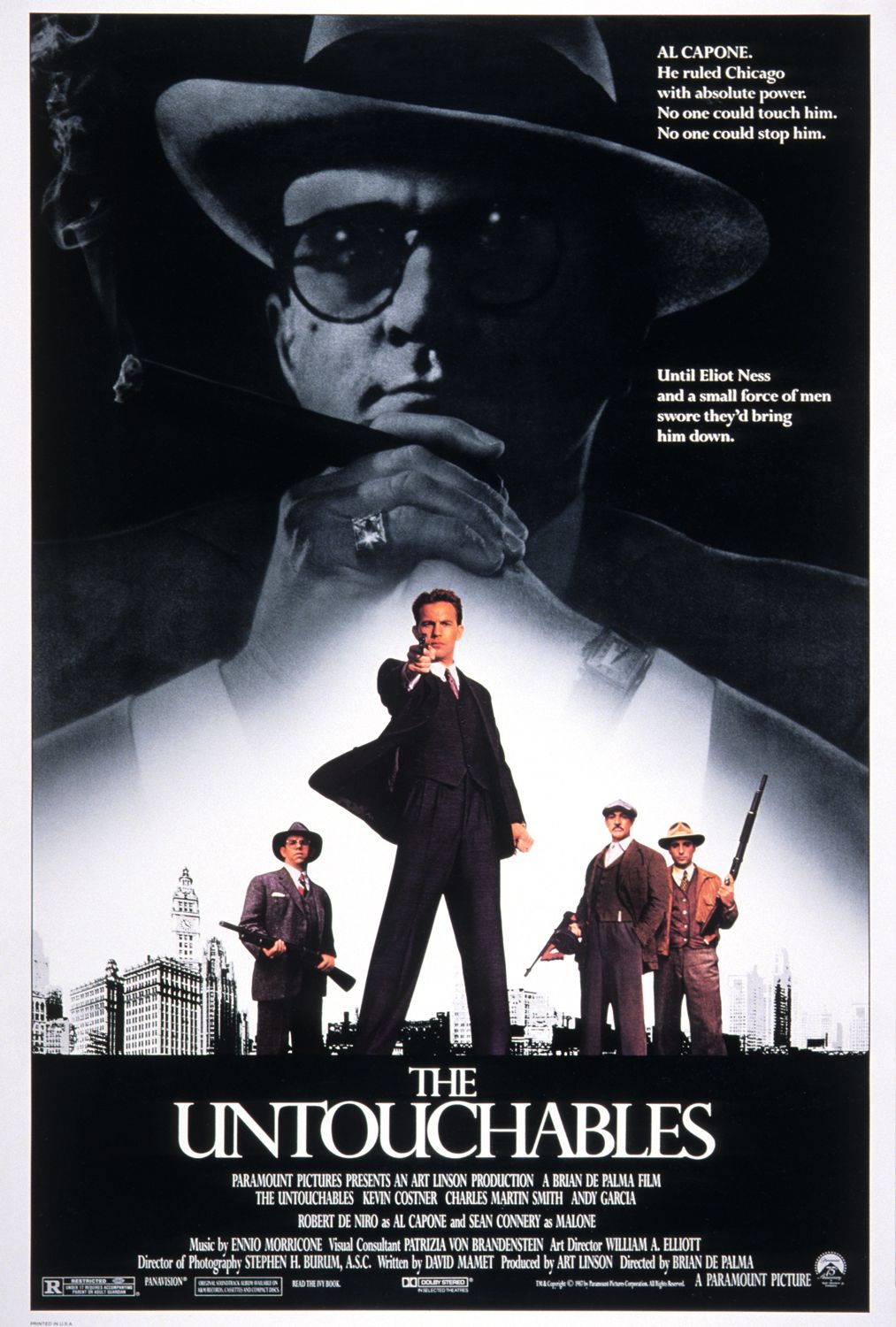
There were more than enough film buffs who filed their tax returns, or applied for an extension, on April 15, 2010, in the nick of time to check out a special screening of Brian De Palma’s 1987 classic “The Untouchables” at the Aero Theatre in Santa Monica. Following the story of how Elliot Ness and his select group of men who worked to bring down infamous crime boss Al Capone on tax evasion charges seemed like the perfect way to celebrate Tax Day. Finally seeing it on the big screen in glorious 70 mm was great after first watching it on VHS years ago.

But I do have to admit though that this movie really screwed me up for a time after I first saw it. It was one of the few times my parents let me watch an R-rated movie with them when they rented it on video. Having seen it reviewed on so many different shows like “At The Movies,” “Sneak Previews” and of course “Siskel & Ebert” (which had both hosts clashing over it passionately) had me excited about watching it eventually, and this was back in the day when I rarely, if ever, went out to the movies. But it was one of the first times where I realized the good guys didn’t always make it to the finish line. To see them get killed off in a most gruesome way was painful for a 12-year-old to take in as I always believed the good guys, those who work for justice would be the ones left standing. Back then, I was starting to learn how unfair the world can be.

The Untouchables movie poster

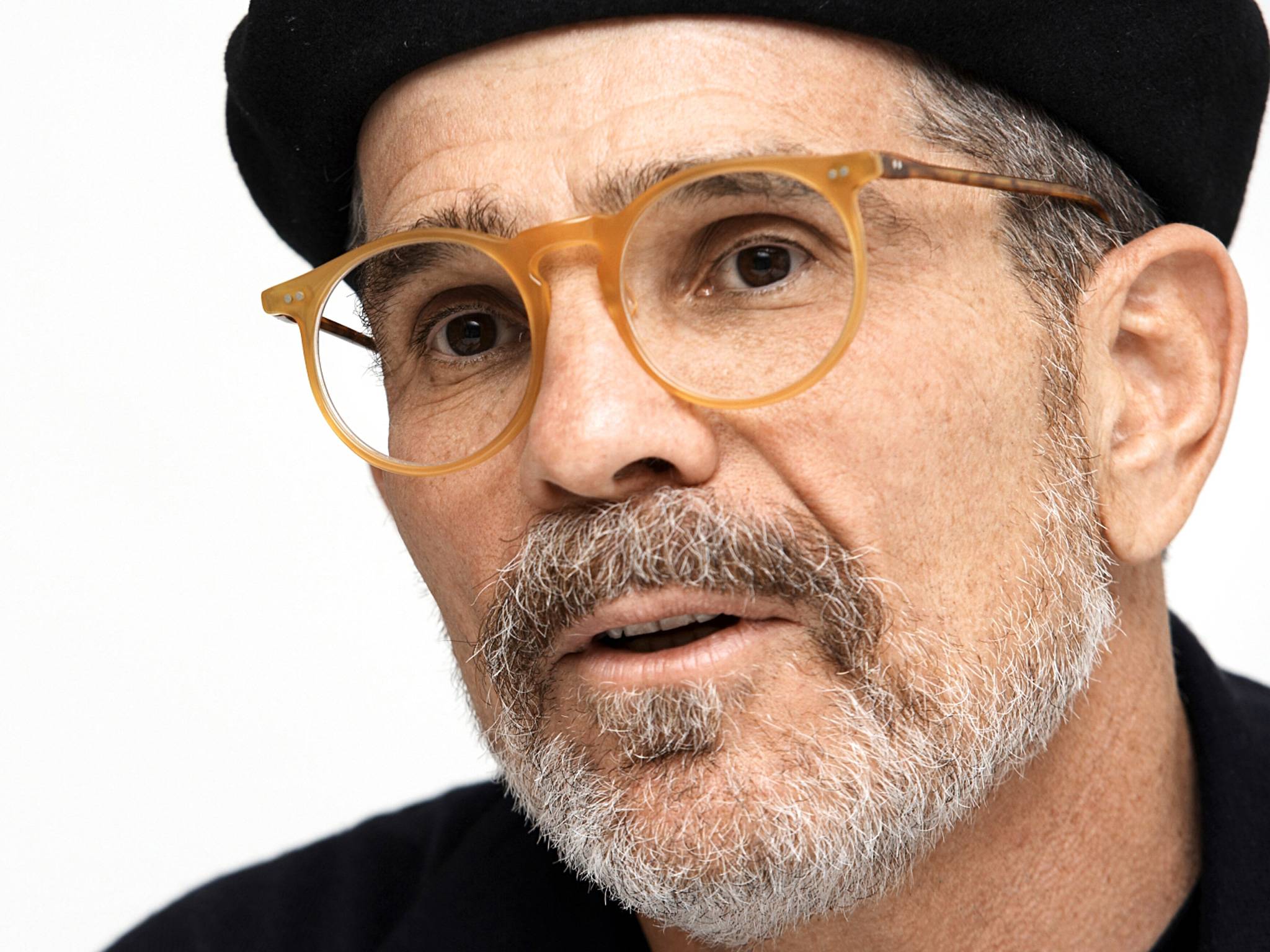
Anyway, this evening had a special reason for us to come out other than seeing the film in 70 mm as David Mamet, who wrote the screenplay for “The Untouchables,” was also in attendance to engage in a Q&A. Instantly recognizable in his beret and those huge yellow glasses of his, Mamet had many stories to tell regarding the making of De Palma’s film, writing the script for it and his thoughts on writing and Hollywood in general.

The first question asked was how Mamet got hired to write the script, and he replied that he got the job by default. Apparently, the job was first given to the late playwright Wendy Wasserstein who had won a Pulitzer for “The Heidi Chronicles.” She must have done quite a bit of work on it because Mamet said the Writer’s Guild of America still wanted to give her a credit. But he never hid the fact that what attracted him to writing the script was, as he said, “a lot of money.” The way Mamet described it, writing for someone else is known as “whoring.”

Being one of America’s most acclaimed playwrights and having grown up in Chicago where “The Untouchables” takes place should have made Mamet the most obvious choice for this motion picture. Mamet talked about how he grew up there with gangsters all around him and of how everyone lived and breathed the same air as them. As for the cops, he got to know them better while working as a cab driver. He also went on to say several of his family members kept telling him stories about Capone from time to time.

For years, Chicago has been known to be a city engulfed by corruption, and Mamet did nothing to hide the fact it is full of crooks. He described it as a machine that is run downstate and remarked the mayors occasionally go to jail. He also remembered a saying once told to him when he asked someone in politics what the difference was in running for one office or the other. The politician told him, “the girls get prettier.”

It seems many natives of this city have the same romantic view of Chicago as Mamet did, and he said it best, “In Chicago, we love our crooks!”

 A lot of Mamet’s inspiration for “The Untouchables” came from all of Chicago, he said. He tried to include as many famous landmarks such as The Anchors Restaurant and The Lake. Much of downtown Chicago was used to great effect throughout, and I wonder if there has been a movie since which is as superb in the way it brings Prohibition-era Chicago to life.

With De Palma directing “The Untouchables,” Mamet said he just hoped the director would stick to the script he wrote. Looking back, he said De Palma did actually stay true to his script to a certain extent, but that there were moments where he felt aliens had come down and sucked the brains out of those making the film. In terms of differences from his original script, Mamet said they took out the crawl he put at the end of what happened after the Prohibition Era ended and of how gangsters are still with us today. Mamet also said De Palma was the one who added the “cockamamie baby carriage” sequence.

During the making of “The Untouchables,” Mamet said he was never on the set. He was actually quite happy he wasn’t there which was surprising to here as you’d figure any writer would want to be there even if it annoys the hell out of the director. But while most writers want the opportunity to be on a film set, Mamet said he feels better off staying out of the way.

One of the main sources behind the screenplay was Elliot Ness’ autobiography which Ness wrote with Oscar Fraley. When an audience member asked Mamet if he believed what Ness wrote about, Mamet replied quite simply, “I don’t believe anything anymore.”

At its essence, Mamet described “The Untouchables” as a melodrama. Lest people see this as him looking down on the way De Palma shot this now classic movie, he was quick to quote from Stanislavski, “Tragedy is just heightened melodrama.” Looking at the movie as a melodramatic piece actually makes perfect sense as audiences got so swept up in the story to where it affected them more emotionally than they could have anticipated.

Other tidbits Mamet shared included that aside from Robert DeNiro’s method preparation in playing Al Capone, he ended up saying just what was in the script. The line uttered by Sean Connery’s Malone character of “here endeth the lesson” came from the book of common prayers. But the one which really stood out was what Mamet said Connery first told the producers when he came to make this movie, “Broccoli never paid me a dime to play James Bond!” As for “the Chicago way,” Mamet said it was something he just came up with. The philosophy behind it was when you take something, burn it down to the ground and then build it back up again.

Many in the audience were also eager to hear Mamet talk about the art of writing, and he had much to say on the subject. As a dramatist, he said his job is to take out the narration and go with the plot and characters. Watching the plot for him is where the enjoyment comes from. The problem is actors and directors end up wanting to put all the narration back in. They want to spell out everything for the audience, but dramatists make you want to know more about what’s going on. The way Mamet sees it, you just need a plot and an actor to get the ball rolling. A play or a movie cannot start from an ongoing situation. Of course, writing a plot can be very hard. In terms of plots, he views “Wag The Dog” as his “Casablanca” in that it was the easiest plot for him to write. Once he was finished, Barry Levinson started shooting the movie a month later, and the shoot went very quickly. As for all the other plots he has worked on, they were nightmares.

In talking about some of his other projects, Mamet said the coffee’s for closers speech with Alec Baldwin from “Glengarry Glen Ross” might have come from sitting in an office where he once worked. There was also some talk of how he wrote the script for “Ronin,” which was directed by the late John Frankenheimer, and never got credit for it. Mamet said he had always wanted to write something anonymously, and “Ronin” became that something because he was not originally hired to write it. What happened was Robert De Niro pleaded with him to do a rewrite as he felt the script was not up to speed. Mamet said he eventually caved in and rewrote the whole script in a week.

In addition to being a writer, Mamet is also a director of film and stage. When asked about his approach to directing, he said he wants to know what the story is about and how each beat contributes to the action. From there, everything comes together along with some unforeseen difficulties. When asked if movies would ever become an art form again, Mamet said, “Movies were never an art form, they were entertainment. It just evolved into an art form from there, and it’s still evolving in different ways.”

Mamet was up onstage for almost an hour at the Aero Theatre, and it still didn’t feel like he was there long enough. This writer, who grew up a working-class man and went to Kaminsky Park on a regular basis (yes, he is a Cubs fan) was full of anecdotal moments which made us want to learn more. When it comes to “The Untouchables,” he gives all the credit for its success to De Palma as he made all the elements work perfectly. He said almost everything good that happens is an accident, so it’s safe to say “The Untouchables” is a glorious accident and one which invites repeat viewing.

I personally want to thank David Mamet for saying something he once heard from a judge; that being quoted out of context is “the definition of a quote.” This makes writing articles like these so much easier! As for his line about critics being “illiterate swine taking the bread from my children,” I won’t take that one personally. Oh yeah, he also said the lizards in Hollywood will be the last ones to die, and he believes their last words will be, “I want to know more…”