David Twohy Looks Back at the Making of ‘Riddick’
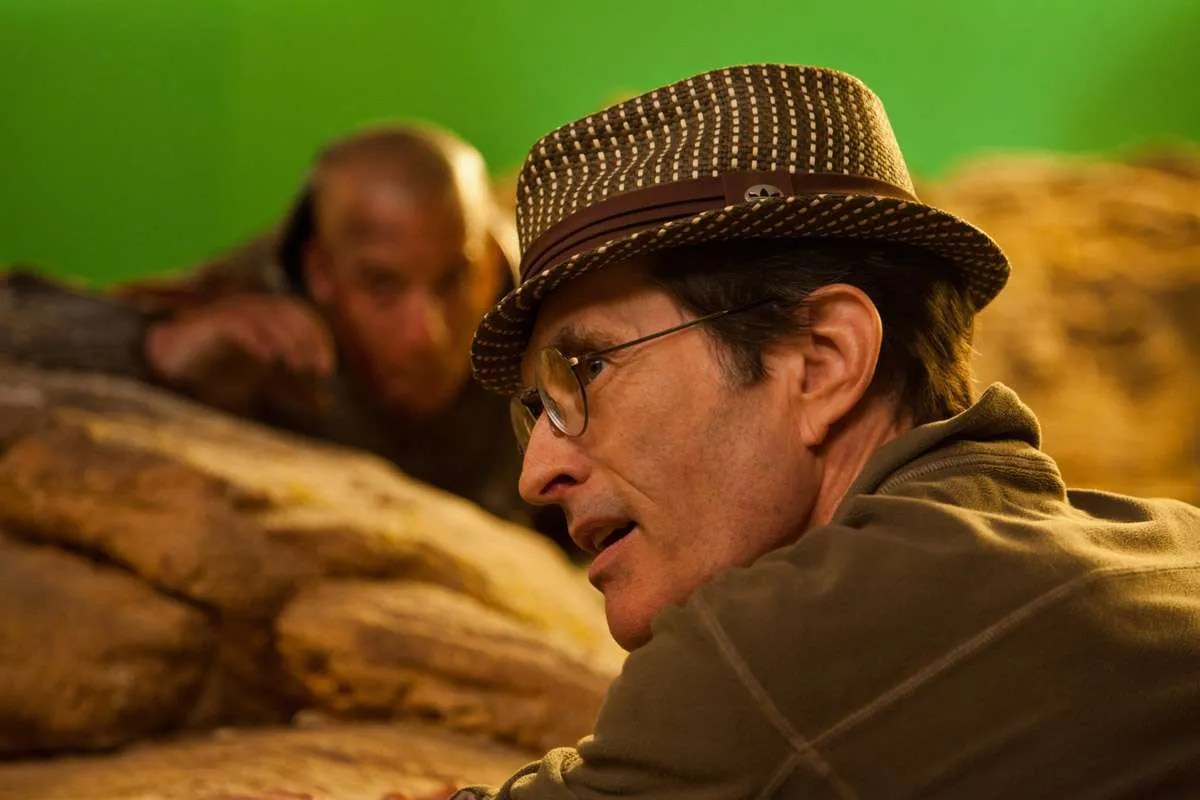
Born and raised in Los Angeles, California, filmmaker David Twohy has left a strong impression on moviegoers everywhere. He got his start as a screenwriter on “Warlock,” “The Fugitive” and “Waterworld,” and he eventually proved himself to be an effective director with the underrated “The Arrival” which starred Charlie Sheen as an astronomer who discovers evidence of intelligent alien life, and the equally underrated submarine supernatural horror film “Below.”

But the movie Twohy is still best known for is “Pitch Black” which had him joining forces with “The Fast & The Furious” star Vin Diesel who played the dangerous criminal, Riddick. Its budget was only $23 million, but Twohy and Diesel created a movie that was intensely exciting and which made the most of its modest budget. So strong was the cult following for “Pitch Black” that the two later made “The Chronicles of Riddick” which had a budget of over $100 million. While the sequel was not a commercial success, fans were still craving another Riddick movie and kept pushing at Twohy and Diesel to bring this anti-hero back to the silver screen.

Fans got their wish when “Riddick,” the third movie in the “Pitch Black” franchise, opened in theaters on September 3, 2013. After dealing with a big budget and a Hollywood studio, Twohy and Diesel ended up raising the money independently to make this particular sequel a reality and maintain full creative control over it. It follows Riddick as he is left for dead on a desolate planet and ends up being sought out by bounty hunters who are prepared to bring his head back in a box. But soon they are stalked by vicious alien predators, and they are forced to join forces with Riddick in order to survive the long dark night.

I was lucky enough to attend the “Riddick” press conference at the Four Seasons Hotel in Los Angeles, California just before this sequel was released back in 2013. Twohy talked about the challenges of making this particular movie as well as what it was like working with Diesel who had just received his star on the Hollywood Walk of Fame.

Question: How did the final film compare to what you originally envisioned, and were there any big challenges you faced in terms of the look of the film?

David Twohy: Did the finished product end up like we had imagined it? Yeah, it does because really, as a responsible filmmaker, I have to imagine the whole movie. After I script the movie, I have to storyboard it out, I have to budget it, and I have to understand if I can afford all those visual effects or not. So more than anybody, it looks like the movie I had imagined, sometimes better, sometimes not quite as good depending on how we execute the visual effects. But yeah, I’m not surprised by it because it’s what I do and it’s what I set out to make. Sometimes Vin, who is not privy to everything that’s in my head and all the work that I’ve done with the concept artist (and he likes it that way), is surprised, but I don’t have the luxury of being surprised. I can’t be surprised by anything in the filmmaking process if I’m doing my job right. So, it’s very much the movie we set out to make, and we set out to make something that would fit into the budget that we had ($38 million). I think you all know that this was an independent movie this time out instead of a studio movie. So, knowing that we would have limited resources, Vin and I sat down in his kitchen and we came up with a story that would fit that budget. It couldn’t be as grand as the last movie, and it had to be more contained. It feels more like “Pitch Black” to some people. It probably is more like that at least in its tone and scope (we limited it to one world), but it’s very much the movie we set out to make, and there were not that many surprises for me along the way.

Question: It was interesting to see that Dahl (played by Katee Sackhoff) was not a love interest in this movie. Usually, the girl ends up being the love interest of someone, but instead she was this independent woman who can hold her own. Can you talk about casting Katee and why you chose to make her this independent woman who can take care of yourself?

David Twohy: I remember Ridley Scott telling me this story about the original “Alien;” Ripley was scripted to be a man, and he decided to make her a female thinking that these parts should be gender-neutral. I’ve always remembered that, and the women in my movies do stand up on their own two feet and are not pieces to anybody, and I like that. In terms of Katee, she was the first person to read for the role of about a hundred actresses, and that I remembered her throughout the whole process speaks highly of her. So finally, I said, “Who was that girl who came in the first day, she had blonde hair and she kind of killed it? Who is she?” They said, “Oh that’s Katee Sackhoff from ‘Battlestar Galactica.'” Well, I didn’t really follow “Battlestar Galactica,” so I didn’t even know her from that, so I’m not casting or for that. I just thought she was the best available actress so we cast her like that, and I’m so glad we did because she was a joy to have on the set. And clearly, like the character, she holds her own amongst the men and swears worse than any of them. Her off-screen lines are just as good.

Question: What made you bring this franchise back to R-rated territory after the PG-13 “Chronicles of Riddick,” and is there going to be another “Riddick” anime, game or ride?

David Twohy: (laughs) A Riddick ride? Well, actually we are doing some D-Box seats in theaters, the motion platform seats. I just experienced them for the first time and it’s the closest thing to a Riddick ride as you’ll get. It’s watching the movie, but it’s motion based. I don’t know what that in between thing will be, but we embrace them, and I would like to do more. We published the motion graphic novel as well which helped with the back story of how Riddick went from King of the Necromongers to a man alone on a planet. We embrace those things, and it would be great to get another game off the ground, but those things are very hard to launch. They are costly and they need a lot of lead time, so it’s hard to sync those games to the release of a movie. But we would like to do another one and we are talking about it. The R-rated movie was important to us because, as a filmmaker, I have the flexibility I need to do what I want. With PG-13 I feel like I’m pulling my punches either in the script or working with my actors on the set and coming up with stupid analogues for the word “fuck.” I’m getting tired of that. It gets to the point where people aren’t talking like people talk anymore. Just because I don’t want to pull my punches anymore, I felt this was important to me. It also plants a flag in the ground for our fans as well and lets them know we are true to the character and the nature of the series. The reason for PG-13 last time is obvious. It was because we were a big studio movie funded by a big studio, and to minimize their risk they wanted to branch out to what they think is the widest possible audience and they think that’s PG-13. There is actually a sound reason for that, but Vin and I feel more comfortable back in the R-rated universe.

Question: In “Riddick” you deal with the Necromongers briefly and just move on from there. Do you plan on going back to that story thread if this movie is successful enough to merit a sequel?

David Twohy: Yes. If it is successful and if we have a flexibility to go wherever want for the next movie, and Vin and I are talking about two more movies and probably just that (it would be good to do a closed ended franchise rather than a franchise that just keeps spitting them out just to spit them out), we would like to get back to the Necromongers. I am currently cutting the director’s cut DVD right now which includes more of an epilogue which has Riddick returning to the Necromonger empire and actually setting things right there in terms of the guy who abandoned him on this planet and left him for dead, and his search for Vaako (played by Karl Urban) who he thinks has the answer to where his home world lies. The next few weeks will be telling for us, and we want to pay off the fans who have stuck with us all this time. They have never stopped talking about this movie to us, and it was them who made us open our eyes and say it will be honestly irresponsible to leave it like it was and not make another movie.

Question: How did you and Vin get back to the savagery of the “Pitch Black” with this one and made it look like “Conan the Barbarian” as opposed to “Conan the Destroyer?”

David Twohy: That was important too, and it was also part of the character who thinks at the story’s outset that maybe he feels that he is gotten a little slow, a little soft, who has dulled his own edge as King of the Necromongers and wonders what happened to him. Did he commit the greatest crime of all? Did he get civilized? So, the exploration of him trying to get back to basics to find his edge again, to get back to the lean thing he was, it’s a good evolution for Riddick and it’s also sort of a parallel to what the franchise has undergone

Question: What do you like most about collaborating with Vin Diesel?

David Twohy: That he doesn’t shut up (laughs). He’s a guy who aims high and pushes me to aim high. He’s a guy who dreams and thinks that anything is possible, and me I’m more of a practical guy. I try to be a responsible filmmaker, living with the constraints of what I’m given to make a movie with, but Vin doesn’t think like that. Vin thinks like anything is possible and he thinks big. Sometimes that’s almost a folly but other times it can be inspiring and it can open up my ideas to other ways of doing things. What’s great about it is that he’s a guy who has all the confidence in the world and always has ever since I cast him as just a guy, an actor, in “Pitch Black.” But he had an unshakable confidence in himself even back then, and he just seems to see the future or will it into being (laughs) so that he can say “hey I was right all along!” He’s great like that and he’s inspiring like that. Just about the time you think that Vin Diesel is a guy with big muscles and a big head and your kind of willing to dismiss him as that, you realize that this is a guy with a big heart too. He dreams no small dreams, and that’s good and that rubs off on everybody else he works with.

Question: Can you talk about crafting Riddick’s voiceover in the movie?

David Twohy: Here’s how I craft it, I sit in front of my computer screen and I write it. Then I’ll rewrite it, I’ll tweak it, I’ll rewrite it and then I’ll show it to Vin and he’ll say I’m digging this or I’m digging that. When he gets in front of a microphone, he’ll say 90% of it, but every once in a while, he’ll just stick in a line. I later find out it’s because it’s too similar to something else he said in another movie. We just work it out and then I’ll spitball three alternatives and when something pops up that he likes we’ll just lay it down. We’ve built a good level of trust with each other lately. As opposed to the voiceover in “Blade Runner” where it was just filling in stuff that you needed to know about the world and it wasn’t character-based, the one in “Riddick” is character-based and it comes with Riddick’s voice and how he sees the world. It takes a while to get it right.

Question: Riddick’s relationship with the puppy is one of the best things about this movie…

David Twohy: By the way, every woman who has interviewed me today talked about the damn puppy (laughs). I cut a trailer of this movie that was all about Riddick and his relationship with the dogs and I gave it to Universal and said, “Hey maybe we want to broaden our audience a little bit and make sure we get the women in here, you know?” Then they go, “It’s a little soft for a Riddick movie Dave.” God, I wish the marketing people were listening to this! I’ve been trying to tell Universal, I’ve been trying…

Question: Since the puppy was created with CGI effects and has a lot of interactive scenes with the actors, what did they have to work with on the set?

David Twohy: All the actors have plenty of reference whether its concept art which they can paper their trailers with or I’ll show them on the morning of the shoot. The puppy has stand ins. For the puppy, I got a 12-pound silicone puppy that looks like the real puppy. It’s furred, it’s got glass eyes and everybody wants to hold it, and it just feels right. The puppy made it into the movie in a couple shots. Plus, Vin has big dogs too, so more often than not he’s telling me how to greet the dog and how to pet it (I’m a cat guy, Vin’s a dog guy). So, he says, “No you don’t pet it like a cat. If you want to say hello to your big dog, you slap it on the shoulder.” So that’s what we do in the movie.

Question: What were the differences, both positive and negative, that you found making this movie independently versus working on a studio movie?

David Twohy: Mostly positive. We shot it in 48 days which was pretty streamline. During postproduction I showed it to an audience of 50 or 60 people and didn’t score it, didn’t test it. I just wanted to know what confused them so I could go back and clear up the confusions. I showed one or two cuts to Vin and then I locked the picture. That is as atypical as it gets in the professional filmmaking world because a lot those movies you saw this summer were focus grouped, tested, scored, recut, reshot, recut, tested, scored, and after a while there is a factory-made feel to those movies. So hopefully something this simple, streamline and filmmaking pure results in something that’s at least different and maybe better just in the handcrafted sense of it.

Question: So, would you say you had more fun with less money in some ways?

David Twohy: Yeah, we did, and I’m sure most independent filmmakers will tell you that. The downside is that we staggered to the starting line. We were up, we were down, we were up, and we were down. It all comes down to, is the paperwork closed? Is the bond closed? You have to close the bond to get the bank loan. It’s a lot of stuff I don’t know much about, and I wish it didn’t affect my life but it does. We started and we were shut down, kicked out of our studios, the doors locked. We had to come back three months later and pay our bills and start over. So those are the vicissitudes of independent filmmaking.

Riddick” is now available to own and rent on DVD, Blu-ray, 4K UHD and Digital.

As this interview was conducted in the past, it may contain outdated information.

Click here to check out my exclusive interview with David Twohy which I did for We Got This Covered.
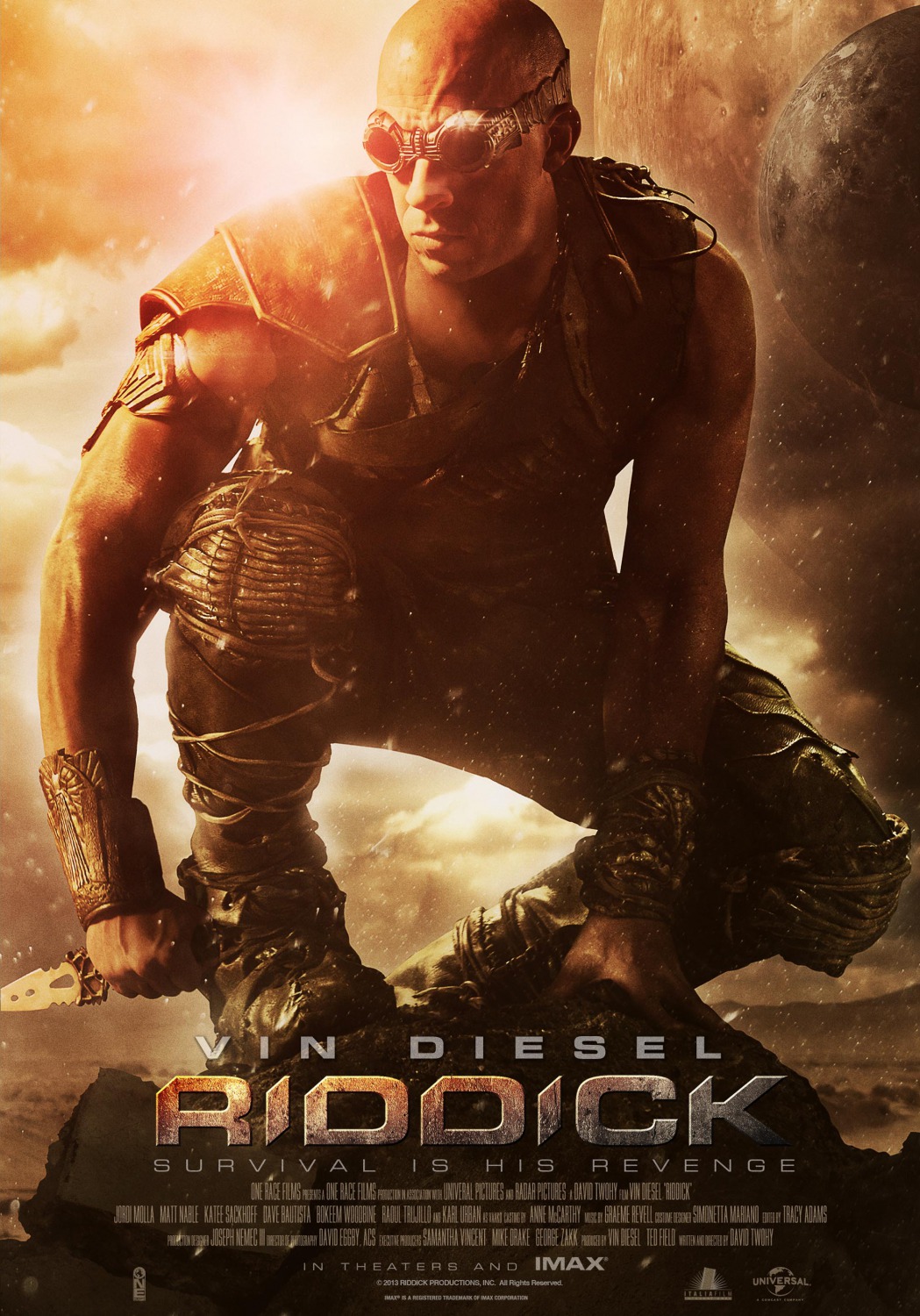
‘Riddick’ – A Welcome Return to ‘Pitch Black’ Basics

After the bloated motion picture that was “The Chronicles of Riddick,” filmmaker David Twohy and star Vin Diesel return for “Riddick,” the third in a trilogy which began with the riveting “Pitch Black.” This sequel proves to be a return to as the story here is a lean one and is not about to overwhelm us with too many plot points. Also, it proves to be a stand-alone film which does not require you to view the previous installments (or “The Chronicles of Riddick” at the least) to understand all that is going on.

As the movie starts, Riddick (Vin Diesel) is now King of the Necromongers, but he ends up being betrayed by his supposed followers when he is left for dead on a planet which he is led to believe is his home world of Furya. From there, this anti-hero struggles to survive in a hostile environment where all these scorpion-like creatures and dog beasts are out to eat anything that moves on at least two feet. To make matters worse, bounty hunters are once again on his tail as he is forced to expose his location in order to find a way off of this barren planet.

What I found interesting about “Riddick” is how being King has somehow robbed this anti-hero of his abilities to survive. Diesel has made it no secret of how much he loves playing this character, and he invests Riddick with everything he has. Whatever you may think of his acting, you cannot say “The Fast & The Furious” star is not dedicated to giving this character the respect he deserves. Riddick is a bad dude, but like the best anti-heroes in movies, I still found myself rooting for him.

This sequel is truly a passion project for Diesel and Twohy more than anything else. Because “The Chronicles of Riddick” was a big budget studio movie that didn’t do well commercially, the two of them ended up having to raise the money independently to make this one a reality. Going from a budget of over $100 to one of under $40 million may have forced them to cut a lot of corners, and this is probably not the “Riddick” movie they originally envisioned doing. Still, I liked what they were able to come up with given the limited resources at their disposal.

One of the joys of watching “Riddick” is seeing how Twohy deftly skewers a lot of sci-fi clichés and wonderfully plays on the bounty hunters’ collective fear of their prey. Once the hunters arrive on this barren planet, Riddick leaves them a warning to leave one ship behind for him or suffer the consequences. Right away, you know that a majority of these characters are screwed. The question is, how are they going to die? There’s a great scene where they think Riddick has gotten into one of their storage compartments which is protected by a highly explosive device. Did he or didn’t get inside? That’s the question. Whatever the answer is, it leads to one of the film’s most wonderfully suspenseful moments.

Among the crew of bounty hunters is Katee Sackhoff whom we all know and love for her work on “Battlestar Galactica” and “Longmire.” She plays Dahl, a female mercenary who can dish it out as much as the men can and then some, and the punches Dahl inflicts on the male population she is forced to deal with are exquisitely painful to say the least, and they leave scars which will not be easily forgotten. Sackhoff is awesome in a role that definitely reminds us of how much we love her work, but she isn’t just playing Starbuck all over again. Dahl makes it abundantly clear at one point that she doesn’t fuck guys, and Sackhoff leaves you wondering just what exactly her character means by this. Remember, a single word never has just one definition.

Also in the cast is Jordi Mollà who has been nominated three times for the Goya Award for Best Actor, but none of those nominations include the performance he gave in Michael Bay’s horrifically bombastic “Bad Boys II.” Here he plays Santana, the leader of one of the bounty hunter groups, and Santana does very little to hide just slimy of a bastard he is. Mollà clearly relishes playing such a despicable character, and I got a kick watching him go over the top as he hunts down his prey. I don’t think it’s giving away too much to say that his character gets the painful fate he so deserves.

Then there is Matt Nable who plays the leader of the other bounty hunter team (who have much better equipment by the way), Boss Johns. I have no idea if his mother gave him that name, but I can only imagine the playground beatings this character got as a kid. Talk about a name to live up to!

Anyway, Nable, a former professional rugby player, does good work in conveying the conflicted emotions of his character as it turns out he needs Riddick for more than just a simple bounty, and it gives this sequel a complexity I did not expect it to have.

Dave Bautista, a former WWE wrestler who has since given memorable performances in movies like “Blade Runner 2049” and “Spectre,” plays the most bone crushing bounty hunter of all, Diaz. With Bautista in the cast, we know he and Diesel are going to have an all-out fight. And yes, it is quite the fight.

Most of the visual effects we see here are rendered in CGI, but that’s understandable given the movie’s budget. While the overuse of CGI effects in movies tends to drive me crazy, many of them look really good, and the alien landscapes are memorably illustrated. Riddick also gets to adopt a dog in the process, and the dog turns out to be one of this sequel’s best characters. Despite all the snarling, this dog is a cuddly little beast at heart.

It is also great to see Graeme Revell back composing the score for “Riddick” as he also did the music for the previous two films as well. It also marks a welcome return to the electronic elements he utilized so well in both “The Crow” and “Dead Calm.” It’s a wonderful reminder of how Revell doesn’t always need a full orchestra to create suck a compelling score.

“Riddick” is not a great movie and does not reinvent the wheel for either the action or science fiction genres, but it kept me entertained throughout. It also says a lot about Diesel and Twohy that they managed to bring this character back to the silver screen despite the commercial disappointment of “The Chronicles of Riddick.” The fans still wanted to see Diesel’s most favorite character make a return to the big screen. It took almost a decade for this to happen, but Diesel and Twohy came through even though they had fewer resources to work with.

And now we have news that a fourth “Pitch Black” movie is in the works. I am intrigued to see what Diesel and Twohy come up with next, and it is nice to know Diesel has another character to rely on other than Dominic Toretto.

* * * out of * * * *

‘Twister’ Movie and 4K Review

The following review was written by Ultimate Rabbit correspondent, Tony Farinella.

Twister” is a film that is currently celebrating its 28th anniversary.  It raises two important questions—where has time gone, and when did I become old?  Watching “Twister for the first-time since its release, it is clear this is a quintessential 1990’s action flick—you have your movie stars, your big budget, and your special effects.  If you are able to shut off your brain and sit back and enjoy the ride, there is plenty to like here. If you are looking for logic or a complex story, you have come to the wrong movie.  Your enjoyment level of this movie is solely dependent on your ability to suspend your disbelief when it comes to flying cows and off-the-wall tornadoes.

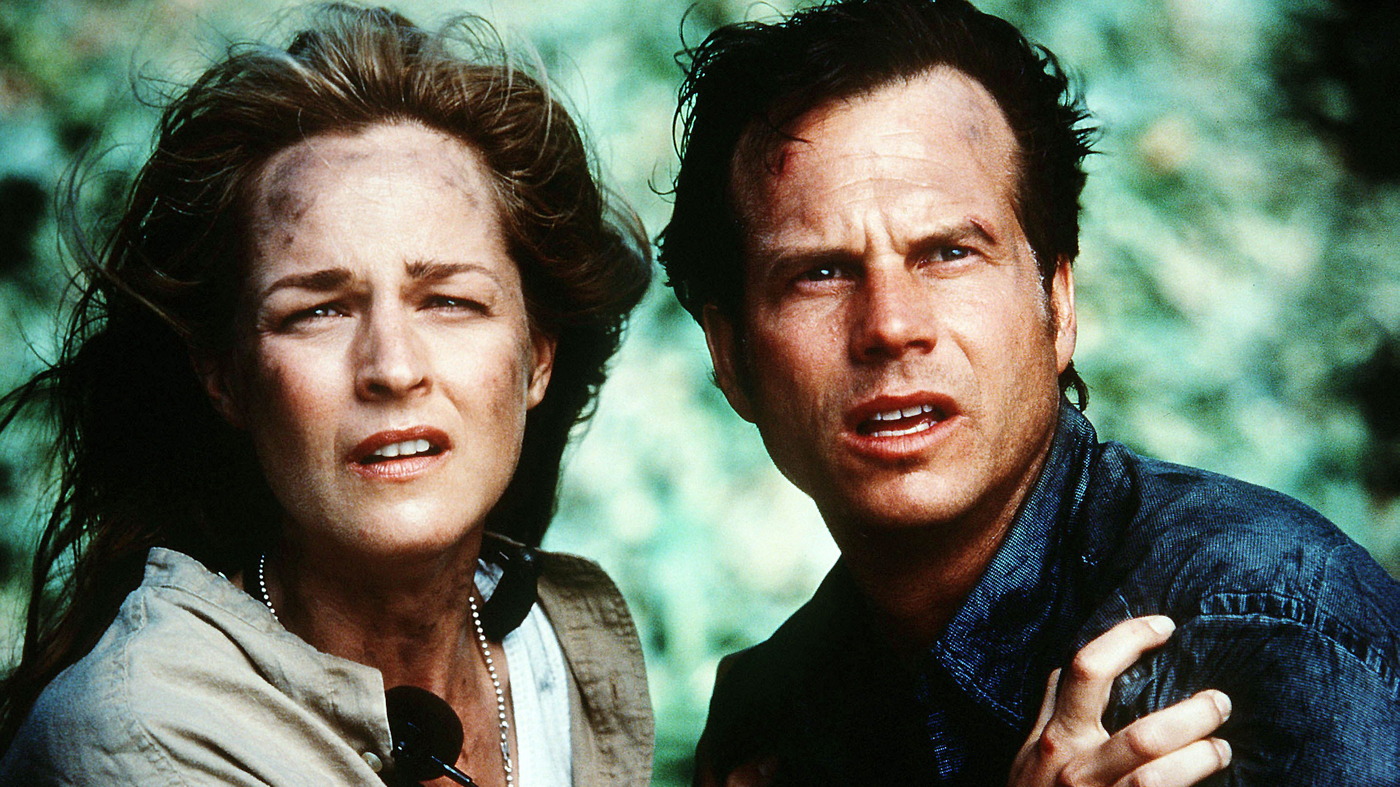
In the opening scene, we see a young woman named Jo Harding who unfortunately loses her father in an F5 tornado. This has stayed with her well until her adult life, as she is now entrenched in the world of tornadoes as a professional storm chaser.  She is going through a divorce with her weatherman husband named Bill, played by the late Bill Paxton.  He is hoping she will sign the rest of their divorce papers, so he can finally marry Dr. Melissa Reeves, a reproductive therapist, played by Jami Gertz. Jo (Helen Hunt), however, is dragging her feet as she still has feelings for Bill.  They soon find themselves in a situation where they need to work together in order to survive because a massive tornado is coming their way.

Helen Hunt and Bill Paxton star in Twister.

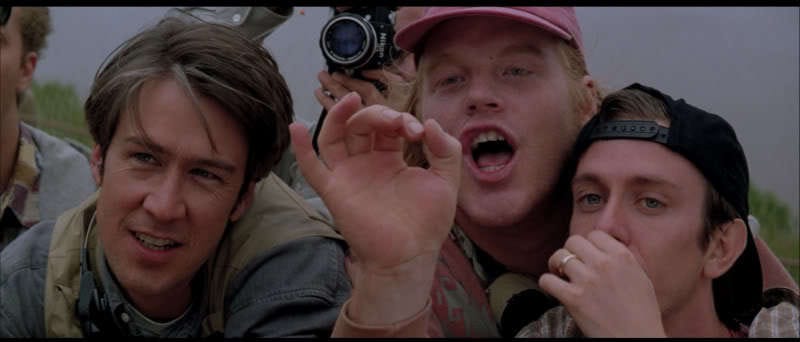
Jo and Bill have created a storm-device called Dorothy, which can predict if a storm is happening fifteen minutes ahead of time as opposed to the usual three minutes. This will give people more time to prepare for a tornado and make sure they find a safe haven for them and their loved ones.  It needs to get close to a tornado in order for the sensors inside of it to track any weather data. Jo has also assembled a talented team which includes Dustin Davis (Philip Seymour Hoffman) and Rabbit (Alan Ruck). The scene stealer here is Philip Seymour Hoffman. I would describe him as Jeff Spicoli if he ever pursued a career as a storm-chaser, and he steals every scene he’s in throughout.  He’s hilarious, charming and off-the-wall.

“Twister” is an incredibly entertaining action picture that works because of the jaw-dropping special effects and its likable cast. Helen Hunt, in particular, is great as a strongly written female character dealing with grief and trauma by trying to make sure no one ever experiences what she went through as a child. Bill Paxton is a cheesy goofball who doesn’t see what’s right in front of him and the fact he’s better off with Jo. Jami Gertz takes a thankless role as the “other woman” and makes it work to where the audience still likes her, even though we’d rather see Jo and Bill together. 

The special effects and tornado scenes are expected to deliver in a film like “Twister,” and they do not disappoint.  The film is wise to take some time to have the characters interact with one another, so that when the storm scenes kick up a notch, we care about what happens to the participants. They also build up the storm scenes so when they happen, we are waiting for them and are emotionally invested.  “Twister” was directed by Jan de Bont, who had previously directed 1993’s “Speed.” He knows how to blend the action scenes in with the character scenes in an effortless way, and he hits the right balance throughout.  After not seeing the film for over two decades, one of my concerns was it would be too action heavy.  I’m glad to see he strikes the right chord with his direction. It helps that the film was co-written by Michael Crichton, the smart and talented author and screenwriter.

“Twister”is about fifteen minutes too long, and sometimes there are too many characters here, some of which I did not mention.  It’s not a perfect film by any stretch of the imagination. However, for a big-budget action flick, it’s exactly what it needs to be and then some.  As mentioned earlier, there is a build-up to the storm scenes, which are bonkers and over-the-top.  It’s about making the little scenes and the big scenes matter and co-exist together in harmony.  It’s also about having fun.  There is a lot of fun to be had with “Twister” even in 2024.  It’s an entertaining action film with some big laughs and even bigger explosions.

* * * ½ out of * * * *

4K Info: “Twister” is released on a single disc 4K from Warner Brothers Home Entertainment. The film has a running time of 117 minutes and is rated PG-13 for intense depiction of very bad weather. This release also comes with a digital copy of the film along with a really cool looking slipcover.

4K Video:  This is one of my favorite 4K releases of the year from a visual standpoint.  It looks gorgeous, clear, and vivid. When I think of this movie, I think of the colors.  The colors really pop here, especially when the sky outside is green.  It’s a tremendous looking 4K and it’s an early candidate for one of the best 4K releases of the year.

Audio Info:  The Dolby Atmos soundtrack is a fantastic touch here, as this is a big screen movie that is being brought right into your home theater.  This film was made for 4K.  The big scenes feel big with this Dolby Atmos track.  It sounded perfect.  It wasn’t too boisterous or in-your-face, but it gets the point across in an effective manner.  They did a great job here, too.

Special Features:

The Legacy of Twister – Taken by the Wind (NEW)

Chasing the Storm: Twister Revisited

Anatomy of a Twister

The Making of Twister

Van Halen Music Video – “Humans Being”

Commentary by director Jan de Bont and visual effects supervisor Stefen Fangmeier

Should You Buy It?

HECK YES! If you enjoy a good action flick in 4K, “Twister”is exactly why they made this format in the first place. It’s the movie you show your friends and family when you are trying to convince them to switch from Blu-ray to 4K.  It also comes with a brand-new special feature, which is rare on catalog titles from studios. You also have the previously released Blu-ray special features, so you can keep the 4K and have everything that came with the Blu-ray as well.  It’s the best of both worlds.  Even though this film looks and feels like a 1990’s summer blockbuster, I found it to be a blast because it holds up well while also being a good nostalgia piece as well.  If I were you, I’d buy this film on day one of its release. It comes highly recommended.

**Disclaimer** I received a copy of this film from Warner Brothers to review for free.  The opinions and statements in the review are mine and mine alone.

Melissa McCarthy on Playing a Con Artist in ‘Identity Thief’

WRITER’S NOTE: This article was originally written in 2013.

Ever since she first found recognition for her character of Sookie St. James on “Gilmore Girls,” Melissa McCarthy has left an indelible impression on us all. After watching her breakthrough role as the abrasive and shamelessly raunchy Megan in “Bridesmaids,” a role which earned her a deserved Oscar nomination for Best Supporting Actress, there was no forgetting who she was. McCarthy wasn’t just funny in the role, she also made Megan a complex character with wants and needs we could easily relate to, and this made her performance all the more wonderfully memorable.

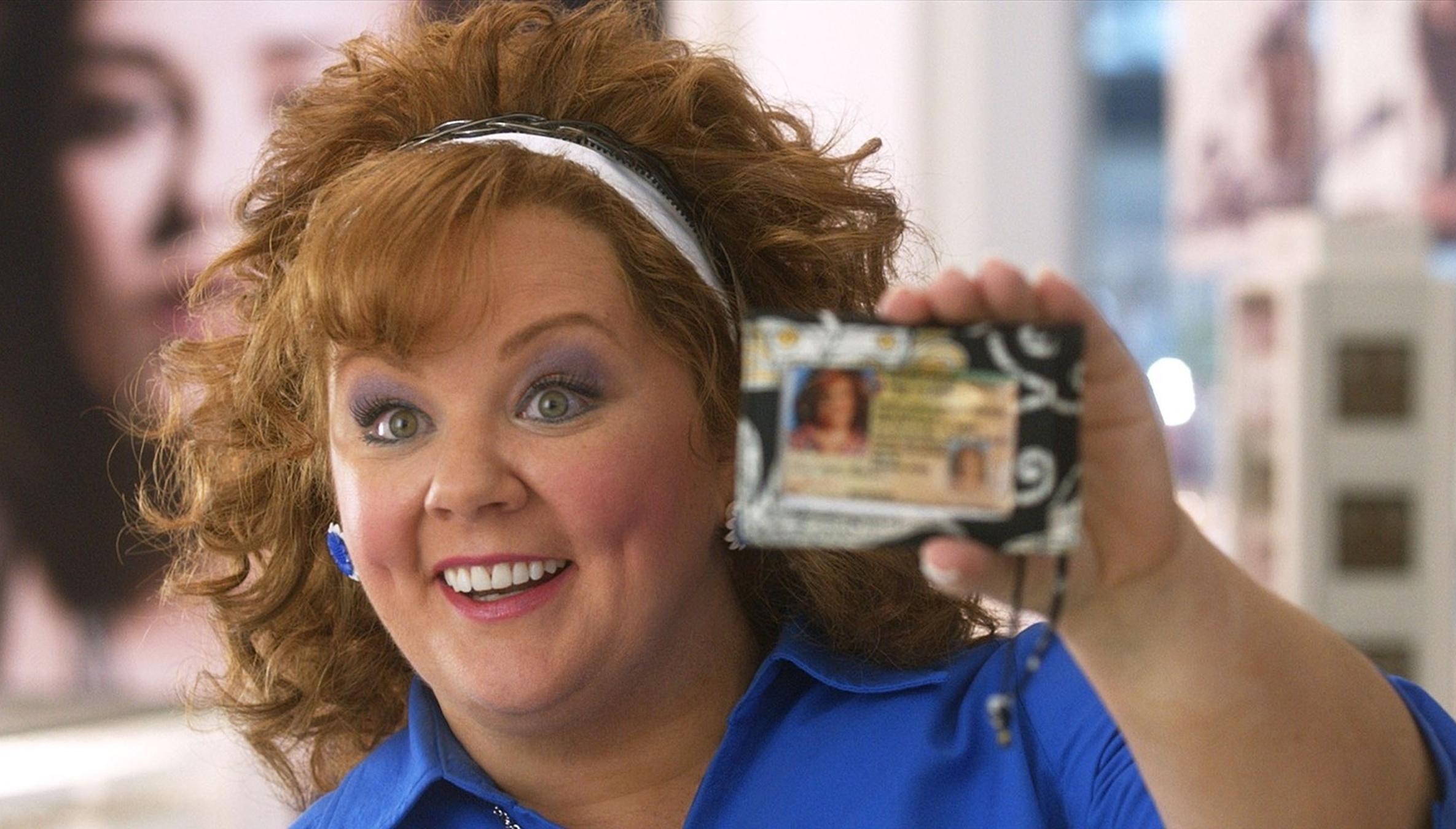
Now she gets the opportunity to put her comedic skills to solid use again in “Identity Thief” as Diana, a con artist who steals the identity of Sandy Bigelow Patterson (played by Jason Bateman) for her own benefit. This actually marks McCarthy’s first lead role in a motion picture, and it came as the result of Bateman loving her performance in “Bridesmaids.” The role of Diana was originally written as a man, but Bateman had the character’s gender changed to a woman just so he could get her cast in the movie.

Now the role of a con artist is a challenging one to make the least bit sympathetic, but McCarthy proved to be up to the challenge. She got her start at The Groundlings which is an improvisational and sketch comedy troupe located in Los Angeles, but while this character would have made for a hilarious five-minute sketch, McCarthy realized she had to do things differently in a feature length motion picture. She made this clear in her interview with Amy Longsdorf of Delaware Online.

“I wanted to make sure Diana wasn’t just a one-dimensional, mustache-twirling villain because I thought that while that’s kind of interesting for a scene, I don’t know how to play that for a whole movie,” McCarthy told Longsdorf. “I love the thought of someone doing criminal acts but not doing them to be menacing. She does them because she’s lonely and doesn’t have anyone. She kind of steals identities so she can go out to a store and pretend to have these lives. She can pretend to have a husband and a family, pretend to be engaged.”

Whether it is film or television she is doing, McCarthy is a comic force of nature and she appears fearless in what she will do to get a laugh. This was especially the case when she hosted an episode of “Saturday Night Live” and came close to swallowing a whole bottle of ranch salad dressing. I was lucky enough to attend the “Identity Thief” press conference which I covered for the website We Got This Covered, and I asked her if there ever is a limit to how far she will go for a laugh, or if she is willing to do anything to get one.

“For me, I think as long as it makes sense for the character,” McCarthy said. “I like to see if you can, on the worst day or the most extreme circumstance, I like to see how far you can push it. But to me it’s not funny anymore if it doesn’t make sense. And I don’t like to do anything that’s mean-spirited just because I don’t find it funny. I’d rather be the jackass than make fun of somebody else because that just seems too cheap and easy. So those are my only limits.”

The one thing, however, that McCarthy was more fearless about than getting laughs was doing her own stunts. It turns out that she tried to do as many of them as possible on the set of “Identity Thief,” and Bateman was stunned at just how far she was willing to go. She even volunteered to do the stunt where Diana gets hit by a car, and it does look very painful when you watch it onscreen. McCarthy ended up admitting to Kevin P. Sullivan of MTV News that she and Bateman did a lot of hand-to-hand combat in order to make their fight scenes look more believable.

“We hurt each other the most, for real, and the most exhausting,” McCarthy said. “You’re just covered in bruises and muscles are ripped.”

Many also wonder where McCarthy comes up with the inspirations for each character she portrays. It is said most actors base their characters on people they grew up with or whom they remember from their hometowns. McCarthy herself was raised on a farm in Plainfield, Illinois, and during the press conference she realized that her upbringing still plays a big part in the roles she chooses.

“In terms of the characters I think are really fun to play, a lot of times it’s someone in my head saying I know that woman,” McCarthy said. “There are women like that in my hometown and there’s one like that the Midwest. I guess I do kind of always go back to that them and draw from there because I really love them. I find them great and interesting and quirky and eccentric. I think everything that any actor does, I would assume, is shaped by how and where they grew up. I steal a lot from a lot of Midwestern women that I weirdly watch, that’s what I should say.”

We are going to be seeing a lot more of Melissa McCarthy in the near future as her star continues to rise in Hollywood. In addition to her television show, “Mike & Molly,” she has a number of starring roles in movies coming up like “The Heat” with Sandra Bullock. No matter what that thoughtless snob Rex Reed may think of her, McCarthy is a superb comedic actress who has many unforgettably hilarious performances left to give the world.

SOURCES:

Amy Longsdorf, “Melissa McCarthy morphs into ‘Identity Thief,'” Delaware Online, February 9, 2013.

Ben Kenber, “Interview with Jason Bateman and Melissa McCarthy on Identity Thief,” We Got This Covered, February 8, 2013.

Kevin P. Sullivan, “Melissa McCarthy’s ‘Identity Thief’ Fight Bloodied Up Jason Bateman… Kinda,” MTV News, February 8, 2013.

‘The Exorcist: Believer’ is Not a Worthy Sequel

William Friedkin’s “The Exorcist” was such a singular cinematic experience, let alone a singular horror film like few others, that making a sequel to it had to seem like a truly insane prospect. “The Exorcist II: The Heretic” proved to be as hideous piece of celluloid as the original was a brilliant one, “The Exorcist III” was undone by needless studio interference which made it look pitiful for no good reason, and the attempts to make a prequel got so messed up to where two versions of it were made, both of which proved to be quite flawed. Looking at this franchise, one which is quite accidental, it seems like one driven by profit more than anything else. Granted, sequels are generally made because the original was a big box office hit, but not all of them exist simply because of financial benefits for everyone involved.

Now we have “The Exorcist: Believer” which comes to us from David Gordon Green and his fellow filmmakers who gave us the recent “Halloween” trilogy which proved to be worthy sequels to a celebrated classic. And yes, I do include “Halloween Ends” which many despised. Like those films, this “Exorcist” installment serves as a direct sequel to Friedkin’s original, it completely ignores the other sequels to create its own cinematic path. What results is a motion picture which is not terrible, and I went into it refusing to expect it to be any equal to the original, but it still proves to be inconsequential and unnecessary as Friedkin’s film continues to be extremely difficult to make a sequel to.

We are introduced to professional photographer Victor Fielding (Leslie Odom Jr.) who is raising his daughter, Angela (Lidya Jewett), as a single parent following the tragic death of his wife. One day, Angela asks her dad if she can go over to her friend Katherine’s (Olivia O’Neill) to study. That’s okay, Victor says, but she needs to be prompt about returning home for dinner. When Angela fails to do so, and she and Katherine go missing, the whole town goes looking for them. Eventually, they are found alive 30 miles away from their home addresses, but both are convinced they were only gone for a few hours.

As you can expect, both Angela and Katherine turn out to be possessed, and Victor turns to others to help the girls before any more lasting damage can be inflicted. Among them are Ann (Ann Dowd), a nurse at a local hospital and a fallen Catholic, and Chris MacNeil (Ellen Burstyn), an actress turned exorcism researcher who has since become renowned for her studies and her best-selling book on the subject. From there, we know we are in store for an exorcism, albeit one which cannot possibly be as intense as the one Friedkin gave audiences half a century ago.

Now you cannot go into “The Exorcist: Believer” expecting something along the lines of Friedkin’s original film as that is asking to be severely disappointed in the process. None of the sequels or prequels could touch it as the 1973 film is a cinematic experience not easily duplicated. But even with reserved expectations, “The Exorcist: Believer” just doesn’t work. It has some strong performances from Odom Jr. and Dowd, and there are some clever jump scares, but there is not enough to justify this as a significant follow-up to a celebrated classic.

The big news with this one is that Ellen Burstyn returns as Chris MacNeil for the first time since the first “Exorcist” film. But while Jamie Lee Curtis’ character of Laurie Strode was a major component of the recent “Halloween” trilogy, Chris MacNeil’s presence in “The Exorcist: Believer” feels like an afterthought, and while Burstyn is great as always, the character does not feel especially necessary to this installment. While it may give this film some legitimacy, Burstyn is barely in this film and does not get a lot to do.

When it comes to the climactic exorcism which the film’s title and its trailers have promised us, it is no surprise to find it utterly lacking in tension. Sure, there is some suspense as the adult characters are forced to make a choice no one wants to make, but it all feels lacking in the long run. As much as I wanted to view this film on its own instead of in comparison to the classic original, I could not help but be reminded of how intense and unnerving Friedkin’s film was. I wanted this exorcism to have the extreme intensity of what came before, and I knew that was not going to be the case which made this direct sequel all the more frustrating.

David Gordon Green is a terrific filmmaker. In addition to his “Halloween” trilogy, he has also directed films in various genres. He has given us “George Washington,” “Pineapple Express,” “All the Real Girls,” and “Joe” which features not only one of Nicolas Cage’s best performances, but also one of his most subtle, and that is saying a lot. I cannot help but wonder what made him, Scott Teems, Danny McBride, Jason Blum and all of Blumhouse were hoping to accomplish here. Were they hoping to make something which could stand alongside the original proudly, or at least be considered its equal?

For a moment, I thought Green might have some luck as the opening scenes in Haiti do have a documentary feel to them like the original did. But after a bit, it just felt like I was watching a movie. This is the biggest problem with “The Exorcist: Believer;” you watch it more than you experience it. You can see how the screws go in, and it does not help that the CGI effects utilized here are not all that great. Then again, I have long since been spoiled by the visual wonders of “Avatar: The Way of Water,” so nothing else can possibly compare.

Making a sequel or any kind of follow-up to “The Exorcist” is no different than anyone trying to make one to “The Texas Chainsaw Massacre.” Both those horror classics gave audiences a cinematic experience like few others, and they still remain enthralling and greatly unnerving so many years later. And yet, there are those who have turned these movies into franchises which may succeed financially, but never critically. They will forever be shadowed by a predecessor which can only make the best efforts look ever so pale in comparison, and yet people keep trying futilely to give us something worth watching. The fact that no one has succeeded in doing so should not come as a surprise.

Nevertheless, another “Exorcist” movie is set to be released in 2025, and the best way to look at this situation is to say Green and company have nowhere to go from here but up. Perhaps if they played around with the formula, they could audiences something more original which will stand on its own. Until then, I wonder if the ghost of William Friedkin will haunt Green just like he promised.

* * out of * * * *

‘Oppenheimer’ – Seriously, One of the Best Films Ever

I had to watch Christopher Nolan’s “Oppenheimer” twice before I could sit myself down and write a review about it. There is so much going on here in front of us to where it is impossible to take everything in right away, and I kept waiting for J. Robert Oppenheimer’s head to explode before the atomic bomb did. Upon a second viewing, I came to better appreciate and understand all of what Nolan was doing here, and I continue to marvel at the brilliant editing job he and Jennifer Lame pulled off. What results is not only one of the best films of 2023, but perhaps of all time.

Like “Memento,” Nolan has constructed this biopic in a defiantly non-linear fashion as he gives us two parallel storylines which are destined to crash into one another. We have the typical biographical story of how J. Robert Oppenheimer began studying science when he was young, and of how his worldview evolved as he went about constructing the bomb which would eventually succeed in ending World War II. Then the story shifts to a few years later when Lewis Strauss (Robert Downey Jr.), one of the original members of the U.S. Atomic Energy Commission (AEC) is enduring a Senate confirmation hearing to be appointed as Secretary of Commerce. Strauss is the one who put Oppenheimer in a special position of power, and now he wants to crush Oppenheimer in a way which hurts worse than death.

I love biopics like “Oppenheimer” as they breathe life and complexity into human beings most of us have only read about in books. People like him seem so one-dimensional from a distance, but Nolan fleshes him out fully as a man who was a brilliant mind and a loving husband and father, but also a womanizer and quite the chain smoker. Nolan is also aided by a career best performance from Cillian Murphy who succeeds in embodying this historic individual both physically and emotionally.

Not for a second does this film hide away from the politics and implications of the atomic bomb. Oppenheimer and everyone working closely with him knew they were working to build a weapon of mass genocide, and this weighs heavily on everyone’s conscience. The problem, however, is that if they do not build the bomb, someone else will, and the results could have been disastrous had the Nazis beat them to it. Regardless of the intentions, the invention of the atomic bomb and the arrival of the Nuclear Age was inevitable, and nothing would ever be the same.

And, of course, Oppenheimer was turned into a hero for the world to see, and we know what happens to heroes; they are broken down and their images coldly shattered for all the world to see. Seeing him try to regulate nuclear energy in the wake of the Trinity test and the bombing of Hiroshima and Nagasaki was understandable as this was a power which needed to be reigned in and controlled. But like Dustin Hoffman said in “Outbreak” when he learned the military was still going to bomb a small town despite the doctors having a much-needed vaccine, “they want their weapon.”

Seeing Strauss and others take down Oppenheimer serves as a reminder that even decades ago, it was never about the truth as much as it was controlling the narrative. Linking Oppenheimer to communist causes, even though he never was a Communist, reeks of being guilty by association, and all you need is just a little glaring flaw to get the masses pissed at you. At one point he says, “Is anyone ever going to tell the truth about what’s happening here?” Indeed, truth is often a casualty in the realms of power, and it never is revealed right away, maybe even for decades.

There are many memorable images and moments to be found throughout this film. The explosion of the bomb is certainly a highlight as it demonstrates just how triumphant and horrifying this process of discovery was. It also reminded me of a demonstration a science teacher did one day outside of the classroom. He had a student take a pair of books with them and walk far off into a field. Once in position, he had the student slap them together, and the sound of them coming together did not happen until a second afterwards. It remains one of the most memorable science lessons I have ever witnessed, and I was reminded of this when the bomb exploded onscreen here. All you hear at first is silence as those witnessing this historical event can only hear their own baited breath. But when the sound of the explosion arrives, it proves to be quite deafening as it shakes everyone up as much as it does the theater you happen to be watching this cinematic opus in.

The other moments which stand out include those when Oppenheimer discusses theories and life in general with Albert Einstein (the remarkable Tom Conti), and the first meeting we see these two have hangs over the film throughout as we wonder what is said and why Einstein walked away looking so grim. The answer is eventually revealed to us all, and it speaks to how the more things change, the more they stay the same.

Seriously, there is not single weak performance to be found here. Even the smallest of roles carry a lot of weight throughout the film’s three-hour running time. Whether it is Casey Affleck, Jason Clarke, David Krumholtz, Kenneth Branagh, Tony Goldwin or James Remar, every cast member inhabits their roles with tremendous energy as each character has a very strong reason for being featured here. None of them should ever be accused of doing a mere cameo, and this includes the actor who portrays President Harry S. Truman.

Some performances worth singling out however include Robert Downey Jr.’s as Lewis Strauss, and it is truly one of his best ever as he plays this man as someone very knowledgeable about politics and power, but who eventually is undone by his lack of understanding as to what is really going on. Emily Blunt is at her most blunt ever (pun intended) as Oppenheimer’s wife, Katherine, who urges him to take a stand against those out to humiliate and discredit him. Florence Pugh remains an actress willing to go to emotionally raw lengths for a role, and her work here as Jean Tatlock, one of Oppenheimer’s lovers who gets swallowed up anxiety and depression is never less than impressive. And there is no leaving out Matt Damon who makes General Leslie Groves much more than the average military figure we often see in films like these.

But perhaps the real scene stealer is Alden Ehrenreich who portrays a Senate aide to Strauss. At one point he looks to be a hopelessly naïve idealist who has a lot to learn about politics, but then Ehrenreich makes this character into someone more confident and smarter than we are led to believe at first sight. More importantly, his last scene has him telling Strauss exactly what he needs to hear, and it is such a stinging moment to where I almost found myself applauding it.

Like “Goodfellas,” “Oppenheimer” proves to be many cinematic things to me: it is scary, thrilling, an important look into history, a study about the morality of the deadliest weapons mankind has ever invented, of how the narrative is often more important than the truth, and there are some laughs to be had here and there in the process. I live for motion pictures like these. Hopefully the Academy will not snub Nolan and company here when Oscar season comes around as they have in the past. “Oppenheimer” is a monumental cinematic achievement, and one which needs to be seen on the biggest screen in your neighborhood. More importantly, seeing it once will never be enough. I believe this is a film which will be studied endlessly throughout the years, and not just because of the brilliant editing job.

Oppenheimer brought us into the atomic age which eventually evolved into the Cold War involving nuclear weapons. We never really left the Cold War now, did we?

* * * * out of * * * *

No, I Haven’t Seen It Until Now: ‘The Incredible Shrinking Man’

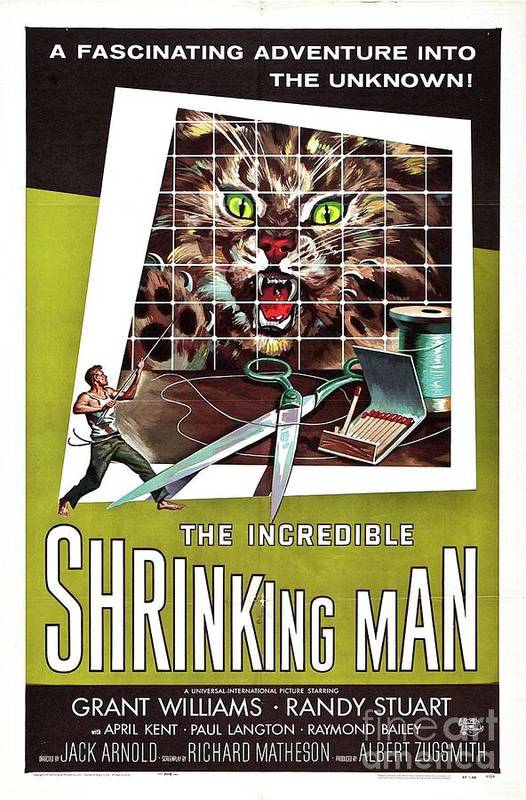
The Incredible Shrinking Man” comes from a genre I feel I know a lot about but have actually not seen many movies from: 1950’s science fiction. I went into it thinking it would look horribly dated and laughable for all the wrong reasons. What I instead discovered was a film which actually holds up very well after half a century with its terrific special effects and strong performances. It also deals with themes and situations which prove to be as relatable today as they were back in the time this film was released.

Scott Carey (Grant Williams) is spending an enjoyably sunny day on a boat with his wife, Louise (Randy Stuart), when a strange mist passes through him and spills some glittery substance over his body. Louise manages to not get covered by this same substance as she was down below getting a beer for her husband because men can be schmucks when they ask their spouses to get them things they should be able to get themselves (that’ll show him!). Now Scott thinks nothing of what happened until he suddenly notices his shirt is now too big for him, and then his wedding ring falls off his finger which is clearly not a good omen.

After being examined by his doctors, Scott discovers that the glittery substance is not the same kind gay groups doused Newt Gingrich with during his needless run for President of the United States. Whatever is causing him to shrink, his attempts to reverse this unfortunate condition his fail. At one point, Scott becomes so tiny to where he is forced to seek refuge in a doll house for his own safety. This makes sense until the household cat ends up mistaking him for a mouse, and he ends up running into the basement where he is forced to face dangers no human being should ever have to.

What I found endlessly fascinating about “The Incredible Shrinking Man” is that what people end up enduring after attaining an odd and unwanted fame is not much different from what anyone would experience today. Scott ends up selling his story to the press not to become famous, but because he no longer has a job and needs the money for his wife and himself to survive. The more of a curiosity he becomes, the less human he is seen by the world.

Today, if someone were going through this, we might expect them to be more forthcoming about becoming famous for something they did not exactly want to become known for as there is much money to be made, and an obscene amount at that. In the process, it is easy to forget the humanity of certain people involved, and “The Incredibly Shrinking Man” deals with the inescapable loneliness which results.

Scott clearly does not want all these photographers parked outside his front door, but he is helpless to stop their onslaught. Then again, imagine if he was dealing with this today; he would have no privacy whatsoever. It would not matter if he spent his days indoors because the damn paparazzi would find a way to get inside and snap a picture of him. Even though Scott vents at his wife against his better judgment, you I could not help but feel for him as he goes through a process no one would want to endure. That is, unless they were ridiculously desperate for some kind of attention.

“The Incredible Shrinking Man” really picks up an extraordinary amount of tension when Scott gets stuck in that basement. The special effects up to this point are very well executed, but they take on a bigger challenge when Scott is no bigger than the match box he hides in. The use of forced perspective and real physical structures makes his predicament all the more thrilling and emotionally involving. The simple act of getting food becomes a life-or-death struggle, and I felt for him as he was forced to climb up towards a stale piece of bread using only a needle and thread.

Even the simplest effects make Scott’s struggle all the more brutal as the merest failure will force right back to the start, and we can identify with the infinite frustration this causes no matter how big or small we are. But what makes his fight for survival all the more viscerally frightening is the scary-looking spider (is there any other kind?) he is forced to do battle with. It is moments Scott shares with this spider which had me the most frightened and on the edge of my seat. For a film which is now a century old, this is saying a lot. That, and I cannot stand spiders in general.

Much credit should be given to Williams here as he does not always make Scott the most likable human being. Still, whatever you may think of him, Scott is made to experience something no other human being has. While you may want to chide Scott for the way he unloads his frustrations on those closest to him, watching him makes me wonder if I would have reacted any differently. I would like to think so, but perhaps a lot of wishful thing is involved there.

“The Incredible Shrinking Man” is based on a book by Richard Matheson entitled “The Shrinking Man” (he found the “Incredible” adjective to be unnecessary). Matheson has been responsible for some of the greatest science fiction stories ever told such as “I Am Legend,” various episodes of “The Twilight Zone” like “Nightmare at 20,000 Feet,” and the short story “Button, Button” which became the basis for “The Box.”

I think “The Incredible Shrinking Man” represents one of the finest adaptations of Matheson’s work as it deals with the humanity of Scott’s situation as much as it does with visual effects. The effects are great, but it is our relation to Scott and what he is going through that makes this movie work so effectively. No one wants a household spider to suddenly become bigger than they are, but this film forces you to deal with these fears to where they are more real than you could ever expect them to be.

This is also a film which has a voiceover narration to accompany its events. When it comes to this way of telling a story, it can go either way; At times, it can tell us things we do not need spelled out to us, but here it also gives great depth to the film’s themes as it makes Scott’s view of his existence change throughout in ways both positive and negative.

The ending still haunts me even long after I watched it. The conclusion is solemn in a way as Scott becomes resigned to his downsized fate, but it is also strangely hopeful as he becomes convinced he will still be a part of this vast universe no matter how small he gets. Even in the 1950’s, filmmakers did not take the easy way out when wrapping up a motion picture. It is not an “everything is going to be okay” ending, but it is not a complete downer either.

I was surprised at just how much I got into “The Incredible Shrinking Man.” The title seems to imply we are about to see something endlessly cheesy, but this film proved to be thrilling and had me on the edge of my seat throughout. I imagine Hollywood will eventually remake it someday and turn it into a comedy, but they will not be able to touch the deeper meanings of what Richard Matheson was getting at. Please feel free to prove me wrong, but you will need a lot of luck in the process.

* * * ½ out of * * * *

WRITER’S NOTE: This film is now available in a special edition from the Criterion Collection. Click here to find out more.

Tony Gilroy on ‘The Bourne Legacy’ and how it Differs from What Came Before

WRITER’S NOTE: As the opening paragraph indicates, this article was written over a decade ago.

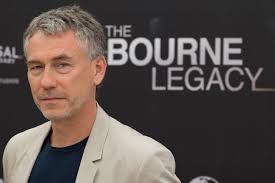
Writer/Director Tony Gilroy and actor Jeremy Renner dropped by the AMC movie theater in Century City on July 9, 2012 to answer questions regarding their upcoming summer blockbuster, “The Bourne Legacy.” The emcee of this Q&A was Dan Gilroy, Tony’s brother, who also co-wrote the screenplay for it. The film itself was not shown that evening, and the audience had to settle for its latest trailer instead, but people were allowed to ask questions about how it will differ from the “Bourne” films which came before it.

This event was presented over the internet live as well as in front of a live audience, so questions came from all over the world as well as Century City. One question came from a guy named Jose on Facebook who asked how “The Bourne Legacy” will differentiate itself from the previous three films. To this, Tony said:

“If you’ve been a casual observer of the films before, it will have an extra bit of boost. If you’re a freak, if you’re a real fan, there’s a lot of stuff that’s in there that’s designed to pay back people who have really been paying attention.”

Catherine, who submitted her question through Twitter, asked, “what does Aaron Cross bring to the Bourne franchise that makes it different from the previous movies?” Tony’s response to this was very descriptive:

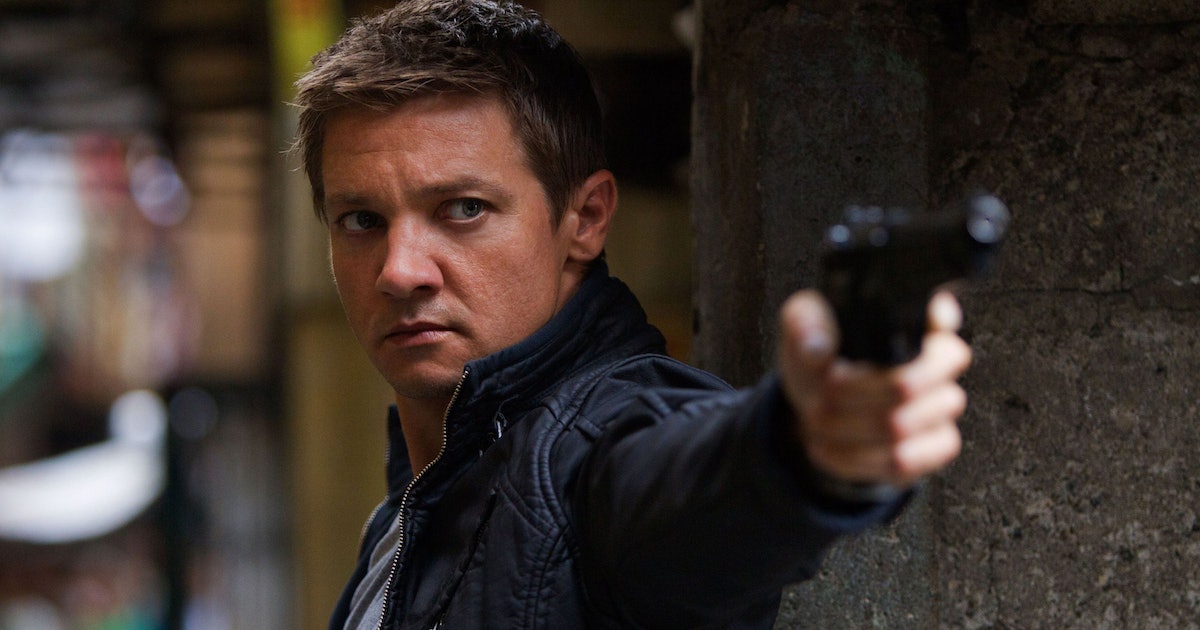
“What we’re saying in this film is that there were many programs. The Treadstone program, that Jason was a part of, was an early program that was shopped out to the CIA. The program that Jeremy is in is called Outcome. The Outcome agents are not designed as assassins; they are long lead isolated people who bury down into places. So, the skill set is slightly different, and there’s an adaptive quality, there’s a verbal quality, and there’s a curiosity that we really shine on for the Outcome agents that we meet. In ‘badassery,’ the physical aspects of a lot of this are very familiar; he is a cousin to Jason Bourne in that regard. But the job is different, the design is different, and the flaws are very different. The things that go wrong are very different.”

Dan himself said, as one of the writers of this screenplay, that he was especially interested in the conspiracy side, and he asked his brother Tony how it differs from the franchise:

“Well, this time we’re pulling back (the curtain). We’re saying that what you saw before was a small piece; you watched the other three films and thought that that was the entire universe. It turns out now when we pull back the curtain that there has been a mastermind behind the entire program and these other programs, and that’s Edward Norton. In a way he’s been sitting beside you in the theater for the last 12 years watching this all go on, wondering if it’s going to cause larger problems for him and getting irritated as (“The Bourne) Ultimatum” explodes.”

Many fans of the Jason Bourne movies have been arguing loudly about the series continuing on minus Matt Damon and Paul Greengrass, but Tony Gilroy has made it clear how he made “The Bourne Legacy” with them in mind. It sounds like he has put together an exciting movie which audiences will get a kick out of, and I for one cannot wait to see it.

‘Bridesmaids’ – Do Not Mistake This Film for an Average ‘Chick Flick’

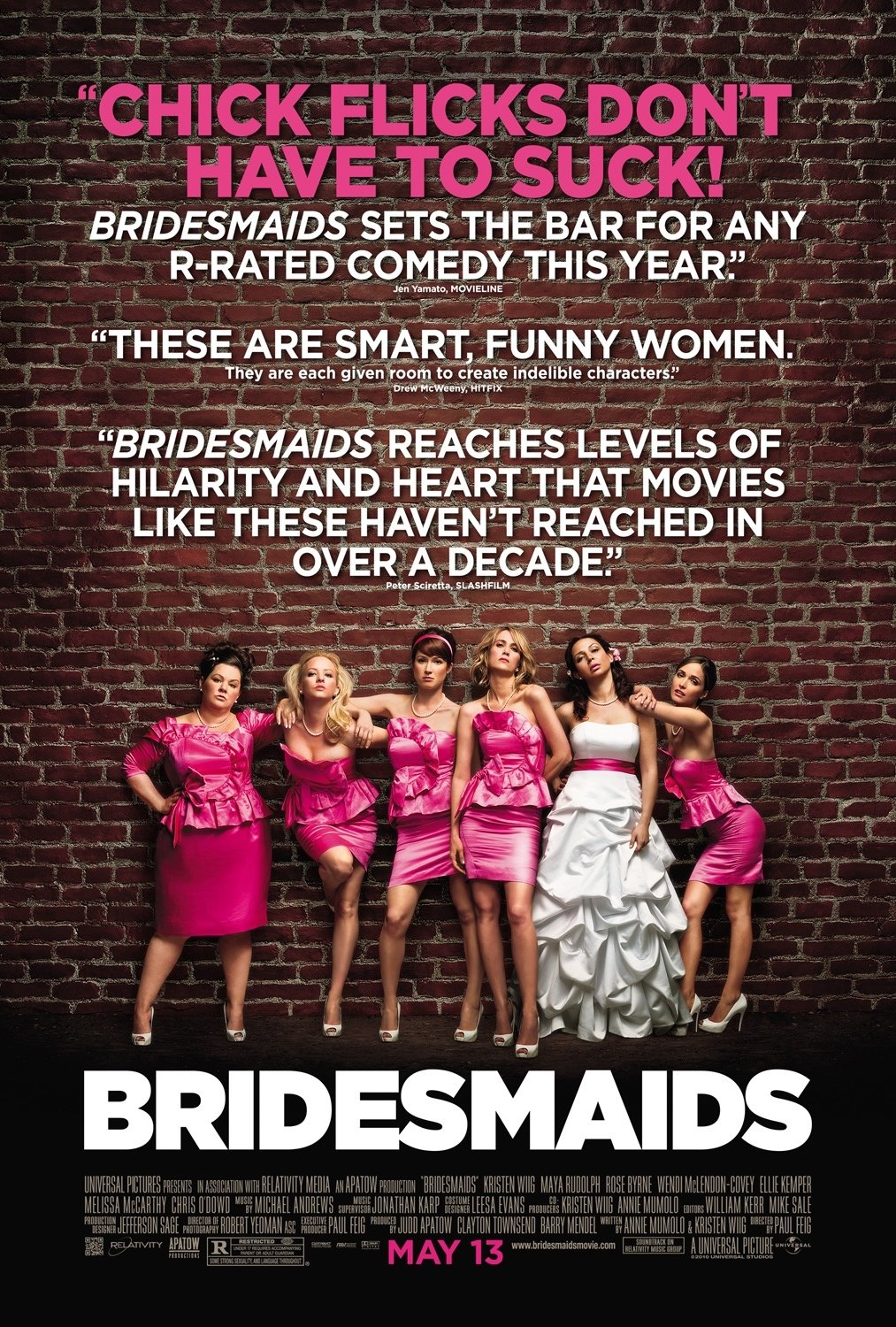
Bridesmaids” looks like it has “chick flick” written all over it to where many, including myself, were not quick to rush out and see this film when it arrived in movie theaters everywhere. But having since watched it, I can confirm this is not your average “chick flick” in the slightest. Moreover, it will appeal to a wider audience than its title might suggest. There is nothing groundbreaking about “Bridesmaids” as it initially comes across as a typical formulaic comedy, but the laughs do come at us fast, many of them gut busters. But seriously, it also has a lot of heart and makes you care about the characters very much to where we can easily relate to their struggles.

Kristen Wiig, one of the most acclaimed alums of “Saturday Night Live”  who co-wrote this film’s screenplay with Annie Mumolo, stars as Annie Walker, a single underachiever whose cake shop went bankrupt due to the recession, and who is currently having sex with Ted (an uncredited John Hamm), a man who sees her as nothing more than a fuck buddy. Then she finds out that her best friend since childhood, Lillian (Maya Rudolph, another “SNL” vet) has gotten engaged, and Lillian asks Annie to be her maid of honor. From there, we know things are going to go south between these two as the road to any marriage is filled with endless speed bumps which lead many to encourage others to elope instead.

Complications arise almost immediately when Annie meets Lillian’s other BFF, Helen Harris (Rose Byrne), a beautiful and wealthy woman who seems to have everything together in her life. The resentment and insecurity between these Annie and Helen are evident on their faces following their first encounter. This is made even clearer when both toast Lillian and then try to top each other in showering their love on her, attempting to prove who is the better best friend.

Things get even more complicated when Lillian selects the rest of her maids of honor. They include Becca (Ellie Kemper) who loves wedding and pities Annie because she is not currently engaged to anyone, Megan (Melissa McCarthy) who is as aggressive as they come, and Rita (Wendi McLendon-Covey) who may very well be the unhappiest wife and mother on the face of the Earth as well as the most consistently drunk of the bunch. With all these different personalities working together, will the road to this wedding be a happy one? Was Donald Trump always faithful to Melania?

What I really loved about “Bridesmaids” was the same thing I also loved about “Knocked Up;” the characters are very down to earth and easy to relate to. Being that Judd Apatow is a producer on both films, this should have been obvious from the start. These characters are real people with real problems which are not far removed from our own, and we come to care deeply about each and every character here. It does not matter if none of you have ever been a bridesmaid. As for you men, being groomsman is enough qualification to understand the headaches in planning matrimony.

“Bridesmaids” also a film where facial expressions at times speak more loudly than words. It certainly does have great dialogue, but the looks on these actresses’ faces is what really cracked me up. They say one thing, but their eyes tell us what is really on their mind. This goes for the men in as well, and they all seem to pale in comparison to the females in terms of inner strength. We see right through each character, and the tension resulting from a possible slip of the tongue is always in the air.

This film proved to be the true cinematic breakthrough for Wiig. When I have seen her in other films, she always seems to be doing a riff on her most deadpan characters from “SNL” whether she is appearing in “Knocked Up” or “MacGruber.” But as Annie Walker, Wiig really inhabits this character and gives her life in a way we did not get to see her do previously. She makes us embrace Annie as a kindred spirit because we have all felt the way she feels; lost in a world she feels betrayed by, and desperately trying to hold on to what means the most to her.

Maya Rudolph is equally wonderful here as the bride to be, Lillian. She previously showed us in Sam Mendes’ “Away We Go” what a great actress she can be, and she vividly reminds us of our best friends from childhood. Lillian runs through a gamut of emotions as her road towards marriage start off wonderfully and then eventually turn into an unmitigated disaster. In a pivotal scene in which Lillian about to leave her apartment for the last time, Rudolph shows us a worry and concern which we all see within ourselves from time to time. Not once does she portray Lillian as your usual clichéd character, and this says so much about what she is capable of.

Rose Byrne proves to be a delight as Helen, and her beautiful face and eyes cannot quite mask the growing resentment she has towards Annie. This character could have easily turned into your typical one-dimensional villainess, but by the end we discover tshe and Annie are not all that different. Byrne makes you like Helen despite her overly meddling ways, and she has since proven to be a strong presence in every motion picture she has appeared in.

But out of all the characters here, the one who stands out the most is Megan who is portrayed in a deservedly Oscar nominated performance by Melissa McCarthy. Overweight and raunchy whenever she wants to be, McCarthy is a trye comedic powerhouse when the camera focuses on her. Seducing airplane passengers and showing no shame in what she is, she makes Megan a strong character and never once digresses into making her a cloyingly sentimental one.

“Bridesmaids” was directed by Paul Feig, Mr. Eugene Pool from “Sabrina, The Teenage Witch” and the creator of “Freaks and Greeks;” a brilliant show that like many other brilliant shows which aired on network television lasted only one season. With this film, he manages to find humor even in the most painful of moments and never makes the comedy too overly broad. Sure, some scenes are broadly played, but Feig remembers comedy can only work if you truly care about the characters.

Looking back, “Bridesmaids” proved to be one of the best comedies to be released back in 2011, and no man out there should dismiss it as a film only women would be interested in. The audience for this one proved to be far more diverse than its promotion may have suggested. Plus, you have Wiig and Rudolph on display here, and they always kick ass! If you liked them on “Saturday Night Live,” you are bound to love them here.

* * * * out of * * * *

WRITER’S NOTE: This film marked the very last screen performance of actress Jill Clayburgh who passed away in November 2010 from leukemia. She is a wonderful presence here as Annie’s mother, Judy Walker. May she rest in peace.

Jeremy Renner on ‘The Bourne Legacy’ and Preparing a Character

WRITER’S NOTE: This article was written back in 2012.

Jeremy Renner appeared at the AMC Century City on July 9, 2012 along with writer/director Tony Gilroy to talk about “The Bourne Legacy.” In addition, Renner also took time to answer questions regarding how he went about preparing to play Aaron Cross, and of his preparation for roles in general. His answers showed him to be an actor always looking to challenge himself constantly and to not get trapped in a comfort zone.

Renner has long since made a name for himself with his performances in “The Hurt Locker,” “The Town,” “Mission: Impossible – Ghost Protocol” and “The Avengers.” One person asked him which movie has required him to do the most training, and he said it was definitely “The Bourne Legacy.” Renner said this was because it required from him “a level of authenticity” the other movies did not ask of him, and that he “had to work diligently to make the fights look like I could actually do them.”

Another person quoted Renner as once saying he “makes himself uncomfortable” when he can and asked him if that has made all the difference in his life. Renner replied it makes all the difference and said it is about constantly challenging himself:

“It’s about not being complacent and not fall into the trappings of repeated behaviors and getting comfortable. As I’ve gotten older, if there are things I knew I don’t like, I would still go try them again just to make sure that I don’t like them.”

Unlike his previous movies which had him acting in a supporting role, “The Bourne Legacy” marks Renner’s first starring role in a big budget Hollywood movie. He did, however, make it clear that his preparation for this movie was no different than any other he has appeared in, and that it remains the same on each role plays. He did say, however, that his workout regimen has changed a lot from “Mission: Impossible – Ghost Protocol” to “The Bourne Legacy:”

“For ‘Mission’ I was really out of shape. I mean, I stretched for twenty minutes and that was my workout. And now I stretch for an hour and a half, fight for two hours, workout for an hour and a half, and then stretch for another hour and then go to work.”

For Renner, saying yes to “The Bourne Legacy” was actually very easy as he felt all the elements were fantastic and that he could not say no to it even if part of him wanted to. And while he may have graduated from indie films to big budget action movies, his mindset has not changed in the slightest as he compared making this sequel to movies he has done beforehand:

“For a big movie, it felt very tiny in the sense of it was not just the stunts but also the intimacy of really quiet scenes I feel I’d rather be doing as an actor. So, for me it had the balance of both; it felt like a little independent movie and a massive action movie, so I got both feels all in one.”

In answering what it was like to play Aaron Cross and how he would turn off the character at the day’s end, Renner’s response did not have any Hollywood ego in it at all:

“Oh, come on man! It’s something that’s not that far away in that we’re talking about every physical role here. I have to stick to the truth on page one to page whatever and just stick to the truths within that. There’s no turning it on or turning it off; I’m not some freak actor that way. This is a character that’s closer to me than say Jeffrey Dahmer (whom the actor played in the 2002 movie “Dahmer”), so it’s not something I have to completely lose myself in. It’s just part of my job, and I can’t explain my job.”

From this evening, we can see that Jeremy Renner is a very respectful actor who takes his craft very seriously, and he revels in his unexpected success and working with actors like Rachel Weisz and Edward Norton whom he resented for stealing so many interesting movie roles from him in the past. We look forward to what Renner has to give us not just in “The Bourne Legacy,” but in so many other performances he has yet to deliver.