‘The Toxic Avenger’ Remake Review by Tony Farinella
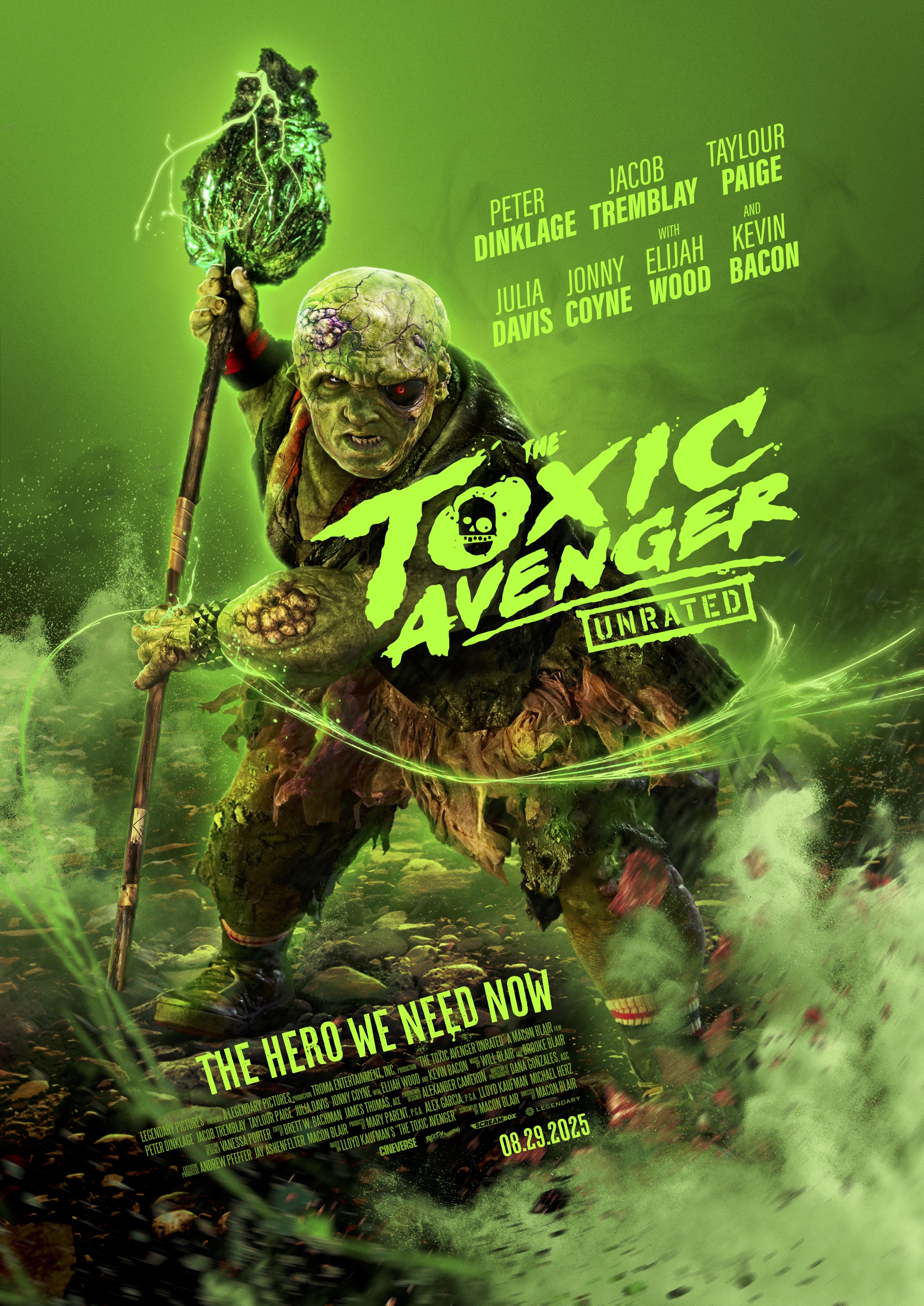
The Toxic Avenger” franchise has always held a special place in my heart as a horror fan. The films have heart, humor, and some fantastic practical effects. When I heard that they were going to remake the film, I was interested in seeing how it would all come together. I’m not one of those horror fans who thinks all remakes are sacrilegious and should never be done. To me, a lot of the great horror films from the 1980’s could use a fresh coat of paint and some reimagining. It’s about taking the original concept and adding a unique perspective while keeping the spirit of the film alive. The remake of “The Toxic Avenger” is finally being released in theaters after being delayed the last couple of years.

This time, our hero Toxie is played by Peter Dinklage as a single father who is trying to provide a good life for his stepson, Wade, played by Jacob Tremblay. Toxie is doing the best he can after his wife passed away, but he’s recently discovered he has serious health problems of his own. Since he’s a janitor for the corrupt BT Healthstyle, a Big Pharma-type company, it isn’t exactly like he’s rolling in dough. It also doesn’t help that the company’s CEO, Kevin Bacon, is a selfish and corrupt individual who is only concerned about his company’s bottom line. Bacon is terrific at playing these slimy greaseballs, as he played a similar character in 2024’s “MaXXXine.” He seems to really relish the chance to play an asshole with zero redeeming qualities.

When Winston, aka Toxie, ends up finding himself submerged in toxic waste, his life is going to change in ways he never thought possible. Now, he’s a hero to everyone around him, as he’s on a mission to get revenge for those who have been wronged by BT Healthstyle, including a young whistleblower played by Taylour Paige, who lost her mother due to the harmful ingredients of this evil company. She knows their dirty little secrets, and she wants to make sure the truth is out there. Along the way, there is some violence which is going to be unleashed by Toxie, as he’s a man of the people, despite the fact he’s horribly disfigured.
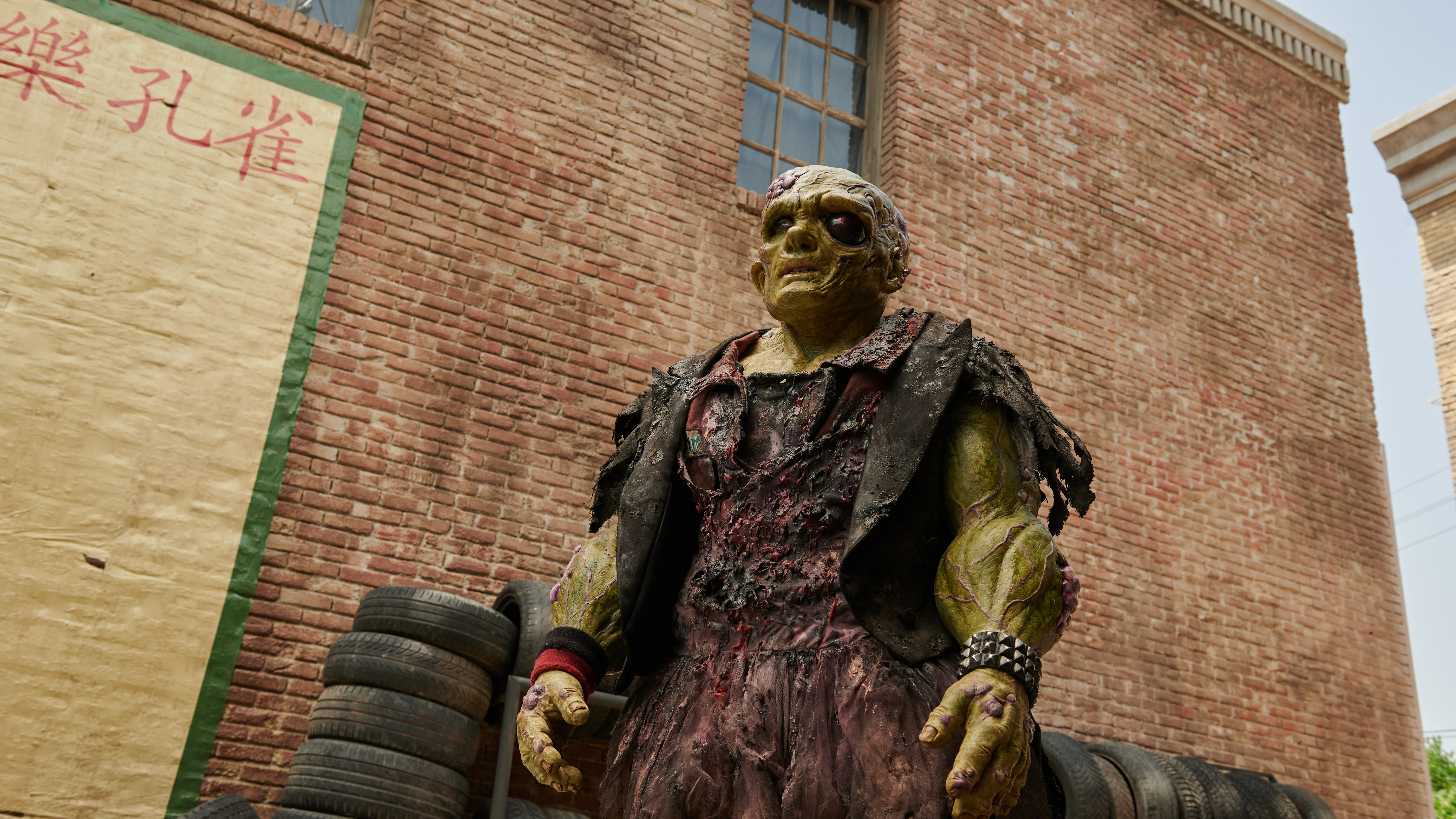
I really wanted to fall in love with “The Toxic Avenger,” but the whole experiment felt like it was a movie where there was too much going on all at once. With a horror film like this, I’m looking for gruesome kills, goofy and outlandish set pieces, and gut-busting, wink-at-the-camera genuine laughs. This film goes back and forth between being a serious melodrama and an R-rated horror flick, but it’s not as ridiculous as it needs to be.  The spirit of Troma is to be offensive, nasty, and in-your-face. I’m not going to say the film is a PG-13 horror film, but they didn’t go for the all out, balls-to-the-wall insanity one would expect. Another bright spot out of the cast is Elijah Wood, as Fritz Garbinger, the hunched over and grotesque brother of Bob Garbinger (Kevin Bacon).

One of the biggest problems with the film is the performance of Peter Dinklage as Toxie. He does the voice work and the acting scenes while Luisa Guerreiro is behind the suit and prosthetics, and the performance is too serious and earnest for its own good. When the film does call for him to have some fun with the overall silliness of the premise, he doesn’t seem to be willing or able to participate in the proper way. This film needed to play things bigger, badder, and more over-the-top. Instead, it fluctuates in tone, and none of them work well enough to make a memorable impression on the audience. After a while, I found myself bored and disinterested by “The Toxic Avenger.” It made me wonder why it took so long to get released as nothing in the final cut was terribly offensive or gory. From people who have seen both cuts of the film, they have said not a whole lot was cut since they first saw it in 2023.
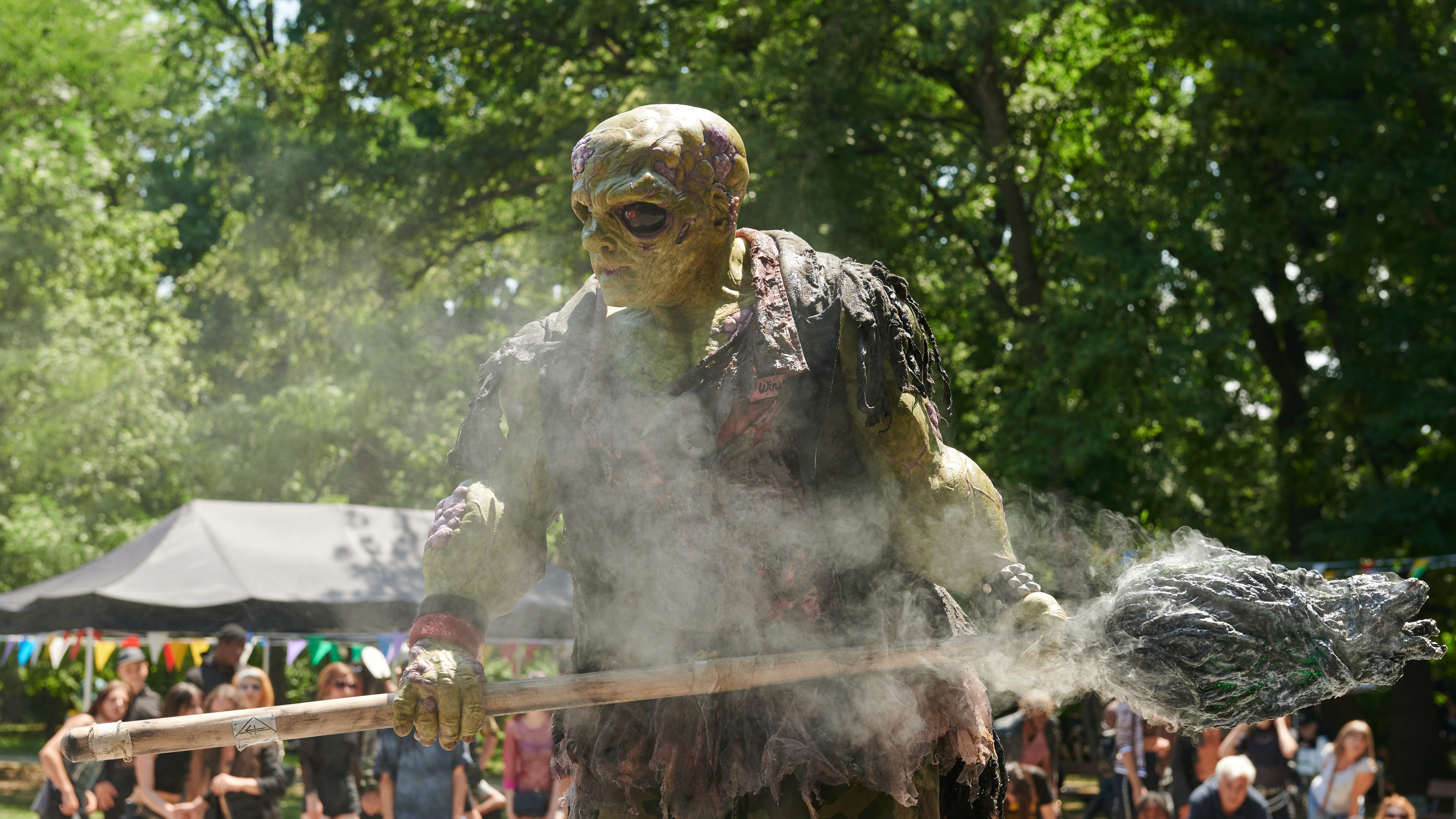
If you are going to commit to remaking a Troma film, there are two ways you can do it: You can either take it one step further than your predecessor, or you can take it in an entirely different direction. This film didn’t go in either direction. Troma films never cared about being accessible to a mainstream audience. They just wanted to make films which were low-budget schlock for B-movie fans who enjoyed horror that was big on creativity and low on budget.  I also don’t think you can make a “Toxic Avenger” movie in 2025 or even in 2023, when the film was originally supposed to be released. Times are different, and you have a tough job as a studio trying to make a gory and goofy horror movie that will make money at the box office for a mainstream audience. I wouldn’t call the film a total failure, but it’s a big disappointment.

* * out of * * *

Should You See It?

This is a film without a true audience. I don’t believe fans of the original franchise and character will find a whole lot to like with this updated version. If anything, it made me want to watch the original all over again and enjoy it for its raunchy goofiness. As far as modern audiences, you will get the horror fans who will see any horror movie because of the upcoming spooky season, but I don’t think they will connect with it as it’s not an established character for mainstream audiences. “The Toxic Avenger” has never been Freddy Krueger, Jason Voorhees or Michael Myers. Tonally, the film is all over the place, and it doesn’t do one thing particularly well. The cast is fine, it looks good and it’s not a terrible movie, but it’s very underwhelming as a finished product. For diehard horror fans, they might want to check it out when it hits digital platforms for streaming. For everyone else, there isn’t a lot to like here.

“THE TOXIC AVENGER” will be released In Theaters on August 29, 2025
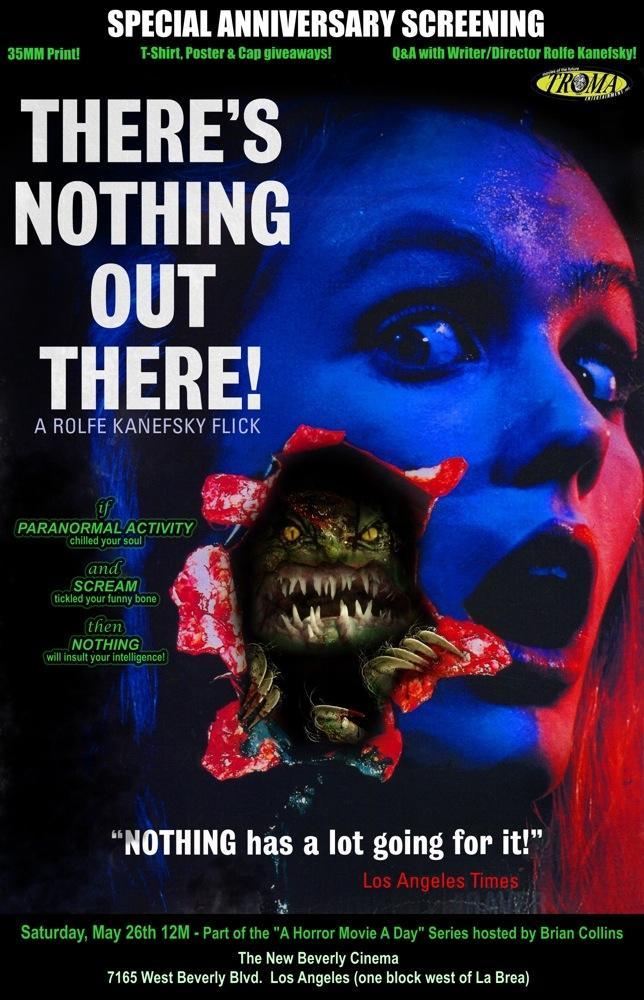
Rolfe Kanefsky On His Horror Movie Satire ‘There’s Nothing Out There’

WRITER’S NOTE: This article is about a screening which took place in 2012.

Writer and director Rolfe Kanefsky appeared at New Beverly Cinema where Brian Collins of the Horror Movie a Day website presented a special midnight screening of his directorial debut, “There’s Nothing Out There.” Joining him for this screening were two of the film’s crew members, still photographer Dave Shelton and assistant director Michael Berily. It tells the story of a group of teenagers, one of them a horror movie fan, spending spring break at a cabin in the woods, and it pre-dates Wes Craven’s “Scream” in making fun of the clichés horror movies always deal with.

Kanefsky spoke with audiences about what got him into movie making, and of what spurred the idea for this particular film of his:

Role Kanefsky: I’ve wanted to make movies since I was four years old. As I got older, I watched every horror movie that was ever made which got me to thinking about why people keep making the same mistakes in this genre over and over again. I wrote the script when I was in high school, but no one really liked it.

Kanefsky then went to college where he wrote several scripts, but then he came back to the one he wrote for “There’s Nothing Out There” after he graduated. It was 1988 when he started looking for the money to make it, and he was able to get a few private investors to help him out. He even told the audience his parents helped by selling their house, and after that he had a budget of around $150,000. One audience member asked him if his parents ever got to buy their house back with the profits and he responded:

Rolfe Kanefsky: You don’t get into movies to make money. You get into them because you love to make them.

When asked about the house used in the film, Kanefsky said a friend of his from college found it for him. It was located right near the border of New York and New Jersey, and he described what it was like filming in and around the house:

Rolfe Kanefsky: It was owned by two women who were a couple, and one of them was a sound artist which came in very handy for us. We did, however, have to use three different houses for the interior, and this forced us to cheat certain shots so that everything matched up in the end.

When it came to specific influences, Kanefsky looked mostly to 1950’s monster films, and he made several nods to them throughout. But he was also looking to make fun of the overused clichés in horror movies like the one where a cat jumps out at characters from nowhere, and of how one person warns of the danger ahead while everyone else ignores their advice. Kanefsky did, however, make one thing very clear to us:

Rolfe Kanefsky: It was never my intention to mock the (horror) genre, but instead the lazy filmmaking that has overwhelmed it.

One unique thing about “There’s Nothing Out There,” when compared to other horror movies of the time, is that what’s stalking the characters is not a deranged serial killer, but instead a monster from another planet. Keep in mind, this film was made long before the advent of CGI effects, so there was a lot of puppeteering involved in bringing this creature to life. Kanefsky was specific in what he was looking for:

Rolfe Kanefsky: I didn’t want a guy in a suit for the creature because I wanted to do something different. The way I saw it, the creature was half alligator and half octopus. I also intentionally made it a dumb creature, and you can tell it was not the smartest as there was a big learning curve going on with it. We ended up having to use crowbars just to move its tentacles around.

Kanefsky then invited his fellow crew members to share their experiences of making “There’s Nothing Out There.” Dave Shelton still has very vivid memories of how it all started:

Dave Shelton: I was working at Nickelodeon at the time and there weren’t many things being shot in New Jersey back then. When I met with Rolfe and he talked about his script, I knew right away what his vision was. He also said that no one is getting paid to make this movie and knew it was going to be good as a result. We got a lot of family and friends to be extras in the movie and we improvised a lot of stuff. Not everything worked, but we did the best with what we had. This was such a fun project to be a part of.

Michael Berily was originally hired to be the second assistant director on the set, but things changed for him very quickly:

Michael Berily: The first AD left three days into shooting, so I took over and spent a lot of time yelling and screaming at people because I didn’t know what I was doing. Still, it was an incredible experience working on it, especially when it came to raising the money. Rolfe was very ambitious then as he does a lot of set ups in one day.

Kanefsky attributed his working style of numerous set-ups a day, far more than what most Hollywood productions are able to accomplish, as he and his crew had a twenty-four-day shooting schedule. He has since made over twenty movies since “There’s Nothing Out There,” and to date it still has the longest shooting schedule of any movie he has made.

Horror Movie A Day’s screening of “There’s Nothing Out There” at New Beverly Cinema was certainly a historic one as it marked the first time a 35mm print of the movie had been shown in twenty years. Kanefsky said there were a number of reasons why this was the case:

Rolfe Kanefsky: When we showed it to studios and critics, they were all ambivalent about supporting it because they saw it as too funny to be scary and too scary to be funny. The movie ended up getting a small theatrical release back in 1992, and we managed to get some good reviews from newspapers like the Los Angeles Times. After that it began building up more and more of an audience through midnight screenings… and then the L.A. Riots (following the Rodney King verdicts) happened, and that destroyed us because no one went to the movies for a long time after that.

Kanefsky has attributed its ongoing success to cable and video and now sees this movie as an underground film which people found over the years. The studio which released “There’s Nothing Out There” never really got behind it, he said, and it really found its audience through word of mouth.

Before the evening ended, audience members asked Kanefsky if there would ever be a sequel or a Blu-ray release:

Rolfe Kanefsky: Blu-ray? Maybe, but right now it doesn’t make financial sense to do that and neither does the sequel. We do have the capabilities and original elements to remaster the movie in high definition, but the special edition DVD hasn’t sold enough copies to justify us doing that.

He does however have a title for the sequel:

Rolfe Kanefsky: There’s Still Nothing Out There.’ The tagline for it is, ‘if you were afraid of nothing before, its back!’

Well, hopefully we will get to see a Blu-ray release and a sequel become a reality. There is no doubt “There’s Nothing Out There” was a passion project for Kanefsky and his crew when they made it, and it is clear everyone involved in it worked really hard to make it a reality. That people are still talking about it twenty years later makes it a triumphant motion picture which survived in a marketplace where many other horror movies get swept under the rug, never ever making it to the silver screen.

James Gunn Looks Back at the Making of ‘Tromeo & Juliet’

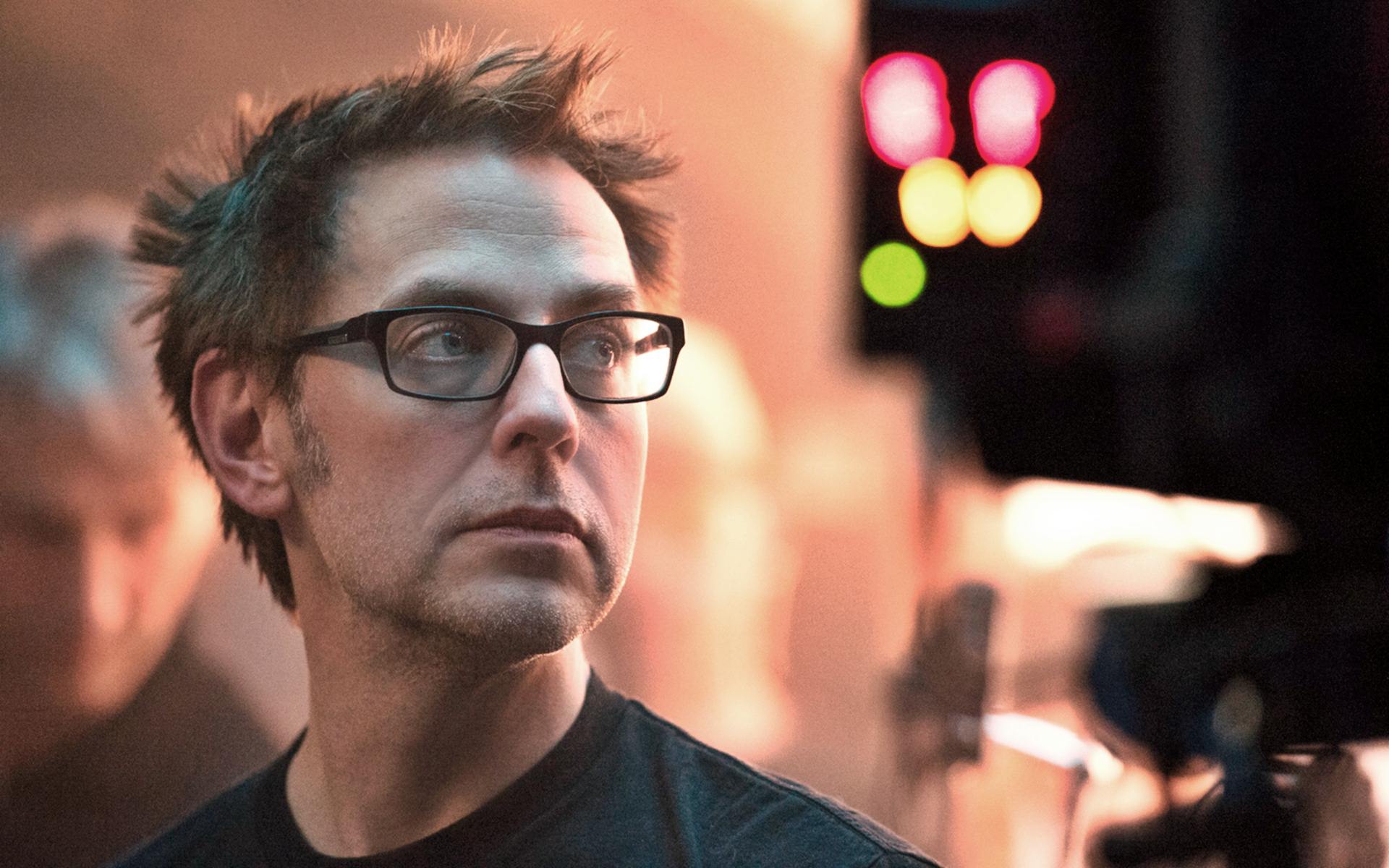
James Gunn photo

The screening of “Tromeo and Juliet” at New Beverly Cinema brought many people to the theater who were involved in its making. Among them were the movie’s director and co-founder of Troma Entertainment Lloyd Kaufman, actor Will Keenan who played Tromeo, and actors Sean Gunn and Stephen Blackheart among others. But the real star of the evening was filmmaker James Gunn who entertained the devoted audience with many anecdotes about “Tromeo and Juliet’s” making. Best known these days for his films “Slither,” “Super,” for writing the script to the “Dawn of the Dead” remake and most especially for “Guardians of the Galaxy,” “Tromeo and Juliet” was one of his first jobs in the movie business.

Tromeo and Juliet movie poster

“Tromeo and Juliet” is, of course, loosely inspired by William Shakespeare’s classic “Romeo and Juliet,” and Kaufman said he and Troma Entertainment had tried to write the script for three or four years and could not get it right. It was his sister’s best friend who sent Gunn’s resume to Kaufman’s attention, and at that point Gunn had already graduated from Columbia University with an MFA in Writing Fiction. Kaufman, however, noticed something different about him.

“What caught my attention was he vomited onstage, that he was a performance actor who vomited onstage,” Kaufman said about Gunn. “I didn’t know whether he vomited because he was nervous or because it felt it was entertaining or because perhaps he had studied all the work of Terence Malick. But whatever it was, it was sort of like that moment in ‘The Producers’ when Zero Mostel sees his Hitler and says ‘you’re my Hitler!’ James Gunn was ours.”

Gunn said he didn’t actually vomit onstage and that Kaufman may have read someone else’s resume, but it didn’t matter because he got the job.

Keenan said he had not seen “Tromeo and Juliet” in fifteen years before this night and he joked that it looked twenty years old when it first came out. But for Gunn, this was part of the movie’s design.

“When we were doing the movie, I remember that I wanted it to look really dated,” Gunn said. “I used to love ‘Valley Girl’ and I loved looking back at it because it looked so 80’s. And I wanted to make this one look as 90’s as possible (it came out in 1997).”

Gunn recalled writing the first draft for “Tromeo and Juliet” in about a week and a half, and he gave it to Kaufman and assumed he was going to love it. Kaufman, however, found Gunn’s script to be “too filthy,” and this is saying a lot because Troma Entertainment movies usually revel in being filthy. Kaufman said there were about “8 scenes of urination” in the script, and Juliet was originally written to make her first appearance in a porno booth which is where the initial conversations between her and Tromeo would have taken place. Kaufman complained “Shakespeare didn’t have that in mind” when he wrote “Romeo and Juliet.”

There was also a bit said about Jane Jensen who played Juliet. She was not able to attend this screening, but Gunn talked of how he joked around with her throughout shooting. One scene from “Tromeo & Juliet” has her character’s stomach opening up to reveal popcorn and then rats and maggots. Jensen apparently had a near nervous breakdown shooting it as she had a major phobia of the maggots and was screaming her head off as the cameras rolled. Gunn recalls exactly what was going through his head at that moment.

“Wow! Jane’s acting is really good in this scene,” Gunn said. “And then all of a sudden I go ‘holy shit! I think that maybe this is real!’ And then I had that evil filmmaker moment where you go ‘do I keep filming?’”

Gunn ended up reminiscing about a review of “Tromeo and Juliet” he read in Film Threat Magazine, and he felt it captured the movie perfectly.

“They said, ‘I don’t know how to review this film because you can’t win,’” Gunn reminisced. “’If you say that there’s something stupid in here, they (the filmmakers) are going to say yeah, we meant to do that. And if you say there’s something great in here, they’re going to say yeah, we meant to do that.’ And that’s totally true! That is what it is!”

For those of us who have seen “Tromeo and Juliet,” we have to agree the review is really dead on. The movie wallows in bad taste and never apologizes for it, and it becomes all the more entertaining as a result. It was great to see James Gunn at New Beverly Cinema talking about this cult classic because his enthusiasm for this project was contagious. It’s this same enthusiasm which carried over to the movies he worked on from there, and not just “Guardians of the Galaxy.”