‘Amadeus’ Movie and 4K Review
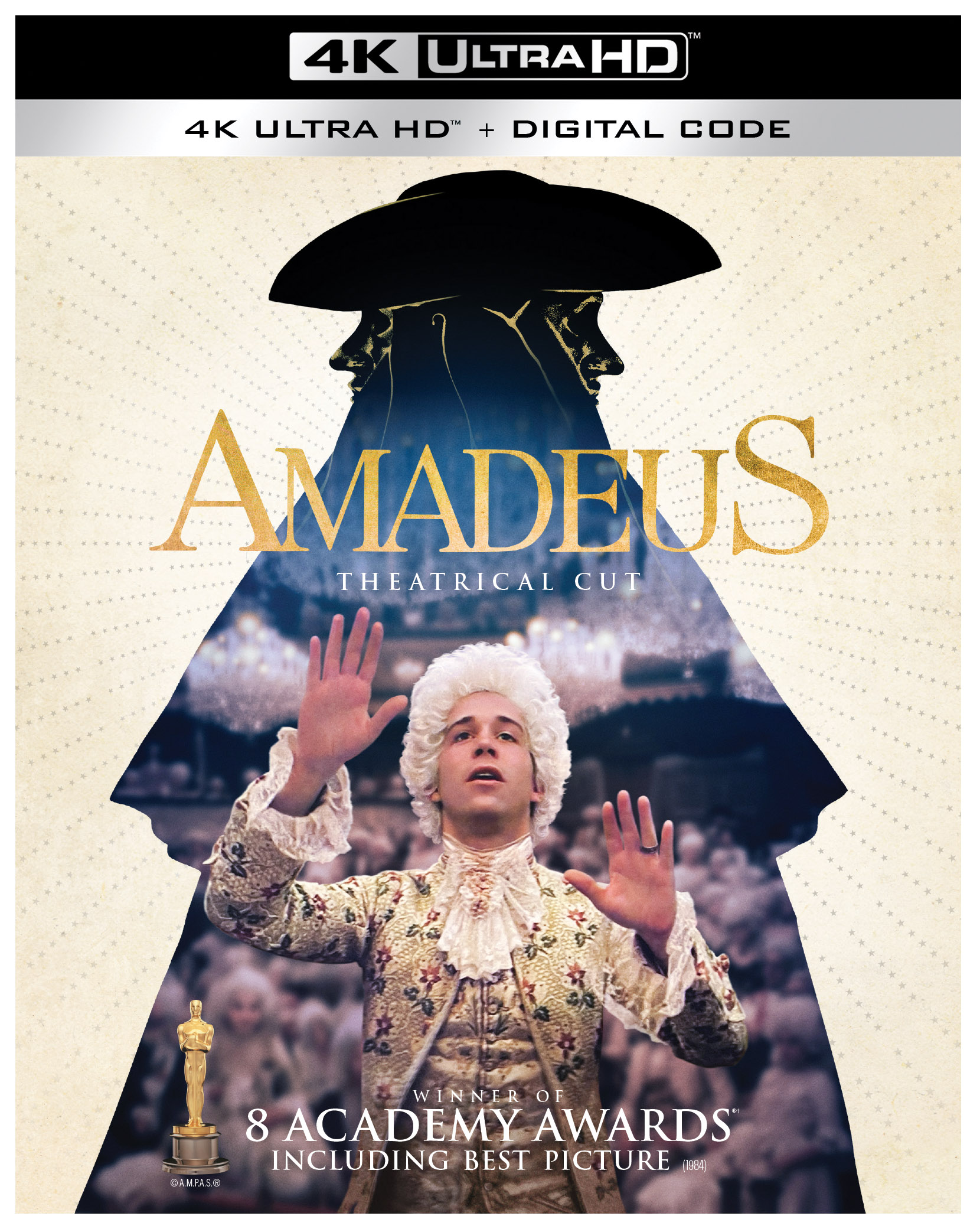
The following review was written by Ultimate Rabbit correspondent, Tony Farinella.
There is a lot to like about physical media, especially when it is in the 4K format. There are the special features, the audio and video quality and, of course, the fact that you own the movie. This means you never have to worry about a streaming platform taking it down and then having to hope your local library has a copy you can check out. It’s on your shelf, and you can pick it up and pop it in your player whenever you want to watch it. Another positive is the fact that films like “Amadeus,” a Best Picture winner, can be discovered for the first time by a new set of eyes. In fact, this was my first time watching the film.
The reason “Amadeus” was not a film I had previously seen is because I thought it would be a boring, stuffy period piece. After sitting down to watch it, I am reminded of the old expression, “Don’t judge a book by its cover.” Even though I do not consider “Amadeus” a classic and did not fall in love with it after one viewing, it was an important film worth seeing and also worthy of my time. I think the minute we start to become close-minded to art, we really lose our sense of self. This film deserves its day in court just like any other important and historical motion picture ever released.
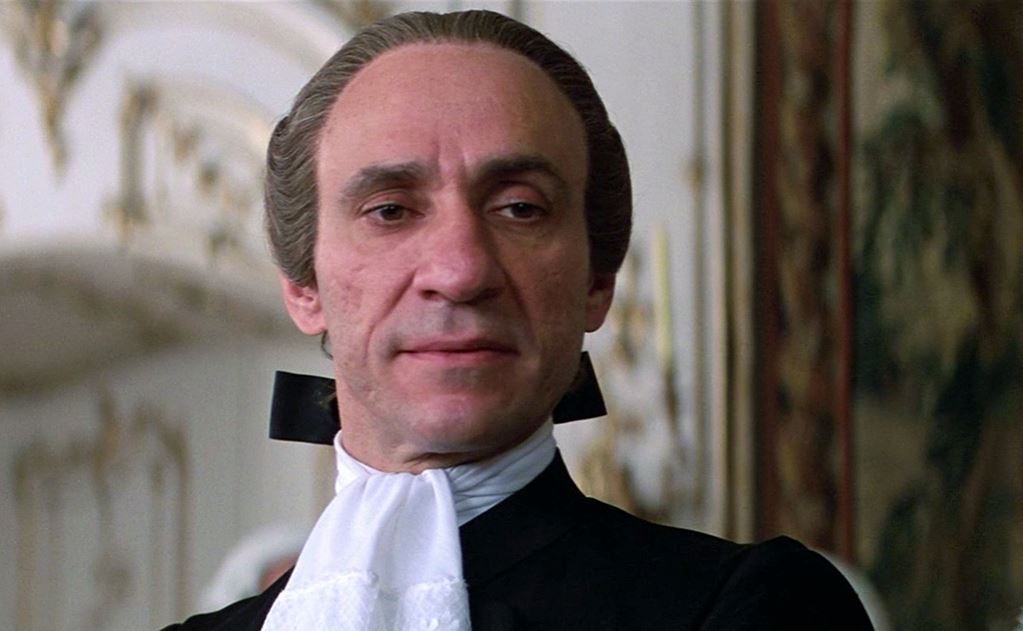
This film begins by introducing us to Antonio Salieri (F. Murray Abraham), a composer who has been put into a mental institute after an attempted suicide. A Catholic priest named Father Vogler (Richard Frank) is looking to get to the bottom of things, especially after Salieri says he is responsible for the death of Wolfgang Amadeus Mozart. While it has been over three decades since Mozart passed away, Father Vogler thinks it is a tremendous burden to carry. He sees how it is weighing on Salieri, which is what led to his suicide attempt.
From this point, the film is told from Salieri’s point-of-view as he shares how he was both envious and enamored with the work of Wolfgang Amadeus Mozart (Tom Hulce). He did not, however, think much of Mozart the person whom he found to be boorish, aloof and uncouth. Still, he cannot deny the genius the man possessed and how he would make magic happen with his music. It was something Salieri himself was never able to achieve in his own career, and he sees it as a sin that God would give all this skill and talent to someone like Mozart. As a result, this creates a complicated relationship between the two men.
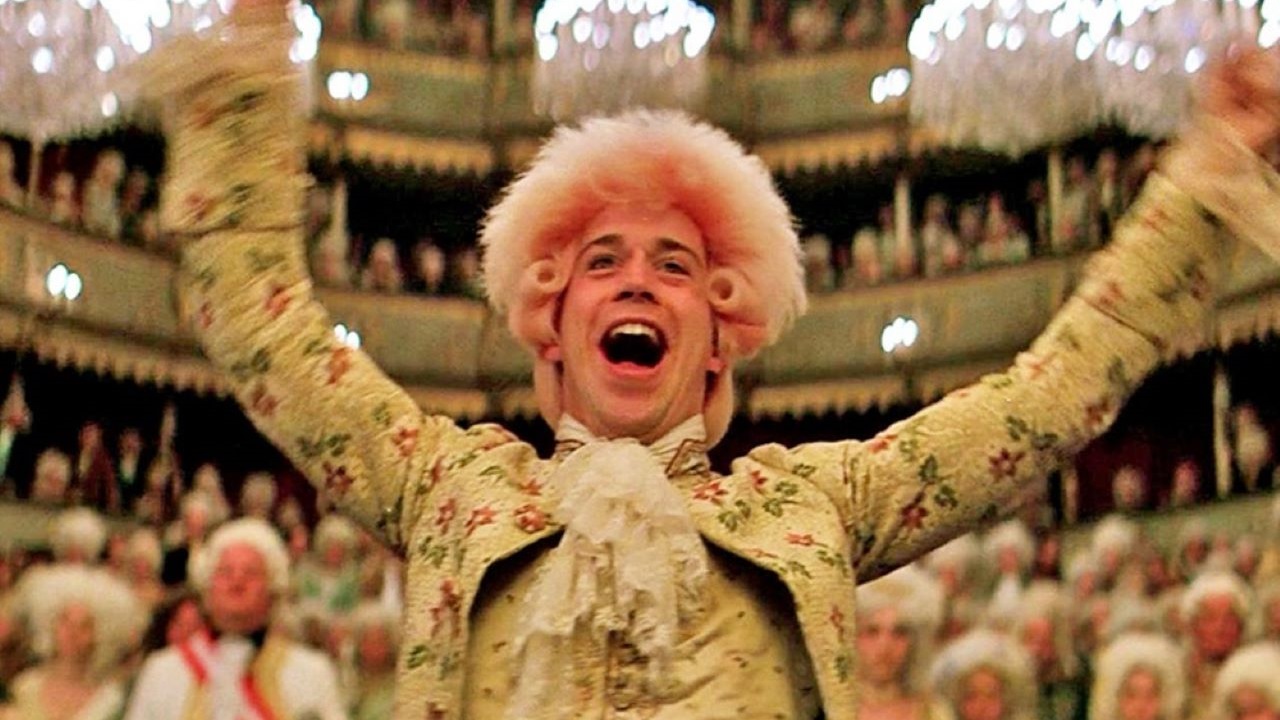
The film is fascinating in the way it explores genius and what makes someone possess the ability to do something which truly makes a positive impact on the world. There are often two lines of thinking when it comes to someone who has had enormous success or is a once-in-a-lifetime talent: it has either come naturally to them, or they have had to work very hard to hone their talent. Now, of course, there is also luck involved. It is also how you handle success if you continue to work hard at what you do, and that you don’t become complacent with your past success.
Throughout the film, no matter what is thrown Mozart’s way, he finds a way to make it work for him. This is even when Salieri is deliberately trying to sabotage him, especially when he hires Lori (Cynthia Nixon) to lend a helping hand to Mozart, as he has a wife and a child. The reason he hired Lori is to get inside information on Mozart and to stay one step ahead of him. The thing that separates Salieri from Mozart is the fact that no matter how annoying or obscene Mozart is, he has a gift. It is a gift that will always rise to the top and make him memorable and one-of-a-kind. It is that envy and jealousy which drives Salieri mad.
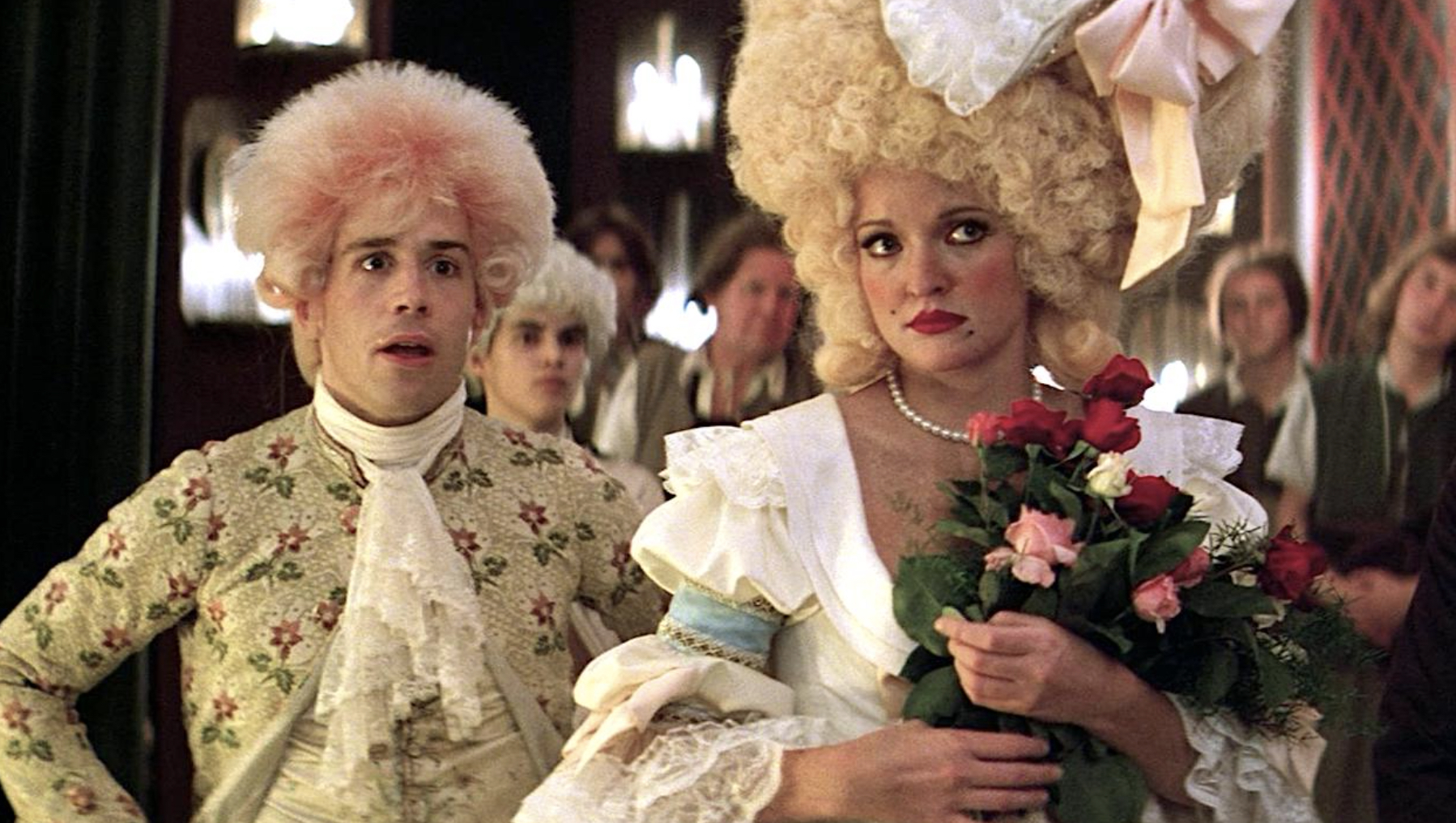
Milos Forman was the director behind “Amadeus,” and it was a big project for him to take on. From the set pieces to the musical numbers to the sheer magnitude of the story, it is a big Hollywood production, and he’s up to the challenge of making this movie look and feel big. It is the kind of big-screen Hollywood movie that used to run the movie industry back in the day. I miss big movies like this as they play very well on the big screen. They also pop on 4K as well. As to how historically accurate the film is, I cannot begin to tell you as, I must confess, I have not studied the history of Mozart.
The performance of F. Murray Abraham as Antonio Salieri is nothing short of brilliant. His face shows the torment of a man who has had to live in the shadow of Mozart his whole life, and it has clearly done a number on him. His performance reflects this, and he also knows when to rein it in and play the character in a more low-key and understated way. He was utterly captivating here from start to finish. In many ways, even though the film is called “Amadeus,” and it is about Mozart, it feels like Salieri’s story. It is easy to see why Abraham won Best Actor at the Academy Awards.
Tom Hulce must perform a balancing act of portraying Mozart as someone the audience can relate to while also being over-the-top and goofy. He does a solid job here, but I was much more interested in Abraham’s performance.
“Amadeus” is a film which was a little too long for my liking, as I would have trimmed about 20 to 30 minutes from the running time of 160 minutes, but it is still a well-acted, entertaining, and monumental Hollywood film. I admired and respected it, but I did not love it or connect with it on a deeper level. It is a film I am happy to have watched, but I found the third act to be its most compelling and intriguing. The scenes I liked the most dealt with the characters of Mozart and Salieri as human beings. When the film was a character study of the two men, it captivated me. I would have liked more of the human element of the story and less of the long-drawn-out musical scenes.
* * * out of * * * *
4K Info: “Amadeus” is released on a single disc 4K from Warner Brothers Home Entertainment, and it comes with a digital copy as well. The film has a running time of 160 minutes and is rated PG. Keep in mind; this is the theatrical cut of the film. I have read there is a director’s cut of the film, which is rated R and includes twenty minutes of extra footage. I think it would have been nice to include it here, but I am not sure what transpired to where this was not able to happen.
4K Video Info: I truly enjoyed this 4K transfer, as it showed the film as I imagine it was meant to be seen. The film is over forty years old, and it looks very cinematic with a very thematic look to it. This is not a perfect HDR transfer, but it’s not supposed to look flawless. It looks like how the film was intended to look, considering its release date.
4K Audio Info: I would have liked a Dolby Atmos track here, as this seemed like the perfect film to receive this treatment. As it stands, the audio is very sharp, clear, and the dialogue is easy to understand. Subtitles are included in English, Spanish and French.
Special Features:
The Making of Amadeus (New)
Amadeus: The Making of a Masterpiece
Should You Buy It?
I will let you in on a little secret—I do not read or watch reviews before I am going to review a film myself. I do not want to be influenced by what anyone has to say, good, bad, or indifferent. Now, I am aware certain films have overwhelmingly positive, mixed or negative reviews, but I do not read the content of them. I do think a lot of people like me have put off watching “Amadeus” for the same reasons I mentioned earlier in my review. I can see why the film might not be easily accessible to a newer audience today. Still, I think modern audiences will be pleasantly surprised, just like I was when I sat down to watch “Amadeus.” It is a period piece, yes, but it’s done in a way where you get to understand the characters, what makes them tick, and why they do the things they do throughout the course of the movie. My two issues were the run time and the fact that I wanted to spend more time with the two main characters together. Overall, it is a good film, but I do not think it is a great one. As far as the 4K is concerned, it looks terrific even though the audio would have benefited from a Dolby Atmos track. There is also a new special feature here. If you are fine with the theatrical cut, which I imagine many fans of the film will be, this is a day one purchase, especially with the Oscars this weekend. If you are a first-time viewer, I think you might want to rent it digitally first before committing to buying it.
**Disclaimer** I received a copy of this film from Warner Brothers to review for free. The opinions and statements in the review are mine and mine alone.

 The Ultimate Rabbit