Anthony Hopkins on Playing the ‘Psycho’ Director in ‘Hitchcock’

WRITER’S NOTE: This article was originally written back in 2012.

Sir Anthony Hopkins has played real-life people in movies such as President Richard Nixon in “Nixon” and John Quincy Adams in “Amistad,” but he was initially hesitant about playing the brilliant filmmaker Alfred Hitchcock in “Hitchcock.” The master of suspense has been imitated so many times over the years to where it seems impossible to portray the man without it feeling like it is a joke. Hopkins, however, was won ever by the film’s director, Sacha Gervasi, who told him, “You’re not Alfred Hitchcock, you’re Anthony Hopkins playing him.” From there, Hopkins knew he would be portraying Hitchcock without ever having to do a mere impersonation of him.

Hopkins actually had the unique privilege of meeting Mr. Hitchcock while he was alive. It’s always great fun to hear from actors who have met the highly esteemed filmmaker as the majority of us have only seen him from a distance. We all wondered what Hitchcock was really like as his films generally delved into the pitch-black darkness of humanity, and that had many assuming he was a somewhat disturbed human being himself. Hopkins described the experience of meeting Hitchcock to Fox News.

“I met Hitchcock in Hollywood in 1979. He had just been awarded his knighthood and I was with my agent, and his agent in fact, George Chasen,” Hopkins said. “This was many years ago. I saw Hitchcock sitting in the restaurant and I said to my agent, ‘I’d love to meet him.’ He said ‘I’ll introduce you.’ So, we walked out of the restaurant after we finished our meal, and Hitchcock was sitting there drinking a large brandy. And George said ‘Congratulations Sir Alfred,’ and he said, ‘Thank you very much George. How are you?’ and George said, ‘This is my client Anthony Hopkins,’ and (Hitchcock) said ‘Charmed, I’m sure, very good luck to you.'”

For Hopkins, a key importance for him was getting the look of the famous filmmaker right. The fact is he is far slimmer than Hitchcock was, and Hitchcock famously known for being overweight. It was up to Academy Award-winning makeup artist Howard Berger to transform Hopkins into Hitchcock. In a conversation with Andrea Mandell of USA Today, Berger talked about doing six makeup tests with Hopkins before filming on “Hitchcock” began, and they experimented with all sorts of prosthetics to get the look right.

“I think the biggest challenge was finding the right combination of Alfred Hitchcock and Anthony Hopkins,” said Berger. “We knew from the get-go; we didn’t want to completely cover and disguise Tony. As Hopkins became more comfortable with the character, slowly we started to strip things away.”

Berger went on to describe the end result of his work as being a portrait of Hitchcock on Hopkins. The makeup process took two hours each day to complete, and this included applying a prosthetic jowl and neck pieces to Hopkins. In addition, Hopkins took to wearing a bodysuit and brown contact lenses, and he also shaved “a patch of hair at the back of his head to replicate the director’s hair pattern.” With the makeup done, it freed Hopkins to concentrate on the inner life of his role as opposed to the physical aspects of it. In the end, this is what actors need to focus on the most when playing any role.

But the one thing you will not find Hopkins doing during shooting is staying in character when the cameras are not rolling. Right now, the movie “Lincoln” is in theaters, and it stars Daniel Day Lewis as President Lincoln. Stories from that set have described Lewis as staying in character throughout the shoot to where other actors kept referring to him as Mr. Lincoln. In talking with Philip Sherwell of The Telegraph, however, Hopkins made it very clear how this method of acting is completely unnecessary for him.

“I think that’s a lot of crap,” Hopkins said. “I just don’t understand that. If actors want to do that, fine. If they want to be miserable, that’s up to them. I’m not interested. It’s a job. Who the hell wants to be with some miserable grump because he wants to get his performance right, so you have to call him this or call him that? It’s so boring. I’ve been with actors like that and… they’re unpleasant to work with and I don’t think they’re always that good either.”

With all the great performances he has given throughout his illustrious career in “Silence of The Lambs,” “Remains of the Day” and “Titus,” Anthony Hopkins doesn’t need to stay in character a whole day in order to give audiences a confident performance. His role as Alfred Hitchcock in “Hitchcock” is just the latest example of the kind of work we can always expect from an actor of his caliber. Hopkins never takes the easy way out with a role, and he understands it is the inner life of a character that the actor needs to work on. As for how he looks on the outside, that is someone else’s concern.

SOURCES:

‘Hitchcock’ star Anthony Hopkins: To get a compliment from legendary director was ‘like being given a billion dollars,'” Fox News, November 21, 2012.

Andrea Mandell, “Anthony Hopkins’ scary transformation into Hitchcock,” USA Today, November 23, 2012.

Philip Sherwell, “‘Don’t call me ‘Mr. Hitchcock’: Anthony Hopkins does not want the Daniel Day-Lewis treatment,” The Telegraph, November 24, 2012.
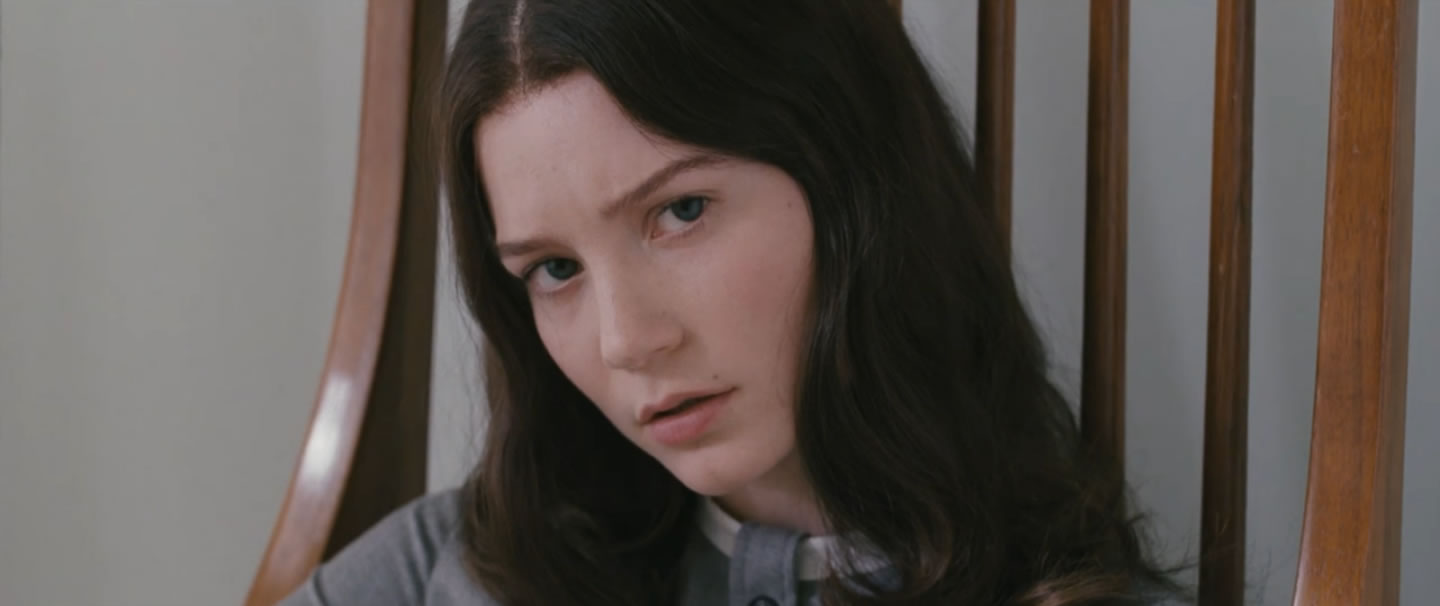
Mia Wasikowska Fearlessly Dives Into the Dark Side in ‘Stoker’

Mia Wasikowska in Stoker

WRITER’S NOTE: This article was written in 2013.

After watching her in Tim Burton’s “Alice in Wonderland” and seeing her portray the highly intelligent daughter of Annette Bening and Julianne Moore in “The Kids are All Right,” Australian actress Mia Wasikowska goes from lightness to darkness in “Stoker.” In it she plays India, a mysterious, dark-haired teenager whose father has just been killed in a car accident on her 18th birthday. Throughout the movie we see India trying to deal with both her emotionally unstable mother Evelyn (Nicole Kidman) and her enigmatic uncle Charlie (Matthew Goode) who has arrived to stay with them. Thanks in large part to Wasikowska, India is one of the most original and haunting teenage characters to appear in movies in quite some time.

It’s fascinating to watch Wasikowska’s transformation in “Stoker” as there is very little trace of the good-natured characters she has portrayed previously. Even her work in “Jane Eyre” felt like a fairy tale compared to the creepy nature of this film. Going into it, I wondered if Wasikowska was really looking to distance herself from the roles she has played in the past. It turns out she was, but in an interview with Helen Brown of The Telegraph, she also said it was because she was drawn to the character’s ambiguity.

“You don’t know if India’s a hero or a villain, the hunter or the hunted,” Wasikowska told Brown. “The film toys with your perception. It’s a weird love triangle between a mother, an uncle and a daughter. That feels very modern and very classic, at the same time.”

“It’s less about evil being in the bloodline than an idea of evil as contagious,” Wasikowska continued. “I think violence is something that catches on. I was interested in something India’s father says: ‘Sometimes you have to do something bad to stop you from doing something worse.'”

I loved how Wasikowska avoided making India seem like the average sullen, anti-social or Goth-like teenager we’ve seen in so many movies and TV shows. There’s something about India which feels wholly original, and it is a wonderfully complex character you spend all of “Stoker” constantly trying to figure out. Wasikowska explained to Brown what she was aiming for when she decided to play India.

“Stereotypes are much more prominent in teen movies,” Wasikowska said. “As a teenager, it’s more attractive to watch something you don’t necessarily feel you are, to watch movies about pretty people in love. But it was always exciting for me to find roles that gave me an opportunity to express what I felt was the more realistic side of teenagers.”

The most memorable scene in “Stoker” comes when Uncle Charlie joins India on the piano for one of the most exhilarating duets ever filmed. The whole moment feels like a cross between the “Dueling Banjos” scene from “Deliverance” and David Helfgott playing Sergei Rachmaninoff’s blisteringly difficult Concerto No. 3 in “Shine;” it’s a moment of harmony combined with a psychological unraveling which reaches a fever pitch. This is a movie scene I will be studying for a long time, and while talking with The Hollywood Reporter’s Rebecca Ford, Wasikowska described what it was like filming it.

“That’s sort of one of the scenes that you’re always anticipating during the shoot,” Wasikowska told Ford. “It was almost my favorite one to film, because we had the music there, playing really loudly for us, and then, to a certain extent, I felt like I didn’t have to do anything because so much of the emotion and the feeling was in the music, and if I just sort of surrendered to that, it was all there.”

“Stoker” marks the English-language debut of South Korean filmmaker Park Chan-Wook who is best known for his “Vengeance Trilogy” of movies which includes “Sympathy for Mr. Vengeance,” “Oldboy” and “Sympathy for Lady Vengeance.” Both he and Wasikowska worked closely together on India to make sure they were on the same page throughout filming, and Wasikowska told Ford they kept sending each other pictures back and forth through email which helped to illustrate their thoughts on the character.

“Some of the images were from India’s perspective, so things that I thought would explain the way that she sees the world,” Wasikowska said. “And then the other images would be something that had an essence of her physicality or her emotionally, so that was really helpful.”

Now with a movie as dark and disturbing as “Stoker” is, you would think the atmosphere on set would be very serious as to not break the mood of the piece. But as we found out on this movie and many others before it, the dark nature of the script was counterbalanced by a lot of humor amongst the cast and crew. Wasikowska made this abundantly clear to contactmusic.com while at a press conference.

“I’ve often found on the films that have a more serious nature, the more light-hearted and silly and goofy it becomes in between the scenes out of necessity to counter the intensity of the scenes and material,” Wasikowska said. “I felt like we were pretty good at that!”

Watching Mia Wasikowska in “Stoker” gives you an idea of what great work lies ahead for her. Here she digs deep into a character she hasn’t previously portrayed, and she completely disappears into the part as a result. While India is still a hard character to figure out at the movie’s end, it is Wasikowska’s journey into the role which renders it all the more fascinating.

“The best way to explain it is when I’m filming, I have a definite story that I follow for her, but then when I finish and I let go of the project a bit, it’s sort of up to interpretation,” Wasikowska said. “So one of the interesting things has been seeing how people have interpreted her (India) and her character in the story. And the only thing that’s consistent is how different everybody’s opinion is of her.”

SOURCES:

Helen Brown, “Stoker’s Mia Wasikowska, interview: ‘It’s a weird love triangle between a mother, an uncle and a daughter…,'” The Telegraph, March 1, 2013.

Rebecca Ford, “‘Stoker’s’ Mia Wasikowska on Her Mysterious Character and Sexualized Piano Playing,” The Hollywood Reporter, February 28, 2013.

Mia Wasikowska: ‘Stoker’ shoot was fun,” contactmusic.com, February 28, 2013.