The Ultimate Rabbit’s Favorite Podcasts

Everybody has a podcast these days to where there are far too many to catch up on. However, there are a few which I refuse to miss as they lighten up my day which usually has me wondering how I can continue to survive in an insanely cruel world. Considering that I spend a good portion of the day in my car, they are my go-to whenever I go place to place, and these are the ones I am always determined to be up to date on.

The Ralph Report

Created and hosted by actor, podcaster and voiceover artist Ralph Garman, “The Ralph Report” is the first podcast I listen to each day. This podcast came about after Garman was unceremoniously laid off from the “Kevin & Bean Show” on the KROQ-FM after 18 years, and you can find it on the Patreon platform. It’s never political, and Garman is just aiming to take you away from your daily troubles for an hour and change.

Garman is joined by his “vice host,” standup comedian Eddie Pence who was a classmate of mine at Second City in Los Angeles and has quite the reserved palate when it comes to food, resulting in a daily segment where a certain food is talked about and whether or not Eddie will eat it. Also on the show is Garman’s wife, Jen Stewart (a.k.a. Queen J) who helps run on the visual part of the podcast known as “Garmyvision,” and she also has the most infectious laugh of any human being I have ever met.

Among my favorite segments on “The Ralph Report” include one-hit wonders where Garman talks about a band or a singer who reached the top just once and never experienced the same level of success ever again (the episode on Bobby “Boris” Pickett’s “Monster Mash” is classic). Others include “Sex U” which discusses sexual practices in ways that are both informative and educational to where I wonder if other sex education classes offered anywhere could ever be this informative. And there is the “Video Vault” segment on Fridays where Garman and Pence recommend movies many people have not seen or heard about. Garman always has the classiest of choices, while Pence tends to recommend those which only he seems to enjoy. Still, maybe Pence is right to find the good in such films as “Megaforce” and “Leprechaun 4: In Space.”
WTF with Marc Maron

Now granted, this one just came to an end, but there are still 16 years of episodes for you and I to catch up on. Hosted by stand-up comedian and actor Marc Maron, “WTF” is not so much an interview show as it is a conversation between him and his guest. What started as a simple podcast, back when the term was in its infancy, turned into one of the biggest as Maron got to have great talks with such people like Jodie Foster, Spike Lee, Louis C.K. and even President Barack Obama who came back to do the final “WTF” episode. We also got to hear Maron deal with his sobriety and daily anxieties which have resulted in crippling emotions and catastrophic thinking for him, something I can very much relate to as anxiety has been the bane of my existence.
Fresh Air

If there is a single person who has come to influence the way I interview actors and filmmakers about their projects, it is most definitely Terry Gross. Few other people can ask such intelligent questions about the arts, movies, politics and sports than her, and that’s the reason why she has remained so popular for the past few decades. In the past few years, “Fresh Air,” which airs from WHYY in Philadelphia, has brought other hosts who occasionally sit in for Terry like Dave Davies, Tonya Mosley and David Bianculli who, like me, has a great love for the classic television series, “Homicide: Life on the Street.

Inside of You with Michael Rosenbaum

Actor Michael Rosenbaum, best known for playing Lex Luthor on the TV series “Smallville,” started his podcast “Inside of You” back in 2018, and it has talking with fellow celebrities he has worked with as well as those he admires. He has made it clear to all that this podcast is no way political, and much of his questions deal with mental health which makes it a must for people like me. I also like how he talks with people who usually don’t get to appear on other big-time podcasts like Gates McFadden, Barbara Crampton or Jonathan Frakes to name a few. I especially liked his talk with Gates as she took the time to discuss her role on “Star Trek: The Next Generation.”
The Everything Sequel Podcast

If there is any kind movie which is especially difficult to make, it is the sequel as it more than likely to pale in comparison to the original. But perhaps there a few sequels which can improve upon their predecessors, and that’s where “The Everything Sequel Podcast” comes in. Hosted by Michael Christopher Shantz, a classmate of mine from my UC Irvine days, and Tom Steward, they thoroughly dissect every follow-up to an original film we know and love to where nary a single detail is left out.

Recently, both Michael and Tom took great delight in dissecting the sequels to Wes Craven’s “A Nightmare on Elm Street,” and they came to agree that “Freddy’s Dead: The Final Nightmare” was the best of the bunch (of course they didn’t).
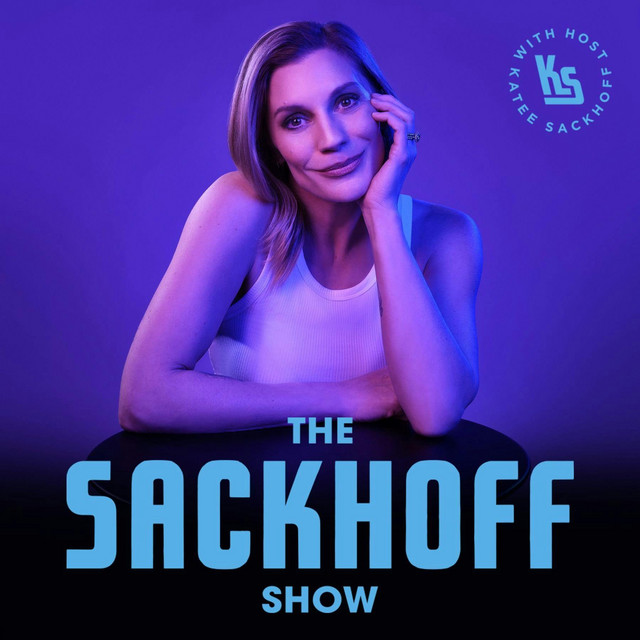
The Sackhoff Show

I have had an enormous affection for Katee Sackhoff ever since she portrayed Starbuck on SyFy’s “Battlestar Galactica,” and I have followed her career from there and continue to do so. Like “Inside of You with Michael Rosenbaum,” Katee uses her podcast to talk with those actors she has worked with on different projects as well as those she has a deep admiration for. Her interviews with her fellow “Battlestar Galactica” actors like Jamie Bamber, Edward James Olmos, Tricia Helfer, Mary McDonnell and James Callis prove to be endlessly fascinating as they discuss not just how their brilliant remake of a classic science fiction show stands on its own, but of how they continue to deal with the fame it all brought them.

But in addition to all of that, Katee talks about her struggles and adventures at being a wife and mother of two children, and of how she continues to rise above her circumstances to be the best person she can be in all the madness life has to offer.

Homicide: Life on the Set/Homicide: Life on Repeat

As I said earlier, I am as big a fan of “Homicide: Life on the Street” as David Bianculli is. With the classic show having finally arrived on the streaming services Peacock and Tubi, a couple of podcasts have emerged to look at what went on in front of and behind the camera, and both have proven to be deeply informative and enthralling in equal measure.
Homicide: Life on the Set” is a largely look at what went on behind the scenes of the Baltimore cop show, and it is hosted by Susan C. Ingram, a camera assistant on the show for six years, and Chris Carr who is a director and podcaster based in London. So far, they have had great interviews with the show’s assorted editors, directors of photography, and actors like Melissa Leo, Reed Diamond and Daniel Baldwin, the latter of which proved to be incredibly lively and exceptionally entertaining.
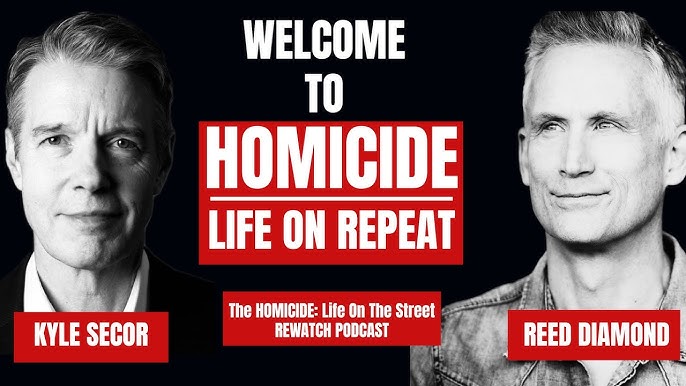
Homicide: Life on Repeat” features two actors from the show: Kyle Secor who played Tim Bayliss, and Reed Diamond who played Mike Kellerman. So far, they have covered “Homicide’s” first season which lasted nine episodes which Secor starred in, and which sparked Diamond’s intense desire to get a role on this show. They have also taken the time to interview key figures involved in the show’s creation such as Paul Attanasio and Tom Fontana who executive produced this show along with Barry Levinson.

Now if there are any other podcasts I can possibly add to this list, I will do so at a near or future date. I shudder to think at what I could have left out.
Underseen Movie: ‘The Beaver’ – A Movie Which Deals Effectively with Depression

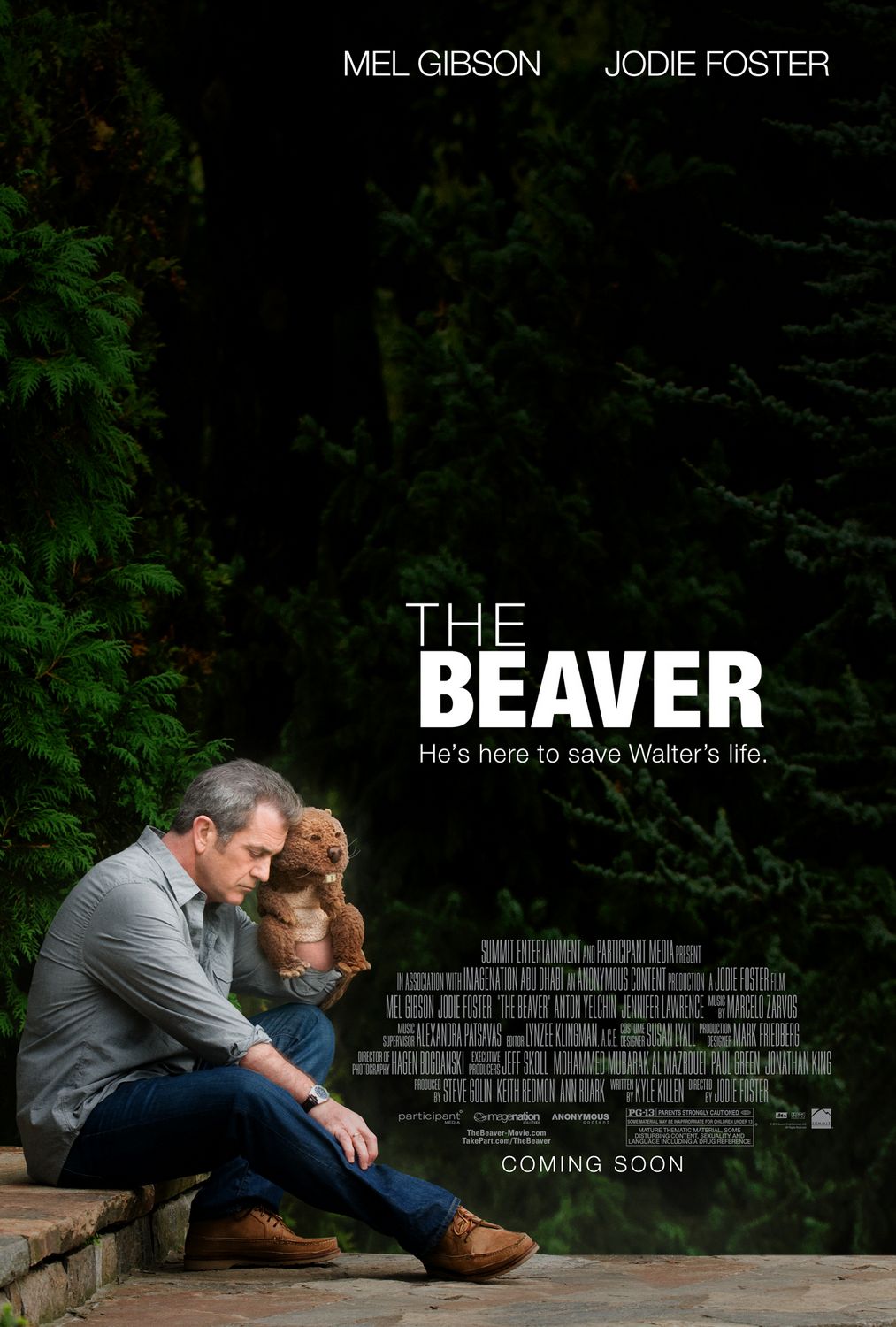
The Beaver” was Jodie Foster’s first feature film directorial effort since “Home for The Holidays” and it starts off with Mel Gibson as Walter Black laying on an inflatable cushion in his pool, looking lifeless as if any direction he’s had in life has been rendered completely non-existent. We quickly learn he is the CEO of a toy company, has a beautiful wife and two sons, and that he is severely depressed. We are meeting him at the point where he has been in this depressive state for quite some time, and it has gotten to where his wife Meredith (played by Foster) doesn’t want him living at home anymore, and his kids don’t know what to make of him.

After a failed suicide attempt, Walter is brought back to the land of the living through a hand puppet of a beaver which develops a life of its own after he puts it on his hand. With a Michael Caine cockney-like accent, the beaver tells him he is going to save Walter’s life. And sure enough, his life gets better very quickly as the beaver begins doing all the talking for him both at home and at work. But as time goes on, this beaver threatens to make Walter hit rock bottom in a way he may never be able to recover from.

“The Beaver” is a black comedy which gets blacker as it rolls along. The trailers made it look like a light affair, but this is most certainly not the case. It does have its funny moments, but it is really a serious examination of depression. This is an important issue because it is not something you can just simply get over regardless of what others will tell you. Depression can seriously debilitate you and affect those who love you the most, but not many fully understand this. The idea that you must go through life and take the punches which come with it can only go so far. Sooner or later, we find we can only take so much until we break. While some may have a great smile on their faces, they may be fighting a battle you know nothing about.

As Walter Black, Gibson reminds us of what a great actor he can be when given the right material. Aside from his work as a director, which really has been truly remarkable, it is easy to forget what a great presence he can be onscreen. Gibson captures Walter’s emotional downfall in a way few actors could, and he makes you care about him even as he heads further downhill emotionally. It is a brave performance that doesn’t hold anything back, and you have to admire the lengths Gibson goes here.

Foster remains an excellent actress as always, and seeing her acting alongside Gibson is a treat as they were so much fun to watch together in “Maverick.” She makes Meredith Black a strong-willed person who holds it together despite Walter’s behavior. It all makes Foster’s work even more fascinating to watch, and you sympathize with her plight throughout.

It is a real shame it took Foster 16 years to direct another movie. Her past efforts of “Little Man Tate” and “Home for The Holidays” showed a great eye for characters isolated from others because of who they are and what they are going through. Her work on “The Beaver” is especially commendable in that it is not an easy script to bring to the silver screen. Finding the balance between the comedy and drama makes this challenging even for the best directors working today. But Foster manages to pull it off like the professional she is, and she shows an incredible sensitivity to the subject of depression.

For me, “The Beaver” is one of the best films made about mental illness. The screenplay by Kyle Killen topped the 2008 Black List, a ranking of the best unproduced screenplays. I can see why as it features wonderful characters which are thankfully down to earth, and the dialogue feels fresh and does not contain an abundance of worn out clichés. Many will find the premise of a man working through mental illness with the aid of a hand puppet to be far-fetched and unbelievable. But this screenplay really takes some chances, and I honestly did not find any of what I saw as being beyond belief.

Besides, is it really that far-fetched for an adult to play around with puppets or stuffed animals? Look at these names: Jim Henson, Frank Oz and Ben Kenber. All these men have become well known for performing with puppets to the joy of many. Yes, I did put my name up there because I still have a love for stuffed animals which I used to make home movies with and sometimes bring to my day job. People may think this is strange, but I like how it sets me apart from the rest of the crowd.

In addition, there are other wonderful performances to be found here. The late Anton Yelchin, who did unforgettable work in the “Star Trek” movies, “Terminator Salvation,”  and “Green Room” among others. He is excellent as the Black’s oldest son, Porter. Throughout, he is terrified of becoming like his dad and implores his mother to divorce him. Yelchin makes what could have been a major brat into a fascinating individual whose endeavors in doing homework for others have long since become quite a profitable venture for him. His relationship with his father never feels contrived, so when we get to the end of the film, the emotions in their climatic meeting feels truly earned.

I also really liked Jennifer Lawrence as Norah, the popular valedictorian cheerleader who hires Porter to write her graduation speech. When this film was released, she was still riding high on the acclaim she received for “Winter’s Bone.” Norah is anything but a cliché, and she surprises us as much as she does Porter with a strong intelligence and a completely welcome lack of snobbery for a popular high school student. At the same time, she also hides a pain deep inside which defines her state of mind, and this presents her with something to overcome. Lawrence is great to watch here, and it was a sign that she had more great performances to give us which we eventually got in films like “Silver Linings Playbook.”

Congrats also goes out to young Riley Thomas Stewart who portrays the Black’s youngest son, Henry. It’s a remarkable performance for an 8- or 9-year-old as he has to convey both the confusion and effect his dad’s depression has on him. The scenes he shares with Foster and especially Gibson are wonderfully realized, and it helps that he has a former child actor directing him who knows how to coax a performance out of such a young human being.

Watching “The Beaver” reminded me of another great movie which had a big effect on me, “Lars And The Real Girl.” Both films featured characters whose pasts damaged them emotionally, and who seek release through unorthodox methods. With Gibson, it’s a hand puppet, and with Ryan Gosling it’s a sex doll he treats as his new girlfriend. Each takes what seems like a completely implausible story and surprises us by making it more than some average comedy which just dumbs everything down.

If you have not already seen “The Beaver,” I do hope you give it a look. Regardless of how you feel about Gibson these days, it’s an incredibly well made movie that takes a great script and visualizes it with respect and empathy to the subject of depression. While it was declared a “flop” after its first week at the box office, this should not define its worth. This film may not be for everyone, but those in the mood for something cinematically unique should find much to admire here. More importantly, I applaud any motion picture which takes the subject of depression seriously. It is not a mental condition that anyone can simply get over.

By the way, I love how Foster got Teri Gross of “Fresh Air” fame to do a cameo. I always wondered what her studio at WHYY in Philadelphia looked like, and we get a brief look at it here. Now how often does that happen?

* * * * out of * * * *