‘Emperor’ – A World War II Movie Which Could Have Been So Much Better
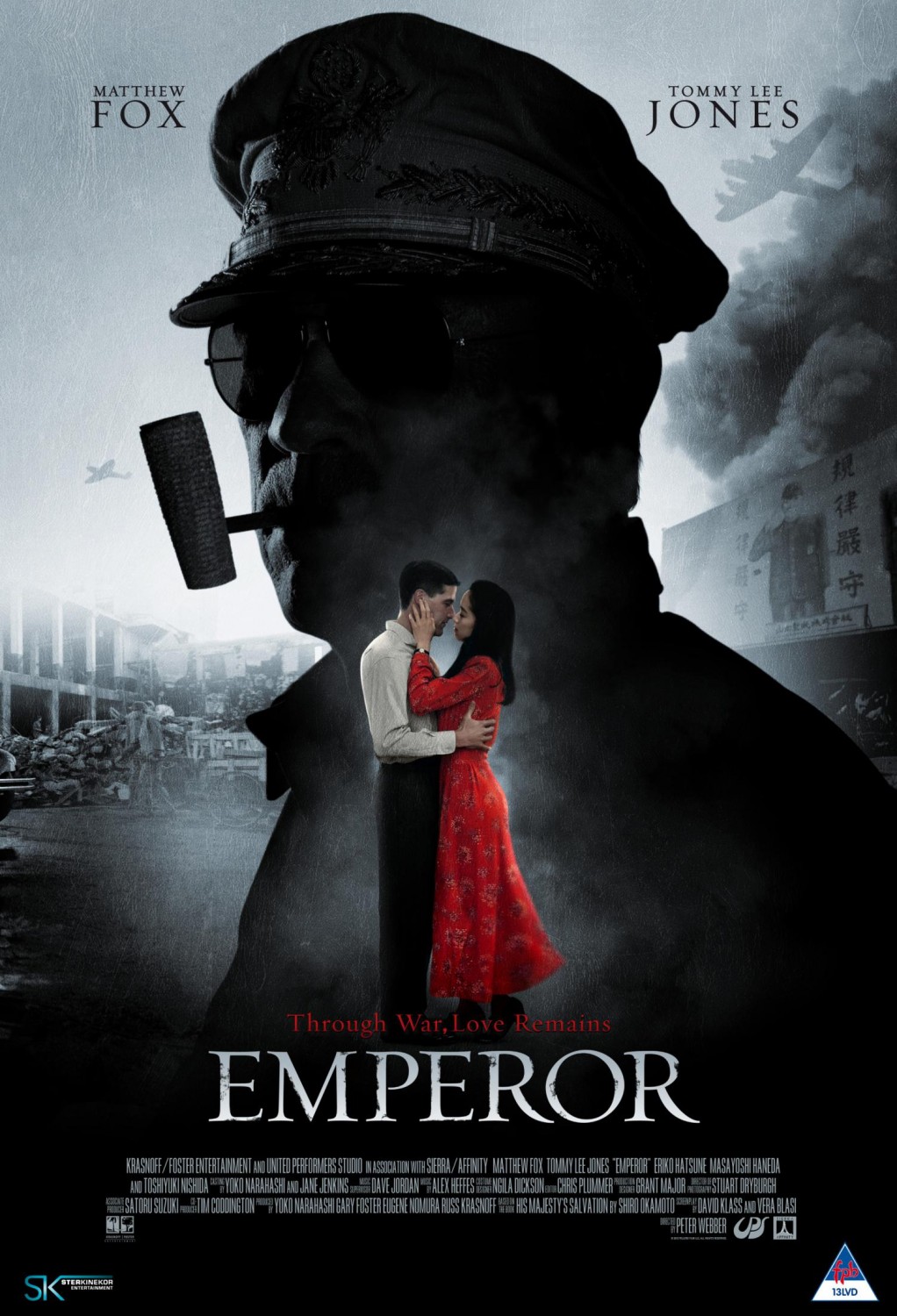
“Emperor” is one of those movies I cannot help but view as a frustratingly missed opportunity. On one hand, it is the first contemporary Hollywood movie which takes place during the U.S.-led occupation of Japan at the close of World War II, and it uncovers a part of history many people are not fully aware of. But in the process of delving into the subject of whether a world leader should be punished for crimes against humanity, “Emperor” inevitably gets bogged down with a love story which takes away from all it could have been.
“Emperor” begins with an airplane descending into a Japan which has been decimated by atomic bombs dropped on Hiroshima and Nagasaki during World War II, and the country has long since announced its surrender. Coming out of this same plane is General Douglas MacArthur (Tommy Lee Jones) who has been tasked by President Harry S. Truman to restore order in Japan and prepare the country for democratic elections (sound familiar?). But the one big problem MacArthur has to contend with before any of this can happen is of what to do with Emperor Hirohito (Takatarô Kataoka). Should Hirohito be made to stand trial for brutal war crimes, or is there another way of moving Japan forward without having to do so?
General MacArthur ends up assigning General Bonner Fellers (Matthew Fox) to find out if Hirohito was in anyway responsible for the war crimes which were carried out, and if he was the one who ordered the devastating attack on Pearl Harbor. The scenes in which Bonner does his investigation and gathers evidence from survivors and Japanese military officers are among this movie’s most fascinating moments. We all know how World War II ended, but it’s the specific details about this operation which prove to be the most illuminating because many of us never got to read them in history books when we were kids like we should have.
But it turns out, however, that Bonner has an ulterior motive for going to Japan; he wants to search for his long-lost love Aya Shimada (Eriko Hatsune), a Japanese school teacher whom he met and fell in love with years before. We get flashbacks showing how their loving relationship began, and of how it eventually brought Bonner to Japan. It all proves to be a good device to show the cultural differences between America and Japan. Still, the romance subplot really just slows everything down, and I found myself getting bored as a result. Had this movie been more focused on the investigation into the Hirohito’s activities, it would have been far more enthralling as a result.
“Emperor” also could have used a lot more of Tommy Lee Jones as it is hard to think of another actor in this day and age who could have embodied General MacArthur better than him. The man who won the Best Supporting Actor Oscar for his work in “The Fugitive” gives this historical figure a Whenever Jones is onscreen, he steals every single scene he is in as he gives this real American hero a wonderful sense of humor and a no apology pro-American stance. Coming off of his Oscar nominated performance in “Lincoln,” Jones seems to be getting the roles he rightfully deserves to play these days.
Matthew Fox, who did this movie after doing the bizarre but compelling transformation he did for “Alex Cross,” and who is still best known for his work on the television series “Lost,” does very good work here as Bonners. Furthermore, he shares a very palpable chemistry with Hatsune in their scenes together. Still, this role only allows him to go so far as an actor as Bonners becomes just another guy searching for his long-lost love, and this is a story I have seen far too many times.
Directing “Emperor” is Peter Webber who, before this movie, gave us “Girl with a Pearl Earring.” With that particular motion picture, Webber was able to create a strong undercurrent of sexual tension between the characters portrayed by Colin Firth and Scarlett Johansson, and that he is unable to achieve this same tension between the characters here is both surprising and inescapably depressing. On the plus side, he does get good performances from his cast, and his cinematographer Stuart Dryburgh and production designer Grant Major both obtain some amazing shots of a war town Japan. I feel obligated to say this because the budget for this movie is much lower than it should have been, and the filmmakers succeed in making everything here look like it cost so much more.
Webber also directed the prequel “Hannibal Rising,” and I am still trying to finish my review of it after all these years. When it comes to my subsequent review, you can only hope for so much (if anything for that matter).
Learning more about this specific story of the American occupation in Japan brings to mind similar occasions in which America invaded other countries like Vietnam or Iraq to whip a little democracy on them. Whether or not it was the intention of the filmmakers to remind us of these conflicts, they do serve as a reminder of how we need to learn from the past to prevent the same things happening in the present. But in the end, “Emperor” feels like a history lesson which would have been better told in the a past where people should have been paying close attention.
Back in 2012, audiences were given many films based on historical or actual events like “Lincoln” and “Zero Dark Thirty.” Truly, I was really hoping “Emperor” would have been every bit as riveting, and the fact it is not is a crying shame. While it is not a terrible movie, and there a number of things about it which are very good, it is still a deeply missed opportunity as it will not leave much of an aftertaste once you finish watching it.
* * ½ out of * * * *

