‘American Fiction’ Movie and Blu-ray Review

The following review was written by Ultimate Rabbit correspondent, Tony Farinella.

American Fiction” is the kind of adult drama which has been sorely missing from Hollywood over the past decade and a half.  Hollywood has become obsessed with the big screen blockbuster and superhero films. Now, of course, there is nothing wrong with those films, but the adult drama along with R-rated comedies are becoming harder and harder to find these days.  It is why a film like “American Fiction” is such a delightful treat for moviegoers who enjoy complex characters and well-rounded stories, and who like to be challenged when they sit down and watch a movie.

The film stars Jeffrey Wright as Thelonious ‘Monk’ Ellison, an author and teacher who is grumpy, defeated and incredibly unhappy with his life.  Thelonious is a difficult person to be around as he’s critical of not only himself but everyone else around him.  It doesn’t help that he isn’t as successful as he used to be with his writing.  He’s finding it harder and harder to connect with audiences as he sees a shift in the literary landscape. The books which are making money and selling are those which profit off the stereotypes that exist in black entertainment.

Thelonius is told to write a “black book,” which is something he wants nothing to do with at all as it goes against his principles and his beliefs. It makes him angry to see a writer like Sintara Golden (Issa Rae) selling books left and right while his own work is financially unsuccessful.  He returns home to spend time with his family, which is another source of stress in his life. His sister, Lisa (Tracee Ellis Ross), is a hard-working physician who is doing her best to get back on her feet after a painful and costly divorce. He also discovers that his mother, Agnes (Leslie Uggams), is suffering from Alzheimer’s Disease.

This is not the pick-me-up visit Thelonius needed, as he’s not exactly close with his brother, Cliff, played by Sterling K. Brown.  Cliff and Lisa have trouble getting along with him because he’s too much like their deceased father who was withdrawn, judgmental and often pushed people away.  With his mother’s health suffering, it is up to Thelonius to take care of her finances and figure out what to do with her care.  He finds a solution when he ends up writing a book under a pseudonym, which gives the public what they are looking for: a stereotypical black book which relies on the offensive and cliché-ridden tropes audiences love. As the old expression goes, “No one ever went broke underestimating the intelligence of the American public.”

Thelonius has also developed a relationship with a neighbor, Coraline, played by Erika Alexander. She likes him, but can he love himself enough to work it out with her? Can he get along with his brother? He’s also discovering through his agent, played by John Ortiz, that his book might even be turned into a movie. This is all happening very fast for him as he’s wrestling with his need to produce substantial material and also his need for money.  In many cases, the two do not go hand-in-hand. He doesn’t want to sell his soul for the almighty dollar, but he also has bills to pay in the meantime. Can his moral compass allow him to “sell out?”

“American Fiction” was my favorite film of 2023. It starts with the screenplay, which won Best Adapted Screenplay at this year’s Academy Awards.  The film has great dialogue in it along with rich and funny characters that really sizzle on screen. It’s a witty, timely and sharp script.  The film reminded me a lot of Spike Lee’s “Bamboozled,” but it’s a more upbeat film and not as bleak. It is hard to overlook how little has changed since “Bamboozled” came out back in 2000, though. The big thing that has changed is there are more platforms and outlets for this kind of material to be digested by audiences.

This film also has a tremendous cast from top-to-bottom. Everyone has effortless chemistry with one another on screen, and they are all likable, interesting and well-developed.  Even though Thelonius is a curmudgeon, he’s never boring.  There is something very quirky and funny about him, and it is because he was written with a lot of different layers to him.  As an audience, we understand his frustration and we know why he feels the way he does about his family and how African Americans are presented in mainstream media. He’s not wrong, even if he goes about it in a way that tends to grate on those closest to him.  He can be preachy and self-righteous, but it’s hard to argue with his points.  This is a man who is learning to love himself, love someone else, and reconnect with his family.  He’s a work-in-progress.

If you are like me and enjoy a film with heart, humor and a bit of edge to it, you will love “American Fiction.”  This is the kind of movie Hollywood used to make but seem to shy away from these days.  I enjoyed every single minute of this hilarious, heartfelt and intelligent piece of moviemaking.  This film allows the audience to spend time with these characters, get to know, care about, and become emotionally invested in them. The ending, without giving anything away, is also perfect. I loved “American Fiction,” and I’m confident you will love it too.

* * * * out of * * * *

Blu-ray Info: “American Fiction” is being released on a single-disc Blu-ray from Warner Brothers Home Entertainment.  It has a running time of 117 minutes and is rated R for language throughout, some drug use, sexual references, and brief violence. It also comes with a digital copy of the film as well.

Video/Audio Info: The 1080p high-definition transfer is very colorful, clear, and bright. Would I have loved a 4K transfer of my favorite film of last year? Of course! However, this is a very good-looking Blu-ray, and I can hold out hope it gets a 4K upgrade at some point as I think this film is only going to grow in popularity as more people see it on physical media. The audio on this Blu-ray is also top-of-the-line. All of the dialogue can be heard very clearly, which is important, because this is a very dialogue-driven film. Subtitles are included in English, French and Spanish.

Special Features:

None

Should You Buy It?

If you are strictly buying “American Fiction” for the movie itself, you should definitely buy it right away. However, this is only available on Blu-ray and DVD, and there are also no special features. This is a supremely bare bones Blu-ray from Warner Brothers Home Entertainment which is pretty disappointing. It does come with a slipcover, though. I’d say buy the Blu-ray with the slipcover as, from an audio and visual standpoint, it still looks and sounds really good. I always like to err on the side of caution, and I’d rather have a great movie on Blu-ray with the slipcover while I can before they stop releasing it with a slipcover. That being said, this film deserved a much better physical media release than it got,

**Disclaimer** I received a copy of this film from Warner Brothers to review for free.  The opinions and statements in the review are mine and mine alone.

Roger Ebert – The One Film Critic to Rule Them All

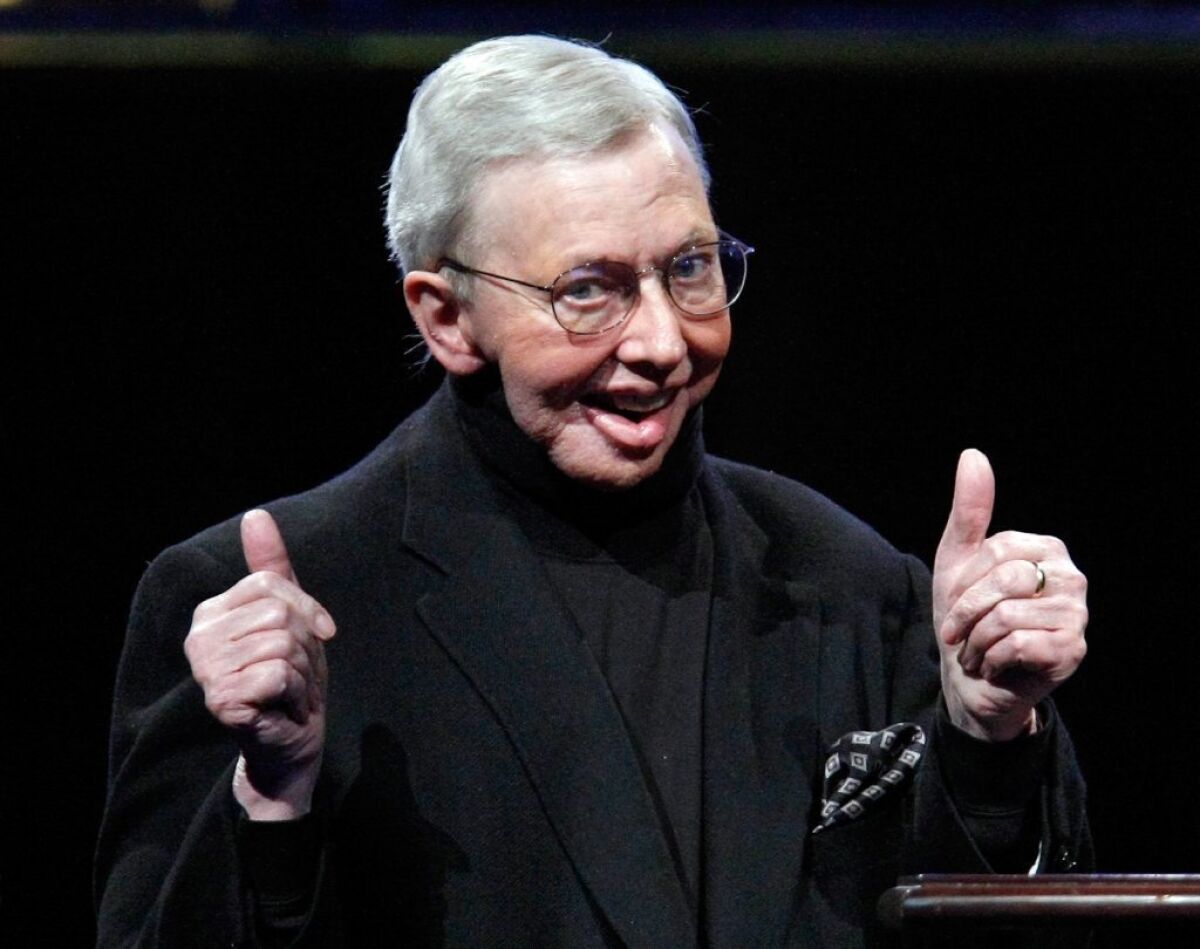
I think we all knew the end was near for Chicago Sun Times film critic Roger Ebert when he announced to the world that his cancer had returned. In his blog entitled “A Leave of Presence,” which was published just a couple of days before his death on April 4, 2013, Ebert announced he would be cutting back his workload to conquer this dreaded disease which had wreaked havoc on his body for the last decade or so. He really did fight the good fight against this indiscriminate and infuriating disease, and you had to admire how he refused to hide from the world after it robbed him of his speaking voice and made him look a little less handsome. But after all the battles, his body could only take so much. His wife Chaz described his passing as a “dignified transition,” and I am just glad it was a peaceful passing and that he was not in much pain.

Like you, I have been a big fan of Ebert’s ever since he started sharing the balcony with Gene Siskel on “At the Movies” all those years ago. Before I made going to the movies a regular event in my life, I had to settle with watching this movie review show as it was my gateway to the world of movies back when going to the local theater happened as often an eclipse of the sun. Even if they did give thumbs down to movies I loved like “Better Off Dead,” nothing could stop me from watching their show.

Eventually, I became exposed to Ebert the writer through his various “Movie Home Companion” books which later became known as his “Video Companion” and then eventually his annual “Movie Yearbook,” and I quickly purchased them year after year once they became available at my local bookstore. Sometimes I was bummed when he gave a so-so review to favorite films of mine like “Caddyshack” (he gave it * * ½ out of * * * *), but in the end he had understandably strong reasons for why he felt the way he did, and it was hard to disagree with his reasons when you thought about them.

In many ways, you did not read an Ebert review as much as you experienced one. This was the case when I read his review of the infamous “I Spit on Your Grave” which he gave one of his rare zero-star ratings to. He described it as “a vile piece of garbage” and how attending it was one of the most depressing experiences of his life. It was a review filled with spoilers as Ebert described everything which happened, and while we hate it these days when people spoil a movie for us (we have Wikipedia for that), it felt like he was doing us all a huge favor when it came to this particular film which has since become a cult classic. He even went out of his way to describe the reactions of other patrons in the theater which were very disturbing as they seemed to shamelessly cheer on the rapists, and this made his experience of seeing this dreaded movie all the more unsettling. Now while his review may have drawn more attention to this movie than he would have liked, you cannot say you were not the least bit warned as to how difficult it would be to sit through it.

As for myself, I loved how Ebert always wrote in the first person, and I am quite confident I do not need to prove to you of the effect his writing had on my own. Many websites and print publications these days do not like it in the slightest when you write in the first person, and while I understand why, it still drives me nuts. Anyone can write a movie review, but no one could write one the way Ebert did. When I first started writing my own movie reviews on the internet, I found myself writing them in the same way he did. Truth be told, it is a lot more fun to write them in the first person as there is only one of you in this universe and, the way I see it, people tend to find more enjoyment in reading those kinds of reviews anyway.

Back when I was in high school, many of my friends came to hate Ebert because, the way they saw it, he just hated movies. Now granted this made me a closeted fan of his for a while because I did not want to appear too different from everyone around me, but I was still annoyed at the summary judgment they made against him. I wanted to yell at them, “DO YOU REALLY THINK HE WOULD SPEND ALL THIS REVIEWING AND TALKING ABOUT MOVIES IF HE REALLY HATED THEM?! WHAT WORLD ARE YOU FROM ANYWAY??!!” While Ebert at times seemed to dislike more movies than he liked, it became easy to see why; many of the movies we loved as kids were no different from the ones he saw as a kid himself, and what we saw as new seemed like the same old thing to him. As we continue to get older, we have come to feel the same away about movies in general because the more things change, the more they stay the same.

Furthermore, Ebert was never a snob to me. While you may be annoyed how he gave thumbs down to “Full Metal Jacket” and yet give a thumbs up to “Cop and a Half,” he was fully aware of how not every movie could be on the same level as “Citizen Kane” or “Vertigo.” Some film critics like Rex Reed are uber snobs who revel in the power they think they have to destroy a movie, but Ebert was able to judge a movie for what it was trying to be as opposed to what he wanted it to be. “Days of Thunder” clearly earned its unofficial nickname of “’Top Gun’ on wheels,” but Ebert gave it a thumbs up because, on that level, it was effective entertainment. Sure, you could compare it to “Lawrence of Arabia,” but why?

In retrospect, if it were not for Ebert, or even Siskel, would audiences have taken the time to discover movies such as “Roger & Me” or “Hoop Dreams?” The one gift Ebert gave us was his power to give a voice to and support films which Hollywood studios were not quick to shower their attention to as they did with summer blockbusters. He made us realize it is up to us to give smaller independent movies the attention they deserve. Otherwise, they just might fall through the cracks to where they become completely obscure.

I also admired Ebert for cutting through the hyperbole which could completely engulf a film. One great example was Spike Lee’s “Do The Right Thing” which many mistakenly saw as a call to violence. Ebert, who would later declare the film to be one of the best of the 1980’s, instead saw it as a story of where race relations were at in America, and that it was a reality call we needed to wake up to. He made you see Lee was not endorsing one course of action over the other, but that he was instead showing us what happens when people do not do the right thing. A few years later, Los Angeles was besieged by riots which came about after the Rodney King verdicts, and this made “Do The Right Thing” seem like an eerily prophetic film as a result.

Now how come other film critics could not see Lee’s film in the same way Ebert did? Maybe it was because he was a much more opened minded person than others. What a critic can say about a movie often says more about them than anything else, and even if you do not agree with Ebert on a particular film, you cannot say he was a man consumed with hate or any deep-seated bias. He was never blinded by any particular ideology or thought process, and he forever remained gifted at explaining what Lee or other filmmakers were truly getting at with their work.

Ebert’s fight with cancer made me admire him even more. Once it robbed him of his voice and a good portion of his jaw, you would have expected him to hide in a cave somewhere. But he refused to do that, and his work as a film critic and a writer never suffered as a result. In fact, he wrote even more than ever before as he expanded beyond his usual movie reviews to cover current events everyone in the world were constantly caught up in discussing. You could argue with Ebert on certain points, but he was always ready to back up what he said with the facts. Your best bet, instead of trying to prove him wrong, was to outguess him at the Oscars.

Thank you, Roger, for being a hero of mine. Thanks for all your great reviews even if you badmouthed some of my favorites. Thanks for continuing to write and not hiding from the world after cancer robbed you of your voice, and thank you for sharing the balcony with Gene Siskel and Richard Roeper for all those years. But most importantly, thank you for showing me the power of the written word. Like many others, I will miss your presence in life and on the web, but you still left us with so many great articles I still have yet to read.

WRITER’S NOTE: Down below, I am including the exclusive interview I did with director Steve James and Roger’s wife, Chaz Ebert, while they were doing press for the documentary they made entitled “Life Itself.” Based on Roger’s memoir of the same name, it was an enthralling documentary I was ever so happy to sit through.

Tony Farinella’s Top 10 Movies of 2018

2018 was not a great year for cinema, but the films that were good were really good.  The year started out strong, it died out in the middle, and finished good but not good enough.

Honorable Mentions for Really Good Movies:

“Game Night,” “Blockers,” “Assassination Nation,” “Paterno,” “Halloween,” “Never Goin’ Back,” “Creed 2,” “Widows,” “The Hate U Give,” “Three Identical Strangers,” “The Wife,” “What They Had,” “All the Money in the World,” “Sorry to Bother You,” “Fahrenheit 11/9” and “Upgrade.”

Love Simon movie poster

10) “Love, Simon”

This flick came out in March, and it is truly a film which needed to be made.  It was directed incredibly well by Greg Berlanti.  Here is the thing about films which deal with someone being gay and not being sure how to tell their friends and family: these are stories that help others feel more comfortable about coming out. This film was funny, touching and incredibly moving.  The lead, Nick Robinson, shows the audience all of Simon’s conflicting emotions from coming out to his parents, played by Josh Duhamel and Jennifer Garner, as well as his group of friends. Katherine Langford from “13 Reasons Why” is terrific as his best friend, and Tony Hale is also great as the vice principal of the school.  The film deals with the subject in a sensitive but profound way.  At the end of the day, it is a love story filled with a big heart and a lot of humor.  If you missed it back in March 2018, now is the time to see it.

Click here to check out The Ultimate Rabbit’s review of “Love, Simon.”


A Quiet Place movie poster

9) “A Quiet Place”

As someone who tries to attend the cinema as often as possible, I know how hard it is to get an audience to keep quiet.  While watching this movie in a packed theater, it was total and complete silence.  It was a truly surreal and great moviegoing experience.   This was an April release and it did well at the box office and with critics.  It stars John Krasinski and Emily Blunt as a family that must survive during a time where, if there is any noise, monsters will appear and attack and kill you. Krasinski is also behind the camera on this one, and he shows some real talent as a filmmaker.  When the stakes are so high and no one can talk or make any noise, the tension is unnerving and unsettling in the best possible way.  The film also features two great performances from the two children: Millicent Simmonds (hearing impaired in real life) and Noah Jupe. It was great casting to find a young actress who was really deaf as it lends to the film’s authenticity.

Wont You Be My Neighbor poster

8) “Won’t You Be My Neighbor?”

How in the world did this film get overlooked at the Oscars? How did it not even get a nomination?  This is something which will puzzle and bother me for quite a while.  This is a tremendous documentary and a great film.  Everyone remembers Mr. Rogers, and this film shows the impact he had on children and the world.  It also dives into other aspects of his life and leaves no stone unturned.  It is the kind of movie which makes you feel good, and we need more movies like it during these trying times.  Mr. Rogers was a special person, and this is a special film.  As the tagline on the poster says, “A Little Kindness Goes A Long Way.”  It will take you back to when you were a kid and grew up watching and responding to him.  He was never afraid to tackle tough subjects in a profound and thoughtful way, and his impact will forever be felt.

Click here to check out The Ultimate Rabbit’s review of “Won’t You Be My Neighbor?”

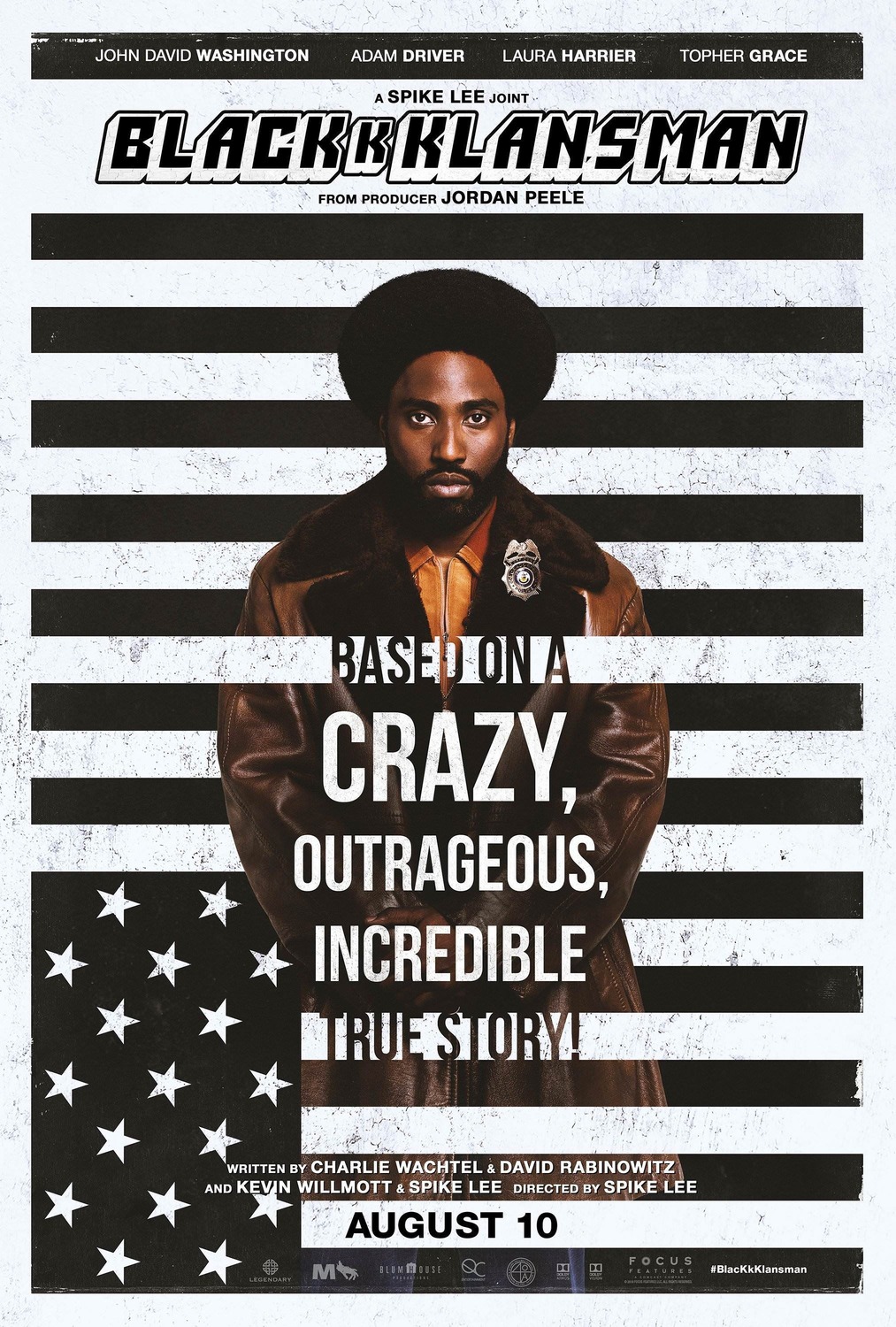
BlackkKlansman movie poster

7) “BlacKkKlansman”

Spike Lee’s “BlacKkKlansman” is a mind-blowing film which shows how Detective Ron Stallworth (John David Washington) was able to be part of the Ku Klux Klan as a black man with the help of Flip Zimmerman (Adam Driver), his partner.   Stallworth does all of the voice work over the phone to convince David Duke (Topher Grace) he’s really white while Flip shows up to various meetings.  The usual Spike Lee humor is infused in the script as well, and it works because he is still taking the subject matter seriously.  Racism is still very much alive today, as they show this in the end credits, but Lee makes an entertaining true story come to life here.  Washington keeps proving he is an actor and not just Denzel’s son.  This is tough material, no question about it, but Lee has never been afraid to go there.  You have to go there in order for real change to occur.

Click here to check out The Ultimate Rabbit’s review of “BlacKkKlansman.”

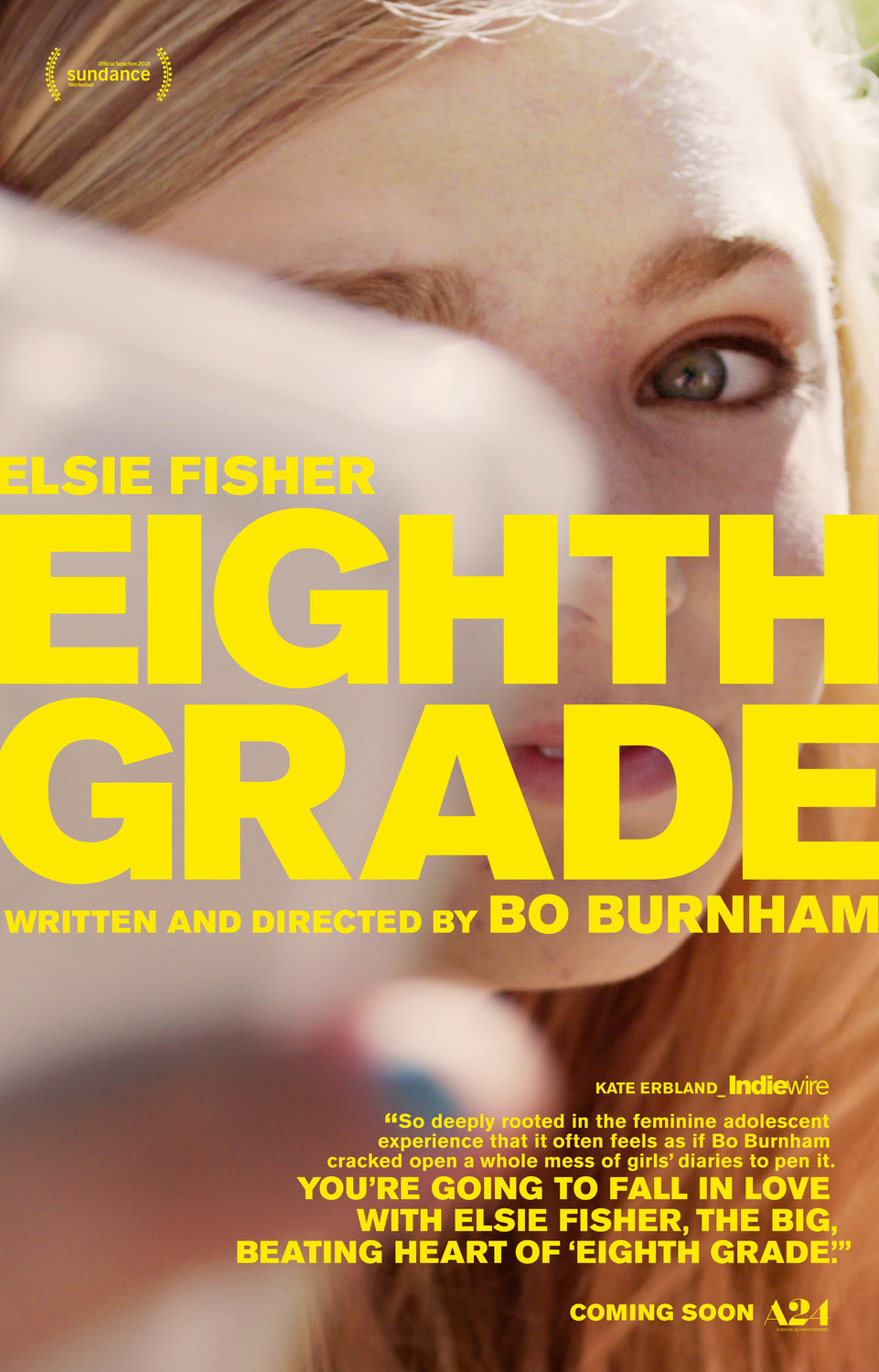
Eighth Grade movie poster

6) “Eighth Grade”

Bo Burnham’s directorial debut took the world by storm in the summer of 2018.  My wife and I went out of our way to see it.  We have always been big supporters of independent cinema, and we were glad to see it and more than happy to make the drive.  Burnham is very much in touch with social media, and even though he is not a girl in eighth grade, he taps into what it feels like to be in that mindset and how terrifying it can feel.  It feels like the end of the world and all of this pressure is mounting on you. Elsie Fisher is the star of the show, and she’s so likable, funny and interesting, even though she does not see it.  In interviews, Burnham talked about how she was a shy girl trying to be confident in auditions, and this is exactly what he was looking for as everyone else was a confident girl trying to act shy.  The best scenes in the film are the ones with her and her father, played by Josh Hamilton. It is a great movie which more people need to discover now that it’s out on Blu-ray.

Click here to check out The Ultimate Rabbit’s review of “Eighth Grade.

Boy Erased movie poster

5) “Boy Erased”

The LGBTQ community got another great film in “Boy Erased.”  This was a November release which sadly did not perform well at the box office.  It was written and directed by Joel Edgerton and adapted from the novel by Garrard Conley. The film deals with something called conversation therapy.  Those who perform this therapy believe they can turn someone who is homosexual into a straight man or woman.  Edgerton also plays the leader of this program, and he has some unusual methods to say the least. Lucas Hedges tells the story of Garrard Conley, although his character’s name in the film is Jared Eamons.  His parents are played by Nicole Kidman and Russell Crowe, and this is shockingly their first time working together.  Things are complicated because Jared’s father is a pastor, and his father believes this is the best way to handle this situation. The mother is not really on board with it, but she is sticking by her husband even though you sense her regret.  It is a haunting, scary and emotional film which deserves to be seen.  People are unaware places like these still exist in so many states. The only way they will not exist is if people pay attention and do something.  It is an eye-opening film which was criminally overlooked by moviegoers. Just because a film deals with tough subject matter, it does not mean audiences should not view it.  Film can educate and inform us.

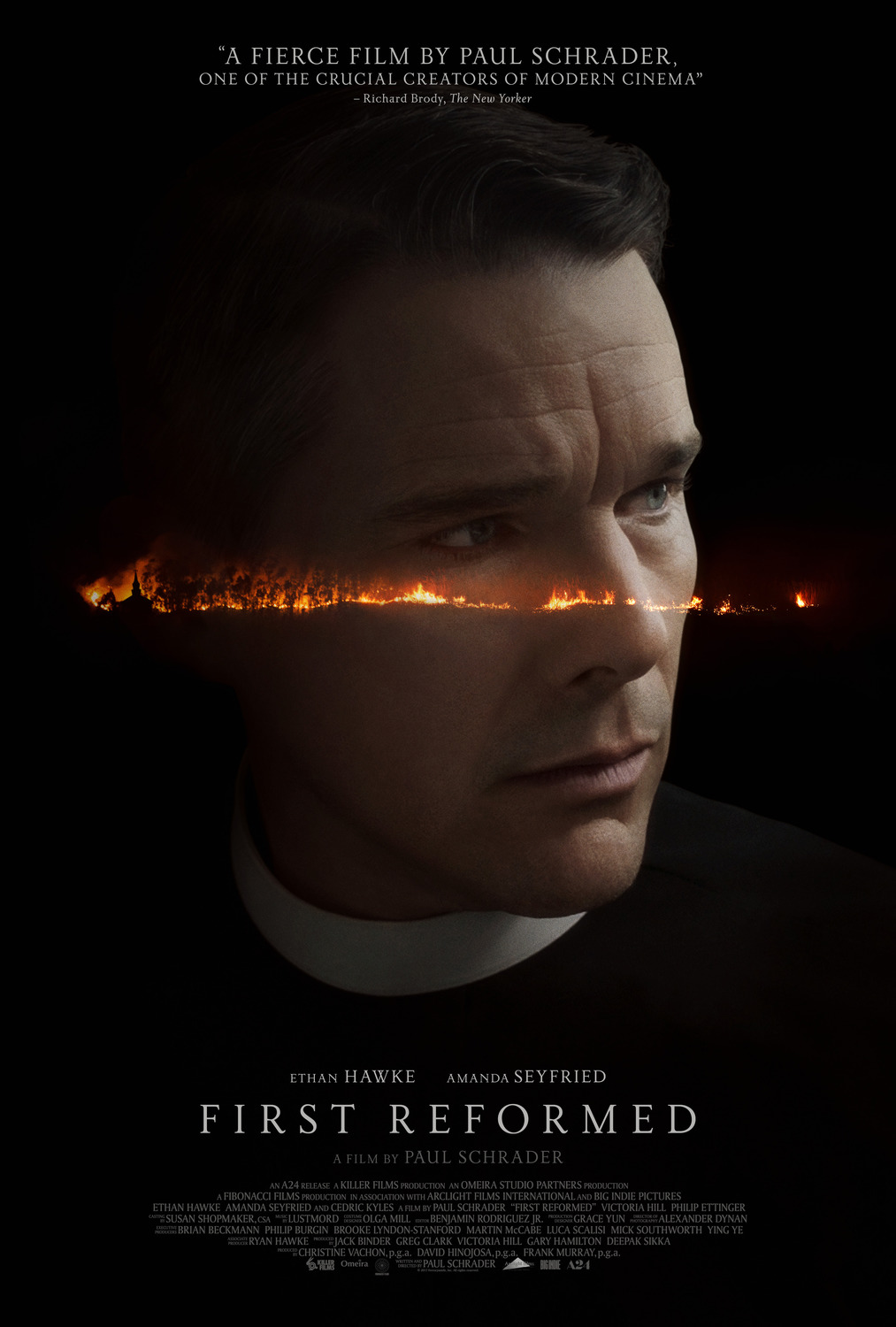
First Reformed movie poster

4) “First Reformed”

Paul Schrader’s “First Reformed” is yet another great movie which audiences decided to turn away from at the box office.  I understand people enjoy their Marvel movies and their popcorn entertainment, but there are films which can create discussion.  That, to me, is the power of cinema.  The always terrific Ethan Hawke is a pastor named Toller at the First Reformed church.  One day, Mary (Amanda Seyfried) comes to his church and asks him to help out her husband Michael (Philip Ettinger) who is worried about the state of the world, the planet and what we are doing to it.  Her husband wants to do something about it, has been arrested and he feels people are turning a blind eye to these major issues going on in the world.  Toller starts to believe in a lot of what he is being told by Michael and even questions his own faith and his church.  He has health problems and is not happy with how things are being run over at Abundant Life, which is part of First Reformed, by Jeffers (Cedric Kyles, a.k.a. Cedric the Entertainer ).  He is journaling everything and trying to process his feelings.  Toller also has some issues from his past which he has never gotten over as well.  This is an impactful movie which left me speechless.  It is a must-see.

Click here to check out The Ultimate Rabbit’s review of “First Reformed.”

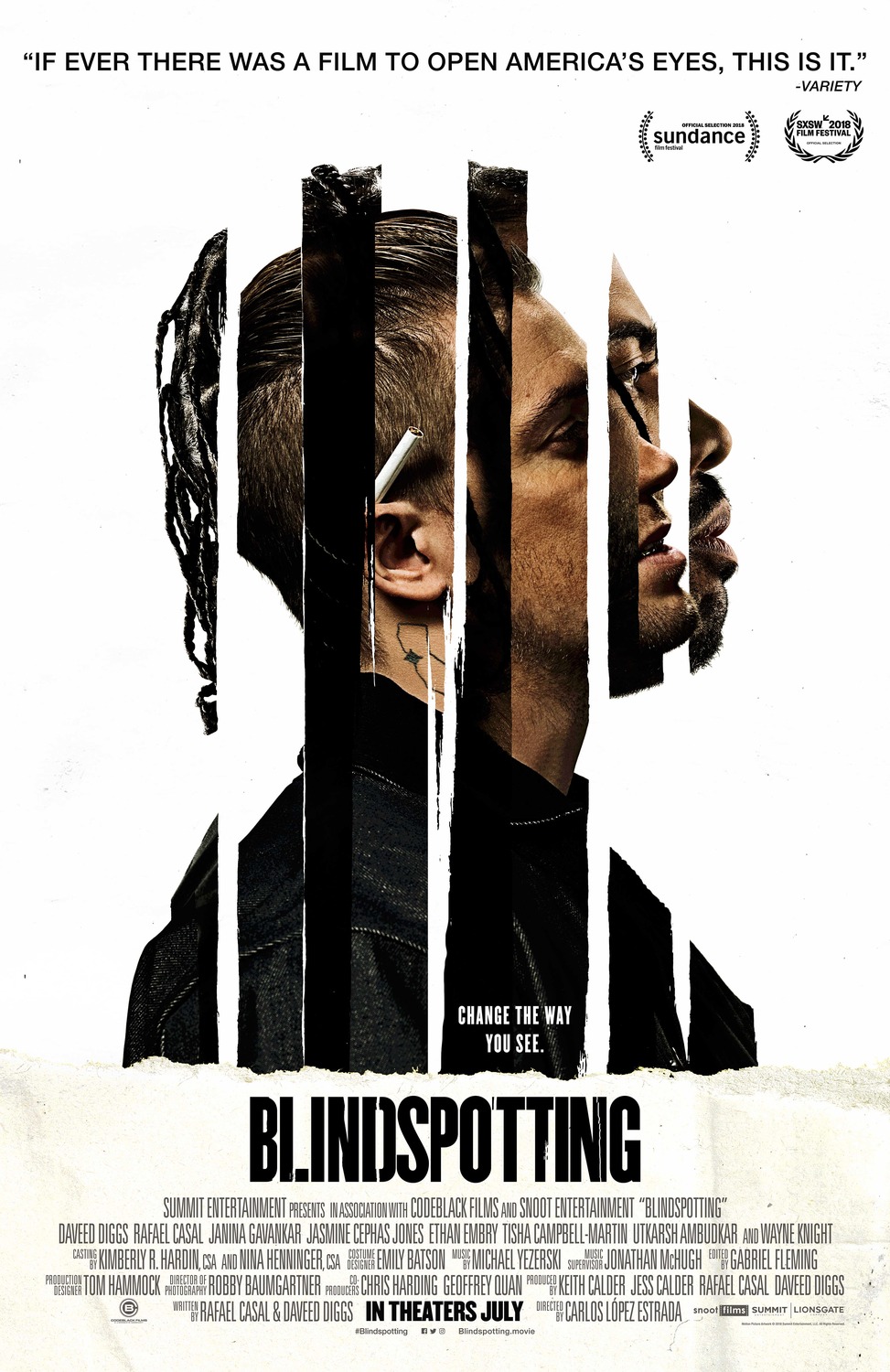
Blindspotting movie poster

3) “Blindspotting”

Another overlooked critical darling is “Blindspotting” which was written by long-time friends Daveed Diggs and Rafael Casal. Diggs plays Collin, a black man on parole trying to finish it out without any incidents.  This is incredibly difficult due to his friendship with Miles (Casal), a white-man living in Oakland who is always trying to act tough and intimidate people to get respect. Collin is just trying to keep to himself and do his job so he can be free from probation, but he’s finding this hard to do when he sees a young black man killed by a police officer.  He wants to say something, but he is worried about how it will impact his parole.  “Blindspotting” is a term where people look at something and they only see one thing and are missing another piece of the picture.  The chemistry between Diggs and Casal is totally natural, as to be expected, and they have a lot of humorous moments together.   That is the beauty of “Blindspotting,” and there are similar films talking about these things happening in the world right now. You can show the ugly side and bring it to people’s attention, but you can also have some humor in there as well.  It does not have to be all gloom and doom.  There is a lot of terrific music in the film and a lot of it is free style rapping which pertains to the plot.  As Collin says, “You monsters got me feeling like a monster in my own town.”

Green Book movie poster

2) “Green Book”

This is more than your average road trip buddy movie between two unlikely friends. Mahershala Ali plays Dr. Don Shirley, a famous pianist who needs a driver to take him through the south. Tony Lip, played by Viggo Mortensen, needs some money and ends up taking the job as his driver.  Tony is not necessarily racist, but he does offer fried chicken to Don Shirley, as I imagine he is more ignorant than anything else.  Tony sees how white men are treating Mr. Shirley and is not happy about it.  He forms a kinship with him, especially after Shirley helps Tony write love letters to his wife, played by Linda Cardellini.  It is based on a true story, and the two leads knock it out of the park.  I have to give a slight edge to Mortensen’s performance, but that is only because he has the juicer lines and more material to work with compared to Ali.  Make no mistake about it, though, Ali is superb in this movie and he knows when to pick his scenes to knock it out of the park.  This is a moving picture which deals with race in a thoughtful and heartfelt way, and it doesn’t shy away from the tough stuff either.

A Star is Born movie poster

1) “A Star is Born”

If you are surprised by this selection, you have not heard me rave about this movie since I first watched it with my wife on opening night back in October. Bradley Cooper is a great director and he should have been given a nomination for Best Director.  I hope Lady Gaga wins Best Actress over Glenn Close.  This movie is about mental illness, fame, believing in yourself, putting yourself out there and so much more. Cooper is believable as a singer and Lady Gaga is believable as an actress.  The two have chemistry for days.  It’s a heartbreaking film which truly earns every tear from the audience.  The music is catchy, and it has a great soundtrack as well.  This is why I go to the movies and, as I said in my review, no film has affected me as much as since 2004’s “Million Dollar Baby.”  This is the best film of 2018, hands down.  If you don’t cry during it, you are made of stone.

Click here to check out Tony Farinella’s review of “A Star is Born.”


‘BlackkKlansman’ is Spike Lee’s Best Joint in Years

BlackkKlansman movie poster

Those who read my reviews know how much I despise the term “based on a true story” as it has long since lost its meaning for me. However, Hollywood has been looking for ways to provide variations on this phrase in recent years in an attempt to give it back the value it once had. One of my favorites was “Argo” which was advertised as being based on a “declassified” true story which made it worth seeing all the more. Still, every other movie these days is “based on a true story,” and pointing this out should make you wonder which ones were not. Besides, aren’t all movies based on or inspired by things we have experienced in real life?

BlackkKlansman,” a Spike Lee joint, is the latest movie to be “based on a true story,” but its poster has advertised as being “based on a crazy, outrageous, incredible true story.” Personally, I prefer the phrase Lee uses in the movie itself which says it is based on “some fo’ real, fo’ real shit.” This description feels far more honest as it would have seemed unbelievable were this movie released a few years ago. What results is the best joint Lee has made in years, and I could not recommend it more highly.

Based on the memoir “Black Klansman,” it stars John David Washington as Ron Stallworth who, when we first meet him, is on his way to apply at the Colorado Springs police department and become its first ever black detective. This distinction, however, doesn’t do much for him in the beginning as his fellow officers, particularly the slimy Patrolman Andy Landers (Frederick Weller) who does little to hide his racist attitudes, and he is eager to rise up in the ranks.

Following a boring stint in the records room, Stallworth gets transferred to intelligence where he comes across an advertisement for the Klu Klux Klan which looks to find new members. It is great fun watching Washington talk on the phone with Ryan Eggold who plays Walter Breachway, President of the KKK chapter of Colorado Springs, as he effortlessly convinces him he is as white as they come. This act quickly grabs the attention of Detective Flip Zimmerman who is played by Adam Driver, and it is a gas watching Driver slowly turn around in his chair once he realizes what Stallworth is up to.

Of course, Stallworth does make a critical mistake during this phone call; he uses his real name. As a result, he is forced to turn to Zimmerman who has to pretend to be Stallworth in person as they further infiltrate the KKK. This infiltration becomes a delicate balancing act as Stallworth continues to fool the racist organization over the phone while Zimmerman is forced to fool them in person. In the process, we come to discover how much easier it is for a black man to pretend to be white than it is for a white man to pretend to be black.

“BlackkKlansman” couldn’t be timelier as it digs deep into a past which has a frightening resemblance to America’s present. The KKK is shown here to be as violent and racist as they are today as they keep chanting “America first” and plot acts of violence designed to eliminate those in their way and instill fear in the general public. One of the most disturbing scenes comes as we watch them cheer unabashedly at a screening of D.W. Griffith’s “Birth of a Nation” which portrayed the KKK as heroic and African-Americans as being unintelligent and sexually aggressive. Lee does nothing to hide the racist caricatures Griffith put onto the silver screen back in 1915, and they are as infuriating to take in today as they were a hundred years ago.

It’s very ironic how “BlackkKlansman” was released in theaters around the same time Dinesh D’Souza’s latest propaganda piece, “Death of a Nation,” came out. Both movies deal with “Birth of a Nation” in different ways and acknowledge how it was the first American motion picture ever to be shown inside the White House. D’Souza portrays President Woodrow Wilson as getting a liberal erection from watching Griffith’s movie, and he took this a step further in “Hillary’s America” by having a KKK member on horseback leap out of the screen to where Wilson is shown as being completely hypnotized by this image. D’Souza, however, leaves out “Birth of a Nation’s” more inflammatory segments which include deeply offensive depictions of blacks, something Lee does not shy away from showing here.

As is the case with movies “based on a true story,” “BlackkKlansman” does take numerous liberties with the source material. The events of this story took place in 1979, but Lee has moved the timeline back to 1972 which allows him to acknowledge certain Blaxploitation classics as well as the re-election efforts of President Richard Nixon. It is also said how David Duke never realized Stallworth was a black man until 2006, but the change here was worth it as leads to one of the movie’s best and funniest scenes. With movies like these, it is more important to be true to the spirit of the facts than anything else, and those who have a problem with that can always read Stallworth’s memoir instead.

There’s some additional irony here with “BlackkKlansman’s” release as it is coming out not long after the “Superfly” remake. One scene has Stallworth talking with his girlfriend, Patrice Dumas (Laura Harrier), about which movie was cooler, “Super Fly” or “Shaft.” Patrice replies how “Super Fly” unfairly stereotypes black men as criminals, but it also showed a realistic grittiness to life in the city which was complemented by the brilliant soundtrack composed by Curtis Mayfield. It would be interesting to see how Patrice would have felt about this summer’s remake which threatened to glamorize gangster life more than ever before, and it made me wonder why anyone bothered remaking this blaxploitation classic in the first place.

Then there is former President Nixon whom D’Souza tried to convince us was a true progressive like any other Republican in “Death of a Nation.” We do not see much of Nixon in “BlackkKlansman,” but we do see his re-election posters displayed prominently in KKK hangouts as they were supposedly big supporters of his. Seeing this makes me think of the old Vulcan proverb Spock spoke of in “Star Trek VI” which said “only Nixon could go to China.”

“BlackkKlansman” is designed to make us mad at how history is repeating itself as white supremacist groups have flourished under the Donald Trump administration, but it is also insanely funny at times as it is almost impossible to believe anyone could have gotten away with what Stallworth and Zimmerman did here. Then again, in a time where John Melendez, a.k.a. Stuttering John of the Howard Stern Show, managed to trick Trump into believing he was Senator Bob Menedez in a phone conversation, perhaps it doesn’t seem unbelievable in the slightest

Honestly, it has been some time since I last saw a Spike Lee joint. His movies get overwhelmed at times by his camera tricks and flourishes and overly bombastic music scores which make me want to turn the volume. But with “BlackkKlansman,” Lee has crafted a film where everything feels perfect and spot on, and what results is highly entertaining and deeply visceral. Even as the “Do the Right Thing” director wants you to see how the past never left us, he invites us to revel in Stallworth’s successful infiltration even as those in power want to bury his victories.

There is not a single weak performance to be found here. Both Washington and Driver dig deep into their characters’ complexities as they try to remain professional in an increasingly volatile situation, but their own personal beliefs threaten to get in the way. Jasper Pääkkönen proves to be a fiery presence as Felix Kendrickson, the white supremacist who looks like a grenade primed to explode at any given moment. Corey Hawkins is magnetic as Kwame Ture when he rouses his followers at a civil rights rally. And Topher Grace proves to be an inspired choice to play a young David Duke who is shown to be aloof as to who Stallworth really is, and that’s even when Stallworth is assigned to be his security detail while in Colorado Springs.

It is no mistake Lee concludes “BlackkKlansman” with footage from the Unite the Right rally which took place in Charlottesville, Virginia as the movie is being released on its first anniversary. We see white supremacists marching the streets with tiki torches saying they will not be replaced, we see the real David Duke talk about how Trump is making “America great again,” we see Trump respond to the rally by saying how there were good people on both sides, and we see the car attack perpetrated by a white supremacist which injured many and killed Heather Heyer. While we look at the past as if it is barely visible in our rearview mirrors, it is real events like these which remind us how these same mirrors have the message of how things we see in them are much closer than they appear.

The image of an upside-down American flag which fades into black and white is the perfect image to end “BlackkKlansman” on as we are truly living in “The Twilight Zone” with everything that’s going on. It also reminds me of the final image of that same flag in John Singleton’s “Higher Learning” which ended with the word “unlearn” being typed out over it. Those who do not learn from the past are condemned to repeat it, and history continues to repeat itself again and again and again. The fight for justice has never ceased, and the progress we all thought Americans had made is not as great as it seemed. Lee has made an overtly political movie which could not have come out at a more appropriate time, and it is his best one in years.

* * * * out of * * * *