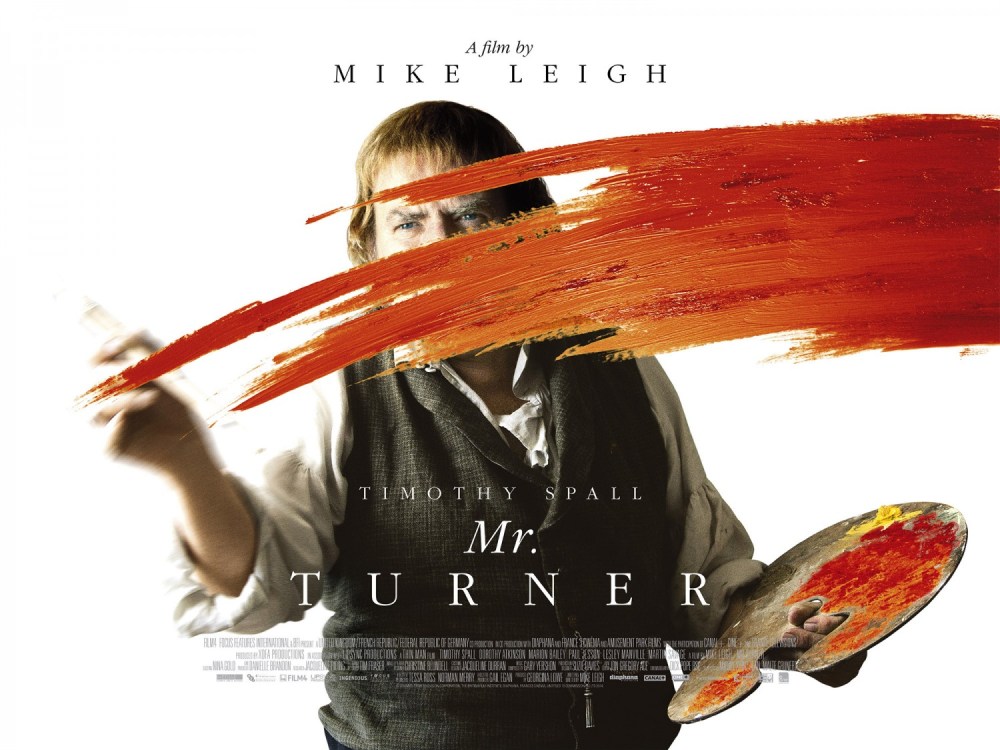
English filmmaker Mike Leigh, the man behind such masterpieces as “Secrets & Lies” and “Naked,” takes a stroll back in time with “Mr. Turner.” It stars Timothy Spall who gives one of the very best performances of 2014 as J. M. W. Turner, the landscape painter who became famous for his work in the 1800’s during the Romantic period. But as brilliant an artist as Turner was, he was also a controversial figure due to his eccentric behavior. He was full of great passion and could be very generous, but he was also quite selfish and anarchic. Leigh’s movie looks at the different aspects of Turner’s personality and how it came to inform the paintings which he became remembered for.
One of the things which really struck me about “Mr. Turner” was how fully Leigh sucked us into the time period of the 1800’s to where it felt like we were really there. From start to finish, it never felt like I was watching a movie but experiencing something very unique. Now there have been many period movies in the past few years but watching “Mr. Turner” made me realize how artificial many of them have been. They take you back in time, but there’s something very modern about their presentation which reminds you that you’re just watching a movie. This made me wonder how Leigh had succeeded in taking us back in time so effectively with this film.
I got the chance to ask Leigh about that while he was at the Four Seasons Hotel in Los Angeles, California. In describing how he perfectly captured the period “Mr. Turner” takes place in, he pointed out why authenticity is missing in so many other movies these days.
Mike Leigh: Well to be honest with you, apart from anything else, this is a function of strong views I have about period films. You get any number of period films where they say, let’s not have period language. The audience can’t deal with that. Let’s make it contemporary then the audience can access it. Let’s not make the women wear corsets because it’s not sexy, etc., etc., etc. Now the principle here with this film and with “Topsy-Turvy” and with “Vera Drake” which was also period but here not least is we said okay, let’s do everything we can in every aspect from the performance to the language to the frocks, to the props, to the places, to everything and to make it really possible for the audience to feel they have got into a time machine and have gone back and experienced it. Okay, there’ll be things people say that’s strange and you don’t quite get (what they’re saying), but that doesn’t stop people getting what that means. In fact, that smell of antiquity in some way makes it all the more plausible. I can imagine Hollywood executives being pretty twitchy about the pig’s head being eaten, but that’s what they did.
I keep thinking about “L.A. Confidential” which took place 1950’s Los Angeles but of how its director, Curtis Hanson, didn’t let the actors be governed by the period it took place in. Granted, the contemporary feel didn’t take away from that movie, but that’s the exception. With “Mr. Turner,” Mike Leigh shows us we don’t have to give every period movie a contemporary feel, and this is what makes it such a brilliantly vivid movie to watch. You come out of it feeling like you lived through part of the 19th century, and very few filmmakers can pull off such a feat these days even with the biggest of budgets.
“Mr. Turner” is now available to own and rent on DVD, Blu-ray and Digital.
Filmmaker Duncan Jones was the guest of honor at New Beverly Cinema on November 19, 2011 where his first two movies “Moon” and “Source Code” were being shown. Right after “Moon” finished, he leapt up to the stage like a contestant on “The Price Is Right” for a Q&A alongside his “Moon” producer Stuart Fenegan. Sam Rockwell and Kevin Spacey were not in attendance, but Jones brought along Rockwell’s spacesuit and a balloon of Gerty’s face as their stand ins.
Jones explained how he had worked in the advertising industry for years with the goal of eventually working in movies. He originally wanted his first film to be “Mute” which takes place in a futuristic Berlin, but he and Fenegan came to the conclusion it was too big for them to make into a movie at that point. It’s amazing to learn “Moon” only cost $5 million to make, and Jones said he was determined to squeeze as much out of that amount as possible. Fenegan was quick to point out what was at stake and said, “With the first movie, commercial success is far more important than critical success as it determines whether you’ll make another.”
There were two distinctive sets Jones had to work with on “Moon;” a 360-degree space station set which everyone got stuck in for the day once it was sealed, and another for the lunar module which Rockwell’s character uses to travel outside. As for Gerty, the “2001” Hal-like character voiced by Spacey, Jones described it as a beautiful model which could be moved around the set, but that it was a CGI effect in the wide shots. The special effects ended up getting a polish from Cinesite, a digital visual effects and post-production facility in London.
One audience member asked if Rockwell’s character was named Sam on purpose, to which Jones said yes. “Moon” was made with Rockwell in mind for the lead, and since he plays different clones of the same person, Jones really wanted to mess with his head during the 33-day shoot. This way, Jones said, the actor would be constantly reminded of the movie’s thematic elements. While this made Rockwell uncomfortable at times, Jones described him as a good sport overall.
In terms of influences, Jones said “Moon” was inspired by many science fiction movies he watched in the 60’s and 70’s. Specifically, he cited Bruce Dern in “Silent Running,” Sean Connery in “Outland,” and the first chunk of “Alien” as the biggest influences on the movie’s story. The characters in these films came from a working class or blue collar environment, and the portrayal of it in an outer space setting made everything seem more real and relatable. As for must see movie recommendations, Jones replied “Blade Runner” is the be all and end all of science fiction. You could follow any character in Ridley Scott’s film, he said, and you would still have an amazing movie.
When asked of his future plans, Jones said that he has finished polishing his latest script and will be sending it to the one person he wants to star in it (he wouldn’t say who). It is another science fiction movie, but the director is eager to move beyond this particular genre. With “Moon” now being considered as one of the best science fiction movies of the past few years though, I’m sure his fans will be begging him to revisit the genre more often than not.
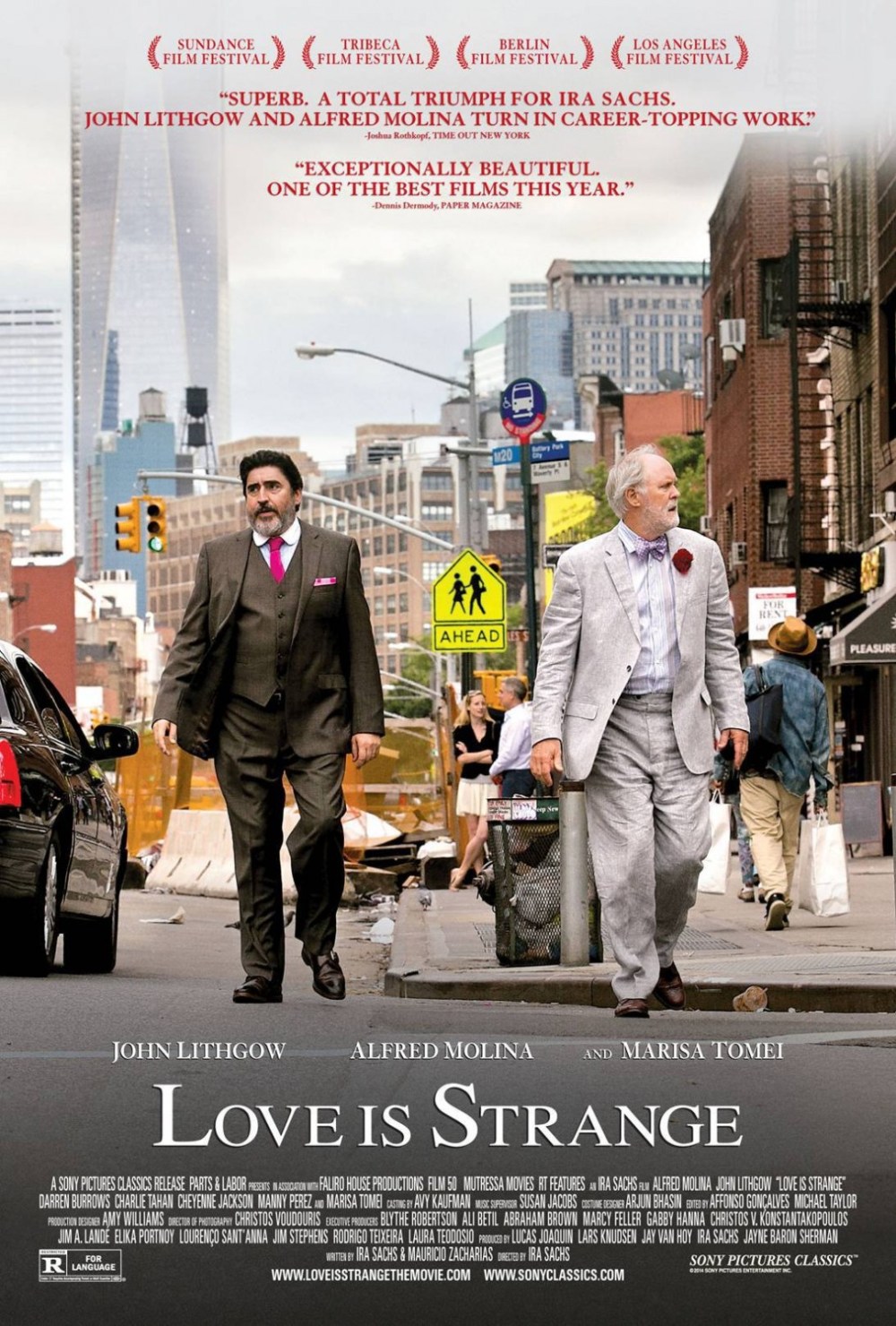
Ira Sachs’ previous films have dealt with the dangers of being in love and how it can feel like an illusion, but his latest film “Love is Strange” has him dealing with love in a more positive fashion. It focuses on a gay couple, George and Ben (played by Alfred Molina and John Lithgow), who have been together for over 30 years. When gay marriage is made legal in New York, they finally get married and are super excited about starting a new chapter in their lives together. But things quickly change for them quite drastically when the Catholic school where George teaches decides to terminate his employment upon discovering he married Ben, and this forces them to spend time apart for the first time in years as they search for cheaper housing.
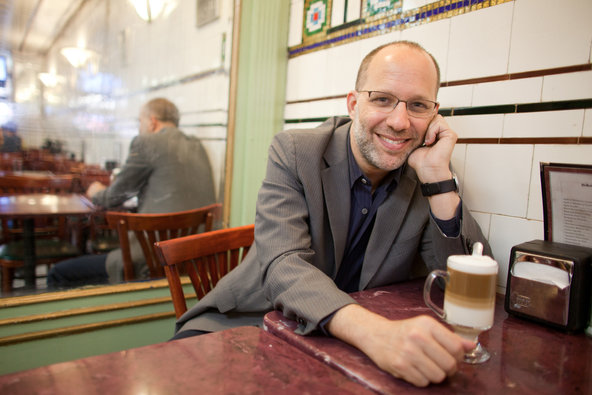
I very much enjoyed talking with Sachs over the phone while he was doing press for “Love is Strange.” The movie not only chronicles the challenges these newlyweds face, but of the impact that their situation has on the family and friends closest to them. During our interview, I asked Sachs how he goes about keeping his characters in the movie down to earth, why he decided not to get political considering the issues involved, and why he decided this time to make a different movie about love than he had previously.
Ben Kenber: This movie has such a wonderfully organic feel to it. How do you go about keeping the characters in the story feeling so down to earth?
Ira Sachs: That’s a nice question. I try to be as open as possible to my collaborators and to the city and to the situations that are in front of me. I think of directing as not so different to acting in a way in that my job is to listen and respond organically and authentically, and you have to do that 1000 times a day when you make a film. But if you situate yourself in a place which is most open and attentive, you have to be very observant as well. I think it creates something that has the organic feeling you’re describing.
BK: John Lithgow and Alfred Molina are both brilliant in this film, and they have been friends for a long time. The rapport they have together onscreen feels just wonderfully natural. Did you have to do a lot of directing with them, or did you just let them loose?
IS: We made a pact, the three of us, that we were going to create a certain kind of texture for their relationship that was going to be different than what either actor had been asked to do in a long time. There was a level of realism and naturalism and simplicity that the roles called for. These are really modest man, Ben and George, but they maintain a confidence as individuals that I felt was very much what I witnessed in John and Alfred, and I wanted the film to share that confidence. So we had this kind of agreement that everything would be kept to a very delicate tone, and both actors are known for their larger qualities in terms of performance. What I wanted to do was rein that in, and I think that allowed for some new things to appear.
BK: What I really admired about “Love is Strange” is it could have been a polemic about intolerance and that, even with gay marriage now a reality in many states like New York, we still have a way to go for achieving equality in life. But this movie is more humane and very objective in how it views the different forces which threaten to tear these two characters apart.
IS: My interest as a director is to depict the intricacies of relationships and of intimacy, and that includes romantic relationships as well as family and community. In this case it also includes the city of New York. I set out to make a romantic film about New York. I’m also as a director at bit of a historian meaning that my job is to be accurate about the time that I live as well as my characters, so the kind of pulled from the headlines quality just gives the film shape in a certain way. I like to think of myself as a neo realist, someone who is interested in making the ordinary of everyday lives extraordinary. For me that should in addition also include some amount of documentation of the details of these characters’ lives in a way that’s very specific.
BK: One performance in particular I really wanted to point out was Charlie Tahan’s who plays the temperamental teenager Joey. It’s always great when you get an exceptional performance from a child actor because they are not always easy to get, and the character has a nice arc throughout the movie. What was it like working with Charlie?
IS: Well, to me he is the revelation of the film because we don’t know him, and what we’re actually discovering is the birth of a great, great actor. I felt like there was conversation when we were shooting the film about Leonardo DiCaprio in (“What’s Eating) Gilbert Grape;” it’s that kind of performance. It’s so open and so honest and so raw and so easy. There’s just this ease and I think that was something that impressed all of us, more experienced filmmakers and actors on set, about Charlie was how naturally it came. He is an experienced child actor. He’d been in “Charlie St. Cloud” with Zac Efron. He was the voice of the kid in “Frankenweenie” so he worked with Tim Burton. He wasn’t plucked from nowhere, but he came in and gave an audition that was breathtaking.
BK: Charlie said you really knew how to write for kids and that you really understood them and what they went through. Did Charlie stay close to the script and was there anything specifically that he added to it during shooting?
IS: Well the script is a blueprint for the emotions you hope to reveal, so actors add everything. I’m quite specific about the script and it is a very written film and it’s constructed through the screenplay, and yet I search for a kind of emotional improvisation on set that has to be very, very fresh and real. So I don’t rehearse my actors before we start shooting. We talk, we spend some time with each other, but I’ve never heard the line said nor have the other actors. What it gives the movie is a kind of freshness. I think two words that should be banned from the set are “subtext” and “motivation” because when you’re speaking to those things, you’re trying to pin down the impossibly ineffable of any one moment.
BK: Another performance I really loved in this movie was Marisa Tomei’s. Not only does she bring a naturalness to her role, but she’s also able to communicate so much without saying a word. What was it like watching her pull that off?
IS: She’s like this quiet storm because she’s so focused as an actress. There’s a scene where she has no dialogue and she’s in bed with her husband and she’s got a lot on her mind, and as a director you just watch and you think, “She’s writing paragraphs for me.” She thinks so much while doing so little. I think what was exciting about this role for Marisa, and I think what makes people connect to it, is that she was allowed to play a woman of her experience and her intelligence, and she wasn’t asked to do anything other. In this case, Marisa is the fulcrum of the story; she’s the generation in the middle. The film is really about these multiple generations: the older couple, Marisa and her husband (played by) Darren Burrows who were very much in the middle of their lives, and Charlie Tahan who’s playing in adolescent learning about love for the first time. But it all kind of centers on Marisa and she is in a way a stand-in for me, the artist who is watching these things and trying to figure out how to act.
BK: Your previous films “Delta” and “Keep the Lights On” tend to deal with love as an impossibility or an illusion among other things, but “Love is Strange” sees it in a much different light. What made you decide to do a story on love in this particular way?
IS: I think I’ve changed a lot in the last 10 years. My previous films were all about characters trying to understand themselves, and they were films of self-discovery. I think it was very much what I personally was involved in, trying to understand who I am and become comfortable with who I am, and that took a long time. In my 40’s things have been different and I feel much more at ease, and I think that has created the possibility of new kinds of relationships. I’m married and my husband and I are raising children, but it’s not just the kind of signifiers that imply change. It’s something much more internal, and I think the film is about the internal qualities of love which are so distinct for each of us.
BK: Since this is a low budget independent movie, I imagine you had very little time in which to shoot it in. How did this affect you overall as a filmmaker?
IS: I’m a producer on all my films as well as the writer and director, and I always create the situation where I have the economic means to create the aesthetic objects that I need so my sets are very calm. I’ve made films that cost $200,000 and I’ve made ones that cost multi-million dollars, and the experience is not too different. If you’re doing your job right as a filmmaker, you have what you need.
BK: Regarding Alfred Molina’s character of George, it’s interesting because the Catholic school he teaches at doesn’t seem to mind his relationship with Ben much until the two of them get married. Later on in the movie, George has a great line where he says, “Life has its obstacles, but I’ve learned early on that they will always be lessened if faced with honesty.” What inspired that line?
IS: I think it speaks to the heart of the film. The film is in some ways about education with a small e. What do we teach each other? What is our responsibility? How as a culture do we carry on our values? What do we share in relationships and as parts of family? Also, the film speaks to how loss impacts individuals not just in terms of rights but in terms of experience. You can imagine George as a teacher being somewhat, to me, like what Alfred Molina is as a person which is you want to be your best self around him, and those are the kinds of people that I have known whether it be my parents or… I was very close to a sculptor who was 99 when he died, and at 98 he began his last work which was of a teenager with his backpack, and to me the idea that he was reaching for creative opportunities at that age was something I could learn a lot from. I feel that the film talks about those kinds of educations, and I think that when you’re young you don’t realize that your parents are people and that your grandparents are also. I think this film is about perspective and how we begin to recognize that people in our family are actually human beings with their own stories.
I want to thank Ira Sachs for taking the time to talk with me. “Love is Strange” is now available to own and rent on DVD, Blu-ray, and Digital.
Photo courtesy of the New York Times. Poster courtesy of Sony Pictures Classics.
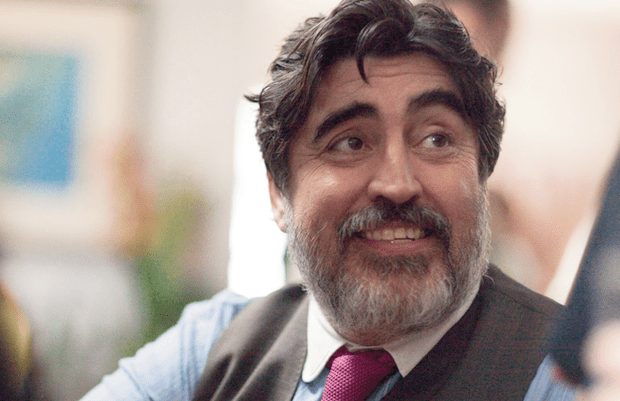
He has played a variety of characters in movies like “Raiders of the Lost Ark,” “Prick Up Your Ears,” “Boogie Nights,” “Spider-Man 2” and “Not Without My Daughter” to where it seems like he can play anybody (and he probably can). Now Alfred Molina takes on a more intimate role in Ira Sachs’ “Love Is Strange” where he plays George, a Catholic school music teacher who, as the movie starts, marries his lover of 39 years, Ben (played by John Lithgow). They have a joyous ceremony, but once word reaches the school of George’s wedding, they subsequently fire him. This leads to a great deal of upheaval in the newlyweds’ life as they are forced to sell their apartment and spend time apart for the first time in years as they search for more affordable housing. The situation weighs very heavily on George to where he feels like he’s failing Ben and everyone around him.
It was a great pleasure to speak with Molina while he was doing press for “Love Is Strange.” It turns out that he and Lithgow have been friends for many years, so the fact that they have great chemistry onscreen should be no surprise. In addition, I also asked Molina about how sees the world of independent filmmaking today, why Stanley Kubrick’s “Spartacus” inspired him to become an actor, and of what it was like to shoot this film without any rehearsals.
Ben Kenber: Since you and John Lithgow have been friends for a long time, did the chemistry you two developed onscreen come easy to you?
Alfred Molina: Yes, it did. I think the advantage of being friends with John, having had a relationship as friends, helps us both in a way. For me, it just meant there was shorthand already in place. There was an ease and a rapport and a relaxation between us that was very easy and also very conducive and helpful for the roles we were playing. I think we would’ve still enjoyed the fact that we are friends if we had been playing adversaries in a movie or a good guy, bad guy. But the fact that we were playing a couple in a long-term relationship, I think our history as friends only helped and sort of aided that.
BK: What I really liked about this movie is that what the characters go through is quite ordinary, but it takes on a different feeling here. We don’t see enough movies these days about regular ordinary people, and the problems the characters go through here feel quite epic.
AM: Yeah. People lose their jobs, people lose their homes and it’s always bad news. But it happens very often for the most trivial of reasons, and I think the fact that Ira Sachs and (co-writer) Mauricio Zacharias created a couple who, by their very ordinariness, when this crisis happens to them, it takes on epic proportions. And like most crises that happen to ordinary people it becomes huge because normally in our own lives we don’t have the power or the means to overcome them quite so easily. It takes time and I think the fact that George and Ben are, for all intents and purposes, a very ordinary and a very anonymous couple adds to the strength of this story.
BK: I also wanted to congratulate you on receiving the Spotlight Award from the Creative Coalition at Sundance for your work in independent films. How do you think the world of independent films is faring today? Has it gotten easier to make them or harder?
AM: Well, I think it all depends on one’s perspective. Independent moviemaking is always a challenge. I think whenever you’re working on projects that don’t have immediate commercial appeal and you’re working outside of the studios, especially on low budget films where you’re really scrambling to raise $2 or $3 million to make a movie or however much it is, you’re working under all kinds of restrictions and challenges and the biggest one of course being time. You don’t have time. You very often don’t have time to absorb any mistakes or any accidents or anything that happens that kind of works against your schedule, so it’s always a challenge. But I think the fact that there are so many independent movies finding an eager audience means that there’s something being done right and well. There is an audience out there for good stories. There’s an audience out there for well-made, well-crafted, sincere movies about real people in real situations, and I think the reason why there’s an audience is because of the way cable TV, for instance, has welcomed movies. So many directors and writers and actors are now working on cable shows because that’s where some of the best movies are being made where young directors are getting the chance to make their films and tell their stories. The relationship between the product and the audience has changed a lot. There was a time when you were working on television that you were very much the guest in someone’s house. But now cable has changed all that because you’re paying for it. Also, our TVs have gotten bigger so it’s like watching a movie, and if you’ve got a 50-inch screen in your front room, the ratio is pretty typical of a small movie house. You can be watching movies at home and I think that changes the dynamic between the product and the audience, and there’s an audience out there for small films. The independent industry lurches from one crisis to another, and in those ups and downs there’s some great movies being made.
BK: I’ve talked with a lot of indie filmmakers recently and they usually get a shooting schedule that’s 30 days if they’re lucky, but those schedules keep getting shorter as time goes on.
AM: That’s right, yeah, because making movies gets more and more expensive. But there will always be an independent director, writer, actors who want to continue to work in that milieu because ultimately that’s where the most interesting stuff is happening. I can only speak for myself, but I think that’s where the best films are being made.
BK: Your character of George has a great line in this film where he says, “Life has its obstacles, but I’ve learned early on that they will always be lessened if faced with honesty.” I think it’s very interesting in that George teaches at a Catholic school and has for many years, but the school doesn’t always respect the individual that he is.
AM: Absolutely, and I think that’s a great shame for anyone who’s in the same position as George; losing your job or losing your home or being chastised by society in some way because of who you choose to love and who you choose to spend your life with. As a heterosexual that’s something I’ve taken completely for granted. I can take it for granted that I can love whoever the hell I want and no one can stop me, but my gay friends have only recently begun to enjoy that right. So I think that’s why lines like that in the movie are terribly important and very, very resonant not just for gay men and women but for everybody. I was talking today with John (Lithgow) about how… He’s only been to a few gay weddings in recent years, but we both found them incredibly moving. Weddings are moving anyway. Anybody who confidently stands up and says I want to spend the rest of my life with this other person is making a very dramatic and a very moving and emotional statement, but when it’s two gay people you know that it’s not just full of the romantic and emotional power of the moment. It’s full of years, sometimes decades, of struggle to reach that point, so it has even more significance.
BK: That’s a very good point. In recent years, we’ve had movies like this and “The Kids Are All Right” which are about gay couples, but the fact the couples are gay becomes irrelevant because they deal with the truth of what married life is like and the struggles which come with it.
AM: You ask anyone who’s active in any kind of human rights or equal rights campaign and I’m sure they would say that their ultimate goal is to no longer have to have conversations like this where one sexuality is no longer relevant. Whenever I come across any kind of vaguely homophobic sentiments I’ve gotten to ask people, “When did you first realize that you were straight?” It’s amazing the reaction that gets because they don’t know how to answer, and the truth is that no one should have to put up with being asked that.
BK: I once read that you said you have to believe in what you’re saying in the same way your character does. Whether it’s Mother Teresa or Adolf Hitler you’re playing, you have to portray them honestly and accurately regardless of whether they were good or bad. A lot of actors like to change material to where it suits them better, but I liked what you said because it goes the fact that the part is not about you, it’s about the character you’re playing.
AM: I’ve always regarded my job as being about serving the character regardless of who the character is. At a certain point taking on a job and then once you signed the contract and taken the money then saying “oh by the way I don’t think my character would say this” or “I don’t think my character would be like this,” that’s a conversation that one should have before you sign the contract and take the money. Once you have committed to something, you should be committing to the same things that everyone’s agreed on. Just as an act of creativity, you’ve got to give the same amount of dedication to whether you’re playing Adolf Hitler or Mother Teresa.
BK: I also read you were inspired to become an actor after watching the movie “Spartacus.” What was it specifically about the movie which inspired you so much?
AM: You know, I don’t know myself. It was so long ago and I must’ve been about nine years old when the film came out. I just remember coming out of that film just knowing that’s what I wanted to do. I don’t mean I wanted to be a gladiator, but I just wanted to be doing that; making films, being in films. I’m not quite sure what it was that prompted that, but it was a very powerful feeling.
BK: There were no rehearsals of scenes when it came to filming “Love is Strange.” How did this affect you as an actor?
AM: Well it was an interesting process really because normally you have rehearsals and work things out. I would hate for you to think that it was due to a lack of preparation; it wasn’t that. Ira Sachs, our director, came to the project impeccably prepared. What he didn’t do though was that he didn’t have us rehearse the scene and then play into the camera what we had rehearsed. He just wanted us to go into the take with the camera running and to just discover it in the moment. That was a very refreshing way to work, I loved it. I’m looking forward to doing it again. It’s very rare that directors give you that kind of freedom and also, given the fact that we were under the severe constraints in terms of time and money, it worked out well.
BK: “Love is Strange” seems to give the audience a very unique look at New York whereas other movies tend to portray it as a crime ridden place among others things. Would you say this movie gives a more accurate view of New York than other recent films have?
AM: Well, I think it’s as accurate a view of New York as any other movie. I don’t think the view of the city that the movie has is a negative one by any means. The city looks beautiful in this movie especially in that last sequence with that sunset and the two young characters on their skateboards. It’s a beautiful, beautiful ending to the film. Because it’s the most photogenic city in the world, any film that takes place in New York has to deal with New York as a character in the film. There’s nothing nondescript about New York. It’s a unique looking place. No other city in the world looks quite like it, so I think it’s something any filmmaker has to embrace.
BK: The interesting thing about the way Ira Sachs frames this movie is that it could’ve taken a huge political stance but he doesn’t which feels quite appropriate. He’s not taking issue with anybody, but he’s takes good observations of the Catholic doctrine and how it affects certain people.
AM: Yeah, absolutely. It’s not a political film; it’s not a diatribe on the state of gay culture or the Catholic Church. It’s a domestic story. It’s a love story set against some real events that happened to real people, and I think it makes some very wry observations about the city and about New York real estate and about the conditions a lot of people live under. It’s not a message movie. What drives the movie is a kind of deep humanity.
I want to thank Alfred Molina for taking the time to talk with me. “Love is Strange” is available to own and rent on DVD, Blu-ray, and Digital.
One of the many things I have discovered about life is it is really easy to hate someone or be angry at them. As negative an emotion as it is, there is an unmistakable power from it which really makes you feel alive. At the same time, it is much harder to forgive that person for what they have done to you. You get so sick of someone getting the best of you to where you desperately don’t want to look like the fool. But eventually, it should become clear that the one person you really need to forgive most is yourself. This can be much harder than forgiving someone else, but it is necessary as it keeps you from sinking into the hideous swamp of bitterness which can eat you up. But can you forgive yourself when you have done something horrible and can’t you wipe away the cloud hanging over your existence because of what you have done? I would like to believe the answer is yes, but others may disagree.
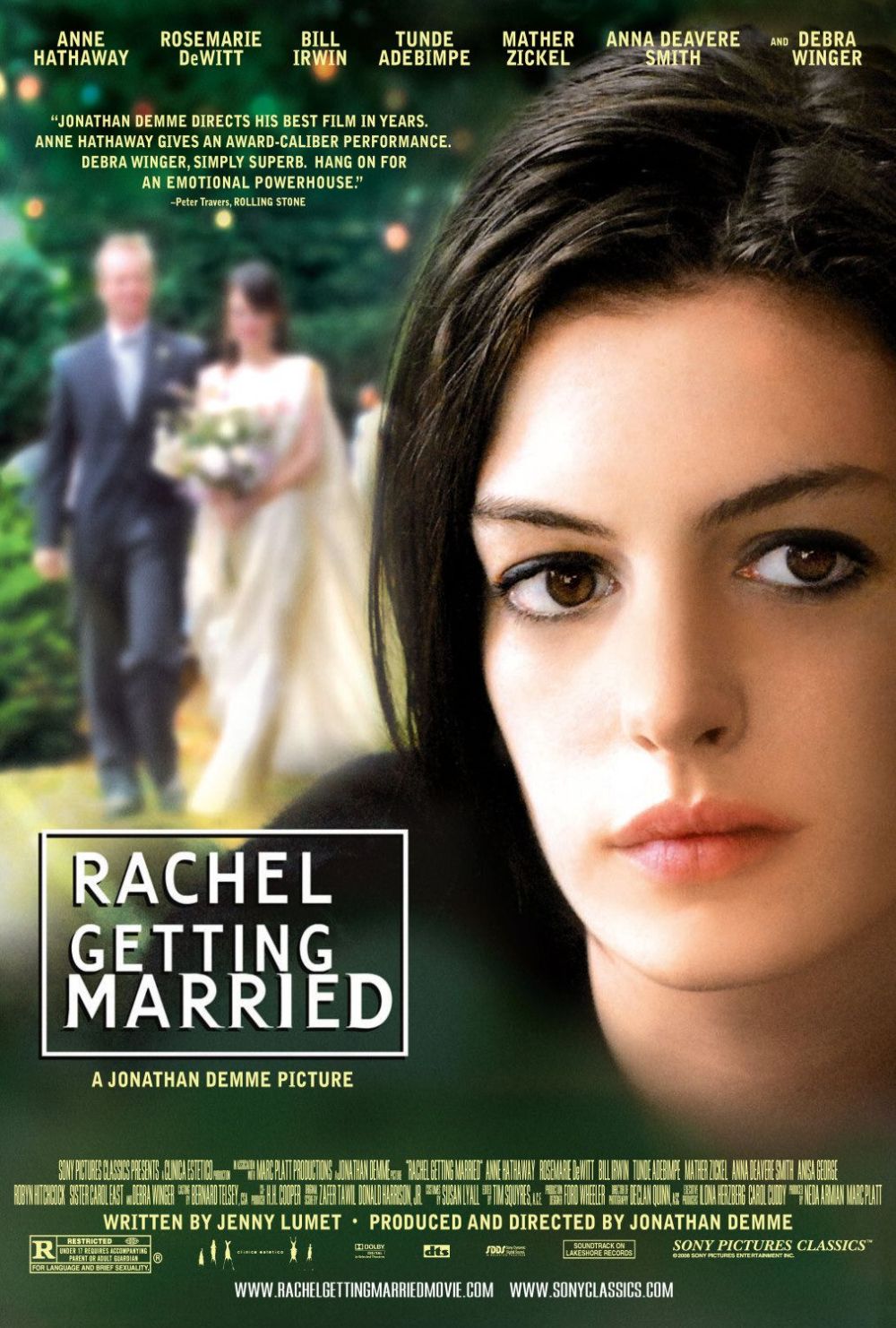
“Rachel Getting Married” is a movie about forgiveness, and the rough road people travel to get to it. It is also a movie about family and togetherness, and the joy of life. It almost moved me to tears the same way “Lars and the Real Girl” did as it deals with the saddest of things while surrounding itself in an atmosphere of love and much-needed togetherness. This is one of Jonathan Demme’s best movies as well as one of the very best of 2008. I really loved “Rachel Getting Married” and found myself wanting to hug all the characters in it. It is a movie of raw emotions, and I love seeing movies with this kind of power more often than not.
Anne Hathaway gives a phenomenal performance as Kym, the wild child of a Connecticut family who gets a vacation break from her current rehabilitation facility to go home for her sister Rachel’s wedding. It doesn’t take long to get an idea of how much of a “bad egg” she appears to be to everyone around her. As she goes into a convenience store to get a Pepsi, the female cashier behind the counter says, “Didn’t I see you on ‘Cops?’”
Kym is a full-blown drug addict and has been for several years, and while her family is happy to have her home, there are also raw emotions simmering just below the surface and waiting to come out into the open. We feel this tension from the very start, and it is illustrated in Hathaway’s face as we see her feeling like the wallflower at a party. While everyone is happy for the bride and groom, she is sullen and lost in a moment she cannot escape from. As the movie goes on, we come to see the reason for her self-destructive behavior and why she acts the way she does. I will not mention what it is here as it might take away from the emotional impact you will experience watching this movie.
This movie feels a lot different from others Demme has made in the past. He filmed the movie with high definition cameras to capture the movie on a more intimate level, and it feels like he really let the actors loose from start to finish. It is handheld camerawork going on here, so this will probably drive those who couldn’t stand all the shaky camerawork in “The Bourne Ultimatum” or “Cloverfield” crazy. While some people may experience motion sickness from this, I had no problem with it as the camerawork helped illustrate the emotionally fragile ground the characters are walking over, and how easily everything could come tumbling down.
What is so great about Demme’s direction is how he makes us feel like we really are attending the wedding along with these characters and sharing in the joys and sorrows of everyone involved. These characters feel so real, and it is so great to see no Hollywood artifice on display here. There have been so many big Hollywood movies dealing with families and marriage, and I find myself increasingly avoiding them. But the actions in “Rachel Getting Married” never felt staged for a second, and I loved that. Everyone in this movie feels like people we know from our own lives, and it connects us all the more strongly to what they go through.
“Rachel Getting Married” also, like all of Demme’s movies, has a very eclectic mix of music in it from the offbeat to the international. His movies don’t just have their own signature look, but their own significant sound. One character makes beautiful use of a Neil Young song as he sings it to another person. The audience I saw this with at Landmark Theaters in West Los Angeles were as silent as the characters onscreen during this moment, and I’ll never forget that.
I also loved how the soon to be married couple is an interracial couple, and no one ever brings this up at all. I guess none of the characters see it as an issue worth addressing. Hallelujah!
The script was by Jenny Lumet, and she gives her characters a vibrancy which elevates it from the couples we usually expect to see in movies like these. Her screenplay does tread familiar scenarios and storylines of the addict trying to go straight, but it finds its own voice and way of saying things to where everything feels fresh and new.
Demme always brings out the best in all the actors he has ever worked. There are many great performances to be had here, not just Hathaway’s. Rosemarie DeWitt plays Rachel, and she is a wonderful and real presence to be had in this movie. She goes from being so happy to seeing her sister Kym to being utterly exasperated and strung out that she is at home. It is clear that Rachel wants Kym to be well, but she constantly worries Kym will ruin the wedding in one way or another. Both Hathaway and DeWitt work really well off of each other as two sisters desperate to connect with one another despite the emotional damage between them. There’s a touching moment where Kym comes back from a rough night, and Rachel washes her clean in the shower as if she is washing her sins down the drain.
I also really liked Bill Irwin as Paul, Kym and Rachel’s dad, who is so happy to see his daughters under one roof, while at the same time harboring scars which will never fully heal. We also have Debra Winger, an actress we don’t see much of these days as the girls’ mother, Abby. She has great scenes with both daughters as she allows us to see beneath her seemingly calm exterior to the distrust she has had for Kym after all this time. The big scene between Hathaway and Wagner where the truth comes to a head is riveting and painfully raw as they each try to come to grips with the tragedy they both had a part in but are hesitant to take full responsibility for.
“Rachel Getting Married” is not just a triumph of acting, but also of writing and direction. All three elements come together to create a powerfully moving film about the flawed and fragile nature of humanity, and of the struggle for forgiveness. The movie has a very improvisatory feel to it and, despite the serious nature of the film, you cannot help but feel everyone had such a great time making it. You feel like you are with these families every step of the way, and you revel in their celebration of two families coming together as one. The reception near the end of the movie is one of ecstatic joy and happiness, even while some have wounds which take them out of the present.
But the person who carries this movie from beginning to end is Hathaway. Many see this as her escape from those “Princess Diaries” movies as she rids herself of the ever so clean image we have had of her. Truth be told, she has been doing this already with “Brokeback Mountain” and “Havoc,” but this should fully complete her transition to becoming an adult actress. All the Oscar talk she has been getting is justified. Kym is not an easily likable character, but Hathaway gives her a heart and soul and makes you care deeply about Kym all the way through. The moments where Hathaway does not say a word, her face does the acting and reveals a very uncomfortable soul trying to fit into a place which was once her home. She does brave and amazing work here, and she proves to be a dramatic force to be reckoned with.
“Rachel Getting Married” further shows how brilliant Demme is in getting to the wounded humanity of all the characters he observes. There is not one moment which feels faked in this movie, and it never really falls victim to any clichés that could easily tear it apart. This is another movie you don’t watch as much as experience, and I am always on the lookout for those. It also kept reminding me of the song “To Forgive” by The Smashing Pumpkins which kept playing in my head throughout:
“Holding back the fool again
Holding back the fool pretends
I forget to forget nothing is important
Holding back the fool again.”
Funny, I thought Billy Corgan was saying “forgive” instead of “forget.”
What I love about Richard Gere as an actor is his ability to play morally questionable characters with such a seductive charm to where I cannot help but root for him to succeed despite his morally dubious intentions. Whether he’s playing an infinitely corrupt cop in “Internal Affairs,” a fraudulent hedge fund manager in “Arbitrage” or a publicity-seeking lawyer in both “Primal Fear” and “Chicago,” Gere makes these characters hopelessly charismatic even as they sink deeper into a realm of lies, deception, and things much worse. Some actors are great at making you despise the villains they play, but Gere is brilliant at making you become enamored with the villainous characters he portrays as he makes breaking the law seem so seductive.
I was reminded of this while watching Gere in “Norman: The Moderate Rise and Tragic Fall of a New York Fixer” as he plays a man eager to achieve great success in his lifetime. While his character of Norman Oppenheimer is not as devious as Dennis Peck or Robert Miller, he’s a guy trying to sell everyone on his financial schemes which never seem to become a reality. When things finally start working out for him, they end up leading him down a road which could lead to either great success or tragic consequences.
Norman is a loner who lives in the shadows of New York City power and money, and he works hard, perhaps much too hard, at being everyone’s friend as he offers the elite something he can’t possibly provide on his own. His efforts, however, lead to little in the way of success, and his constant networking threatens to drive people away as people are easily annoyed just by the sound of his voice. Still, he comes across as a nice guy whom you wouldn’t be quick to shoo away because Gere convinces you Norman means well even as he manipulates those around him to his benefit.
But one day he comes across Micha Eshel (Lior Ashkenazi), a charismatic Israeli politician who is alone in New York and at a very vulnerable point in his life. Norman seizes on this vulnerability and befriends Micha in a way few others would dare to, and he cements their budding friendship by buying Micha a pair of shoes. But these are not any ordinary pair of shoes which you would find at your local Payless Shoe Source. The price of this particular pair of shoes is the same as the average one-bedroom apartment in Los Angeles, and while Norman initially hesitates once he sees the price, he buys them anyway to gain Micha’s respect. This pays off big time three years later when Micha becomes Prime Minister of Israel as he quickly remembers what Norman did for him. From there, Norman bathes in the respect he has craved for such a long time, and he uses Micha’s name to achieve his biggest deal ever.
When we look into Gere’s eyes, we can see when Norman is lying and when he is being honest with those around him. While other actors would have played this character in a more stereotypical or annoying fashion, Gere makes him into a genuinely well-meaning person whom you find yourself rooting for even when he doesn’t have much to back up his promises with. We also come to see what motivates him: he has a desperate need to matter. He wants his existence to be a necessary part of other peoples’ lives, and this should give you an idea of just how lonely a soul he is.
Writer and director Joseph Cedar, who previously gave us the acclaimed movies “Beaufort” and “Footnote,” leaves parts of Norman’s life ambiguous to the viewer. Norman claims he has a wife and child, but we never see them. Do they actually exist? In the end, it doesn’t matter because Norman truly believes they do, and this belief empowers him to persist in achieving what would seem out of reach to everyone else. Even when he is manipulating others, he never comes across as less than genuine, and we can’t help but root for him.
Cedar made this movie as a re-imaging of an archetypal tale about the Court Jew. Those who, like me, were unfamiliar with this tale, it involves the Court Jew meeting a man of power at a point in his life where his resistance is low, and the Jew gives this man a gift or a favor which the man remembers once he rises in stature. To say more would give a good portion of “Norman” away, but learning of this tale makes one realize why the Jewish people are often closely associating with banking as the job of a banker was one of the very few career paths available to Jews in the past. So, the next time people out there say Jews are greedy with money, remind them we narrowed down their career goals for no good reason.
In addition to Gere, there are other terrific performances worth noting in “Norman.” Charlotte Gainsbourg, looking almost unrecognizable from her tour of duty with Lars Von Trier, co-stars as Alex, one of Norman’s many marks who somehow sees right through his ways to where she is empathetic to his struggles. Steve Buscemi also shows up as Rabbi Blumenthal whose synagogue Norman is trying to save from developers. It feels weird to see Buscemi in a role like this as he plays a decent man who wants the best for others as we are so used to seeing him play unsavory characters in “Reservoir Dogs,” “Con Air,” “Fargo,” and “The Sopranos.” Either that, or there are still movies of his I need to watch.
In a lot of ways, Norman Oppenheimer is a different kind of character from the ones Gere has played in the past, but it also isn’t. He has been great at portraying people who are not easily likable, but he makes us like them as he is infinitely clever at getting us over to his side. After all these years, Gere remains an excellent actor on top of a movie star, and we are past due in realizing this. He has never been just a pretty face, and “Norman” has him giving one of his best performances to date. I have no doubt there are many more great performances from him we have yet to see.
After all these years, I think Richard Gere is one of the most underappreciated actors working in movies today. Sure, he’s been a movie star for years, having appeared in such classics as “An Officer and a Gentleman” and “Pretty Woman,” but I wonder if people in general see him as more than just another pretty face after all this time. Seriously, he has pulled off a number of unforgettable turns in “Primal Fear,” “Chicago” and “Arbitrage” which had him portraying morally duplicitous characters whom you cannot help but root for. The fact he has never been nominated for an Academy Award is baffling as he has more than earned his place among the best, and it seems like he still has to keep reminding us of how good an actor he is.
The latest example of this is “Norman” in which Gere plays Norman Oppenheimer, a humble New York fixer who lives a lonely life in the margins of power and money. He is a would-be operator who dreams up financial schemes, and he strives to be everyone’s friend as he networks with anyone who can elevate him in society. In the process, he gains the attention of Micha Eshel (Lior Ashkwnazi), an Israeli politician who has yet to fully advance in his career, by buying him a super expensive pair of shoes. When Micha becomes Prime Minister of Israel, he remembers Norman’s generous gift and brings him into his inner circle. This gets Norman to set up the biggest deal of his career, but it all threatens to end in an international crisis no one can walk away from in one piece.
“Norman” was directed by Joseph Cedar. His previous films include “Campfire” which earned him Ophir awards for Best Director and Best Screenplay, “Beaufort” which won him the Silver Bear award for Best Director at the Berlin International Film Festival, and “Footnote” which earned an Academy Award nomination for Best Foreign Language Film. “Norman” was inspired by the archetypal tale of the Court Jew which involves a Jew meeting a man with power when his resistance is very low. The Jew gives the man an incredible gift, and the man remembers him when he ends rising in stature. The Jew then becomes a consultant to the man, but when the man becomes subjected to endless antagonism, he has no choice but to get rid of the Jew because the Jew is far too easy to get rid of.
The tale of the Court Jew is one I was not familiar with, and it was fascinating to hear Cedar talk about it when he joined Gere for an interview at the Beverly Wilshire Hotel. Yes, this was the same hotel Gere romanced Julia Roberts in “Pretty Woman,” and the irony of this fact was not lost on any of us. Anyway, Cedar got more specific about this tale with us.
Joseph Cedar: Aside from the type of personality that the Court Jew has to do what a Court Jew does, which is a combination of brilliance because otherwise he is not essential to whoever has power, and a flexibility which allows him to sell out. These are complicated characters that are in the gray area of many moral questions, and it’s part of what allows them to be of influence. But there’s another aspect to it that I think is extremely interesting me. I think all of modern progress is the result of some Court Jew, or at least in Europe. If you look at the great European monuments, none of them would have been possible without that relationship between a king, a duke, a prince or someone in power, and a Jew is able to finance things that the township or the common person, the farmers of whatever area they were in, would have never agreed to do. So rulers needed that function in order to do things that, in retrospect, we are all enjoying right now: art, culture in general, architecture. And then there are some things that are considered negative but are also important: armies, bridges. But it’s a combination of things which are objectively good together with things that are questionable. There are many taxes that Jews convinced their rulers to put up, so those taxes were seen as something bad for the people who have to pay them. But 500 years later, those taxes created beautiful cities.
Ben Kenber: Was there anything specific about the Court Jew tale which you really wanted to get across in this screenplay? It sounds like a tale many other writers are familiar with, and it has been told a number of times, but was there something specific you wanted to address?
Joseph Cedar: I don’t know. It was something I was attracted to in a very sincere way. It’s not that I was looking for this tale.
Richard Gere: Is it the fact that the Court Jew who would be sacrificed in the end and the easiest one to let go?
Joseph Cedar: I think that’s what makes this tale, this journey, this narrative so involving.
Watching Gere as Norman Oppenheimer reminded me of his great work in “Arbitrage,” “Primal Fear” and “Internal Affairs” as he is so good at playing immoral characters who somehow manage to bring you over to their side despite their duplicitous ways. But while Norman is trying to get the upper hand in a way which benefits him, we see he is a desperately lonely man who longs to be accepted by others. Deep down, we want to see Norman succeed, and you can see his lonely desperation in his eyes. This is what I asked Gere about.
Ben Kenber: The thing I love about your performance Richard is we can tell when your character is playing with peoples’ emotions and trying to get what he wants, and then there are other moments where you can see in his eyes that he is being truly honest with others. How challenging is that for you as an actor to pull off?
Richard Gere: Not so hard because he believes it every time. When he’s lying, he believes it. When he’s telling the truth, he believes it. As soon as he starts or if something happens, he has got to fix it. Someone confronts him and he’s got to make it sound like, “Well my wife babysat him…” Whatever the story is, but once he starts it, his fantasy life is so vivid to him that he totally believes it. Totally. So, to him there’s no difference.
Joseph Cedar: I believed you believing it.
Richard Gere: Well that was important.
I want to thank Richard Gere and Joseph Cedar for taking the time to talk with me. “Norman” opens in theaters on April 14, and it is a very good movie worth checking out.
“The Diary of a Teenage Girl,” based on the graphic novel by Phoebe Gloeckner, follows 15-year-old Minnie Goetze (Bel Powley, in a star-making performance) as she goes on a journey for love and acceptance, and as the movie begins she has already started to experience her sexual awakening. She becomes embroiled in an affair with Monroe Rutherford (Alexander Skarsgard) who also happens to be her mother’s (Kristen Wiig) boyfriend. What results is an honest version of what it’s like to be a teenage girl, and the movie isn’t so much about sex as it is about finding your own self-worth which is very important for young people making their way through this crazy world we all inhabit.
This movie marks the directorial debut of actress and writer Marielle Heller, and I got to talk with her and Bel Powley while they were at The London Hotel in West Hollywood, California. One of the things I remarked about it was how beautiful the movie looked and of how it really transported the audience back to the 70’s. Granted, “The Diary of a Teenage Girl” does take place in San Francisco, California which, after all these years, hasn’t changed much since the 70’s, but director of photography Brandon Trost still did terrific work in bringing us back to a time period which is gone but not forgotten.
Marielle Heller: I love telling people that the same person who shot this movie also shot movies like “The Interview” and “Neighbors” because they couldn’t be more different in terms of content. But he is a real artist and I think he just did the most incredible job. He was so dedicated to making this film look and feel exactly how we envisioned it which was in some ways like an old Polaroid picture, but not with a hipster grossness on it. We wanted it to be really authentic to the story and to the characters.
Those who know Heller best know that she has been in love with Gloeckner’s graphic novel ever since her sister gave her a copy of it 8 years ago. She spent a long time trying to get the rights to adapt the book into a stage play, and she performed the role of Minnie Goetze herself in an acclaimed off-Broadway production. From there, Heller went on to develop “The Diary of a Teenage Girl” into a screenplay at the Sundance Labs, and the film eventually debuted at the 2015 Sundance Film Festival.
Having spent so many years with Gloeckner’s graphic novel, I asked Heller how her view of it has evolved from when she first read the book to when she began turning it into a movie.
Marielle Heller: The film version of the book had to take on its own new life and really shift and change because the narrative structure of a film has to have a different build than a novel can. You read a book and you put it down and you pick it up and you put it down and it can have a really episodic feel, and a movie has to have a really specific kind of emotional build. I had such reverence for Phoebe’s book. I loved it more than anything I had ever read before, which is sort of a problematic place to start an adaption from. It was too much love, too much reverence, and at some point I had to sort of give myself permission to destroy parts of what I loved too and let go of it and let the reverence go away. Things changed, storylines changed, so that was a big process and luckily Phoebe really understood that because she’s such an artist herself.
Heller also remarked about a conversation she had with Gloeckner during the making of the film:
Marielle Heller: She was like, “You have to do what you have to do for this process. I took my real diaries and I wanted to make them into a piece of art. I didn’t want to write a memoir. I wanted to change them and let them become something new and let them become a book, and so I put them through this big grinder and it came out the other side hopefully with some truth intact. But it was something new, and then you took it and you put it through another kind of meat grinder and out the other end came this other project and it’s something new and hopefully that kernel of truth is still the same.” So it’s been a long process and in some ways I internalized the whole book. I got to know it inside and out and then stopped looking at it and wouldn’t let myself look at it and let the movie just grow into something totally new.
Watching “The Diary of a Teenage Girl” reminded me of my favorite movies which dealt with adolescence and being a teenager like “Pump up the Volume,” “The Breakfast Club” and “Ferris Bueller’s Day Off.” I love movies which take adolescence seriously as so many others treat it like life won’t get any better than when you’re young. I asked Heller and Powley what their favorite teen movies which they felt treated being a teenager honestly were, and their answer pointed out how those movies are missing a particular point of view.
Marielle Heller: I think there are a lot of movies that deal with adolescence in an honest way for boys. I hadn’t really come across ones that really dealt with girls in an honest way which is why I think we wanted to make this movie. I know I really related to movies like “Stand by Me” or “Harold and Maude;” movies that felt like they were, like you said, really respecting the characters and giving adolescents a voice in it. And John Hughes’ movies too like “The Breakfast Club” and “Sixteen Candles.” Movies like that really did give voice to the teenager in a real way. And I guess actually that John Hughes did make movies about girls. “Sixteen Candles” was about being a girl, but we’re a long time from “Sixteen Candles.” We’re due for another one.
Bel Powley: I was a teenager six years ago (laughs), and I don’t think I related to anything. I found it really hard, and I think it honestly made me feel like really isolated and really alone. I think young female characters are presented in such flat, two dimensional ways especially when it came to sex. Like if you did have sex then you were this high school slut, or if you didn’t then you’re either frigid or you’re like this virgin waiting for your Prince Charming. I remember being so excited when “Juno” was coming out, and then it came out and it was like, well no one speaks like that. And also, she’s made to be kind of asexual. It was just so confusing to me, and I honestly didn’t relate to anything until “Girls” (the HBO series), and that was when I was like 19.
Hearing Heller and Powley say that makes you realize how important “The Diary of a Teenage Girl” is in today’s cinematic landscape. For once we have a movie that deals with the life of a teenage girl honestly, and that makes it all the more important for audiences to seek it out in the midst of another overcrowded summer movie season. It is truly one of the best adolescent movies made in recent memory, and it deserves your attention far more than many others in this genre.
“The Diary of a Teenage Girl” is now available to own and rent on DVD, Blu-ray, and Digital.
Alexander Skarsgard stars in “The Diary of a Teenage Girl” as Monroe, an emotionally stunted man who finds himself in San Francisco, California and in a relationship with the free-spirited Charlotte Goetze (Kristen Wiig). But then he meets her daughter Minnie (Bel Powley) who is in the midst of her own sexual awakening, and she begins a complex love affair with him that will lead to even more awakenings about each other and their own self-worth.
I got to hang out with Skarsgard along with a few other journalists while he was at The London Hotel in West Hollywood, California to do press for “The Diary of a Teenage Girl.” Greg Srisavasdi of the website Deepest Dream asked Skarsgard how he goes about preparing for a role, and his answer illustrates why his performance as Monroe is so good.
Alexander Skarsgard: The very first step is to connect with the material obviously. In this case, I thought it would be a really interesting challenge to play Monroe. I felt he could easily be a villain or just like a predator and I wanted to avoid that. I felt like I don’t think it will be interesting if you play it that way, and you make it too easy for the audience if they can just lean back and go, “Oh, bad guy,” and it’s not going to be interesting to the film. And that really intrigued me and I thought this would be a cool challenge to make this real and find moments where you might feel empathy and you might connect with him and almost like him, and moments where you don’t. I think it’s important to not have an opinion (about the character) in the beginning and to be open, and that’s when you go into that creative process of discovering and developing that character. You have to be very non-judgmental and be very open.”
Skarsgard is best known for playing the vampire Eric Northman on the HBO series “True Blood,” and he has turned in memorable performances in movies like “What Maisie Knew,” “Melancholia” and “Kill Your Darlings.” What’s interesting about him as an actor is how he is able to derive such strong complexity in each character he plays. It made me wonder just how much he brought to the role of Monroe which wasn’t in the script, and I asked him if he prefers playing characters like Monroe over others. For Skarsgard, it all comes down to one thing.
AS: It’s all about finding depth and it doesn’t matter in what genre it is. I just wrapped a movie called “War on Everyone” which is a comedy by John Michael McDonagh who did “The Guard” and “Calvary.” It’s a weird, fucked up comedy about corrupt cops in Albuquerque. I play a coke-snorting alcoholic cop who beats up criminals and steals their money with Michael Pena as my colleague. I had an amazing time. It was so much fun and, tonally, very different from “Tarzan” that I finished just before that or this one. But what it’s always about is that you need to find depth in the character even if it is comedy. You can’t play a caricature, or you can but I just don’t find it interesting. I don’t subscribe to good versus evil unless it’s within you. I think we’re all struggling with that, good and bad, and I think we’re all capable of good deeds and bad deeds. It’s interesting in literature or movies when you find characters that are struggling with that, and if there’s no inner struggle then it’s not interesting to me.
Watching “The Diary of a Teenage Girl” reminded me of just how much I love movies which take adolescence seriously. Some of my favorite examples of those movies are “Pump up the Volume” and “The Breakfast Club,” and I’m convinced that everyone has their own favorite movies which really spoke to them about life as a teenager. When I asked Skarsgard to name a movie that spoke to him about the truth about adolescence, he instead thought of a book.
AS: The most obvious example would be “Catcher in the Rye.” I guess as a boy growing up, as a teenager you’re like yeah, I get it dude. But I don’t have one movie that stands out or where watching it was a pivotal moment of my adolescence. What was I into as a teenager? It was the 80’s, so it was “Star Wars” I guess.
Watching Alexander Skarsgard in “The Diary of a Teenage Girl” is proof of just how gifted an actor he is. The role of Monroe could have been reduced to being a mere one-dimensional character, but Skarsgard dove right into the complexities of this character and made him an empathetic one even though no one can condone his actions. It’s a fascinating portrait of a man who still needs to grow up, and it’s one of the many reasons to check out this movie on DVD, Blu-ray or Digital at your earliest convenience.
James Vanderbilt has been a prolific writer and producer in Hollywood for several years. His screenplay credits include Peter Berg’s “The Rundown” which remains one of Dwayne Johnson’s best action films, David Fincher’s “Zodiac” which was about the notorious serial killer who terrorized San Francisco back in the 1970’s and Roland Emmerich’s “White House Down” which dealt with terrorists attacking the White House. In addition, he was a writer and producer on “The Amazing Spider-Man” movies and “Independence Day: Resurgence.”
Vanderbilt now makes his directorial debut with “Truth,” the political docudrama about the 2004 “60 Minutes” news report on George W. Bush’s military service and the subsequent controversy which came to engulf it and destroyed several careers in the process. It is based on the memoir “Truth and Duty: The Press, The President and The Privilege of Power” written by Mary Mapes, a noted American journalist who was the producer of Bush news story, and she is played by Oscar winner Cate Blanchett. The movie details meticulously the research Mapes and her team did on this story and of how many came to sharply criticize the veracity of the information given. What started out as an expose of Bush’s service, or lack thereof, in the Texas Air National Guard becomes focused solely on the reporters involved to where broadcast journalism would never be the same.
I got to sit in on a roundtable interview with Vanderbilt at the Four Seasons Hotel in Los Angeles, California while he was in town to promote “Truth.” His desire to adapt this memoir into a film came from his infinite curiosity about broadcast journalism and how people in a newsroom work and put a story together.
Ben Kenber: What made you decide that the time had come for you to step behind the camera to direct?
James Vanderbilt: I don’t know. Uh, foolishness? No, I was at a film school with all these people who really, really wanted to direct, and I always wanted to be a writer. It seemed like they were all looking at screenwriting as the stepping stone for the real job and so, being an angry young film student, I was totally resentful of them. Screenwriting is a craft and it’s got a great history, so I wasn’t the guy who was like “what I really want to do is direct.” I was lucky enough to have some films made and to produce some films and work with some really great directors, and watching them was actually the thing that made me go, I’d be curious to know if I could do that” Watching directors work with actors was actually the biggest thing which was fun for me to see and wanting to be a part of that, but as the writer and producer you want there always to be one voice to the actor. You never want the producer to come in and go, “You know what would also be great?” So, I always wondered if I could do that, carry the ball all the way down the field, and it came out of a very misguided desire to see if it would even be a possibility for me and if I would enjoy it.
BK: Did you enjoy it?
JV: I really loved it. I really loved every part of the process. It was just so exciting and fun.
BK: Doubt has become such a powerful tool over the years, and it really came down hard on this particular news story when it aired on television. Were you ever worried as a writer or as a director of getting caught up in that realm of doubt to where it was hard to distinguish between both sides of the argument?
JV: I don’t know about worried. We tried to present a bunch of different arguments in the film. It was important to us and important to me that the film was, although some might characterize it as trying to prove a point, not a film that’s trying to prove a point. What I love is seeing people come out of it discussing it and arguing about it, and that’s great to me. Seeing a married couple come out of it and one of them saying absolutely she should’ve been fired, and the other one going, “What are you crazy?” Apparently, I just enjoy discordant marriages (laughs). But the goal for me first and foremost was just to tell a really interesting story about this woman and what she went through and make it an emotional story. We didn’t want it to be homework. You want it to be a real tale and an emotional story. If audiences go on that journey and then maybe if they also think a little bit about media and where we are right now, all of that would-be gravy.
Enough time has passed since this “60 Minutes” news story premiered to where we should be able to view it more objectively, and “Truth” will give audiences a lot to think about as it is not so much about whether or Mapes got the story right or not, but of how much a casualty truth can be when it comes to presidential politics and personal bias.
“Truth” is now available to own and rent on DVD, Blu-ray, and Digital.







 The Ultimate Rabbit