Tommy Lee Jones on Playing a Fiery Congressman in ‘Lincoln’

WRITER’S NOTE: This article was written in 2012.

t’s not just Daniel Day-Lewis and Sally Field who give excellent performances in Steven Spielberg’s well-received “Lincoln.” The entire cast is superb in a variety of roles which helped bring to life the tale of how the Thirteenth Amendment of the United States Constitution was passed. One performance which really stands out in particular is Tommy Lee Jones’ as fiery abolitionist congressman Thaddeus Stevens. Time Magazine put Jones at number nine on their list of the Top 10 Movie Performances of 2012 with Richard Corliss describing him as giving “a flinty, inspiring turn.”

Whenever Jones is onscreen, he is a powerful presence and injects this role with both seriousness and a sense of humor as we watch him disassemble the egos of his fellow congressmen for daring to go against the idea of abolishing slavery. Stevens proves to be as obsessed about getting the Thirteenth Amendment passed as U.S. Marshal Samuel Gerard was about capturing Dr. Richard Kimble in “The Fugitive,” and Jones is as entertaining to watch in “Lincoln” as he is intense.

While most people are aware of whom Abraham Lincoln is, many are not as familiar with Thaddeus Stevens. Known as a Republican and one of the most powerful members of the House of Representatives, Stevens was described as being witty, sarcastic and quite the flamboyant speaker. Jones did a lot of research on Stevens and described him to Bill Goodykoontz of AZcentral.com as “a radical Republican abolitionist during the (Civil) War, with a very severe policy of Reconstruction during the war.” But Jones really got at the heart of his character when he described Stevens to Randee Dawn of Variety.

“Stevens was looked on as a wild man for his belief in freedom,” Jones told Dawn. “It was a backward time. It doesn’t surprise me that he had to fight the way he did.”

History also states how Stevens suffered from alopecia, a disease which results in the loss of body hair and baldness. This explains Jones’ use of his black wig to portray Stevens, a wig which in any other movie would look completely out of place on any other actor. Learning of Stevens’ unfortunate ailment, Jones wanted to shave much of the hair off his body to present a more honest portrayal of this congressman. A certain person, however, was deeply involved in making “Lincoln” to put an understandable stop to that.

“I originally suggested that we shave my eyebrows,” Jones told Chris Lee of the Los Angeles Times. “Steven (Spielberg) would have nothing to do with that. He said, ‘Your eyebrows are the most expressive part of your face.'”

It goes without saying Jones deserves serious awards consideration for his performance in “Lincoln” but, like Anthony Hopkins who is currently earning praise for “Hitchcock,” he is not interested in mounting any sort of Oscar campaign. As Jones bluntly told Lee, he doesn’t think about or even talk about it. All the same, it is a rousing performance that reminds us of the great actor Jones can be when he is given top rate material. The actor’s talent is certainly not lost on Spielberg who ended up describing Jones quite beautifully.

“Tommy is not just a subtle solo instrument,” Spielberg said. “There is an entire symphony orchestra inside that man, and I knew this when I cast him in the hope that he would represent the Thaddeus Stevens that history tells us was flamboyant, volatile, radically determined and, to some, even tender-hearted. Tommy gave me everything I asked for and much, much more.”

When it comes to talking about the endeavor of making “Lincoln,” Jones described it to Madeleine Marr of The Miami Herald in a way that was both respectful of the movie and very down to earth in regards to his profession.

“It’s a fine undertaking – entertaining and educational with a great respect for American history,” Jones says of the movie, adding, “But I’m always happy to have a job.”

SOURCES:

Richard Corliss, “Top 10 Movie Performances: Tommy Lee Jones as Thaddeus Stevens in ‘Lincoln,’” Time Magazine, December 4, 2012.

Bill Goodykoontz, “Q&A: Tommy Lee Jones, in time, talks ‘Lincoln,'” AZcentral.com, November 15, 2012.

Randee Dawn, “Tommy Lee Jones in ‘Lincoln,'” Variety, December 1, 2012.

Chris Lee, “Tommy Lee Jones on playing a real firebrand, in fake hair,” Los Angeles Times, November 29, 2012.

Madeleine Marr, “Tommy Lee Jones talks ‘Lincoln,’ his career and charity,” The Miami Herald, November 6, 2012.

Jamie Foxx on Saddling Up For ‘Django Unchained’

Jamie Foxx in Django Unchained

WRITER’S NOTE: This article was written in 2013.

It was a role originally meant for Will Smith, but after watching “Django Unchained” it will be hard to think of any actor who could have played Django better than Jamie Foxx. The Oscar-winning actor came from the world of comedy where he has done hilarious work, but he continues to impress us with one terrific dramatic performance after another in films like “Collateral,” “Ali” and “Any Given Sunday.” The role of Django is one of the biggest and most challenging Foxx has taken on, and he convincingly takes this character from being a helpless slave to becoming a slick bounty hunter in splendid fashion.

When it comes to working with Quentin Tarantino, he’s always ready to show his actors movies they can base their characters on. Foxx was no exception to this, and Tarantino got him to watch Sergio Corbucci’s 1966 Spaghetti Western “Django,” a movie which serves as one of “Django Unchained’s” biggest inspirations. It starred Franco Nero as a coffin-dragging gunslinger who comes into town and gets caught up in a feud between the KKK and a bunch of Mexican bandits. While talking with Rebecca Murray of About.com, Foxx explained what impact watching “Django” had on him as well working with Nero who has a cameo in “Django Unchained.”

“I was like, wow, it was amazing. And then to actually have the original Django in the movie. I don’t know if you’ve ever met him but he was the biggest star on the set,” Foxx told Murray. “For him to give his blessing, and I think it really follows true to it and I think that’s what’s going to be the pleasant surprise to people, that it’s a Western and that it stays along the lines of a Western that happens to be in the backdrop of slavery. Slavery almost becomes secondary at a certain point because at the beginning it’s traditional, slave. Then once he becomes this bounty hunter, that’s the backdrop. Now it’s about revenge and about getting this girl, so he stayed true to that and that’s cinematic.”

While at the “Django Unchained” press conference, Foxx made it clear he was ever so eager to work with Tarantino on it. He had no qualms about playing a slave, and what attracted him to the role was Django’s uprising. Movies have always been an outlet for the artists who make them and the audiences that watch them, and Foxx explained what makes this one particularly cathartic.

“When you see movies about slavery…we never get a chance to see the slave actually fight back, actually do for himself, and in this movie there are a lot of firsts,” Foxx said.

Despite the fact it is a genre movie and a revenge fantasy of sorts, “Django Unchained” does deal with America’s dark history of slavery. Tarantino never sugar coats it for mass audience consumption, but then again, why should anyone? It’s an ugly part of the past we’d like to ignore, but it needs to be acknowledged so we can learn from it in the hopes of never repeating it again. As a result, the movie has been greeted with controversy over its subject matter and the frequent use of the n-word with many people (and not just Spike Lee) complaining loudly about it. But Foxx, in an interview with Keith Staskiewicz of Entertainment Weekly, said he is not surprised at the strong response “Django Unchained” has been getting and doesn’t think anyone else should be either.

“You know it’s going to be controversial!” Foxx told Staskiewicz. “That’s what’s been blowing my mind, people saying, did you know this was going to be controversial? It’s like, come on man! Did you read the script? Why would Quentin Tarantino do anything that wasn’t controversial? What movie of his have you seen where you went, oh, this is a Hallmark Movie and rated G? That’s not what you sign up for. You don’t sign up for that.”

Still, Foxx admitted it was a tough movie to make considering part of it was shot at the Evergreen Plantation in Louisiana. It was at this same plantation where slaves were made to work, and they suffered and toiled under brutal conditions. Being there must have been deeply unsettling for everyone involved in the movie’s making, and it certainly had a strong impact on Foxx which he wasn’t about to ignore.

“It’s tough shooting when you’re in plantation row and that’s where your ancestors were persecuted and killed, and we were respectful of that,” Foxx told Staskiewicz.

Regardless of the controversy, “Django Unchained” proved to be one of the most entertaining movies of 2012 thanks to Tarantino’s clever screenplay and direction, and also because of the sensational performances from the cast. Jamie Foxx can add Django to his roster of great screen roles in a career which still has many more to be revealed. Foxx also made a very good point about the film’s subject matter to Adam Edelman of the New York Daily News which people really need to think about.

“Every two, three years there is a movie about the Holocaust because they want you to remember and they want you to be reminded of what it was,” Foxx said. “When was the last time you seen a movie about slavery?”


SOURCES:

Rebecca Murray, “Interview with Jamie Foxx from ‘Django Unchained,'” About.com

Matt Donato, “Interview With The Cast Of Django Unchained,” We Got This Covered

Keith Staskiewicz, “‘Django Unchained’: Jamie Foxx on portraying slavery and filming on an actual plantation,” Entertainment Weekly, December 14, 2012.

Adam Edelman, “‘Django Unchained’ star Jamie Foxx: ‘Every single thing in my life is built around race,'” New York Daily News, December 14, 2012.

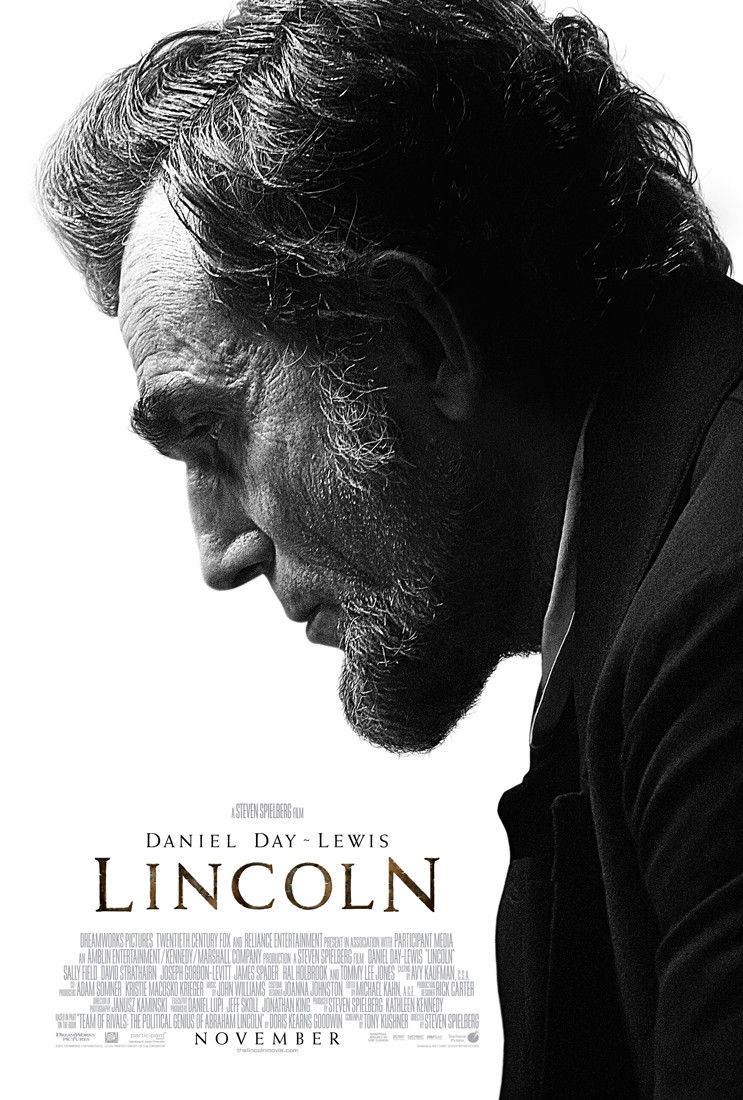
Lincoln

lincoln-movie-poster

The one thing which always drove me nuts in history class as a kid was how the teachers and the books we read made the past seem so much better than our present. We were taught about how Presidents like George Washington and Abraham Lincoln were such great leaders who helped make America the country it is today, and in the process, they were turned into mythological characters to where we forgot they were human beings like the rest of us. Juxtaposing this with the politics of America back when Ronald Reagan was President, it looked like we could do nothing but complain about the state of the world. It made me wonder what we did as Americans which made us seem so ungrateful for what our forefathers brought about.

This is why I’m thankful for movies like Steven Spielberg’s “Lincoln” which helps to humanize those historical figures we learned about in class. In this case, the historical figure is Abraham Lincoln, the 16th President of the United States. The film focuses on the last four months of his Presidency when the Civil War was raging on and was insistent on getting the Thirteenth Amendment, which abolished slavery, passed in the House of Representatives. It presents this President, one of the greatest America has ever known, as a flesh and blood human being endowed with strengths and flaws which will make you admire him more than ever before.

Much of the accomplishment in making President Lincoln so vividly human here is the result of another unsurprisingly brilliant performance from the great Daniel Day Lewis. Known for his intense method acting and laser sharp focus in preparing for each role he does, he brings his own touches to a man so defined by his historical deeds, and he succeeds in making this character his own during the movie’s two and a half hour running time.

“Lincoln” also shows how the world of politics has always been a cutthroat place to be in. The Republican and Democratic parties were much different than from what they are today, but during the 1800’s getting certain amendments passed involved a lot of tricks which were not always highly regarded. Even Lincoln wasn’t above hiring three politicians, played by Tim Blake Nelson, John Hawkes and James Spader, to lobby members of the House to vote in favor of passing the Thirteenth Amendment. But what made this President’s actions especially courageous was how he wasn’t just thinking about solving the country’s problems but of the effects this particular amendment would have on generations to come.

“Lincoln” also delves into the President’s personal life which had been fractured by the loss of a child and was also unsteady due to the fiery personality of his wife Mary, played by Sally Field. Watching Field here reminds us of what a remarkable actress she remains after all these years. Field is such a live wire as she struggles to make her husband see the consequences of the actions he is about to take. The actress had signed on to play this role years ago, back when Liam Neeson was set to play Lincoln, and she had to fight to keep it. It’s a good thing Spielberg kept her around because she has always been a tremendous acting talent, and she enthralls us in every scene she appears in.

Like many of Spielberg’s best films, there isn’t a single weak performance to be found in “Lincoln” which boasts quite the cast. Joseph Gordon-Levitt, who had a heck of a year in 2012 with “The Dark Knight Rises,” “Looper” and “Premium Rush,” is excellent as Lincoln’s oldest son, Robert, who considers quitting school to join the army and fight for his country. David Strathairn is a wonderfully strong presence as Secretary of State William Seward, the great Hal Holbrook is unforgettable as the influential politician Francis Preston Blair, Gloria Reuben is very moving in her performance as former slave Elizabeth Keckley, and Jackie Earle Haley has some strong moments as the Confederate States Vice President Alexander H. Stephens.

But the one great performance which needs to be singled out in “Lincoln,” other than the ones given by Lewis or Field, is Tommy Lee Jones’ who portrays the Radical Republican Congressional leader Thaddeus Stevens. Jones is a powerhouse throughout as he empowers this fervent abolitionist with a passion as undeniable as it is undying, and seeing him reduce other congressional members to jelly is a thrill to witness. Jones is tremendous as we see him fight for what he feels is right regardless of how he goes about achieving it.

Spielberg employs his usual band of collaborators here like producer Kathleen Kennedy, director of photography Janusz Kamiński, editor Michael Kahn and composer John Williams to create a movie which captures the importance of Lincoln’s place in history while also making it intimate in a way we don’t expect it to be. He also benefits from having the great playwright Tony Kushner on board as the movie’s screenwriter. Kushner’s knowledge of history has never been in doubt ever since we witnessed his magnum opus of “Angels in America,” and word is he spent six years working on the script for “Lincoln.” His efforts do show as he gives us a riveting portrait of a divided nation on the verge of making a major change, and even back then America was resistant and deeply frightened to making certain changes regardless of whether or not it would benefit from them.

Granted, Lincoln’s life would probably be better explored in a miniseries as there is so much to explore, and this movie can explore only so much of it. Regardless, “Lincoln” is an invigorating portrait of a great American President who fought for the benefit of his country’s future. The sacrifices he made tragically cut his life short, but his legacy will never ever die as Spielberg’s film rightly proves.

* * * * out of * * * *