Bad Santa 2

bad-santa-2-movie-poster

Bad Santa 2” is the kind of sequel I thought it would be; one which repeats the story of the original. Granted, many sequels are like this, and some get away with it like “Beverly Hills Cop II,” “The Hangover Part II” and John Carpenter’s “Escape from L.A.” Clearly, this is a movie made for fans of 2003 original which has long since become a holiday and cult classic, and this sequel does contain a number of gut-busting laughs as the world’s worst mall Santa Claus ever, Willie Soke, gets himself involved in another heist. But in its second half, “Bad Santa 2” loses much of the energy it built up and begins to run on fumes as scenes quickly remind us of the original and how great it was.

It’s been 13 years since “Bad Santa” was unleashed in theaters everywhere, and the holdup was the result of Miramax being sold among other things. Billy Bob Thornton was eager to get a sequel off the ground, but because of various rights issues, it seemed impossible to start production on one for years. While it is a relief to see this sequel finally arrive at your local cinema, it’s being released at a time where a major Presidential candidate bragged on audio about grabbing women by “the pussy.” As a result, it’s hard to watch “Bad Santa 2” without thinking about that, so the bad timing of its release is unfortunate.

So, what has Willie been up to for 13 years? Well, he’s still the same old cynical lout whose heart is smaller than the Grinch’s, and he still drinks himself silly at any given opportunity. Sue (Lauren Graham from the original) has long since left him as Willie is incapable of hanging onto any nurturing relationships, but he still gets regular visits from Thurman “the kid” Merman (Brett Kelly) who still acts like an 8-year-old even at the age of 21. Willie is prepared to put himself out of his misery, but he is much better at cracking safes than at attempting suicide. One thing’s for sure, he’s got one hell of a liver.

Despite having tried to kill Willie previously, Marcus Skidmore (Tony Cox) still manages to convince him to pull off another heist which will be their biggest yet. Marcus wants to rip off a Chicago charity which is said to have $2 million dollars, but Willie is against robbing a charity because, you know, they never have that much money. But Willie’s in for a big surprise as he discovers Marcus has brought on another partner for this caper, his mother Sunny (Kathy Bates). The fact Willie is quick to punch her right in the face as soon as he recognizes her should give you a good idea of just how dysfunctional the mother/son relationship is between these two.

Thornton hasn’t lost a step since first playing Willie back in 2003, and he still knows how to give a deplorable character like this one a complexity other actors couldn’t. The actor can still land a joke like the best can, and just when you think Willie can’t reach an even deeper bottom than he already has, he does. But as irredeemable as Willie seems, Thornton still gives us a reason to root for him even as he is about to sin again.

“Bad Santa 2,” however, scores a real casting coup with the addition of Kathy Bates who shows no fear in making Sunny every bit as cynical as Willie. She relishes playing an unrepentant biker chick who throws caution to the wind just as one would flick away a cigarette to the ground, and she’s the kind of actress who’s game for just about anything and everything.

It’s also great to see Tony Cox back as Marcus, and that’s even though the logistics of Marcus working again with Willie are beyond belief. Then again, you don’t bring logic into a sequel like this. While Lauren Graham is missed, it’s crazy fun to watch “Mad Men’s” Christina Hendricks let it loose as a reformed alcoholic who still feels the need to be bad when the opportunity presents itself. As for Brett Kelly, he still gives this sequel the heart it needs as man-child Thurman Merman. You would think Thurman would have long since outgrown his attachment to Santa, but again, this is not the kind of sequel you bring logic to.

But as “Bad Santa 2” heads into its second act, the laughs begin to die down as our familiarity with original sinks in to where what was once fresh now feels sadly stale. We are introduced to Regent Hastings (Ryan Hansen) who heads the charity and is Christina’s husband who cheats on her and indulges in a foot fetish which is best left to the imagination, and there’s also the security officer who is on the verge of uncovering Willie’s true identity. They eventually bring to mind the characters John Ritter and Bernie Mac played in “Bad Santa,” but these characters are nothing more than mere caricatures supplied for the audience to despise right from the start. The characters Ritter and Mac portrayed were not clichéd ones, and each actor inhabited them with a comic brilliance not easily duplicated. The both of them are very much missed this time around.

Directing “Bad Santa 2” is Mark Waters who gave us “The House of Yes,” the “Freaky Friday” remake and the infinitely enjoyable “Mean Girls” which made a star out of Lindsay Lohan and gave Tina Fey a life outside of SNL. With this sequel, he feels obligated to stay within the original’s formula as straying from it wouldn’t have worked. Waters succeeds in keeping the comic pace of the movie up, and he generates some big laughs which left me in hysterics. However, he can’t keep it from losing steam as we become more aware of where things are heading as this sequel heads to its inevitable climax which is not as inspired as it wants to be.

For me, “Bad Santa 2” is a near miss. Some sequels are mere replications of the original, and this drives most critics up the wall. I can be a bit forgiving as I’m willing to accept this to a certain extent if the sequel proves to be entertaining, but even I have my limits. “Bad Santa 2” succeeds in its first half, but its second half shows its filmmakers running out of steam long before they crossed the finish line. It’s a shame because the original is one of my favorite movies to watch during the holidays, but this one comes up short. It definitely has its devilishly inspired moments, but it could have used more of them.

* * ½ out of * * * *


Halloween 4: The Return of Michael Myers

halloween-4-poster

WARNING: THIS REVIEW CONTAINS SPOILERS. DON’T SAY YOU WEREN’T WARNED!

Halloween 4: The Return of Michael Myers” is actually one of the best films in this long running franchise, and it did more than just drop a bunch of bloody good killings on us with little regard to everything else which makes a movie strong. There was actually some thoughtful work put into the screenplay, the acting is better than you might expect it to be, and it does have some very scary moments the other sequels seriously lack.

The “Halloween” movies often defy the timeline of events they set up for themselves because logic doesn’t always apply to horror movies. Despite the huge explosion which ended “Halloween II,” Michael Myers and Dr. Loomis somehow managed to survive. It never seemed likely either of them would have come out of the burnt wreckage without turning into shish kabobs which were left on the barbecue for far too long, but this sequel shows you can’t keep a doctor or an evil monster down.

“Halloween 4” starts off with a couple of doctors assigned to transfer the seemingly comatose Michael back to Smith’s Grove where he should have stayed from the beginning. But of course, Michael wakes up and kills his naïve caretakers who think he is nothing more than just another prison transfer. These doctors also make the mistake of mentioning how Michael has one living relative left, his niece Jamie. Guess where she lives…

Going into a description of the plot is tiring, but you know what happens from there on out. “Halloween 4” is genuinely scary at points. The first appearance of Michael through the reflection of the mirror definitely had me standing up straight, and childhood terrors like the monster under the bed are exploited to strong effect. The movie does play around with the clichéd moments we often find in horror movies, but then it manages to pull the rug out from under you. You think you have a good idea of what is going to happen, but the filmmakers smartly play on your misplaced confidence to pull a fast one on you.

“Halloween 4” was directed by Dwight H. Little who later went on to direct one of Steven Seagal’s best movies, “Marked for Death.” Little deserves credit for not just doing everything according to formula. What he accomplishes here isn’t groundbreaking for the horror genre, but he pulls off something stronger than your average slasher flick. Instead of doing the usual opening with the pumpkin, he fills the screen with symbols of the October holiday which eventually leads us into the dead of winter. With that, he perfectly sets the mood and atmosphere for this particular sequel. He remains respectful of the original and does the right thing by keeping Michael hidden in the shadows like Carpenter did in the original. When that mask of his peeks out of the darkness, it becomes even more unnerving than watching him tilt his head.

The writer, Alan B. McElroy, managed to finish the script just mere hours before the 1980’s writer strike began. Listening to his audio commentary from the Anchor Bay release, McElroy makes it clear he came to this film as a fan of the original and was not about to throw the usual crapfest at us. He also gives us characters we actually come to care about and who don’t always do the stupid things we expect them to do in the average horror flick. You even find yourself caring about that hunk of a man Brady (Sasha Jenson) even after we find him cheating on his girlfriend with the movie’s obligatory big breasted lady (who also happens to be the sheriff’s daughter no less).

In retrospect, “Halloween 4” was one of the last slasher movies which featured actors who looked and felt down to earth. After this sequel, the genre was invaded by beautiful models with bodies very well taken care of or surgically enhanced. Whether or not they could act was another story, one which usually didn’t matter to the financiers.

This one is also not as bloody or gory as the other sequels came to be. Granted, there are a couple of nice bloody shots which illustrate how creative Michael is at killing people after coming out of a long coma. On top of sinking his thumb into a doctor’s skull, he also rips a big hole in a beer guzzling vigilante’s neck. Actually, this does bring up a weakness in the movie which involves a subplot with a bunch of middle aged guys who are regulars at a local bar. They almost seem tossed in as an afterthought, and their own hunt for Michael leads them to do the dumbest things.

Watching Danielle Harris here is a little weird as she has since grown up and gone on to play a completely different character in Rob Zombie’s “Halloween” movies. She plays Jamie, the daughter of Laurie Strode who was said to have been killed in a car accident along with her husband (Curtis would later return in “H2O”). You have to admire any young actor who does a horror movie at the age of 11 because it’s like we’re asking them to become emotionally scarred for life. On top of having a great set of lungs, Harris instantly wins our sympathy gives this movie one of its scariest images.

Ellie Cornell, who plays Rachel Carruthers, does Jamie Lee Curtis proud. We’re not talking an Oscar winning performance here, but she gives us the heroic female character we want to root for as she goes from being vulnerable to Sigourney (“Aliens”) Weaver tough.

And, of course, we have the only returning actor from the original “Halloween,” the late Donald Pleasence. Having miraculously survived the fiery explosion which should have killed him were a highly profitable box office possibility not taken into consideration, Dr. Loomis has become absolutely single minded in his pursuit to destroy Michael once and for all. Even if Pleasance was slumming by doing this movie, he still played this role to the hilt and gave this particular entry a legitimacy which eluded future installments. Heck, it probably would have been criminal to do a “Halloween” movie without Dr. Loomis at that point as he was an essential part of this franchise.

Actually, there is another “Halloween” veteran who returns to the fold here: Alan Howarth. Along with Carpenter he scored “Halloween II” and “Halloween III: Season of the Witch,” and they also provided great scores for “Prince of Darkness” and “Big Trouble in Little China.” Howarth goes solo on this one, but even without Carpenter he composes a memorable and atmospheric score, and his opening theme to “Halloween 4” is one of the best pieces of music in the franchise.

Stunt performer George Wilbur plays Michael here, and he does good work as the heavy-breathing killer. While no one can touch what Nick Castle did in the original, it’s nice to see a Michael who more mobile than Dick Warlock’s was in “Halloween II.” Wilbur gives Michael a formidable look which strikes terror in us even when this murderous character is not onscreen. The thought of Michael Myers in this one is just as scary as seeing these characters come face to face with him, or it as Dr. Loomis describes him:

“You’re talking about him as if he were a man. That part of him died years ago.”

DANGER! DANGER! SPOLIERS AHEAD!!!

Now let’s talk about Halloween 4’s” ending. Michael has been shot dozens and dozens of times in a scene which reminded me of the scene from “Predator” when Schwarzenegger and company blasted a forest to waste with their massive weaponry. Everyone is back home and safe, but then a scream erupts from upstairs. Loomis runs up to find Jamie has stabbed her stepmother with a pair of scissors and is covered in blood, looking much like young Michael did after murdering his sister. Like Pleasance, you find yourself screaming “NOOOOOO!!!!!!” Harris holding those scissors ranks as one of the series’ most chilling moments. Indeed, the corruption of innocence is a terror that can be all too real onscreen as well as off it.

Now this could have led the franchise in an inspired direction, but the producers wussied out and instead found a way (they always do) to bring Michael back from the dead yet again. Perhaps the late Moustapha Akkad felt the fans would never accept any killer other than Michael himself. It’s a shame because this brilliant plot twist could have made the series even more frightening than ever before, but the demands of the box office always dictate just how much you cannot change a winning formula.

Regardless, “Halloween 4: The Return of Michael Myers” still proves to be a strong entry in the undying franchise, and this is especially the case when you watch the two sequels which followed it.

* * * out of * * * *


Tommy Lee Wallace Talks about ‘Halloween III’ at New Beverly Cinema

halloween-iii-poster

PLEASE NOTE: THIS ARTICLE CONTAINS SPOILERS ABOUT THE MOVIE.

Tommy Lee Wallace dropped by New Beverly Cinema on October 30, 2010 to talk about his directorial debut, “Halloween III: Season of the Witch.” This is the Michael Myers-less sequel of the long running franchise and it played as a double feature with “Trick ‘r Treat.” All the “Halloween” movie fans were in for a special treat as Wallace gave us more trivia about the making of it than we ever could have ever expected.

When Wallace was brought up after the movie ended, he admitted his reaction to watching it after so many years was that it resembled one of the strangest and most bizarre movies he had ever seen. The original plan for “Halloween III” was to work from an original screenplay by Nigel Kneale, best known for his work on the “Quatermass” series. What Kneale ended up writing was, as Wallace put it, “brilliant and deeply, darkly grim” and more of a cerebral, intellectual horror movie than your typical slasher fare. But it turned out everyone thought the overall story needed work, and Wallace said he and Carpenter wanted to make it more commercial and scarier for audiences. As a result, Kneale took his name off the movie as he felt the filmmakers would simply butcher all he came up with. Wallace did say that he really liked Kneale’s script and hopes to put it online someday in its entirety for all to see.

While making the movie, Wallace described himself and the crew as being under the gun as it was a low budget affair like most horror movies. Understanding how to do work on the cheap, he said all the “el cheapo” special effects taught him a lot about simplicity which turned out to be a great virtue.

As for Carpenter’s participation, Wallace said Carpenter gave him full autonomy as he himself always expected to have it on all his movies. Joe Dante, the director of “Gremlins” and “Innerspace,” was originally set to helm “Halloween III,” but he later turned it down when something else came up. Having worked on many of Carpenter’s movies, Wallace was originally offered the gig of directing “Halloween II,” but he turned it down as he saw no way to top the original. But upon being offered “Halloween III,” Carpenter and the late Debra Hill told him neither of them wanted to do a direct sequel as Carpenter hated “Halloween II.” With that in mind, Wallace jumped at the chance to direct it.

The only real barrier Wallace had to deal with before accepting the job was getting the blessing of Dino De Laurentis. Wallace had previously written the script for a movie De Laurentis produced called “Amityville II: The Possession,” and he said the one rule everyone needed to remember was “you do not fuck with Dino.” In response to Wallace’s request, De Laurentis begged him not do the film, but Wallace said he was determined to get De Laurentis’ blessing because he would have directed it anyway.

With “Halloween III: Season of the Witch,” Carpenter and Hill wanted to turn the franchise into an anthology of movies about the occasion of Halloween. Looking back, the original was really not about Halloween at all (the original title was “The Babysitter Murders”). But when it came to releasing this particular “Halloween” movie, Wallace said Universal Pictures did not do enough to prepare audiences for it. Sadly, audiences did not want something new. They wanted Michael Myers back and breathing heavy while slashing over stimulated teenagers.

One of the biggest influences on “Halloween III” was the 1956 version of “Invasion of the Body Snatchers” directed by Don Siegel. Like that one, this sequel was meant to be a pod movie and could not be mistaken as something nice. Wallace even wanted to shoot it in Sierra Madre where Siegel’s classic was filmed, but it didn’t look good enough. The production team had driven all over Northern California looking for the perfect small town to film in, and it took forever to find it. Wallace said they were never as lucky as they were with Carpenter’s The Fog.” Also, the town’s name, Santa Mira, is the same as the one used in “Invasion of the Body Snatchers.”

But the big difference between “Invasion of the Body Snatchers” and “Halloween III” is in the way each movie ended. Siegel wanted his film to close on a highway with star Kevin McCarthy screaming frantically, “THEY’RE ALREADY HERE! YOU’RE NEXT! YOU’RE NEXT!” Instead, “Invasion” ended the same way it began, in a police station. All this did was indicate to the audience everything was going to be alright. Wallace said the ending of “Halloween III” was dedicated to Siegel for what he tried to pull off, and it leaves the fate of the world up in the air which makes things far scarier as your mind was forced to imagine what could have happened. Universal Pictures, however, put pressure on Carpenter to change the ending to something more upbeat. When Carpenter asked Wallace if he wanted to change the film’s ambiguous climax, Wallace said he refused to do so and Carpenter defended Wallace’s decision to the studio.

Tom Atkins’ name in the credits as well as his first appearance onscreen generated a huge applause from the audience. When it came to casting “Halloween III,” Wallace said Atkins was already a part of Carpenter’s company of actors, and his performance in “The Fog” served as his audition for the role of Dr. Daniel Challis. Wallace then went on to explain how horror movies can easily be ruined by “pretty boy casting,” and he felt this didn’t need to be the case here. Atkins naturalistic performance is commendable considering much of what he has to deal with is utterly ridiculous. You also have to give him credit for wasting no time in bedding the main female character, Ellie Grimbridge, played by Stacey Nelkin.

Another actor who got a lot of applause was the late Dan O’Herlihy who portrayed the movie’s chief villain, Conal Cochran. Wallace described O’Herlihy as being perfect for the part, and he was always prepared and ready to go. He also said O’Herlihy was a man from the British Isle, Irish and was someone who was never afraid of getting sentimental. O’Herlihy’s performance was a fiendish mix of a friendly persona which is a cover for his grisly nature.

As for Nelkin, the first question from the audience was whether or not her character was a robot throughout the entire movie. Wallace said he honestly didn’t know and figured Cochran’s company was really good at making robots in the first place. Nelkin was a very appealing presence in “Halloween III,” and perhaps Roget Ebert put it best in his one-and-a-half-star review of the movie: “Too bad she plays her last scene without a head.”

Then there’s the movie’s commercial for the Silver Shamrock masks which features one of those annoying jingles which, like any other commercial, you cannot get out of your head. Alan Howarth, who composed the score along with Carpenter, was given credit for doing the jingle and putting it to the tune of “London Bridge” from “My Fair Lady,” but Wallace said it was his idea more than anyone else’s.

As for the voice on the jingle, it is Wallace’s. They were originally going to hire someone else, but when they found out the guy wanted $550, it was quickly determined they couldn’t afford him. Wallace got the job soon after and said he got into the mood by doing the smooth tone of a “stupid radio voice from the 50’s.”

Another audience member asked Wallace if there were any product placements in “Halloween III,” and he said there were not. Truth be told, this wasn’t really the kind of movie which would allow for that, and it was also clarified how no one was ever asked to move the can of Miller Lite closer to the camera.

“Halloween III: Season of the Witch” was designed to be a diatribe against consumerism, and it didn’t turn out to be a very elegant one. The movie cost $2.5 million to make and grossed about $14 million at the box office. While it did make a tiny profit, the sequel was considered a critical and commercial disappointment. Wallace said he fell into an abject depression for months afterwards as he felt he did a shitty job on the sequel and figured he would be consigned to movie hell.

Years later, however, Wallace discovered “Halloween III” had developed a cult following and a new generation of fans. He was stunned to hear a lot of people telling him they watch it every single year, and he said people continue to invite him to speak at annual horror conventions about it. Having been originally released in 1982, audiences have had plenty of time to reflect on the kind of movie it was and reevaluate it critically. While still not a great film by any stretch, it’s much better than its reputation suggests.

Certainly, there are other “Halloween” sequels that are far worse (“Halloween: The Curse of Michael Meyers” is the pits), and the moderator put it best when comparing the third movie to “Halloween: Resurrection:”

“Do you prefer this or Busta Rhymes?”

Save

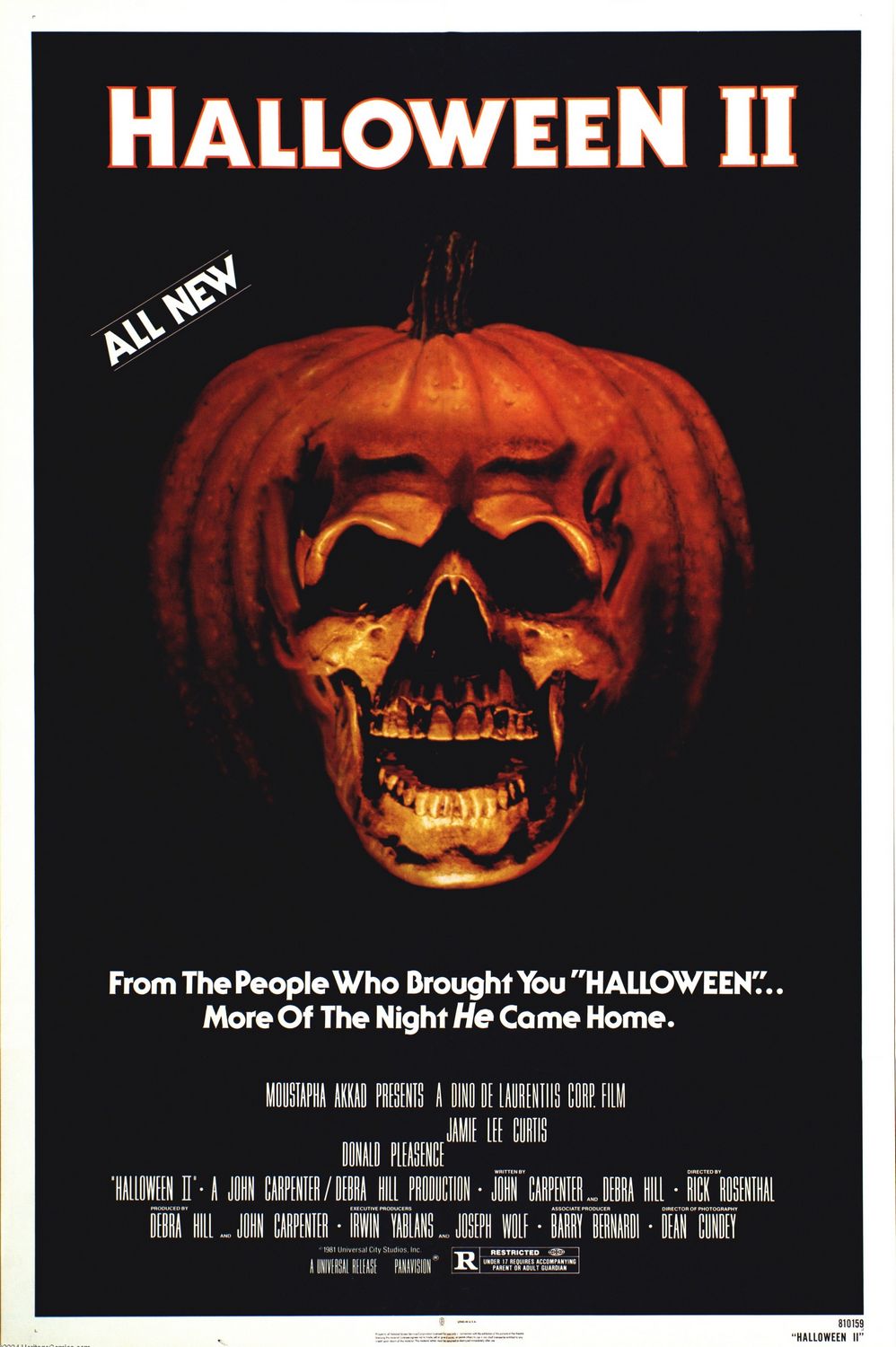
Halloween II (1981)

halloween-ii-1981-poster

Sequels are usually beaten to a critical pulp, and it’s not hard to understand why. They are primarily made because the original made a ton of money, and heaven forbid that the money train stops there. It’s not enough to make a killing at the box office (no pun intended); you have to capitalize on what you made because greed still reigns supreme. Heck, these days studios are franchise crazy and are always on the lookout for the next one to start up. However, audiences these days are a lot more discerning and are quick to question why certain sequels were even made. They can tell when they are being scammed out of their hard-earned money, but the curiosity of what the sequel has to offer can be hard to ignore.

In a lot of ways, sequels are undone by the high expectations placed on them. Certain movies have no chance of living up to the brilliance of their predecessor, but maybe they can be enjoyable enough when you come to them with reduced expectations. Sometimes that can be enough.

Case in point is “Halloween II,” the sequel to, at the time, the highest grossing independent film ever made. “Halloween” was and still is one of the scariest movies ever made. The ending of the movie had Michael Myers disappearing from sight, and it was visual proof of how evil never dies. “Halloween II,” however, takes place at the exact moment the original ended with Michael still on the loose, and even while he moves a hell of a lot slower, he still proves to be a very deadly threat to everyone around him. Dr. Loomis (Donald Pleasance) continues to hunt for the man he tried to keep locked up, and Jaime Lee Curtis returns as Laurie Strode who is taken to Haddonfield Memorial Hospital to recover from the injuries she suffered a few hours earlier.

“Halloween II” was torn apart by the critics for being nowhere as good as the original, proclaiming it a rehash of what we saw before and for having nothing new to say about Michael Myers  or anyone else from the original. Even John Carpenter, who co-wrote the script for this one with the late Debra Hill but did not direct it, said he hated it, and the only thing which got him to finish writing this sequel was a six-pack of Budweiser. Even he realized he was making the same movie which is probably why he declined to direct it. The only really fresh aspect of this one is that we discover how Laurie Strode and Michael Myers have a closer bond than they realize, and it comes to explain why he made the long trip back to Haddonfield after waiting for years while staring out a window in total silence.

But despite its flaws, I still enjoyed “Halloween II” for what it was. Yes, it is a retread of the original, but what else are you gonna do with Michael Myers? Do you want him to win the Nobel Peace Prize? Get rehabilitated? Make peace with his sister after killing so many people? Don’t you remember? Evil never dies!

The one thing to note about “Halloween II” is how much bloodier and gorier it is than its predecessor. When this sequel came out, there had already been so many knock offs of “Halloween” with the psychotic and silent killer wearing a different kind of mask and using a different weapon which suits their murderous rages more than any other. “Friday The 13th” would not have existed without Carpenter’s original masterpiece.

At the very least, “Halloween II” tries to be more creative in the way Michael kills his victims as he proves to be  inventive with hypodermic needles, scalding hot water, and he even conducts a blood drive which doesn’t require anyone from the Red Cross to help out. If you run into Michael, you’re a donor whether you driver’s license says you are or not.

While “Halloween” only showed us so much of Michael and kept him hidden in the shadows for the most part, “Halloween II” pretty much shows everything. While it makes this sequel less effective than the original, I still got a kick out of it. Carpenter apparently came in to reshoot some scenes because he felt audiences would be demanding more blood and guts as horror movies have upped the ante in that arena since the original. Whether or not this was the right decision may be up for debate, but fans of Fangoria Magazine will not be complaining. The scene where Michael plunges Pamela Susan Shoop into scalding hot water is shocking and highly unnerving, and seeing a hypodermic needle get inserted into someone’s eye is very unsettling.

One thing this sequel has to its advantage is that is made by the same team which made the original. Director of photography Dean Cundey came back for it, and he gives “Halloween II” a dark and creepy look to where you want to keep an eye on what is hiding in those shadows across the hall. Michael could be anywhere, waiting for you to come out into the open.

At the very least, Carpenter and Hill do a good job of giving us characters who are as down to earth as those in the original. There’s a little scene where three of them are in a hospital lounge watching TV and talking about what just happened their previously quiet little town of Haddonfield. The young nurse claims she saw Michael, and one of the guys is a sexually frustrated prick who is more interested in having sex than the fact this force of evil is still on the loose.

The characters may come across as clichés after having seen the first one, but to me, they still felt real enough to where I wasn’t snickering at their actions. Among them is Jimmy, a paramedic played by Lance Guest, who ends up developing a protective crush on Laurie. After seeing Laurie being all shy in the first film, it was  nice to see her get something of a boyfriend in this one, and seeing him get hurt actually made me feel bad. If this were any other sequel to a slasher flick, I probably would have been cheering the killer on more than the victim.

There’s also the ever so serious nurse Mrs. Alves played by Gloria Gifford. She plays the boss you probably have been stuck with once or twice in your life, and one which you hope you never have again. Pamela Susan Shoop plays the well-meaning but always tardy Nurse Karen Bailey and, she is very good and appealing here and shows off the appropriate cleavage for a horror movie like this.

If there is a major weakness in “Halloween II,” it is the way Laurie Strode is written. She is not the same brave heroine we saw in the first movie. Here, she is drugged out after the doctor works on her injuries, and there is only so much she can do as a result. She is smart enough to run away when she feels Michael closing in, but she becomes utterly helpless instead of being inventive in the ways she protects herself. Regardless, I still liked Laurie Strode here, but it would have been better to see her kick more ass like she did the first time around. Perhaps she could have been much more vengeful towards Michael and much more eager to put an end to his rampage.

Donald Pleasance once again gives the demonic lines he is given a lot of depth to where they stay with you long after the movie has ended. His little speech on the festival of Sam Hain, the Lord of the Dead, and how we are all afraid of the darkness inside of ourselves is a great moment. The unconscious mind can be a very frightening place indeed.

I also have to say that when it comes Pleasance and Curtis, I have never really seen give a bad performance in any film they have ever been in. Put either of them into the worse movie ever made, and they will still be good.

But my most favorite thing about this “Halloween II” is the gothic score composed by Carpenter and Alan Howarth. It’s not any different from the score for the original, but I loved how it was done with synthesizers this time around. It feels all the more atmospherically consuming even after all these years, and I never get sick of listening to it. The piece of music where Michael  finally finds Laurie in the hospital and pursues her remains one of my favorite pieces of music in any movie ever.

Dick Warlock takes on the role of Michael this time around. I do agree that it would have been great if Nick Castle came back to play Michael again, but I imagine his own directing career must have been keeping him busy at that point. Warlock tries a little too hard to mimic Castle’s movements, but it is understandable why he moves so slowly in this one (he was shot six times). All the same, Michael still came across as a very threatening figure to me. Even if he moved so slowly, I was still terrified of him coming up on unsuspecting hospital employees, and it was excruciating to wait for that elevator door to open.

“Halloween II” might not be a great movie, but I still enjoyed it a lot. This sequel in many ways marked the last time where these characters seemed relatable as just about all the other sequels in this franchise as they came to feature infinitely stupid characters played by mediocre actors. Perhaps the passage of time has been kinder to this sequel than others as the series soon descended into mediocrity, but it didn’t decrease in quality as quickly as other slasher franchises have.

I have no shame in saying I really enjoyed this sequel. Then again, why should I have any shame about like it? Other critics can bash it all they want. But for me, “Halloween II” still delivers.

* * * ½ out of * * * *

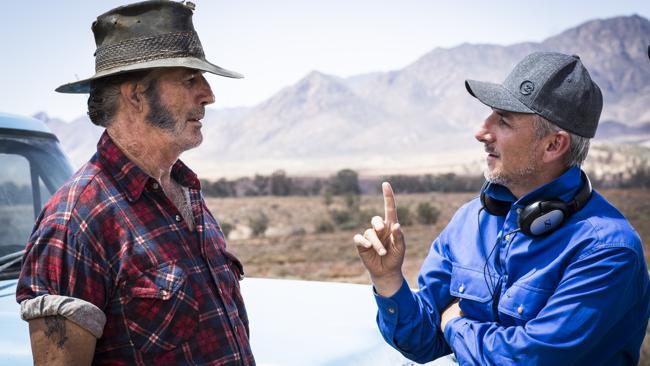
Exclusive Interview with Greg McLean on ‘Wolf Creek 2’

wolf-creek-2-mclean-and-jarratt

Australian film director Greg McLean returns to the scene of the crime with “Wolf Creek 2,” a movie which, supposedly anyway, is based on actual events. The original “Wolf Creek” came out in 2005 and introduced us to the relentless serial killer Mick Taylor (played by John Jarratt) who captures a group of backpackers and tortures them without any remorse. Now Mick is back to take on another group of tourists who make the mistake of crossing his path and have the serious misfortune of not being from his home country. If you are not a proud Australian and are not fully aware of the country’s rich history, pray you don’t run into Mick.

McLean also directed the killer crocodile horror film “Rogue,” and he is said to be a member of the unofficial “Splat Pack.” This term, which was created by film historian Alan Jones, refers to the modern wave of directors who make brutally violent horror films, and other members include Alexandre Aja, Neil Marshall, Eli Roth, James Wan and Rob Zombie. I spoke with McLean about “Wolf Creek 2” and he talked about how a sadistic psychopath like Mick Taylor can be strangely appealing, how this sequel differs from the original, and he pointed out the differences between making a film in Australia and the United States.

Ben Kenber: This was a terrific sequel, and it was great to see John Jarratt return as Mick Taylor. Mick is one of the most sadistic psychopaths ever put in a movie, and yet there is something about him which is undeniably appealing. Why is he so memorable and why are we drawn to characters like him?

Greg McLean: I think that people are generally fascinated with evil and true crime. A character like Mick Taylor represents a very interesting way of peering into a very, very dark psyche. People are fascinated with the nature of evil, and I think the appeal of a character like Mick Taylor is to really get a chance to examine someone who is completely devoid of any sign of humanity. He’s really incredibly dark and twisted, and he’s very terrifying. I think people who like horror films and thrillers and like being scared enjoy coming face-to-face with really disturbing personalities. There is a long history of really fascinating, evil characters and I think people are intrigued at how their personalities work.

BK: When it came to doing a sequel to “Wolf Creek,” was it something you had planned on doing all along, or did you consider doing it after the original movie was finished?

GM: My plan was always to see if the movie worked and people liked it. If people embraced the character (of Mick Taylor), then there will be a chance for another film. So it was always in my mind to do it, it just took a lot longer to get around to it than I thought it ever would (laughs).

BK: Regarding John Jarratt’s portrayal, did you develop the character with him or was it largely his creation?

GM: Well we obviously did the first film together so we had a background to how to approach the character and a discussion on what the character is about. We had been talking about this particular draft of the screenplay (for “Wolf Creek 2”) for a couple of years, so there were certain things we wanted to explore and certain aspects of the character we wanted to bring up, and we kept evolving it on set. Obviously John makes choices as an actor, and then some of those things are in the script and some are developed in the moment. When we got together, we just kind of jammed and came up with cool things to do.

BK: Since the script was in the development stage for a couple of years, did that make it easier for you to return to the character of Mick Taylor and the original movie’s setting?

GM: It certainly enabled us to mine the thematic ideas that we wouldn’t have had if we didn’t have such a long gestation period. We had a script a couple of years ago and it was good, but it just wasn’t amazing. I realized that there was an element to it that was missing and which was making me not want to pull the trigger on it, and what it didn’t have was a kind of somatic investigation into the character that I thought we needed to have. Then once I locked into that concept, then there was enough new information we revealed about his character that I thought it be worth making the film. We also wanted to make a different genre film. The first film is very much a first-person, true crime, real terror film whereas this one I wanted very much to explore the thriller film, and it’s more of an action film. It has horror elements, but it certainly is a different structure in terms of what kind of film that is.

BK: I agree, it does have a different structure and feels more like a road movie. Speaking of that, how did you manage to pull off the sequence where Mick Taylor launches the big rig truck into Paul Hammersmith’s (played by Ryan Corr) car?

GM: We just found a big hill and dropped the truck off it (laughs). It’s much easier to do stuff like that in Australia than it is in the (United) States. Doing things over there is still a bit of the Wild West. It’s interesting because I’m doing a film right now in Los Angeles and I showed that scene to some people and they were just like going, “Wow! How did you do that?” And there’s a shot after the actual truck hits where the fire is just actually continuing to burn the hillside, and everybody was freaking out about that. I said, “Why is that so weird?” They were just going, “Oh my god, how did you let the hill keep burning?” The restrictions are very intense. Obviously there are rules and regulations here and there are in Australia as well, but they were just fascinated by the idea of just literally destroying a truck and letting it burn a hole in the hill. We had fire brigades in the back, and we were able to just do some really crazy stuff. We also wanted to do it in a very practical way. I love doing CG stuff and we used a lot of CG for the kangaroo sequence, but some things I feel are just better to get onscreen practically because you see the texture of things and the physics of moving in a particular way that’s kind of cool.

BK: Yeah, I think that’s what I liked most about that sequence because it really did look real. In most American films, filmmakers would more likely film a sequence like that with CG.

GM: Yeah, I think that part of that is kind of a budgetary thing as well. When you have a low budget you have to find more practical ways of doing things. Digital effects, if you want them to, can be ultra-photorealistic and necessarily expensive. The other way to do it is to find a location you can do something like that and ask to just do it. For all the driving stuff in that sequence, we just closed down highways and did crazy driving on them for two weeks and got all the shots. It was great fun doing a sequence like that.

BK: Looking at those empty highways reminded me of “The Hitcher” with Rutger Hauer and C. Thomas Howell. You have this great open space, but still there’s something about it which is quite claustrophobic.

GM: Well I think the first movie had a very particular primary feed that it was drawing on, and this film to me was really about the fear of isolation in a desolate place. What most of the fear comes from is the primary idea of that which is quite different from the first film. The first film had a different emphasis which was more about the randomness of violence in the real terror that comes from believing someone is something and then suddenly seeing them transform. This one is really much more about exposing the audience to the real terror which comes from extreme isolation and being pursued by a character that is just relentless.

BK: What elements do you believe a horror movie should have in order for it to be successful?

GM: Two things. One, it needs to be based on a primary universal human fear that touches the psychic pressure point. Number two, the film has to have three, if not more, unique and believably memorable set pieces or things that people will talk about when they leave the cinema for hopefully weeks if not years, and that’s it.

I want to thank Greg McLean for taking the time to talk with me about “Wolf Creek 2.” The movie is now available to own and rent on DVD, Blu-ray and Digital.

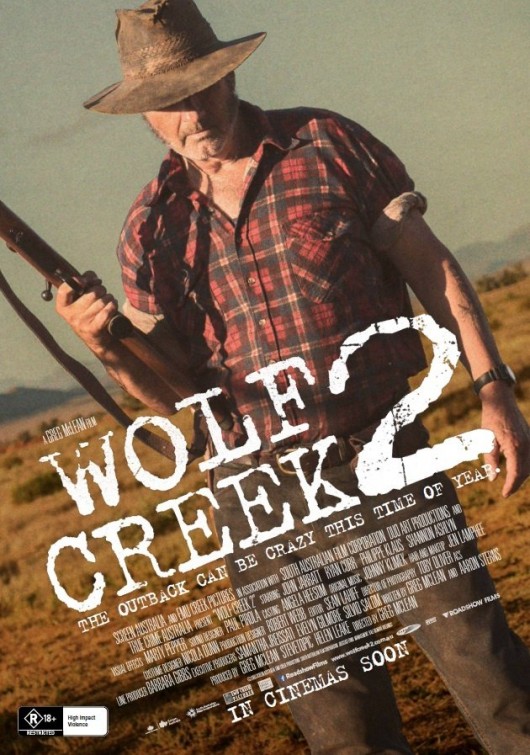
wolf-creek-2-poster


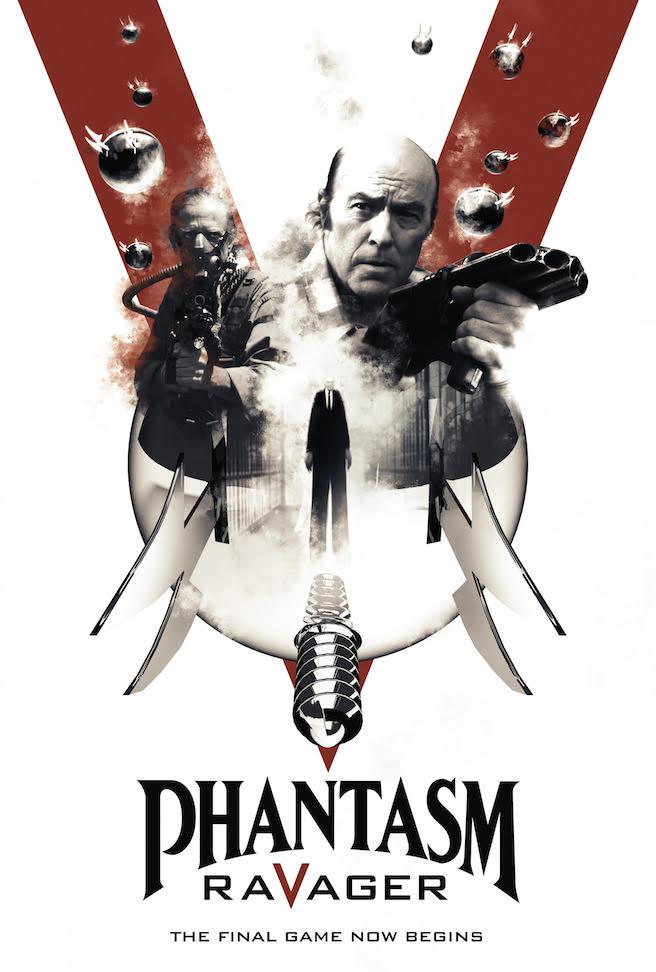
Phantasm: Ravager

phantasm-ravager-poster

Sooner or later the horror movie gods had to deliver this one to the fans. It took George Romero 20 years, but he finally followed up “Day of the Dead” with “Land of the Dead.” While we may have gotten an “Evil Dead” reboot instead of a third sequel to Sam Raimi’s original film, he and Bruce Campbell gave us the next best thing with “Ash vs. Evil Dead.” After giving us one of the most visceral and terrifying horror flicks ever created with “The Texas Chainsaw Massacre,” Tobe Hooper followed it up with a sequel 12 years later which has since developed a cult following. Although the filmmakers behind these movies are always keen to move on to other genres, something always seems to pull them back to horror.

So it only makes sense we would eventually get a fifth “Phantasm” movie in this lifetime, right? Rumors abounded from year to year of how another installment featuring Mike, Reggie and The Tall Man was in pre-production, but it never became a reality. Then in 2014 we got a teaser trailer out of nowhere for “Phantasm: Ravager” which nobody saw coming. Astonishingly enough, this sequel was filmed in secret, and after an equally agonizing wait it has now arrived in theaters and VOD and serves as a conclusion to a franchise which began back in 1979. Yes, these characters and those silver spheres have been with us for a very long time.

Does “Phantasm: Ravager” give us a fitting conclusion to this never ending series? Well, it may depend on the expectations you bring to the theatre. It’s no surprise series creator Don Coscarelli made this one solely for the fans, so those “Phantasm” virgins would be best to check out the previous films or sit through the short film “Phantasm and You” which will bring them up to speed. While we get the usual silver sphere action with hapless victims getting blood sucked out of their heads as Red Cross workers watch on helplessly, we can never be fully certain as to which direction the story will take.

This installment focuses mostly on Reggie (Reggie Bannister), the former ice cream man whom we last saw entering the space gate in “Phantasm: Oblivion” in an effort to save his friend Mike (A. Michael Baldwin) from the clutches of the Tall Man (the late Angus Scrimm). At the start of “Ravager,” Reggie is walking alone in the desert and telling us in a voiceover how he can no longer tell what is real and what is not. Still, he’s got his four-barrel shotgun and, with very little effort, retrieves his Hemicuda and drives on as those silver spheres pursue him with a vengeance.

Next thing we know, Reggie wakes up in a hospital where Mike tells him he is in the early stages of dementia. From there we watch as he switches from one place to another, be it another road trip where he picks up another beautiful lady, the hospital he is confined to or a post-apocalyptic future where The Tall Man reigns supreme. It’s a lot like the series finale of “Star Trek: The Next Generation” where Captain Jean-Luc Picard finds himself traveling back and forth through time, but with Reggie it’s an even bigger battle to discover the reality he belongs in.

“Phantasm: Ravager” is billed as a horror film, but it is really more of a sci-fi action flick as this series has gone from sheer horror to something more supernatural. But more than anything else, the story here deals with aging, something Hollywood movies rarely, if ever, deal with these days. We see Reggie struggle to bring his friends together even as he is seen as a terminal case the doctors are impatiently waiting to see die. Who is the bigger culprit here, The Tall Man or Reggie’s deteriorating mind?

It’s a lot of fun to see Bannister, Baldwin, Bill Thornbury who returns as Jody Pearson and Angus Scrimm return to the roles they have long since become famous for. Bannister in particular is a gas to watch here as not even Reggie’s advancing age keeps him from trying to hit on any beautiful woman he picks up. As for Baldwin and Thornbury, it’s been fascinating to watch them grow up from one “Phantasm” movie to the next. It’s like looking at a photo album, albeit with a lot of blood and mortuaries.

Scrimm’s Tall Man remains one of the scariest characters to appear in any movie, and Scrimm gets a little more to do and say here than he has in previous installments. It’s great Scrimm got another chance to play this iconic character, but “Phantasm: Ravager” is tinged with sadness as he passed away earlier this year at the age of 89. This is the last we will ever see of The Tall Man as there is no earthly way he can ever be replaced by another actor. After all these years, Scrimm remains a frightening presence as he toys with Reggie endlessly and makes you wonder why anyone would dare to fight him when he’s so omnipotent.

An interesting move Coscarelli made here was to step out of the director’s chair and hand the reins over to another. When we first got word of this, many feared it would be a catastrophic mistake, but David Hartman, who has worked behind the scenes on other Coscarelli films like “Bubba Ho-Tep” and “John Dies at the End,” brings a fresh energy to this material, and he clearly relishes working within this franchise and with these actors. As a result, everything in “Phantasm: Ravager” feels more supercharged than I expected.

The “Phantasm” movies have come close to being perfect, but the fans never really complained much about that. Sure, this particular one relies on CGI effects a little too much, but then again the franchise has never had much money to work with (“Phantasm II” had the largest budget with $3 million). Everyone involved with “Ravager” did the best they could with the materials they were given, and like the others it is equipped with an imaginative storyline which keeps us guessing.

If “Phantasm: Ravager” is indeed the last “Phantasm” film of all, it certainly sends the series off with a strong emotional punch. These movies have always been a family affair, and it’s great to see everyone back together for another round with the Ball and the Tall Man. It’s also great to see how this series has been maintained by the same creators from start to finish in age where studios are always desperate to reboot a classic property. For myself, “Phantasm: Ravager” was a blast, and it serves as proof that there’s always a chance for another sequel no matter how long time has passed since the last one.

* * * ½ out of * * * *

Copyright Ben Kenber 2016.

Save

Crouching Tiger, Hidden Dragon: Sword of Destiny

crouching-tiger-hidden-dragon-sword-of-destiny-poster

Ang Lee’s “Crouching Tiger, Hidden Dragon” is one of those few movies I can describe as being truly exhilarating. It combined amazing martial arts sequences with a great story filled with compelling characters you were eager to follow along with from start to finish. To simply call it a martial arts movie was not fair as Lee gleefully subverted the genre to give us something completely mesmerizing, and it went on to become one of the most successful foreign films ever made.

So it’s a shame to see its eagerly awaited sequel, “Crouching Tiger, Hidden Dragon: Sword of Destiny” doesn’t come even close to recapturing the spirit of the original. Michelle Yeoh returns as Yu Shu Lien and Yuen Woo-ping, who choreographed the action of the original, steps in as director, but those who loved the original are bound to feel like something is missing. While Woo-ping still delivers some amazing action scenes, he lacks Lee’s poetic touch.

“Sword of Destiny’s” greatest strength is definitely Yeoh who looks fantastic at 53 years old and can still kick ass and do her own stunts like nobody else’s business. She is the only cast member from the original to appear in this sequel, and she makes it almost worth a recommendation as her performance is as powerful and heartfelt as it was before.

The movie takes place 18 years after the events of the original and sees Yu Shu Lien coming out of solitude and heading back to Peking where her lover Li Mui Bai’s legendary sword, the Green Destiny, is being held. However, it doesn’t take long for her to encounter resistance as her carriage is attacked by several warriors. In the time she was away, various clans have wreaked havoc in the martial world in an effort to gain control of it, and many have their eye on stealing the Green Destiny which will allow them to rule it with unimpeachable power.

The Green Destiny was a major focal point of the original as Jen Lu (Zhang Ziyi) stole it in an attempt to engage in the warrior lifestyle she had become envious of. That sword is a focal point in the sequel as well to where I began to wonder if perhaps destroying it instead of keeping it safe and locked up would have made more sense. It certainly would have saved the martial world a lot of trouble. Then again, destroying that sword would also have meant destroying the past, so perhaps that’s why the characters are not eager to obliterate it even for their own safety.

We get a lot of characters thrown at us this time around like Wei-Fang (Harry Shum, Jr.) and Snow Vase (Natasha Liu Bordizzo), both of whom want the sword for their own purposes. There’s also Silent Wolf (Donnie Yen) who faked his own death because he was in love with Yu Shu Lien and preferred a life of solitude as he knew Li Mu Bai was the one she loved more. And then we have Hades Dai (Jason Scott Lee), the West Lotus warlord who learns he must obtain the Green Destiny as it will allow him to rule the Martial World.

With all these characters and their various plot threads, it’s hard to get involved in their individual dramas and they are nowhere as compelling as the ones from the original. Many of the characters we see here feel like typical kind martial arts movies tend rely on. Snow Vase in particular feels like a generic version of Jen Lu, and the latter only appears a footnote in this sequel. They all fight like the best warriors, but the action feels ordinary and less than thrilling because we don’t care that much for them.

Another thing about “Sword of Destiny” is the actors speak in English instead of Mandarin, and this proves to be a big mistake. While there are many who can’t stand subtitles, seeing the dialogue spoken in English makes it seem all the more clichéd and uninspired. It’s like watching the original “Crouching Tiger, Hidden Dragon” dubbed in English; it’s still cool to watch, but everything sounds rather laughable in another language. In Mandarin, there was at least a beauty to the words they otherwise would not have had.

But perhaps “Sword of Destiny’s” biggest sin is its overall look. While the original only used CGI effects to remove the wires which helped the actors to fly all over the place, this movie looks like it bathed in them. As a result, everything looks artificial to where “Sword of Destiny” has the appearance of a video game, and not a very good one at that. In fact, the movie at times looks quite ugly because you can easily tell that what’s on the screen is not at all real. While Lee made collapsing buildings look exciting, Woo-ping is not able to recapture that magic as scenes of warriors crashing through floors of a tower looks inescapably fake and all done on a computer.

Coming out of this sequel, I wondered if “Crouching Tiger, Hidden Dragon” even needed one. The stories of both movies connect, but this one looks like it exists on a different planet. Time will only tell if there is to be a “Crouching Tiger, Hidden Dragon 3,” but “Sword of Destiny” doesn’t make much of a case for one. Yeoh is great as always and Woo-ping does pull off some nice stunts, but this sequel feels uninspired and routine at best. Perhaps it’s time for the Green Destiny to be laid to rest once and for all. Just look at what Harry Potter did with the Elder Wand in the “Deathly Hallows;” problems were solved and the wizarding world was balanced out. It’s that simple.

Copyright Ben Kenber 2016

* * out of * * * *

Here Comes The New ‘Blair Witch,’ Same As The Old ‘Blair Witch’

blair-witch-poster

While watching “Blair Witch,” I kept hearing these lines of dialogue between Richard Attenborough and Jeff Goldblum from “The Lost World: Jurassic Park” in my head:

“Don’t worry, I’m not making the same mistakes again.”

“No, you’re making all new ones.”

This particular “Blair Witch” movie came out of nowhere as it was filmed in secret under the title “The Woods,” but over this past summer it was revealed to actually be a direct sequel to “The Blair Witch Project.” With a couple of talented filmmakers at the helm and a cast of unknown actors in front of the camera(s), this third “Blair Witch” movie showed a lot of promise as the memories of watching the original all those years ago remain very vivid to me. But what we end up with here has me paraphrasing the lyrics of a song by The Who: Here comes the new Blair Witch, same as the old Blair Witch.

The movie opens up on James Donoghue (James Allen McCune), the brother of Heather Donoghue, viewing some grainy footage which leads him to believe his sister might still be alive. As a result, he forms an expedition to venture into the Black Hills woods in Burkittsville, Maryland to search for her, and he is joined by Lisa Arlington (Callie Hernandez), an aspiring film student who wants to make a documentary on James’ search, and their friends Peter (Brandon Scott) and Ashley (Corbin Reid). Also along for the ride are Talia (Valorie Curry) and Lane (Wes Robinson), local residents responsible for uploading the grainy footage James watched and who have forever been interested in the legend of the Blair Witch as they do not live far from the events of the original movie.

Once these characters leave their cars behind, we are pretty confident they will never be seen again. Still, we are intrigued at the possibility of James meeting up with Heather as her body, nor Michael’s or Joshua’s, was never found. As expected, this expedition starts with everyone having fun by the campfire, but we all know what will happen from there. Once again, Goldblum’s dialogue from “The Lost World: Jurassic Park” was playing loudly in my head:

“Oh, yeah. Oooh, ahhh, that’s how it always starts. Then later there’s running and um, screaming.”

If there’s anything different about this “Blair Witch” movie, it is the technology. Whereas the trio from the original had video and film cameras at their disposal, these characters have GPS, walkie talkies, digital and DAT cameras, cell phones and a drone which can give them a wider view of the woods. But of course, they are in an area where their cell phones don’t get very good, if any, reception. As for the rest of their gear, it will only do them so much good as they venture deeper into the woods. I mean, we all know what curiosity did to the cat, right?

The beauty of “The Blair Witch Project” was that it never felt like a movie. Instead, it felt more like a unique experience we were not used to having. We were there in the woods with the characters as their situation became increasingly perilous and more terrifying as time went on. Unlike most horror movies, we were not inflicted with cheap scares every five minutes. We were creeped out by the ambiguity of the situation as our imagination ran riot over the things we could not see. This is not to mention the movie’s brilliant marketing campaign which included the fake documentary “Curse of the Blair Witch” and missing photos of the three filmmakers posted at theaters. I’m surprised the studio didn’t put their faces on milk cartons as well.

But “Blair Witch” is unable to match the original’s “you are there” feeling, and I could not escape the fact that I was watching a horror movie. Furthermore, it was a weak horror movie which takes us down a road we have traveled far too often. This time the filmmakers resort to jump scares, and only a few of them work. Also, the characters here are stereotypical ones we usually expect to see in movies like these, and they are none too bright to put it mildly. Then again, horror movies usually thrive on stupid characters because otherwise nothing interesting would ever happen. One character pleads for everyone to head back home, but no one is about to. Just as when Jon Voight suggested to Burt Reynolds in “Deliverance” that they go back home and play golf, we are presented with good advice which is not taken.

After a time, it felt like I was watching a mashup of a “Blair Witch” and a “Paranormal Activity” movie as the soundtrack gets overtaken by dark ominous sound and tents start flying up in the air which has our intrepid characters running for their lives while filming the action any which way they can. I mean heaven forbid they don’t get anything on camera because otherwise there would be no movie.

Let’s face it folks, the found footage genre has long since been beaten to death. It thrived for a time after “The Blair Witch Project,” and it was reignited to very terrifying effect with “Paranormal Activity” and a few of its sequel. But like anything Hollywood gets its hands on, it has been beaten to death to where we are left with diminishing returns in the form of “Paranormal Activity: The Ghost Dimension” and “The Hollows.” There’s nothing new to be found in this genre with “Blair Witch.” Nothing.

When Artisan Entertainment, which later became Lionsgate, decided to make “Book of Shadows: Blair Witch 2,” they hired “Paradise Lost” director Joe Berlinger to co-write and direct it. What resulted was a mess of a movie with bad acting and a poorly conceived story. Either that, or Artisan kept messing around with the movie and recut it behind Berlinger’s back as he has constantly accused them of doing.

This time around, they hired Adam Wingard to direct and Simon Barrett to write this movie, and this had me believing audiences were in for a treat. This is the same duo who gave us the black comedy slasher “You’re Next” and the highly underrated action thriller “The Guest.” Both movies show how familiar they were with the genres they cheerfully exploited, and they succeeded in bringing a freshness to those genres which appeared to have long since reached their peak. With them behind the camera(s) for “Blair Witch,” I felt they could bring something unique and fresh to the found footage genre, but even they can’t help but fall back on tried and true tricks, many of which we can see coming from a mile away.

For what it’s worth, Wingard and Barrett do give us a thrilling climax as the characters run through that creepy house we remember from the original, and we keep guessing as to how long they can last before they are pulled away with only their cameras left behind, recording the floor from an obtuse angle. But this sequence is not enough to save the movie, and what we are left with is, if you’ll excuse the expression, the same old shit.

The directors of the original, Daniel Myrick and Eduardo Sanchez, had often talked about doing a prequel which would show how the legend of the Blair Witch came about. That would be an interesting movie to see. Or perhaps we could get one where we see things from the point of view of the Blair Witch herself as she toys with the foolish humans by scaring them silly before eventually doing them in. One thing is for sure; unlike Donald Trump supporters, she does not discriminate.

* * out of * * * *

Copyright Ben Kenber 2016.

Save

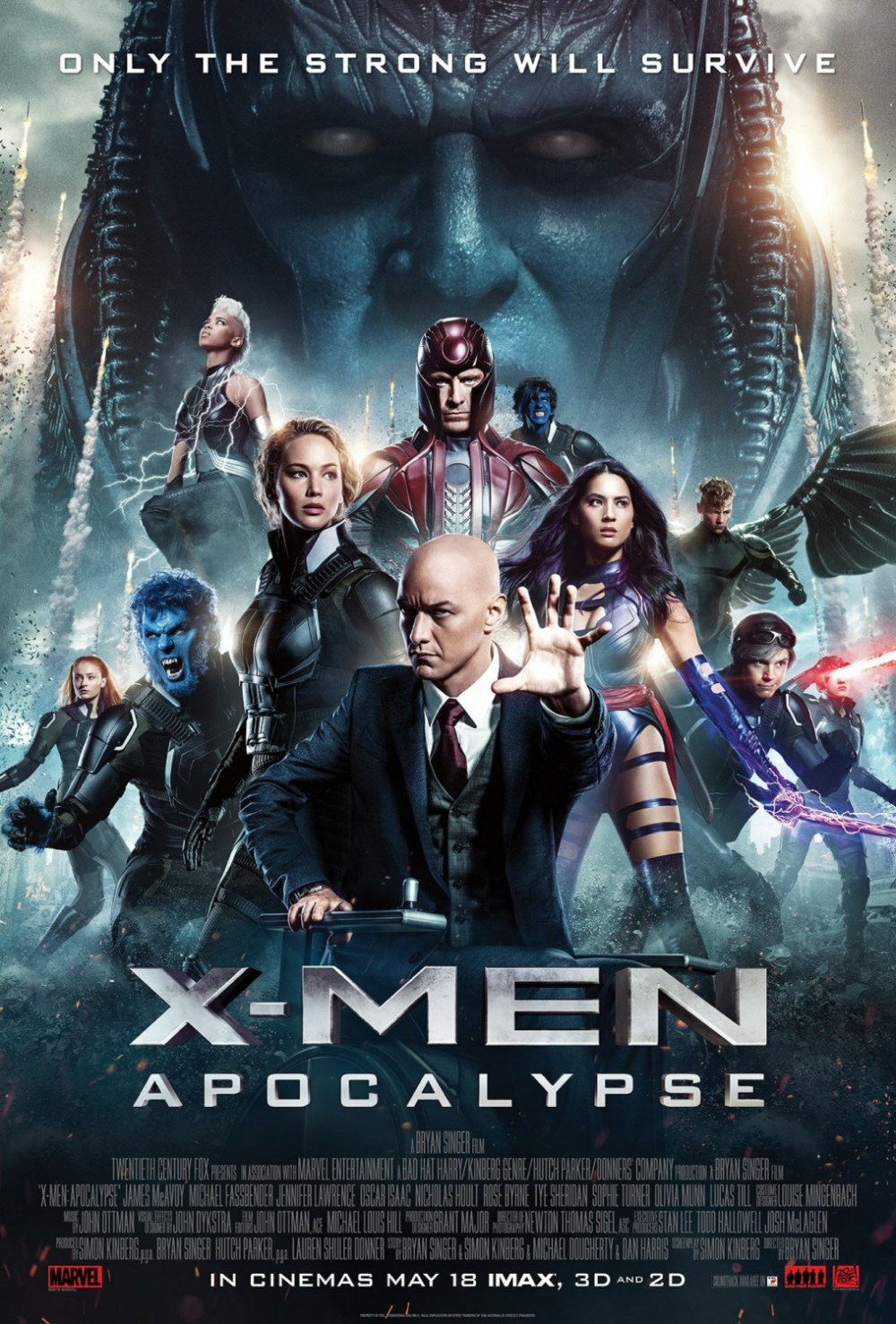
X-Men: Apocalypse

X Men Apocalypse poster

In the whirlwind of superhero movies which have come out in 2016, “X-Men: Apocalypse” ends up being sandwiched between “Captain America: Civil War” and “Batman vs. Superman: Dawn of Justice.” Like those two, “X-Men: Apocalypse” has far too many characters and plotlines to deal with, and its running time is much longer than it needs to be. But while this “X-Men” might not reach thrilling heights of “Captain America: Civil War,” it is far more enjoyable than the dour affair that was “Batman vs. Superman.” Still, after “X-Men: Days of Future Past,” this entry does feel like a comedown for the long running franchise.

The movie takes place in the 1980’s; a time of synth pop, “Knight Rider,” Ronald Reagan and “Return of the Jedi” among other things. The newest threat to both humans and mutants alike is En Sabah Nur, better known as Apocalypse, the world’s first and most powerful mutant. The movie starts off with him being entombed in a rocky grave after being betrayed by his followers, but he is awakened in 1983 and finds humanity has lost its way because, as he sees it, humanity was without his presence. As a result, he vows to destroy the world and remake it, and this time the X-Men may have a foe too powerful for them to defeat.

Playing Apocalypse is Oscar Isaac who enters yet another incredibly successful franchise after leaving his mark on another in “Star Wars: The Force Awakens.” In a way he is undone here by the large amount of makeup he is forced to wear as it threatens to rob him of his charisma. Seriously, the less makeup you put on Isaac the better as he can lock you in place with just a look from his eyes. Regardless, he is still very good here as he holds his own opposite actors who have been veterans of this franchise for quite some time.

Many of the “X-Men: First Class” cast return as well like James McAvoy, Jennifer Lawrence, Nicholas Hout, Michael Fassbender, Rose Byrne and Evan Peters. It’s great to see them all back as they are still deeply invested in these famous comic book characters as always. McAvoy, portraying Professor Charles Xavier/Professor X, shows just how mentally exhausting it is to fight an antagonist with only your mind. We also get to see how Charles lost his hair, and we leave the theater wondering how his eyebrows managed to remain intact.

Lawrence remains an enthralling presence in any movie she appears in, and she makes Raven/Mystique another in a long line of wounded warriors. The Oscar winning actress makes this comic book character into a hero as reluctant as Katniss Everdeen, and we feel for even as she feels she deserves no respect because of her regretful mistakes. While Raven/Mystique has been an antagonist for many of the “X-Men” movies, Lawrence makes her a complex character who comes to see what she must fight for most.

Erik Lehnsherr/Magneto has a setup like Logan/Wolverine had in “X-Men Origins: Wolverine” in which he’s found peace but eventually sees it completely destroyed to where the only thing on his mind is vengeance. It’s a familiar setup we have seen many times, but whether or not you know how Magneto will end up in this mutant tug of war, it’s worth just seeing Fassbender inhabit this role once again as he is riveting for every second he appears onscreen. Compare him all you want to Sir Ian McKellen, Fassbender imbues this iconic comic book character with a lot of raw emotion which will not leave you unmoved.

Evan Peters steals the show once again as Peter Maximoff/Quicksilver, the man who can move at supersonic speeds and yet still lives in his mother’s basement. Peters had one of “Days of Future Past’s” best scenes which was set to the tune of a classic 70’s song, and he does his thing here yet again to an 80’s song. It has been said that the next “X-Men” movie will take place in the 90’s, so we’ll have some time to guess what classic grunge song he will be saving the day to.

A number of other X-Men return as well, but this time played different actors. Kurt Wagner/Nightcrawler finally returns to the franchise for the first time since “X-Men 2: X-Men United,” and he is played by Kodi Smit-McPhee who gives the character a good dose of humor. Alexandra Shipp takes on Storm and sports a mohawk which is as fierce as her attitude, so watch out. The terrific Tye Sheridan portrays Scott Summers/Cyclops, and this character gets fleshed out in a way we have not seen previously. “Game of Thrones” star Sophie Turner appears here as Jean Grey, and it’s great to see the actress portray Jean’s dark side which is her gift and her possible undoing in the future.

With Bryan Singer returning to the director’s chair for his fourth “X-Men” movie, you can’t help but walk into “Apocalypse” with high expectations. Both he and screenwriter Simon Kinberg have too many characters to deal with to where several are not developed fully enough to be satisfying, and others are simply there for dramatic conflict. The mutant hating William Stryker returns, but the character barely registers this time around. We also get introduced to new mutants like Psylocke whose talents seem no different from others like her, and more could have been done to make her stand out. However, it should be noted that Olivia Munn fills out Psylocke’s uniform very well.

But even with its inescapable flaws, Singer still makes “X-Men: Apocalypse” a summer blockbuster packed with action, and the movie also hits you on a deep emotional level. We’ve been following these characters now for nearly a dozen movies, and we still care about their predicaments regardless of whatever timeline they are living through. Other directors in this franchise, with the exception of Matthew Vaughn, have not had the same success in engaging us as Singer has, and he continues to set the bar high for others looking to helm the next entry. And once again, Singer is served well here by his longtime editor and composer John Ottman who gives us yet another rousing music score.

So yeah, “X-Men: Apocalypse” could have been better, but it still works for what it is. It has a serious yet playful tone which has been the mark of many comic book movies in recent years, and it’s better than its score on Rotten Tomatoes would suggest. Regardless of how you feel about this movie, there’s still a lot of life left in this franchise and I am eager to see how the next “Wolverine” movie turns out.

Oh by the way, the filmmakers do pull off a none-too-subtle dig at “X-Men: The Last Stand.” Trust me, you will know it when you see it. Suffice to say, I don’t think Brett Ratner will be returning to this franchise anytime soon.

Copyright Ben Kenber 2016.

* * * out of * * * *

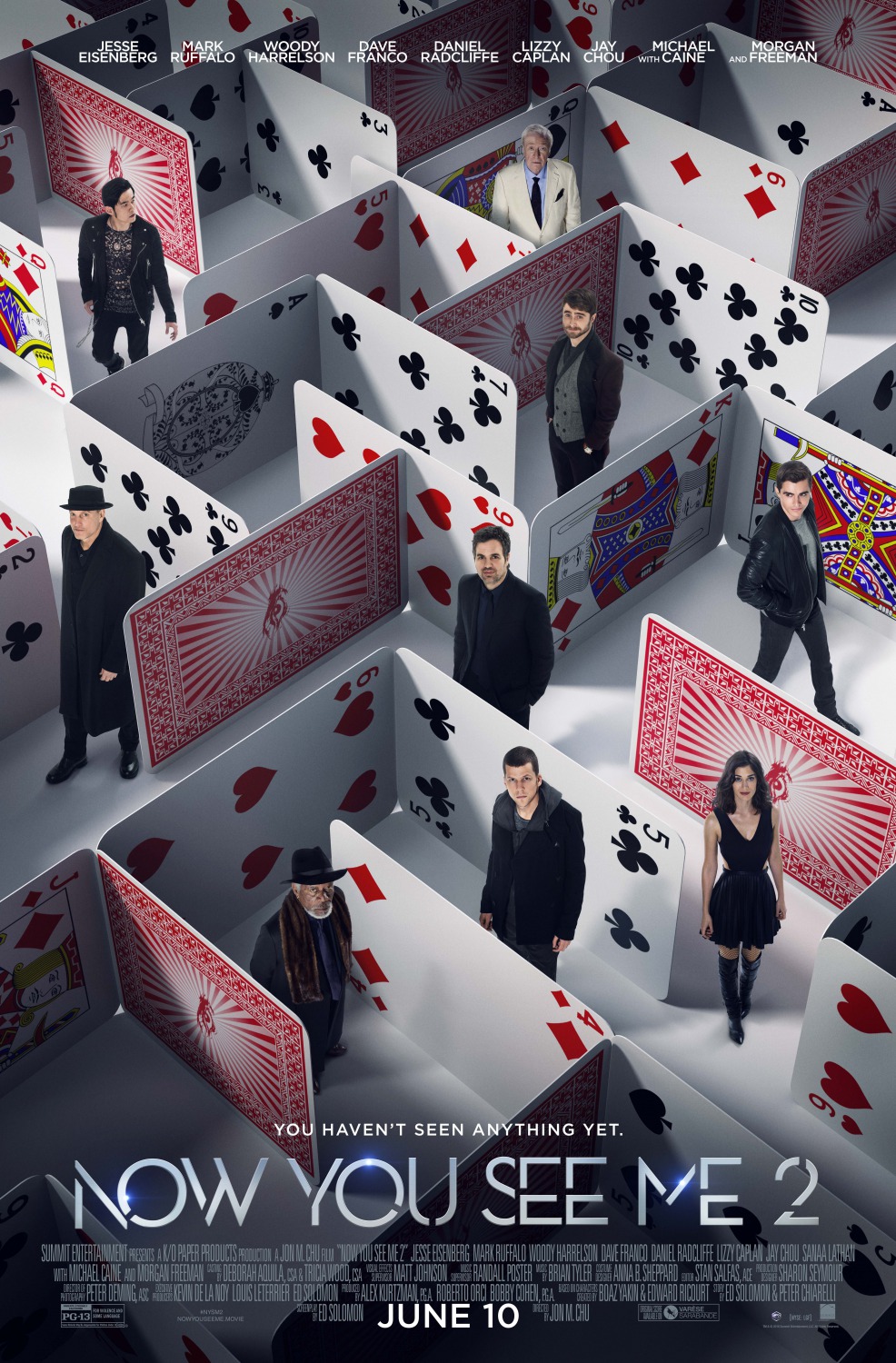
‘Now You See Me 2’ Wants To Be Cleverer Than It Is

Now You See Me 2 poster

There’s a great moment, one of the very few, in the 007 adventure “Die Another Day” when James Bond is being presented with the latest nifty gadget from Q. Upon seeing what the gadget does, Bond tells Q, “You know, you’re cleverer than you look.” To this Q replies, “Still, better than looking cleverer than you are.” Those lines of dialogue kept repeating in my head as I watched “Now You See Me 2,” a movie which tries to be cleverer than its predecessor. But in the process, this follow up become so infinitely exhausting as it heedlessly defies logic more often than not.

We follow up with the Four Horsemen a few years after the events of the first movie, and they have managed to stay in hiding regardless of how impossible it is to stay off the grid these days. But Atlas (Jesse Eisenberg), Merritt (Woody Harrelson) and Jack Wilder (Dave Franco) are soon brought out of retirement to expose a Steve Jobs-like tech guru whose fraudulent practices have caused hardship for millions of people. Henley Reeves is out of the group, due to Isla Fisher’s pregnancy, and in her place is Lula (Lizzy Caplan) who quickly proves to be more than just a wannabe magician.

They work again in conjunction with FBI agent Dylan Rhodes (Mark Ruffalo), who was previously revealed to be the one who brought the Four Horsemen together, but their big comeback show goes awry when it is sabotaged by someone who shows that Jack never died and of Dylan’s role in the whole endeavor. That someone is revealed to be Walter Mabry (Daniel Radcliffe), a tech prodigy who invested a lot of money in companies run by Arthur Tressler (Michael Caine) and lost much of it after the Horsemen stole Tressler’s millions. Walter wants his money back and forces the group to pull off their greatest heist yet, and they run into additional trouble when the imprisoned Thaddeus Bradley (Morgan Freeman) finds a way to get his revenge from behind bars.

“Now You See Me” was a runaway hit back in 2013 and, while it had a number of plot holes, it proved to be a fun ride and had a terrific cast of actors whose charisma made it all the more watchable. But this same cast, even with new additions Caplan and Radcliffe, can’t save this sequel as we come to spend more time debunking their actions than we do in just going along for the ride. While I am prepared to suspend my disbelief through many films, it became impossible to do so with this one.

Watching “Now You See Me 2” becomes increasingly ingratiating as so many random characters try to stay one step ahead of each other. But while we go to a movie like this to see good defeat bad, the filmmakers have tried much too hard to keep the audience guessing from start to finish. Considering how this sequel takes place in a time long after movies like the “Ocean’s Eleven” trilogy have been released, you would think the bad guys would be better prepared. Then again, crime does make you stupid.

If it weren’t for the talented cast, this movie would be almost unwatchable. Ruffalo, Harrelson and Eisenberg have an effortless charisma about them, and they slip back into these roles as if a day hadn’t passed since the original. Both Caine and Freeman could play their roles in their sleep, and that’s what they do here. While it’s a bummer Fisher couldn’t return, Caplan proves to be an engaging presence and her enthusiasm is wonderful to take in. And it’s great to see Radcliffe join in with this ensemble as he reminds us of something which should be abundantly clear by now: there’s much to him than Harry Potter.

Behind the camera this time is Jon M. Chu who previously directed the “Step Up” sequels, “G.I. Joe: Retaliation” and “Jem and the Holograms,” a movie better known for its terrible box office opening weekend than anything else. While Louis Leterrier, who directed the original (he is an executive producer on this one), managed to keep things going at a steady pace, Chu stretches things out to where this sequel overstays its welcome by at least half an hour. He also ends this movie in a way which makes no logical sense considering where certain characters ended up in the original. Long before it ended, I found myself having a headache that had Excedrin written all over it, and I knew taking any would not make me feel any better.

You can only fool an audience for so long until they start analyzing the story very closely. When they start asking questions during the movie’s running time, you are in trouble. “Now You See Me 2” gets undone because the filmmakers didn’t care if it all made sense or not. Instead, they end up insulting our intelligence to where you wonder if it was worth it to even make this sequel.

In the future, I would love to see a prequel to this sequel in which we watch the characters get together and figure out how they will pull all their plans and magic tricks off. It will be worth watching just to see if the characters can convince themselves, let alone the audience, that their mischievous plans make any sense whatsoever regardless of the unpredictable variables which will come their way. If they can accomplish that, you will have one hell of a movie.

Copyright Ben Kenber 2016.

* * out of * * * *