‘A Nightmare on Elm Street’ Movie and 4K Review

The following review was written by Ultimate Rabbit correspondent, Tony Farinella.
It’s hard to believe “A Nightmare on Elm Street” is celebrating its 40th anniversary this year. When legends of the horror genre are discussed, Freddy Krueger is one of the most talked about names that comes up in conversation. It all started with the original, which was directed by horror icon Wes Craven. It was a film that was wise to not overuse its main antagonist in Freddy Krueger, played by Robert Englund. In fact, the reason why some of the sequels were not as well-received was because they overused Freddy and turned him into a stand-up comedian with silly one-liners. In the first film, he’s chilling, scary, and intense. The film is also aided by a strong supporting cast including Johnny Depp, Heather Langenkamp, and John Saxon.
One of the strongest aspects of “A Nightmare on Elm Street” is the fact it focuses on dreams and how Freddy Krueger attacks his victims in their sleep. When we sleep, we let our guard down and assume we will be protected and safe. Even if we have a nightmare, we are confident we will wake up and return to our normal lives. Freddy is looking to attack young teenagers when they are at their most vulnerable. It’s an ingenious idea and one of the biggest reasons why this is such a successful film. The main characters also have to deal with the stress and anxiety that comes from trying to stay awake and fight for their lives in their dreams.

The film opens up with Tina (Amanda Wyss) having a nightmare about a man who is trying to kill her in her sleep. The man has knives for fingers, a dirty old hat, and wears a filthy red and green sweater. Because of these recurring nightmares, she has two of her friends and her boyfriend sleep over to make sure nothing will happen to her. Her friends are Glen Lantz and Nancy Thompson, played by Johnny Depp and Heather Langenkamp. Tina’s boyfriend is named Rod Lane, and he’s played by Nick Corri. When Tina ends up murdered in her sleep with blood all over the place, the police are quick to point the finger at Rod. However, he claims there was another person in the bed with them, which seems not only highly unlikely but also highly unusual. After Rod ends up in prison, Nancy decides it is time to protect herself.
Heather Langenkamp, as the take-no-prisoners final girl Nancy, is absolutely brilliant here. She’s smarter than her parents, and she’s also one step ahead of Freddy Krueger. Her father, played by John Saxon, is a police officer who is just trying to protect her. Her mother, played by Ronee Blakley, is having a tough time dealing with this situation and spends way too much time drinking and avoiding reality. Glen Lantz is wily, intuitive and quick on his feet, even if he doesn’t always believe Nancy. Because he loves her, he’s willing to help out and do whatever he can to make her feel safe and secure.
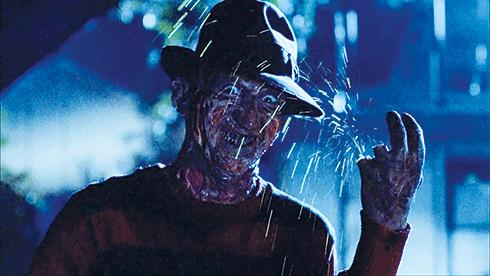
Wes Craven was usually one step ahead of his peers in the horror genre, and “A Nightmare on Elm Street” was no exception. He not only created an original horror villain, he also gave him an interesting backstory as well. He also respects teenagers enough to give them a voice in this movie. They are not stupid or vapid. They are resilient, tough, and they are trying to protect themselves, even if the results don’t always work out in their favor.
Even with the parents, some are divorced and have their own complex issues they are dealing with. This is why they have difficulty seeing what’s right in front of them. He gives his characters, good and evil, layers to them. It makes the plot and the film mean that much more when we spend time with them, get to know them, and understand their motivation. When it comes to the bloody scenes, he also knows how to leave your jaw on the floor as a viewer, as he builds up the tension until it explodes on screen, sometimes literally!
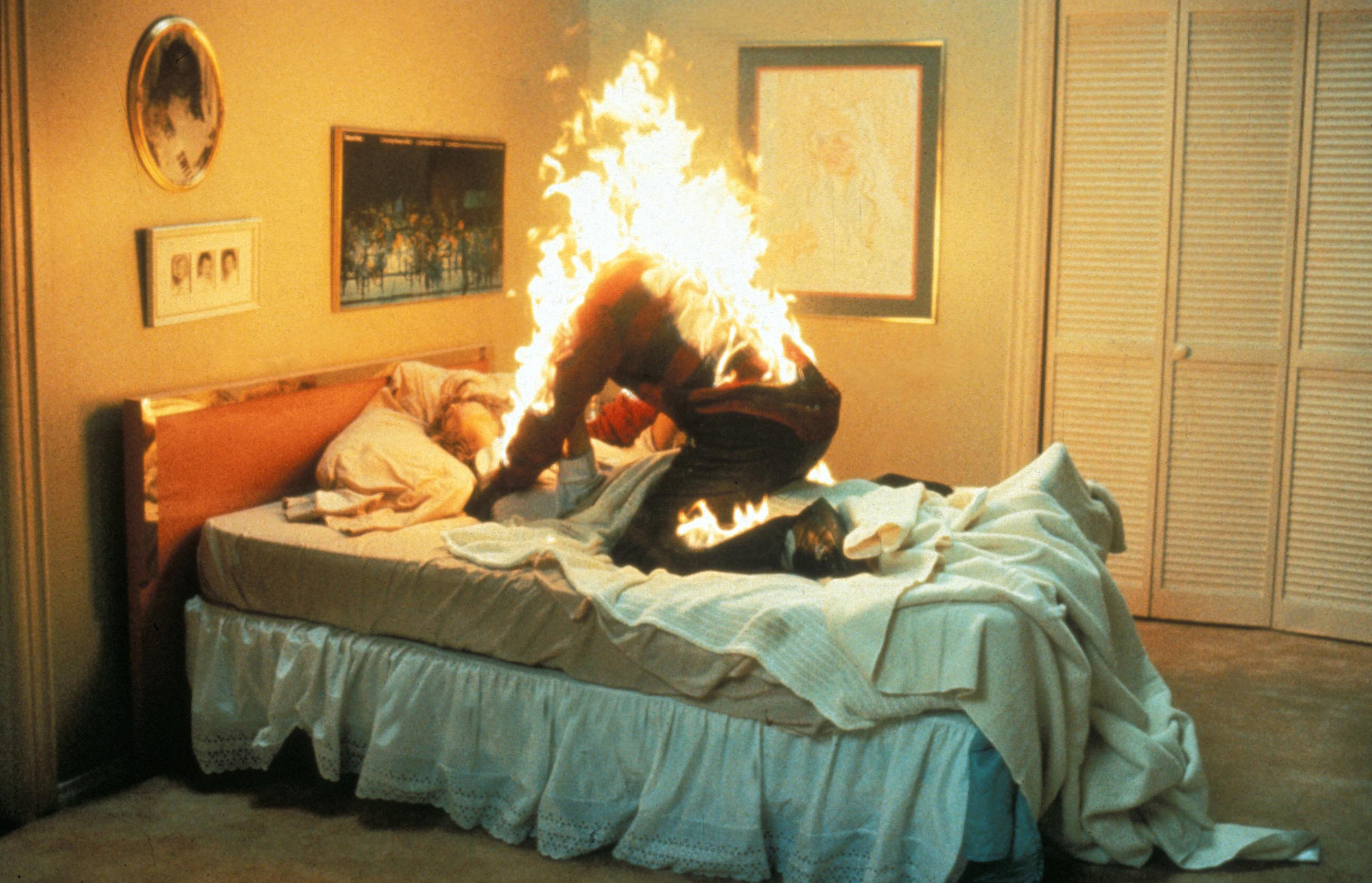
There is so much to like about “A Nightmare on Elm Street,” from the top-notch acting, the chilling score, the intense gore, and of course, Freddy Krueger himself. This is my favorite Freddy here as he’s terrifying without being over-the-top. My main issue with the film is the ending. I understand it, but I don’t like it. They build up to this big payoff and it ends with sort of a wink at the camera, which seems like it comes from another movie. For a serious and intense horror film, it ends in a rather silly fashion. Still, I love “A Nightmare on Elm Street” and consider it a great horror film. If only it had a better ending.
* * * ½ out of * * * *
4K Info: “A Nightmare on Elm Street” is released on a single 4K disc from Warner Brothers Home Entertainment. It has a running time of 91 minutes for both the theatrical cut and the uncut version. I’m not exactly sure what the difference is between the two cuts, as I didn’t notice anything out of the ordinary. It might have a little more blood in it, perhaps. It is rated R for strong bloody horror violence and gore, language, drug use, and some sexuality/nudity. There is a digital copy of the film included as well. You can either buy the 4K slipcover version of this movie or a 4K steelbook as well.
4K Video Info: This is a FANTASTIC looking 4K release from Warner Brothers Home Entertainment. The picture is so clear and vivid. It looks fantastic and it’s one of the best 4K releases of 2024. When they decided to release this movie on 4K, they really made sure to clean it up and give it the full 4K experience. As someone who has owned this film on DVD, Blu-ray and now 4K, I can confidently say this is, far and away, the best this movie has ever looked on home video. The HDR is eye-popping.
4K Audio Info: The Dolby Atmos soundtrack was also an excellent choice. It really makes for a great at-home theater experience for viewers, as they get to become emotionally invested in the film and really get lost in it. There are also subtitles in English, French, and Spanish.
Special Features:
Ready Freddy Focus Points
Commentary with Wes Craven, Robert Englund, Heather Langenkamp, Ronnie Blakely, Robert Shaye, and Sara Risher.
Commentary with Wes Craven, Heather Langenkamp, John Saxon, and Jacques Haitkin.
Alternate endings
The House that Freddy Built: The Legacy of New Line Horror
Never Sleep Again: A Nightmare on Elm Street
Night Terrors: The Origins of Wes Craven’s Nightmares
Should You Buy It?
HELL YES. This 4K of “A Nightmare on Elm Street” was released smack dab in the middle of spooky season. If you consider yourself a true horror fan who loves to own horror films on physical media, this is a day one purchase without question. It looks and sounds terrific on 4K. I’ll also add this: If enough copies of this film are purchased by consumers, there is a good chance we will see more “Nightmare” films in 4K. This is the original classic, and it comes with a terrific slipcover and an A+ audio and video transfer. Even though the special features are from the previously released Blu-ray, they are still worthwhile and interesting. I wasn’t sure what to expect from this release when I put it in my 4K player, but I was over-the-moon while watching it. It’s not a true Halloween viewing experience if you don’t watch “A Nightmare on Elm Street” during the month of October. Fans have been waiting patiently for it to be released on 4K, and they have been rewarded. This release comes HIGHLY recommended.
**Disclaimer** I received a copy of this film from Warner Brothers to review for free. The opinions and statements in the review are mine and mine alone.
 The Ultimate Rabbit