‘The Color Purple’ Movie and 4K Review
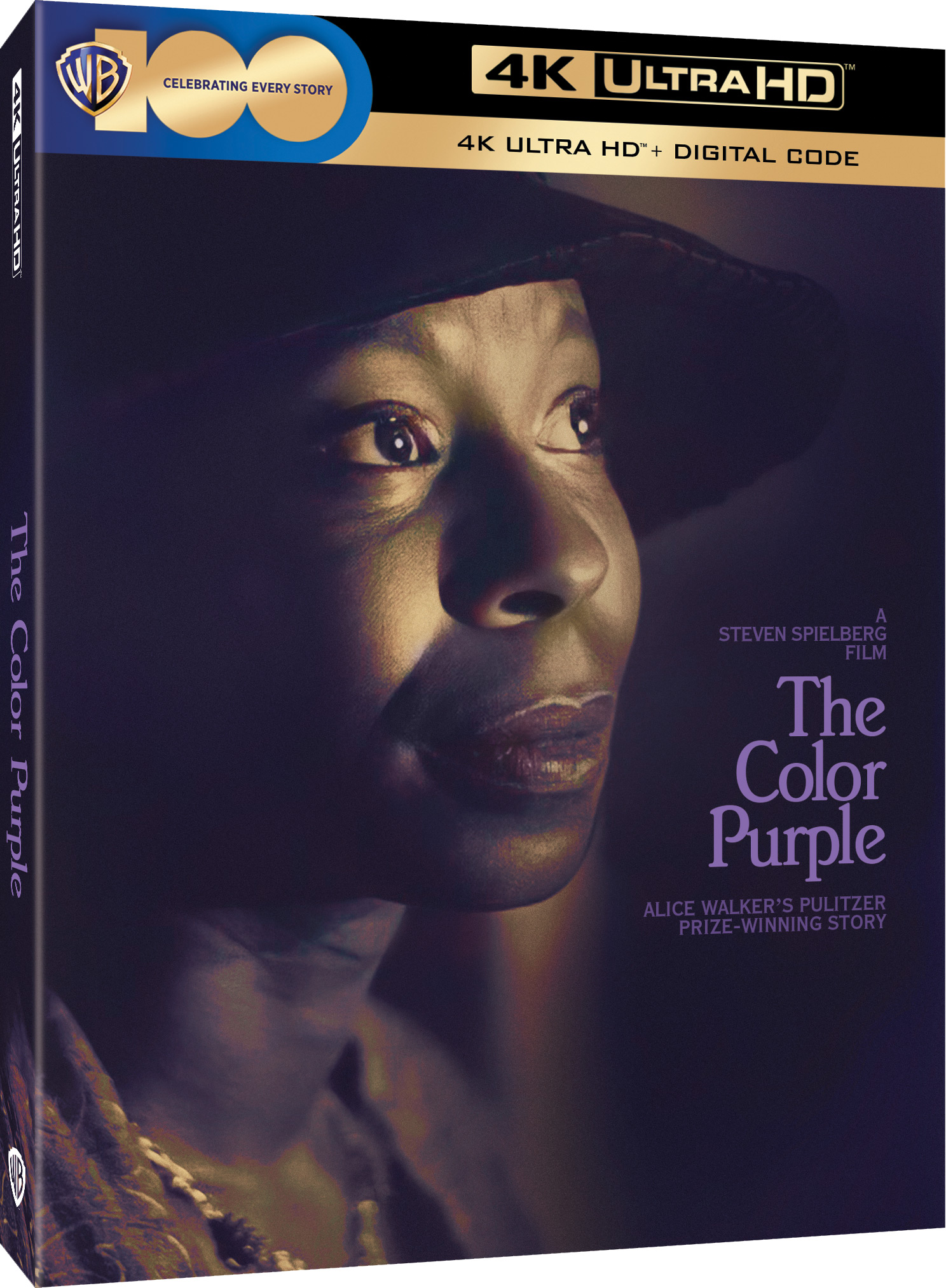
The following review was written by Ultimate Rabbit correspondent, Tony Farinella.

This was my first time having the pleasure of sitting down to watch “The Color Purple,” directed by the legendary Steven Spielberg. This is a director who has never been afraid to tackle any type of film project.  When watching this film, his trademark heart is clearly on display.  What makes it stand out and be as memorable as it is, though, is the terrific acting, especially from Whoopi Goldberg and Oprah Winfrey.  “The Color Purple” is based on the novel by Alice Walker, which I have not read, so my film review will be solely based on the film itself. I have no frame of reference to compare it to, and I think that is more than OK. Too often, people get caught up in comparing films to books, and in the end, they are two totally different mediums.  You will never be able to cover everything from the book because you are limited by the running time of the film.

The film takes place from 1909 to 1943 in Georgia where we are introduced to Celie Harris (Whoopi Goldberg), a young teenager who already has two children, a boy and a girl, because she was raped by her father. Her father took the children from her and has essentially sold them off for profit.  Celie wonders where her children are and worries about them constantly, as any mother would when they are abruptly taken.  She was also married off, thanks to her father, to Albert Johnson (Danny Glover), an abusive man who makes her do anything and everything for him.  He beats her, forces her to have sex with him, and controls every aspect of her life. In his eyes, this woman serves one purpose and one purpose only, which is to take care of him. She even has to call him “Mister.”
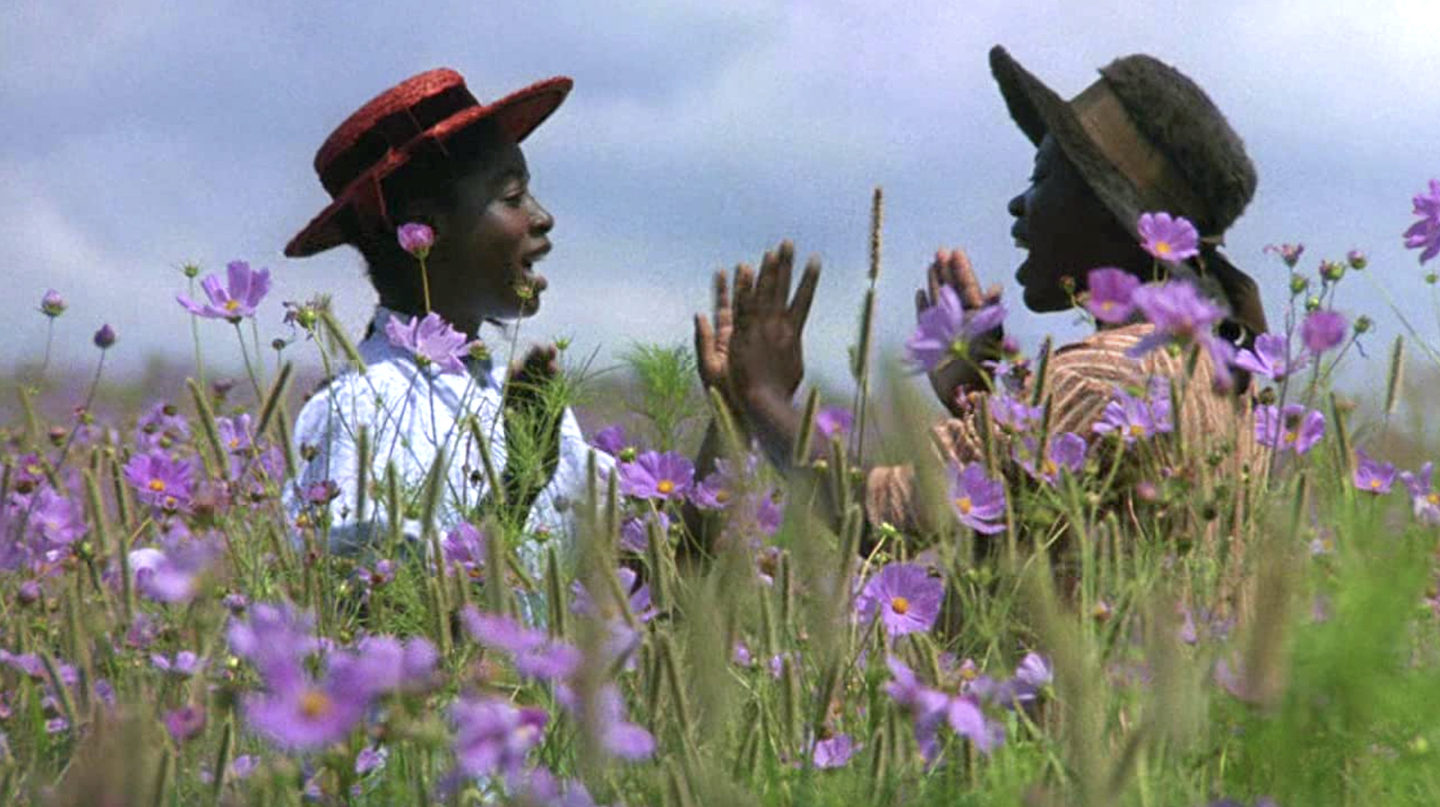
During this time, she was separated from her sister, Nettie, played by Akosua Busia. When Albert came looking for a wife, he was initially interested in Nettie, but their father would not part with her and insisted on Celie going with Albert.  Celie is often told she is too skinny and ugly.  She sees inspiration in the strong-willed Sofia, played by Oprah Winfrey.  Sofia is not one to take guff from anyone in her life, but you wonder how long this will last before she is beaten down by the rampant racism she experiences.  We get to know another woman named Shug Avery, played by Margaret Avery, a flamboyant performer who has Albert Johnson’s full attention. Even though Shug comes with some baggage, she seems to know how to hold her own and capture the attention of men while remaining independent and tough. Celie is hoping to receive some letters from her sister Nettie, but she starts to wonder why they never show up and if her sister is even alive after they were separated.

“The Color Purple” covers a great deal of time and because of the amount of time it covers, four decades, it makes sense that the film is 153 minutes. This was one of those films where I rarely noticed the running time because it was a prime example of good old-fashioned Hollywood craftsmanship. When film critics and fans say things like, “They don’t make ‘em like they used to,” in my eyes, they are talking about films like this one, which was released in 1985.  It’s a drama made by adults for adults.  This is a serious subject matter, but it’s handled with Spielberg’s trademark warmth, tenderness and care. Because we spend so much time with Celie on her journey, we can’t help but root for her to overcome her circumstances.  We get to know her and the women close to her as they have made an impact on her life.
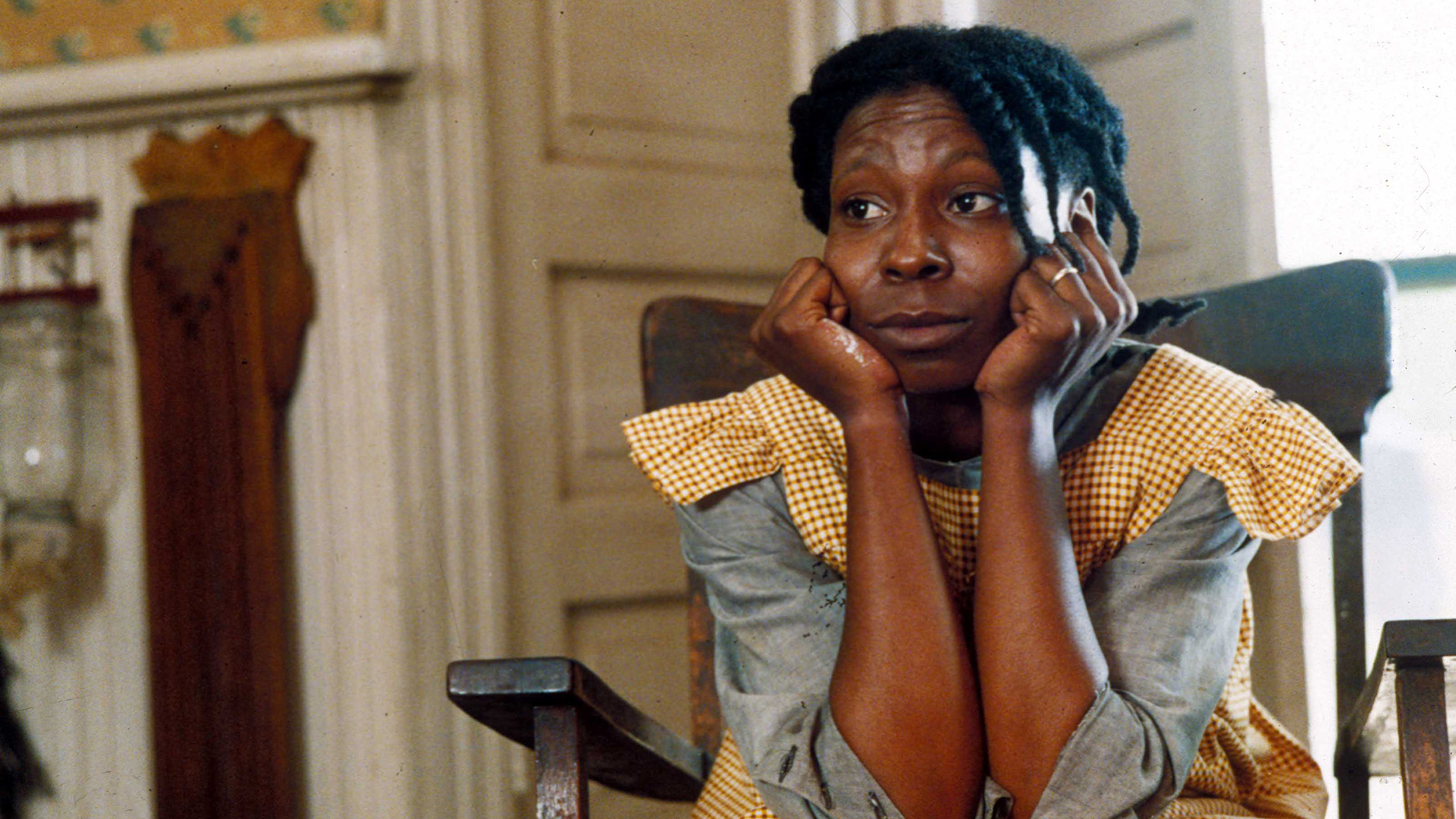
The film is incredibly patient in allowing things to slowly build up to its climax without ever feeling like it’s taking too long to get there. Goldberg is tremendous here.  She expresses a plethora of emotions on her face without ever overacting or doing too much. You can look in her eyes and see the pain and heartache of her character.  It’s a terrific performance, and I think people forget what a great actress she is when given the chance to show off her range of emotions. Of course, she won an Oscar for “Ghost” in 1991.  However, this is clearly the film she should have won an Oscar for, with all due respect to Geraldine Page.

“The Color Purple” does sometimes go off the beaten path with its narrative plot and, at times, it can spend too much time with one character in a specific time and place instead of sticking with Goldberg and her character’s story.  I was very, very close to giving this film four stars, especially because of the emotional weight which was incredibly powerful.  It earns the tears of the audience here by allowing things to build up and develop.  Winfrey is also really, really good here and earned an Oscar nomination for her performance in this film along with Avery.

One of the biggest criticisms of this film is that it was directed by a white director in Steven Spielberg. This is a film populated with a cast which is 95% Black.  I can see why audiences would take issue with that, but Spielberg is wise to stay out of the way of the material and the actors.  Even though some of his familiar touches are here, as mentioned earlier, it doesn’t feel like a typical Spielberg film.  He is sensitive to the story, and he does a terrific job of allowing the performances of his cast and the story itself to take center stage.  He’s more in the background here and, for once, it isn’t a bad thing.

* * * ½ out of * * * *

4K Info: “The Color Purple” is released on a single 4K disc from Warner Brothers Home Entertainment.  It also comes with a digital copy of the film.  The film is rated PG-13 and has a running time of 153 minutes.

4K Video/Audio Info:  This is another top-notch transfer from the folks over at Warner Brothers Home Entertainment. The HDR here really shines in some of the outdoor scenes which are lively and colorful.  It has a cinematic feel to it while also cleaning up the picture as well.  The audio track is also really solid, as this is a dialogue heavy film, and it’s easy to understand everything that is being said with a clean and crisp audio track here. Subtitles are included in English, Spanish and French.

Special Features:

Conversations with the Ancestors: The Color Purple from Book to Screen

A Collaboration of Spirits: Casting and Acting The Color Purple

Cultivating a Classic: The Making of The Color Purple

The Color Purple: The Musical

Teaser #1

Teaser #2

Trailer

Should You Buy It?

If you read my 4K reviews (and thank you if you do), you know what a big proponent I am of film history and preservation. In the year 2023, Warner Brothers has done their job in going through their extensive catalogue of films and bringing them to 4K and making them look bigger and better than ever.  There are a ton of important films in the Warner Brothers library that have received their day in court this year. In order for them to continue doing their job, we need to support their restorations of classic cinema, especially when they are done in such a magnificent manner, leaving no stone unturned. “The Color Purple” pops off the TV here and looks better than it ever has, thanks to this 4K transfer.  It sounds great as well. The film itself is an important piece of cinematic history that shows off great acting and tells a vital story with a great cast of actors and one of the best directors of all-time. At its current price point, which is around $23, this is a day one purchase on its December 5th release date.

**Disclaimer** I received a copy of this film from Warner Brothers to review for free.  The opinions and statements in the review are mine and mine alone.
‘Empire of Light’ – Sam Mendes’ Imperfect but Enthralling Love Letter to Cinema

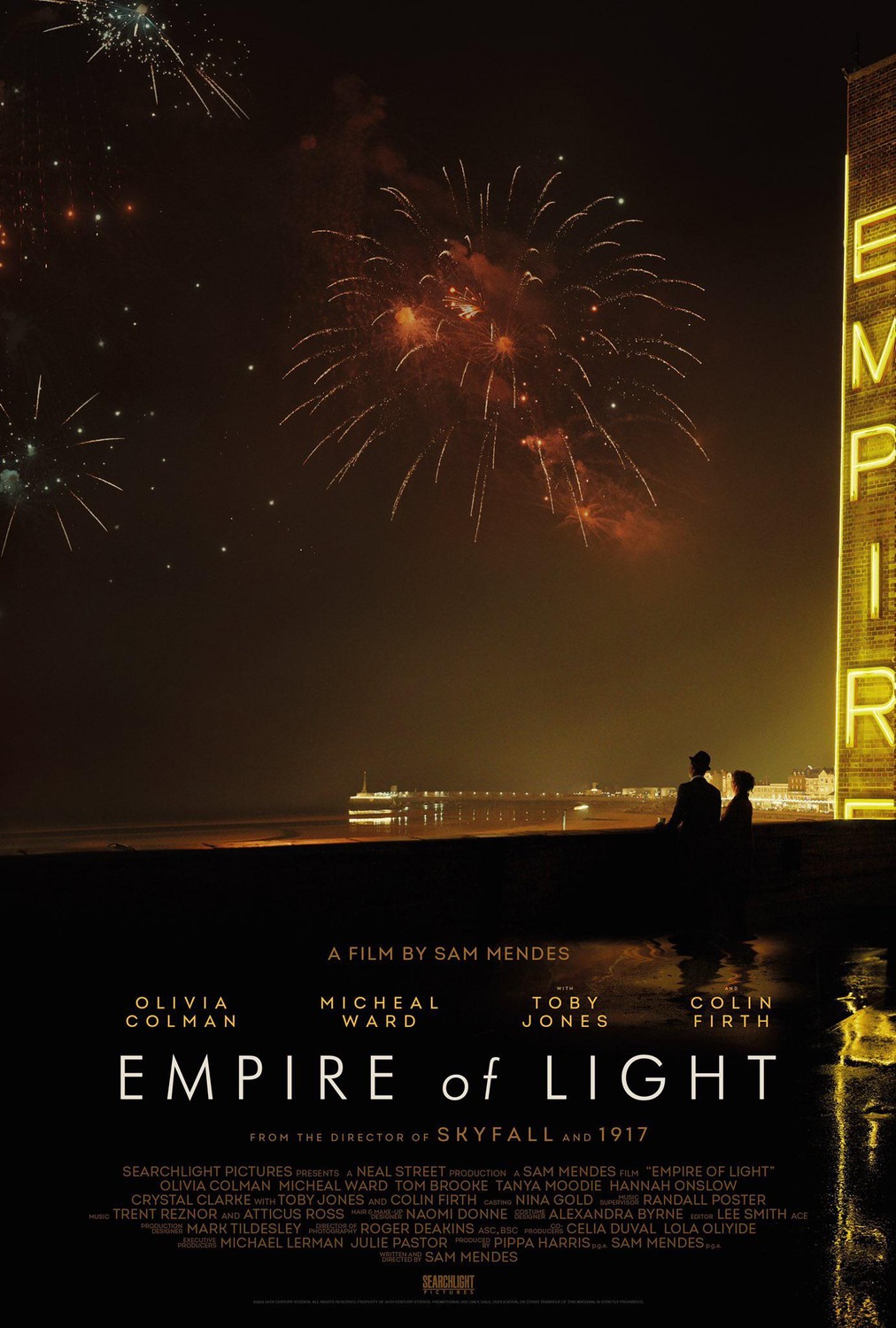
One of the things which really excited me about “Empire of Light” is how it reunited director Sam Mendes with the God of all living cinematographers, Roger Deakins. Together, these two geniuses have given us visual wonders in “Revolutionary Road,” “Skyfall” and “1917.” And with “1917,” Deakins finally won his second Academy Award for Best Cinematography, so he and Mendes are a match made in cinematic heaven as far as I am concerned. As this movie itself, I had no idea what to expect, and that is just as well.

“Empire of Light” transports us back to the early 1980’s where we are taken to an English seaside town where a cinema is showing “The Blues Brothers” and “All That Jazz,” the latter which I still need to watch. We meet Hilary Small (Olivia Colman), one of the cinema’s managers who dutifully opens it up at the start of a new day and helps get everything ready for audience members eager to take in the latest feature presentation. But while she at first seems like a pleasant enough human being, we soon learn during a doctor’s appointment that she is taking lithium. It is not made entirely clear why she has been prescribed this form of medication, but it implies she has been through a wealth of emotional turmoil to where she needs some reigning in. But while the medication may be helping her, she admits to her doctor that she generally feels lifeless on a daily basis. And there’s also the cinema’s chief manager, Mr. Ellis (Colin Firth), who often invites her into his office to discuss professional matters which prove to be anything but professional.

And then we are introduced to the cinema’s newest employee, Stephen (Michael Ward), a young black man who has been applying to college with little success. Quickly, a relationship forms between him and Hilary as both feel a deep need for compassion which reality constantly denies them. But the times they are forced to live through constantly threatens to tear them apart in tragic ways, and their secrets may reveal more to the other than they can possibly ever hope to deal with.

The first thing I have to mention about “Empire of Light” is the performance of Olivia Colman. As always, she remains an acting dynamo as she takes Hilary from ecstatic highs to devastating lows as her character is forced to deal with a roller coaster of emotions she cannot easily control in the slightest. Every single moment she has onscreen is mesmerizing as she exhibits emotions not easily faked, and it makes Hilary’s journey from start to finish all the more emotionally extreme.

Then there is Michael Ward who portrays Stephen, the one who helps lift Hilary out of her mundane existence. Ward is wonderful in creating a character whose passion for things helps to make him all the more charismatic as he navigates through a time of cruel racism and missed opportunities which can easily bring anyone else down. He also makes the seemingly unlikely relationship between Stephen and Hilary all the more palpable as some may be quick to dismiss any possibility of something like this actually happening. What life has taught me is that anything is possible, so why shouldn’t this relationship be a distinct possibility?

And yes, there is Deakins’ cinematography which is as captivating as ever. While it may not be as orgasmic as the visuals he gave us in “Blade Runner 2049,” he succeeds in painting a lovely atmosphere of an English coastal town, the kind which ceased to exist decades ago, but whose history is still relevant in today’s world of Brexit and humanity going backwards. His work is also complimented beautifully by the wonderfully ambient film score by Trent Reznor and Atticus Ross who stand in for Mendes’ regular musical collaborator, Thomas Newman.

When it comes to the screenplay by Mendes, however, it does try to cover more ground than it possibly can to where the focus gets lost from time to time. Part of me wanted to see more of the racism of the time explored more deeply as the script only seemed to touch the surface of it. The same goes with Hilary’s mental illness as it felt like I only learned so much about what she has been through. Perhaps this was by Mendes’ design as he wanted to keep us at a certain distance, but had we known more, perhaps this part of the movie would have been more profound as a result.

As for the love “Empire of Light” has for movies in general, it does make for one great scene involving Toby Jones who plays the cinema’s dedicated projectionist. Norman. Hearing Jones describe the intricacies of feeding film through the projectors makes for some of this movie’s most memorable and magical moments as it reminded me of the time I worked at a cinema in my youth. It also leads to a scene later on which reminded me of the climatic one in “Cinema Paradiso,” one of the greatest movies ever made about movies.

I do have to say that this film does threaten to have as many endings as “The Lord of the Rings: Return of the King.” Mendes must have been searching endlessly for the right way to conclude this particular film of his. Did he succeed? Well, I’ll leave it to you to find out. All I can say is that when you think the movie is over, it isn’t.

Despite its flaws which keep it from being the perfect Mendes motion picture which “American Beauty” and “Skyfall” are, I found “Empire of Light” to be very enthralling. It captures an interesting period of history, and its love of movies and film is deeply felt. And when all is said and done, it proves that Olivia Coleman is worth the price of admission no matter what she is appearing. Heck, my dad would pay her to read the phone to him just as he would with Tilda Swinton. I’m serious!

* * * ½ out of * * * *

‘Judas and the Black Messiah’ Movie and Blu-ray Review

The following review was written by Ultimate Rabbit correspondent, Tony Farinella.

Judas and the Black Messiah” is certainly a timely film with all of the issues that exist in the world today regarding racism.  Even though some strides have been made, we still have a long way to go until things are where they need to be in this world.  Systemic racism is a serious issue, and it doesn’t seem like there is a day that goes by where we are not hearing about a black man or woman being killed by someone in a position of power.  It is why films like this one are so important.  Many people do not watch or read the news.  When they see it in a major motion picture, it can sometimes raise their level of awareness.  That is the power of cinema at its finest.

Our film starts off in the late 1960’s when we meet William O’Neal (Lakeith Stanfield), a small-time criminal who goes around waving a badge in order to steal cars.  As he says in the film, the badge carries more weight than a gun because everyone knows there is an army behind that badge. When he is caught, he is forced to enter into a deal with Roy Mitchell (Jesse Plemons) to work undercover for the FBI.  If William does not accept this deal, he is facing eighteen months in prison for stealing a car along with five years for impersonating an officer.  He has to go undercover to keep an eye on what is happening with the Black Panther Party in Illinois, which is run by the charismatic and powerful Fred Hampton played by Daniel Kaluuya in an Oscar-winning performance.

Both Kaluuya and Stanfield were nominated for Best Supporting Actor for their work here, but I would have to say that I’d give the edge to Stanfield as he has to play a dual-role as a member of the Black Panther Party while also trying to keep Roy and the FBI happy.  While Kaluuya had to give more of a boisterous and in-your-face performance, Stanfield has to balance all of the moral dilemmas his character has to endure throughout the film. He wears all of this on his face and on screen with his stunning performance.  That being said, I understand it can be difficult to compare performances in different films let alone the same film and the same category.

As soon as Fred Hampton starts to gain some steam and bring people together to form the Rainbow Coalition, which is all-inclusive and a real threat to the infrastructure, greed, and abuse of power which is happening all around Illinois, he is sent to jail on some phony ice-cream theft charges.  This is when William O’Neal starts to have more responsibility put on his plate with the Black Panther Party.  He is up for the task, and he holds his own especially when it comes to security.  There is another element for Fred to consider and that is his budding romance with Deborah (Dominique Fishback).  She gives a vulnerable yet commanding performance as a young woman who is not afraid to have Fred’s back.

When Fred is finally released from prison, things get even more complicated with the Black Panther Party and the FBI’s director J. Edgar Hoover (Martin Sheen).  They are starting to see that Fred Hampton is a real threat and is bringing about real change for people.  The fact he is able to unite so many people of different races and cultural backgrounds is nothing short of amazing. He’s a true hero. At this point, William O’Neal is forced to make some difficult decisions for himself.  He has the Black Panther Party, which is, at times, suspicious of him.  He also has the FBI, which wonders if he really believes in what Fred Hampton is fighting for, each and every single day.

I’m a huge fan of the adult drama that is inspired by true events in Hollywood.  I think whenever a film can entertain and educate an audience, it’s really something to behold, and this film really stayed with me long after it was over.  It’s a powerful piece of filmmaking that is one of the best films of 2020. It features fantastic performances from top to bottom.  I mentioned the two supporting actors earlier, but to me, they are both the leads in this film.  I just feel as though Stanfield is on screen longer and has a meatier role than Kaluuya in this film.  There also must be credit given to Plemons.  Even though he is the bad guy in the film, there are a lot of layers to him.  It’s not a cardboard cutout bad guy. It must also be noted from a historical point of view, this was the first film with an all-black producing team to be nominated in the Best Picture category at the Academy Awards.  This is a well-acted, well-written, and supremely intense film from start to finish. I can’t recommend it enough.

* * * * out of * * * *

Blu-Ray Special Features:

Fred Hampton for the People

Unexpected Betrayal

Blu-Ray Info:

“Judas and the Black Messiah” is released on a single-disc Blu-ray with a digital copy from Warner Brothers Home Entertainment.  The film has a running time of 126 minutes and is rated R for violence and pervasive language.

Video/Audio Info:

The film has a 1080p/2.39:1 High-Definition transfer which really enhances the look and feel of the late 60’s into the early 70’s.  The audio is featured on the following formats: DTS-HD MA: English 5.1 and English Descriptive Audio with subtitles in English, French, and Spanish.

“Judas and the Black Messiah” is the kind of film which reminds me of why I love moves in the first place.  This is not a feel-good movie if you are familiar with the story at all, which I was not prior to watching it, but it proves a serious point that needs to be made.  It creates conversation, and it shows off some of the best acting I’ve seen in a very long time.  As mentioned earlier, I’ve always felt film is at its best when it tells stories which are worth telling and can open minds to what others in the world and are going through in their day-to-day lives.  The Blu-ray looks and sounds great, but I would have enjoyed a few more special features and maybe a detailed documentary on the real-life story.  Still, this is a film that you should add to your collection for the phenomenal acting and storytelling which is on display throughout.