‘The Color Purple’ Movie and 4K Review
The following review was written by Ultimate Rabbit correspondent, Tony Farinella.
This was my first time having the pleasure of sitting down to watch “The Color Purple,” directed by the legendary Steven Spielberg. This is a director who has never been afraid to tackle any type of film project. When watching this film, his trademark heart is clearly on display. What makes it stand out and be as memorable as it is, though, is the terrific acting, especially from Whoopi Goldberg and Oprah Winfrey. “The Color Purple” is based on the novel by Alice Walker, which I have not read, so my film review will be solely based on the film itself. I have no frame of reference to compare it to, and I think that is more than OK. Too often, people get caught up in comparing films to books, and in the end, they are two totally different mediums. You will never be able to cover everything from the book because you are limited by the running time of the film.
The film takes place from 1909 to 1943 in Georgia where we are introduced to Celie Harris (Whoopi Goldberg), a young teenager who already has two children, a boy and a girl, because she was raped by her father. Her father took the children from her and has essentially sold them off for profit. Celie wonders where her children are and worries about them constantly, as any mother would when they are abruptly taken. She was also married off, thanks to her father, to Albert Johnson (Danny Glover), an abusive man who makes her do anything and everything for him. He beats her, forces her to have sex with him, and controls every aspect of her life. In his eyes, this woman serves one purpose and one purpose only, which is to take care of him. She even has to call him “Mister.”
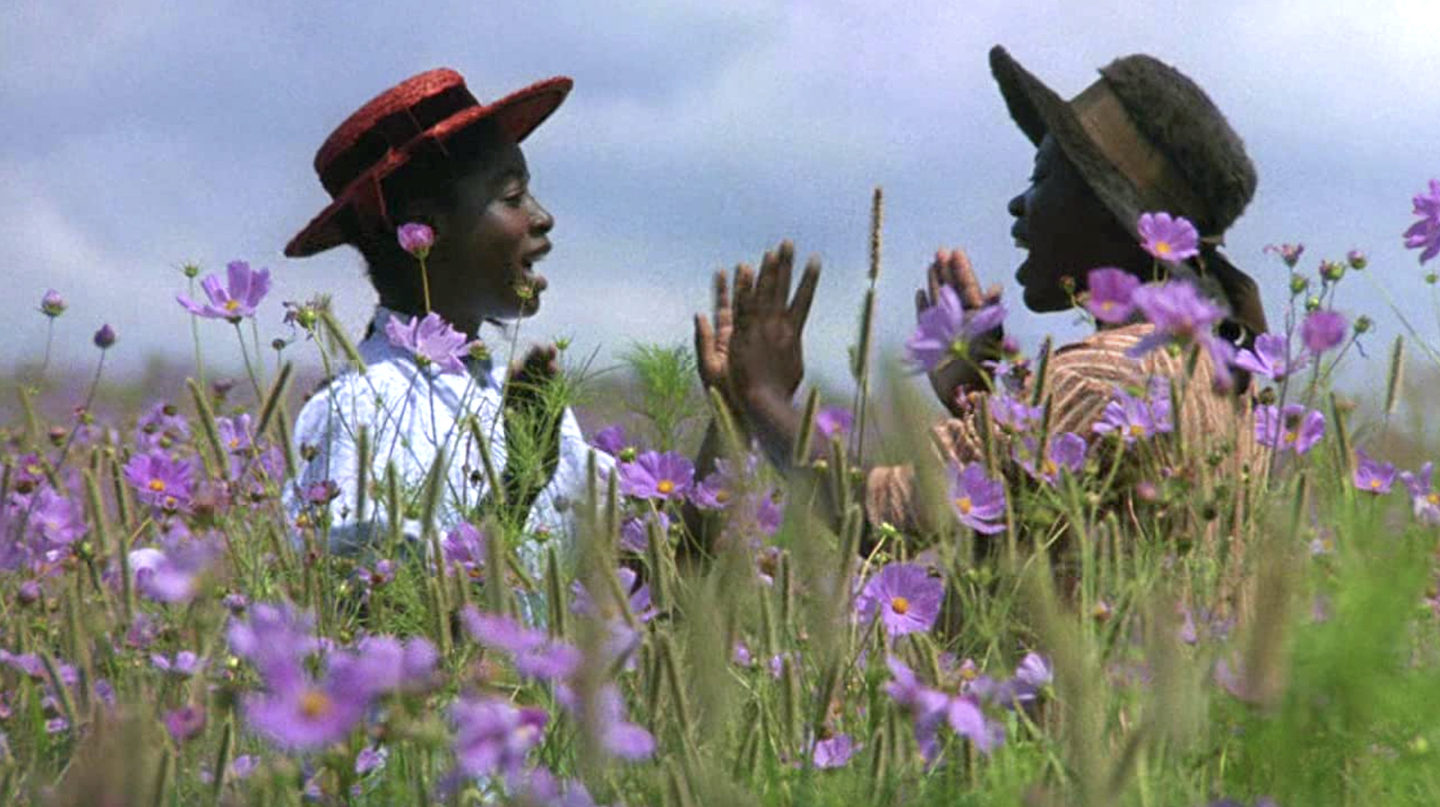
During this time, she was separated from her sister, Nettie, played by Akosua Busia. When Albert came looking for a wife, he was initially interested in Nettie, but their father would not part with her and insisted on Celie going with Albert. Celie is often told she is too skinny and ugly. She sees inspiration in the strong-willed Sofia, played by Oprah Winfrey. Sofia is not one to take guff from anyone in her life, but you wonder how long this will last before she is beaten down by the rampant racism she experiences. We get to know another woman named Shug Avery, played by Margaret Avery, a flamboyant performer who has Albert Johnson’s full attention. Even though Shug comes with some baggage, she seems to know how to hold her own and capture the attention of men while remaining independent and tough. Celie is hoping to receive some letters from her sister Nettie, but she starts to wonder why they never show up and if her sister is even alive after they were separated.
“The Color Purple” covers a great deal of time and because of the amount of time it covers, four decades, it makes sense that the film is 153 minutes. This was one of those films where I rarely noticed the running time because it was a prime example of good old-fashioned Hollywood craftsmanship. When film critics and fans say things like, “They don’t make ‘em like they used to,” in my eyes, they are talking about films like this one, which was released in 1985. It’s a drama made by adults for adults. This is a serious subject matter, but it’s handled with Spielberg’s trademark warmth, tenderness and care. Because we spend so much time with Celie on her journey, we can’t help but root for her to overcome her circumstances. We get to know her and the women close to her as they have made an impact on her life.
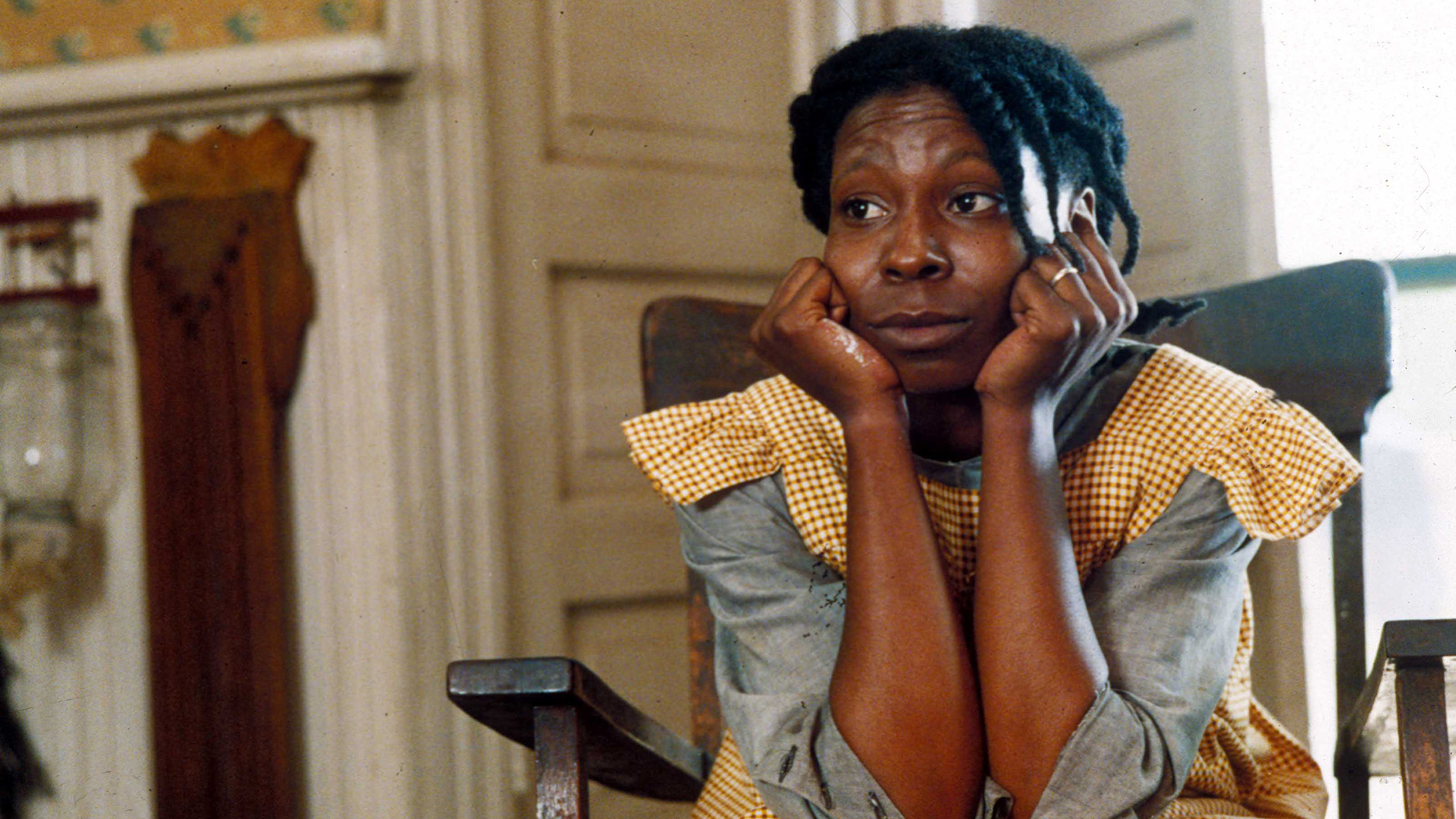
The film is incredibly patient in allowing things to slowly build up to its climax without ever feeling like it’s taking too long to get there. Goldberg is tremendous here. She expresses a plethora of emotions on her face without ever overacting or doing too much. You can look in her eyes and see the pain and heartache of her character. It’s a terrific performance, and I think people forget what a great actress she is when given the chance to show off her range of emotions. Of course, she won an Oscar for “Ghost” in 1991. However, this is clearly the film she should have won an Oscar for, with all due respect to Geraldine Page.
“The Color Purple” does sometimes go off the beaten path with its narrative plot and, at times, it can spend too much time with one character in a specific time and place instead of sticking with Goldberg and her character’s story. I was very, very close to giving this film four stars, especially because of the emotional weight which was incredibly powerful. It earns the tears of the audience here by allowing things to build up and develop. Winfrey is also really, really good here and earned an Oscar nomination for her performance in this film along with Avery.
One of the biggest criticisms of this film is that it was directed by a white director in Steven Spielberg. This is a film populated with a cast which is 95% Black. I can see why audiences would take issue with that, but Spielberg is wise to stay out of the way of the material and the actors. Even though some of his familiar touches are here, as mentioned earlier, it doesn’t feel like a typical Spielberg film. He is sensitive to the story, and he does a terrific job of allowing the performances of his cast and the story itself to take center stage. He’s more in the background here and, for once, it isn’t a bad thing.
* * * ½ out of * * * *
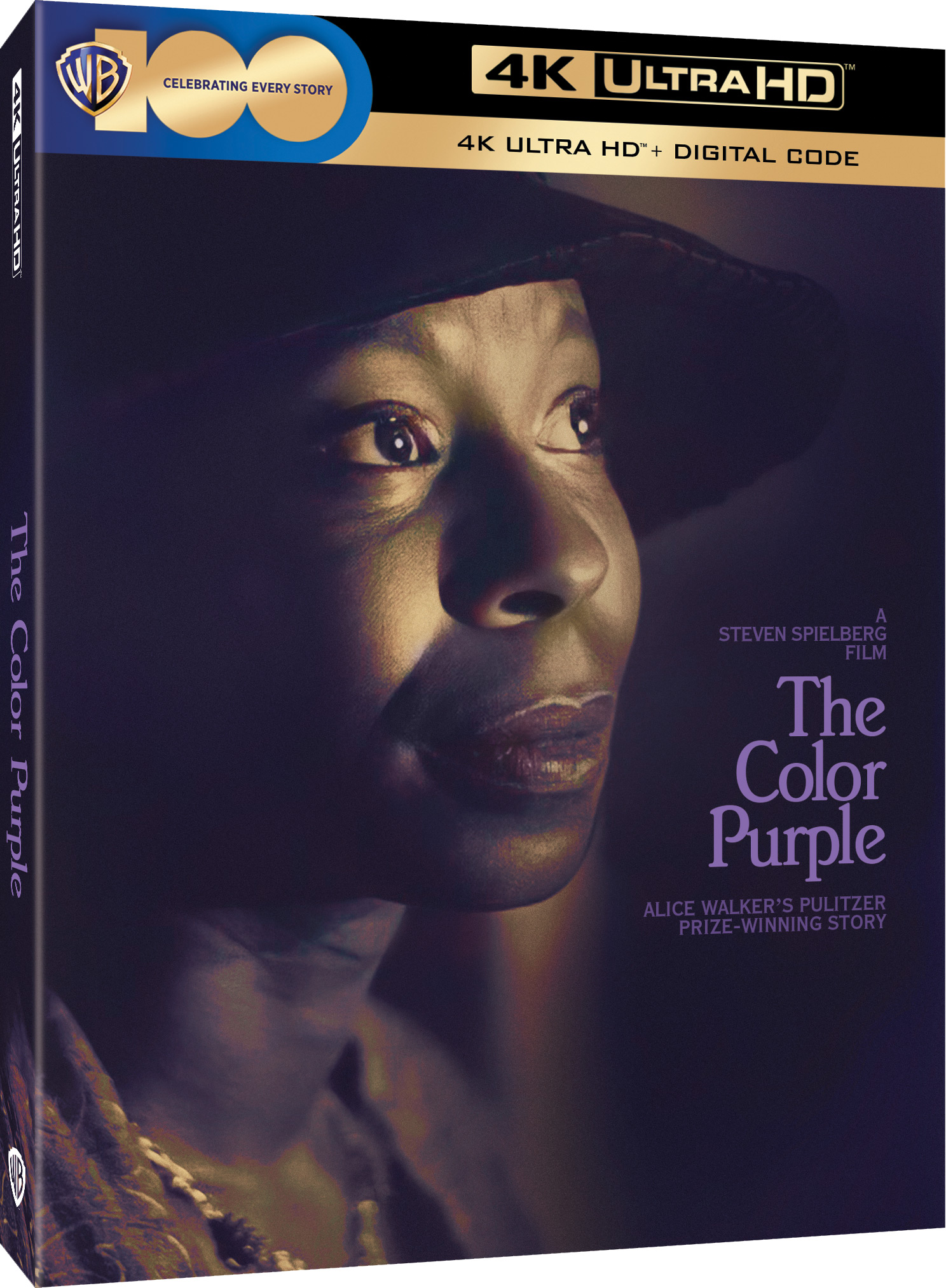
4K Info: “The Color Purple” is released on a single 4K disc from Warner Brothers Home Entertainment. It also comes with a digital copy of the film. The film is rated PG-13 and has a running time of 153 minutes.
4K Video/Audio Info: This is another top-notch transfer from the folks over at Warner Brothers Home Entertainment. The HDR here really shines in some of the outdoor scenes which are lively and colorful. It has a cinematic feel to it while also cleaning up the picture as well. The audio track is also really solid, as this is a dialogue heavy film, and it’s easy to understand everything that is being said with a clean and crisp audio track here. Subtitles are included in English, Spanish and French.
Special Features:
Conversations with the Ancestors: The Color Purple from Book to Screen
A Collaboration of Spirits: Casting and Acting The Color Purple
Cultivating a Classic: The Making of The Color Purple
The Color Purple: The Musical
Teaser #1
Teaser #2
Trailer
Should You Buy It?
If you read my 4K reviews (and thank you if you do), you know what a big proponent I am of film history and preservation. In the year 2023, Warner Brothers has done their job in going through their extensive catalogue of films and bringing them to 4K and making them look bigger and better than ever. There are a ton of important films in the Warner Brothers library that have received their day in court this year. In order for them to continue doing their job, we need to support their restorations of classic cinema, especially when they are done in such a magnificent manner, leaving no stone unturned. “The Color Purple” pops off the TV here and looks better than it ever has, thanks to this 4K transfer. It sounds great as well. The film itself is an important piece of cinematic history that shows off great acting and tells a vital story with a great cast of actors and one of the best directors of all-time. At its current price point, which is around $23, this is a day one purchase on its December 5th release date.
**Disclaimer** I received a copy of this film from Warner Brothers to review for free. The opinions and statements in the review are mine and mine alone.
 The Ultimate Rabbit