Tommy Lee Wallace Talks about ‘Halloween III’ at New Beverly Cinema

halloween-iii-poster

PLEASE NOTE: THIS ARTICLE CONTAINS SPOILERS ABOUT THE MOVIE.

Tommy Lee Wallace dropped by New Beverly Cinema on October 30, 2010 to talk about his directorial debut, “Halloween III: Season of the Witch.” This is the Michael Myers-less sequel of the long running franchise and it played as a double feature with “Trick ‘r Treat.” All the “Halloween” movie fans were in for a special treat as Wallace gave us more trivia about the making of it than we ever could have ever expected.

When Wallace was brought up after the movie ended, he admitted his reaction to watching it after so many years was that it resembled one of the strangest and most bizarre movies he had ever seen. The original plan for “Halloween III” was to work from an original screenplay by Nigel Kneale, best known for his work on the “Quatermass” series. What Kneale ended up writing was, as Wallace put it, “brilliant and deeply, darkly grim” and more of a cerebral, intellectual horror movie than your typical slasher fare. But it turned out everyone thought the overall story needed work, and Wallace said he and Carpenter wanted to make it more commercial and scarier for audiences. As a result, Kneale took his name off the movie as he felt the filmmakers would simply butcher all he came up with. Wallace did say that he really liked Kneale’s script and hopes to put it online someday in its entirety for all to see.

While making the movie, Wallace described himself and the crew as being under the gun as it was a low budget affair like most horror movies. Understanding how to do work on the cheap, he said all the “el cheapo” special effects taught him a lot about simplicity which turned out to be a great virtue.

As for Carpenter’s participation, Wallace said Carpenter gave him full autonomy as he himself always expected to have it on all his movies. Joe Dante, the director of “Gremlins” and “Innerspace,” was originally set to helm “Halloween III,” but he later turned it down when something else came up. Having worked on many of Carpenter’s movies, Wallace was originally offered the gig of directing “Halloween II,” but he turned it down as he saw no way to top the original. But upon being offered “Halloween III,” Carpenter and the late Debra Hill told him neither of them wanted to do a direct sequel as Carpenter hated “Halloween II.” With that in mind, Wallace jumped at the chance to direct it.

The only real barrier Wallace had to deal with before accepting the job was getting the blessing of Dino De Laurentis. Wallace had previously written the script for a movie De Laurentis produced called “Amityville II: The Possession,” and he said the one rule everyone needed to remember was “you do not fuck with Dino.” In response to Wallace’s request, De Laurentis begged him not do the film, but Wallace said he was determined to get De Laurentis’ blessing because he would have directed it anyway.

With “Halloween III: Season of the Witch,” Carpenter and Hill wanted to turn the franchise into an anthology of movies about the occasion of Halloween. Looking back, the original was really not about Halloween at all (the original title was “The Babysitter Murders”). But when it came to releasing this particular “Halloween” movie, Wallace said Universal Pictures did not do enough to prepare audiences for it. Sadly, audiences did not want something new. They wanted Michael Myers back and breathing heavy while slashing over stimulated teenagers.

One of the biggest influences on “Halloween III” was the 1956 version of “Invasion of the Body Snatchers” directed by Don Siegel. Like that one, this sequel was meant to be a pod movie and could not be mistaken as something nice. Wallace even wanted to shoot it in Sierra Madre where Siegel’s classic was filmed, but it didn’t look good enough. The production team had driven all over Northern California looking for the perfect small town to film in, and it took forever to find it. Wallace said they were never as lucky as they were with Carpenter’s The Fog.” Also, the town’s name, Santa Mira, is the same as the one used in “Invasion of the Body Snatchers.”

But the big difference between “Invasion of the Body Snatchers” and “Halloween III” is in the way each movie ended. Siegel wanted his film to close on a highway with star Kevin McCarthy screaming frantically, “THEY’RE ALREADY HERE! YOU’RE NEXT! YOU’RE NEXT!” Instead, “Invasion” ended the same way it began, in a police station. All this did was indicate to the audience everything was going to be alright. Wallace said the ending of “Halloween III” was dedicated to Siegel for what he tried to pull off, and it leaves the fate of the world up in the air which makes things far scarier as your mind was forced to imagine what could have happened. Universal Pictures, however, put pressure on Carpenter to change the ending to something more upbeat. When Carpenter asked Wallace if he wanted to change the film’s ambiguous climax, Wallace said he refused to do so and Carpenter defended Wallace’s decision to the studio.

Tom Atkins’ name in the credits as well as his first appearance onscreen generated a huge applause from the audience. When it came to casting “Halloween III,” Wallace said Atkins was already a part of Carpenter’s company of actors, and his performance in “The Fog” served as his audition for the role of Dr. Daniel Challis. Wallace then went on to explain how horror movies can easily be ruined by “pretty boy casting,” and he felt this didn’t need to be the case here. Atkins naturalistic performance is commendable considering much of what he has to deal with is utterly ridiculous. You also have to give him credit for wasting no time in bedding the main female character, Ellie Grimbridge, played by Stacey Nelkin.

Another actor who got a lot of applause was the late Dan O’Herlihy who portrayed the movie’s chief villain, Conal Cochran. Wallace described O’Herlihy as being perfect for the part, and he was always prepared and ready to go. He also said O’Herlihy was a man from the British Isle, Irish and was someone who was never afraid of getting sentimental. O’Herlihy’s performance was a fiendish mix of a friendly persona which is a cover for his grisly nature.

As for Nelkin, the first question from the audience was whether or not her character was a robot throughout the entire movie. Wallace said he honestly didn’t know and figured Cochran’s company was really good at making robots in the first place. Nelkin was a very appealing presence in “Halloween III,” and perhaps Roget Ebert put it best in his one-and-a-half-star review of the movie: “Too bad she plays her last scene without a head.”

Then there’s the movie’s commercial for the Silver Shamrock masks which features one of those annoying jingles which, like any other commercial, you cannot get out of your head. Alan Howarth, who composed the score along with Carpenter, was given credit for doing the jingle and putting it to the tune of “London Bridge” from “My Fair Lady,” but Wallace said it was his idea more than anyone else’s.

As for the voice on the jingle, it is Wallace’s. They were originally going to hire someone else, but when they found out the guy wanted $550, it was quickly determined they couldn’t afford him. Wallace got the job soon after and said he got into the mood by doing the smooth tone of a “stupid radio voice from the 50’s.”

Another audience member asked Wallace if there were any product placements in “Halloween III,” and he said there were not. Truth be told, this wasn’t really the kind of movie which would allow for that, and it was also clarified how no one was ever asked to move the can of Miller Lite closer to the camera.

“Halloween III: Season of the Witch” was designed to be a diatribe against consumerism, and it didn’t turn out to be a very elegant one. The movie cost $2.5 million to make and grossed about $14 million at the box office. While it did make a tiny profit, the sequel was considered a critical and commercial disappointment. Wallace said he fell into an abject depression for months afterwards as he felt he did a shitty job on the sequel and figured he would be consigned to movie hell.

Years later, however, Wallace discovered “Halloween III” had developed a cult following and a new generation of fans. He was stunned to hear a lot of people telling him they watch it every single year, and he said people continue to invite him to speak at annual horror conventions about it. Having been originally released in 1982, audiences have had plenty of time to reflect on the kind of movie it was and reevaluate it critically. While still not a great film by any stretch, it’s much better than its reputation suggests.

Certainly, there are other “Halloween” sequels that are far worse (“Halloween: The Curse of Michael Meyers” is the pits), and the moderator put it best when comparing the third movie to “Halloween: Resurrection:”

“Do you prefer this or Busta Rhymes?”
Save

Al White Discusses How Jive Talk Came About in ‘Airplane’ at New Beverly Cinema

airplane-movie-poster

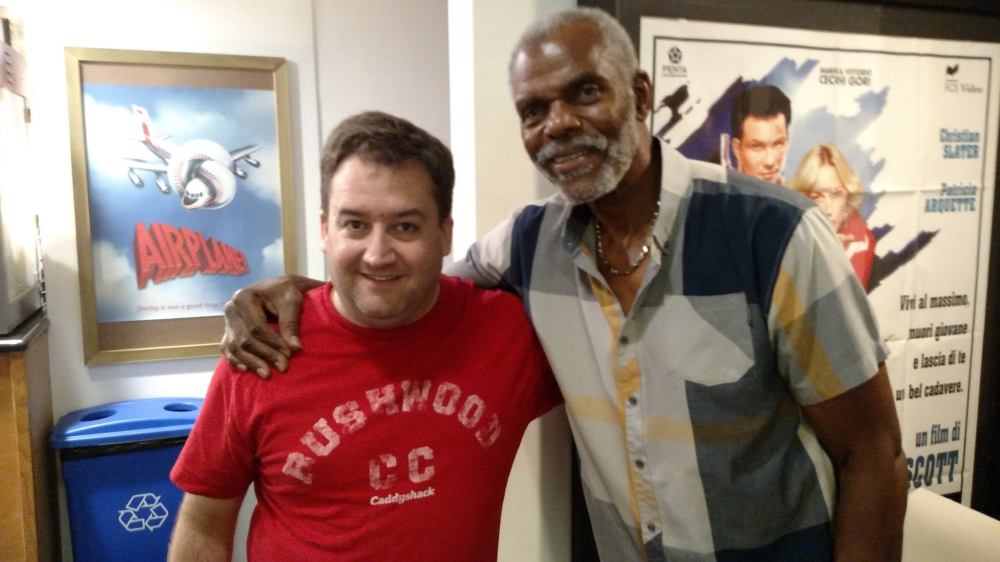
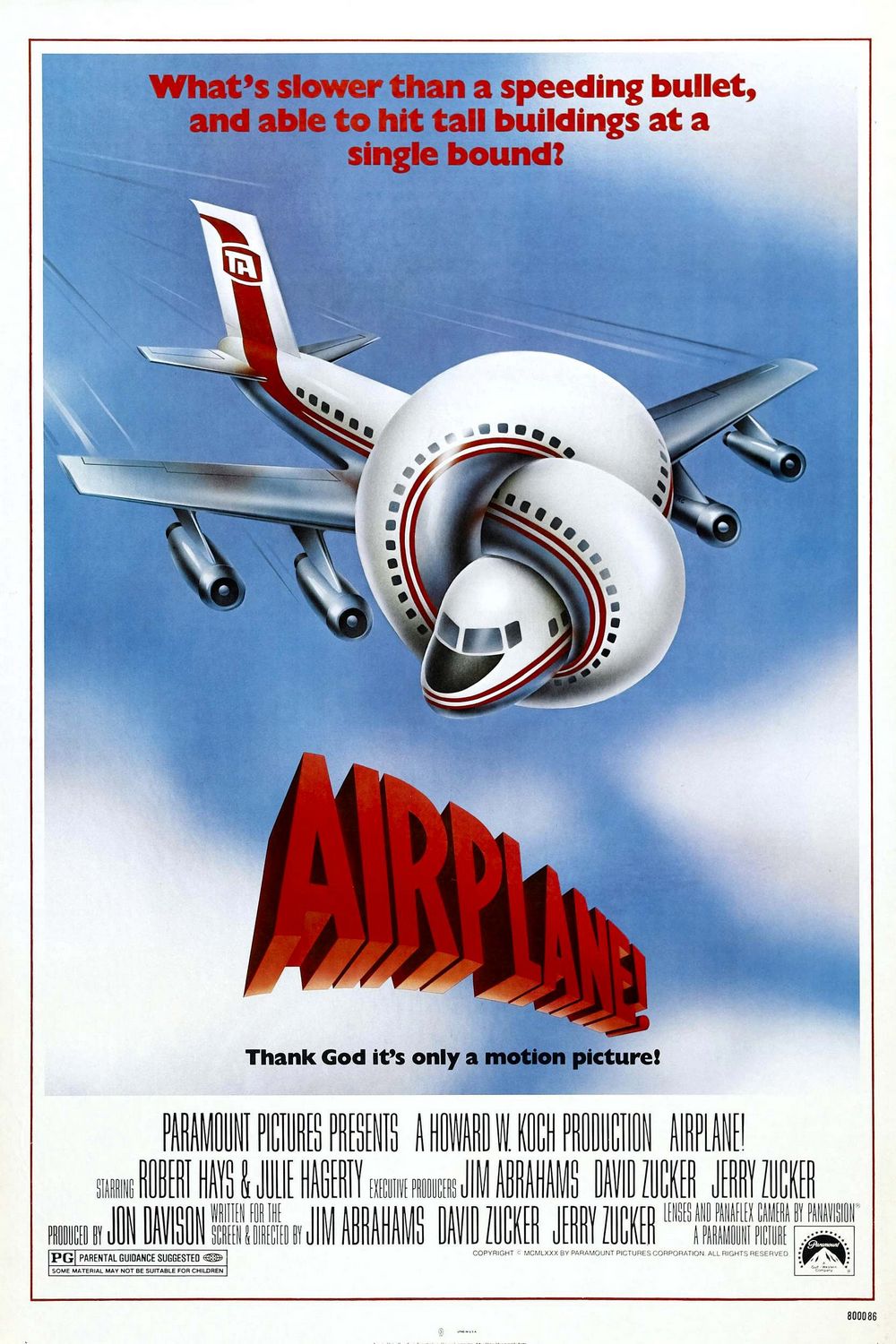
New Beverly Cinema was packed more than usual when the revival theater screened one of the funniest comedies ever made, “Airplane,” in honor of its 35th anniversary. After the movie was over, the audience got treated to a special appearance by Al White, the actor who played one of the jive talking passengers in the satirical comedy (to be more specific, he was the one with the beard). He ran up to the front of the theater to a thunderous applause and remarked how the movie still holds up after all these years, and the only thing which has changed about it is the color of his hair.

airplane-al-white-screenshot

White was born in Houston, Texas but was raised mostly in San Francisco, California, and he decided to pursue an acting career after working as a janitor at Golden Gate Park for eight years. In addition to his role as the jive talking dude in “Airplane,” a role he would reprise in “Airplane II: The Sequel,” he also had a memorable role in “Back to the Future Part II” as an angry homeowner who tries to beat up Michael J. Fox with a baseball bat. He was also a member of the American Conservatory Theater for several years and originated the role of the military officer in the Tennessee Williams play “This is an Entertainment.”

White told the New Beverly audience that making “Airplane” proved to be a lot of fun. While the movie was distributed by Paramount Pictures, much of its filming took place in Culver City, California.

Acting opposite White as the other jive-talking man in the movie was Norman Alexander Gibbs whom has since moved back to the east coast of the United States. White remarked at how Gibbs talked so much to where he didn’t want to compete with him, so he tried to fill in the blanks when Gibbs wasn’t saying anything. That made for one wonderful scene after another in this comedy classic.

Many in the audience were curious about the jive language White, Gibbs and Barbara Billingsley, who played the elderly white woman who understood what they were saying, said throughout and if it was a real language. White said it was something he and Gibbs worked on throughout shooting. The movie’s writers and directors, Jim Abrahams, David Zucker and Jerry Zucker, apparently got the idea for the jive talking guys while they were in a restaurant and sitting next to some black men who spoke in a language they couldn’t understand.

Jeff Zucker, the one who worked with the actors on set the most, gave the actors free range to come up with dialogue, and White described how a line of dialogue like “each of us faces a moral choice” turned into “that gray matter backlot perform us DOWN, I take TCB-in’, man!”

Following the screening of “Airplane,” White hung out in the lobby to sign autographs and talk with the fans. I thanked him for coming down to the New Beverly and told him how I always wondered if the jive language was real or if it was gibberish. He replied, “It’s gibberish to those who don’t understand it, but it makes perfect sense to those that do understand it.”

The genius of “Airplane” is that all the actors never played their roles as if they were in on the joke, and that’s a lesson lost on many filmmakers today when they make satires. These days, filmmakers seem far more concerned about the jokes than anything else, and the movies they make suffer as a result. To this White replied, “The old stuff is better.”

COL’ got to be! (How true!)

ben-kenber-and-al-white-from-airplane

Tracy Letts Looks Back on ‘Bug’ at New Beverly Cinema

Tracy Letts photo

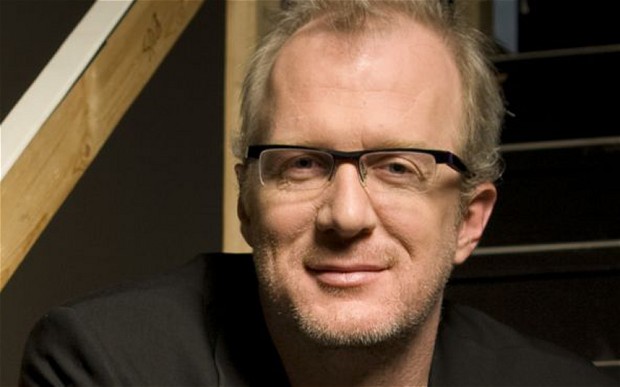
New Beverly Cinema concluded their month long tribute to Oscar winning filmmaker William Friedkin with a double feature of “Bug” and “Killer Joe,” movies which allowed him to escape the pressures of big budget filmmaking by going the indie route. Both were based on plays written by Pulitzer Prize-winning playwright Tracy Letts who also adapted them to the big screen, and he was the guest of honor at the New Beverly for this final night of Friedkin. Following “Bug,” he participated in a Q&A with Brian J. Quinn, host of the Grindhouse Film Festival. Quinn’s first question was how Letts first came up with “Bug,” and Letts took us back in time to when the play was first conceived and of how Michael Shannon was involved.

Bug movie poster

“Where it came from is what I’m puzzling about myself right now,” Letts said. “I had written ‘Killer Joe’ in 91, it got produced in 93, and that production wound up going to the UK. The Gate Theatre in Notting Hill (where it was put up) asked us for another show. The group for ‘Killer Joe’ were interested in working again, so I wrote quickly and I wrote the role of Peter for Mike (Shannon). Mike had played Chris in my production of ‘Killer Joe’ and was such a great actor. We took it to the Gate Theatre and the play wasn’t worked out. It took a long time and a lot of productions for me to work out some of the problems with it, but Mike played Peter not only in the London production but in the subsequent production in Chicago where I continued to work on it. And then the play went to the Barrow Street Theatre in New York in 2005, and Mike had been with the play for a number of years at that point.”

“Bill Friedkin saw the play in New York and he called me out of the blue,” Letts continued. “I had never met him or spoken to him and I thought it was a prank actually, but he had seen the show. He actually said, ‘I don’t actually think this is a movie. I just wanted to tell you that I am a fan of your writing and I think it’s great.’ And he called the next day and said, ‘Maybe it is a movie. Why don’t you come out here to LA and talk to me’ So I flew to Los Angeles and I met Bill at his home for the first time. He said, ‘I think it is a film. The more I think about it, it seems very cinematic to me.’ I said I would love to work with Bill Friedkin but it’s a claustrophobic piece. It doesn’t really make a lot of sense to open it up and have these disturbed people out in the world. And he said, ‘First, do no harm. I love the play and I have a way to make the play cinematic, so let’s work on the screenplay.’ And we did.”

Bug Michael Shannon and his teeth

Now while Shannon is well known these days for his work in movies like “99 Homes” and “Man of Steel,” he still had yet to make his big cinematic breakthrough. That would come a few years later in Sam Mendes’ “Revolutionary Road” which earned him an Oscar nomination for Best Supporting Actor, but there was no forgetting who he was after watching “Bug.” Of course, getting the actor cast in the movie was a challenge, but Letts explained how Friedkin championed for him.

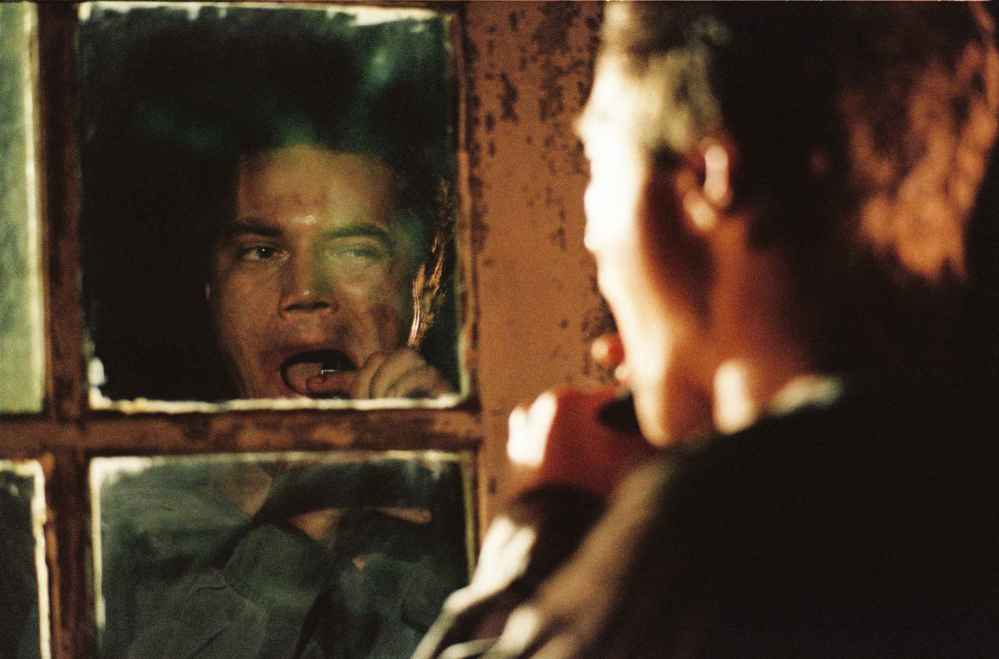
“Billy fought really hard for him,” Letts said. “The people who were financing the film had no interest in using Mike, but Billy just insisted. He had seen Mike do the play live, he knew how powerful Mike was in the role, and he knew the role was written for Mike. And Billy actually had a lot of experience casting a lot of unknowns in movies: William L. Petersen in ‘To Live and Die in LA’ was his first big break, Linda Blair and Jason Miller in ‘The Exorcist.” I’m really glad he did (fight for Mike) because among the many pleasures of the film is the fact that Mike’s extraordinary stage performance was preserved on film. The freak out scene where he’s flopping and having a seizure on the bed, he used to do that on stage eight times a week.”

“Bug” was not a big hit when it arrived in movie theaters back in 2007. Part of this was due to competition from summer blockbusters, but it was also the result of what Letts called a terrible marketing campaign. While “Bug” looks like a horror movie, it is at its heart a psychological thriller and a character study. Still, studio executives in their infinite wisdom were convinced they knew what they were doing.

“Lionsgate decided that they were going to do a big opening and they were gonna just try and lure the kids into it like it was ‘Saw’ or ‘Hostel,’” Letts said. “They opened us up on 1,600 screens and they opened it in the summer opposite ‘Pirates of the Caribbean: At World’s End’ on Memorial Day weekend. Billy had begged them not to do this. We said please don’t open this movie on 1,600 screens. We said this was a terrible mistake; we should open it small and let it build its audience. But they just insisted and ran these terrible trailers on TV with the announcer going, ‘They live in your blood. They feed on your brain.’ So the horror movie kids came in and they hated it, and the people who would have enjoyed the movie didn’t come because they thought it wasn’t their cup of tea. So it just died a terrible death unfortunately.”

Letts also talked about Friedkin and of how he makes a movie. Because this was a low budget feature, its shooting schedule was very short and Friedkin was in no position to be like Stanley Kubrick or David Fincher and do 70 takes of the same scene. Letts also took the time to demystify Friedkin’s reputation.

“Billy shoots quick,” Letts said of Friedkin. “He starts work early in the morning at four o’clock, he’s done and goes home. He brags about the fact that he only shoots one take. That’s not quite true. He will shoot something else if light falls into the shot. Mike used to ask him for another take and Billy said, ‘What, you got stock in Eastman Kodak?’”

Bug Ashley Judd

“Bug” proved to be an emotionally raw cinematic experience and is almost as unnerving as Darren Aronofsky’s “Requiem for a Dream.” Both Shannon and Ashley Judd give some of their best performances ever, and Friedkin succeeds in stretching this play beyond its claustrophobic staging to give us something which slams us back into our seats and never lets us go for a second. It was a real treat for the New Beverly audience to have Tracy Letts come down and talk with us. In his heart he still feels like a Chicago theatre guy more than anything else, but along with Friedkin he made a pair of movies which fearlessly went against what was mainstream, and we need movies to go against the grain every once in a while.

Bug movie poster 2

Copyright Ben Kenber 2016.


Save