Daniel Franzese Talks About ‘Bully’ at New Beverly Cinema
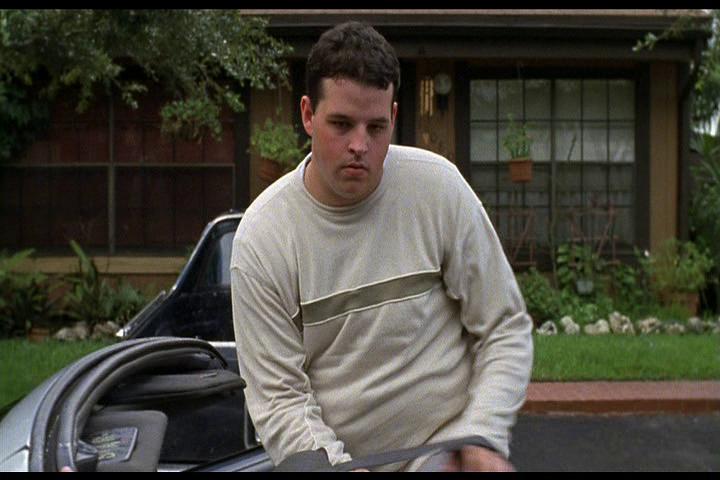
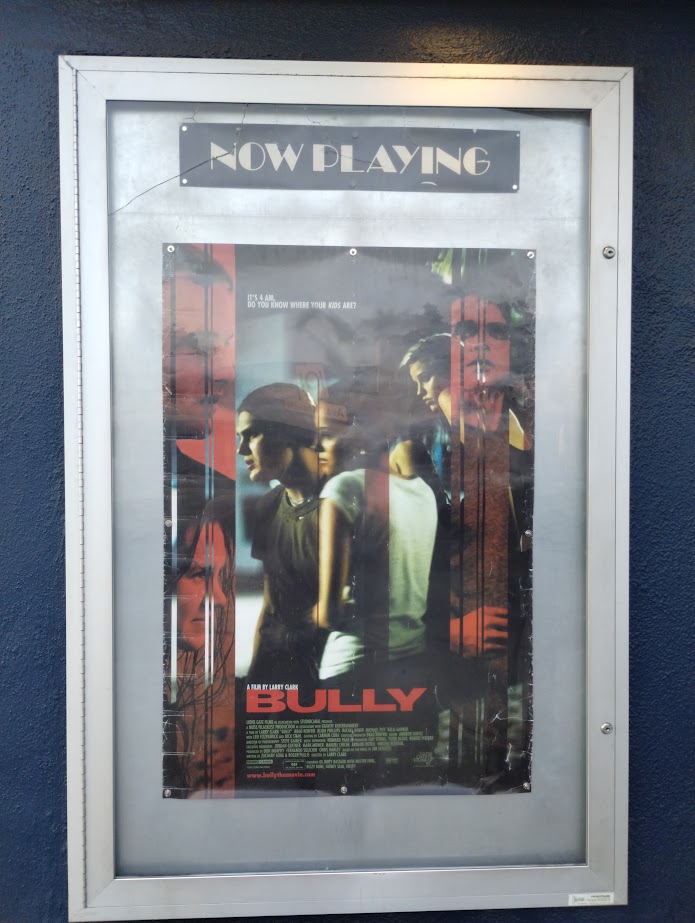
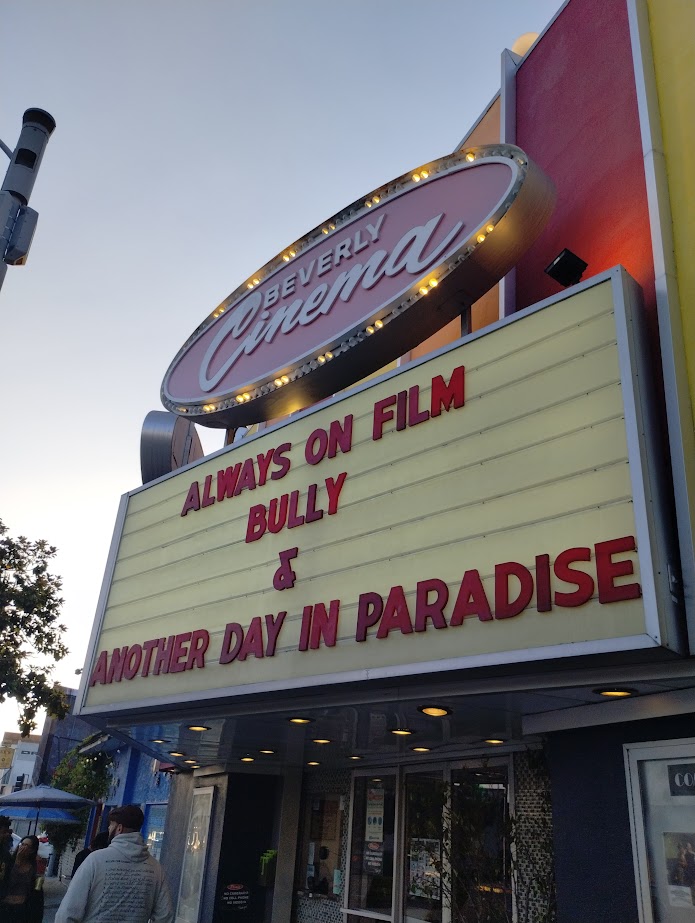
On August 12, 2025, New Beverly Cinema presented a Larry Clark double feature of two of his films: “Bully” and “Another Day in Paradise.” Before “Bully” unfolded on the silver screen, actor and filmmaker Joel Michaely brought out a special guest: Daniel Franzese who played Derek Dzvirk. “Bully” was Daniel’s film debut, and it quickly earned him his SAG card. Daniel thanked Joel for being there and remarked how he killed Joel once in a horror movie entitled “Cruel World” where he shot him in the head.

Daniel said “Bully” was the first time he ever got to hold a screenplay in his hands, and he talked about meeting the casting director, Carmen Cuba, at his audition.
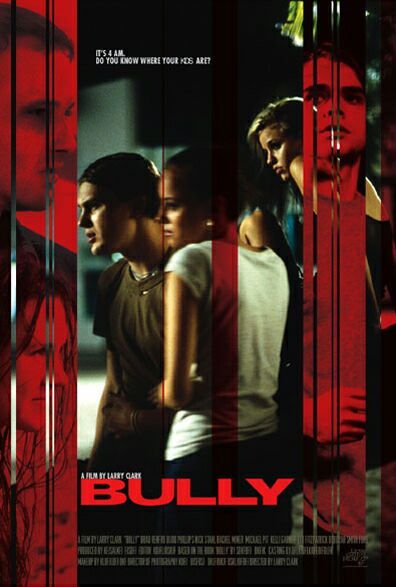
Daniel Fransese: She was like, “Do you wanna see who you are going to play?” I said okay, and she opened up the true crime novel (written by Jim Schutze), and I looked exactly like the guy. And I was just like, oh shit! I can actually get this! So, it was very scary and nerve wracking.”

Rumors are that the set of “Bully” was a crazy one, and being that this was Daniel’s first film as an actor, you can understand and appreciate his feelings at the time.

DF: I’m a pretty easy-going guy, and I am also a theatre guy and a standup comedian. I’m used to being around other people, and I am good at getting along with different personalities. But this movie was next level. we are getting ready to do fittings and start our first day of this movie, and Larry (Clark) is screaming because Brad (Renfro) was in jail for trying to steal a boat. He’s screaming, “This was three years of my life! This kid’s not going to ruin it!” He’s throwing papers and I was like, whoa! That was day one and you can just imagine how the stress level got worse from there.

From there, the discussion went to the late Brad Renfro who played Marty Puccio in “Bully.” Brad first gained worldwide attention at the age of 12 years old when he was cast as Marcus “Mark” Sway in Joel Schumacher’s cinematic adaptation of John Grisham’s “The Client.” Like many people on this planet, let alone actors, he died at far too young an age He was only 25 years old, when he passed away after a drug overdose. Daniel talked about working with Brad.
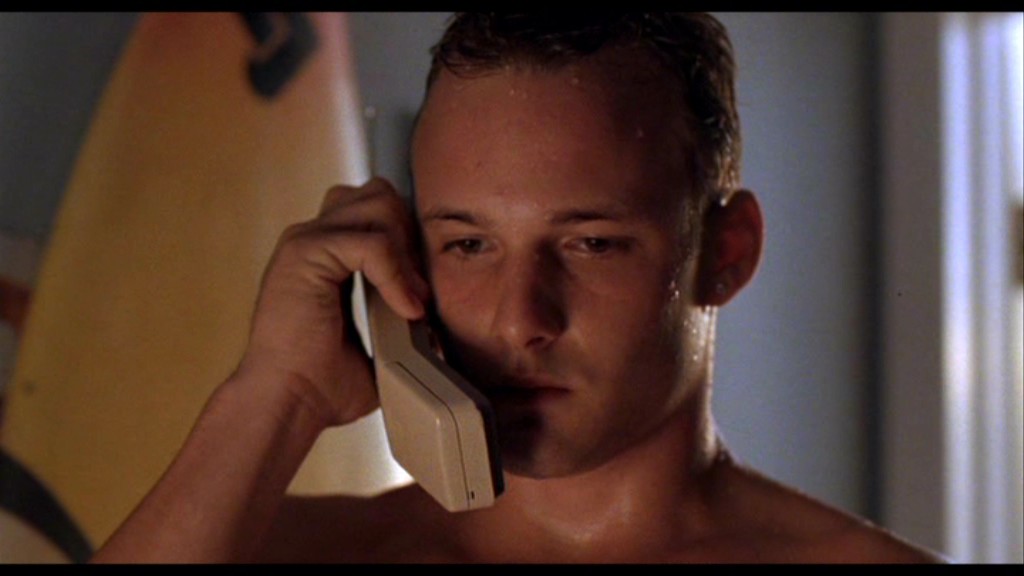
DF: Brad was great. I think he was like one of those golden retriever type people. Not evil, but dangerous. We were doing the table read for the first time, and Brad showed up wearing a white tank top completely soaked in lighter fluid. He came in saying, “I’M TRYING TO GET THE BARBECUE TO GO!” It was like, whoa! He was from Knoxville and had like that “Jackass” sensibility where you didn’t know what he could do, but I don’t think he ever had a mean bone. His intentions were always nice. If anything, he partied too much, and he once told me that at 12, he made hundreds of thousands of dollars to do “The Client,” and he was getting a lot of his drugs and stuff from family members as a kid. I don’t think he got a fair shot. If anything, the reason why I advocate for younger people in Hollywood or talked about my experiences on this movie which were crazy, I was never speaking from a victim place. I was speaking from a place of advocating for people like Brad who didn’t have anyone saying anything for them. I just think, we’re making art. It doesn’t have to be that crazy. We don’t have to be stealing boats or going nuts on sets to produce good material.

After “Bully,” Daniel went on to appear in many films, but he may still be best remembered for playing high school social outcast Damian in 2004’s “Mean Girls.” Like Joel and myself, I wondered what it was like going from an independent film to a studio movie where everybody is expected to be on their best behavior.

DF: I just don’t think the 2000s will be looked upon as a time where it was easy for people on movie sets. I really don’t. People always ask me all the time how to get their kid in Hollywood, and I say don’t. I waited until I was at least in my 20’s (before going to Hollywood), and that’s the only thing which might have saved me. A lot of our contemporaries are not around with us anymore or are in a crazy state. It was a rough time. I can’t say it was easier or better, but I think it’s better now.

Regardless of the crazy set, Daniel made it clear to the New Beverly audience what the experience of making “Bully” was like, and of how the filmmakers strived to capture the spirit of the true story it is based on.
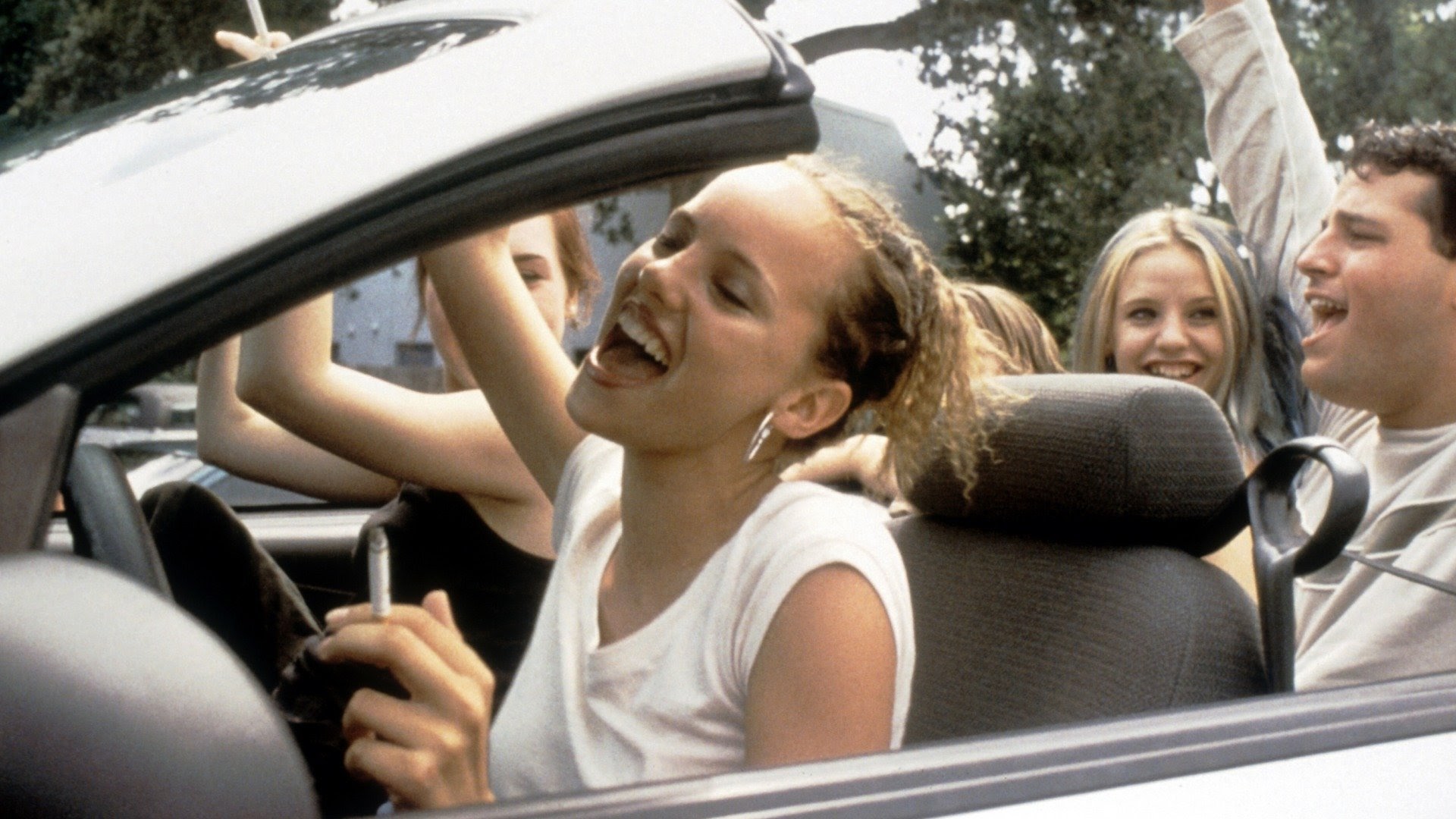
Bully (2001) Directed by Larry Clark Shown in foreground: Bijou Phillips

DF: On a positive note, though, this movie was awesome. It was so fun to make. Larry was cool, the people I was working with were all like people from Thrasher Magazine, it was just like bad ass people. They did shoot in the real locations; it was the real apartment complexes, and it was the real Pizza Hut (we shot in).

Daniel also made it clear how he was the only local hero for hire in Larry Clark’s “Bully.”

DF: They were scouting locations for the gay clubs, and I was just a young kid just figuring that stuff out and performing at the clubs with people I was in musical theatre with and stuff like that. They were like hey we’re making a movie, and I’m like I’m an actor! I had no idea it was going to turn into this. Carmen Cuba, she discovered a lot of people, and I give her all the credit for plucking me out of obscurity and putting me with these people.

An audience member told Daniel that he was from South Florida, and this led Daniel to talk about when he worked at The Gateway Theater in Fort Lauderdale as a kid. a year later, “Bully” premiered there. Daniel found his road from being an usher to a working actor to be honestly insane.

DF: I was there at the theater going, would you like the popcorn combo? I am a movie lover. I worked at Blockbuster (Video), I worked at movie theaters, that’s all I did. Until I was able to support myself as an actor, I was either an usher in theatre or worked at movie theaters. It (“Bully”) was shot in Fort Lauderdale and the whole crew got their premiere at the movie theater where I worked at. So, whoever served me popcorn today, keep writing your scripts.

Like many, Daniel Franzese considers New Beverly Cinema to be one of his favorite places in Los Angeles, and that it was extra special for him to see “Bully” being screened there on 35-millimeter film. To see films presented there in their original format, something often not available to movie buffs in most places, means a lot to him.
‘Anora’ – Never a Dull or Unemotional Moment In It

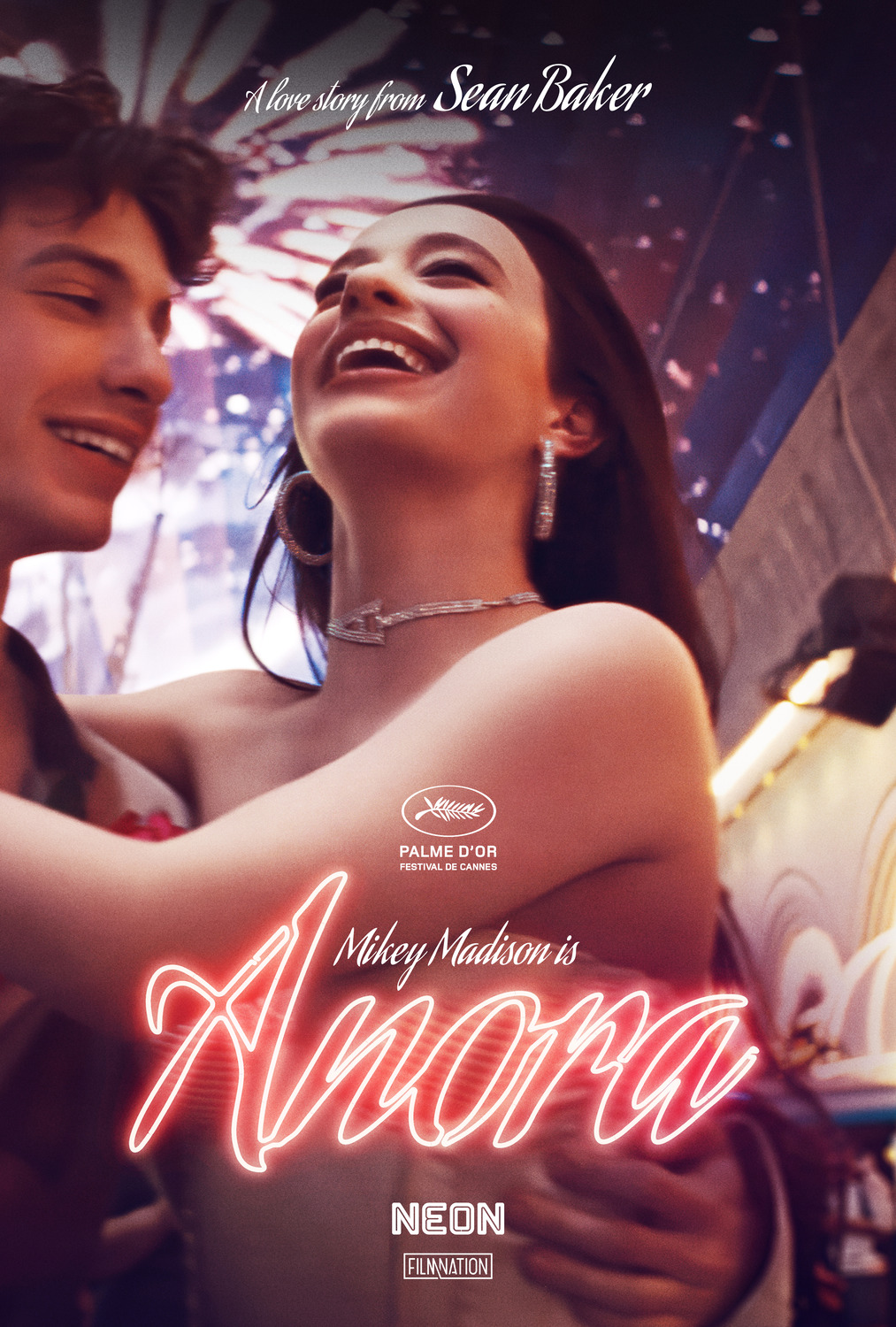
So, I finally got to see Sean Baker’s “Anora,” the Palme d’Or and Best Picture winner, and I was fortunate enough to watch it at New Beverly Cinema in 35mm. It certainly has the look of a 1970’s cinematic classic even as it seems to be a familiar story of a woman who looks to be rescued from what many might consider a sordid existence. But when all is said and done, I could not take my eyes off the screen for a single second. Seriously, I always consider this to be quite the compliment.

We are introduced to Anora “Ani” Mikheeva (Mikey Madison), a 23-year-old stripper from Brighton Beach, New York during a montage which shows a line of sex workers giving customers lap dances. Her face sticks out immediately to where we are seeing an individual instead of just another worker, and things kick into high gear from there. We see Anora moving through the strip club like a real pro as she ingratiates herself to each and every customer with a strong likability, and she effortlessly encourages patrons to come with her to the nearby ATM to get some cash for a private VIP dance. She’s so convincing to where I have no doubt that the men are quick to forget the pesky ATM fee they pay when withdrawing their funds. What is now anyway, four dollars?

Then one night, Anora meets Ivan Zakharov (Mark Eydelshteyn), the son of a Russian oligarch whom she affectionally calls Vanya. They quickly find themselves spending a lot of time with one another as they travel out with friends to Las Vegas where they indulge in an endless party atmosphere, they are clearly not the least bit enthusiastic to see end. It’s an exhilarating sequence as it felt like we the audience was being drawn into the fun, and it culminates in Vanya proposing marriage to Anora, and it feels like things have nowhere else to go for them but up from there.

I initially found myself appreciating “Anora” as a comedy because my experiencing the infectious party atmosphere led to many hilarious moments, but I also felt a certain dread as I kept thinking the roof was going to fall down at some point. And when Ivan’s parents become aware of his recent marriage, and they send men over to his luxurious mansion (it has an elevator) to get Ivan’s act together and to have the marriage annulled.

It’s hard not to think of “Pretty Woman” while watching “Anora” as it has a similar plotline of a man welcoming a woman into a life of luxury which she has never seen up close before, but this is no Disney movie. As much as Anora is experiencing the highs life and privilege have to offer, I constantly sensed she was on the verge of experiencing some serious lows to where I felt a strong need to protect myself from the heartache I was convinced would eventually be heaped upon us all.

For the record, the only other Sean Baker film I have see to date is “Tangerine,” but like that one, “Anora” is filled with such wonderfully drawn characters who, in any other film, would have come across as caricatures in a lazily written screenplay. Just when I thought these characters would be ever so easy to figure out, they came to surprise me in wonderfully unexpected ways to where it is impossible for any of them to become one-dimensional. It also helps to have actors like Yura Borisov, Karren Karagulian, Vache Tovmasyan and Aleksei Serebryakov among so many others bring these characters to such vivid life.

But make no mistake, this is far and away Mikey Madison’s show. As much as I wanted Demi Moore to take home the Best Actress Oscar for “The Substance,” I can completely understand and appreciate why Madison took home the prize. She perfectly inhabits Anora as someone who is, above all else, a survivor. Throughout, Madison exhibits just about ever conceivable emotion Ani gets put through, and she also evokes a vulnerability that her innate toughness can never fully hide. Even if Ani is not always likable, you have to respect how she handles herself as she quickly reduces many around her to mere ashes.

Another performance worth singling out is Yura Borisov’s as Igor, a Russian henchman who, at first appearance, looks like he can beat the shit out of anyone dumb enough to cross his path. But Borisov shows there is more to him than meets the eye, particularly when he is quick to complement Ani after she punches him in the face. Even when he has no dialogue, the actor shows so much humanity for this particular henchman as he too has a vulnerability he cannot hide from those around him. And most importantly, Igor is the only one who dares to treat Ani as a person rather than a piece of meat as others are quick to label her as.

What I love most about “Anora” is how alive it feels. Baker and company have given us a motion picture which feels ever so lively to where nothing about it feels the least bit staged. Some will be quick to judge the title character for the line of the work she has chosen, but I found myself not willing to do so as this film left me completely enthralled throughout. It is a tremendous motion picture which takes the viewer on a journey they may not normally go on, It is no wonder to me why this film was so acclaimed as it invites your empathy to the characters in a very genuine way.

Whether or not I feel “Anora” deserved its Best Picture win at this year’s Academy Awards ceremony, I can quickly admit it deserves a place on my list of the ten best films of 2024. In a time where Hollywood is eager to continue long running franchises even if they have long overstayed their welcome, it is very reassuring to see a $6 million dollar defy the odds and make quite the impact in an immense cinematic landscape. While this film may not have the most original plot, it does take us through quite the emotional adventure, the kind which most audiences are not quick to appreciate in this day and age.

I am very eager to see this film again very soon, as experiencing the great tapestry of emotions made this cinematic experience all the more enthralling. Even though I know how things end in “Anora,” I still want to go through all those emotions again. Also, there is no forgetting Take That’s “Greatest Day” as reworked by Calum Scott and Robin Schulz.

* * * * out of * * * *

When I First Watched David Lynch’s ‘Eraserhead’

Please don’t ask me what “Eraserhead” is about because I’m still trying to make sense of it after all these years. Even David Lynch, who passed away on January 15, 2025 after battling emphysema, refused to tell anyone what it means as he prefers to let audiences come to their own interpretations. I finally got to see this surrealist body horror cult classic for the very first time at New Beverly Cinema back in 2012, and the theater was packed with fans of Lynch’s films as well as others who were also witnessing his cinematic work for the first time. We all came out of “Eraserhead” baffled as to what it all meant, but we were still endlessly mesmerized by the visuals and sounds Lynch came up with, all of which were done on a very low budget of $100,000.

When the movie’s title appeared on the screen, the audience burst into applause which gave me an idea of just how many at the New Beverly had seen “Eraserhead” before, and I imagine that have sat through it multiple times. We were sucked right in as Henry Spencer’s head floated in front of us while some weird looking guy was pulling at a bunch of levers as if he were pulling strings on a marionette. Then we got a visual of a sperm-like creature floating on the edge of Henry’s mouth which is suddenly shot forward into our world. Whatever this creature is, it was clear it would play a big part as the film unfolded before us.

It was fascinating to take in the audience’s reactions to “Eraserhead” that evening, but the most vocal reaction came when Henry Spencer (plated by Jack Nance) and his girlfriend Mary X (Charlotte Stewart) bring home their hideously deformed newborn baby. No one could tell if it was male or female, and its grotesque appearance both repulsed and enthralled everyone.

This very strange looking baby has a long pencil-thin neck, its head looks more like a giant snout, and it is limbless. To many, this is the kind of baby no parent ever hopes to have, but we feel sympathy towards this child because it breaks our hearts to see any baby suffer the way this one does. That it’s whining seriously got on the nerves of its parents is a testament to the meticulous sound design Lynch put together along with sound editor Alan Splet because it irritated us as well. Then again, we couldn’t help but laugh along with the baby when it let out a cackle as if it were belittling Henry and his feeble attempts at attending to it in a meaningful manner.

With Lynch’s films, there are times where we can’t help but laugh because the dreamlike state he invites and propels us into is at times hard to take seriously. But with every moment we laugh, there is another which has us so deeply enthralled to where we are at a loss for words and you can hear a bag of popcorn or a soda drop from someone’s hands in the theater (if it were a cellphone ringing, they would have been kicked out and banned for life). “Eraserhead” is no exception as it has many moments with a kind of beauty impossible to find in any other motion picture, and this makes Lynch an exceptionally original filmmaker.

This is especially the case with Laurel Near who played the Lady in the Radiator because, even with her horrifically bloated cheeks, she has us at hello with her rendition of the song “In Heaven.” While she may not exactly look pretty by any conventional standards, her singing voice is very sweet and gives us one of the more heart-warming scenes you might not expect this film to have.

While we came out of “Eraserhead” utterly baffled as to how to describe or interpret it, we could not say we weren’t enthralled by what Lynch presented to us. This was his debut as a movie director, and it led him to getting a career in Hollywood as one of its most daring filmmakers. I am eager to revisit this film again in the future because, like “Lost Highway,” I would like to think I can figure out what it all means. Lynch was never quick to give us any easy answers as he felt life was far too complicated and complex to do so, but I appreciate him for always bringing up some very interesting questions. Even as human beings all over the world desperately want everything spelled out to them, Lynch reminded us how we need to think about things for ourselves.

Rest in peace David.

Who is Billy Jack?

“Billy Jack” is a movie I have heard about time and time again, and it was on July 30, 2012, when I finally got to see it for the first time. Billy Jack is a half-Indian Green Beret Vietnam veteran whose experiences have molded him into this protector who is out to defend those who cannot defend themselves. Tom Laughlin, who played Billy Jack and directed all the movies this character was in, seems inseparable from Billy Jack as both are out to protect those individuals who were sworn by their government to protect them, but which have failed to do so. While no more “Billy Jack” movies have been made in the longest time, Laughlin still fought for the rights of others throughout his life.

The character of Billy Jack was first introduced to audiences “The Born Losers” which was inspired by the real-life incident where members of the Hell Angels got arrested for raping five teenage girls. “The Born Losers” proved to be the first of Laughlin’s movies which was embedded with a layer of social criticism and an anti-authority tone which remained constant throughout each “Billy Jack” film ever made.

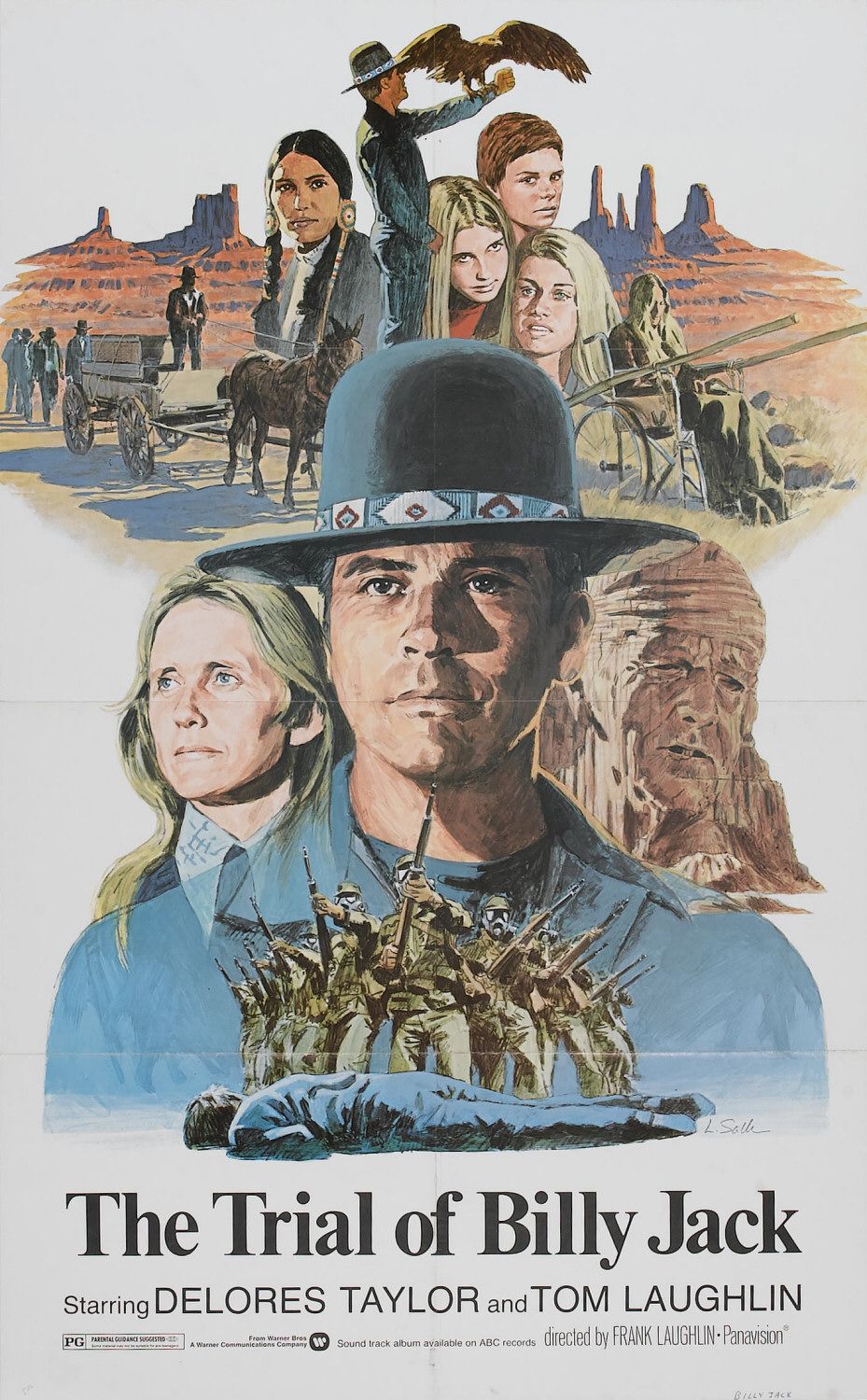
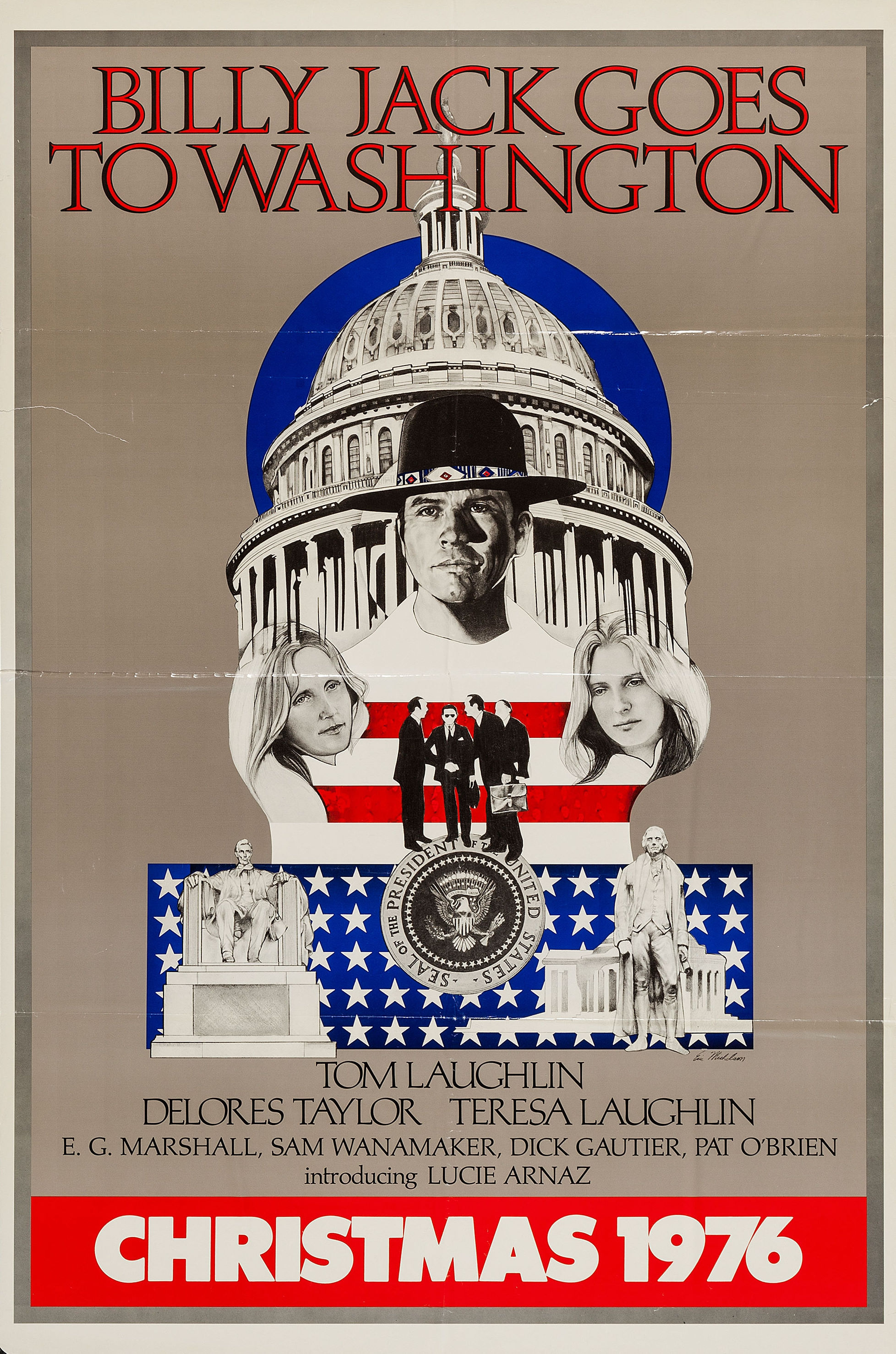
The movie “Billy Jack” came after “The Born Losers,” and it was a response to the conflicts Native Americans often found themselves caught up in. Its sequel, “The Trial of Billy Jack,” was a comment on the anti-war protests which were met by violence from the National Guardsmen who fired upon those protesters, and its follow up, “Billy Jack Goes to Washington,” has the title character battling against senators who are more interested in representing the interest of those representing nuclear power than the people. Even his unfinished sequel, “The Return of Billy Jack,” had political overtones as Billy went to New York to fight those supporting child pornography.

Taking this into account, Laughlin appears to be the first liberal action movie hero as his politics played a big part in each film he made. Then again, calling him a liberal may not be entirely fair as he has gone from one political affiliation to another over the years. In the end, he does not need a particular political label as his goals remain the same; fighting for the rights of ordinary Americans who are not always heard in the way they should be.

All these political and human rights interests greatly informed each movie Laughlin did, and this of course led to many conflicts between him and movie studios. When it came to “Billy Jack,” the movie’s original distributor, American International Pictures (AIP), refused to release it unless Laughlin removed all the political references featured in it. Laughlin, of course, refused to remove them, and he and his wife Delores Taylor, who played Jack’s girlfriend and schoolteacher Jean Roberts, ended up stealing the movie’s sound reels and held them hostage until AIP gave them back their movie.

Warner Brothers ended up releasing “Billy Jack” in 1971, but it failed at the box office and Laughlin sued the studio to get back the rights as he was upset at the way it was promoted. He ended up re-releasing the film himself, and it ended up grossing over $40 million at the box office against a budget of $800,000. Adjusted for inflation, it remains one of the highest grossing independent films ever made.

“Billy Jack,” however, was not without controversies as critics assailed its apparent hypocrisy. In his review of the movie, Roger Ebert said that “Billy Jack seems to be saying that a gun is better than a constitution in the enforcement of justice. Is democracy totally obsolete, then? Is our only hope that the good fascists defeat the bad fascists?” Leonard Maltin ended up saying about the movie that “seen today, its politics are highly questionable, and its ‘message’ of peace looks ridiculous, considering the amount of violence in the film.”

Still, many embrace Billy Jack as a character and the movies he appears in, and this was proven by the large turnout at New Beverly Cinema which cheered him on as soon as he made his first entrance in the movie which is named after him. Seeing Billy grimace at and intimidate the bad guys who were foolish enough to end up in his path had us endlessly entertained, and this remains the case so many years after the film’s initial release.

Laughlin ended up leaving Hollywood to found a Montessori preschool in Santa Monica, California which later became largest school of its kind in the United States. He would eventually turn his attention to politics and psychology as they became the tools with which he could fight injustice. Looking at his life back then and now, it becomes clear how Laughlin and Billy Jack are in many ways the same person as they fight for those whose rights are in danger of disappearing.

Laughlin passed away in 2013 in Thousand Oaks, California at the age of 82. Back in 2007, he announced he was planning to make another film featuring Billy Jack, but this did not happen for a number of reasons. Still, had he made another film with that character, I have no doubt many filmgoers would have welcomed it with open arms.

Rolfe Kanefsky On His Horror Movie Satire ‘There’s Nothing Out There’

WRITER’S NOTE: This article is about a screening which took place in 2012.

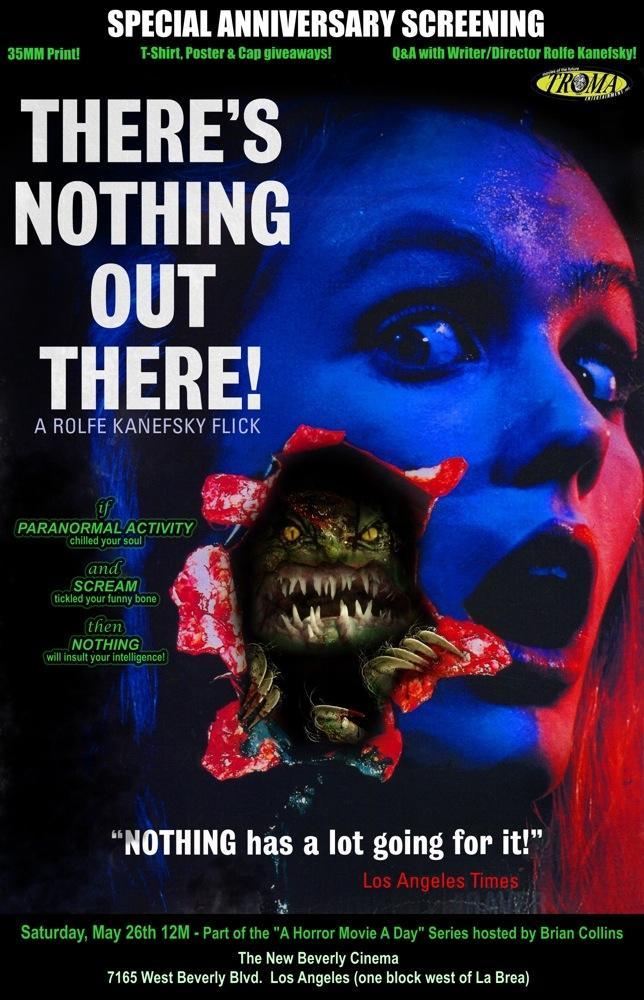
Writer and director Rolfe Kanefsky appeared at New Beverly Cinema where Brian Collins of the Horror Movie a Day website presented a special midnight screening of his directorial debut, “There’s Nothing Out There.” Joining him for this screening were two of the film’s crew members, still photographer Dave Shelton and assistant director Michael Berily. It tells the story of a group of teenagers, one of them a horror movie fan, spending spring break at a cabin in the woods, and it pre-dates Wes Craven’s “Scream” in making fun of the clichés horror movies always deal with.

Kanefsky spoke with audiences about what got him into movie making, and of what spurred the idea for this particular film of his:

Role Kanefsky: I’ve wanted to make movies since I was four years old. As I got older, I watched every horror movie that was ever made which got me to thinking about why people keep making the same mistakes in this genre over and over again. I wrote the script when I was in high school, but no one really liked it.

Kanefsky then went to college where he wrote several scripts, but then he came back to the one he wrote for “There’s Nothing Out There” after he graduated. It was 1988 when he started looking for the money to make it, and he was able to get a few private investors to help him out. He even told the audience his parents helped by selling their house, and after that he had a budget of around $150,000. One audience member asked him if his parents ever got to buy their house back with the profits and he responded:

Rolfe Kanefsky: You don’t get into movies to make money. You get into them because you love to make them.

When asked about the house used in the film, Kanefsky said a friend of his from college found it for him. It was located right near the border of New York and New Jersey, and he described what it was like filming in and around the house:

Rolfe Kanefsky: It was owned by two women who were a couple, and one of them was a sound artist which came in very handy for us. We did, however, have to use three different houses for the interior, and this forced us to cheat certain shots so that everything matched up in the end.

When it came to specific influences, Kanefsky looked mostly to 1950’s monster films, and he made several nods to them throughout. But he was also looking to make fun of the overused clichés in horror movies like the one where a cat jumps out at characters from nowhere, and of how one person warns of the danger ahead while everyone else ignores their advice. Kanefsky did, however, make one thing very clear to us:

Rolfe Kanefsky: It was never my intention to mock the (horror) genre, but instead the lazy filmmaking that has overwhelmed it.

One unique thing about “There’s Nothing Out There,” when compared to other horror movies of the time, is that what’s stalking the characters is not a deranged serial killer, but instead a monster from another planet. Keep in mind, this film was made long before the advent of CGI effects, so there was a lot of puppeteering involved in bringing this creature to life. Kanefsky was specific in what he was looking for:

Rolfe Kanefsky: I didn’t want a guy in a suit for the creature because I wanted to do something different. The way I saw it, the creature was half alligator and half octopus. I also intentionally made it a dumb creature, and you can tell it was not the smartest as there was a big learning curve going on with it. We ended up having to use crowbars just to move its tentacles around.

Kanefsky then invited his fellow crew members to share their experiences of making “There’s Nothing Out There.” Dave Shelton still has very vivid memories of how it all started:

Dave Shelton: I was working at Nickelodeon at the time and there weren’t many things being shot in New Jersey back then. When I met with Rolfe and he talked about his script, I knew right away what his vision was. He also said that no one is getting paid to make this movie and knew it was going to be good as a result. We got a lot of family and friends to be extras in the movie and we improvised a lot of stuff. Not everything worked, but we did the best with what we had. This was such a fun project to be a part of.

Michael Berily was originally hired to be the second assistant director on the set, but things changed for him very quickly:

Michael Berily: The first AD left three days into shooting, so I took over and spent a lot of time yelling and screaming at people because I didn’t know what I was doing. Still, it was an incredible experience working on it, especially when it came to raising the money. Rolfe was very ambitious then as he does a lot of set ups in one day.

Kanefsky attributed his working style of numerous set-ups a day, far more than what most Hollywood productions are able to accomplish, as he and his crew had a twenty-four-day shooting schedule. He has since made over twenty movies since “There’s Nothing Out There,” and to date it still has the longest shooting schedule of any movie he has made.

Horror Movie A Day’s screening of “There’s Nothing Out There” at New Beverly Cinema was certainly a historic one as it marked the first time a 35mm print of the movie had been shown in twenty years. Kanefsky said there were a number of reasons why this was the case:

Rolfe Kanefsky: When we showed it to studios and critics, they were all ambivalent about supporting it because they saw it as too funny to be scary and too scary to be funny. The movie ended up getting a small theatrical release back in 1992, and we managed to get some good reviews from newspapers like the Los Angeles Times. After that it began building up more and more of an audience through midnight screenings… and then the L.A. Riots (following the Rodney King verdicts) happened, and that destroyed us because no one went to the movies for a long time after that.

Kanefsky has attributed its ongoing success to cable and video and now sees this movie as an underground film which people found over the years. The studio which released “There’s Nothing Out There” never really got behind it, he said, and it really found its audience through word of mouth.

Before the evening ended, audience members asked Kanefsky if there would ever be a sequel or a Blu-ray release:

Rolfe Kanefsky: Blu-ray? Maybe, but right now it doesn’t make financial sense to do that and neither does the sequel. We do have the capabilities and original elements to remaster the movie in high definition, but the special edition DVD hasn’t sold enough copies to justify us doing that.

He does however have a title for the sequel:

Rolfe Kanefsky: There’s Still Nothing Out There.’ The tagline for it is, ‘if you were afraid of nothing before, its back!’

Well, hopefully we will get to see a Blu-ray release and a sequel become a reality. There is no doubt “There’s Nothing Out There” was a passion project for Kanefsky and his crew when they made it, and it is clear everyone involved in it worked really hard to make it a reality. That people are still talking about it twenty years later makes it a triumphant motion picture which survived in a marketplace where many other horror movies get swept under the rug, never ever making it to the silver screen.

‘Trouble in Mind’ Celebrates Its Anniversary Screening at New Beverly Cinema

http://www.allwallpapersfree.org

WRITER’S NOTE: This article was written in 2010, back when this anniversary screening took place.

Alan Rudolph’s 1985 neo-noir movie “Trouble in Mind” reached its 25th anniversary in 2010. This is especially significant because it got lost by its distributors about twenty years ago, and they only recently found a print of it. The movie has since been restored and been released in a new special edition DVD. To celebrate its anniversary, the producer of “Trouble in Mind,” Dave Walker, showed a new print of it at New Beverly Cinema. Along with him were actors Keith Carradine who played Coop and Lori Singer who played Georgia, and they were also joined by the composer of the film’s score, Mark Isham.

In talking about working with Rudolph, both Singer and Carradine said they never really rehearsed any scenes. A lot of it came down to them meeting with Rudolph, talking about the screenplay, and getting on the same page with what he wanted to accomplish. Singer explained how he created a “very vivid atmosphere” which came about from an “organic, real feeling.” In summarizing Rudolph’s filmmaking process, Singer said, “Whatever he was shooting, he was capturing his vision. That was our rehearsal.”

Isham described Rudolph as a “jazz director” in that he wanted to get everything right in the first take. When asked how he got the job on “Trouble in Mind,” Isham explained he was being represented by CAA and his agent encouraged him to make a list of directors he wanted to work with. After seeing one of Rudolph’s other movies, “Choose Me,” Isham decided he wanted to work with him. Rudolph ended up listening to one of Mark’s albums, liked it and hired him.

One question asked of Isham was in regards to working with singer Marianne Faithful on two of the film’s songs. Isham said he knew nothing about Faithful beforehand, but that he quickly learned she was an artist of instinct, and they captured a lot of magic on tape whenever she sang. Basically, he did an acoustic piano version of each song she would sing, and he gave her the music through headphones. Isham went on to say he added synthesizers to the soundtrack afterwards.

Isham is also considered one of the best trumpet players ever, and he did perform on one here. He stated how he has been playing the trumpet since he was eight years old and is always looking to put it in any movie he works on.

Another audience member asked Carradine about Coop’s hair and why it got all funky throughout. Carradine said he contributed to the look and described it as an “expression of descent into a kind of netherworld from innocent to deeply urban sensibility he was defenseless against.” Coop saw the change of hair as him becoming beautiful, and he was convinced that Singer’s character would like it. Carradine described it as Coop’s way of trying to fit into a world he was utterly clueless about, and that the hair he used was indeed his own, and these days he doesn’t have much of it left.

Carradine and Singer also spoke of working with Divine, the actor made famous in several films directed by John Waters, “Pink Flamingos” in particular. They said they really loved him because he was the sweetest guy and wonderful to work with.

After twenty-five years, “Trouble in Mind” still holds up very well, and hopefully its DVD release will open it up to a young audience waiting to discover something new and different. Rudolph has said this films is meant to have the look of a dream, and he gave Singer all the credit for that. The dream is still a strong one even with an elongated passing of time.

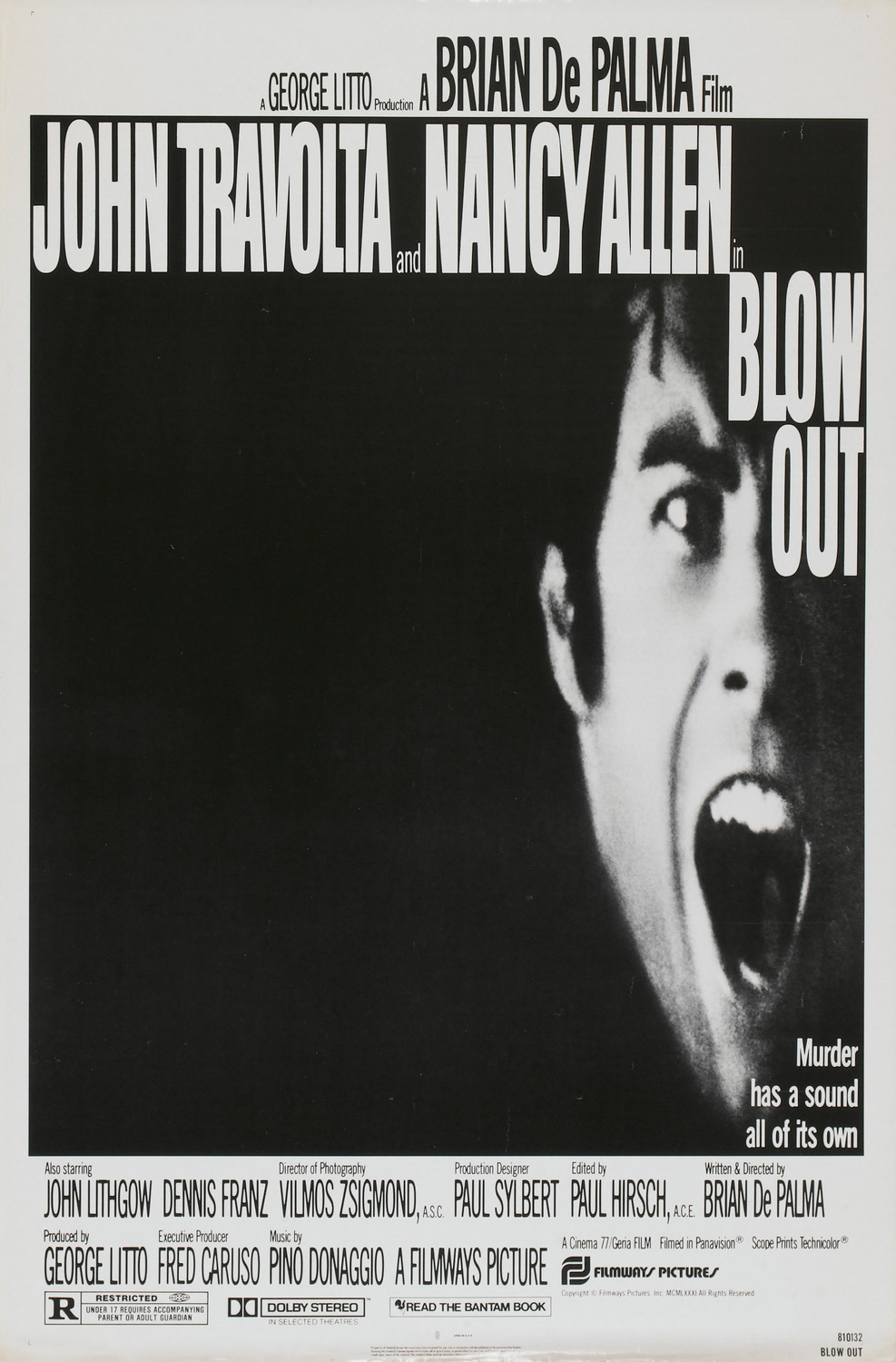
All-Time Favorite Trailers: ‘Blow Out’

I first remember watching the trailer for Brian De Palma’s “Blow Out” years ago before a double feature at New Beverly Cinema. While I don’t remember which double feature I was seeing that evening, I do remember the trailer itself and in becoming excited about checking out this underappreciated De Palma classic. Roger Ebert gave it four out of four stars and proclaimed it to be one of those “hidden treasures” at your local video store, and Quentin Tarantino, who bought the building New Beverly Cinema is housed in, has declared this to be one of three motion pictures he would love to take with him to a deserted island.

That little needle bouncing up when a certain sound is detected instantly reminded me of when I recorded my favorite records to audio tape when I was a boy. You had to make sure the levels did not go into the red area as the sound could become distorted and easily lay waste to your expensive stereo system. But when Jack Terry (played by John Travolta) ends up recording a loud sound no one was ever supposed to hear, and which ended up on the red side of the sound mix, we immediately know this was no mere accident.

I love how this trailer shows Travolta, Nancy Allen and John Lithgow giving the performances of their lives here. Seeing them shows how committed they are to the material, and I love the ever so cold look on Lithgow’s face as he is about to take the life of an innocent victim who is completely unsuspecting  of someone about to strangle them. They way this trailer builds to a fever pitch made me want to check it out sooner rather than later.

“Blow Out” was a box office disappointment when released back in 1981 despite positive reviews, but thanks to Ebert and Tarantino among others, it has since gained a cult following it richly deserves. I finally got to check it out at the New Beverly Cinema where it played as a double feature with a movie said to have inspired it, Michelangelo Antonioni’s “Blow-Up.” This proved to be quite the cinematic evening for yours truly.

Check out the trailer for “Blow Out” down below.

Underseen Movie: ‘Fish Tank’ – 2009 Jury Prize Winner at Cannes

Here’s a little British independent feature which came out at the beginning of 2010 in America after being named the Jury Prize Winner at the 2009 Cannes Film Festival. Unfortunately, however, it barely registered in movie theaters, so here’s hoping it finds an audience on physical media and/or cable. “Fish Tank” is a raw and unsentimental character study that pulls no punches in its portrayal of a tough and troubled teenage girl growing up in an East London council estate. It was directed by Andrea Arnold, an actress turned filmmaker who previously directed “Red Road,” and it stars Katie Jarvis as Mia, the teenage girl you may figure is up to no good just by looking at her. There is no Hollywood gloss on display here, and the environment this young woman inhabits feels both real and rundown, just like the other characters who are stuck there with her.

Now council estates are to England what public housing or “the projects” are to cities all over the United States; rundown buildings designed for the economically challenged that carry a stigma of poverty and endless crime. Now whether this is true or not, this is usually the impression people have of these places. It is clear from the start that Mia, along with her mother and younger sister Tyler, have lived in this place for a long time, and it has shaped them into the people they are today. There is seemingly no room for much in the way of respect or gratitude towards neighbors or strangers.

Mia appears to have it the roughest compared as she has been kicked out of school and seemingly wanders around the estate aimlessly. We see her putting up a seriously tough front for some girls whose dancing moves she bluntly criticizes as sucking big time, and this leads to her head-butting a girl in the face which shows how quick she is to defend herself. At home in one of the many far too cramped apartments in the council estate, her mother continually treats her like dirt and appears more interested in partying and getting drunk rather than being a parent. The only real tender moment between them comes at the end of the film, and you will know it when you see it. As for Mia’s younger sister Tyler, she has a vocabulary which Chloe Grace Moretz’s character from “Kick Ass” sound PG rated in comparison.

Being the loner she is, Mia’s only escape is practicing her dance moves in an abandoned apartment near where she lives. This proves to be her only real outlet for the frustration and aggravation which has consumed her life to this point. She is shy in revealing this part of herself to just about anyone as vulnerabilities are easily spotted and exploited for all the humiliation which can be derived from them. No one is ever quick to show any weakness in this kind of environment.

Into this environment enters her mother’s latest boyfriend, Connor, a security guard at a nearby hardware store played by Michael Fassbender. Mia is never quick to warm up to others she doesn’t know well, but she quickly develops an interest in Connor who becomes the father figure she lacks. From the moment we see Mia help him catch a fish in the lake with his bare hands (it’s possible), he inspires her to try new things and open herself up to possibilities which previously seemed beyond her reach.

This leads to a great deal of tension in “Fish Tank” as we cannot help but wonder if this relationship is going to end up crossing any boundaries. There are moments captured where the chemistry between Mia and Connor is so strong, you fear the possible and destructive ways this relationship can go to. Words are not needed to illustrate the bond they have, be it when Mia films Connor with a video camera while he’s getting dressed for work, or when Connor gives Mia a piggy back ride out of the river after she injures herself. Their growing discoveries of one another and what they are capable of is impossible to ignore, and we can see the positives of this even while the negatives are never far off.

Arnold films the movie in a way where nothing feels staged, and every character and location feels authentic to what it must be like in reality. I’m not sure a movie like this could have been filmed any other way and have the same effect. She also captures the suffocating environment of being in these big government buildings which are treated more like dumps for the lowest on the economic ladder. The apartments themselves are ridiculously tiny, and there is no privacy for any family member who has to live there. Places like these must feel like prisons to those who inhabit them, and Arnold captures this mindset clearly to where you feel as helpless as these characters do.

As bleak as “Fish Tank” is though, its ending offers hope that anyone can escape such a confining environment if they have the means and the foresight to change their lives for the better. Some are too far gone to be saved, but Mia still has a chance to move forward, and her relationship with Connor makes this clear to her.

Katie Jarvis who plays Mia in had no real acting experience before she got cast in this movie. It turns out she got an audition after one of the casting assistants saw her arguing with her boyfriend quite loudly outside a train station. Indeed, this role not only requires an actress who comes off as tough, but one who inhabits a role more than play it. While a lot of struggling actors out there may hate the fact Jarvis got one of the luckiest breaks ever, it makes a lot of sense Arnold would cast someone who came from this environment.

The role Jarvis plays is not an easy one to portray. Mia has to be tough yet show just enough vulnerability to let the audience look past the defenses she has built up. She also has to be shy but angry, curious without spelling it out for the audience, and her character needs to evolve from the person we see at the start of the movie. This makes her performance all the more revelatory because you come out thinking she has been acting all her life. She successfully captures all the subtle nuances of Mia to bring out the complexities which makes her more than just any other angry young person. Truly, it’s a daunting role for even the most experienced actor, and Jarvis comes out of the picture looking like a pro.

The other key performance comes from Michael Fassbender as Connor. Fassbender has been in movies like Steve McQueen’s “Hunger,” and he stole a number of scenes in Quentin Tarantino’s “Inglourious Basterds.” As Connor, he comes across as a generous human being, and it’s commendable that he would want to try and be a father figure to someone else’s children. This is something most people would NOT want to do. But her also gives Connor an enigmatic nature which makes him hard to pin down and figure out. Like Mia, you want to more about this guy than what he is telling everyone around him.

The only real problem I had with “Fish Tank” involved one character’s revelation in the last half. It’s hard to talk about it without giving anything away, but it was one of the few times where I have watched a movie and left it begging for more answers. Mysteries which stay after a movie ends can be fascinating, but others are not so lucky. Some movies need and demand closure, and this one could have used more of one. Either that, or I completely missed something…

I meant to see this film when it briefly played in theaters back in January 2010, but I never got around to it. When I did, it was playing at New Beverly Cinema in a double feature with “An Education.” That film featured another breakout performance from Carey Mulligan, another actress who seemingly came out of nowhere. Having seen both, it was clear why the New Beverly put them together; they are both about the same thing. Each is about a young British girl who feels trapped in an environment they desperately want to escape. Just when they think they have found a way out, reality rears its ugly head and takes any possibilities for an exciting life away from them rather cruelly. Still, both women rise above the pain inflicted on them and find a way to move on in spite of what they were forced to endure.

For those of you with a hankering for dramas with raw emotion and non-manufactured realism, “Fish Tank” is definitely a movie I recommend for you to see. As I write this, the Criterion Collection has released a special edition of it on DVD and Blu-ray. It features a digital transfer of the film, some short films by Arnold, and interviews with the actors, one of which is with Fassbender. In a time where the local cinema is getting overrun by blockbuster movies and immortal franchises, movies like this demand to be seen, and this is one of them.

* * * ½ out of * * * *

Jason Reitman Talks With Luke Wilson About ‘Bottle Rocket’

WRITER’S NOTE: This article was written back in 2011.

Jason Reitman completed his guest programming at New Beverly Cinema with a screening of Wes Anderson’s directorial debut, “Bottle Rocket.” This film also marked the movie debuts of Luke and Owen Wilson, the latter who co-wrote the screenplay with Anderson. Before seeing this movie, Reitman admitted he was actually scared of becoming a filmmaker especially because he was the son of a famous one (Ivan Reitman). He did see all the great movies of the 1990’s like “Clerks,” “Slacker,” and he checked out all of Quentin Tarantino’s movies, but he said none of them had the same effect on him as “Bottle Rocket” did. For Reitman, this was the movie which made him want to direct films. And of discovering Anderson, he said, “This is the voice that I am going to follow forever.”

Joining Reitman for this special screening was actor Luke Wilson, and it was nice to see him take a break from all those AT&T Wireless commercials he has been doing endlessly. Ironically, the movie Reitman showed the same evening before it was “Breaking Away,” and Wilson said he is actually good friends with one of that movie’s stars, Dennis Quaid. Quaid was away in Hawaii so he was unable to attend the screening with fellow co-stars Dennis Christopher and Daniel Stern. This coincidence did, however, allow Wilson to talk about how Randy Quaid told Dennis he already made the family name and suggested he change his. Dennis ended up asking his brother, “How about McQuaid?”

Anyway, Luke told the audience Wes and Owen originally wanted to shoot “Bottle Rocket” guerilla style so they could shoot it cheaply as Richard Linklater had done the same thing with “Slacker.” However, they ended up meeting a producer who told them about the Sundance Film Festival and advised them to start off by making a short film they could take there. So they made the short and got it entered into Sundance, but nothing happened and they didn’t win anything for it. Despite that, they managed luckily to get hooked up with a producer named Polly Platt who had worked on such movies as “The Last Picture Show” and “Terms of Endearment” among others.

The project went on from there as Platt brought the Wilson brothers and Anderson to the attention of famed writer/producer/director James L. Brooks. Anderson ended up getting everyone to do a read thru of the script at some office in Texas during the summer. Turns out the air conditioning there wasn’t working all that well, and they were reading a screenplay which was two hundred pages long. Luke said he ended up sweating profusely throughout the whole read, and this made Owen glare at him as if to say, what the hell are you doing?

Luke also took some time to talk about Brooks who became one of the chief supporters of “Bottle Rocket,” and he described him as being very nice. However, he also said Brooks can immediately “cut to the truth and be painfully funny.” Of course, Brooks was going through problems of his own. While working on “Bottle Rocket,” he was also busy with his film musical “I’ll Do Anything” with Nick Nolte. For those who remember, it ended up getting released without any of the music as the movie tested poorly (and that’s being polite).

Reitman went on to talk about how he related to the voice of the film and how it had a “strange innocence” to it. Luke replied the film’s voice came from Anderson and Owen, but he said he never got the feeling he was working on anything special. Columbia Pictures, which distributed the movie, wanted to make “Bottle Rocket” but with different actors. When it was all shot and in the can, the studio didn’t like or knew what to make of it. Looking back, Luke said bluntly he was “stunned that the movie got made.”

When it finally came to making “Bottle Rocket” as a feature length film, Luke remarked Wes knew exactly how movies were made. He and Owen, on the other hand, did not. They didn’t understand certain jobs the crew on set had like the boom mike guy. Luke said he and Owen wondered out loud, “How can that guy just stand around like that?”

Also, Anderson did not want the actors to watch dallies of the day’s work, but this didn’t matter much because neither Owen nor Luke wanted to watch them anyway. Luke says he still doesn’t understand what compels actors to watch dallies as he feels it will likely mess you up in terms of how you go about developing your character.

The cast and crew also had the fortune of working with James Caan who had a bit role in “Bottle Rocket,” and Luke recalled he was going through a rough patch at the time, but that he did warm up to the rest of the cast during shooting. At one point Luke, Owen and Wes asked Caan what it was like working with the late Marlon Brando on “The Godfather.” To this Caan replied, “It’s like you guys working with me.”

“Bottle Rocket” did go through the rather unnecessary realm of test screenings. For a movie like this, it must have felt like a waste of time because this is not one which just sells itself to mainstream audiences, but the studio executives decreed that Anderson screen the movie for focus groups nonetheless. So, there was a test screening done in Santa Monica, and out of a crowd of 250 people, 75 walked out. The ones who stayed through the whole thing, as Luke remembered it, wrote nothing but shit about the movie. To date, it remains the one movie with the worst test screenings in the history of Columbia Pictures. Luke said he, Owen and Anderson were convinced they would never get to make another movie ever again.

Despite all that, “Bottle Rocket” did get discovered by audiences through cable, video and DVD. Luke says he still sees it on cable every once in a while, and Reitman remarked it became the “touchstone for those who want to make movies.” Martin Scorsese ended up naming it as one of the best movies of the 1990’s. Still, everyone involved with this little film had a hard time getting over it feeling like a failure. But when these guys got around to making the brilliant “Rushmore,” they found themselves re-energized and have since gone on to make one great movie after another.

Jason Reitman Talks With Dennis Christopher and Daniel Stern about ‘Breaking Away’

WRITER’S NOTE: This screening took place back in 2011.

Jason Reitman described the last double feature he presented as part of his guest programming at New Beverly Cinema by saying, “Whereas the last few movies I chose were sad in some respects, these two just make you feel good.” After dealing with the downfalls and missed opportunities which were major parts of “Shampoo” and “Boogie Nights,” he finished off his slate of favorites with “Breaking Away” and “Bottle Rocket.”

The first movie shown was “Breaking Away” which was directed by Peter Yates, the same man who made the Steve McQueen classic “Bullitt.” For years it has been considered one of the best sports movies ever made, and it’s also a movie where several young actors got their start together like in “Taps” or “Fast Times at Ridgemont High.” Among those actors were Dennis Quaid, Dennis Christopher and Daniel Stern. We even got to see a teenage Jackie Earle Haley in it, and he has since gone from career oblivion to critical acclaim for his performances in “Little Children” and “Watchmen.”

Reitman asked how many people in the audience were seeing this film for the first time, and many hands, including mine, immediately went up. To this he replied, “I am so jealous!”

On “Breaking Away,” Reitman described it as a movie you associate with watching with your father, and one which captures the lives of twenty somethings very well in the indecisions of where to go from high school; unsure of what to do with the rest of their lives. It’s also a great story about class wars in society; of those who have everything and those who never have enough. Upon looking for trivia about “Breaking Away,” Reitman found the film was originally two screenplays. One was called “The Cutters” which became the name of the people from the working-class environment, and the other one was about the bike race the characters train for.

Joining Reitman for this screening were Dennis Christopher who played the endlessly obsessive bike rider Dave Stoller, and Daniel Stern who played Cyril. Reitman usually had his guests hidden from sight before introducing them, but they were already in the theater giving autographs and posing for pictures which got posted on Facebook. Both Quaid and Stern also said they were so envious of those who were seeing this for the first time.

Reitman started off by asking them if they knew they were working on something very special. Stern was the first to reply:

That was my first movie,” Stern said. “I had never been in a movie before, and so I thought they were all like that. There is a wonderful simplicity to the movie, to the script, to the way the movie was made and the way it comes across. It does have a lot of depth to it too. I look back at it thinking, that was just an incredibly unique experience. I didn’t know what I was doing, I didn’t know where the camera was, and I didn’t know anything about that!”

Christopher, on the other hand, had worked in movies before with acclaimed directors like Robert Altman and Federico Fellini, so he knew a bit about being on big sets. The experience of making “Breaking Away” proved to be a bit different though.

“The thing that really made it special was because after that horrible first day of being a big Italian impersonator, because they made me all dark and I had my hair slicked back, black shirt, a tight waistline, etc. He was supposed to look like a ‘Saturday Night Fever’ guy,” Christopher said. “He (Yates) wanted him to be that kind of Italian. And I thought, why the fuck did they hire me? I looked like Lily Tomlin would when dressed up like men! That’s exactly what I looked like! I was waiting for them to glue hair on my chest!”

“I was so shaken, and the next day I came onto the set and I just burst into tears,” Christopher continued. “I told Peter that I just can’t do this and he said I KNOW, I KNOW! And we had a big talk with Steven (Tisch, who won an Oscar for his screenplay) and Peter, and then the character evolved; the way he looked and the way he was. So for me that was the special thing of collaborating with a director who cared about what you thought. So, for me I thought whoa, this is amazing!”

Reitman then spoke for those who had this on their minds after Christopher spoke:

“So what you’re saying is that Robert Altman really doesn’t care…”

This got a big laugh from the audience.

After making all the changes with Christopher’s character and making it more like him, they reshot everything and had to wait three weeks to see how it all looked. For those who have seen this movie, you have to agree this was one of the smartest choices Yates made. If Christopher was forced to do an Italian impersonation, it probably would have wrecked the movie.

Reitman also asked Christopher and Stern what kind of bike riding they did before production began. Christopher replied he did the “regular kind” and was never involved in any bike competitions like his character. Stern, on the other hand, said he was not a bike rider which turned out to be perfect for his character.

This led Stern to tell everyone he didn’t even audition for “Breaking Away.” He came into the office to read for Yates, and he was on a phone call nearby and saw him. Once he got off the phone, Yates handed Stern a script and was asked to be on set in a short time.

Unlike a lot of the big productions he had previously been involved in, Christopher said this film was almost completely the opposite of them. They had a very small crew working on it, and there was no overabundance of trailers parked on every street corner.

Barbara Barrie played Dave Stoller’s mother, Evelyn, and she got nominated for an Academy Award for Best Supporting Actress. However, it turns out she was a little peeved when she read the script and found there was no big scene for her. Christopher even recalled her telling Yates quite loudly, “WHERE IS MY BIG SCENE?!” So Barrie, Tisch and Yates worked together and did an improvisation which led to that wonderful moment where Evelyn talks about getting her passport and how she always keeps it handy.

People did not expect much from “Breaking Away” while it was being made, but it turned out to be a surprising success which won many awards, and it even spawned a prequel television series in which Haley and Barrie reprised their roles for. Of course, like many movies adapted to television, it lasted only one season. Stern called it “the little engine that could kind of movie,” and he even came to this screening wearing his white “Cutters” t-shirt. Christopher said this and “My Bodyguard” were the first movies for kids which were taken seriously by adults, and he and Stern said people’s overall reaction to it today is still quite powerful.

Christopher also told the audience about when he took his dad, whom he was estranged from at the time, to see “Breaking Away” when it was first released. After it was over, he said his dad came out of it “ruined” and looked quite frail. His dad could not believe how great the movie was, and when people outside the theater asked Christopher for his autograph, he got in line with the others. His dad even acted as his security chief in getting people in the line to move along.

The Q&A ended with both actors asking Reitman, “Is this a good print of the movie we’re showing tonight?”

“We’ll see,”Reitman replied.

Reitman said he had previously seen “Breaking Away” on VHS and laserdisc but seeing it with an audience was something else. The nearly sold-out crowd at New Beverly Cinema really got into the proceedings and cheered loudly throughout. You came out of the theater agreeing with Reitman that “Breaking Away” was as good as reputation has long since suggested.