I keep thinking of “The Simpsons” episode where Homer and Marge try to teach Bart and Lisa about how great love is. But in the process of looking over their kids’ experience with love, they end up doing more damage than good. Marge reminds Bart of when he had a crush on the older girl who lived next door, and it ends up taking us to the scene where said girl tells Bart how excited she is because she now has a boyfriend. Then you have that imagined scene where the she pulls Bart’s heart out of his chest and throws it to the ground. Back to reality, Bart tells his well-meaning mother:
“Thanks for reopening old wounds mom!”
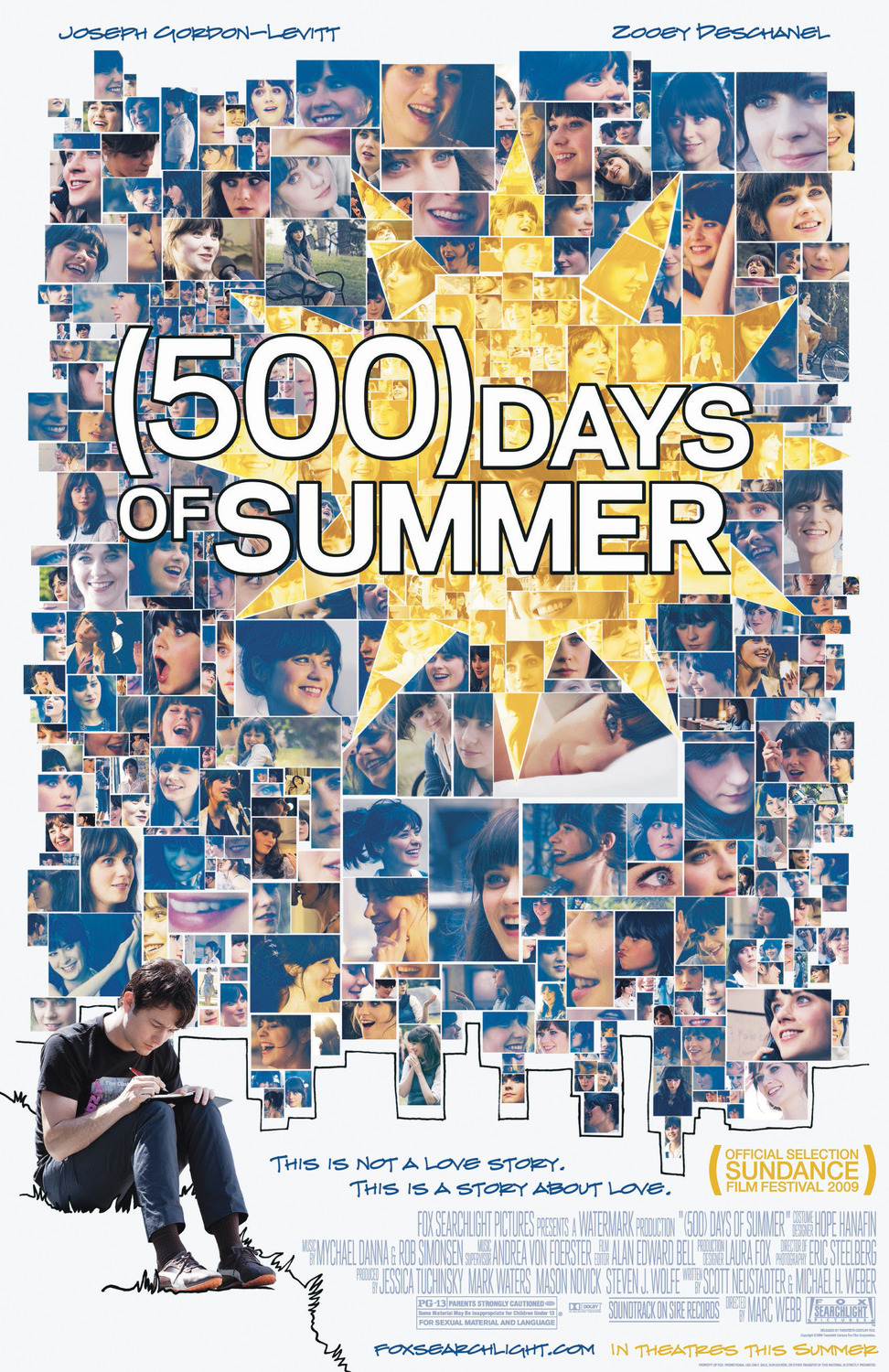
That whole episode was going through my head as I watched Marc Webb’s “(500) Days of Summer.” I found it to be one of the most intimate portrayals of the amazing highs and debilitating, and we are talking seriously debilitating, lows of love and relationships. This has been called by some as “Annie Hall” for a new generation and, along with “Eternal Sunshine of the Spotless Mind,” it is one of the best films I have seen about the messiness of relationships.
The story centers on the touching yet odd relationship between Tom Hansen (Joseph Gordon-Levitt) and Summer Finn, two co-workers employed at one of those Hallmark greeting card companies. Webb and the film’s screenwriters, Scott Neustadter and Michael H. Weber, have also taken the approach of showing this relationship in a non-linear format, going from when Tom and Summer break up to when they first met and then back and forth in time to where moments inform both the past and the present, let alone the future.
Webb has said this film is more a coming-of-age story than a romantic comedy. Still, a large part of me would like to call it the latter as it puts so many others of this desecrated genre to utter shame. They all revolve around the same kinds of characters who are complete opposites, and they remain to where each film is indistinguishable from the next. While many may find comfort in always knowing how the story ends, I find it depressing and at times shallow and false. This one doesn’t work like that though.
Neustadter has admitted this is based on a real relationship he had, and of the love and brutal heartbreak that came went with it. With Summer, we see a person whose belief in true love was shattered following her parents’ divorce. With Tom, his belief in true love came about after completing misinterpreting the climax of “The Graduate.” As a result, this film has characters I can truly relate to.
“(500) Days of Summer” has many wonderful moments which vividly capture the different stages of a relationship. While we remember more of what went wrong than right, the moments of happiness stand out just as powerfully. There’s a great moment where Tom Hansen is on his way to work, and it then turns into a hilarious musical number done to Hall & Oates’ “You Make My Dreams Come True.” Yes, you can always count on songs from the 1980’s to lift up your spirits to an unrealistically high.
The moments where we see Tom in a state of depression ring much truer than I would ever care to admit. Romantic rejection can make one feel so completely worthless, and it takes forever to dig oneself out of that dark emotional hellhole. I think this is why most romance movies today are comedies, because we have to laugh at these things at times so they don’t drive us crazy. All of this reminds of a great piece of dialogue uttered by Ned Beatty from “Homicide-Life on the Street:”
“A woman can affect a man totally. How woman feels about a man, that’s how he’s gonna feel about himself, his friends, his job.”
As Tom Hansen, Joseph Gordon-Levitt is perfectly cast and comes across as likable without ever being overly obnoxious. Every emotional moment he experiences here rings true to what we have experienced in our own lives, and it is done with complete conviction. The moment where we he is running down the street after seeing his expectations ruined by reality is bound to bring back the worst pain you have felt when you realize a relationship has ended, permanently.
Then you have Zooey Deschanel who has the loveliest eyes of any actress I can think of off the top of my head. She really stole my heart as Summer, a young woman who has been conditioned to believe in anything but true love. While she clearly likes Tom Hansen, she cannot bring herself to love him because it can never seem real to her. Deschanel has such a lovingly sweet presence, and it makes Levitt’s constant yearning for her very understandable.
These two characters are really good, if not perfect, together, and I love the unforced way they become a couple. The chemistry between Gordon-Levitt and Deschanel is wonderful, and seeing them here made me want to see these two to stick it out together. That they don’t is a painful reminder of how unfair love can be, and of how Trent Reznor sings about him wanting something he can never have.
Webb, who would later go on to direct the two “Amazing Spider-Man” movies, gives “(500) Days of Summer” a beautiful look which captures the rollercoaster of moods witnessed throughout. With this film, which was his feature film directorial debut, he shows he can balance out getting strong visuals with getting great performances from his actors.
While romantic comedies remain a damaged genre to where I still find myself running away from them at full speed to this very day, “(500) Days of Summer” gives me hope that they can be better. But better yet, here’s hoping humans can find a connection with other humans despite the advances in technology and social media. This film came out before those things really took hold of our lives.
Recently, “Homicide: Life on the Street” has undergone a major renaissance of sorts. The show is now finally available to stream on Peacock, and we have two new podcasts dedicated to the acclaimed series. First, there is “Homicide: Life on the Set” which is hosted by filmmaker and podcaster Chris Carr and Susan C. Ingram who worked as a union camera assistant on “Homicide,” and they have interviewed actors, writers, directors and technicians who worked behind the scenes and have made unforgettable stories to tell. Then there is “Homicide: Life on Repeat” which has actors Reed Diamond and Kyle Secor reviewing each episode of the show from start to finish, and that’s regardless of whether they are in said episode or not. With all this going on, “Homicide” looks to be gaining a new generation of fans and may even become a bigger hit with viewers than ever before.
With this “Homicide” commentary, I focus on the fifth episode of the first season entitled “A Shot in the Dark.” Directed by Bruce Paltrow and written by Jorge Zamacona, it follows multiple plot threads back when the show could get away with that. Stanley Bolander (Ned Beatty) and John Munch investigate the double shooting of a drug dealer, Frank Pembleton (Andre Braugher) and Beau Felton (Daniel Baldwin) join forces reluctantly to look into a theory regarding Adena Watson’s murder, Tim Bayliss remains convinced that the arabber Risley Tucker murdered Adena and wants to bring him in for questioning, and Steve Crosetti (Jon Polito) and Clark Johnson continue to look into the shooting of Chris Thormann (Lee Tergesen) who has miraculously survived his nearly fatal wounds. It’s amazing just how much the writers got into one single episode!
In the midst of all this, Bolander seems unable to deal with the aftermath of his date with Dr. Blythe (Wendy Hughes), Felton and Pembleton battle with one another over how they see things, and Bayliss gets revenge at Captain Barnfather for releasing information he shouldn’t have released. Of course, Bayliss still pays a price for going after a superior officer. And Munch? Well, let’s just say he steals the show at the very end.
Please check out the commentary below. “Homicide: Life on the Street” is now available to stream on Peacock, and the entire show is still available on DVD through Shout Factory.
It has been a bit, but I am now back with another “Homicide: Life on the Street” commentary track. This time it is for “Son of a Gun,” the fourth episode of the first season. This episode contains several plot threads as the detectives furiously investigate the shooting of Officer Chris Thormann (Lee Tergesen), Tim Bayliss (Kyle Secor) and Frank Pembleton (Andre Braugher) continue to investigate the murder of Adena Watson, Stanley Bolander (Ned Beatty) goes out on a date with Doctor Carol Blythe (Wendy Hughes), and there is also the case of Calpurnia Church (Mary Jefferson) who has murdered many people for the insurance money. This is a lot for any hour-long drama to handle, but everyone involved seems to find the right balance to where nothing feels superfluous.
“Son of a Gun” was directed by Nick Gomez who helmed a couple of indie crime dramas back in the 1990’s: “Laws of Gravity” and “New Jersey Drive.” It marked the first appearances of Sean Whitesell who portrays Dr. Eli Devilbiss, Edie Falco who portrays Chris Thormann’s wife, Eva, and Walt McPherson who plays an patrolman who may or may not be Roger Gaffney, the most odious and bitter character in the “Homicide” series.
This episode was the first thing I ever saw Edie Falco in, and she previously appeared in Gomez’s “Laws of Gravity.” From here, Falco would go on to play a role in Tom Fontana’s HBO prison drama “Oz,” and she would eventually make her breakthrough a few years later on “The Sopranos.”
There are also other memorable performances to be found in this episode. The great Luis Guzman appears as Bolander’s next door neighbor, Lorenzo “Larry” Molera, who has quite the love for wood. Then there is the late Wendy Hughes who plays a potential girlfriend to Bolander in Carol Blythe, and seeing her and Beatty together provides this episode with the series’ more intimate moments.
Check out the commentary below. The complete series of “Homicide: Life on the Street” is currently available to purchase from Shout Factory. To this date, it is still not available to stream on any service. This is likely due to music rights.
So here I am with another commentary track for an episode of “Homicide: Life on the Street.” This one is titled “Ghost of a Chance,” and it is the second episode of the first season. The story is by Tom Fontana, the teleplay was written by Noel Behn, and the episode was directed by Martin Campbell. Campbell would later go on to direct to James Bond films, “Goldeneye” and “Casino Royale.” After the brilliance of “Gone for Goode,” I wasn’t sure the next episode would be anywhere as good. Thankfully, it was.
“Ghost of a Chance” starts off with the murder of Adena Watson, the first case for rookie detective Tim Bayliss (Kyle Secor), and the one case which would haunt him the most throughout this series. There are also some other plotlines explored here. John Munch (Richard Belzer) and Stanley Bolander (Ned Beatty) investigate the death of Thomas Doohen whose widow, Jessie (Gwen Verdon), cannot wait to be rid of him, Kay Howard (Melissa Leo) and Beau Felton (Daniel Baldwin) work to find much-needed evidence in a murder case, and Bolander develops a crush on Carol Blythe (Wendy Hughes) which has him acting rather awkwardly.
We are also introduced to Officer Chris Thormann (Lee Tergesen), a character who will become especially important in later episodes.
The following review was written by Ultimate Rabbit correspondent, Tony Farinella.
The idea of being a superhero is something which appeals to people all across the world. They want the chance to start out as an ordinary individual and transform themselves into something special and magical. 1978’s “Superman” is a perfect example of this, especially with its leading man, Christopher Reeve. It’s an iconic role and performance which continues to stand the test of time. It also achieved the rare feat of being both a financial and critical success. When that happens in Hollywood, everyone is pleased as punch. It’s the magic formula Hollywood is always trying to achieve as they want to do quality work which is meaningful to an audience while also making a lot of money.
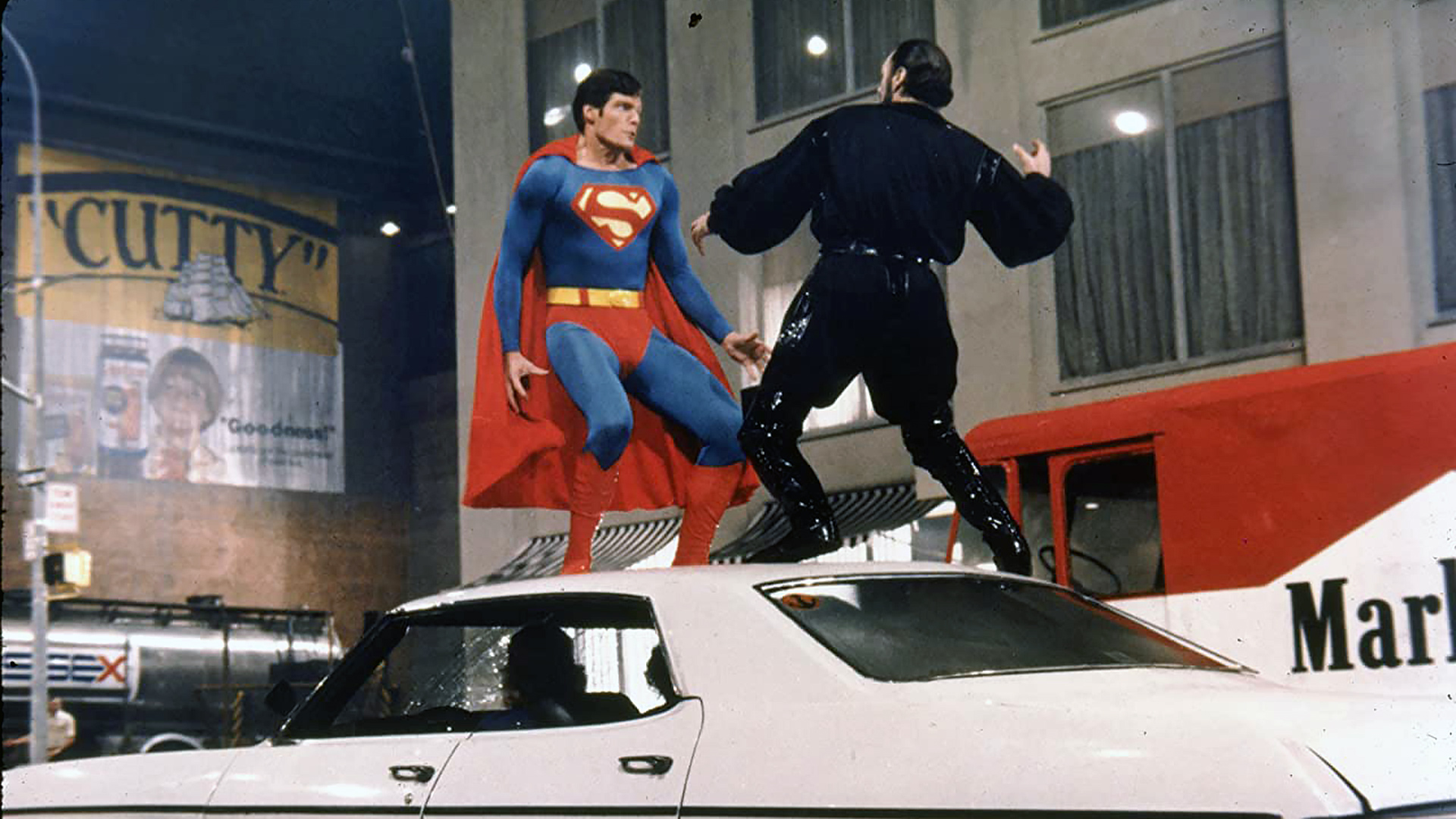
There are so many things which make “Superman” great. Of course, as mentioned previously, you have the tremendous performance by the late, great Christopher Reeve. However, you also need a really, really effective villain, and it’s hard to find a better Hollywood villain than the legendary Gene Hackman as Lex Luthor. He oozes with charisma, personality, and you love to root against him. As far as the supporting cast, it is filled with some of the greatest working actors and actresses in Hollywood history, such as Marlon Brando, Margot Kidder, Glenn Ford, Jackie Cooper, Terence Stamp, Ned Beatty, Jack O’Halloran, Maria Schell and Sarah Douglas.
It also doesn’t hurt when you have a director like Richard Donner behind the camera as well. He knows how to pace the film, allow his actors room to breathe, and he is also respectful of the source material. There was also the magnificent score by the iconic John Williams. When you have all of the right pieces in place like Donner did such as the script, the actors and the budget, you have to stay on track and basically not screw it up. He was just the right man for this big budget affair. During its release, it had the highest budget for a film at the time, coming in at $55 million. It’s funny to hear that number now, considering how much budgets have increased in Hollywood since then.
What speaks to me about the first “Superman” film is the idea of having a double life and people not knowing who you really are. During the day you are Clark Kent, a mild-mannered reporter, but you also have the ability to be Superman. It shows we all have something special inside of us. It is up to us to really find that, harness it, and use it for good. Superman is your all-American, clean cut, good guy. He’s very likable and effortlessly charming. On paper, this idea might sound ludicrous, but because the filmmakers took it seriously and had the right actors and participants involved, they really had lightning in a bottle. Even to this day, the film holds up incredibly well. When you see the special effects, they were really ahead of their time and they helped pave the way for a lot of the effects we see today, only they are now taken up a notch. Most importantly, this film has a big heart and a big soul attached to it. This is why the film is beloved by so many.
With this tremendous release from Warner Brothers Home Entertainment, we are also treated to “Superman II” in two different versions. We get the original theatrical cut by Richard Lester and the Richard Donner Cut on 4K. To this day, people still debate which version they like better and which is more worth watching. If you ask me, it’s best to watch both versions. I see things in Donner’s film I like more than in Lester’s and vice versa, but overall, I felt like Lester’s version was a much more polished, easy to follow, and complete film. Donner’s version is flawed with moments of greatness, and it deserves to be seen. Thanks to this set, you can watch both versions, which, as stated previously, I highly encourage you to do as I love a good film discussion. Film is subjective and there is really no right or wrong answer.
In “Superman II,” Mario Puzo is back once along with fellow screenwriters, David and Leslie Newman, again with a really good story, and this is a great thing for the audience. All three really know how to flesh out a story and create unique and interesting characters. It doesn’t hurt when you have actors like Beatty, Kidder and Hackman completely invested in the material. While not as good as the first one, and it’s rare for a sequel to be as good as its predecessor, it’s still a very, very good movie. There is some great humor here, and even in a superhero movie where the stakes are high and we are in a fictional world, some levity is very much appreciated! Sometimes it is nice to have a different vision and a new voice in a franchise while also staying true to what made the first film successful. Richard Lester was not put in an ideal situation, but he made it work, and you have to give him credit for that.
By “Superman III,” it seemed like the magic was starting to disappear, and they totally shifted the focus of the franchise into a campy, goofy and comedic realm which really rubbed audiences the wrong way. I understand they were going for something different, and they brought in Richard Pryor, but the script, the jokes and the material are just really, really bad. There is no denying that Pryor is a funny man with great comedic timing, but his abilities didn’t lend themselves to this film franchise. Overall, “Superman III” was doomed because of behind-the-scenes issues, script issues, and a film in search of the right tone. The filmmakers seemed to have lost the plot all together as well as their love for the character and the franchise. When a franchise has success, many times it is how the filmmakers handle that success which defines how it will carry on and continue. It is clear they didn’t know how to handle success here.
It didn’t get any better with “Superman IV: The Quest for Peace.” It was so poorly made and received that they didn’t make another Superman film until 2006. As is often the case with sequels, they went cheap. Even though Hackman returns and Kidder receives more screen time, this film was dead on arrival. The plot is incoherent, messy, and just plain dumb. It was a cash-grab sequel, and when you are focused on money over quality work, you end up with “Superman IV: The Quest for Peace.” It’s a very frustrating film and incredibly hard to follow. As you can see with the “Superman” franchise, you have the law of diminishing returns.
4K Info: The “Superman” 5-Film Collection 1978-1987 is in a terrific box set with all the films getting their own individual dual 4K case which also includes a Blu-ray version of the them. I was really happy they didn’t stack the discs in the set here, as that is always a pet peeve of mine. I was also very happy they gave each film its day in court with artwork and its own individual dual case. “Superman” was previously released on 4K, but this is the first time the other four films have been released in this format. You also a digital code for all of the films as well.
Video Info: If you already own the first “Superman” 4K, please know they have not added anything new to it here. It’s the same “Superman” 4K that had been released in its standalone edition. That being said, it’s hard not to be stunned and blown away by the beautiful Dolby Vision look of the original film. I had not previously owned the first “Superman” film, so I had no qualms about there not being anything new here. It’s just something to keep in mind for those who already own it on 4K. Overall, this is far and away the best these five films have ever looked on home video. They look sharp, clean and free of grain or mess. They have cleaned these films up very, very nicely. I was very impressed with these transfers. Warner Brothers has really been knocking it out of the park with their releases this year during their 100-year anniversary celebration, and this “Superman” box set is no exception.
Audio Info: We are treated to Dolby Atmos on all five films which is fantastic news! I am a huge fan of Dolby Atmos, and the sound is such a vital part of these films. The audio sounds crystal clear, concise, and it comes in at just the right pitch without being too loud or in-your-face. I’m always happy when I can leave it on one volume setting and still get the same impact throughout. That was the case with all five films. They also all come with subtitles in French, English and Spanish as well.
Special Features:
“Superman: The Movie” Special Features:
Commentary by Ilya Salkind and Pierre Spangler
The Making of Superman – vintage featurette
Superman and the Mole-Men – vintage featurette
Super-Rabbit – 1943 WB cartoon
Snafuperman – 1944 WB cartoon
Stupor Duck – 1956 WB cartoon
TV Spot
Teaser Trailer
Theatrical Trailer
‘Superman II” Special Features:
Commentary by Ilya Salkind and Pierre Spengler
The Making of “Superman II” – 1980 TV Special
Superman’s Soufflé – Deleted Scene
First Flight
Fleischer Studios’ Superman vintage cartoons:
Superman
The Mechanical Monster
Billion Dollar Limited
The Arctic Giant
The Bulleteers
The Magnetic Telescope
Electric Earthquake
Volcano
Terror on the Midway
Theatrical Trailer
“Superman II: The Richard Donner Cut” Special Features:
Commentary by Richard Donner and Tom Mankiewicz
Introduction by Richard Donner – featurette
Superman II: Restoring the Vision – featurette
Deleted Scenes
Lex and Ms. Teschmacher Head North
Lex and Ms. Teschmacher Head South
The Villains Enter the Fortress
He’s All Yours, Boys
Clarke and Jimmy
Lex’s Gateway
Famous Studios vintage cartoons:
Japoteurs
Showdown
Eleventh Hour
Destruction, Inc.
The Mummy Strikes
Jungle Drums
The Underground World
Secret Agent
“Superman III” Special Features:
Commentary by Ilya Salkind and Pierre Spengler
The Making of “Superman III” – 1983 TV Special
Deleted Scenes:
Save My Baby
To the Rescue
Making Up
Going to See the Boss
Hatching the Plan
The Con
Rooftop Ski
Boss Wants This to Go
Superman Honored
Gus’ Speech
Hanging Up on Brad
Theatrical Trailer
“Superman IV: The Quest for Peace” Special Features:
Commentary by Mark Rosenthal
Superman 50th Anniversary Special – 1988 TV Special
Deleted Scenes:
Clark’s Morning
Jeremy’s Letter
Superman’s Visit
Nuclear Man’s Prototype
Metropolis After Hours
Lex Ponders
Flying Sequence (Extended Scene)
Battle in Smallville
Battle in the U.S.S.R.
Nuclear Arms Race
Superman’s Sickness
Red Alert
By My Side
Lark and Lacy Say Goodbye
No Borders
Theatrical Trailer
Should You Buy It?
Last time I checked, this set is going for about $90, which is a great price for five films. Granted, you are really paying for “Superman,” “Superman II” and “Superman II: The Richard Donner Cut,” so you need to own all of the Christopher Reeve “Superman” films if you are a completist like myself. I’ve heard a lot of people in the film community complain about some of the special features from other releases not being included on this set but they are included in the other Blu-ray releases. This did not bother me as there are still plenty of special features to shift through here. I’m happy they included the Blu-ray discs for all of the films and didn’t just include the 4K’s. The good films in this franchise leave me with a warm and fuzzy feeling. When films make me feel this way and put a smile on my face, I’m a happy camper. There is also something to enjoy about the total and complete absurdity of the bad films as well. If you have a sense of humor and come in with the right mindset, you can enjoy them on the level of they are aiming at. All the films come with Dolby Atmos tracks, which is a great perk. My one minor nitpick is the fact that not all these films include Dolby Vision except for the first one. However, in 2023, when physical media is hard to come by in stores but very much appreciated by us hardcore film historians and lovers, I don’t want to be too overly critical or negative over the little things. Warner Brothers and other studios are really going all out to preserve important pieces of cinematic history. We shouldn’t look a gift horse in the mouth. This set comes highly recommended, and I enjoyed revisiting these films in 4K. It gave me a whole new appreciation for these films, Christopher Reeve’s performance, and the intense feelings of happiness and joy the first two (three if you are counting the Richard Donner cut) films brought to me. You can’t put a price tag on that. This set comes highly recommended!
* * * ½ out of * * * *
**Disclaimer** I received a copy of this film from Warner Brothers to review for free. The opinions and statements in the review are mine and mine alone.
I could never bear to give my stuffed animals away. They were a huge part of my childhood, and the thought of letting them go forever seemed so horrifying. Society expects you to give up on little dolls and stuff as you become an adult, and I honestly find that to be kind of bogus. Am I really supposed to stop playing with these plush friends of mine because society expects me to? Am I supposed to permanently kill off the childlike wonder inside of me so I look normal and hopelessly embittered like everybody else? Doesn’t this seem cruel?
In the end, I didn’t need to give my stuffed animals away. They got eviscerated by a rat that ended while they sat in a trash bag in the family garage. The rat wanted their stuffing, and he (or she) left behind a lot of rat poop which had to be disposed of carefully because it spreads disease. However, all the Eeyores I have collected over the years were fine as they continue to get preferential treatment ever since I got my first one back in the 1980’s.
It was inevitable these cuddly friends of mine would never get the same amount of attention as the years went by. The dilemma of what to do with these things we grew up with brings about strong emotions and uncertainty, and this is what Andy faces in “Toy Story 3.” Coming 11 years after its predecessor, young Andy who had given much love to these toys is now a young adult about to start college. His mother tells him he can either donate his toys to a nearby daycare center, or they can just go up in the attic. Despite Andy not having played with them in years, he is reluctant to let his toys go.
The majority of the toys from the first two “Toy Story” movies are back including Woody, Buzz Lightyear, Jessie, Rex, Slinky Dog, Mr. & Mrs. Potato Head, Bullseye and Hamm who has always been one of my favorites. Many, however, have since been donated or thrown out including Woody’s girl, Little Bo Peep. So, while Andy clearly has favorites among the toys he grew up with, it doesn’t make them feel anymore safe now that he is leaving home.
Woody (Tom Hanks) tries to keep the other toys’ spirits up even as he reminds them they knew this day was coming and that they might as well make the best of things while preparing for attic mode. However, an error occurs which has them getting donated to the nearby Sunnyside Daycare Center. At first, the toys don’t feel too bad because they are back in a position where they get to be played with on a regular basis. But despite the warm welcome from other toys, it quickly turns into their worst nightmare as they deal with kids who are not nearly old enough to take care of them. Instead of treating them with love, they get flung all over the place like they were frisbees, painted on, and contorted into positions which would make us cringe uncontrollably. Remember the scene from “Close Encounters of the Third Kind” where one of Richard Dreyfuss’ children smashes a baby doll to smithereens? Jessie, Buzz Lightyear, Mr. and Mrs. Potato Head and others get it just as bad here.
Now the third movie in a franchise is typically where a series goes off the rails or “jumps the shark” as some would say. After bringing something fresh and original to audiences everywhere, filmmakers end up relying on the formula which made the previous two movies so good. As a result, number three can come across as a regurgitation of our favorite moments to where it rings hollow because, even if they presented the characters in a slightly different context, it’s still the same old thing. The realization of this is always disheartening and depressing.
I’ve got good news though; “Toy Story 3” manages to escape this unfortunate trap and it proves to be just as inventive, imaginative, funny and heartwarming as its brilliantly made predecessors. Once again, Pixar shows they are not willing to rest on their laurels, and they keep their focus on the story as always.
When I was young, I always loved to believe my stuffed animals had lives of their own and did things I was never a witness to. I could see them taking out the Chevy Suburban my family used to have while the rest of us slept at night. To think they would be comfortable for the rest of their existence just sitting in my room didn’t seem particularly fair, and they deserved a night on town and a few beers. The great thing about the “Toy Story” movies is they understand how far our imaginations can go with this belief, and they play upon it in ways which are hilarious and endlessly entertaining.
Tom Hanks, Tim Allen, Joan Cusack and the always dependable Pixar regular John Ratzenberger among others are back voicing their beloved characters. Slinky Dog, originally played by the late Jim Varney, is voiced here by Blake Clark, and he makes the transition almost perfectly seamless.
We also get to see Barbie (Jodi Benson) with her biggest role in any of the “Toy Story” movies to date as she finally gets to meet the man of her dreams, Ken (Michael). Director Lee Unkrich and screenwriter Michael Arndt have a lot of fun playing around with the Ken we think we know, and they love hinting at the kind of person we think he might be. It’s funny to think Mattel didn’t want anyone touching Barbie when the first movie was made, and now it is unthinkable not to include her.
One of the prominent new characters in “Toy Story 3” is a strawberry scented bear named Lots-O’-Huggin’ Bear, but he’s called Lotso for short. Pixar always makes ingenious casting decisions in regards to the actors they pick, and casting Ned Beatty as the voice of Lotso is further proof. This cuddly and stain resistant teddy bear looks warm and affectionate, and Beatty’s voice makes us feel at home when Lotso first appears onscreen. But Lotso soon turns out to be a deceptive toy who thinks nothing of sacrificing the stronger toys to toddlers who are quicker to destroy than love them. All of what Lotso does here is powered by his feeling of resentment over being forgotten and quickly replaced by his owner. Now he manipulates the daycare center so he can live in comfort while the other toys suffer helplessly.
In terms of movies this sequel satirizes, it combines elements of “The Great Escape” and “Mission: Impossible” to show how challenging it will be for Woody and the gang to break out of Sunnyside. All the various descriptions of how closely guarded like a fortress this seemingly harmless place is leads to one brilliant moment after another. The one toy which gets chosen to watch over the surveillance cameras is an act of genius.
Now if you have already seen the trailer, you know one of the big set pieces in “Toy Story 3” comes when Buzz Lightyear gets reset and goes into Spanish speaking mode. Seeing him woo Jessie with his smoldering dance moves as if he were Ricky Martin or Antonio Banderas had everyone in the audience young and old laughing uncontrollably. The Gypsy Kings also perform a very cool cover of Randy Newman’s song “You’ve Got A Friend in Me,” and this version alone makes me want to buy the soundtrack.
And yes, Randy Newman returns to do the music score for a Pixar movie for the first time since “Monsters, Inc.” Once again, he captures the innocence of childhood and the exciting world these toys inhabit while also capturing the bittersweet emotions which bring this movie to a very emotional climax.
Of all the “Toy Story” movies, this one is easily the darkest as we see these toys get subjected to places which they should not come out of unscathed. Plus, these toys are at the endgame stage as they will soon part with Andy in one way or another. The ending of this one will almost certainly bring tears to the eyes of many as Andy talks to a shy little girl about his toys and Woody in particular. We’ve all grown up with these characters since the 1990’s, so we cannot help but feel like Andy in how we end up leaving certain things behind even if it breaks our heart.
“Toy Story 3” does what every Pixar movie does best; it entertains and enthralls the audience no matter what age they are. With this tremendous sequel, Pixar has completed another trilogy which will stand as one of the best in cinematic history, and they come around full circle with this adventure of Woody and Buzz, the characters who started it all for this animation company. They continue to push creative boundaries with all they do, and their enviable track record both creatively and financially is more than deserved. More power to them!
When this movie is over, you will know what a Lincoln Log looks like and what it doesn’t look like. Knowing the difference is important if you want to keep yourself from gagging!
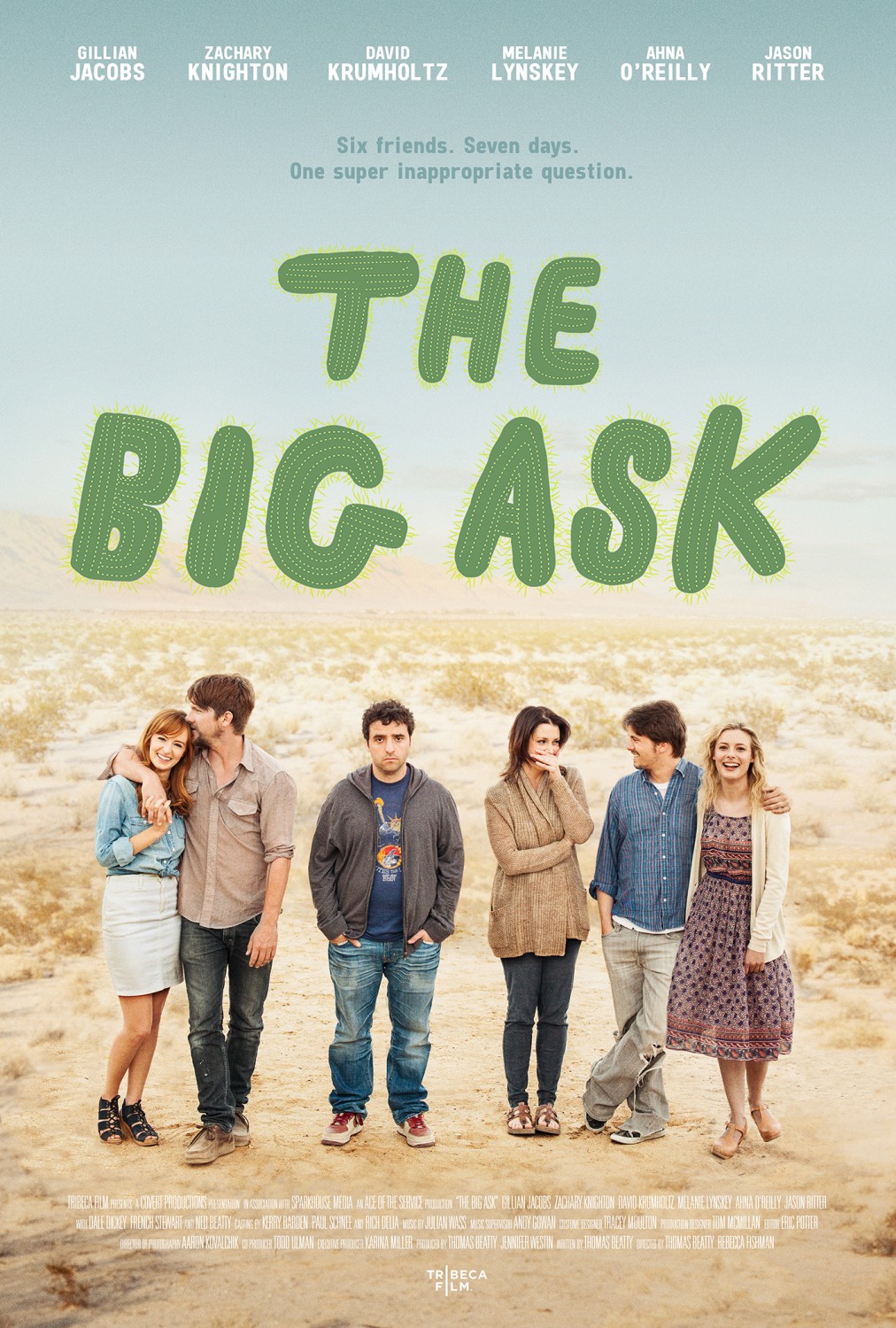
“The Big Ask” is a very well made black comedy which stands out among other indie movies being released at the moment. Its story revolves around three couples who go on a vacation in the desert to help their friend Andrew (David Krumholtz) who has just lost his mother to cancer. But once everyone is there, Andrew tells everyone there’s only one thing which can heal him in his time of sorrow; he needs to sleep with his friends’ girlfriends. It’s an absurd offer which makes everyone eager to jump in their cars and go home, but they stay as they see Andrew is very depressed and needs attention. But the movie has you wondering if they will actually go through with his plan if it means saving him from himself.
I got to speak with David Krumholtz over the phone, and he proved to be a lot of fun to talk to. Krumholtz has appeared in “Harold & Kumar Go to White Castle,” “Serenity,” “The Santa Clause” and “10 Things I Hate About You,” but these days he is best known for playing Charlie Eppes on the CBS show “Numbers.” During my interview with him, he talked about why he didn’t feel the need to do research on his character, what it was like making a movie with two directors instead of one, and he described the town of Twentynine Palms where the movie was shot. Also, he took the time to talk about a new website he is part of called Weather From which allows him to play one of his favorite characters.
Ben Kenber: The original title for “The Big Ask” was “Teddy Bears” which one character uses as a nickname for the cactus trees near the home everyone is staying in. Why did the title of the movie change?
David Krumholtz: I really don’t know why. I think Tribeca Films felt the title “Teddy Bears” didn’t really tell you what the film was. I like the title of “The Big Ask,” don’t get me wrong, but the problem is everywhere I go people ask me what I have coming out and I say “The Big Ask,” and they think I’m saying “The Big Ass.” So I keep getting, “You’re in a movie called ‘The Big Ass?’” And I have to explain that now it’s “Ask.” What’s even more awkward is that I show my ass in the movie.
BK: Well “The Big Ask” makes more sense in terms of what the movie is about.
DK: Yeah, I guess so.
BK: When it came to playing this character, did you do any research for this role or did you just work off the script as it was written?
DK: The script was very self-explanatory, and I really didn’t need to do much research because I’ve had an experience somewhat similar to this, obviously not asking my best friends’ girlfriends to have sex with me, but I had had kind of a painful experience in my life that I needed saving from. I needed my best friends to gather around me and to lift me up on their shoulders. I think a lot of people go through that, and it’s very hard to ask for help when you’re feeling helpless because it’s desperate. It’s interesting how people react to other people’s desperation. I had an experience like that, and this script in the way the characters react really rang true for me to what I experienced in my own situation. I didn’t have to do much research because I think I felt like I had been there, done that, so it was an opportunity for me to exercise that demon on film. I think people go through that kind of stuff all the time. Some people keep it quiet, some people handle it in certain ways, other people just scream for help. That’s ultimately what my character is doing in the film because he’s saying help me. But the matter in which he asks for help is ludicrous, and of course the fact that he thinks that there’s nothing wrong with it and that it’s totally normal is also crazy. I love how the film handles the awkwardness of it. These characters are real people, and so the idea is how real people react in this situation. The script was just so grounded in reality and in sort of the silent awkwardness and I thought Thomas Beatty did such a great job at making it feel real, and it’s because he had had an experience like that as well. I think it’s a great crowd movie in the sense of your sitting there kind of sympathizing with this guy who on paper reads like an asshole but you get where he’s coming from, and the big question is will they have sex with him or won’t they. I think it’s a fun movie in that regard.
BK: Yes, definitely. It’s like on the surface they are saying no but there’s a part of them that’s unconsciously considering it, so you can’t help but be riveted by the movie from start to finish for that reason.
DK: Yeah, the movie ends up becoming a reaffirmation of all the characters’ values. The one character of Dave (played by Zachary Knighton) wants to get married and he will stop at nothing to make it happen, and then the circumstance puts a stamp on his conviction to make it happen, to get his girlfriend to say yes. And the opposite is true for Jason Ritter’s character of Owen and Gillian (Jacobs) in that this brings to light the problems they have in their relationship, the communication issues. Their lives sort of unravel as a result of this question that this guy asks and it’s definitely not handled in a collegiate humor way. It’s definitely an adult movie for people who were not sure how to be adults. It’s certainly true of every adult.
BK: This movie is credited to two directors, Thomas Beatty and Rebecca Fishman. What was it like being directed by two directors instead of just one, and did that make things easier or harder?
DK: Well Thomas and Rebecca are husband and wife, and in this circumstance Thomas wrote the script so I think Thomas appreciated what Rebecca brought to it which was a filmic sense: the cinematography element and being in communication with the cameraman. So Thomas didn’t have to concentrate on anything but working with the actors and working on the script, so that in regard it was great. I found that I got more out of Thomas than I would have if he was worried about performance and camerawork the whole time. Rebecca had her own ideas as to what the film was tonally, and there were times when their ideas contradicted one another and there were times where we all agreed on the same thing. It’s tricky especially because they are husband and wife. You definitely don’t want to be the reason they start fighting, and it was a hard movie to make. But their spirit and their earnestness and their enthusiasm for the material really just carried us all through, so it was lovely to have the two of them there together.
BK: What was the most challenging aspect of playing this role for you?
DK: I mean for me, to be honest with you, I think beyond just doing some soul searching with the role, I think the most challenging thing is probably that there wasn’t very much that can be played broad or on the nose about this character. As actors we have an instinct to perform and to push and to show, and the hardest thing for me was I felt like the movie and Andrew only worked if I pulled him back and held back a lot because I’m playing a character that the audience is wondering what’s going on in his head. And more importantly, he’s wondering what’s going on in his head. He’s not even sure what he’s thinking, so it’s really important to pull back my performance and do something really small, and that was the biggest challenge for me. I need to establish a good level of trust with Thomas Beatty about that because I told him, “Look if I’m ever going too big or broad or if I’m too on the nose with my interpretation, pull me back. Let’s go smaller.” This is a movie where the awkward silences are the funniest beats, and so in this case less was more.
BK: The group dynamic between you and the rest of the actors is truly fantastic. Did you all have a lot of time to work things out and rehearse before you started shooting?
DK: No, this is a super low-budget indie so there are no frills and there’s not a lot of rehearsal time… Yeah, we did a couple of read-throughs and we kind of worked out some kinks. The great thing was from the first moment as a cast we all got along beautifully. We all enjoyed each other’s company, we all sort of came from similar places in our lives which we applied to this experience and to this project. So, what helped a lot and what made up for the lack of rehearsal time was that we all just had amazing chemistry as people, and then that did a lot of the work for us onscreen.
BK: The movie was shot in Twentynine Palms. Can you tell us more about this city?
DK: It’s about a half-hour outside of the heart of the Mojave Desert and about an hour past Joshua Tree National Park, so it’s basically the middle of nowhere. There’s a big, big giant army base out there and that’s about it. They were dropping bombs constantly and our little house that we all stayed in would rattle when they would drop a bomb, and sometimes they’d drop a bomb closer to us and it would be like, “Do we need to get the heck out of here?” We were basically in the middle of the desert with bombs being dropped near us and it was really quite a different experience, but for us it was kind of like paradise because it was so immersive. We really didn’t have a choice. We were all trapped in the desert and we really didn’t have a choice but to focus on what we were doing and focus on each other.
BK: Wow, I didn’t see anything resembling an Army base out there so you must have done a great job of hiding it from view in this movie.
DK: It’s actually the biggest army base in America; it’s that big. If you go out on this one road the road ends and if you go off-roading for about 20 minutes, you’ll end up at a giant re-creation of the central market of Baghdad, and it’s in the middle of nowhere dude. There’s no easy access to it, and there’s literally props and fake soap and fake market items. They do drills within that city and it’s meant to mock Baghdad or any major Middle Eastern city, and it’s about a square mile, that’s how huge it is, and you can see it from above from the mountain range. You really can’t get down to it. I’m not even sure how the military has access to it. I guess they have a certain road that leads there that people can’t get to from the other side. But I know Ahna O’Reilly and Jason Ritter went out there one day with a couple of friends and actually got out of the car and walked into it and walked around it while there were no drills happening. Then all of a sudden an alarm went off and the drill was happening and they had to run out of there because the Army started shooting up the place. I actually went out there once but I didn’t get too close because it was just super scary to me and super intimidating. It’s a very trippy place man, Twentynine Palms. If you ended up in Twentynine Palms, there’s a very specific reason.
BK: You also have a website that’s starting up now called “Weather From.” Could you tell us a little more about it?
DK: I’m really, really jazzed about it. Basically my friends came up with the idea to create a weather website that would make you laugh. People get their most up to the moment weather on the Internet and they thought that since it’s become this essential part of everyone’s lives, to check the weather for their town or where they are traveling to or where they are traveling from, why don’t we make them laugh while we are doing it. The idea was to create a bunch of characters and film a bunch of vignettes where the characters told you the weather for your small town, and it kind of went off on tangents. They pushed me to do an old lady character because my friend Ricky, who was involved in it, knew that I had done this character that I based on my grandmother. I said, “Well yeah I’ll do it, but I don’t want to do it in drag. Can we get some prosthetic makeup going?” We actually ended up getting Stephen Prouty’s company which just got nominated for an Academy Award for doing “Bad Grandpa,” so all of a sudden they transformed me into an old Jewish lady that no one, even my family members, were fooled by. Basically, how the site works is you go and you type in your zip code or the name of any city around the world, it hooks up to the National Weather Service so it works like any other weather website except instead of specific forecasts coming up, a video comes up and it’s accurate to your hometown. We did 35 videos for 35 different types of weather, and the videos range from 30 seconds to two minutes long. They are basically just vignettes and it’s me as this old, nasty Jewish woman who has a filthy mouth and is very opinionated and is also a little sexually promiscuous telling you the weather for your hometown and then also going off on tangents of what the weather reminds her of or whatever; everything from her wanting to have sex with Jeff Goldblum to claiming that she was the only survivor of the space shuttle Challenger disaster. She’s a really funny, funny character. We didn’t hold back. She’s very filthy and she’s very real, and it’s hard to imagine that’s me which is really cool. People have been really surprised by it. I think it’s a brilliant concept, and the idea going forward would be that there would be more characters to choose from to give you your weather and there will be more specific types of weather. We only did 35 types of weather as a start, but the weather can get very, very specific with high fronts and low fronts and hurricanes and tornadoes. So hopefully as we go forward we will get the chance to do hundreds of videos potentially.
BK: Yeah, it will be interesting to see how the website evolves as you have started off with a couple things, but I imagine at some point it will have to get a little more specific. That should give you a lot to work with as an actor which is cool.
DK: Yeah, I think so. I think it has endless potential and I’m just happy that they asked me to be a part of it. I’ve been working really hard on promoting it and getting the word out there about it because I love playing that character. It’s so much fun (laughs). She’s such a nasty old woman. I guess she’s a side of me that I didn’t know existed, or maybe I did know and I didn’t want to tell anybody or didn’t want to admit to. But it’s so much fun getting to let her out and I just really want people to see it and enjoy it as much as I enjoyed making it.
BK: What do you hope that people get the most out of watching “The Big Ask?”
DK: Well, I really hope they have a good time laughing at my character’s misfortune, but I hope it makes them reflect a little bit on their own frailty and their own willingness or lack of willingness to ask for help. It’s the kind of movie that I love when I can walk out of the theater and feel like I know what that’s like. I can feel those feelings in my life, and maybe it’s time I ask for what I need regardless of whether or not it hurts people’s feelings because I need it. And if their friends, they’ll understand it’s something that I need. So hopefully someone will walk out of there having popped the question or whatever it is just because they felt inspired to do so.
I want to thank David Krumholtz for taking the time to talk with me. “The Big Ask” is now available to own and rent on DVD, Blu-ray, and Digital.




 The Ultimate Rabbit