If I Had Hosted ‘Your Turn’ on 100.3 The Sound

1003 The Sound Banner

With 100.3 The Sound shutting down operations soon, it looks like I won’t get a chance to host an edition of “Your Turn.” This is a program where “Sound Listeners” like you and me can act as DJ for an hour and play ten of our favorite songs. This is one of the many things I love about this station as it shows just how much they truly respect those who listen in on a daily basis. Since first learning about this particular program, I was very eager to be a part of it as I have some experience in being a radio DJ in the past while I was a student at UC Irvine. But with the station going off the air, its likely they have little time to accommodate those who have sent in their song lists to the station.

Whatever the case, I’m going to do the next best thing and provide you, my fellow readers, with the episode I would have done. So here it goes.

Hello people! My name is Ben Kenber, a Sound Listener from Los Angeles, California and also the writer and CEO of the website The Ultimate Rabbit which focuses on my love for movies as well as the challenges I face in training for the Los Angeles Marathon, a marathon I have participated in for seven years. The songs I am going to play have affected me deeply throughout my childhood and as an adult, and I look at them as a journey through the crazy terrain life gives all of us.

  1. “I Can’t Drive 55” by Sammy Hagar

The first song on my list needs no introduction in my opinion. You have all heard this classic before, and the best way for me to describe it is that it’s the song I just LOVE listening to whenever I am in a bumper-to-bumper traffic jam on the 405 freeway. Here it is!

  1. “Shock the Monkey” by Peter Gabriel

This song cast a spell on me when I first heard it on the radio back in the 1980’s. Then I saw the music video for it, and it was the scariest video I ever saw. Keep in mind, I was 7 years old at the time, and this was the worst time to watch a music video like this one. All these years later, I have since become a huge Peter Gabriel fan and have no problem watching this song’s music video as it is one of the few from this decade which really holds up. While my favorite song of Gabriel’s is “In Your Eyes,” one which The Sound has played on a regular basis, this one still holds a lot of meaning for me and still sends a chill up my spine whenever I listen to it. Here is Peter Gabriel with “Shock the Monkey.”

  1. “Find Your Way Back” by Jefferson Starship

I remember when my dad bought the album “Modern Times” by Jefferson Starship back when we were living in Marietta, Georgia, and the first song off of it remains one of my all-time favorites. I even got my dad to let me take this album to my kindergarten class at Wesleyan Day School, and my classmates were eager to rock out to this track every time I put the needle to this vinyl record. It’s a good thing we never got around to playing “Modern Times” in its entirety as the last song, “Stairway to Cleveland,” had a four-letter word parents were eager for their children not to learn about until they turned ten years old. I also have to say that the woman on the album’s cover became a significant part of many nightmares I experience at such a young age. Anyway, here is Jefferson Starship with “Find Your Way Back.”

  1. “Bad Reputation” by Joan Jett & the Blackhearts

I have been a fan of Joan Jett & the Blackhearts ever since I first heard their cover of “Crimson and Clover” on the radio back when I lived in Marietta, Georgia. But I am choosing to play this song because I love its defiant attitude, and it’s the kind of attitude I wish I had during my high school years because I was way too concerned about what others thought of me. Plus, it was also the theme song to one of my favorite television shows, “Freaks & Geeks,” and like many brilliant TV shows, it only lasted one season. Anyway, here’s “Bad Reputation.”

  1. “Can I Sit Next to You Girl” by AC/DC

I have been a die-hard fan of AC/DC ever since I bought their album “Who Made Who,” and 100.3 The Sound has played their music non-stop. This makes selecting a song by them especially challenging as “Dirty Deeds Done Dirt Cheap,” “Back in Black,” “Big Balls,” and “Thunderstruck” are always being played on this station. This song from their album “High Voltage” has always been one of my favorites, and I would like to give it a spin here. With the late Bon Scott on vocals, here is “Can I Sit Next to You Girl.”

  1. “Black Dog” by Led Zeppelin

I have to include a song by Led Zeppelin here. I became a devoted fan of their music after my dad bought their untitled album, commonly known as “Led Zeppelin IV,” on compact disc. This particular song by them kept playing in my head while I was on vacation with my family in Hawaii. While looking at the tall cliffs, I couldn’t help but think of this song, and I still can’t get sick of listening to it. Here’s Led Zeppelin with “Black Dog,” because this station has played “Kashmir” way too often.

  1. “State Trooper” by Bruce Springsteen

If you had asked me what my favorite Bruce Springsteen album was years ago, I would have said “Born in the U.S.A.” These days, I would pick “Nebraska” which seems simplistic in its production to his other albums, but is still a very powerful listen as its lyrics are intensely personal. As much as I wanted to select “Atlantic City,” I had to pick this song as it has haunted me ever since I first listened to it while on vacation with my parents in Maine. Here is “State Trooper.”

  1. “Shadows of the Night” by Pat Benatar

Up next is something by Pat Benatar, one of the great rock and roll singers from the 1980’s. She had great hits like “Invincible,” “Hit Me with Your Best Shot,” “Love is a Battlefield” and “Promises in the Dark,” all of which showed she was not someone to mess with. I am selecting this song by her because I love the melody of the chorus and how it soars over the lyrics with grace. Here is “Shadows of the Night.”

  1. “Undercover of the Night” by The Rolling Stones

My parents introduced me to the music of The Rolling Stones when they kept playing their album “Tattoo You” on a regular basis. This one included their classic hit “Start Me Up,” but this song from their 1983 album “Undercover” remains a favorite of mine from childhood. Here is “Undercover of the Night.”

  1. “King Tut” by Steve Martin

Choosing my last song was a tough one as I would love to include one from The Beatles or the late Tom Petty, but again, I wanted to go back to my time in kindergarten as this was a song me and my fellow classmates boogied out to without ever understanding the lyrics. Years later, I came to see it as comedy classic from one of the most brilliant of comedic minds. Here is Steve Martin with “King Tut.”

I again want to thank 100.3 The Sound for all the great music they have played for the last ten years. They have given me a deeper appreciation for bands like Deep Purple, and they made me realize there is more to Lynyrd Skynyrd than just “Sweet Home Alabama” (I foolishly thought this band was a one-hit wonder for years). Happy trails.

Goodbye 100.3 FM The Sound, Dammit

1003 The Sound Banner

I honestly thought it was a joke when I first read the article on LAist.com, “100.3 The Sound to Be Replaced with Christian Music Station.” LOL. I mean, come on. Replacing the best classic rock radio station in Los Angeles with one which has one singer praising God and then another saying how much they love God and even another one speaking of how God got them through tough times? You know, a radio station with real variety. Aren’t there a couple of radio stations on the AM/FM radio dial with Christian music already? Do we really need another featuring songs indistinguishable from the others played before them?

Well, it turns out this is not a joke and, as I write this article, April Fool’s Day is not around the corner. In completing its merger with CBS Radio, the American broadcasting company Entercom has agreed to sell three of its radio stations, among which is 100.3 The Sound. The classic rock station is to be replaced by the Christian Contemporary station, K-LOVE and, according to Program Director, Dave Beasing, The Sound now has 30 days until their operations are shuttered. Now radio stations may come and go, but to learn this one is heading towards the annals of radio history has left me utterly infuriated and deeply depressed. Like many out there, I found The Sound and am not prepared to lose it.

Like everyone else, I grew up on FM radio with KISS-FM in Southern California (Rick Dees in the Morning!) and KFOG up in Northern California, but as the years went by, I grew continually restless with every single station I tuned in to as commercials and advertisements became more prevalent than actual music. I eventually gave up on radio for a time and became much more open to inserting a cassette into my car’s tape deck where I could get my music fix more easily and be spared from another advertisement for car insurance.

100.3 The Sound, however, was different. They would play a bunch of songs in a row, and they were the kind of songs which, even after listening to them hundreds of times, I could never get sick of. When the commercials came on, I never found myself eager to change the station as I eagerly anticipated which classic song Uncle Joe Benson, Rita Wilde, Cynthia Fox, Mary Price, Tony Scott, Tina Mica, Steve Hoffman, Mimi Chen, Andy Chanley or Gina Grad would end up spinning next. Did it matter which song they played? No, because I could always count on it being one which raise my spirits whenever I am stuck in a bumper-to-bumper traffic jam on any given Los Angeles freeway. Furthermore, listening to this station on a daily basis keeps making me forget 95.5 KLOS still exists, and this is quite a feat.

Of course, it became an obligation to turn the volume down whenever that blasted Kars 4 Kids jingle was played. So simplistic and annoying in design and yet so catchy at the same time, it has long since proven to be equivalent of the Silver Shamrock jingle from “Halloween III.”

It didn’t matter if they were playing Led Zeppelin, Styx, The Eagles, The Beatles or The Rolling Stones because 100.3 The Sound made you realize why classic rock became classic rock; you never got sick of listening to it. Songs like “Stairway to Heaven” and “Bohemian Rhapsody” never get old for me, ever. “Hotel California” still has relevance in this new millennium. Journey’s “Don’t Stop Believin’” still has us holding out hope even when times seem darker than ever. And while I may not have “Too Much Time on My Hands” like Tommy Shaw does, I always look forward to hearing it as much as another Styx song, “Mr. Roboto.”

That’s the thing about classic rock, it never ever gets old. It has heart and soul which today’s music seriously lacks. The artists of the here and now seem way too focused on generating the next big #1 hit to where they employ an obscene number of writers and producers on a single song in an effort to create something commercially viable, demographically friendly and inoffensive to the most sensitive of ears. Musicians from years past were never as concerned about making hit records as they were in creating music which spoke to them as much as it did to us. Even today’s generation has a great love for these bands to where their music’s power is undeniable. Taylor Swift may be the hit maker of today, but can you see “Shake it Off” or “…Ready for It?” having the lasting power of “Bohemian Rhapsody?” I think not.

Whenever I am driving people all around Southern California, they remark how the music playing on 100.3 The Sound makes them feel like they are in high school again. I feel the same way, and I went to high school back in the 1990’s! Sure, there are some passengers who instead want to hear the latest in hip hop which is fine, but more often than not, they dig listening to what this great radio station plays had on its playlist.

I love it when Andy Chanley breaks down a song to where you hear only the lead singer’s vocals or a particular guitar riff. I love Rita Wilde’s album side at 11, and she made me realize Journey’s “Frontiers” album was actually not a part of my record collection and needed to be. I love Uncle Joe Benson’s “10 at 10” as he was great at taking you back in time to a year which remains fresh in our minds, and his show “Off the Record” had him indulging in down to earth conversations with artists I always want to know more about. This station even managed to lure Mark Thompson back into the realm of morning radio, albeit for far too brief a time. Still, he had his “Cool Stories in Music” podcast which I always enjoyed listening to on a Sunday night.

100.3 The Sound also plays host to “Little Steven’s Underground Garage,” the guitarist and “Sopranos” actor’s radio show which showcases what he sees as the “coolest songs in the world.” Now this is what Vincent Vega would call “a bold statement,” but in Little Steven’s case, he is absolutely justified in making it. While he plays songs by The Rolling Stones and The Monkees, bands we know and love, he also includes the grooviest of tunes from Butch Walker, The Weeklings, Jeremy & The Harlequins, Fleshtones, and the Kurt Baker Combo. I have to say I don’t know these ones but feel like I should, but with his show, Little Steven has introduced them to a new generation of listeners. It is also further proof of how my rock and roll education is far from over as his song selections provide me with a gloriously rockin’ good time.

Plus, how many other radio stations have a show like “Your Turn?” This is where Sound listeners like you and me can spend an hour as a DJ (pre-recorded of course) and play our favorite tunes for devoted listeners to hear. Now this is a radio station which respects its fans like few others do. While many of them may not sound ready for prime time, it is always great fun to hear what songs they selected. I was hoping to get a chance to do it, and I do have experience as a radio DJ, but thanks to corporate greed, it is unlikely I will get the opportunity.

Well, all I can do now is enjoy the remaining days 100.3 The Sound is on the air as I feel uncertain there will be another radio station like it in the near future. I have no real desire to tune into a Christian music station. Granted, there are some great Christian singers out there (Vanessa Jourdan, you rock!), but being without The Sound on my FM radio dial will make it painful to even try to tune in to this channel.

A big thank you to everyone at 100.3 The Sound for all the great times and songs they have given me. You will be deeply missed.

WRITER’S NOTE: I am including the following song as it started playing in my head loudly after it set in that 100.3 The Sound is going away. It was released back in 1992, and I believe this makes it “classic rock.” After all, this station also plays the music of Pearl Jam.

See also:

If I Had Hosted ‘Your Turn’ on 100.3 The Sound


Denny Tedesco and Company Look Back at ‘The Wrecking Crew’

The Wrecking Crew poster

The Wrecking Crew” joins the company of great documentaries like “Standing in the Shadows of Motown” and “20 Feet from Stardom” as it puts the spotlight on a group of musicians who have been in the background for far too long. The title refers to studio and session musicians based in Los Angeles, California who played anonymously on many famous records back in the 1960’s. During a decade dominated by The Beach Boys, The Mamas & The Papas and The Monkees among others, they were the ones who recorded the music we came to love so much.

“The Wrecking Crew” was directed by Denny Tedesco whose father, Tommy Tedesco, was a legendary guitarist who played with this group of unsung musicians. Tedesco started filming this documentary back in 1996 when he discovered his father was diagnosed with terminal cancer as he wanted to get as much of his father’s musical history on film for the record. From there, it became a celebration of musicians whose work resulted in the creation of many great songs. In addition, Tedesco succeeded in getting many interviews from stars like Cher, Nancy Sinatra, Mickey Dolenz, Glen Campbell and Dick Clark who shared their memories of The Wrecking Crew and of what they brought to the world of music.

A press day for “The Wrecking Crew” was held at The Professional Drum Shop in Hollywood, California, a famous location where George Harrison once bought a pair of drums for Ringo Starr. Joining Tedesco was The Wrecking Crew’s drummer Hal Blaine who came up with the group’s name, and its keyboard player Don Randi. While the documentary started playing at film festivals in 2008, it did not receive a theatrical release until 2015 due to the incredibly difficulty of licensing music for its inclusion here. I asked Tedesco how the documentary evolved from when he started shooting it in 1996 to when he finally got a rough cut together.

Denny Tedesco: Format wise, we started shooting in film, 16mm, because I wanted to be a filmmaker. My wife Susie and myself, she’s a commercial producer, had better access to the film cameras, but we also liked the idea of film. But years later I started to go to video out of necessity, and I realized that was much easier because now what I missed with film is a lot of great interviews. With film, you’ve got to have a whole film crew. When we started cutting I knew the beginning, I knew the middle and I knew the end, but when the first 30 minutes of the film were cut another director saw it and said, “Why are you cutting it like this?” And I said, “What do you mean?” Because I wasn’t gonna be part of this film at all. I was the director and I wanted to keep myself out of it. He said, “You’re crazy not to be a part of this. You have access that none of us have. What you’re cutting, we couldn’t do this. You should go the other way.” And that’s when I decided that I would try and introduce the film as myself and that this is the reason why I started the film; my dad’s passing away and I said this is the story of my father and his extended family, The Wrecking Crew, and that’s how I introduce all of these guys.

Tedesco, Blaine and Randi said all the musicians originally came from jazz backgrounds, but that they eventually found themselves playing rock and roll music as they could make more of a living this way. We get to meet each of these musicians, and one who stands out in particular is Carol Kaye not because she is the only female member of The Wrecking Crew, but because she is a truly gifted bass player. Randi himself described Carol as being very innovative and that she has a great ear for music, and she gave us all a respect for the bass guitar we should have today.

Hal Blaine: I have to make mention right here about Berry Gordy who was actually a neighbor of mine. We used to laugh at the limo that used to pick up this little, tiny child to take him to school every day. Eventually there were people out there saying they did all the Motown records, and we knew that they didn’t. We knew that we had done a couple, three maybe, but there were some people who claimed they did all of them. They will be nameless at this point. Berry Gordy, not very long ago, did an interview and mentioned the fact that the very first hits came out of his garage where he had a little studio, and then he became Twentieth Century Fox’s head of musical engineering. We did the first few (songs) like “Baby Love” and a couple of things and it was an amazing time, and I was shocked to hear Berry Gordy actually do this. Not coming clean, but just to clear up things.

Randi also shared a sobering story about The Funk Brothers, Detroit based musicians who performed the backing music to the majority of Motown recordings from 1959 until 1972 when the company moved to Los Angeles.

Don Randi: When we all went into the Musicians Hall of Fame in Nashville, The Funk Brothers were there and The Wrecking Crew was there. We all went in at the same time and I sat with The Funk Brothers and they had me crying because there weren’t no contracts and they didn’t get the residuals. These guys are old and they don’t have that… Those guys worked their butts off for Berry, and when they first came out on the first date I did for them they went to pay us with cash, and I said, “Wait a second, we don’t do this.” And they said, “Well that’s the way we do it in Detroit. We pay cash.”

Well, hopefully all these musicians will get the respect they deserve when audiences watch “The Wrecking Crew.” It is a great celebration of the music we grew up on and of the artists who created it in the first place. While this documentary might look like it is riding the coattails of similar ones, it stands on its own and sheds a light on a piece of musical history we all need to know more about.

Danny Tedesco: All these other docs, thank God they came out. Thank God they laid the ground work and thank God they were successful. And I’m so happy because there is always another story. I tell people there’s so much information out there. You could interview your parents and you would get a great story and they should. There’s so much knowledge out there and I’m so glad that these different musicians… I’m lucky that I got them in their youth. If I had to do this documentary today, forget it. A lot of guys are gone and memories are maybe not as sharp.

The Wrecking Crew” is now available to own and rent on DVD, Blu-ray, and Digital.

Exclusive Interview with Sean Combs on ‘Can’t Stop Won’t Stop: A Bad Boy Story’

Sean Combs, a.k.a. Puff Daddy, is many things in life: a rapper, mogul, actor and businessman whose strong work ethic came about when he was a young boy. Following his time as an intern at Uptown Records, he came to form his own label, Bad Boys, which became a highly influential foundation for hip-hop and developed the careers of many artists including the late Notorious B.I.G. Combs’ image in the media, however, has been constantly pigeonholed into something which is not altogether true, and with the documentary “Can’t Stop Won’t Stop: A Bad Boy Story,” he looks to correct this so the world at large can see him for who he really is.

Directed by Daniel Kaufman, “Can’t Stop Won’t Stop” shows Combs at his most open and vulnerable as we learn how he became a millionaire at the young age of 19 and learned to navigate the real of corporate business. We come to see how the Bad Boy family he helped bring about filled his need for a family as he felt he never really had one before, and discusses how his world was forever shattered when the Notorious B.I.G. was murdered. We also see Combs get a Vitamin B12 shot right in the butt, and if this doesn’t show open he is willing to be on camera, then I am not sure what will.

“Can’t Stop Won’t Stop” also documents the Bad Boy artists reuniting for a 20th anniversary concert at the Barclay Center in New York which was put together in a mere three weeks, an insanely short schedule for any show to be assembled in. Among the artists, some of whom have not performed live for years, include Lil’ Kim, Mase, Faith Evans and Mario Williams among others.

I was lucky enough to speak with Combs while he was in Los Angeles, and we talked about how challenging it was for him to let go of the control he has over his image for this documentary. In addition, he also discussed the fun he had in sending up his own image in “Get Him to the Greek” and, in echoing what Nina Simone once said about being free means having no fear, admits to the place he finds himself being the most fearless in.

Please check out the interview above. “Can’t Stop Won’t Stop: A Bad Boy Story” opens in Los Angeles and New York on June 23, and it will be shown exclusively on Apple Music starting on June 25.

Can't Stop Won't Stop documentary poster

Anne Hathaway on the Exciting Music in ‘Song One’

Song One movie poster

Oscar-winning actress Anne Hathaway stars in “Song One,” a drama where she plays a young archaeologist named Franny. At the movie’s start, her brother Henry (Ben Rosenfield) is hit by a car and goes into a coma, and she flies back to New York to be at his side. In the process of going through Henry’s notebooks, she comes into contact with James Forester (Johnny Flynn), a favorite musician of Henry’s. James has had some success in music but is also a shy and private man suffering from writer’s block. From there a romantic relationship between the two begins, and they soon help each other find their way through the darkest of times.

“Song One” was written and directed by Kate Barker-Froyland who had worked as a director’s assistant on one of Hathaway’s biggest hits, “The Devil Wears Prada.” One of her main intentions with this film was to capture the lively music scene of her Brooklyn neighborhood. Indeed, it is a lot of fun listening to the music as you can tell these musicians are playing and singing out of their love for music as opposed to just chasing a record deal (although I’m fairly certain they wouldn’t mind that either). Watching it made me want to take a vacation to Brooklyn just to see this music scene up close.

I got to speak with Hathaway during a “Song One” roundtable interview held at the SLS Hotel in Beverly Hills, California, and I told her how much I enjoyed watching and hearing the musicians featured in the movie. These were musicians playing with all their heart and soul, and I was curious how she and the filmmakers gathered up so many talented ones for this project. It turns out a lot of that was due to the participation of Jonathan Rice and Jenny Lewis who have had tremendous success together on the music scene, but Hathaway said getting the both of them on board was a little tricky.

Anne Hathaway: My husband (Adam Shulman) and I were friends with Jenny Lewis and Jonathan Rice, and when we initially ready the screenplay back in 2011 we just kind of had one of those like dream musicians for this and we both said them. And then we kind of laughed at our audacity and decided that could never possibly happen because we couldn’t get them, and also they were friends and we would have felt awkward. We were worried about it bordering on being opportunistic, so we spent a while pursuing other avenues trying to come up with better ideas. Then Kate came up with a draft that had focused on the James character and we asked Jonathan if we had hit the right tone with the character. He asked who’s doing the music and we were like half-jokingly, ‘Well you if you want to.’ He was like, ‘Okay let me give it to Jenny,’ and she read it and they were open to the process of meeting Kate, and then they met and they really liked each other. The next morning, we opened up our emails and there was this song (from Jonathan and Jenny) and it was Little Yellow Dress and it was incredible. And then Jonathan Demme, our producer, came out. Jonathan Demme has one of the deepest and most beautiful encyclopedias of music in his head, and to watch him and Jenny and Jonathan just kind of talk music and talk about the sound and who James Forrester was, it was a thing of beauty. From then on they were in the movie, and a lot of the musicians wound up being contacts that they knew. They were so integral to the sound of the film.

To read about “Song One’s” making is to see it was a movie made by friends who brought everything they had to this project. In addition, they brought with them a lot of great music which feels authentic to the locales it takes place in, and it’s the kind of music that fills up your spirits when you’re feeling low.

“Song One” is now available to own and rent on Blu-ray, DVD, and Digital.

Save

Alan Howarth Discusses Working on Film Scores with John Carpenter

alan-howarth-photo

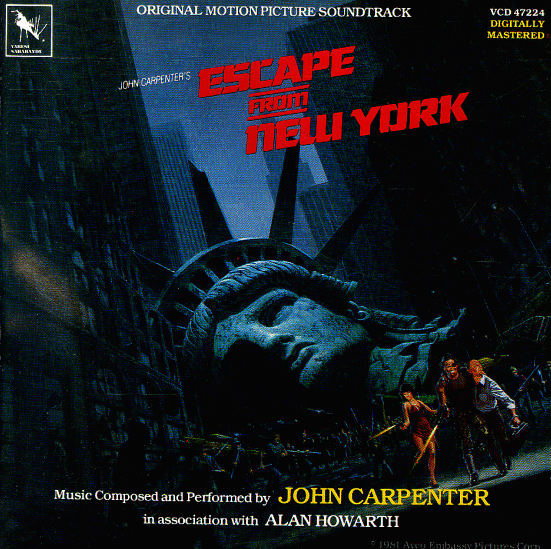
A screening of John Carpenter’s “Assault on Precinct 13” at the Egyptian Theatre in Hollywood brought out a number of guests such as Austin Stoker who played Lieutenant Ethan Bishop and Douglas Knapp who was the film’s director of photography. But the one guest I was really interested to hear from was Alan Howarth, the composer and sound designer who collaborated with Carpenter on a number of his film scores from “Escape From New York” to “They Live.” Howarth even took the time to do a live performance of his and Carpenter’s music, something I never thought I would ever see in my lifetime.

During the Q&A, Howarth talked about how he came to work with Carpenter, their process for scoring his films and his favorite film scores of the ones they worked on together. Howarth wasn’t actually on board for the original “Assault on Precinct 13” though he did work on a remastered version of the soundtrack for it and “Dark Star” for BuySoundtrax.com. It wasn’t until he worked on his first big film when he became inadvertently acquainted with Carpenter.

alan-howarth-and-john-carpenter

“I came on board at ‘Escape from New York,’ and that was kind of happenstance because my very first movie, less than a year earlier, was ‘Star Trek: The Motion Picture,’” Howarth said. “I had come on as the sound designer and created the sounds of the Enterprise like the warp drive and the transporters and stuff like that. The picture editor from that movie, Todd Ramsay, his next assignment was ‘Escape from New York,’ so I had slipped him some cassettes and he knew I was a musician. John had worked with another fellow on ‘Halloween,’ Dan Wyman, and there was some change up there, and so literally the guy comes over to my little, rented house in Glendale and set up in my dining room. It was nothing formal. I sat down and I played him a few things and he goes, ‘okay, let’s do it.’ That was it.”

“John always wanted somebody who knew about the technology,” Howarth continued. “In fact, a couple of times I tried to explain to him how it worked and he was all, ‘I don’t want to know that. It’s your job to make it work, make it in tune, and when I push down the note the red light is on.’ So that’s where I started, but he’s a collaborative person. I love working with people. I’m from the bands and rock & roll. I was one of those people. So, it was really great and my first film score was ‘Escape from New York.’”

escape-from-new-york-soundtrack

From there, the two of them worked on several projects all the way to “They Live.” As he continued discussing the work he did with Carpenter, we came to discover he played a larger part in Carpenter’s film scores than we ever realized.

“Next, he went off to do ‘The Thing’ and they wanted to make ‘Halloween II,’ so again John said, ‘I’m going to be busy. You’re going to have to do Halloween.’ Same thing, so I did ‘Halloween II’ and I used his original ‘Halloween’ music, overdubbed it and created new stuff.”

After “They Live,” they seemed to part ways for reasons Howarth never explained, but it gave him the confidence to start scoring films on his own. Of course, he was still eager to get Carpenter’s blessing when it came to a franchise the director never planned to start.

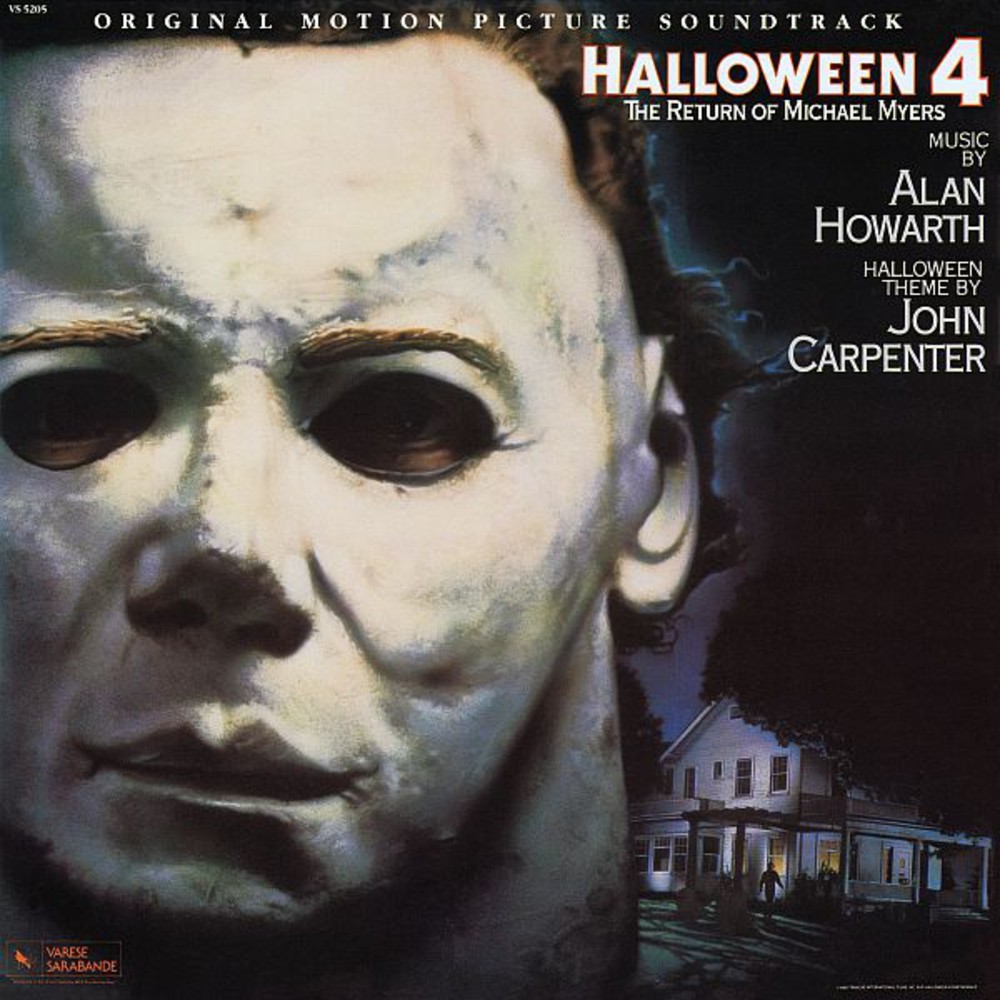
“I found out they were going to do ‘Halloween 4’ and I said to John, ‘they asked me to do this and you’re my buddy and I want to do something with this.’ He said sure, so I wound up doing ‘Halloween 4, 5 and 6’ and that really launched me as a composer which is what I love to do the most, and as we are in a world of economic stasis, I had to do it all by myself. As you see, this is my studio right here. It’s all down to a laptop and a guitar and some recorders when it used to be a million dollars’ worth of stuff. Not that that stuff isn’t valuable, but you can do without it now,” Howarth said.

halloween-4-original-soundtrack

One audience member asked which of the scores he did with Carpenter is his favorite, and the answer was a little bit of a surprise.

“I think ‘Halloween III’ because it was really an artistic departure for both of us, and ‘Big Trouble in Little China’ is the most produced and has the widest range,” said Howarth. “We had rock and roll and scary things and chases and this whole Asian influence, so it was really a broad scope of things. That’s one of my favorites.”

halloween-iii-soundtrack

Like many in the audience, I was eager to hear how Howarth and Carpenter would go about working on a score. Did they start working on it before shooting began? Did they work on it after shooting was finished? Did they think about the music while making the film? We hear how composers spend so much time preparing the perfect score for a movie, but Howarth made his process with Carpenter sound quite simple.

“It’s all one big jam. It’s improvised,” Howarth said. “Sometimes he would come in with a theme in mind. I’d set up the piano before he came over and started something. A lot of it we just made up on the spot. In fact, I introduced him, because I’m a technical person, to the synchronization between a videotape and a tape recorder. It almost seems like we were the first to do it. Before that, everything was done with a stopwatch. So, you would make a cue that was three minutes long and kind of set a tempo, and then you would go back and literally copy it on a Moviola and fool around with the scene.”

“This was the first time you could watch the movie and play at the same time, so he referred to that as the electronic coloring book which made it even easier to improvise,” Howarth continued. “Through that whole period we also benefited from the evolution of electronic music instruments, so from analog synthesizers and a 24-track machine to midi and digital sequencers, these scores had a new installation in the progress of musical instruments, so it’s almost a chronology or a music lesson in the gear.”

Another audience member asked Howarth how long he and Carpenter would jam until they found something they really liked. His answer illustrates how fast these two worked on their music.

“We did a cue a day,” Howarth said. “One quote I always get from John, and it’s just really true, he said, ‘Alan if you want to be a director you only need two important words, yes and no. Just be very decisive. Even if you say no today or yes today and tomorrow, you change your mind. You got twenty or thirty people that are taking direction, and you don’t want to leave them in a lurch, so it’s better to just be decisive.’ So, it was a couple of times we did something and came back and said that wasn’t working, but it wasn’t very often.”

Having worked in movies and music all these years, Howarth clearly has a wide knowledge of musical instruments and electronics. When asked what he would consider as the go to synthesizer, Howarth’s answer shed some light on how far musical technology has come over the years.

“I chose all the gear and I arrived at being a fan of the Prophet 5,” Howarth said. “It sounded good, but the other reason was that it was the first programmable synthesizer. Prior to that, you had to literally make little diagrams of where all the knobs and switches were to get back to the same sound, so this was the first time you could do something and save it. That really moved things forward a lot, and I brought in the programmables and the sequencers.”

One big question many had about the music Carpenter and Howarth worked on was the score to Carpenter’s remake of “The Thing.” This was Carpenter’s first big studio movie, and it allowed him to work with his all-time favorite composer Ennio Morricone. However, when you listen to the score, some it sounds like it was done by Carpenter and Howarth, and this is especially the case with the movie’s main theme. Howarth went into detail about who really composed the score to “The Thing.”

“They (Carpenter and Morricone) took a meeting, and he (Morricone) saw a little bit of the footage and he scored his score,” Howarth said. “He comes back and, of course, how does John talk to his hero about what just went down and where he wants to go? And there’s a translation issue between English and Italian and all this other stuff. So John played the stuff we did for ‘Escape from New York’ and he says, ‘Can you do something like this?’ Ennio goes back for a second pass now with keyboards, and that’s where ‘The Thing’s’ theme came from. So it’s Ennio Morricone doing John Carpenter really. At the very end after all that, there was one more pass on about four or five cues where John came over for just an afternoon and we did some cues that kind of sound like ‘Christine’ that you can tell is basically our synth stuff. So basically, it took three scoring passes on the show to get it.”

the-thing-soundtrack

It was a real treat to have Alan Howarth talk about his musical collaboration with John Carpenter. The film scores they worked on are among my favorites of all time, and I never get sick of listening to them. Howarth continues to work as a film composer, and his more recent credits include scores for “Backstabbed,” “The Dentist” and “House at the End of the Drive.” Here’s hoping we get to hear more scores from him in the near future.

Tom Hiddleston Discusses ‘I Saw The Light’ and Singing Like Hank Williams

I Saw the Light movie poster

We all know him as the villainous Loki from the Marvel Cinematic Universe, but now British actor Tom Hiddleston takes on his most challenging role yet as iconic country singer Hank Williams in “I Saw the Light.” Written and directed by Marc Abraham, the movie starts with Hank getting married to the lovely and business savvy Audrey Williams (Elizabeth Olsen), and it follows him from there as he works his way from singing on the radio to becoming a big time star at the Grand Ole Opry. The movie also shows the pain, challenges and addictions he suffered through which led to him creating some of the most memorable country music and his premature death at age 29.

In preparing to play Hank Williams, Hiddleston had to learn his songs and sing them himself. Working extensively with musical coach and veteran country singer and songwriter Rodney Crowell, Hiddleston immersed himself in Hank’s music and worked tirelessly to match his vocals to Hank’s as much as he could. There’s no doubt it was a difficult process for the actor, but watching him in “I Saw the Light” makes you see the tremendous effort he put into his performance.

I attended the movie’s press conference at the London Hotel in West Hollywood, California where Hiddleston was joined by Abraham and Olsen. I was very interested in how Hiddleston managed to get past all the technical aspects of the singing to where he could put all the rehearsal behind him and just sing his heart out. Izumi Hasegawa, a reporter for What’s Up Hollywood and Hollywood News Wire asked him which of Hank’s songs was the hardest to sing, and this would later lead in to my question for him.

Tom Hiddleston: The most challenging song was probably “Lovesick Blues.” “Lovesick Blues” is, I think, of all the songs Hank sang, the hardest, and he probably sang that the most. It was a huge hit for him. He once went up on stage somewhere, it’s on an album called “The Lost Concerts,” and he’s about to introduce it. He says, “I’m going to play a little song for you. I sang this 13,000,001 and a half times and it’s earned us quite a few beans and biscuits.” It was obviously this real hit maker for him and he sang with such control and such authority that he must have done it in his sleep, and I had to accelerate that process because it’s a very technically difficult song. You are yodeling and you are jumping octaves, and so to be on pitch in every note of that song was really challenging. I had days where I felt like I was bashing my head against a brick wall because Rodney Crowell and I would do take after take after take because if I was rhythmically precise the pitch was off, but if the pitch and the rhythm were right Rodney would say, “Well, you weren’t really feeling it. I kind of lost your sincerity, I lost the twinkle, so could you put that back?” And then I’d have the twinkle and I’d go off rhythm again. So yeah, that was probably the most challenging.

Ben Kenber: Clearly you did a lot of vocal work in preparing to sing like Hank Williams. When do you think you got to the point where you stopped worrying about the singing technicality and started to feel the songs instinctually?

TH: It goes back to what I was saying about “Lovesick Blues.” We had to pre-record certain tracks because of the way we were going to shoot them. If Marc was covering a concert performance, it meant he was going to be cutting from wide shots to close-ups to handheld which meant that we had to be very technically precise about the musical track and therefore couldn’t play it live in order for it to cut in. So we had to pre-record the tracks which I would then play and sing along to myself. They each had to have different atmosphere because some of them are radio station tracks, some of them are studio tracks, some of them are live concert performances, and there were some that came very quickly and very easily to me and some that didn’t. I had recorded “Why Don’t You Love Me” in about an hour. It took me about 10 days to record “Lovesick Blues” and I can’t explain why (laughs). Rodney and I used to say that it was like swimming through the ocean, and that I would have to swim for miles and miles through seaweed in order to get to clear water. And that’s how it felt vocally; there would be cracks and strains in my voice. Singing is a physical thing, and once your body and your resonance and your lungs are sufficiently warm, you can actually get to a place where it feels like you’re up at altitude where you are finally in control of the airplane if that makes sense. It’s a fascinating experience for me because I still believe singing is the most naked form of emotional expression. Actors can hide behind characters, writers can hide behind their writing, painters can hide behind paintings, but singers are purely open. The reason we revere the greatest singers is because we feel a raw power to the transmission of their emotions whether it’s Johnny Cash or Amy Winehouse or Nina Simone or Hank Williams or whoever it may be for you. That was challenging because even though there was a technical discipline to it in manipulating my baritone voice to sound like Hank’s tenor, there was still a commitment to emotional sincerity which was really new for me.

Following Hiddleston’s response, Abraham spoke up about what he specifically wanted for this movie.

Marc Abraham: I just want to add something to that because it was a big deal when we decided how we were going to do the music. From the very moment I wrote the script and decided to make the movie, I was intent that we would not have any lip-synching and that whoever played the part was going to have to sing it. I didn’t know they would be able to do it as well as Tom did. I was hoping that would happen, but what’s important to understand and that Tom understood and Elizabeth to some extent when she was even pretending to sing badly even though she gets mad at me for saying she can sing well (she can). Tom and I both knew from the very beginning that he would never sound exactly like Hank Williams. I know Hank Williams like my mother knows her kitchen. There are people who can imitate Hank Williams better than Tom Hiddleston can imitate Hank Williams because he is a natural baritone and Hank’s a tenor, and that’s just reality. What Tom was able to do was to create the feeling not just in his voice and replicate the sounds and the modulations and to get close enough for us, but to inhabit the character. So in the end it didn’t matter that he didn’t sound exactly like Hank Williams. What we wanted was for you to feel that he was Hank Williams, and that was magic. The magic was that he got so close to the music and put so much energy and time and devoted himself so deeply to becoming that character and bring his vocal representation that close, knowing from the very beginning he couldn’t be exactly like Hank. It’s not possible. That was what was really important, and that’s why we didn’t lip-synch it because then you are watching it and you may think you know what it sounds like, but in the end you feel it and you see that character at play and you see Hank singing “Your Cheating Heart” which is done live. That’s Hank Williams.

I want to thank Tom Hiddleston and Marc Abrahams for sharing their thoughts on the making of “I Saw the Light.” The movie is now available to own and rent on DVD, Blu-ray, and Digital.

Copyright Ben Kenber 2016.

Sarah Hyland and Graham Phillips Discuss EDM and ‘XOXO’

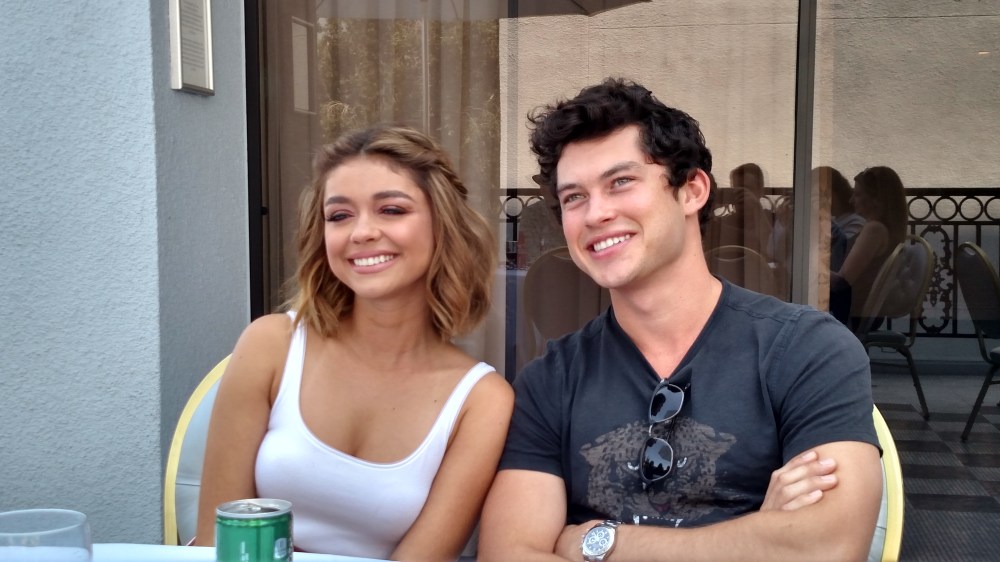
XOXO Sarah Hyland and Graham Phillips

The Netflix drama and music film “XOXO” follows six strangers whose lives collide at a most vibrant EDM festival. Among those strangers are Krystal (Sarah Hyland) who is hoping to find true romance in a place she expects to find it, and Ethan (Graham Phillips) who is about to make his DJ-ing debut at the biggest EDM festival of them all, XOXO. During their time there, Krystal and Ethan come to find now what they wanted, but what they need most as will the other characters around them.

“XOXO” offers a cinematic glimpse into the world of EDM which has gone from being played in illegal underground rave parties to becoming a major part of musical festivals around the country. We see all the characters get dressed up in exotic costumes as if they are headed to another planet, and drugs of all kinds are in heavy supply to where some innocent fans don’t realize right away when they have just been given some. Either way, they are all there to experience the glorious emotions EDM gives off, and none of them can wait for the bass to drop.

Both Graham Phillips and Sarah Hyland recently dropped by the London Hotel in West Hollywood, California to talk about their experience making “XOXO.” Courtney Fairhurst Howard from Sassy Mama in LA asked them both if they had knowledge of EDM music and if they had attended any EDM festivals before shooting began. This would soon lead into my question about the preparation Graham underwent to become a truly talented DJ.

Sarah Hyland: I have been a fan of EDM music for a while. I had never been to a rave so to speak, but I have been to places like Coachella where there’s always rave tents. So I kind of experienced something like that before, but it was really cool to just indulge myself in this culture. It was great. I learned a lot from it, and it was a lot of fun.

Graham Phillips: I too have enjoyed EDM for a really long time. I’ve sort of been drawn to more of the sweeping symphonic vibe of EDM like Above & Beyond or Madeon. Whenever they can integrate some organic sounds as well into all the electric sounds, I tend to really like that. I came from a musical theatre background as did Sarah, so maybe that’s why. I actually started DJ-ing my freshman year in college just to meet the social chairs of the eating clubs at Princeton and just because as a freshman male you’re the bottom of the social ladder and you can’t really get access to any of these clubs until you’re in a fraternity. And so I learned to DJ and they needed DJ’s so I was like okay, I will learn to DJ. I like the music anyways. I did start liking it more and more, and I started to throw some parties in Orange County with some of my friends who actually liked the music even more than I did. They were the people who were finding these new tunes as they were coming out. I loved hosting parties and still do, and that’s sort of what it grew from. I guess sophomore year it kind of petered out, but when I got this script at the end of my sophomore year I found it so funny because this was just what I experienced but on a much smaller level. Actually Chris, the director, didn’t even know that I had any DJ-ing experience when he cast me, so that was kind of a fun surprise for him. He didn’t have to teach me everything.

Ben Kenber: Was there any specific research you had to do in terms of understanding the equipment your character uses?

GP: I actually used almost all my own equipment for this. I just brought it to the set and asked if I could please use this instead of something completely foreign (to me), and they were like yeah, sure. It didn’t require a lot of research for me which was really nice because a lot of the shots we grabbed at real festivals where we had a five-minute slot onstage in front of 80,000 people. So when you have just a small amount of time to get the shot, the last thing you want to be doing is fumbling around with the knobs. It was nice that I had some background in it.

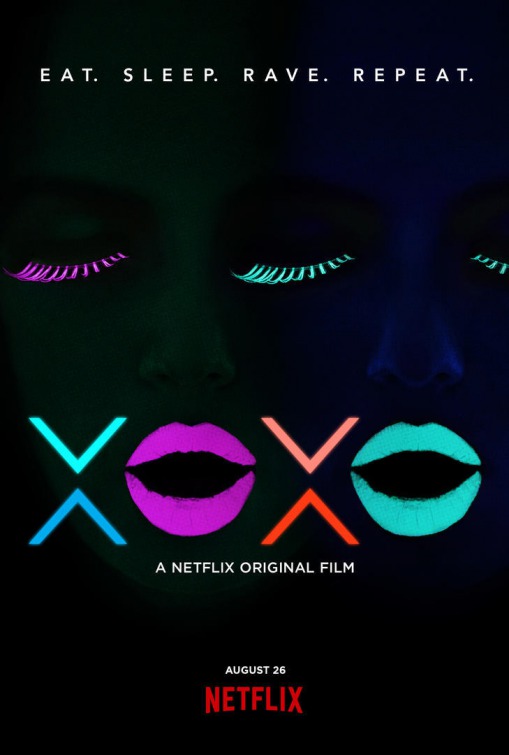
It was great to learn how Phillips had plenty of experience in DJ-ing before filming “XOXO,” and his expertise with it certainly shows when you watch the movie. “XOXO” is set to debut on Netflix on Friday, August 26. Please be sure to check out the poster and the trailer below.

XOXO movie poster