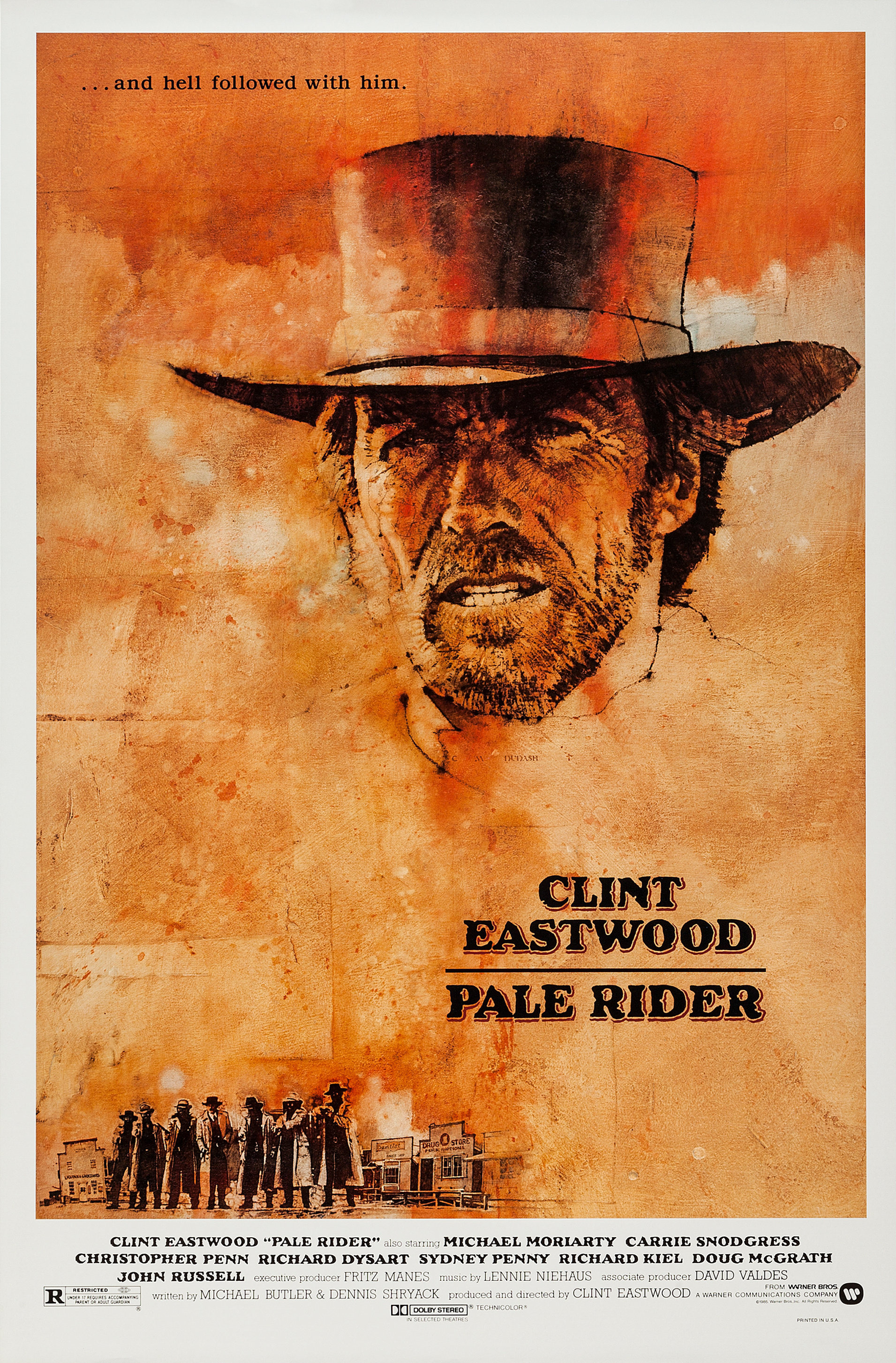
With Tony Farinella’s ever so enthusiastic review of Clint Eastwood’s 1985 western “Pale Rider,” I was quickly reminded of the various trailers made for it back in the day. Each trailer and television commercial made for it was dominated by the music of “Best Endeavours” which was composed by Alan Hawkshaw. That piece of music alone was enough to get me super excited about this particular motion picture.
But one particular trailer for “Pale Rider” which excited and stayed me throughout the years was its teaser. I first watched the teaser when it was included in the VHS release of “City Heat,” a movie which teamed up Eastwood with Burt Reynolds and eventually became one of my most inescapable guilty pleasures.
What makes this trailer for “Pale Rider” stand out for me is how it is composed simply of still images. Like the Italian movie trailer for Dario Argento’s “Suspiria,” it is the images which, in their stillness or frozen moments, spoke volumes. While Warner Brothers might have preferred more in the way of moving images, the still ones had much more of an impact on me.
Plus, it has a narrator telling us how Eastwood had previously directed the last great western back in 1976 with “The Outlaw Josey Wales.” This made the trailer’s promise of “Pale Rider” being the next great American western all the more thrilling. Whether or not you think “Pale Rider” proved to be such the thing, I admired the case the narrator sold us on.
As much as I wanted to see “Pale Rider” when it arrived in theaters, I was only ten years at the time, and it was rated R. The best I could do was watch Siskel & Ebert review it as I got to see movie clips there, and I did get to read the movie’s novelization which was written by Alan Dean Foster. For some odd reason, my parents never kept me from doing that.
I didn’t get to see “Pale Rider” until many years later, but that is a story for another time. And from now on, Alan Hawkshaw’s “Best Endeavours” will always forever be the “Pale Rider” theme to me. To others, it may forever be the theme for the British program Channel 4 News, but Channel 4 never secured permanent exclusivity rights for it at the time, so there!
Please check out the “Pale Rider” teaser trailer down below.
The following review was written by Ultimate Rabbit correspondent, Tony Farinella.
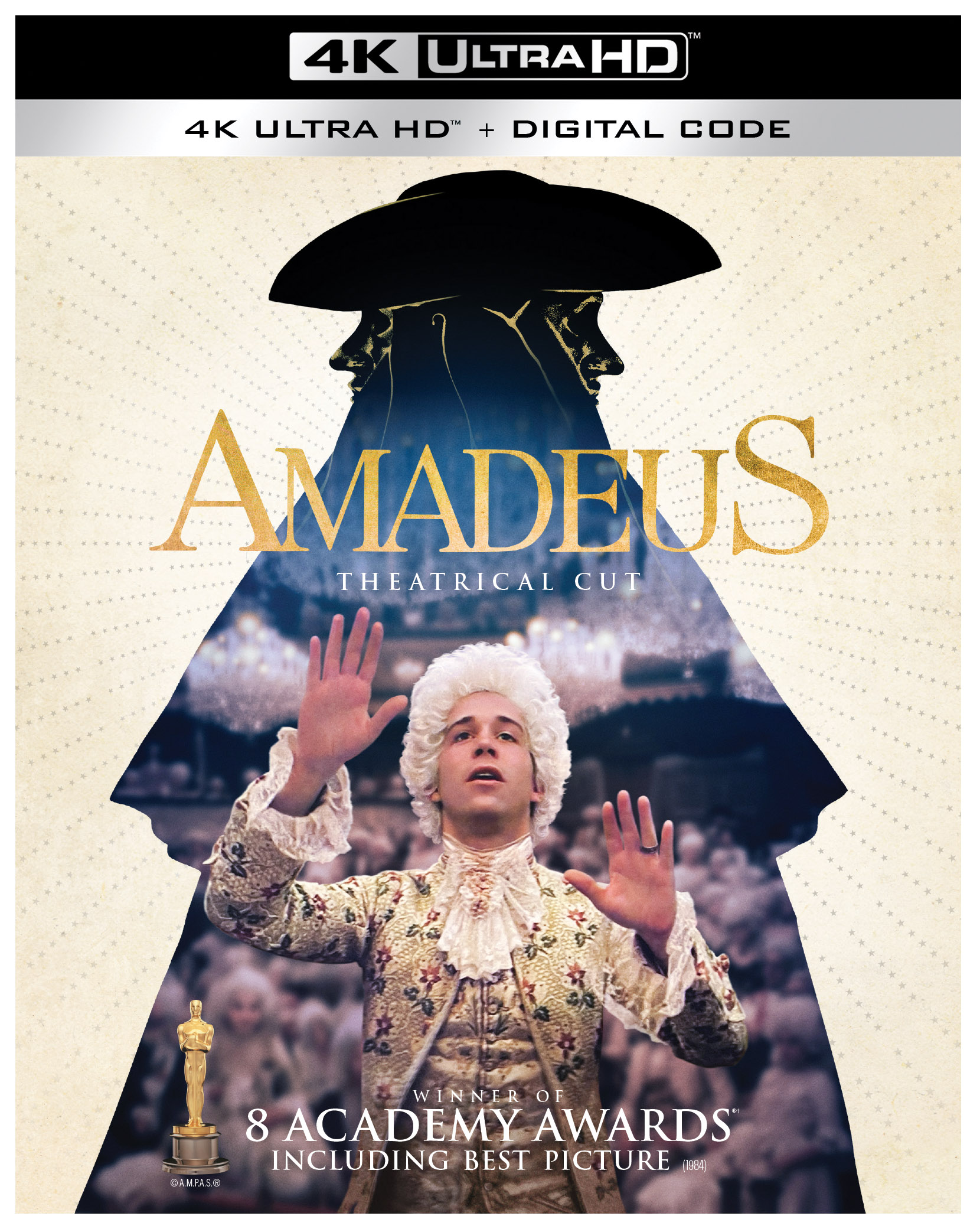
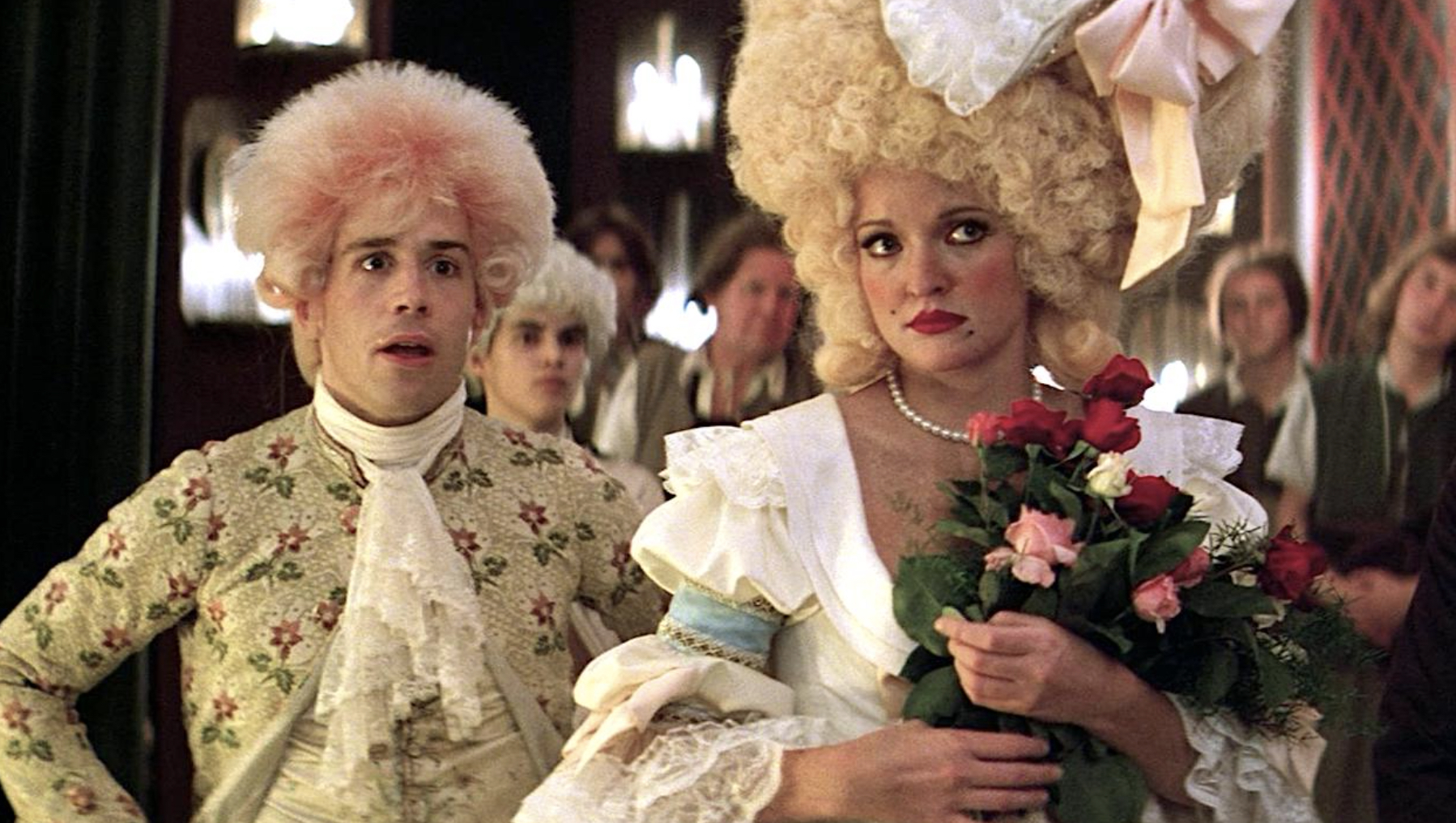
There is a lot to like about physical media, especially when it is in the 4K format. There are the special features, the audio and video quality and, of course, the fact that you own the movie. This means you never have to worry about a streaming platform taking it down and then having to hope your local library has a copy you can check out. It’s on your shelf, and you can pick it up and pop it in your player whenever you want to watch it. Another positive is the fact that films like “Amadeus,” a Best Picture winner, can be discovered for the first time by a new set of eyes. In fact, this was my first time watching the film.
The reason “Amadeus” was not a film I had previously seen is because I thought it would be a boring, stuffy period piece. After sitting down to watch it, I am reminded of the old expression, “Don’t judge a book by its cover.” Even though I do not consider “Amadeus” a classic and did not fall in love with it after one viewing, it was an important film worth seeing and also worthy of my time. I think the minute we start to become close-minded to art, we really lose our sense of self. This film deserves its day in court just like any other important and historical motion picture ever released.
This film begins by introducing us to Antonio Salieri (F. Murray Abraham), a composer who has been put into a mental institute after an attempted suicide. A Catholic priest named Father Vogler (Richard Frank) is looking to get to the bottom of things, especially after Salieri says he is responsible for the death of Wolfgang Amadeus Mozart. While it has been over three decades since Mozart passed away, Father Vogler thinks it is a tremendous burden to carry. He sees how it is weighing on Salieri, which is what led to his suicide attempt.
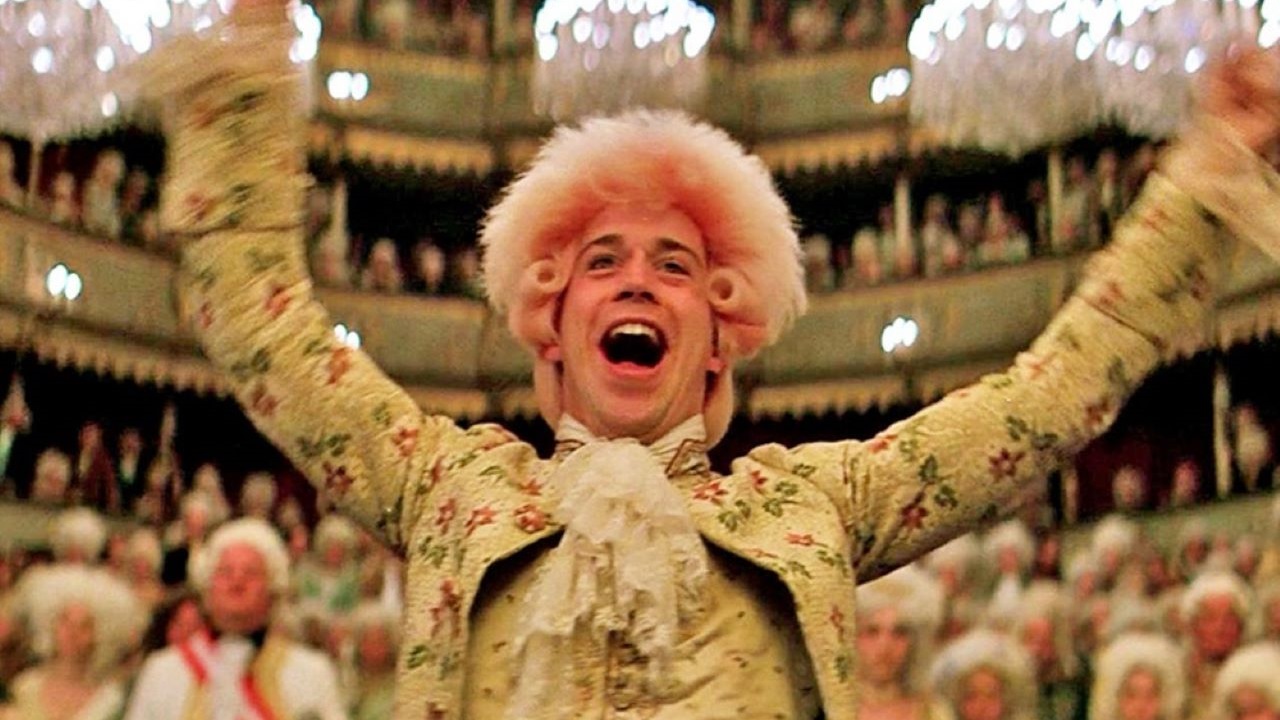
From this point, the film is told from Salieri’s point-of-view as he shares how he was both envious and enamored with the work of Wolfgang Amadeus Mozart (Tom Hulce). He did not, however, think much of Mozart the person whom he found to be boorish, aloof and uncouth. Still, he cannot deny the genius the man possessed and how he would make magic happen with his music. It was something Salieri himself was never able to achieve in his own career, and he sees it as a sin that God would give all this skill and talent to someone like Mozart. As a result, this creates a complicated relationship between the two men.
The film is fascinating in the way it explores genius and what makes someone possess the ability to do something which truly makes a positive impact on the world. There are often two lines of thinking when it comes to someone who has had enormous success or is a once-in-a-lifetime talent: it has either come naturally to them, or they have had to work very hard to hone their talent. Now, of course, there is also luck involved. It is also how you handle success if you continue to work hard at what you do, and that you don’t become complacent with your past success.
Throughout the film, no matter what is thrown Mozart’s way, he finds a way to make it work for him. This is even when Salieri is deliberately trying to sabotage him, especially when he hires Lori (Cynthia Nixon) to lend a helping hand to Mozart, as he has a wife and a child. The reason he hired Lori is to get inside information on Mozart and to stay one step ahead of him. The thing that separates Salieri from Mozart is the fact that no matter how annoying or obscene Mozart is, he has a gift. It is a gift that will always rise to the top and make him memorable and one-of-a-kind. It is that envy and jealousy which drives Salieri mad.
Milos Forman was the director behind “Amadeus,” and it was a big project for him to take on. From the set pieces to the musical numbers to the sheer magnitude of the story, it is a big Hollywood production, and he’s up to the challenge of making this movie look and feel big. It is the kind of big-screen Hollywood movie that used to run the movie industry back in the day. I miss big movies like this as they play very well on the big screen. They also pop on 4K as well. As to how historically accurate the film is, I cannot begin to tell you as, I must confess, I have not studied the history of Mozart.
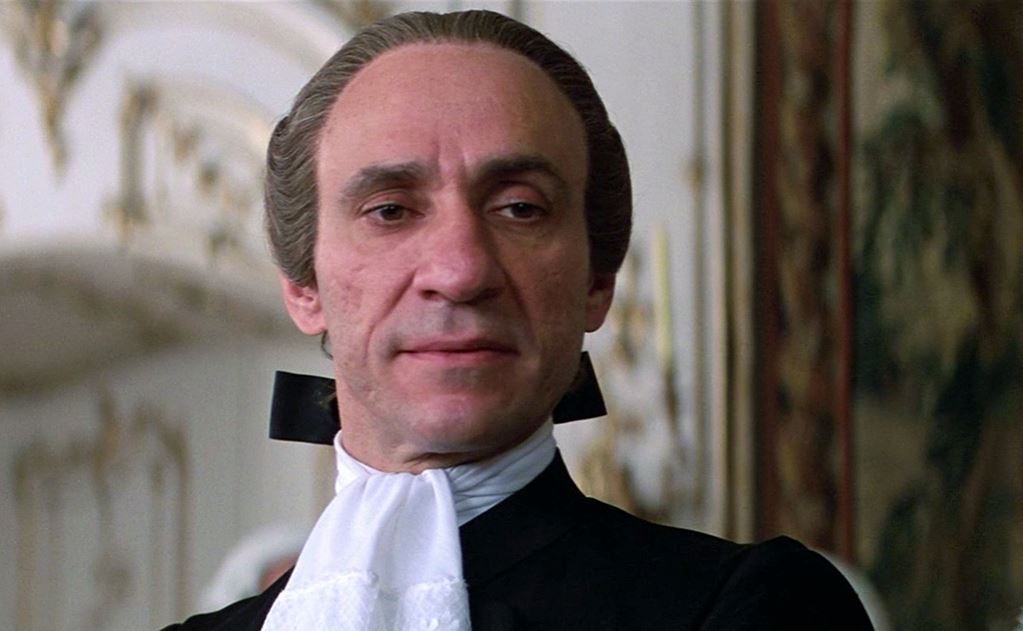
The performance of F. Murray Abraham as Antonio Salieri is nothing short of brilliant. His face shows the torment of a man who has had to live in the shadow of Mozart his whole life, and it has clearly done a number on him. His performance reflects this, and he also knows when to rein it in and play the character in a more low-key and understated way. He was utterly captivating here from start to finish. In many ways, even though the film is called “Amadeus,” and it is about Mozart, it feels like Salieri’s story. It is easy to see why Abraham won Best Actor at the Academy Awards.
Tom Hulce must perform a balancing act of portraying Mozart as someone the audience can relate to while also being over-the-top and goofy. He does a solid job here, but I was much more interested in Abraham’s performance.
“Amadeus” is a film which was a little too long for my liking, as I would have trimmed about 20 to 30 minutes from the running time of 160 minutes, but it is still a well-acted, entertaining, and monumental Hollywood film. I admired and respected it, but I did not love it or connect with it on a deeper level. It is a film I am happy to have watched, but I found the third act to be its most compelling and intriguing. The scenes I liked the most dealt with the characters of Mozart and Salieri as human beings. When the film was a character study of the two men, it captivated me. I would have liked more of the human element of the story and less of the long-drawn-out musical scenes.
* * * out of * * * *
4K Info: “Amadeus” is released on a single disc 4K from Warner Brothers Home Entertainment, and it comes with a digital copy as well. The film has a running time of 160 minutes and is rated PG. Keep in mind; this is the theatrical cut of the film. I have read there is a director’s cut of the film, which is rated R and includes twenty minutes of extra footage. I think it would have been nice to include it here, but I am not sure what transpired to where this was not able to happen.
4K Video Info: I truly enjoyed this 4K transfer, as it showed the film as I imagine it was meant to be seen. The film is over forty years old, and it looks very cinematic with a very thematic look to it. This is not a perfect HDR transfer, but it’s not supposed to look flawless. It looks like how the film was intended to look, considering its release date.
4K Audio Info: I would have liked a Dolby Atmos track here, as this seemed like the perfect film to receive this treatment. As it stands, the audio is very sharp, clear, and the dialogue is easy to understand. Subtitles are included in English, Spanish and French.
Special Features:
The Making of Amadeus (New)
Amadeus: The Making of a Masterpiece
Should You Buy It?
I will let you in on a little secret—I do not read or watch reviews before I am going to review a film myself. I do not want to be influenced by what anyone has to say, good, bad, or indifferent. Now, I am aware certain films have overwhelmingly positive, mixed or negative reviews, but I do not read the content of them. I do think a lot of people like me have put off watching “Amadeus” for the same reasons I mentioned earlier in my review. I can see why the film might not be easily accessible to a newer audience today. Still, I think modern audiences will be pleasantly surprised, just like I was when I sat down to watch “Amadeus.” It is a period piece, yes, but it’s done in a way where you get to understand the characters, what makes them tick, and why they do the things they do throughout the course of the movie. My two issues were the run time and the fact that I wanted to spend more time with the two main characters together. Overall, it is a good film, but I do not think it is a great one. As far as the 4K is concerned, it looks terrific even though the audio would have benefited from a Dolby Atmos track. There is also a new special feature here. If you are fine with the theatrical cut, which I imagine many fans of the film will be, this is a day one purchase, especially with the Oscars this weekend. If you are a first-time viewer, I think you might want to rent it digitally first before committing to buying it.
**Disclaimer** I received a copy of this film from Warner Brothers to review for free. The opinions and statements in the review are mine and mine alone.
The following review was written by Ultimate Rabbit correspondent, Tony Farinella.
When it comes to Prince’s music, I’m a fan, but I wouldn’t say I listen to his albums religiously. I respect his contributions to the music industry, and I can certainly appreciate and admire the amount of effort and passion that goes into his performances. He gives it his all when he’s on stage. Because of this, I was curious to see “Purple Rain” for the first time, especially since it was getting a 40th anniversary 4K release. I love movies about music, so I thought it would be a film that resonated with me as a movie and music fan. I went into “Purple Rain” with high hopes, and I thought it would be a film that would make a powerful impression on me as a first-time viewer. Even though I’ve seen a lot of movies, there are always a number of them which have slipped through the cracks throughout the years.
Prince stars as The Kid, a front man for a band called The Revolution, and he has a lot of talent, energy and love which shines through in every performance. However, he’s not exactly happy with his life. When he comes home, he sees his father constantly abusing his mother, so his one outlet for his anger and frustration is music. When he’s on that stage, he bares his soul to the audience. His performances take place at the First Avenue Night Club. The other two acts that perform there are The Time, led by Morris Day, and also Dez Dickerson and his band The Modernaires. It’s a competition every night to see which band can leave the biggest impression on the audience.
In addition to his problems at home, two members of his band, Wendy and Lisa, played by Wendy Melvoin and Lisa Coleman, are not happy with The Kid, as they feel as though their contributions to The Revolution are not being taken seriously. It is all about The Kid and his vision. There is also a new female musician who has come into First Avenue from New Orleans named Apollonia (Apollonia Kotero) who catches the eye of The Kid. He is falling hard and fast for her, but he wonders if he can maintain a relationship with her because of his troubled life at home. Will the sins of the father soon become his own sins as well? Apollonia is also getting offers to start an all-girl band from Morris.
“Purple Rain,” sad to say, was a big dud for me. The songs and the music are great in. From “Purple Rain” to “When Doves Cry” to “Let’s Go Crazy”, the film has some fantastic musical numbers in it, and they really come to life on screen. When the movie isn’t on stage, however, it suffers in a big way. The characters are written with very little thought behind them. The Kid wants to play music and be successful. His father is a wifebeater. His mother just seems to be there to get beaten up by the father. Apollonia is just there to be an object of desire. All of this feels very self-serving for Prince. Yes, it is his movie, but there is little to no story here and the plot is paper thin.
For a movie that is almost two-hours long, the music can only sustain the viewer for so long, especially if we don’t care about the people that are on stage performing the music. When there is a dramatic moment near the end of the film with The Kid’s father, why should we care? Yes, his performance of “Purple Rain” is powerful and the song is fantastic, but everything leading up to that moment has shown him to be a no-good woman abusing jerk who is selfish. Purple Rain really needed to get into the nuts and bolts of this character’s mindset in order for us to fully invest ourselves in his story arc. As an actor, Prince is rather lifeless and bland on screen as well. He’s not a good actor. If they wanted to just make this a Prince concert film, it might have worked. As a narrative film, there is a lot to be desired here.
With “Purple Rain,” I kept waiting for the musical scenes to return as the scenes outside of First Avenue were incredibly run-of-the-mill. This film needed more balance. They needed to make The Kid’s life outside of First Avenue a lot more complex and well-written. This way, when he performs on stage, the impact is felt in a more powerful way by the viewer. I’m not being a contrarian here, but I really don’t understand why this film is so popular. If I want to listen to Prince’s music, I can listen to it whenever I want to on my iPhone. I watched “Purple Rain” for an interesting story that would be enhanced by the music. The story didn’t need to be great or out of this world. It just needed to have a little more meat on the bones. All of the attention went to the musical numbers, and the acting scenes are simply there to fill up the movie. “Purple Rain” left me feeling very underwhelmed.
* ½ out of * * * *
4K Info: “Purple Rain” is released on a single-disc 4K from Warner Brothers Home Entertainment in honor of its 40th anniversary. The film has a running time of 111 minutes and is rated R for sexuality, some nudity, language, and some violent content. It comes with a digital copy of the film as well.
Video Info: For a 40-year-old film, I thought “Purple Rain” looked good but not great on 4K. It would have definitely been enhanced by a Dolby Vision transfer. I was hoping they would have gone that way with this release. As it is, it’s still a solid 4K transfer. I haven’t seen the film on Blu-ray, but I didn’t notice anything wrong with this transfer. I also didn’t notice anything that really stood out either.
Audio Info: For a movie that relies heavily on music, it is of the utmost importance to have good sound on this 4K release. I’m glad to report they were up to the task with the audio here. It’s crystal clear and all of the music has a punch to it without being too loud or aggressive. Subtitles are included in English and Spanish.
Special Features:
Commentary by director Albert Magnoli, producer Robert Cavallo and cinematographer Donald E. Thorin
First Avenue: The Road to Pop Royalty – featurette
Let’s Go Crazy – music video
Take Me with U – music video
When Doves Cry – Music Video
I Would Die 4 U/Baby I’m a Star – music video
Purple Rain – music video
Jungle Love – music video
The Bird – music video
Sex Shooter – music video
Should You Buy It?
If you are a diehard Prince fan and you love his music and this movie, this is a no-brainer here. You will be very happy with “Purple Rain” on 4K. They also imported the special features from the prior Blu-ray release onto this one as well. The music sounds great with this 4K release, and it is a solid visual offering from Warner Brothers as well. If you are watching this for the first-time and are only a casual fan of Prince, I don’t think there is much of a movie here. I tolerated the first 90 minutes, and it was tough to sit through as it plods along with no character development whatsoever. The characters are one-note and thinly-written. “Purple Rain” was really tedious and laborious to sit through, and I expected more from a movie that was so critically acclaimed and well-received. This one is for diehard Prince fans only. If you are one of them, you will love this flick. For everyone else, you can pass on checking this out, as there’s nothing groundbreaking or out of this world here.
**Disclaimer** I received a copy of this film from Warner Brothers to review for free. The opinions and statements in the review are mine and mine alone.
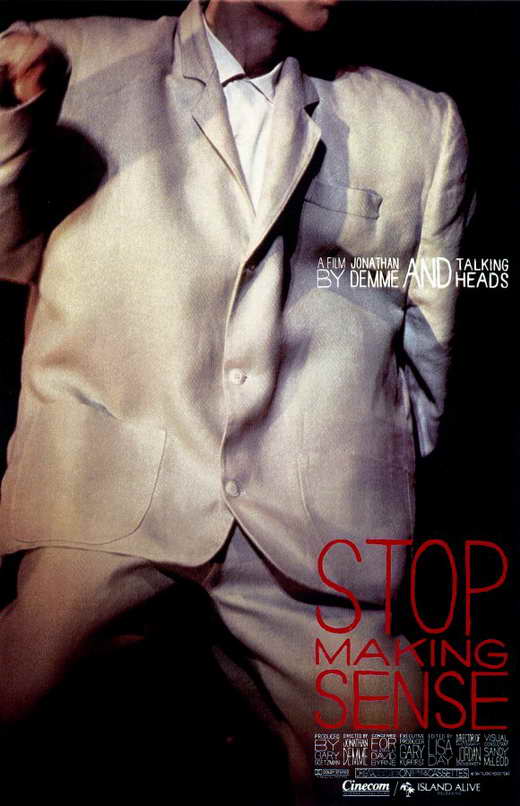
Like any other year, 2023 has brought with it a lot of exciting news about the many movies coming our way very soon. But news of one movie really piqued my interest, and that was of A24 acquiring the worldwide rights to the classic 1984 concert film “Stop Making Sense.” directed by the late, great Jonathan Demme, it is set to be remastered in 4K and will be released in theaters sometime before the end of the year.
A24 has since premiered a promo trailer for the film’s re-release which features David Byrne showing up at a dry cleaner establishment to pick up a piece of clothing which sure enough turns out to be the big suit he wore in the latter half of the concert, starting with the song “Girlfriend is Better.” He is pleased to receive it and is quick to put it back on once he arrives at his apartment. To see that it still fits is not a surprise in the slightest and, like everyone else, I look forward to see him rocking and rolling in it yet again.
The only thing which bothers me about this rerelease trailer is that it does not feature the other members of Talking Heads: Chris Frantz, Jerry Harrison and Tina Weymouth. Surely, they too are excited about this classic concert film, right? The likelihood of these four ever reuniting remains astronomical, but it would have been nice to see these three featured in this trailer as well even if they were forced to film their appearances separate from Byrne’s.
What I love about “Stop Making Sense” is that it is a motion picture you cannot watch sitting still. Whether you are viewing it on VHS, DVD, Blu-ray, your local theater or in 4K, Demme makes you feel like you are watching the show along with those lucky patrons at the Pantages. I did get the chance to see on the silver screen at an arthouse theater in Orange County while I was a student at UC Irvine. The crowd in that theater, however, was quite small, so I hope the next crowd I see it with when it arrives back on the silver screen before the end of 2023 is much, much bigger. Seriously, this film is a great and exhilarating experience to take in with groups of people, and I cannot wait to do so in the near future.
WRITER’S NOTE: As the opening paragraph indicates, this article was originally written ten years ago.
On June 27, 2012, singer and songwriter Paul Williams along with filmmaker Stephen Kessler appeared at the Nuart Theatre in support of their documentary “Paul Williams Still Alive.” After its conclusion, both men were greeted by a packed audience that had been deeply moved by what they just witnessed. The documentary follows up with Williams years after his enormous success back in the 1970s, and it finds him experiencing happiness and fulfillment in life he didn’t have back then.
Kessler has described making this documentary as “a labor of love,” but Williams quickly pointed out that it didn’t start that way. Their relationship when filming began was an uncomfortable one, but Williams eventually warmed up to Kessler, and their strong friendship proved to be very authentic as they talked with the audience at the Nuart. Kessler even went out of his way to say the following:
“I’ve never said this in front of people before, but you (Williams) were brave to do this movie.”
No one in the audience disagreed with this assessment. Williams described this as a “warts and all documentary” that shows him at his best and worst. One particular sequence, when he was co-hosting Merv Griffin’s talk show while on drugs, was one he originally wanted to be cut out as he was terribly afraid of what his kids would think about him. His son Cole, however, was in the audience, and when asked about what he thought of the documentary, he said, “It’s great dad!”
Kessler made it clear he had no intention of putting himself in this documentary, and he even said he “can’t stand movies that do that;” directors becoming the subject of their own films. His increased participation in “Paul Williams Still Alive,” however, helped to illuminate the songwriter much more than it would have without him. While Kessler keeps going back to the past, Williams looks to the future instead.
When Williams was asked when he reached his bottom as an alcoholic, he responded it happened when he started looking out the window for what he called the “tree police.” He even joked and said, “You know you’re an alcoholic when you’ve misplaced an entire decade.” What made him say this was the embarrassing truth that he forgot for a time that Ronald Reagan was once President of the United States.
Since becoming sober, Williams says he now knows what it feels like to be around people he feels safe with. He has also entered into what he calls his “Paulie Lama” period of life as he goes out of his way to pull people off of bar stools, and that he would be thrilled to work at the Betty Ford Center if asked.
1992’s “A Muppet Christmas Carol” marked the first project Williams ever did sober, and he remembered going into it feeling very scared. But after he finished working on it, he found he was able to approach his work in a more productive way:
“Success for me has to be about authenticity and honesty. Today I have to trust that I am enough. Never again will I ever let tension and my ego keep me from writing songs.” The emcee of the Nuart told us not to ask either of the two how much “Paul Williams Still Alive” cost to make or when it will come out on DVD. This is because he wants to see it again with as a big an audience in the midst of all these summer blockbusters being thrust at us. It is certainly one of the sweetest documentaries you will ever see, and to see Williams today is to see a man very comfortable with who he is and who does not need another cup of fame to feel better about himself.
Going into this documentary, I thought it would be one of those great comeback stories of a fallen celebrity who gets their dormant career resurrected through the help of one die-hard fan. But while filmmaker Stephen Kessler seems intent on reminding the world of what this gifted songwriter has given us, “Paul Williams Still Alive” is not that kind of documentary. Instead, it’s a story of a man whose life was run into the ground by a strong addiction to fame and drugs, and of his journey back to a place of happiness and fulfillment he is ever so thankful for today. This is not an artist looking to make a comeback, but of one who appreciates what they have to where not much more is needed than that. As a result, this makes “Paul Williams Still Alive” one of the sweetest and most life affirming documentaries I have seen in some time.
Kessler is best known for having directed many popular television commercials and “Vegas Vacation,” a sequel which rated high in test screenings, but still turned out to be a dud. Kessler starts off this documentary recounting how he grew up being such a big fan of Williams and of how the songwriter seemed to be everywhere in the 1970s. Williams appeared on “The Muppet Show,” made numerous appearances on television shows such as “Beretta,” and he became an incredibly popular guest on “The Tonight Show” with Johnny Carson. On top of that, he composed the music for “The Muppet Movie,” the cult classic “Phantom of The Paradise,” and eventually won an Oscar along with Barbara Streisand for the song “Evergreen.”
Somewhere along the line, Kessler assumed Williams had passed away at far too young an age. But while ordering one of Williams’ albums on the internet one night, he discovers to his surprise that the singer and songwriter is still very much alive and continues to create and perform music throughout the world. From there, Kessler makes it his mission to make a movie about Williams in an effort to let the world today know how much of an impact his music has had on all of us and still does to this day. Remember, he was a featured artist on Daft Punk’s “Random Access Memories.”
Kessler started filming Williams when the songwriter visited Winnipeg, Canada where a fan convention for “Phantom of The Paradise” was taking place. This collaboration gets off to a rocky start as Williams shows a sharp reluctance to being filmed. There’s even a moment where he is singing in a San Francisco nightclub and gets the house manager to dim the lights so Kessler can’t get a good view of him onstage. As for Kessler, his solution to this problem provides this documentary with one of its funniest moments.
In some ways William’s reluctance is refreshing because, in a time where we are constantly flooded with reality shows with people becoming famous just for the sake of being famous, he is not keen about being part of this. In fact, it doesn’t take long to see he is not the least bit interested in becoming famous again like he once was as he has described the pursuit of fame as being in his own words, “pathetic.” As this documentary goes on, the narrative focuses much more on the person he is today, a much healthier human being who is humble and thankful for what he has.
“Paul Williams Still Alive” does give us a brief biography of the songwriter and of how he grew up with an alcoholic father who made him sing “Danny Boy,” and that his being so short ended up ostracizing him from his classmates at school. He comes to blame his lack of height on hormones being injected into him early in life. This was done to make him taller, but it ended up having the exact opposite effect. After moving out to Los Angeles to become a film actor, he ended up finding success as a songwriter which eventually turned him into a huge celebrity. The attention it gave him was something he came to live for, and it would eventually become an even bigger addiction for him than drugs.
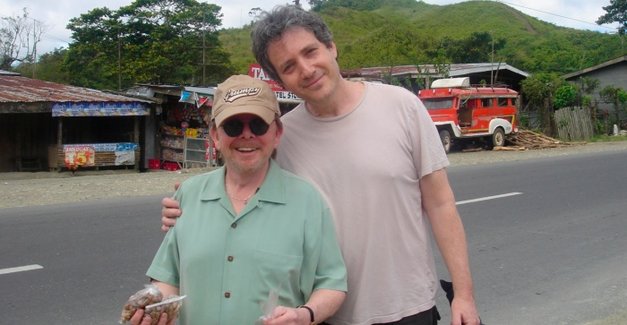
As time goes on, Williams eventually warms up to Kessler, and this becomes clear during a trip to the Philippines. Williams even encourages Kessler to join him in front of the camera instead of just staying behind it, and that is saying a lot. Now this might have proven disastrous as “Paul Williams Still Alive” could have ended up becoming more about the filmmaker than his subject, but Kessler’s increased involvement proves to be a major plus. The relationship between these two men helps to define Williams as he is today.
While Kessler constantly looks to the past, Williams only wants to look forward. The one scene which makes this clear is when Williams watches himself guest hosting Merv Griffin’s talk show. Clearly high on drugs and making an absolute fool of himself, the realization of what he was doing back then forces him to stop watching the rest of the footage. The person Williams was back then is so different from who he is today, and the pain which crosses his face over his embarrassing past deeds is impossible to hide.
Near the end, Williams gives Kessler a whole bunch of videotapes he has in storage, having no idea of what’s on them. One particularly disturbing video has Williams celebrating Christmas with his family, and then later going upstairs to film himself getting high. Watching this illustrates just how far down the songwriter’s drug addiction took him and, looking at him today, it’s almost like we’re looking at a completely different person.
It should be clear by now that Kessler is not out to embarrass Williams in the slightest. Instead, his intention is to bring the songwriter back to the world’s attention, and this is a noble intention indeed. Williams is the same man who wrote the song “Rainbow Connection” for Kermit the Frog, “We’ve Only Just Begun” for the Carpenters, and “An Old-Fashioned Song” and “Rainy Days and Mondays” for himself. Heck, he even did the music for “Emmett Otter’s Jug Band Christmas,” one of my favorite holiday specials ever.
Today, Williams continues to make beautiful music which deals with themes like love, loneliness and alienation, and he definitely deserves to be recognized for the countless music contributions he has given us. Maybe not everyone has forgotten who he is, but we do need to be reminded of what he has created.
Now some have accused “Paul Williams Still Alive” of not including more of his music, but this documentary is not intended to be a career retrospective. In actuality, it becomes more about how Williams is a better, not to mention a far more interesting, human being today compared to when he was an overindulgent celebrity. He has been clean and sober for over 20 years, and he is even a certified drug and alcohol counselor. Looking back, it seems as though he lives to be a counselor more than he wants to create new music, and that is saying a lot.
With “Paul Williams Still Alive,” Kessler has given us far more than the average showbiz documentary. He has given us an individual worth appreciating who, while having made some serious mistakes in life, has come out of it on the other side a proud and happy person. All of this is all accomplished without Kessler ever trying to be manipulative or play at our heartstrings unnecessarily. This is a warts-and-all documentary which doesn’t hide anything, and I came out of it with not just a deep respect for Williams, but also for his healthy perspective on life.
During a time which sees certain celebrities desperately grasping for whatever fame is available to them, here is one who has found the happiness we all mistakenly thought we would get when we became a super star in everyone’s eyes. In the end, “Paul Williams Still Alive” is more about what it means to be happy, and Williams has more than earned the happiness he has today. Like he says, he does not need “another cup of fame” to make him a satisfied man.
I have never been to a Rolling Stones concert before. Shame on me for constantly missing out on the opportunity to see them live. Every tour they go on always feel like it will be their last. Even if no one gets all that excited about their recent albums, no one would dare miss seeing them perform onstage. Years after they formed, they still sell out seats like crazy in concert, and some are willing to pay hundreds of dollars to get a decent seat. Heck, as long I have my binoculars with me, I am confident I can get a good view for less than what most people pay. But then again, I still have to spend a lot of money for even a crappy seat at a concert. Come to think of it, I haven’t been to a concert in a long time. Maybe I am saving up too much money!
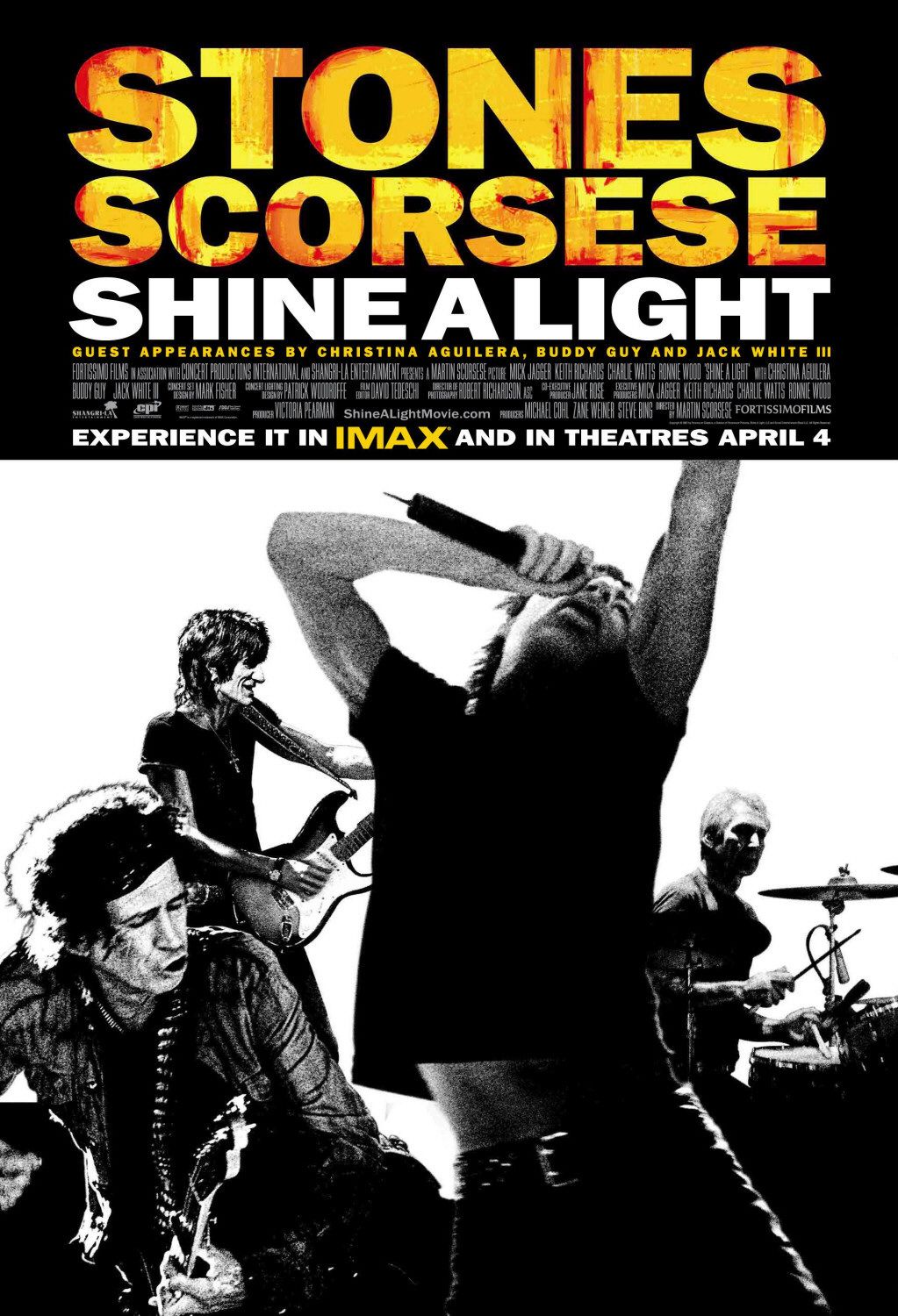
Anyway, I caught the Rolling Stones documentary entitled “Shine A Light” which was directed by Martin Scorsese. Not only that, but I saw it in IMAX where movie screens don’t get much larger, visuals are never more visually extraordinary, and sound systems capture every single sound no matter how small. At I write this, this may be the closest I ever come to seeing a Rolling Stones concert, but it was still quite the experience. Even after being around for 40 or 50 years, they still put on one hell of a show like few others can. The band members have been beset in the last few years with legal and medical problems. Drummer Charlie Watts had a cancer scare, Mick Jagger continues to father too many children, and Keith Richards continues to astound medical experts everywhere who expected him to be dead by now. But here they are, and they are rocking as hard and with as much love as ever.
Oscar winner Martin Scorsese (it is so nice to finally say this) is a master of musical documentaries, having directed one of the greatest ever with “The Last Waltz” which was about The Band at their very last concert ever and of how they (or Robbie Robertson anyway) wanted to get off the road before the road claimed their lives. “Shine A Light,” however, is not at a film about a band on its last legs. Instead, it is about a band which continues to play with the same love, passion and excitement they had when they started making music so many years ago. It is not an in-depth documentary about the band, but instead a celebration of one of the greatest rock bands ever and their music which even I cannot ever get sick of.
We see the band and Scorsese going over the details and where the cameras are going to be at this documentary’s start. There is even a moment where Scorsese is talking with Jagger via speakerphone and of how Jagger is worried all the cameras will be distracting not just to him but to the audience as well. Scorsese and cinematographer Robert Richardson don’t even get the set list of songs until just seconds before the show begins. Jagger and the band keep going over what songs to play, having so many to choose from. The one thing I have to give them credit for is how they don’t start off the show with one of their most well-known hits like “Start Me Up” or “Sympathy for The Devil.” I guess you could say it makes this more unique than hundreds of other concerts they have performed.
This particular concert was filmed at the Beacon Theater in Manhattan, New York over a two-night period. When “Shine a Light” starts, it only appears as a small square on the enormous IMAX screen. I thought to myself, why did I spend $16 dollars to see this in IMAX? I could have seen it on a regular movie screen and saved myself a couple of bucks, you know? We see the band meeting with Bill and Hillary Clinton and also with Hillary’s mom. Hillary looks very happy here, so this all happened before her current presidential election. This turns out to be quite the star-studded event as Bill Clinton introduces the band himself, as this concert is actually a benefit for the awareness of climate change (which is very real everybody). If you look closely enough, you can see Bruce Willis out in the audience wearing a yellow hat.
But then the concert starts, and the picture goes from a simple box on the IMAX screen to encompassing 100% of it. From then on, we are instantly taken in at how the Rolling Stones is one of the greatest rock bands of all time. They may be eligible for senior benefits, but you wouldn’t know it from the way they perform. During this documentary or concert movie if you want to call it that, we get to see footage of the band from the past. Between songs, we see Jagger in a black and white interview in which he admits how he is surprised the band has lasted as long as it has. And that’s after the band has been together for two years, and he thinks that they will remain together for another year at best.
Seeing the band come onstage and perform their hearts out is inspiring. Age has not affected their love and passion for music, and I think it’s what makes this documentary especially good. No, it doesn’t get deep into the personalities of the band members and what makes them tick. Still, it does show how, even in their old age, they play rock and roll brilliantly. Even Keith Richards, who always looks like he might just keel over any second, still plays the guitar like a master. One too many cigarettes has not taken away from this man or his singing, and he gets his on solo and sings to us like a well-seasoned blues man.
This concert also features some well-known guests performing with the Stones. Among them are Jack White of The White Stripes who sings along with Jagger on “The Loving Cup.” White is no slouch on the guitar or on vocals, but we should have known this after the albums “Elephant” and “Get Behind Me Satan.” But the big treat was when Buddy Guy, one of the great bluesmen guitarists, came out to jam with the band. Richards was clearly a big fan because, at the end of the song, he ends up giving Buddy the guitar he was playing on. You can even hear Richards telling Guy, “It’s yours!”
Even Christina Aguilera is here singing with Jagger to a song which was first written and performed before she was even born. I haven’t bought any of her albums, but there is no doubt she has one hell of a voice. Does she even need a microphone? Her voice alone probably powered the extremely bright lights at the Beacon. That’s how good she was when she sang with Jagger and the others.
Kudos also goes out to the Rolling Stones for being backed up by an array of fantastic musicians. Among them are Darryl Jones of Living Color fame who has been the bass player for the band for over a decade now. There is also the great piano player Chuck Levell, and you may remember him brilliantly stealing the spotlight from Eric Clapton on his Unplugged session on MTV. Granted, the Rolling Stones don’t need all these people to sell out shows, but it certainly adds to this cinematic experience.
Scorsese and Richardson do a great job lighting the band and keeping up with them as they do their thing. The other thing which really added to this experience was the sound system in the IMAX theater I watched this film in. On top of the pristine visuals, the surround sound stereo system sucked you into the experience and made you feel like you were part of the crowd. You felt like people were clapping to the left and to right of you, and even behind you. There were points where I started looking around me to see if the people in the audience were applauding, or if it was just the sound from the film.
This all reminded me of when I saw “U2 3D” a couple of months earlier on the same IMAX screen. The 3D effects made you feel like you were in the middle of the concert. When people put their hands up onscreen, I almost told them to put them down so I could see. Then I realized it was all onscreen and not in the audience. Even though “Shine A Light” was not filmed in 3D, it didn’t need to be. I got sucked into this experience to where you can say you really felt like you were at this concert. It was also a loud film too, and this made me wonder why I didn’t bring any earplugs with me.
In the end, I’m glad “Shine a Light” was not a simple documentary which delved into the psychology of the band members and how they survived the record industry and drugs. The movie is about the fact of after so many years, the Rolling Stones continue to rock harder than ever. This is as certain as Johnny Depp’s character of Jack Sparrow from the “Pirates of The Caribbean” movies was based largely on Richards. It does not, nor should it, matter how old these guys are, but that they rock on with the same love they always have had for rock and roll. You can hear it in their music and see it in their eyes. Jagger continues strutting across the stage as though he was still in his 30’s, Richards still plays the guitar without missing a beat, Wood plays a mean slide guitar, and Watts beats away at the drum as if nothing ever serios ever happened to him. Why does age matter when you have passion for what you do?
I hope I have the same love and passion in what I do as they do in music at their age. I’m pretty sure I won’t need a boatload of drugs to get there, and even Richards would agree with me on this. Or maybe not. I guess it doesn’t matter. Or maybe I should just shut up for now…
With Andy Summers having released his latest book, a collection of his many short stories entitled “Fretted and Moaning,” I am quickly reminded of when I met him back in 2015. The documentary “Can’t Stand Losing You: Surviving The Police” had just been released, and I got to attend its press day in Los Angeles, California. Based on Summers’ memoir “One Train Later,” it follows him from his early days as a musician where he performed with The Animals during the 1960’s to meeting Stewart Copeland and Sting which led to the formation of The Police, one of the most infinitely popular bands of the 1980’s. We also get to look at Summers’ personal life and his photography, another art form he is quite gifted at, and we get reminded of how important a guitarist is to a band even when the bassist gets the most attention.
It was a real honor and privilege to meet Summers, talk to him, and have him autograph my personal Police box set of “Message in a Box: The Complete Recordings.” During our time together, we talked about how the internal conflicts and strong egos helped make the band more creative even as those same things eventually tore this trio apart. I also asked him about his song “Mother,” his solo contribution to The Police’s album, “Synchronicity.”
Joining him in this interview is one of the documentary’s producers, Norman Golightly, who has several decades of experience in movies, television and social media. Moreover, he remains committed to promoting positive social change. Golightly talked about the obstacles in getting this documentary made, and they seem surprising as a this one is about a band which had Sting as its most unforgettable member.
“Can’t Stand Losing You: Surviving The Police” is available to own and rent on DVD, Blu-ray and Digital. For fans of The Police, I could not recommend this documentary more highly.
Below is my exclusive interview with Summers and Golightly, the press conference with them, and the documentary’s trailer.
WRITER’S NOTE: This is from a press day which took place in 2013.
With “About Time,” writer/director Richard Curtis once again proves that he is the master of making romantic movies. While romantic films are currently a dying breed in America, Curtis gives the genre a much-needed re-invigoration. This is the same man who wrote the screenplays for “Four Weddings and a Funeral,” “Notting Hill” and “Bridget Jones’s Diary,” and he also wrote and directed “Love Actually” which has become everyone’s favorite movie to watch at Christmastime. Curtis populates his films with characters we can all relate to, and he shows us how the simplest things in life can be so wonderful.
I got to meet up with Curtis when he appeared for the “About Time” press conference at the Four Seasons Hotel in Los Angeles, California, and he proved to be as charming and funny as many of the characters who inhabit his films. During the roundtable interview he talked about “About Time” differs from other romantic films, how he came to cast Domhnall Gleeson and Rachel McAdams, and why this will be his last movie as a director.
While these questions came from several reporters, I did take the time to put my name to the questions I asked Richard. You will find them eventually.
Question: Why did you not tear Tim (Domhnall Gleeson) and Mary (Rachel McAdams) apart in the middle of the movie only to bring them back together?
Richard Curtis: Well, I quite liked the idea in the film. There is a kind of habit in romantic films of getting people who hate each other when they meet; he’s a Nazi and she’s a member of the Socialist Worker’s Party (laughs), however will they fall in love? But most of us, when we bump into the people we are going to spend the rest of our life with, quite like them when we first meet them. I quite liked the idea that you could do something where people like each other, and then there was the time travel and then they liked each other again. I’m interested in if you can do it. I was writing about sort of a happiness in a funny way and writing about the interesting business of how things work rather than being really interested in the way things don’t work.
Q: Speaking of the time travel aspect, it’s something that people keep watching these movies for. They’re always keeping an eye out for the loophole or plot holes. Did that make it harder writing the script?
Richard Curtis: Look, you know you’re gonna fail, that’s the thing. I know where I failed in this so you just do your best and the people and the production keep you up to it, and anybody who spots anything that’s wrong will always say it to you because it’s a fun thing to spot when they’re reading the script. So, you know you’re getting closer to true without actually getting there, and it was fun to play with it. It’s also a thing where when you decide you’re going to do a time travel movie, it is something that is in your head as you’re walking around. The thing about not being able to go past the birth of your child was definitely the result of another conversation I was having with someone about how weird it is that you commit your entire life to people who you have no ability to choose, and then I thought that’s so true. And not only that, if I had sex four seconds later, I’d have a different child and then immediately I thought that would become a key plot point.
Q: This movie has two love stories in it. It has the father and son and it has the man and the woman. How were you able to find the balance so that one didn’t overshadow the other?
Richard Curtis: On the whole you try and rig films to make sure they turn out as you want them to turn out, but I think it seems as though perhaps the strength of the Bill Nighy story is more than I expected. It’s turned out to be more emotional than I expected, and I think that’s all down to the way Bill chose to play it. He chose to play it in such a sort of gentle way that I think, when you see the film, you can insert your own father into the space that Bill creates. Oddly enough, this film is in some ways less manipulative. If you’re doing a movie that ends in a big kiss and a romance, your kind of playing the cards all the way through to try and get the maximum emotion at the end. In this one I always knew that I was always aiming for this bizarrely simple final moment which was just gonna be a guy doing the most banal things in the course of an ordinary day. So, I didn’t think so much about the dynamics of the film, perhaps I have in others. But one of the ways of doing it was by getting them to get married halfway through, so that film’s done and there’s another film to rely on.
Q: Has it affected sort of the carpe diem qualities, or is that something you practiced before you started writing the script?
Richard Curtis: No. Oddly enough I think, and Bill and I talk about, because I’ve done the movie, I am thinking about that a lot more, I really am. My girlfriend, who never makes any concessions to me, says I always work far too hard and I always think that I’m not working as hard as I used to and always am. But even she is saying that she’s noticed that I seem to be creating more space and enjoying things a little bit more and making more time for normal things. So that’s why I have said I am not going to direct another film because I think that directing a movie is not a good way to have a happy life.
Q: Is that a Steven Soderbergh promise or are you just gonna keep coming back?
Richard Curtis: Anyone who says that, Steven is their hero because it means you can change your mind. It is becoming a great tradition; the great heroes like Jay-Z, doesn’t he resign? If I come back, I’m part of a noble tradition, but that is my intention at the moment.
Q: Can you talk about Comic Relief and how that came to you at a young age?
Richard Curtis: Wow, do other people know about that side of my life? Well, it started off by an almost comical mistake in that a girl I know asked if I would like to go with her to Africa, and I just said I would go to keep her company and then the charities decided to send us to different countries. They said we would cover more ground, so that was a mistake. So, I was in Ethiopia at a very bad time and that could not but change my life. That’s something I have to carry. We did a stage show and then we did a TV show, and the TV show made so much more money than was expected that I couldn’t not do it again, and I have just gone on doing it. Every time we do it, we make more money than I will earn in my entire career. I think of it as my difficult child, it takes exactly half my time, it changes its nature so I now, and after doing it now for 25 years I got a feeling that the money we’ve raised might be less important than the education or part of it. Kids in England have always grown up knowing a lot about poverty in Africa and problems at home, and that educational thing may have actually turned out to be the function of it. The next thing I’m doing is doing a year and a half trying to be part of making the new declaration by the United Nations in 2015 to end poverty, so it’s a never-ending big subject. I think the way it’s bounced off on my career is that I haven’t written my seven bad films. I do think a lot of times when people, when they finish the thing, say have I got any other ideas whereas I’m always a year behind. I thought of this film in 2005, and then I chose to do the pirate movie (“Pirate Radio”) because I wanted to be a bit older by the time I made it. It’s actually given me breathing time and let things stew longer, so I always believe quite a lot in the projects I do by the time I get to them.
Q: Fighting poverty seems like an even bigger challenge now with the gap between the rich and poor growing bigger and bigger. Do you feel sometimes like it’s a never-ending battle and how we are going to do this?
Richard Curtis: Well, you have to be realistic about that. Actually, statistically speaking, the lives of the very poorest people on the planet have never gotten better quicker than in the last 15 years. It’s been extraordinary so I’m paying more attention to that. But the rich and poor inside countries, I’d just think it increases your responsibility to try and make sure that people like me who do live in the bubble of comfort are really aware of how peoples’ lives are at the other end of the scale. I made all my children watch a documentary called “Poor Kids” the other day. It’s just a really brilliant, very sweet-natured documentary about four really poor kids in the UK, and they literally could not believe what they saw and that increases the desire to communicate this.
Q: You also focus a lot on the joy of real people like with the Heathrow Airport scenes in “Love Actually,” and then there are scenes in “About Time” that look like they had regular people in them. Where did you find those people?
Richard Curtis: Well with “Love Actually” we put up a little black box with curtains in Heathrow and just filmed and then sent assistants rushing around and saying do you mind signing this release. It’s very weird, you haven’t seen your mom for 17 years and somebody’s saying we’ve just filmed you crying embarrassingly. The strange thing is when we edited that, over half of what I wanted in that sequence I couldn’t use because it turned out we hadn’t got the permissions. The bit at the end of this one was sort of the same thing. Quite a lot of it was sort of staged. There are some things that weren’t. Most of that was directed by my girlfriend. That was the weird thing. It was the final day of the shoot. I woke up and I was in the most astonishing pain. I thought I had kidney stones or whatever, and she leapt out of bed in the highest of spirits and said she would ring a doctor on the way to the set (laughs). Some of the loveliest images there were got by her which I think sort of shows because she is full of an energy and joy about her. It was interesting how ordinary those images had to be. I didn’t shoot them at the beginning, so I didn’t quite know how it was going to end. When I thought that I would end with a series of just normal images, I took a film by a friend of mine called Kevin McDonald called “Life in a Day” which is a movie he made about YouTube, and I cut like ten favorite images from that in and showed that to friends and it was a disaster because they were good. They were so definitive, so beautiful, so picturesque, and everyone said the movie’s all been about ordinariness and you can’t then say that every day is a beautiful sunset and every day is an astonishing child framed perfectly in a window in Milan. So, I did try and keep those end bits as sort of banal as they could be, but still joyful.
Ben Kenber: “Love Actually” is my family’s favorite movie to watch every Christmas Eve. I love it too but I’m always hoping we can add “Bad Santa” as a double feature though.
Richard Curtis: Lauren Graham’s in “Bad Santa!” I love her!
Ben Kenber: I’m not usually a big fan of romantic movies, but what I love about your movies is that the people and what they go through feels so real and relatable. A lot of American romantic films are manipulative but your films never feel like they are. Your movies touch on issues that most other filmmakers don’t really take seriously.
Richard Curtis: Well, thank you very much. I don’t have an answer for that, but don’t down American filmmakers because I think there’s a kind of feeling that romantic films may not be in a good place at the moment. “(500) Days of Summer” I thought was an incredible movie, “Like Crazy” is an amazing movie about love, and “Lost in Translation” is the greatest ever romantic comedy even though it’s not a romantic comedy. I’ve been looking back because I’m thinking about finishing and thinking why did I write all these films on this subject and then suddenly realizing it is because it is the context of my life and what matters to me. How your family treats you, who you love, how you get on with your kids and your friends are what fills most of your emotional time, and I’m just trying to hang on to that and write about normal things because I never, never bump into serial killers.
Q: A lot of people don’t seem to realize that “Love Actually” is a Christmas movie because the holiday gets so pushed into the background.
Richard Curtis: I think the funny thing about “Love Actually” is the casting is now out of whack. Originally it was 50% well known and 50% not, and now the naked guy is in “The Hobbit,” January Jones is Betty Draper on “Mad Men,” and even the boy is now in “Game of Thrones.” Liam Neeson is the greatest action hero in the world and Andrew Lincoln is on “The Walking Dead,” so it’s a hell of a cast now.
Q: You are obviously a believer in love. Do you have thoughts on marriage?
Richard Curtis: Well in a way “Four Weddings and a Funeral” was a long way of explaining to my mum why I wasn’t married. She always found it hard to accept. I haven’t gotten married for particular, peculiar reasons, but I’m sure that marriage is a wonderful thing.
Q: You make great use of music and songs in your movies. Can you give us an insight into what your playlists are?
Richard Curtis: Well, the insight I would say is that I really do have to use music in order to get through the process of writing. It really is part of me learning what I’m trying to do, and sometimes that takes very specific forms. When I handed this movie in, it said on the front cover “About Time” or “The Luckiest” or “Golden Lapels.” I thought about those two so much and was so sure I was going to use them, and I thought I might even name the movie after them. So, in this movie, all the cues were there as I was writing and helped me write the right scenes and work out what I wanted to say. There’s a version of “Downtown Train,” a Tom Waits song, by Everything But The Girl, an English group which was all I listened to while I was writing “Notting Hill.” That was all I was trying to do in the whole of that movie was reproduce the emotional temperature of that song which I knew could not be in the movie, but it was my sort of guide. And then I just use pop music to cheer me up, so I got different playlists on my computer. I’m trying to make my tastes more modern. My sons are pushing me hard in that direction. My 16-year-old says he can’t listen to traditional pop music anymore because the lyrics of the songs he listens to by people like Jay-Z are so much better than normal pop songs. Normal pop songs are so thin and so repetitive, he says, that he can’t listen to them anymore.
Q: The scene in the underground subway station is one of the best in this movie. Your use of music in all your movies is great.
Richard Curtis: Well, thank you. That was a really interesting day because sometimes you hope something works but you don’t know how. I couldn’t work out as I was shooting it how it was going to be possible to edit it because he’s always going to be singing the wrong words of the song. It was never going to be correctly timed so I just shot all night and hoped the editor could work it out, and the editor said there was no problem when we got to it.
Q: Can you talk about casting the two main parts? How did that come about?
Richard Curtis: There are completely different ways that casting works. My friend, Mike Newell, said to me, “When the movie is cast, the movie is made.” He was extraordinary when we were casting Vicar #3 in “Four Weddings and a Funeral.” The guy came in and Mike said, “So tell him about Vicar #3,” and I said, “Well the leading character is trying to decide whether to get married and the vicar comes in and…” And Mike said, “No, no, tell me why did he join the church” (laughs). That level of detail and three dimensionality, I think that casting is hugely important. Rachel, having always loved her work and having picked up a sort of vibe about her as a human being and being very interested in this part about sort of contentment and in the idea of going from someone you meet on the first date and, by the end of the film, she is the mother of three, was based on trust and faith and things that she had seen and things I had also heard about her from the people who had worked with her. Domhnall on the other hand was seen as one of the top 25 young actors in the country, and I saw lots of them as often happens when I audition. Unless it’s the right actor, there doesn’t seem to be anything there at all. That was very much the case with the sister’s part until we found Lydia Wilson. It seemed as though there wasn’t anything there, and then we got Lydia with all her complicated emotions and Domhnall instantly made it funny which is absolutely key because he’s actually interested in comedy. So many young actors, you know, aren’t. They’re actually trying not to be funny and they’re trying to make people take them more seriously and think them cool or attractive, and he was really happy to be stupid and loving. He’s a lovely actor and a very sweet man. It was complicated because he was wearing his “Anna Karenina” beard so he looked like he’d stumbled out of the woods in “Deliverance” (laughs). The beard looked great if you’re wearing a military uniform, but if you’re wearing a t-shirt and jeans you look like you’re too fond of farmyard animals. It was a real act of faith, and then I made him do a whole day on camera, still with the beard, actually acting out the part and stuff. So, he worked very hard for it and was then sort of perfect.
Q: There’s a lot of Hugh Grant in Domhnall’s role, sort of like the younger version of him in “Notting Hill.” Was there any kind of connection made there?
Richard Curtis: I wasn’t aiming for Hugh at all. It’s obviously a voice that comes out when I write that part. I actually voted against Hugh in “Four Weddings and a Funeral” when it came down to it and I was, thank God, defeated 2 to 1 because Hugh was brilliant. But I think there’s something about Domhnall that’s much closer to my original inspiration when I started writing films. I was really inspired by “Gregory’s Girl,” “Breaking Away,” “Diner” and the guys in that except Mickey Rourke, and Woody Allen really. I was always looking for awkward, normal people, and I think when you first sit down with him at the party you don’t think that he’s the guy. You think he’ll be lucky to ever get a girlfriend. I like that side of him whereas with Hugh, girls would like him.
“About Time” is available to own and rent on DVD, Blu-ray and Digital. Please feel free to check out some other “About Time” interviews I covered for the website We Got This Covered by clicking on the names below:
After a year and three months, I finally got the opportunity to sit in a movie theater, in this case the Nuart in West Los Angeles. While many seats were taped off as social distancing rules are still in effect, it was nice to sit down in one of my favorite places to be as I have been away from it for far too long. Furthermore, being able to take my mask off to enjoy buttered popcorn along with a Barqs Root Beer made the experience even more special as I had ever reason not to indulge myself in these things as I am trying to lose a few pounds to say the least.
The movie which finally brought me back into a movie theater was “Moby Doc,” a documentary about, and I quote IMDB’s description here, the “trailblazing electronic musician and animal rights activist” whose music we hear on the radio, in TV commercials and in movies, several of them directed by Michael Maan, every day, Moby. But while I went into this documentary thinking it would be the average kind of its genre, both Moby and director Rob Gordon Bralver have given us one which is intentionally defiant of normal documentary rules, and what results is something which goes far deeper than the average episode of VH1’s “Behind the Music.”
“Moby Doc” starts off with Moby in the present day talking directly to the camera about how we think if we have “the right amount of money, the right amount of recognition, you will find perfect human happiness. But I tried, and it didn’t work.” Not many artists who have been through what he has experienced in terms of finding fame and then suffering a precipitous drop from it can say this as their lives often get cut short at such a young age. Moby, however, has come out on the other side a humbled human being who has found a peacefulness and happiness in life which, as we learn, has often eluded him.
Through the use of animation, crude stick puppets and a troupe of actors Moby has cast to portray his parents, we learn about traumatic his upbringing was as his father ended up committing suicide by driving his car straight into a brick wall, and the relationship he had with his mother was dysfunctional at best as he could not always reach out to her the way he wanted to. What’s even worse is how years later Moby missed her funeral because he slept in after an evening filled with drugs and alcohol. Judging from the animated images shown to us in the aftermath, lord knows if he has yet forgiven himself for this transgression. Heck, I still am haunted by a memorial service I wanted to attend but didn’t as the dates got mixed up in my head. As a result, I still have yet to find any closure on it.
One thing I really liked about “Moby Doc” is how it shows the importance of the arts in a person’s life. Moby freely admits how the act of making music was like a “form of self-healing” to where I believe how it saved him. When it comes to things like music, acting and writing, they really do lift the spirits of those who feel out of place in a society which does not automatically welcome them. I hope those school districts which are considering cutting art classes from their curriculum will watch this documentary and think second thoughts about doing so.
Seeing Moby discover music and how to mix music together is done through the use of home movies which feature him during a time when he had hair. The time when he lived in an abandoned factory seems frightening as he recounts all the horrible things which happened there including people getting murdered, but we also see how he evolved as an artist and a musician in this space to where it makes sense how it provided him with some of his happiest memories in life. This is especially the case when he compares these memories to the times when his ever so famous, and those times cannot compare despite all the wealth and attention fame brought him.
When it comes to “Play,” which is still Moby’s best-known album, its success remains astounding as it came after one of his biggest failures, “Animal Rights.” He was on the verge of quitting the music business and getting a real job, something many artists would be quick to consider as a permanent defeat to their ambitions. But while “Play” started off as a slow seller, it emerged as the equivalent of the Energizer bunny as, while that one kept going and going, the album kept selling and selling and selling…
As Moby delves into the amazing success “Play” gave him, he also is quick to describe how his follow ups did not sell anywhere as well, and this led to an increased desperation in him which many of his friends came to see as a case of complete narcissism. There’s even a scene where we see Moby getting tortured as if he were like Bruce Campbell at the beginning of “Army of Darkness,” and a lyric from Eminem’s “Without Me” song keeps getting said over and over; “Nobody listens to techno!”
Throughout this documentary, Moby and Bralver keep pulling the rug right out from under us as they want to keep the audience off-balance, and it is like John Cleese whenever he is on “Monty Python’s Flying Circus” and saying at any given moment, “And now for something completely different.” Things move from one scene where Moby discusses his problems with a female therapist to another visual of him standing in a desert or some other isolated place to where we are reminded of how lonely fame can be.
Some may find the use of the various visual motifs and the non-linear style distracting or perhaps too artsy fartsy, but I found it to be extremely effective in digging deeper into Moby’s life as his work as a musician takes him out of his depressive depths to extreme success and then to devastating lows which made him consider suicide even at the height of fame. Thank goodness for us and him that windows in certain upscale hotels are not big enough for a human being to fit through.
But what really hit me hard about “Moby Doc” is when he talks about how he felt much happier creating music in the abandoned factory than he was when “Play” was selling millions upon millions of records. His point of how we strive for certain things like fame and fortune, thinking it will bring us the happiness which we believe is constantly eluding us, proves to be fruitless is something we cannot deny as he has seen it all and has come out of everything as a relatively sane human being, or as sane as anyone can hope to be in this day and age. It is this state of mind which not everyone gets to as many would be, as Paul Williams once put it, asking for a second cup of fame.
These days, Moby fights for vegans and has recently released the album “Reprise” which, as Peter Gabriel did with “New Blood,” contains orchestral and acoustic arrangements of songs from his long career. Some of those arrangements are featured here in this documentary, and they force you to look at his songs in a different way as not everything about them could have been seen on the surface.
It is nice to see an artist like Moby get a second chance in life. Some get so caught up in the realm of fame and fortune to where they cannot connect with any other human being in life, and this constitutes a tragedy which I hope people in general avoid. But while some artists like Amy Winehouse met a tragic end, he still lives on doing what makes him feel happiest and most fulfilled. Here is hoping others like him can see through the clouds and not get caught up in the shallowest of things.





 The Ultimate Rabbit