Daniel Franzese Talks About ‘Bully’ at New Beverly Cinema
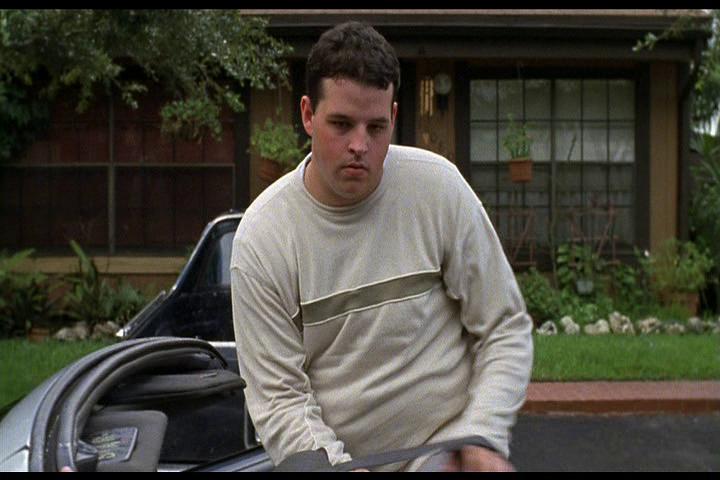
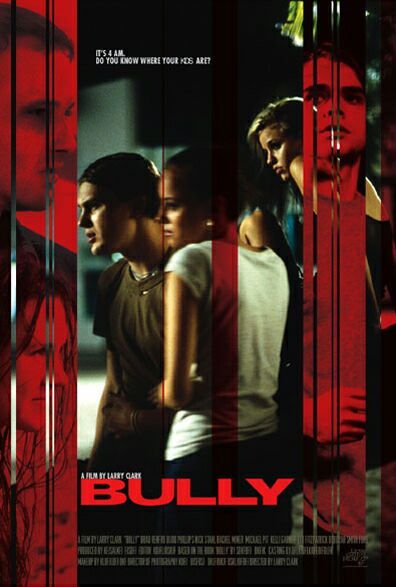
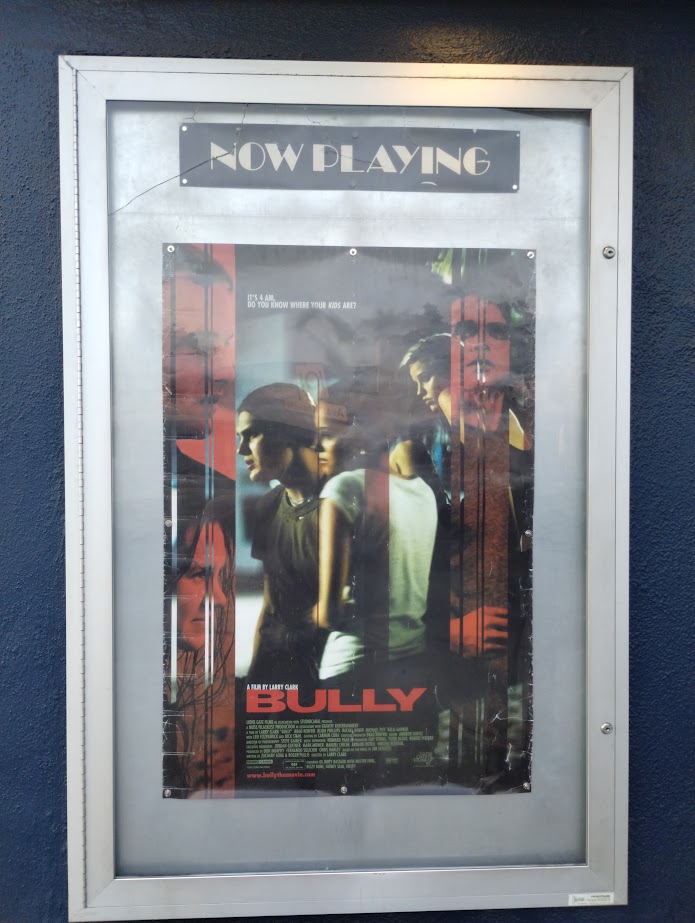
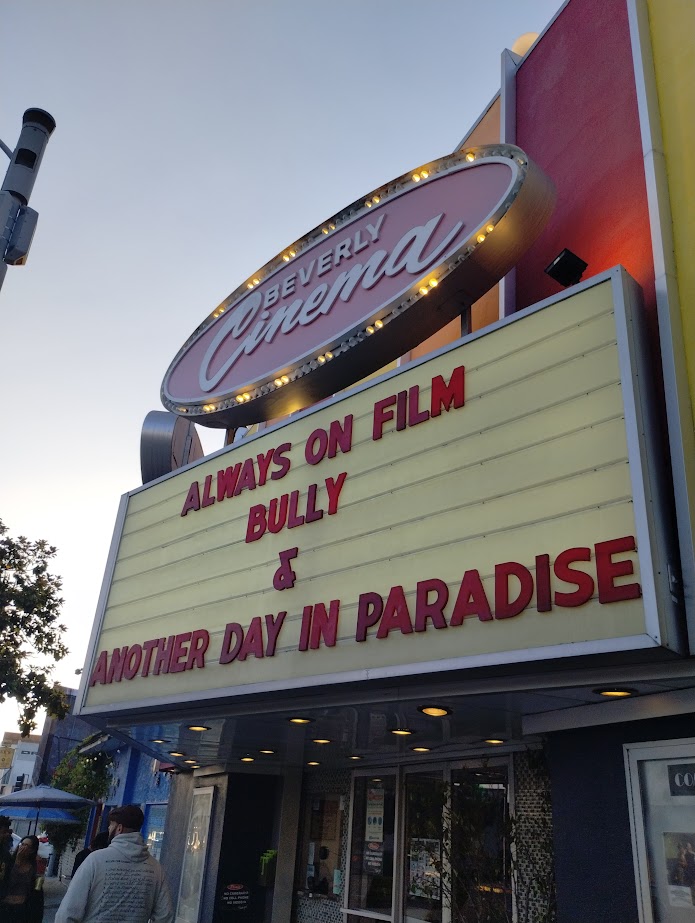
On August 12, 2025, New Beverly Cinema presented a Larry Clark double feature of two of his films: “Bully” and “Another Day in Paradise.” Before “Bully” unfolded on the silver screen, actor and filmmaker Joel Michaely brought out a special guest: Daniel Franzese who played Derek Dzvirk. “Bully” was Daniel’s film debut, and it quickly earned him his SAG card. Daniel thanked Joel for being there and remarked how he killed Joel once in a horror movie entitled “Cruel World” where he shot him in the head.

Daniel said “Bully” was the first time he ever got to hold a screenplay in his hands, and he talked about meeting the casting director, Carmen Cuba, at his audition.
Daniel Fransese: She was like, “Do you wanna see who you are going to play?” I said okay, and she opened up the true crime novel (written by Jim Schutze), and I looked exactly like the guy. And I was just like, oh shit! I can actually get this! So, it was very scary and nerve wracking.”

Rumors are that the set of “Bully” was a crazy one, and being that this was Daniel’s first film as an actor, you can understand and appreciate his feelings at the time.

DF: I’m a pretty easy-going guy, and I am also a theatre guy and a standup comedian. I’m used to being around other people, and I am good at getting along with different personalities. But this movie was next level. we are getting ready to do fittings and start our first day of this movie, and Larry (Clark) is screaming because Brad (Renfro) was in jail for trying to steal a boat. He’s screaming, “This was three years of my life! This kid’s not going to ruin it!” He’s throwing papers and I was like, whoa! That was day one and you can just imagine how the stress level got worse from there.

From there, the discussion went to the late Brad Renfro who played Marty Puccio in “Bully.” Brad first gained worldwide attention at the age of 12 years old when he was cast as Marcus “Mark” Sway in Joel Schumacher’s cinematic adaptation of John Grisham’s “The Client.” Like many people on this planet, let alone actors, he died at far too young an age He was only 25 years old, when he passed away after a drug overdose. Daniel talked about working with Brad.
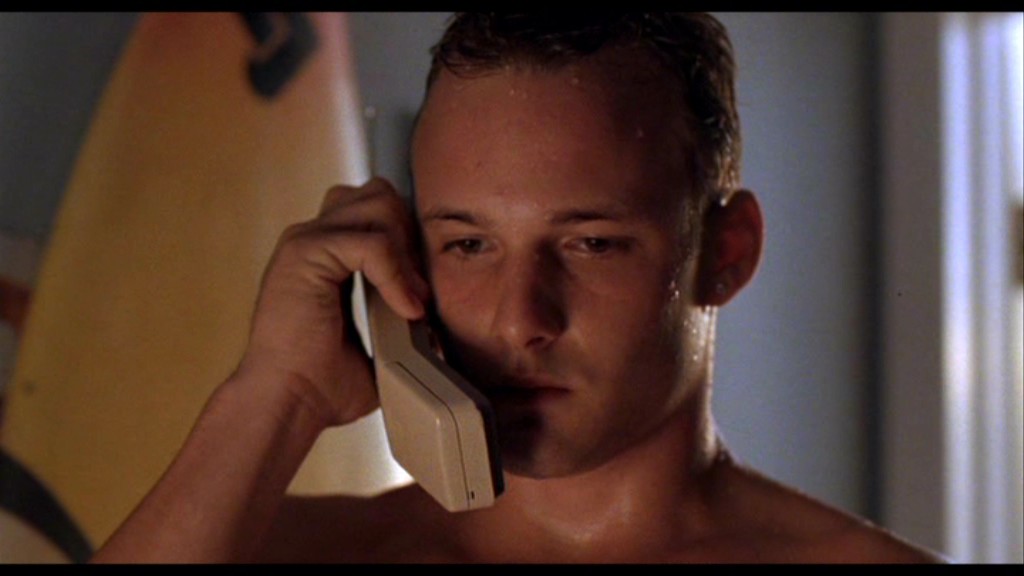
DF: Brad was great. I think he was like one of those golden retriever type people. Not evil, but dangerous. We were doing the table read for the first time, and Brad showed up wearing a white tank top completely soaked in lighter fluid. He came in saying, “I’M TRYING TO GET THE BARBECUE TO GO!” It was like, whoa! He was from Knoxville and had like that “Jackass” sensibility where you didn’t know what he could do, but I don’t think he ever had a mean bone. His intentions were always nice. If anything, he partied too much, and he once told me that at 12, he made hundreds of thousands of dollars to do “The Client,” and he was getting a lot of his drugs and stuff from family members as a kid. I don’t think he got a fair shot. If anything, the reason why I advocate for younger people in Hollywood or talked about my experiences on this movie which were crazy, I was never speaking from a victim place. I was speaking from a place of advocating for people like Brad who didn’t have anyone saying anything for them. I just think, we’re making art. It doesn’t have to be that crazy. We don’t have to be stealing boats or going nuts on sets to produce good material.

After “Bully,” Daniel went on to appear in many films, but he may still be best remembered for playing high school social outcast Damian in 2004’s “Mean Girls.” Like Joel and myself, I wondered what it was like going from an independent film to a studio movie where everybody is expected to be on their best behavior.

DF: I just don’t think the 2000s will be looked upon as a time where it was easy for people on movie sets. I really don’t. People always ask me all the time how to get their kid in Hollywood, and I say don’t. I waited until I was at least in my 20’s (before going to Hollywood), and that’s the only thing which might have saved me. A lot of our contemporaries are not around with us anymore or are in a crazy state. It was a rough time. I can’t say it was easier or better, but I think it’s better now.

Regardless of the crazy set, Daniel made it clear to the New Beverly audience what the experience of making “Bully” was like, and of how the filmmakers strived to capture the spirit of the true story it is based on.
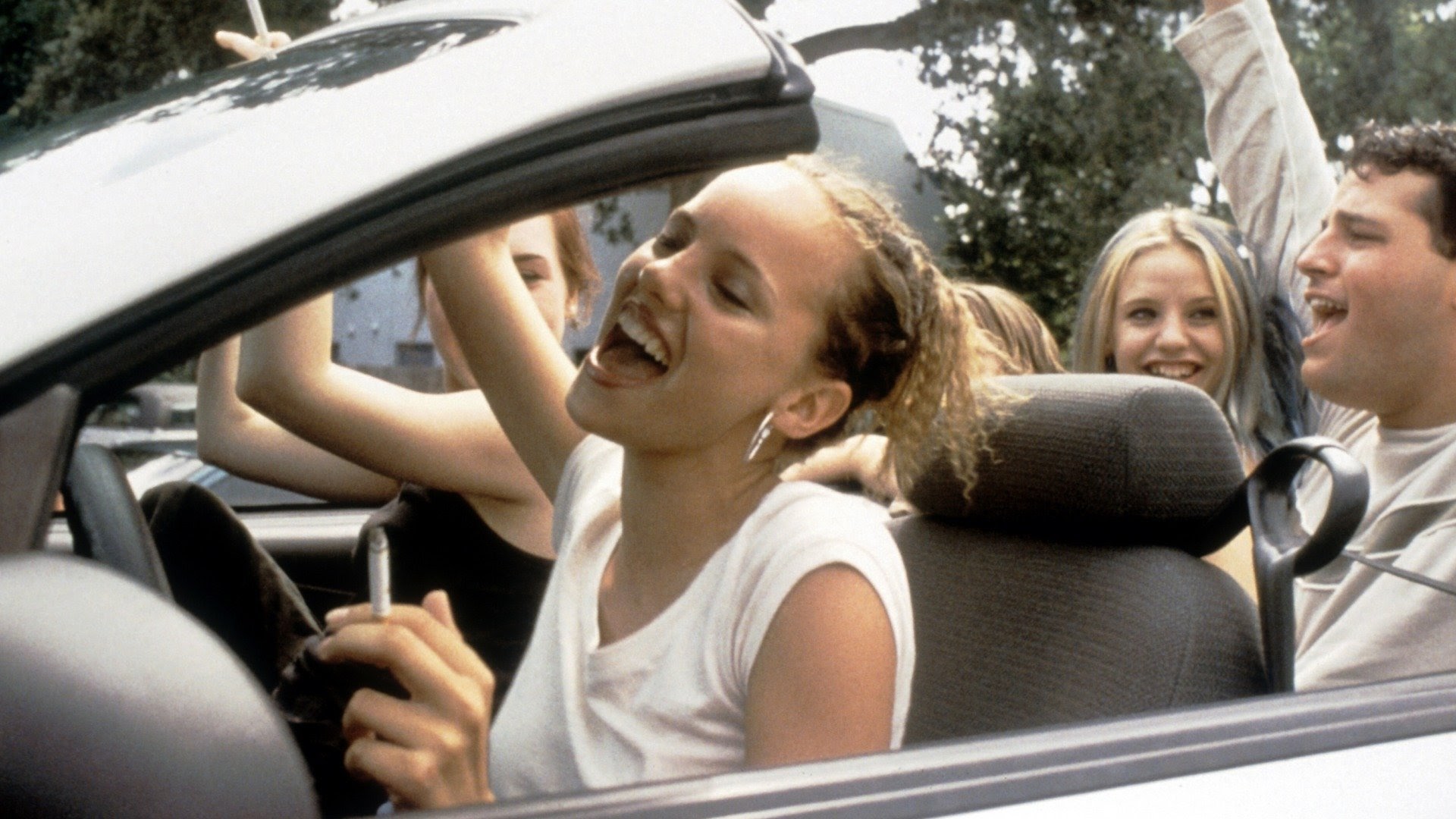
Bully (2001) Directed by Larry Clark Shown in foreground: Bijou Phillips

DF: On a positive note, though, this movie was awesome. It was so fun to make. Larry was cool, the people I was working with were all like people from Thrasher Magazine, it was just like bad ass people. They did shoot in the real locations; it was the real apartment complexes, and it was the real Pizza Hut (we shot in).

Daniel also made it clear how he was the only local hero for hire in Larry Clark’s “Bully.”

DF: They were scouting locations for the gay clubs, and I was just a young kid just figuring that stuff out and performing at the clubs with people I was in musical theatre with and stuff like that. They were like hey we’re making a movie, and I’m like I’m an actor! I had no idea it was going to turn into this. Carmen Cuba, she discovered a lot of people, and I give her all the credit for plucking me out of obscurity and putting me with these people.

An audience member told Daniel that he was from South Florida, and this led Daniel to talk about when he worked at The Gateway Theater in Fort Lauderdale as a kid. a year later, “Bully” premiered there. Daniel found his road from being an usher to a working actor to be honestly insane.

DF: I was there at the theater going, would you like the popcorn combo? I am a movie lover. I worked at Blockbuster (Video), I worked at movie theaters, that’s all I did. Until I was able to support myself as an actor, I was either an usher in theatre or worked at movie theaters. It (“Bully”) was shot in Fort Lauderdale and the whole crew got their premiere at the movie theater where I worked at. So, whoever served me popcorn today, keep writing your scripts.

Like many, Daniel Franzese considers New Beverly Cinema to be one of his favorite places in Los Angeles, and that it was extra special for him to see “Bully” being screened there on 35-millimeter film. To see films presented there in their original format, something often not available to movie buffs in most places, means a lot to him.
‘Lost Highway’ – One of My Favorite David Lynch Films

I remember when I first watched David Lynch’s film “Lost Highway” back in 1997. I saw it at a small theater in Newport Beach where the screen ratio was off by a bit, and the opening credits did not fit onto the silver screen as a result. I left the theater feeling a bit cold as I was not sure what to make of What I saw, and the ending seemed so absurdly abrupt to where I wonder if Lynch and co-writer Barry Gifford had simply run out of ideas and went down a rabbit hole they could not dig themselves out of. The way I saw it, this film was easily upstaged by its soundtrack which proved to be one of my favorites from the 1990’s with its music by Angelo Badalamenti, Nine Inch Nails. Barry Adamson, Smashing Pumpkins and Marilyn Manson.

A few days later, however, I found myself thinking about “Lost Highway” a lot to where I could not put it out of my head. I could not figure out why initially, but then I found the answer in a review of the movie I read in Video Watchdog. I cannot remember the critic’s name, but they wrote it’s not about how the film affects you while you watch it, but how it affects you after you have watched it. I could not agree with this more, and it made me watch “Lost Highway” again, but this time in a THX approved theater with better sights and sound.

I have since revisited “Lost Highway” again and again over the years, and I revisited it yet again at the Nuart Theatre which presented this Lynch cult classic in a 4K restoration personally supervised by the director. While it may not seem as brilliant as “Blue Velvet” or “Mulholland Drive,” it remains one of my favorite films of Lynch’s as it presents us with a puzzle of a story which might be easier to solve than at first glance.

We are introduced to the married couple of saxophonist Fred Madison (Bill Pullman) and his wife, Renee who live in the Hollywood Hills. Their marriage looks to be a cold one, lacking in passion. When it comes down it, Fred is far more able to get orgasms out of his saxophone solos than with Renee, and he becomes suspicious that she might be seeing someone behind his back.

Things get more unsettling for them when they discover someone has been leaving videotapes for them on their doorstep. The first one features a view of the outside of their house, but the second goes even further as it shows footage of them asleep in their bed. They call the police, but they are of little help in finding out who filmed them. Next thing you know, Fred finds and views another videotape which shows him hovering over Renee’s dismembered body, and from there he finds himself on death row for her murder.

Lynch has described “Lost Highway” as being a “psychogenic fugue,” a rare psychiatric phenomenon characterized by reversible amnesia for one’s identity. Others have compared the film to a Möbius strip, a non-orientable strip which one cannot consistently distinguish clockwise and counterclockwise turns. Both of these make sense as the beginning may very well be the end, and the end may very well be the beginning.

This is even further enhanced by Lynch saying he was partially inspired by the O.J. Simpson murder trial which came to dominate the early 1990’s. Indeed, I can see this inspiration all throughout “Lost Highway” as Simpson has not, nor will he ever, admit to committing any murders. For all we know, Simpson may still not know what he did as he has long since blacked it out of his mind. The same goes with Fred Madison as he cannot believe it when a certain video implies he murdered his wife in a most horrible way, but this doesn’t stop a jury of his peers from finding him guilty and putting him on death row.

There is a scene where the police visit Fred and Renee at their home after they received the second video, and Renee talks about how Fred hates video cameras and doesn’t want them in the house. His explanation is as follows:

“I like to remember things my own way. How I remembered them. Not necessarily the way they happened.”

I have come to refer to this dialogue as the Dinesh D’Souza line as he continues to sell anyone and everyone on a narrative which just isn’t the least bit true. But regardless of how you view this film, one thing should remain clear: videotapes do not lie. Just look at what Detective Mike Kellerman (played by Reed Diamond) said in one episode of “Homicide – Life on the Street:”

“Videotape, it’s the perfect witness. It can’t change its testimony, and it can’t forget what somebody looks like.”

Indeed, “Lost Highway” is all about Fred Madison trying to escape the truth of what he did or, perhaps, what everyone thinks he did. As a result, he goes through a rather grotesque transformation which ends up turning him into a young auto mechanic named Pete Dayton (played by Balthazar Getty), and he gets released from prison. But as he now experiences life as a free man, he comes to meet the gangster Mr. Eddy’s mistress, Alice Wakefield. The only thing is, she looks a lot like Fred’s late wife, Renee. Of course, a lot of that has to do with the fact Patricia Arquette is playing Alice as well as Renee.

“Lost Highway” has long since become one of my favorite David Lynch films, and while “Blue Velvet” and “Mulholland Drive” are regarded more highly, this one is so much fun to view again and again. The whole thing is a complex puzzle, and I am convinced I can still solve its mysteries in ways I cannot with Lynch’s other works. I am not even going to try and make sense of “Inland Empire.”

With Pullman’s character of Fred, he is trying to stay ahead many steps of his darkest memories and actions, assuming they are true. But the deeper he digs into his psyche to escape an especially harsh reality, the more memories and familiar faces keep coming up. I like how Pullman plays Fred as a suspicious man who finds himself caught up in a situation he does not understand but which leaves him with the worst headaches imaginable.

Patricia Arquette is a marvel here as both Renee and Alice as she opens herself up, literally and figuratively speaking. It’s great to watch her go from portraying a scared wife to a dominant seductress who holds Pete very tightly within her grasp. Seriously, watching this Oscar winning actress here should serve as reminder of just how much stronger women are than men, especially when men are led by certain parts of their bodies other than their brains.

Who could have known this would have been Robert Blake’s last performance ever in a motion picture before the whole… Well, you know. Still, his work here as the Mystery Man is wonderfully chilling as he clearly took joy in crafting a character unlike any he played previously. When he glares at you, there is no escape, and seeing him without eyebrows makes his presence all the more unnerving. It’s an original performance which people never give enough credit to.

There are many moments from “Lost Highway” which will forever stay with me like when Fred Madison walks into the darkness of his home and re-emerges as someone much different, Robert Loggia who, as Mr. Eddy, unleashes his rage at an ignorant motorist for tailgating him, seeing Alice and Pete have sex in front of a car’s headlights, and the final scene where a character transforms in a hideously angry fashion. All of them are aided by the haunting musical soundscapes created by Angelo Badalamenti and Trent Reznor, the cinematography of Peter Deming, and the strange appearances pf both Richard Pryor and Gary Busey which had me wondering if Lynch was using dream logic in the same way Darren Aronofsky did in “Mother.”

“Lost Highway” provided me with one of the most unique experiences I have ever had. It left me at odds upon the beginning of its end credits, but it stayed with me from there on out, and I constantly find myself returning to it and its awesome soundtrack. This truly is an art picture as it can be interpreted in many ways, and I know I will come back to it again before I know it. Just remember one thing, Dick Laurent is dead.

* * * * out of * * * *