Exclusive Interview with Gusmano Cesaretti about ‘Take None Give None’

Take None Give None poster

2015 proved to be a great year for documentaries with unforgettable ones like “Amy,” “An Honest Liar” and “The Wolfpack.” Now there’s another terrific documentary to check out called “Take None Give None” which is about the Chosen Few, an outlaw motorcycle club based in South Central Los Angeles. Directed by Gusmano Cesaretti, a producer on many of Michael Mann’s films, it chronicles how this motorcycle club, the first multi-racial club of its kind, formed and is bound by the strength of their brotherhood. The documentary also follows the club’s struggles as they deal with the LAPD which raided their clubhouse and unfairly branded them as a criminal organization in the media.

“Take None Give None” had a special screening at the Museum of Contemporary Art in Los AngelesMuseum of Contemporary Art in Los Angeles, and it was sold out and filled with people of all kinds as well as members of the Chosen Few. When it ended, one of the club’s members stood up and said, “Tell people about this movie so that they can see who we really are.” This was met with a thunderous applause from everyone in attendance.

I got to speak with Cesaretti over the phone about “Take None Give None” which he filmed with co-director Kurt Mangum over a three-year period. Cesaretti described how he became acquainted with the Chosen Few, how he managed to get an interview with one of the LAPD cops who went undercover to infiltrate the club, and of how working with Michael Mann served to help him on this project.

Gusmano Cesaretti photo

Ben Kenber: Congratulations on the documentary. This proved to be a real eye opener about the Chosen Few. How did you first become acquainted with this motorcycle club?

Gusmano Cesaretti: Well I saw some of those guys riding motorcycles about 25 years ago on the Pasadena freeway and I pulled over next to them with my car and I said, “Hey! Pull over, I want to talk to you.” And they pulled over then I told them, “I like the way you look. Everything about it is great. I love the way you were riding the bike.” They weren’t just riders, they had pride for some reason. So I told them I would like to take some pictures, and they invited me to the clubhouse. I went over there and it was amazing to see all these great amounts of people and they were all nice. I walked over with the camera and everybody started looking at me and saying, “Hey what are you doing? Oh yeah take pictures of me! Take pictures of my bike!” It was really great. They were friendly, they were open to anything and to me it was fascinating. They were a great people and then I started going there every other week and kept taking photographs and so on in support. Then in 2011, because they were talking all the time about their rides and how important they were for them and being together in like a brotherhood, I said I would like to film one of your rides. So I organized a ride for them where we went through South Central and on the freeways and then through downtown, and then after the ride they started really talking to me and said that we should make a record of all this. That’s when I started doing the documentary, and we just finished (laughs).

BK: When you first started shooting the documentary, how did you envision it and how did it evolve from that point to where it is now?

GC: That’s a good question. When I first started the documentary I had no idea because when you make a documentary you really don’t know which way you’re going. I feel you’re doing it for a year or two (laughs) and then you would have all the information you ever need to create a storyline. We recorded about 48 hours (of footage), and when we finally decided to edit it was like a nightmare because you’ve got listen to all these conversations and all the recording we did. It took months but then you know what’s going on, and then we put a big roll of paper on the floor of my studio and started writing down the scenes. It was crazy. A lot of different cameras were used. It took me about a month to figure out the storyline, and then even during the process of editing there’s always changing this, putting back this and taking this off. It was a very challenging process but I learned so much.

BK: When it came to filming the documentary what formats did you utilize?

GC: We did a lot of stuff with the Super 8 riding the bikes here and there and we used other film. We used Cannon, we used Sony, etc. But the problem when we did the editing, because of all the different formats and all the different cameras, it became now we gotta do this, now we gotta change this and now we have to download everything into this. It was really crazy, but it worked because I shot it in a very cinema verite way. I didn’t want to commit to any style. And the way I interviewed those guys it was like, “Tell me the story.” I didn’t ask any questions because I wanted them to talk and tell me from their point of view. So that’s usually the way I prefer to do my photography; I connect with people and establish a relationship even if it’s for a moment, and I need to start a relationship if I want to get the image that I need.

BK: When the Chosen Few’s club gets raided, we get to see how the media really twisted their identity of proportion. Then they got evicted from their building which had a huge impact on the neighborhood because things were a lot safer when the club was around.

GC: Correct. What was interesting about the Chosen Few in South Central is that it’s really about the cultural of Los Angeles. It’s not necessarily about the bikers, it’s about their lives. The clubhouse was open for all the members and friends and people and visitors like me. There were probably a lot of undercover cops going there too, I’m sure, just to check and make sure that they were okay. But the thing is this; there were always old people there. It wasn’t just the club for the motorcycle people. It was older people who used to sit there all day long and have conversations with their friends, and when they lost the clubhouse a lot of these old people died because they didn’t have a place to go. They were like homeless people practically, and that was really sad to see that happen. All the members too, they felt homeless. They felt like the police were trying to take their identity away. They didn’t have the energy that they used to have any more, so it was extremely sad.

BK: Speaking of the police, you did manage to get an interview with one of the undercover cops who infiltrated the Chosen Few. Was that a hard interview to get?

GC: No actually. I have a friend that is a cop and I said to him, “Look I’m doing this documentary and I would like to interview the police that did the raid.” He said, “Yeah I’ll find him for you.” So he took a couple weeks and then he called me one night and said, “I got the guy.” I talked to him and he was very interested to do it, and we got together and did it. He was actually a nice cop. He was very open and he also told me the truth. What he was saying was real.

BK: It was nice to have the cop’s perspective of the raid as well as the Chosen Few’s as it manages to balance things out.

GC: Yes, yes. It’s a big club and not everybody’s an angel, you know what I mean? But that’s the same in any other big company like Google. There’s always somebody messing up things and in the club a lot of those guys come from the gangs, most of them. Being in the club was like upgrading their lifestyle and they got a job, but they are still connected with the streets and the gangs. There will always be somebody doing a little bit of this and little bit of that and a little drug dealing, but most of them are really wonderful, nice people. The theology of the Father, Lionel Ricks, is amazing. He started the club because he didn’t have a family and he wanted to have a family. That’s beautiful. What really fascinated me the most was that Lionel Ricks started the club in 1959 and then integrated it in 1960, and this was before the civil rights movement. He was able to bring blacks and whites and Mexicans and Chinese and a couple of people from Syria together without any political or powerful stuff like Malcolm X and Martin Luther King and all those people afterwards. He did it very simple and in a naïve and beautiful way with the motorcycle. That’s amazing to me. Think about it, he brought people together with a motorcycle! And that was when I said, “Okay we gotta do this,” and they were all excited about doing a documentary. We got all these great people to interview and the Father. The Father right now is very sick and in the hospital, and I hope he’s going to get better. But I did show him the documentary about a month ago when we finished editing. I went over to his house and showed it to him, and he had tears in his eyes and said, “It’s good. It’s real.” And I said, “Great! Thank you!” He really loved it.

BK: You worked a lot with Michael Mann on his movies. How did your experience working with him help you in making this documentary?

GC: Well I think making a film is completely different from making a documentary. The only help that I got on this film from that world is the camera guys that I worked with, and they are my friends and they came and helped me. With film you have a script and you got the actors and you have time to keep repeating and filming a scene a scene until it comes to where you want it. When you do a documentary the moment is right there. You are shooting this, you turn your head and you see something and you shoot that. You don’t know what’s going on and you’ve got to be aware of what is going on around you, so it’s really different. For me, this was a totally unique experience.

BK: Was there anything you wanted to include in this documentary that you were not able to?

GC: We got to a point where we said okay we gotta finish this project, so there were maybe a few more people that I wanted to interview that we never got to. There was a guy who did an amazing wheel stand. He did a wheelie and he was supposed to come over one night to do a performance for us while we were shooting in South Central, but the guy couldn’t make it and never showed up. And that was another thing that I wanted to include because it’s beautiful and its part of the art of being in control of the motorcycle. When somebody does something like that in a beautiful way it was nice to visually put it into the documentary, but at the same time it wasn’t that kind of a documentary. It was more about the feeling of the individuals and the members and everything that came from their hearts and communicating to the outside world and saying here we are. This is what we are. We are not what people think, we are what we are.

I want to thank Gusmano Cesaretti for taking the time to talk with me. Please feel free to check out the movie’s website at www.takenonegivenonethefilm.com, and be sure to check out its social media pages on Facebook and Twitter.

Copyright Ben Kenber 2015.

Exclusive Video Interview with ‘Gleason’ Director Clay Tweel

Few movie going experiences in 2016 will be as hopeful or as emotionally draining as the documentary “Gleason.” It takes a good long look at the life of former NFL player Steve Gleason, a defensive back for the New Orleans Saints, who was best known for blocking a punt from the Atlanta Falcons on September 25, 2006. This game marked the first time the Saints had been back to their home stadium since the devastation of Hurricane Katrina, so it made their welcome back celebration all the more thrilling.

In 2011, Steve was diagnosed with Amyotrophic lateral sclerosis (ALS) or Lou Gerig’s Disease, an incurable disease which slowly robs the body of all its motor functions and eventually leads to death. It was around that time that he also discovered his wife Michel was pregnant with their son, and this led him to start a video diary for their unborn child so that he could leave as much of who he is as a person to him before the disease takes its toll. While his situation is bleak, Steve still lives life to the fullest and is determined to be there for his wife and son no matter what.

I recently had the opportunity to talk with the director of “Gleason,” Clay Tweel, while he was in Los Angeles. Tweel previously directed “Make Believe,” a documentary which won the Grand Jury Prize at the 2010 LA Film Festival, and “Finders Keepers” which premiered to rave reviews at Sundance in 2015. For “Gleason,” Tweel had to go through 1,500 hours of footage to give us the documentary that is now arriving in theatres everywhere.  He explained how he managed to whittle down that footage, how “Gleason” compares to the film “The Theory of Everything” which also deals with ALS, and of how the health struggles of a family member and the late, great Muhammad Ali inspired him to get the director’s job for this.

Please check out the interview above, and please be sure to see “Gleason” when it arrives in theatres on July 29, 2016. You can also watch the trailer below and visit the website at www.gleasonmovie.com.

Exclusive Interview with Jessika Van about ‘Seoul Searching’

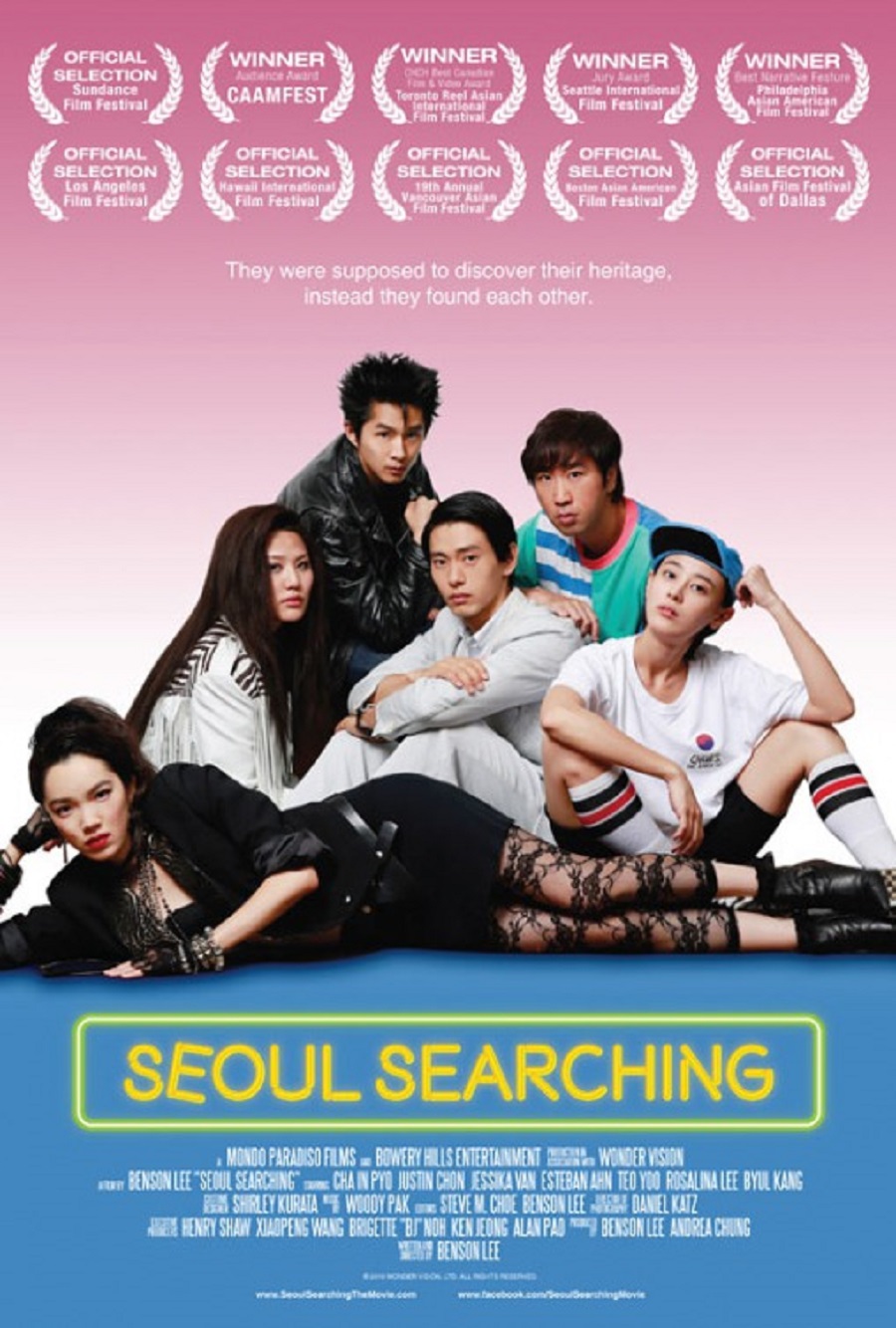
Seoul Searching poster

Jessika Van returns to the silver screen in “Seoul Searching,” a comedy by Benson Lee which follows a group of Korean teens from all over the world who are sent to a cultural heritage school in Seoul during the summer of 1986. Van plays Grace Park, a pastor’s daughter from Cherry Hill, New Jersey who worships Madonna the way her father worships God. Grace doesn’t even need to point that Madonna is her favorite singer as she dresses exactly like the Material Girl and even performs an acapella version of “Like a Virgin.” She also excels at teasing all the young boys who lust after her constantly, but she soon meets her match when an especially rebellious teenager catches her eye.

Van started her career in music where she was a classically-trained pianist and singer, and she won various awards and even performed for the Duchess of York, Sarah Ferguson. She made her breakthrough as an actress playing Becca, Queen of the Asian Mafia, on MTV’s critically acclaimed comedy “Awkward,” and she trained in weapons and martial arts for her role in the first-person shooter game “Battlefield 4.” Videos of her work can be found on her YouTube page.

I spoke with Van while she was in Los Angeles to promote “Seoul Searching.” She talked about the research she did into the 1980’s and Madonna to prepare for her role, what she learned about Korea while filming there, and of how she managed to peel back Grace’s emotional armor to reveal the person hiding underneath. She also spoke of how “Seoul Searching” is much more than just an Asian American film as it touches on issues that are universal to everybody and anybody.

Check out the interview below and be sure to visit the movie’s website (www.seoulsearchingthemovie.com) for more information.

Exclusive Interview with Benson Lee about his film ‘Seoul Searching’

Seoul Searching poster

It took him 16 years, but writer and director Benson Lee finally succeeded in bringing his most personal film, “Seoul Searching,” to the silver screen. The film is largely autobiographical as it is based on his own experience of being part of a summer school camp in Seoul, South Korea which proved to be one of the best summers of his life. What he attended was a special summer camp for “gyopo” or foreign born teenagers where they could spend their summer in Seoul to learn about their motherland. The intentions of this program were more than honorable but the activities of the teens were not, and we watch as controversies and revelations unfold for the teens and the adults.

Lee is an award-winning Korean-American filmmaker who has worked in drama, documentary and commercial production for many years. His first feature film, “Miss Monday,” made him the first Korean-American filmmaker to be accepted to the Dramatic Competition of the Sundance Film Festival where he earned a Special Grand Jury Prize. His first documentary, “Planet B-Boy,” proved to be one of the top-grossing theatrical documentaries of 2008 in the United States. With “Seoul Searching,” Lee gives audiences something close to his heart as he shares his own experiences from when he was a teenager, and the film resonates with many universal themes.

I was fortunate enough to speak with Lee while he was in Los Angeles to promote “Seoul Searching,” and he could not have been nicer to talk with. Lee described how this project came about, the challenges of getting many 1980’s songs into it, and of whether he had to stay true to the events he experienced or instead to see where those events took him in a dramatic fashion. Furthermore, he made me realize how Hughes’ “The Breakfast Club” affected him on a subconscious level before he even realized it.

Check out the interview below, and be sure to check out the website for “Seoul Searching” (www.seoulsearchingthemovie.com) for more information.

‘Zero Days’ Interview with Eric Chien


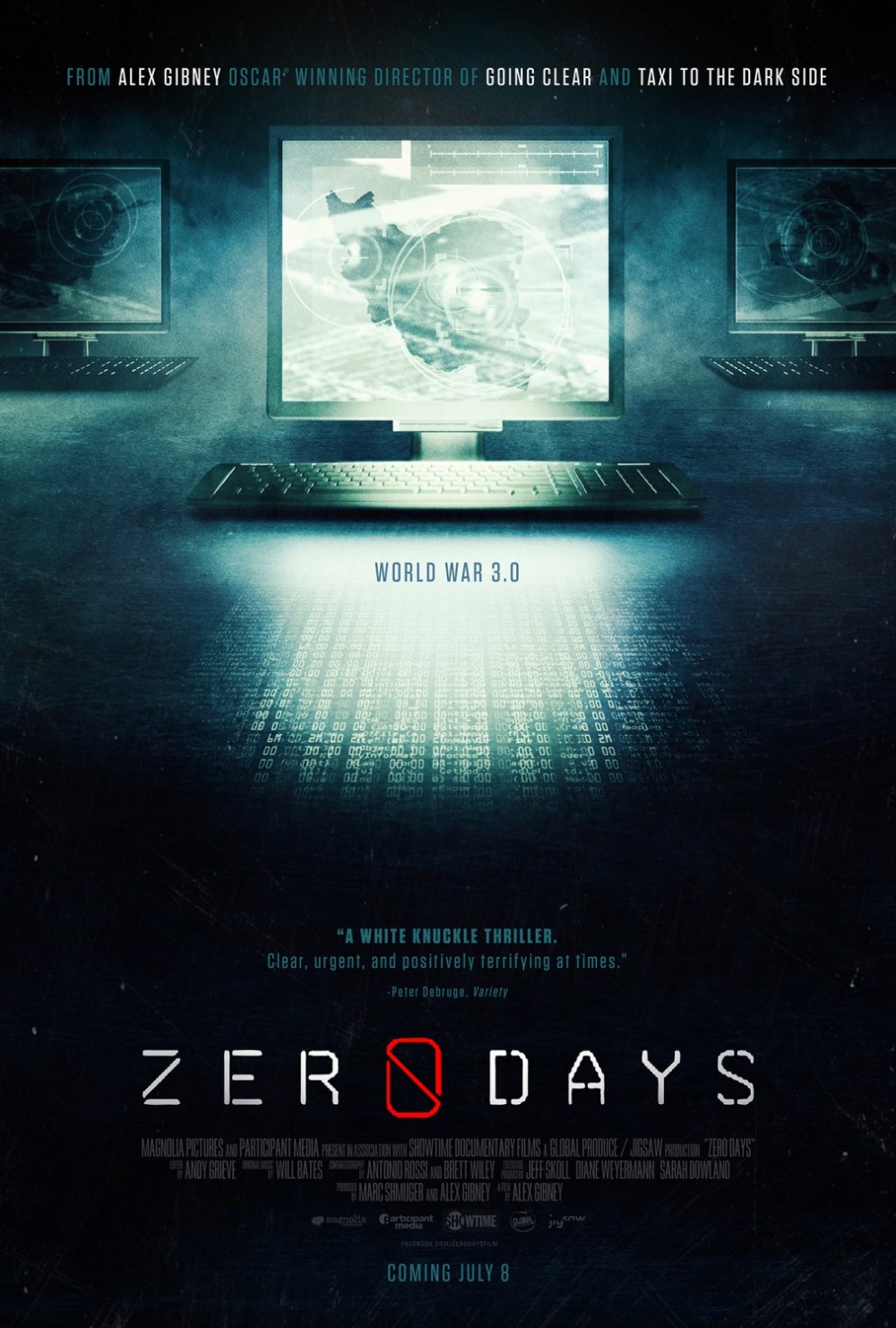
Zero Days poster

Alex Gibney is the most prolific documentarian working in movies today, and his latest documentary, “Zero Days,” may prove to be his scariest yet. Its main focus is on Stuxnet, the self-replicating computer virus invented by the United States and Israel to infiltrate and sabotage the Iranian nuclear centrifuges at Natanz. This movie reveals that the virus was part of a massive clandestine operation which involved the CIA, the NSA, the United States military and Israel’s intelligence agency Mossad to build and launch secret cyber bombs that could plunge the world into a devastating series of attacks which could shut down electricity, poison water supplies and turn cars, planes and trains into deadly weapons. But what’s especially terrifying is how the use of this virus could happen without anyone, even our own government, knowing who is responsible.

I recently got to speak with Eric Chien, one of the people Gibney interviewed extensively for “Zero Days.” Chien is a Distinguished Engineer and the Technical Director of the Security Technology and Response division at Symantec. He was one of the lead authors of Symantec’s groundbreaking research on the Stuxnet virus and has since become one of the foremost authorities on it. I first asked him about how the virus relates to a number of devices or programs we have seen in various science fiction movies.

Zero Days Eric Chien

Ben Kenber: When I look at the Stuxnet virus, I can’t help but think about Skynet in the “Terminator” movies or the black box in “Escape from L.A.” or Joshua/WOPR in “War Games.” These things came to mind especially one I was told that the Stuxnet virus is autonomous, meaning that no operator commanded it to attack in that it attacks on its own without human intervention. What are companies like Symantec doing to contain this virus, and is it even possible to contain this virus?

Eric Chien: There is no such thing as 100% security. If anyone else comes to you that is trying to sell you something and they say you are 100% protected, you should just run away. The thing is it’s a cat and mouse game. And to be honest it’s not even the most sophisticated and complex things that can have the biggest impact. Some things that can actually be very trivial and totally unsophisticated can have a huge impact. We’ve seen, especially coming out of North Korea, a lot of wiping attacks, and what that means is that they get a piece of malicious software in your machine and they just erase all your data. This is a very simple piece of malware to create. It could literally be 10 lines of code to get on and wipe your machines, and that could have a huge impact. We saw it have a huge impact in Saudi Arabia where their networks were totally wiped. Basically South Korean broadcasters and all their biggest banks, all wiped all at the same time. Obviously it was North Korea. 99% of all the malicious software we get is cybercrime, people trying to make money essentially. Right now we are seeing a huge uptake in what we call ransomware, and they are not even going after individuals anymore like they used to. Now they are going after corporations or entities, in particular hospitals. Hollywood Presbyterian got hit by a ransomware attack where the attackers got in with a simple program that basically just encrypted all their files, and they said if you want your files back you have to pay us. They held their data for ransom. They (the hospital) paid $17,000 and had to close their hospital, they had to transfer all the patients out, all their MRI machines, nothing was working and they lost all their patient data. So that’s why they had to pay because they didn’t have the backups.

BK: How much did you work with Alex Gibney on the documentary?

EC: Alex and his team, a guy named Javier Botero was his co-producer and a main research got, came in and I sat for five hours for a one on one interview. Then Liam (O’Murchu) came afterwards, five hours, one-on-one interview. And that was it, and then he produced all of that. We have done things where I have sat for 10 hours and got way less out of it, so we were actually quite impressed. They came in very well-prepared. At one point I was talking about something and Javier said, “Oh but that’s Stuxnet .5, isn’t it? The earlier version?” And I was like, “Oh yeah, that’s .5. They were just really, really well prepared and they knew the right questions to ask, and obviously even when I said something wrong at one point he reminded me that I was not talking about the right thing. All the graphics you see of code on the screen are not random pieces of code. They are exactly the pieces of code that we are talking about at the time that they are displayed. After we had done our interviews they came back asking for this and that, and it was really interesting to see how meticulous they were being.

BK: I visited the Symantec office in Culver City and noticed they have a War Room there. Did you ever go in that room to discuss the Stuxnet virus?

EC: Yeah. We were in that War Room, but we actually have a War Room you probably haven’t seen which allows us to do encrypted communications with other offices, and we call it our Halo Room. Basically it’s… It’s hard to describe. Imagine you cut this table in half so you have kind of a half table, and there’s this really big screen that kind of curves in front of you like this and it’s like full HD. The other office has half a table on their side, and so it looks like they really are there. All the sound and audio is all directional, so someone over here you hear them over there. So we use that room more frequently because in our other War Room that we have, it’s just classic teleconference which is great, but this room obviously affords much more interaction.

“Zero Days” opens in Los Angeles and will be available to watch on iTunes starting July 8. I want to thank Eric Chien for taking the time to talk with me.

Click here to visit the “Zero Days” website.