Exclusive Interview with Josh C. Waller about ‘Raze’

josh-c-waller-photo

Filmmaker Josh C. Waller has led a very interesting life so far. Born in 1974 to a cattle rancher/businessman and an actress mother, he spent his youth going to theatre rehearsals and watching movies on the weekends where his interest in filmmaking began to peak. After graduating high school, he joined the Marines and eventually worked for a private educational center which dealt with children afflicted with learning disabilities. This job ended up taking through different parts of the United States before he finally settled down in Los Angeles where his career as a filmmaker started to take off.

Waller’s film “Raze” stars Zoë Bell (“Death Proof”) as Sabrina, an abducted woman who wakes up to find herself imprisoned in a bunker where she and other imprisoned women are forced to fight one another to the death. On the surface it looks like another exploitation movie, but it soon becomes clear Waller had a lot more on his mind than that as he takes the characters and their story more seriously than you might expect.

I got to talk with Waller about “Raze” and what it was like to make the movie. Considering it was done on a very low budget, I was curious to see how he managed to pull off all he did with the little he had to work with. We also talked about what fighting styles were used in the movie, how his time in the Marines has influenced his work as a filmmaker, and he told a great story about how he managed to get all the sets for “Raze” built in just one day.

raze-movie-poster

Ben Kenber: From the poster “Raze” looks like a typical exploitation movie, but it ends up going a lot deeper than that. What inspired you to make this film?

Josh C. Waller: To be honest, I had been working for years on another film completely different that I directed called “McCanick” with David Morse and Cory Montieth. That was something that I had been developing for about nine years with my producing partner who also wrote it, Daniel Noah, and it’s a tough project. It’s a drama with some very heavy subject matter and it was a bit of a bitch to get made, but it finally got green lit. But about the same time my friend Kenny Gage, he wrote a little short film called “Raze” which was like maybe seven or eight pages, I can’t remember exactly. He just asked me if I would take it home and he was just like, “Hey man, take a look at this thing and I’d love to hear your thoughts.” It wasn’t like, hey take this home, I think you should produce it, I think you should direct it. He was just like, hey take a look at this, I’d love to hear what you think, and I did. So I took it home that night and checked it out, and I thought there was something there. It was essentially the first fight between Jamie (Rachel Nichols) and Sabrina (Zoë Bell), then that was the short. It was a tad more exploitative of what the film ended up eventually being. Women were wearing a bit more revealing clothes and I think it mentioned something about it being particularly busty, and I brought it back to Kenny the next day and I was like, “Dude, there’s something here. I don’t know if I’m down with all the exploitative stuff, but there’s something here.” It got my mind going, so Kenny and I just started like bouncing things back and forth immediately, and the way that he and I were working together was so organic. The ideas just kept flowing and flowing and flowing, and I think that I really was interested in being a part of it and directing it because it’s not the kind of film that I would normally gravitate to nor is it the type of film that I would normally direct. I didn’t really watch the women-in-prison exploitations films from the 70’s and 80’s stuff, not at all. In fact, I was never really a fan of any of the exploitation films like “Faster, Pussycat! Kill! Kill!” It just wasn’t my thing, the Roger Corman films. So I was like okay, if I am going to do a film that kind of fits within that world, I’m going to have to take it as seriously as I would take “McCanick” or any other film, you know? I think that that was in my mind, then and still now, the only way we could possibly deal with something like this. And also it was incredibly exciting for Kenny and I. Kenny, before he got in the industry, was an undefeated professional boxer, and it was important for him and I and Zoë to try to show the most visceral, intense female fights that we had ever seen on the screen. And because every time you see women in a movie in some kind of fight, it seems to be all over the place in the trades and everything like that. That fight scene from “Mission Impossible: Ghost Protocol” (between Paula Patton and Léa Seydoux), people were like, “There’s the biggest catfight of all time in it!” And I saw it and I was like, “They what?! Man, you guys could have gone like so much further on this!” So we were like let’s see how far we can push this, and trust me when I say that we have so much more footage that we could’ve put in the movie.

BK: Regarding the fight scenes, Zoë said there were different fighting styles used in the movie. Were you looking to employ any particular fighting style or were you just open to whatever worked?

JCW: No, in fact we wanted to avoid looking for fighting styles. But what was interesting to me was to try to use the action… It was a little bit of like an experiment to see how much we could use the action to propel the narrative forward as opposed to dialogue or like emotional sequences. That said, the fight sequences themselves are pretty damn emotional, so being able to use those fights to like propel the movie forward emotionally and the narrative, that was something that was super interesting. So it wasn’t so much about looking for specific fighting styles in terms of like, this girl does Muay Thai and then this girl does Brazilian jiu-jitsu. That didn’t really work. We just needed to make sure that their fighting styles, however their fighting styles were, were a physical representation of who they were as women and what they were going through because they’re supposed to be normal women plucked from society. So occasionally you’ll have like one of the characters that knows how to fight. In the case of Sabrina, she has a military background and is well versed in hand to hand combat, so that’s the way that she fights. She fights very efficiently and she fights like a soldier. But if you start putting different martial arts styles on it… We didn’t want it to be like the female edition of “Best of the Best” or something like that like “Bloodsport” or “Mortal Kombat.”

BK: I read that you served in the Marines for a time, and thank you for your service by the way.

JCW: You’re welcome.

BK: Did any of what you learned in the Marines influence the making of this movie for you?

JCW: The guards down below I definitely fashioned after Marines. They’re most obvious trait are their Marine haircuts. All of those haircuts I maintained. I was the one who was like, “No, no, no,” and then I’d run outside with clippers and be like, “Sit down, sit down while I cut your hair!” Their uniforms, making sure their boots were polished, making sure that their haircuts were clean and not like all nappy and plain looking. Bruce Thomas who plays Kurtz, he and I had a lot of talks about his performance and how he could mimic the sound and the essence of a Marine drill instructor, so we would talk about a lot of stuff like that. I would put all the guards through a little closed quarter drill or boot camp over in a parking lot outside the set. In terms of fighting styles, not really; the military thing didn’t inform too much of that stuff. I can definitely say that, in terms of being a filmmaker, I would not be the filmmaker that I am today without it. Whether people think that’s good or bad, I would not be who I am as a man without the Marines. Almost every day, so many aspects of my life are informed because of my choice to join the corp.

BK: Absolutely. I bring that up because I have a family friend who was in the marines, and it has definitely influenced him in how he lives life today, and I think in a very good way.

JCW: It becomes one of those things because the Marine Corps is so daunting, and you end up graduating from boot camp and when you earn that title, you are filled with such an immense sense of price and accomplishment for earning that title. You feel a little bit like, “Well if I can do this, I can do anything.” So when you look at other tasks throughout your life, you’re kind of like, “This is lame. This is easy!”

BK: Zoë said that the total budget on “Raze” was less than a million dollars, but it looks like it cost more than that. The thing I continually find fascinating about low budget filmmaking is how it forces you to be more creative as a result. Would you say that was the case on this film?

JCW: Absolutely. I mean a perfect example of like how you’re forced to be creative is that like… Zoë was right, the budget was below a million, and if we had 19 action sequences, the shooting ratio on action to straight drama is like 10 to 1. It’s so drastically different. So to say that the shoot was an ambitious shoot is like stating something stupidly obvious. I think in terms of getting creative, there was one time where I was trying to figure out how the hell we were going to be able to afford… Because all of our sets were built, we shot everything on a soundstage, everything. We didn’t know how we were going to be able to pull that off with the money that we had, and I went home one night and I was sitting with my younger brother, and the flipside is as a youth I was the product of a divorce. On the father’s side, I was raised by a Marine cowboy father, and on the other side my mom and stepdad were into theater and dance and jazz and all of that stuff. I would go with my mom to movies on the weekend and I would watch movies like “Arthur” and “Zorro the Gay Blade” and stuff like that. I went home and I was hanging out with my little brother, and we were watching “Seven Brides for Seven Brothers,” and there’s a big musical number in the movie where all the brothers get together and with people in the neighborhood, and like an Amish community they have a big barn raising, dance and a big party, and I was like, “Holy shit man! That’s it! We’ll basically do a barn raising for all of our sets!” So I told the guys, “Look, all we have to do is throw a party, we’ll invite our friends, we’ll make teams of four people each and our production designer will be our foreman. And we’ll give a cash prize to whoever finishes their part of the build the fastest.” We had a DJ, we had food and beer and all that kind of stuff, and we built all of the flats for all of the sets in three hours on a beautiful Sunday afternoon. We all drank beer and barbecued. We never would have been able to do it (the regular way). It would have cost us 2 to 3 weeks of labor costs, so that was one of the creative ways. It was fun.

BK: That’s amazing! IFC Midnight is promoting this movie. How does it feel to have them promoting it, and what can you tell us about IFC Midnight?

JCW: IFC has been amazing. The person that I’ve been particularly involved with at IFC Midnight has been Mike Winton, and I have to say that it’s been an absolute pleasure. IFC Midnight also put up “Maniac” which my producing partner Elijah Wood was in, and they function within the same world that I function and we function in. Working with them is like working with our friends. It’s been a pleasure. I love it and I can’t wait to work with them again.

I thank Josh C. Waller for taking the time to talk with me, and I again want to thank him for his service to our country.

Exclusive Interview with Jane Weinstock on ‘The Moment’

MCDEASY EC007

Jane Weinstock, 2003

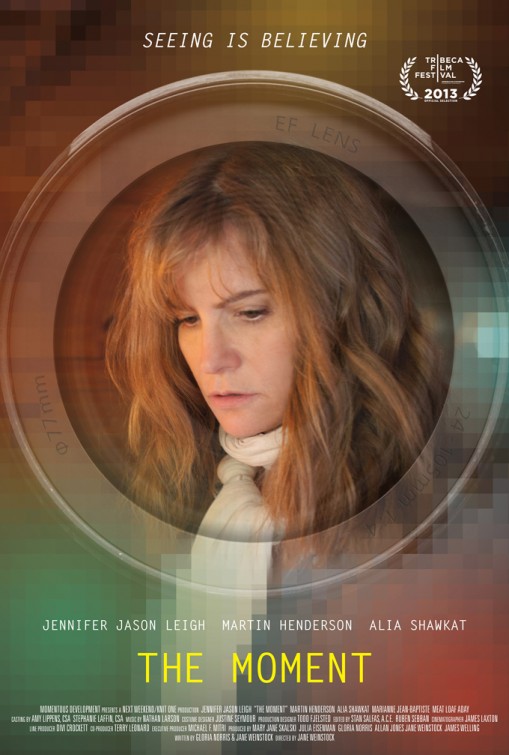
Filmmaker Jane Weinstock follows up her directorial debut of “Easy” with “The Moment,” a compelling psychological thriller starring Jennifer Jason Leigh, Martin Henderson and Alia Shawkat. In the movie, Leigh plays Lee, a photojournalist who has just ended a tumultuous affair with troubled writer John (Henderson). But when she goes to John’s place to get her things, she discovers he has disappeared and is nowhere to be found. The stress of not knowing his whereabouts causes Lee to have a nervous breakdown, which in turn lands her in a mental hospital. During her recuperation, Lee reconnects with her estranged daughter, Jessie (Shawkat), and ends up meeting Peter, a fellow patient who somehow looks a lot like John. As Lee struggles to get a grip on reality and learn the truth behind John’s disappearance, the clues she is given lead her to the most unexpected of places.

Just as with “Easy,” “The Moment” has Weinstock dealing with the contradictions of human nature and psychological realism. It was fascinating talking to her about this movie, and we discussed the challenges of writing a highly complex screenplay, what it was like working with Leigh who is very serious in her approach to playing a character, and how her studies in psychoanalytic theory and semiotics came to inform this film.

the-moment-movie-poster

Ben Kenber: Regarding the screenplay, how difficult was it for you and your co-writer Gloria Norris to write it?

Jane Weinstock: Well our starting point oddly enough was the Edith Wharton novel “The Mother’s Recompense,” but we weren’t able to get to the rights to that. We didn’t want to do a period piece, but we wanted to sort of take the basic structure of this extremely complicated mother/daughter relationship and make a movie out of it. So once we realized that we couldn’t even get the rights, we just kept that relationship as our starting point and then we went on to write this piece. We decided quite early on to make the character of Lee a photojournalist because we have a fascination with danger, and at the same time a kind of ethical commitment to try to do good in the world. We both love Hitchcock, so I think there were Hitchcockian elements that we gravitated towards, and it also changed in various rewrites. We worked on it for a very long time so we rewrote it a number of times.

BK: When it came to the subject matter, did you do a lot of research on photography as well as depression, anxiety and posttraumatic stress disorder?

JW: Yes, I definitely thought of researching PTSD first. We actually showed it (the movie) in New York to a posttraumatic stress disorder specialist at Hunter College, and she felt that we really got it right so that was very gratifying.

BK: There’s a scene in the movie where Martin Henderson’s character is eating sardines which he says are good for those suffering from depression. Is that true?

JW: No, not really (laughs). They are good for your brain and they don’t have a lot of mercury.

BK: Jennifer Jason Leigh is well known for her method approach to the characters she plays. How did she approach the role of Lee in this movie?

JW: Well I did a lot of research and I gave her my research and she looked through that, and she’s known photographers before and she just was her many ways. During rehearsal we worked on the script together. We made some changes as we were rehearsing, and she’s a writer/director so she’s very, very good at that. She also looked at different cuts of the movie and made suggestions, so she was very involved creatively and not just as an actress.

BK: There is a moment in the movie where Peter is standing in front of his place of work and Lee is taking pictures of him, and he is covering up part of the word “storage” to where only “rage” can be seen. What was your reasoning for shooting the scene like that?

JW: It was just a little reference that I thought not many people would get, but you got it. He is a character who was filled with rage. He was imprisoned for five years for a crime that he didn’t commit, so he’s got a lot of rage that he turns against himself and feels towards the world as well.

BK: Alia Shawkat is fantastic as Lee’s daughter, Jessie. How did she get cast in the film?

JW: Well Jennifer had already been cast, so we had her read with several actresses. They were all great, but when I asked myself, ‘could this actress be capable of murdering somebody,’ I always came up with the answer no except for Alia. I really wanted her to feel like someone who is capable of murder, and I also really liked the fact that she looks like she’s part Iranian, and she is part Iranian, so we could give her an Iraqi father.

BK: How much time did you have to shoot this movie?

JW: We shot it in 22 days, and then we had two days for re-shoots.

BK: With movies like these, the shooting schedule always seems to get shorter and shorter.

JW: I know. It’s crazy.

BK: I read how while you were at New York University you focused on psychoanalytic theory and semiotics. Did any of those studies factor into the making of this movie?

JW: You know it must have especially in terms of the writing and having a psychoanalyst be in the movie. But there’s also a way in which I had to drop a lot of my theoretical knowledge and just make it more organic, and at other times I could get very heady.

BK: In some ways “The Moment” is timely because our reality keeps getting distorted by technology and in other ways as well. By the movie’s end we’re not entirely sure if Lee is even dealing fully with reality. With technology today we are getting closer to the truth, yet at the same time we’re being taken further away from it. Was that something you thought about during the making of this movie?

JW: I guess something I thought about most in terms of that kind of general theme of the movie is that we live precariously in an uncertain world which is partly a function of technology but also a function of the times and all the wars we’ve been living through. The last 20 years has been a very, very uncertain time, and then the reaction to this kind of need for certainty comes up in the form of the Tea Party and other kinds of very fundamentalist types of positions. I thought about it in terms of that more than in just technology specifically.

BK: It seems like these days people are not fighting for the truth necessarily, but more for the truth as they see it. “The Moment” reminded me a bit of David Lynch’s “Lost Highway.” It’s a very different movie, but like with Bill Pullman’s character, Lee is trying to get a grip on all that is happened to her. Still, we’re not entirely sure she has succeeded in doing so.

JW: Yeah, people have compared the film to David Lynch’s work. He’s not somebody who I respond that strongly to. I’m much more of a Hitchcock person, but I can see that. Another big theme in the movie which is definitely Hitchcockian is guilt, and even if none of these people actually killed John, is that really the end of it? Can people carry guilt with them, or for the moments that they have created that may or may not have led to John’s death? For example, the moment where Lee kisses John, at that point there’s no turning back. This has to end badly, right?

Thanks to Jane Weinstock for taking the time to talk with me about “The Moment,” a film that constantly challenges your perception of reality throughout its running time.

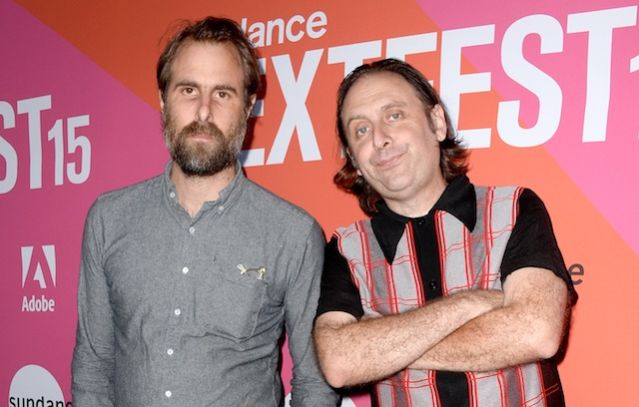
Exclusive Interview with Rick Alverson and Gregg Turkington about ‘Entertainment’

entertainment-gregg-and-rick

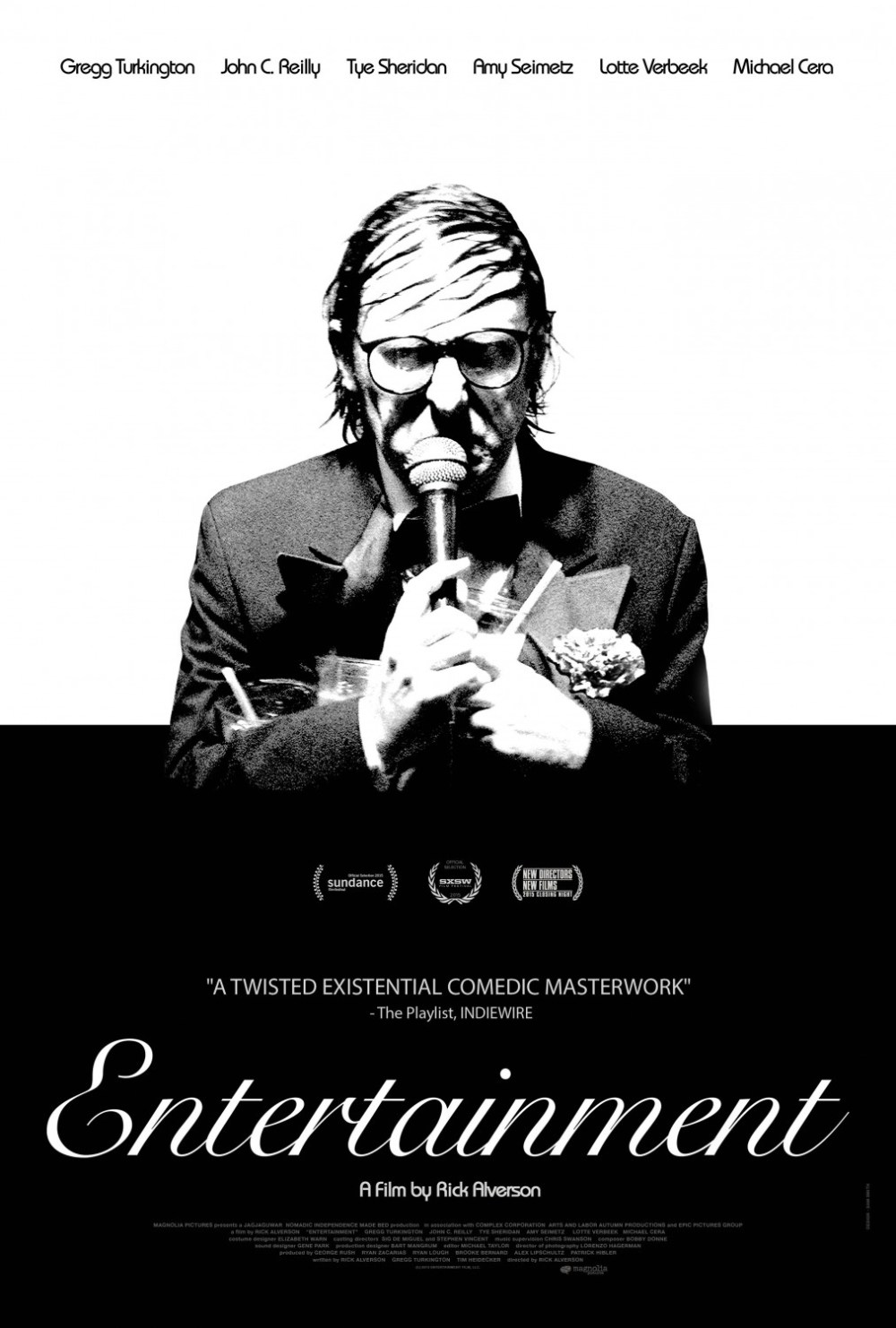
Entertainment” is probably the most ironically named movie to be released in 2015 as it is not entirely fun to sit through, but to dismiss it as bad because it is not enjoyable would be missing the point. It proves to be an experience more than anything else as we watch a stand-up comic named The Comedian (played by Gregg Turkington) travel through the California desert while performing at a string of third-rate venues in front of audiences who couldn’t be less excited to watch him. During this time, he tries to get in touch with his estranged daughter and eagerly awaits a lucrative Hollywood engagement which just might revive his sagging career. But first, he has to travel through what seems like the equivalent of Dante’s Inferno in order to find any hope of salvation.

“Entertainment” was directed by Rick Alverson who previously gave us “The Comedy,” another ironically named motion picture which starred Tim Heidecker as an aging New Yorker who is indifferent to inheriting his father’s estate and passes time with friends playing games of mock sincerity and irreverence. Turkington is a noted stand-up comic best known for his alter-ego of Neil Hamburger, a persona which he brings to “Entertainment” but who is not the same character as The Comedian.

I got to speak with Alverson and Turkington while they were at Cinefamily in Los Angeles where “Entertainment” was being shown. When I told that them this interview was for Examiner.com, they joking replied how someone on the website gave them their movie the worst review imaginable and described it as anything but entertaining. We started with that review and went from there.

entertainment-movie-poster

Ben Kenber: How do you feel about reviews like that?

Rick Alverson: Well it’s weird. Obviously the movie isn’t a romp through a good time, so if somebody says it’s a failure for doing that they are right, but that’s not even engaging with the movie (laughs). It’s like you’re not even walking into the room.

Gregg Turkington: They got the details wrong, that’s what I don’t like. They seem to have thought he was trying to do something else and that he failed in trying to do that, but he was trying to do that so he didn’t fail so fuck yourself (laughs). But I like the bad reviews if sometimes it feels like the person’s taking it so personally that the review, when you are reading it, you can tell that I don’t like this person and they don’t like this and this sounds interesting to me, I’m gonna go see the movie. I’ve gone to a lot of movies with scathing reviews because I could tell we are not on the same page, and what you hate is what I like. That’s fine with me.

BK: I saw “Entertainment” a couple of weeks ago and it has stayed with me ever since. Some movies are meant to be experienced more than enjoyed, and this movie is an example of that. Not all movies are meant to be enjoyed.

RA: Great. That’s very good to hear.

BK: We’re looking at a comedian who is at the end of his rope psychologically, and you can’t turn away from his suffering.

RA: Yeah, I would say it’s even more than just psychological. I think it’s a holistic disaster biologically, psychologically, spiritually…

GT: Environmentally (laughs). Although we did win an award in Switzerland at this film Festival we went to.

RA: Environment is Quality of Life Award from the junior jury at Locarno in Switzerland.

GT: Pick the film that best sums up the environment is quality of life (laughs).

RA: It’s true, we won.

GT: Environment is low quality of life, and that environment is low quality (laughs).

BK: I can see why it won. Greg, your character of The Comedian was inspired by your character of Neil Hamburger. When you brought that character to this movie, did you have to change anything about the way you perform?

GT: The live stage show is similar to the real live stage show although me lashing out at somebody for no good reason is not something I would do in a live stage show. That was more the character. But yeah, there were a lot of things that had to be planned out and thought about and addressed. Ultimately I don’t think it is the Neil Hamburger story. It’s a very similar character and certainly it helps to have that character up our sleeves when we need it, but we had to be free to start from scratch.

BK: Rick, I read in the production notes that you had mentioned how you found failure as being very liberating. What specifically about failure do you find so liberating?

RA: Well it describes the boundaries and limitations of the world and experience, and there’s something beautiful to what we can and can’t do and understanding them. It’s like understanding what your feet are for, and your feet have a certain function. I think functionality is beautiful, and we are increasingly a society that’s divorced from form in every way and ignores the limitations which are the actual architecture of life. So we are just ignoring the shape of things and instead are wrapped up in what things could be in this idealized ephemeral flight of fancy. There is a neglecting the beauty of facts on the ground.

GT: A lot of peoples’ failures are to me successes. There’s a purity often to them that you don’t find with things that are successful.

RA: Yeah, because the idea of success is that so few can achieve it in any discipline and any particular way, whether it’s the success of becoming incredibly rich or the success of perfectly achieving the discipline. The majority of people are in some sort of muddy approximation of that. I don’t use traditionally scripted dialogue in any of my movies, so there’s improvisation and other methods of achieving tonal exchanges or content. I really like when things fall flat or there is that absence of chiseled, airtight exchange that we see in so much of popular cinema.

BK: Regardless of how people view “Entertainment,” I have a feeling it will endure over the years as it offers a different and specific view of things.

GT: I’m surprised at how people’s perceptions of things is all based on something like an opening weekend or with music too. It’s like some record comes out and it doesn’t do well, but the music is still valid at any point. The time that it comes out shouldn’t determine the value of it. It’s crazy.

RA: There are these sort of free market metrics especially in an age where we don’t even know who’s buying this stuff. Netflix isn’t releasing their numbers or whatever company. Digital platforms don’t need to release their numbers, so we really don’t know where this stuff’s going and who it’s being imbibed by. To think that our metrics for an opening weekend at the box office have any sort of say about a work is silly.

GT: It’s also replaced for a lot of people film criticism. I hear people in airports or on the street talking about box office numbers and really that should only be of interest to the investors, not to the moviegoers. What do you care if it made 30 million or 60 million? That’s nothing to do with you.

RA: Increasingly we want context for everything. We need context for our own experience. We need to understand how other people are viewing something so that we know how to view it, which is a bit of a shame. Where’s discovery?

BK: I imagine there was a lot of improvisation involved in the making of this movie.

GT: For the dialogue. The rest of it is pretty scripted out very carefully scripted out. It’s not improvised like, what will we talk about now. It’s written there what the topic is, what the town he is in and what’s being communicated. It’s just up to the actors to use the actual words.

RA: We were talking about the other day how there’s, in a tent pole blockbuster movie, a general sense that people were improvising. Because of the prowess of the spectacle, everybody is saying that they know that they (the actors) are riffing on lines in a popular sense. But I think when people talk about independent films and say that they are improvised, it’s just like you turn on the camera and everybody’s doing whatever the fuck they want. It’s so many different things for so many different people. You think you are communicating one thing by saying it, but language is useless sometimes. This was fun because we worked with different people in different ways. I was improvising lines and writing lines on the spot and feeding them to certain people. Others like John (C. Reilly) and Gregg, they have a chemistry and they are very good improvisers so the dialogue exchanges between them were in that world. For me, watching that thing sort of come apart or the attempt at it, honestly half the time if I know we are covering whatever little narrative ground we need, I’m just listening to the voices. We don’t do more than three takes, and some of that is economic. If it’s not achieved by the casting or by the sort of conditions that you’re setting up, then what are you aiming for? I like things falling kind of flat too.

GT: But it’s also true that people think it’s a big free-for-all, improvising. They should see a scene that we might do where we do the first take, me talking to somebody or whatever making up the dialogue, and Rick says, “Alright for this one I need you to move half a millimeter to your right.” That’s not a free-for-all, being told to move half a millimeter to the right. That would probably be the direction over we need you to use this line and to say this specific thing. A lot of times it was stuff like that which is really the opposite of a free-for-all.

BK: Gregg, your character gets booked at a lot of second-rate venues or places that are the worst for comedians to be stuck at. Is that something you’ve experienced in your own career, or is that something you just been a witness to?

GT: I experienced it when I’ve gone out of my way to make sure that it was happening by booking shows that I knew what have that sort of outcome. And then sometimes you go into a show with the best of intentions and it just doesn’t pan out. Things get awful and ugly. But I like a variety of responses and so I like to have shows that are successes on the traditional level, success in the failures on the traditional level. To me they are probably both successes because they gave me a different experience.

RA: I feel that way about movies. It’s strange increasingly for me to recognize how similar me and Gregg are and what we want out of the thing whether it’s comedy or drama or film or stand up. We’re kind of curious about the off-kilter event (laughs).

BK: There are some amazing shots of the California desert in this movie. On one hand they are beautiful, but on the other they illustrate how vacant and empty The Comedian’s life is. Was it challenging to get those shots with the budget you had?

RA: We stretched our budget really, really far, and that speaks to the dedication of everybody involved; the crew and the producers and the cast. So yeah, of course it’s challenging. It’s 112° outside and Lorenzo Hagerman, our cameraman, is carrying a 50-pound camera kit on his shoulder up a rocky cliff to get those wide vista shots 400 yards from something. Gregg’s shoes are melting and it’s dangerous out there. Don’t go to the desert! (Laughs)

GT: Don’t shoot in the desert is right!

RA: Me and Gregg talked about how we liked in the 70’s you see a lot of films of people just sweating and nobody’s dabbing them. They are just covered in sweat and look greasy and wrong. You started to see that becoming the sterilization of, “No that’s not quite right. We can do better than that.” So you had to sterilize the representation down to its most idealized form, but we were hoping for some more sweat actually.

BK: Tye Sheridan’s role in this movie is interesting because he basically plays a clown who doesn’t have much of an act. He just basically panders to the audience’s basest instincts. How did you work with him on that role?

RA: I showed him an idiot dance and he brought it to life. I’d ask him to do sort of these mime-ish things at events, and he stepped up on that stage and animated it in a way that shocked all of us. It was electrifying. He sort of plays the apocalypse in the movie. He definitely is the end of the spectacle. He’s reduced down to the rawest of the raw materials. He is the smut in the pig sty, the character I mean. Tye is one of the kindest, gentlest, most respectful young men that you could ever meet.

BK: What do you hope people get the most out of “Entertainment” and the experience of watching it?

RA: I hope they do what you’ve done. You can watch a film and be activated by it and be engaged with it and have an experience like you’re saying. It doesn’t necessarily in a typical sort of way expect for it to do to you what the majority of films do. There can be an outlier that doesn’t operate by those principal, and the spectrum of art is much larger than a particular metric like if you enjoyed it or if you didn’t enjoy it. It’s so much more broad.

I want to thank Rick Alverson and Gregg Turkington for taking the time to talk with me. “Entertainment” is now available to watch on DVD, Blu-ray and Digital.

Exclusive Interview with Jeff Feuerzeig and Laura Albert on ‘Author: The JT Leroy Story’

Of the plethora of excellent documentaries to come out in 2016, one of the most fascinating to watch is “Author: The JT Leroy Story.” Directed by Jeff Feuerzeig, it chronicles the rise and fall of literary sensation JT Leroy whose rough and tumble childhood crafted him into a writer of such books as “Sarah” and “The Heart Is Deceitful Above All Things,” the latter of which was adapted into a film by Asia Argento. However, it was eventually revealed that JT Leroy did not in fact exist and was actually an avatar for former phone sex worker turned housewife, Laura Albert. Following this revelation, Albert was considered a fraud and many believed she concocted nothing more than an elaborate hoax. But with this documentary, Albert seeks to set the record straight over how JT Leroy came into existence for her, and she makes it clear that what happened was in no way a hoax.

The beauty of “Author: The JT Leroy Story” is it never judges Albert for a second. The documentary simply lets her tell her side of the story which proves to be more complex than we could ever have imagined. Considering her dysfunctional childhood, it is understandable she needed an outlet of some kind to vent her pain and frustration with life, and with JT Leroy she found a way to express things she was unable to as herself.

author-the-jt-leroy-story-poster

It was a real pleasure to talk with Feuerzeig and Albert while they were in Los Angeles, and the two of them talked at length about what possessed them to take on this project and of what went into its making. Albert’s insights into her writing process were especially fascinating as she actually found herself predicting the future through her books.

Check out the interview above, and be sure to catch “Author: The JT Leroy Story” when it arrives in theaters in Los Angeles on September 9. You can also check out a trailer for the documentary below.


Tom Hiddleston Discusses ‘I Saw The Light’ and Singing Like Hank Williams

I Saw the Light movie poster

We all know him as the villainous Loki from the Marvel Cinematic Universe, but now British actor Tom Hiddleston takes on his most challenging role yet as iconic country singer Hank Williams in “I Saw the Light.” Written and directed by Marc Abraham, the movie starts with Hank getting married to the lovely and business savvy Audrey Williams (Elizabeth Olsen), and it follows him from there as he works his way from singing on the radio to becoming a big time star at the Grand Ole Opry. The movie also shows the pain, challenges and addictions he suffered through which led to him creating some of the most memorable country music and his premature death at age 29.

In preparing to play Hank Williams, Hiddleston had to learn his songs and sing them himself. Working extensively with musical coach and veteran country singer and songwriter Rodney Crowell, Hiddleston immersed himself in Hank’s music and worked tirelessly to match his vocals to Hank’s as much as he could. There’s no doubt it was a difficult process for the actor, but watching him in “I Saw the Light” makes you see the tremendous effort he put into his performance.

I attended the movie’s press conference at the London Hotel in West Hollywood, California where Hiddleston was joined by Abraham and Olsen. I was very interested in how Hiddleston managed to get past all the technical aspects of the singing to where he could put all the rehearsal behind him and just sing his heart out. Izumi Hasegawa, a reporter for What’s Up Hollywood and Hollywood News Wire asked him which of Hank’s songs was the hardest to sing, and this would later lead in to my question for him.

Tom Hiddleston: The most challenging song was probably “Lovesick Blues.” “Lovesick Blues” is, I think, of all the songs Hank sang, the hardest, and he probably sang that the most. It was a huge hit for him. He once went up on stage somewhere, it’s on an album called “The Lost Concerts,” and he’s about to introduce it. He says, “I’m going to play a little song for you. I sang this 13,000,001 and a half times and it’s earned us quite a few beans and biscuits.” It was obviously this real hit maker for him and he sang with such control and such authority that he must have done it in his sleep, and I had to accelerate that process because it’s a very technically difficult song. You are yodeling and you are jumping octaves, and so to be on pitch in every note of that song was really challenging. I had days where I felt like I was bashing my head against a brick wall because Rodney Crowell and I would do take after take after take because if I was rhythmically precise the pitch was off, but if the pitch and the rhythm were right Rodney would say, “Well, you weren’t really feeling it. I kind of lost your sincerity, I lost the twinkle, so could you put that back?” And then I’d have the twinkle and I’d go off rhythm again. So yeah, that was probably the most challenging.

Ben Kenber: Clearly you did a lot of vocal work in preparing to sing like Hank Williams. When do you think you got to the point where you stopped worrying about the singing technicality and started to feel the songs instinctually?

TH: It goes back to what I was saying about “Lovesick Blues.” We had to pre-record certain tracks because of the way we were going to shoot them. If Marc was covering a concert performance, it meant he was going to be cutting from wide shots to close-ups to handheld which meant that we had to be very technically precise about the musical track and therefore couldn’t play it live in order for it to cut in. So we had to pre-record the tracks which I would then play and sing along to myself. They each had to have different atmosphere because some of them are radio station tracks, some of them are studio tracks, some of them are live concert performances, and there were some that came very quickly and very easily to me and some that didn’t. I had recorded “Why Don’t You Love Me” in about an hour. It took me about 10 days to record “Lovesick Blues” and I can’t explain why (laughs). Rodney and I used to say that it was like swimming through the ocean, and that I would have to swim for miles and miles through seaweed in order to get to clear water. And that’s how it felt vocally; there would be cracks and strains in my voice. Singing is a physical thing, and once your body and your resonance and your lungs are sufficiently warm, you can actually get to a place where it feels like you’re up at altitude where you are finally in control of the airplane if that makes sense. It’s a fascinating experience for me because I still believe singing is the most naked form of emotional expression. Actors can hide behind characters, writers can hide behind their writing, painters can hide behind paintings, but singers are purely open. The reason we revere the greatest singers is because we feel a raw power to the transmission of their emotions whether it’s Johnny Cash or Amy Winehouse or Nina Simone or Hank Williams or whoever it may be for you. That was challenging because even though there was a technical discipline to it in manipulating my baritone voice to sound like Hank’s tenor, there was still a commitment to emotional sincerity which was really new for me.

Following Hiddleston’s response, Abraham spoke up about what he specifically wanted for this movie.

Marc Abraham: I just want to add something to that because it was a big deal when we decided how we were going to do the music. From the very moment I wrote the script and decided to make the movie, I was intent that we would not have any lip-synching and that whoever played the part was going to have to sing it. I didn’t know they would be able to do it as well as Tom did. I was hoping that would happen, but what’s important to understand and that Tom understood and Elizabeth to some extent when she was even pretending to sing badly even though she gets mad at me for saying she can sing well (she can). Tom and I both knew from the very beginning that he would never sound exactly like Hank Williams. I know Hank Williams like my mother knows her kitchen. There are people who can imitate Hank Williams better than Tom Hiddleston can imitate Hank Williams because he is a natural baritone and Hank’s a tenor, and that’s just reality. What Tom was able to do was to create the feeling not just in his voice and replicate the sounds and the modulations and to get close enough for us, but to inhabit the character. So in the end it didn’t matter that he didn’t sound exactly like Hank Williams. What we wanted was for you to feel that he was Hank Williams, and that was magic. The magic was that he got so close to the music and put so much energy and time and devoted himself so deeply to becoming that character and bring his vocal representation that close, knowing from the very beginning he couldn’t be exactly like Hank. It’s not possible. That was what was really important, and that’s why we didn’t lip-synch it because then you are watching it and you may think you know what it sounds like, but in the end you feel it and you see that character at play and you see Hank singing “Your Cheating Heart” which is done live. That’s Hank Williams.

I want to thank Tom Hiddleston and Marc Abrahams for sharing their thoughts on the making of “I Saw the Light.” The movie is now available to own and rent on DVD, Blu-ray, and Digital.

Copyright Ben Kenber 2016.

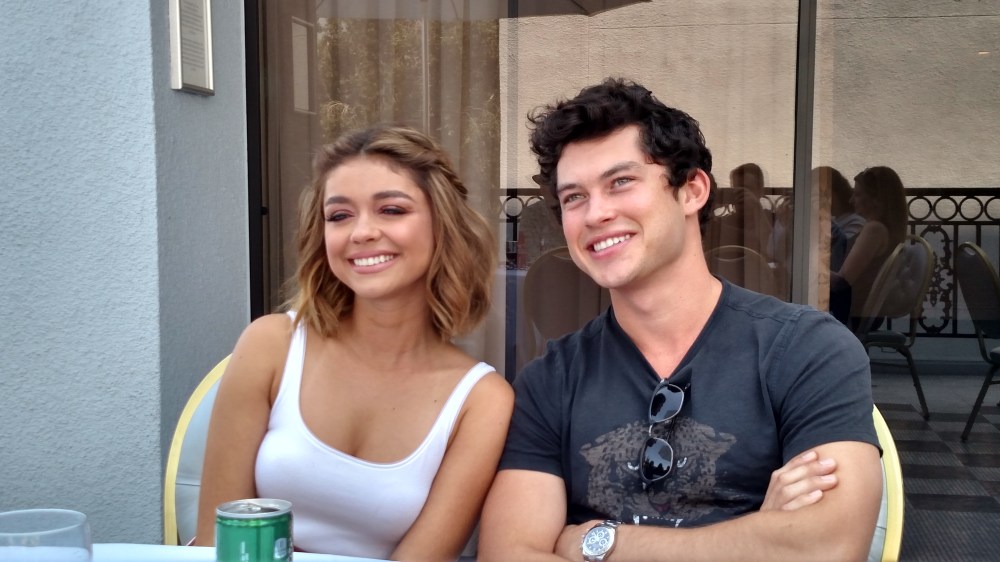
Sarah Hyland and Graham Phillips Discuss EDM and ‘XOXO’

XOXO Sarah Hyland and Graham Phillips

The Netflix drama and music film “XOXO” follows six strangers whose lives collide at a most vibrant EDM festival. Among those strangers are Krystal (Sarah Hyland) who is hoping to find true romance in a place she expects to find it, and Ethan (Graham Phillips) who is about to make his DJ-ing debut at the biggest EDM festival of them all, XOXO. During their time there, Krystal and Ethan come to find now what they wanted, but what they need most as will the other characters around them.

“XOXO” offers a cinematic glimpse into the world of EDM which has gone from being played in illegal underground rave parties to becoming a major part of musical festivals around the country. We see all the characters get dressed up in exotic costumes as if they are headed to another planet, and drugs of all kinds are in heavy supply to where some innocent fans don’t realize right away when they have just been given some. Either way, they are all there to experience the glorious emotions EDM gives off, and none of them can wait for the bass to drop.

Both Graham Phillips and Sarah Hyland recently dropped by the London Hotel in West Hollywood, California to talk about their experience making “XOXO.” Courtney Fairhurst Howard from Sassy Mama in LA asked them both if they had knowledge of EDM music and if they had attended any EDM festivals before shooting began. This would soon lead into my question about the preparation Graham underwent to become a truly talented DJ.

Sarah Hyland: I have been a fan of EDM music for a while. I had never been to a rave so to speak, but I have been to places like Coachella where there’s always rave tents. So I kind of experienced something like that before, but it was really cool to just indulge myself in this culture. It was great. I learned a lot from it, and it was a lot of fun.

Graham Phillips: I too have enjoyed EDM for a really long time. I’ve sort of been drawn to more of the sweeping symphonic vibe of EDM like Above & Beyond or Madeon. Whenever they can integrate some organic sounds as well into all the electric sounds, I tend to really like that. I came from a musical theatre background as did Sarah, so maybe that’s why. I actually started DJ-ing my freshman year in college just to meet the social chairs of the eating clubs at Princeton and just because as a freshman male you’re the bottom of the social ladder and you can’t really get access to any of these clubs until you’re in a fraternity. And so I learned to DJ and they needed DJ’s so I was like okay, I will learn to DJ. I like the music anyways. I did start liking it more and more, and I started to throw some parties in Orange County with some of my friends who actually liked the music even more than I did. They were the people who were finding these new tunes as they were coming out. I loved hosting parties and still do, and that’s sort of what it grew from. I guess sophomore year it kind of petered out, but when I got this script at the end of my sophomore year I found it so funny because this was just what I experienced but on a much smaller level. Actually Chris, the director, didn’t even know that I had any DJ-ing experience when he cast me, so that was kind of a fun surprise for him. He didn’t have to teach me everything.

Ben Kenber: Was there any specific research you had to do in terms of understanding the equipment your character uses?

GP: I actually used almost all my own equipment for this. I just brought it to the set and asked if I could please use this instead of something completely foreign (to me), and they were like yeah, sure. It didn’t require a lot of research for me which was really nice because a lot of the shots we grabbed at real festivals where we had a five-minute slot onstage in front of 80,000 people. So when you have just a small amount of time to get the shot, the last thing you want to be doing is fumbling around with the knobs. It was nice that I had some background in it.

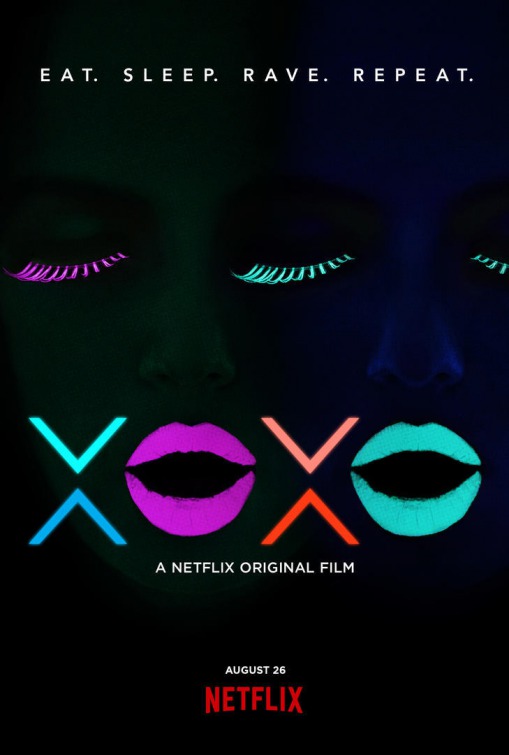
It was great to learn how Phillips had plenty of experience in DJ-ing before filming “XOXO,” and his expertise with it certainly shows when you watch the movie. “XOXO” is set to debut on Netflix on Friday, August 26. Please be sure to check out the poster and the trailer below.

XOXO movie poster


Margo Martindale and John Krasinki Discuss an Unforgettable Scene in ‘The Hollars’

The Hollars poster

We all know John Krasinski from his role as Jim Halpert on the American version of “The Office” as well as in movies like “Away We Go” and “13 Hours: The Secret Soldiers of Benghazi.” Now he steps behind the camera to direct his first film since “Brief Interviews with Hideous Men,” and it is called “The Hollars.” In addition to directing and producing this film, Krasinski also stars as John Hollar, a struggling New York City graphic novelist who ends up returning home upon learning his mother Sally (Margo Martindale) has a brain tumor. Once he arrives, John is forced to deal with his past which he has yet to put behind him as well as the possibility that his mother may not be around for much longer.

Both Krasinski and Martindale stopped by the London Hotel in West Hollywood, California to talk about their experiences making “The Hollars.” Martindale showed up first and remarked how she had been travelling to a lot of different places recently. Among those places was San Francisco, and she was stunned to see so many people there wearing jeans and jackets during the summer season. I quickly told her of a quote I heard from the movie “48 Hours:”

“The coldest winter I ever spent was the summer I spent in San Francisco.”

Suffice to say, she and everyone else got a big kick out of that quote.

Once Krasinski came and joined Martindale, the press conference was underway and I asked them both about a specific scene where Martindale ends up acting a monologue (you’ll know it when you see it) which she renders in an amazingly vivid fashion. I asked her how she prepared to deliver this monologue, and her answer revealed there was more to what we saw and the movie’s screenplay written by James C. Strouse.

Margo Martindale: I learned it (laughs), and then I let it happen, and John (Krasinski) wrote it.

John Krasinski: Yeah, it was one of the only scenes that I actually wrote into the script because it was based on an experience that my dad had talked about, so it was bringing a personal spin to it. I talked to Margo about it, and it was just a really special thing to put in there. One of the things I hope for this movie is that you connect to this movie because it relates to your own family, and that the people in the movie stop being family in the movie and starts to become a projection of your own family. So I think innately we put a lot of different stuff from our own families into this movie, and so that was a particular thing I put in.

MM: It’s a beautifully written monologue, and I think probably that you gave me more and more direction on that…

JK: Yes.

MM: Because I needed to know where you wanted it to land and where I was coming from and why was I saying this. So we talked a lot about it, John and I, and I think I probably did that more than any… I don’t know.

JK: I think you did. It was a pretty new addition to the script, so Margo was very good to ask where it was coming from because she knew it was personal.

Please believe me when I say Margo Martindale’s performance is worth the price of admission to see “The Hollars” when it arrives in theaters on August 26.

Copyright Ben Kenber 2016.

Exclusive Interview with Eva Husson about ‘Bang Gang (A Modern Love Story)’

Bang Gang (A Modern Love Story),” just by looking at its trailer, seems like the French version of “Kids,” but that’s not even remotely true. Based on a true story, a fact we don’t discover until the end credits, it follows a group of ordinary teenagers who live in the suburban neighborhoods of France and participate in sex parties they refer to as “bang gangs.” In the center of the sexual shenanigans is the beautiful George (Marilyn Lima), one of the main organizers of these parties and who experiences some intense inner turmoil. After being spurned by her would-be boyfriend Alex (Finnegan Oldfield) who goes after her best friend Laetitia (Daisy Broom), George begins feel increasingly isolated from everyone around her even as the parties become increasingly reckless. In short, this story will not end well. Or will it?

This movie marks the feature film directorial debut of Eva Husson whose previous credits include the short films “Hope to Die” and “Those for Whom It’s Always Complicated.” Many consider her one of many directors to emerge from the world of music videos, but she will be quick to silence you on that. Born in France, Husson earned an M.A. in English literature from the Sorbonne, and she would later move to America to pursue an M.F.A. at the American Film Institute. She did make some music videos along the way, but her focus has always been on writing and directing feature films.

With “Bang Gang,” Husson has pulled off an impressive debut filled with strong performances by a mostly non-professional cast, and she is aided by the lush cinematography of Mattias Troelstrup as well as the atmospheric music score by White Sea.

I got to talk with Husson while she was in Los Angeles to promote “Bang Gang (A Modern Love Story” which she described as “a movie about teenagers falling in love in the midst of a sexual apocalypse.” She explained how she pulled off the long tracking shot at the movie’s beginning which lasts for several minutes, why she put the term “based on a true story” at the movie’s end instead of the beginning, and she pointed out how the project was inspired by stories involving American teenagers and not French ones. She also spoke of why she had her cast watch Paul Thomas Anderson’s “Boogie Nights” and Lars Von Trier’s “Melancholia” before the film shoot began.

Please check out the interview above. 

AN ULTIMATE RABBIT NOTE: This video interview was recently updated to eliminate any copyright issues which were never intended, and to make it available to the widest audience possible.

Bang Gang poster

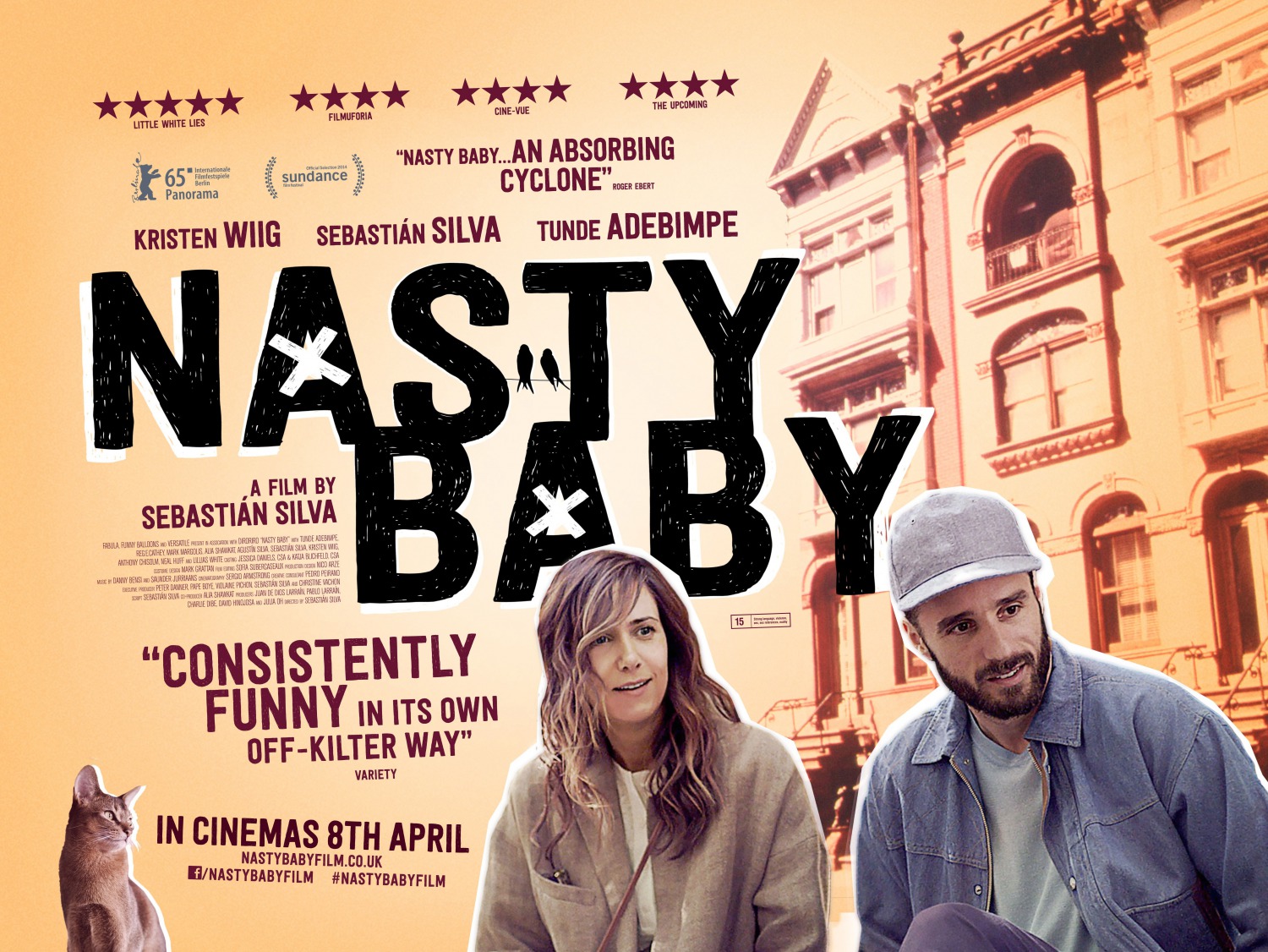
Kristen Wiig and Sebastián Silva Discover a Cinematic Freedom in ‘Nasty Baby’

Nasty Baby UK poster

After winning various awards on the festival circuit including the Teddy Award for best LGBT-themed feature film at the 65th Berlin International Film Festival, “Nasty Baby” finally made its way to American audiences. The movie stars Sebastian Silva, who also wrote and directed it, as Freddy, an experimental artist based out of Brooklyn, New York who is desperate to have a baby with his boyfriend Mo (Tunde Adebimpe). Joining them on this quest for parenthood is their best friend Polly (Kristen Wiig) who plans to be the surrogate mother for the couple, and we watch as they deal with various complications and obstacles which keep them from starting a family. But when an especially annoying neighbor known as The Bishop (Reg E. Cathey) constantly harasses them, it leads to a terrifying situation which could destroy all their plans forever.

Kristen Wiig and Sebastian Silva were on hand recently for the “Nasty Baby” press conference which was held at the London Hotel in West Hollywood, California, and they were both very descriptive about what went into the making of this movie. We all know Wiig of course from her endlessly hilarious years on “Saturday Night Live” and for acting in and co-writing the wonderful comedy “Bridesmaids.” Silva’s previous directorial efforts include “The Maid,” “Crystal Fairy & the Magic Cactus” and “Magic Magic.”

One thing that struck me in particular was how freed up the actors appeared to be onscreen as the movie was shot mostly with a hand held camera. I couldn’t help but think that the actors had an easier time moving around and performing scenes this way than they would have on any other film set as they didn’t have to worry about being in the right position at the right time. They were all just let loose and trusted that the cameraman would capture their best moments with no problem. I ended up asking about them about this aspect of filmmaking.

Ben Kenber: This movie was shot mostly with a hand held camera, and it felt like this gave the actors a lot more freedom to move around that they would not have had on a regular movie set. Would you say that you found a special freedom in acting with this way of filming?

Kristen Wiig: Yeah, I did. Sergio (Armstrong, the director of photography) was amazing. You just sort of feel like you can be those people and do the scenes and he’ll kind of find you. If you wanted to do it again he would kind of figure out where to go. There was a lot of freedom. There weren’t a lot of marks we had to hit.

Sebastian Silva: Yeah, there were no marks at all. All of the actions of course are written and all the scenes so we know the locations and everything that needs to happen. But there are a lot of times where we didn’t use the slate, and then we would move from a wide shot to a close up without cutting ever. I was acting, I had never acted before, but I feel that for actors not to be cutting all the time that it is also so much fun because scenes and takes usually don’t last more than four minutes. It’s usually like ‘action’ and then it’s like four minutes that the actor gets to do his or her thing, and then it’s like ‘cut,’ makeup and then they don’t really get to enjoy performing as much as like when you’re improvising a take and go for as long as 35 minutes sometimes, right?

KW: Yeah.

SS: Yeah, it was a lot like that, changing things as we were shooting without cutting. It was fun.

BK: I imagine that not having to worry about hitting your marks frees you up a lot.

KW: Oh yeah, definitely (laughs).

The one thing they always taught in those acting on camera classes is that the camera is always your friend and will never let you down. It certainly didn’t let Wiig or Silva down during the making of “Nasty Baby” as the both inhabit their characters more than play them, and it never feels like you are watching a movie. Instead, it feels like you are watching real life unfold, and this is not an experience you often get at the movies.

“Nasty Baby” is now available to watch on YouTube, iTunes and Amazon Video.

Copyright Ben Kenber 2015.

Nasty Baby American poster

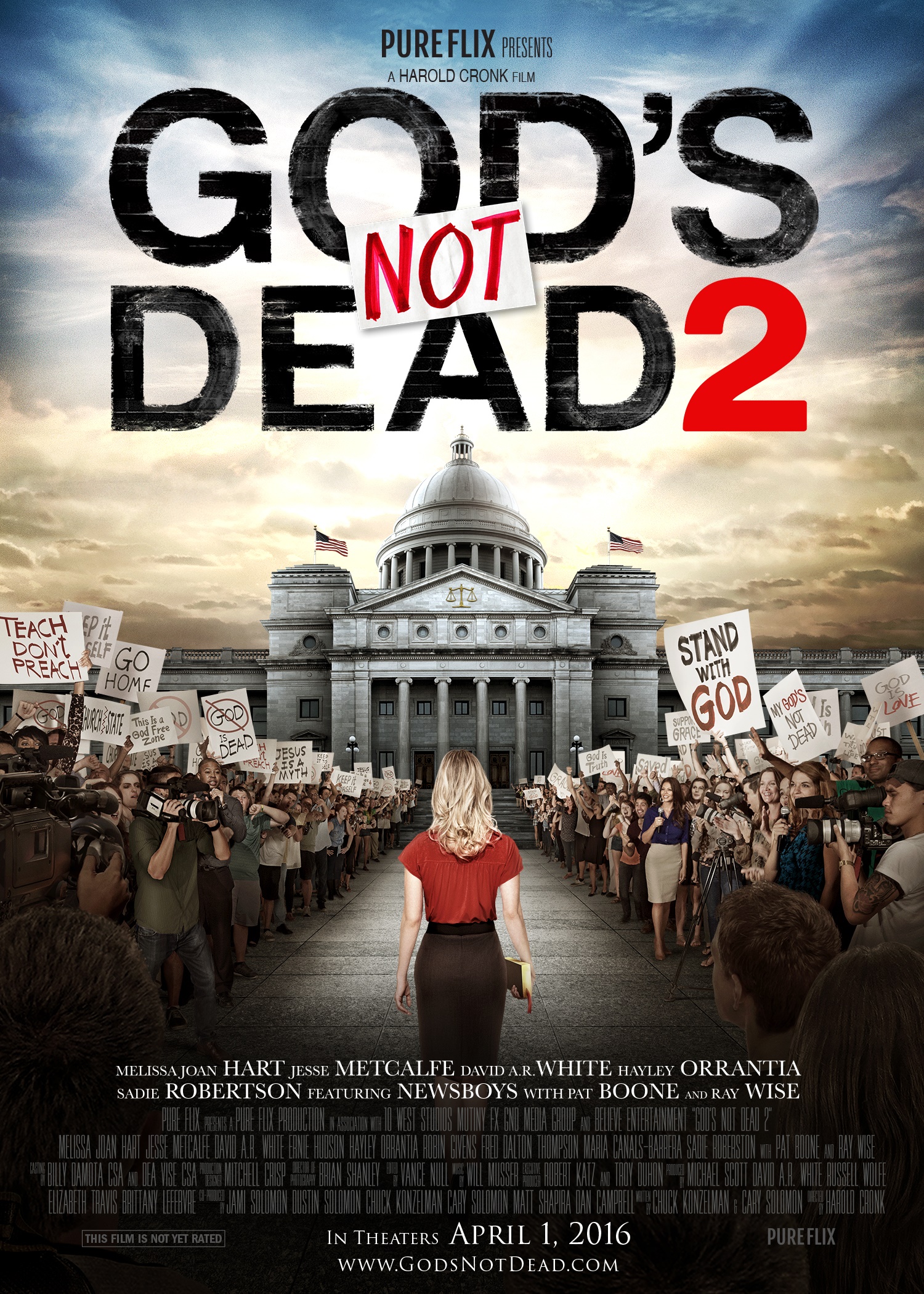
Exclusive Interview with Jesse Metcalfe on ‘God’s Not Dead 2’

Gods Not Dead 2 Jesse Metcalfe photo

He has gone on romantic and paranormal adventures on the soap opera “Passions” and took on the role of Christopher Ewing on TNT’s continuation of “Dallas,” but now Jesse Metcalfe finds himself defending the use of God in public discourse in “God’s Not Dead 2.” In it he plays defense attorney Tom Endler who is assigned to represent Grace Wesley (Melissa Joan Hart) as she is being put on trial for mentioning God in her high school classroom. Tom himself is not Christian like Grace and considers himself a non-believer, but he soon finds himself seeing religion in a new light to where he sees the importance of winning this case.

I got to speak with Jesse while he was in Los Angeles recently for the “God’s Not Dead 2” press day and he couldn’t have been nicer. He talked about the challenges he faced in a playing a non-believer in a faith based movie, of how he prepared to deliver a 6 ½ minute monologue, and how doing this movie affected his own faith overall.

Gods Not Dead 2 movie poster

Ben Kenber: You have a very interesting role in this movie because your character of Tom Endler is not a Christian and a non-believer, but he still does his job as a lawyer in defending his client in court.

Jesse Metcalfe: Absolutely.

BK: What were the biggest challenges for you in playing that kind of a role?

JM: I think probably the biggest challenge was figuring out what the real emotional arc of the character was to be. I took experience from my personal life in sort of layering in the emotion of that character which was basically my own journey into reconciling a relationship with God and giving the willing care of my life over to him through the process of getting sober and through the 12 step program of Alcoholics Anonymous. I thought was interesting in the movie was that the character ends up exploring his own faith towards the end of the movie and being very empathetic to not only the plight of his client but to the plight of Christians has depicted in this movie. It was a complicated role because he is a non-believer, but at the same time my character’s really pushing the message of the movie. But it was intriguing to me because I never played a defense attorney before, and I really thought that a lot of my material was really well-written. I never really had the opportunity to tackle a 6 ½ page monologue with my closing argument in the movie, so I was intrigued by the challenge.

BK: 6 ½ pages? How did you go about preparing that long of a monologue?

JM: Well I just a lot of prep. The night before I almost stayed up till dawn. I stayed up till like 5 o’clock in the morning and had like an 8 a.m. call time, so I think that fatigue really sort of played in my performance and played into the emotional aspect of the character. I feel like Tom was really at the end of his rope with the case and really felt like it was almost a lost cause and that this was his last ditch effort to try to save Grace, his life and career, so my fatigue really worked for the scene (laughs).

BK: “God’s Not Dead 2” has the same director and screenwriters of the original, but it also has a mostly new cast and a different story. Did that concern you at all when you came on board this sequel?

JM: It didn’t concern me because I thought that the script that was written for “God’s Not Dead 2” was superior to the one that was written for the original movie. I really felt like it was more relatable, and the characters were not so stereotypical. There is a lot more gray area within the characters that made them, to me, more real. We need to discuss this issue in a way that is not black and white because it isn’t black and white. There is good and bad people in every walk of life that live under and belief in every different belief system, so we can’t hate groups of people with such broad strokes. There is really a lot of nuance to every different individual, and I thought that story was told in “God’s Not Dead 2” more effectively.

BK: You had said that life without faith was not necessarily a fulfilled one. How would you say faith has helped you in your life?

JM: It’s helped me overcome adversity. There’s been struggles in my life that I don’t think I would’ve had the strength or the perspective to overcome if I didn’t have belief in something that I couldn’t see or touch in a higher power. And I think that aspect of having a spiritual connection within someone’s life is essential.

BK: You shot this movie in Little Rock, Arkansas. What do you think that location added to the movie?

JM: Well it added some great locations. We had access in the town of Little Rock that I think was really, really special. You don’t always get that type of access when you are shooting a television show or a film. We were in the state capitol courthouse so that was pretty special, and I thought it added a lot of production value and a lot of grandeur. When you shoot a movie like this in the South it seems apropos, and I enjoyed the experience. It was cool. It was definitely a tightknit group and we spent a lot of time together in Little Rock. There’s not a ton to do there, but it is a really cool and beautiful city. I think from a production side it added a lot, and also for maybe a social and political perspective it added a lot as well.

BK: In preparing for your role did you do any research on defense lawyers?

JM: No, I didn’t really do any research on defense attorneys. I did delve into some of the case studies that the producers of the movie made available to us to sort of give myself a frame of reference on a topic that I really wasn’t that familiar with. So for me it was really an education, especially to have these experts that take the stand in the movie. I thought that was really interesting as well and I learned a lot. What we prove in the movie I believe. I do believe that Jesus actually existed and he was a man that walked this earth, and I think because of that we can never completely eliminate religious discourse from the public square. This is a part of our history and it deserves that respect. Whether or not it needs to be a part of our education system or our political process or our government remains to be seen. That debate is going to continue to rage on.

BK: There were a lot of cases that apparently inspired the story for this movie. Were there any specific cases that spoke the most to you?

JM: It really is an amalgam of multiple cases. At the end of the movie, which is a cool ass bit of this movie, they added 25 case studies that people, if they want to, can call their curiosity and explore further. But at the end of the day it’s a fictional story.

BK: How long did you have to shoot “God’s Not Dead 2?”

JM: It was under a month. It’s obviously very challenging to create a great movie with those kind of time restraints, so it speaks to the cast and the producers and stuff like that. It really was a good group and there was great chemistry among everybody.

BK: Did you find any benefits and having that short of shooting schedule to work in?

JM: It really keeps the energy up. When you have six months to shoot a movie which happens on a lot of these big-budget movies, I think a lot of time is typically wasted because people feel like they have all the money and all the time in the world. I only got a couple of takes on that closing argument, so that’s why I stayed up till 5 o’clock in the morning to make sure I was prepared as possible because I knew time was just not on our side. But at the same time that energy is palpable.

BK: Christianity is still the dominant religion in America, but in “God’s Not Dead 2” it is treated like a minority. How do you feel about that?

JM: Well I think that obviously this film is told from the Christian perspective. There’s no doubt about that, but I do feel like the film is effective in opening up this very important conversation that we need to have which is the role of religion in our increasingly secular society in the modern era and the time that we live in. I understand the push back from the Christian community because they probably feel in the more PC world that we now live in that they are being marginalized to a certain extent, and this is the tact that this particular movie takes. I think it’s effective in its messaging, but my personal belief is that all people have a right to freedom of speech and freedom of religion. I don’t think one side or the other is being persecuted or silenced more. I think everybody deals with a certain level of persecution for their beliefs. There is always going to be a detractor and there’s always going to be a naysayer. We are never going to live in a society where if you say one thing somebody doesn’t say the other. There is always going to be, for a better term, a “devil’s advocate” out there trying to say that your beliefs and your opinions are wrong.

BK: “God’s Not Dead” is being released on April 1 which is now only April Fools’ Day, but also National Atheist’s Day. What’s your opinion on that?

JM: I don’t really have an opinion on that because I’m not an atheist. Obviously they are trying to say something by having their day on April 1.

BK: What would you say that you brought to this movie that wasn’t in the screenplay?

JM: I would say that I brought an emotional foundation to the character that really brought the character to life. But that’s the job of an actor which is to bring the character to life and bring the words on the page to life. I hope I did that adequately, and I know for me it was a fun experience and an enlightening one. I feel like it strengthened my own faith and my own personal connection to God and my higher power.

BK: What effect has doing this movie and on you so far?

JM: It’s had a great effect on me. It was a great opportunity, like I said before, to be a part of a very important discussion that I think needs to happen right now because I think a lot of people, politicians especially, sort of use religion to shape issues. I don’t necessarily think that’s always the most effective thing to do. I think there’s important issues in this country and they are not necessarily linked to religion. This country was founded upon and known for freedom. We need to maintain and protect people’s religious freedoms at all costs because that’s what makes this country great. We are not a monotheistic society right now. We are a pluralistic society and we need to proceed with tolerance and with respect.

I want to thank Jesse Metcalfe for taking the time to talk with me. “God’s Not Dead 2” is now available to own and rent on DVD and Blu-ray. Be sure to visit the movie’s website (www.godsnotdeadthemovie.com) for more information.