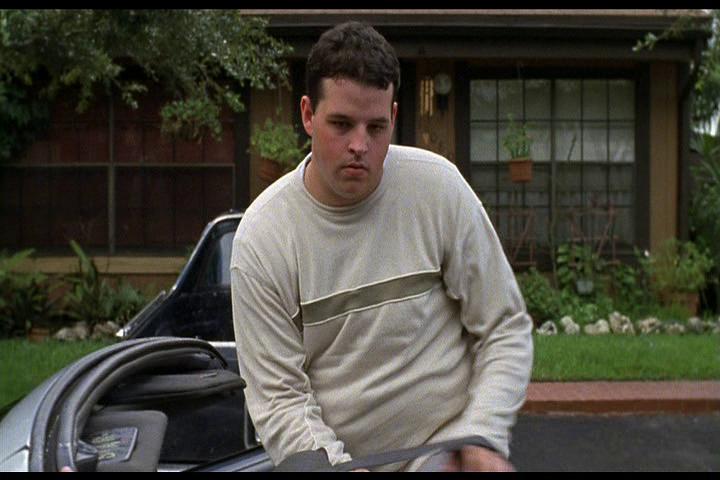
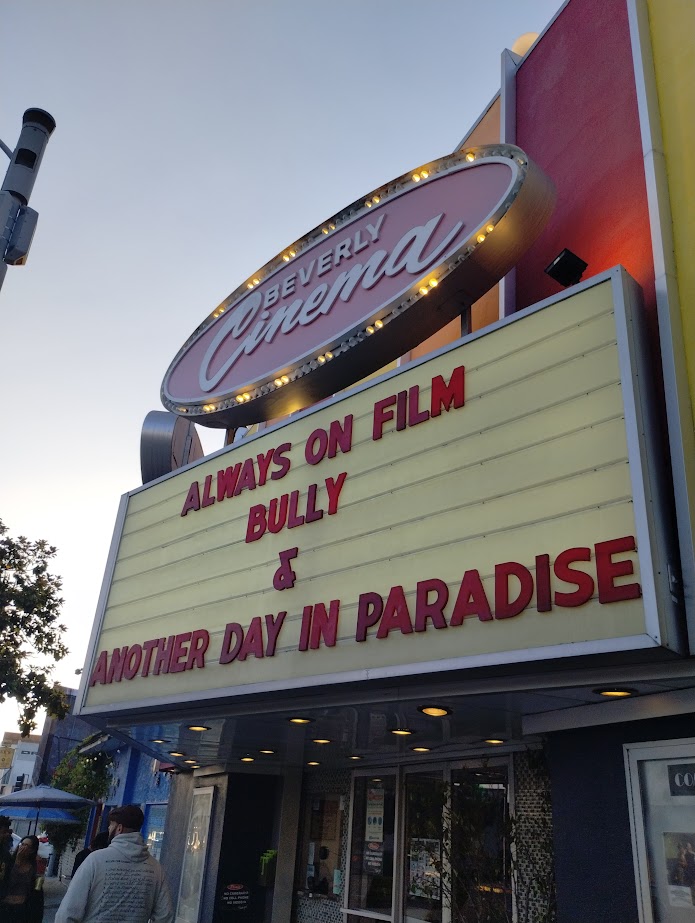
On August 12, 2025, New Beverly Cinema presented a Larry Clark double feature of two of his films: “Bully” and “Another Day in Paradise.” Before “Bully” unfolded on the silver screen, actor and filmmaker Joel Michaely brought out a special guest: Daniel Franzese who played Derek Dzvirk. “Bully” was Daniel’s film debut, and it quickly earned him his SAG card. Daniel thanked Joel for being there and remarked how he killed Joel once in a horror movie entitled “Cruel World” where he shot him in the head.
Daniel said “Bully” was the first time he ever got to hold a screenplay in his hands, and he talked about meeting the casting director, Carmen Cuba, at his audition.
Daniel Fransese: She was like, “Do you wanna see who you are going to play?” I said okay, and she opened up the true crime novel (written by Jim Schutze), and I looked exactly like the guy. And I was just like, oh shit! I can actually get this! So, it was very scary and nerve wracking.”
Rumors are that the set of “Bully” was a crazy one, and being that this was Daniel’s first film as an actor, you can understand and appreciate his feelings at the time.
DF: I’m a pretty easy-going guy, and I am also a theatre guy and a standup comedian. I’m used to being around other people, and I am good at getting along with different personalities. But this movie was next level. we are getting ready to do fittings and start our first day of this movie, and Larry (Clark) is screaming because Brad (Renfro) was in jail for trying to steal a boat. He’s screaming, “This was three years of my life! This kid’s not going to ruin it!” He’s throwing papers and I was like, whoa! That was day one and you can just imagine how the stress level got worse from there.
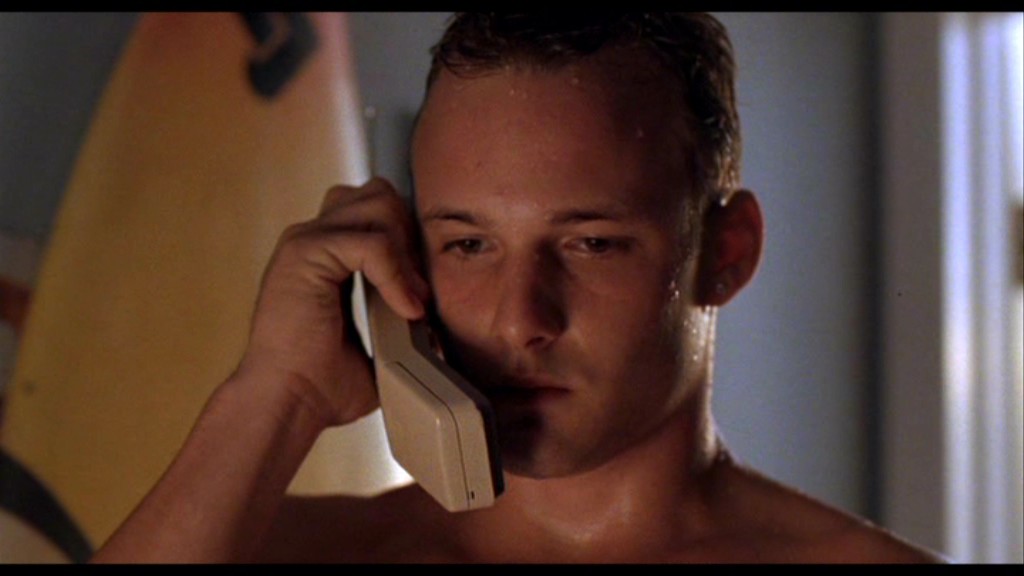
From there, the discussion went to the late Brad Renfro who played Marty Puccio in “Bully.” Brad first gained worldwide attention at the age of 12 years old when he was cast as Marcus “Mark” Sway in Joel Schumacher’s cinematic adaptation of John Grisham’s “The Client.” Like many people on this planet, let alone actors, he died at far too young an age He was only 25 years old, when he passed away after a drug overdose. Daniel talked about working with Brad.
DF: Brad was great. I think he was like one of those golden retriever type people. Not evil, but dangerous. We were doing the table read for the first time, and Brad showed up wearing a white tank top completely soaked in lighter fluid. He came in saying, “I’M TRYING TO GET THE BARBECUE TO GO!” It was like, whoa! He was from Knoxville and had like that “Jackass” sensibility where you didn’t know what he could do, but I don’t think he ever had a mean bone. His intentions were always nice. If anything, he partied too much, and he once told me that at 12, he made hundreds of thousands of dollars to do “The Client,” and he was getting a lot of his drugs and stuff from family members as a kid. I don’t think he got a fair shot. If anything, the reason why I advocate for younger people in Hollywood or talked about my experiences on this movie which were crazy, I was never speaking from a victim place. I was speaking from a place of advocating for people like Brad who didn’t have anyone saying anything for them. I just think, we’re making art. It doesn’t have to be that crazy. We don’t have to be stealing boats or going nuts on sets to produce good material.
After “Bully,” Daniel went on to appear in many films, but he may still be best remembered for playing high school social outcast Damian in 2004’s “Mean Girls.” Like Joel and myself, I wondered what it was like going from an independent film to a studio movie where everybody is expected to be on their best behavior.
DF: I just don’t think the 2000s will be looked upon as a time where it was easy for people on movie sets. I really don’t. People always ask me all the time how to get their kid in Hollywood, and I say don’t. I waited until I was at least in my 20’s (before going to Hollywood), and that’s the only thing which might have saved me. A lot of our contemporaries are not around with us anymore or are in a crazy state. It was a rough time. I can’t say it was easier or better, but I think it’s better now.
Regardless of the crazy set, Daniel made it clear to the New Beverly audience what the experience of making “Bully” was like, and of how the filmmakers strived to capture the spirit of the true story it is based on.
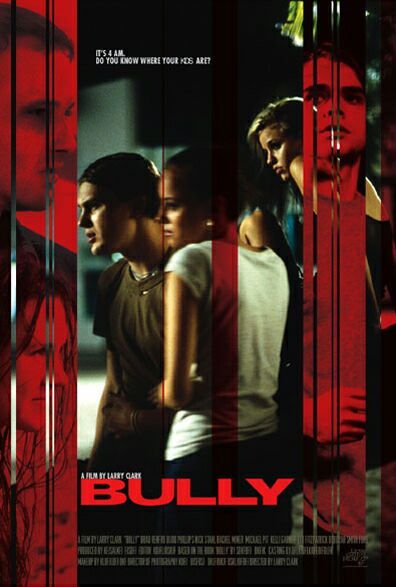
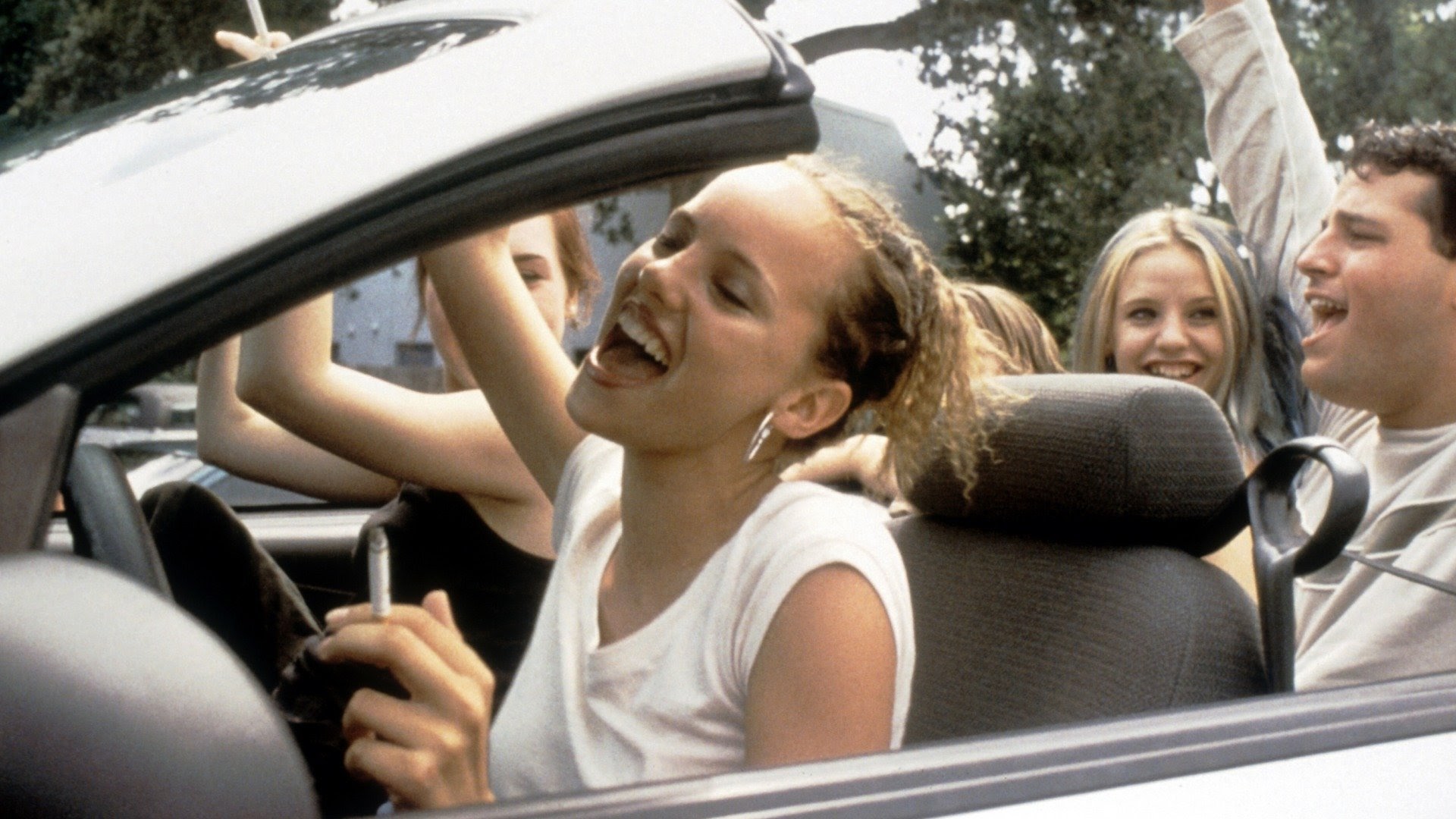
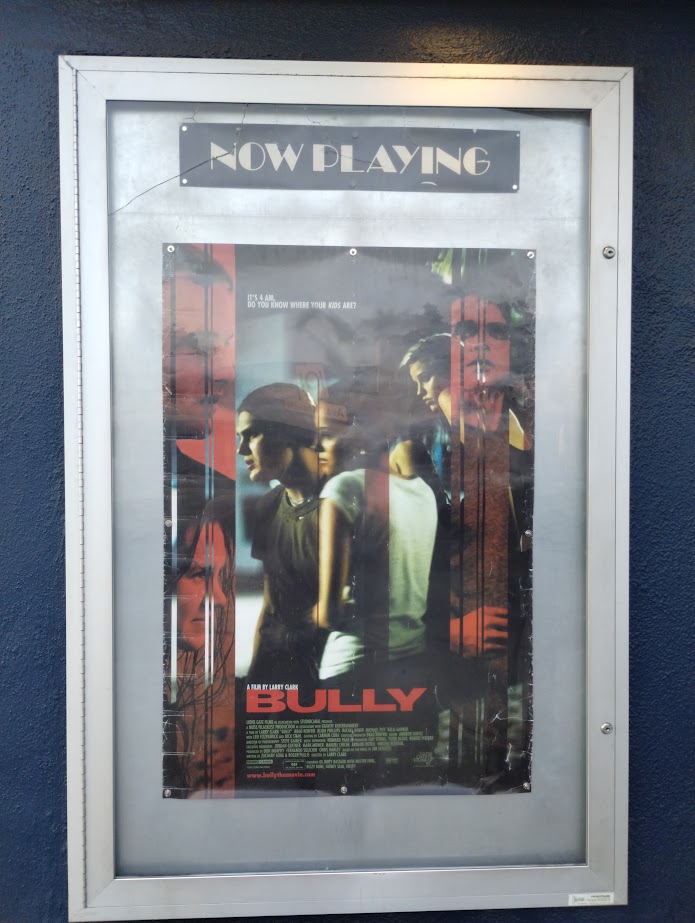
Bully (2001)
Directed by Larry Clark
Shown in foreground: Bijou Phillips
DF: On a positive note, though, this movie was awesome. It was so fun to make. Larry was cool, the people I was working with were all like people from Thrasher Magazine, it was just like bad ass people. They did shoot in the real locations; it was the real apartment complexes, and it was the real Pizza Hut (we shot in).
Daniel also made it clear how he was the only local hero for hire in Larry Clark’s “Bully.”
DF: They were scouting locations for the gay clubs, and I was just a young kid just figuring that stuff out and performing at the clubs with people I was in musical theatre with and stuff like that. They were like hey we’re making a movie, and I’m like I’m an actor! I had no idea it was going to turn into this. Carmen Cuba, she discovered a lot of people, and I give her all the credit for plucking me out of obscurity and putting me with these people.
An audience member told Daniel that he was from South Florida, and this led Daniel to talk about when he worked at The Gateway Theater in Fort Lauderdale as a kid. a year later, “Bully” premiered there. Daniel found his road from being an usher to a working actor to be honestly insane.
DF: I was there at the theater going, would you like the popcorn combo? I am a movie lover. I worked at Blockbuster (Video), I worked at movie theaters, that’s all I did. Until I was able to support myself as an actor, I was either an usher in theatre or worked at movie theaters. It (“Bully”) was shot in Fort Lauderdale and the whole crew got their premiere at the movie theater where I worked at. So, whoever served me popcorn today, keep writing your scripts.
Like many, Daniel Franzese considers New Beverly Cinema to be one of his favorite places in Los Angeles, and that it was extra special for him to see “Bully” being screened there on 35-millimeter film. To see films presented there in their original format, something often not available to movie buffs in most places, means a lot to him.
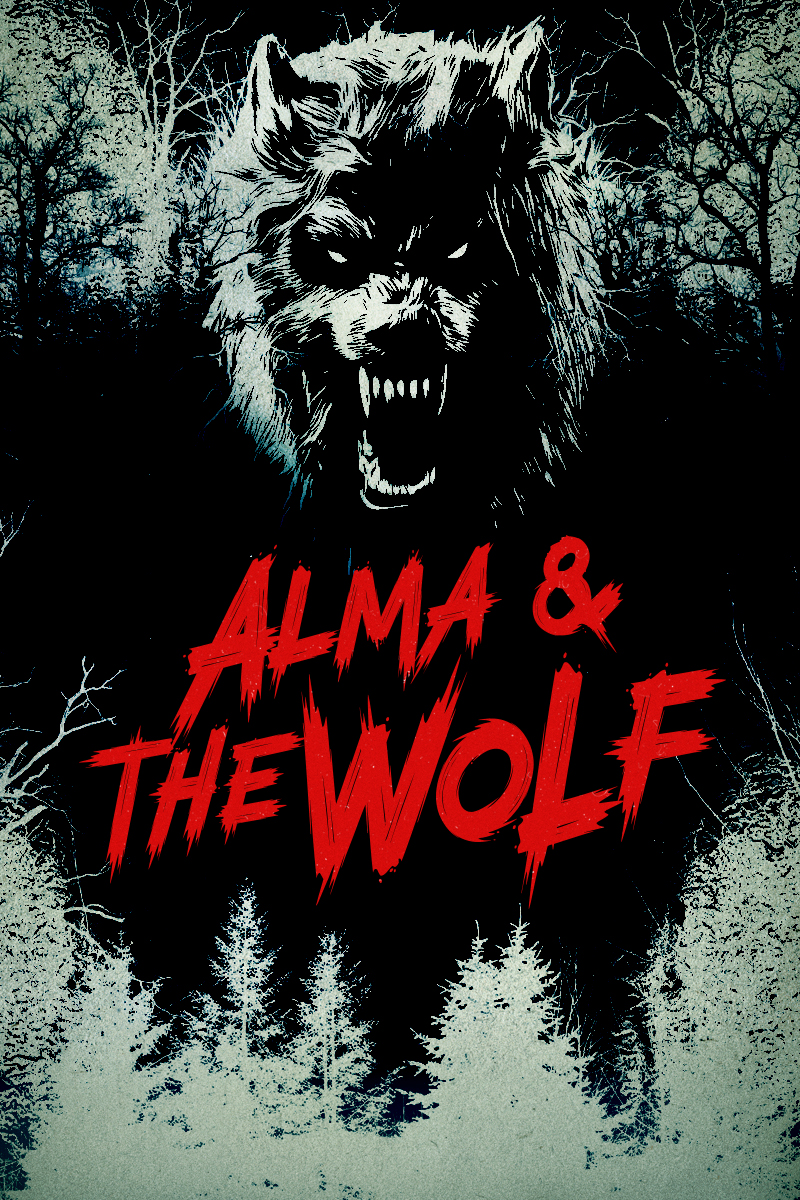
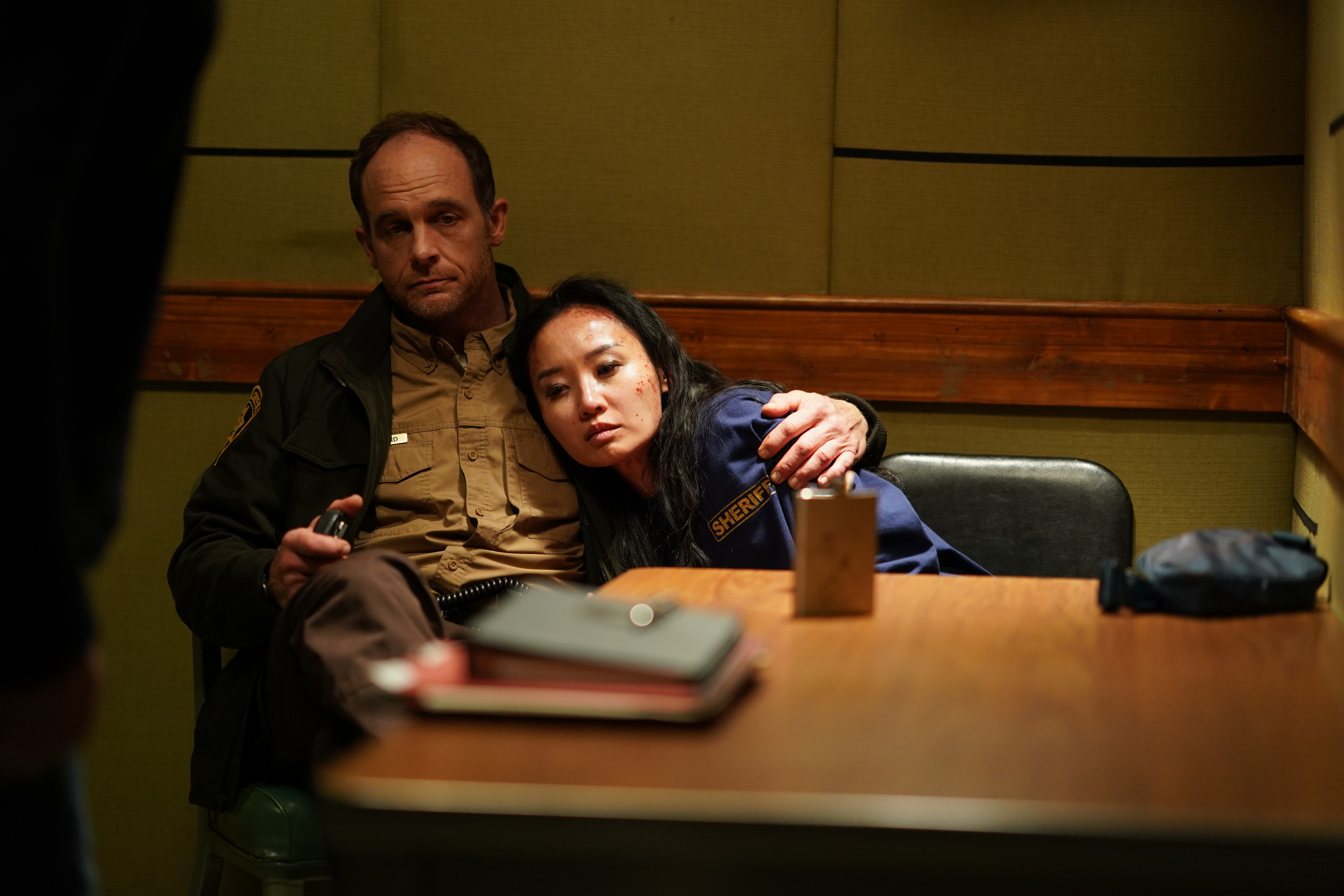
Michael Patrick Jann is best known for his work in comedy and as a cast member on MTV’s sketch comedy show “The State.” In 1999, he made his feature film directorial debut with “Drop Dead Gorgeous” which over the years has developed quite the cult following. With his second feature film as a director, “Organ Trail,” he got out of his comedy safety zone to enter the horror genre. Michael now returns to that genre again with his latest film, “Alma & The Wolf,” which stars Ethan Embry as a troubled police officer who investigates a mysterious wolf attack which happened to a high school classmate of his, Alma (played by Li Jun Li). The investigation becomes even more intense, however, when his son goes missing, and it puts him a collision course with an unbearable truth that can only stay hidden for so long.
I got to speak with Michael one-on-one recently about “Alma & The Wolf,” and we talked a lot about how comedy and horror deal with the various forms of suffering. Also, he discussed the challenges of filming on the Oregon Coast when the weather was really bad and cold, working with animals, and of working with his son, Lukas Jann, who plays Ethan Embry’s son here. In addition, this film also co-stars a classmate of mine from my University of California, Irvine school days, Beth Malone, who plays a rather nosy neighbor. It was great to talk with Michael about what Beth brought to her role and the movie, and it is always great to see her in anything and everything.
“Alma & The Wolf” is now available to rent and stream on select digital platforms. Please check out my interview with Michael down below, and I have also included a trailer for the film as well.
One of the many horror films coming to us in 2025 is arriving this week, and that’s “Alma & The Wolf.” Directed by Michael Patrick Jann, it stars Ethan Embry as Deputy Ren Accord, a very troubled man who has been thrust into a horrifying investigation he may not be fully prepared for. One day while driving on his usual route, he comes across Alma, played by Li Jun Li, who is walking alone in the rain while clutching to what is left of her dog. Alma tells Ren a wolf killed her dog and begs him to kill the wolf for her as an act of revenge. Wolves, however, are protected wildlife in the state of Oregon, so Ren tells Alma he cannot help her that way. But when his son goes missing in the Oregon coast, Ren comes to believe it may have everything to do with the wolf that killed Alma’s dog, and he becomes infinitely determined to find his son and kill the elusive wolf.
I was lucky enough to speak with Ethan Embry and Li Jun Li who are the main stars of “Alma & The Wolf” this past week. Ethan started off his career as a child actor, and he starred opposite Ed O’Neil in the John Hughes written and produced film “Dutch,” and he is best known for his roles in “A Far Off Place,” “Empire Records” and “That Thing You Do.” Li got her start as an actress in the theatre, and she later became known for her role as Iris Chang in the television series “Quantico.” In addition, she has received critical acclaim for her roles as Lady Fay Zhu in Damien Chazelle’s “Babylon” and Grace Chow in Ryan Coogler’s “Sinners.”
Much of my talk with Ethan and Li Li, as she likes to be called, was about acting and their choices. With “Alma & The Wolf,” they were involved in a cinematic production which had a very short production schedule, and I was curious how the speed of it affected their performances overall. Being an actor myself, I found their answers to be deeply informative and fascinating.
“Alma & The Wolf” will be dropped on streaming services starting on June 20, 2025. Please check out the interview below, and I have included a trailer for the film as well.
I was lucky enough to attend an anniversary screening of Alexander Payne’s “Sideways” at Laemmle’s Monica Film Center in Santa Monica, California. I remember and watching and loving this film back when it was released back in 2004, and now it has reached its twentieth anniversary which just scares the hell out of me. This screening was followed by a Q&A with some of the film’s participants as well as the authors of the recently released book “Sideways Uncorked,” Kirk Honeycutt and Mira Advani Honeycutt.
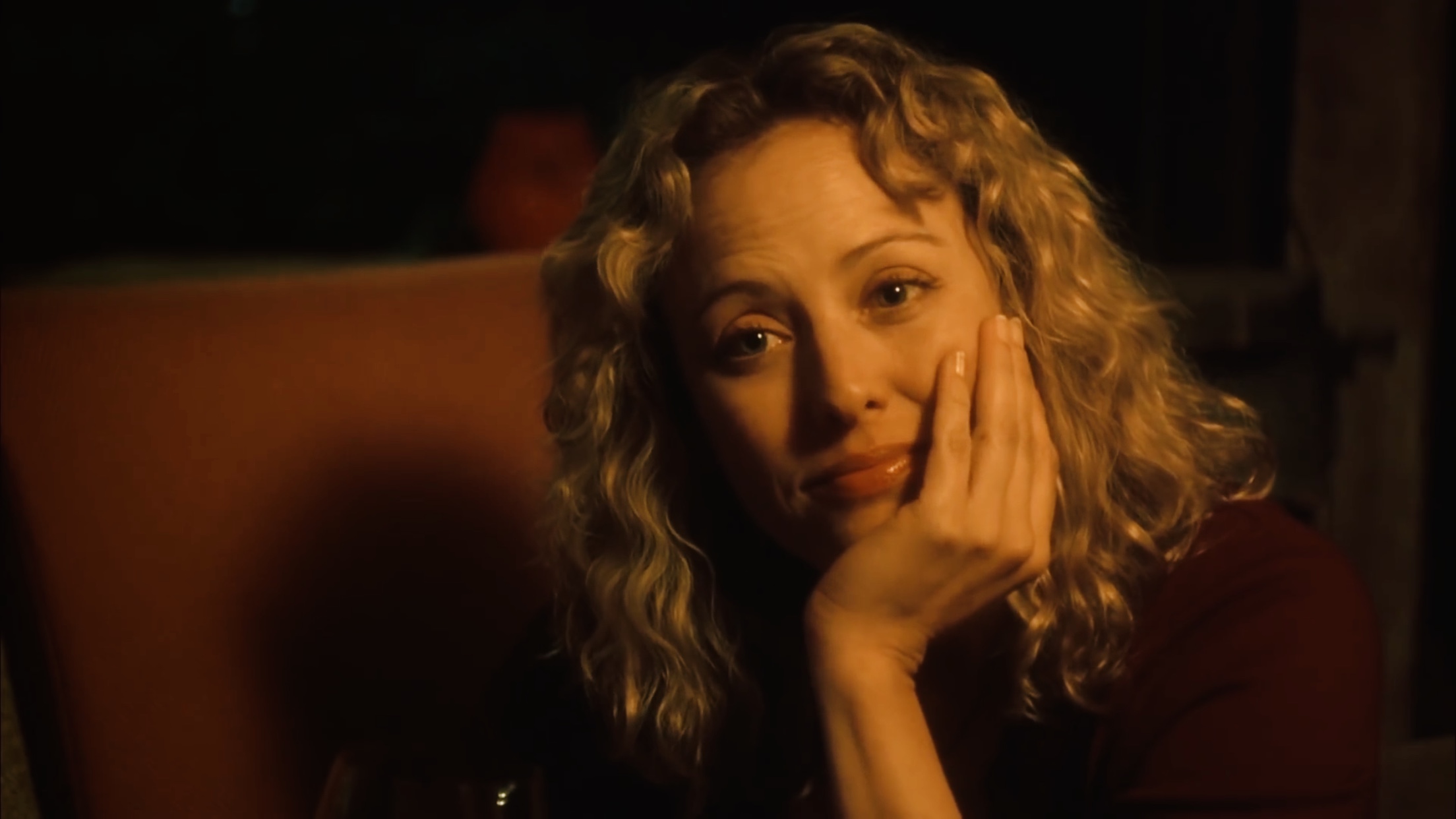
But make no mistake, the real star of the evening was Virginia Madsen whom everyone who loves “Sideways” was truly thrilled to see. She portrayed Maya, the divorced waitress who captures the attention of the ambitious but very depressed Miles (Paul Giamatti), a writer who just might be about to publish his novel for the world to see. Madsen deservedly earned an Oscar nomination for Best Supporting Actress for her unforgettable performance here. Cate Blanchett ended up winning it that year for her work in “The Aviator,” but there is no forgetting what Madsen did, especially after Maya’s speech about her love of wine.
Before “Sideways,” Madsen was best known for her work in movies like “Candyman,” “Electric Dreams,” “The Prophecy” and “The Rainmaker.” Around the time it came to audition for this now classic film, Madsen openly admitted her career was not doing well and that the odds were against her in playing Maya.
Virginia Madsen: There was talk about getting someone who had a bigger name, but I got the audition and I was working with a coach, so I was really, really ready. They weren’t giving us the whole script though, and then I said, well, can I just have a couple of more scenes, and they just sounded like me.
In addition, she was very familiar with the Santa Inez valley and the other areas which “Sideways” takes place in as she considers them her weekend getaway. Also, this film marked the first time Payne made a film outside of Omaha, Nebraska.
Virgina Madsen: I lived about an hour from there. I didn’t ever go wine tasting. I just went there to sort of be a hippie and climb trees and have this beautiful sense of serenity, so I knew what I felt like when I was in the valley. So, I just went to play myself.
And we can all agree that Madsen’s greatest scene in “Sideways” was when she talks to Miles about her love of wine as it seduces us every bit as much as it seduces Miles. As a result, this made her meeting with Paul Giamatti all the more agonizing.
Virginia Madsen: I loved the part where I talked about wine in that scene with Paul, so I just got this one chance in the room with him. So, I said I just love this screenplay, I love this role, and I love when she talks about the life of wine. I went into the monologue, which you were not supposed to do for the audition. He went, “would you like to do the monologue?” I said, “Yes, sure.” I was so prepared. The tone in the writing changes in that scene. And when it was over, we just looked at the casting director and he said, “You know, we should have everyone do that monologue!” He (Giamatti) wanted me, but it took a while to hear a yes. I knew who Paul was as an actor, and I knew we would have chemistry. I am never wrong about that.
Then there came the time when Madsen met up with Payne about “Sideways,” and he offered her the role of Maya at the Chateau Marmont, something any actor or actress loves to be given the role of a lifetime at. But this also resulted in something actors might be reluctant to agree to.
Virginia Madsen: We met at the Chateau Marmont, and he said, “I want to ask you, would you do me the honor of playing Maya in my film ‘Sideways?’ And I was like, “Oh, well.” And he said, “I have one request though, are you willing to do this movie without makeup?” And I said, “Well Alexander, I’m not wearing makeup now, and that’s what I mostly do.” I did that in three films before that, and the greatest thing about that is you don’t have to get up quite so early. The only request I made back to him was, as long as I can wear mascara and some lip gloss on the date because, if a woman goes on a date, she’s just gonna do a little something, and he agreed to that. It seems to be nowadays more than ever this effort to make people look real, and they kind of look like hell, and that’s also distracting.
After all these years, “Sideways” has lost none of its power to entertain, be it in comedic or dramatic ways. Some films are quickly undone by time, but this one never will as everyone can relate to it and its characters in various ways. And when it comes to Madsen’s performance, she will make you fall in love with Maya every single time.
Born and raised in Los Angeles, California, filmmaker David Twohy has left a strong impression on moviegoers everywhere. He got his start as a screenwriter on “Warlock,” “The Fugitive” and “Waterworld,” and he eventually proved himself to be an effective director with the underrated “The Arrival” which starred Charlie Sheen as an astronomer who discovers evidence of intelligent alien life, and the equally underrated submarine supernatural horror film “Below.”
But the movie Twohy is still best known for is “Pitch Black” which had him joining forces with “The Fast & The Furious” star Vin Diesel who played the dangerous criminal, Riddick. Its budget was only $23 million, but Twohy and Diesel created a movie that was intensely exciting and which made the most of its modest budget. So strong was the cult following for “Pitch Black” that the two later made “The Chronicles of Riddick” which had a budget of over $100 million. While the sequel was not a commercial success, fans were still craving another Riddick movie and kept pushing at Twohy and Diesel to bring this anti-hero back to the silver screen.
Fans got their wish when “Riddick,” the third movie in the “Pitch Black” franchise, opened in theaters on September 3, 2013. After dealing with a big budget and a Hollywood studio, Twohy and Diesel ended up raising the money independently to make this particular sequel a reality and maintain full creative control over it. It follows Riddick as he is left for dead on a desolate planet and ends up being sought out by bounty hunters who are prepared to bring his head back in a box. But soon they are stalked by vicious alien predators, and they are forced to join forces with Riddick in order to survive the long dark night.
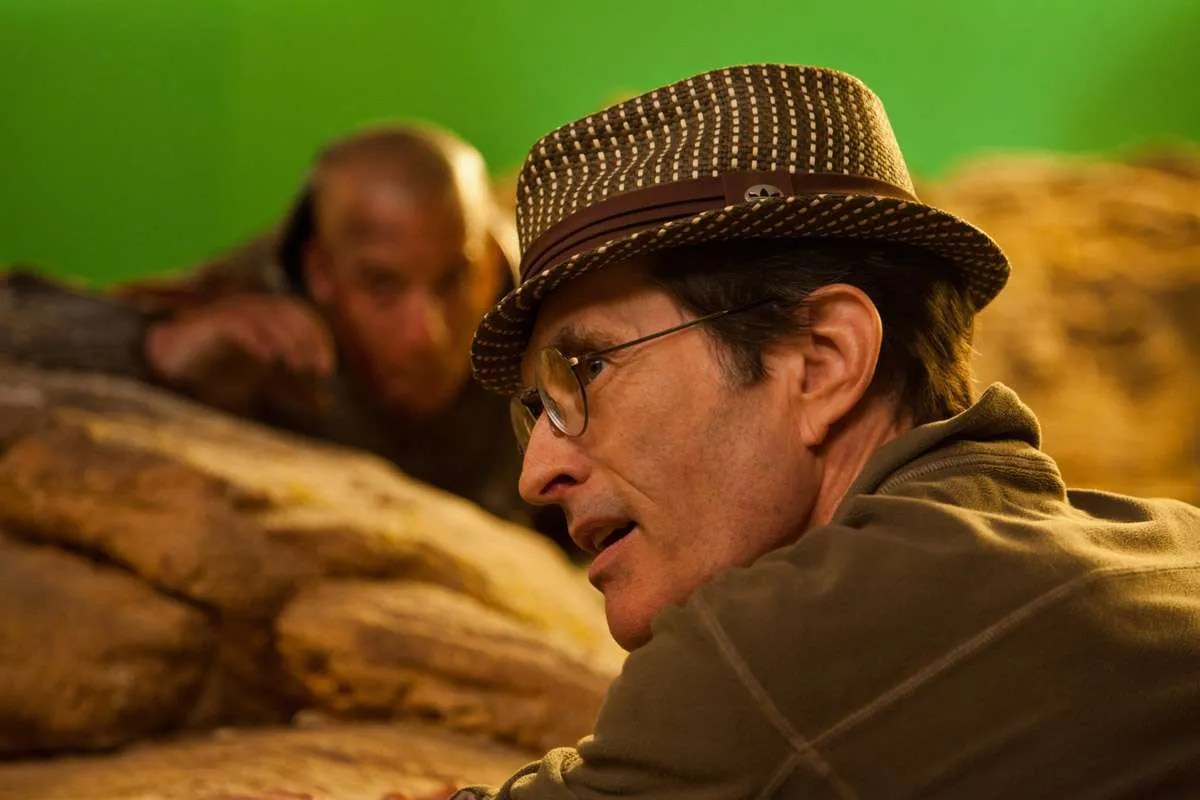
I was lucky enough to attend the “Riddick” press conference at the Four Seasons Hotel in Los Angeles, California just before this sequel was released back in 2013. Twohy talked about the challenges of making this particular movie as well as what it was like working with Diesel who had just received his star on the Hollywood Walk of Fame.
Question: How did the final film compare to what you originally envisioned, and were there any big challenges you faced in terms of the look of the film?
David Twohy: Did the finished product end up like we had imagined it? Yeah, it does because really, as a responsible filmmaker, I have to imagine the whole movie. After I script the movie, I have to storyboard it out, I have to budget it, and I have to understand if I can afford all those visual effects or not. So more than anybody, it looks like the movie I had imagined, sometimes better, sometimes not quite as good depending on how we execute the visual effects. But yeah, I’m not surprised by it because it’s what I do and it’s what I set out to make. Sometimes Vin, who is not privy to everything that’s in my head and all the work that I’ve done with the concept artist (and he likes it that way), is surprised, but I don’t have the luxury of being surprised. I can’t be surprised by anything in the filmmaking process if I’m doing my job right. So, it’s very much the movie we set out to make, and we set out to make something that would fit into the budget that we had ($38 million). I think you all know that this was an independent movie this time out instead of a studio movie. So, knowing that we would have limited resources, Vin and I sat down in his kitchen and we came up with a story that would fit that budget. It couldn’t be as grand as the last movie, and it had to be more contained. It feels more like “Pitch Black” to some people. It probably is more like that at least in its tone and scope (we limited it to one world), but it’s very much the movie we set out to make, and there were not that many surprises for me along the way.
Question: It was interesting to see that Dahl (played by Katee Sackhoff) was not a love interest in this movie. Usually, the girl ends up being the love interest of someone, but instead she was this independent woman who can hold her own. Can you talk about casting Katee and why you chose to make her this independent woman who can take care of yourself?
David Twohy: I remember Ridley Scott telling me this story about the original “Alien;” Ripley was scripted to be a man, and he decided to make her a female thinking that these parts should be gender-neutral. I’ve always remembered that, and the women in my movies do stand up on their own two feet and are not pieces to anybody, and I like that. In terms of Katee, she was the first person to read for the role of about a hundred actresses, and that I remembered her throughout the whole process speaks highly of her. So finally, I said, “Who was that girl who came in the first day, she had blonde hair and she kind of killed it? Who is she?” They said, “Oh that’s Katee Sackhoff from ‘Battlestar Galactica.'” Well, I didn’t really follow “Battlestar Galactica,” so I didn’t even know her from that, so I’m not casting or for that. I just thought she was the best available actress so we cast her like that, and I’m so glad we did because she was a joy to have on the set. And clearly, like the character, she holds her own amongst the men and swears worse than any of them. Her off-screen lines are just as good.
Question: What made you bring this franchise back to R-rated territory after the PG-13 “Chronicles of Riddick,” and is there going to be another “Riddick” anime, game or ride?
David Twohy: (laughs) A Riddick ride? Well, actually we are doing some D-Box seats in theaters, the motion platform seats. I just experienced them for the first time and it’s the closest thing to a Riddick ride as you’ll get. It’s watching the movie, but it’s motion based. I don’t know what that in between thing will be, but we embrace them, and I would like to do more. We published the motion graphic novel as well which helped with the back story of how Riddick went from King of the Necromongers to a man alone on a planet. We embrace those things, and it would be great to get another game off the ground, but those things are very hard to launch. They are costly and they need a lot of lead time, so it’s hard to sync those games to the release of a movie. But we would like to do another one and we are talking about it. The R-rated movie was important to us because, as a filmmaker, I have the flexibility I need to do what I want. With PG-13 I feel like I’m pulling my punches either in the script or working with my actors on the set and coming up with stupid analogues for the word “fuck.” I’m getting tired of that. It gets to the point where people aren’t talking like people talk anymore. Just because I don’t want to pull my punches anymore, I felt this was important to me. It also plants a flag in the ground for our fans as well and lets them know we are true to the character and the nature of the series. The reason for PG-13 last time is obvious. It was because we were a big studio movie funded by a big studio, and to minimize their risk they wanted to branch out to what they think is the widest possible audience and they think that’s PG-13. There is actually a sound reason for that, but Vin and I feel more comfortable back in the R-rated universe.
Question: In “Riddick” you deal with the Necromongers briefly and just move on from there. Do you plan on going back to that story thread if this movie is successful enough to merit a sequel?
David Twohy: Yes. If it is successful and if we have a flexibility to go wherever want for the next movie, and Vin and I are talking about two more movies and probably just that (it would be good to do a closed ended franchise rather than a franchise that just keeps spitting them out just to spit them out), we would like to get back to the Necromongers. I am currently cutting the director’s cut DVD right now which includes more of an epilogue which has Riddick returning to the Necromonger empire and actually setting things right there in terms of the guy who abandoned him on this planet and left him for dead, and his search for Vaako (played by Karl Urban) who he thinks has the answer to where his home world lies. The next few weeks will be telling for us, and we want to pay off the fans who have stuck with us all this time. They have never stopped talking about this movie to us, and it was them who made us open our eyes and say it will be honestly irresponsible to leave it like it was and not make another movie.
Question: How did you and Vin get back to the savagery of the “Pitch Black” with this one and made it look like “Conan the Barbarian” as opposed to “Conan the Destroyer?”
David Twohy: That was important too, and it was also part of the character who thinks at the story’s outset that maybe he feels that he is gotten a little slow, a little soft, who has dulled his own edge as King of the Necromongers and wonders what happened to him. Did he commit the greatest crime of all? Did he get civilized? So, the exploration of him trying to get back to basics to find his edge again, to get back to the lean thing he was, it’s a good evolution for Riddick and it’s also sort of a parallel to what the franchise has undergone
Question: What do you like most about collaborating with Vin Diesel?
David Twohy: That he doesn’t shut up (laughs). He’s a guy who aims high and pushes me to aim high. He’s a guy who dreams and thinks that anything is possible, and me I’m more of a practical guy. I try to be a responsible filmmaker, living with the constraints of what I’m given to make a movie with, but Vin doesn’t think like that. Vin thinks like anything is possible and he thinks big. Sometimes that’s almost a folly but other times it can be inspiring and it can open up my ideas to other ways of doing things. What’s great about it is that he’s a guy who has all the confidence in the world and always has ever since I cast him as just a guy, an actor, in “Pitch Black.” But he had an unshakable confidence in himself even back then, and he just seems to see the future or will it into being (laughs) so that he can say “hey I was right all along!” He’s great like that and he’s inspiring like that. Just about the time you think that Vin Diesel is a guy with big muscles and a big head and your kind of willing to dismiss him as that, you realize that this is a guy with a big heart too. He dreams no small dreams, and that’s good and that rubs off on everybody else he works with.
Question: Can you talk about crafting Riddick’s voiceover in the movie?
David Twohy: Here’s how I craft it, I sit in front of my computer screen and I write it. Then I’ll rewrite it, I’ll tweak it, I’ll rewrite it and then I’ll show it to Vin and he’ll say I’m digging this or I’m digging that. When he gets in front of a microphone, he’ll say 90% of it, but every once in a while, he’ll just stick in a line. I later find out it’s because it’s too similar to something else he said in another movie. We just work it out and then I’ll spitball three alternatives and when something pops up that he likes we’ll just lay it down. We’ve built a good level of trust with each other lately. As opposed to the voiceover in “Blade Runner” where it was just filling in stuff that you needed to know about the world and it wasn’t character-based, the one in “Riddick” is character-based and it comes with Riddick’s voice and how he sees the world. It takes a while to get it right.
Question: Riddick’s relationship with the puppy is one of the best things about this movie…
David Twohy: By the way, every woman who has interviewed me today talked about the damn puppy (laughs). I cut a trailer of this movie that was all about Riddick and his relationship with the dogs and I gave it to Universal and said, “Hey maybe we want to broaden our audience a little bit and make sure we get the women in here, you know?” Then they go, “It’s a little soft for a Riddick movie Dave.” God, I wish the marketing people were listening to this! I’ve been trying to tell Universal, I’ve been trying…
Question: Since the puppy was created with CGI effects and has a lot of interactive scenes with the actors, what did they have to work with on the set?
David Twohy: All the actors have plenty of reference whether its concept art which they can paper their trailers with or I’ll show them on the morning of the shoot. The puppy has stand ins. For the puppy, I got a 12-pound silicone puppy that looks like the real puppy. It’s furred, it’s got glass eyes and everybody wants to hold it, and it just feels right. The puppy made it into the movie in a couple shots. Plus, Vin has big dogs too, so more often than not he’s telling me how to greet the dog and how to pet it (I’m a cat guy, Vin’s a dog guy). So, he says, “No you don’t pet it like a cat. If you want to say hello to your big dog, you slap it on the shoulder.” So that’s what we do in the movie.
Question: What were the differences, both positive and negative, that you found making this movie independently versus working on a studio movie?
David Twohy: Mostly positive. We shot it in 48 days which was pretty streamline. During postproduction I showed it to an audience of 50 or 60 people and didn’t score it, didn’t test it. I just wanted to know what confused them so I could go back and clear up the confusions. I showed one or two cuts to Vin and then I locked the picture. That is as atypical as it gets in the professional filmmaking world because a lot those movies you saw this summer were focus grouped, tested, scored, recut, reshot, recut, tested, scored, and after a while there is a factory-made feel to those movies. So hopefully something this simple, streamline and filmmaking pure results in something that’s at least different and maybe better just in the handcrafted sense of it.
Question: So, would you say you had more fun with less money in some ways?
David Twohy: Yeah, we did, and I’m sure most independent filmmakers will tell you that. The downside is that we staggered to the starting line. We were up, we were down, we were up, and we were down. It all comes down to, is the paperwork closed? Is the bond closed? You have to close the bond to get the bank loan. It’s a lot of stuff I don’t know much about, and I wish it didn’t affect my life but it does. We started and we were shut down, kicked out of our studios, the doors locked. We had to come back three months later and pay our bills and start over. So those are the vicissitudes of independent filmmaking.
“Riddick” is now available to own and rent on DVD, Blu-ray, 4K UHD and Digital.
As this interview was conducted in the past, it may contain outdated information.
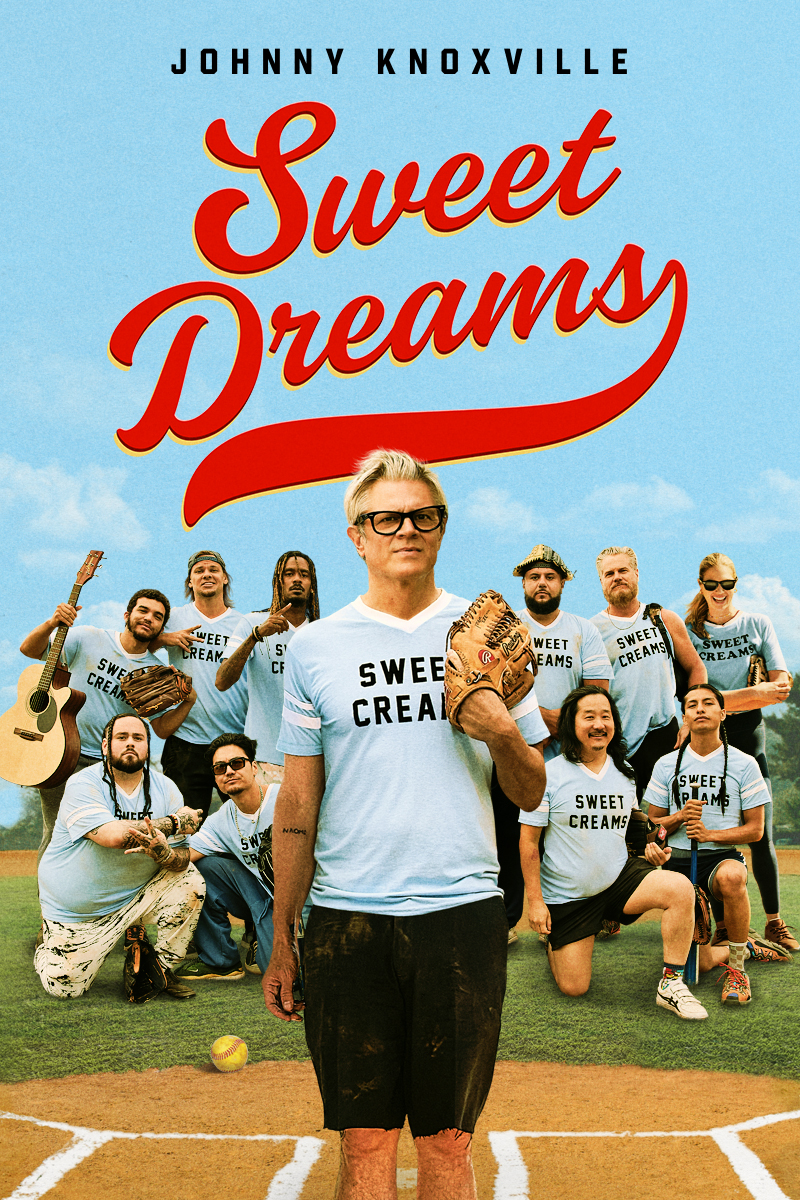
“Sweet Dreams” is one of those movies coming out underneath the radar, and it deserves more attention than it is currently getting. Johnny Knoxville stars as Morris, a music video director who, as the movie opens, has hit rock bottom and wakes up in a park almost completely nude and with a bloody face. Next day, he enrolls at Sweet Dreams, a recovery center which cannot be mistaken for Promises or the Betty Ford Center, where he meets up with a group of misfits struggling to maintain their sobriety. In the process, Morris becomes the coach of the center’s softball team, and he gets another chance at life as well as the opportunity to be the dad his daughter deserves.
I got to talk with two of the stars of “Sweet Dreams,” Bobby Lee and Davionte Ganter, better known professionally as GaTa. Both play fellow patients who quickly bond with Morris and share their pasts and philosophies on life to him. Bobby is a stand-up comedian, actor and podcaster who was a cast member of “MADtv” and co-hosts the podcasts “Bad Friends” and “TigerBelly.” GaTa is an actor and rapper best known for playing a fictional version of himself on the FXX series “Dave.”
I was especially interested in talking to Lee and GaTa about their own experiences with drug addiction and mental health issues and how they informed their roles as Cruise and Jake in this film. Lee was introduced to drugs when he was just 12 years old, and it took him several trips through drug rehab before he got sober. GaTa has been diagnosed with bipolar disorder, and he has become a big mental health advocate.
I really want to thank them for being so open about their struggles as it proves how “Sweet Dreams” has such a big heart, and that, for these two, doing this movie felt like an extension of the things they work hard for in life. Anyone with addiction issues may very well benefit from watching this movie.
“Sweet Dreams” opens in theaters on April 12, and will be available on digital platforms on April 16. Check out the interview below.
WRITER’S NOTE: This article was written back in 2012.
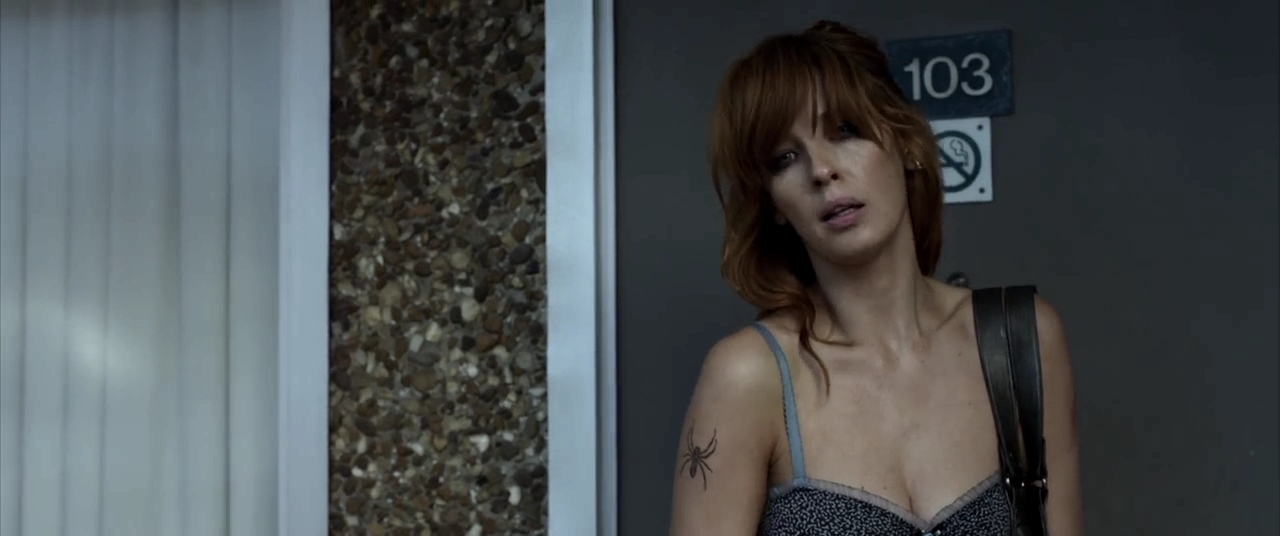
Robert Zemeckis’ “Flight” ended up surprising us all by being a riveting character driven film as opposed to your average Hollywood action movie. It is filled with a number of great performances from very talented actors, and one of the most notable is Kelly Reilly’s as former photographer Nicole Maggen. When we first meet Nicole, she is in the throes of a nasty heroin addiction that almost claims her life. While in the hospital, she meets airline pilot William “Whip” Whitaker (Denzel Washington) who is going through his own substance abuse issues and becomes a kindred spirit of sorts as they both look for ways to escape their demons.
For Reilly, “Flight” marks the first American movie she has appeared in. Before this, she was best known for playing Mary Watson in the “Sherlock Holmes” movies, and she starred opposite Michael Fassbender in the unnerving horror film “Eden Lake.” When it came to playing Nicole in “Flight,” she explained to Christopher Rosen of the Huffington Post how she goes about preparing for a role.
“If it’s there in the script it makes your life a lot easier,” Reilly said. “You’re not searching for something. You’re not trying to figure out how to make this character believable or real. You’re not trying to skirt around bad writing. This character, to me, just jumped out. I already felt a kinship to her; I wanted to play her. I knew that this sort of addiction that got hold of her so tightly was a symptom of this woman’s heartbreak. I knew there was somebody underneath worth fighting for. There are all these stereotypes of heroin addicts being junkies or dropouts or people who we shouldn’t care about. I just thought that can’t be true. They’re somebody’s son or daughter; they’re human beings. They’re just lost. That is something John Gatins got in his script. I really wanted to play that rather than the stereotype of the heroin addict.”
When it came to playing a heroin addict, Reilly explained to Rosen the amount of research she did to better understand her character. She spent a lot of time on Google learning about those addicted to this particular drug, but that only gave her so much information. But while I was at “Flight’s” press conference at the Montage Hotel in Beverly Hills, Reilly went more into depth about who gave her the answers she needed to know the most.
“I did consult a wonderful guy called Mitch in Atlanta who helped me understand the inner life of a heroin addict as much as one can without experiencing it, and he really did open up his story to me,” Reilly said. “There was a technical side of it as well as he taught me how to inject heroin without really injecting heroin. I wanted to honor the truth of somebody in that situation, and I think that was the most difficult part without ever having experienced that.”
But despite “Flight” gaining strong critical praise for its direction and performances, Reilly doesn’t see herself being nominated for an Academy Award. When it comes to the Oscars, they tend to honor the showiest performances above all others. Reilly’s performance as Nicole is powerful largely because it is an understated one which does not draw too much attention to itself. She explained this in more detail to Rosen.
“I know there is a lot of buzz around Denzel and the film. A few people have kind of suggested that it could be a possibility for me. I don’t see it myself,” Reilly said. “That’s just not me being humble or anything. I genuinely don’t imagine that to be the case. Mine is more of a quiet performance and I don’t think it’s an award winner. I still feel incredibly flattered to have people even suggest that. As much as it was never a dream of mine — a dream of mine would be to be on stage in New York — it would still be a mind-blowing thing to happen especially for something you feel proud of.”
Michael Caine once said that in the theater you play a character, but in television and film you are the character. Some of the greatest performances I see from actors in movies come from those who inhabit their characters more than play them, and Kelly Reilly’s performance in “Flight” is no exception. While we all love the showiest of performances, it is those subtle ones which deserve the most credit. My hope is that the Oscars will prove Reilly wrong and give her the credit she deserves for her work here. It’s one of the best portrayals of an addict I have seen ever since Michael Keaton played one in “Clean and Sober.”
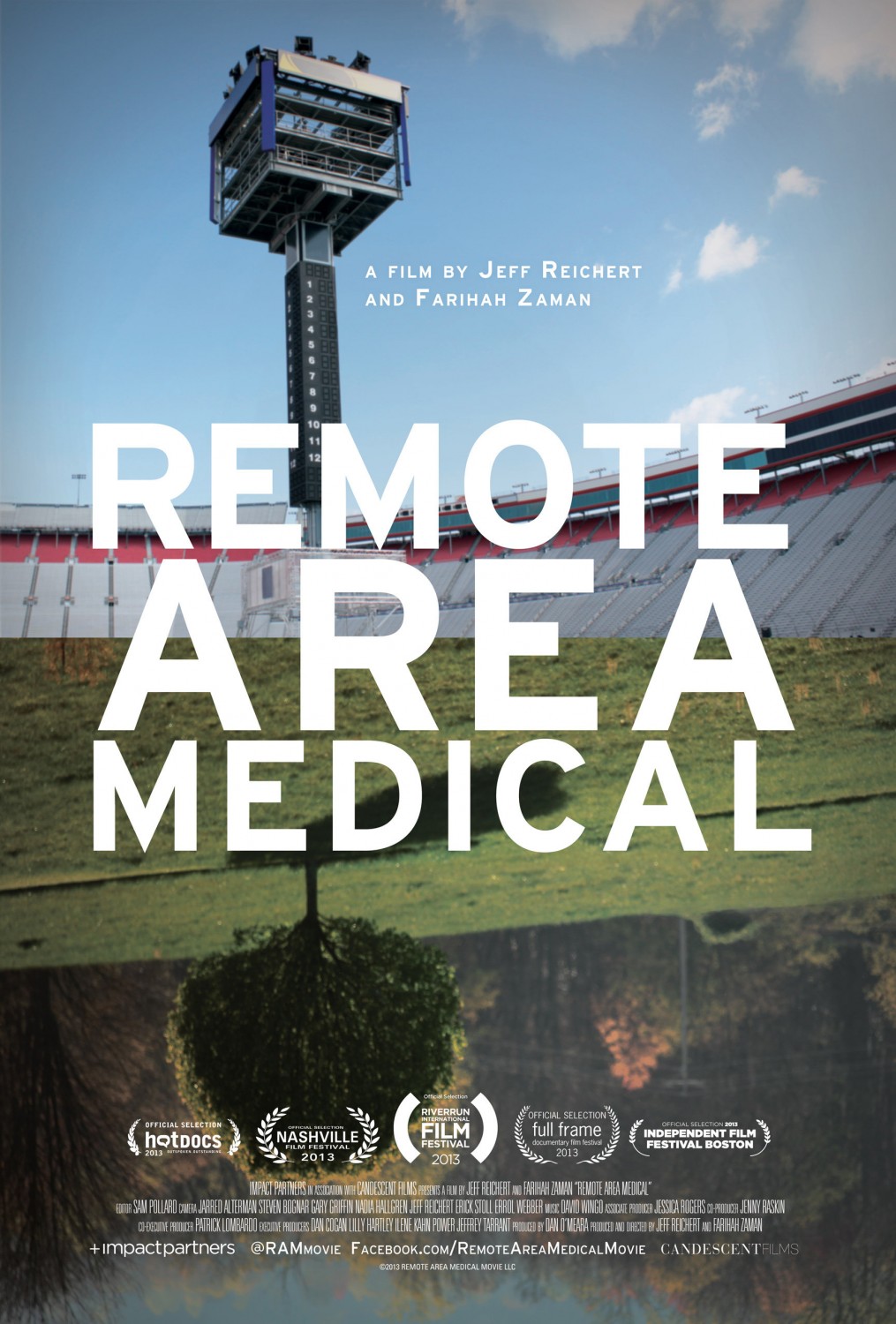
“Remote Area Medical” focuses on the non-profit medical provider of the same name, better known as RAM, when they opened a three-day clinic held at the Bristol Motor Speedway in Tennessee, and we watch as hundreds wait by their cars in the hopes of getting the kind of health care they never have any easy access to. While there has been an endless debate in the United States about how to handle health care, this documentary chooses to focus on people instead of policy. We get a close up look at how this clinic starts off with a 3:30 a.m. ticket distribution which determines who will get seen for routine check-ups, and the patients tell us about themselves through stories which prove to be both vivid and heartbreaking. In addition, we also get to meet those who volunteer their time at the clinic like the organization’s founder, Stan Brock, a doctor who happens to drive a refurbished 18-wheeler truck, and a denture maker who also works as a jeweler. From start to finish, “Remote Area Medical” puts a human face on what it means to not have access to health care, and it makes for one of the most unforgettable documentaries of 2014.
I got the opportunity to speak with its directors, Jeff Reichert and Farihah Zaman, while they were in Los Angeles back in 2014. They are married to each other and actually volunteered at a RAM clinic back in Pikesville, Kentucky in 2011 where they were overwhelmed by stories they heard of patients in need and volunteer doctors working overtime to provide care. Reichert and Zaman also directed the documentaries “Gerrymandering” and “This Time Next Year.” They discussed what stunned them most as volunteers at RAM, what they learned about people who live in the Appalachian community, and they talked more about the conversations they had with Stan Brock.
Please check out the exclusive interview down below, and I have also included a trailer for “Remote Area Medical” as well for you to check out. This documentary is now available to own and rent on DVD, Blu-ray and Digital.
To learn more about Remote Area Medical (RAM), please feel free to visit their website at ramusa.org.
WRITER’S NOTE: This interview took place back in 2015.
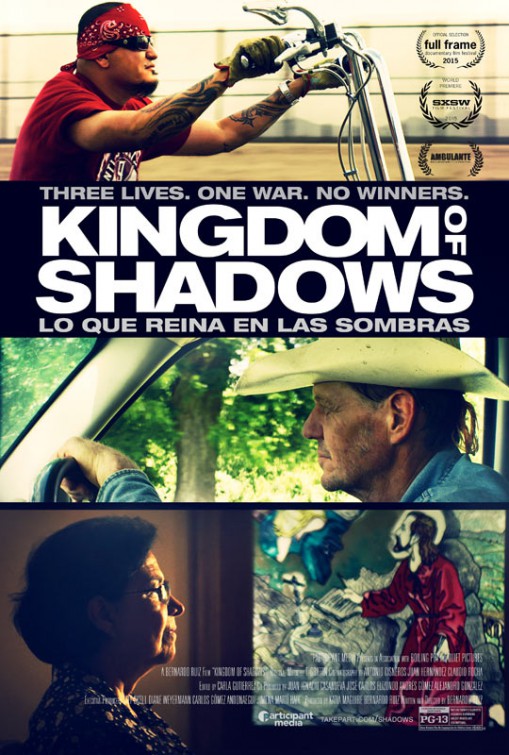
The U.S.-Mexico drug war is one many of us watch from a distance, but the documentary “Kingdom of Shadows” forces you to look at the war more closely than usual as it puts a human face on the damage left in its path. Director Bernardo Ruiz observes the ongoing conflict through the perspectives of three individuals: activist nun Sister Consuelo Morales who prods government officials to take action against the drug cartels who have kidnapped many people, Texas rancher and former drug smuggler Don Henry Ford Jr. who offers a descriptive context for the evolution of drug trafficking, and undercover agent turned Homeland Security officer Oscar Hagelsieb who offers a unique perspective on America’s role in the drug war. The majority of what we see takes place in Monterrey, a devastated and violence scarred town in Mexico that Oscar felt less safe to be in than when he was a soldier in the Middle East.
Watching “Kingdom of Shadows” is deeply moving and unsettling as we see how vicious the war on drugs has become, and it makes the intense thriller “Sicario” feel all the more real and unnerving in retrospect. Bernardo takes a real close look at the cost of this war from both the U.S. and Mexico sides, and he gives us an unflinching look at the human rights crisis it has generated and which only recently made international headlines.
I was among a group of reporters who got to sit in on an interview with Bernardo Ruiz and Oscar Hagelsieb while they were in Los Angeles to promote “Kingdom of Shadows.” Bernardo also directed the documentary “Reportero” which chronicled a veteran reporter and his colleagues at a weekly newspaper challenging drug cartels and corrupt local officials during an unprecedented wave of violence against journalists in Mexico. Oscar’s life began in a drug infested neighborhood where he was raised by undocumented parents, and despite having been an undercover officer for several years, he explained why he was more than willing to show his face in this documentary.
Bernardo talked about the kind of resistance and challenges he faced in making “Kingdom of Shadows,” and he explained why he introduced Oscar the way he did. Oscar was asked how he manages not to take his work home with him, and he explained why the legalization of marijuana will cause the drug war to become even more violent.
Please check out the interview below, and you can also check out the trailer as well. “Kingdom of Shadows” is now available to own and rent on DVD, Blu-ray and Digital.
Back in 2014, I got to speak with filmmaker Salome Breziner about her film “Helicopter Mom.” It stars “My Big Fat Greek Wedding” creator Nia Vardalos as Maggie, a completely overbearing single mother who is about to see her only son, Lloyd (Jason Dolley), finish up high school and then move on to college. Maggie feels ever so close to Lloyd, and she quickly proves to be much too close to him. While Lloyd does love his mom, he cannot help but be constantly annoyed at her being more of a best friend to him than a parent as she is almost completely unable to leave him alone for a second.
Maggie’s relationship with Lloyd then enters another plateau when she discovers that gays can get scholarships for college. Constantly worries about she will pay for Lloyd’s college tuition, Maggie decides to tell the whole world that her son is a homosexual in the hopes of securing a scholarship. The problem is, Lloyd is not really gay or, at least, doesn’t think he is. In fact, he finds himself very confused about his sexuality to where life is not about to give him an easy answer to who he really is.
What results is a motion picture which deals with the confusion teenagers typically experience about life and themselves during their formative years, and it promotes a message of acceptance for people of all kinds. Deep down, we are only so different from one another.
Breziner previously directed the 2013 independent comedy “The Secret Lives of Dorks,” and her other directorial efforts include “Fast Sofa,” “An Occasional Hell,” “Tollbooth” and “Lift.” During my interview, she talked about how she went about director the comedic powerhouse that is Nia Vardalos, her own experience as a single mother, the luck she had in being able to shoot the film in Los Angeles and Venice Beach, and of how she got to cast Mark Boone Junior in a role which allows him to go completely against type.
Please check out my exclusive interview below, and be sure to also check out the movie’s trailer.


 The Ultimate Rabbit