‘The Dark Knight Rises’ Caps Off a Perfect Batman Trilogy
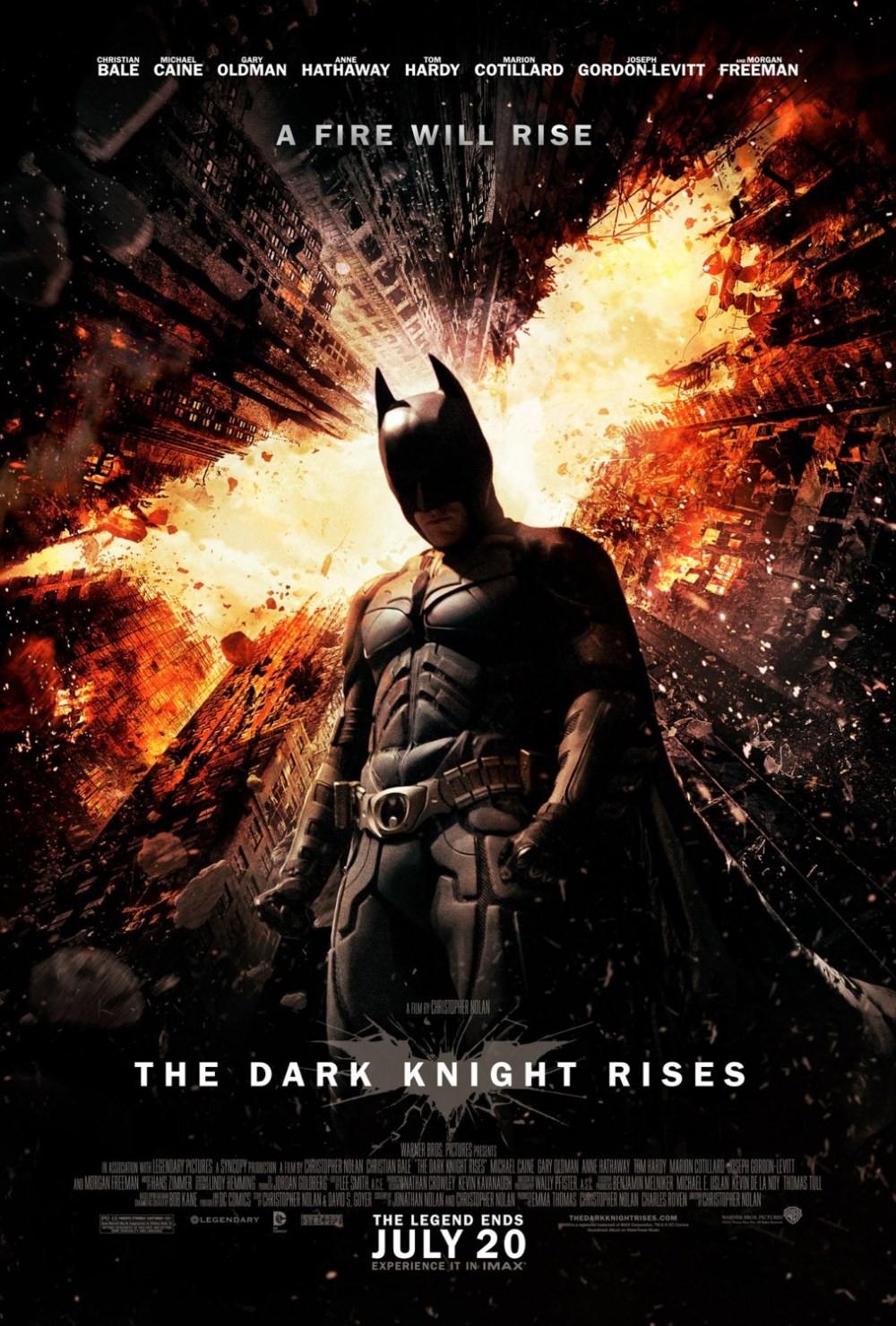
The Dark Knight Rises poster

With “The Dark Knight Rises,” filmmaker Christopher Nolan has completed one of the greatest trilogies in cinematic history. It is a thrilling spectacle with tremendous emotional power, and I came out of it not just fulfilled, but quite shaken. Regardless of whatever plot holes this movie may have, or if it has one too many characters to deal with, it is still as brilliant as its predecessors.

Now I’ll give you more or less a brief outline of “The Dark Knight Rises” without giving away major plot points. I know you all have been seriously pissed about reviewers ruining this movie for you like Homer Simpson ruined “The Empire Strikes Back” for a crowd waiting to see it outside a Springfield movie theater on “The Simpsons,” and I wouldn’t dare to do the same thing here.

Eight years have passed since Batman/Bruce Wayne (Christian Bale) took the fall for Harvey Dent’s death in order to hide the murders he committed and let him remain a hero in the eyes of Gotham’s citizens. Since then, Gotham has entered a time of peace and prosperity, all of which is based on a lie. Enter Bane (Tom Hardy), a brutal and methodical terrorist who plans to reduce Gotham to ashes slowly but surely. This brings Batman out of hiding, but he also has to deal with cat burglar Selina Kyle (Anne Hathaway) who catches him off guard, a beautiful corporate executive named Miranda Tate (Marion Cotillard), and the idealistic young cop John Blake (Joseph Gordon-Levitt) whose “hot head” ways make him much smarter than his fellow officers. So that’s it for the movie’s story.

Actually, to go into full detail over the plot of “The Dark Knight Rises” would take forever as it goes in various directions to where seeing it once is not enough to take everything in. Nolan has said part of his inspiration for this film was Charles Dickens’ “A Tale of Two Cities” which is known for this famous quote:

“It was the best of times; it was the worst of times.”

Now while this quote is never spoken in “The Dark Knight Rises,” it never needs to be. Nolan is fascinated with how the lie over Dent’s death has helped Gotham while at the same time turned it into a prison state where freedoms are eroded. It also parallels current events in the real world by taking into account the continuing gap between the rich and the poor and how people will go out of their way to manipulate the collective anger regarding it. This movie is a huge action spectacle, but it has a lot of things to say about the world we live in today which makes it all the more powerful.

Many have been calling this the “darkest” Batman movie of them all, as if the two which came before it were a sunny paradise in the realm of “Batman & Robin” (they most certainly were not). But while “The Dark Knight Rises” is indeed a dark vision of a city under siege, it also has a strong ray of hope emanating from it. Bruce Wayne has always wanted to hold Batman up as a symbol to inspire people, and you revel in seeing the impact he has on the characters around him.

People have also been saying Nolan has put far too many characters into this movie. Newsflash, Nolan has done this with each of his “Batman” movies, but what truly amazes me is how he has gotten away with doing so each time. Every single character in “The Dark Knight Rises,” from Matthew Modine’s bone-headed Deputy Commissioner Peter Foley to Ben Mendelsohn’s greedy businessman John Daggett, informs the movie’s main characters and overall themes throughout. Not a single one of them feels extraneous to the plot as each illustrates examples of justice and personal responsibility, and of how easily misconstrued they can end up being.

Christian Bale completes his tour of duty as Batman with a deeply felt performance. In many ways, “The Dark Knight Rises” is more about the rise of Bruce Wayne than anything else as he is forced to deal with who he is than what his alter ego can do. While Spider-Man and Superman are endowed with super powers, this movie renders him all the more vulnerably human as he starts off walking with a cane and dealing with injuries not easily healed. It’s those human flaws, however, which make Bale’s portrayal of Bruce Wayne all the more powerful and enthralling.

With Bane, Nolan has fashioned a villain far different from Heath Ledger’s Joker which was a smart move. While the Joker was far more desirous of watching the world burn, Bane simply wants it to suffer right down to its dying breath. With Tom Hardy, Nolan has found the perfect actor to portray Bane as he brings to life the character’s twisted code of ethics and his utter brutality which allows him to batter his helpless opponents with sheer efficiency. Thanks to Hardy, Bane proves to be Batman’s most formidable foe yet.

As for Anne Hathaway, she is excellent as the character known as Catwoman but who is never actually called Catwoman in “The Dark Knight Rises.” Her portrayal of Selina Kyle never invites easy comparison with the actresses who played her in the past as her version exists in the world of realism created by Nolan. Hathaway succeeds in giving this movie the feeling of exuberance and fun it needs from time to time, and she more than holds her own against Bale and Hardy. But then again, this should be no surprise to those who remember her Oscar nominated performance in “Rachel Getting Married.”

And, of course, you have the usual cast of supporting characters played by Sir Michael Caine, Morgan Freeman, and Gary Oldman. All of them are fantastic as always, and they give this movie the emotional heft it calls for throughout. We also get a great bunch of franchise newcomers like Joseph Gordon-Levitt who is sensational as the intelligent John Blake, and Marion Cotillard who radiates both beauty and mystery as Miranda Tate.

Technically, “The Dark Knight Rises” looks flawless with cinematographer Wally Pfister capturing the dark corruption consuming the citizens of Gotham which they are forced and inspired to rise out of. And with Hans Zimmer, minus James Newton Howard this time around, we get another rousing and thrilling music score which keeps our adrenaline pumping along with movie’s thrilling action set pieces.

Yes, the movie has some plot holes which I’m sure you will discover for yourself. None of them, however, were enough to derail my enjoyment of this awesome spectacle Nolan and company have put together. I’m not sure where I would rate this in the series, but while it doesn’t best “The Dark Knight,” it still comes very close to doing so and continues Nolan’s reign one of the best movie directors working today. I don’t think I am overreacting in the least when I declare “The Dark Knight Rises” to be a brilliant motion picture.

Oh yes, some will say that the movie’s final scenes seem to spell out a potential new direction for this franchise to take as if it were a set up for a sequel. I’d like to think it speaks to the influence Batman hoped to have on the citizens of Gotham, to inspire them to do good. Thanks to Nolan, Batman is a hero we can appreciate and applaud.

* * * * out of * * * * 

‘Batman Begins’ Revisited

Batman Begins poster

Before “The Dark Knight Rises” was released, I took the time to revisit director Christopher Nolan’s first stab at the Batman. I remember seeing “Batman Begins” at Grauman’s Chinese Theater when it first came out and thought it was very good, but I don’t remember thinking it was a masterpiece the way I thought “The Dark Knight” was. But now having watched it again, I have a better appreciation of “Batman Begins” and agree it has earned its place among the best comic book movies ever made.

The real difference here is, unlike the Tim Burton and Joel Schumacher “Batman” movies, Bruce Wayne and his alter ego are not upstaged by the villains. In fact, Bruce Wayne is a much bigger character this time around and also far more complex. This is a credit to both the screenwriters (Nolan co-wrote the screenplay with David S. Goyer) and actor Christian Bale who more than makes this iconic role his own.

We first see Bruce as an 8-year-old (played by Gus Lewis) running around his parents’ garden when he accidentally falls down into a well. It is there he is met by dozens of angry bats, giving him a serious phobia of the creatures. From there, the movie establishes its main theme of fear and how Bruce works to overcome it as well the fears he has about himself.

Now a lot of times when we get a backstory to a character, it ends up taking away their mystery by telling us more than we need to know. Burton’s “Batman” and “Batman Returns” never fully explored how Bruce became this crime fighter, and this proved to be a positive and a negative. While it made Michael Keaton’s portrayal more intriguing, it also made his Bruce Wayne/Batman a lot less complex. But a good portion of “Batman Begins” is dedicated to discovering how Bruce developed his fighting skills, and we get to see different sides of him throughout.

Tortured by the memory of his parents being shot to death in front of him, Bruce yearns for justice. His journey for it takes him from the criminal underworld in South Asia to the temple of the League of Shadows led by Ra’s al Ghul (Ken Watanabe). With the help of Henri Ducard (Liam Neeson), Bruce is trained as a ninja and vows to fight the crime and corruption which is engulfing his hometown of Gotham.

When it comes to origin stories, I get seriously impatient with them as they take too much time to set up a character, and they can simply feel like a commercial for the sequel we know will eventually follow. I have had that issue with many comic book movies like “Blade” to where I feel the movie is nothing more than a setup for a potential franchise. But I never felt this way with “Batman Begins” and was utterly enthralled by Bruce Wayne’s transformation from a man obsessed with vengeance to one determined to not become as bad as the criminals threatening Gotham. Seeing Bruce become this instrument of justice makes him a compelling character you want to keep on watching.

In the past, the “Batman” movies have been dominated by their villains. In “Batman Begins,” the villains come in different shapes and sizes. There’s mob boss Carmine Falcone (Tom Wilkinson), corrupt police detective Arnold Flass (Mark Boone Junior), the greedy CEO William Earle (Rutger Hauer), and the twisted psychopharmacologist Dr. Jonathan Crane (Cillian Murphy) who becomes better known by his alter ego of The Scarecrow. Of all these villains, The Scarecrow proves to be Batman’s most vicious threat here as his fear-inducing toxins devour the human mind into an almost permanent state of psychosis. Murphy, best known for his performance in “28 Days Later,” casts a spell on the viewer as he lets you look deep into his bright blue eyes to where you wonder how nasty the monster inside of him truly is.

Actually, the great thing about “Batman Begins” is how the good guys prove to be far more interesting than the villains. Until this movie came along, who would have ever thought this would be the case in a “Batman” movie?

Bale came to own the role of Bruce Wayne/Batman in a way only Keaton did before him. After Keaton left the franchise, the role basically became interchangeable to where it didn’t matter who played him. But Bale is lucky as he gets to play all the different parts of Bruce here; the vengeful son, the arrogant playboy, and the injustice-fighting warrior who likes to dress as a bat. Bale brilliantly captures each facet of Bruce to where you wish the character was this charismatic in the previous films.

Then there’s Gary Oldman, an actor who has given us some of the most intense and scariest villains in cinematic history, playing the role of Sgt. James Gordon. It would seem almost unthinkable for Oldman to play a good cop, but then again this may show how our respect for him as an actor may not have been as high as we thought. Some of the best actors can go from playing good guys/gals to bad ones with relative ease, and Oldman proves here he can do just this by making Gordon genuine in his intentions and a real cool dude overall.

As Henri Ducard, Neeson does kind of a variation of his Jedi master role from “Star Wars: The Phantom Menace,” and I think we all came out of “Batman Begins” wishing that Qui-Gon Jinn was as cool as Ducard. A man with fighting skills and the confidence to match them, Neeson is perfect in the role as his character trains Bruce without restraint and who ends up going in a different direction than we expect him to.

Katie Holmes plays Rachel Dawes, a character not in the original comic book series. When “Batman Begins” was first released, Holmes was in the midst of her whirlwind romance with Tom Cruise, and the way their relationship was perceived ending up spilling over to how people saw her in this movie. The general feeling at the time was that Holmes was miscast in the role, and many thought she was too young to be playing an assistant district attorney. Looking back though, Holmes was much better than we gave her credit for at the time. Either that, or her brilliantly staged divorce from Cruise gave me a new respect for her I didn’t have previously. Whatever the case, she gives her character a strong intelligence and a beautiful empathy that shines in various scenes, and that’s especially the case in her last scene with Bale.

As for Sir Michael Caine and Morgan Freeman, they are two veteran character actors you can never go wrong with. Caine gives Alfred a tremendous humanity in overseeing not just Bruce but the legacy his parents left behind. And Freeman makes Lucius a really fun character to be around as well as one who deserves the upper hand he eventually gets. Other great performances come from Tom Wilkinson, Linus Roache, and Rutger Hauer.

Watching “Batman Begins” again, I am amazed with what Nolan got away with. Each “Batman” movie he has done has him dealing with a large number of characters to where he should have too many to deal with. But here, each character plays a big part in the overall story, and none of them feel extraneous to it. There was a lot of thought put into this reimagining of the caped crusader, and it paid off big time.

Nolan’s other masterstroke in making “Batman Begins” stand out from its predecessors was in giving it a contemporary realism and humanity. Gone were the gothic qualities of Burton’s movies and the overly campy qualities which waylaid the Schumacher films, and in their place we got a Bruce Wayne we could actually relate to. No longer was this a character we watched from a distance, but one we could get up close and personal with. Bruce, after all, is not an alien from another planet, but a flesh and blood human being with a lot of wealth and emotional problems he needs to overcome. He was never designed to be your average superhero.

“Batman Begins,” when looked at on closer inspection, gave this DC Comics character the respect which eluded him on a cinematic level for far too long. Sure, the Burton movies were great in bringing the character back to the darker realm he originally inhabited, but Nolan was the first director to devote more attention to him as a character over the villains surrounding him. His achievement here has made him one of the best filmmakers working today, and this movie marked the start of one of the greatest movie trilogies ever.

Bring on the Bat!

* * * * out of * * * *

‘Now You See Me 2’ Wants To Be Cleverer Than It Is

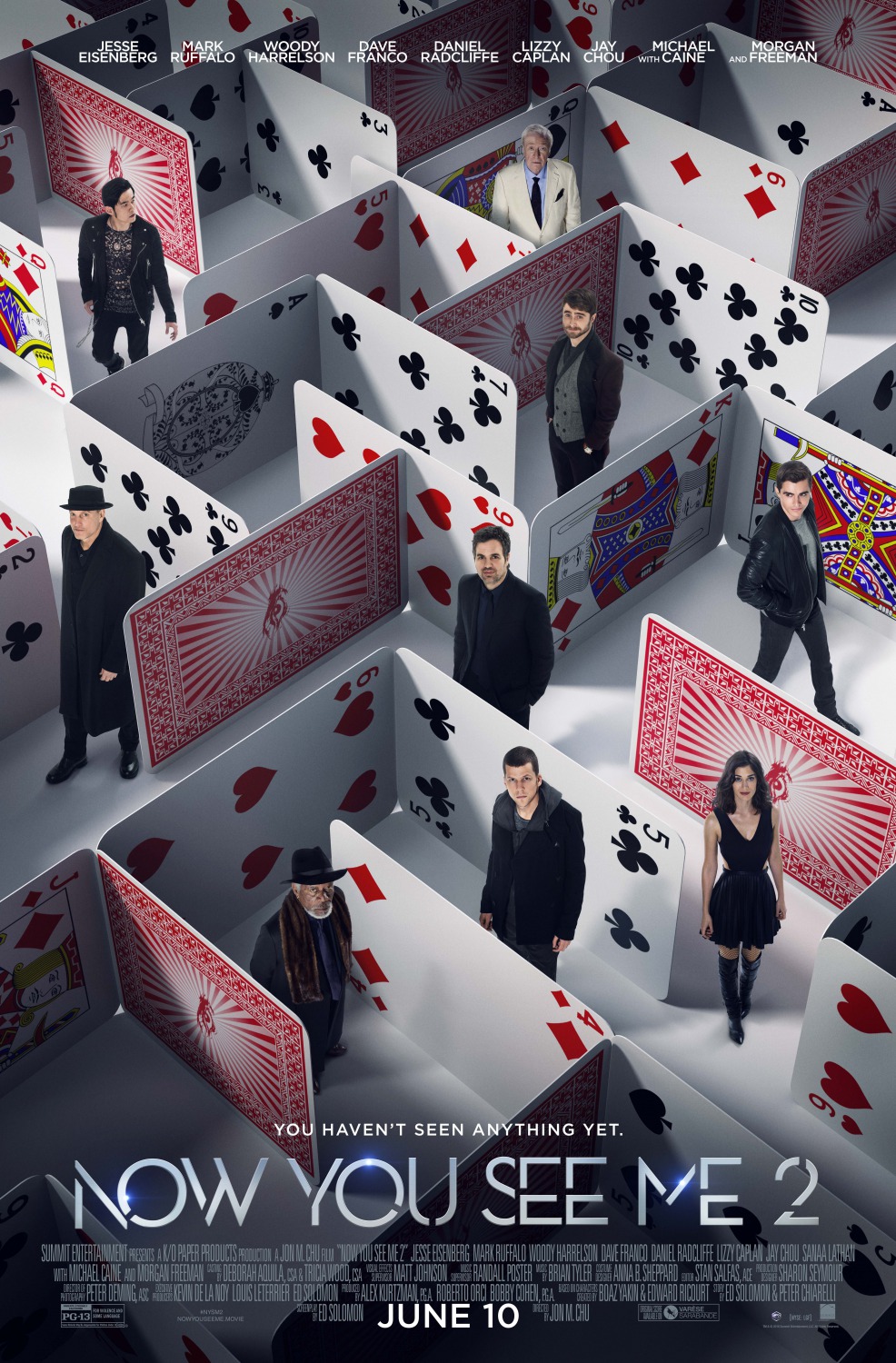
Now You See Me 2 poster

There’s a great moment, one of the very few, in the 007 adventure “Die Another Day” when James Bond is being presented with the latest nifty gadget from Q. Upon seeing what the gadget does, Bond tells Q, “You know, you’re cleverer than you look.” To this Q replies, “Still, better than looking cleverer than you are.” Those lines of dialogue kept repeating in my head as I watched “Now You See Me 2,” a movie which tries to be cleverer than its predecessor. But in the process, this follow up become so infinitely exhausting as it heedlessly defies logic more often than not.

We follow up with the Four Horsemen a few years after the events of the first movie, and they have managed to stay in hiding regardless of how impossible it is to stay off the grid these days. But Atlas (Jesse Eisenberg), Merritt (Woody Harrelson) and Jack Wilder (Dave Franco) are soon brought out of retirement to expose a Steve Jobs-like tech guru whose fraudulent practices have caused hardship for millions of people. Henley Reeves is out of the group, due to Isla Fisher’s pregnancy, and in her place is Lula (Lizzy Caplan) who quickly proves to be more than just a wannabe magician.

They work again in conjunction with FBI agent Dylan Rhodes (Mark Ruffalo), who was previously revealed to be the one who brought the Four Horsemen together, but their big comeback show goes awry when it is sabotaged by someone who shows that Jack never died and of Dylan’s role in the whole endeavor. That someone is revealed to be Walter Mabry (Daniel Radcliffe), a tech prodigy who invested a lot of money in companies run by Arthur Tressler (Michael Caine) and lost much of it after the Horsemen stole Tressler’s millions. Walter wants his money back and forces the group to pull off their greatest heist yet, and they run into additional trouble when the imprisoned Thaddeus Bradley (Morgan Freeman) finds a way to get his revenge from behind bars.

“Now You See Me” was a runaway hit back in 2013 and, while it had a number of plot holes, it proved to be a fun ride and had a terrific cast of actors whose charisma made it all the more watchable. But this same cast, even with new additions Caplan and Radcliffe, can’t save this sequel as we come to spend more time debunking their actions than we do in just going along for the ride. While I am prepared to suspend my disbelief through many films, it became impossible to do so with this one.

Watching “Now You See Me 2” becomes increasingly ingratiating as so many random characters try to stay one step ahead of each other. But while we go to a movie like this to see good defeat bad, the filmmakers have tried much too hard to keep the audience guessing from start to finish. Considering how this sequel takes place in a time long after movies like the “Ocean’s Eleven” trilogy have been released, you would think the bad guys would be better prepared. Then again, crime does make you stupid.

If it weren’t for the talented cast, this movie would be almost unwatchable. Ruffalo, Harrelson and Eisenberg have an effortless charisma about them, and they slip back into these roles as if a day hadn’t passed since the original. Both Caine and Freeman could play their roles in their sleep, and that’s what they do here. While it’s a bummer Fisher couldn’t return, Caplan proves to be an engaging presence and her enthusiasm is wonderful to take in. And it’s great to see Radcliffe join in with this ensemble as he reminds us of something which should be abundantly clear by now: there’s much to him than Harry Potter.

Behind the camera this time is Jon M. Chu who previously directed the “Step Up” sequels, “G.I. Joe: Retaliation” and “Jem and the Holograms,” a movie better known for its terrible box office opening weekend than anything else. While Louis Leterrier, who directed the original (he is an executive producer on this one), managed to keep things going at a steady pace, Chu stretches things out to where this sequel overstays its welcome by at least half an hour. He also ends this movie in a way which makes no logical sense considering where certain characters ended up in the original. Long before it ended, I found myself having a headache that had Excedrin written all over it, and I knew taking any would not make me feel any better.

You can only fool an audience for so long until they start analyzing the story very closely. When they start asking questions during the movie’s running time, you are in trouble. “Now You See Me 2” gets undone because the filmmakers didn’t care if it all made sense or not. Instead, they end up insulting our intelligence to where you wonder if it was worth it to even make this sequel.

In the future, I would love to see a prequel to this sequel in which we watch the characters get together and figure out how they will pull all their plans and magic tricks off. It will be worth watching just to see if the characters can convince themselves, let alone the audience, that their mischievous plans make any sense whatsoever regardless of the unpredictable variables which will come their way. If they can accomplish that, you will have one hell of a movie.

Copyright Ben Kenber 2016.

* * out of * * * *