‘The Exorcist: Believer’ is Not a Worthy Sequel

William Friedkin’s “The Exorcist” was such a singular cinematic experience, let alone a singular horror film like few others, that making a sequel to it had to seem like a truly insane prospect. “The Exorcist II: The Heretic” proved to be as hideous piece of celluloid as the original was a brilliant one, “The Exorcist III” was undone by needless studio interference which made it look pitiful for no good reason, and the attempts to make a prequel got so messed up to where two versions of it were made, both of which proved to be quite flawed. Looking at this franchise, one which is quite accidental, it seems like one driven by profit more than anything else. Granted, sequels are generally made because the original was a big box office hit, but not all of them exist simply because of financial benefits for everyone involved.

Now we have “The Exorcist: Believer” which comes to us from David Gordon Green and his fellow filmmakers who gave us the recent “Halloween” trilogy which proved to be worthy sequels to a celebrated classic. And yes, I do include “Halloween Ends” which many despised. Like those films, this “Exorcist” installment serves as a direct sequel to Friedkin’s original, it completely ignores the other sequels to create its own cinematic path. What results is a motion picture which is not terrible, and I went into it refusing to expect it to be any equal to the original, but it still proves to be inconsequential and unnecessary as Friedkin’s film continues to be extremely difficult to make a sequel to.

We are introduced to professional photographer Victor Fielding (Leslie Odom Jr.) who is raising his daughter, Angela (Lidya Jewett), as a single parent following the tragic death of his wife. One day, Angela asks her dad if she can go over to her friend Katherine’s (Olivia O’Neill) to study. That’s okay, Victor says, but she needs to be prompt about returning home for dinner. When Angela fails to do so, and she and Katherine go missing, the whole town goes looking for them. Eventually, they are found alive 30 miles away from their home addresses, but both are convinced they were only gone for a few hours.

As you can expect, both Angela and Katherine turn out to be possessed, and Victor turns to others to help the girls before any more lasting damage can be inflicted. Among them are Ann (Ann Dowd), a nurse at a local hospital and a fallen Catholic, and Chris MacNeil (Ellen Burstyn), an actress turned exorcism researcher who has since become renowned for her studies and her best-selling book on the subject. From there, we know we are in store for an exorcism, albeit one which cannot possibly be as intense as the one Friedkin gave audiences half a century ago.

Now you cannot go into “The Exorcist: Believer” expecting something along the lines of Friedkin’s original film as that is asking to be severely disappointed in the process. None of the sequels or prequels could touch it as the 1973 film is a cinematic experience not easily duplicated. But even with reserved expectations, “The Exorcist: Believer” just doesn’t work. It has some strong performances from Odom Jr. and Dowd, and there are some clever jump scares, but there is not enough to justify this as a significant follow-up to a celebrated classic.

The big news with this one is that Ellen Burstyn returns as Chris MacNeil for the first time since the first “Exorcist” film. But while Jamie Lee Curtis’ character of Laurie Strode was a major component of the recent “Halloween” trilogy, Chris MacNeil’s presence in “The Exorcist: Believer” feels like an afterthought, and while Burstyn is great as always, the character does not feel especially necessary to this installment. While it may give this film some legitimacy, Burstyn is barely in this film and does not get a lot to do.

When it comes to the climactic exorcism which the film’s title and its trailers have promised us, it is no surprise to find it utterly lacking in tension. Sure, there is some suspense as the adult characters are forced to make a choice no one wants to make, but it all feels lacking in the long run. As much as I wanted to view this film on its own instead of in comparison to the classic original, I could not help but be reminded of how intense and unnerving Friedkin’s film was. I wanted this exorcism to have the extreme intensity of what came before, and I knew that was not going to be the case which made this direct sequel all the more frustrating.

David Gordon Green is a terrific filmmaker. In addition to his “Halloween” trilogy, he has also directed films in various genres. He has given us “George Washington,” “Pineapple Express,” “All the Real Girls,” and “Joe” which features not only one of Nicolas Cage’s best performances, but also one of his most subtle, and that is saying a lot. I cannot help but wonder what made him, Scott Teems, Danny McBride, Jason Blum and all of Blumhouse were hoping to accomplish here. Were they hoping to make something which could stand alongside the original proudly, or at least be considered its equal?

For a moment, I thought Green might have some luck as the opening scenes in Haiti do have a documentary feel to them like the original did. But after a bit, it just felt like I was watching a movie. This is the biggest problem with “The Exorcist: Believer;” you watch it more than you experience it. You can see how the screws go in, and it does not help that the CGI effects utilized here are not all that great. Then again, I have long since been spoiled by the visual wonders of “Avatar: The Way of Water,” so nothing else can possibly compare.

Making a sequel or any kind of follow-up to “The Exorcist” is no different than anyone trying to make one to “The Texas Chainsaw Massacre.” Both those horror classics gave audiences a cinematic experience like few others, and they still remain enthralling and greatly unnerving so many years later. And yet, there are those who have turned these movies into franchises which may succeed financially, but never critically. They will forever be shadowed by a predecessor which can only make the best efforts look ever so pale in comparison, and yet people keep trying futilely to give us something worth watching. The fact that no one has succeeded in doing so should not come as a surprise.

Nevertheless, another “Exorcist” movie is set to be released in 2025, and the best way to look at this situation is to say Green and company have nowhere to go from here but up. Perhaps if they played around with the formula, they could audiences something more original which will stand on its own. Until then, I wonder if the ghost of William Friedkin will haunt Green just like he promised.

* * out of * * * *
Corbin Bernsen on Stepping Up to the Plate in ‘Major League’

Major League Corbin Bernsen

WRITER’S NOTE: This article was originally written back in 2012.

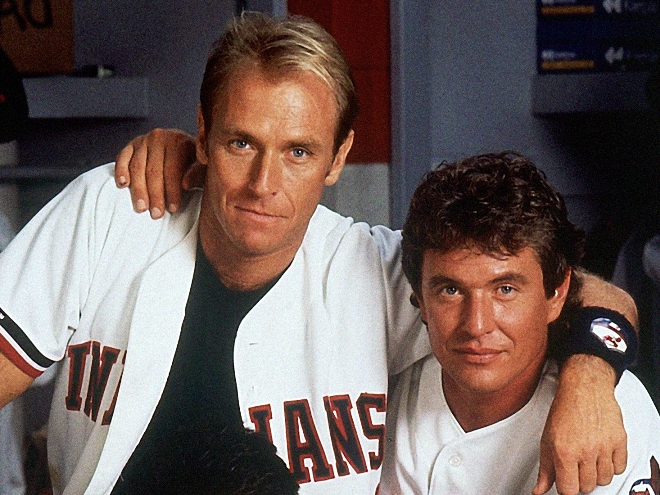
Corbin Bernsen’s role as Cleveland Indians third baseman Roger Dorn in “Major League” marked a big breakthrough for the actor who at that point was best known for playing divorce lawyer Arnie Becker on “L.A. Law.” The actor was one of the guests who attended a reunion screening of “Major League” at the Aero Theatre in Santa Monica which brought out fans who were excited to see it on the big screen.

“Major League’s” writer and director David S. Ward talked said he only casted people who could play baseball, and he talked about how Bernsen had been a ballplayer for a long time. Bernsen played with the Hollywood Stars baseball league, and he also played in many MTV celebrity “Rock N’ Jock” softball games as well.

The movie was shot in Milwaukee, Wisconsin, and one day had the filmmakers inviting 27,000 residents to portray Indians fans at the baseball stadium there. Grant Moninger, programmer for American Cinematheque and moderator of the “Major League” Q&A, asked Bernsen what it was like to play baseball in front of all those people.

Corbin Bernsen: The night that all those people were there was just one of the most exciting times in my life. You’re wearing the real uniform on a real field, and you’re playing it. I was a pretty good fielder in my day but I wasn’t much of a hitter. That last setup where I get the single and then Dennis (Haysbert) comes in and hits the home run to get me on base, I remember David saying, “I need you to hit the ball somewhere in left field preferably between shortstop and 2nd base.” And I’m thinking, you’re gonna be lucky if I just hit the ball man! I’m not a hitter. But he wants it directly there and it’s got to be a line drive at a certain height and all that. I kept thinking he’s going to fire me because I can’t do this, and the balls are coming in and I kept swinging and missing and swinging and missing and I finally, with all these people there, connect with one and the ball takes off and this fucker is flying to the wall! I’m standing there and I see David and he’s saying “RUN! RUN! RUN!”

Bernsen went on to say he still sees a lot of stuff on the internet about “Major League” which say “great movie, one of the best baseball movies, but Corbin Bernsen sucks and he can’t play baseball.” He ended up getting a hold of some guy from Philadelphia who had been dissing him and told the guy, “Hey! I’m not supposed to be able to play baseball in the movie you a-hole!” From there, Bernsen even challenged him to a throw off from centerfield every year and told the guy, “I will stand in Philadelphia on your field on the warning track and I will throw a fucking line drive to second base a-hole and then you shut up!” That guy from Philadelphia never took Bernsen up on this challenge.

To our surprise, it turns out Bernsen was actually not the original choice to play Roger Dorn in “Major League,” and he only got the part after the actor cast before him, whose name he couldn’t remember, ended up dropping out. Getting cast, Bernsen said, was one of the luckiest things which ever happened to him, and he was thrilled to be in it. He also made clear why he feels the movie holds up so well, and it is because of Ward’s excellent script.

CB: When you read a solid script, that’s like a blueprint that’s just gold. I would urge everyone, if you’re interested in film, to read the script for “Major League.” Everything that’s supposed to happen in a story happens on the exact page it’s supposed to happen on. Yeah, it’s a funny little comedy baseball movie, but I just think it’s one of the most solid scripts that I have ever read. Clean, lean and to the point. That’s all David Ward.


Tom Berenger Reflects on the Making of ‘Major League’

Major League Tom Berenger

WRITER’S NOTE: This article was originally written in 2012 when this screening took place.

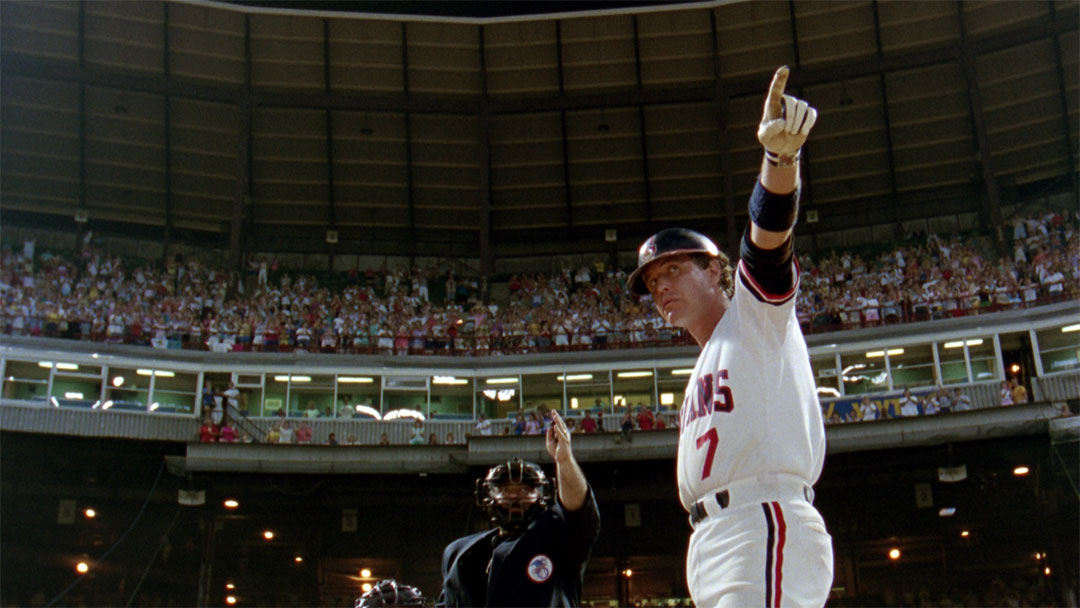
Among the guests at a recent reunion screening of “Major League” at the Aero Theatre was actor Tom Berenger who played veteran baseball catcher Jake Taylor. It is still one of Berenger’s best known roles as we watch his character go through another baseball season which may very well be his last while trying to win back his ex-girlfriend Lynn Wells (Renee Russo in her film debut). And like his fellow co-stars, Berenger proved to the filmmakers he could play baseball.

Berenger did have some experience playing little league when he was growing up, and he played some more ball after that but never professionally. “Major League’s” writer and director, David S. Ward, also said “you could watch Tom swing a bat and you could tell he could play baseball.” Berenger said he played on third base and left field, but “Major League” had him taking the catcher position for the first time ever. What made the difference in preparing for this role was who he had to work with.

Tom Berenger: I had a great teacher which was (Steve) Yeager who had been a catcher for the Dodgers. Besides being a great player, he was also a great teacher which is important, and he worked with Charlie (Sheen) and I and we started probably six weeks before the other guys came in.

Berenger even talked about how he got Yeager and some of the cast to come back to his hometown in South Carolina so they could practice there. His thought was that practicing at Pepperdine University near Malibu with the “dry air” and “breeze coming off of the ocean” was “a little deceiving” as real ballplayers deal with more humid conditions.

TB: We raised a little team so we could do infield practice and drills and things like that, and it was all these guys who were on softball leagues that had once played baseball. They loved it. It was great. I had a friend that was head of maintenance for the public schools, and he got us a field at one of the high schools that was totally blocked off. It was just screened by Palmetto trees, Live Oaks and stuff. He gave us the key to the gate to get in and he brought all his equipment out there and he recut the field, he redid the mound, he gave us a pitching machine so I could practice pop-ups and we could do batting practice.

Berenger said this worked out great for everyone there because they all were forced to deal with humidity, and it was this same humidity which the cast and crew faced in Milwaukee, Wisconsin where “Major League” was filmed. The movie was shot in 1988 during the hottest summer in Wisconsin since 1938, and he remembered it being brutal to work during the day as a result. While the training done in South Carolina certainly prepared many for day shooting, Berenger looked more forward to working nights when it was cooler.

Watching the movie again had Berenger getting nostalgic for the old Cleveland as it appears in the movie’s opening credits, and it is one of the few parts of the movie which was actually shot there.

TB: I’m looking at it and I’m going wow, look at that industrial town. That’s what we used to be. And that makes me a little sad, you know? Chicago and Cleveland and Pittsburgh and Bethlehem and Allentown; all those towns were like that and they’re not there anymore, and I find that really sad because I think they were the backbone of this country.

“Major League” still holds a place in all our hearts thanks to its humor and deeply felt moments which have stayed with us long after the end credits are done. Even Berenger admitted the movie still has a profound effect on him more than 20 years after its release.

TB: I have to say that I just love this film. I cry at the end every time I watch it. It’s a comedy but it’s got so much heart and great writing and direction.