Dame Judi Dench on Making M a Central Character in ‘Skyfall’

WRITER’S NOTE: This article was written in 2012.

Skyfall” marks Dame Judi Dench’s seventh appearance as MI6 spy master M, and it gives the Oscar winning actress her biggest role yet in the James Bond franchise. Ever since her first appearance in “Goldeneye,” the same film which introduced Pierce Brosnan as 007, Dench has made the character a no-nonsense leader who considers the famous secret agent “a sexist, misogynist dinosaur” and “a relic of the Cold War.” M also shows no hesitation about sending Bond to his death if the situation calls for it, and this made the role all the more exciting for Dench to play.

“A man saying that to Bond is one thing, but a woman saying that to him was quite another,” says Dench.

Whereas M has typically remained on the periphery of the Bond movies, “Skyfall” has her playing a significant part in the film’s story. We come to learn more about M’s past as it catches up with her in the form of one of the nastiest Bond villains ever, Raoul Silva (played by Javier Bardem). Dench was understandably excited about her enlarged role in this particular 007 film as Bond struggles to protect M against Silva who has a very personal vendetta to settle with her.

“It’s very nice to be out from behind the desk,” Dench said. “It’s extremely nice to get a go in the field, as it were, and get a bit of the action. It made me feel very grown-up. It’s not just the fellas who are spinning about and shooting guns – I get a go.”

In talking about M’s backstory, Dench talked about the need for actors to create one for themselves even if it is not there in the script.

“You always have to make a backstory for yourself in order to know how to react to certain things,” Dench said. “I’ve had this backstory with two grown up daughters and everything. I knew her capabilities and I knew that she must have been through all sorts of things in order to get where she was and hold this job over a lot of chaps at MI6. So I knew her capabilities but I’m very glad they came to the fore.”

As for how she prepares for a role, especially this one which she has held onto for 18 years, Dench said it is no different from when she plays a character in the theatre.

“With M, she’s always slightly changed in each film,” Dench said. “In the first one (“Goldeneye”) naturally I would have thought out why and how this woman has gotten to this part and why she’s head of MI6. Each time you come to do it you actually learn a little bit more about her, and you supply a little bit more about her. So there’s a lot more of the relationship between her and Bond beforehand that goes into this one, but it adds a bit more because there’s more to tell.”

There’s a lot more which could be said about Dench’s role in “Skyfall,” but doing so would give away many of this film’s surprises (and there are several to discover throughout). What can be said about Dench is she will always be a tremendous acting talent we should all feel privileged to watch in anything she appears in. Perhaps the person who can sum Dench up best would be “Skyfall’s” director Sam Mendes who also had the fortune of directing her in a production of “The Cherry Orchard.”

“She was the first bona fide great actor I had ever worked with,” said Mendes. “I learned more from watching her, the way she worked, than I ever had before. She would never think of herself as a teacher. She has too much humility and too much grace to consider herself to be knowledgeable. But in fact, it wasn’t about what she said, it was about how she conducted herself, how she rehearsed, how she thought about the play, her dedication to the play and the audience, her work ethic.”

SOURCES:

Jake Coyle, “Judi Dench on ‘Skyfall’ & Her Reign as M (SPOILER INCLUDED),” The Huffington Post, November 9, 2012.

Daniel Fienberg, “‘Skyfall’ star Judi Dench enjoyed going to ‘the ammunition shed’ for the new James Bond adventure,” Hitfix, November 5, 2012.

Steve ‘Frosty’ Weintraub, “Dame Judi Dench Talks SKYFALL, Working with Roger Deakins, the Best Part of Playing M, Her Upcoming Stephen Frears Film, and More,” Collider, November 8, 2012.

Daniel Craig on Playing James Bond in ‘Skyfall’

WRITER’S NOTE: This article was originally written back in 2012.

They say third time’s the charm, and this could not be truer for actor Daniel Craig’s third go around as James Bond in “Skyfall.” Many are calling this latest 007 adventure one of the best ever, and by now there should be no doubt that Craig is the best actor to play Bond since Sean Connery. Craig goes on record about how he prepared to portray the iconic British spy this time around, and of the rules he and the filmmakers broke in this franchise.

At a recent press conference, Naomie Harris, who plays agent Eve, said Craig worked a 15-hour day on set, and then he spends another two hours doing physical training. Craig talked about how he trained for “Skyfall.”

“I’m not a fighter. I pretend to be one. It’s bullshit boxing,” Craig said. “I had to do a lot of running in this movie, which I hate. I did a lot of sprinting and running. Bond doesn’t usually walk through a room. … On paper it looks very easy: it says Bond goes from A to B and he goes from B to C. But he goes from A to B at a lick. He runs down the stairs, he runs up the stairs, and you have to do 10 takes at a time.”

One big question people had for Craig was how many of his own stunts he did for “Skyfall.” He wasn’t about to fool anyone with his answer.

“I get a kick out of it,” Daniel said of the action scenes. “I don’t do all my stunts. I’d be lying if I said that. But I like the fact that occasionally that you’ll see on screen that it’s my face and it’s me. And I think audiences hopefully appreciate that. At least, I really hope they do.”

Craig, however, did participate in one hair raising stunt which takes place during the movie’s prologue which takes place in Turkey.

“My first day on the train was just about learning how to stand up. The train was going about 25 mph, but it’s not the speed that matters, it’s the side-to-side motion,” Craig said. “Then when we get over the bridge, it’s a 300-foot drop over this ravine. They all said, ‘Don’t look down!’ And I tried not to.”

With this particular 007 movie, Craig was determined this time to bring Bond back to the basics. In other words, it was time to bring back the gags and the gadgets audiences had been missing in the previous installments.

“I always had a plan in my head, however tenuous it was, that when we did ‘Casino Royale’ – that was the beginning – we had to set a tone. Then we finished the story in ‘Quantum of Solace’ and wrapped it all up. The third one would always be about bringing in the classic Bond,” Craig said. “The characters, the people that really make a Bond movie a Bond movie. That was my only desire.”

But there is one rule which Craig freely breaks in “Skyfall,” and it is showing Bond crying. Some will say it is an unbreakable commandment for 007 to shed tears over anybody, but ever since “Casino Royale,” the rules for how to make a Bond movie have been broken out of sheer necessity. Things needed to be reinvented in order for Ian Fleming’s famous secret agent to remain relevant in this day and age. Even when Craig jokes how Bond is seen sweating, he makes it clear how he and the filmmakers are looking to break the rules of the fifty-year-old franchise.

“Of course we did, that’s what we’re supposed to do. We’re supposed to mess around with it,” Craig said. “It’s interesting: You said he cries, other people I know said he doesn’t cry, it’s open. But it’s an emotional scene.”

There’s also no forgetting Mr. Fleming whose books gave life to this long series. As time goes on, the filmmakers and whoever plays Bond remain dedicated to portraying the character as closely to the books as they possibly can. At the same time, Bond is a complicated kind of secret agent.

“We always go back to Fleming when we sit and discuss, and if you look at the novels, he’s so conflicted,” Craig said. “Fleming tries to kill him off. He gets really pissed at him. And he’s a killer. He kills for a living. It’s a very dark place he goes to.”

Daniel Craig is contracted to do at least two more movies as James Bond, and he is not about to part with the role. Here’s hoping he lasts even longer as he is the best actor to inhabit this iconic role since Connery.

SOURCES:

Jay Stone, “Daniel Craig on playing Skyfall’s ‘complicated’ Bond,” Canada.com, November 5, 2012.

John Boone, “James Bond in Action, in Love and…in Tears?! Everything You Want to Know About ‘Skyfall,’” E! Online, November 9, 2012.

Stephen Galloway, “‘Skyfall’ Star Daniel Craig Reveals the Downside of Being James Bond (Q&A;),” The Hollywood Reporter, November 8, 2012.

Hollie McKay, “Bond Turns 50: Daniel Craig says ‘Skyfall’ is ‘classic Bond,’ wishes next 007 ‘good luck,‘” Fox News, October 24, 2012.

No, I Haven’t Seen It Until Now: ‘Dr. No’

WRITER’S NOTE: This review was written back in 2008 when I was way behind on my 007 watchlist. RIP Sean Connery.

I keep hearing over and over telling me Sean Connery was the best James Bond and still is. And yet after all these years and so many 007 movies later, I have only seen a few of the ones starring Connery. Until yesterday, the only ones I had seen all the way through were “From Russia With Love” which remains one of my favorite Bond movies ever, and the rogue Bond “Never Say Never Again” which brought Connery back to the role for the first time since “Diamonds Are Forever.” The James Bond I really got weaned on as a kid was Roger Moore who played the character like a flamboyant playboy who got caught up in events he looked as though he had no business getting caught in. Nevertheless, Moore managed to get the job done even as the franchise started to descend into parody.

Yesterday, New Beverly Cinema, my favorite movie theater in Los Angeles, had a double feature of the first two Bond movies ever made: “Dr. No” & “From Russia With Love.” I had seen bits and pieces of “Dr. No” previously, but never the whole way through. Watching it today, this 007 adventure seems like an average Bond with the megalomaniac villain bent on world domination. I was starting to get sick of this in the last few films which starred Pierce Brosnan as Ian Fleming’s famous spy. Every once in a while, I like to see Bond go head to head with a villain who is not looking for an infinite level of power, but instead one whom he just wants revenge over like in “License to Kill.”

It helps, however, to keep in mind what action movies were like before James Bond came along. Compared to “Dr. No,” they were nowhere as gritty. Shooting female characters in a film was not allowed back in 1962, and this Bond quickly did away with this unwritten law. There was a lot more going on than just your average good guy here. While it might appear to be something of an average film for those seeing it today, “Dr. No” was in many ways a groundbreaking film which led to a franchise which has lasted longer than so many others.

OK, I am in agreement, nobody played James Bond better than Connery, and this is even though I consider Daniel Craig to be a very close second. His very first appearance as 007 in “Dr. No” was truly brilliant as you could see him at the card playing table, but you did not see his face until he uttered one of the most famous lines in cinematic history:

“Bond. James Bond.”

My dad is always telling me what made Connery so great in playing Bond is that he was so believable in how he could romance a woman one second, and then slap her when she was holding back information from him. There was a raw danger which Connery brought to this iconic character, and he set the bar almost impossibly high for the others who inhabited Bond after him. When he lets a driver take him to his destination, even though he knows this driver is up to no good, shows how quickly Bond can change from being suave and debonair to lethal and dangerous in a heartbeat. Connery’s Bond kept his cool and managed to get his way in the end. The bad guys think they have him cornered, but this is what he wants them to think.

It is endlessly interesting to see how the Bond movies have evolved since “Dr. No.” It remains the only 007 film to not have a pre-titles scene which the others are famous for having. It just goes right into the gun barrel opening in which Bond shoots right at us. The titles look cheesy today as “Dr. No” and “007” are put everywhere on the silver screen. It was the first of many opening credits sequences designed by Maurice Binder, and this one remains the most disjointed of the bunch. It goes from the unforgettable Monty Norman theme we all know to three men superimposed over the credits to the tune of “Three Blind Mice.” The audience at the New Beverly laughed at this part, and I couldn’t help but laugh myself. Things have changed a lot since “Dr. No” came out.

Seeing Bond flirt for the first time with Miss Moneypenny (the late Lois Maxwell) here makes me miss the banter these two characters have had from one film to the next. Miss Moneypenny was not in “Casino Royale,” and I have no idea if we will ever see her again in the future. But seeing these characters here for the first time reminded me of how great and fun their banter was until M made her buzz Bond in for his next assignment. Just when things got interesting between the two, business comes to obliterate pleasure.

In “Dr. No,” Bond actually gets to bed several different ladies instead of just one. Connery makes seduction look so easy to pull off. The fact such seduction is not this easy in real life is utterly frustrating. This lucky bastard of an Oscar winning actor had quite a selection before he came to meet the first Bond woman ever, Honey Rider (Ursula Andress), whose entrance in a flesh colored bikini is still one for the ages. This also marked the first time Bond actually sang, and he has not sung since. I can’t help but wonder if this was a good or bad thing. Then again, I can’t quite picture Timothy Dalton singing “Thunderball.” As for Brosnan, I never want to hear him sing again after “Mamma Mia.”

One of Bond’s first death-defying moments involved a tarantula, and just typing out this particular spider’s description sends shivers down my spine! UGGH! This may have been why I never bothered to watch “Dr. No” earlier in my life. Those damn things creep me out like nothing else. Seriously, get that creature away from me! Easily one of the scariest moments in any Bond movie, the tension escalates so quickly to where the rest of this movie can never quite match it. Still, it wouldn’t be the last time we saw spiders in a Bond movie. My brother covered my eyes during one scene in “Octopussy” which included them. I think it is just as well that he did.

Watching “Dr. No” was fun, and it is an excellent Bond movie in many ways. Time has not been exactly kind to it though. We can see the green screen being used, so we have to snicker some. The pace is a lot more leisurely, and no Bond movie can move so slowly these days. Norman’s Bond theme is played endlessly here to where we threaten to get sick of it. But decades later, it is impossible to tire of this theme as it is to tire of John Carpenter’s theme to “Halloween.”

The print New Beverly Cinema had of “Dr. No” was in peak condition, and it was a recent printing down for the occasion of United Artists’ 90th anniversary. It was great to see it on the big screen all the way through instead of just on television. From here, the Bond series had nowhere to go but up. The formula was more or less perfected with “From Russia With Love,” and the producers did not mess with this formula until after “Die Another Day.” I enjoyed “Dr. No,” and I love how it paved the way for many more exciting adventures with this British spy. May there be many more in the years to come.

* * * ½ out of * * * *

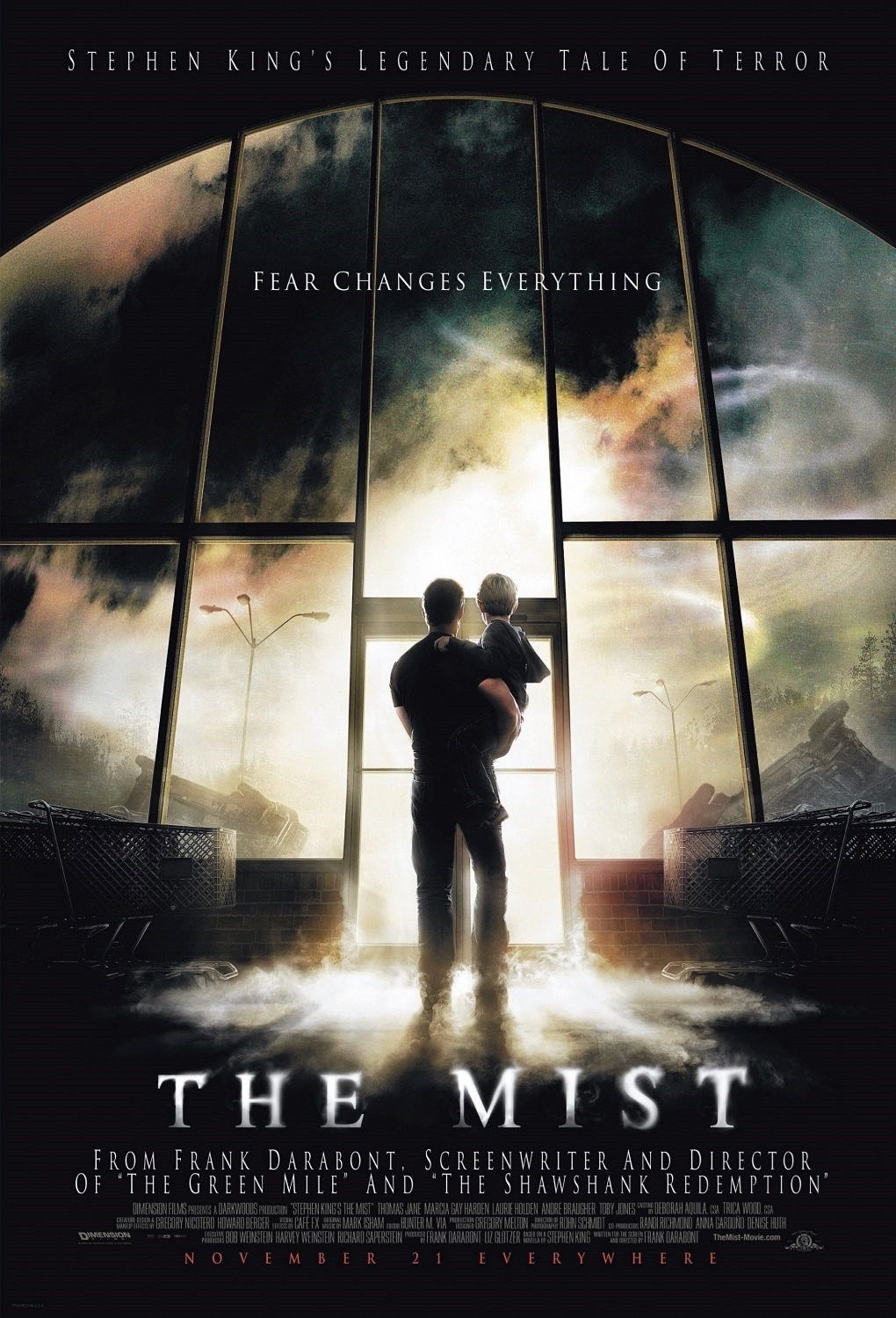
‘The Mist’ Deals With the Fear of the Unknown and of Reality

There was a time when Frank Darabont created the most effective cinematic adaptations of Stephen King’s novels. He gave us one of the all-time great adaptations of King’s works with “The Shawshank Redemption,” a classic which you can still catch it on TBS or TNT every other week. Darabont also directed “The Green Mile” which was very good and left its audience in tears at its humbling conclusion. These days, Mike Flanagan has become the King adaptation master of choice with his takes on “Gerald’s Game” and “Doctor Sleep,” both of which proved to be wonderfully unnerving. Before this, however, was Darabont’s adaptation of King’s “The Mist,” and it represented his first time dealing with one of King’s full out horror stories. Having said this, he still brings this particular King horror tale to life in way few other filmmakers ever could.

“The Mist” takes place, as many of King’s works do, in the state of Maine. We see our main character, David Drayton (Thomas Jane), doing his work as a graphic artist on something which appears to be right out of “The Dark Tower,” and it establishes what David does while simultaneously establishing the kind of movie we are about to see. It is a motion picture which deals with people whom we recognize from the real world we inhabit and the small towns we grew up in. This is not often the case as many horror films deal with stock characters we cannot wait to see done away with.

One day, there is a storm which hurls a tree into David’s work studio, and he ends up going into town with his son the next day to pick up supplies. In the process, he also ends up taking along his next-door neighbor Brent Norton (Andre Braugher) regardless of the fact Brent’s tree fell down on David’s boathouse and completely destroyed it. But while at the market, a mist starts to blanket the town to where there is zero visibility. A local townsman named Dan ends up rushing into the store crying out, “There’s something in the mist!”

From there, everyone is trapped in the supermarket as the thought of stepping outside its doors is far too fearful an action. This is largely the result of there being something in the mist which quickly proves to be anything but human, and this creates divisions between everyone trapped in the store. This division is primarily brought about by Mrs. Carmody (Marcia Gay Haden), a fervent believer in the word of the bible who believes judgment day is upon us and that the end is indeed very near.

Watching “The Mist,” you can recognize the familiar types of characters which occupy the average Stephen King story; the man who doesn’t want to be the hero but ends up being one even if it is not by his own doing, the religious fanatic who will not allow themself be torn away from they believe to be the truth, and townspeople who appear to be brave on the outside but terrified on the inside. What I really liked about this film is how Darabont never lets them become just mere stereotypical characters. While these characters may appear to be just that, it is a credit to the writing and acting that everyone involved in this film’s production rose above the genre’s conventions to give us something more human than we typically expect.

What interests Darabont here is not so much the monsters on the outside, but instead the monsters which lurk deep in our psyches. How we would possibly react when all the things we depend on in our life are suddenly taken away from us? No easy answer is given, but it is clear we are left with our instincts for survival at any cost. Darabont does excellent work in creating an inescapably claustrophobic environment where escape is easier said than done and trust can easily become a disposable commodity.

Leading the cast is Thomas Jane who first has made an unforgettable impression when he co-starred in “Boogie Nights.” He then went on to do “Deep Blue Sea” which more or less typecast him as the hardened hero who shows more courage than anyone around him. But here, he is simply an ordinary man caught up in an unimaginable situation, and he is struggling to maintain his sanity in an increasingly desperate situation.

“The Mist” is filled with many fine actors who fully humanize their roles and succeed in avoiding the mistake of making these characters seem stereotypical and easily disposable. It is great to see Andre Braugher here as the disbelieving neighbor/lawyer who makes the idiotic assumption he is being setup for a practical joke. In any other movie, we would simply just hate his character Brent for not believing the protagonists, but Braugher succeeds in making us believe why he might see how Brent could not see the inherent danger everyone is caught up in. As an audience, we of course know better of what is really going on, but it makes you think of how people would normally react in a horrifying situation like this. Could we easily believe in such things? Wouldn’t we be skeptical of what others tell us? Aren’t some us sick and tired of being the butt of everyone’s jokes?

Also in the cast is Toby Jones who is a wonderful presence here as Ollie, a supermarket employee who turns out to be very handy with a gun. Then we have other character actors like Jeffrey DeMunn who plays Dan Miller, and William Sadler who plays Jim Grondin. Frances Sternhagen is also on board as a friendly schoolteacher named Irene and has some of the best and most memorable of moments in this movie. You also have Lauren Holden as Amanda Dunprey, a new school teacher who befriends David and his son Billy (Nathan Gamble).

All of these actors do a great job of making the characters all the more real to us so that we don’t simply laugh them off the screen for doing stupid things that horror movie characters usually do. You get the sense that if this were written and directed by anyone other than Darabont, it would look like just about any other horror movie we have seem hundreds of times already. But there is going with the story of this movie that makes it more than your typical horror movie.

But the best performance comes from Marcia Gay Harden who plays the seemingly crazed Mrs. Carmody. A religious zealot if there ever was one, Carmody can be easily compared to Carrie Wright’s mother from “Carrie” as both are hopelessly devoted to God and the Bible even though their belief structure has long since been corrupted. Harden is a brilliant actress, and she makes Mrs. Carmody far scarier than the monsters which constantly threaten to infiltrate the overcrowded supermarket everyone is stuck in. She also makes you believe how people would end up following her when the fate of the world continues to descend down on them all. Her crazy beliefs end up making believers out of others, and a mob mentality quickly forms a sharp division between the characters stuck in the store which threatens to bring out the worst in everyone. Harden’s portrayal of such a frightening individual has long since stayed with me after watching this film when it came out in 2007.

Not everything about “The Mist” is perfect. The monsters, when they do appear, are effectively creepy and eerie, but they are also clearly CGI, and this takes away from what we are shown. Darabont ends up creating more of an intense effect when we don’t see the monsters up close, but instead from a distance. When they are shrouded by weather they inhabit, they seem infinitely more terrifying as a result. If you have a fear of creepy crawlers like spiders, you may want to think twice about checking this movie out.

The ending of “The Mist” is different from King’s book, and King himself was quick to point this out to everyone who bothered to listen. What I can tell you about the ending is that it is both uncompromising and devastating in its impact. It makes you look back at everything which happened to where you realize the line between good people and bad people, protagonists and antagonists, heroes and villains can be ever so easily blurred. The people we end up fearing the most are ourselves and of what we are capable of. We can easily descend into craziness and insanity when all the things we need most in life are suddenly taken away from us. The moment we give up on life and accept its horrifying fate is the moment when we all become less than human, and considering the times we are currently living through, this seems more pertinent than ever before.

I walked out of “The Mist” completely shaken and unable to speak. It contains a shattering ending which is unlike any we usually from any film we typically watch. What makes it all the more unsettling is that we cannot help but think of what we would do in the same situation. There are many who cannot bear to think of the answer such a question, but there are those whose drive to survive is impossible to ignore.

“The Mist” may not as good as “The Shawshank Redemption,” but it is still an effectively made motion picture with excellent performances and an ever-growing intensity. It is also one of the better adaptations of a Stephen King novel in years, and it keeps itself from sinking into the clichés of the average horror movie.

Whether or not you believe in extra-terrestrials is beside the point. We end up fearing ourselves more than anything else, and this fear can easily cripple us from doing what we want to do in our lives.

The tagline of “The Mist” was right: Fear changes everything…

* * * ½ out of * * * *

‘Bill & Ted Face The Music’ Hits Just The Right Notes

After watching the trailers for “Bill & Ted Face The Music,” one question kept popping into my head: How can these two guys from San Dimas go from playing in front of the largest audience in the world to performing for a crowd of 40 in Barstow, most of whom were there for $2 taco night? At the end of “Bill & Ted’s Bogus Journey,” we saw news articles of them performing all over the place, and they even got to stage a concert on Mars of all places. Seriously, you cannot plummet from a height of fame like that, right?

Well, keep in mind that at the end of “Bogus Journey,” Bill and Ted did finally learn how to play their guitars, but they also performed a cover of “God Gave Rock and Roll to You” by KISS. We never did hear them play any original tunes. As “Face The Music” begins, we learn their debut song as writers opened big and then plummeted to the bottom of the charts in record time. Even worse, their follow up albums were ravaged by the critics, one who described their work as being “manure.” Taking this into account, it makes perfect sense they would end up performing in Barstow, a town in the middle of nowhere. Like Vanilla Ice, they shot up into the stratosphere and then saw their follow-up album being sold at a used record store for only 99 cents (and that’s on the day after it was released).

We first see Bill S. Preston (Alex Winter) and Ted Logan (Keanu Reeves) at the wedding of Missy (Amy Stoch). Yes, Missy is getting married, and just wait until you find out to who. The two use the occasion to present the world premiere of their latest work, and while they play instruments with more confidence than before, they are still unable to put together a cohesive song, and the response they get is much like the one Spinal Tap received when they told the audience they were going in a “new musical direction.”

Bill and Ted are still married to the princesses, Joanna (Jayma Mays) and Elizabeth (Erinn Hays), and they have two beautiful music-loving daughters in Theodora (Samara Weaving) and Wilhelmina (Brigette Lundy-Paine). Still, they have not yet written the song meant to unite the whole world, and it appears as if this destiny may have been misread. Furthermore, their daughters are in their 20’s and still living at home, and their wives are starting to tire of the lack of the direction in their husbands’ lives. Ted’s dad, Captain Jonathan Logan (Hal Landon Jr.), refuses to believe he and Bill could have traveled in time or gone to heaven and hell and begs them to get “real jobs.” Yes, middle age has hit Bill and Ted real hard to where they feel the need to reassess their goals.

Then into the picture comes Kelly (Kristen Schaal), daughter of the late Rufus, who takes Bill and Ted to the future to meet The Great Leader (played by Holland Taylor) who is not exactly happy with where they have ended up in life. From there, they are informed that the universe is unravelling and will be destroyed if they do not write the unifying song in the next 78 minutes. How about that? You are tasked with writing the song which will unite the world, and you have just over an hour to compose it. Talk about pressure! As we get older, 78 minutes doesn’t last as long as it used to.

Bill, however, comes up with a most excellent plan to travel with Ted into the future when they have already written the song and to take it from themselves. Ted considers this to be stealing, but Bill convinces him it isn’t as long as they are stealing from themselves. Hey, it worked for James Horner!

“Face the Music” comes to us more than 25 years after “Bogus Journey,” so it is hard to know what to expect. It reunites not only Reeves and Winter, but also screenwriters Chris Matheson and Ed Solomon who penned the previous two films as well. I am thankful to say this sequel is no “Blues Brothers 2000” which relied on an overabundance of nostalgia to where I found myself wanting to watch the original. Instead, it does come with some good laughs and a lot of heart as everyone involved has worked their damndest to bring this last chapter of Bill and Ted to the silver screen and digital streaming for dozens of years. Regardless of what you may think, no one is out to simply repeat themselves here.

Both Reeves and Winter are clearly having a blast as Bill and Ted keep traveling to different parts of the future in an effort to talk to themselves and get the song. This allows the actors to portray them in various ways to where we see them as has beens, a duo ever so in love with English culture, and hard-core prisoners who have bulked far more than you would ever have expected (nice makeup work by the way). Regardless of the many years which have passed them by, both actors slip back into their roles as if they never left them, and they keep these characters from becoming mere caricatures throughout.

Also, believe it or not, there is some evolution to Bill and Ted. Granted, they are still pretty dense when it comes to things like couple’s therapy, but they also realize how their famous sayings of “be excellent to each other” and “party on dudes” do not have the same resonance as they once did. Before they go on their latest excellent adventure, they have to realize they are at a crossroads as things cannot keep going the way they have been as things have got to change. Still, it is worth it to see them playing air guitar here and there even as they approach middle age with inescapable apprehension.

Both Weaving and Lundy-Paine are fun to watch as the daughters, and this is even though the section where they search for famous musicians to create a band is the film’s weakest. It’s a bit of an anemic retread of when Bill and Ted, on their “Excellent Adventure,” went back in time to gather historical figures for their final history exam. Regardless, it is cool to see Jimi Hendrix jam with a bewildered Mozart who has no idea what he is hearing.

It is also great to see William Sadler return as the Grim Reaper as he stole every scene he had in “Bogus Journey.” He too slips back into this hilarious character as if he just played him yesterday, and not once does he have to struggle to get a laugh out of any of us. Seeing the Reaper attempt to make peace with Bill and Ted over the fallout they had with all those 40-minute bass solos is not just one of “Face the Music’s” funniest moments, but also one of its most heartfelt.

Each of the “Bill & Ted” films have had a different director: Stephen Herek directed “Excellent Adventure,” Pete Hewitt helmed “Bogus Journey,” and behind the camera for this installment is Dean Parisot. As a result, each one has a different feel to it despite having most of the same cast and the same screenwriters. Parisot is a perfect fit for this entry as he is terrific at mining material for both laughs and heart, and he proved this with “Galaxy Quest,” one of the greatest cult movies ever made. “Face the Music” doesn’t reach the same heights as “Galaxy Quest,” but Parisot does show a lot of respect for these characters and gives this sequel the heart it deserves. More importantly, he gives it a fulfilling conclusion which truly put a big smile on my face.

Upon first watching “Bill & Ted Face the Music,” I have to admit my feelings on it were mixed as I hoped it would be funnier. But after watching it a second time, I found myself appreciating it more as speaks to the values of friendship and music, both of which we need in these crazy times. Whether or not this sequel is all you ever hoped for, it is clear everyone involved put everything they had into it, and I do hope the fans are satisfied with what they see.

Could a fourth “Bill & Ted” movie ever happen? I don’t know, and frankly this one serves as good conclusion. Seeing them rock out at the conclusion reminds me of what Neil Young once said:

“Rock and roll can never die.”

Damn right! Party on dudes!

* * * out of * * * *

Running Scared Celebrates Its 25th Anniversary at New Beverly Cinema

WRITER’S NOTE: As the opening paragraph indicates, this screening took place back in 2011.

On September 28, 2011, New Beverly Cinema played host to the 25th anniversary screening of the 1986 buddy cop action comedy film “Running Scared.” It stars Billy Crystal and the late Gregory Hines as Chicago police detectives Danny Costanzo and Ray Hughes who, after almost getting killed, decide to retire in Key West, Florida. But before they can retire, they first need to bring down a vicious drug dealer (is there any other kind?) played by Jimmy Smits. Attending the screening were the film’s director, Peter Hyams, and actress Darlanne Fluegel who played Costanzo’s ex-wife, Anna.

Hyams had just finished making “2010” for MGM, and the studio wanted to keep him there. He got offered the script for “Running Scared” which he said was originally about two “elderly” cops who want to retire. However, he instead suggested that the cops be younger guys, and he made it clear how he wanted Billy Crystal and Gregory Hines for it.

At the mention of Crystal, Hyams said “you could hear the thump in the office.” Keep in mind, this was long before Crystal became the actor and Oscar host we know him as today. Back then, he was primarily known for being a cast member on “Saturday Night Live,” and he had only done one movie previously which he would rather people forget ever existed (“Rabbit Test”).

As for Hines, an unnamed studio executive told Hyams:

“But the part’s not written for a black guy.”

To this, Hyams replied:

“Hines isn’t playing a black guy, he’s playing a guy.”

One of “Running Scared’s” biggest action scenes involves Hines’ character climbing to the top of a Chicago building on a window washer’s rig. Many of Hyams’ films feature scenes shot from great heights, and he said this is because he is highly acrophobic. The director is so terrified of heights that he keeps shooting scenes from a high elevation in order to get people as scared as he is of them. It turns out the film crew was unable to get a stuntman for this sequence, so they got the actual window washer of the building to do it.

In talking about Fluegel, Hyams said he had such a crush on her after watching “To Live and Die in L.A.” and wanted her to play Crystal’s ex-wife. Her character was the “least eccentric” in “Running Scared,” Hyams noting if the character was not made interesting, the film was going to die. Fluegel said she felt very free when working with Hyams because she could see the kind of environment he had her working in. She found herself creating things for Anna as the production went on, and you could feel the relationship between her and Crystal without words. Fluegel replied much of it came from the fact that the two of them “were just buds.”

“Running Scared” did well at the box office, and MGM of course became interested in doing a sequel. The studio wanted the cops to go to England and fight crime there, but Crystal and Hines were not particularly interested in doing a follow-up. As for Hyams, he said he didn’t want to make the same movie again as he felt it would not be interesting.

Crystal, while at a screening for “City Slickers,” remarked at how “Running Scared” was “the first interracial cop buddy movie.” After 25 years, it’s important to note this as it was released before “Lethal Weapon.” It still holds up well today, and while the studio didn’t think it would work, Hyams stayed true to his instincts on how to make it. Not bad for a man who openly admitted he is “terrified of shooting movies” and never had a confident day in his life.

In Defense of Rob Zombie’s ‘Halloween’ Movies

The two “Halloween” movies written and directed by Rob Zombie were eviscerated not just by critics but by the fans as well. Some critics, like James Berardinelli of Reel Views, said they did not even feel like “Halloween” movies. Fans were vocal in how characters like Laurie Strode and Dr. Loomis were unforgivably degraded compared to how they were portrayed in John Carpenter’s original. Others simply said Zombie’s take on Michael Myers just wasn’t that scary.

Well, I say phooey to all this nonsense! Zombie’s “Halloween” movies may not be as scary as the one which started off this never-ending franchise, but for me this was pretty much a given. There is no way you could recapture what Carpenter thrilled us with years ago. Zombie was aware of how Michael Myers, like other horror icons such as Freddy Krueger and Jason Voorhees, had pretty much worn out their usefulness. His respect for Carpenter’s slasher opus was strong, and after making a true grindhouse classic with “The Devil’s Rejects,” I knew he would take this story and these characters and make them his own.

What makes Zombie’s “Halloween” stand out from what came before it is how he treats the backstory of Michael Myers. Granted, this threatens to take away from what made him so scary in the first place. Carpenter’s original was an unrelentingly visceral experience mainly because we were not sure what to make of “The Shape” as he became less than human throughout. But here we get a strong idea of how young Michael went bad as he dealt with an uncaring sister, a busy mother, and an abusive lout of a stepfather. Seeing all he had to deal with made it understandable, if not forgivable, as to why he went psycho in the first place.

Now whereas Zombie’s “Halloween” was about Michael, his “Halloween II” was all about Laurie Strode, Dr. Loomis and of how the horrific events they went through forever destroyed them. It is here we come to realize what Zombie has accomplished with these movies: They are character studies instead of the average slasher movie we have come to expect. This is made even clearer on the “Halloween II” director’s cut which is available on DVD and Blu-ray as it proves to be infinitely superior to the theatrical version.

Fans hated how Laurie Strode and Dr. Loomis were so different from how they were portrayed in Carpenter’s original film, but they forgot how Zombie’s films were a meant to be a reimagining of the franchise and not business as usual. Strode’s extreme emotional reactions might make her unlikable, but they soon become understandable as no one involved in what she went through can ever walk away from it unscathed. Both Scout-Taylor Compton and Malcolm McDowell deserve credit for not being constrained by what Jaime Lee Curtis and Donald Pleasence created before them. In Zombie’s incarnation, these two actors inhabit their characters more than they play them.

In a time of remakes which are as endless as they are unnecessary, you have to give Zombie points for taking this long-running franchise in a different direction. It may not have been what diehard fans wanted or expected, but whereas most remakes repeat the formulas of movies they originated from with negative success, there is something to be said for a filmmaker who willfully goes against expectations. Seriously, this says a lot in a time when originality in cinema is largely frowned upon.

Andy Serkis on Returning to Play Gollum in ‘The Hobbit’

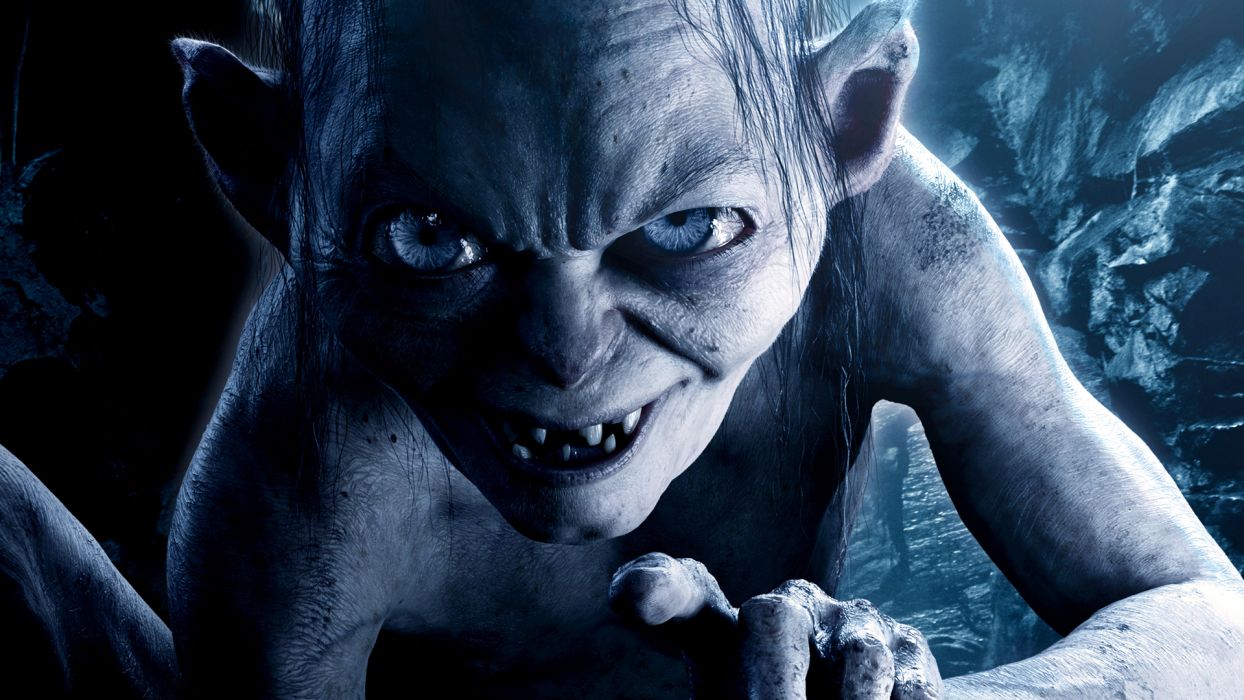
Gollum in The Hobbit

WRITER’S NOTE: This article was written back in 2012.

It is a thrill to see Andy Serkis return to the role of Gollum in Peter Jackson’s “The Hobbit: An Unexpected Journey.” While we marvel at the special effects which gave Gollum his unique if wretched look, it was Serkis who breathed life into the character in a way no one else could. His success in “The Lord of the Rings” got him cast in “King Kong” in which he portrayed the big ape, and audiences were begging to see him get an Oscar nomination for his brilliant performance as Caesar in “Rise of the Planet of the Apes.” Seeing Serkis return to the role that made him a star brings everything around full circle for the actor, and we are constantly fascinated at how he approaches roles that surround him with a wealth of special effects.

Serkis first played Gollum over a decade ago, and the character was 600 years old back then. “The Hobbit: An Unexpected Journey” takes place sixty years before the events in “The Lord of the Rings” so he looks a little better here, but that is not saying much. But what has really changed about how Serkis plays Gollum is the technology involved in filmmaking. While “The Lord of the Rings” movies were shot on film, “The Hobbit” was made digitally. Serkis talked with Fox News’ Ashley Dvorkin about the differences this time around.

“So I was acting with Elijah Wood and Sean Astin and we would all play out the scenes together, so that hasn’t changed,” Serkis told Dvorkin. “But the thing that’s changed is that I had to then go and shoot it again on the motion capture stage. So I had to repeat everything twice. So I shot everything twice in effect. Whereas 12 years later, now we have full performance capture on set so I can just play the scene once – I’ve got a head mounted camera which is capturing all my facial expressions. The suit is able to act in a live action set and we just played the scene like, two conventional actors playing the scene with each other. So it’s much, much better.”

Gollum, be it in “The Lord of the Rings” or “The Hobbit,” has always resembled a heroin addict who is relentlessly eager for his next fix. In talking with Katy Steinmetz of Time Magazine, Serkis said the character’s physicality was “borne out of his addiction to the ring.” The way he describes it, this really was the best way for him to fully inhabit the character, and he talked about the inspirations which played a part in his performance.

“His personality, the involuntary way in which his body spasms when the word Gollum comes out of his mouth, is connected to the guilt that he carries with him in his throat from murdering his cousin,” Serkis told Steinmetz. “He is described by Tolkien in many different ways, as a puppy with Frodo and a spider and a frog. I based him a lot on Francis Bacon’s paintings, the agony and torture, which are in turn based on Eadweard Muybridge’s photographs. The references for me were very layered.”

Seeing Gollum move all over, as if he is completely incapable of staying in one place for more than a couple of seconds at a time, makes this seem like one of the most physically demanding roles any actor could take on in their career. I am constantly interested in how Serkis can keep his energy up while playing a character like this as he must get worn out often while on set. He went into more detail with James Rocchi of MSN Entertainment about just how physical playing Gollum is for him.

“It’s very physical. Gollum is an incredibly physical role,” Serkis told Rocchi. “And it’s a combination of physicality and of course vocal. They’re so entwined with each other, so meshed with each other. It’s a pretty exhausting role, but I had such fun playing it with Martin (Freeman who plays Bilbo Baggins). It (the cave scene where they first meet) was the very first thing we shot on the movie as well. It was day one of 276 days of shooting, and there was I was face to face with Martin finding his way into playing Bilbo. And we shot the scene in its entirety every single time. And then Pete would move the camera between takes and let us roll it again. We would just play the whole scene out. And it was really, really exciting when we’re doing it.”

After playing Gollum in several movies, you might think Serkis would be sick to death of this role by now. However, this does not prove to be the case as the character has had a huge impact on his life. He even told Dvorkin he has a full-sized sculpture of Gollum made by WETA (the digital visual effects company based in Wellington, New Zealand) sitting in his office at his home. Even he is not blind as to the positive impact Gollum has had on his acting career as a whole.

“He’s been like a watershed character for me twice in my life now,” Serkis told Dvorkin. “First of all because not only because he is an amazing character to play the first time around but it was also the beginning of this journey into a performance capture which has enabled me to play so many other amazing roles. By virtue of the fact of him arriving that whole other list of characters has been what I’ve been working on the last decade. And then coming back full circle to playing him again in ‘The Hobbit’ also has brought me to directing. So both times, he’s not only been this amazing creature and great character to explore, but has shifted my life.”

It looks like we will be seeing more of Andy Serkis as Gollum in the future as Peter Jackson’s “The Hobbit” is now being expanded into three movies instead of just two. Many fans still have some issues with this as J.R.R. Tolkien novel is only 300 pages long, but Serkis is more than confident in Jackson’s ability to pull this particular trilogy off. Since the actor has already spent a number of years working with Jackson, his belief in the director seems more than justified.

SOURCES:

Ashley Dvorkin, “‘The Hobbit’s’ Andy Serkis has full-size Gollum sculpture in his house,” Fox News, December 14, 2012.

Katy Steinmetz, “The Hobbit’s Andy Serkis on Getting Inside Gollum’s Skin,” Time Magazine, December 11, 2012.

James Rocchi, “Interview: Andy Serkis of ‘The Hobbit: An Unexpected Journey,'” MSN Entertainment, December 17, 2012.

Bond 25 Finally Gets Its Title, and You May Be Surprised By It

No Time To Die 007 logo

We have been hearing so much about the 25th film in the 007 franchise to where it threatens to feel like we have watched it in full long before it arrives in theaters everywhere. Daniel Craig confirmed to Stephen Colbert he would return to do a fifth movie as James Bond, Danny Boyle was originally set to direct but later dropped out and was replaced by Cary Joji Fukunaga, and there were rumors Adele would return to compose this film’s theme song. Other than that, we were left with an endless set of questions: Would Christoph Waltz return as Blofeld? Who will compose the score for this one? Can they possibly get “Skyfall” cinematographer Roger Deakins to return? What kind of Bond villain is Oscar winner Rami Malek going to play? Who will be the latest Bond woman?

As fans posed these questions and several others, many including myself had one which we desperately wanted an answer to: WHAT WAS THIS BOND FILM GOING TO BE TITLED??!! In the wake of a press conference featuring the cast of Bond 25 and various behind the scenes images from the set, it seemed no one thought to give this one a name. Did longtime Bond screenwriters Neal Purvis and Robert Wade start writing it without a title in mind? Did fellow scribes Fukunaga, Scott Z. Burns or Phoebe Waller-Bridge get a chance to add their two cents to this issue? Seriously, it cannot be this difficult to generate a title for this or any other motion picture, right?

Well, after what feels like an eternity, MGM has finally given us the title of the 25th James Bond film: “No Time to Die.” My opinion regarding this title is quite mixed. A title like this one sounds like something out of an easily disposable paperback novel, while fun to read, won’t stay in the mind for too long. Granted, “Die Another Day” was already taken, but after the titles of the previous Craig Bond movies (“Casino Royale,” “Quantum of Solace,” “Skyfall” and “Spectre”) which implied quite a bit without saying so much, this one feels surprisingly ordinary. Couldn’t they have come up with something infinitely more inspired?

At the same time, perhaps it is not a bad title for this installment, likely the last to feature Craig as 007. In terms of years, Craig has now held onto this iconic role longer than any of his predecessors, and we have grown with him as we watched him make this role his own from “Casino Royale” to “Spectre.” In this installment, Bond is said to have retired from active duty and is now enjoying a leisurely life with Dr. Madeleine Swan (Lea Seydoux) in Jamaica. But the vacation quickly ends when his CIA pal, Felix Leiter (Jeffrey Wright), arrives in town and asks for Bond’s help in rescuing a kidnapped scientist. Suffice to say, retirement does not last long for Bond, and the only way for him to escape any sort of responsibility from this situation would be death. However, death would be the easy way out, and Bond is not about to go down that route.

Craig’s interpretation of James Bond reminds me a lot of Jack Bauer from “24” as both characters have sworn a loyalty to their countries of origin, and this is a loyalty which, whether they admit it or not, proves to be far more important than anything else in their lives. Still, their actions come with consequences and an inescapable case of karma which will never let them rest easy. How does one live with being someone who willingly kills if the situation calls for it and not go through life with one form of guilt or another? Craig’s Bond has numbed his consciousness more often than not with alcohol, and this is regardless of whether it is shaken or not stirred. The only way a character like this can possibly find peace is in the realm of death, and Bond is not about to choose this realm as he eventually returns to his call of duty when the circumstances call for it, and this installment makes it clear he is not about to die even if it will cease his suffering.

“No Time to Die” will arrive in theaters in April of 2020. Check out the title announcement below.


Martin Freeman on Playing Bilbo Baggins in ‘The Hobbit’

Martin Freeman The Hobbit photo

WRITER’S NOTE: This article was written in 2012.

He’s made a name for himself on BBC television shows like “The Office” and “Sherlock,” and he had the lead role of Arthur Dent in “The Hitchhiker’s Guide to the Galaxy.” But now actor Martin Freeman gets his biggest role to date as Bilbo Baggins in “The Hobbit: An Unexpected Journey.” This character was previously portrayed by Ian Holm in Peter Jackson’s “Lord of the Rings” trilogy, but Freeman now has the privilege of playing Bilbo in a movie which takes place sixty years before that trilogy’s beginning.

When it comes to portraying a character who has been played by a well-known actor in previous films, the task can seem quite daunting. Any actor in this position usually has to deal with a shadow hanging over them as their performance will always be compared to what came before. Holm’s Bilbo, however, functioned more as a cameo in “The Lord of the Rings” movies as he was only in them briefly. Furthermore, Freeman more than makes this role his own as he takes Bilbo from being someone who’s just minding their own business to someone willing to risk their life to help others. Still, you had to wonder if Freeman spent a lot of time studying Holm’s work in the previous films. Eventually, he cleared this up with Steve ‘Frosty’ Weintraub of the Collider website.

“I’ve watched the films again, obviously in more detail before I came to this. I looked at Ian’s (performance) more when I needed to. Again, I don’t really know how much I should say, but there were points where it was relevant for me to look very closely at Ian’s performance,” Freeman told Weintraub. “But generally, no because I think we’re quite good. I know why I was cast; do you know what I mean? Because I think we’re not that dissimilar, physically or whatever else. I think if I was, I don’t know, Jeff Goldblum or someone, then I might be thinking right, hang on, if he’s the older me I’d better attend more to something else maybe. Well, grow, for a start. But no, ’cause I think I was always trusted with it.”

“All I was told, which I think was flattery, and probably bollocks, was you are the only person to play it. So, I thought, well if they think that, then I’ve got to trust that,” Freeman continued. “And there’s only so much you can run with someone else’s thing. It’s very helpful in the way that it’s brilliant as he is always brilliant, and it’s a beautiful establisher of that character and a very loved one for obvious reasons. But it can also hamper you if you’re thinking, like in the barrels, if there’s even part of me thinking, how would Ian have done this, then I’m fucked. So, I’ve got to let that go. I’ve always been mindful of it because I’m familiar with it. But I think the work for that connection was done in the casting of me, rather than what I’m then going to do on top of it.”

In an interview with Colin Covert of the Toledo Blade, Freeman described Bilbo as being neither “the main guy in the room” or an “alpha male.” Looking back at “The Hobbit: An Unexpected Journey,” this gave the actor a great starting off point as he has to take this character from being a timid and rather pompous man to one who acts selflessly. Freeman really gives an exceptional performance as Bilbo’s transition from a self-centered person to a warrior of sorts feels seamless and subtle. You never consciously catch the actor trying to shift his character in a certain direction because it all seems to come about naturally.

One of the movie’s pivotal scenes comes when Bilbo meets up with Gollum who is again played by the brilliant Andy Serkis. This scene was actually shot in the first week of production and apparently took a whole week to film. When it comes to CGI characters, the actors usually have to play opposite something or someone which isn’t there. Fortunately for Freeman, Serkis was there on set to give life to Gollum, and he talked with Meredith Woerner of i09 about what it was like working with Serkis.

“Andy feels real,” Freeman told Woerner. “Obviously he doesn’t look like Gollum, strictly speaking, but he’s being Gollum. And I’m an animal of the theater and you’re used to using your imagination. You don’t have to use your imagination that much when you hear that voice and see the physicality and you think, oh there’s Gollum. There’s a man or a creature that wants to eat me. It didn’t feel very cheated at all. Gollum is such a beloved character. There’s a special place in people’s hearts for Gollum, I think. People who love the books and the films are delighted he’s in this, I think.”

Seriously, Martin Freeman gives a pitch perfect performance as Bilbo Baggins in “The Hobbit: An Unexpected Journey” to where you wonder if he and Ian Holm were actually separated at birth. This bodes well for the next two movies in Jackson’s “Hobbit” trilogy, and it will be interesting to see where Freeman takes this character from here.

One other thing; Freeman made it clear how Leonard Nimoy’s song “The Legend of Bilbo Baggins” did not play a big part in his research for the role.

“It helped me enjoy that three minutes of listening to it,” Freeman said of the song. “I’m still baffled by it.”

SOURCES:

Steve ‘Frosty’ Weintraub, “Martin Freeman Talks the Ring’s Impact on Bilbo, Being a Favorite for the Role & a Lot More on the Set of THE HOBBIT,” Collider, October 25, 2012.

Colin Covert, “Q&A; with ‘Hobbit’ Martin Freeman,” Toledo Blade, December 17, 2012.

Meredith Woerner, “The Hobbit’s Martin Freeman on dwarves, Gollum and Leonard Nimoy,” i09, December 16, 2012.