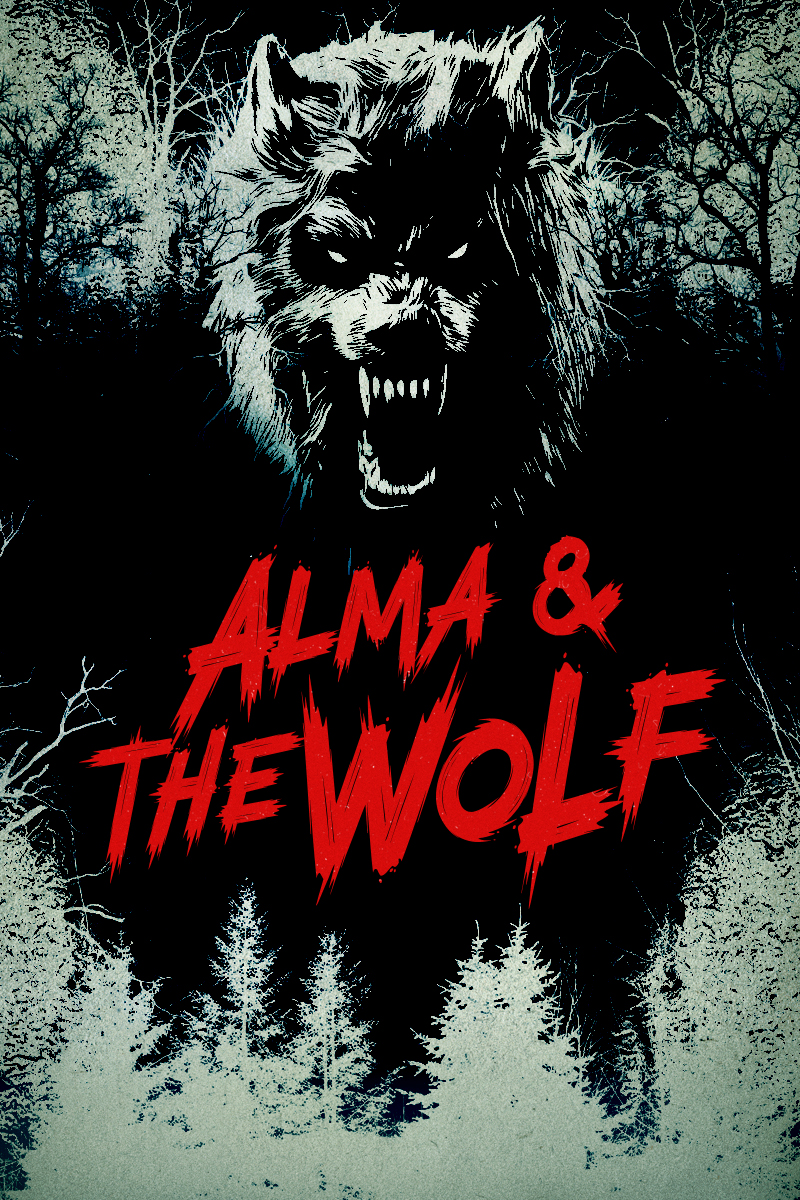
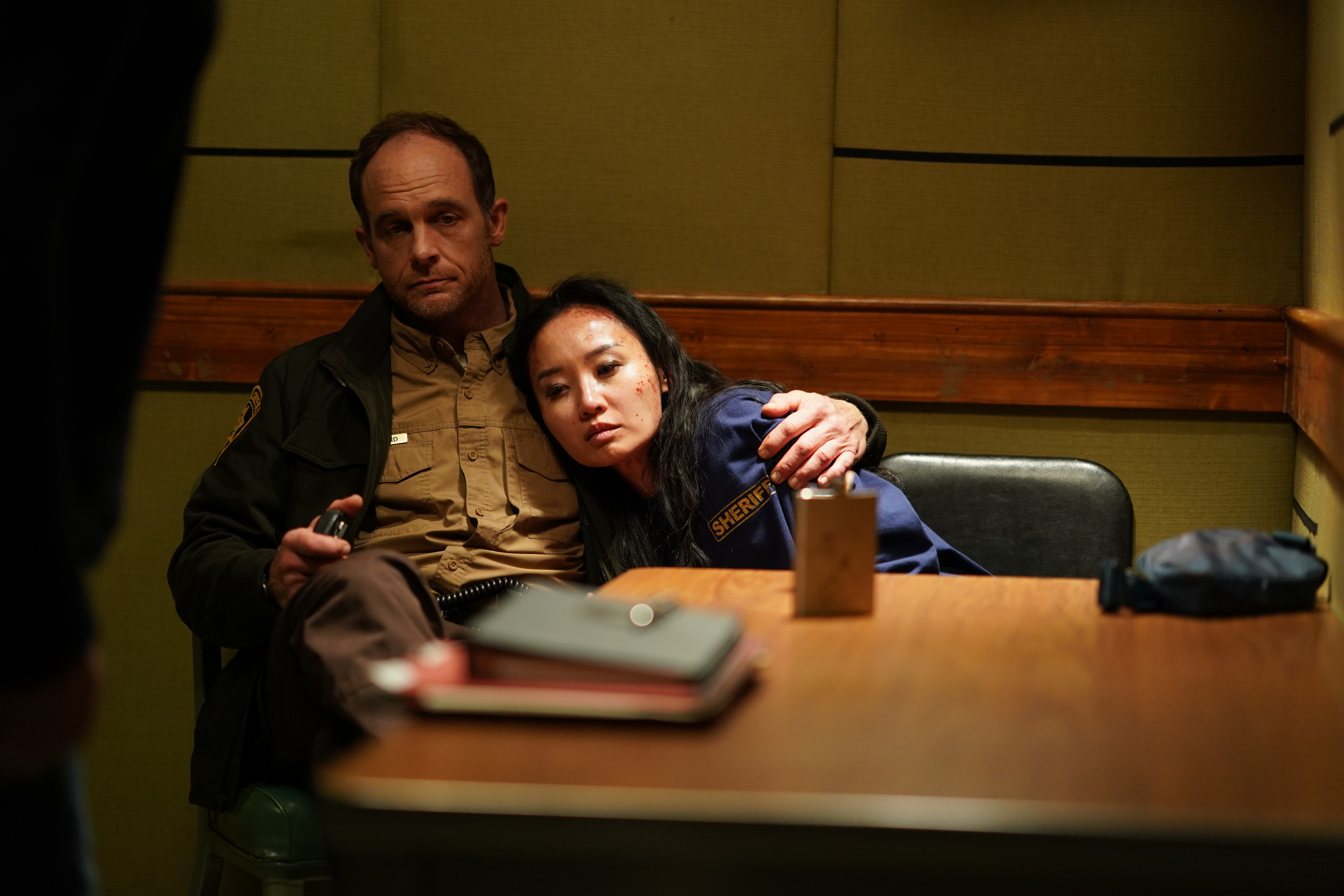
Michael Patrick Jann is best known for his work in comedy and as a cast member on MTV’s sketch comedy show “The State.” In 1999, he made his feature film directorial debut with “Drop Dead Gorgeous” which over the years has developed quite the cult following. With his second feature film as a director, “Organ Trail,” he got out of his comedy safety zone to enter the horror genre. Michael now returns to that genre again with his latest film, “Alma & The Wolf,” which stars Ethan Embry as a troubled police officer who investigates a mysterious wolf attack which happened to a high school classmate of his, Alma (played by Li Jun Li). The investigation becomes even more intense, however, when his son goes missing, and it puts him a collision course with an unbearable truth that can only stay hidden for so long.
I got to speak with Michael one-on-one recently about “Alma & The Wolf,” and we talked a lot about how comedy and horror deal with the various forms of suffering. Also, he discussed the challenges of filming on the Oregon Coast when the weather was really bad and cold, working with animals, and of working with his son, Lukas Jann, who plays Ethan Embry’s son here. In addition, this film also co-stars a classmate of mine from my University of California, Irvine school days, Beth Malone, who plays a rather nosy neighbor. It was great to talk with Michael about what Beth brought to her role and the movie, and it is always great to see her in anything and everything.
“Alma & The Wolf” is now available to rent and stream on select digital platforms. Please check out my interview with Michael down below, and I have also included a trailer for the film as well.
One of the many horror films coming to us in 2025 is arriving this week, and that’s “Alma & The Wolf.” Directed by Michael Patrick Jann, it stars Ethan Embry as Deputy Ren Accord, a very troubled man who has been thrust into a horrifying investigation he may not be fully prepared for. One day while driving on his usual route, he comes across Alma, played by Li Jun Li, who is walking alone in the rain while clutching to what is left of her dog. Alma tells Ren a wolf killed her dog and begs him to kill the wolf for her as an act of revenge. Wolves, however, are protected wildlife in the state of Oregon, so Ren tells Alma he cannot help her that way. But when his son goes missing in the Oregon coast, Ren comes to believe it may have everything to do with the wolf that killed Alma’s dog, and he becomes infinitely determined to find his son and kill the elusive wolf.
I was lucky enough to speak with Ethan Embry and Li Jun Li who are the main stars of “Alma & The Wolf” this past week. Ethan started off his career as a child actor, and he starred opposite Ed O’Neil in the John Hughes written and produced film “Dutch,” and he is best known for his roles in “A Far Off Place,” “Empire Records” and “That Thing You Do.” Li got her start as an actress in the theatre, and she later became known for her role as Iris Chang in the television series “Quantico.” In addition, she has received critical acclaim for her roles as Lady Fay Zhu in Damien Chazelle’s “Babylon” and Grace Chow in Ryan Coogler’s “Sinners.”
Much of my talk with Ethan and Li Li, as she likes to be called, was about acting and their choices. With “Alma & The Wolf,” they were involved in a cinematic production which had a very short production schedule, and I was curious how the speed of it affected their performances overall. Being an actor myself, I found their answers to be deeply informative and fascinating.
“Alma & The Wolf” will be dropped on streaming services starting on June 20, 2025. Please check out the interview below, and I have included a trailer for the film as well.
Please don’t ask me what “Eraserhead” is about because I’m still trying to make sense of it after all these years. Even David Lynch, who passed away on January 15, 2025 after battling emphysema, refused to tell anyone what it means as he prefers to let audiences come to their own interpretations. I finally got to see this surrealist body horror cult classic for the very first time at New Beverly Cinema back in 2012, and the theater was packed with fans of Lynch’s films as well as others who were also witnessing his cinematic work for the first time. We all came out of “Eraserhead” baffled as to what it all meant, but we were still endlessly mesmerized by the visuals and sounds Lynch came up with, all of which were done on a very low budget of $100,000.
When the movie’s title appeared on the screen, the audience burst into applause which gave me an idea of just how many at the New Beverly had seen “Eraserhead” before, and I imagine that have sat through it multiple times. We were sucked right in as Henry Spencer’s head floated in front of us while some weird looking guy was pulling at a bunch of levers as if he were pulling strings on a marionette. Then we got a visual of a sperm-like creature floating on the edge of Henry’s mouth which is suddenly shot forward into our world. Whatever this creature is, it was clear it would play a big part as the film unfolded before us.
It was fascinating to take in the audience’s reactions to “Eraserhead” that evening, but the most vocal reaction came when Henry Spencer (plated by Jack Nance) and his girlfriend Mary X (Charlotte Stewart) bring home their hideously deformed newborn baby. No one could tell if it was male or female, and its grotesque appearance both repulsed and enthralled everyone.
This very strange looking baby has a long pencil-thin neck, its head looks more like a giant snout, and it is limbless. To many, this is the kind of baby no parent ever hopes to have, but we feel sympathy towards this child because it breaks our hearts to see any baby suffer the way this one does. That it’s whining seriously got on the nerves of its parents is a testament to the meticulous sound design Lynch put together along with sound editor Alan Splet because it irritated us as well. Then again, we couldn’t help but laugh along with the baby when it let out a cackle as if it were belittling Henry and his feeble attempts at attending to it in a meaningful manner.
With Lynch’s films, there are times where we can’t help but laugh because the dreamlike state he invites and propels us into is at times hard to take seriously. But with every moment we laugh, there is another which has us so deeply enthralled to where we are at a loss for words and you can hear a bag of popcorn or a soda drop from someone’s hands in the theater (if it were a cellphone ringing, they would have been kicked out and banned for life). “Eraserhead” is no exception as it has many moments with a kind of beauty impossible to find in any other motion picture, and this makes Lynch an exceptionally original filmmaker.
This is especially the case with Laurel Near who played the Lady in the Radiator because, even with her horrifically bloated cheeks, she has us at hello with her rendition of the song “In Heaven.” While she may not exactly look pretty by any conventional standards, her singing voice is very sweet and gives us one of the more heart-warming scenes you might not expect this film to have.
While we came out of “Eraserhead” utterly baffled as to how to describe or interpret it, we could not say we weren’t enthralled by what Lynch presented to us. This was his debut as a movie director, and it led him to getting a career in Hollywood as one of its most daring filmmakers. I am eager to revisit this film again in the future because, like “Lost Highway,” I would like to think I can figure out what it all means. Lynch was never quick to give us any easy answers as he felt life was far too complicated and complex to do so, but I appreciate him for always bringing up some very interesting questions. Even as human beings all over the world desperately want everything spelled out to them, Lynch reminded us how we need to think about things for ourselves.
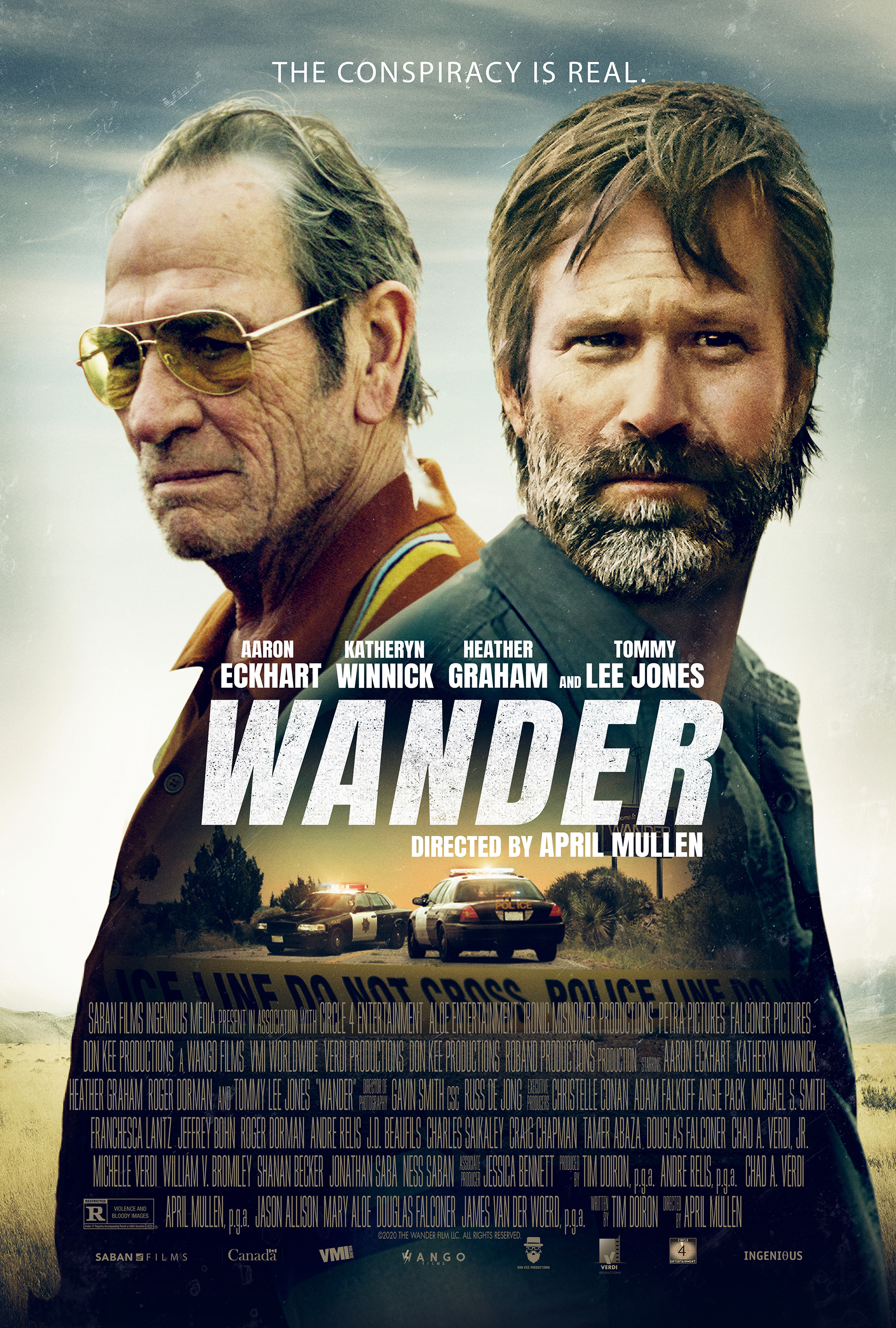
Even though we are still in the grips of the coronavirus pandemic, there are still new movies arriving to us in theaters (those which are open anyway) and/or to our own television screens thanks to On Demand and various digital platforms. One such movie is “Wander,” a thriller starring Aaron Eckhart (“The Dark Knight”) as Arthur Bretnik, a private investigator who live in a rusty old trailer out in the middle of nowhere. We soon learn he is still grieving the loss of his daughter who was killed in a horrific car accident which left his wife completely catatonic. The perpetrators of this accident were never found, and he remains determined to find them.
One day, he is met by a woman who pays him to look into the death of her daughter who also looks to have been killed in a car accident, but the mother is not convinced this was the case. In the process, he uncovers a conspiracy which links to other cases of people killed in a similar fashion as well as to his daughter’s death, and he becomes infinitely determined to uncover it for all to see. But with his troubled past and a history of mental illness, one has to wonder if Arthur is really seeing the truth out there, or if his mind is playing tricks on him. “Wander” also stars Tommy Lee Jones, Heather Graham and Katheryn Winnick.
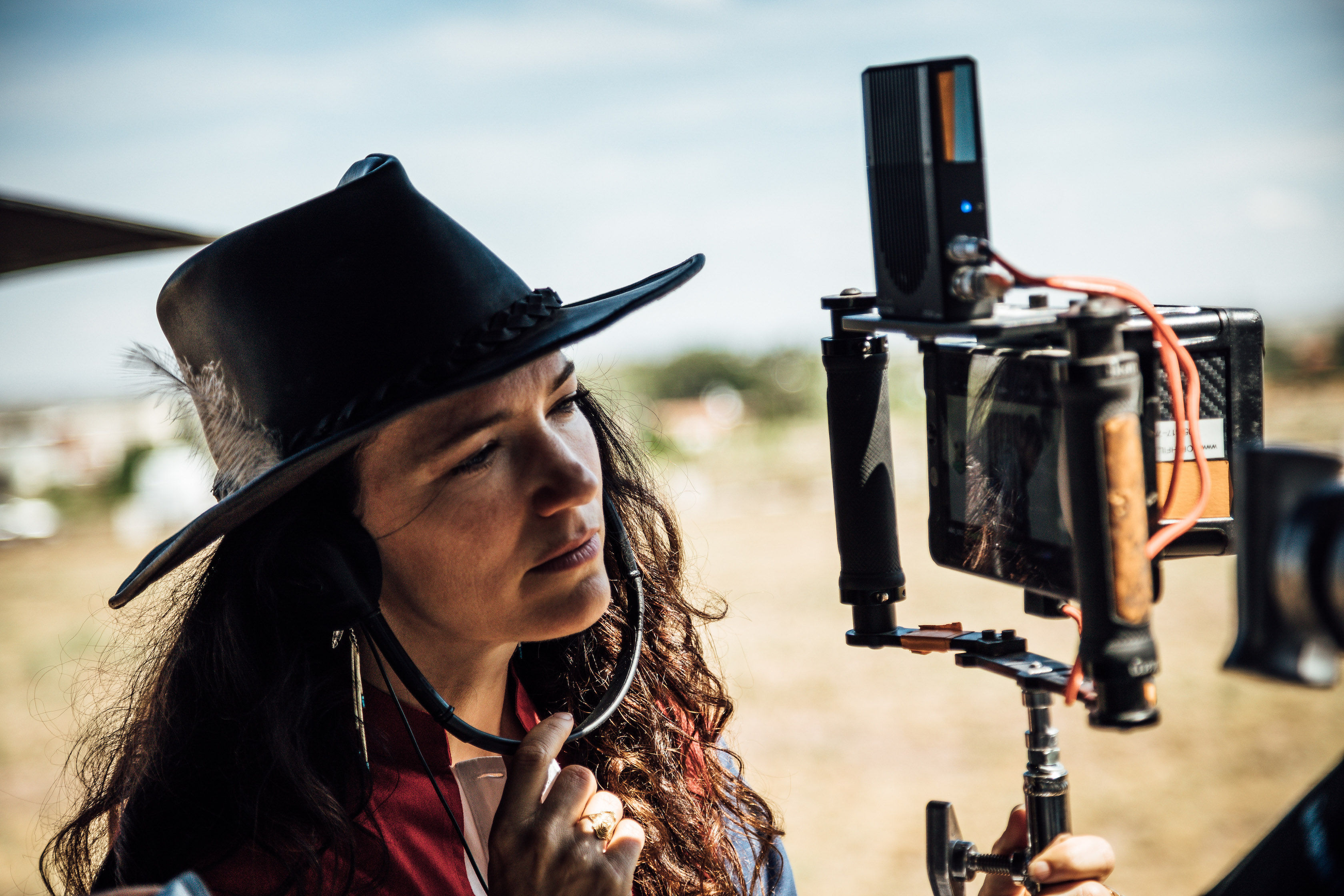
Directing “Wander” is April Mullen, a highly creative Anishinaabe Algonquin (Indigenous) filmmaker who is known for her passion, her bold visuals, and an ambitious shooting style which is truly amazing. With “Dead Before Dawn 3D,” she became the first woman and the youngest person to direct a live action stereoscopic 3D feature film, and it was awarded the Perron Award for its technological achievement. Her other directorial efforts include the erotic romantic drama “Below Her Mouth” which she filmed with an all-female production crew, and the action thriller “88” which stars Katharine Isabelle and Christopher Lloyd.
I was lucky enough to get a chance to talk with April Mullen about “Wander” recently, and in her director’s statement, she described the film as being a journey towards a truth unseen by most, and one hard to face. In addition, she also sees it as a critique of sanctioned government surveillance which has led to the displacement of many indigenous people through no fault of their own. We talked about this and more in our interview below.
April Mullen: Are you the marathoner runner himself, or did somebody else run a marathon?
Ben Kenber: (Laughs) I am indeed the marathon runner. I have run the full Los Angeles Marathon (26.2 miles) eight years in a row.
AM: Awesome! I just had to ask. I just looked at the (website) byline (“Cinematic Musings from a Movie Lover and Marathon Runner”) and I loved it. I looked at your website and I was like, this is wicked!
BK: I did not run the LA Marathon this year, but I am hoping to come back to it once this coronavirus pandemic has finally ended.
AM: You better because it pumps me up.
BK: Thank you. “Wander” really held my attention to the very end. This is always tricky to pull off especially with one like this which deliberately messes with your mind. When were you first introduced to the screenplay by Tim Doiron?
AM: Tim Doiron and I go way back. We started working and making independent films together 20 years ago. We come together and we’re like, what do we want to make next? That’s a very messy and exciting day. Five years ago, we wanted to create something with a main character who was really dealing with grief, loss, mental health issues and a huge amount of paranoia when it comes to conspiracies and government surveillance and anxiety, and of how to over come that. And then we thought, how are we going to bring that truth and that character to a world that’s commercial and viable for the entertainment industry (laughs). The backdrop was the conspiracy, the podcast, the chip technology, border control and my inner side of the truth; that indigenous women, 2Spirited warriors, BIPOC and displaced people have always been a continual target and victim of governmental subjugation and violent practices. (We went about) exposing that in a tight narrative through the eyes of one single character which is an unreliable narrator like Arthur. So, all of those themes became our mixing pot and then the rest is history, but it wasn’t as easy or smooth as we originally thought. We were like, this movie is going to be very straight forward, but of course it is so much more complex than we had hoped. But hey, we made a movie and that’s what it’s about (laughs).
“Wander” film by Wango Films
BK: Exactly. Aaron Eckhart is terrific here. He has to run a gamut of being in a state of grief, but he is also a bit crazy as well. Did you and Aaron had to measure out crazy and grief-stricken he had to look throughout shooting?
AM: We had an unbelievable working relationship. We were attached at the hip. We could communicate through our eyes and even our physicality on set. I was never far away. I was maybe three feet away from him. He was on set every day, every second and in every frame of the movie. He brought 150% and was beyond dedicated. I think this role was so different and far removed from anything else he has ever played. When he read the script, he completely resonated with Arthur. Aaron himself is totally into conspiracies, podcasts and the dark web. He always said, if you’re not paranoid, you should be. We were riffing on conspiracies and chem trails. It was unbelievable how much material resonated with him. He came from a really strong place of truth, and then Tim’s experience with mental health issues also rang from a place of truth. So, my job was just to make all of those things come together and make Aaron feel really comfortable to take major leaps and capture that lightning in a bottle that he has. We went off script and we went off locations. Sometimes it would just be him and I. He would be in a car and I would be operating the camera. We were able to do that because the film was so small, but I knew Aaron Eckhart if that makes sense.
BK: “Wander” is kind of a mind-bending movie in the same the way movies like “Jacob’s Ladder,” “Memento” and “The Sixth Sense” were.
AM: Very much. It’s very much like a current version of “Jacob’s Ladder.” I feel like it is the 2020 version of “Jacob’s Ladder” (laughs). At least, I hope it is. We really hope it is.
BK: You have said “Wander” was created in honor of all Indigenous, black and other people who are targeted and have been displaced through border control on stolen land. Do you this is what helps to set the film apart from others of its kind like “Jacob’s Ladder?”
AM: I’m not sure. I hope so. In the statement (at the film’s beginning), there is so much truth to that. We did a lot of research with MK-Ultra and who were the victims of that and of who did the government use to test different technologies on people, and it was mortifying. In our history, what we have done to people made a huge impact on us, and we had to say something at the beginning of the film because it’s not just a fictional world although we both wish it was different. This is the world that has happened in the past and we didn’t want to ignore it, but we didn’t want to heavy-hand it either. But we just thought it was so important to recognize the truth of what has happened, and it is terrifying to think we are constantly being tested and watched. Chip technology is right around the corner (laughs). Five years ago, it felt a little bit further away, but today… What we assumed five years ago, “Wander” is way more current than we ever dreamt it would be.
BK: In the film’s opening statement, it says “Wander” was filmed on the homelands of the Pueblo Navajo and Apache peoples. What effect would you say this had on the entire production?
AM: It had a huge effect. Our very first day, we opened with a ceremony recognizing the land with an indigenous family and clan from New Mexico, very close to Carrizozo, and that set the tone of what we were about to embark on. And as a creative person, and I’m also Anishinaabe Algonquin, I just thought that to start off with the recognition of the land that is not our own and that’s where we began, I really hoped to allow for truth, vulnerability and a humbling of everyone to know our goal as a creative group of being a silent warrior; shedding a light on these subject matters whatever they might be. This one in particular was Arthur’s journey, but at the end of the day we are all creating something that we hope makes an impact and propels change. Whether you’re a grip or costumes, I just thought coming together as a group and really allowing that to begin on the right foot was important, and then every day afterwards was the same. And then on a personal note, I don’t know if you noticed, but the music throughout the film was really specific and really original and different I think than any normal psychological thriller. That was a very strong intention to collaborate with an indigenous artist out of Canada whose name is Jeremy Dutcher, and I really wanted to put indigenous language in the film to bring medicine and healing through the Ancestors’ songs on the harsh reality of what our past and our history was. Just hearing that and feeling that, whether we understand it or not, I think our spirits are ideally healing through song and language, and that was a personal goal as well in making the film.
BK: The opening shot of “Wander” is brilliantly shot in how the camera comes up to the scene of a car accident and then pulls away from it to suddenly go up into a crane shot. How did you pull this off?
AM: You are the first person to mention this, and I have to say I loved that you did because no one has! That shot was so, so ambitious. There was only four of us. It was a (camera) operator who I have worked with on three films on the Steadicam who was rigged on the back of one of our production vans. My father was driving backwards (laughs) along a deserted road which we had full safety on each side which then came to a stop. The camera operator came up to and circled that space that you saw. He designed, which we brought from Canada to Carrizozo, a walk on/off platform which I am obsessed with. It’s used in the film a dozen times. He was able to take the Steadicam and do a walk on crane shot. It’s independent film so we have to do these things. He at the end walks backward onto a platform after which a crane lifts him up. He’s actually standing on the crane that he made a platform for, and it is all in one shot. I wanted it to be at sunrise so our window was very small. We practiced about three runs to get the timing of the lines of the road correct, and I really wanted it to be shot in one shot and not digitally faked. We shot it four times and then we got it on the second take. I’m really proud of that because it is an amazing achievement for a small crew with a small budget and being innovative together out in Carrizozo, New Mexico. We had very little resources. We built that shot with a hammer and screws (laughs).
BK: I imagine the budget on this production was very tight.
AM: Super tight. Too tight.
BK: How much time to shoot “Wander” in?
AM: 20 days, but our below the line budget was very puny because we had these incredible stars in the film, which is okay because that’s what we need for people to be able to see the film. But it really tightens the clasps on everything else. It was puny, very puny (laughs).
BK: Speaking of the cast, you have a great set of actors on display here. In addition to Aaron Eckhart, you also have Tommy Lee Jones, Heather Graham and Katheryn Winnick among others. How much direction did you have to give these actors, or did you simply leave them to their own talents?
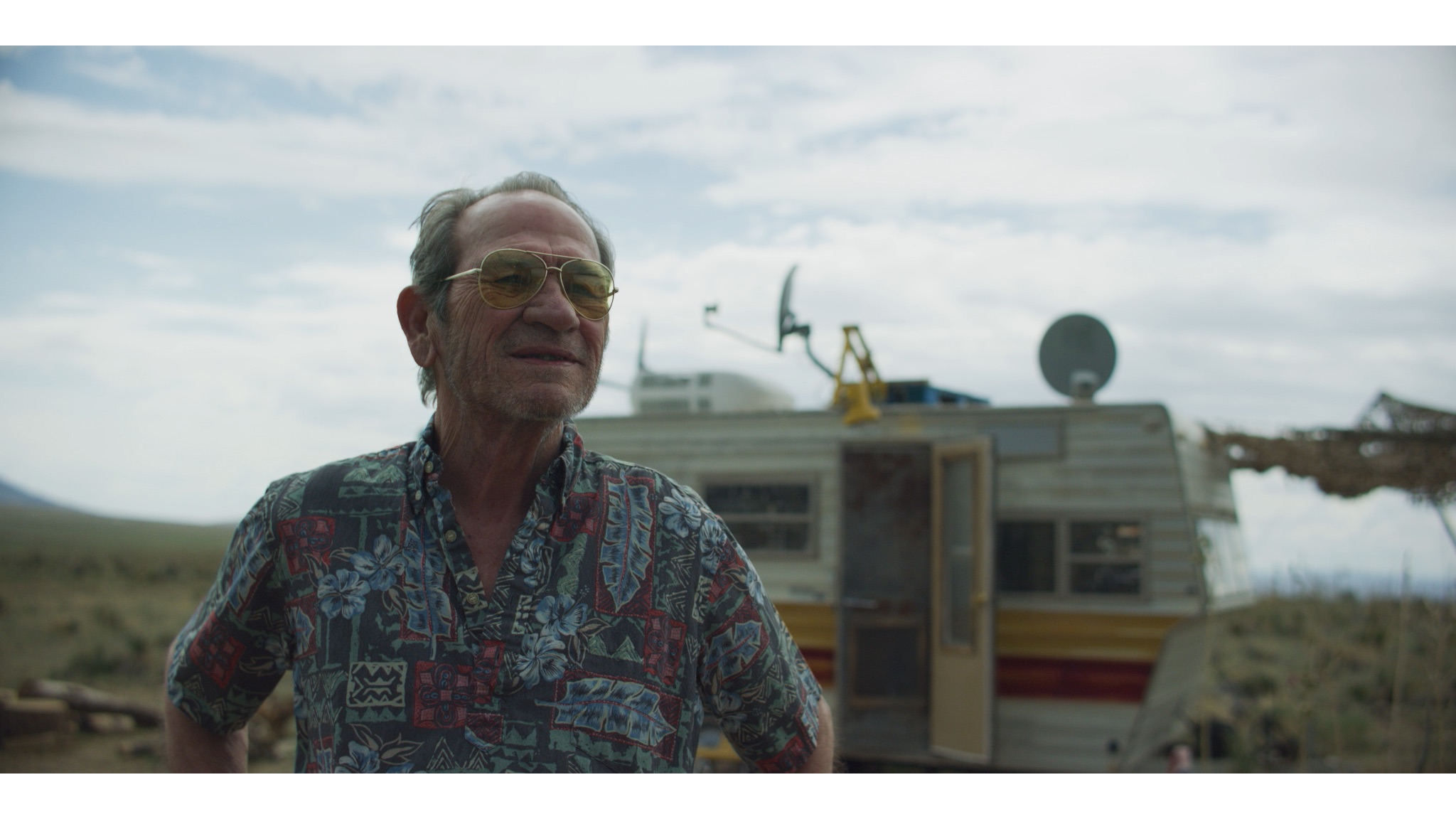
AM: As a director I am very, very hands on, so I am always within arm’s length of them and am trying to challenge them and steer them in new directions. I think Aaron, Tommy, Heather and Kathryn are all playing roles that they are not stereotypically cast for. Heather Graham was the grounded best friend and the tether to reality for Arthur. She was not a romantic love interest. She was the voice of reason for the audience. That is something very challenging and new for her, coming up with ways in making sure she was really grounded. She loved it, I loved it and we were both up for the challenge. Tommy Lee, he doesn’t usually doesn’t get to play an eccentric, fun loving (at least on the surface), Hawaiian shirt wearing, whatever goes kind of guy. It is very different for him. There were a lot of questions and bod language and how to say certain things. We were always, always communicating and it was unbelievable work because it was such a small set and a small cast in a lot of ways. There was a lot of one on one time which was fortunate and really wonderful.
BK: Katheryn Winnick’s character always stands out in an interesting way in this film, and this is especially apparent in the first shot. Was that by your design or Katheryn’s?
AM: It was written in the script, but we also worked on the script months before she got to Carrizozo. I love that she comes prepared. We were revamping and reworking the script to cater to her and her strengths, and what she thought was more intelligent or higher stakes for her character which was fantastic. That was really unique how she brought that as a performer. When she got there, she was unbelievable. She came onto set, it was her first day, and it was the shot where she has to jump out of a window and Aaron catches her and they start running, and it is the intro where she takes off her mask. As she was coming out of the trailer, I was like, Katheryn, we have 20 minutes, the sun is setting, it’s a one-take wonder because it has to happen at magic hour. Once again, trying to way too ambitious for what I have (laughs). So I said, Kathryn, I have your stunt double here, but then I would have to cut for the lines. What do you feel? And she was like, “I’m down, I’m ready, let’s get dirty!” As big and as Hollywood as she is, she was ready to get dirty and gritty for the role because that role is undone in a lot of ways because her character carries with her a lot of weight. She is manipulating all of the puzzle pieces which is pretty cool to find out at the end. She was just such a team player and she didn’t even practice. She was like, let’s do it. I was like, are you sure about the window? Are you sure you’re gonna go through it? Are you okay? She says, “done. I’m ready.” We did it twice, she nailed it twice, Aaron caught her twice doing somersaults out of a window, both of them did their own stunts and it was unreal (laughs), and that was day one on set! They trusted each other, they trusted us, they trusted me and it was an awesome moment of just jumping off a platform and creating magic together. It was awesome.
BK: That’s one hell of a first day.
AM: Can you believe that? I know! Unbelievable.
BK: The look of this film is fantastic. How much of it is due to you, and how much of it is the result of your cinematographers, Gavin Smith and Russ De Jong?
AM: It was a huge collaboration from the beginning. Tim Doiron, the producing partner and I landed in New Mexico six months prior to shooting. We lived in Carrizozo, that little town, in those tiny motels for four months. We were isolated from reality just like Arthur which was super inspiring, and Gavin and I were coming up with that beautiful projection and trying to be innovative with the small budget and small locations we had and really branching out to try and make the film feel much bigger than what it was. I’m obsessed with every detail, every moment and every little piece of color, light, production value and design that you see onscreen. Every little detail, I wish I could say it happened by accident and that we sneezed and there it was, but it is meticulously planned (laughs). I hope it feels real. I just wanted it to feel like real life, but it was definitely very much planned including the times of day when we shot. I really wanted to take advantage of those gorgeous landscape shots and the sun setting shots. That required teamwork with the DP and also out first assistant director and our production designer, my sister Faye Mullen, and me and everybody coming together to really try and achieve what we needed to on a tight timeframe. But the look was heavily established beforehand. I started taking pictures and photographs the minute we started writing. Five years ago, I was collecting a look book for “Wander” that I brought to the DPs who I have worked with before on several projects so we had a shorthand. We just wanted to make it our best work, so we challenged each other every day than we ever made it before which is a good thing.
BK: That lightning bolt in one shot, that was real?
AM: Oh yeah it was. Nothing is effects except for the little chip. Everything is real. Every sunset, every lightning bolt, all of that is just real and I’m so proud of that.
BK: Thank you for your time April.
AM: Thank you for supporting “Wander.” Have a great day and keep running!
“Wander” will be released in theaters (whichever ones are open), On Demand and on Digital starting December 4, 2020. Please be sure to check out the trailer below.Poster and photos courtesy of Saban Films.




 The Ultimate Rabbit