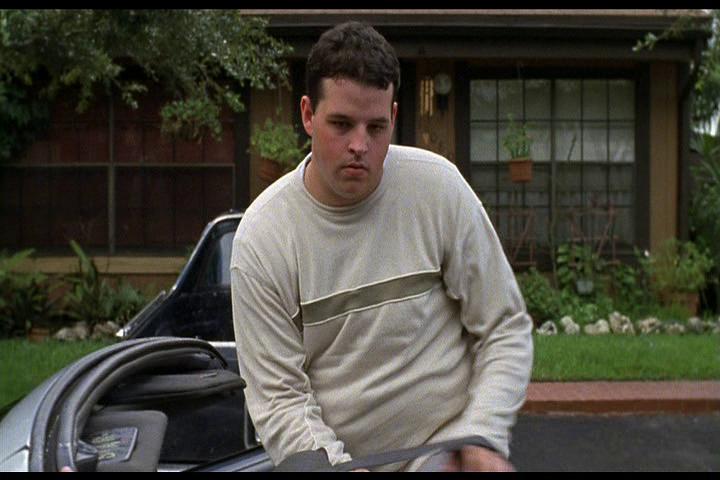
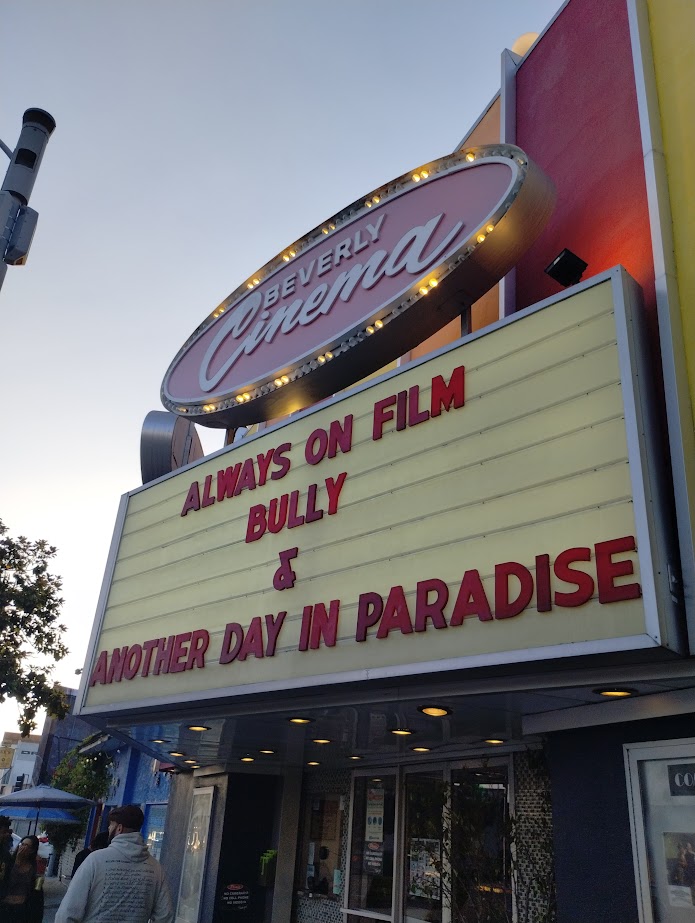
On August 12, 2025, New Beverly Cinema presented a Larry Clark double feature of two of his films: “Bully” and “Another Day in Paradise.” Before “Bully” unfolded on the silver screen, actor and filmmaker Joel Michaely brought out a special guest: Daniel Franzese who played Derek Dzvirk. “Bully” was Daniel’s film debut, and it quickly earned him his SAG card. Daniel thanked Joel for being there and remarked how he killed Joel once in a horror movie entitled “Cruel World” where he shot him in the head.
Daniel said “Bully” was the first time he ever got to hold a screenplay in his hands, and he talked about meeting the casting director, Carmen Cuba, at his audition.
Daniel Fransese: She was like, “Do you wanna see who you are going to play?” I said okay, and she opened up the true crime novel (written by Jim Schutze), and I looked exactly like the guy. And I was just like, oh shit! I can actually get this! So, it was very scary and nerve wracking.”
Rumors are that the set of “Bully” was a crazy one, and being that this was Daniel’s first film as an actor, you can understand and appreciate his feelings at the time.
DF: I’m a pretty easy-going guy, and I am also a theatre guy and a standup comedian. I’m used to being around other people, and I am good at getting along with different personalities. But this movie was next level. we are getting ready to do fittings and start our first day of this movie, and Larry (Clark) is screaming because Brad (Renfro) was in jail for trying to steal a boat. He’s screaming, “This was three years of my life! This kid’s not going to ruin it!” He’s throwing papers and I was like, whoa! That was day one and you can just imagine how the stress level got worse from there.
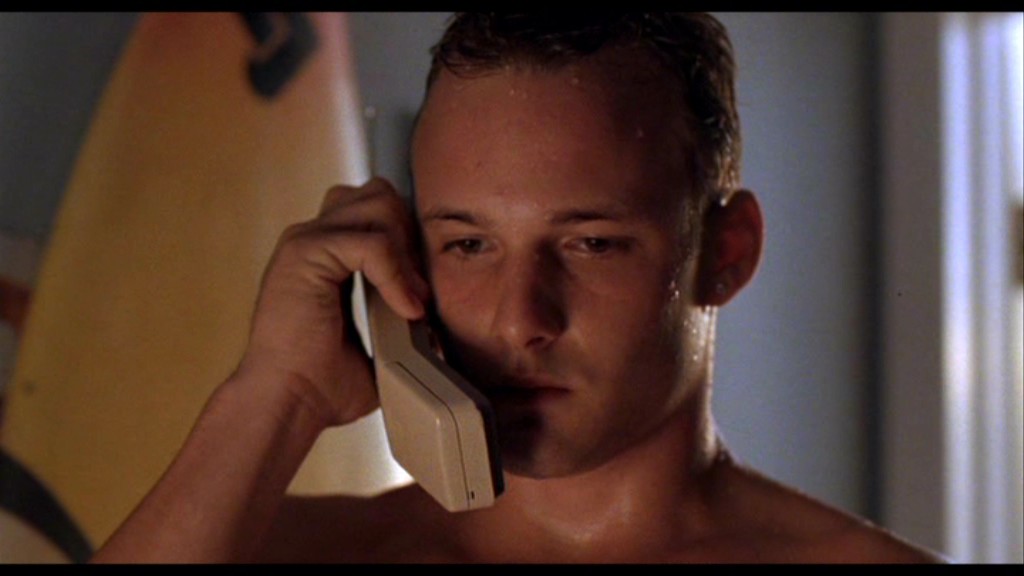
From there, the discussion went to the late Brad Renfro who played Marty Puccio in “Bully.” Brad first gained worldwide attention at the age of 12 years old when he was cast as Marcus “Mark” Sway in Joel Schumacher’s cinematic adaptation of John Grisham’s “The Client.” Like many people on this planet, let alone actors, he died at far too young an age He was only 25 years old, when he passed away after a drug overdose. Daniel talked about working with Brad.
DF: Brad was great. I think he was like one of those golden retriever type people. Not evil, but dangerous. We were doing the table read for the first time, and Brad showed up wearing a white tank top completely soaked in lighter fluid. He came in saying, “I’M TRYING TO GET THE BARBECUE TO GO!” It was like, whoa! He was from Knoxville and had like that “Jackass” sensibility where you didn’t know what he could do, but I don’t think he ever had a mean bone. His intentions were always nice. If anything, he partied too much, and he once told me that at 12, he made hundreds of thousands of dollars to do “The Client,” and he was getting a lot of his drugs and stuff from family members as a kid. I don’t think he got a fair shot. If anything, the reason why I advocate for younger people in Hollywood or talked about my experiences on this movie which were crazy, I was never speaking from a victim place. I was speaking from a place of advocating for people like Brad who didn’t have anyone saying anything for them. I just think, we’re making art. It doesn’t have to be that crazy. We don’t have to be stealing boats or going nuts on sets to produce good material.
After “Bully,” Daniel went on to appear in many films, but he may still be best remembered for playing high school social outcast Damian in 2004’s “Mean Girls.” Like Joel and myself, I wondered what it was like going from an independent film to a studio movie where everybody is expected to be on their best behavior.
DF: I just don’t think the 2000s will be looked upon as a time where it was easy for people on movie sets. I really don’t. People always ask me all the time how to get their kid in Hollywood, and I say don’t. I waited until I was at least in my 20’s (before going to Hollywood), and that’s the only thing which might have saved me. A lot of our contemporaries are not around with us anymore or are in a crazy state. It was a rough time. I can’t say it was easier or better, but I think it’s better now.
Regardless of the crazy set, Daniel made it clear to the New Beverly audience what the experience of making “Bully” was like, and of how the filmmakers strived to capture the spirit of the true story it is based on.
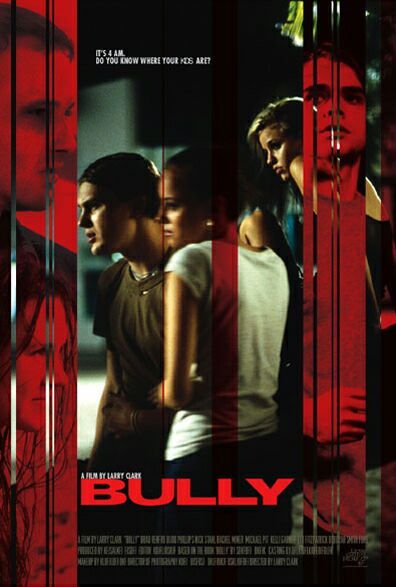
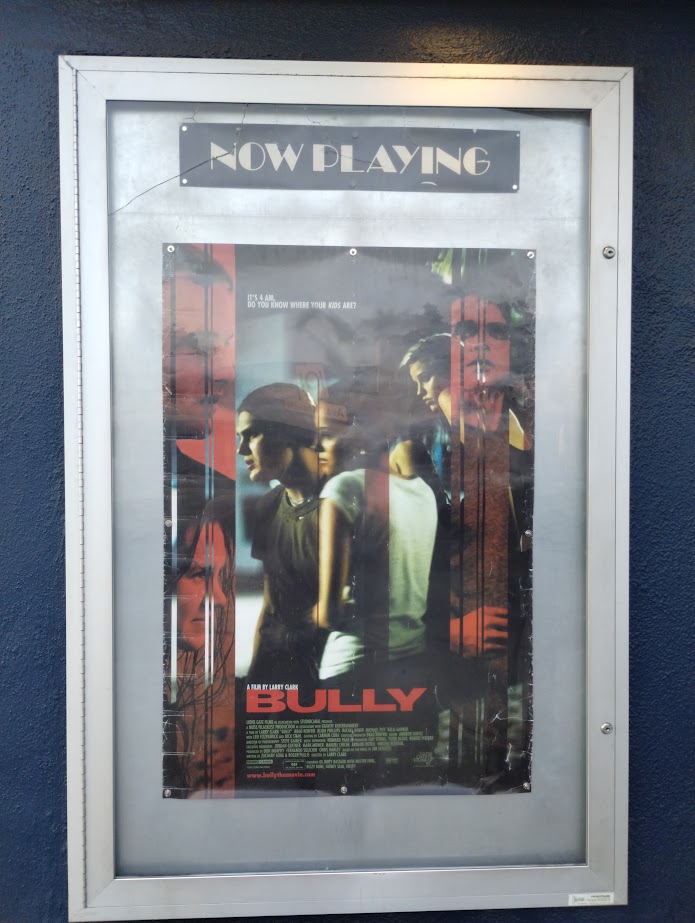
Bully (2001)
Directed by Larry Clark
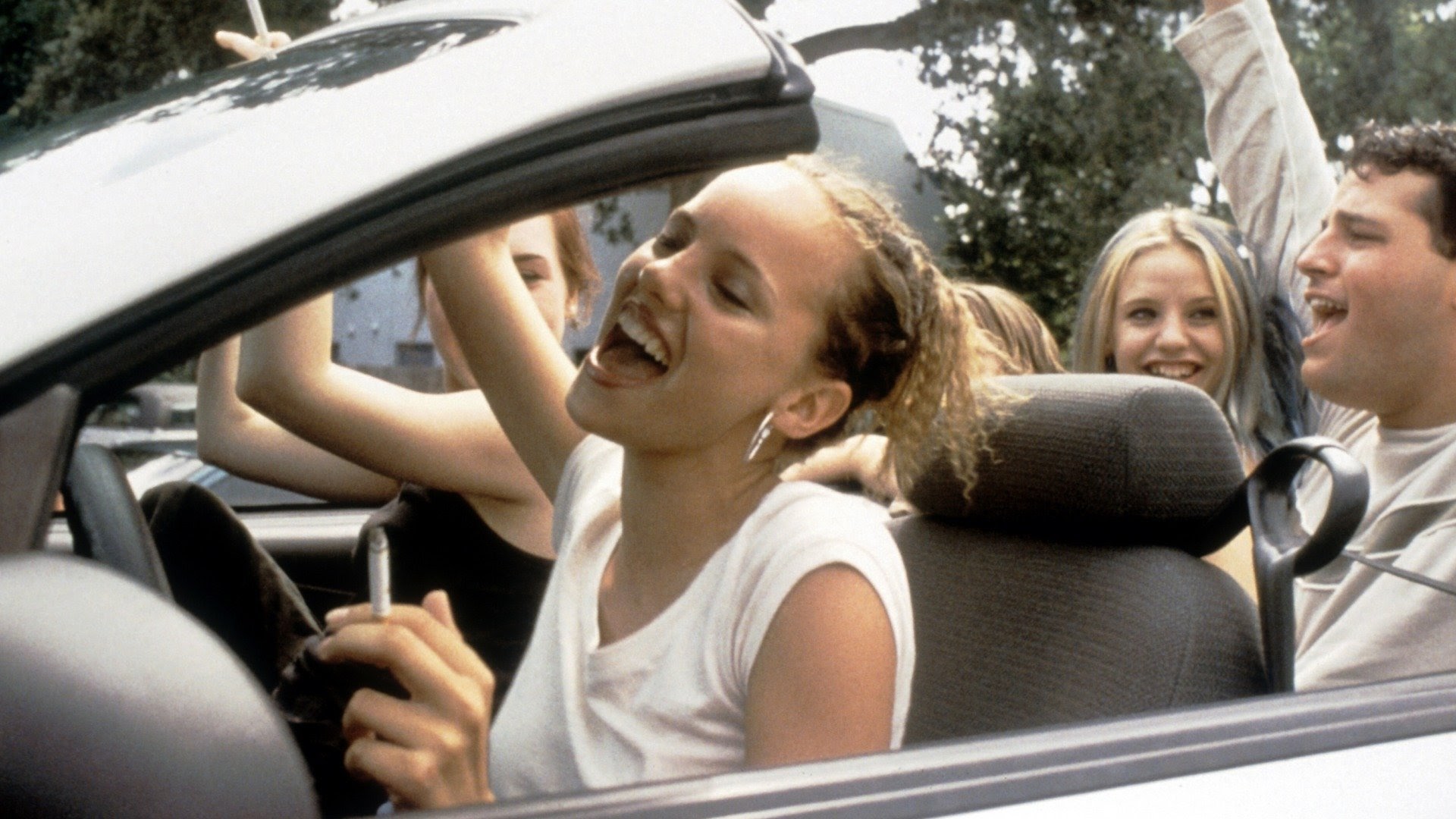
Shown in foreground: Bijou Phillips
DF: On a positive note, though, this movie was awesome. It was so fun to make. Larry was cool, the people I was working with were all like people from Thrasher Magazine, it was just like bad ass people. They did shoot in the real locations; it was the real apartment complexes, and it was the real Pizza Hut (we shot in).
Daniel also made it clear how he was the only local hero for hire in Larry Clark’s “Bully.”
DF: They were scouting locations for the gay clubs, and I was just a young kid just figuring that stuff out and performing at the clubs with people I was in musical theatre with and stuff like that. They were like hey we’re making a movie, and I’m like I’m an actor! I had no idea it was going to turn into this. Carmen Cuba, she discovered a lot of people, and I give her all the credit for plucking me out of obscurity and putting me with these people.
An audience member told Daniel that he was from South Florida, and this led Daniel to talk about when he worked at The Gateway Theater in Fort Lauderdale as a kid. a year later, “Bully” premiered there. Daniel found his road from being an usher to a working actor to be honestly insane.
DF: I was there at the theater going, would you like the popcorn combo? I am a movie lover. I worked at Blockbuster (Video), I worked at movie theaters, that’s all I did. Until I was able to support myself as an actor, I was either an usher in theatre or worked at movie theaters. It (“Bully”) was shot in Fort Lauderdale and the whole crew got their premiere at the movie theater where I worked at. So, whoever served me popcorn today, keep writing your scripts.
Like many, Daniel Franzese considers New Beverly Cinema to be one of his favorite places in Los Angeles, and that it was extra special for him to see “Bully” being screened there on 35-millimeter film. To see films presented there in their original format, something often not available to movie buffs in most places, means a lot to him.
WRITER’S NOTE: This interview took place back in 2013.
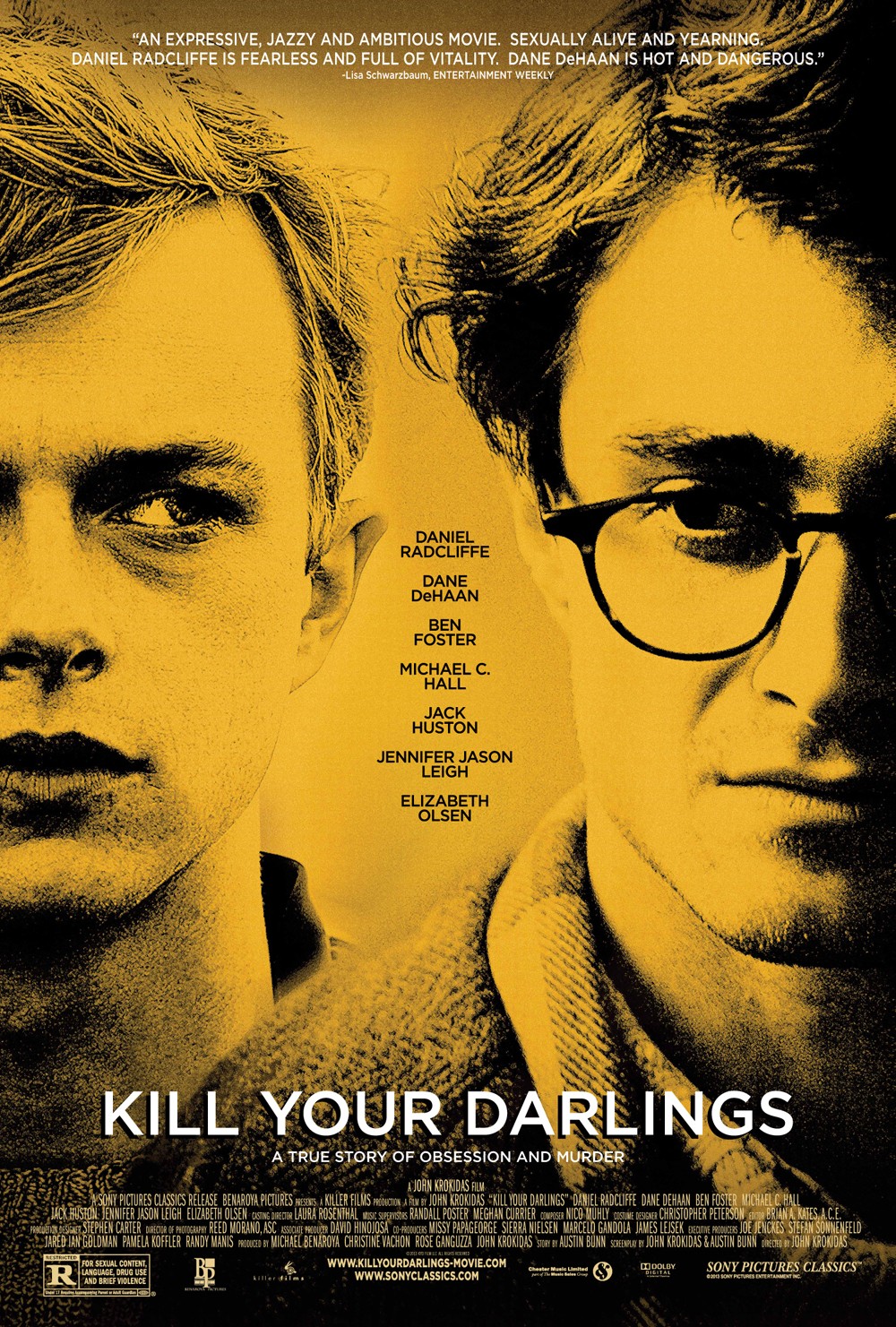
John Krokidas makes his feature film directorial debut with “Kill Your Darlings” which stars Daniel Radcliffe, Dane DeHaan and Michael C. Hall. The movie is about a murder that occurred in 1944 which brought three poets of the beat generation (Allen Ginsberg, Jack Kerouac and William Burroughs) together for the first time. Radcliffe portrays Ginsberg as a 17-year-old who is about to start college at Columbia University, and he ends up falling under the extroverted spell of fellow classmate Lucien Carr (DeHaan) who introduces him to the poets who would later bring a new vision to writers everywhere. It is when Carr murders his love David Kammerer (Hall) that their relationship starts to become unglued.
Krokidas co-wrote the script for “Kill Your Darlings” with his Yale University roommate Austin Bunn. A former magazine journalist, fiction writer and reporter, Bunn graduated from Yale and went on to get his master’s degree at the University of Iowa Writers’ Workshop. As for Krokidas, he later attended New York University’s Graduate Film Program where he made the short films “Shame No More” and “Slo-Mo.”
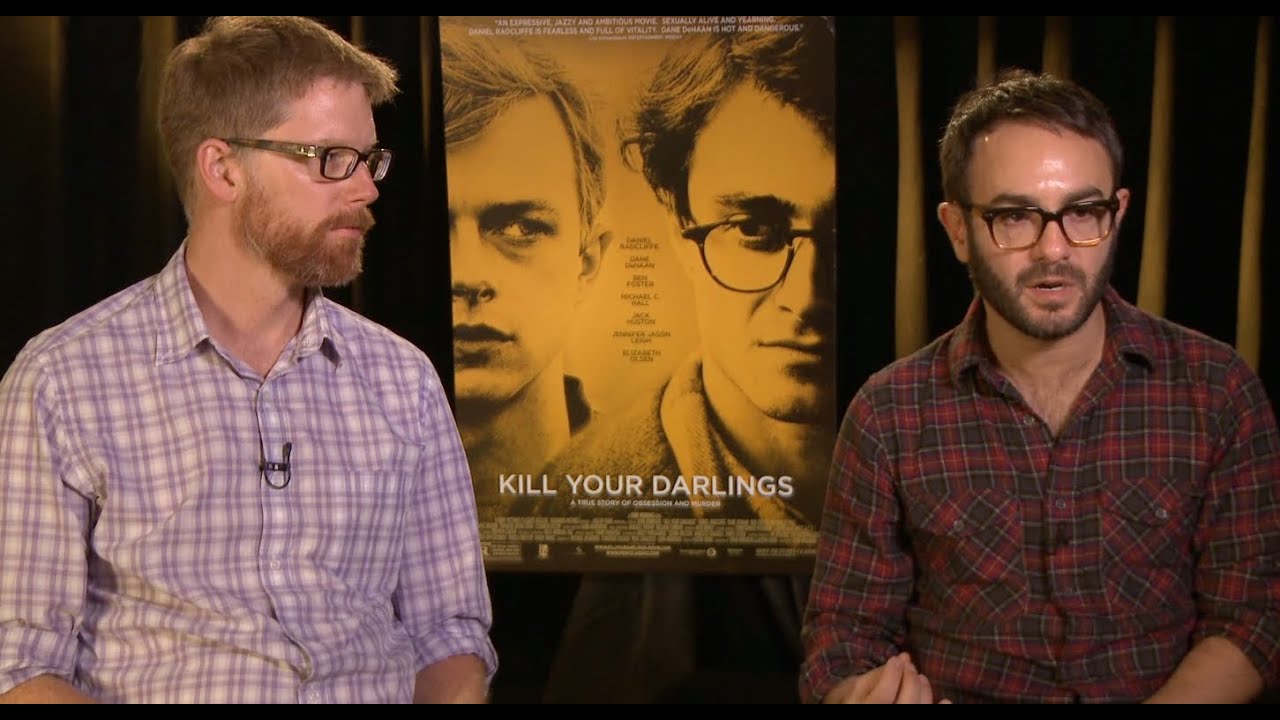
I got to hear how Krokidas and Bunn made the film under challenging circumstances when they appeared at the “Kill Your Darlings” press conference held at the Four Seasons Hotel in Los Angeles, California.
Question: What was the division of creative responsibility between you two like?
Austin Bunn: Probably like a lot of people in this room, I discovered the beats in college. I used to go to the campus bookstore and just track down the poetry collection, find Allen’s books and read them like they were some secret transmissions from the future version of myself. I was a closeted, young creative writer from New Jersey so Allen Ginsberg’s work meant the world to me. So, I had this really strong connection with Allen and of beat biographies and the history. I read a lot of the back catalog and I had come to John with the idea. So, in terms of the division of responsibility, I would write the first draft and then John would come in. The thing about John, as you will soon learn, he wanted to raise the emotional decibel level in every scene. John is one of the most riveting and vital and least hagiographic version of this story. We didn’t want to take the beats’ greatness as a given, so John sort of demanded that we write a really emotional roller coaster. Then we just went back and forth. John talks about it as the Postal Service, like the band version of producing a script. We were living in different cities at the time; I was at the University of Iowa Writers’ Workshop as a graduate student and John was in New York finishing film school.
John Krokidas: Austin wanted to do this as a play first. He was a playwright and a short story writer of some renown, and we were college roommates and we shared ideas with each other as college roommates and good friends do. But I, of course, started seeing the movie version in the back of my head and I had just gotten out of NYU film school and started convincing him that the play would be really flat and undramatic, but as a movie…
Austin Bunn: The Jedi mind trick!
John Krokidas: This would be amazing. But I would say I’m the structure guy I think, coming from NYU’s film program. I’m very traditionalist in terms of Sidney Lumet’s “find your spine,” and Austin is really wonderful with character and dialogue. If anything, he’s on a religious crusade against expository dialogue, and I would write these three paragraph monologues for each character expressing their emotion like that scene where Jennifer Jason Leigh finally turns to Allen to give him advice. I had a two-page monologue version and Austin crossed it all out (Austin laughs) and wrote the one line that’s in the movie, “The most important thing your father ever did was fail me,” which said everything.
Question: The movie is also very visual too because of the beats’ energy and such. How did you go about creating the look with cinematographer Reed Morano?
John Krokidas: I’m so proud of what we brought to this film. The movie is set in 1944 and it’s a murder story. Even in the writing process, I looked up and saw that “Double Indemnity” won Best Picture that year, and it was the year of “Laura” and “Gilda” and all these great American Film noirs. So, I said, “Why don’t we incorporate this even in just the fabric of the movie and start with the jail scene in a place of heightened tension flashback to more innocent times, and then build again to see whether or not these characters can escape or not escape their fate?” So, I started looking at noir style at first, but I thought an academic recreation of Film noir, who wants to see that? Going back to spine and theme, I thought what this piece was really about was young people finding their voice. So, what about going from conformity, the row houses of New Jersey and the pillars of Columbia, to nonconformity? And of course, where film noir went in the hands of the French was the New Wave. So I thought, “Okay well let’s start off with these controlled, composed, expressionistic-lit shots, and then as the boys go down the rabbit hole together, let’s take the camera off the tripod. Let’s get some jazzier free-form style.” So, I made this book of the 1940s. I had learned that Ang Lee, for “The Ice Storm,” did a 50 page book on the 1970s with colors, fonts and important historical events, you name it. So, I did that with the 1940s and then gave it to Reed. The great thing that I have learned on this is you can do all the academic treatises you want, but then you hire great people. She saw the goal post of what I wanted and then she showed me Jean-Pierre Melville’s films. She showed me films that meant a lot to her and then let kind of what I wanted filter through her own imagination. What I am amazed by specifically in her work is we did this movie in 24 days. Each scene was done in two hours or less, and she has the instincts to be like a documentary camera person and is able to light like that at the same time. We wanted to make sure this film felt relevant and contemporary as opposed to just being a traditional biopic.
Austin Bunn: (We didn’t want it to be) the greatest hits version of their lives.
John Krokidas: It was looking at Ryan McGinley photographs and contemporary, counterculture, young images of today and then finding what connected them to the 1940s. What was resonant in counterculture then and today at the same time.
Question: What was the direction that you were giving your actors? We were told that sometimes you would pull them aside for a more dramatic scene, but was there a consciousness you went into to direct the film and the actors? Were they any kind of specific kind of notes you gave them?
John Krokidas: Here’s the embarrassing story; Austin and I actually met freshman year because we were both acting in a production at Yale of “The Lion in Winter.”
Austin Bunn: Yes.
John Krokidas: Neither of us were the greatest actors in the world which is, I think, why we went into writing and directing. But I trained as an actor as an undergraduate and what you learn is that each actor has their own method and way. It’s whatever it takes for them to get the emotions to the surface. So, when I met with each actor that I cast, I would just simply ask them, “Have you trained? How do you like to work and what don’t you like?” Michael C. Hall gave me one of the greatest lessons in directing in which he said, “If what I am doing is not making you happy, don’t tell me that because that will make me self-conscious and it will make me think about what I’m doing. Just tell me to add whatever you want to what I’m doing.” That’s just a great lesson for life. Dan and I, when we were working together, we spent time before production (he was so generous and hard working on this) and he wanted to approach this like it was his first film which was very poignant to me. I said, “Would you like to try learning a new method and approach acting in a different style?” He said, “Absolutely!” So, with Dan, he’s so bright and in his head, and for the intellectuals Meisner works really well in focusing your action on what you are trying to do in the scene. Dane had trained extensively, and what he does is create a Bible for the character and does tons of research before production. Then he burns it and starts really becoming the character on set. Ben Foster (who plays William Burroughs) has something I’ve never seen another actor do which is, once we’ve basically got the scene up on its feet, he goes and he does the blocking of the scene by himself in the location several times. He calls it “the dance” because once he’s memorized the dance and knows the physicality (“I need to pick up the fork here, I need to put it down there”), he doesn’t have to think about it anymore and that’s completely freeing to him. So it’s like cooking this huge seven course meal where you have to get everything done at exactly the right time, but every plate needs a little bit of love in a different way. To me the greatest thing was being able to get this dream cast and then just to work with them to find how they like to work and what got the best out of them.
Austin Bunn: John had a really intuitive idea which was to keep the actors from reading past this point in the biographies, so none of the actors came in burdened by the mythology of who these guys would become. They were just 19-year-old kids. So, I think that was really smart and it released the actors from having to play the later decisions in their lives and the kinds of writers they would become. They just got to be young people, and that was a great relief I think for them.
John Krokidas: Yeah, and for us too as writers. I had a talk with Jack Huston once when he and I shared the same room and I’m saying, “Oh my god, I’m directing you as Jack Kerouac.” But we were like, “No. You are Jack who is a college student on a football scholarship who hates the other jocks, who just wrote a book which he thinks might be completely trite and he just wants to get out of college and have some real-life experience and join the war so he could begin to have real material to write his next book. That’s who you are.” That just liberated all of us.
Question: When writing the script, how much are you tied to the truth and how much are you allowed to take creative license?
John Krokidas: We did so much research for this. We felt we had to, and I think part of it’s our academic background because there’s so much in the biographies. There are so many biographies of them out there, but then also we would find different accounts online for example from David Kammerer’s friends. They said that that relationship between him and Lucien was never portrayed accurately and that Lucien actually kept coming back to David and David was asking him to end the relationship. And then we may have broken into Jack Kerouac’s college apartment together. We did the trick of pressing all the buzzers and then somebody let us in. But what’s interesting is Columbia students were living there and they had no idea that they were in Jack Kerouac’s apartment. So, we physically went to all of the locations in which this movie took place, and that just helped inform our writing process as well; getting to be able to visualize the actual spaces. Add to that, we went to Stanford University to the Allen Ginsberg archives. It wasn’t about the lack of material out there. If anything, it was about making sure that we really just focused on who they were up until the point which the movie takes place.
Austin Bunn: Just to add to that, the people that I know that have seen the film have been really surprised at how much is actually totally accurate. The day after the murder, Allen Ginsberg went to the West End Bar, “You Always Hurt the One You Love” was playing on the jukebox and he wrote the poem that ends the film. It ends with “I am a poet;” that is a line from August 20, 1944 so we worked really hard to weave it in. But like John was saying before, we didn’t want to do the dutiful, stuffy, every box checked kind of biopic that has been around for a while. We wanted to do something that felt more in line with the spirit of the beats that was more specific and honest and transgressive, and I hope we got there.
Question: Did you two have a specific goal of what you wanted to portray and what you wanted the audience to leave with either of the time or of the characters themselves?
John Krokidas: What I want the audience to leave with is that feeling of when we were 18 and 19 years old just like these guys were in the movie; when everything seemed possible and you knew that you had something important to say about with your life. That you wanted to do something different and unique and not just what your parents taught you, not just what school taught you, but you wanted to really leave your mark on the world. The fact that after the movie these guys actually did it and created the greatest counterculture movement of the twentieth century is amazing. I have had plenty of people come up to me after seeing the movie and said, “This movie made me want to be a better writer” or “this movie made me want to go back and start playing music again.” That to me means everything. That’s ultimately, deep in my heart, why I wanted to make this movie.
Austin Bunn: The pivot point was this murder. I loved Allen Ginsberg for his openness and his honesty, and to think that at one point in his life he was called upon to defend his best friend in an honor slaying of a known homosexual, the very thing that Ginsberg went on in his life to defy and radically create change about the idea of being in the closet and the shame around that issue, that contradiction was really exciting to us dramatically.
John Krokidas: You know this movie took, from the time that we started talking about this until the time that we are getting the chance to be with you all today, over 10 years to make. When I really think about it, the thing that kept me going and kept me wanting to tell this story is that there needs to be something that pisses me off at night. The fact that in 1944 you could literally get away with murder by portraying your victim as a homosexual, that pissed me off to no end. This isn’t a political movie and it’s one scene and it’s obviously what informed how Lucien Carr got away with murder, but for me that was the thing that kept me up all night that said, “No, I have to tell the story.”
Question: The movie has different kinds of music playing throughout it like jazz and contemporary music. Did you envision using different musical styles when it came to making this movie?
John Krokidas: I originally wanted a bebop jazz score similar to Miles Davis’ score for Louis Malle’s “Elevator to the Gallows” because the transition from swing to bebop at this time was exactly what these guys wanted to do with words; to go from rhythms to exploding them into something beautiful. My music supervisor, Randal Poster, said to me, “John put down your academic treatise, put down your paper. Go make your movie. Your child’s going to start becoming the person that he or she wants to be.” So I went and I made my movie, and then I put jazz music on the film and it didn’t work at all. And then I went and did only period accurate music and it felt like Woody Allen’s “Radio Days” which is a great movie but it’s not the young rebellious movie about being 19 and wanting to change the world that we wanted to make. So, I actually went back to the playlists that Austin and I used a while writing this movie and I used Sigur Rós and stuff that was timeless but contemporary, and it brought the movie to life. Then I realized that the composer Nico Muhly had arranged all of those albums and worked with Grizzly Bear and Björk and other people that we were using as temp track. So, we got the movie to Nico and just thankfully he loved it. Now that I knew that I had contemporary music in a period film, then we get to that heist sequence. I had heist period music on it, it was so corny. The sequence didn’t work, it didn’t have any stakes to it, and I can academically tell you when the beats come on, they led to the hippies which led to the punks, and the punks led to Kurt Cobain and the 90s, etc. But the truth is that while I can intellectualize it, you go with what’s visceral and what feels honest and true to you. For me, the biggest lesson in making my first film is to do all of your homework, do all your research, know what you’re doing, but then don’t be afraid to get out of the way if your movie starts to tell you what you should be doing.
Question: How did you decide on what literary quotes to put in, and how did you work with the actors in establishing the cadence and the elocution on those?
Austin Bunn: What a great question! If you know any of the beat history, this new vision was real for them and they have written volumes about it, none of which makes any sense. We couldn’t make heads or tails of it.
John Krokidas: Do you all remember your journals when you were 20 years old or those conversations you had at three in the morning with other college students? We got to read their version of it, and there’s a reason that we hide all of our journals and don’t let them see the light of day.
Austin Bunn: It was challenging. With the uninhibited, uncensored expression of the soul, that’s actually a credible quote directly from the Ginsberg new vision manifesto. So in some ways we knew we had to distill some of that material from the Ginsberg journals to help make the argument for how valuable this manifesto was and the irony honestly of what transpires in the plot which is the very thing that Allen’s called to do which is to create this censored version of history. But in terms of the poetry itself, it was really challenging because as we all know there are movies about poets and writers where recitations happen and they are really flat and they can be corny and there’s a time where you tune out of the movie when you’re waiting for the poetry to end. Specifically, I think of Allen’s first poem that happens on the boat. We were really challenged to find a poem that would speak to audiences but was genuinely an Allen Ginsberg poem written in his voice. So what we had to do was really channel Allen. His early work is quite rough and burdened by trying to impress his dad and his professors. John had the concept of this isn’t a poem that he’s just reading to impress people, it’s a poem he’s reading to Lucien Carr. The audience knows that, you know that and Lucien finds it out on the boat at that moment. That really gave me permission to kind of rethink what the poem was going to do and how we would make it, so we came upon Allen’s method which was kind of magpie; stealing from the American vernacular and going out and finding common speech and repurposing it, creating this Whitman-esque inclusion. So you hear in the poem things that you’ve already heard in the film just like Ginsberg did himself. Things like Allen in wonderland is reworked in the poem, unbloomed stalwart is the very thing that David said to him at the party. So we’re kind of hopefully paying off not just a poem that is emotionally powerful, but also something of the method that Ginsberg would use for the rest of his life.
John Krokidas: Radcliffe was such a hard worker. While he was on Broadway doing a musical, we would meet once a week for two months before even preproduction and rehearsals began to work on the accent and to work together. I have him on my iPhone reading “Howl.” We didn’t look at the later recordings, we looked at the earliest vocal recordings possible of Allen Ginsberg to make sure that we weren’t capturing the voice of who he became, but his voice at that time and what his reading voice was like. To be honest, it’s just really telling the actor, “You’re not performing a poem. You are letting Lucien know that he is loved with this poem and that you love him and that you can see inside him.” It’s playing the emotion underneath the poem which was the direction.
Question: What does it do for you when all the main characters are gay? Normally you got the female characters who can be a love interest but they are not going to be a rival. Usually, even now in films and in life, there is a separate role where as if you are all the same gender, you can all be anything to each other.
John Krokidas: I think this is a movie with every character is discovering what their sexuality is (gay, straight, bi or all over the place), and more importantly whether or not they are worthy of being loved. I personally don’t know if Lucien Carr was straight or gay, and to me it’s irrelevant because I have seen this relationship play out amongst gay people I have known so many times where an older man who is gay and a younger man of questionable sexuality develops such a close bond. The stereotype I think would be is that the young man had an absent father figure or finds the older man’s confidence and just the care and nurturing qualities of them very attractive. What happens though is that those two get so intimate that ultimately there’s nowhere else to take the relationship but sexual, and when that happens then the power position in that relationship twists and the younger man suddenly realizes that he holds the power because he’s the sexually desired one. That’s where a lot of conflict ensues. Whatever you read about that relationship between Lucien and David, everyone knew that they were codependent. Everyone knew it was toxic and going to end badly. Nobody knew it was going to end in murder.
Austin Bunn: I think a lot of the biopics we see are kind of denatured of their sexual qualities and the edginess of the relationships in them. So, I think we were trying to do something that restored some of that ambiguity, lust, desire and confusion that is genuinely in the beats’ history. We were not making that up.
“Kill Your Darlings” is available to own and rent on DVD, Blu-ray and Digital.
He received national attention for playing the starring role of Pepe in the award-winning film “Requiescat,” and he co-starred opposite Laurence Fishburne in the upcoming theatrical release of “Under the Stadium Lights.” And now, you catch Adrian Favela in the horror film “Wrong Turn” which is debuting on digital and physical media and serves as a reboot of the long-running franchise. In it he plays Luis, a member of the LGBT community who is vacationing with his friends in Virginia where they go hiking around the Appalachian Trail. But as the title implies, they go in the wrong direction and find themselves at the mercy of a community of villagers who are not the least bit happy to deal with outsiders.
I got to speak with Adrian over the phone while he was in Los Angeles, and we talked about how this “Wrong Turn” reboot proves to be a lot more grounded in reality than its predecessors ever were. We also talked about his character and the others are a bit different from others the horror genre typically has to offer.
Ben Kenber: This “Wrong Turn” film was not at all what I expected. It feels a lot more grounded in reality, and the characters including yours are not your typical horror movie cliches. Your character of Luis Ortiz is part of the LGBT community and has a boyfriend, and this is something we do not always see in a film like this. How do you feel about that?
Adrian Favela: I think it’s really amazing. We don’t always get to see other LGBT characters represented in a non-stereotypical way. The way Alan B. McElroy wrote the script, he made the characters very normalized and I think that’s really special. I have tons and tons of fans reaching out saying how represented they felt, and I really truly feel special for that.
BK: I love the scene where the characters including yours are in the bar and this redneck-like character comes up to insult them. In the process, we come to discover how educated you and the others are.
AF: Yeah, I loved the idea behind it. Instead of the typical dumb kids in the woods doing dumb things, it was really smart everyday people in a terrible situation which I really appreciate.
BK: I expect most actors in horror films to overact or emote to a ridiculous extent. How did you and the filmmakers work at keeping your character so grounded?
AF: Originally what he (director Mike P. Nelson) did to make us all really blend into the characters is he made all of the cast hang out and become really good friends before we even started shooting, so that really grounded us in the space. So, when got to the points of huge emotions, we run into a big ravine scene with Gary and Luis, when you actually know the person next to you personally, it really opens you up to new emotions. It’s not like the fake emotions that you want to put on for show, but it is also your own personal emotions that you are able to attach to the character and magnify the extent of what Luis is going through. So, it was really cool and special. Mike also is huge on horror with heart, so he wanted us to dig within ourselves so it’s not just like, oh somebody died, let’s run away. It’s like, somebody died, let’s feel what happened.
BK: I read that when you auditioned for this film, you had to act in a blank space and pretend things were there when they were not. How did you go about doing that?
AF: Through the audition there was traps, there was the character Adam getting sucked into the hole by chains, and snakes, etc. It was one of the craziest auditions I had ever seen. So, the way I really approached it was I wanted just to take to my imagination. I really have to sell the idea these things are happening to me, but if you do it in a way which is too structured, you get lost and you’re trying to play something compared to seeing somebody living in this imaginary world. I think that’s what ultimately helped me book the role, just taking to my imagination and playing in the space.
BK: Were you at all familiar with the “Wrong Turn” franchise before you were cast in this reboot?
AF: The first one came out when I was around 10 (years old) and I remembered watching bits of it with my dad and just being absolutely horrified. It was burned into my mind. I don’t know if you’ve seen the first one where they are chopping up the person on the table. I was just remember being mind blown and horrified and had nightmares for months and months. So, when I got the audition I was like, oh my god, is that the movie which just horrified me my entire childhood? (Laughs.) It was like a full circle.
BK: This film was shot in the wilderness. What challenges did this present to you and the other actors?
AF: It was definitely really tough. I will say the terrain was really brutal. There are some real falls which made the final cut. We were out in the place called Hocking Hills. It is a state park, and it is full of caves and caverns. The trails were really, really thin, so we’re filming with tons and tons of crew and we’re just trying to act and not fall down the hill at the same time (laughs). The night shots, especially the outer foundation area, it was in the middle of the night and there were no lights. I remember being carted to set and you couldn’t see anything in front of you. It was just the headlights, and it was insane. It was brutal, but it really kept us in character for what these characters were actually going through.
BK: It really shows up onscreen. You really can’t fake that.
AF: Yeah (laughs).
BK: What I liked about the screenplay is how it does not reveal its secrets right away. When you first read it, did you get all the information you needed, or was it a situation where the filmmakers revealed things to you as production went on?
AF: The original script is a little bit different than the final cut of the film, but we still got the same idea. In the original script we found a reveal at the very end that a ton of time has passed and Jen has been in the Foundation for months. This is why she is so incredible at her kills and survival skills. I was very surprised at how they approached it. I think the approach that Michael did was absolutely perfect. It explains to the audience that there is a time lapse happening. It says right at the top that this is six weeks prior (to what we just saw in the prologue). That way we were just led in, and it all leads up to when Matthew Modine’s character finds Jen.
BK: Did you have a small role in Olivia Wilde’s “Booksmart?”
AF: Yeah, there was this casting for a bunch of party guys. The original script of “Booksmart” was supposed to be something along the lines of a female version of “Superbad.” It was a crazy (party) scene, and they ended up cutting all that out. It was definitely a bummer, but it was really cool to see everybody working and that kind of giant cast ensemble feeling and how to work in that space.
BK: “Booksmart” was one of my favorite movies of 2019, and it’s the kind of teen movie I like best as it takes the problems adolescents go through more seriously as opposed to joking about them endlessly.
AF: Yeah, ”Booksmart” was incredible. When I saw the final cut of it, I was like wow, this movie is amazing.
AF: Yeah, just a bit. I met her. She was super, super kind and loving and sweet. You don’t always get that with directors, so it was really cool to see her giving her everything.
BK: How do you feel about the response this “Wrong Turn” has received thus far?
AF: Of course, we are going to get mixed reviews. Horror always has mixed reviews (laughs).
BK: Yes, I tend to moderate my expectations when I watch any movie these days. There have been many horror movie reboots over the years, but this is really one of the better ones.
AF: Oh, thank you!
BK: This film has the same screenwriter as the original “Wrong Turn” film, Alan B. McElroy, and this is the same man who wrote “Halloween 4: The Return of Michael Myers.” This is a guy who clearly knows how to put a fresh spin on a long running horror franchise.
AF: I think the thing with “Wrong Turn” was it was moving in a single direction for so long. We had the standard of the flesh-eating cannibals and the classic tire pop as they are moving toward West Virginia. I think what Alan B. McElroy did was he flipped it on its head. Instead of giving you the same path, he flipped it in a new direction. At the end of the day, horror fans are really, really, really smart fans. They know everything. We pulled a lot of the flesh-eating cannibals and we traded it for food for thought which I think was really smart and an interesting move and something you don’t always see in horror. If you go into this film with an open mind and an open heart for something new and something fresh, I think you will find it in this film. But if you are looking for something along the lines of, I want to see a flesh-eating cannibal, you might not like it (laughs).
“Wrong Turn” will be available to own and rent on VOD, Digital, DVD and Blu-ray starting on February 23, 2021.
Melissa Barrera and Mishel Prada play long-estranged sisters, Lyn and Emma, who reunite for their mother’s funeral on the new Starz television series, “Vida.” These two could not be more different than the other, and both are forced to deal with the building their mother, Vidalia, owned and the bar she ran. What they thought would be a short trip turns into a homecoming where they reassess where their lives are at and come to terms with their mother’s sexuality after meeting her wife and now widow, Eddy (Ser Anzoátegui). From there, we come to learn more about Lyn and Emma with each successive episode as both Barrera and Prada create complex characters who are not all they appear to be on the surface.
Barrera plays Lyn, a care-free party girl who has taken her good lucks and used them to her advantage to get a wealthy boyfriend and live a fabulous life in San Francisco. Barrera previously appeared in the third season of Netflix’s “Club de Cuervos,” and she has acted on popular telenovelas back in Mexico including “Siempre Tuya Acapulco” and “Tanto Amor.” Having trained in musical theater at New York University, she has starred in the musicals “Spring Awakening” and “Young Frankenstein.”
Prada portrays Emma, a smart and very driven woman who has created a strong career for herself in Chicago. She starred as Gabi in the AMC short form series “Fear the Walking Dead: Passage” and is one of the founding members of Damarosa, a female art collective which celebrates the significant role of women have played in art, literature, and politics.
It was a real treat to speak with Barrera and Prada while they were in Los Angeles for the “Vida” press day held at the Four Seasons Hotel. Both described how wonderfully flawed and complex their characters are on the show, how rare it is to find roles like these, and of the joy they had in filming these episodes on the streets of East LA.
Please check out the interview below and be sure to watch “Vida” when it debuts on the Starz network on May 6.
When it comes to teen movies, I live for those which take the adolescence seriously. Those years can be rough and tumble ones, filled of strong emotions which can overwhelm our small little worlds to an unbearable degree, and this is reflected in “The Breakfast Club,” “Pump Up the Volume” and “The Spectacular Now.” However, most teen movies deal with those years in a shallow manner to where they do nothing more than magnify the fears we have, or had, of being seen as unpopular or horribly isolated from our peers. Going into “Love, Simon,” which is based on the book “Simon vs. the Homo Sapiens Agenda” by Becky Albertalli, I figured it would be one of the shallower motion pictures involving teen life as its poster features the cast in all their clear-skinned glory. Surely some of these stars had to deal with acne, right?
“Love, Simon” ends up falling into the middle space of realistic and shallow teen movies. Some parts of it feel forced to where they belong more in a network sitcom, but others strike at the truth of growing up in a way few other movies have recently. In fact, this may be the first movie in which we eagerly await to see two guys kiss. Many were revolted by such a sight in the past, but these days we accept it because love is far more an attractive thing than hate. Realizing this, it makes me believe we have evolved as a society even more than we already have.
Simon Spier (Nick Robinson) is your average teenager who comes from a good home with loving parents and a sister who looks to become a world class chef in record time. He also has a great group of friends he can confide in any time, and this made me very envious of his life as it didn’t feel like I always had that when I was his age. But Simon does have a big secret, and he doesn’t need to spell it out for us. He is gay and has yet to tell his family and friends, and the only way he can discuss his sexual orientation dilemma is with his email pen pal who is also contemplating how he can come out to his own family and friends.
Right from the start, I realized “Love, Simon” is a groundbreaking movie as the filmmakers were not about to paint the majority of the characters in such broad or obvious strokes. I was constantly reminded of the scene from “Clueless” in which Murray tells Cher that the boy she wants to have sex with is in fact a “disco-dancing, Oscar Wilde-reading, Streisand ticket-holding friend of Dorothy.” While homosexuals might, and I strongly stress the word might, have been easier to spot in the past, such stereotypes we are now largely irrelevant as we have no business judging anyone as what we say about others speaks far more about who we are.
“Love, Simon” also takes place in a time where our lives have long since become dominated by social media and cell phones. In the past, we could leave our school lives behind once we went home, but kids today cannot do the same as their friends and enemies continue to exert a strong hold over them via the internet, and nobody these days can live without it let alone a cell phone.
Simon is able to keep his sexual orientation a secret even as he reaches out online to another young man who is considering coming out to his parents. Things, however, become complicated when the annoying class nerd, Martin Addison (Logan Miller), discovers Simon’s secret and threatens to blackmail him unless he can set him up with one of his very pretty friends, Abby (Alexandra Shipp). From there, Simon’s life heads into a spiral of sorts as he is forced to lie to his closest friends and comprise their relationships, all in an effort to keep his secret even more secret than ever before.
One of the key elements of “Love, Simon” is how our main protagonist is always trying to find out the true identity of his email pen-pal, Blue. The filmmakers tantalize us with the possibilities of it being this or that person, Director Greg Berlanti teases us with what could be obvious answers, but he instead invites us to see past what we thought we saw and see the bigger picture we have no business denying ourselves. Movies in the past have played on what we think homosexuals look, how they act and dress like, but this one makes how nothing is ever clear cut as it seems.
The only character who you could say exhibits such stereotypes is Ethan, an out-and-proud teenager played by Clark Moore. Ethan doesn’t try to hide who he really is from anyone, nor should he, but he does have a key scene with Simon where he explains how his coming out was not as easy as it seemed. In retrospect, I wished the filmmakers had dug a little deeper into Ethan’s character, but to their credit, they do give him some of the movie’s best one-liners (the “gangbanged by TJ Maxx” line is classic).
I also really enjoyed the camaraderie Simon has with his best friends played by Shipp, Jorge Lendeborg Jr., Miles Heizer, and Katherine Langford, whose character fares much better here than the one she played on “13 Reasons Why.” Seeing these friends have a great time with one another reminded me of the friendships I had during my high school years. It’s those friendships who help us get through the worst of times, and being a teenager can really suck more often than not. When Simon’s friendships become threatened, it’s painful to watch because losing a friend can seem so infinitely painful to where the heartache seems impossible to cure.
As for the character of Martin, he reminds of the kind of guy I never wanted to be seen as in high school. You know, the guy completely unaware of how annoying he is to others and who thinks so highly of himself that he cannot see the truth of what’s going on around him. The scene where he professes his affection to Abby at a football game is one of those horrifically cringe-inducing moments we all hope and pray never to get caught in, and Miller sells the moment for all the humiliation it is worth.
Simon’s parents are played wonderfully by Jennifer Garner and Josh Duhamel, and they present the typical loving couple and parents we always hope to see in movies like these. Garner in particular has a wonderful scene with Robinson as she professes how proud she is of him for coming out. Duhamel, however, has a scene with Robinson where he accepts his son for who he is, and it feels like laughable for reasons I’m sure the filmmakers didn’t intend. Still, it’s fun to see Duhamel come to see how the music he loved in the past is no longer cool.
“Love, Simon” also features a pair of sublime supporting performances from Tony Hale and Natasha Rothwell, both who look like they are having the time of their lives. Hale plays Mr. Worth, the high school’s vice-principal who tries much too hard to fit in with a youthful demographic who will never see him as cool, especially when he is so busy taking away their cell phones at any given opportunity.
As for Rothwell, she plays Ms. Albright, the school’s drama teacher who is directing a production of the musical “Cabaret.” Her reactions to her students’ talent, or lack thereof, are priceless as she wonders how she went from doing “The Lion King” on Broadway to ending up here. Just watch Rothwell as she reprimands a pair of immature students who make fun of others for being different. The way she handles them could have been cliched, but it leads to one of the biggest laughs “Love, Simon” has in store for its audience.
In some ways I wish “Love, Simon” had dug even deeper into its subject manner. Many scenes ring true in the ways teenager act and live their lives, but it only gives so far beneath the surface of things to where this comes close to seeming like a missed opportunity. All the same, to have a movie like this one which the life of an adolescent seriously is always a wonderful gift, and this one definitely qualifies.
In the past, gay-themed or LGBT movies were treated with latex gloves as studios feared general audiences would not be quick to accept homosexuals in love. But with movies like “Brokeback Mountain” and “The Kids Are All Right,” we were not given gay love stories, but love stories as passionate as any we had ever watched before. The audience I saw “Love, Simon” with cheered loudly at the sight of two boys kissing each other, and I like to think this shows how far we have come in accepting things which never should have been quicker to accept in the past. Besides, we should agree seeing two boys kiss is a far more pleasing sight than seeing teenagers gunned down by a madman with an assault weapon, wouldn’t you say?


 The Ultimate Rabbit