The following review was written by Ultimate Rabbit correspondent, Tony Farinella.
I’m an emotional, sensitive and empathic person, and I tend to seek out films which will make me think, move me to tears and tell a narrative that resonates with me. However, I have a good barometer for films that are trying too hard to tug at my heart strings and doing just a little too much to get an emotional reaction out of me. When you try to watch a movie or two a day, you can usually figure out which direction a movie is going to go either from its trailer or by where the film is taking its audience. “A Good Person,” directed by Zach Braff, started out incredibly promising until its wild and heavy-handed third act.
“A Good Person” stars the always lovely and talented Florence Pugh as Allison, a young woman who is about to get married to the love of her life, Nathan (Chinaza Uche). They are the perfect couple and the film opens with their engagement party where they are at their happiest. But then things spiral out of control for Allison when she gets into a car accident with her fiancé’s sister and husband in the car. She took her eyes off the road for one second to check Google Maps, and while she survived, they both perished. This sends her down a path of becoming addicted to OxyContin to deal with the physical and emotional pain of the car accident.
Allison cuts her hair one day and is making rash and impulsive decisions in her life, which worries her mother, played by Molly Shannon. She hits up an old friend for pills, former classmates, and even curses out the pharmacist. Finally, she decides to go to a meeting, which is being led by Simone (Zoe Lister-Jones). While there, she runs into Nathan’s father, Daniel, played by Morgan Freeman. Allison is hesitant to stay, as she knows the pain and hurt she caused his family, but he insists that she stay. Daniel has his hands full as he’s a recovering alcoholic who is now in charge of taking care of his granddaughter, Ryan (Celeste O’Connor), after her parents were killed in the car accident.
The best thing about “A Good Person” is the back-and-forth interactions between Pugh and Freeman. When you have actors of this caliber, it’s best to just stay out of their way and let them do their thing. Freeman plays an ex-cop who never really knew how to be there for his son Nathan growing up. He used to beat him, which has caused a lot of trauma and resentment in Nathan toward his father. The two of them barely speak and don’t have much of a relationship. For Allison, she’s trying to deal with the grief and guilt of what she has done to Daniel, as she has taken his daughter away from him. However, he could use some help when it comes to figuring out how to talk to a sixteen-year-old teenage girl about safe sex when her parents are now deceased.
I really enjoyed the first hour and a half of “A Good Person.” I thought Pugh really, really went for it with her performance. She’s an actress who really immerses herself in her characters. Physically and mentally, this is a fantastic performance. She looks, sounds and acts like an addict. Freeman is also very good, as he usually is, at portraying many different emotions throughout as he’s trying to be a grandfather, deal with his own demons, and also forgive Allison. Thanks to the two lead performances and a fast-moving plot, I was really enjoying “A Good Person.” Sadly, the film takes a wild and crazy turn in the third act, which really sent things spiraling off the rails.
Yes, this is a drama, and you expect certain emotional moments and sequences to be displayed on screen. In “A Good Person,” it felt forced and like writer/director Braff had an idea for a movie and the right cast, but didn’t know what to say at the end or how he wanted to end it. Instead, it turns into a cheesy soap opera, and he, sadly, wastes the performances of his two leads and his supporting cast. The film is also about 15 to 20 minutes too long. Once again, the drama felt forced at the end and it seemed like they were really trying for an emotional and powerful ending. Instead, I could see right through the fact they were trying to make me feel something instead of letting it happen organically. The film didn’t need to try so hard and throw so much into the last 30-40 minutes of the film.
* * out of * * * *
Blu-Ray Info: “A Good Person” is released on a single-disc Blu-ray from Warner Brothers Home Entertainment. It is rated R for drug abuse, language throughout, and some sexual references. The film has a running time of 128 minutes. It comes with a digital copy of the film as well.
Video Info: The 1080p High-Definition transfer is very, very solid. It’s a clean looking film with a green tint that really translated itself well to the material. Visually, Zach Braff did a great job behind the camera. It’s his script which really needed work.
Audio Info: The DTS-HD MA: English 5.1 audio track is also really good for this film. I did feel like Zach Braff relied on music a little too much throughout the course of this film to get the audience to feel something. I enjoy music in a film, but it needs to be properly placed and not shoved down our throats. There is also a Dolby Digital: English Descriptive Audio track. Subtitles are included in English, French, and Spanish.
Special Features:
None
Should You Buy It?
It’s always disappointing when I want to like a movie and don’t. I know this might sound like a rather simplistic approach to film viewing, but I had high hopes for this one. I’m still a huge fan of 2004’s “Garden State,” and I think Zach Braff is a talented director. When it comes to his writing, I think he can be a little too earnest. He means well and his heart is in the right place, but sometimes it just seems like he can’t keep himself from going a little too far. I didn’t hate the film and I enjoyed a good portion of it, but it was just a little too sappy for me which is saying something. The film looks and sounds good on Blu-ray, so it’s not a huge disappointment they didn’t give it a 4K release. There are no special features on this disc at all. I think it’s worth watching for the performances of its two leads, but I don’t think it’s a film you need to own. If you see it on Max or at Redbox, it’s worth watching. However, this is not a film I need to watch again. This is a case of two performances which deserved a better script.
**Disclaimer** I received a copy of this film from Warner Brothers to review for free. The opinions and statements in the review are mine and mine alone.
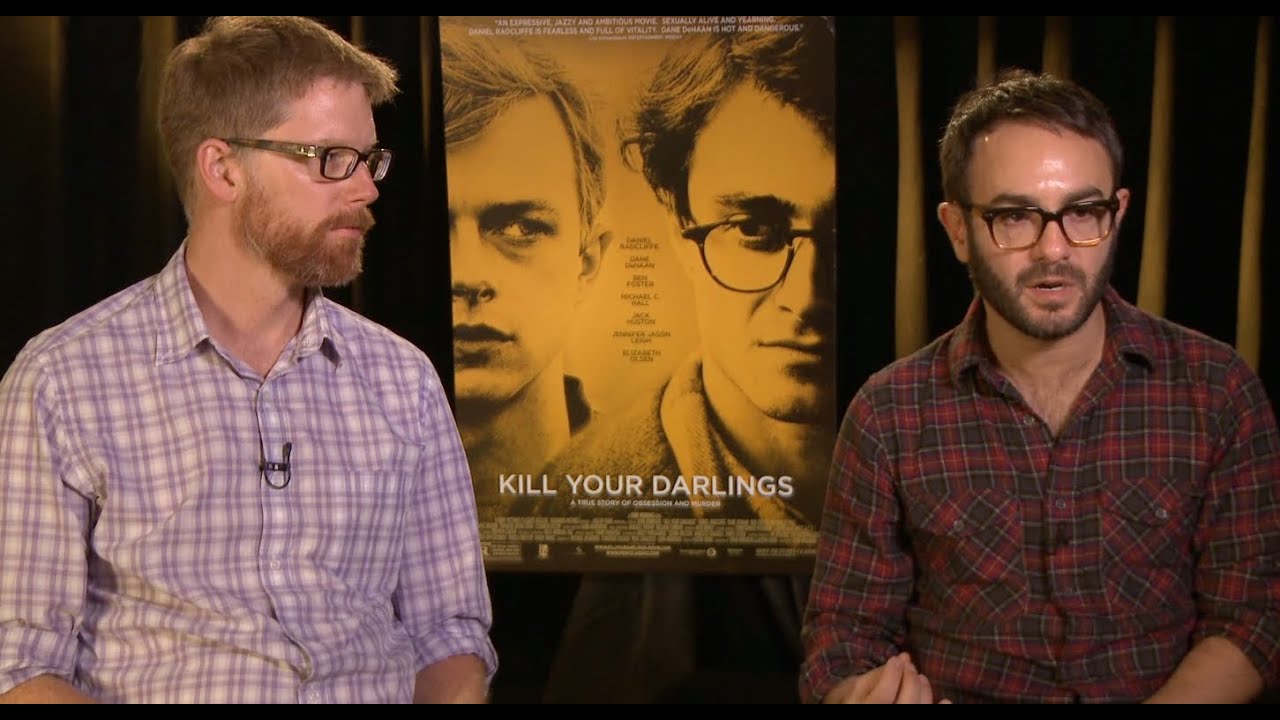
WRITER’S NOTE: This interview took place back in 2013.
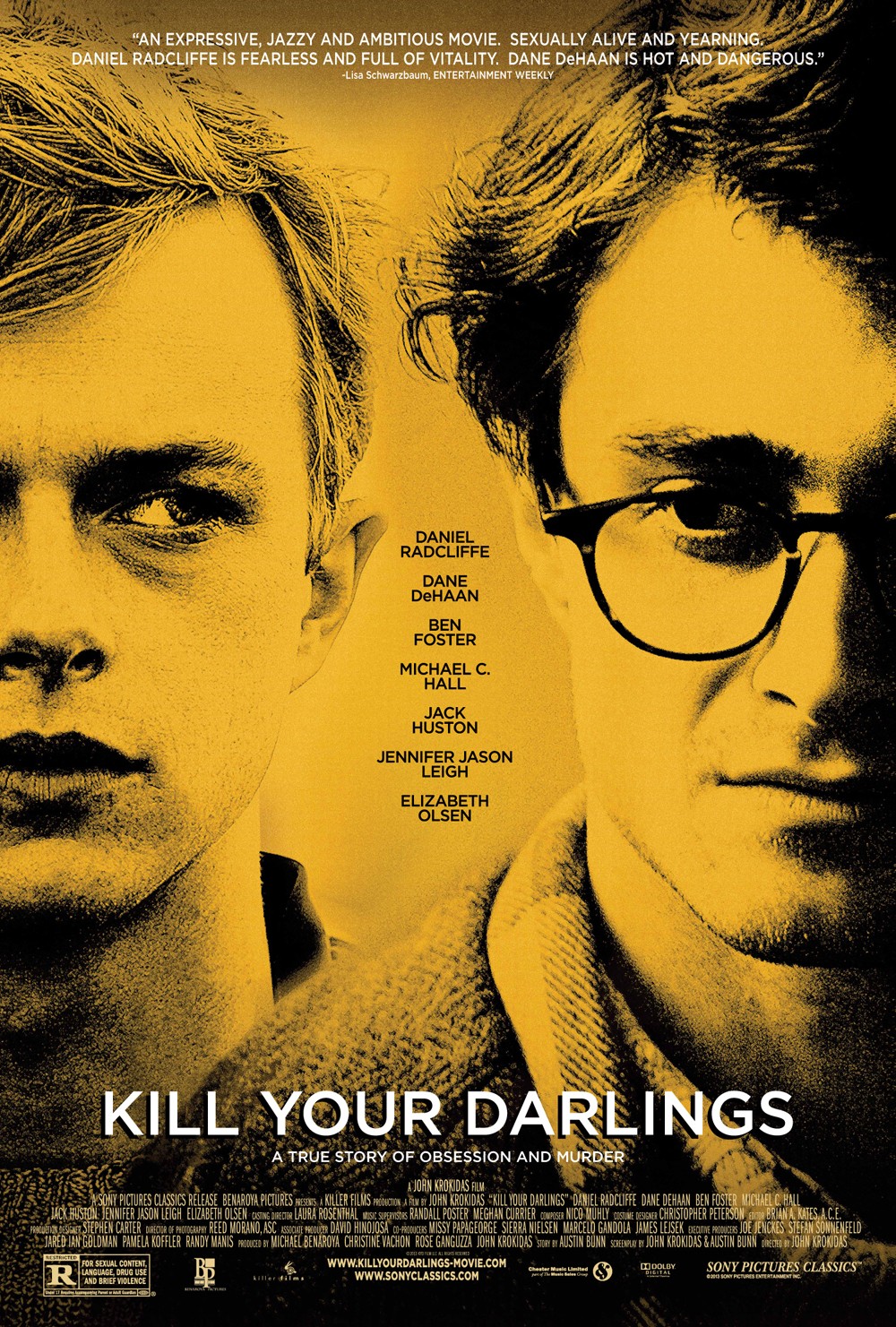
John Krokidas makes his feature film directorial debut with “Kill Your Darlings” which stars Daniel Radcliffe, Dane DeHaan and Michael C. Hall. The movie is about a murder that occurred in 1944 which brought three poets of the beat generation (Allen Ginsberg, Jack Kerouac and William Burroughs) together for the first time. Radcliffe portrays Ginsberg as a 17-year-old who is about to start college at Columbia University, and he ends up falling under the extroverted spell of fellow classmate Lucien Carr (DeHaan) who introduces him to the poets who would later bring a new vision to writers everywhere. It is when Carr murders his love David Kammerer (Hall) that their relationship starts to become unglued.
Krokidas co-wrote the script for “Kill Your Darlings” with his Yale University roommate Austin Bunn. A former magazine journalist, fiction writer and reporter, Bunn graduated from Yale and went on to get his master’s degree at the University of Iowa Writers’ Workshop. As for Krokidas, he later attended New York University’s Graduate Film Program where he made the short films “Shame No More” and “Slo-Mo.”
I got to hear how Krokidas and Bunn made the film under challenging circumstances when they appeared at the “Kill Your Darlings” press conference held at the Four Seasons Hotel in Los Angeles, California.
Question: What was the division of creative responsibility between you two like?
Austin Bunn: Probably like a lot of people in this room, I discovered the beats in college. I used to go to the campus bookstore and just track down the poetry collection, find Allen’s books and read them like they were some secret transmissions from the future version of myself. I was a closeted, young creative writer from New Jersey so Allen Ginsberg’s work meant the world to me. So, I had this really strong connection with Allen and of beat biographies and the history. I read a lot of the back catalog and I had come to John with the idea. So, in terms of the division of responsibility, I would write the first draft and then John would come in. The thing about John, as you will soon learn, he wanted to raise the emotional decibel level in every scene. John is one of the most riveting and vital and least hagiographic version of this story. We didn’t want to take the beats’ greatness as a given, so John sort of demanded that we write a really emotional roller coaster. Then we just went back and forth. John talks about it as the Postal Service, like the band version of producing a script. We were living in different cities at the time; I was at the University of Iowa Writers’ Workshop as a graduate student and John was in New York finishing film school.
John Krokidas: Austin wanted to do this as a play first. He was a playwright and a short story writer of some renown, and we were college roommates and we shared ideas with each other as college roommates and good friends do. But I, of course, started seeing the movie version in the back of my head and I had just gotten out of NYU film school and started convincing him that the play would be really flat and undramatic, but as a movie…
Austin Bunn: The Jedi mind trick!
John Krokidas: This would be amazing. But I would say I’m the structure guy I think, coming from NYU’s film program. I’m very traditionalist in terms of Sidney Lumet’s “find your spine,” and Austin is really wonderful with character and dialogue. If anything, he’s on a religious crusade against expository dialogue, and I would write these three paragraph monologues for each character expressing their emotion like that scene where Jennifer Jason Leigh finally turns to Allen to give him advice. I had a two-page monologue version and Austin crossed it all out (Austin laughs) and wrote the one line that’s in the movie, “The most important thing your father ever did was fail me,” which said everything.
Question: The movie is also very visual too because of the beats’ energy and such. How did you go about creating the look with cinematographer Reed Morano?
John Krokidas: I’m so proud of what we brought to this film. The movie is set in 1944 and it’s a murder story. Even in the writing process, I looked up and saw that “Double Indemnity” won Best Picture that year, and it was the year of “Laura” and “Gilda” and all these great American Film noirs. So, I said, “Why don’t we incorporate this even in just the fabric of the movie and start with the jail scene in a place of heightened tension flashback to more innocent times, and then build again to see whether or not these characters can escape or not escape their fate?” So, I started looking at noir style at first, but I thought an academic recreation of Film noir, who wants to see that? Going back to spine and theme, I thought what this piece was really about was young people finding their voice. So, what about going from conformity, the row houses of New Jersey and the pillars of Columbia, to nonconformity? And of course, where film noir went in the hands of the French was the New Wave. So I thought, “Okay well let’s start off with these controlled, composed, expressionistic-lit shots, and then as the boys go down the rabbit hole together, let’s take the camera off the tripod. Let’s get some jazzier free-form style.” So, I made this book of the 1940s. I had learned that Ang Lee, for “The Ice Storm,” did a 50 page book on the 1970s with colors, fonts and important historical events, you name it. So, I did that with the 1940s and then gave it to Reed. The great thing that I have learned on this is you can do all the academic treatises you want, but then you hire great people. She saw the goal post of what I wanted and then she showed me Jean-Pierre Melville’s films. She showed me films that meant a lot to her and then let kind of what I wanted filter through her own imagination. What I am amazed by specifically in her work is we did this movie in 24 days. Each scene was done in two hours or less, and she has the instincts to be like a documentary camera person and is able to light like that at the same time. We wanted to make sure this film felt relevant and contemporary as opposed to just being a traditional biopic.
Austin Bunn: (We didn’t want it to be) the greatest hits version of their lives.
John Krokidas: It was looking at Ryan McGinley photographs and contemporary, counterculture, young images of today and then finding what connected them to the 1940s. What was resonant in counterculture then and today at the same time.
Question: What was the direction that you were giving your actors? We were told that sometimes you would pull them aside for a more dramatic scene, but was there a consciousness you went into to direct the film and the actors? Were they any kind of specific kind of notes you gave them?
John Krokidas: Here’s the embarrassing story; Austin and I actually met freshman year because we were both acting in a production at Yale of “The Lion in Winter.”
Austin Bunn: Yes.
John Krokidas: Neither of us were the greatest actors in the world which is, I think, why we went into writing and directing. But I trained as an actor as an undergraduate and what you learn is that each actor has their own method and way. It’s whatever it takes for them to get the emotions to the surface. So, when I met with each actor that I cast, I would just simply ask them, “Have you trained? How do you like to work and what don’t you like?” Michael C. Hall gave me one of the greatest lessons in directing in which he said, “If what I am doing is not making you happy, don’t tell me that because that will make me self-conscious and it will make me think about what I’m doing. Just tell me to add whatever you want to what I’m doing.” That’s just a great lesson for life. Dan and I, when we were working together, we spent time before production (he was so generous and hard working on this) and he wanted to approach this like it was his first film which was very poignant to me. I said, “Would you like to try learning a new method and approach acting in a different style?” He said, “Absolutely!” So, with Dan, he’s so bright and in his head, and for the intellectuals Meisner works really well in focusing your action on what you are trying to do in the scene. Dane had trained extensively, and what he does is create a Bible for the character and does tons of research before production. Then he burns it and starts really becoming the character on set. Ben Foster (who plays William Burroughs) has something I’ve never seen another actor do which is, once we’ve basically got the scene up on its feet, he goes and he does the blocking of the scene by himself in the location several times. He calls it “the dance” because once he’s memorized the dance and knows the physicality (“I need to pick up the fork here, I need to put it down there”), he doesn’t have to think about it anymore and that’s completely freeing to him. So it’s like cooking this huge seven course meal where you have to get everything done at exactly the right time, but every plate needs a little bit of love in a different way. To me the greatest thing was being able to get this dream cast and then just to work with them to find how they like to work and what got the best out of them.
Austin Bunn: John had a really intuitive idea which was to keep the actors from reading past this point in the biographies, so none of the actors came in burdened by the mythology of who these guys would become. They were just 19-year-old kids. So, I think that was really smart and it released the actors from having to play the later decisions in their lives and the kinds of writers they would become. They just got to be young people, and that was a great relief I think for them.
John Krokidas: Yeah, and for us too as writers. I had a talk with Jack Huston once when he and I shared the same room and I’m saying, “Oh my god, I’m directing you as Jack Kerouac.” But we were like, “No. You are Jack who is a college student on a football scholarship who hates the other jocks, who just wrote a book which he thinks might be completely trite and he just wants to get out of college and have some real-life experience and join the war so he could begin to have real material to write his next book. That’s who you are.” That just liberated all of us.
Question: When writing the script, how much are you tied to the truth and how much are you allowed to take creative license?
John Krokidas: We did so much research for this. We felt we had to, and I think part of it’s our academic background because there’s so much in the biographies. There are so many biographies of them out there, but then also we would find different accounts online for example from David Kammerer’s friends. They said that that relationship between him and Lucien was never portrayed accurately and that Lucien actually kept coming back to David and David was asking him to end the relationship. And then we may have broken into Jack Kerouac’s college apartment together. We did the trick of pressing all the buzzers and then somebody let us in. But what’s interesting is Columbia students were living there and they had no idea that they were in Jack Kerouac’s apartment. So, we physically went to all of the locations in which this movie took place, and that just helped inform our writing process as well; getting to be able to visualize the actual spaces. Add to that, we went to Stanford University to the Allen Ginsberg archives. It wasn’t about the lack of material out there. If anything, it was about making sure that we really just focused on who they were up until the point which the movie takes place.
Austin Bunn: Just to add to that, the people that I know that have seen the film have been really surprised at how much is actually totally accurate. The day after the murder, Allen Ginsberg went to the West End Bar, “You Always Hurt the One You Love” was playing on the jukebox and he wrote the poem that ends the film. It ends with “I am a poet;” that is a line from August 20, 1944 so we worked really hard to weave it in. But like John was saying before, we didn’t want to do the dutiful, stuffy, every box checked kind of biopic that has been around for a while. We wanted to do something that felt more in line with the spirit of the beats that was more specific and honest and transgressive, and I hope we got there.
Question: Did you two have a specific goal of what you wanted to portray and what you wanted the audience to leave with either of the time or of the characters themselves?
John Krokidas: What I want the audience to leave with is that feeling of when we were 18 and 19 years old just like these guys were in the movie; when everything seemed possible and you knew that you had something important to say about with your life. That you wanted to do something different and unique and not just what your parents taught you, not just what school taught you, but you wanted to really leave your mark on the world. The fact that after the movie these guys actually did it and created the greatest counterculture movement of the twentieth century is amazing. I have had plenty of people come up to me after seeing the movie and said, “This movie made me want to be a better writer” or “this movie made me want to go back and start playing music again.” That to me means everything. That’s ultimately, deep in my heart, why I wanted to make this movie.
Austin Bunn: The pivot point was this murder. I loved Allen Ginsberg for his openness and his honesty, and to think that at one point in his life he was called upon to defend his best friend in an honor slaying of a known homosexual, the very thing that Ginsberg went on in his life to defy and radically create change about the idea of being in the closet and the shame around that issue, that contradiction was really exciting to us dramatically.
John Krokidas: You know this movie took, from the time that we started talking about this until the time that we are getting the chance to be with you all today, over 10 years to make. When I really think about it, the thing that kept me going and kept me wanting to tell this story is that there needs to be something that pisses me off at night. The fact that in 1944 you could literally get away with murder by portraying your victim as a homosexual, that pissed me off to no end. This isn’t a political movie and it’s one scene and it’s obviously what informed how Lucien Carr got away with murder, but for me that was the thing that kept me up all night that said, “No, I have to tell the story.”
Question: The movie has different kinds of music playing throughout it like jazz and contemporary music. Did you envision using different musical styles when it came to making this movie?
John Krokidas: I originally wanted a bebop jazz score similar to Miles Davis’ score for Louis Malle’s “Elevator to the Gallows” because the transition from swing to bebop at this time was exactly what these guys wanted to do with words; to go from rhythms to exploding them into something beautiful. My music supervisor, Randal Poster, said to me, “John put down your academic treatise, put down your paper. Go make your movie. Your child’s going to start becoming the person that he or she wants to be.” So I went and I made my movie, and then I put jazz music on the film and it didn’t work at all. And then I went and did only period accurate music and it felt like Woody Allen’s “Radio Days” which is a great movie but it’s not the young rebellious movie about being 19 and wanting to change the world that we wanted to make. So, I actually went back to the playlists that Austin and I used a while writing this movie and I used Sigur Rós and stuff that was timeless but contemporary, and it brought the movie to life. Then I realized that the composer Nico Muhly had arranged all of those albums and worked with Grizzly Bear and Björk and other people that we were using as temp track. So, we got the movie to Nico and just thankfully he loved it. Now that I knew that I had contemporary music in a period film, then we get to that heist sequence. I had heist period music on it, it was so corny. The sequence didn’t work, it didn’t have any stakes to it, and I can academically tell you when the beats come on, they led to the hippies which led to the punks, and the punks led to Kurt Cobain and the 90s, etc. But the truth is that while I can intellectualize it, you go with what’s visceral and what feels honest and true to you. For me, the biggest lesson in making my first film is to do all of your homework, do all your research, know what you’re doing, but then don’t be afraid to get out of the way if your movie starts to tell you what you should be doing.
Question: How did you decide on what literary quotes to put in, and how did you work with the actors in establishing the cadence and the elocution on those?
Austin Bunn: What a great question! If you know any of the beat history, this new vision was real for them and they have written volumes about it, none of which makes any sense. We couldn’t make heads or tails of it.
John Krokidas: Do you all remember your journals when you were 20 years old or those conversations you had at three in the morning with other college students? We got to read their version of it, and there’s a reason that we hide all of our journals and don’t let them see the light of day.
Austin Bunn: It was challenging. With the uninhibited, uncensored expression of the soul, that’s actually a credible quote directly from the Ginsberg new vision manifesto. So in some ways we knew we had to distill some of that material from the Ginsberg journals to help make the argument for how valuable this manifesto was and the irony honestly of what transpires in the plot which is the very thing that Allen’s called to do which is to create this censored version of history. But in terms of the poetry itself, it was really challenging because as we all know there are movies about poets and writers where recitations happen and they are really flat and they can be corny and there’s a time where you tune out of the movie when you’re waiting for the poetry to end. Specifically, I think of Allen’s first poem that happens on the boat. We were really challenged to find a poem that would speak to audiences but was genuinely an Allen Ginsberg poem written in his voice. So what we had to do was really channel Allen. His early work is quite rough and burdened by trying to impress his dad and his professors. John had the concept of this isn’t a poem that he’s just reading to impress people, it’s a poem he’s reading to Lucien Carr. The audience knows that, you know that and Lucien finds it out on the boat at that moment. That really gave me permission to kind of rethink what the poem was going to do and how we would make it, so we came upon Allen’s method which was kind of magpie; stealing from the American vernacular and going out and finding common speech and repurposing it, creating this Whitman-esque inclusion. So you hear in the poem things that you’ve already heard in the film just like Ginsberg did himself. Things like Allen in wonderland is reworked in the poem, unbloomed stalwart is the very thing that David said to him at the party. So we’re kind of hopefully paying off not just a poem that is emotionally powerful, but also something of the method that Ginsberg would use for the rest of his life.
John Krokidas: Radcliffe was such a hard worker. While he was on Broadway doing a musical, we would meet once a week for two months before even preproduction and rehearsals began to work on the accent and to work together. I have him on my iPhone reading “Howl.” We didn’t look at the later recordings, we looked at the earliest vocal recordings possible of Allen Ginsberg to make sure that we weren’t capturing the voice of who he became, but his voice at that time and what his reading voice was like. To be honest, it’s just really telling the actor, “You’re not performing a poem. You are letting Lucien know that he is loved with this poem and that you love him and that you can see inside him.” It’s playing the emotion underneath the poem which was the direction.
Question: What does it do for you when all the main characters are gay? Normally you got the female characters who can be a love interest but they are not going to be a rival. Usually, even now in films and in life, there is a separate role where as if you are all the same gender, you can all be anything to each other.
John Krokidas: I think this is a movie with every character is discovering what their sexuality is (gay, straight, bi or all over the place), and more importantly whether or not they are worthy of being loved. I personally don’t know if Lucien Carr was straight or gay, and to me it’s irrelevant because I have seen this relationship play out amongst gay people I have known so many times where an older man who is gay and a younger man of questionable sexuality develops such a close bond. The stereotype I think would be is that the young man had an absent father figure or finds the older man’s confidence and just the care and nurturing qualities of them very attractive. What happens though is that those two get so intimate that ultimately there’s nowhere else to take the relationship but sexual, and when that happens then the power position in that relationship twists and the younger man suddenly realizes that he holds the power because he’s the sexually desired one. That’s where a lot of conflict ensues. Whatever you read about that relationship between Lucien and David, everyone knew that they were codependent. Everyone knew it was toxic and going to end badly. Nobody knew it was going to end in murder.
Austin Bunn: I think a lot of the biopics we see are kind of denatured of their sexual qualities and the edginess of the relationships in them. So, I think we were trying to do something that restored some of that ambiguity, lust, desire and confusion that is genuinely in the beats’ history. We were not making that up.
“Kill Your Darlings” is available to own and rent on DVD, Blu-ray and Digital.
The following review was written by Ultimate Rabbit correspondent, Tony Farinella.
“Reminiscence” is one of the most underrated and overlooked films of 2021. From start to finish, I was riveted by the acting, the action, and the many twists and turns throughout. It is a film which keeps its audience on its toes and keeps them guessing. There is a lot to like here. It’s a bit baffling to me to read how the film did poorly at the box office and with critics. I do have a strong feeling this is the type of film which is going to gain a cult audience with time and now that it’s out on Blu-Ray. I really think people underestimated it. That is the beauty of home video: A film can live on and grow with time.
Hugh Jackman stars as Nick Bannister, a lonely and troubled man after the war. He runs a business which allows people to relive some of their favorite memories and moments from their lives. If they were happier in the past, they can go in this water tank and relive that memory. It is very comforting for a lot of people, especially if they have lost someone close to them. His partner in business is named Watts, and she’s played by the talented actress Thandiwe Newton. She was with Nick in the war, and they have remained close friends. She has a drinking problem that has ruined her relationship with her daughter and her ex-husband. She is still very loyal to Nick and credits him with giving her a purpose.
One day, a young woman by the name of Mae (Rebecca Ferguson) comes to relive a memory of how she lost her keys. Watts thinks something is fishy about this, but Nick is quite taken with her. As a matter of fact, they strike up a relationship which turns out to be quite passionate. It makes it that much harder for Nick when she disappears out of his life for seemingly no rhyme or reason. He really thought she was the one, and he had strong feelings for her. With his memory tank and resources, he goes on a mission to find out what happened to Mae and where she might be in an attempt to save her.
“Reminiscence” has been described as part science fiction and part film noir. Film noir has always been one of my favorite genres in Hollywood. It’s not used as often these days, but it was quite popular back in the golden days of Hollywood with actors such as Humphrey Bogart, Orson Welles and Burt Lancaster. The fact writer and director Lisa Joy blended this genre with science fiction is a really bold move. Off the top of my head, I can’t remember too many times this has been done recently in Hollywood. It works perfectly here, especially with Jackman’s narration. It really adds to the film’s mysterious underbelly. As far as the science fiction, they did it just enough to make it believable without going too over-the-top with the concept.
To quote the legendary wrestler Roddy Piper, “Just when you think you know the answers, I change the questions.” That is exactly what is happening with “Reminiscence.” I thought I had this film figured out two or three times, and the filmmakers kept surprising me with where they went with the story. Jackman is great in everything he does, but his friendship in the film with Newton is what really gives the film its heart and soul. Ferguson is also pitch-perfect as the femme fatale, as you really don’t know what’s going on with her and if you should trust her. Is she the woman she claims to be? Is she a seedy film noir character with bad intentions? I thought the casting in this film was spot-on in all avenues.
I really loved “Reminiscence.” It’s creative, fun, heartfelt, surprising, and different. Hollywood is known for doing a lot of the same movies over and over again. I haven’t seen a film even close to this one in quite some time. It really captivated me, and most of all, I cared about the characters and their individual fates. This is a film I’m proud to champion and encourage people to see now that it’s out on Blu-Ray and DVD. I have a strong feeling you will be surprised by it. I know I was, and I’m a tough critic because I see so many movies. This is a special film. I also really enjoyed the atmospheric world created by the director as well. All of the pieces were lining up with this flick.
* * * ½ out of * * * *
Blu-Ray Info: “Reminiscence” is rated PG-13 for strong violence, drug material throughout, sexual content and some strong language. It comes on a single-disc Blu-ray from Warner Brothers Home Entertainment. It also has a digital copy of the film as well.
Video/Audio Info: The film is released on 1080p high definition with audio in Dolby Atmos-True HD: English, Dolby Digital: English Descriptive Audio, and English, Spanish and French. Subtitles are included in English, French and Spanish as well.
Special Features:
You’re Going on a Journey
The Sunken Coast
Crafting a Memory
Reminiscence: A Family Reunion
“Save My Love” Music Video
Should You Buy It?
One of my favorite filmmakers is Richard Linklater, and while I’m not comparing Lisa Joy to him, I did enjoy the way she used time and memory as such a pivotal part of the story. Much like in Linklater’s films, time and memory plays such a big part in what is happening here. It’s a character in the film. As someone who often thinks about the past and is big on nostalgia, this film really struck a chord with me. How much is thinking about the past a good thing? When does it become a bad thing? Are we stuck in the past? Did we learn from the past? There is a lot to chew on with this film. The performances are committed and powerful, especially Jackman’s. He always brings such an intensity to all of his roles. If you are still a hardcore physical media collector like myself, you will be very pleased to add “Reminiscence” to your collection. As I mentioned earlier, it’s one of the great surprises of 2021.
**Disclaimer** I received a Blu-ray copy of this film from Warner Brothers to review for free. The opinions and statements in the review are mine and mine alone.
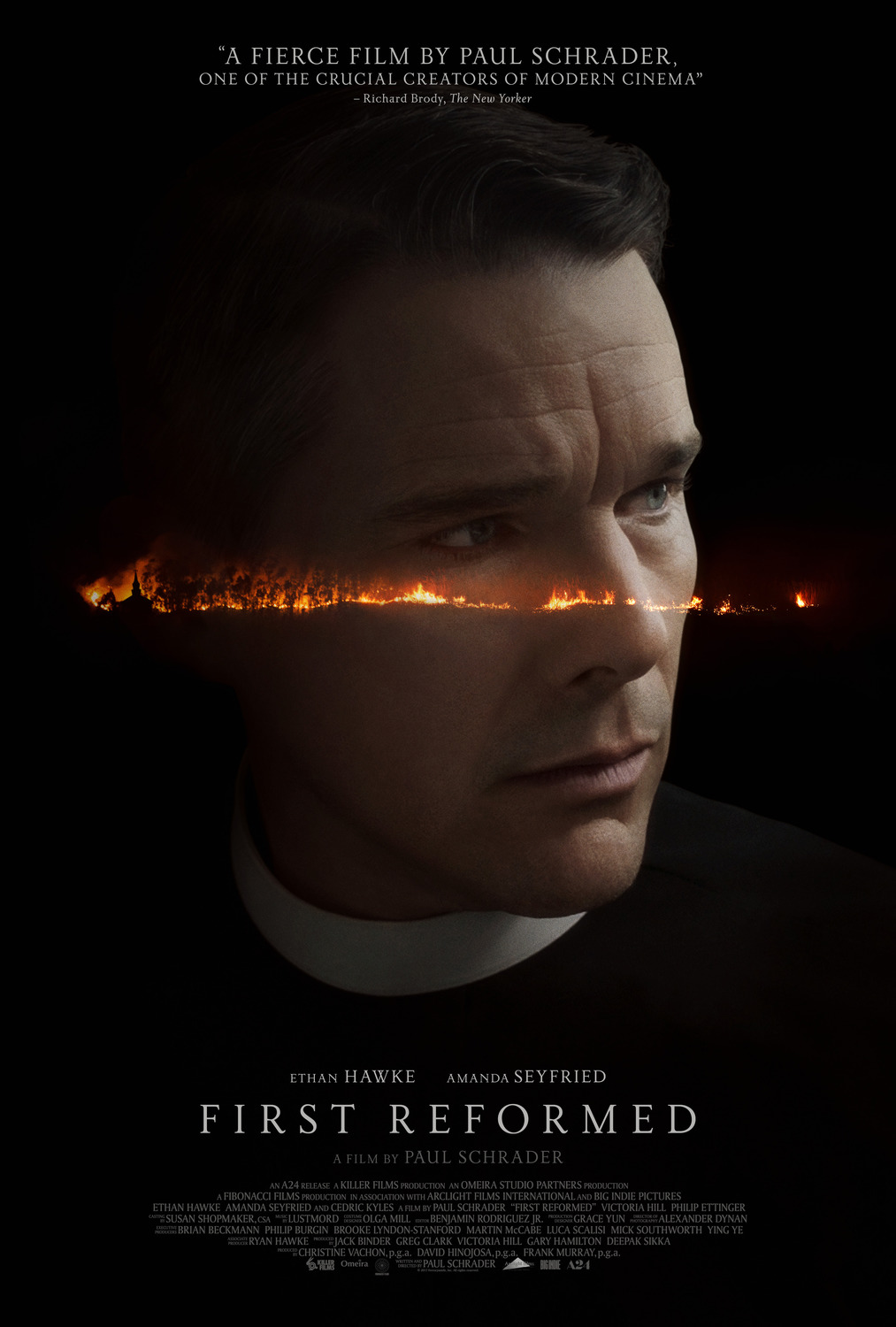
I remember taking a film class on the works of Alfred Hitchcock, and the instructor talked about how filmmakers often make the same movie over and over again. This is certainly the case with Paul Schrader as “First Reformed” marks his return to the “God’s lonely man” story or, as he would describe it, the “man in a room” stories. Whether it is Travis Bickle in “Taxi Driver,” Julian Kaye in “American Gigolo,” John LeTour in “Light Sleeper,” Wade Whitehouse in “Affliction” or Carter Page III in “The Walker,” Schrader has always been attracted to the lives of men trapped in their own bubble of solitude as they desperately try to find some meaning in life which will rescue them from the crippling isolation and despair which threatens to envelop them.
With “First Reformed,” you could say Schrader is offering his audience variations on a theme here as not everything is as predictable like us movie buffs might expect. But more importantly, he gives us one of the very best movies he has made in years as his exploration of a man in spiritual crisis remain as powerful as ever, and it features excellent performances from its very talented cast as well as a deeply thoughtful screenplay which succeeds in taking us to hell and back. While Schrader has not always had the technical brilliance which Martin Scorsese continues to possess, “First Reformed” shows us the cinematic leaps and bound he has made over the years, and he does it with a story which highlights the eternal conflict between our belief in God and the inescapable realities we can no longer lie to ourselves about.
Ethan Hawke plays Toller, a former military chaplain who works as a priest and provides sermons to a small congregation at the First Reformed Church in upstate New York. We learn he had a son whom he encouraged to enlist in the military, and that he was killed six months after arriving in Iraq. The tragedy of his son’s death destroyed his marriage, and he bemoans how he sent his only child into a war which had no moral justification. With his role at First Reformed Church, he looks to redeem himself in the eyes of not just everyone around him, but in God’s as well.
One of Toller’s regular attendees is Mary (Amanda Seyfried) who is expecting a baby with her husband, Michael (Philip Ettinger). Mary is eager to welcome this baby into the world, but Michael, however, does not share her enthusiasm and thinks it would be better to terminate the pregnancy. Mary asks Toller to counsel Michael to see if he can relieve her husband of his ongoing depression, and it is during their talks that Toller discovers Michael is a radical environmentalist who has long since been convinced of how global warming is destroying the earth, and that time has already past for humanity to effectively reverse the damage. Things become even more tense when Mary invites Toller over to her house to show him something Michael had hidden from her, a suicide vest.
Revealing more of the story from here would be criminal as it would spoil an already immersive cinematic experience which holds you in its grasp from the get go. What you should know more than anything else is this: global warming is real and is an even bigger threat to this planet than ever before. None of this is lost on Toller as he finds himself sympathizing with Michael to where he doesn’t realize how Michael’s despair is infecting him to an increasing degree. As much as he wants to help Michael, Toller finds himself questioning if God can ever forgive humans for what they have done to the planet. As “First Reformed” shows, this will either not be the case, or that forgiveness may come in another and unexpected form.
The brilliant conceit of “First Reformed” is how it deals with the crisis of faith in regards to an environmental issue which continues to get worse and worse with each passing year. Even Toller has to admit how Michael’s fears are becoming a quicker reality than many would want, or even care, to admit, and this leaves him in a state of conflict which pulls him into a dark place which offers no easy exit. Toller feels compelled to do something about this continuing environmental disaster, but he finds himself caught up in a personal struggle which has him drinking an endless amount of alcohol to drown his troubles away. Many see the suffering of an alcoholic as being someone who is too afraid to live and too scared to die, and Toller clearly fits this description as he cannot lie to himself about the apocalyptic path humanity is on.
When it comes to Schrader, his work as a writer typically outshines what he pulls off as a filmmaker. While his sometimes collaborator Martin Scorsese continues to show a filmmaking mastery few others can come close to equaling, Schrader has to make do with whatever is available to him, and this sometimes shows in embarrassing ways (for example, check out the terrible special effects in “Dominion: A Prequel to The Exorcist”). His films have long since been relegated to the independent film realm which thrived in the 1990’s but came to suffer inescapable blows to where you were more likely to see his films on your iPhone instead of the silver screen.
With “First Reformed,” however, Schrader gives us one of his best films ever as everything about it feels perfect. The acting is superb, the cinematography by Alexander Dynan is both beautiful and appropriately haunting, and the music of Lustmord helps to accentuate the conflict between hope and despair shown here. Considering how this film was shot in just 20 days on a budget of $3.5 million dollars, this makes what he accomplished here all the more commendable.
Ethan Hawke has long since proven to be one of the best actors of his generation, and his performance as Toller ranks among his finest. Seeing Hawke trying to hold his sanity together as his faith continually gives way to despair is fascinating to watch as his actions come to speak much louder than words can. Amanda Seyfried beautifully underplays her role as an expectant mother who is trying to come to grips with an increasingly dangerous world she wants to welcome her baby into, and she is such a luminous presence here. Even Cedric Kyles, better known as Cedric the Entertainer, shows up here as Reverend Joel Jeffers, a man who has to balance out his duty to God with the pressing issues from corporate entities that do not want anything to get in the way of profit. Church is a way of life for many people, but make no mistake, it is also a business for others.
“First Reformed” is far and away one of the best films I have seen in 2018, and it may very well be Paul Schrader’s filmmaking masterpiece. It ends on a rather ambiguous note as not everything is wrapped up in a neat and tidy fashion, but with a film like this we are left with more questions than answers and for a very good reason. Schrader seeks to test the faith and beliefs of his audience in an effort to wake them up about climate change and global warming as we have long since become complacent with our elected officials doing little to nothing about reduce the damage it has wrought.
I also have to say that if Hawke had performed a certain action in the film’s last few minutes, I would have been waiting for him to say “corn nuts.” If you have ever seen the cult classic “Heathers” starring Winona Ryder and Christian Slater, you will know what I mean.
She has played supporting roles in “The English Teacher,” “At Any Price” and “Arbitrage,” but now Sophie Curtis finally gets her first leading role in the horror film “Innocence.” Based on the book of the same name by Jane Mendelsohn, Curtis plays Beckett Warner, a young woman who has just moved with her father to New York City after the tragic death of her mother. Once there she is enrolled in a super elite Manhattan prep school where she makes the acquaintance of the school’s nurse Pamela Hamilton (Kelly Reilly) who helps her settle in to her new environment. But as Pamela begins to insinuate herself into Beckett’s life even more, Beckett comes to discover that the school harbors a deep, dark secret that may end up claiming her life.
It was a lot of fun talking with Curtis back in 2014 on the phone as she was about to start college at UC Berkeley. We talked about how she got cast in “Innocence,” how the movie “Bram Stoker’s Dracula” was a big inspiration for her in playing Beckett, and of what it was like working with established actors like Kelly Reilly and Linus Roache.
Ben Kenber: Congratulations on this being your first lead role in a movie.
Sophie Curtis: Thank you. I’m very excited.
BK: You’re welcome. This is one of the few horror movies I’ve seen recently where a teenager having sex can actually save their life instead of end it because it’s usually the other way around (Sophie laughs). How do you feel about that?
SC: I felt like it was empowering. I think it’s good for kids to see both sides, and I really enjoyed playing a character who wants to overcome all the things that are thrown at her. My experience and my courage for it to be my first film, because I was very nervous about that while I was filming, I think that kind of adds to the veneer throughout the film and I hope people pick up on that one while they’re watching it.
BK: How did you get cast in “Innocence?”
SC: I went through the normal audition process, and then Hilary Brougher, the director, had it down to me and I think two other girls, and she met with all of us separately through lunch. We weren’t really auditioned or reading lines. We were just talking about our perspective of who Beckett is and what she’s struggling with and what that means to us. I think we really connected on our views of Beckett and I think we had an understanding. Hillary is awesome. She actually wrote my college recommendation for me so we were very close on set, and I think that we had an immediate connection and that probably helped with me in getting the role for Beckett. She helped me a lot in getting this character.
BK: Kelly Reilly plays a very enigmatic character, and I loved watching how she was able to say things without speaking a word. You look into her eyes and you know she is trouble. What was it like rehearsing with her? Did she surprise you when it came to certain scenes in the movie?
SC: Yes. It’s really funny because she’s actually super, super sweet when she’s not playing a bloodsucking witch and she gives a very raw performance. I think that really helped me with my character because her and Linus Roache who played my dad are very established actors and it was my first leading role, and I think they knew that everybody has to start somewhere so they were very accepting of that and just helped me to do the best that I could do with my performance.
BK: How long of a schedule did you all have to make “Innocence” in?
SC: I think it took us a month and a half, and we were filming really, really long days. Going in at four or five a.m. and finishing once it was dark out was really intense for me, but it was one of the best summers of my life so I’m absolutely grateful for that.
BK: You said “Bram Stoker’s Dracula” was a big inspiration for you in playing Beckett. What was it specifically about that movie that inspired you so deeply?
SC: I think it’s just the idea of going back to the source of horror. I think that “Dracula” and films like “Frankenstein” are films that have been drawn from so much to create today’s horror films and today’s horror novels. It’s kind of like the grandfather of horror and I think it’s the idea of supernatural love story with a normal girl, Winona Ryder who is one of my favorite actresses, just being trapped in a hyper reality and being misunderstood. I liked the simplicity of it and I like seeing how it’s transformed throughout in trying to create new movies like “Innocence.” That was the inspiration for Beckett.
BK: Are there any movies out right now that you feel are as good as “Bram Stoker’s Dracula?”
SC: Honestly, I really like old horror movies. To me, “Innocence” is not as much of a horror movie. It’s just more of a thriller and a coming-of-age story.
BK: What’s great about Beckett is that she is one of the more down to earth teenagers that we’ve seen in movies recently. Did you add a lot to this character that wasn’t in the script, or did you mostly stick to the script?
SC: She is really down to earth and I think she just has a very innocent demeanor. Hilary had adapted the script from the book as written by Jane Mendelsohn, and Jane was a producer on the film so she was very involved with how she wanted her story to be portrayed in the movie. I think Hilary kind of changed it from the book and she really involved me in that she starts off solemn and at other time she’s very happy. I kind of gave her my opinions on the script and how I felt Beckett should be represented after reading it and studying the character and just having an insight of being a teenager and how I felt Beckett should come off. So I think I did help or least I hoped I helped. I think I tried to make Beckett as much as my own character because she’s just a really awesome character and I had a really fun time playing her. She definitely taught me a lot while I was filming.
BK: Your character goes through a wide range of emotions throughout this movie. What was it like juggling all those different emotions while playing this role?
SC: It was really intense, but I think that me being nervous and excited and scared and happy and all of those things in real life as Sophie for being my first film and just being in this really intense working environment that I wasn’t used to. I think that really added to Beckett’s character and it helped me. I was going through similar emotions to what she was going through just in different circumstances, so you just try to draw from that and apply it to her situation.
BK: I understand that you are now starting college at UC Berkeley. How is that going for you?
SC: I’m here right now in my dorm, so if you hear other people it’s just my roommates. I’m in a triple so it’s really very crowded.
BK: What do you have planned next other than school?
SC: I’m just seeing what happens with “Innocence” right now. It’s just a really exciting time so I’m just reviewing a few possibilities, and there’s some really great opportunities. I just have to figure out which ones are the right ones for me. You have to be really, really dedicated to the project you take on because it’s really long hours and you have to really invest yourself in the character and become the character. It’s hard to wake up every single day and play somebody for hours on end that you don’t enjoy playing. I loved playing Beckett and I’d love to play her again if there’s a possibility of doing an “Innocence 2.”
BK: Well thank you for your time Sophie and good luck at school. It will definitely be a fun time for you for sure.
SC: Thank you, I’m very excited and happy to be here. It’s far from home so it’s been a little bit of an adjustment, but I like it a lot.
“Innocence” is now available to own and rent on DVD, Blu-ray and Digital.






 The Ultimate Rabbit