David Twohy Looks Back at the Making of ‘Riddick’
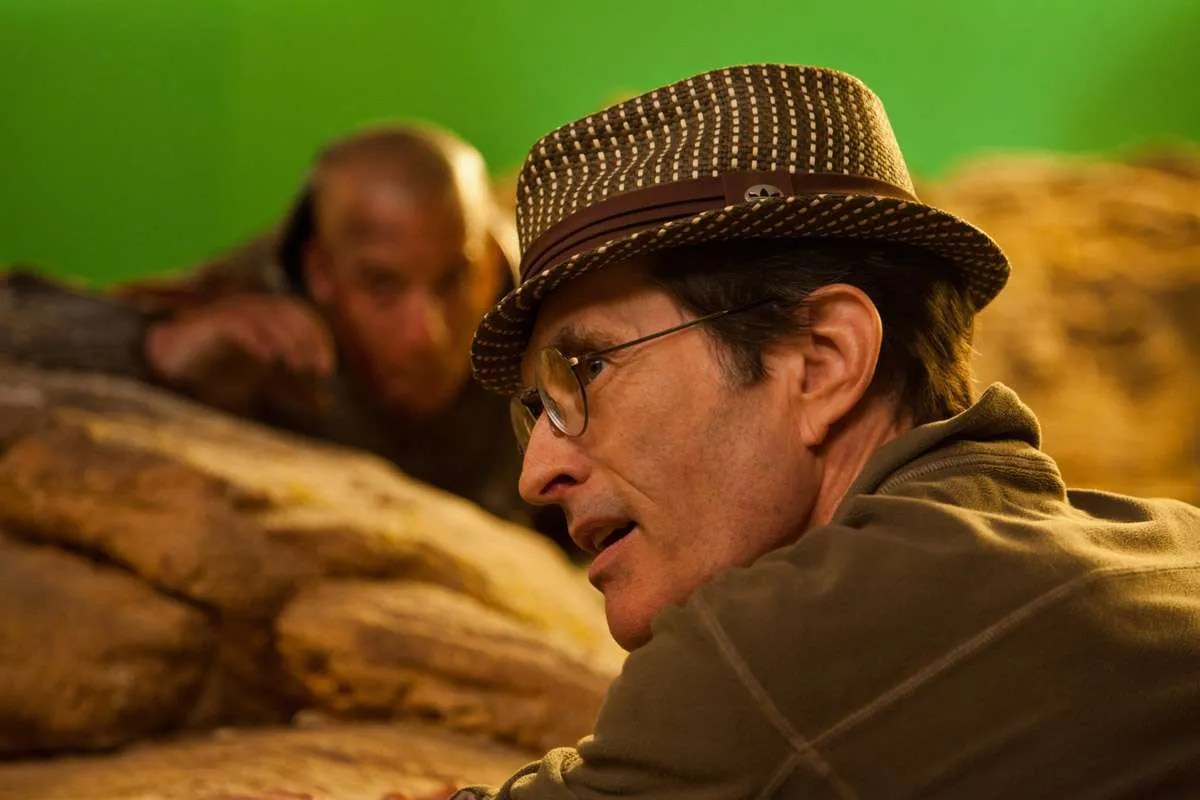
Born and raised in Los Angeles, California, filmmaker David Twohy has left a strong impression on moviegoers everywhere. He got his start as a screenwriter on “Warlock,” “The Fugitive” and “Waterworld,” and he eventually proved himself to be an effective director with the underrated “The Arrival” which starred Charlie Sheen as an astronomer who discovers evidence of intelligent alien life, and the equally underrated submarine supernatural horror film “Below.”

But the movie Twohy is still best known for is “Pitch Black” which had him joining forces with “The Fast & The Furious” star Vin Diesel who played the dangerous criminal, Riddick. Its budget was only $23 million, but Twohy and Diesel created a movie that was intensely exciting and which made the most of its modest budget. So strong was the cult following for “Pitch Black” that the two later made “The Chronicles of Riddick” which had a budget of over $100 million. While the sequel was not a commercial success, fans were still craving another Riddick movie and kept pushing at Twohy and Diesel to bring this anti-hero back to the silver screen.

Fans got their wish when “Riddick,” the third movie in the “Pitch Black” franchise, opened in theaters on September 3, 2013. After dealing with a big budget and a Hollywood studio, Twohy and Diesel ended up raising the money independently to make this particular sequel a reality and maintain full creative control over it. It follows Riddick as he is left for dead on a desolate planet and ends up being sought out by bounty hunters who are prepared to bring his head back in a box. But soon they are stalked by vicious alien predators, and they are forced to join forces with Riddick in order to survive the long dark night.

I was lucky enough to attend the “Riddick” press conference at the Four Seasons Hotel in Los Angeles, California just before this sequel was released back in 2013. Twohy talked about the challenges of making this particular movie as well as what it was like working with Diesel who had just received his star on the Hollywood Walk of Fame.

Question: How did the final film compare to what you originally envisioned, and were there any big challenges you faced in terms of the look of the film?

David Twohy: Did the finished product end up like we had imagined it? Yeah, it does because really, as a responsible filmmaker, I have to imagine the whole movie. After I script the movie, I have to storyboard it out, I have to budget it, and I have to understand if I can afford all those visual effects or not. So more than anybody, it looks like the movie I had imagined, sometimes better, sometimes not quite as good depending on how we execute the visual effects. But yeah, I’m not surprised by it because it’s what I do and it’s what I set out to make. Sometimes Vin, who is not privy to everything that’s in my head and all the work that I’ve done with the concept artist (and he likes it that way), is surprised, but I don’t have the luxury of being surprised. I can’t be surprised by anything in the filmmaking process if I’m doing my job right. So, it’s very much the movie we set out to make, and we set out to make something that would fit into the budget that we had ($38 million). I think you all know that this was an independent movie this time out instead of a studio movie. So, knowing that we would have limited resources, Vin and I sat down in his kitchen and we came up with a story that would fit that budget. It couldn’t be as grand as the last movie, and it had to be more contained. It feels more like “Pitch Black” to some people. It probably is more like that at least in its tone and scope (we limited it to one world), but it’s very much the movie we set out to make, and there were not that many surprises for me along the way.

Question: It was interesting to see that Dahl (played by Katee Sackhoff) was not a love interest in this movie. Usually, the girl ends up being the love interest of someone, but instead she was this independent woman who can hold her own. Can you talk about casting Katee and why you chose to make her this independent woman who can take care of yourself?

David Twohy: I remember Ridley Scott telling me this story about the original “Alien;” Ripley was scripted to be a man, and he decided to make her a female thinking that these parts should be gender-neutral. I’ve always remembered that, and the women in my movies do stand up on their own two feet and are not pieces to anybody, and I like that. In terms of Katee, she was the first person to read for the role of about a hundred actresses, and that I remembered her throughout the whole process speaks highly of her. So finally, I said, “Who was that girl who came in the first day, she had blonde hair and she kind of killed it? Who is she?” They said, “Oh that’s Katee Sackhoff from ‘Battlestar Galactica.'” Well, I didn’t really follow “Battlestar Galactica,” so I didn’t even know her from that, so I’m not casting or for that. I just thought she was the best available actress so we cast her like that, and I’m so glad we did because she was a joy to have on the set. And clearly, like the character, she holds her own amongst the men and swears worse than any of them. Her off-screen lines are just as good.

Question: What made you bring this franchise back to R-rated territory after the PG-13 “Chronicles of Riddick,” and is there going to be another “Riddick” anime, game or ride?

David Twohy: (laughs) A Riddick ride? Well, actually we are doing some D-Box seats in theaters, the motion platform seats. I just experienced them for the first time and it’s the closest thing to a Riddick ride as you’ll get. It’s watching the movie, but it’s motion based. I don’t know what that in between thing will be, but we embrace them, and I would like to do more. We published the motion graphic novel as well which helped with the back story of how Riddick went from King of the Necromongers to a man alone on a planet. We embrace those things, and it would be great to get another game off the ground, but those things are very hard to launch. They are costly and they need a lot of lead time, so it’s hard to sync those games to the release of a movie. But we would like to do another one and we are talking about it. The R-rated movie was important to us because, as a filmmaker, I have the flexibility I need to do what I want. With PG-13 I feel like I’m pulling my punches either in the script or working with my actors on the set and coming up with stupid analogues for the word “fuck.” I’m getting tired of that. It gets to the point where people aren’t talking like people talk anymore. Just because I don’t want to pull my punches anymore, I felt this was important to me. It also plants a flag in the ground for our fans as well and lets them know we are true to the character and the nature of the series. The reason for PG-13 last time is obvious. It was because we were a big studio movie funded by a big studio, and to minimize their risk they wanted to branch out to what they think is the widest possible audience and they think that’s PG-13. There is actually a sound reason for that, but Vin and I feel more comfortable back in the R-rated universe.

Question: In “Riddick” you deal with the Necromongers briefly and just move on from there. Do you plan on going back to that story thread if this movie is successful enough to merit a sequel?

David Twohy: Yes. If it is successful and if we have a flexibility to go wherever want for the next movie, and Vin and I are talking about two more movies and probably just that (it would be good to do a closed ended franchise rather than a franchise that just keeps spitting them out just to spit them out), we would like to get back to the Necromongers. I am currently cutting the director’s cut DVD right now which includes more of an epilogue which has Riddick returning to the Necromonger empire and actually setting things right there in terms of the guy who abandoned him on this planet and left him for dead, and his search for Vaako (played by Karl Urban) who he thinks has the answer to where his home world lies. The next few weeks will be telling for us, and we want to pay off the fans who have stuck with us all this time. They have never stopped talking about this movie to us, and it was them who made us open our eyes and say it will be honestly irresponsible to leave it like it was and not make another movie.

Question: How did you and Vin get back to the savagery of the “Pitch Black” with this one and made it look like “Conan the Barbarian” as opposed to “Conan the Destroyer?”

David Twohy: That was important too, and it was also part of the character who thinks at the story’s outset that maybe he feels that he is gotten a little slow, a little soft, who has dulled his own edge as King of the Necromongers and wonders what happened to him. Did he commit the greatest crime of all? Did he get civilized? So, the exploration of him trying to get back to basics to find his edge again, to get back to the lean thing he was, it’s a good evolution for Riddick and it’s also sort of a parallel to what the franchise has undergone

Question: What do you like most about collaborating with Vin Diesel?

David Twohy: That he doesn’t shut up (laughs). He’s a guy who aims high and pushes me to aim high. He’s a guy who dreams and thinks that anything is possible, and me I’m more of a practical guy. I try to be a responsible filmmaker, living with the constraints of what I’m given to make a movie with, but Vin doesn’t think like that. Vin thinks like anything is possible and he thinks big. Sometimes that’s almost a folly but other times it can be inspiring and it can open up my ideas to other ways of doing things. What’s great about it is that he’s a guy who has all the confidence in the world and always has ever since I cast him as just a guy, an actor, in “Pitch Black.” But he had an unshakable confidence in himself even back then, and he just seems to see the future or will it into being (laughs) so that he can say “hey I was right all along!” He’s great like that and he’s inspiring like that. Just about the time you think that Vin Diesel is a guy with big muscles and a big head and your kind of willing to dismiss him as that, you realize that this is a guy with a big heart too. He dreams no small dreams, and that’s good and that rubs off on everybody else he works with.

Question: Can you talk about crafting Riddick’s voiceover in the movie?

David Twohy: Here’s how I craft it, I sit in front of my computer screen and I write it. Then I’ll rewrite it, I’ll tweak it, I’ll rewrite it and then I’ll show it to Vin and he’ll say I’m digging this or I’m digging that. When he gets in front of a microphone, he’ll say 90% of it, but every once in a while, he’ll just stick in a line. I later find out it’s because it’s too similar to something else he said in another movie. We just work it out and then I’ll spitball three alternatives and when something pops up that he likes we’ll just lay it down. We’ve built a good level of trust with each other lately. As opposed to the voiceover in “Blade Runner” where it was just filling in stuff that you needed to know about the world and it wasn’t character-based, the one in “Riddick” is character-based and it comes with Riddick’s voice and how he sees the world. It takes a while to get it right.

Question: Riddick’s relationship with the puppy is one of the best things about this movie…

David Twohy: By the way, every woman who has interviewed me today talked about the damn puppy (laughs). I cut a trailer of this movie that was all about Riddick and his relationship with the dogs and I gave it to Universal and said, “Hey maybe we want to broaden our audience a little bit and make sure we get the women in here, you know?” Then they go, “It’s a little soft for a Riddick movie Dave.” God, I wish the marketing people were listening to this! I’ve been trying to tell Universal, I’ve been trying…

Question: Since the puppy was created with CGI effects and has a lot of interactive scenes with the actors, what did they have to work with on the set?

David Twohy: All the actors have plenty of reference whether its concept art which they can paper their trailers with or I’ll show them on the morning of the shoot. The puppy has stand ins. For the puppy, I got a 12-pound silicone puppy that looks like the real puppy. It’s furred, it’s got glass eyes and everybody wants to hold it, and it just feels right. The puppy made it into the movie in a couple shots. Plus, Vin has big dogs too, so more often than not he’s telling me how to greet the dog and how to pet it (I’m a cat guy, Vin’s a dog guy). So, he says, “No you don’t pet it like a cat. If you want to say hello to your big dog, you slap it on the shoulder.” So that’s what we do in the movie.

Question: What were the differences, both positive and negative, that you found making this movie independently versus working on a studio movie?

David Twohy: Mostly positive. We shot it in 48 days which was pretty streamline. During postproduction I showed it to an audience of 50 or 60 people and didn’t score it, didn’t test it. I just wanted to know what confused them so I could go back and clear up the confusions. I showed one or two cuts to Vin and then I locked the picture. That is as atypical as it gets in the professional filmmaking world because a lot those movies you saw this summer were focus grouped, tested, scored, recut, reshot, recut, tested, scored, and after a while there is a factory-made feel to those movies. So hopefully something this simple, streamline and filmmaking pure results in something that’s at least different and maybe better just in the handcrafted sense of it.

Question: So, would you say you had more fun with less money in some ways?

David Twohy: Yeah, we did, and I’m sure most independent filmmakers will tell you that. The downside is that we staggered to the starting line. We were up, we were down, we were up, and we were down. It all comes down to, is the paperwork closed? Is the bond closed? You have to close the bond to get the bank loan. It’s a lot of stuff I don’t know much about, and I wish it didn’t affect my life but it does. We started and we were shut down, kicked out of our studios, the doors locked. We had to come back three months later and pay our bills and start over. So those are the vicissitudes of independent filmmaking.

Riddick” is now available to own and rent on DVD, Blu-ray, 4K UHD and Digital.

As this interview was conducted in the past, it may contain outdated information.

Click here to check out my exclusive interview with David Twohy which I did for We Got This Covered.

Karl Urban on Playing Judge Dredd in ‘Dredd’

WRITER’S NOTE: This article was written back in 2012.

With “Dredd” now out in theaters, people can now see what fans and critics are so excited about. Distancing itself from the 1995 misfire “Judge Dredd” which starred Sylvester Stallone, this film hews more closely to the character’s comic book origins and aims to be more serious than campy. But what everyone should be especially excited about is that the filmmakers chose the right actor to play the famous Judge, Karl Urban. Having made such memorable appearances in “The Lord of the Rings” trilogy, “The Bourne Supremacy” and giving a pitch-perfect performance as Dr. McCoy in “Star Trek,” Urban looks to be the only actor to give this character the cinematic respect he deserves.

In an interview with Entertainment Weekly, Urban said he was first introduced to the comic books of “Judge Dredd” when he was 16 years old. Recalling a pizza parlor he worked at in Wellington, New Zealand, the manager there told him all about the character.

“It was kind of ironic at the time because most teenagers do rebel against everything to do with authority and the law and all that sort of stuff,” Urban said. “I really gravitated towards this ultra-brutal representative of the law. I just loved it. I’ve always had a passion for science fiction.”

In preparing to play Judge Dredd, Urban said he spent more than three months “lifting heavy things” in order to get the character’s physique down. When it came to wearing the costume, he wore it every day for three weeks before shooting began. Urban did this so he could get used to what the Judge wore and to learn how to move in it and discover its limitations. Of course, the biggest challenge was wearing the costume while filming in South Africa during a blazingly hot summer.

Many have asked Urban what it was like to wear the helmet Dredd is famous for wearing, and he described it as being “a bitch to wear” but that he liked in a “sado-masochistic way.” Regardless of the discomfort, Urban stayed very true to Judge Dredd’s refusal to ever take it off.

“To me, that’s (the helmet) essential,” Urban told MTV. “That’s part of his enigma. That’s part of who he is. To do something contradictory to the way the character was originally created… it was certainly a choice that was never considered by myself or anyone else on this production.”

Of course, acting with a helmet forced Urban to convey emotions without the use of his eyes. When it comes to film acting, the eyes can speak louder than words ever can, but he was forced to use other tools to show what Dredd was going through. The one tool which became especially important was the character’s voice, and Urban spoke with Matthew Jackson of the Blastr website about how he came up with it:

“The voice isn’t out of any attempt to emulate or copy anything that has come before,” said Urban. “It’s purely and simply a fact that in my research of the comic book I discovered a description of Dredd’s voice and it said that it sounded like a saw cutting though bone. The voice is my interpretation of what that is. I didn’t want to play this character as a bellowing, posturing Dredd, shouting out lines. For me, it’s far more interesting to have the character contain the rage and the violence. Without the use of my eyes, I had to figure out where that voice was going to sit to maximize the opportunity to express in any given moment.”

Many were worried it might be too soon for a cinematic reboot of Judge Dredd, but it looks like the filmmakers got the details right this time around. As for Karl Urban, getting to play this role must be a dream come true for him. Hearing him talk about his preparation is a great reminder of how much fun it is to hear actors explain their process of portraying a character, and he looks to deliver the goods as this brutal enforcer of justice.

SOURCES:

Clark Collis, “Karl Urban talks ‘Dredd 3D,'” Entertainment Weekly, September 16, 2012.

Ryan Turek, “Fantastic Fest Interview: Karl Urban on Dredd, Returning to Riddick,” Shock Till You Drop, September 20, 2012.

Kevin P. Sullivan, “Keeping ‘Dredd’ Helmet on Was ‘Essential’ For Karl Urban,” MTV.com, September 20, 2012.

Matthew Jackson, “Karl Urban explains how he came up with that gritty Dredd voice,” Blastr, September 6, 2012.

Star Trek Into Darkness

Star Trek Into Darkness movie poster

J.J. Abrams has done it again; he’s made another incredibly entertaining “Star Trek” movie. “Star Trek Into Darkness” proves to be just as much fun as the reboot he helmed in 2009, and I found myself with a big grin on my face as the end credits came up on the silver screen. In a summer season that has gotten off to a somewhat tepid start, Abrams manages to thrill us with a combination of spectacular action pieces and characters we come to care deeply about. He also takes this movie to where no “Star Trek” movie has ever gone before: a place where roman numerals and colons are not needed in the title.

One year has passed since the events of the last movie, and this one starts off with the crew of the U.S.S. Enterprise accidentally catching the attention of a primitive civilization that is not yet ready to discover the existence of things like starships. This leads the crew, and James T. Kirk in particular, to violate the Prime Directive which dictates that there will be no interference in the development of an alien civilization, to attempt to save one of their fellow crew members from certain death. Back on Earth, none of this sits well with Admiral Christopher Pike (Bruce Greenwood) who berates Kirk (Chris Pine) for acting as if the rules don’t apply to him.

But things change quickly when a vicious domestic terrorist named John Harrison (Benedict Cumberbatch) lays waste to certain parts of Earth, and Kirk becomes consumed with vengeance and determined to bring him down at any cost. But in their pursuit of Harrison, the crew of the Enterprise find themselves in conflict as to what course of action is the best one to pursue. While Kirk feels justified in killing Harrison, this action could lead to an all-out war that the Federation of Planets cannot afford.

Now some complain that ever since Abrams became part of the “Star Trek” franchise that the movies have become more about action than ideas, but that’s pretty much been the case since “Star Trek II: The Wrath of Khan.” What Abrams gets right though is his attention to the characters, and in the end this franchise is really more about the characters than special effects. While we love the action with all those starships firing their torpedoes at one another, it’s the characters and what they go through which keeps us endlessly riveted.

I love the complicated relationships these people have with one another. Admiral Pike continues to be the father figure Kirk needs in his life, and Greenwood is perfect in the role as he dishes out some hard love to the strong but arrogant captain of the Enterprise. You never really catch Greenwood acting in the role, and his moments opposite Pine are filled with a lot of genuine emotion that never feels faked.

But the key relationship in this particular “Star Trek” movie is the one between Kirk and Spock which remains as complicated as ever. While Kirk is willing to fudge the facts in order to justify his course of action, Spock has no choice to be 100% honest about everything because he’s a Vulcan, and Vulcans don’t lie (but they do exaggerate). You wonder how these two can stand to be on a starship together for even a brief period of time, but the fact is that these two need one another in order to survive from one galaxy to the next. This becomes all the more apparent as “Star Trek Into Darkness” reaches its relentless conclusion.

Pine gives another excellent performance here as the iconic character James T. Kirk, and it’s fun to watch him take Kirk from being a cocky individual to one who ends up making selfless decisions in order to save the only family he has left: his crew. Quinto remains riveting as ever as Spock as we watch his half-human and half-Vulcan sides battling with one another for supremacy. Spock has always been a very complex character, and there are many reasons why he was the only one to survive the pilot episode of the original “Star Trek” television series.

Zoe Saldana really gets to kick ass as Uhura, and there’s something thrilling about her not just being relegated to her communications station on the bridge. Simon Pegg remains a delight as Scotty who finds out more about starships than he’s supposed to in this one. John Cho really does get his moment in the sun as Sulu when he is required to take the Captain’s chair and makes it clear he is not to be messed with. And then there’s Karl Urban who remain as pitch perfect as ever as Dr. McCoy, and he delivers some of the character’s most iconic lines with a freshness which reminds us how much we loved this character in the first place.

As for Anton Yelchin, his character of Pavel Chekov is kind of underused in this “Star Trek” movie. Yelchin gives a good performance, but Chekov is relegated to engineering a little too much this time around, and he comes off looking like he’s not a necessary part of the Enterprise crew.

There are also some new additions to “Star Trek” family in this sequel that prove to be very welcome. Peter Weller, the original “Robocop,” co-stars as Starfleet Admiral Marcus, and he brings to his role the same relentless hard ass intensity he brought to the fifth season of “24.” Alice Eve portrays the very alluring Science Officer Carol Wallace who knows more about weapons than anyone is comfortable with, and she hides secrets which may jeopardize her relationship with the crew.

But the one actor everyone will be paying the most attention to is Benedict Cumberbatch. Long before this sequel was released, it was believed that he would give us one of the most unforgettable villains of the summer 2013 movie season, and he doesn’t disappoint. John Harrison is not your typical one-dimensional bad guy, and that makes Cumberbatch’s portrayal of him all the more mesmerizing to watch. He also gives the role a strong depth you don’t expect it to have as we discover his true nature and why he is wreaking all this havoc.

To say anything more would risk spoiling the movie for you, and I am not about to do that. Abrams makes a very welcome return to the director’s chair for this “Star Trek” adventure, and his success here bodes well for that “Star Wars” movie we are waiting for him to make. While some directors get caught up in visuals, battles and explosions, Abrams is one of the few who gives an equal amount of attention to the actors and the characters they play. That makes his films all the more thrilling and emotionally involving to witness.


It’s hard to say where “Star Trek Into Darkness” ranks among the other movies in this franchise that continues to live long and prosper, but it’s safe to say that it won’t be sharing company with “Star Trek V: The Final Frontier” anytime soon. This film entertained me from beginning to end and it never sacrificed character for the sake of action. It has me looking forward to the next film which should have the Enterprise crew finally starting their five-year mission to explore strange new worlds. Whether or not Abrams will be in the director’s chair, it’s bound to be a very entertaining journey.

* * * ½ out of * * * *

Copyright Ben Kenber 2013.

Star Trek (2009)

Star Trek 2009 movie poster

I have been into “Star Trek” since I started watching the original series when I was five years old. I reveled in Kirk, Spock and the rest of the Enterprise crew hurtling through space and exploring new worlds. I still remember watching the episode “The Return of the Archons” where the Enterprise crew was being held prisoner, and there was this overwhelmingly loud noise which rendered them unconscious. As they fell to the floor, I mimicked what I saw on that ancient Zenith television my parents bought, pretending I was part of this great crew. Back then, I envisioned myself as a character on that show and “Star Trek: The Next Generation” as its adventures made up for the dullness of reality.

As “Star Trek” expanded from its original incarnation later became a never ending movie franchise, I stayed with it as much as I could. My dad had to carry me out of “Star Trek II: The Wrath of Khan” after I burst into tears at the end. The fact that I kept saying he would come back to life was truly an utter coincidence when “Star Trek III: The Search for Spock” came out, and I was in tears after that one as well. I later became determined to be the first person in Thousand Oaks, California to own a copy of “Star Trek IV: The Voyage Home” on VHS. When my family moved from Thousand Oaks to the Bay Area, I found myself wanting those transporters to be real so that I could beam down south to hang out with the friends I was forced to leave behind.

But somewhere along the line, I found myself losing interest in all things Trek as I started to miss out on the last couple of seasons of “Star Trek: TNG.” Then there were other spinoffs like “Deep Space Nine” and “Voyager” among others, and I became increasingly less excited about the franchise as it came to resemble “Law & Order” and its various other incarnations. You knew what you were going to get, so the level of excitement I had for the franchise kept fading away year after year. Still, I believed that the franchise could be resurrected because, as Spock would say, there are always possibilities.

That resurrection has now arrived, seven years after “Star Trek: Nemesis,” thanks to J.J. Abrams. His “Star Trek” movie is the most exciting film this series has seen since “First Contact,” and I fucking loved it! This origin story of the Starship Enterprise and its cast gives the franchise a much needed kick in the ass. By taking the series in new directions, Abrams has succeeded in opening up the world of Trek to an audience that never fully embraced it before.

We get to see a young James Tiberius Kirk driving a hot rod while blasting the Beastie Boys’ “Sabotage” on the car’s stereo, and this is the first sign that this “Star Trek” is not going to be the same old shit. We see a young Spock getting taunted by his classmates which makes him use methods other than that famous Vulcan nerve pinch to subdue his enemies. Seeing Spock beat the crap out of others might have been hilarious in any other movie, but Abrams takes the character in fresh new directions we have not seen him go to before. This plays much more intensely on the fact that Spock has always been half-human and half-Vulcan.

The plot of “Star Trek” revolves around the device of time travel which has played a part in the most entertaining and successful films in the series (“The Voyage Home” and “First Contact”). It involves a large mining ship of Romulans commanded by Nero (Eric Bana) who is as thirsty for revenge as Khan was in “Star Trek II.” It doesn’t matter how much you know about Gene Roddenberry’s sci-fi universe because anything and everything you remembered about it previously will seem very different, and that makes this movie all the more entertaining and unpredictable.

One of the key successes Abrams has with “Star Trek” is the actors he has chosen as none of them try to do imitate what the actors who originated these roles did before them. Among the most impressive is Chris Pine who plays Kirk as a hotshot who gets himself in trouble constantly and lacks a father figure in his life. Pine really succeeds in capturing the same cockiness and over confidence that William Shatner brought to the role before him.

But even better is Zachary Quinto who plays Spock at his most emotionally unhinged. Of all the actors here, he has the biggest obstacle to overcome since the original Spock (Leonard Nimoy) is in this film as well. I admired how Quinto strongly displayed Spock’s inner turmoil and of the fact that he is a child of two worlds. One of his best moments comes when he essentially flips off the Vulcan High Command after he is accepted into their prestigious science academy. By describing Spock as having done well despite the “disadvantage” of having a human mother (played by Winona Ryder of all people), we get a huge thrill out Quinto making “live long and prosper” sound like he’s saying fuck you to the.

Another inspired casting choice in “Star Trek” is Simon Pegg as Engineer Montgomery Scott. As the movie heads to its exciting climax, it is frightening to see just how much Pegg resembles Scotty from the original series, and that’s even more so when we hear him say, “I’m giving her all she’s got Captain!” Pegg gives us a Scotty that is a perfect comic foil, and it will be great fun to see where he will take Scotty in future installments.

As Nero, Eric Bana gives us the strongest and most lethal villain this series has had since Khan. Whereas the previous antagonists seemed more refined in how they acted among their prey, Nero’s fury is so personal and uncontainable, and the fact that he is named after the Roman Emperor whose rule was marked by tyranny, and that he ordered the execution of his mother and adopted brother, should give you an idea of how screwed up he is.

The rest of the cast includes Bruce Greenwood who is perfectly cast as Christopher Pike, and it reminded me a lot of his underrated portrayal of John F. Kennedy in “Thirteen Days.” John Cho of “Harold & Kumar” fame plays Sulu, and he has a great moment where he gets to put his fencing skills to the test. Zoe Saldana plays Uhura with a calm sexiness and an intelligence that is foolishly underestimated by others until she makes you see the big picture. Karl Urban gives us a pitch perfect Dr. Leonard ‘Bones’ McCoy and captures the character’s infinite crankiness we all know him to have. Anton Yelchin plays Pavel Chekov, and while the character feels underused here, he is still well cast and has a flawless Russian accent. And of course, we have Winona Ryder playing Spock’s mother, and her performance is all the more impressive when you take into account that she is only two years older than Quinto.

What impressed me even more about this particular “Star Trek” is that it was given a budget of over $100 million. There is no doubt that the money is there on the screen, and the effects are remarkable. This is an especially good point to make as special effects have never really been the strong point of the “Star Trek” series, but here they are the best they have ever been. The Enterprise bridge looks so much different than it ever before, and it has a sleek style to it that makes being there all the more inviting.

I’ll be very interested to hear what die hard Trekkers think of this latest adventure of the Enterprise crew. This one does not dwell on big ideas the way “Star Trek” has done for the most part throughout its various incarnations. The main power of Roddenberry’s series was how it dealt with social issues of the day in the realm of science fiction. This one is meant to be more like “Star Wars,” and it allows Abrams to give this aging franchise an invigorated feeling that it desperately needed. While it may not be a “Trek” rooted in philosophy, I think this one leaves the door open for writers to explore present day themes in a future installment.

But I cannot go on without mentioning the welcome return of Leonard Nimoy as Spock (. This could have been a gimmicky cameo that lasted just a few seconds, but Nimoy’s Spock does play a very pivotal role in this movie. Furthermore, he also helps give it a sense of legitimacy that it would not have had without his appearance. Keep in mind, his character was the only one who survived the rejected first pilot of the original series.

Seeing this “Star Trek” brought a lot of happiness to me. My mood seems to get inadvertently sidetracked depending on the health of the franchise. I can honestly say that I am not all surprised at its longevity or constant rebirth. Roddenberry’s message of hope always finds a way to win out, and it is fitting that the movie is getting released around the beginning of the President Barrack Obama’s first term. Granted, this is really a coincidence since the movie was being developed before he made his decision to run for President, but it’s a wonderful coincidence all the same.

All those kids who gave me crap about liking this great series can suck it now, because “Star Trek” is here to stay. Even those who picked on me for being a Trekker, and ironically did much better in science classes than me, won’t be able to pass this one up. “Star Trek” can be seen as the first truly great odd-numbered movie in the long running series, and it is proof that this series will never die.

Live long and prosper? OH HELL YES!!!

* * * * out of * * * *

Copyright Ben Kenber 2009.