Underseen Movie: John McNaughton’s ‘The Harvest’
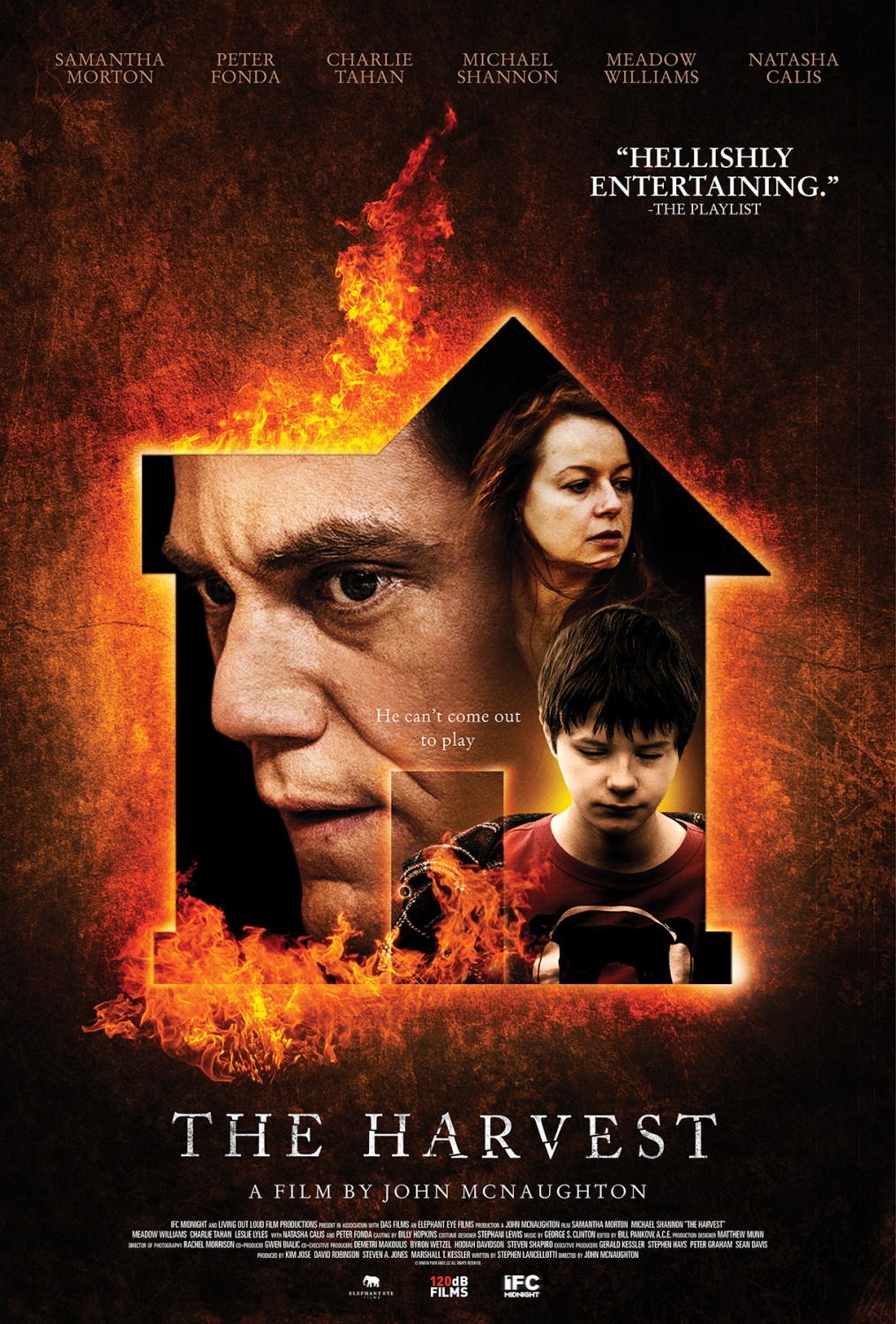
The Harvest” is one of those movies which completely took me off guard to where I had no real idea of where it was going. This is a very rare experience for me when watching movies these days as I typically have a pretty good idea of where the story is going to end up, so that makes this particular film from John McNaughton, which represents his first directorial effort in a decade by the way, all the more effective.

The prologue of “The Harvest” is designed to mess with your head a bit, so I prefer to let audiences witness it for themselves. Past this, we come to meet Maryann (Natasha Calis), a young girl who has just moved into her grandparents’ house following the death of her parents. This causes her great discomfort because, aside from losing her mom and dad, she is forced to start all over again in a new town where she is forced to make new friends again. Having been uprooted myself at such a young age, I can confirm this is a real inconvenience.

Eventually however, Maryann does make a new friend in Andy (Charlie Tahan), a very sick young boy who is confined to his home twenty-four hours and seven days a week, and he cannot move around without a wheelchair. Andy is constantly looked after by his parents, Katherine (Samantha Morton) and Richard (Michael Shannon), who are both constantly in conflict over how to best take care of him. Katherine is a doctor who constantly keeps Andy in a medicated state, and Richard constantly urges her to ease up and not overdo it. Suffice to say, these two people do not have the same relationship they had when they first wed.

Now that is all I want to tell you about the plot. What I can say tell you from here is that Maryann comes to make certain discoveries which turn hers and Andy’s life completely upside down. Watching a movie like “The Harvest” is la lot ice peeling away at an onion; you keep going through various layers in order to get to the center of things, and McNaughton and screenwriter Stephen Lancellotti reveal only so much as they keep stringing us along to the very end. Before we get to the revelation at the story’s core, we dare not take our eyes off the screen for a single second.

It was really great to see Samantha Morton here as she gives “The Harvest” its best performance. As Katherine, she gives a very multi-layered performance as we watch her go from being understanding and caring to becoming very uptight and furiously angry. When Morton stares down Calis in one scene, it makes for an incredibly tense moment as Morton looks like a snake just waiting to strike. Her’s is a very impressive performance as well as the kind which is not always found in horror movies. You are never sure whether to empathize with Katherine or fear her presence, and this proves to be a reminder of how powerful an actress Morton can be.

Michael Shannon is one of the best character actors working today and, as Richard, he has to play an emotionally muted character of sorts. At first, it seems like Shannon is doing too little onscreen, but the reason for Richard’s emotional numbness does become clear as the movie goes on. This is the kind of role where most actors get self-conscious and feel like they are not acting enough. Shannon, however, does not make this mistake, and it makes for another one of the many compelling performances we have come to expect from him.

McNaughton is the same filmmaker who gave us the feel-good movie of 1990, “Henry: Portrait of a Serial Killer.” Trust me when I say I am not even going to bother comparing “The Harvest” to it because the one which famously starred Michael Rooker is a one-of-a-kind horror film which is hard to top in terms of bleak realism. “The Harvest,” in comparison, is more of a dark fairy tale that gets darker as it goes on, and it shows how gifted McNaughton is at creating suspense and maintaining it throughout a feature film.

Seriously, when you look at McNaughton’s resume, his work has never been merely confined to the one genre. He gave us the comedy-drama “Mad Dog and Glory” which had Robert De Niro, Bill Murray and Uma Thurman giving some of their most underrated performances ever, the erotic thriller “Wild Things” which did not even try to hide how gleefully trashy it was any more than it hid Kevin Bacon’s penis on the silver screen , the concert film of Eric Bogosian’s “Sex, Drugs, Rock & Roll,” and the crime drama “Lansky” which starred Richard Dreyfuss as the famous gangster of the same name. While it may be understandable how many are unable to get past “Henry” as that film left a gaping psychological scar on those who sat all the way through it, McNaughton has managed to go from one genre to the next in a way audiences do not easily recognize. This makes him quite an underrated filmmaker.

Now “The Harvest” does have its flaws, some of which come from it being an understandably low budget production. The pacing could have been strengthened, and we just have to get that one scene where a child tells the truth of what is going on and quickly get rebuffed for no sane reason. It is always infuriating to me when adults quickly dismiss their children’s explanations as hooey because, from one generation to the next, the young ones still see right through their parents’ hypocrisy. Also, this movie ends on a note which leaves too many questions unanswered. Granted, I am all for ambiguous endings in movies, but the one “The Harvest” gives us does not provide much in the way of benefits.

All the same, I admired what McNaughton was able to pull off with here, and “The Harvest” kept my attention from start to finish. It always seems difficult to pull off such a suspenseful thriller these days, but he does accomplish his task here. There is also no forgetting Morton’s complex and frightening performance as a mother desperate to protect her child. Whatever you think of this movie, her work will stay with you for a time once the end credits have finished.

* * * out of * * * *
The Initial Reaction Audiences Had to ‘Henry: Portrait of a Serial Killer’

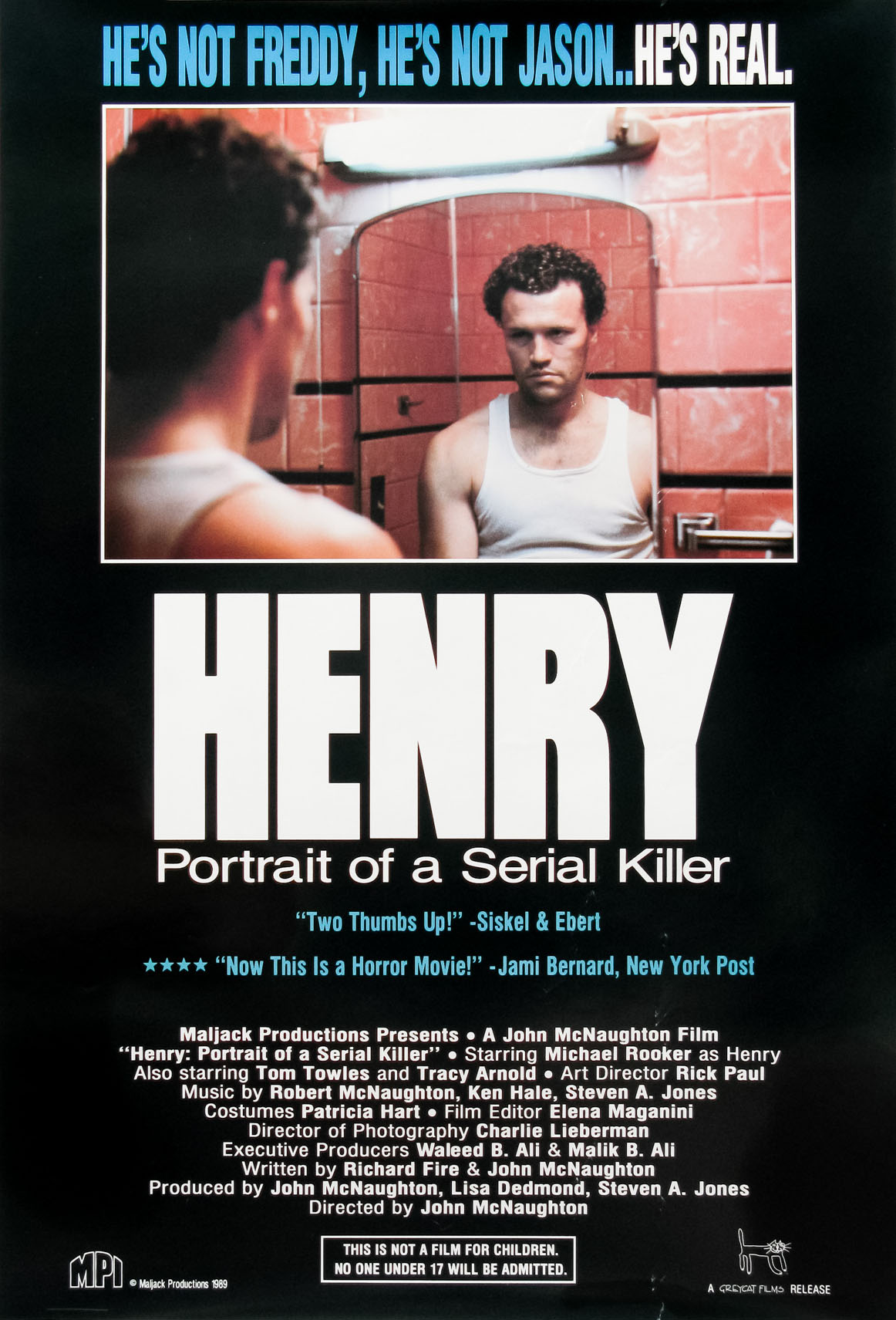
John McNaughton’s “Henry: Portrait of a Serial Killer” was made back in 1986, but it did not get a theatrical release until 1990. All these years later, it remains a very disturbing look at a murderer lacking a conscience who essentially kills at random. For those who’ve seen “Henry,” you know how unnerving it gets, and the fact it got released at all is amazing.

Michael Rooker, who plays the Henry of the movie’s title, appeared at the Egyptian Theatre back in 2011 to talk about audience’s initial reaction to it. Neither he nor anyone else involved in its making believed it would ever get any response whatsoever. They filmed what they thought people wanted to see, a scary movie, but this was no average horror flick like “Halloween” or “Friday the 13th.” “Henry” involves real life horror, the kind we often do not go to the movies to see. And in the end, what’s scarier than real life violence?

Chuck Parello, who would later direct “Henry: Portrait of a Serial Killer, Part II,” managed to get the film screened at the 1989 Chicago Film Festival, and this later led to it being shown at the Telluride Festival. Rooker recollected about the first time he saw “Henry” in a theater, and he said there was around forty people in the audience. There were not a lot of sounds coming from them, and no laughter. This led Rooker to say that, after you’ve watched “Henry” twenty times, you begin to see the humor in it. For the record, I completely agree with him on this.

“Henry’s” most disturbing and controversial scene comes when Henry and Otis (Tom Towles) do a home invasion and murder an entire family. We watch these two as they view the video they shot of them killing each member, and Otis finds watching it once is not enough. After this scene ended, Rooker said more than 60% of the audience left after this scene, and they all left at the same time. Many of them were vocal about what they had witnessed:

“Fuck this shit!”

“This is bullshit!”

“This is what cinema’s coming to?”

Rooker was sitting with the producers when this happened, and he freely admitted how they all loved the response “Henry” was getting.

People came out of the film stunned and silent, and Rooker remembered seeing one guy walking out of the Nuart Theatre in Los Angeles with his hands shaking. The actor also said a friend of his yelled at him because the film made him think “those thoughts.” There were no car chases, no gratuitous violence, and the violence shown in “Henry” is mostly minimal. Many of the murders Henry commits are never shown but heard as the camera circles around the bodies of his victims as we hear them take their last breath over the speakers. It ends up leaving a lot of room for imagination as you can’t help but think about what you didn’t see. Sometimes it is what you don’t see which is the most frightening thing of all.

But the most memorable incident for Rooker happened when he arrived late to one screening. As he headed into the theater, a woman, who was not walking but running out of the movie, ran right smack dab into him. When she realized who he was, she screamed and raced to the women’s bathroom. The ushers and producers had to come out and calm her down, saying to her over and over, “He’s really an actor. “

“Henry: Portrait of a Serial Killer” is seriously disturbing, but for good reason. Unlike other horror movies which revel in blood, gore and vicious fantasies, this was one which dealt with horror of real-life viciousness. Every once in a while, you need a film like this one to remind people of the ugliness of violence, and to make us realize we are not as desensitized to it as we may think. If “Henry” didn’t cause a good portion of moviegoers to walk out, then the filmmakers would not have succeeded in making this point clear.

Michael Rooker on ‘Henry: Portrait of a Serial Killer’

WRITER’S NOTE: This article is about a screening which took place in 2011.

Actor Michael Rooker appeared at the Egyptian Theatre for the 25th anniversary screening of the film in which he made his acting debut, “Henry: Portrait of a Serial Killer.” Even with the passing of time, it remains as infinitely disturbing as it did when it was first released. Rooker discussed how he got cast and of what went on during its making. He also told the audience this was the first time he had seen the film since it first was released back in 1986.

Rooker said he started out as a theatre actor in Chicago after graduating from the Goodman School of Drama. At the time casting began for “Henry,” he was in a play called “Sea Marks,” and the director was doing the prosthetics for it. Rooker said he didn’t care if the screenplay was good or bad because he just wanted to do a movie. Doing “Henry” was a test for Rooker to see how working while shooting out of sequence would work for him.

For research, Rooker said he read several books about serial killers which were written by doctors, but he found them to be “mostly crap.” He ended up getting more from the Texas Rangers who interviewed the man this film was more or less based on, Henry Lee Lucas. Also, the director, John McNaughton, asked him and the other actors to write character sketches. Rooker said he did not want to do that though because he did this endlessly in college and was now “sick of writing stuff down.” Instead, he recorded an audio tape of himself speaking in character.

During shooting, Rooker said he tried staying in character all day long. This led to a lot of strange times on set as actors and the crew were not sure if they were talking to him or Henry. McNaughton also got him a room for him to hide out from the actors and crew, and it was filled with mirrors which Rooker later covered up with trash bags. He stayed in the room all day until he was called to set.

The budget for “Henry” was a mere $120,000 according to Rooker, and the guy selling him cigarettes towards the film’s end was the one who financed it. Being an independent film, the filmmakers had no permits and had to hide whenever the cops were in the area. Once they were gone, the crew went right back to filming. They did, however, get busted during a pivotal scene in which Henry is shown throwing a body into the river. While shooting, four police cars came out of nowhere, and one policeman got out and asked, “Are you throwing bodies into the river?”

Once they looked in the bag Rooker was about to hurl over the side, they started laughing uncontrollably and ended up leaving the crew alone.

“Henry: Portrait of a Serial Killer” opened up a lot of doors for Michael Rooker, and it even scored him a role in John Sayles’ “Eight Men Out.” His terrifying performance is still embedded in the minds of so many who dared to view it either on the silver screen or on their own television sets, and they still cannot get it out of their heads. Since then, he has had a great career which has allowed him to play both good and bad guys with relative ease. Michael still has many great performances left to give, but don’t count on him doing a “Henry” sequel unless he can be convinced it can be turned into a musical.