Halloween II (2009)

halloween-ii-2009-poster

It’ll be interesting to see what people think of Rob Zombie’s “Halloween II.” With this sequel to his remake, he has not made your typical slasher flick even though it does contain some amazingly brutal and bloody moments. One crushing death plays like an homage to the fire extinguisher scene from Gaspar Noe’s “Irreversible.” I have also heard some complain because this sequel doesn’t even feel like a “Halloween” movie to them, but wasn’t that the whole point of this re-imagining? Do you really want the same old slasher formula we have long since gotten burned out on? Isn’t this why Zombie was brought on to do the remake? You know, to give this long running series a much-needed re-invigoration?

Zombie’s vision of Michael Myers may not be as scary as John Carpenter’s was, but I wasn’t expecting that to be the case. With Zombie’s take on the “Halloween” saga, what have here is more of a character study of how Michael became so infinitely evil, and this something we have seen much of in this never-ending franchise. “Halloween II” is definitely on a par with Zombie’s previous film, and everything comes around full circle to where there’s no doubt family is forever.

“Halloween II” starts moments after the previous film with Laurie Strode (Scout Taylor-Compton) walking down the street all bloodied up after shooting Michael dead at close range. However, it turns out Laurie didn’t kill him. The bullet must have bounced off his skull knocking him unconscious or something else along those lines. This seems to be a reasonable excuse to bring Michael back, and it is step from previous “Halloween” movies which managed to come up with ridiculous excuses to bring Michael back for another round with horny teenagers.

As Laurie is wheeled into the hospital crying hysterically, the first of many times she does so, shades of Rick Rosenthal’s “Halloween II” emerge, but this cannot be mistaken as a remake of sequel. Meanwhile, the drivers of the coroner van carrying Michael’s body end up smashing into a cow leaving them severely injured. This allows Michael to escape to live and see another October because, in the end, what is Halloween without Michael Myers?

Meanwhile, we see Laurie getting patched up in surgery, and the extent of her injuries is unsettling. The detail given to the doctors working on her is horrific very realistic, just the way Zombie wants it to appear. You look at Laurie’s mangled body, and you think to yourself it’s a miracle she lived through this dark, dark night.

“Halloween II” then moves to a year later as Laurie, still deeply traumatized by that horrific evening, struggles to go on with her life. She has since been adopted by Sheriff Lee Brackett (Brad Dourif) and lives with him and his daughter, Annie (Danielle Harris). While the previous movie was told through Michael’s eyes, this one is seen through Laurie Strode’s perspective, and she is no longer the person she once was.

One of the big differences with this sequel is the way it was filmed. Whereas Zombie’s “Halloween” was filmed in 35mm, he instead filmed “Halloween II” is in 16mm which gives everything a much harsher edge. This worked very effectively for him on what is still his best movie, “The Devil’s Rejects,” and it makes the killings in “Halloween II” feel all the more brutal. Michael doesn’t just slash his victims; he pounds them to a bloody pulp.

Tyler Mane once against gives us the most lethal and threatening Michael Myers ever unleashed on the big screen. Being as tall and hulking as Mane is, it’s a wonder why anyone would be foolish to take him on. Here’s another interesting thing about Michael in this one, he has a beard. That’s right, for the first time ever we get to see this iconic character with facial hair. This is ironic because Michael has proven to be very useful with knives to where I am convinced he can give himself the closest shave without ever having to use any shaving cream. Then again, Michael has more on his mind than facial hair.

Taylor-Compton’s Laurie Strode is not the chaste and resourceful character Jamie Lee Curtis gave us in the original, but she digs deep into this role and takes Laurie to places no ordinary person would dare go. You think she is at bottom when the movie starts, but she’s not anywhere near it. Taylor-Compton makes you care about Laurie as she comes to the realization of who she really is, and you want her to escape the abyss she is drowning in. You want to help her.

One especially good performance comes from Brad Dourif as he gets more screen time here. The sheriff he portrays here is not your typical clichéd stupid cop who makes all the wrong decision, but instead a caring adult and who is constantly looking out for Laurie and Annie. Dourif is great here in a way you would not usually expect an actor to be in a film like this, and he is one of the most underrated character actors working today.

That’s the great thing about Zombie’s “Halloween” movies; he is not out to give us the usual slasher flick. With these two films, he has taken the time to develop his characters to where they are not the usual pack of one-dimensional stereotypes the horror genre keeps relying on. While he still does employ the usual white trash characters who utter disgusting dialogue, it is clear he is moving beyond them now. This shows growth on his part which makes me look forward to his future work.

Zombie also conjures up some truly weird imagery throughout as we get a closer look into Michael’s deeply disturbed psyche. Sheri Moon Zombie returns as Michael’s mother, but this time she speaks to her murderous son from the grave and convinces him that if he kills Laurie, he can bring the whole family back together. Some may still criticize her acting abilities, but she is better than people tend to give her credit for.

Danielle Harris also returns as Annie Brackett, but Zombie doesn’t have her doing the same old things she did previously. Considering how Annie almost died, she is nowhere as foolish this time around (not completely anyway). Annie, along with her dad, is desperate to life Laurie out of her emotional abyss even as Laurie makes it incredible for them to even try to do so.

But of course, we cannot forget Malcolm McDowell who returns as Dr. Sam Loomis. This time around, the “Clockwork Orange” actor gives us a Sam Loomis who is a pure asshole getting high off the fame he obtains by exploiting his involvement with Michael and his family. Loomis is no longer the helpful psychiatrist he was before and is instead a profiteer off the misfortunes of others. His sudden change of heart towards the film’s climax may feel a little forced, but McDowell sells it to where we really feel his pain when he comes to accept the damage he has wrought on others.

The brilliant sound design in “Halloween II” also needs to be mentioned as well. Michael doesn’t just crash through windows and walls in this one. You feel him bashing his way through everything in his path, and it this movie a visceral thrill the other “Halloween” sequels could only dream of offering. Zombie is not out to give you a bunch of cheap scares, but is instead out to horrify you as much as possible as we suffer along with Laurie as Michael continues his endless pursuit of her.

Zombie also does a better job with suspense this time around, and it really boils in certain moments when our anticipation gets the best of us. We know Michael is going to strike, and we fear the bloody damage we know he will brutally inflict. I’m glad Zombie came back to do this sequel even though he originally wasn’t planning to. Having anyone else direct this follow up would have been a mistake.

John Carpenter’s “Halloween” was a one of a kind film which was never intended to start a horror franchise. Zombie is not trying to outdo Carpenter, but to merely make Michael Myers and all these characters his own. While “Halloween II” is not a masterpiece, he does stay true to his vision of this unstoppable monster and improves on his previous film quite a bit.

NOTE: The DVD and Blu-ray release of “Halloween II” contains the director’s cut of the movie. This version changes a few things and adds more scenes which focus on the characters more, and it’s even better than the theatrical version as it gives you an even clearer sense of what Zombie was trying to accomplish.
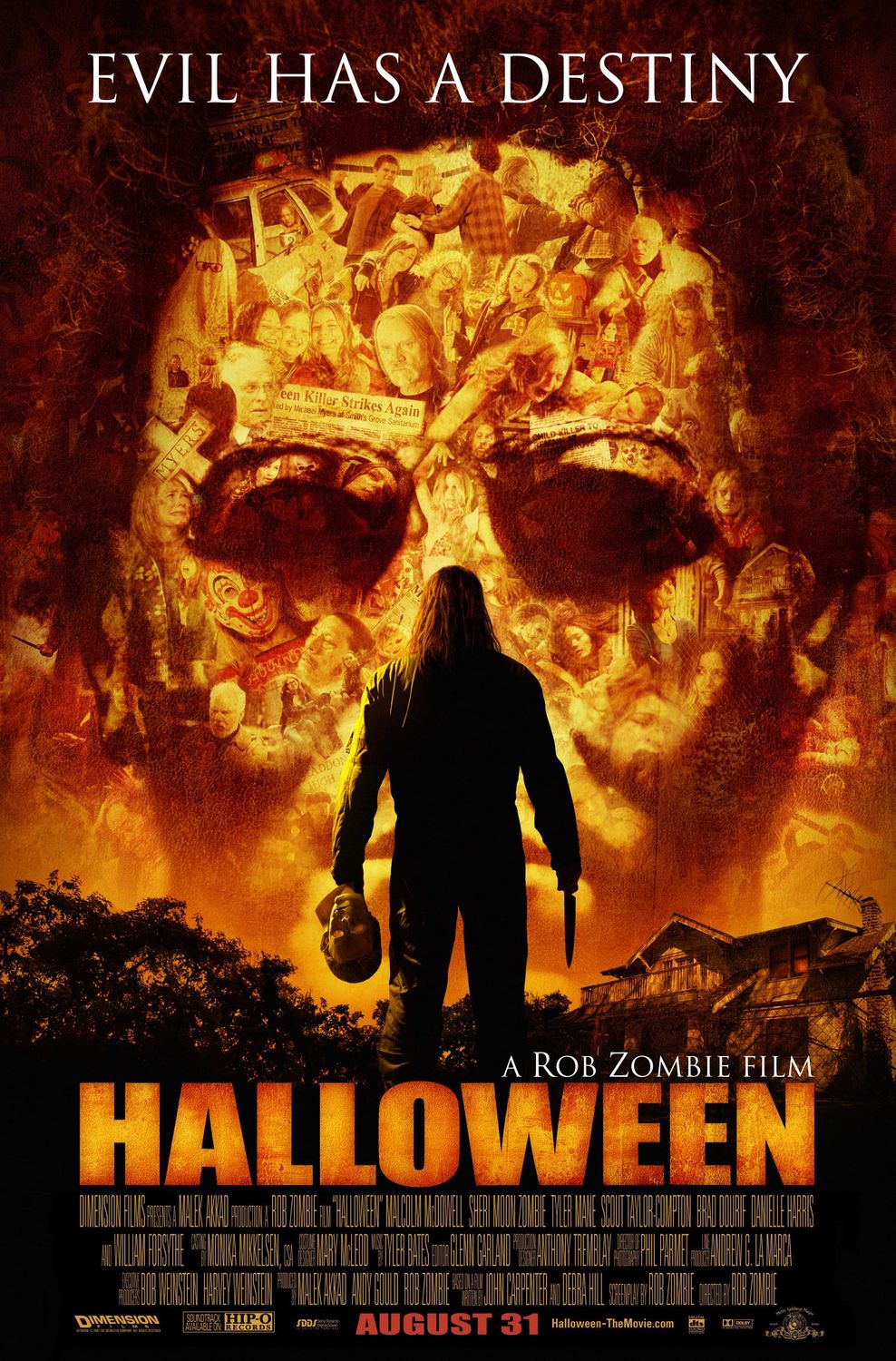
Theatrical Version: * * * out of * * * *

Director’s Cut: * * * ½ out of * * * *

Halloween (2007)

halloween-2007-poster

This one is a remake of one of the best horror films ever made. What could be the point of remaking it other than to make a quick buck? So many people have been milking this franchise dry for decades. Just when you thought Michael Myers was finished once and for all, he springs back with some utterly lame excuse for still being alive.

But what this “Halloween” remake has going for it is Rob Zombie who gave us “House of a 1000 Corpses” and the brilliant grindhouse flick “The Devil’s Rejects.” We all know just how much he loves John Carpenter’s original film, and we believed him when he said he would make this “Halloween” his own. If there was ever going to be a “Halloween” remake, who better to do it than Zombie?

This reimagining proved to be polarizing for “Halloween” fans in general. They either loved it, hated it or had a mixed reaction to it. One thing for sure, it is far more brutal than Carpenter’s film. Zombie does not try to hide from the ugliness of violence, and there is no campiness to be found here.

The first half is the freshest part as it deals with Michael Myers as a child and looks closely at what made him such a monster. This is where Zombie’s “Halloween” could have been disastrous as things tend to be scarier in a horror movie when the motives of the killer are barely described or explained. But what Zombie does is force us to look at Michael as a human being instead of an indestructible force of nature, and this makes his version all the more compelling.

Michael could not have come from a more dysfunctional family if he tried. His mother (Sheri Moon Zombie) is a stripper at a local bar, his step dad (William Forsythe) is an abusive prick who has nothing nice to say about anything or anybody, and his sister Judith (Hanna Hall) would rather make out with her boyfriend than take her little brother trick or treating. On top of that, he is constantly bullied at school and has this little hobby of killing animals which is typically a serious warning sign of someone about to embark more homicidal adventures.

Zombie succeeds in making you feel for Michael even as we condemn him for the violence he inflicts on others. We fear him but also empathize with him because we see the pathetic hell he has been put through.

The adult Michael is portrayed by Tyler Mane, a huge individual whom you never ever doubt will leave some serious damage in his path. I thought it was genius of Zombie to cast such a tall actor in this role. When he was at a Fangoria convention, Zombie said it made more sense to cast a very tall actor in this role as opposed to a regular height kind of guy. Michael has to be a formidable force of evil, and Mane gives us the best version of this character since Nick Castle played him in the original.

After spending a lot of time on Michael’s back story, Zombie moves us through the “Halloween” we grew up on as we get introduced to Laurie Strode and her friends from school. Many of the scenes from the original are repeated here which brings this movie down some as they remind us of just how great Carpenter’s film was. Zombie moves through those scenes at such a rapid pace to where the characters never seem as fully realized as they could have been. Laurie Strode is played by Scout Taylor-Compton, and she is one hell of a screamer! She may not be on the same par with Jamie Lee Curtis, but she does make the role her own and is fun to watch.

Playing Laurie’s babysitting friends are Kristina Klebe as Lynda and Danielle Harris as Annie Brackett. Harris is a Michael Myers veteran herself, having played the daughter of Laurie Strode in “Halloween 4” and ‘Halloween 5.” It is important to note she was not cast in this movie as a result of her previous work in the franchise, but because Zombie said he was truly blown away by her audition. She does deserve a lot of credit for playing such a believable teenager even though she was 30 when the cameras started rolling.

Zombie casted many of his friends like Sid Haig, Bill Moseley, Leslie Easterbrook, and Ken Foree as well. There are also cameos from B-movie actors like Dee Wallace Stone, Sybil Danning and Clint Howard. One of the best performances in “Halloween” comes from Sheri Moon Zombie herself. As the mother of Michael Meyers, she shows a lot of range here we haven’t seen before as her character proves to be the only who truly cares about Michael and what he is going through.

Another awesome actor featured here is Danny Trejo whose character encourages the young Michael to live inside his head so he won’t feel so boxed in when inside his prison cell. The way Trejo spoke those words must have come from a real place as he once served time in prison. His performance and scenes with Michael are haunting, and I would have loved to have seen more of him in this movie.

Overall, I liked Zombie’s ever so brutal vision of Michael Myers. It does not quite equal what Carpenter gave us, but it is certainly much better than several of the sequels which were inflicted on us. Zombie has created a movie which truly shocks and unsettles the viewer. Whereas you cannot help but snicker at the usual clichés in every other slasher movie, this one throttles you back into your seat. At the very least, it is the best remake of a John Carpenter movie yet. After the dismal remakes of “Assault on Precinct 13” and especially “The Fog,” this one fares much better in comparison.

* * * out of * * * *


Blu-ray Review: Anchor Bay’s ‘Halloween’ 35th Anniversary Edition

halloween-35th-anniversary-blu-ray-cover

Just when you thought Anchor Bay Entertainment had released the last edition of John Carpenter’s “Halloween” on DVD or Blu-ray, another one emerges to taunt the movie’s die-hard fans with the possibility of purchasing it. Now we have the “Halloween: 35th Anniversary Edition” which was released on Blu-ray and contains an all-new high definition transfer supervised and approved by the film’s cinematographer, Dean Cundey. With a couple of new special features combined with a few from previous editions, is it worth paying a few more bucks to own another version of this horror classic? Well, let’s find out…

Anchor Bay has released just about as many special editions of “Halloween” as they have of “Evil Dead” and “Army of Darkness,” so it’s hard to see what the point was of putting out yet another. But after watching this one, I can certainly see why. The colors on this high definition transfer look very balanced, and the movie looks far more vividly frightening as a result. It is a huge improvement over the 25th anniversary DVD Anchor Bay released as part of their Divimax Series as it proved to be hard on the eyes due to certain colors being far brighter than they needed to be. Seriously, this particular Blu-ray edition makes me want to watch “Halloween” over and over again as it made me feel like I had never watched it before, and I have seen this horror classic over a hundred times.

Among the brand new special features, the one I was surprised to see most was a brand-new commentary with Carpenter and Jamie Lee Curtis. That Carpenter would even consent to doing another commentary on “Halloween,” which he has long since answered every conceivable question about, is astonishing, but he sounds very enthusiastic here as he talks with Curtis about what went down during this movie’s making. It’s also great to hear Curtis’ thoughts on “Halloween” as we haven’t heard her talk too much about it in a long time. Carpenter’s commentaries are always more fun when he has someone to converse with, and he and Curtis share a lot of great memories here.

The other new special feature is the documentary “The Night She Came Home” which follows Curtis as she attends her first ever horror convention in Indianapolis, Indiana. Curtis talks about how she has stayed away from her past in horror movies because she was working on other things or being a mom, but now she feels the need to honor the fans who love “Halloween” so much because she now realizes just how strong the horror fan base is. It’s fun watching her sign autographs for fans who waited hours in line, and her generosity to them is genuinely sweet. The convention also proves to be a reunion of sorts as Curtis meets up with Charles Cyphers who played Sheriff Leigh Brackett, Brian Andrews who played the young Tommy Doyle, Production Designer Tommy Lee Wallace who would later go on to direct “Halloween III: Season of the Witch,” and filmmaker Nick Castle who was the first person to play Michael Myers.

As for the other special features, they are recycled from other previous editions. There’s the featurette “On Location: 25 Years Later” which looks at where “Halloween” was shot. Also included are the movie’s trailer, some TV and radio spots, and footage specifically shot for the television version. You’d figure Anchor Bay would make this another ultimate edition that would be jam packed with extras, but since this the umpteenth edition of this horror classic, I guess they didn’t want to make the previous editions seem altogether disposable. So for those who still own those editions, you should hang onto them as they contain a lot of extras and commentaries not to be found here.

Is it worth it to buy the “Halloween 35th Anniversary Edition” from Anchor Bay Entertainment? Well, it may depend on how much you love this movie. The remastered high definition transfer makes it look like it was filmed not too long ago, and watching it can quickly remind you of how frightening this horror classic is. You also get a nice booklet with interesting behind the scenes photos of the production and an essay by Stef Hutchinson which details why this movie still has a powerful impact on people years after its release.

The fact is none of the sequels or shameless imitators of John Carpenter’s “Halloween” can ever take away from the suspense and uneasiness it generated upon its release. I find myself revisiting this classic quite often, and this 35th anniversary edition makes me want to revisit it more and more. If you are happy with the “Halloween” special edition you currently own, then you probably won’t need this one, but you should at least check out how it looks here. For those who are still committed to buying every single incarnation of this movie Anchor Bay releases, then this one is definitely worth your money.

Halloween 4: The Return of Michael Myers

halloween-4-poster

WARNING: THIS REVIEW CONTAINS SPOILERS. DON’T SAY YOU WEREN’T WARNED!

Halloween 4: The Return of Michael Myers” is actually one of the best films in this long running franchise, and it did more than just drop a bunch of bloody good killings on us with little regard to everything else which makes a movie strong. There was actually some thoughtful work put into the screenplay, the acting is better than you might expect it to be, and it does have some very scary moments the other sequels seriously lack.

The “Halloween” movies often defy the timeline of events they set up for themselves because logic doesn’t always apply to horror movies. Despite the huge explosion which ended “Halloween II,” Michael Myers and Dr. Loomis somehow managed to survive. It never seemed likely either of them would have come out of the burnt wreckage without turning into shish kabobs which were left on the barbecue for far too long, but this sequel shows you can’t keep a doctor or an evil monster down.

“Halloween 4” starts off with a couple of doctors assigned to transfer the seemingly comatose Michael back to Smith’s Grove where he should have stayed from the beginning. But of course, Michael wakes up and kills his naïve caretakers who think he is nothing more than just another prison transfer. These doctors also make the mistake of mentioning how Michael has one living relative left, his niece Jamie. Guess where she lives…

Going into a description of the plot is tiring, but you know what happens from there on out. “Halloween 4” is genuinely scary at points. The first appearance of Michael through the reflection of the mirror definitely had me standing up straight, and childhood terrors like the monster under the bed are exploited to strong effect. The movie does play around with the clichéd moments we often find in horror movies, but then it manages to pull the rug out from under you. You think you have a good idea of what is going to happen, but the filmmakers smartly play on your misplaced confidence to pull a fast one on you.

“Halloween 4” was directed by Dwight H. Little who later went on to direct one of Steven Seagal’s best movies, “Marked for Death.” Little deserves credit for not just doing everything according to formula. What he accomplishes here isn’t groundbreaking for the horror genre, but he pulls off something stronger than your average slasher flick. Instead of doing the usual opening with the pumpkin, he fills the screen with symbols of the October holiday which eventually leads us into the dead of winter. With that, he perfectly sets the mood and atmosphere for this particular sequel. He remains respectful of the original and does the right thing by keeping Michael hidden in the shadows like Carpenter did in the original. When that mask of his peeks out of the darkness, it becomes even more unnerving than watching him tilt his head.

The writer, Alan B. McElroy, managed to finish the script just mere hours before the 1980’s writer strike began. Listening to his audio commentary from the Anchor Bay release, McElroy makes it clear he came to this film as a fan of the original and was not about to throw the usual crapfest at us. He also gives us characters we actually come to care about and who don’t always do the stupid things we expect them to do in the average horror flick. You even find yourself caring about that hunk of a man Brady (Sasha Jenson) even after we find him cheating on his girlfriend with the movie’s obligatory big breasted lady (who also happens to be the sheriff’s daughter no less).

In retrospect, “Halloween 4” was one of the last slasher movies which featured actors who looked and felt down to earth. After this sequel, the genre was invaded by beautiful models with bodies very well taken care of or surgically enhanced. Whether or not they could act was another story, one which usually didn’t matter to the financiers.

This one is also not as bloody or gory as the other sequels came to be. Granted, there are a couple of nice bloody shots which illustrate how creative Michael is at killing people after coming out of a long coma. On top of sinking his thumb into a doctor’s skull, he also rips a big hole in a beer guzzling vigilante’s neck. Actually, this does bring up a weakness in the movie which involves a subplot with a bunch of middle aged guys who are regulars at a local bar. They almost seem tossed in as an afterthought, and their own hunt for Michael leads them to do the dumbest things.

Watching Danielle Harris here is a little weird as she has since grown up and gone on to play a completely different character in Rob Zombie’s “Halloween” movies. She plays Jamie, the daughter of Laurie Strode who was said to have been killed in a car accident along with her husband (Curtis would later return in “H2O”). You have to admire any young actor who does a horror movie at the age of 11 because it’s like we’re asking them to become emotionally scarred for life. On top of having a great set of lungs, Harris instantly wins our sympathy gives this movie one of its scariest images.

Ellie Cornell, who plays Rachel Carruthers, does Jamie Lee Curtis proud. We’re not talking an Oscar winning performance here, but she gives us the heroic female character we want to root for as she goes from being vulnerable to Sigourney (“Aliens”) Weaver tough.

And, of course, we have the only returning actor from the original “Halloween,” the late Donald Pleasence. Having miraculously survived the fiery explosion which should have killed him were a highly profitable box office possibility not taken into consideration, Dr. Loomis has become absolutely single minded in his pursuit to destroy Michael once and for all. Even if Pleasance was slumming by doing this movie, he still played this role to the hilt and gave this particular entry a legitimacy which eluded future installments. Heck, it probably would have been criminal to do a “Halloween” movie without Dr. Loomis at that point as he was an essential part of this franchise.

Actually, there is another “Halloween” veteran who returns to the fold here: Alan Howarth. Along with Carpenter he scored “Halloween II” and “Halloween III: Season of the Witch,” and they also provided great scores for “Prince of Darkness” and “Big Trouble in Little China.” Howarth goes solo on this one, but even without Carpenter he composes a memorable and atmospheric score, and his opening theme to “Halloween 4” is one of the best pieces of music in the franchise.

Stunt performer George Wilbur plays Michael here, and he does good work as the heavy-breathing killer. While no one can touch what Nick Castle did in the original, it’s nice to see a Michael who more mobile than Dick Warlock’s was in “Halloween II.” Wilbur gives Michael a formidable look which strikes terror in us even when this murderous character is not onscreen. The thought of Michael Myers in this one is just as scary as seeing these characters come face to face with him, or it as Dr. Loomis describes him:

“You’re talking about him as if he were a man. That part of him died years ago.”

DANGER! DANGER! SPOLIERS AHEAD!!!

Now let’s talk about Halloween 4’s” ending. Michael has been shot dozens and dozens of times in a scene which reminded me of the scene from “Predator” when Schwarzenegger and company blasted a forest to waste with their massive weaponry. Everyone is back home and safe, but then a scream erupts from upstairs. Loomis runs up to find Jamie has stabbed her stepmother with a pair of scissors and is covered in blood, looking much like young Michael did after murdering his sister. Like Pleasance, you find yourself screaming “NOOOOOO!!!!!!” Harris holding those scissors ranks as one of the series’ most chilling moments. Indeed, the corruption of innocence is a terror that can be all too real onscreen as well as off it.

Now this could have led the franchise in an inspired direction, but the producers wussied out and instead found a way (they always do) to bring Michael back from the dead yet again. Perhaps the late Moustapha Akkad felt the fans would never accept any killer other than Michael himself. It’s a shame because this brilliant plot twist could have made the series even more frightening than ever before, but the demands of the box office always dictate just how much you cannot change a winning formula.

Regardless, “Halloween 4: The Return of Michael Myers” still proves to be a strong entry in the undying franchise, and this is especially the case when you watch the two sequels which followed it.

* * * out of * * * *


Tommy Lee Wallace Talks about ‘Halloween III’ at New Beverly Cinema

halloween-iii-poster

PLEASE NOTE: THIS ARTICLE CONTAINS SPOILERS ABOUT THE MOVIE.

Tommy Lee Wallace dropped by New Beverly Cinema on October 30, 2010 to talk about his directorial debut, “Halloween III: Season of the Witch.” This is the Michael Myers-less sequel of the long running franchise and it played as a double feature with “Trick ‘r Treat.” All the “Halloween” movie fans were in for a special treat as Wallace gave us more trivia about the making of it than we ever could have ever expected.

When Wallace was brought up after the movie ended, he admitted his reaction to watching it after so many years was that it resembled one of the strangest and most bizarre movies he had ever seen. The original plan for “Halloween III” was to work from an original screenplay by Nigel Kneale, best known for his work on the “Quatermass” series. What Kneale ended up writing was, as Wallace put it, “brilliant and deeply, darkly grim” and more of a cerebral, intellectual horror movie than your typical slasher fare. But it turned out everyone thought the overall story needed work, and Wallace said he and Carpenter wanted to make it more commercial and scarier for audiences. As a result, Kneale took his name off the movie as he felt the filmmakers would simply butcher all he came up with. Wallace did say that he really liked Kneale’s script and hopes to put it online someday in its entirety for all to see.

While making the movie, Wallace described himself and the crew as being under the gun as it was a low budget affair like most horror movies. Understanding how to do work on the cheap, he said all the “el cheapo” special effects taught him a lot about simplicity which turned out to be a great virtue.

As for Carpenter’s participation, Wallace said Carpenter gave him full autonomy as he himself always expected to have it on all his movies. Joe Dante, the director of “Gremlins” and “Innerspace,” was originally set to helm “Halloween III,” but he later turned it down when something else came up. Having worked on many of Carpenter’s movies, Wallace was originally offered the gig of directing “Halloween II,” but he turned it down as he saw no way to top the original. But upon being offered “Halloween III,” Carpenter and the late Debra Hill told him neither of them wanted to do a direct sequel as Carpenter hated “Halloween II.” With that in mind, Wallace jumped at the chance to direct it.

The only real barrier Wallace had to deal with before accepting the job was getting the blessing of Dino De Laurentis. Wallace had previously written the script for a movie De Laurentis produced called “Amityville II: The Possession,” and he said the one rule everyone needed to remember was “you do not fuck with Dino.” In response to Wallace’s request, De Laurentis begged him not do the film, but Wallace said he was determined to get De Laurentis’ blessing because he would have directed it anyway.

With “Halloween III: Season of the Witch,” Carpenter and Hill wanted to turn the franchise into an anthology of movies about the occasion of Halloween. Looking back, the original was really not about Halloween at all (the original title was “The Babysitter Murders”). But when it came to releasing this particular “Halloween” movie, Wallace said Universal Pictures did not do enough to prepare audiences for it. Sadly, audiences did not want something new. They wanted Michael Myers back and breathing heavy while slashing over stimulated teenagers.

One of the biggest influences on “Halloween III” was the 1956 version of “Invasion of the Body Snatchers” directed by Don Siegel. Like that one, this sequel was meant to be a pod movie and could not be mistaken as something nice. Wallace even wanted to shoot it in Sierra Madre where Siegel’s classic was filmed, but it didn’t look good enough. The production team had driven all over Northern California looking for the perfect small town to film in, and it took forever to find it. Wallace said they were never as lucky as they were with Carpenter’s The Fog.” Also, the town’s name, Santa Mira, is the same as the one used in “Invasion of the Body Snatchers.”

But the big difference between “Invasion of the Body Snatchers” and “Halloween III” is in the way each movie ended. Siegel wanted his film to close on a highway with star Kevin McCarthy screaming frantically, “THEY’RE ALREADY HERE! YOU’RE NEXT! YOU’RE NEXT!” Instead, “Invasion” ended the same way it began, in a police station. All this did was indicate to the audience everything was going to be alright. Wallace said the ending of “Halloween III” was dedicated to Siegel for what he tried to pull off, and it leaves the fate of the world up in the air which makes things far scarier as your mind was forced to imagine what could have happened. Universal Pictures, however, put pressure on Carpenter to change the ending to something more upbeat. When Carpenter asked Wallace if he wanted to change the film’s ambiguous climax, Wallace said he refused to do so and Carpenter defended Wallace’s decision to the studio.

Tom Atkins’ name in the credits as well as his first appearance onscreen generated a huge applause from the audience. When it came to casting “Halloween III,” Wallace said Atkins was already a part of Carpenter’s company of actors, and his performance in “The Fog” served as his audition for the role of Dr. Daniel Challis. Wallace then went on to explain how horror movies can easily be ruined by “pretty boy casting,” and he felt this didn’t need to be the case here. Atkins naturalistic performance is commendable considering much of what he has to deal with is utterly ridiculous. You also have to give him credit for wasting no time in bedding the main female character, Ellie Grimbridge, played by Stacey Nelkin.

Another actor who got a lot of applause was the late Dan O’Herlihy who portrayed the movie’s chief villain, Conal Cochran. Wallace described O’Herlihy as being perfect for the part, and he was always prepared and ready to go. He also said O’Herlihy was a man from the British Isle, Irish and was someone who was never afraid of getting sentimental. O’Herlihy’s performance was a fiendish mix of a friendly persona which is a cover for his grisly nature.

As for Nelkin, the first question from the audience was whether or not her character was a robot throughout the entire movie. Wallace said he honestly didn’t know and figured Cochran’s company was really good at making robots in the first place. Nelkin was a very appealing presence in “Halloween III,” and perhaps Roget Ebert put it best in his one-and-a-half-star review of the movie: “Too bad she plays her last scene without a head.”

Then there’s the movie’s commercial for the Silver Shamrock masks which features one of those annoying jingles which, like any other commercial, you cannot get out of your head. Alan Howarth, who composed the score along with Carpenter, was given credit for doing the jingle and putting it to the tune of “London Bridge” from “My Fair Lady,” but Wallace said it was his idea more than anyone else’s.

As for the voice on the jingle, it is Wallace’s. They were originally going to hire someone else, but when they found out the guy wanted $550, it was quickly determined they couldn’t afford him. Wallace got the job soon after and said he got into the mood by doing the smooth tone of a “stupid radio voice from the 50’s.”

Another audience member asked Wallace if there were any product placements in “Halloween III,” and he said there were not. Truth be told, this wasn’t really the kind of movie which would allow for that, and it was also clarified how no one was ever asked to move the can of Miller Lite closer to the camera.

“Halloween III: Season of the Witch” was designed to be a diatribe against consumerism, and it didn’t turn out to be a very elegant one. The movie cost $2.5 million to make and grossed about $14 million at the box office. While it did make a tiny profit, the sequel was considered a critical and commercial disappointment. Wallace said he fell into an abject depression for months afterwards as he felt he did a shitty job on the sequel and figured he would be consigned to movie hell.

Years later, however, Wallace discovered “Halloween III” had developed a cult following and a new generation of fans. He was stunned to hear a lot of people telling him they watch it every single year, and he said people continue to invite him to speak at annual horror conventions about it. Having been originally released in 1982, audiences have had plenty of time to reflect on the kind of movie it was and reevaluate it critically. While still not a great film by any stretch, it’s much better than its reputation suggests.

Certainly, there are other “Halloween” sequels that are far worse (“Halloween: The Curse of Michael Meyers” is the pits), and the moderator put it best when comparing the third movie to “Halloween: Resurrection:”

“Do you prefer this or Busta Rhymes?”

Save

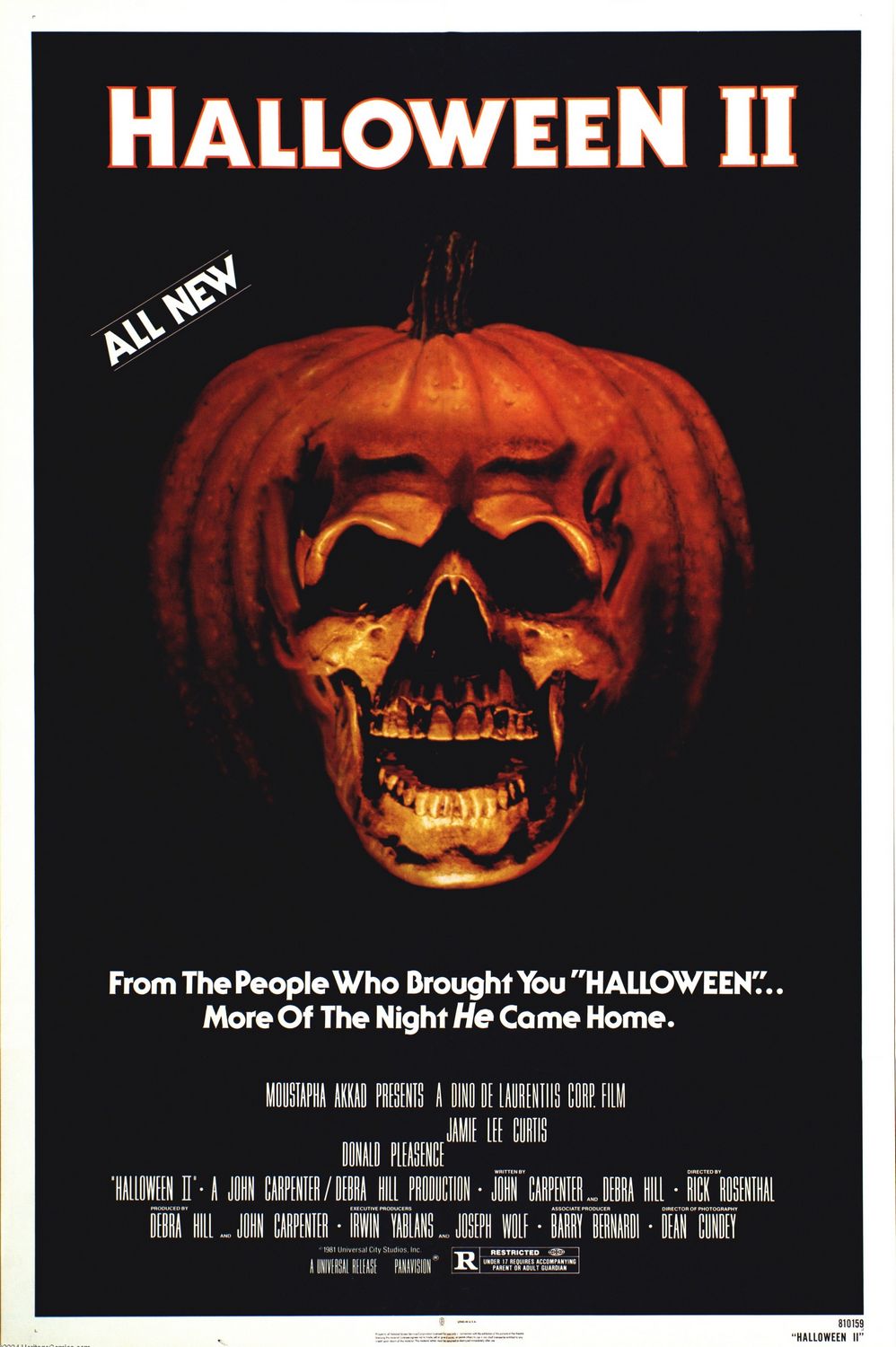
Halloween II (1981)

halloween-ii-1981-poster

Sequels are usually beaten to a critical pulp, and it’s not hard to understand why. They are primarily made because the original made a ton of money, and heaven forbid that the money train stops there. It’s not enough to make a killing at the box office (no pun intended); you have to capitalize on what you made because greed still reigns supreme. Heck, these days studios are franchise crazy and are always on the lookout for the next one to start up. However, audiences these days are a lot more discerning and are quick to question why certain sequels were even made. They can tell when they are being scammed out of their hard-earned money, but the curiosity of what the sequel has to offer can be hard to ignore.

In a lot of ways, sequels are undone by the high expectations placed on them. Certain movies have no chance of living up to the brilliance of their predecessor, but maybe they can be enjoyable enough when you come to them with reduced expectations. Sometimes that can be enough.

Case in point is “Halloween II,” the sequel to, at the time, the highest grossing independent film ever made. “Halloween” was and still is one of the scariest movies ever made. The ending of the movie had Michael Myers disappearing from sight, and it was visual proof of how evil never dies. “Halloween II,” however, takes place at the exact moment the original ended with Michael still on the loose, and even while he moves a hell of a lot slower, he still proves to be a very deadly threat to everyone around him. Dr. Loomis (Donald Pleasance) continues to hunt for the man he tried to keep locked up, and Jaime Lee Curtis returns as Laurie Strode who is taken to Haddonfield Memorial Hospital to recover from the injuries she suffered a few hours earlier.

“Halloween II” was torn apart by the critics for being nowhere as good as the original, proclaiming it a rehash of what we saw before and for having nothing new to say about Michael Myers  or anyone else from the original. Even John Carpenter, who co-wrote the script for this one with the late Debra Hill but did not direct it, said he hated it, and the only thing which got him to finish writing this sequel was a six-pack of Budweiser. Even he realized he was making the same movie which is probably why he declined to direct it. The only really fresh aspect of this one is that we discover how Laurie Strode and Michael Myers have a closer bond than they realize, and it comes to explain why he made the long trip back to Haddonfield after waiting for years while staring out a window in total silence.

But despite its flaws, I still enjoyed “Halloween II” for what it was. Yes, it is a retread of the original, but what else are you gonna do with Michael Myers? Do you want him to win the Nobel Peace Prize? Get rehabilitated? Make peace with his sister after killing so many people? Don’t you remember? Evil never dies!

The one thing to note about “Halloween II” is how much bloodier and gorier it is than its predecessor. When this sequel came out, there had already been so many knock offs of “Halloween” with the psychotic and silent killer wearing a different kind of mask and using a different weapon which suits their murderous rages more than any other. “Friday The 13th” would not have existed without Carpenter’s original masterpiece.

At the very least, “Halloween II” tries to be more creative in the way Michael kills his victims as he proves to be  inventive with hypodermic needles, scalding hot water, and he even conducts a blood drive which doesn’t require anyone from the Red Cross to help out. If you run into Michael, you’re a donor whether you driver’s license says you are or not.

While “Halloween” only showed us so much of Michael and kept him hidden in the shadows for the most part, “Halloween II” pretty much shows everything. While it makes this sequel less effective than the original, I still got a kick out of it. Carpenter apparently came in to reshoot some scenes because he felt audiences would be demanding more blood and guts as horror movies have upped the ante in that arena since the original. Whether or not this was the right decision may be up for debate, but fans of Fangoria Magazine will not be complaining. The scene where Michael plunges Pamela Susan Shoop into scalding hot water is shocking and highly unnerving, and seeing a hypodermic needle get inserted into someone’s eye is very unsettling.

One thing this sequel has to its advantage is that is made by the same team which made the original. Director of photography Dean Cundey came back for it, and he gives “Halloween II” a dark and creepy look to where you want to keep an eye on what is hiding in those shadows across the hall. Michael could be anywhere, waiting for you to come out into the open.

At the very least, Carpenter and Hill do a good job of giving us characters who are as down to earth as those in the original. There’s a little scene where three of them are in a hospital lounge watching TV and talking about what just happened their previously quiet little town of Haddonfield. The young nurse claims she saw Michael, and one of the guys is a sexually frustrated prick who is more interested in having sex than the fact this force of evil is still on the loose.

The characters may come across as clichés after having seen the first one, but to me, they still felt real enough to where I wasn’t snickering at their actions. Among them is Jimmy, a paramedic played by Lance Guest, who ends up developing a protective crush on Laurie. After seeing Laurie being all shy in the first film, it was  nice to see her get something of a boyfriend in this one, and seeing him get hurt actually made me feel bad. If this were any other sequel to a slasher flick, I probably would have been cheering the killer on more than the victim.

There’s also the ever so serious nurse Mrs. Alves played by Gloria Gifford. She plays the boss you probably have been stuck with once or twice in your life, and one which you hope you never have again. Pamela Susan Shoop plays the well-meaning but always tardy Nurse Karen Bailey and, she is very good and appealing here and shows off the appropriate cleavage for a horror movie like this.

If there is a major weakness in “Halloween II,” it is the way Laurie Strode is written. She is not the same brave heroine we saw in the first movie. Here, she is drugged out after the doctor works on her injuries, and there is only so much she can do as a result. She is smart enough to run away when she feels Michael closing in, but she becomes utterly helpless instead of being inventive in the ways she protects herself. Regardless, I still liked Laurie Strode here, but it would have been better to see her kick more ass like she did the first time around. Perhaps she could have been much more vengeful towards Michael and much more eager to put an end to his rampage.

Donald Pleasance once again gives the demonic lines he is given a lot of depth to where they stay with you long after the movie has ended. His little speech on the festival of Sam Hain, the Lord of the Dead, and how we are all afraid of the darkness inside of ourselves is a great moment. The unconscious mind can be a very frightening place indeed.

I also have to say that when it comes Pleasance and Curtis, I have never really seen give a bad performance in any film they have ever been in. Put either of them into the worse movie ever made, and they will still be good.

But my most favorite thing about this “Halloween II” is the gothic score composed by Carpenter and Alan Howarth. It’s not any different from the score for the original, but I loved how it was done with synthesizers this time around. It feels all the more atmospherically consuming even after all these years, and I never get sick of listening to it. The piece of music where Michael  finally finds Laurie in the hospital and pursues her remains one of my favorite pieces of music in any movie ever.

Dick Warlock takes on the role of Michael this time around. I do agree that it would have been great if Nick Castle came back to play Michael again, but I imagine his own directing career must have been keeping him busy at that point. Warlock tries a little too hard to mimic Castle’s movements, but it is understandable why he moves so slowly in this one (he was shot six times). All the same, Michael still came across as a very threatening figure to me. Even if he moved so slowly, I was still terrified of him coming up on unsuspecting hospital employees, and it was excruciating to wait for that elevator door to open.

“Halloween II” might not be a great movie, but I still enjoyed it a lot. This sequel in many ways marked the last time where these characters seemed relatable as just about all the other sequels in this franchise as they came to feature infinitely stupid characters played by mediocre actors. Perhaps the passage of time has been kinder to this sequel than others as the series soon descended into mediocrity, but it didn’t decrease in quality as quickly as other slasher franchises have.

I have no shame in saying I really enjoyed this sequel. Then again, why should I have any shame about like it? Other critics can bash it all they want. But for me, “Halloween II” still delivers.

* * * ½ out of * * * *

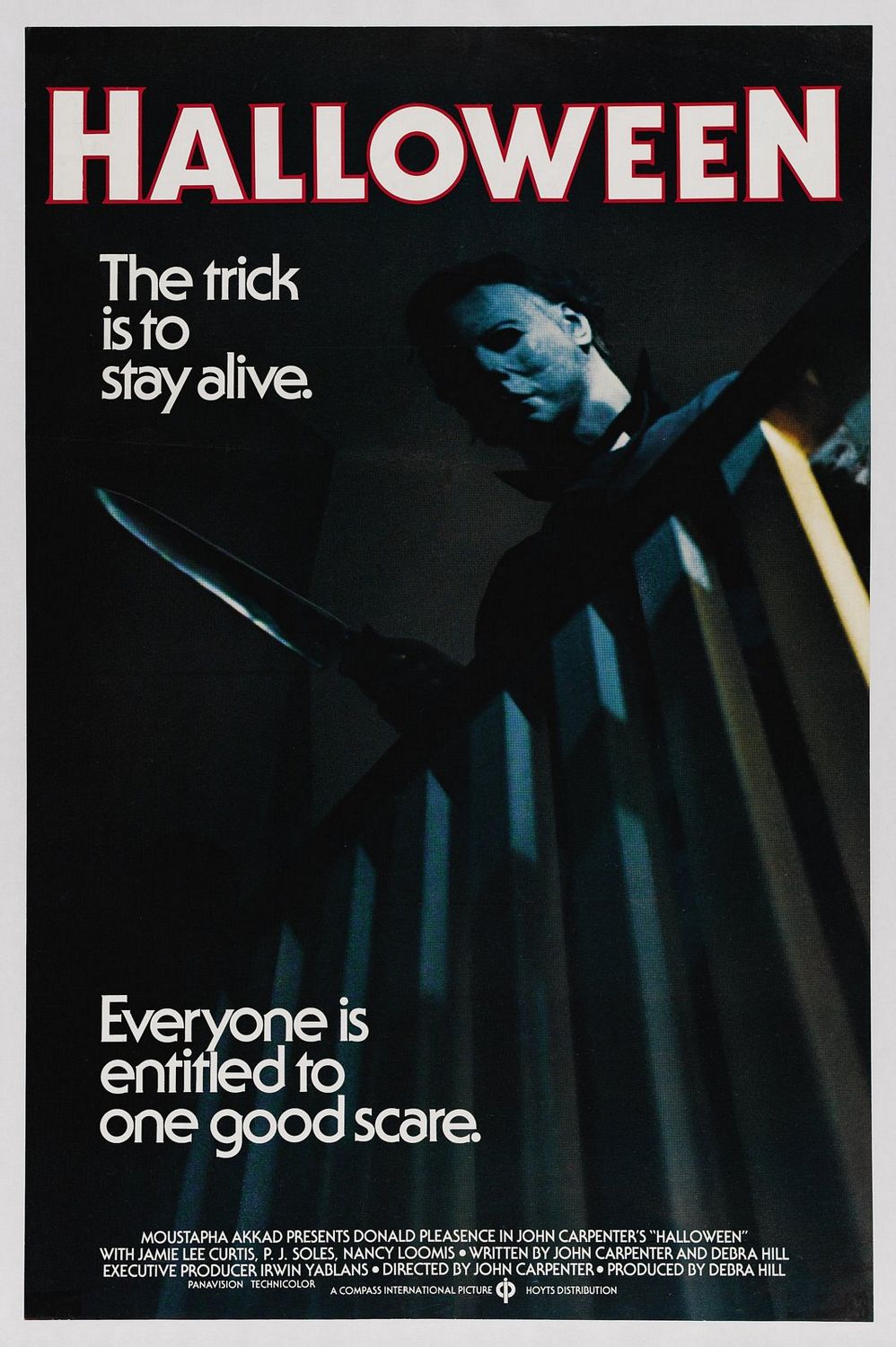
John Carpenter’s Halloween (1978)

halloween-1978-poster

What is there to say about “Halloween” which hasn’t already been said? It has been discussed ad nauseam, and even Carpenter must be sick of talking about it all the time. Granted, he did take the time to record a new commentary track with Jamie Lee Curtis for Anchor Bay’s 35th anniversary edition, but when the 25th anniversary edition came out it just had the same commentary track from the Criterion Collection laserdisc.

We all know the story, and this is in large part due to the countless imitators who rushed to create their own psychotic killer following “Halloween’s” astonishing success. At the time of its release, it was the most successful independent movie ever made. Made for about $300,000, it ended up grossing over $50 million. “Friday The 13th” would never have existed without “Halloween,” and that franchise is far more responsible for those clichés horror movies exploit to infinity.

What I love about “Halloween” is how down to earth it is. All of these characters come across as very relatable. The way the script is written and how the actors played their roles, they easily reminded us of people from our own lives we grew up with. The only character in the whole movie who is NOT down to earth is Michael Meyers as he is a killer who has no real motive for why he heads back home to kill. As the movie goes on, we eventually stop seeing him as a person and instead as a force of evil which cannot be easily stopped.

We have all lived in a town like Haddonfield, a small town where families can raise their children in peace, or so it would seem, and the problems they face there end up paling in comparison to those they were forced to endure in the city. The parents see small town life as a home away from reality, but for the children it is reality. It is all they know. So when multiple murders occur there, it threatens to define the town more than anything else. Was there anything interesting about Haddonfield before young Michael Meyers took a knife to his sister when he was only a boy?

I also love how “Halloween” was shot. Working with Director of Photography Dean Cundey, Carpenter creates truly unnerving visuals of a killer lurking in the shadows. One moment Michael appears in the frame, and in the next he is gone. Michael could be anywhere and there is no escape from him. How does one escape from evil anyway? One of Carpenter’s main themes with “Halloween” is how evil never dies. It is a force which is with us whether we like it or not, and it is always just around the corner…

One of my favorite shots is when little Tommy is fooling around with Lindsay as they watch Howard Hawks’ version of “The Thing.” But when Tommy turns around and looks out the window, he sees a man carrying a lifeless body from the garage to the front door. The bullies at school kept warning him about the boogeyman coming, and it is an unfortunate and infuriating coincidence that they are correct. It is one of the creepiest images from “Halloween,” and it is one which always stays with me. Don’t you wonder what your neighbors are up as you look at their houses across the street?

The other brilliant thing about “Halloween” is how it was edited in such a way where you cannot be sure when or where Michael will appear next. The best example of this is when Laurie Strode is running away from Michael. Carpenter puts us right in her shoes as she desperately tries to escape the madman who wears an altered William Shatner mask. The editing plays with your emotions beautifully. You want her to escape, but you soon feel as helpless as her as she yells at Tommy to wake the hell up.

The moment where Laurie is at the front door of Tommy’s house, screaming for him to let her in, is one of the scariest scenes I have ever seen in a movie. It intercuts with her banging on the door while the Shape approaches her, and Carpenter succeeds brilliantly in leaving us stuck in a place we are desperate to escape from. Like her, we are begging for Tommy to unlock the door to where we want to yell at the movie screen, TV set or whatever device you are watching this movie on.

And who could ever forget the music? Carpenter’s score for “Halloween” ranks among the greatest horror movie scores ever composed to where I would put it up alongside Bernard Herrmann’s score for “Psycho.” Carpenter’s musical work has been done mostly in a minimalist style, very much unlike the bombastic orchestral scores from every other Hollywood composer. After all these years, the main title for “Halloween” is a piece of music I never get sick of listening to. The music succeeds in heightening the ever growing tension which never lets up even after the movie is ovr.

The final shot is unnerving and utterly perfect in the way Carpenter shows how evil never dies. We see images we have become familiar with throughout the movie, and they now have the stain of evil on them. The point is point he could be anywhere at this point.

This is definitely one of my all-time favorite movies, and the recent 35th anniversary edition Blu-ray reminded me of how I never get tired of watching it. Jamie Lee Curtis is great here as Laurie Strode, the only one who is the least bit observant about what’s going on around her. Then you have P.J. Soles and Nancy Loomis as Laurie’s so-called friends who frolic around, completely unaware of the killer stalking them from a distance. And you have Donald Pleasance, and his Dr. Loomis is a character which pretty much came to define the latter half of the franchise.

Many say “Halloween” originated the undying cliché of how teenagers who have premarital sex and do drugs are the first ones to be killed off. In the Criterion commentary, both Carpenter and the late Debra Hill make it abundantly clear they were not trying to lay any sort of judgment on these characters. Religion was not intended to shoved down our throats by anyone involved with this movie. These characters don’t get murdered because they are sinners, but because they aren’t paying attention to what is going on around them. Laurie Strode, on the other hand, is always very suspicious of her surroundings.

John Carpenter’s “Halloween” will always remain the best of all the so-called slasher movies in my humble opinion. There is no way anyone can top what he did with the 1978 classic, and this is even though Rob Zombie’s take on Michael Meyers was better than people gave his “Halloween” movies credit for. It has reached such a high level of praise in the ever growing pantheon of cinema to where duplicating its power is extremely difficult to pull off. The fact it still has the power to unsettle generations of audiences is a testament to Carpenter’s brilliance as a director, and its amazing success led him to make many other great films which continue to stay with us long after the end credits have finished.

* * * * out of * * * *

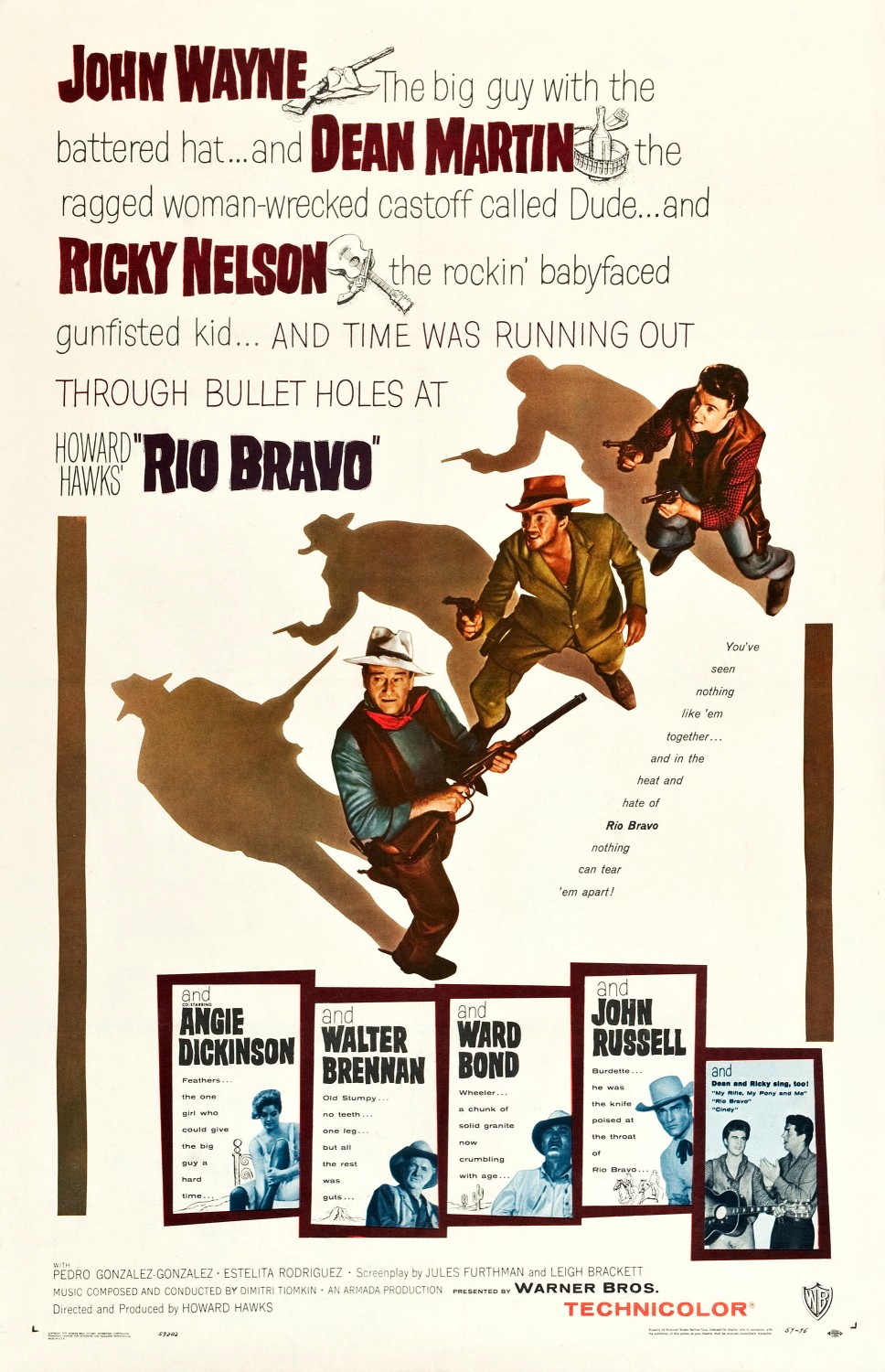
No, I Haven’t Seen It Until Now: ‘Rio Bravo’

Rio Bravo movie poster

I have a confession to make; for years I had never seen a John Wayne western before. I was certainly aware of who he was and of how he is seen as an American hero to many. There is an airport in Orange County named after him, and it houses an enormous statue of him in his western gear that towers over all those taking a flight out of there. Wayne is as conservative as an actor can get in Hollywood, and there are certain people I know personally who don’t want to watch his movies because of that. But come one, we’re here to watch a movie, not debate politics! If I can sit through a Chuck Norris movie, there’s no reason why I can’t see a John Wayne movie.

Rio Bravo” was directed by Howard Hawks and it is widely regarded as one of the greatest westerns ever made. It was made by Hawks and Wayne as a “right wing response” to “High Noon” in which Gary Cooper played a sheriff who urged the townspeople to join him in defending the town they live in. In “Rio Bravo” Wayne plays Sheriff John T. Chance, a man who has no time at for amateurs and will deal only with professionals who know what they are doing. That should give you a good idea of how pissed off Wayne was at Cooper.

The plot revolves around Chance guarding a prisoner named Joe Burdette (Claude Akins) who murdered another man at a bar for no good reason. Working with Chance are an old cripple named Stumpy (Walter Brennan) who is always complaining about something, the town drunk Dude (Dean Martin) who spends the movie sobering up, and the new kid in town Colorado Ryan (Ricky Nelson) who is quick on the draw. They are waiting for the marshal to arrive to take Burdette away, but his brother Nathan (John Russell) will not rest until he is freed. Nothing beats brotherly love when you want to keep your sibling from being someone’s best friend, in a manner of speaking, behind bars.

“Rio Bravo” is essentially a big buildup to a final a violent confrontation between the Sheriff and Nathan where bullets fly in all directions. We see these characters going about their normal lives and the Sheriff starting up a subtle romance with the new woman in town, Feathers (Angie Dickinson). Most action movies today would demand filmmakers cut out the character developments and simply go right to the action. It is rare to see a movie like “Rio Bravo” made today as filmmaking gets more faster paced to where we keep losing the art of subtlety.

I see why Wayne was such an incredibly strong presence in movies. He handles the dialogue well, but his best moments come when he doesn’t say a word. There is a moment where he glares at someone he doesn’t recognize as friendly, and he keeps staring at him until the nameless man walks away. Like Chance, Wayne had a face with a lot of history written all over it, and few others could pull off a scene like that so effectively.

You could tell that, like his characters, Wayne had been through a lot in life, and this added immeasurably to the “don’t mess with me” attitude he exhibited onscreen. He was never some pretty boy actor trying to get the ladies, but a seemingly down to earth guy doing his part to serve and protect others.

The other actor who impressed me here was Dean Martin who played Dude, the once famous gunslinger who has spent way too much time drinking to ease a broken heart. Maybe it’s because I have this view of Martin being a member of the Rat Pack to where I thought it completely overshadowed him as an actor. I figured he was more of a star than an actor, but his performance here proved me wrong. Martin takes his character from what seems like an eternally drunk state to a world of sobriety he struggles to keep up with. It’s a battle he can never fully win, but he tries to stay on the right track and Martin makes you root for him throughout.

I can also see why Ricky Nelson was cast here. A big rock star at the time, he was probably cast to help this movie appeal more to women who were crazy about him at the time. Nelson may never have been a truly great actor, but he is very good here as the new kid out to help the Sheriff in times of trouble. Nelson plays it cool here, maybe too cool at times, but you believe he is quick on the trigger.

But the big scene stealer here is Walter Brennan who plays Stumpy. All Stumpy can do is guard the jail with his shotgun and from behind closed doors, and he can be seriously trigger happy if you don’t let him know you’re right outside those jail doors. Every other line he said throughout the movie had the audience I saw it with at New Beverly Cinema in hysterics. The moment where he does that quick impression of Chance had me laughing my ass off.

This is also the first movie I have ever seen directed by Howard Hawks. He shoots with an economy of style and doesn’t overburden “Rio Bravo” with too much style and overlong shots a lot of show-off directors tend to employ. His focus here is on the characters and how they interact with one another. This makes the action more exciting as we come to care about these characters to where we don’t want them to get hurt.

Director John Carpenter pointed out how one of Hawks’ strongest attributes as a filmmaker is his inclusion of strong women. The example of that in Rio Bravo is in the form of Angie Dickinson’s character of Feathers who proves to be the only person in the entire movie who can tame Chance. You never doubt Feathers to be an independent woman who can get by on her own terms. She’s tough, and yet Dickinson manages to bring some vulnerability to Feathers where she doesn’t always appear trustworthy.

The scenes Dickinson has with Wayne are strong, and she succeeds in bringing out his vulnerabilities to the point where he can’t help but appear a little goofy. This is all despite the fact that Wayne was 51 and Dickinson was 26 when they made this movie. It turns out Wayne was very nervous about the love scenes in regards to the age difference. Then again, I don’t think I would have noticed their age difference unless someone pointed it out to me.

“Rio Bravo” is filled with many memorable moments not easily forgotten. The moment where Dude takes out a shooter in a bar is a brilliant one you never see coming. The shootouts are still exciting as hell, especially when good use is made of a flower pot being hurled through a window.

One of my favorite moments comes when the men come in harmony together as they sing “My Rifle, My Pony and Me.” It reminded me of one of my favorite moments from Steven Spielberg’s “Jaws” when Roy Scheider, Richard Dreyfuss and Robert Shaw sang “Show Me the Way to Go Home.” I love those moments in films when people find a way to come together despite whatever differences keep them apart.

I found “Rio Bravo” to be an excellent western, and it’s no surprise to me that it is one of the most influential westerns ever made. It certainly holds a strong place in the cinematic history of westerns, and it endures to this very day. Of course, Hollywood in its infinite wisdom will probably end up remaking it after they have pillaged all the horror franchises they can. That’ll be the day!

* * * * out of * * * *

Copyright Ben Kenber 2016.