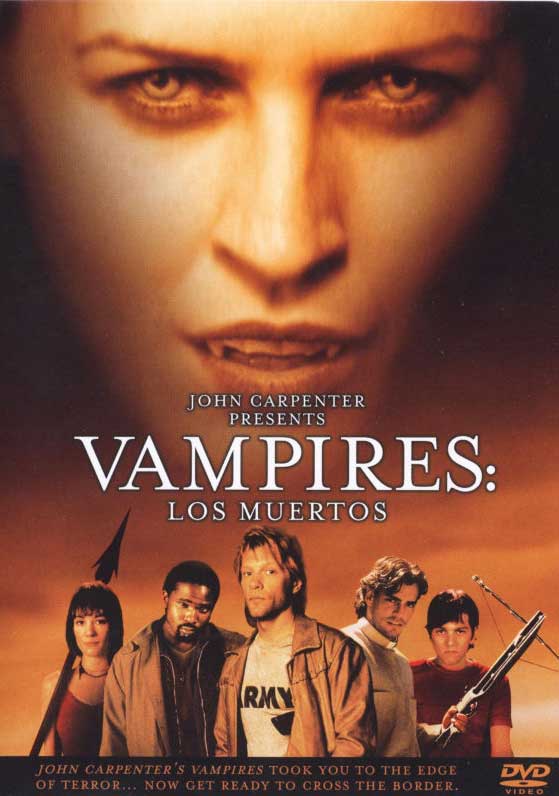
While at New Beverly Cinema on November 19, 2011 to talk about her husband John Carpenter’s movie “Vampires,” producer Sandy King also took the time to discuss its sequel “Vampires: Los Muertos.” Not many know about this one, but this is largely because it went straight to video and features none of the cast from the original. King went into detail about its making, and she summed up Screen Gems handling of it by saying, “They fucked it up!”
The original storyline for “Vampires: Los Muertos” had all the original slayers dead which necessitated that a new team be put together. Tim Guinee was set to return as Father Adam as his character was intended to be the through line for both films. Sheryl Lee was also expected to return as Katrina who had since become queen of the vampires. King never mentioned if Daniel Baldwin would be back, but I’m assuming this was not a real possibility.
The problem with this sequel, King said, was the studio thought they got the movie, but really did not. This was quickly proved when they introduced some changes during the film’s production. Guinee ended up not being brought back, and we see Father Adam’s grave at the movie’s start. Instead, they ended up casting a Mexican soap opera star named Cristián de la Fuente as a completely different character named Father Rodrigo. King was also perplexed as to why they cast rocker Jon Bon Jovi as the lead vampire hunter, Derek Bliss. Granted, Jovi is not a bad actor, but King best described him as looking like a “New Jersey surfer.”
At one point, the studio called both King and Carpenter and asked them, “Can you tell us how to fix this?” To this, King replied quite bluntly, “No.”
In the end, King made clear how the studio’s interference is what messed everything up. She said if you don’t understand the myths and legends involved in the original “Vampires” movie, then “you’re going to fuck it up.” Also, if your main villain of a female vampire is not the hottest lady, then the story won’t make a lick of sense. All of this, in her opinion, showed a lack of respect not just for the audience, but also for the genre as well.
In all fairness, “Vampires: Los Muertos” is an okay movie if you expect nothing more than a decently entertaining B-movie. Even King said director Tommy Lee Wallace, who had directed another sequel to a John Carpenter movie with “Halloween III: Season of The Witch,” did a lot of neat things which were fun to watch. I myself loved the kick ass rock and roll score by Brian Tyler who has since gone on to compose the music for “Rambo” and several of the “Fast & Furious” movies. But when all is said and done, this sequel was a missed opportunity, and it serves as yet another example of why studio executives would do best not to interfere too much, if at all, in the moviemaking process.
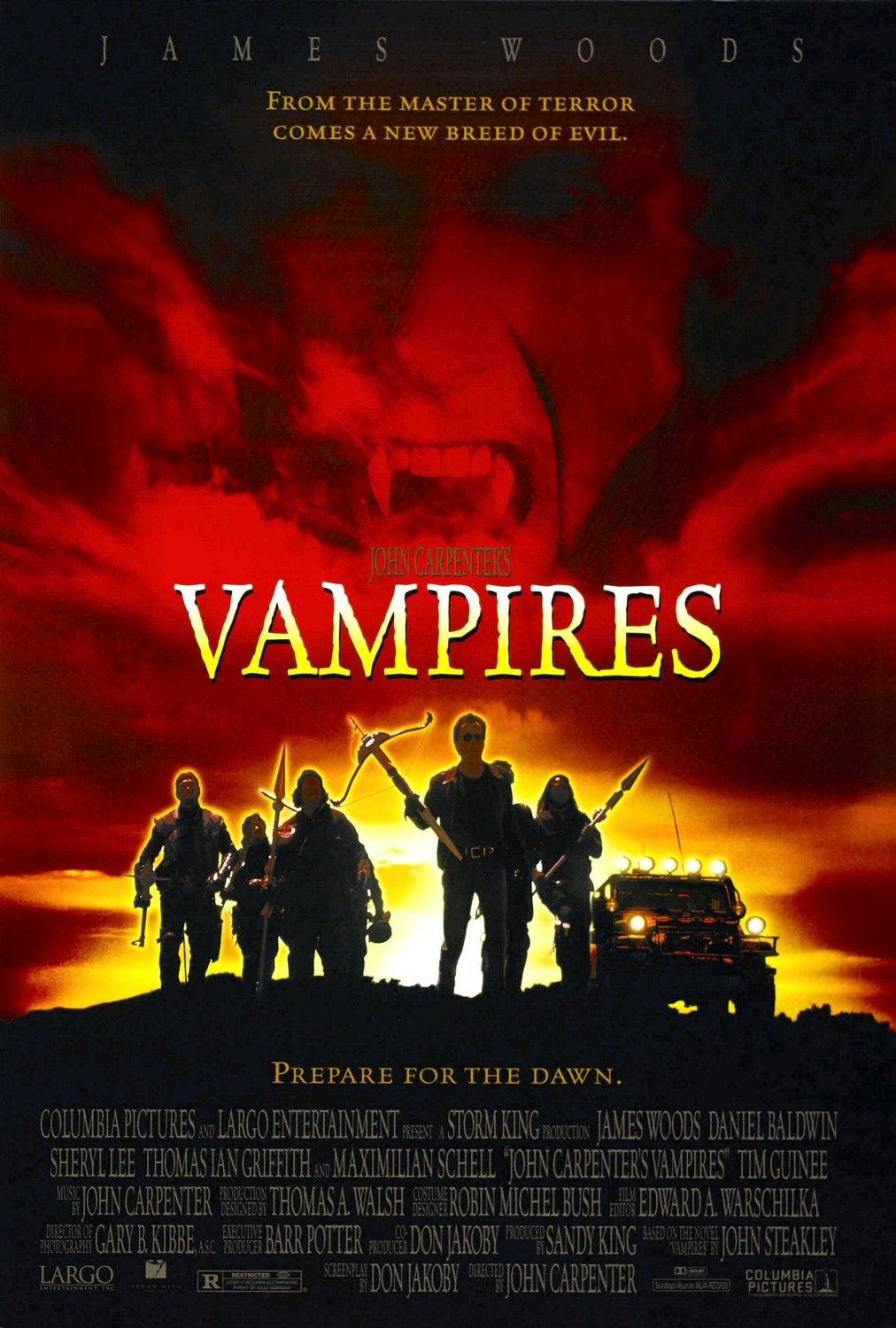
Movie producer Sandy King dropped by New Beverly Cinema on November 19, 2011 to talk about her husband John Carpenter’s movie “Vampires.” The website Horror Movie a Day hosted the midnight screening which brought out a small but dedicated crowd who yearned to see it on the big screen again. Carpenter once said he originally became a filmmaker to make westerns, and this movie, based on the novel “Vampire$” by John Steakley, is the closest he has ever come to making one.
King said the project came to her and Carpenter after she bailed out a producer who was working on a Largo Entertainment show. Largo Entertainment was the sales engine behind this feature, and while she and Carpenter were used to putting their own projects together, King stated they were “more for hire” when it came to “Vampires.”
Casting “Vampires” was Reuben Cannon who brought actors from all over the world to his casting office. There were even midget actors, King said, who were about 4 feet tall. Many who did get cast as blood suckers were stunt people as they had to perform the movie’s most dangerous stunts. The scene where vampires climb out of the dirt proved to be the roughest stunt of them all.
Thomas Ian Griffith was cast as the imposing master vampire, Valek. King was standing outside Cannon’s office when she noticed a shadow looming over her. It turned out to be Griffith who is actually 6’ 6” tall, and his height gave her the strong impression of a vampire. King also said on top of Griffith being tall and athletic, he could also act which made him a perfect choice for the role.
When it came to describing James Woods, who plays Jack Crow in the film, King said bluntly, “He’s nuts!” It turned out King and Woods shared the same publicist, and Carpenter was looking for a really good actor to play Jack Crow. While Woods proved difficult to cast as the studio didn’t want him in the lead, Carpenter was intent on working with him despite the actor’s reputation of being difficult to work with. The role, however, turned out to be a real physical challenge for Woods as he was not really an athletic actor at the time, something which is hard to believe after watching “Vampires.” Stunt coordinator Jeff Imada ended up helping him look as tough as he does onscreen, but King stressed Wood’s role was really about acting more than anything else.
As for the rest of the cast, King described them as “great” and “really good people.” She said Sheryl Lee, who played the prostitute Katrina, is “the most unspoiled actress ever.” Daniel Baldwin, who played Montoya and is better known for his legal problems, was not a problem according to her. In fact, when a wave of bronchial flu ended up infecting the cast and crew, she said Baldwin ended up bringing soup for everyone.
While receiving a rather middling reception when it debuted domestically, “John Carpenter’s Vampires” is a better movie than people generally give it credit for. Like many of the “Halloween” director’s films, it has gained a strong cult following years after its release, and I still find it to be wildly entertaining to this very day.
So, without further ado, I present to you my list of my top ten movies to watch on Halloween night, and they are presented here in no particular order:
“John Carpenter’s Halloween”
Despite the many imitators and endless sequels, not to mention the two movies directed by Rob Zombie (which was actually pretty good), there’s no beating the granddaddy of them all. Carpenter’s film is a true horror classic with a music theme I never get sick of listening to. All these years later, the original “Halloween” has lost none of its power to creep you out as it offers audiences a truly terrifying experience.
There are moments which have stayed with me long after I saw “Halloween” for the first time. That moment where Michael Meyers kills the boyfriend and then tilts his head from side to side always gets to me. Plus, the ending leaves you with the unnerving truth of how evil never dies.
“John Carpenter’s The Thing”
While his original “Halloween” remains a true classic, Carpenter’s remake of “The Thing” is his masterpiece. The film bombed back in 1982, but it has since gained a huge cult following and is now considered one of the best horror films ever made. The story of a group of scientists doing research in Antarctica, one of the most isolated places on Earth, who get copied almost perfectly by an alien is far more effective today than when it first came out. “The Thing” is a great example of how to keep escalating tension throughout a movie’s entire running time, and Rob Bottin’s incredible work on the makeup and effects still looks disgustingly brilliant to this very day.
“The Texas Chainsaw Massacre”
I finally got to see this movie all the way through for the first time a couple of years ago when I rented it from Netflix. What I thought would be a fun and hopelessly dated 1970’s movie turned out to be more horrifying than I ever could have imagined. Even while watching it on my 32″ television, “The Texas Chainsaw Massacre” proved to be a brutal cinematic experience which has lost none of its power to make you shrink in your seat. With a movie like this, it’s not what you see that gets to you; it’s what you don’t see which messes with your head, and that makes this classic of the most unnerving movie going experiences you will ever endure.
“Suspiria”
It was released 40 years ago, and it remains Dario Argento’s true masterpiece of horror. There are very few directors who can make a grisly death look like a beautiful work of art. The tale of an American female dancer who comes to a ballet school which turns out to be a witches’ coven doesn’t always make sense, but then again, a lot of Argento’s movies don’t. The movie is still scary as hell and beautifully horrific in a way most horror films can only dream of being today. A friend of mine once told me that if she were ever to be murdered (heaven forbid), she wants it to look like something out of a Dario Argento movie. I see what she means.
“Alien”
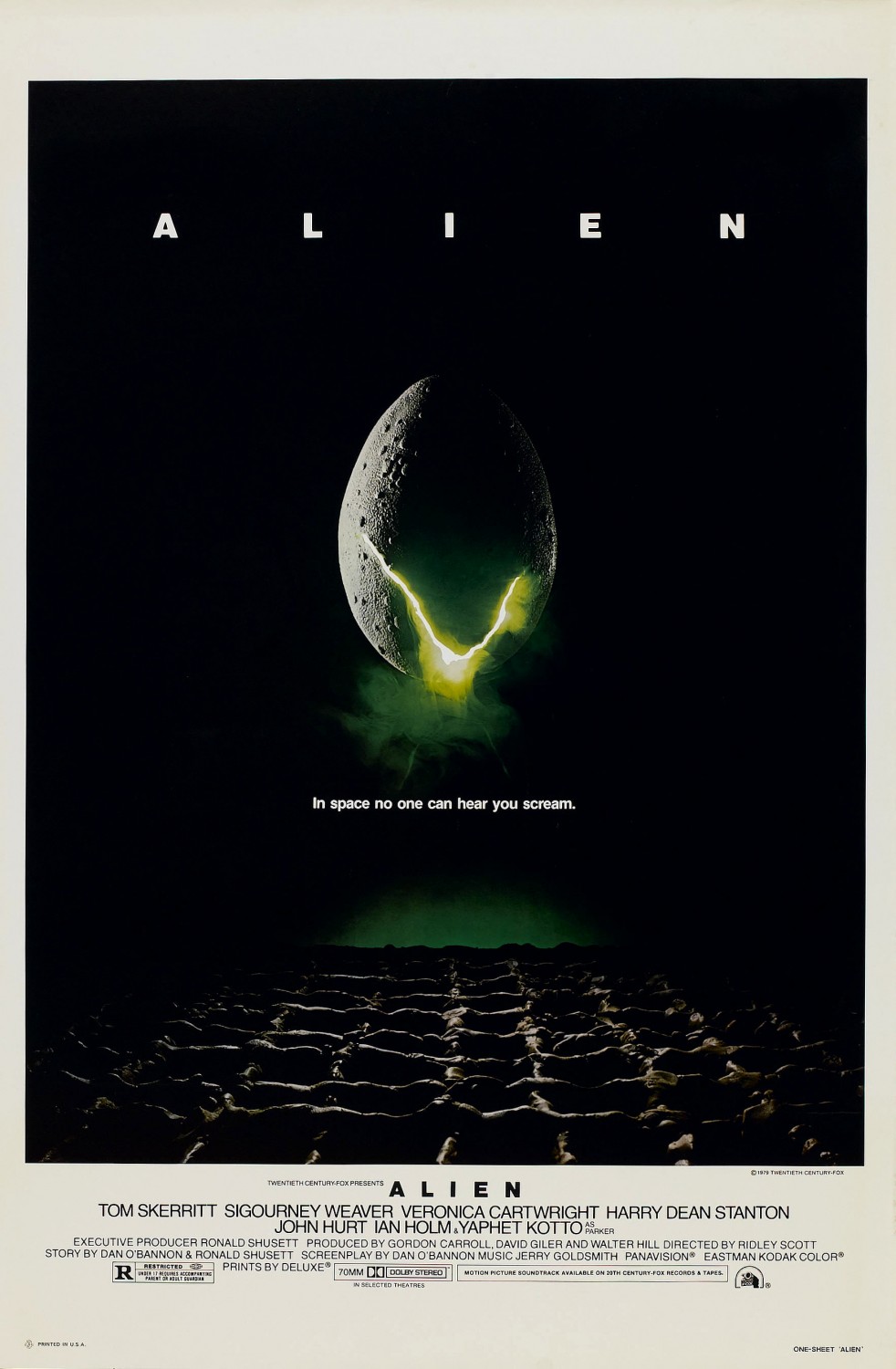
Be it the original version or the director’s cut, Ridley Scott’s “Alien” is still an overwhelmingly terrifying experience to sit through. When I rented this one on videotape years ago and watched it on my parents’ 13-inch television set in their bedroom (they robbed me of using the family room), I found myself hiding my eyes at key moments. The silence really got to me, and I impatiently waited for Jerry Goldsmith’s score to come back on. Keep in mind, I actually saw James Cameron’s “Aliens” before I saw this one, and it still scared the hell out of me!
“The Exorcist”
I tell you, these horror movies from the 1970’s still have the same power to shock you today as they did when first released. When William Friedkin’s “The Exorcist” was re-released in “the version you’ve never seen,” it still had a visceral power to unsettle us regardless of the passage of time. The story of a girl who becomes possessed by an ancient demon benefits greatly from a documentary feel which has that “you are there” feel, and it almost felt like I wasn’t watching a movie, but instead a real-life event which somehow all got caught on camera.
“Evil Dead 2: Dead by Dawn”
All the “Evil Dead” movies are great fun, but if you have to go with just one, then I recommend “Evil Dead 2: Dead by Dawn.” On a budget of $3 million dollars, maybe even less than that, director Sam Raimi gave us one of the most endlessly creative and hilarious horror movies you could ever hope to watch. After all this time, it remains as scary as is funny. Plus, you have Bruce “Groovy” Campbell in his most iconic role as Ash, the pussy whipped salesman from S-Mart who keeps getting chased by the demons he was dumb enough to awaken from their slumber. Campbell gives a fantastic performance even if he keeps telling us he’s not much of an actor. This is so far from the truth, but you do have to admire the sense of humor he has about himself, and you haven’t lived until you listen to one of his “Evil Dead” commentary tracks.
“28 Days Later”
“Slumdog Millionaire” director Danny Boyle was said to have reinvigorated the zombie genre with this propulsive horror thriller where they are anything but slow. In this film, the zombies, or the infected as they are referred to are not the real enemy, we are. The virus the infected have been stricken with represents our inability to face the darkness inside of ourselves which sooner or later rises to the surface. There is no let up on the tension in this movie, and the thrills come fast and furious.
“Dawn of the Dead” (the original and the remake)
This one is a tie because both versions of this movie stand strongly on their own merits. George Romero’s brilliant sequel to his classic “Night of the Living Dead” is really a satire of the consumerist society we all live in. You know, the one which encourages us to buy all sorts of things which are said to make you happy, and yet all the money and objects you purchase end up making you feel empty inside. This is what Romero is saying with this film, and he does this while providing us with a great deal of blood, gore, beheadings, eviscerations, decapitations, and whatever else he could afford when he made “Dawn of the Dead.” All of you in the Fangoria crowd will be more than satisfied with this one, but you knew that already.
Zack Snyder, who later went on to direct “300,” “Watchmen” and “Batman vs Superman: Dawn of Justice” helmed this remake which turned out to be the best of its kind since “John Carpenter’s The Thing.” This one is more of a straight forward horror action film with a surprising amount of emphasis on character development. It also features Canada’s greatest import in the lead role, Sarah Polley. The remake of “Dawn of the Dead” turned out to be a visceral thrill ride, and it allowed us to invest in the characters in ways most horror movies typically avoid.
“The Silence of the Lambs”
The specter of Hannibal Lecter, as portrayed by Anthony Hopkins, never fails to unnerve me like he did when I first saw this movie on the big screen. Jonathan Demme’s Oscar winning classic remains one of the definitive serial killer films ever made. Hopkins’ performance is like a perverse love letter to HAL from Stanley Kubrick’s “2001” whose voice inspired his performance. We also get one of cinema’s greatest heroines with Clarice Starling, brilliantly played by Jodie Foster.
It continually amazes me how the movies of John Carpenter have endured years after their release. Many of them were critical and commercial disappointments when they first came out, and it seemed for the longest time that Carpenter would forever be trapped in the shadow of his most successful movie, “Halloween.” “Prince of Darkness” was one of those movies, but it has long since gained a cult following to where the original DVD release became a very valuable collector’s item once it went out of print. Now, Shout Factory has released a special collector’s edition of it on Blu-ray, and it shows us why this movie has lingered in our minds long after we first saw it.
“Prince of Darkness” is about a research team of academics, students and a priest who discover an ancient canister in the basement of an abandoned church. This canister contains a liquid which ends up turning people into zombies, and the team eventually realize they have unknowingly unleashed the evilest thing imaginable as it could destroy anything and everything. It is not your typical horror movie as it deals with theoretical physics and atomic theory, but once you get into the story and look closely at the theories being explored, everything becomes quite terrifying.
I won’t bother going into how great the audio and visual elements of this Blu-ray are because it goes without saying “Prince of Darkness” has never looked as good as it does here. Let’s just skip ahead to the special features on the disc as the ones included here will provide fans with a wealth of information.
First off, the Blu-ray case states there is a commentary track with John Carpenter, but what it neglects to mention is that he is joined on this track by actor Peter Jason. Jason plays Dr. Leahy in “Prince of Darkness,” and he has appeared in many of Carpenter’s movies from this one to “Ghosts of Mars.” Carpenter’s commentary tracks are always great fun to listen to, but they are even more entertaining when he’s pared with someone else, and the conversations he has with Jason are tremendous fun as they discuss what it was like making a horror film with a budget of only $3 million dollars. Actually, this track was originally included in the Region 2 DVD release of “Prince of Darkness,” so it’s nice for those us who lack multi-region players to finally get the opportunity to listen to it.
Another special feature to is a brand-new interview with Carpenter called “Sympathy for the Devil.” In it, Carpenter explains how he had been making big budget studio movies before “Prince of Darkness” and had gotten tired of making them. With “Prince of Darkness,” he got the opportunity to go back to making low budget features where he had complete creative control. Carpenter speaks of how a book on quantum physics inspired him to write the script for this movie, under the name of Martin Quatermass, and of how he loves to view the apocalypse through movies even though he does not look forward to it in real life.
There’s also a brand-new interview with musician Alice Cooper who plays the leader of the street people who surround the abandoned church (he is billed as “street schizo”). The interview is called “Alice at the Apocalypse,” and Cooper talks about how he grew up on black and white horror movies like “Creature from the Black Lagoon” which he said “scared him appropriately.” He even admits he was glad his character had no dialogue, and I loved how he described how his songs get at how Satan’s greatest trick is in getting you to believe he doesn’t exist.
Then there’s “The Messenger,” an interview with actor and Special Visual Effects Supervisor Robert Grasmere. Grasmere portrays Frank Wyndham, the one guy who thinks that the research team’s job at the abandoned church is just a bunch of hooey. He starts off the interview talking about the practical effects used in “Prince of Darkness” and of how much of a nightmare the canister was to move around the set. Then he goes into how he got cast as an actor in it, and of how he ended up speaking some of the movie’s most famous lines of dialogue.
I want to take this time to tell you “Prince of Darkness” features of my favorite scores by Carpenter and Alan Howarth. Howarth himself shows up for the interview “Hell on Earth” in which he discusses how they worked on the music for this movie. Howarth has done interviews on other Shout Factory releases like “Halloween II” and “Halloween III: Season of the Witch,” but this feels like the most detailed interview he has given on working with Carpenter yet. It’s also fascinating to hear what it was like to make a film score before everything was recorded digitally.
Other special features on this collector’s edition include an episode of “Horror’s Hallowed Grounds” in which host Sean Clark toured the locations where “Prince of Darkness” was shot. Some of it was filmed at Carpenter’s Alma mater USC, and the church used is located in downtown Los Angeles and is now known as The David Henry Hwang Theatre. The scenes of the church were shot in a deserted ballroom in Santa Barbara which has long since been demolished.
You will also find the movie’s theatrical trailer which seems to imply things were supposed to end a little differently than it did. There are also radio spots which are amusing to listen to, a still gallery, and the alternate opening from the movie’s television version. Regarding the alternate opening, it makes the whole film look like it was all a dream in Jameson Parker’s head, and I never quite understood why Universal Pictures did this (it was definitely not Carpenter’s idea).
In addition, there is an easter egg to be found on this Blu-ray. When you click on the Bonus menu, you will see a cross on the right side. Click on it, and you can watch a Q&A with Carpenter at Screamfest 2012 where “Prince of Darkness” was screened in honor of its 25th anniversary. The whole thing was shot on iPhone so you will need to pump up the volume a bit to hear what is being said.
“Prince of Darkness” is by no means a perfect movie. Some of the acting is weak and the special effects do show their age, but it is still a very compelling horror film which deals with scientific theories that give the story more of an edge. Those of you who are big John Carpenter fans would do yourselves a disservice by not checking out this release. Those who really like this film will agree Shout Factory has given it the respect it deserves.
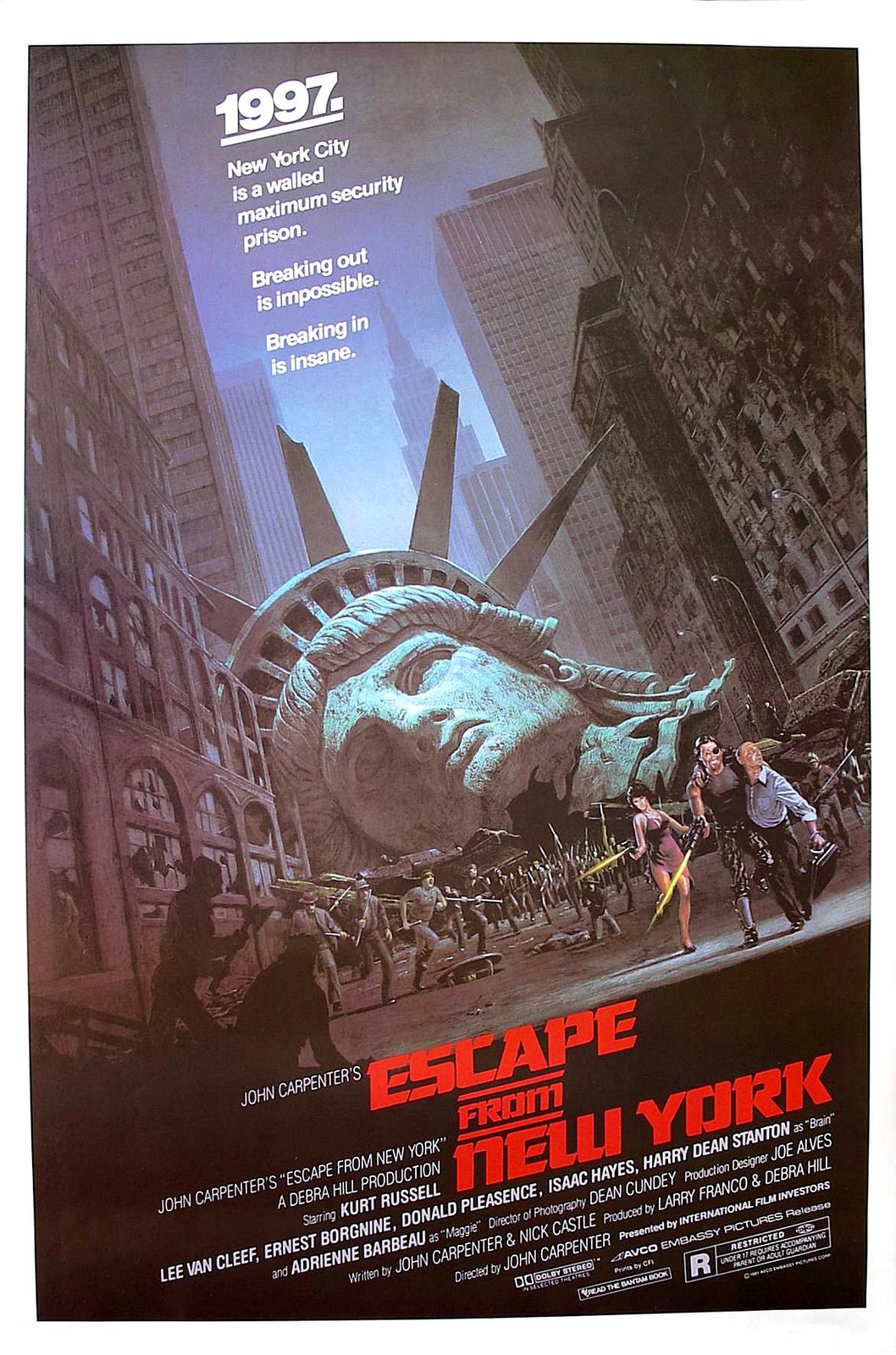
“Escape Artist: A Tribute to John Carpenter” continued with the exploits of Snake Plissken in the double feature of “Escape From New York” and “Escape from LA” at the Aero Theater in Santa Monica. These films featured some of the collaborations between Carpenter and Kurt Russell who first worked together on “Elvis.” They quickly became great friends and went on to work together on several other films including these two and “Big Trouble in Little China.”
The emcee warned us that the print of “Escape From New York” was pretty faded as it was an original print and the only one American Cinematheque could get their hands on. This was being generous as it looked like it had been slaughtered by countless film projectors, and the color was faded to where everything looked pink. It is astonishing it didn’t break apart in the projector. Still, the fans still enjoyed watching the film, one which they have seen hundreds of times before. They laughed when “1997 NOW” came up and when Lee Van Cleef speaks into this enormous cell phone no one would have today, let alone in 1997.
After “Escape From New York” ended, Carpenter came to the stage and was greeted with another thunderous standing ovation. Carpenter quickly acknowledged the crowd by saying, “Thank you for coming out to see the movie tonight, but I got to tell you this is the worst fucking print. My fucking God! There’s no color in it!” The audience laughed loudly as they were in complete agreement.
The discussion started off with a question about the genesis of the project. Carpenter talked about writing the script back in the early 1970’s when there was a great sense of cynicism in America about our President and in response to the hostage crisis in Iran. He also admitted he was inspired by two of his favorite movies back then, “Dirty Harry” and “Death Wish.” Those two movies involved men driven to the brink emotionally and who took it upon themselves to wreak vengeance on those who wronged them. Like those characters, Snake Plissken gets the job done, and this brought a lot of satisfaction to audiences as nobody in the real world seemed to be accomplishing anything.
Carpenter said he initially wanted Clint Eastwood to play Snake Plissken. For one reason or another, it did not work out. He also said he had shopped this screenplay around to several studios which rejected it outright, but fortunately he had a multiple picture deal with Avco Embassy which had produced “The Fog.” Ironically, they wanted Charles Bronson for the title role. Somehow, everything came together when Russell got cast as Snake Plissken, and he portrayed the character as an asexual human being who cares about nothing more than staying alive. In the process, he created one of the most memorable anti-heroes ever seen in a movie.
Carpenter also talked about Lee Van Cleef, a favorite actor of his from Sergio Leone westerns, who played Police Commissioner Bob Hauk. Lee had seriously injured his knee during the filming of another movie and had never gotten it fixed, and as a result he was in constant pain while making “Escape from New York.”
With a budget of only $5 million dollars, “Escape From New York” needed to be filmed as quickly as possible. Carpenter said the rule of low budget filmmaking was to shoot as little film as possible and to make it as long as you can. In fact, there is actually only one real shot of New York in the entire movie which features the Statue of Liberty, and it pans from there and dissolves into a set in Los Angeles. A lot of what you see of New York in the movie are actually models and matte paintings done by artists from Roger Corman’s New World Pictures, among them James Cameron. Much of the movie was filmed in downtown St. Louis which had had a huge fire that destroyed several city blocks. The city let Carpenter and his crew film there in triple digit temperatures, and they even shut the power down for them when they filmed at night.
When it came to making “Escape from LA,” Carpenter had a budget of around $50 million to work with. But while he and Russell had more time and money, Carpenter said he had the hardest time writing the screenplay for it because he felt that everything he was writing was “bullshit.” What got him to revisit Snake Plissken was that Russell was so keen on playing the character again, and they solved their script problem by moving the action to Los Angeles which was in a constant state of denial with all the earthquakes and natural disasters occurring there. They simply took the same scenario of the original movie and updated it to reflect the current state of the city while filming.
“Escape From New York” may have had only one real New York shot in the entire movie, but all of “Escape from LA” was filmed in Los Angeles. The sequel was shot over a period of one hundred and three nights, and Carpenter said he found filming at night to be very “soul draining” as it changes the way you see things and the darkness infects you in a very unhealthy way.
One audience member brought up how at one point it looked like Carpenter and Russell might do a third movie called, “Escape from Earth.” This never panned out because “Escape from LA” unfortunately bombed at the box office. There was also supposed to be a video game based on the movies, but the company involved with it ended up going back to the past by resurrecting Pac-Man. There was even talk of a television series which would act as a prequel to the movies and even an anime movie chronicling the further adventures of Snake Plissken, but neither of those projects became a reality. Despite the box office failure of “Escape from LA,” there are still many people out there who are intent on continuing the exploits of their favorite antihero.
These days, Carpenter said he is content to sit at home and watch the NBA Finals or play video games. He told the audience he had just finished playing “Ninja Gaiden 2” and would be moving on to “Metal Gear Solid 4” next. It doesn’t seem like he is in a big hurry to make another movie, but this could change if the studios pay him a lot of money. Carpenter feels the movie business keeps changing on him, and he does not appear to be as enthusiastic about making films as he once was.
Carpenter closed out the evening by saying he had to go meet with his drug dealer. Before he left, the moderator gave him a gift saying Carpenter had given so much to us that he wanted to give something back. This something was the “Escape from New York” board game which is, apparently, the most complicated board game ever.
After the discussion ended, he did take some time outside the theater to sign autographs and pose for pictures with fans who still see him as a big inspiration. If you look at movies of recent years, you will see Carpenter’s influence over many of them both in their visuals and the music. To this day, he remains one of the important directors of the sci-fi and horror genre, and his cult following remains as strong as ever.
As the evening wore on, many came back inside to watch “Escape from LA.” The print was in much better condition, but this didn’t stop it from breaking down during the movie’s last seconds. For those who know how this sequel ends, it only seemed comically appropriate as Snake shut down… Well, you know.
It says a lot about John Carpenter’s “The Thing” that it could generate a prequel almost 20 years after its release. A critical and commercial failure back in 1982, it has since been justly reappraised as a true horror classic and remains Carpenter’s masterpiece. It proved even more terrifying than “Halloween,” and it also holds a special place on my list of my top ten favorite movies of all time. These days, it is even more frightening as the scenario it presents feels all too possible.
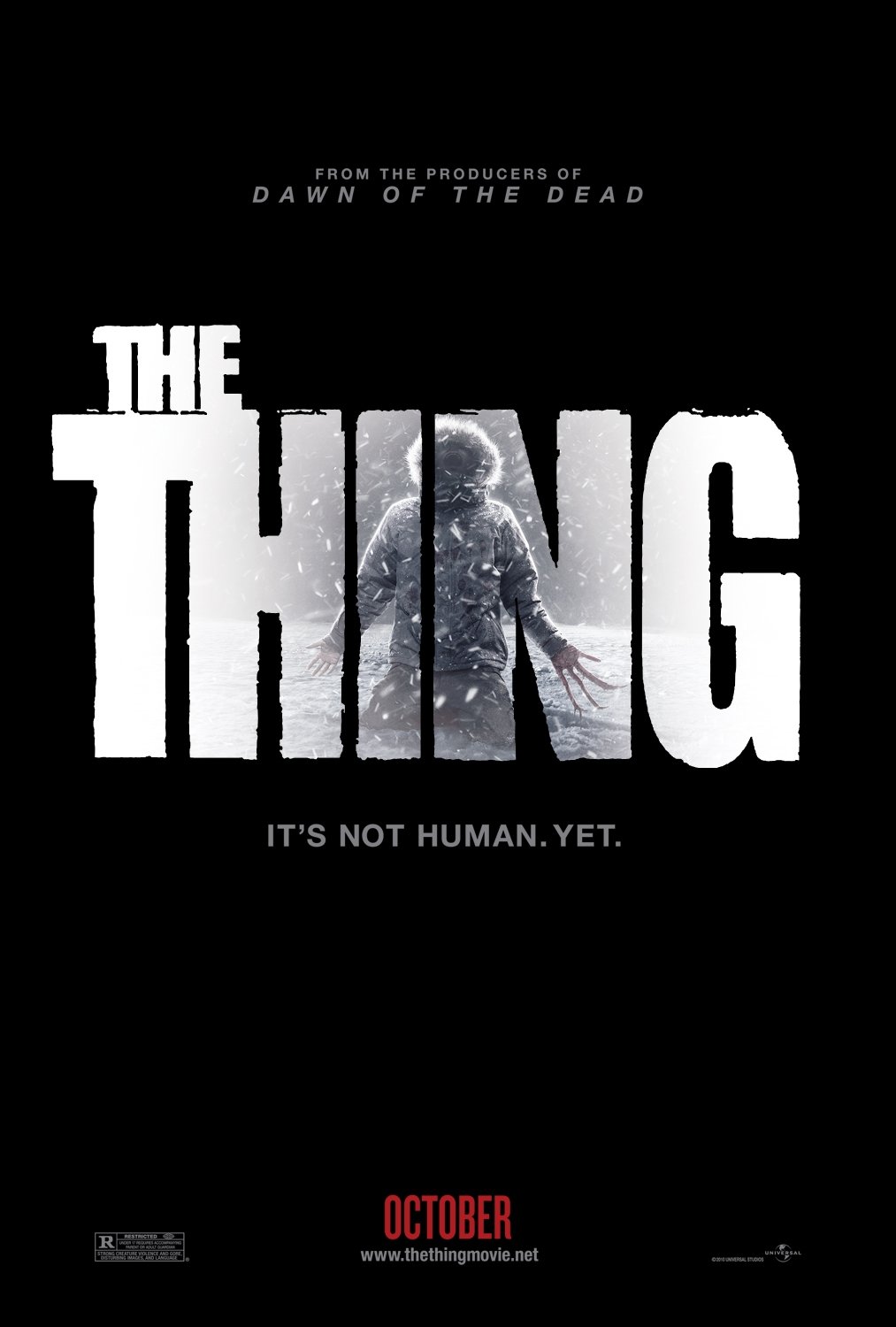
Now we have Matthijs van Heijningen Jr.’s “The Thing,” a prequel to Carpenter’s movie which explores the events leading up to it. Remember the Norwegian camp Kurt Russell and Richard Dysart visited which had been completely burned down? Now we get to see how it got laid waste by both the thing and the humans. But therein lies the problem; knowing the events precede those of the 1982 movie and who survives, much of the potential suspense and tension gets drowned out almost immediately.
Frankly, I would much rather see a sequel to Carpenter’s “The Thing” instead of this. His film was very effective because we never had a clear idea of who to trust. But in Heijningen’s film, we know the characters on display will eventually bite the dust, and it becomes a question of when these characters turn into the thing. After a while, it becomes more shocking when a character dies but doesn’t turn into a gooey alien. What spoils it even more is we know of at least one character who will survive what happens very early on, and all we can do is wait impatiently for him to get on the helicopter with his rifle and take shots at the wolf.
Heijningen is respectful of Carpenter’s movie and pays homage to it throughout, but I kept wondering if this was a remake instead of a prequel. Various scenes are clear imitations of the 1982 movie’s most classic moments, and I wish he had worked harder at distinguishing the prequel from it instead of just presenting us with something way too similar. He does wring some suspense and strong tension at different points, and his unique take on the blood test scene is very clever, but he is unable to sustain the tension which made Carpenter’s movie so utterly terrifying.
The special effects are very good, but they pale in comparison to the genius of Rob Bottin. Audiences are always quick to tell when CGI effects are overused. As for the performances, they are generally good even though the characters could have come out of any monster movie.
The best performance comes from Mary Elizabeth Winstead as paleontologist Kate Lloyd. Such a terrific presence in “Scott Pilgrim vs. The World” and “Live Free or Die Hard,” she holds our attention throughout and is one of the best reasons to see this prequel. While Lloyd is predictably inspired by Ellen Ripley from “Aliens,” Winstead makes the character her own and more than just another tough chick which movies like these typically rely on.
“The Thing” prequel is not terrible, but it will be of interest more to those who haven’t seen the 1982 film which itself was a remake and made back in a time when remakes were rare and actually worth watching. This particular version of John W. Campbell’s “Who Goes There?” feels like a lost opportunity, and it gets caught in the prequel trap of busily matching everything up to the film it leads into. It really sucks when you can see a movie’s ending long in advance. I did however admire the ambiguous ending shown before the end credits as it leaves you wondering if the alien really infected one of the last characters standing. Not knowing is always more unnerving than knowing, and at least the director got this right.
Many of you probably know the story behind John Carpenter’s “The Thing.” It came out in the summer of 1982, two weeks after Steven Spielberg’s “E.T,” and while the alien from Spielberg’s movie was warm and cuddly, the one in Carpenter’s was cold, ugly, and utterly vicious. As a result, “The Thing” was quickly derided by both critics and fans alike, and no one hid their disgust towards Carpenter for what they saw as pornography of violence. In all fairness, however, the movie was released at the wrong time of the year. To release it during what Carpenter called the “summer of love” opposite not just “E.T.,” but also “Star Trek II” and “Tron” was a big mistake on the part of Universal Pictures, and they would have had more luck had they released it in the winter of 1982.
Years later, “The Thing,” like many of Carpenter’s movies, found the audience it deserved through home video and digital media. Perhaps it was ahead of its time, but it is now considered, and rightly so, one of the best horror and sci-fi movies ever made, and it is easily the best horror remake in a sea of horrendously crappy ones. It certainly plays better today than it did when first released, and it is still utterly terrifying 35 years after its release.Unlike the original Howard Hawks version of “The Thing,” Carpenter’s movie hews much closer to the short story “Who Goes There?” by John W. Campbell, Jr. The movie takes place at an American scientific research outpost in Antarctica, perhaps the coldest place on Earth. We are introduced to a bunch of men who are studying the surrounding area, and they look bored and listless as they pass the days smoking, drinking scotch, watching “Let’s Make a Deal” reruns, and playing ping pong. One day, they are met by a wolf being shot at by a Norwegian for no discernable reason. This later leads to events which make them realize they have encountered an alien of unknown origin unearthed from the ice after thousands and thousands of years. It then proceeds to imitate every creature it comes into contact with, and it is revealed any of them could be the thing. They have to destroy the thing before it reaches civilization because, once it does, it would mean the end of the world.
The premise of “The Thing” is genius because it allows for an unending escalation of tension and suspense throughout. Like the characters, you have no idea who to trust. The paranoia which closes in on the characters puts them in an airtight cage, and this cage gets smaller and smaller as it heads to its infinitely bleak climax. There are no women to be found which eliminates any sexual tension and could have added an unnecessary element to the movie. Many say this makes the movie sexist, but it is a ridiculous charge.
“The Thing” was released when the whole world started to become aware of the AIDS virus. The idea of any virus infecting us completely and rearranging our body to the point may have seemed unreal to us back in 1982. But today, it is a reality more horrifying than ever, and it presents itself with no cure. This makes “The Thing” even scarier to take in when watching it now. The scene where Dr. Blair (Wilford Brimley) observes a computer image of the virus infecting a human host is one of the movie’s scariest moments, and it feels like an all too real a possibility today. The only thing truly dated about the scene is the computer graphics look like they are from some old Atari game, but it doesn’t change anything.
This movie also marks one of several collaborations between Carpenter and Kurt Russell who started working together on the TV movie “Elvis.” After all these years, Russell can still make you believe he is a regular guy like the rest of us, and his role as helicopter pilot R.J. MacReady is one of his best. You never get the feeling Russell is acting here. Instead, he inhabits the character he plays, and you follow him every step of the way without any doubt of who the hero really is.
Carpenter cast “The Thing” perfectly with actors like Richard Masur, Richard Dysart, Donald Moffat and David Clennon. But one of the best performances comes from Brimley as Dr. Blair. In the past, we have seen him in countless oatmeal commercials and in roles as the grandfather we wished we had in our lives. But his role in “The Thing” offered him an opportunity to go completely against type. Brimley goes from curious to utterly horrified by what this unknown creature can do, and he ends up wreaking havoc in a way you would never ever see in an oatmeal.
Another great actor in this movie is Keith David who plays Childs. David has a don’t mess with me intensity, and he matches Russell’s intensity every step of the way. The tension between them is as frightening as is waiting for the thing to make its next horrifically gory entrance.
But let’s talk about who the real star of “The Thing” really is, and that is Rob Bottin who designed the movie’s horrifically brilliant special effects and makeup designs. Long before the advance of computer technology, Bottin had to make all these designs from scratch, and what he came up with is now considered a benchmark in his field. The thing mimics everything it touches, and this must have been a huge inspiration for him as it allowed his imagination to run amuck with infinite possibilities. You never know what’s coming next, and this makes “The Thing” even scarier.
Some have called this movie a “geek show” made only with the intention of grossing people out. Granted, a good case could be made for that, but “The Thing” explores a theme that is commonplace in many of Carpenter’s movies; the struggle to maintain one’s individuality. Of never letting go of who you are because it allows you to survive in a world which keeps finding new ways of robbing your individuality at any given opportunity. The threat of this loss is very real, and the characters have the unfortunate disadvantage of being stuck in one of the most remote and desolate places on Earth.
I also imagine a big complaint people have about “The Thing” is we never learn about the alien or where it came from. Basically, we know it’s from outer space which imitates whatever it comes in contact with, and it clearly deals with the cold better than any of us do. Here’s the thing, do we really need to know everything about this creature? Maybe not knowing is more terrifying than knowing. It leaves a lot of things to the viewer’s imagination which I love because it leaves so many possibilities open for how this horrific situation is going to play out.
“The Thing” truly is Carpenter’s masterpiece as it shows him to be a true master of horror and suspense. He endlessly generates unbearable tension throughout, and just when you think the movie has peaked, you realize it has not. Carpenter’s goal here is not just to make us jump out of our seats, but to make us feel the terrifying isolation and complete lack of trust these characters are forced to endure.
Carpenter has said “The Thing” was the first in his apocalypse trilogy (the other two were “Prince of Darkness” and “In the Mouth of Madness”), and it does have an unrelentingly bleak tone which made it seem completely out of place back in 1982. As time goes on though, many of us keep thinking the world is coming to an end with more deadly diseases like the Ebola Virus among others, and the scenario this movie presents us feels all the more frightening and immediate as a result.
Some movies are robbed of their greatness through the passage of time, and we watch them and wonder why we liked them in the first place. But “The Thing” is an exception as the passage of time has made it all the more effective. You can’t help but think its story was ahead of its time, and it remains one of those movies I never ever tire of watching. It has more than earned its place on the list of my all-time favorite movies.
“Escape Artist: A Tribute to John Carpenter” was held a few years ago by American Cinematheque at the Aero Theater. In addition to being treated to a double feature of “The Thing,” which is widely regarded as his best film, and “The Fog,” the writer, director and composer also showed up in between both films to give us more insight on their making and took questions from the audience. Even though these movies are now twenty to thirty years old, they still resonate deeply for movie fans today. This was proven true by the fact these screenings were sold out and packed with Carpenter’s biggest fans.
While “The Thing” was not a big hit upon its release, it has since developed a huge cult following and been critically re-evaluated as the masterpiece it always was. Eighty percent of the audience had probably seen this movie several dozen times, but they still jumped during its most shocking moments.
After the movie ended, Carpenter came to the stage and was met with a standing ovation and thunderous applause. He thanked them for coming on out to see this movie when they could have just watched it at home. One fan in turn thanked him for coming on out to visit with us as he has millions of fans all over the world, and yet he chose to hang out with us.
Today, as the emcee pointed out, many are surprised “The Thing” was not a big hit when released back in 1982. Carpenter put it all the more bluntly:
“It tanked! 1982 was supposed to be the summer of love. It was the summer of ‘E.T.’ and it was the summer of freedom and hope, and ‘The Thing’ was about as bleak a movie as any that could have been released that year. People hated it for that, and all the sci-fi fans out there absolutely hated it and trashed it when it first came out.”
As Carpenter pointed out to actor and friend Kurt Russell on the movie’s DVD commentary, “We came out two weeks after ‘E.T.’ And while there’s was all warm and cuddly, ours was ugly and hideous.” Universal Pictures, which released both movies that summer, attempted to make it the summer of extra-terrestrials, but the timing did not work at all in Carpenter’s favor and it later cost him the job of directing the Stephen King adaptation, “Firestarter.”
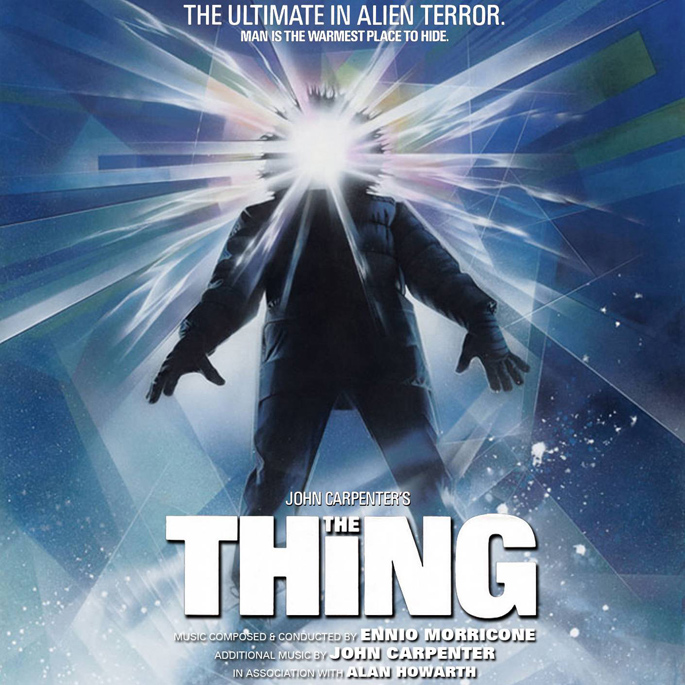
One fan pointed out how “The Thing” was unique in a sense as it is one of the few Carpenter movies he did not compose the score for. While the score does have the Carpenter sound, it was actually composed by Ennio Morricone. Carpenter said Morricone is one of the greatest film composers ever, and he did point out there is one synthesizer piece of music which was not composed by Morricone. Now he wouldn’t say who composed it, but it’s safe to say he did, and in association with Alan Howarth.
Another fan pointed out several of Carpenter’s movies have been remade like “Assault on Precinct 13,” “The Fog” and “Halloween,” and a remake of “Escape From New York” is in the works. This fan said he found remakes blasphemous, and to this Carpenter replied, “I actually find it flattering. They also have to pay me a lot of money when they do that.”
Dean Cundey, director of photography on “The Thing,” worked on several of Carpenter’s movies including “Halloween.” Carpenter has not worked with Cundey for some time now, and one man asked why and if there had been a falling out between them. Carpenter replied they have not fallen out, and he recently caught up with Cundey at a movie shoot in Canada. Carpenter did, however, point out why they haven’t worked together for a while, “Dean wanted to be a director. And when you have a director on a movie, and a director of photography who wants to be a director, that’s just not going to work out.”
Everyone who knows Carpenter knows he is a big fan of westerns, and he recently recorded a commentary track for the special edition release of “Rio Bravo.” Many wonder why he still hasn’t directed a western of his own, and Carpenter replied he honestly didn’t know but that he came close several times. The closest was when he wrote the script for “El Diablo” which was made into a cable movie that earned him a Cable Ace Award. If you look closely, all of his movies do have western elements to them. The closest he has ever gotten to making a western is “Vampires” with James Woods.
Many also wondered, and it was asked, what future projects he has on tap and of what his current passions are. His reply was, “Current passions? I’m playing Ninja Gaiden, I just got Metal Gear Solid 4 for PlayStation 3… No seriously, I have a couple of things I’m looking at doing, so we’ll see what happens.”
Before he left, he did have some things to say about “The Fog,” “I have heard that the print for this movie is not in the greatest shape, and that it is pretty faded. But keep in mind that when we made this movie, we made it for only $1 million dollars, so please be kind.”
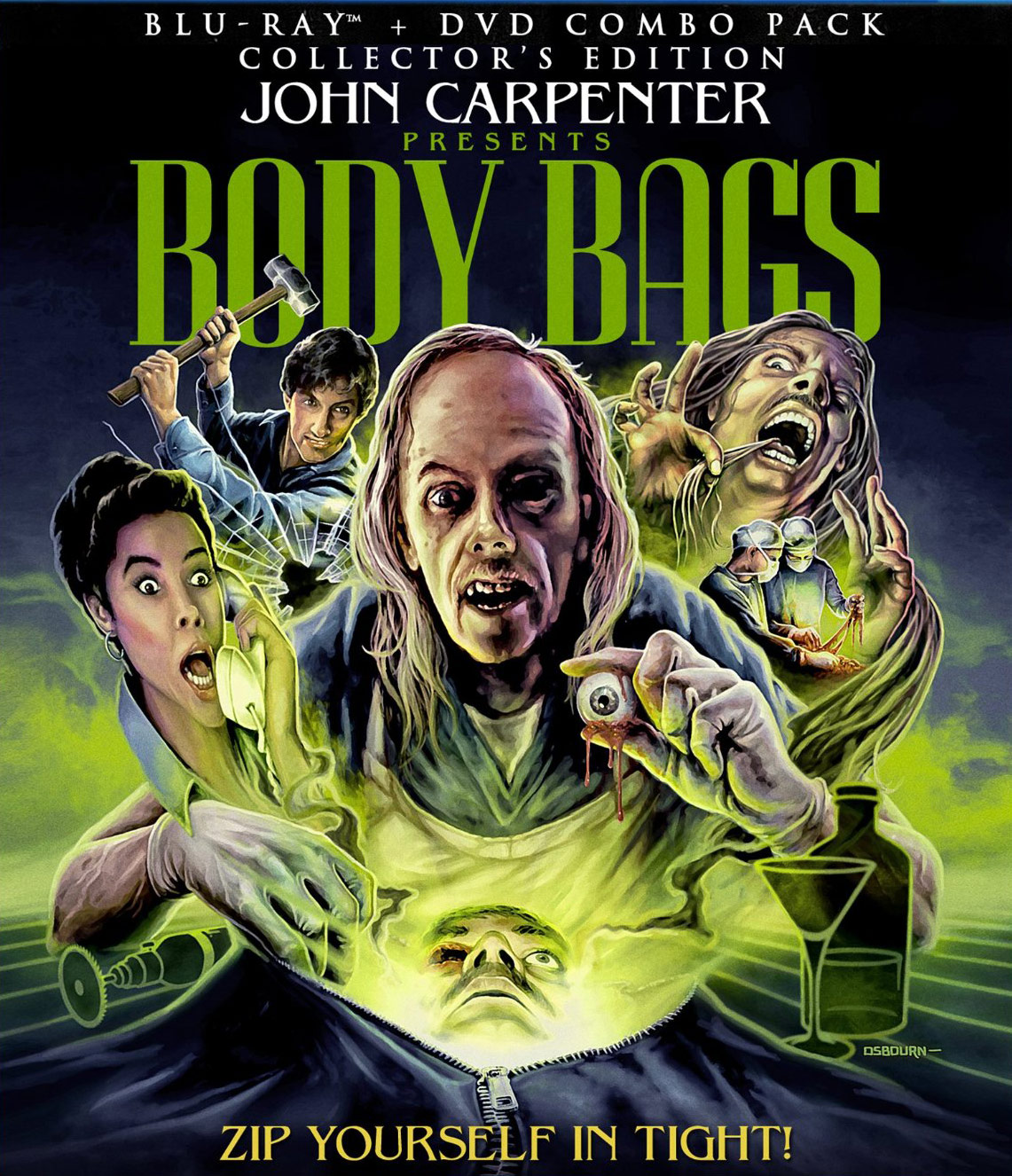
Remember John Carpenter’s “Body Bags?” It was a horror anthology containing three stories: “The Gas Station” which has a female college student working a graveyard shift and getting terrorized by a serial killer, “Hair” about a hair transplant which goes horribly wrong, and “The Eye” where a baseball player loses an eye and gets a new one from a recently executed murderer. Many see it as Showtime’s answer to HBO’s “Tales from the Crypt” as it featured Carpenter as a creepy-looking and deranged coroner who introduces the three stories while drinking formaldehyde as if it were a martini, and it looked like the start of a wickedly demented series. Was it meant to become a series, or was it simply intended to be a single movie? These questions were answered by Sandy King, the producer of “Body Bags” and Carpenter’s wife, when she dropped by Cinefamily which showed 1993 horror anthology as part of its Friday Night Frights series.
King told the audience Showtime originally wanted a 3-story movie and that it was supposed to be a one-shot movie for her and Carpenter. As soon as they were done, they would be off and running to their next project. King remarked how anthology movies were very hard to finance as they were typically not successful at the box office, so bringing one to a cable channel like Showtime made more sense. When it was finished, Showtime then decided they wanted to turn it into a series, but King explained why she and Carpenter decided against it.
“We shot it in California, mostly in Los Angeles, which allowed us to get a lot of the great cameos with Wes Craven, Sam Raimi and Roger Corman,” King said. “Showtime, however, wanted to lower the budget and shoot the series in Canada, and we felt the amount of money they were putting into was not going to be enough to get it right. Plus, shooting in Canada would have made it enormously difficult to get the cameos we got. So, we basically told Showtime thanks, but no thanks.”
“Body Bags” was in many ways a family affair as it involved King and Carpenter working with people they worked with in the past. King had previously worked with Bobby Carradine and Stacey Keach on the Walter Hill western “The Long Riders,” and she had worked with Mark Hamill as well. Peter Jason has appeared in many of Carpenter’s films, and he even used his own car for his appearance in “The Gas Station.” As for the cameos from Craven, Raimi and Corman, she reminded the audience that the horror community is a small and tightly-knit one as everyone knows each other in it.
Carpenter has never seen himself as much of an actor for those who have listened to his various commentary tracks on the movies he has done. After making a Hitchcockian cameo at the beginning of “The Fog,” felt he would be better off behind the camera instead of in front of it. Still, King said she wanted him to play the Coroner in “Body Bags” and that it actually didn’t take much to convince him. She also described Carpenter as an “inner looney” to where he allowed himself to let loose, with the help of Rick Baker’s makeup, on set. Also, Carpenter did not direct himself as the Coroner as King said a friend was brought in to handle his performance and to make sure he hit all his marks. Truth be told, casting him as the Coroner was very inspired.
King said she and Carpenter worked on “Body Bags,” “In the Mouth of Madness” and “Village of the Damned” all in a row. It was originally planned that Carpenter would direct all three stories in “Body Bags,” but as he was already in post-production on “In the Mouth of Madness,” she said Carpenter told her he couldn’t direct all three. To this, she replied, “Okay, we’ll get Tobe.”
The Tobe she was referring to was Tobe Hooper, director of the horror classics “Poltergeist” and the infinitely terrifying “Texas Chainsaw Massacre.” Getting Hooper to direct “The Eye” was a bit tricky as he was very disturbed by the material which had a husband attempting to kill his pregnant wife, but King told him it would be fun and that he could make it work. She also said it was fun to watch Hooper do comedy as he had a cameo at the end with Tom Arnold in which they play two morgue workers who perhaps enjoy their jobs a little too much.
It was great fun to watch “Body Bags” on the big screen and with an audience at Cinefamily, and it was especially nice to see Sandy King drop by and talk about its making and development. She even brought some Shout Factory Blu-rays of Carpenter’s movies to give away, and this writer was lucky enough to win a copy of the one for “Body Bags.” For Carpenter fans, the Blu-ray is a must as it features a great commentary track, a wonderful making-of documentary, and a trailer for the movie as well. It had been out of print for years, and the previous DVD released by Artisan Entertainment gave us a severely edited version which took out a lot of things like Craven’s inspired cameo and some especially gruesome moments. “Body Bags” may not be epic filmmaking, but it sure is a lot of fun for horror fans.
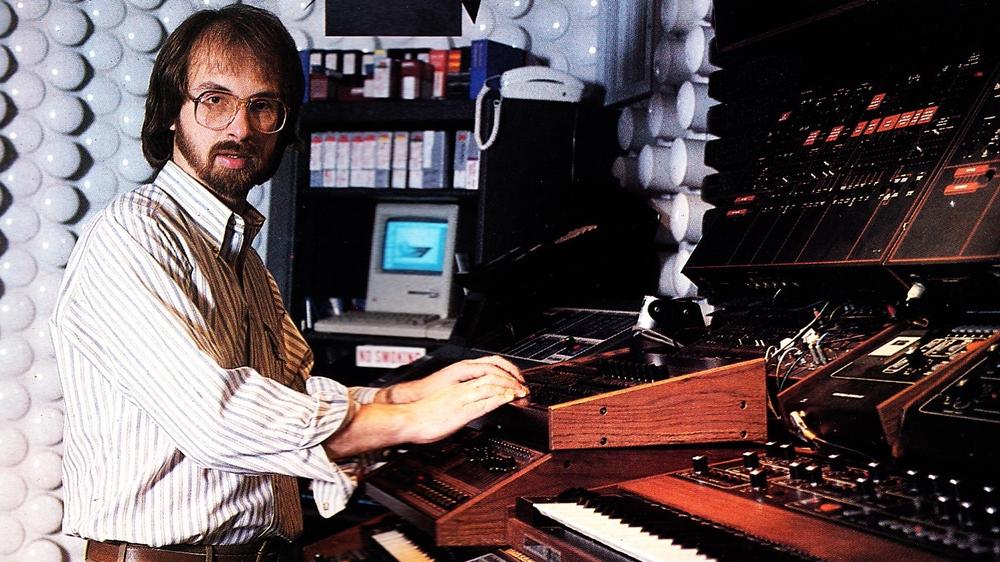
A screening of John Carpenter’s “Assault on Precinct 13” at the Egyptian Theatre in Hollywood brought out a number of guests such as Austin Stoker who played Lieutenant Ethan Bishop and Douglas Knapp who was the film’s director of photography. But the one guest I was really interested to hear from was Alan Howarth, the composer and sound designer who collaborated with Carpenter on a number of his film scores from “Escape From New York” to “They Live.” Howarth even took the time to do a live performance of his and Carpenter’s music, something I never thought I would ever see in my lifetime.
During the Q&A, Howarth talked about how he came to work with Carpenter, their process for scoring his films and his favorite film scores of the ones they worked on together. Howarth wasn’t actually on board for the original “Assault on Precinct 13” though he did work on a remastered version of the soundtrack for it and “Dark Star” for BuySoundtrax.com. It wasn’t until he worked on his first big film when he became inadvertently acquainted with Carpenter.
“I came on board at ‘Escape from New York,’ and that was kind of happenstance because my very first movie, less than a year earlier, was ‘Star Trek: The Motion Picture,’” Howarth said. “I had come on as the sound designer and created the sounds of the Enterprise like the warp drive and the transporters and stuff like that. The picture editor from that movie, Todd Ramsay, his next assignment was ‘Escape from New York,’ so I had slipped him some cassettes and he knew I was a musician. John had worked with another fellow on ‘Halloween,’ Dan Wyman, and there was some change up there, and so literally the guy comes over to my little, rented house in Glendale and set up in my dining room. It was nothing formal. I sat down and I played him a few things and he goes, ‘okay, let’s do it.’ That was it.”
“John always wanted somebody who knew about the technology,” Howarth continued. “In fact, a couple of times I tried to explain to him how it worked and he was all, ‘I don’t want to know that. It’s your job to make it work, make it in tune, and when I push down the note the red light is on.’ So that’s where I started, but he’s a collaborative person. I love working with people. I’m from the bands and rock & roll. I was one of those people. So, it was really great and my first film score was ‘Escape from New York.’”
From there, the two of them worked on several projects all the way to “They Live.” As he continued discussing the work he did with Carpenter, we came to discover he played a larger part in Carpenter’s film scores than we ever realized.
“Next, he went off to do ‘The Thing’ and they wanted to make ‘Halloween II,’ so again John said, ‘I’m going to be busy. You’re going to have to do Halloween.’ Same thing, so I did ‘Halloween II’ and I used his original ‘Halloween’ music, overdubbed it and created new stuff.”
After “They Live,” they seemed to part ways for reasons Howarth never explained, but it gave him the confidence to start scoring films on his own. Of course, he was still eager to get Carpenter’s blessing when it came to a franchise the director never planned to start.
“I found out they were going to do ‘Halloween 4’ and I said to John, ‘they asked me to do this and you’re my buddy and I want to do something with this.’ He said sure, so I wound up doing ‘Halloween 4, 5 and 6’ and that really launched me as a composer which is what I love to do the most, and as we are in a world of economic stasis, I had to do it all by myself. As you see, this is my studio right here. It’s all down to a laptop and a guitar and some recorders when it used to be a million dollars’ worth of stuff. Not that that stuff isn’t valuable, but you can do without it now,” Howarth said.
One audience member asked which of the scores he did with Carpenter is his favorite, and the answer was a little bit of a surprise.
“I think ‘Halloween III’ because it was really an artistic departure for both of us, and ‘Big Trouble in Little China’ is the most produced and has the widest range,” said Howarth. “We had rock and roll and scary things and chases and this whole Asian influence, so it was really a broad scope of things. That’s one of my favorites.”
Like many in the audience, I was eager to hear how Howarth and Carpenter would go about working on a score. Did they start working on it before shooting began? Did they work on it after shooting was finished? Did they think about the music while making the film? We hear how composers spend so much time preparing the perfect score for a movie, but Howarth made his process with Carpenter sound quite simple.
“It’s all one big jam. It’s improvised,” Howarth said. “Sometimes he would come in with a theme in mind. I’d set up the piano before he came over and started something. A lot of it we just made up on the spot. In fact, I introduced him, because I’m a technical person, to the synchronization between a videotape and a tape recorder. It almost seems like we were the first to do it. Before that, everything was done with a stopwatch. So, you would make a cue that was three minutes long and kind of set a tempo, and then you would go back and literally copy it on a Moviola and fool around with the scene.”
“This was the first time you could watch the movie and play at the same time, so he referred to that as the electronic coloring book which made it even easier to improvise,” Howarth continued. “Through that whole period we also benefited from the evolution of electronic music instruments, so from analog synthesizers and a 24-track machine to midi and digital sequencers, these scores had a new installation in the progress of musical instruments, so it’s almost a chronology or a music lesson in the gear.”
Another audience member asked Howarth how long he and Carpenter would jam until they found something they really liked. His answer illustrates how fast these two worked on their music.
“We did a cue a day,” Howarth said. “One quote I always get from John, and it’s just really true, he said, ‘Alan if you want to be a director you only need two important words, yes and no. Just be very decisive. Even if you say no today or yes today and tomorrow, you change your mind. You got twenty or thirty people that are taking direction, and you don’t want to leave them in a lurch, so it’s better to just be decisive.’ So, it was a couple of times we did something and came back and said that wasn’t working, but it wasn’t very often.”
Having worked in movies and music all these years, Howarth clearly has a wide knowledge of musical instruments and electronics. When asked what he would consider as the go to synthesizer, Howarth’s answer shed some light on how far musical technology has come over the years.
“I chose all the gear and I arrived at being a fan of the Prophet 5,” Howarth said. “It sounded good, but the other reason was that it was the first programmable synthesizer. Prior to that, you had to literally make little diagrams of where all the knobs and switches were to get back to the same sound, so this was the first time you could do something and save it. That really moved things forward a lot, and I brought in the programmables and the sequencers.”
One big question many had about the music Carpenter and Howarth worked on was the score to Carpenter’s remake of “The Thing.” This was Carpenter’s first big studio movie, and it allowed him to work with his all-time favorite composer Ennio Morricone. However, when you listen to the score, some it sounds like it was done by Carpenter and Howarth, and this is especially the case with the movie’s main theme. Howarth went into detail about who really composed the score to “The Thing.”
“They (Carpenter and Morricone) took a meeting, and he (Morricone) saw a little bit of the footage and he scored his score,” Howarth said. “He comes back and, of course, how does John talk to his hero about what just went down and where he wants to go? And there’s a translation issue between English and Italian and all this other stuff. So John played the stuff we did for ‘Escape from New York’ and he says, ‘Can you do something like this?’ Ennio goes back for a second pass now with keyboards, and that’s where ‘The Thing’s’ theme came from. So it’s Ennio Morricone doing John Carpenter really. At the very end after all that, there was one more pass on about four or five cues where John came over for just an afternoon and we did some cues that kind of sound like ‘Christine’ that you can tell is basically our synth stuff. So basically, it took three scoring passes on the show to get it.”
It was a real treat to have Alan Howarth talk about his musical collaboration with John Carpenter. The film scores they worked on are among my favorites of all time, and I never get sick of listening to them. Howarth continues to work as a film composer, and his more recent credits include scores for “Backstabbed,” “The Dentist” and “House at the End of the Drive.” Here’s hoping we get to hear more scores from him in the near future.








 The Ultimate Rabbit