John Krokidas and Austin Bunn Discuss ‘Kill Your Darlings’
WRITER’S NOTE: This interview took place back in 2013.

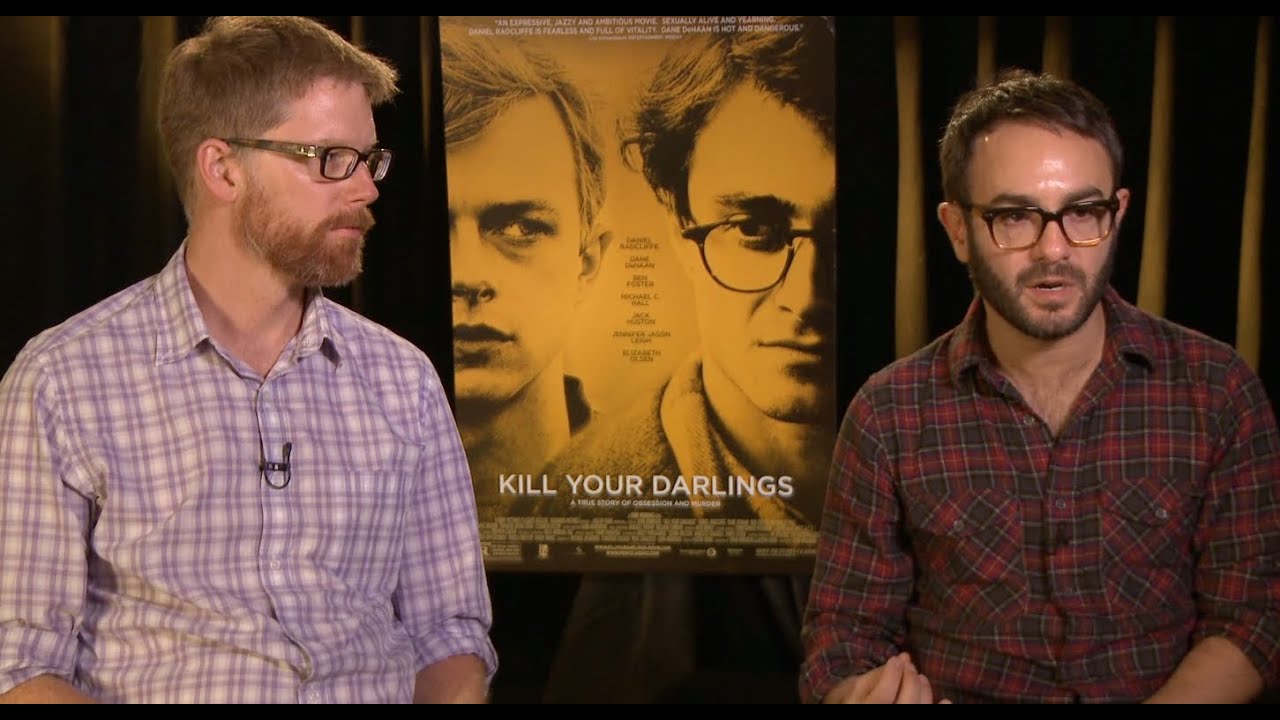
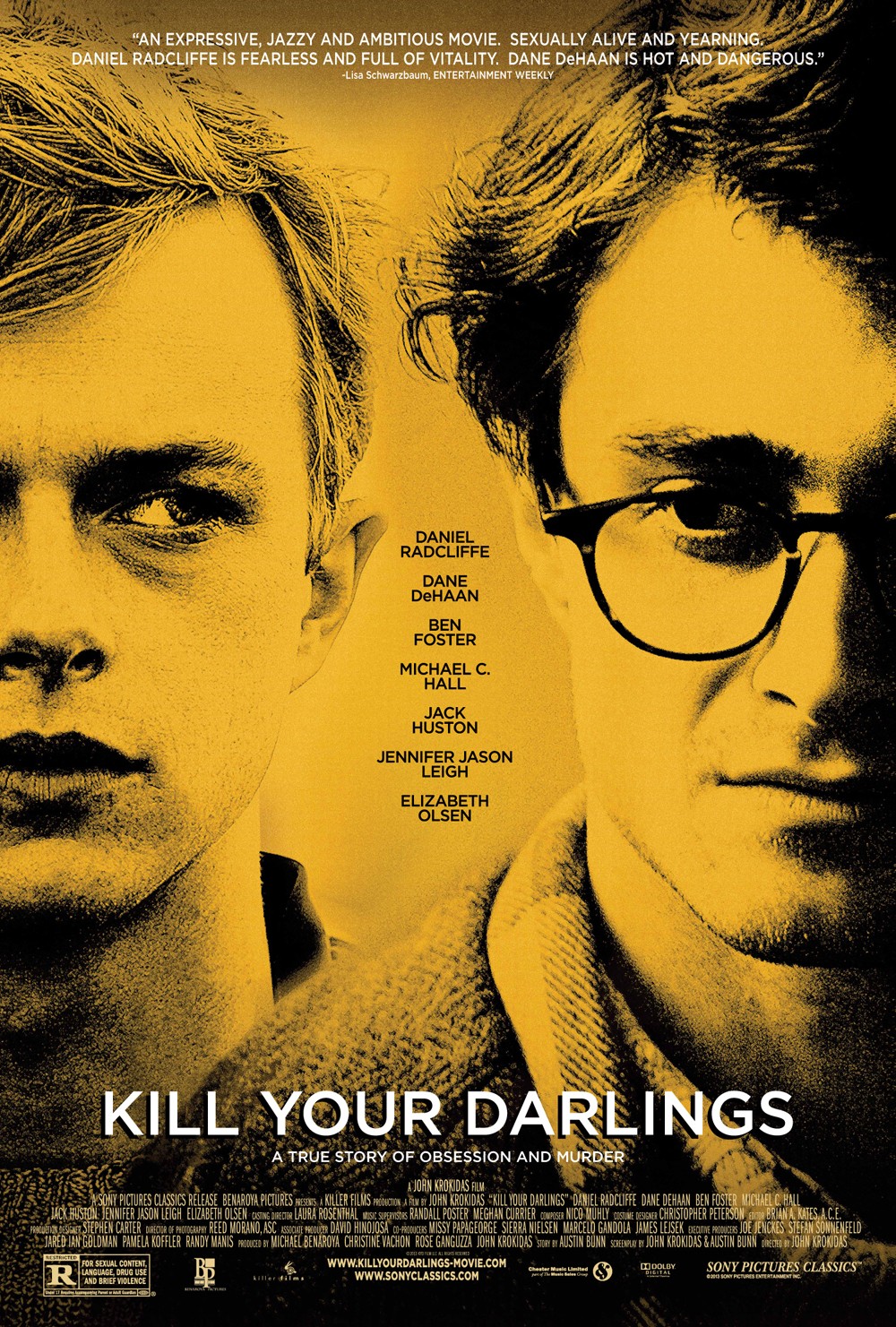
John Krokidas makes his feature film directorial debut with “Kill Your Darlings” which stars Daniel Radcliffe, Dane DeHaan and Michael C. Hall. The movie is about a murder that occurred in 1944 which brought three poets of the beat generation (Allen Ginsberg, Jack Kerouac and William Burroughs) together for the first time. Radcliffe portrays Ginsberg as a 17-year-old who is about to start college at Columbia University, and he ends up falling under the extroverted spell of fellow classmate Lucien Carr (DeHaan) who introduces him to the poets who would later bring a new vision to writers everywhere. It is when Carr murders his love David Kammerer (Hall) that their relationship starts to become unglued.

Krokidas co-wrote the script for “Kill Your Darlings” with his Yale University roommate Austin Bunn. A former magazine journalist, fiction writer and reporter, Bunn graduated from Yale and went on to get his master’s degree at the University of Iowa Writers’ Workshop. As for Krokidas, he later attended New York University’s Graduate Film Program where he made the short films “Shame No More” and “Slo-Mo.”

I got to hear how Krokidas and Bunn made the film under challenging circumstances when they appeared at the “Kill Your Darlings” press conference held at the Four Seasons Hotel in Los Angeles, California.
Question: What was the division of creative responsibility between you two like?

Austin Bunn: Probably like a lot of people in this room, I discovered the beats in college. I used to go to the campus bookstore and just track down the poetry collection, find Allen’s books and read them like they were some secret transmissions from the future version of myself. I was a closeted, young creative writer from New Jersey so Allen Ginsberg’s work meant the world to me. So, I had this really strong connection with Allen and of beat biographies and the history. I read a lot of the back catalog and I had come to John with the idea. So, in terms of the division of responsibility, I would write the first draft and then John would come in. The thing about John, as you will soon learn, he wanted to raise the emotional decibel level in every scene. John is one of the most riveting and vital and least hagiographic version of this story. We didn’t want to take the beats’ greatness as a given, so John sort of demanded that we write a really emotional roller coaster. Then we just went back and forth. John talks about it as the Postal Service, like the band version of producing a script. We were living in different cities at the time; I was at the University of Iowa Writers’ Workshop as a graduate student and John was in New York finishing film school.

John Krokidas: Austin wanted to do this as a play first. He was a playwright and a short story writer of some renown, and we were college roommates and we shared ideas with each other as college roommates and good friends do. But I, of course, started seeing the movie version in the back of my head and I had just gotten out of NYU film school and started convincing him that the play would be really flat and undramatic, but as a movie…

Austin Bunn: The Jedi mind trick!

John Krokidas: This would be amazing. But I would say I’m the structure guy I think, coming from NYU’s film program. I’m very traditionalist in terms of Sidney Lumet’s “find your spine,” and Austin is really wonderful with character and dialogue. If anything, he’s on a religious crusade against expository dialogue, and I would write these three paragraph monologues for each character expressing their emotion like that scene where Jennifer Jason Leigh finally turns to Allen to give him advice. I had a two-page monologue version and Austin crossed it all out (Austin laughs) and wrote the one line that’s in the movie, “The most important thing your father ever did was fail me,” which said everything.

Question: The movie is also very visual too because of the beats’ energy and such. How did you go about creating the look with cinematographer Reed Morano?

John Krokidas: I’m so proud of what we brought to this film. The movie is set in 1944 and it’s a murder story. Even in the writing process, I looked up and saw that “Double Indemnity” won Best Picture that year, and it was the year of “Laura” and “Gilda” and all these great American Film noirs. So, I said, “Why don’t we incorporate this even in just the fabric of the movie and start with the jail scene in a place of heightened tension flashback to more innocent times, and then build again to see whether or not these characters can escape or not escape their fate?” So, I started looking at noir style at first, but I thought an academic recreation of Film noir, who wants to see that? Going back to spine and theme, I thought what this piece was really about was young people finding their voice. So, what about going from conformity, the row houses of New Jersey and the pillars of Columbia, to nonconformity? And of course, where film noir went in the hands of the French was the New Wave. So I thought, “Okay well let’s start off with these controlled, composed, expressionistic-lit shots, and then as the boys go down the rabbit hole together, let’s take the camera off the tripod. Let’s get some jazzier free-form style.” So, I made this book of the 1940s. I had learned that Ang Lee, for “The Ice Storm,” did a 50 page book on the 1970s with colors, fonts and important historical events, you name it. So, I did that with the 1940s and then gave it to Reed. The great thing that I have learned on this is you can do all the academic treatises you want, but then you hire great people. She saw the goal post of what I wanted and then she showed me Jean-Pierre Melville’s films. She showed me films that meant a lot to her and then let kind of what I wanted filter through her own imagination. What I am amazed by specifically in her work is we did this movie in 24 days. Each scene was done in two hours or less, and she has the instincts to be like a documentary camera person and is able to light like that at the same time. We wanted to make sure this film felt relevant and contemporary as opposed to just being a traditional biopic.

Austin Bunn: (We didn’t want it to be) the greatest hits version of their lives.

John Krokidas: It was looking at Ryan McGinley photographs and contemporary, counterculture, young images of today and then finding what connected them to the 1940s. What was resonant in counterculture then and today at the same time.

Question: What was the direction that you were giving your actors? We were told that sometimes you would pull them aside for a more dramatic scene, but was there a consciousness you went into to direct the film and the actors? Were they any kind of specific kind of notes you gave them?

John Krokidas: Here’s the embarrassing story; Austin and I actually met freshman year because we were both acting in a production at Yale of “The Lion in Winter.”

Austin Bunn: Yes.

John Krokidas: Neither of us were the greatest actors in the world which is, I think, why we went into writing and directing. But I trained as an actor as an undergraduate and what you learn is that each actor has their own method and way. It’s whatever it takes for them to get the emotions to the surface. So, when I met with each actor that I cast, I would just simply ask them, “Have you trained? How do you like to work and what don’t you like?” Michael C. Hall gave me one of the greatest lessons in directing in which he said, “If what I am doing is not making you happy, don’t tell me that because that will make me self-conscious and it will make me think about what I’m doing. Just tell me to add whatever you want to what I’m doing.” That’s just a great lesson for life. Dan and I, when we were working together, we spent time before production (he was so generous and hard working on this) and he wanted to approach this like it was his first film which was very poignant to me. I said, “Would you like to try learning a new method and approach acting in a different style?” He said, “Absolutely!” So, with Dan, he’s so bright and in his head, and for the intellectuals Meisner works really well in focusing your action on what you are trying to do in the scene. Dane had trained extensively, and what he does is create a Bible for the character and does tons of research before production. Then he burns it and starts really becoming the character on set. Ben Foster (who plays William Burroughs) has something I’ve never seen another actor do which is, once we’ve basically got the scene up on its feet, he goes and he does the blocking of the scene by himself in the location several times. He calls it “the dance” because once he’s memorized the dance and knows the physicality (“I need to pick up the fork here, I need to put it down there”), he doesn’t have to think about it anymore and that’s completely freeing to him. So it’s like cooking this huge seven course meal where you have to get everything done at exactly the right time, but every plate needs a little bit of love in a different way. To me the greatest thing was being able to get this dream cast and then just to work with them to find how they like to work and what got the best out of them.

Austin Bunn: John had a really intuitive idea which was to keep the actors from reading past this point in the biographies, so none of the actors came in burdened by the mythology of who these guys would become. They were just 19-year-old kids. So, I think that was really smart and it released the actors from having to play the later decisions in their lives and the kinds of writers they would become. They just got to be young people, and that was a great relief I think for them.

John Krokidas: Yeah, and for us too as writers. I had a talk with Jack Huston once when he and I shared the same room and I’m saying, “Oh my god, I’m directing you as Jack Kerouac.” But we were like, “No. You are Jack who is a college student on a football scholarship who hates the other jocks, who just wrote a book which he thinks might be completely trite and he just wants to get out of college and have some real-life experience and join the war so he could begin to have real material to write his next book. That’s who you are.” That just liberated all of us.

Question: When writing the script, how much are you tied to the truth and how much are you allowed to take creative license?

John Krokidas: We did so much research for this. We felt we had to, and I think part of it’s our academic background because there’s so much in the biographies. There are so many biographies of them out there, but then also we would find different accounts online for example from David Kammerer’s friends. They said that that relationship between him and Lucien was never portrayed accurately and that Lucien actually kept coming back to David and David was asking him to end the relationship. And then we may have broken into Jack Kerouac’s college apartment together. We did the trick of pressing all the buzzers and then somebody let us in. But what’s interesting is Columbia students were living there and they had no idea that they were in Jack Kerouac’s apartment. So, we physically went to all of the locations in which this movie took place, and that just helped inform our writing process as well; getting to be able to visualize the actual spaces. Add to that, we went to Stanford University to the Allen Ginsberg archives. It wasn’t about the lack of material out there. If anything, it was about making sure that we really just focused on who they were up until the point which the movie takes place.

Austin Bunn: Just to add to that, the people that I know that have seen the film have been really surprised at how much is actually totally accurate. The day after the murder, Allen Ginsberg went to the West End Bar, “You Always Hurt the One You Love” was playing on the jukebox and he wrote the poem that ends the film. It ends with “I am a poet;” that is a line from August 20, 1944 so we worked really hard to weave it in. But like John was saying before, we didn’t want to do the dutiful, stuffy, every box checked kind of biopic that has been around for a while. We wanted to do something that felt more in line with the spirit of the beats that was more specific and honest and transgressive, and I hope we got there.

Question: Did you two have a specific goal of what you wanted to portray and what you wanted the audience to leave with either of the time or of the characters themselves?

John Krokidas: What I want the audience to leave with is that feeling of when we were 18 and 19 years old just like these guys were in the movie; when everything seemed possible and you knew that you had something important to say about with your life. That you wanted to do something different and unique and not just what your parents taught you, not just what school taught you, but you wanted to really leave your mark on the world. The fact that after the movie these guys actually did it and created the greatest counterculture movement of the twentieth century is amazing. I have had plenty of people come up to me after seeing the movie and said, “This movie made me want to be a better writer” or “this movie made me want to go back and start playing music again.” That to me means everything. That’s ultimately, deep in my heart, why I wanted to make this movie.

Austin Bunn: The pivot point was this murder. I loved Allen Ginsberg for his openness and his honesty, and to think that at one point in his life he was called upon to defend his best friend in an honor slaying of a known homosexual, the very thing that Ginsberg went on in his life to defy and radically create change about the idea of being in the closet and the shame around that issue, that contradiction was really exciting to us dramatically.

John Krokidas: You know this movie took, from the time that we started talking about this until the time that we are getting the chance to be with you all today, over 10 years to make. When I really think about it, the thing that kept me going and kept me wanting to tell this story is that there needs to be something that pisses me off at night. The fact that in 1944 you could literally get away with murder by portraying your victim as a homosexual, that pissed me off to no end. This isn’t a political movie and it’s one scene and it’s obviously what informed how Lucien Carr got away with murder, but for me that was the thing that kept me up all night that said, “No, I have to tell the story.”

Question: The movie has different kinds of music playing throughout it like jazz and contemporary music. Did you envision using different musical styles when it came to making this movie?

John Krokidas: I originally wanted a bebop jazz score similar to Miles Davis’ score for Louis Malle’s “Elevator to the Gallows” because the transition from swing to bebop at this time was exactly what these guys wanted to do with words; to go from rhythms to exploding them into something beautiful. My music supervisor, Randal Poster, said to me, “John put down your academic treatise, put down your paper. Go make your movie. Your child’s going to start becoming the person that he or she wants to be.” So I went and I made my movie, and then I put jazz music on the film and it didn’t work at all. And then I went and did only period accurate music and it felt like Woody Allen’s “Radio Days” which is a great movie but it’s not the young rebellious movie about being 19 and wanting to change the world that we wanted to make. So, I actually went back to the playlists that Austin and I used a while writing this movie and I used Sigur Rós and stuff that was timeless but contemporary, and it brought the movie to life. Then I realized that the composer Nico Muhly had arranged all of those albums and worked with Grizzly Bear and Björk and other people that we were using as temp track. So, we got the movie to Nico and just thankfully he loved it. Now that I knew that I had contemporary music in a period film, then we get to that heist sequence. I had heist period music on it, it was so corny. The sequence didn’t work, it didn’t have any stakes to it, and I can academically tell you when the beats come on, they led to the hippies which led to the punks, and the punks led to Kurt Cobain and the 90s, etc. But the truth is that while I can intellectualize it, you go with what’s visceral and what feels honest and true to you. For me, the biggest lesson in making my first film is to do all of your homework, do all your research, know what you’re doing, but then don’t be afraid to get out of the way if your movie starts to tell you what you should be doing.

Question: How did you decide on what literary quotes to put in, and how did you work with the actors in establishing the cadence and the elocution on those?

Austin Bunn: What a great question! If you know any of the beat history, this new vision was real for them and they have written volumes about it, none of which makes any sense. We couldn’t make heads or tails of it.

John Krokidas: Do you all remember your journals when you were 20 years old or those conversations you had at three in the morning with other college students? We got to read their version of it, and there’s a reason that we hide all of our journals and don’t let them see the light of day.

Austin Bunn: It was challenging. With the uninhibited, uncensored expression of the soul, that’s actually a credible quote directly from the Ginsberg new vision manifesto. So in some ways we knew we had to distill some of that material from the Ginsberg journals to help make the argument for how valuable this manifesto was and the irony honestly of what transpires in the plot which is the very thing that Allen’s called to do which is to create this censored version of history. But in terms of the poetry itself, it was really challenging because as we all know there are movies about poets and writers where recitations happen and they are really flat and they can be corny and there’s a time where you tune out of the movie when you’re waiting for the poetry to end. Specifically, I think of Allen’s first poem that happens on the boat. We were really challenged to find a poem that would speak to audiences but was genuinely an Allen Ginsberg poem written in his voice. So what we had to do was really channel Allen. His early work is quite rough and burdened by trying to impress his dad and his professors. John had the concept of this isn’t a poem that he’s just reading to impress people, it’s a poem he’s reading to Lucien Carr. The audience knows that, you know that and Lucien finds it out on the boat at that moment. That really gave me permission to kind of rethink what the poem was going to do and how we would make it, so we came upon Allen’s method which was kind of magpie; stealing from the American vernacular and going out and finding common speech and repurposing it, creating this Whitman-esque inclusion. So you hear in the poem things that you’ve already heard in the film just like Ginsberg did himself. Things like Allen in wonderland is reworked in the poem, unbloomed stalwart is the very thing that David said to him at the party. So we’re kind of hopefully paying off not just a poem that is emotionally powerful, but also something of the method that Ginsberg would use for the rest of his life.

John Krokidas: Radcliffe was such a hard worker. While he was on Broadway doing a musical, we would meet once a week for two months before even preproduction and rehearsals began to work on the accent and to work together. I have him on my iPhone reading “Howl.” We didn’t look at the later recordings, we looked at the earliest vocal recordings possible of Allen Ginsberg to make sure that we weren’t capturing the voice of who he became, but his voice at that time and what his reading voice was like. To be honest, it’s just really telling the actor, “You’re not performing a poem. You are letting Lucien know that he is loved with this poem and that you love him and that you can see inside him.” It’s playing the emotion underneath the poem which was the direction.

Question: What does it do for you when all the main characters are gay? Normally you got the female characters who can be a love interest but they are not going to be a rival. Usually, even now in films and in life, there is a separate role where as if you are all the same gender, you can all be anything to each other.

John Krokidas: I think this is a movie with every character is discovering what their sexuality is (gay, straight, bi or all over the place), and more importantly whether or not they are worthy of being loved. I personally don’t know if Lucien Carr was straight or gay, and to me it’s irrelevant because I have seen this relationship play out amongst gay people I have known so many times where an older man who is gay and a younger man of questionable sexuality develops such a close bond. The stereotype I think would be is that the young man had an absent father figure or finds the older man’s confidence and just the care and nurturing qualities of them very attractive. What happens though is that those two get so intimate that ultimately there’s nowhere else to take the relationship but sexual, and when that happens then the power position in that relationship twists and the younger man suddenly realizes that he holds the power because he’s the sexually desired one. That’s where a lot of conflict ensues. Whatever you read about that relationship between Lucien and David, everyone knew that they were codependent. Everyone knew it was toxic and going to end badly. Nobody knew it was going to end in murder.

Austin Bunn: I think a lot of the biopics we see are kind of denatured of their sexual qualities and the edginess of the relationships in them. So, I think we were trying to do something that restored some of that ambiguity, lust, desire and confusion that is genuinely in the beats’ history. We were not making that up.

Kill Your Darlings” is available to own and rent on DVD, Blu-ray and Digital.
‘Dolores Claiborne’ – A Stephen King Horror Tale of the Real-Life Kind

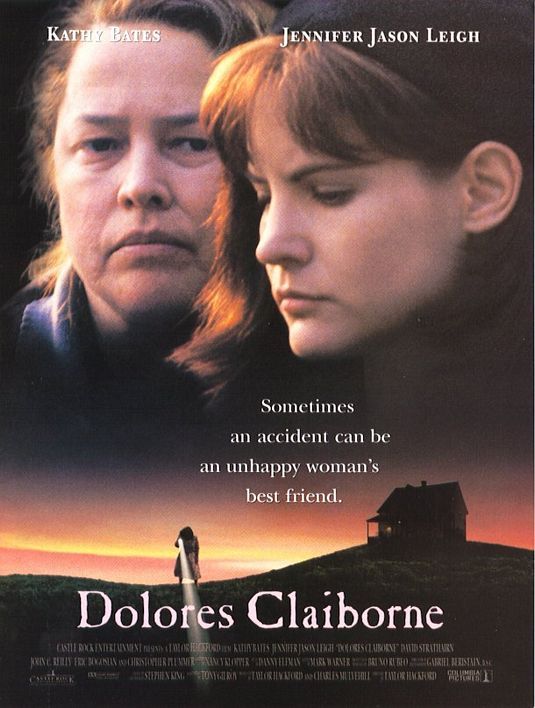
Dolores Claiborne” is, on the surface, not your typical Stephen King novel, and this is important to note before you begin watching this particular adaptation of his work. This cinematic treatment reunites him with the great Kathy Bates who won an Oscar for playing Annie Wilkes in “Misery,” but she’s not playing a deranged psycho this time around. Also, while much of King’s writings deal with terrifying supernatural powers and unspeakable terrors, the horror generated here comes from real life horrors no one should ever have to endure. In some ways, this makes it one of his more terrifying tales because it deals with the kind of horrible crimes we hope and pray never to experience first-hand. Having said this, it is clear how many of us can never be so lucky as to avoid the worst traumas humanity has to offer.

Bates plays the title character who, as “Dolores Claiborne” opens, is believed to have killed her rich employer Vera Donovan (Judy Parfitt). This crime immediately reminds the town of Little Tall Island in Maine when Dolores’ husband, Joe (David Strathairn), died twenty years ago under mysterious circumstances, and the general consensus was that Dolores killed him. Detective John Mackey (Christopher Plummer), who had pursued the case against her back then is determined to put her behind bars this time and for good. Into this mix comes Dolores’ daughter, Selena St. George (Jennifer Jason Leigh), a big-time reporter who arrives to defend her mother despite the two of them having been estranged for over a decade.

The novel “Dolores Claiborne” was essentially one long monologue as the story was written entirely from the title character’s point of view. This makes the work director Taylor Hackford and screenwriter Tony Gilroy have done here all the more impressive. They have taken Dolores’ unsettling story and have stretched it out into a character driven motion picture filled with various characters who have been fleshed out in unforgettably compelling ways. None of these characters, even that drunken lout of a husband and father, are one-dimensional or throwaway caricatures. Each one is complex, and they take unexpected directions which might seem jarring at first, but eventually make sense in the large scheme of things.

The plot shifts back and forth in time as we flashback to when Dolores lived with her drunk and abusive husband and of the vicious abuse she took from him in his endlessly drunken state. Director of photography Gabriel Beristain shoots this hideous past with such vivid colors to where he gives the scenes an innocent look which is soon contrasted with horrible violence. It almost acts as a façade for how the past was seen as if it were some sort of Norman Rockwell painting, the kind made to cover up the severe family dysfunction many would like to pretend does not exist.

For the record, King said he wrote the character of Dolores Claiborne with Kathy Bates in mind, and it is very hard to think of another actress who could have inhabited this role. Stripped of any false glamour, Bates takes her character from being a victim to one who understandably takes matters into her own hands. Her acting here is flawless and compelling, and we root for her even though her actions have devastating moral implications.

When you look at her overall body of work, this movie almost seems like a walk in the park for Leigh. She has gone to great physical and emotional lengths to portray a character throughout her long career, but here it looks like she is taking it easy. However, her character of Selena is no less challenging to portray than the others listed on her vast resume. Selena is not easily likable, but she has to be empathetic because the viewer slowly starts to see how her innocence was irrevocably and unforgivably destroyed. Leigh matches Bates’ performance scene for scene by showing how much Selena wants to forget the past, but she comes to see how her most repressed memories cannot stay below the surface forever.

Special attention also needs to be paid to Ellen Muth who portrays Selena as a little girl. This is not the kind of role parents want their children to portray to as it deals with abuse and molestation among other things, but Muth proves to be utterly convincing in making the young Selena deeply distraught and confused by actions no child should ever have to be put through.

There’s also a bevy of excellent performances from the rest of the cast as well. Christopher Plummer, who is never bad in anything, is memorable as the relentless Detective John Mackey. This could have been a throwaway role, but Plummer makes Mackey a complex character to where you question whether his determination is based more on personal revenge than justice. Judy Parfitt is unbearably domineering as Dolores’ wealthy employer, Vera Donovan, and their relationship runs much deeper than we see at first glance. And David Strathairn manages to flesh out his despicable character of Joe St. George to where he’s just slightly more than your average mean drunk.

Most of King’s novels deal with the horror of supernatural elements or ghosts and demons which haunt our nightmares. But “Dolores Claiborne,” much like “Stand by Me,” deals with the horrors of real life which we are never quick to confront unless we are put in a position where the awful truth can no longer be ignored. Perhaps the unsettling nature of this particular work by King is what kept many from checking out this motion picture when it arrived in movie theatres back in 1995, but those of us who were willing to dive into the dark side of things like myself did not deny ourselves a journey to the horrors this film has to offer. But now, 25 years later, this film fits in perfectly with a time which includes the Time’s Up movement as we are forced to realize we have thoughtlessly ignored the worst abuses made against other human beings for far too long. As a result, this particular King cinematic adaption plays even better than it did back when it was released.

* * * ½ out of * * * *

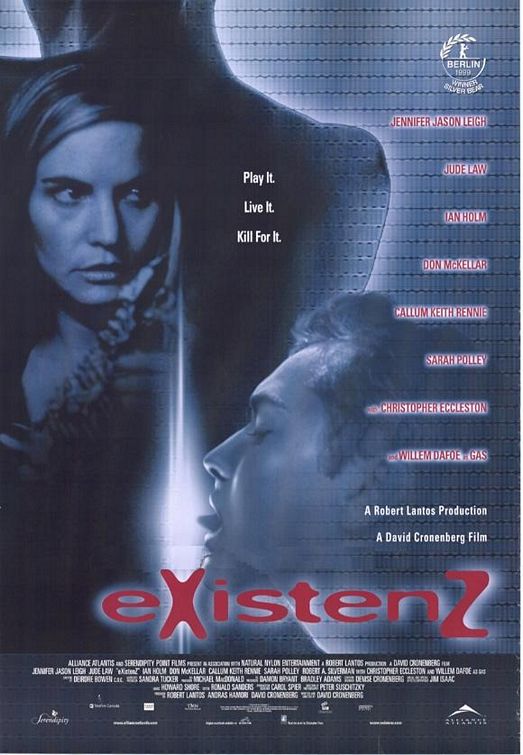
Underseen Movie: David Cronenberg’s ‘eXistenZ,’ a Cerebral Version of ‘The Matrix’

David Cronenberg’s “eXistenZ” is a film I like to describe as being the cerebral version of “The Matrix.” It gets you to question the reality the characters are in all throughout the movie, and it continues Cronenberg’s exploration of the blurring line between reality and fantasy. With “The Matrix,” it was clear what was real and what was not. But with “eXistenZ,” you can never be sure what is truly real, and its ending will leave you guessing for a very long time. But to quote the title of a certain U2 song, one has to wonder if everyone here has found something which is even better than the real thing.

“eXistenZ” stars the always awesome Jennifer Jason Leigh as Allegra Geller, a well-known game programmer who we first see about to try out her latest game which is said to be like no other. While most new game consoles come in these big metal boxes, Allegra’s box is more of an organic creation as it looks like a sizable piece of human skin which looks to be living and breathing when activated. To play the game, you have to hook a cord, one which looks eerily like an umbilical cord, into a port in your back which connects the game to your spine. Like many a Cronenberg movie, “eXistenZ” deals with the degradation of the human body as well as the human soul.

In the course of testing out the game to an excited crowd, Allegra is nearly assassinated by a man who is intent on eliminating what he sees as a threat to reality. From there, it becomes clear a war has begun between those who want to preserve reality by destroying the gaming industry, and those who want to preserve games and see them be taken to another level of advancement. Allegra is forced to go on the run, and coming along with her is a young marketing trainee, a shy nerd of a man named Ted Pikul. Pikul is played by Jude Law, and it is a role no one could probably see him playing these days. Ever since he showed off his tanned body on the sunny shores in “The Talented Mr. Ripley,” he has become a sexy god to so many. There’s nothing sexy to this character he plays here or, at least, not right away.

In the course of the attack, Allegra’s gaming pod is damaged, so she has to play the game to see what needs to be fixed. She encourages Ted to play it with her, but he is not terribly enthusiastic about doing so as he is a virgin to these kinds of games. He has never played them before, and he does not have a bioport in his back which is essential to playing the game. Moreover, he does not like things like bioports or needles being inserted into his body. But Allegra eventually encourages him to play along, and he does get a bioport jack hammered into his back courtesy of Gas (the always reliable Willem Dafoe). From there on out, Allegra’s and Ted’s voyage through the game will challenge their perceptions, and it has them wondering where they really are in all of this.

I remember seeing “eXistenZ” at an art house movie theater in Orange County when it was first released. Along with the characters, I was ever so eager to experience what they were experiencing when they played this game. While it felt like it took forever to get to their game experience, it turned out to be nothing like I could have ever expected.

With our infinite advancements in technology, the story is now far more frightening than ever before. Cronenberg is questioning how far we will go in our pursuit of the high which is virtual reality. Once we have experienced the game, will we even want to leave it? Will it make our “normal” reality feel more unreal? Everyone seems to be stuck in jobs they hate but have to work at, and they always dream of a better life for themselves which they constantly wait for instead of making it actually happen. Could this be accomplished through a game? Maybe not, but with the way technology continues to advance, anything is possible.

The other fascinating thing about “eXistenZ” is how it looks at the moral boundaries these characters cross. The games we play on the latest PlayStation or Xbox console seem to have this effect, but we can easily see we are indulging in a fantasy which makes everything okay. But as the line between reality and fantasy blurs all the more, the consequences seem all the more brutal and fiercer, and these characters end up crossing a line they can never undo. When we cannot tell reality from fantasy, how can we justify the horrible things we do to others?

Cronenberg’s movies have a look all their own, and “eXistenZ” has his signature touch throughout. What other director could come with an organic pod for game playing, or with a gun made out of animal bones with teeth used as bullets? Even in the game the characters are playing, the violence is still pretty vicious, and no death ever looks pretty. This is also typical with Cronenberg’s movies as we see faces blown off to where certain people look like Harvey “Two Face” Dent from “The Dark Knight.

Leigh and Law are always terrific in just about everything they do, and their work in “eXistenZ” is no exception. Leigh, who usually plays characters who are anything but pretty, is an alluring presence throughout as she not only manages to seduce Law, something which cannot be all that hard to do, but she also succeeds in seducing the audience into the world her character inhabits. This is what her performance needed to accomplish in order to make this film work, and it should make one admire her acting skills all the more.

If “eXistenZ” were made today, I’m not sure we would be seeing Law in this role as he would probably seem too cool to play such an awkwardly social character. People get used to seeing you in a certain way, and it can get to where no one wants to see you as anything else. It’s a shame because Law truly is a great actor, and seeing him go against type here as a man who has to overcome his phobias and aversions in order to play the game and help Allegra is endlessly enthralling. The effect it has on him is immense as it unlocks unconscious desires which quickly rise to the surface. Law portrays this evolution of his character very effectively, and he has great chemistry with Leigh from start to finish. Heck, is it possible for Law to not have good chemistry with any actress?

The ending of “eXistenZ” will leave you with more questions than answers. This may frustrate a lot of audiences, but Cronenberg has not always been one to give you conclusions which tell you all you need to know. You come out of his movies thinking about what you have just witnessed, and this makes his work stay with you long after the end credits have concluded. It is not an action-packed film like “The Matrix,” and you won’t see a lot of actors wearing skin clad leather costumes and wearing cool sunglasses here, but this movie stands on its own as an examination of where technology is taking us. Like “Videodrome,” it threatens to be a very prophetic film as we head further and further into the new millennium with technological discoveries which put us into the action and other realities more than ever before.

We are still all on a search for something which is even better than the real thing, and it’s never gonna stop. But after watching “eXistenZ,” I am reminded of the need for limits on things as many, especially in America, continue to act like children instead of being the adults they have been for some time. Facts should be indisputable, but a reality other than our own is always far more appealing than what our current existence resembles.

* * * ½ out of * * * *

Amy Heckerling Looks Back at Fast Times at Ridgemont High

WRITER’S NOTE: This article is about a screening which took place back in July of 2011.

It is very scary to realize “Fast Times at Ridgemont High” is now at its 30-year anniversary. Although dated stylistically, what the students went through in this movie still feels very relevant to what today’s generation goes through on a regular basis. Based on the book by Cameron Crowe, who also wrote the screenplay, it follows a group of students during one year at a San Diego high school. Its director, Amy Heckerling, dropped by the Aero Theatre in Santa Monica to talk about the behind the scenes stories, and she was greeted by a sold-out audience.

“Fast Times at Ridgemont” is notable for its frank depiction of teenage sexuality and in dealing with highly sensitive topics like abortion. Heckerling said the movie was shot at a time when things were rapidly changing. The sexual revolution was ending and the era of Ronald Reagan was on the rise along with conservatism. Most teenage comedies deal with situations from the male point of view, but Heckerling was adamant about the audience seeing things from the woman’s perspective. The MPAA, however, forced her to cut scenes like when a girl talks to her mother about blow jobs in order to avoid an X-rating. After all these years, the hypocrisy of the MPAA never ceases to amaze me.

These days, the movie is known for having three future Oscar winners in its cast: Sean Penn, Forest Whitaker and Nicolas Cage, who is credited here as Nicolas Coppola. This is not to mention all the other cast members like Jennifer Jason Leigh and Phoebe Cates, both of whom went on to other successful efforts after this movie’s release.

Heckerling recalled coming into this movie at what she called an “awesome” time. Casting young kids in a movie proved to be tricky, but she loved how there was so much great talent to choose from. When asked if she thought all great actors could do comedy, Heckerling replied some have it in their makeup while others do not. In working with Penn, she said he is wonderful in everything he does, and his smile always lights up whatever room he is in.

In talking about the soundtrack, Heckerling wanted to fill it with 1980’s music and songs by Oingo Boingo and the Go-Go’s. While she got to include the songs she wanted in the movie, she was also forced to add in a lot of 1970’s rock music from bands like The Eagles. This was in large part due to one of the movie’s producers, Irving Azroff, being the personal manager of The Eagles at the time.

One audience member asked Heckerling if the studio proposed any sequels or prequels to “Fast Times at Ridgemont High.” She said when the movie was screened in Westwood, one studio executive suggested, “How about ‘Spicoli Goes to College?'”

There was a television spinoff but, like many of its kind, it proved to be short lived. There was also something of a follow up to “Fast Times” called “The Wild Life,” which was also written by Cameron Crowe and directed by Art Linson, but Heckerling said it was not strictly a sequel.

As unbelievable as it is that we are now at the 30th anniversary of “Fast Times at Ridgemont High,” it only goes to show this particular movie’s staying power. It remains as raunchy and funny as when it first came out, and it is also one of the great time capsules of the 1980’s. This is the kind of movie which really does not need a sequel or a prequel at this point to justify its success or longevity.

Eric Red Talks About the Cast of The Hitcher

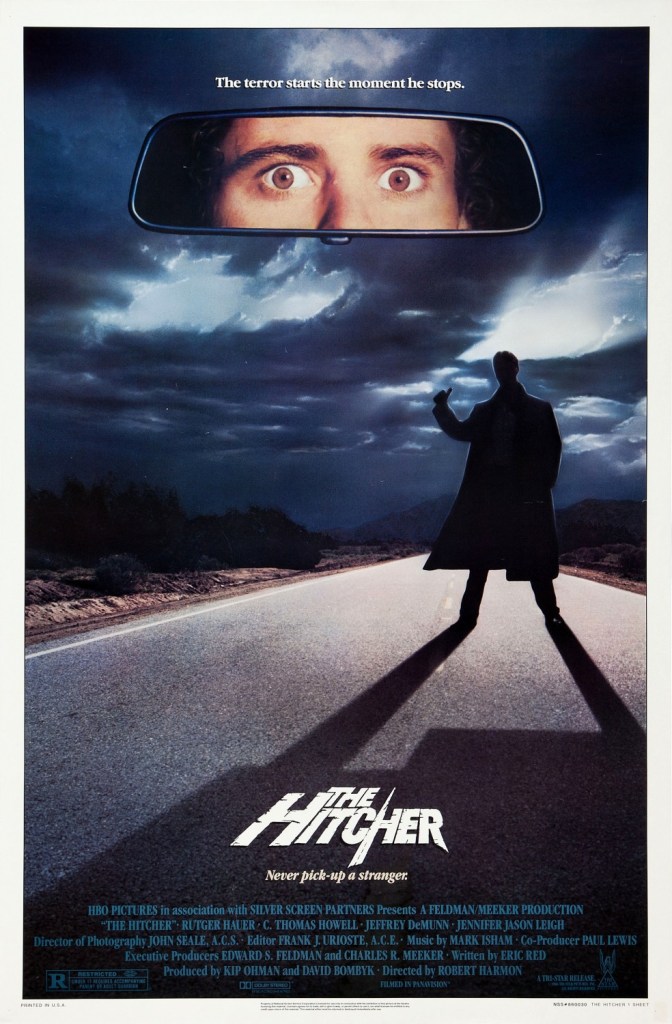
After all these years, “The Hitcher” (the original, not the godforsaken 2007 remake) has lost none of its suspenseful power, and it continues to terrify new generations of horror movie fans. In addition, it also marked a memorable point in the careers of the actors cast in it. Rutger Hauer created one of his most devilish villains ever with John Ryder, C. Thomas Howell gave one of his very best performances as Jim Halsey, and Jennifer Jason Leigh’s performance as Nash proved to be a real stretch for the actress (that pun was most definitely intended).

When the screenwriter of “The Hitcher,” Eric Red, arrived to do a Q&A at the Silent Movie Theatre in Los Angeles on October 9, 2011 where Cinefamily was showing the film, he gave the small but very attentive audience a lot of great stories involving the actors involved in the production, and he had plenty of unforgettable things to say about Hauer.

The audience was very surprised to hear Sam Elliott was originally cast as John Ryder before Hauer came along. Apparently, Elliott’s audition was so terrifying, one of the movie’s producers refused to stay inside the casting office whenever Elliott was around. Somewhere along the line, however, Elliott got cold feet and ended up dropping out of the production.

But even after hearing that, it is still hard to think of another actor who could have played this truly frightening character as memorably as Hauer. As Ryder, Red said Hauer “evoked the character to such a degree” and was always “unpredictable” in what he did. Red described his screenplay as being “sparse” and said it was more about looks than it was about dialogue as there wasn’t much of the latter. Hauer, however, brought so many ideas to the role which were not on the page. During this particularly screening, some of us actually noticed how Ryder was actually wearing a wedding ring. To this, Red simply said, “That’s Hauer!”

Oddly enough, the evening’s funniest story involved the scene where Leigh’s character of Nash was tied between a truck, and Halsey has to keep Ryder from stepping on the gas and ripping her apart. It turns out Hauer did not want to shoot this scene and would not even come out of his trailer when everything was ready to start shooting. The filmmakers talked to him regarding his concerns, and Hauer told them the following:

“I don’t want to shoot the scene because the audience will end up figuring out that my character is the bad guy.”

Hmm … Dismembering the driver who picked up Ryder before Halsey did, murdering a whole family and sticking a human finger in a pile of French fries was not enough to indicate Ryder was the bad guy? How scary it is to learn of this!

When it came to casting Halsey, the filmmakers did not have any particular actors in mind. Red said they all went with Howell as they remembered him from “The Outsiders” and described him as having “the right look.” Ryder is described as being a “father figure” to Halsey, and he wants Halsey to kill him. Howell convincingly portrays his character, who goes from a terrified young man in over his head to one who gains control and becomes almost as cold-blooded as Ryder.

With “The Hitcher,” Red was aiming to create a movie where the audience got an inescapable feeling of claustrophobia in wide open spaces. He said it does not only have to happen in a tiny room or an elevator. Even with the infinite expanse of land on display, no one can escape their pursuers. But the movie also benefits from its memorable performances from a cast who bring more to their characters than what was on the page. Without Hauer, Howell and Leigh, “The Hitcher” would never have been half as effective as what we ended up seeing onscreen.

One From Noah Baumbach: ‘Margot at the Wedding’

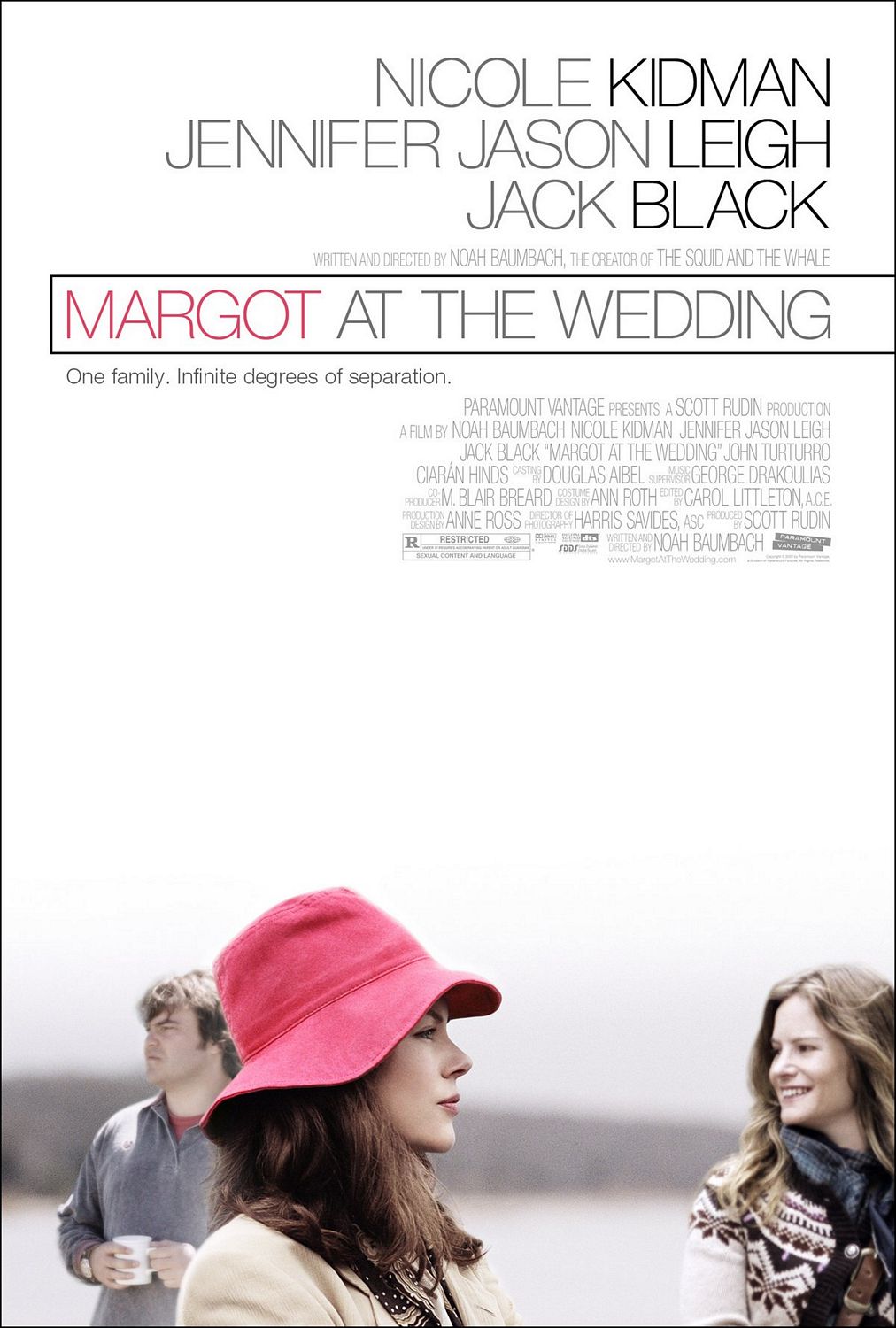
Margot at the Wedding poster

Noah Baumbach must have had one messed up childhood. His 2005 film “The Squid and the Whale” which chronicled a divorce filled with animosity and the of effect it ended up having on the kids. In 2007 he gave us “Margot at the Wedding,” which focuses on two sisters who do their best not to explode at one another. This is sibling rivalry at its most vicious and with sly attacks throughout until the inevitable showdown where the wounds and scars reveal themselves in all of their hurt and anger. Once in a while, you will get a movie which shows the loving power of a family and how they all come together as one. This is not that movie.

Nicole Kidman stars as Margot, who is heading into the country to attend her sister’s wedding. With her on this trip is her teenage son Claude (Zane Pais) who she dotes on with increased restlessness. 2007 was a tough year for Kidman as the films she starred in, be it “The Invasion” or “The Golden Compass,” were not at as successful as they were expected to be. She was at one point the most underrated actress in movies with unsung performances in movies like “To Die For” which she was unfairly robbed of an Oscar nomination for. Following her Oscar win for her role in “The Hours,” she looked to be stumbling in movies underserving of her talent. Her performance as Margot, however, reminds you of just how brilliant and fearless an actress she can when given the right role.

Margot is a bitch with a capital B, and she is one of the most unsympathetic and spiteful characters you would ever want to see in this or any other motion picture. She is cruel to those who love and hate her, and she even reacts coldly at times to her son by saying something about his appearance which could not be any less true. Kidman tears into the role with gusto, and she never tries to sweeten this character up and make her more likable than she ever could have appeared in the script. She is fearless in her portrayal of Margot, and she even lets us see beneath the character’s cruel mask to reveal the pain her character feels inside. You never completely sympathize with her, but you do come to pity her.

Margot’s sister Pauline is played by Jennifer Jason Leigh, the former Mrs. Noah Baumbach, and it is great to see her here. Her portrayal of Pauline makes the character pitiful in a whole other way. While Margot is cold to those around her, Pauline is much more vulnerable and is skillful in the way she throws her sister’s carefully placed insults right back at her. Pauline seems to be striving for a happiness which is just out of her reach. Leigh works at keeping her cool around Kidman’s character, but you can see through her eyes that the last time these two sisters met, it resulted in a brutal confrontation which kept them apart for years. It takes a great actor to make you see things about their characters without having to tell you what they are.

Pauline is about to get married to an unemployed musician/painter named Malcolm, and he is played by Jack Black. This is Black at his most unglamorous as he portrays Malcolm as a sad sack of a man who never looks all that happy about the fact he is about to get married. His character is utterly depressed and lost about what he wants out of life. There are times where Black falls back into those mannerisms we know him best for, and they do take away from his performance at times. But for the most part, he is really good here as he is cast against type in a more dramatic role.

In many ways, this movie is a prolonged attack leading to an explosion of emotion which we can tell has been repressed for far too long. How long you ask? Years, maybe even decades. You know the first time these two sisters meet each other that there is still bad blood between them which is eventually going to spill over. They say they are no longer mad at each other, but we know this is not true. Tension fills the air as these two test one another’s patience, and they continually betray each other in their own subtle ways.

“Margot At the Wedding” is not quite as effective as “The Squid and The Whale,” and it is easy to judge the two in comparison because they deal with the same thematic elements. They deal with broken families, divorce, parental neglect, underlying feelings of anger and resentment, etc. It has been said the best directors make the same movie over and over again, be it Hitchcock or Spielberg or anyone else. Baumbach’s specialty is in the dysfunctional relationships which he was exposed to when he was young.

Either way, you will most likely come out of this movie thanking god your family relationships are nowhere as bad as they are portrayed in this movie. You think you have it bad? Wait until you watch this.

* * * out of * * * *

‘Annihilation’ is a Unique Sci-Fi Cinematic Experience

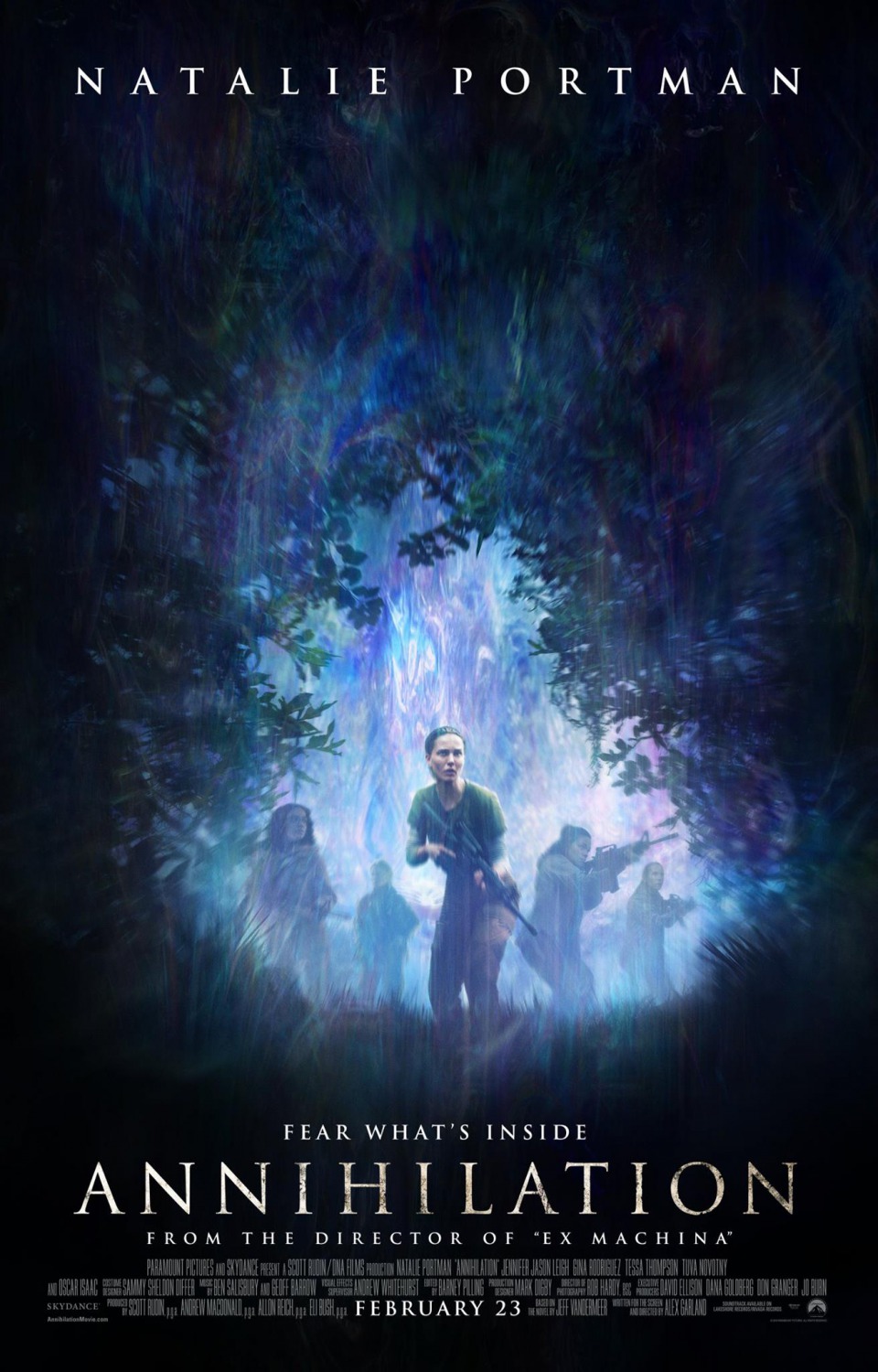
Annihilation movie poster

I have to give Paramount Pictures credit for taking risks in the past year or so on movies which defy what is considered these days to be mainstream entertainment. Last year, they released Darren Aronofsky’s “mother!,” a film which could in no way be mistaken for a comic book movie. Despite it earning a rare Cinemascore grade of an F, Paramount stood behind Aronofsky and his film defiantly, saying they were proud of the work he did. Keep in mind, the studio made this clear even after “mother!” suffered a weak opening at the box office, especially when compared to other movies starring Jennifer Lawrence.

Now in 2018, Paramount has released “Annihilation,” a science-fiction horror film which not only defies what many expect from Hollywood at the moment, but also proves impossibly hard to fit into any specific genre. This has led many to accuse Paramount of not giving the movie the proper promotion it deserved, but we will address this issue at another time. Whatever expectations you have for this cinematic experience, it would be best to leave them at the door as “Annihilation” deals with themes and situations other filmmakers have explored in the past, but this time they are handled in a way which feels truly fresh and not the least bit routine.

Natalie Portman stars as Lena, a biologist and former U.S. Army soldier who, as the movie starts, is in a depressed state as her husband, Army soldier Kane (Oscar Isaac), has been missing for a year, and many presume he has been killed in action. But suddenly, Kane reappears to Lena’s delight, but he resembles one of the pod people from Phillip Kaufman’s remake of “Invasion of the Body Snatchers” as he seems devoid of any emotion and cannot remember where he was. Before Lena can get a satisfactory answer regarding his whereabouts, Kane becomes very sick and is transported via ambulance to the hospital. As you can expect, military officials stop the ambulance, and it becomes clear Lena and Kane have stumbled across something those in power would prefer to keep under a heavy veil of secrecy.

“Annihilation” puts us right into Lena’s shoes as she desperately tries to understand the situation she has been thrust into. Finding herself at the United States’ government facility known as Area X, a name which implies a location always closed off to the general public, Lena is greeted by Dr. Ventress (Jennifer Jason Leigh), a psychologist who finally gives her some answers and introduces her to an area known as “the shimmer.” We see a meteor hit a lighthouse, and from there an electromagnetic field has developed and continues to spread at a rate to where it will eventually absorb everything in its path. Soldiers have been sent into “the shimmer” to better understand this phenomenon, but Kane is the only one who has come back from it alive.

Dr. Ventress ends up recruiting Lena and two other women to join her on the latest mission to enter “the shimmer,” a mission they have every reason to believe is a suicidal one. This is where “Annihilation” becomes particularly unique as these characters are not trying to be heroic but are instead dealing with their own self-destructive tendencies. Indeed, self-destruction is a big theme as these four women are revealed to be individuals deeply wounded by life in one way or another to where they feel as though there’s nothing much left to care about or live for. But as they get deeper into “the shimmer,” their survival instincts become awakened almost immediately.

“Annihilation” was written for the screen and directed by Alex Garland who started out as a novelist with his book “The Beach” which was made into a movie by Danny Boyle and starring Leonardo DiCaprio. Since then, he has graduated to writing screenplays for “28 Days Later,” “Sunshine,” “Never Let Me Go” and “Dredd.” In 2015, he made his directorial debut with “Ex Machina,” a brilliant science fiction thriller which dealt with the subject of artificial intelligence in a way which felt familiar and yet very fresh. Even if the story reminded me of “Frankenstein” in a way, the approach Garland took with the material and the characters felt invigorating and wonderfully unique.

Garland has brought this same kind of energy and enthusiasm to “Annihilation” as it follows a group of people caught in a situation much like the one in John Carpenter’s “The Thing” to where they are dealing with an antagonist who is not quite visible, and this leads them to become increasingly paranoid about one another. Garland does an excellent job of keeping the audience off-balance as he takes us through the story in a non-linear fashion. When Lena awakes in a tent inside “the shimmer,” she admits she has no idea how she got there or of what she experienced in the past few hours. Indeed, we end up feeling as lost as her as we are desperate to better understand the situation everyone has been sucked into, and Garland holds our attention throughout as a result.

Throughout, Garland gives us much to think about such as the differences between suicide and self-destruction as well as the importance and inherent danger of discovery. While watching “Annihilation,” I was reminded of a scene in “Jurassic Park” between John Hammond and Ian Malcolm. Hammond doesn’t understand why anyone would stand in the way of discovery, but Malcolm leaves him with this to chew on:

“What’s so great about discovery? It’s a violent, penetrative act that scars what it explores. What you call discovery, I call the rape of the natural world.”

But while Garland has crafted “Annihilation” as the thinking person’s sci-fi movie, it is not at all lacking in the thrill department. Certain scenes have a visceral feel to where I jumped out of my seat for the first time in ages. On a visual level, it has a look which is as beautiful as it is haunting, and I am having a hard time comparing it to other movies I have seen recently. On top of this, “Annihilation” features a very unique sonic landscape courtesy of composers Ben Salisbury and Geoff Barrow, both of whom combine an earthly sound with an electronic one as they work to separate the real world these characters have left behind and the alien realm they have dared themselves to enter.

Natalie Portman has a tricky role to play here. As Lena, she has to be vulnerable but also exhibit a reserve of strength deeply embedded in a character who has served her time in the military. That Portman manages to pull this off is not the least bit surprising, and she gives us a fully formed character whose experience and pain aid her in the movie’s spellbinding climax. Many still can’t shake the squeaky-clean image they have of Portman, but she has been around long enough to remind audiences of the amazing depth and range she has as an actress.

It’s great to see Jennifer Jason Leigh here as well, let alone in any movie she appears in. As Dr. Ventress, she creates a truly enigmatic character who keeps her emotion in check to where you constantly wonder what is going on in her head. Clearly, this doctor has more interests than in just exploring “the shimmer,” and Leigh keeps you guessing what they are all the way to the end.

I also have to give credit to Gina Rodriguez, Tessa Thompson and Tuva Novotny for creating such memorable characters out of those which, in any other movie, could have been of the easily disposable variety. Some characters exist solely to further the actions of the lead protagonist or serve as mere fodder for an ever so lethal antagonist, but these actresses make theirs stand out in a way they would not have otherwise, and their final onscreen moments are hard to shake once you have witnessed them.

And when it comes to Oscar Isaac, you can always count on him to give an infinitely charismatic performance even in a role where the character looks to have been drained of all emotion. Telling you more about his character of Kane would be detrimental to your viewing experience, but once you watch him here, you will agree he has created a fascinating portrait of a man who once knew his place in the world, but who now is forever lost in it.

It has now been a few days since I have watched “Annihilation,” and I still find myself thinking about the movie quite intensely. Even if its pace lags a little more than it should, the questions it left me with remain endlessly fascinating. When we see Lena reading “The Immortal Life of Henrietta Lacks,” is that a hint of some kind? What led Garland to include the Crosby, Stills & Nash song “Hopelessly Hoping” here? And more importantly, is the movie’s ending a hopeful one, or is it meant to be relentlessly bleak? Garland is not out to give us easy answers, but my hope is you will be open to the unusual experience this movie has to offer. Cinemascore may have given it an average grade of a C, but please remember this is the same research group which gave “America: Imagine the World Without Her” an A+.

Trust me, check this one out, and be sure to come into it with an open mind.

* * * ½ out of * * * *


Exclusive Interview with Jane Weinstock on ‘The Moment’

MCDEASY EC007

Jane Weinstock, 2003

Filmmaker Jane Weinstock follows up her directorial debut of “Easy” with “The Moment,” a compelling psychological thriller starring Jennifer Jason Leigh, Martin Henderson and Alia Shawkat. In the movie, Leigh plays Lee, a photojournalist who has just ended a tumultuous affair with troubled writer John (Henderson). But when she goes to John’s place to get her things, she discovers he has disappeared and is nowhere to be found. The stress of not knowing his whereabouts causes Lee to have a nervous breakdown, which in turn lands her in a mental hospital. During her recuperation, Lee reconnects with her estranged daughter, Jessie (Shawkat), and ends up meeting Peter, a fellow patient who somehow looks a lot like John. As Lee struggles to get a grip on reality and learn the truth behind John’s disappearance, the clues she is given lead her to the most unexpected of places.

Just as with “Easy,” “The Moment” has Weinstock dealing with the contradictions of human nature and psychological realism. It was fascinating talking to her about this movie, and we discussed the challenges of writing a highly complex screenplay, what it was like working with Leigh who is very serious in her approach to playing a character, and how her studies in psychoanalytic theory and semiotics came to inform this film.

the-moment-movie-poster

Ben Kenber: Regarding the screenplay, how difficult was it for you and your co-writer Gloria Norris to write it?

Jane Weinstock: Well our starting point oddly enough was the Edith Wharton novel “The Mother’s Recompense,” but we weren’t able to get to the rights to that. We didn’t want to do a period piece, but we wanted to sort of take the basic structure of this extremely complicated mother/daughter relationship and make a movie out of it. So once we realized that we couldn’t even get the rights, we just kept that relationship as our starting point and then we went on to write this piece. We decided quite early on to make the character of Lee a photojournalist because we have a fascination with danger, and at the same time a kind of ethical commitment to try to do good in the world. We both love Hitchcock, so I think there were Hitchcockian elements that we gravitated towards, and it also changed in various rewrites. We worked on it for a very long time so we rewrote it a number of times.

BK: When it came to the subject matter, did you do a lot of research on photography as well as depression, anxiety and posttraumatic stress disorder?

JW: Yes, I definitely thought of researching PTSD first. We actually showed it (the movie) in New York to a posttraumatic stress disorder specialist at Hunter College, and she felt that we really got it right so that was very gratifying.

BK: There’s a scene in the movie where Martin Henderson’s character is eating sardines which he says are good for those suffering from depression. Is that true?

JW: No, not really (laughs). They are good for your brain and they don’t have a lot of mercury.

BK: Jennifer Jason Leigh is well known for her method approach to the characters she plays. How did she approach the role of Lee in this movie?

JW: Well I did a lot of research and I gave her my research and she looked through that, and she’s known photographers before and she just was her many ways. During rehearsal we worked on the script together. We made some changes as we were rehearsing, and she’s a writer/director so she’s very, very good at that. She also looked at different cuts of the movie and made suggestions, so she was very involved creatively and not just as an actress.

BK: There is a moment in the movie where Peter is standing in front of his place of work and Lee is taking pictures of him, and he is covering up part of the word “storage” to where only “rage” can be seen. What was your reasoning for shooting the scene like that?

JW: It was just a little reference that I thought not many people would get, but you got it. He is a character who was filled with rage. He was imprisoned for five years for a crime that he didn’t commit, so he’s got a lot of rage that he turns against himself and feels towards the world as well.

BK: Alia Shawkat is fantastic as Lee’s daughter, Jessie. How did she get cast in the film?

JW: Well Jennifer had already been cast, so we had her read with several actresses. They were all great, but when I asked myself, ‘could this actress be capable of murdering somebody,’ I always came up with the answer no except for Alia. I really wanted her to feel like someone who is capable of murder, and I also really liked the fact that she looks like she’s part Iranian, and she is part Iranian, so we could give her an Iraqi father.

BK: How much time did you have to shoot this movie?

JW: We shot it in 22 days, and then we had two days for re-shoots.

BK: With movies like these, the shooting schedule always seems to get shorter and shorter.

JW: I know. It’s crazy.

BK: I read how while you were at New York University you focused on psychoanalytic theory and semiotics. Did any of those studies factor into the making of this movie?

JW: You know it must have especially in terms of the writing and having a psychoanalyst be in the movie. But there’s also a way in which I had to drop a lot of my theoretical knowledge and just make it more organic, and at other times I could get very heady.

BK: In some ways “The Moment” is timely because our reality keeps getting distorted by technology and in other ways as well. By the movie’s end we’re not entirely sure if Lee is even dealing fully with reality. With technology today we are getting closer to the truth, yet at the same time we’re being taken further away from it. Was that something you thought about during the making of this movie?

JW: I guess something I thought about most in terms of that kind of general theme of the movie is that we live precariously in an uncertain world which is partly a function of technology but also a function of the times and all the wars we’ve been living through. The last 20 years has been a very, very uncertain time, and then the reaction to this kind of need for certainty comes up in the form of the Tea Party and other kinds of very fundamentalist types of positions. I thought about it in terms of that more than in just technology specifically.

BK: It seems like these days people are not fighting for the truth necessarily, but more for the truth as they see it. “The Moment” reminded me a bit of David Lynch’s “Lost Highway.” It’s a very different movie, but like with Bill Pullman’s character, Lee is trying to get a grip on all that is happened to her. Still, we’re not entirely sure she has succeeded in doing so.

JW: Yeah, people have compared the film to David Lynch’s work. He’s not somebody who I respond that strongly to. I’m much more of a Hitchcock person, but I can see that. Another big theme in the movie which is definitely Hitchcockian is guilt, and even if none of these people actually killed John, is that really the end of it? Can people carry guilt with them, or for the moments that they have created that may or may not have led to John’s death? For example, the moment where Lee kisses John, at that point there’s no turning back. This has to end badly, right?

Thanks to Jane Weinstock for taking the time to talk with me about “The Moment,” a film that constantly challenges your perception of reality throughout its running time.