Underseen Movie: ‘Things I Don’t Understand’
“You’ve got to get yourself together,

You’ve got stuck in a moment

And now you can’t get out of it.

Don’t say that later will be better…”

-U2

“Nothing fades as fast as the future,

Nothing clings like the past.”

-Peter Gabriel

 “More Than This”

What really happens to us when we die? It almost seems like a foolish question to ask because we will only get to find out when we depart this mortal coil, and we won’t be able to tell anyone what it’s like. The only thing people can seem to agree on is that they move towards a “bright light,” but this only tells us so much. Nevertheless, we still look for an answer to this question mainly because we hope it will confirm the things we are led to believe. At the same time, thinking about the future this deeply is not much different from being stuck in the past.

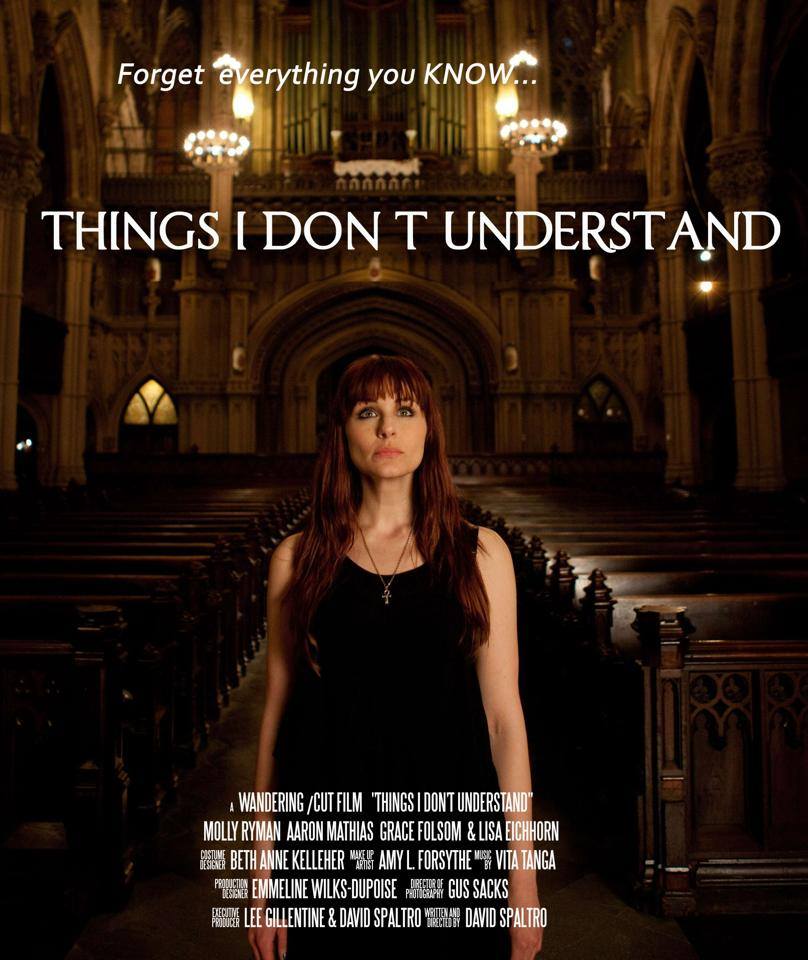
Movies like “Flatliners,” “The Sixth Sense” and even “Heaven Can Wait” have explored this subject in various ways, but David Spaltro’s “Things I Don’t Understand” is one of the more thoughtful I have seen on it in recent years. It’s not interested in coming up with some supernatural answer to this question, but instead in how our curiosity can somehow rob us of what meaning our lives have. Here we meet a variety of characters whose mind and thoughts are broken as their present lives seem unfulfilling because of physical and emotional scars, and their futures all seem relentlessly bleak as a result.

Molly Ryman stars as Violet Kubelick, a graduate student working on a thesis of what becomes of us after death. Over time, Violet has emotionally detached from the world and those around her after surviving a failed suicide attempt, and she has since developed a pessimistic attitude about life and what it has to offer. She lives to avoid every customer who enters the bookstore she works at and freely embraces a life of drugs, alcohol and promiscuous sex as though she is daring death to take her away from this ever so cruel world.

Things come to a head for Violet as she and her obsessively artistic roommates, bi-sexual musician Remy (Hugo Dillon) and hypersensitive artist Gabby (Melissa Hampton), face eviction from their home in Brooklyn and have to quickly come up with the money to save it. As this is happening, Violent comes to interview Sara (Grace Folsom), a girl with end stage cancer who approaches the end with a sardonic sense of humor, and she forms a friendship with lonely bartender Parker McNeil (Aaron Mathias) who is trapped by a tragic past that won’t leave him be. All these relationships bring about a much needed catharsis for everyone as they need to break free of what holds them back.

What I really liked about “Things I Don’t Understand” is how it doesn’t come to us with easy answers about the afterlife as it is far more interested in raising questions about life after death. To define what happens when you die in a movie is tricky because you threaten to lose half your audience with your own interpretation. Spaltro avoids this trap and examines how our questions about life after death come to define how we live life day by day. For these characters, it has seemingly robbed them of a positive outlook on life and has frozen their emotions at a moment in time to where they may never fully thaw.

The acting all around is very good, and Spaltro has given each actor a challenging role regardless of how big or small it is. Ryman has the tough job of portraying a character who is not altogether likable, and she simultaneously (and without words mind you) has to indicate the psychological trauma which has come to define her life. As Spaltro has us guessing as to what that is, Ryman gives us a deeply felt complex portrait of an individual we might easily, and thoughtlessly, dismiss as damaged goods, but who is fighting a battle within herself to find a reason to keep on living.

The best performance in “Things I Don’t Understand,” however, belongs to Grace Folsom as Sara. The role of a terminally ill person can be a thankless one as we have seen it so many times to where it often feels like a shamelessly manipulative device filmmakers use to lay waste to our emotions for no really good reason. But Folsom fully inhabits this character with a hard-won dignity and a biting sense of humor that keeps what is left of her spirits up. Everything Folsom does here feels genuine and real, and her emotions never ever appear faked in the slightest.

Aaron Mathias also has a tough role of someone whose happiness came to an abrupt stop years ago, and the shadow of his past hovers over everything he does. As Parker, he comes across as genuinely nice but still struggling with guilt he cannot put to rest. Mathias succeeds in capturing the complexities of his role in giving us a good-natured guy whose eyes betray a deep sadness which still overwhelms him. I could have done without his line of how being a bartender is like being a psychiatrist spiel, but that is only because I have heard it so many times before.

As for the supporting performances, they at first seem too broad for a movie like this, but in retrospect, they feel just about right. Hugo Dillon and Melissa Hampton play artists so dedicated to their art that they have foolishly denied other outlets which could very well add to it. Their characters strive not just for artistic truth but for acceptance from others, something they feel completely lacking in. In a world which can be so cold and unfeeling to their desires, they have forgotten to respect themselves. As much as Dillon and Hampton go over the top, they both inhabit their characters fully and are more than willing to experience their longings and horrific embarrassments (just wait until you see Gaby’s play) in order to reach a new level of understanding about themselves.

Other performances worth noting include Eleanor Wilson’s as Darla, the new to town actress who looks and sounds dumb, but who turns out to have a positive view of life by choice to where she cannot be mistaken as a victim of blissful ignorance. Lisa Eichhorn takes what could have been a throwaway roll as Violet’s psychiatrist, Anne Blankenship, and gives it a nice edge you don’t always see in characters like this one. And let’s not forget Mike Britt who gives great comic support as Parker’s good friend, Big Felix.

“Things I Don’t Understand” is one of those movies wandering around in the overcrowded world of independent cinema which I hope finds the audience it deserves. While it looks like yet another movie wondering about what happens when we die, it takes this question and uses it to define how we can live for today. The more I think about this film, the more it reminds me of the lyrics of one of my favorite Pearl Jam songs:

“You can spend your time alone, redigesting past regrets, or you can come to terms and realize you’re the only one who can’t forgive yourself. Makes much more sense to live in the present tense.”

* * * ½ out of * * * *

Exclusive Interview with Salome Breziner about ‘Helicopter Mom’

Back in 2014, I got to speak with filmmaker Salome Breziner about her film “Helicopter Mom.” It stars “My Big Fat Greek Wedding” creator Nia Vardalos as Maggie, a completely overbearing single mother who is about to see her only son, Lloyd (Jason Dolley), finish up high school and then move on to college. Maggie feels ever so close to Lloyd, and she quickly proves to be much too close to him. While Lloyd does love his mom, he cannot help but be constantly annoyed at her being more of a best friend to him than a parent as she is almost completely unable to leave him alone for a second.

Maggie’s relationship with Lloyd then enters another plateau when she discovers that gays can get scholarships for college. Constantly worries about she will pay for Lloyd’s college tuition, Maggie decides to tell the whole world that her son is a homosexual in the hopes of securing a scholarship. The problem is, Lloyd is not really gay or, at least, doesn’t think he is. In fact, he finds himself very confused about his sexuality to where life is not about to give him an easy answer to who he really is.

What results is a motion picture which deals with the confusion teenagers typically experience about life and themselves during their formative years, and it promotes a message of acceptance for people of all kinds. Deep down, we are only so different from one another.

Breziner previously directed the 2013 independent comedy “The Secret Lives of Dorks,” and her other directorial efforts include “Fast Sofa,” “An Occasional Hell,” “Tollbooth” and “Lift.” During my interview, she talked about how she went about director the comedic powerhouse that is Nia Vardalos, her own experience as a single mother, the luck she had in being able to shoot the film in Los Angeles and Venice Beach, and of how she got to cast Mark Boone Junior in a role which allows him to go completely against type.

Please check out my exclusive interview below, and be sure to also check out the movie’s trailer.

Who is Billy Jack?

“Billy Jack” is a movie I have heard about time and time again, and it was on July 30, 2012, when I finally got to see it for the first time. Billy Jack is a half-Indian Green Beret Vietnam veteran whose experiences have molded him into this protector who is out to defend those who cannot defend themselves. Tom Laughlin, who played Billy Jack and directed all the movies this character was in, seems inseparable from Billy Jack as both are out to protect those individuals who were sworn by their government to protect them, but which have failed to do so. While no more “Billy Jack” movies have been made in the longest time, Laughlin still fought for the rights of others throughout his life.

The character of Billy Jack was first introduced to audiences “The Born Losers” which was inspired by the real-life incident where members of the Hell Angels got arrested for raping five teenage girls. “The Born Losers” proved to be the first of Laughlin’s movies which was embedded with a layer of social criticism and an anti-authority tone which remained constant throughout each “Billy Jack” film ever made.

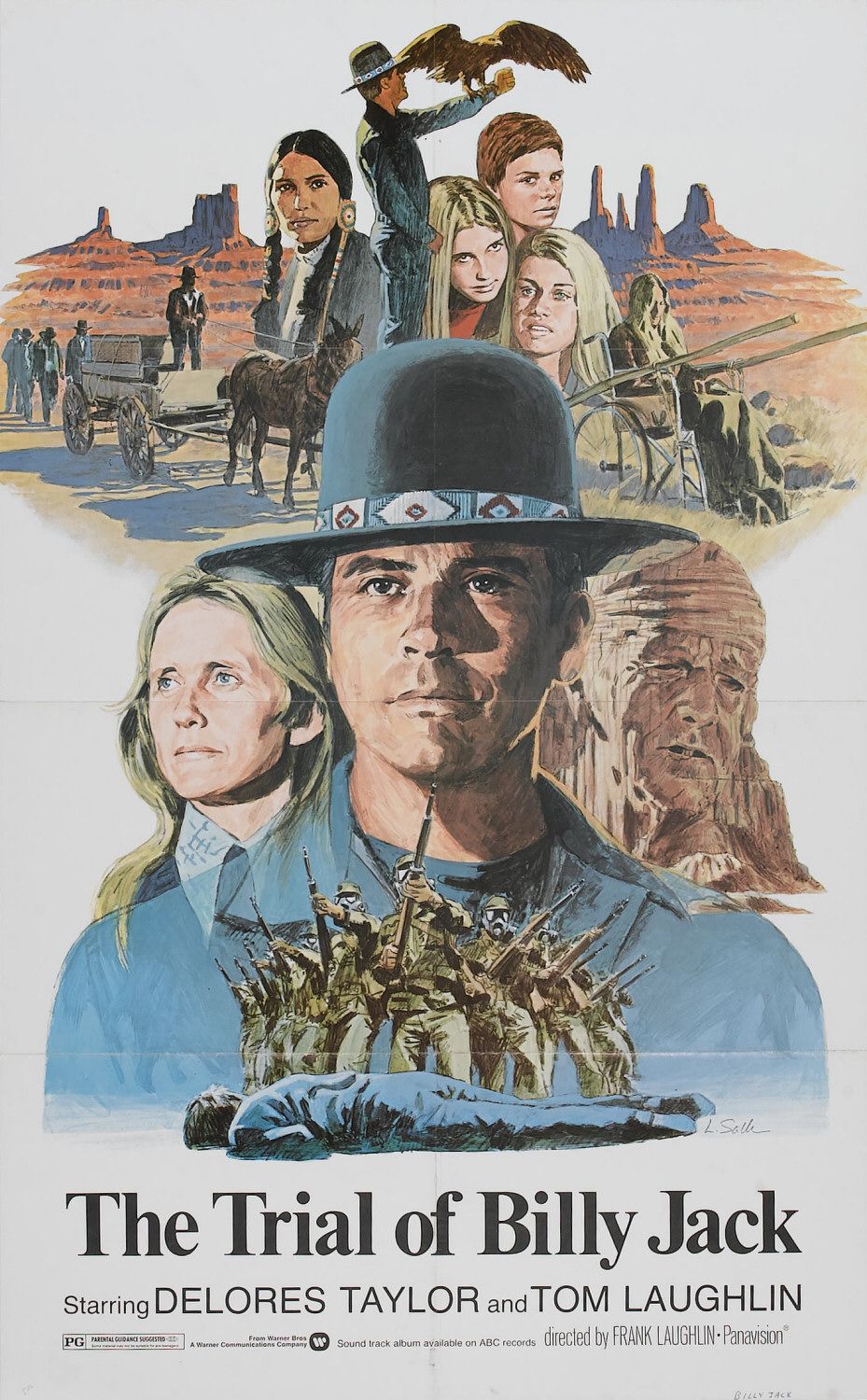
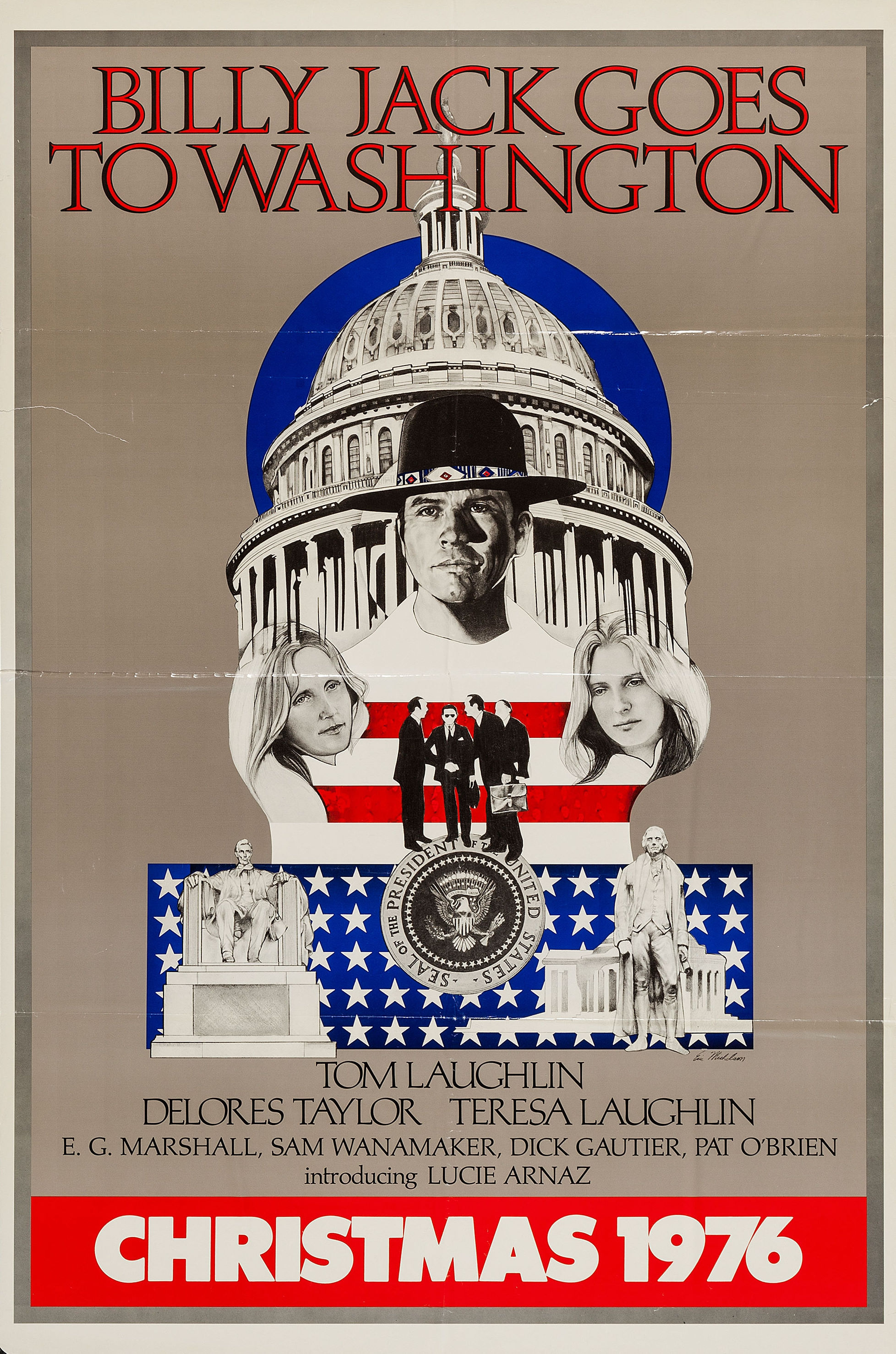
The movie “Billy Jack” came after “The Born Losers,” and it was a response to the conflicts Native Americans often found themselves caught up in. Its sequel, “The Trial of Billy Jack,” was a comment on the anti-war protests which were met by violence from the National Guardsmen who fired upon those protesters, and its follow up, “Billy Jack Goes to Washington,” has the title character battling against senators who are more interested in representing the interest of those representing nuclear power than the people. Even his unfinished sequel, “The Return of Billy Jack,” had political overtones as Billy went to New York to fight those supporting child pornography.

Taking this into account, Laughlin appears to be the first liberal action movie hero as his politics played a big part in each film he made. Then again, calling him a liberal may not be entirely fair as he has gone from one political affiliation to another over the years. In the end, he does not need a particular political label as his goals remain the same; fighting for the rights of ordinary Americans who are not always heard in the way they should be.

All these political and human rights interests greatly informed each movie Laughlin did, and this of course led to many conflicts between him and movie studios. When it came to “Billy Jack,” the movie’s original distributor, American International Pictures (AIP), refused to release it unless Laughlin removed all the political references featured in it. Laughlin, of course, refused to remove them, and he and his wife Delores Taylor, who played Jack’s girlfriend and schoolteacher Jean Roberts, ended up stealing the movie’s sound reels and held them hostage until AIP gave them back their movie.

Warner Brothers ended up releasing “Billy Jack” in 1971, but it failed at the box office and Laughlin sued the studio to get back the rights as he was upset at the way it was promoted. He ended up re-releasing the film himself, and it ended up grossing over $40 million at the box office against a budget of $800,000. Adjusted for inflation, it remains one of the highest grossing independent films ever made.

“Billy Jack,” however, was not without controversies as critics assailed its apparent hypocrisy. In his review of the movie, Roger Ebert said that “Billy Jack seems to be saying that a gun is better than a constitution in the enforcement of justice. Is democracy totally obsolete, then? Is our only hope that the good fascists defeat the bad fascists?” Leonard Maltin ended up saying about the movie that “seen today, its politics are highly questionable, and its ‘message’ of peace looks ridiculous, considering the amount of violence in the film.”

Still, many embrace Billy Jack as a character and the movies he appears in, and this was proven by the large turnout at New Beverly Cinema which cheered him on as soon as he made his first entrance in the movie which is named after him. Seeing Billy grimace at and intimidate the bad guys who were foolish enough to end up in his path had us endlessly entertained, and this remains the case so many years after the film’s initial release.

Laughlin ended up leaving Hollywood to found a Montessori preschool in Santa Monica, California which later became largest school of its kind in the United States. He would eventually turn his attention to politics and psychology as they became the tools with which he could fight injustice. Looking at his life back then and now, it becomes clear how Laughlin and Billy Jack are in many ways the same person as they fight for those whose rights are in danger of disappearing.

Laughlin passed away in 2013 in Thousand Oaks, California at the age of 82. Back in 2007, he announced he was planning to make another film featuring Billy Jack, but this did not happen for a number of reasons. Still, had he made another film with that character, I have no doubt many filmgoers would have welcomed it with open arms.

‘Master Gardener’ – Paul Schrader Does Some Meticulous Gardening

Alright! We are back in Paul Schrader land with his latest film, “Master Gardener.” Just as with “Taxi Driver” and “First Reformed” among other films, it focuses on a loner who keeps a journal and is struggling to deal with a past which was never less than traumatizing. Some directors tend to make the same film over and over again, but I always enjoy seeing Schrader doing so as he always has an interesting angle on this, and “Master Gardener” is no exception.

Joel Edgerton stars as Narvel Roth, an infinitely meticulous horticulturist who is employed at Gracewood Gardens, a beautiful estate owned by Norma Haverhill (Sigourney Weaver). Judging from the blooming flowers featured in the opening credits, this is an individual who takes his job ever so seriously as he clearly revels in bringing a garden and the flowers in it to exquisite life. There is even a scene where Narvel invites his fellow workers to smell the soil they have been working on endlessly. Watching this, it made me wish this film came with one of those scratch and sniff cards like those Odorama cards John Waters used for “Polyester.” I would love to have smelled what these characters were taking in as it might just give new meaning to the word “organic.”

Norma, who it turns out is having an affair of sorts with Narvel, has invited her wayward step-niece, Maya (Quintessa Swindell), to become his apprentice. While Maya may be a wealth of trouble at home, she slides into her new job with what seems like relative ease. But, as you can expect, nothing will stay sane for our main characters as revelations of who they are will truly eventually come to the surface whether everyone is prepared for it or not.

Looking at Narvel and hearing how he talks, it is tempting to think he has been a dignified individual since birth, but he eventually takes off his shirt to reveal two things: he has spent a lot of time at the gym, and he has a plethora of tattoos of swastikas and other neo-Nazi images covering his body which indicate he has had a racist past which he is trying to get past. It would have been enough if Narvel had just one swastika tattooed on him to indicate he was once a white supremacist, but the fact he has so many reminded me of a scene from Martin Scorsese’s “Cape Fear” remake in which Robert Mitchum looked over Robert De Niro’s heavily tattooed body and said, “Jesus! I don’t know whether to look at him or read him.”

This revelation brings about complexities as we wonder if Norma and Maya are aware of Narvel’s sordid past. Looking at this, I kept thinking Narvel would reveal the truth of his past existence to both women in an intelligent fashion. But if he did, would this film have such rich dramatic tension?

Gardening and horticulture never struck me as something which could be captured in a cinematic way as it can seem rather boring. It is a credit to Schrader and company that “Master Gardener” makes gardening seem far more immersive than it might be to some. Like I said before, I would love to smell this garden Narvel is cultivating because it is clear no one can cultivate one the way he can.

Schrader also makes the characters and their situations all the more dramatic by pointing out how different their ages are to one another. Now I have long since learned to NOT ask any women their age as serious bodily harm is likely to occur and deservedly so, Norma being almost twice Narvel’s age and Maya being close to half of his. Taboos are bexploited for dramatic effect as certain things are not quickly accepted in today’s culture, but here we may need to look more closely at what is going on.

Looking at Joel Edgerton’s resume, I wonder if I have given him enough credit as an actor. He has played a variety of roles in the “Star Wars” prequels, “The Thing” prequel, “The Felony” and “The Gift” among other films. Each has shown him going from playing good guys to villains with relative ease, and that is a gift many in his field would love to have. While it might seem like Edgerton is playing Narvel as a far too reserved, it becomes clear why this is the case as he nails this character’s complexities perfectly from start to finish.

Sigourney Weaver is a very welcome presence here. As Norma, she gives off a very regal vibe which makes her seem like a peaceful individual, but her play on words reveals someone whose anger is just simmering beneath the surface. I also love how she makes indigent sound like a four-letter word.

Quintessa Swindell does very interesting work as Maya. We learn a lot about this character before she appears onscreen, and Swindell makes Maya into something more than a mere cliché or stereotype that many might expect her to be. As we find Maya becoming involved with a man who is at least a decade older than her, Swindell comes to hold her own opposite Edgerton in their scenes together to where it becomes clear who has the upper hand in this relationship.

When it comes to Schrader and his films, he typically works with the bare minimum of budgets, and I am always impressed with what he accomplishes with them regardless of how tight they are. The cinematography by Alexander Dynan is quite lovely, the music score by Dev Hynes fits the material just fine, and kudos to those who gave Schrader the money to make this one as indie films like these do not get as much support as they once did.

How does “Master Gardener” compare to Schrader’s other works? Hard to say as there are many I still need to watch. This one does not quite reach the cinematic heights of “First Reformed” or “Affliction,” but this one reminds me of what a compelling voice he still is in cinema. Perhaps the conclusion left me wanting more as it did not quite fill my cinematic bloodlust, but maybe that was because I was expecting the wrong kind of movie. Whereas many of Schrader’s films end in an orgy of violence, this one concludes in a way which gives a certain piece of dialogue from “Natural Born Killers” an infinite amount of meaning, “Love beats the demon.”

Perhaps the loners who inhabit Schrader’s recent works have found reasons to not end their lives in an intensely dramatic and fatal fashion as the women they encounter give them a reason to live on. While the writer of “Taxi Driver” and “Raging Bull” might be treading through familiar territory, it is clear he has found how love can alter one’s destiny. This makes “Master Gardener” stand out in a memorable way as it defies certain expectations which I never should have brought into the theater in the first place.

Moreover, this film makes me view gardening and cultivating in a whole new light. I really enjoyed the specifics Schrader gives us when it comes to certain flowers as few other writers could these details down so perfectly. Perhaps I should visit the local flower or garden shop to truly appreciate the plants and their smells which are on display here.

I am glad Schrader is still making films in this cinematic climate. There always needs to be something outside of the mainstream.

* * * ½ out of * * * *

Kristen Wiig and Sebastián Silva Discover a Cinematic Freedom in ‘Nasty Baby’

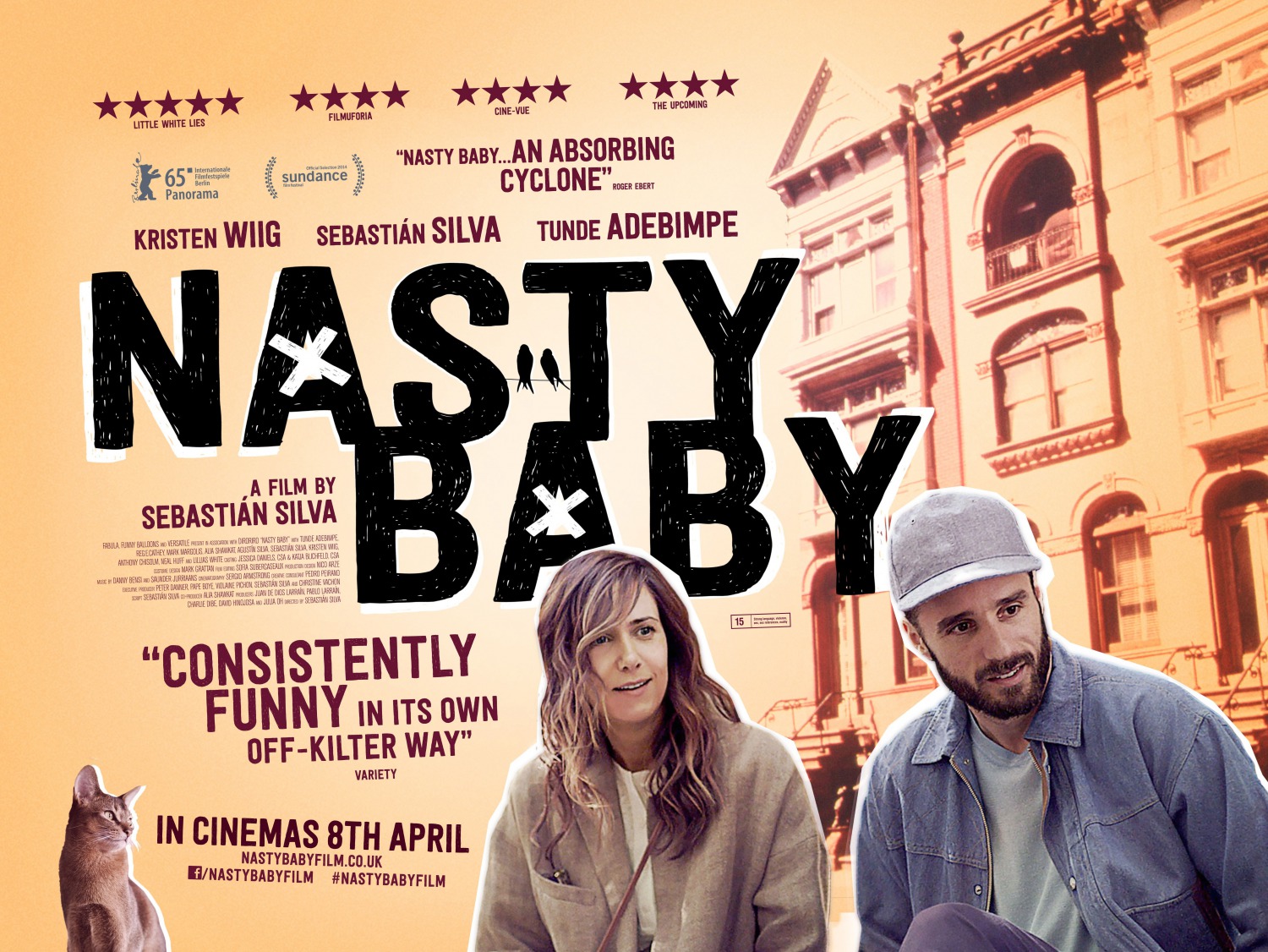
Nasty Baby UK poster

After winning various awards on the festival circuit including the Teddy Award for best LGBT-themed feature film at the 65th Berlin International Film Festival, “Nasty Baby” finally made its way to American audiences. The movie stars Sebastian Silva, who also wrote and directed it, as Freddy, an experimental artist based out of Brooklyn, New York who is desperate to have a baby with his boyfriend Mo (Tunde Adebimpe). Joining them on this quest for parenthood is their best friend Polly (Kristen Wiig) who plans to be the surrogate mother for the couple, and we watch as they deal with various complications and obstacles which keep them from starting a family. But when an especially annoying neighbor known as The Bishop (Reg E. Cathey) constantly harasses them, it leads to a terrifying situation which could destroy all their plans forever.

Kristen Wiig and Sebastian Silva were on hand recently for the “Nasty Baby” press conference which was held at the London Hotel in West Hollywood, California, and they were both very descriptive about what went into the making of this movie. We all know Wiig of course from her endlessly hilarious years on “Saturday Night Live” and for acting in and co-writing the wonderful comedy “Bridesmaids.” Silva’s previous directorial efforts include “The Maid,” “Crystal Fairy & the Magic Cactus” and “Magic Magic.”

One thing that struck me in particular was how freed up the actors appeared to be onscreen as the movie was shot mostly with a hand held camera. I couldn’t help but think that the actors had an easier time moving around and performing scenes this way than they would have on any other film set as they didn’t have to worry about being in the right position at the right time. They were all just let loose and trusted that the cameraman would capture their best moments with no problem. I ended up asking about them about this aspect of filmmaking.

Ben Kenber: This movie was shot mostly with a hand held camera, and it felt like this gave the actors a lot more freedom to move around that they would not have had on a regular movie set. Would you say that you found a special freedom in acting with this way of filming?

Kristen Wiig: Yeah, I did. Sergio (Armstrong, the director of photography) was amazing. You just sort of feel like you can be those people and do the scenes and he’ll kind of find you. If you wanted to do it again he would kind of figure out where to go. There was a lot of freedom. There weren’t a lot of marks we had to hit.

Sebastian Silva: Yeah, there were no marks at all. All of the actions of course are written and all the scenes so we know the locations and everything that needs to happen. But there are a lot of times where we didn’t use the slate, and then we would move from a wide shot to a close up without cutting ever. I was acting, I had never acted before, but I feel that for actors not to be cutting all the time that it is also so much fun because scenes and takes usually don’t last more than four minutes. It’s usually like ‘action’ and then it’s like four minutes that the actor gets to do his or her thing, and then it’s like ‘cut,’ makeup and then they don’t really get to enjoy performing as much as like when you’re improvising a take and go for as long as 35 minutes sometimes, right?

KW: Yeah.

SS: Yeah, it was a lot like that, changing things as we were shooting without cutting. It was fun.

BK: I imagine that not having to worry about hitting your marks frees you up a lot.

KW: Oh yeah, definitely (laughs).

The one thing they always taught in those acting on camera classes is that the camera is always your friend and will never let you down. It certainly didn’t let Wiig or Silva down during the making of “Nasty Baby” as the both inhabit their characters more than play them, and it never feels like you are watching a movie. Instead, it feels like you are watching real life unfold, and this is not an experience you often get at the movies.

“Nasty Baby” is now available to watch on YouTube, iTunes and Amazon Video.

Copyright Ben Kenber 2015.

Nasty Baby American poster