The Ultimate Rabbit’s Favorite Podcasts

Everybody has a podcast these days to where there are far too many to catch up on. However, there are a few which I refuse to miss as they lighten up my day which usually has me wondering how I can continue to survive in an insanely cruel world. Considering that I spend a good portion of the day in my car, they are my go-to whenever I go place to place, and these are the ones I am always determined to be up to date on.

The Ralph Report

Created and hosted by actor, podcaster and voiceover artist Ralph Garman, “The Ralph Report” is the first podcast I listen to each day. This podcast came about after Garman was unceremoniously laid off from the “Kevin & Bean Show” on the KROQ-FM after 18 years, and you can find it on the Patreon platform. It’s never political, and Garman is just aiming to take you away from your daily troubles for an hour and change.

Garman is joined by his “vice host,” standup comedian Eddie Pence who was a classmate of mine at Second City in Los Angeles and has quite the reserved palate when it comes to food, resulting in a daily segment where a certain food is talked about and whether or not Eddie will eat it. Also on the show is Garman’s wife, Jen Stewart (a.k.a. Queen J) who helps run on the visual part of the podcast known as “Garmyvision,” and she also has the most infectious laugh of any human being I have ever met.

Among my favorite segments on “The Ralph Report” include one-hit wonders where Garman talks about a band or a singer who reached the top just once and never experienced the same level of success ever again (the episode on Bobby “Boris” Pickett’s “Monster Mash” is classic). Others include “Sex U” which discusses sexual practices in ways that are both informative and educational to where I wonder if other sex education classes offered anywhere could ever be this informative. And there is the “Video Vault” segment on Fridays where Garman and Pence recommend movies many people have not seen or heard about. Garman always has the classiest of choices, while Pence tends to recommend those which only he seems to enjoy. Still, maybe Pence is right to find the good in such films as “Megaforce” and “Leprechaun 4: In Space.”

WTF with Marc Maron

Now granted, this one just came to an end, but there are still 16 years of episodes for you and I to catch up on. Hosted by stand-up comedian and actor Marc Maron, “WTF” is not so much an interview show as it is a conversation between him and his guest. What started as a simple podcast, back when the term was in its infancy, turned into one of the biggest as Maron got to have great talks with such people like Jodie Foster, Spike Lee, Louis C.K. and even President Barack Obama who came back to do the final “WTF” episode. We also got to hear Maron deal with his sobriety and daily anxieties which have resulted in crippling emotions and catastrophic thinking for him, something I can very much relate to as anxiety has been the bane of my existence.

Fresh Air

If there is a single person who has come to influence the way I interview actors and filmmakers about their projects, it is most definitely Terry Gross. Few other people can ask such intelligent questions about the arts, movies, politics and sports than her, and that’s the reason why she has remained so popular for the past few decades. In the past few years, “Fresh Air,” which airs from WHYY in Philadelphia, has brought other hosts who occasionally sit in for Terry like Dave Davies, Tonya Mosley and David Bianculli who, like me, has a great love for the classic television series, “Homicide: Life on the Street.

Inside of You with Michael Rosenbaum

Actor Michael Rosenbaum, best known for playing Lex Luthor on the TV series “Smallville,” started his podcast “Inside of You” back in 2018, and it has talking with fellow celebrities he has worked with as well as those he admires. He has made it clear to all that this podcast is no way political, and much of his questions deal with mental health which makes it a must for people like me. I also like how he talks with people who usually don’t get to appear on other big-time podcasts like Gates McFadden, Barbara Crampton or Jonathan Frakes to name a few. I especially liked his talk with Gates as she took the time to discuss her role on “Star Trek: The Next Generation.”

The Everything Sequel Podcast

If there is any kind movie which is especially difficult to make, it is the sequel as it more than likely to pale in comparison to the original. But perhaps there a few sequels which can improve upon their predecessors, and that’s where “The Everything Sequel Podcast” comes in. Hosted by Michael Christopher Shantz, a classmate of mine from my UC Irvine days, and Tom Steward, they thoroughly dissect every follow-up to an original film we know and love to where nary a single detail is left out.

Recently, both Michael and Tom took great delight in dissecting the sequels to Wes Craven’s “A Nightmare on Elm Street,” and they came to agree that “Freddy’s Dead: The Final Nightmare” was the best of the bunch (of course they didn’t).

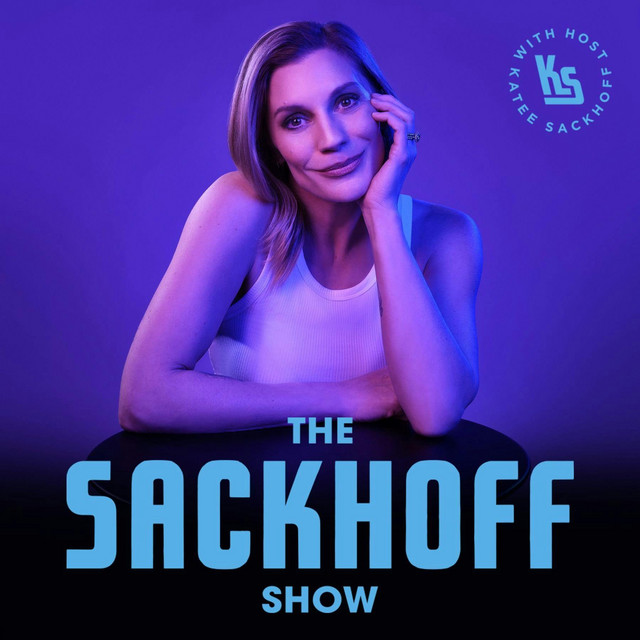
The Sackhoff Show

I have had an enormous affection for Katee Sackhoff ever since she portrayed Starbuck on SyFy’s “Battlestar Galactica,” and I have followed her career from there and continue to do so. Like “Inside of You with Michael Rosenbaum,” Katee uses her podcast to talk with those actors she has worked with on different projects as well as those she has a deep admiration for. Her interviews with her fellow “Battlestar Galactica” actors like Jamie Bamber, Edward James Olmos, Tricia Helfer, Mary McDonnell and James Callis prove to be endlessly fascinating as they discuss not just how their brilliant remake of a classic science fiction show stands on its own, but of how they continue to deal with the fame it all brought them.

But in addition to all of that, Katee talks about her struggles and adventures at being a wife and mother of two children, and of how she continues to rise above her circumstances to be the best person she can be in all the madness life has to offer.

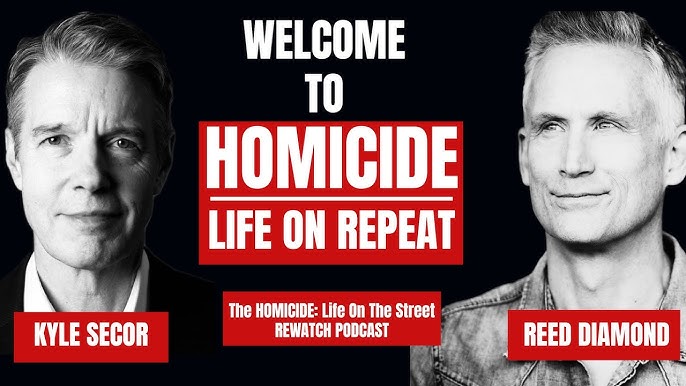
Homicide: Life on the Set/Homicide: Life on Repeat

As I said earlier, I am as big a fan of “Homicide: Life on the Street” as David Bianculli is. With the classic show having finally arrived on the streaming services Peacock and Tubi, a couple of podcasts have emerged to look at what went on in front of and behind the camera, and both have proven to be deeply informative and enthralling in equal measure.

Homicide: Life on the Set” is a largely look at what went on behind the scenes of the Baltimore cop show, and it is hosted by Susan C. Ingram, a camera assistant on the show for six years, and Chris Carr who is a director and podcaster based in London. So far, they have had great interviews with the show’s assorted editors, directors of photography, and actors like Melissa Leo, Reed Diamond and Daniel Baldwin, the latter of which proved to be incredibly lively and exceptionally entertaining.

Homicide: Life on Repeat” features two actors from the show: Kyle Secor who played Tim Bayliss, and Reed Diamond who played Mike Kellerman. So far, they have covered “Homicide’s” first season which lasted nine episodes which Secor starred in, and which sparked Diamond’s intense desire to get a role on this show. They have also taken the time to interview key figures involved in the show’s creation such as Paul Attanasio and Tom Fontana who executive produced this show along with Barry Levinson.

Now if there are any other podcasts I can possibly add to this list, I will do so at a near or future date. I shudder to think at what I could have left out.

‘Homicide: Life on the Street’ Commentary on ‘A Shot in the Dark’

Recently, “Homicide: Life on the Street” has undergone a major renaissance of sorts. The show is now finally available to stream on Peacock, and we have two new podcasts dedicated to the acclaimed series. First, there is “Homicide: Life on the Set” which is hosted by filmmaker and podcaster Chris Carr and Susan C. Ingram who worked as a union camera assistant on “Homicide,” and they have interviewed actors, writers, directors and technicians who worked behind the scenes and have made unforgettable stories to tell. Then there is “Homicide: Life on Repeat” which has actors Reed Diamond and Kyle Secor reviewing each episode of the show from start to finish, and that’s regardless of whether they are in said episode or not. With all this going on, “Homicide” looks to be gaining a new generation of fans and may even become a bigger hit with viewers than ever before.

With this “Homicide” commentary, I focus on the fifth episode of the first season entitled “A Shot in the Dark.” Directed by Bruce Paltrow and written by Jorge Zamacona, it follows multiple plot threads back when the show could get away with that. Stanley Bolander (Ned Beatty) and John Munch investigate the double shooting of a drug dealer, Frank Pembleton (Andre Braugher) and Beau Felton (Daniel Baldwin) join forces reluctantly to look into a theory regarding Adena Watson’s murder, Tim Bayliss remains convinced that the arabber Risley Tucker murdered Adena and wants to bring him in for questioning, and Steve Crosetti (Jon Polito) and Clark Johnson continue to look into the shooting of Chris Thormann (Lee Tergesen) who has miraculously survived his nearly fatal wounds. It’s amazing just how much the writers got into one single episode!

In the midst of all this, Bolander seems unable to deal with the aftermath of his date with Dr. Blythe (Wendy Hughes), Felton and Pembleton battle with one another over how they see things, and Bayliss gets revenge at Captain Barnfather for releasing information he shouldn’t have released. Of course, Bayliss still pays a price for going after a superior officer. And Munch? Well, let’s just say he steals the show at the very end.

Please check out the commentary below. “Homicide: Life on the Street” is now available to stream on Peacock, and the entire show is still available on DVD through Shout Factory.

‘Homicide: Life on the Street’ Commentary on ‘Son of a Gun’

It has been a bit, but I am now back with another “Homicide: Life on the Street” commentary track. This time it is for “Son of a Gun,” the fourth episode of the first season. This episode contains several plot threads as the detectives furiously investigate the shooting of Officer Chris Thormann (Lee Tergesen), Tim Bayliss (Kyle Secor) and Frank Pembleton (Andre Braugher) continue to investigate the murder of Adena Watson, Stanley Bolander (Ned Beatty) goes out on a date with Doctor Carol Blythe (Wendy Hughes), and there is also the case of Calpurnia Church (Mary Jefferson) who has murdered many people for the insurance money. This is a lot for any hour-long drama to handle, but everyone involved seems to find the right balance to where nothing feels superfluous.

“Son of a Gun” was directed by Nick Gomez who helmed a couple of indie crime dramas back in the 1990’s: “Laws of Gravity” and “New Jersey Drive.” It marked the first appearances of Sean Whitesell who portrays Dr. Eli Devilbiss, Edie Falco who portrays Chris Thormann’s wife, Eva, and Walt McPherson who plays an patrolman who may or may not be Roger Gaffney, the most odious and bitter character in the “Homicide” series.

This episode was the first thing I ever saw Edie Falco in, and she previously appeared in Gomez’s “Laws of Gravity.” From here, Falco would go on to play a role in Tom Fontana’s HBO prison drama “Oz,” and she would eventually make her breakthrough a few years later on “The Sopranos.”

There are also other memorable performances to be found in this episode. The great Luis Guzman appears as Bolander’s next door neighbor, Lorenzo “Larry” Molera, who has quite the love for wood. Then there is the late Wendy Hughes who plays a potential girlfriend to Bolander in Carol Blythe, and seeing her and Beatty together provides this episode with the series’ more intimate moments.

Check out the commentary below. The complete series of “Homicide: Life on the Street” is currently available to purchase from Shout Factory. To this date, it is still not available to stream on any service. This is likely due to music rights.

‘Homicide: Life on the Street’ Commentary on ‘Night of the Dead Living’

I am back with my latest audio commentary on an episode of “Homicide: Life on the Street,” and the one on display here is “Night of the Dead Living,” a nice little play on words on the title of the classic horror film, “Night of the Living Dead.” It was directed by Michael Lehmann who gave us one of the greatest black comedies ever made, “Heathers” which starred Christian Slater and Winona Ryder. Lehmann also directed “Hudson Hawk” which starred Bruce Willis and proved to be a critical and commercial bomb, but has since become a cult classic of sorts. The teleplay was written by Frank Pugliese who won a WGA Award for his work on this episode. Pugliese is a writer and playwright, and his plays include “Aven’U Boys” which an Obie Award, and he wrote the screenplay for the 2006 film “Infamous.”

“Night of Dead Living” was the third episode of “Homicide’s” first season, but NBC decided to air it as the season finale due to its slow pace and the fact they were trying hard to “woo” more viewers for this show which was already suffering a decline in ratings. For me and many others, the airing of this episode in this order was confusing as hell as it looked as though Tim Bayliss and Frank Pembleton had another chance at closing the Adena Watson case. Watching it now, it feels like the cruelest of teases.

What I love about this particular episode is how unusual it is for “Homicide” let alone any other police drama as it is one without any murders or crimes committed. The detectives are working the night shift during a hot summer night, and Lieutenant Al Giardello is furious because the air conditioning is off in the office and everyone is sweating like crazy to where they are taking off their ties. That is, except for Frank Pembleton who remains as cool as can be despite the heat.

Please check out the commentary track below and let me know what you think about this episode.

‘Homicide: Life on the Street’ Commentary on ‘Ghost of a Chance’

So here I am with another commentary track for an episode of “Homicide: Life on the Street.” This one is titled “Ghost of a Chance,” and it is the second episode of the first season. The story is by Tom Fontana, the teleplay was written by Noel Behn, and the episode was directed by Martin Campbell. Campbell would later go on to direct to James Bond films, “Goldeneye” and “Casino Royale.” After the brilliance of “Gone for Goode,” I wasn’t sure the next episode would be anywhere as good. Thankfully, it was.

“Ghost of a Chance” starts off with the murder of Adena Watson, the first case for rookie detective Tim Bayliss (Kyle Secor), and the one case which would haunt him the most throughout this series. There are also some other plotlines explored here. John Munch (Richard Belzer) and Stanley Bolander (Ned Beatty) investigate the death of Thomas Doohen whose widow, Jessie (Gwen Verdon), cannot wait to be rid of him, Kay Howard (Melissa Leo) and Beau Felton (Daniel Baldwin) work to find much-needed evidence in a murder case, and Bolander develops a crush on Carol Blythe (Wendy Hughes) which has him acting rather awkwardly.

We are also introduced to Officer Chris Thormann (Lee Tergesen), a character who will become especially important in later episodes.

Please check out the commentary below.

‘Homicide: Life on the Street’ Commentary on ‘Gone For Goode’

So here I am with another commentary track after the one I did for “Pump Up The Volume.” But this time, it is for an episode of one of my favorite television shows of all time, let alone of the 1990’s, “Homicide: Life on the Street.” Specifically, the commentary is on this show’s very first episode, “Gone For Goode,” which did a brilliant job of introducing us to various Homicide detectives, and also showed how it was not going to be your usual cop show. Instead, it was initially designed to be one without onscreen violence, something which executive producer and showrunner Tom Fontana thought was crazy, and he quickly signed up with the show as a result.

What hooked me onto this show was the fact it was being developed by Barry Levinson, the Oscar winning filmmaker of “Rain Man.” He also directed the “Gone For Goode” episode and introduced its cinematic style which no other director could direct their way out of.

With this commentary track, I express my thoughts on this episode and the show at large. Upon watching “Gone For Goode,” I was immediately hooked into what this groundbreaking series had to offer, and I did my best to provide as much trivia about its making as I could. I’m not sure there will ever be a perfect commentary track to anything unless it is done by Martin Scorsese or Bruce Campbell, but I would like to think this one comes close. If you say it does, it will do wonders for my fragile ego.

Please feel free to listen to the commentary track below as you watch this episode on your DVD player. At this time, “Homicide: Life on the Street” is not available to stream, most likely due to music rights, but you can purchase the complete series on DVD from Shout Factory. It was previously available in a box set from A&E Home Video, but it has long since gone out of print.

‘Lost Highway’ – One of My Favorite David Lynch Films

I remember when I first watched David Lynch’s film “Lost Highway” back in 1997. I saw it at a small theater in Newport Beach where the screen ratio was off by a bit, and the opening credits did not fit onto the silver screen as a result. I left the theater feeling a bit cold as I was not sure what to make of What I saw, and the ending seemed so absurdly abrupt to where I wonder if Lynch and co-writer Barry Gifford had simply run out of ideas and went down a rabbit hole they could not dig themselves out of. The way I saw it, this film was easily upstaged by its soundtrack which proved to be one of my favorites from the 1990’s with its music by Angelo Badalamenti, Nine Inch Nails. Barry Adamson, Smashing Pumpkins and Marilyn Manson.

A few days later, however, I found myself thinking about “Lost Highway” a lot to where I could not put it out of my head. I could not figure out why initially, but then I found the answer in a review of the movie I read in Video Watchdog. I cannot remember the critic’s name, but they wrote it’s not about how the film affects you while you watch it, but how it affects you after you have watched it. I could not agree with this more, and it made me watch “Lost Highway” again, but this time in a THX approved theater with better sights and sound.

I have since revisited “Lost Highway” again and again over the years, and I revisited it yet again at the Nuart Theatre which presented this Lynch cult classic in a 4K restoration personally supervised by the director. While it may not seem as brilliant as “Blue Velvet” or “Mulholland Drive,” it remains one of my favorite films of Lynch’s as it presents us with a puzzle of a story which might be easier to solve than at first glance.

We are introduced to the married couple of saxophonist Fred Madison (Bill Pullman) and his wife, Renee who live in the Hollywood Hills. Their marriage looks to be a cold one, lacking in passion. When it comes down it, Fred is far more able to get orgasms out of his saxophone solos than with Renee, and he becomes suspicious that she might be seeing someone behind his back.

Things get more unsettling for them when they discover someone has been leaving videotapes for them on their doorstep. The first one features a view of the outside of their house, but the second goes even further as it shows footage of them asleep in their bed. They call the police, but they are of little help in finding out who filmed them. Next thing you know, Fred finds and views another videotape which shows him hovering over Renee’s dismembered body, and from there he finds himself on death row for her murder.

Lynch has described “Lost Highway” as being a “psychogenic fugue,” a rare psychiatric phenomenon characterized by reversible amnesia for one’s identity. Others have compared the film to a Möbius strip, a non-orientable strip which one cannot consistently distinguish clockwise and counterclockwise turns. Both of these make sense as the beginning may very well be the end, and the end may very well be the beginning.

This is even further enhanced by Lynch saying he was partially inspired by the O.J. Simpson murder trial which came to dominate the early 1990’s. Indeed, I can see this inspiration all throughout “Lost Highway” as Simpson has not, nor will he ever, admit to committing any murders. For all we know, Simpson may still not know what he did as he has long since blacked it out of his mind. The same goes with Fred Madison as he cannot believe it when a certain video implies he murdered his wife in a most horrible way, but this doesn’t stop a jury of his peers from finding him guilty and putting him on death row.

There is a scene where the police visit Fred and Renee at their home after they received the second video, and Renee talks about how Fred hates video cameras and doesn’t want them in the house. His explanation is as follows:

“I like to remember things my own way. How I remembered them. Not necessarily the way they happened.”

I have come to refer to this dialogue as the Dinesh D’Souza line as he continues to sell anyone and everyone on a narrative which just isn’t the least bit true. But regardless of how you view this film, one thing should remain clear: videotapes do not lie. Just look at what Detective Mike Kellerman (played by Reed Diamond) said in one episode of “Homicide – Life on the Street:”

“Videotape, it’s the perfect witness. It can’t change its testimony, and it can’t forget what somebody looks like.”

Indeed, “Lost Highway” is all about Fred Madison trying to escape the truth of what he did or, perhaps, what everyone thinks he did. As a result, he goes through a rather grotesque transformation which ends up turning him into a young auto mechanic named Pete Dayton (played by Balthazar Getty), and he gets released from prison. But as he now experiences life as a free man, he comes to meet the gangster Mr. Eddy’s mistress, Alice Wakefield. The only thing is, she looks a lot like Fred’s late wife, Renee. Of course, a lot of that has to do with the fact Patricia Arquette is playing Alice as well as Renee.

“Lost Highway” has long since become one of my favorite David Lynch films, and while “Blue Velvet” and “Mulholland Drive” are regarded more highly, this one is so much fun to view again and again. The whole thing is a complex puzzle, and I am convinced I can still solve its mysteries in ways I cannot with Lynch’s other works. I am not even going to try and make sense of “Inland Empire.”

With Pullman’s character of Fred, he is trying to stay ahead many steps of his darkest memories and actions, assuming they are true. But the deeper he digs into his psyche to escape an especially harsh reality, the more memories and familiar faces keep coming up. I like how Pullman plays Fred as a suspicious man who finds himself caught up in a situation he does not understand but which leaves him with the worst headaches imaginable.

Patricia Arquette is a marvel here as both Renee and Alice as she opens herself up, literally and figuratively speaking. It’s great to watch her go from portraying a scared wife to a dominant seductress who holds Pete very tightly within her grasp. Seriously, watching this Oscar winning actress here should serve as reminder of just how much stronger women are than men, especially when men are led by certain parts of their bodies other than their brains.

Who could have known this would have been Robert Blake’s last performance ever in a motion picture before the whole… Well, you know. Still, his work here as the Mystery Man is wonderfully chilling as he clearly took joy in crafting a character unlike any he played previously. When he glares at you, there is no escape, and seeing him without eyebrows makes his presence all the more unnerving. It’s an original performance which people never give enough credit to.

There are many moments from “Lost Highway” which will forever stay with me like when Fred Madison walks into the darkness of his home and re-emerges as someone much different, Robert Loggia who, as Mr. Eddy, unleashes his rage at an ignorant motorist for tailgating him, seeing Alice and Pete have sex in front of a car’s headlights, and the final scene where a character transforms in a hideously angry fashion. All of them are aided by the haunting musical soundscapes created by Angelo Badalamenti and Trent Reznor, the cinematography of Peter Deming, and the strange appearances pf both Richard Pryor and Gary Busey which had me wondering if Lynch was using dream logic in the same way Darren Aronofsky did in “Mother.”

“Lost Highway” provided me with one of the most unique experiences I have ever had. It left me at odds upon the beginning of its end credits, but it stayed with me from there on out, and I constantly find myself returning to it and its awesome soundtrack. This truly is an art picture as it can be interpreted in many ways, and I know I will come back to it again before I know it. Just remember one thing, Dick Laurent is dead.

* * * * out of * * * *

Errol Morris’ ‘Tabloid’ is More a Love Story Than a Documentary

Tabloid movie poster

“What is a lie when every man has his own truth?”

-Clark Johnson from “Homicide: Life on The Street”

 “I like to remember things my own way. How I remembered them. Not necessarily the way they happened.”

-Bill Pullman from “Lost Highway”

 “Facts are simple and facts are straight

Facts are lazy and facts are late

Facts all come with points of view

Facts don’t do what I want them to

Facts just twist the truth around

Facts are living turned inside out

Facts are getting the best of them.”

-from “Crosseyed and Painless” by Talking Heads

The story at the center of “Tabloid” is further proof of how truth can be much stranger than fiction. It is an endlessly entertaining documentary on an utterly bizarre incident from 1977 involving former Miss Wyoming Joyce McKinney. She talks about falling head over heels in love with a Mormon missionary named Kirk Anderson, and of how he disappeared without a trace after they became engaged.

Joyce spent the next couple of years searching for Kirk, eventually finding him in Ewell, Surrey where he was working at The Church of Jesus Christ of Latter-day Saints. Desperate to be reunited with him, she flew to England determined to rescue and marry him as she sees her destiny as being with him until death separates them forever. But from there the story splinters into two heavily contrasting versions. Joyce claims the Mormon religion is a cult which brainwashed and robbed Kirk of his free will, and that he went with her willingly upon finding him at the church. However, Kirk later told police he was abducted by Joyce and chained to a bed in a cottage where she seduced and raped him.

Whatever the case, this story exploded in the press and became, as one interviewee called it, “the perfect tabloid story.” With its mix of sex and religion, this case came to be known as “The Mormon Sex in Chains Case” and “The Case of the Manacled Mormon.”

You may come out of “Tabloid” frustrated as it is not made entirely clear who is honest and who is lying, but getting to the truth is not the intention of this documentary. Morris constructed it in a way which tests who and what we believe in and how our perceptions have been molded over time by the media culture more than we ever bother to realize. It almost doesn’t matter what actually happened because the story is so weirdly captivating, and viewers find themselves wanting it to go in a particular direction regardless of whether the facts match up with that direction or not.

John Patrick Shanley was dead on correct when he wrote how doubt is a bond as powerful and sustaining as certainty. Everyone in “Tabloid” has an inescapable shadow of doubt hovering over everything they say and what they believe to be true. It’s like those “Choose Your Own Adventure” books we all read as kids. You know, the ones which tell you to turn to this page or another to where the outcome of your journey remains truly unpredictable.

Seeing the media at work on this “Mormon in Chains” case makes one realize not much has changed in their coverage of events. Back then, the public ate all the lurid details of this absurd story as it touched on those guilty pleasures we are never quick to admit we have. People like to believe they are above “trash” like this, but unconscious minds are always quick to wander to the magazine aisle in the supermarket to peek through the latest issue of the National Enquirer among other magazines which take the truth and manipulate into something wonderfully lurid. We know it is bad for us, but we cannot always keep our morbid fascination in check.

As an interview subject, Joyce McKinney is never boring for one second. At the start of “Tabloid,” she has an endearing quality which makes you want to spend all this time in her company. You will find yourself feeling for her when the world more or less threw her under a bus, and you will not be able to stop empathizing with her even after much of what she says comes into question. You can hear Morris interviewing her in the background, and every other question he asks sounds like, “Oh my god are you kidding me?!”

Still, it does at times feel like Joyce is putting on a performance for us, one which she has rehearsed for decades. Morris said she was the star of her own movie long before he started making this one, and it is easy to see how this is the case. Regardless, you will find yourself wanting to buy her story even as others come up with proof of how she lied.

With all the various facets of her life put up onscreen, you are eager to see where Joyce will take us next as it is unpredictable for those who are not the least bit familiar with this case. Even if she is lying about everything, it’s never less than interesting.

The truth these days is such a malleable thing as everyone shapes it to fit their own needs and beliefs. Others will say we are wrong or lying, but we are quick to defend what we know to be the truth. Many will convince themselves of what is true to where we can no longer be objective about the experience they had. We replay certain moments in our lives over and over again until they seem correct to us. Even Joyce says at one point, “You know you can tell a lie long enough until you believe it.”

What is great about “Tabloid” is how on top it is a love story of the most unusual kind. There is never any doubt that Joyce still loves Kirk after all these years. Even if you feel miles away from truth after watching this documentary, it is safe to say this much is certain.

* * * ½ out of * * * *


‘The Equalizer 2’ is More of the Same, and That’s Just Fine With Me

The Equalizer 2 movie poster

It’s amazing how Denzel Washington has gone through his career without ever having made a sequel. Then again, do many of his films cry out for one? “Glory” and “Training Day,” didn’t leave much room for follow-ups as the characters he played met a very violent end. Last I checked, William Shakespeare never penned a sequel to “Much Ado About Nothing.” “The Pelican Brief,” “Philadelphia,” “Courage Under Fire” and “Crimson Tide” tell self-contained stories which are perfectly resolved at their conclusions. “Unstoppable” came to a full stop at the end to where a continuation would have insultingly involved another runaway train. As for “Remember the Titans,” we still remember them 18 years later, so there’s no need for a sequel to remind us of what we never forgot about in the first place. And regardless of what its title may imply, “Malcolm X” is not a sequel to anything.

But with “The Equalizer’s” Robert McCall, Washington has found a character whose story can last beyond one movie, and this was made clear in the final scene where he replied to someone’s plea for help over the internet. Now we have “The Equalizer 2” which reteams Washington with director Antoine Fuqua for another round of brutal retribution against those foolish enough to cross McCall’s path. While not much is different this time out, this sequel still proves to be as entertaining and thrilling as its predecessor.

We catch up with McCall who still resides in Boston, Massachusetts but now works as a driver for Lyft. This particular job allows McCall to befriend people like Sam Rubinstein (Orson Bean), a Holocaust survivor who is still trying to come to grips with what he has lost. Rubinstein also gives McCall an invaluable piece of advice which rings ever so true:

“Be nice to anyone who has access to your toothbrush.”

Among McCall’s victims this time around are a group of men who have kidnapped a little girl, and a bunch of young men afflicted with white privilege that have taken advantage of a female intern. Once again, these characters think they have McCall figured out and consider him as someone way past his prime, but we all know he is going to leave them in a world of pain because that’s why we paid money to see this sequel. The question is, will he take them out in 15 seconds or 29? Either way, McCall has found a very effective method to obtain a five-star rating from a Lyft passenger. Whether he gets a tip on top of that remains to be seen.

Things, however, get very personal for McCall when he learns his dear friend Susan Plummer (Melissa Leo) has been murdered while on assignment in Brussels, Belgium. The attack on Susan is especially brutal, but it’s nice to see her get a few punches in. With “The Equalizer 2,” Leo gets to remind us how she once portrayed one of television’s most unforgettable female police detectives, Sgt. Kay Howard, on “Homicide: Life on the Street” as she inflicts painful scars on her attackers. While at the press screening I wanted to yell out “Kay Howard lives!” But knowing from the trailers how Susan was going to meet a tragic end left me with anxiety and some despair as her fate was clearly sealed.

As you can expect, McCall goes on a mission of revenge which leads him to meet up and work with a former partner of his from the CIA, Dave York (Pedro Pascal). What he discovers is a complex web of corruption in which loose ends are being tied up to where the perpetrators are higher up the government ladder than he realized. Watching certain characters get eliminated in ways they do not see coming reminded me of what Captain James T. Kirk said in “Star Trek VI: The Undiscovered Country:”

“First rule of assassination, kill the assassins.”

Denzel is simply the best, and he return to the role of Robert McCall as if he just made the original film yesterday. Is it even possible for this Oscar-winning actor to disappoint us? Well, anything is possible, but seeing him in the scene where he takes young Miles (Ashton Sanders), an aspiring artist, aside and gives him a strong lecture about the dangers of gang life reminds us why he is one of the best actors working. We have seen this scene of an older man telling a young one not to join a gang many, many times before, but Denzel brings a raw emotional power to this one which makes it feel as visceral as when Laurence Fishburne demanded Cuba Gooding Jr. give him back his gun in “Boyz n the Hood.”

Ashton Sanders proves to be a strong addition to “The Equalizer” franchise as he portrays Miles as someone clearly caught between two worlds and unsure how to navigate either of them. We learn his brother was senselessly murdered, and he looks to be on the hustle when it comes to painting buildings and apartments, something McCall sees right through. Ashton also figures in one of this movie’s most suspenseful scenes when Miles is trapped in McCall’s apartment as a couple of assassins break in. Fuqua wrings all the suspense out of this scene to excellent effect, and it left me pinned to my seat as I began to feel as unsafe as Miles did.

Fuqua has since proven to be a top-notch action film director as he takes average set pieces in formulaic motion pictures and gives them a jolt of energy and tension. Right from the opening sequence on a train in Istanbul, Fuqua shows once again how he and Denzel mean business, and he gives us a number of thrilling moments throughout like when McCall fights a knife-wielding Lyft passenger while trying to avoid oncoming traffic, or when he faces off against a trio of bad guys whom he promises to terminate with extreme prejudice.

“The Equalizer 2” culminates in an action set piece much like the one in the first film as McCall leads his pursuers into territory he is far more familiar with than they are. Last time it was in a hardware store, and this time it’s at seaside town which is getting battered by severe winds and heavy rainfall. But whereas those Russian gangsters were too late to discover how out of their league they were, McCall now finds himself hunted by those with the same military training. As a result, the odds are even and this makes the sequel’s climax especially thrilling.

Also returning for this sequel is screenwriter Richard Wenk who infuses scenes with subversive jabs I could not ignore. When one military character talks about how he was essentially cut off by the government to where he was forced to do things he never would have done otherwise, I was reminded of how politicians kept telling us to support our troops during wartime and then would later cut their veteran benefits. Wenk is certainly not out to bash us over the head with any political statements, but it is little moments like those which provoke my consciousness to a strong extent.

And Wenk once again has McCall reading a number of classic books among which, quite appropriately, is Ralph Ellison’s “Invisible Man.”

Like I said, “The Equalizer 2” is basically more of the same, but I was fine with that as Washington and Fuqua are simply out to give us an action-packed thriller, and they have succeeded once again. If there is to be a third “Equalizer” movie with these two on board, I would certainly welcome it.

Looking back, it’s almost a shame they didn’t make McCall an Uber driver. Just imagine how he would have reacted to his earnings statement as Uber is known for taking a ridiculously high percentage from their drivers. This could have resulted in a terrific climax in which McCall visits the company’s corporate headquarters and tells the CEO, “I understand you pay more attention to your profit motive than to the safety of your drivers.” If there is anyone who could punish Uber for this and make them update their policies for the drivers’ benefit, it would definitely be McCall!

* * * out of * * * *

‘Won’t You Be My Neighbor?’ is Just the Documentary We Need in Divisive Times

Wont You Be My Neighbor poster

I was one of the many who got exposed to “Mister Rogers’ Neighborhood” at a very young age, and I still vividly remember watching its host greeting us with the same song while taking off his coat and changing his shoes. Since then, I have become far more familiar with the show’s parodies, especially the brilliant ones by Eddie Murphy and Robin Williams, to where it seems much easier to ridicule someone who encourages us to see the best in humanity instead indulging in its worst qualities. If Fred Rogers were to start his show today, I’m not sure if he would have had the same impact and instead be a subject of endless ridicule and innuendos.

Well, the road to hell may be paved with good intentions, but Morgan Neville’s documentary “Won’t You Be My Neighbor?” shows how Fred Rogers’ good intentions never led him in that direction. The doc shows how he came to inspire generations of children to love one another and to see the good in life even when things seem so bleak and scary. While many have since tried to tarnish his legacy and make him look like a wolf in sheep’s clothing, Neville reminds us of what a good man he was and of how he never lost sight of the strong values he instilled in others.

We learn Rogers was an ordained minister and about to enter the seminary when he discovered the existence of television. Although he initially hated this invention and described it as being “awful,” he quickly came to see it as something he could use to his advantage. With “Mr. Rogers’ Neighborhood,” he used television as a way of helping children through what he called “the modulations of life,” and the lessons he imparted were profound as he dealt with topics other children’s programming would never dare touch.

It’s fascinating to watch the beginning of “Mister Rogers’ Neighborhood” as it debuted back when everything on TV was in black and white. The production values proved to be very low and, unlike Jim Henson, he was not out to break the bounds of puppetry or technology. Instead, this show was an exercise in simplicity as the use of a simple ordinary neighborhood and a land of make believe was more than enough to draw in a large audience as the show proved to be imaginative enough as he probed the more unsettling issues life has to offer.

Rogers didn’t hesitate to deal with the assassination of Bobby Kennedy, nor did he try to ignore the tragedy of the Challenger space shuttle when it exploded. The way he approached these events and issues was almost subversive as he dealt with them in a way which wasn’t necessarily direct, but which acknowledged the trauma many around the world felt. As always, he encouraged us to find ways to channel our anger, despair and sadness into something positive, and his words always rang true.

With people like Fred Rogers, I keep waiting for the seams to show in this documentary as no human being can ever be this perfect. We are all flawed in one way or another, and he certainly is no exception. In an interview with Francois Clemmons, the African-American actor and singer who played Officer Clemmons on “Mister Rogers’ Neighborhood,” Clemmons talks about when Rogers confronted him over his visiting a gay bar and asked him never to go there again. Rogers’ fear was one of the program’s sponsors, Johnson & Johnson, would pull their advertising away if they realized one of the stars was a gay man. I figured this would lead to the exposure of Rogers’ bigotry, but Clemmons says while Rogers advised him to keep his sexuality in the closet, Rogers never judged him over it even if his religion may have, and that he showed his love to him in such a way no one had before.

Looking at the scenes shown here from “Mister Rogers’ Neighborhood” reminded me of how the lessons Rogers gave us proved to be as profound as they were subversive. To protest the treatment of African-Americans being thrown out of “white-only” swimming pools, he is shown in one episode with his feet in a tub of water, and he invites Officer Clemmons to put his feet in as well when he drops by. When the show aired in 1968, the Vietnam War was being fought overseas and he dealt with it in his land of make believe where King Friday XIII kept fighting against change and peace. In fact, Neville reminds us how this show dealt with topics like war, divorce and even the assassination of Bobby Kennedy. Does any of today’s children’s programming do this? If so, please tell me because I can’t think of any single show which does.

Neville touches on Rogers’ own childhood very lightly to where only so much is said about it. We learn how he grew up in a household where he was never allowed to be angry as a kid, and of how he spent a good portion of his life feeling like he didn’t fit in anywhere. Indeed, these struggles made for intelligent fodder on his show as he talked about different ways to deal with anger, and one of the most heart-rending moments in this documentary comes when Henrietta Pussycat asks if she was a mistake. “Mister Rogers’ Neighborhood” didn’t just deal with world and personal issues in an intelligent way, but in a brave one as well.

Few, if any, people can ever lay claim to being too good to be true, and Fred Rogers is shown without a doubt to be good and very true. So, it is painful to see others attempt to rewrite his legacy in an effort to change the narrative of history, and we see this in a FOX News segment in which commentators accuse Rogers of destroying the childhood of many by telling kids they were all special as if it were the equivalent of child abuse. These days, most people will not allow themselves to believe any person could be so well-meaning and thoughtful as they always suspect a do-gooder of being up to something devious.

There is a scene where we see Rogers in a solitary state as if the cruelty of the world threatens to overwhelm him. Were he alive today, I wonder how he would feel about the current political havoc we are suffering under as many of the things he fought against like racism and bigotry have made an unwelcome comeback as they serve as a cruel reminder of how history repeats itself. I would like to think Rogers would have given us ways to overcome this endless stream of negativity, but we see his faith being tested constantly to where he must have been constantly exhausted by all the terrible things he was forced to endure.

While watching “Won’t You Be My Neighbor?”, I was reminded of what an English teacher in my freshman year of college once said:

“This is a generation which has been robbed of its innocence. We have all been mediatized.”

Keep in mind, she said this back in the mid-1990’s before the internet and cell phones became the things they are today, so the damage was already being done. These days we are led to believe more in the worst of people instead of the best, and we are more fascinated with the skeletons in a closet than in good deeds. One of my childhood heroes, Bill Cosby, a man who made us laugh endlessly and gave us life lessons we never forgot, has since been revealed to be a misogynist, a sociopath and a sexual predator who will soon be sent to prison for his crimes. His legacy is now forever tarnished to where much of what he taught us will be permanently lost to future generations.

This all makes “Won’t You Be My Neighbor?” an especially important document of a man who left an indelible mark on our lives. While many of our heroes let us down in thoughtless and horrible ways, Fred Rogers never did. He stayed true to himself, and he never lost sight of how children have very deep feelings and needed guidance in a world which can be very complicated to say the least. This is a life worth celebrating, and Neville gives us many reasons to celebrate Rogers’ life as the lessons he taught us, however dated they may seem today, are ones we need to pass on to others.

Another thing I was reminded of was the “Hate Crimes” episode of “Homicide: Life on the Street” in which Detectives Pembleton and Bayliss investigate the murder of a man they are led to believe was homosexual. By the end of the episode, it is revealed the man was not gay, and they both discuss the effect this case has had on them:

Pembleton: “I broke the first rule of being a detective. I assumed that Zeke Lafeld was homosexual.”

Bayliss: “Well, it’s what people do, Frank. It’s human nature.”

Pembleton: “Yes, it is human nature to kill someone simply because their sexual orientation is different.”

Bayliss: “People get afraid. Threatened.”

Pembleton: “People? That’s you and me, Tim. Grown-ups. Why is it that children don’t care about such things?”

Bayliss: “As adults we get socialized. We learn to behave.”

Pembleton: “No, no, no. We learn to hate.”

Indeed, Pembleton’s last line above speaks to an inescapable truth. However, looking at Rogers’ life through this amazing documentary and of the infinitely positive effect he had on so many makes me believe he never learned to hate, ever. If he did have any negative emotions inside of him, he certainly found creative ways to rid himself of them, and he shared them with his audience in the hopes they would focus more on the positive instead of the negative. Maybe he was different than most people but thank goodness for that. Thank goodness we got to meet Fred Rogers and be his neighbor, and thank goodness we have this documentary which pays loving tribute to his memory.

I think it’s only fair to end this review with one of Rogers’ most famous quotes as it still resonates deeply today:

“From the time you were very little, you’ve had people who have smiled you into smiling, people who have talked you into talking, sung you into singing, loved you into loving. So, on this extra special day, let’s take some time to think of those extra special people. Some of them may be right here, some may be far away. Some may even be in heaven. No matter where they are, deep down you know they’ve always wanted what was best for you. They’ve always cared about you beyond measure and have encouraged you to be true to the best within you. Let’s just take a minute of silence to think about those people now…”

* * * * out of * * * *