Halloween II (1981)
Sequels are usually beaten to a critical pulp, and it’s not hard to understand why. They are primarily made because the original made a ton of money, and heaven forbid that the money train stops there. It’s not enough to make a killing at the box office (no pun intended); you have to capitalize on what you made because greed still reigns supreme. Heck, these days studios are franchise crazy and are always on the lookout for the next one to start up. However, audiences these days are a lot more discerning and are quick to question why certain sequels were even made. They can tell when they are being scammed out of their hard-earned money, but the curiosity of what the sequel has to offer can be hard to ignore.
In a lot of ways, sequels are undone by the high expectations placed on them. Certain movies have no chance of living up to the brilliance of their predecessor, but maybe they can be enjoyable enough when you come to them with reduced expectations. Sometimes that can be enough.
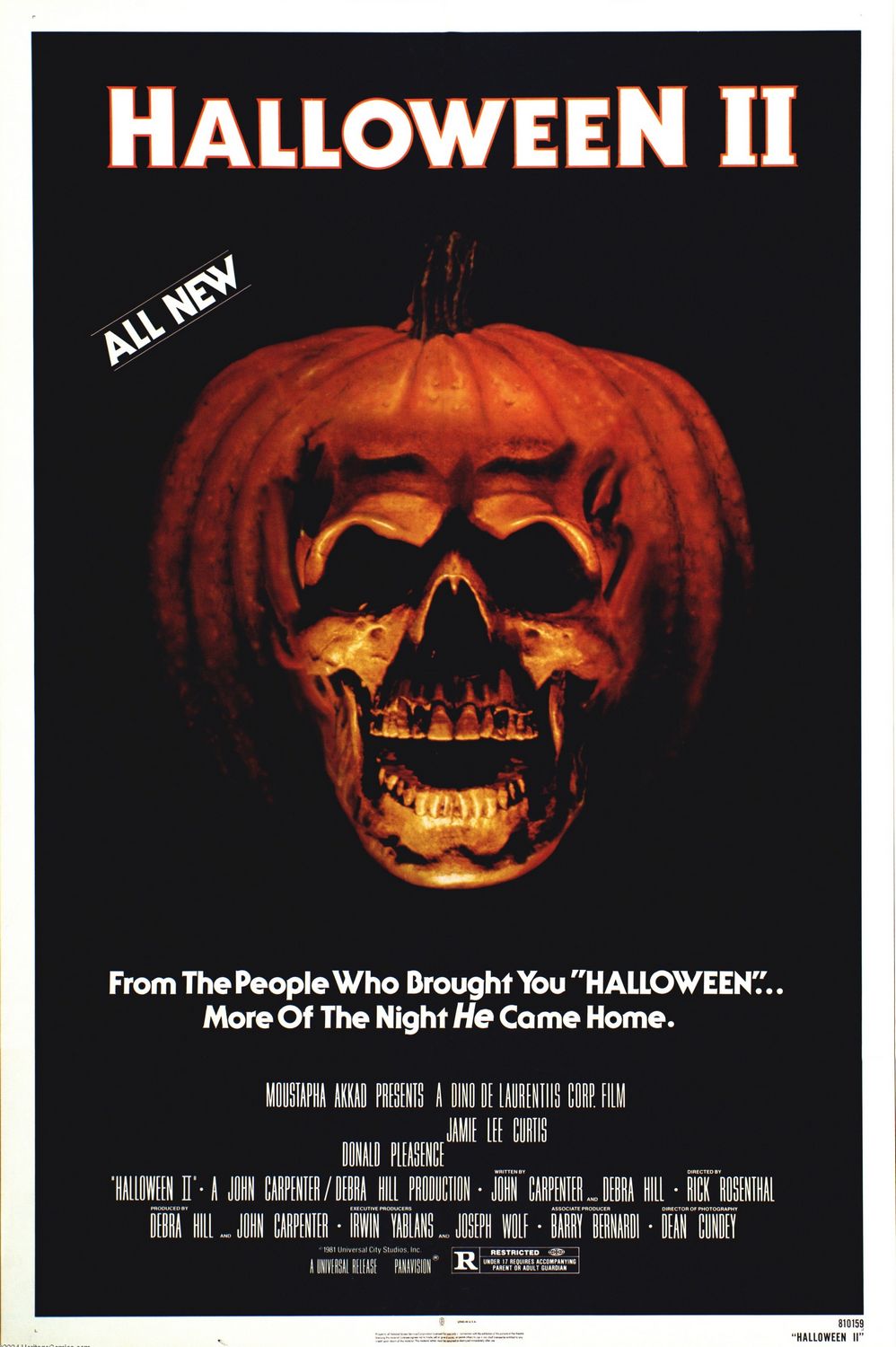
Case in point is “Halloween II,” the sequel to, at the time, the highest grossing independent film ever made. “Halloween” was and still is one of the scariest movies ever made. The ending of the movie had Michael Myers disappearing from sight, and it was visual proof of how evil never dies. “Halloween II,” however, takes place at the exact moment the original ended with Michael still on the loose, and even while he moves a hell of a lot slower, he still proves to be a very deadly threat to everyone around him. Dr. Loomis (Donald Pleasance) continues to hunt for the man he tried to keep locked up, and Jaime Lee Curtis returns as Laurie Strode who is taken to Haddonfield Memorial Hospital to recover from the injuries she suffered a few hours earlier.
“Halloween II” was torn apart by the critics for being nowhere as good as the original, proclaiming it a rehash of what we saw before and for having nothing new to say about Michael Myers or anyone else from the original. Even John Carpenter, who co-wrote the script for this one with the late Debra Hill but did not direct it, said he hated it, and the only thing which got him to finish writing this sequel was a six-pack of Budweiser. Even he realized he was making the same movie which is probably why he declined to direct it. The only really fresh aspect of this one is that we discover how Laurie Strode and Michael Myers have a closer bond than they realize, and it comes to explain why he made the long trip back to Haddonfield after waiting for years while staring out a window in total silence.
But despite its flaws, I still enjoyed “Halloween II” for what it was. Yes, it is a retread of the original, but what else are you gonna do with Michael Myers? Do you want him to win the Nobel Peace Prize? Get rehabilitated? Make peace with his sister after killing so many people? Don’t you remember? Evil never dies!
The one thing to note about “Halloween II” is how much bloodier and gorier it is than its predecessor. When this sequel came out, there had already been so many knock offs of “Halloween” with the psychotic and silent killer wearing a different kind of mask and using a different weapon which suits their murderous rages more than any other. “Friday The 13th” would not have existed without Carpenter’s original masterpiece.
At the very least, “Halloween II” tries to be more creative in the way Michael kills his victims as he proves to be inventive with hypodermic needles, scalding hot water, and he even conducts a blood drive which doesn’t require anyone from the Red Cross to help out. If you run into Michael, you’re a donor whether you driver’s license says you are or not.
While “Halloween” only showed us so much of Michael and kept him hidden in the shadows for the most part, “Halloween II” pretty much shows everything. While it makes this sequel less effective than the original, I still got a kick out of it. Carpenter apparently came in to reshoot some scenes because he felt audiences would be demanding more blood and guts as horror movies have upped the ante in that arena since the original. Whether or not this was the right decision may be up for debate, but fans of Fangoria Magazine will not be complaining. The scene where Michael plunges Pamela Susan Shoop into scalding hot water is shocking and highly unnerving, and seeing a hypodermic needle get inserted into someone’s eye is very unsettling.
One thing this sequel has to its advantage is that is made by the same team which made the original. Director of photography Dean Cundey came back for it, and he gives “Halloween II” a dark and creepy look to where you want to keep an eye on what is hiding in those shadows across the hall. Michael could be anywhere, waiting for you to come out into the open.
At the very least, Carpenter and Hill do a good job of giving us characters who are as down to earth as those in the original. There’s a little scene where three of them are in a hospital lounge watching TV and talking about what just happened their previously quiet little town of Haddonfield. The young nurse claims she saw Michael, and one of the guys is a sexually frustrated prick who is more interested in having sex than the fact this force of evil is still on the loose.
The characters may come across as clichés after having seen the first one, but to me, they still felt real enough to where I wasn’t snickering at their actions. Among them is Jimmy, a paramedic played by Lance Guest, who ends up developing a protective crush on Laurie. After seeing Laurie being all shy in the first film, it was nice to see her get something of a boyfriend in this one, and seeing him get hurt actually made me feel bad. If this were any other sequel to a slasher flick, I probably would have been cheering the killer on more than the victim.
There’s also the ever so serious nurse Mrs. Alves played by Gloria Gifford. She plays the boss you probably have been stuck with once or twice in your life, and one which you hope you never have again. Pamela Susan Shoop plays the well-meaning but always tardy Nurse Karen Bailey and, she is very good and appealing here and shows off the appropriate cleavage for a horror movie like this.
If there is a major weakness in “Halloween II,” it is the way Laurie Strode is written. She is not the same brave heroine we saw in the first movie. Here, she is drugged out after the doctor works on her injuries, and there is only so much she can do as a result. She is smart enough to run away when she feels Michael closing in, but she becomes utterly helpless instead of being inventive in the ways she protects herself. Regardless, I still liked Laurie Strode here, but it would have been better to see her kick more ass like she did the first time around. Perhaps she could have been much more vengeful towards Michael and much more eager to put an end to his rampage.
Donald Pleasance once again gives the demonic lines he is given a lot of depth to where they stay with you long after the movie has ended. His little speech on the festival of Sam Hain, the Lord of the Dead, and how we are all afraid of the darkness inside of ourselves is a great moment. The unconscious mind can be a very frightening place indeed.
I also have to say that when it comes Pleasance and Curtis, I have never really seen give a bad performance in any film they have ever been in. Put either of them into the worse movie ever made, and they will still be good.
But my most favorite thing about this “Halloween II” is the gothic score composed by Carpenter and Alan Howarth. It’s not any different from the score for the original, but I loved how it was done with synthesizers this time around. It feels all the more atmospherically consuming even after all these years, and I never get sick of listening to it. The piece of music where Michael finally finds Laurie in the hospital and pursues her remains one of my favorite pieces of music in any movie ever.
Dick Warlock takes on the role of Michael this time around. I do agree that it would have been great if Nick Castle came back to play Michael again, but I imagine his own directing career must have been keeping him busy at that point. Warlock tries a little too hard to mimic Castle’s movements, but it is understandable why he moves so slowly in this one (he was shot six times). All the same, Michael still came across as a very threatening figure to me. Even if he moved so slowly, I was still terrified of him coming up on unsuspecting hospital employees, and it was excruciating to wait for that elevator door to open.
“Halloween II” might not be a great movie, but I still enjoyed it a lot. This sequel in many ways marked the last time where these characters seemed relatable as just about all the other sequels in this franchise as they came to feature infinitely stupid characters played by mediocre actors. Perhaps the passage of time has been kinder to this sequel than others as the series soon descended into mediocrity, but it didn’t decrease in quality as quickly as other slasher franchises have.
I have no shame in saying I really enjoyed this sequel. Then again, why should I have any shame about like it? Other critics can bash it all they want. But for me, “Halloween II” still delivers.
 The Ultimate Rabbit