The Ultimate Rabbit’s Top Ten Horror Movies for Halloween

Halloween head tilt

So, without further ado, I present to you my list of my top ten movies to watch on Halloween night, and they are presented here in no particular order:
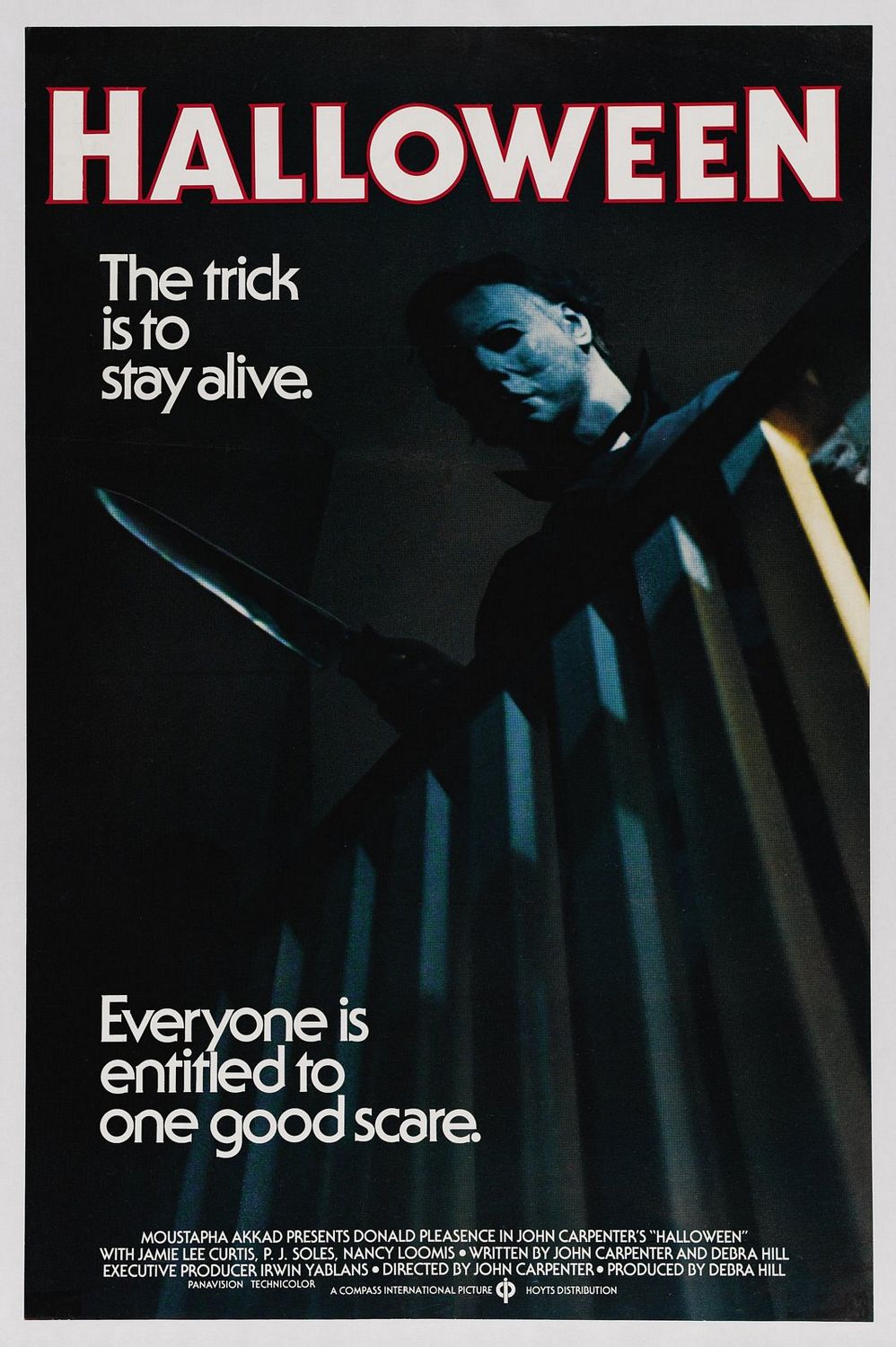
halloween-1978-poster

“John Carpenter’s Halloween”

Despite the many imitators and endless sequels, not to mention the two movies directed by Rob Zombie (which was actually pretty good), there’s no beating the granddaddy of them all. Carpenter’s film is a true horror classic with a music theme I never get sick of listening to. All these years later, the original “Halloween” has lost none of its power to creep you out as it offers audiences a truly terrifying experience.

There are moments which have stayed with me long after I saw “Halloween” for the first time. That moment where Michael Meyers kills the boyfriend and then tilts his head from side to side always gets to me. Plus, the ending leaves you with the unnerving truth of how evil never dies.
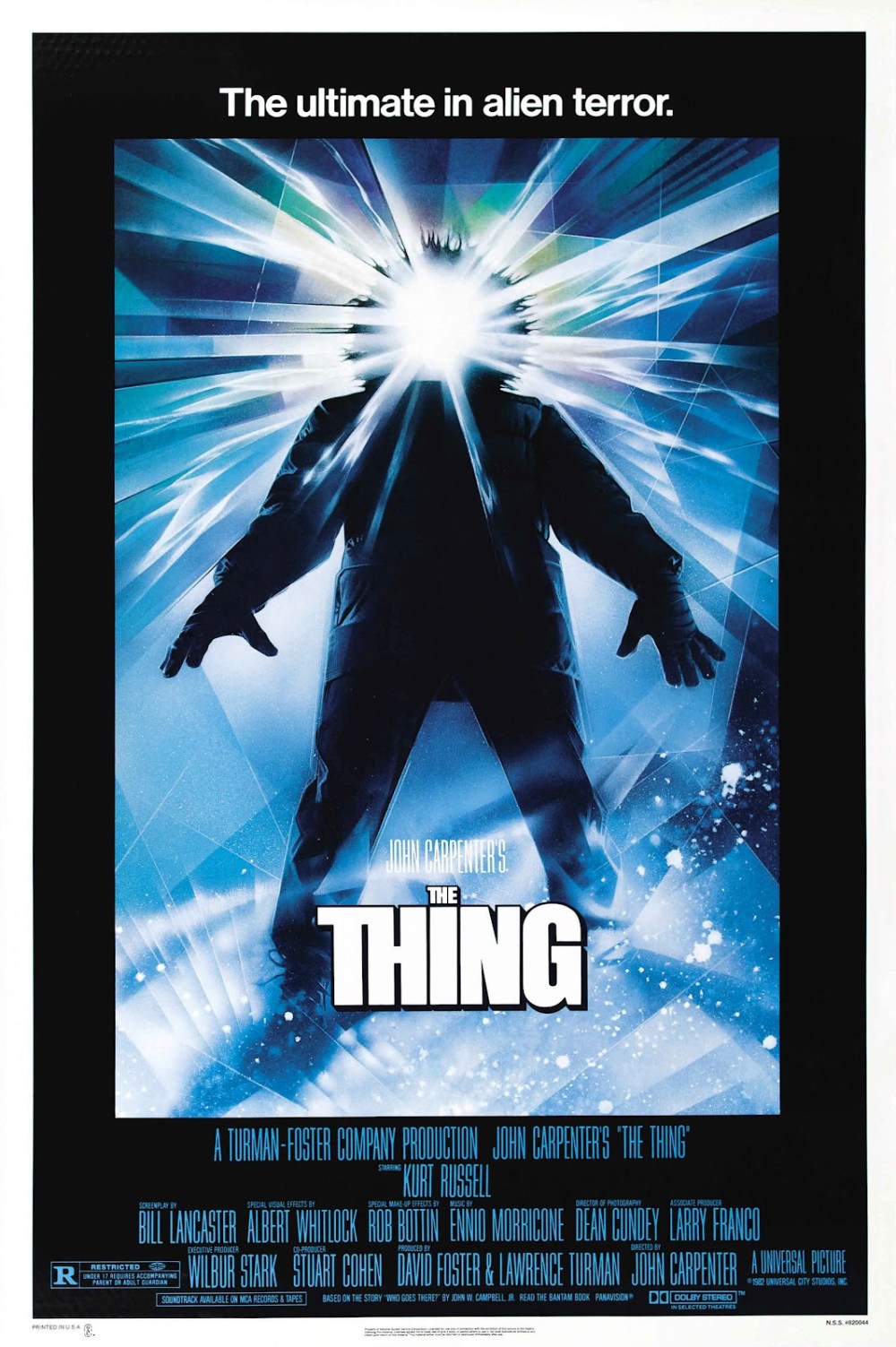
 

The Thing movie poster

“John Carpenter’s The Thing”

While his original “Halloween” remains a true classic, Carpenter’s remake of “The Thing” is his masterpiece. The film bombed back in 1982, but it has since gained a huge cult following and is now considered one of the best horror films ever made. The story of a group of scientists doing research in Antarctica, one of the most isolated places on Earth, who get copied almost perfectly by an alien is far more effective today than when it first came out. “The Thing” is a great example of how to keep escalating tension throughout a movie’s entire running time, and Rob Bottin’s incredible work on the makeup and effects still looks disgustingly brilliant to this very day.


The Texas Chainsaw Massacre poster

“The Texas Chainsaw Massacre”

I finally got to see this movie all the way through for the first time a couple of years ago when I rented it from Netflix. What I thought would be a fun and hopelessly dated 1970’s movie turned out to be more horrifying than I ever could have imagined. Even while watching it on my 32″ television, “The Texas Chainsaw Massacre” proved to be a brutal cinematic experience which has lost none of its power to make you shrink in your seat. With a movie like this, it’s not what you see that gets to you; it’s what you don’t see which messes with your head, and that makes this classic of the most unnerving movie going experiences you will ever endure.
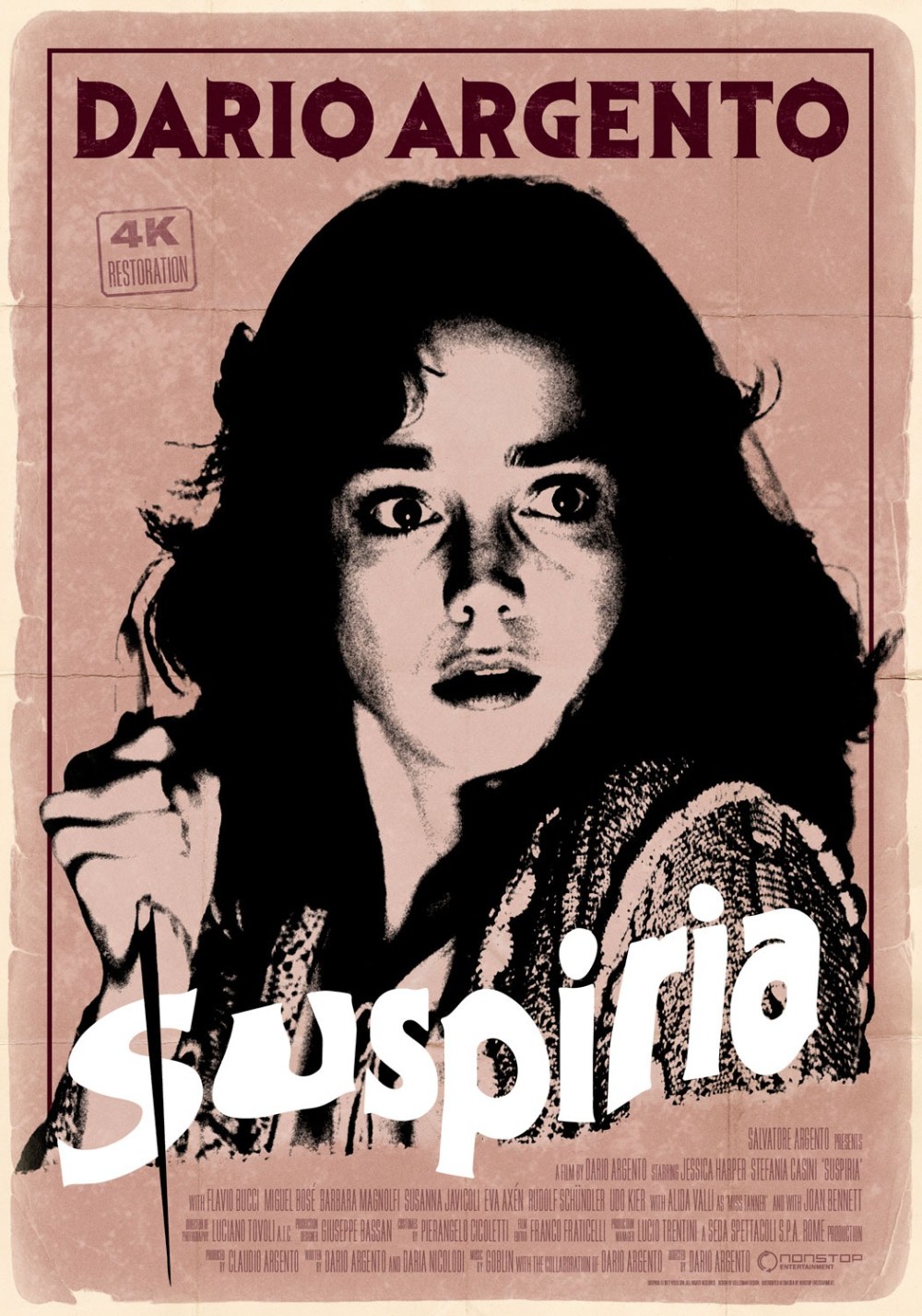
 

Suspiria 4K restoration poster

“Suspiria”

It was released 40 years ago, and it remains Dario Argento’s true masterpiece of horror. There are very few directors who can make a grisly death look like a beautiful work of art. The tale of an American female dancer who comes to a ballet school which turns out to be a witches’ coven doesn’t always make sense, but then again, a lot of Argento’s movies don’t. The movie is still scary as hell and beautifully horrific in a way most horror films can only dream of being today. A friend of mine once told me that if she were ever to be murdered (heaven forbid), she wants it to look like something out of a Dario Argento movie. I see what she means.
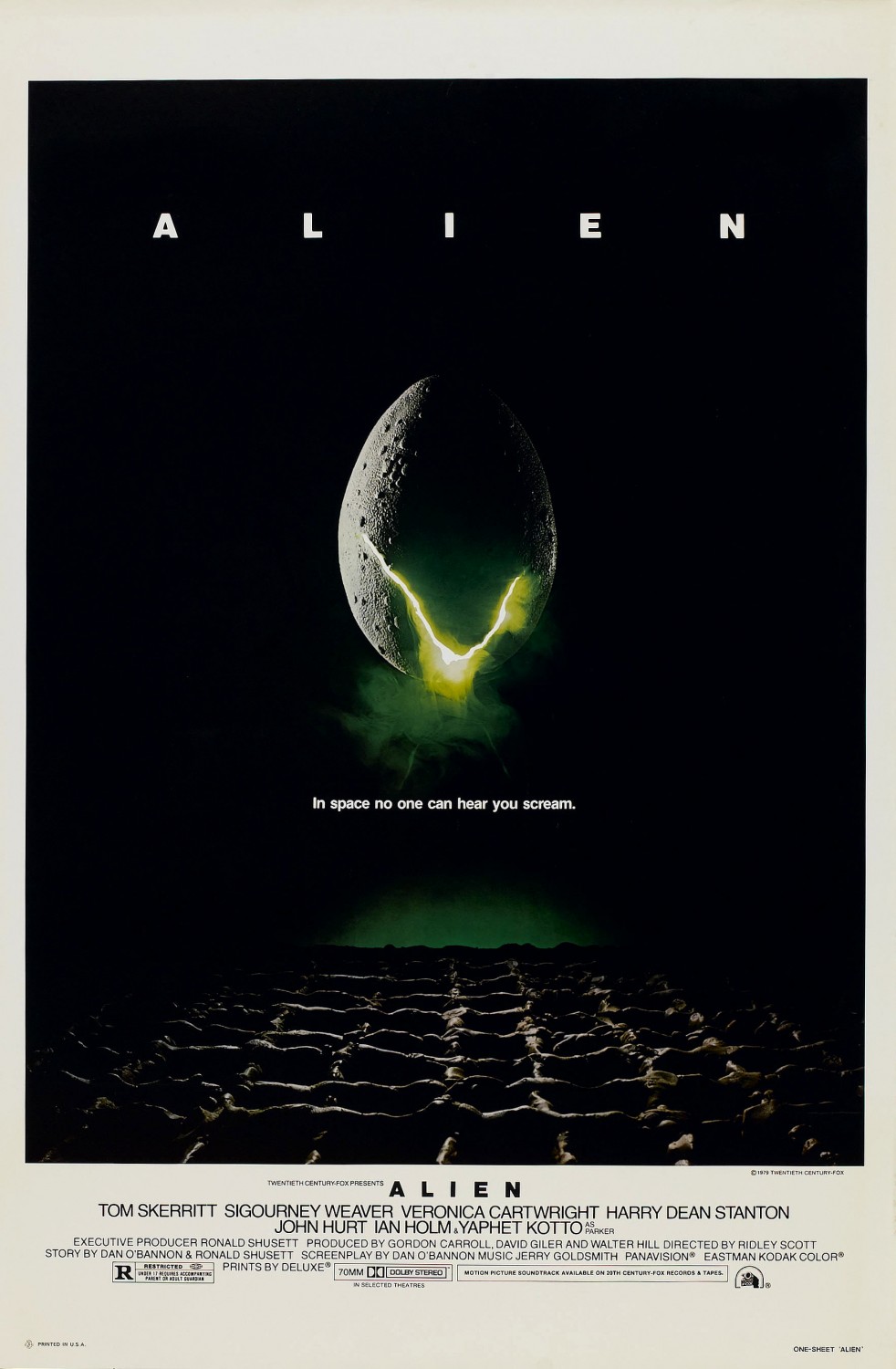
 

Alien movie poster

“Alien”

Be it the original version or the director’s cut, Ridley Scott’s “Alien” is still an overwhelmingly terrifying experience to sit through. When I rented this one on videotape years ago and watched it on my parents’ 13-inch television set in their bedroom (they robbed me of using the family room), I found myself hiding my eyes at key moments. The silence really got to me, and I impatiently waited for Jerry Goldsmith’s score to come back on. Keep in mind, I actually saw James Cameron’s “Aliens” before I saw this one, and it still scared the hell out of me!
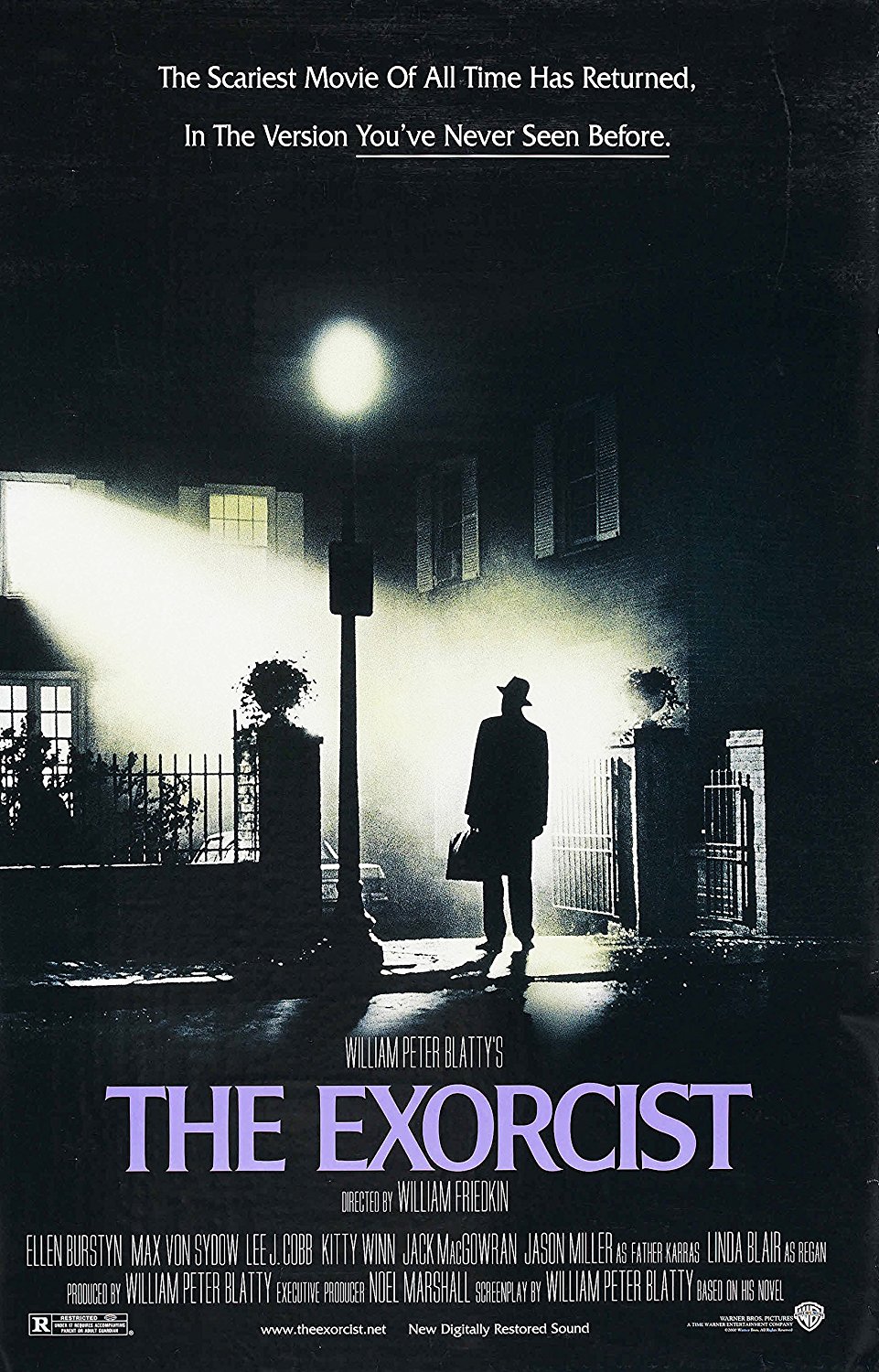
 

The Exorcist movie poster

“The Exorcist”

I tell you, these horror movies from the 1970’s still have the same power to shock you today as they did when first released. When William Friedkin’s “The Exorcist” was re-released in “the version you’ve never seen,” it still had a visceral power to unsettle us regardless of the passage of time. The story of a girl who becomes possessed by an ancient demon benefits greatly from a documentary feel which has that “you are there” feel, and it almost felt like I wasn’t watching a movie, but instead a real-life event which somehow all got caught on camera.
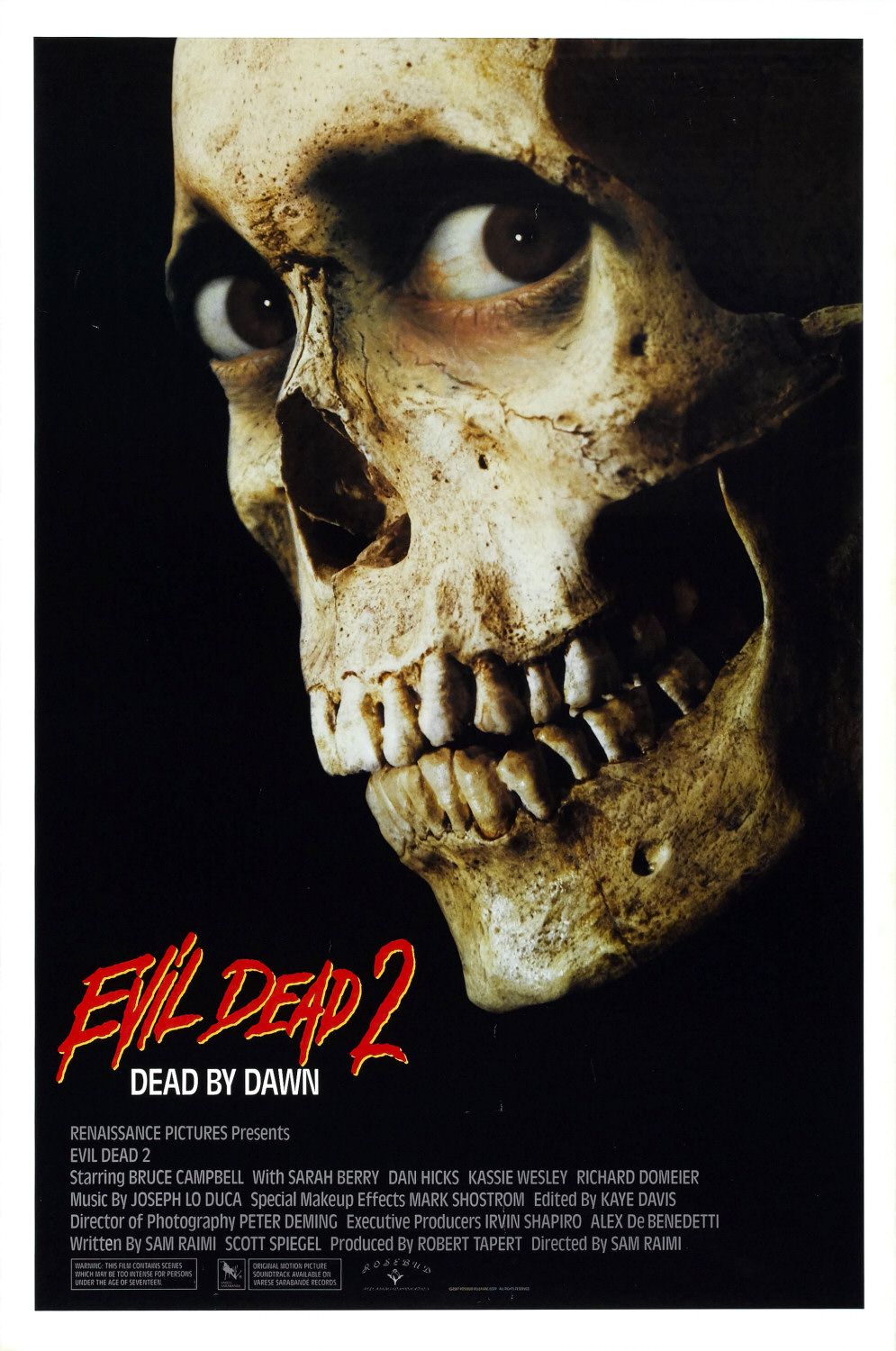
 

Evil Dead II poster

“Evil Dead 2: Dead by Dawn”

All the “Evil Dead” movies are great fun, but if you have to go with just one, then I recommend “Evil Dead 2: Dead by Dawn.” On a budget of $3 million dollars, maybe even less than that, director Sam Raimi gave us one of the most endlessly creative and hilarious horror movies you could ever hope to watch. After all this time, it remains as scary as is funny. Plus, you have Bruce “Groovy” Campbell in his most iconic role as Ash, the pussy whipped salesman from S-Mart who keeps getting chased by the demons he was dumb enough to awaken from their slumber. Campbell gives a fantastic performance even if he keeps telling us he’s not much of an actor. This is so far from the truth, but you do have to admire the sense of humor he has about himself, and you haven’t lived until you listen to one of his “Evil Dead” commentary tracks.


28 Days Later movie poster

“28 Days Later”

“Slumdog Millionaire” director Danny Boyle was said to have reinvigorated the zombie genre with this propulsive horror thriller where they are anything but slow. In this film, the zombies, or the infected as they are referred to are not the real enemy, we are. The virus the infected have been stricken with represents our inability to face the darkness inside of ourselves which sooner or later rises to the surface. There is no let up on the tension in this movie, and the thrills come fast and furious.
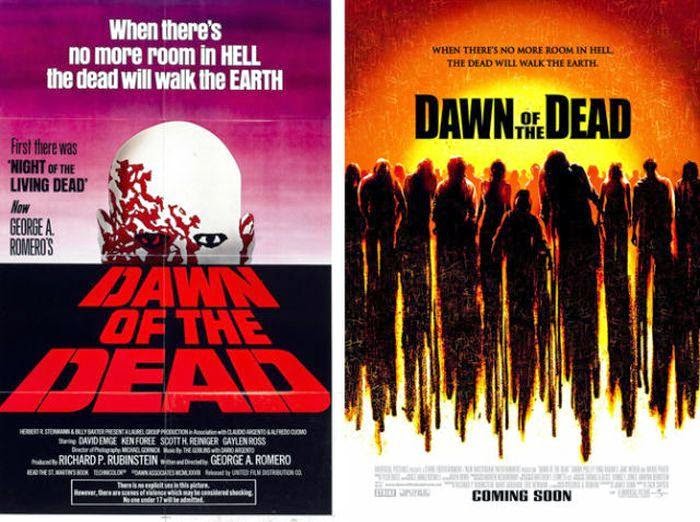
 

Dawn of the Dead original and remake posters

“Dawn of the Dead” (the original and the remake)

This one is a tie because both versions of this movie stand strongly on their own merits. George Romero’s brilliant sequel to his classic “Night of the Living Dead” is really a satire of the consumerist society we all live in. You know, the one which encourages us to buy all sorts of things which are said to make you happy, and yet all the money and objects you purchase end up making you feel empty inside. This is what Romero is saying with this film, and he does this while providing us with a great deal of blood, gore, beheadings, eviscerations, decapitations, and whatever else he could afford when he made “Dawn of the Dead.” All of you in the Fangoria crowd will be more than satisfied with this one, but you knew that already.

Zack Snyder, who later went on to direct “300,” “Watchmen” and “Batman vs Superman: Dawn of Justice” helmed this remake which turned out to be the best of its kind since “John Carpenter’s The Thing.” This one is more of a straight forward horror action film with a surprising amount of emphasis on character development. It also features Canada’s greatest import in the lead role, Sarah Polley. The remake of “Dawn of the Dead” turned out to be a visceral thrill ride, and it allowed us to invest in the characters in ways most horror movies typically avoid.
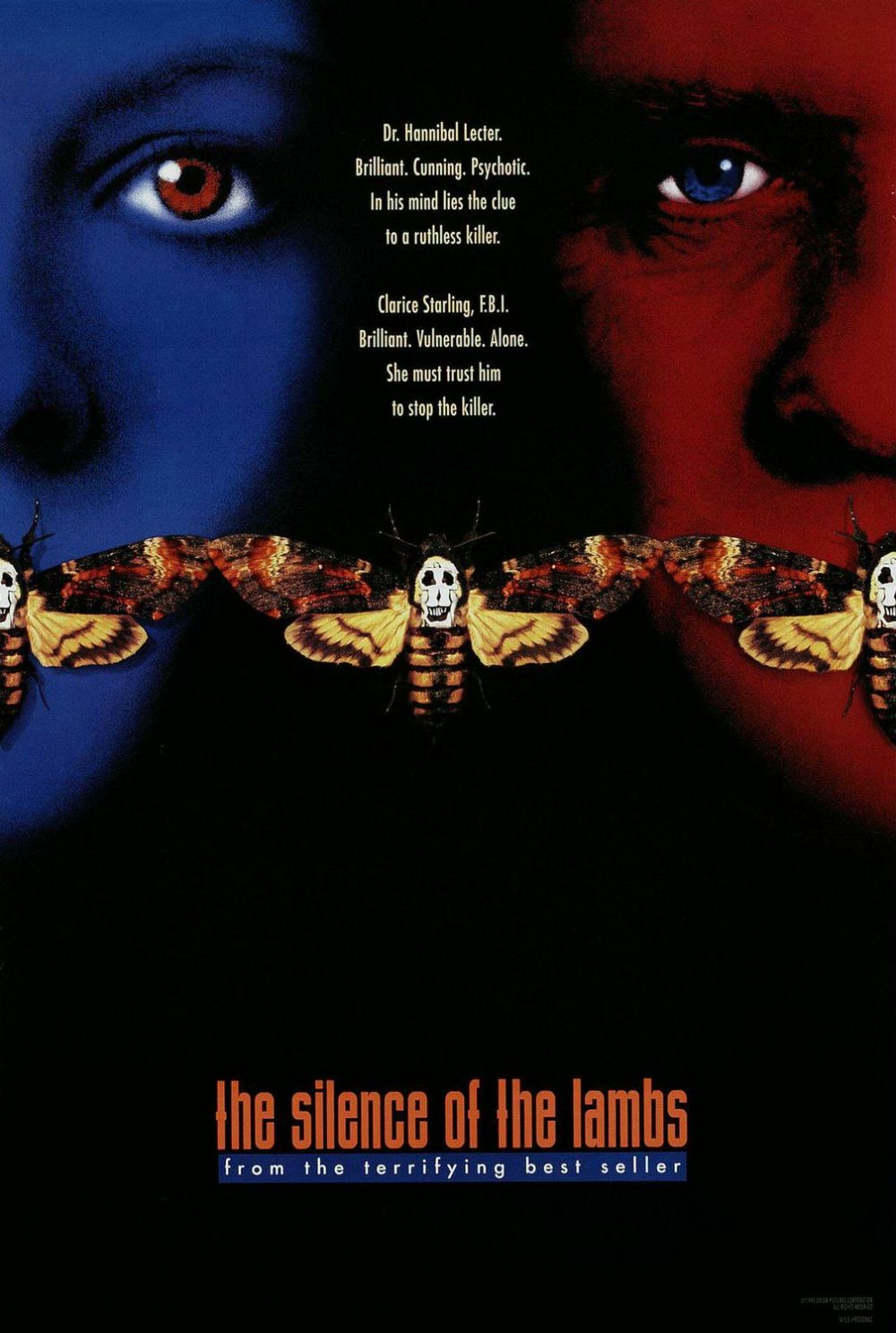
 

Silence of the Lambs poster

“The Silence of the Lambs”

The specter of Hannibal Lecter, as portrayed by Anthony Hopkins, never fails to unnerve me like he did when I first saw this movie on the big screen. Jonathan Demme’s Oscar winning classic remains one of the definitive serial killer films ever made. Hopkins’ performance is like a perverse love letter to HAL from Stanley Kubrick’s “2001” whose voice inspired his performance. We also get one of cinema’s greatest heroines with Clarice Starling, brilliantly played by Jodie Foster.

Have a happy Halloween everybody!

Blu-ray Review: ‘Prince of Darkness’

Prince of Darkness blu-ray poster

It continually amazes me how the movies of John Carpenter have endured years after their release. Many of them were critical and commercial disappointments when they first came out, and it seemed for the longest time that Carpenter would forever be trapped in the shadow of his most successful movie, “Halloween.” “Prince of Darkness” was one of those movies, but it has long since gained a cult following to where the original DVD release became a very valuable collector’s item once it went out of print. Now, Shout Factory has released a special collector’s edition of it on Blu-ray, and it shows us why this movie has lingered in our minds long after we first saw it.

“Prince of Darkness” is about a research team of academics, students and a priest who discover an ancient canister in the basement of an abandoned church. This canister contains a liquid which ends up turning people into zombies, and the team eventually realize they have unknowingly unleashed the evilest thing imaginable as it could destroy anything and everything. It is not your typical horror movie as it deals with theoretical physics and atomic theory, but once you get into the story and look closely at the theories being explored, everything becomes quite terrifying.

I won’t bother going into how great the audio and visual elements of this Blu-ray are because it goes without saying “Prince of Darkness” has never looked as good as it does here. Let’s just skip ahead to the special features on the disc as the ones included here will provide fans with a wealth of information.

First off, the Blu-ray case states there is a commentary track with John Carpenter, but what it neglects to mention is that he is joined on this track by actor Peter Jason. Jason plays Dr. Leahy in “Prince of Darkness,” and he has appeared in many of Carpenter’s movies from this one to “Ghosts of Mars.” Carpenter’s commentary tracks are always great fun to listen to, but they are even more entertaining when he’s pared with someone else, and the conversations he has with Jason are tremendous fun as they discuss what it was like making a horror film with a budget of only $3 million dollars. Actually, this track was originally included in the Region 2 DVD release of “Prince of Darkness,” so it’s nice for those us who lack multi-region players to finally get the opportunity to listen to it.

Another special feature to is a brand-new interview with Carpenter called “Sympathy for the Devil.” In it, Carpenter explains how he had been making big budget studio movies before “Prince of Darkness” and had gotten tired of making them. With “Prince of Darkness,” he got the opportunity to go back to making low budget features where he had complete creative control. Carpenter speaks of how a book on quantum physics inspired him to write the script for this movie, under the name of Martin Quatermass, and of how he loves to view the apocalypse through movies even though he does not look forward to it in real life.

There’s also a brand-new interview with musician Alice Cooper who plays the leader of the street people who surround the abandoned church (he is billed as “street schizo”). The interview is called “Alice at the Apocalypse,” and Cooper talks about how he grew up on black and white horror movies like “Creature from the Black Lagoon” which he said “scared him appropriately.” He even admits he was glad his character had no dialogue, and I loved how he described how his songs get at how Satan’s greatest trick is in getting you to believe he doesn’t exist.

Then there’s “The Messenger,” an interview with actor and Special Visual Effects Supervisor Robert Grasmere. Grasmere portrays Frank Wyndham, the one guy who thinks that the research team’s job at the abandoned church is just a bunch of hooey. He starts off the interview talking about the practical effects used in “Prince of Darkness” and of how much of a nightmare the canister was to move around the set. Then he goes into how he got cast as an actor in it, and of how he ended up speaking some of the movie’s most famous lines of dialogue.

I want to take this time to tell you “Prince of Darkness” features of my favorite scores by Carpenter and Alan Howarth. Howarth himself shows up for the interview “Hell on Earth” in which he discusses how they worked on the music for this movie. Howarth has done interviews on other Shout Factory releases like “Halloween II” and “Halloween III: Season of the Witch,” but this feels like the most detailed interview he has given on working with Carpenter yet. It’s also fascinating to hear what it was like to make a film score before everything was recorded digitally.

Other special features on this collector’s edition include an episode of “Horror’s Hallowed Grounds” in which host Sean Clark toured the locations where “Prince of Darkness” was shot. Some of it was filmed at Carpenter’s Alma mater USC, and the church used is located in downtown Los Angeles and is now known as The David Henry Hwang Theatre. The scenes of the church were shot in a deserted ballroom in Santa Barbara which has long since been demolished.

You will also find the movie’s theatrical trailer which seems to imply things were supposed to end a little differently than it did. There are also radio spots which are amusing to listen to, a still gallery, and the alternate opening from the movie’s television version. Regarding the alternate opening, it makes the whole film look like it was all a dream in Jameson Parker’s head, and I never quite understood why Universal Pictures did this (it was definitely not Carpenter’s idea).

In addition, there is an easter egg to be found on this Blu-ray. When you click on the Bonus menu, you will see a cross on the right side. Click on it, and you can watch a Q&A with Carpenter at Screamfest 2012 where “Prince of Darkness” was screened in honor of its 25th anniversary. The whole thing was shot on iPhone so you will need to pump up the volume a bit to hear what is being said.

“Prince of Darkness” is by no means a perfect movie. Some of the acting is weak and the special effects do show their age, but it is still a very compelling horror film which deals with scientific theories that give the story more of an edge. Those of you who are big John Carpenter fans would do yourselves a disservice by not checking out this release. Those who really like this film will agree Shout Factory has given it the respect it deserves.

Exclusive Interview on ‘The Houses October Built 2’ with Bobby Roe and Zack Andrews

The Houses October Built 2 poster

Just as the found footage movie looked to be taking its final breath, “The Houses October Built’ came along and provided horror fans with a unique angle on it as a group of friends ventured across America in search of the ultimate haunted house attraction. While the movie ended with these friends suffering a fate not all that different from what Gene Bervoets experienced in “The Vanishing,” “The Houses October Built 2” shows them to be alive and also internet superstars thanks to the videos of them being buried alive on YouTube. Vendors are now offering to pay them to visit Halloween haunts, and Zack, Bobby, Mikey and Jeff jump at the opportunity to cash in on their celebrity. Brandy, however, opts out as the trauma she suffered in the first film is something she is still coping with.

But alas, the Blue Skeleton, the group which takes the extreme haunt to another level and who kidnapped the group in the last film, are hot on their tails as they look determined to top everything they pulled off before. The stakes are raised even higher when Brandy changes her mind and decides to join her friends. But as they get closer and closer to the ultimate Halloween haunt known as Hellbent, one has to wonder if these friends will once again survive their haunted house travels, or will they instead meet their doom.

It was a pleasure speaking with “The House October Built 2’s” director, writer and star Bobby Roe recently, and he was joined by his co-star and co-writer Zack Andrews. As the original ended on an ambiguous note, coming up with a sequel must have been a serious challenge for them as you have to wonder what could possibly motivate these same characters to do another round of Halloween haunt exploring after the horrors they previously experienced. Both Bobby and Zack explained how they came up with the sequel, how they managed to find a way to get Brandy to rejoin her friends, and of the kind of Halloween haunts they wanted to explore this time around.

Check out the interview below:

Ben Kenber: This is a sequel I never thought would ever be made considering how the first film ended. With part two, you answered some questions which some may say would have been best left unanswered. When you were making the original, did you have a sequel to it in mind?

Bobby Roe: The haunt world is so huge, and we just wanted to be able to… Expanding is probably the primary goal of a sequel, expanding the world, and hopefully that is done with the Blue Skeleton. I know the ambiguity of the ending of part one is a real pro for some, and then for others, without having a bow on it, it was a real problem. So hopefully this part two services everyone. In some ways, it’s just about, at the end of the day, how extreme can you get.

Zack Andrews: I think the original stands on its own, but Bobby’s and my vision was always to have that kind of as an intermission and then have part two kind of pick up at that place and continue to tell the story and, as he was saying, that world is so big. In the first movie, we go to big businesses but they are more ma and pa operations. And in this film, as you can see, we kind of expand the world and end up at the Zombie Pup Crawl with 30,000 people. Just being able to see Halloween in a bigger scope, we continue to do that in this world.

Ben Kenber: After the first movie, you became celebrities to these Halloween haunts, and we can see this in part two. Did the first movie make going to these haunts easier or more challenging?

Bobby Roe: Sometimes it is more challenging because, if they recognize us, people try to up their game or at least make sure they are extra scary. Sometimes for us, we are thinking how far are people going to go. We received emails weekly since the first film came out which asked us to come and visit.

Zack Andrews: The community is… There are all these little families who come together to put these haunted houses on, and everybody has been really receptive to us through the first movie and the second movie. I think it is a win – win situation because they respect what we are trying to do by making the movie, and we respect their business. We love meeting all these people and coming into their world, and it feels like, so far, they like having us.

Ben Kenber: It certainly looks like they love having you guys around. When you were filming this sequel, did you talk with these Halloween haunt people ahead of time to let them know what you were going to do, or did you proceed incognito and went from there?

Bobby Roe: We had to go the legal route and get permission, but I think a lot of times they let us have free range which is really important because some of the sets were really beg. The owners, there is a lot of gratitude towards them because they have allowed us this blank slate on their haunts, and hopefully in return it brings a lot of business to them as well.

Ben Kenber: It’s amazing how big some of these haunts are, especially the haunted hay ride.

Zack Andrews: Oh yeah. It had thousands and thousands of people every night. That haunted hay ride was pretty awesome.

Ben Kenber: With this sequel, you are clearly moving on to bigger game as these haunts are much bigger than the ones we saw in the original. Were there any criteria you set for yourselves in terms of selecting haunts this time out?

Bobby Roe: It was important for us and to the characters’ story in there because of Brandy’s situation. Her deal for coming along is no haunted houses, so I think the guys try to loophole that by going to these more events until things go awry. So, to make her a little more comfortable, and we know that’s kind of a watermelon to swallow for the audience, why Brandy would come back having gone through the trauma that she did in part one, with her newfound success, with money or with whatever that you would think that character would eventually be brought back would ease her in. With these dark mazes and indoor haunts, as amazing as some of them are, they kind of bleed together on-screen. We thought using the Zombie 5K or the pub crawl would kind of give it a different range, and we made sure that it didn’t feel as episodic or that you were watching the same haunt over and over again. We wanted to make sure that didn’t happen.

Ben Kenber: I really dug the Marilyn Manson quote you opened this movie with: “Times have not become more violent. They have just become more televised.” What made you decide to use that quote?

Bobby Roe: We started part one with a quote that we felt summed up the entire movie really well, and that was the quote “I’m not afraid of werewolves or vampires or haunted houses. I’m afraid of what real human beings do to other real human beings” (Walter Jon Williams). That was what part one was, and I think for part two, this quote summed up everything we talked about, and I just thought it was very interesting on top of it being an influence on us and the macabre horror world as well. We always really liked Marilyn Manson.

Ben Kenber: Considering what the characters, especially Brandy, went through in the first film, it must have been very tricky to come up with a good story line in which they would go through a situation very similar to what they endured before. How long did it take you to come up with a good reason for Brandy to rejoin the group while writing this film?

Zack Andrews: Well we knew this, as Bobby said earlier, would be the biggest watermelon to swallow. Why in the world would she do this again? We show up at her house, and I would think that it’s kind of the roll your eyes moment of okay you are just going to convince her, so it was important to us to try and be as authentic as possible and have Brandy just say no, and then we go out on the road on our own. But when we can’t do what we have set out to do because they are not going to pay us, that felt like an authentic way to call back and do a little begging and pleading because that’s how this would go down in real life (laughs).

Bobby Roe: Exposition in found footage is very tough. If you play by the rules, it’s very hard to give people those side stories where there shouldn’t be a camera. We had early on in the script that she needed money for school, her mom was sick, things like that, and they just become heavy-handed than they would in a normal narrative. So we kind of just went the more organic route and just had her say no, and then when she’s coming around we understand that money comes into play. Hopefully you understand the chemistry and the love for everybody as friends, and I think she’s coming for Zach and I because we need it. She’s coming along and being a good friend, and at the end of the day the simplest answer is sometimes the correct one. So hopefully people understand her journey and why she came along with us.

Ben Kenber: This sequel has a number of different POV’s from the characters, Blue Skeleton, and of course the drone. What was it like balancing out those various POV’s?

Bobby Roe: Well you still have to be conscious of where the camera crew has the camera. If you have seen the movie, you can understand a little bit more, call it our cheats, about certain ones, but for the most part we played by the rules. The drone was a character, and we showed the opening of the drone and that Jeff got it as a present. We thought it would be really cool to have him pilot it in the RV, so all these great wide established shots that you see in every other movie with helicopters, why can’t you do that in found footage while you’re driving? We were able to drive it from inside the RV as long as the drone stays within a certain range from us and follow us and tail us. So that’s very realistic, so why can’t we get those big pretty shots that you can in these giant features? We wanted to make sure that it made sense and that you believe in it as an audience and who’s filming this. As long as you make the drone a character, then hopefully we have a bigger and wider scope in part two as much as we can get. When there were 30,000 zombies in Minneapolis, we wanted to capture that the best that we could, and that was from the sky.

Ben Kenber: Do you see yourselves making a part three?

Bobby Roe: The haunt world is so huge and vast that the story is not done as long as the Blue Skeleton is growing, and hopefully at some point the legend of the Blue Skeleton starts to grow bigger. There’s much more story to tell, and there’s definitely a lot more haunts to show.

Ben Kenber: Have you thought about going outside of America to other countries to explore their Halloween haunts?

Zack Andrews: No comment.

Bobby Roe: We have thought about that. Without saying too much, we went over to ScareCON in London and spoke to a bunch of haunted house owners last year and it was really cool to see their take on a holiday that’s way bigger in America, and they really embrace this culture all year. It’s not just Halloween. We experience some things over there I think people would want to see.

I want to thank Bobby Roe and Zack Andrews for taking the time to talk with me. “The Houses October Built 2” will open in theaters and be available On Demand/Digital HD on September 22, 2017.

Click here to check out the interview I did with cast, writers and director of “The Houses October Built” which I did for We Got This Covered.

Alan Howarth Discusses Working on Film Scores with John Carpenter

alan-howarth-photo

A screening of John Carpenter’s “Assault on Precinct 13” at the Egyptian Theatre in Hollywood brought out a number of guests such as Austin Stoker who played Lieutenant Ethan Bishop and Douglas Knapp who was the film’s director of photography. But the one guest I was really interested to hear from was Alan Howarth, the composer and sound designer who collaborated with Carpenter on a number of his film scores from “Escape From New York” to “They Live.” Howarth even took the time to do a live performance of his and Carpenter’s music, something I never thought I would ever see in my lifetime.

During the Q&A, Howarth talked about how he came to work with Carpenter, their process for scoring his films and his favorite film scores of the ones they worked on together. Howarth wasn’t actually on board for the original “Assault on Precinct 13” though he did work on a remastered version of the soundtrack for it and “Dark Star” for BuySoundtrax.com. It wasn’t until he worked on his first big film when he became inadvertently acquainted with Carpenter.

alan-howarth-and-john-carpenter

“I came on board at ‘Escape from New York,’ and that was kind of happenstance because my very first movie, less than a year earlier, was ‘Star Trek: The Motion Picture,’” Howarth said. “I had come on as the sound designer and created the sounds of the Enterprise like the warp drive and the transporters and stuff like that. The picture editor from that movie, Todd Ramsay, his next assignment was ‘Escape from New York,’ so I had slipped him some cassettes and he knew I was a musician. John had worked with another fellow on ‘Halloween,’ Dan Wyman, and there was some change up there, and so literally the guy comes over to my little, rented house in Glendale and set up in my dining room. It was nothing formal. I sat down and I played him a few things and he goes, ‘okay, let’s do it.’ That was it.”

“John always wanted somebody who knew about the technology,” Howarth continued. “In fact, a couple of times I tried to explain to him how it worked and he was all, ‘I don’t want to know that. It’s your job to make it work, make it in tune, and when I push down the note the red light is on.’ So that’s where I started, but he’s a collaborative person. I love working with people. I’m from the bands and rock & roll. I was one of those people. So, it was really great and my first film score was ‘Escape from New York.’”

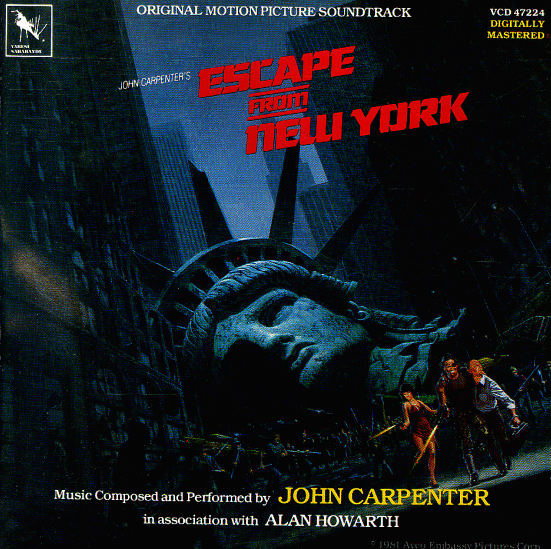
escape-from-new-york-soundtrack

From there, the two of them worked on several projects all the way to “They Live.” As he continued discussing the work he did with Carpenter, we came to discover he played a larger part in Carpenter’s film scores than we ever realized.

“Next, he went off to do ‘The Thing’ and they wanted to make ‘Halloween II,’ so again John said, ‘I’m going to be busy. You’re going to have to do Halloween.’ Same thing, so I did ‘Halloween II’ and I used his original ‘Halloween’ music, overdubbed it and created new stuff.”

After “They Live,” they seemed to part ways for reasons Howarth never explained, but it gave him the confidence to start scoring films on his own. Of course, he was still eager to get Carpenter’s blessing when it came to a franchise the director never planned to start.

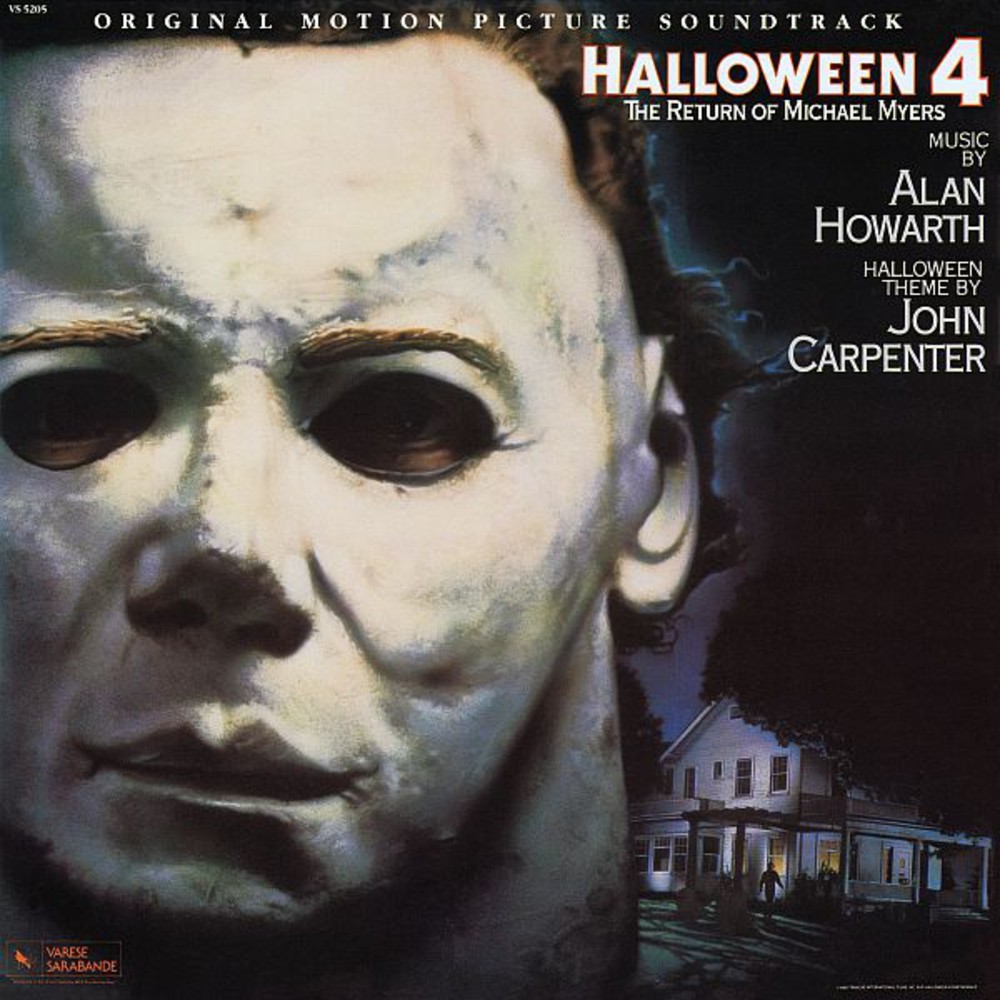
“I found out they were going to do ‘Halloween 4’ and I said to John, ‘they asked me to do this and you’re my buddy and I want to do something with this.’ He said sure, so I wound up doing ‘Halloween 4, 5 and 6’ and that really launched me as a composer which is what I love to do the most, and as we are in a world of economic stasis, I had to do it all by myself. As you see, this is my studio right here. It’s all down to a laptop and a guitar and some recorders when it used to be a million dollars’ worth of stuff. Not that that stuff isn’t valuable, but you can do without it now,” Howarth said.

halloween-4-original-soundtrack

One audience member asked which of the scores he did with Carpenter is his favorite, and the answer was a little bit of a surprise.

“I think ‘Halloween III’ because it was really an artistic departure for both of us, and ‘Big Trouble in Little China’ is the most produced and has the widest range,” said Howarth. “We had rock and roll and scary things and chases and this whole Asian influence, so it was really a broad scope of things. That’s one of my favorites.”

halloween-iii-soundtrack

Like many in the audience, I was eager to hear how Howarth and Carpenter would go about working on a score. Did they start working on it before shooting began? Did they work on it after shooting was finished? Did they think about the music while making the film? We hear how composers spend so much time preparing the perfect score for a movie, but Howarth made his process with Carpenter sound quite simple.

“It’s all one big jam. It’s improvised,” Howarth said. “Sometimes he would come in with a theme in mind. I’d set up the piano before he came over and started something. A lot of it we just made up on the spot. In fact, I introduced him, because I’m a technical person, to the synchronization between a videotape and a tape recorder. It almost seems like we were the first to do it. Before that, everything was done with a stopwatch. So, you would make a cue that was three minutes long and kind of set a tempo, and then you would go back and literally copy it on a Moviola and fool around with the scene.”

“This was the first time you could watch the movie and play at the same time, so he referred to that as the electronic coloring book which made it even easier to improvise,” Howarth continued. “Through that whole period we also benefited from the evolution of electronic music instruments, so from analog synthesizers and a 24-track machine to midi and digital sequencers, these scores had a new installation in the progress of musical instruments, so it’s almost a chronology or a music lesson in the gear.”

Another audience member asked Howarth how long he and Carpenter would jam until they found something they really liked. His answer illustrates how fast these two worked on their music.

“We did a cue a day,” Howarth said. “One quote I always get from John, and it’s just really true, he said, ‘Alan if you want to be a director you only need two important words, yes and no. Just be very decisive. Even if you say no today or yes today and tomorrow, you change your mind. You got twenty or thirty people that are taking direction, and you don’t want to leave them in a lurch, so it’s better to just be decisive.’ So, it was a couple of times we did something and came back and said that wasn’t working, but it wasn’t very often.”

Having worked in movies and music all these years, Howarth clearly has a wide knowledge of musical instruments and electronics. When asked what he would consider as the go to synthesizer, Howarth’s answer shed some light on how far musical technology has come over the years.

“I chose all the gear and I arrived at being a fan of the Prophet 5,” Howarth said. “It sounded good, but the other reason was that it was the first programmable synthesizer. Prior to that, you had to literally make little diagrams of where all the knobs and switches were to get back to the same sound, so this was the first time you could do something and save it. That really moved things forward a lot, and I brought in the programmables and the sequencers.”

One big question many had about the music Carpenter and Howarth worked on was the score to Carpenter’s remake of “The Thing.” This was Carpenter’s first big studio movie, and it allowed him to work with his all-time favorite composer Ennio Morricone. However, when you listen to the score, some it sounds like it was done by Carpenter and Howarth, and this is especially the case with the movie’s main theme. Howarth went into detail about who really composed the score to “The Thing.”

“They (Carpenter and Morricone) took a meeting, and he (Morricone) saw a little bit of the footage and he scored his score,” Howarth said. “He comes back and, of course, how does John talk to his hero about what just went down and where he wants to go? And there’s a translation issue between English and Italian and all this other stuff. So John played the stuff we did for ‘Escape from New York’ and he says, ‘Can you do something like this?’ Ennio goes back for a second pass now with keyboards, and that’s where ‘The Thing’s’ theme came from. So it’s Ennio Morricone doing John Carpenter really. At the very end after all that, there was one more pass on about four or five cues where John came over for just an afternoon and we did some cues that kind of sound like ‘Christine’ that you can tell is basically our synth stuff. So basically, it took three scoring passes on the show to get it.”

the-thing-soundtrack

It was a real treat to have Alan Howarth talk about his musical collaboration with John Carpenter. The film scores they worked on are among my favorites of all time, and I never get sick of listening to them. Howarth continues to work as a film composer, and his more recent credits include scores for “Backstabbed,” “The Dentist” and “House at the End of the Drive.” Here’s hoping we get to hear more scores from him in the near future.

Halloween II (2009)

halloween-ii-2009-poster

It’ll be interesting to see what people think of Rob Zombie’s “Halloween II.” With this sequel to his remake, he has not made your typical slasher flick even though it does contain some amazingly brutal and bloody moments. One crushing death plays like an homage to the fire extinguisher scene from Gaspar Noe’s “Irreversible.” I have also heard some complain because this sequel doesn’t even feel like a “Halloween” movie to them, but wasn’t that the whole point of this re-imagining? Do you really want the same old slasher formula we have long since gotten burned out on? Isn’t this why Zombie was brought on to do the remake? You know, to give this long running series a much-needed re-invigoration?

Zombie’s vision of Michael Myers may not be as scary as John Carpenter’s was, but I wasn’t expecting that to be the case. With Zombie’s take on the “Halloween” saga, what have here is more of a character study of how Michael became so infinitely evil, and this something we have seen much of in this never-ending franchise. “Halloween II” is definitely on a par with Zombie’s previous film, and everything comes around full circle to where there’s no doubt family is forever.

“Halloween II” starts moments after the previous film with Laurie Strode (Scout Taylor-Compton) walking down the street all bloodied up after shooting Michael dead at close range. However, it turns out Laurie didn’t kill him. The bullet must have bounced off his skull knocking him unconscious or something else along those lines. This seems to be a reasonable excuse to bring Michael back, and it is step from previous “Halloween” movies which managed to come up with ridiculous excuses to bring Michael back for another round with horny teenagers.

As Laurie is wheeled into the hospital crying hysterically, the first of many times she does so, shades of Rick Rosenthal’s “Halloween II” emerge, but this cannot be mistaken as a remake of sequel. Meanwhile, the drivers of the coroner van carrying Michael’s body end up smashing into a cow leaving them severely injured. This allows Michael to escape to live and see another October because, in the end, what is Halloween without Michael Myers?

Meanwhile, we see Laurie getting patched up in surgery, and the extent of her injuries is unsettling. The detail given to the doctors working on her is horrific very realistic, just the way Zombie wants it to appear. You look at Laurie’s mangled body, and you think to yourself it’s a miracle she lived through this dark, dark night.

“Halloween II” then moves to a year later as Laurie, still deeply traumatized by that horrific evening, struggles to go on with her life. She has since been adopted by Sheriff Lee Brackett (Brad Dourif) and lives with him and his daughter, Annie (Danielle Harris). While the previous movie was told through Michael’s eyes, this one is seen through Laurie Strode’s perspective, and she is no longer the person she once was.

One of the big differences with this sequel is the way it was filmed. Whereas Zombie’s “Halloween” was filmed in 35mm, he instead filmed “Halloween II” is in 16mm which gives everything a much harsher edge. This worked very effectively for him on what is still his best movie, “The Devil’s Rejects,” and it makes the killings in “Halloween II” feel all the more brutal. Michael doesn’t just slash his victims; he pounds them to a bloody pulp.

Tyler Mane once against gives us the most lethal and threatening Michael Myers ever unleashed on the big screen. Being as tall and hulking as Mane is, it’s a wonder why anyone would be foolish to take him on. Here’s another interesting thing about Michael in this one, he has a beard. That’s right, for the first time ever we get to see this iconic character with facial hair. This is ironic because Michael has proven to be very useful with knives to where I am convinced he can give himself the closest shave without ever having to use any shaving cream. Then again, Michael has more on his mind than facial hair.

Taylor-Compton’s Laurie Strode is not the chaste and resourceful character Jamie Lee Curtis gave us in the original, but she digs deep into this role and takes Laurie to places no ordinary person would dare go. You think she is at bottom when the movie starts, but she’s not anywhere near it. Taylor-Compton makes you care about Laurie as she comes to the realization of who she really is, and you want her to escape the abyss she is drowning in. You want to help her.

One especially good performance comes from Brad Dourif as he gets more screen time here. The sheriff he portrays here is not your typical clichéd stupid cop who makes all the wrong decision, but instead a caring adult and who is constantly looking out for Laurie and Annie. Dourif is great here in a way you would not usually expect an actor to be in a film like this, and he is one of the most underrated character actors working today.

That’s the great thing about Zombie’s “Halloween” movies; he is not out to give us the usual slasher flick. With these two films, he has taken the time to develop his characters to where they are not the usual pack of one-dimensional stereotypes the horror genre keeps relying on. While he still does employ the usual white trash characters who utter disgusting dialogue, it is clear he is moving beyond them now. This shows growth on his part which makes me look forward to his future work.

Zombie also conjures up some truly weird imagery throughout as we get a closer look into Michael’s deeply disturbed psyche. Sheri Moon Zombie returns as Michael’s mother, but this time she speaks to her murderous son from the grave and convinces him that if he kills Laurie, he can bring the whole family back together. Some may still criticize her acting abilities, but she is better than people tend to give her credit for.

Danielle Harris also returns as Annie Brackett, but Zombie doesn’t have her doing the same old things she did previously. Considering how Annie almost died, she is nowhere as foolish this time around (not completely anyway). Annie, along with her dad, is desperate to life Laurie out of her emotional abyss even as Laurie makes it incredible for them to even try to do so.

But of course, we cannot forget Malcolm McDowell who returns as Dr. Sam Loomis. This time around, the “Clockwork Orange” actor gives us a Sam Loomis who is a pure asshole getting high off the fame he obtains by exploiting his involvement with Michael and his family. Loomis is no longer the helpful psychiatrist he was before and is instead a profiteer off the misfortunes of others. His sudden change of heart towards the film’s climax may feel a little forced, but McDowell sells it to where we really feel his pain when he comes to accept the damage he has wrought on others.

The brilliant sound design in “Halloween II” also needs to be mentioned as well. Michael doesn’t just crash through windows and walls in this one. You feel him bashing his way through everything in his path, and it this movie a visceral thrill the other “Halloween” sequels could only dream of offering. Zombie is not out to give you a bunch of cheap scares, but is instead out to horrify you as much as possible as we suffer along with Laurie as Michael continues his endless pursuit of her.

Zombie also does a better job with suspense this time around, and it really boils in certain moments when our anticipation gets the best of us. We know Michael is going to strike, and we fear the bloody damage we know he will brutally inflict. I’m glad Zombie came back to do this sequel even though he originally wasn’t planning to. Having anyone else direct this follow up would have been a mistake.

John Carpenter’s “Halloween” was a one of a kind film which was never intended to start a horror franchise. Zombie is not trying to outdo Carpenter, but to merely make Michael Myers and all these characters his own. While “Halloween II” is not a masterpiece, he does stay true to his vision of this unstoppable monster and improves on his previous film quite a bit.

NOTE: The DVD and Blu-ray release of “Halloween II” contains the director’s cut of the movie. This version changes a few things and adds more scenes which focus on the characters more, and it’s even better than the theatrical version as it gives you an even clearer sense of what Zombie was trying to accomplish.

Theatrical Version: * * * out of * * * *

Director’s Cut: * * * ½ out of * * * *

Halloween (2007)

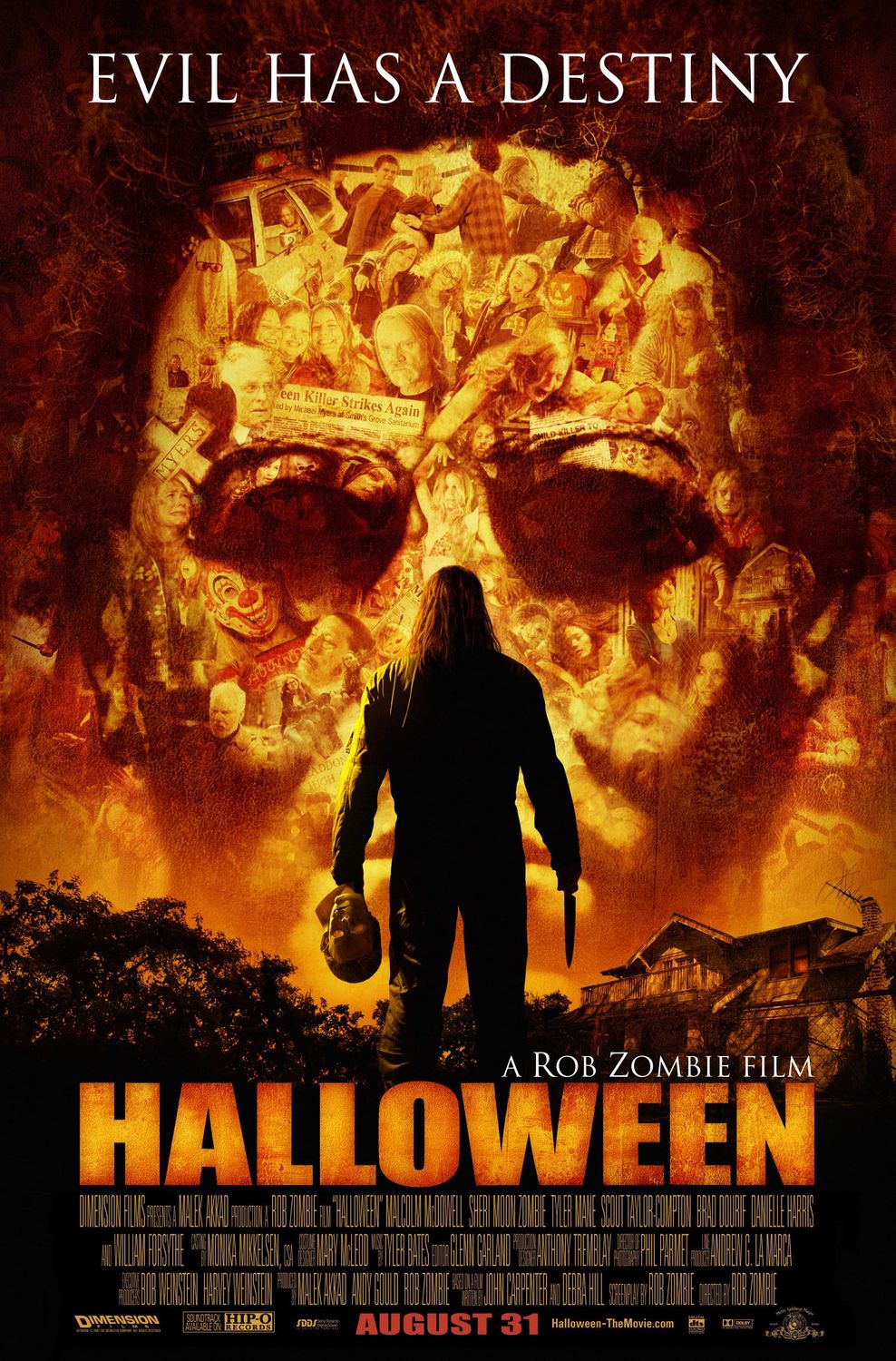
halloween-2007-poster

This one is a remake of one of the best horror films ever made. What could be the point of remaking it other than to make a quick buck? So many people have been milking this franchise dry for decades. Just when you thought Michael Myers was finished once and for all, he springs back with some utterly lame excuse for still being alive.

But what this “Halloween” remake has going for it is Rob Zombie who gave us “House of a 1000 Corpses” and the brilliant grindhouse flick “The Devil’s Rejects.” We all know just how much he loves John Carpenter’s original film, and we believed him when he said he would make this “Halloween” his own. If there was ever going to be a “Halloween” remake, who better to do it than Zombie?

This reimagining proved to be polarizing for “Halloween” fans in general. They either loved it, hated it or had a mixed reaction to it. One thing for sure, it is far more brutal than Carpenter’s film. Zombie does not try to hide from the ugliness of violence, and there is no campiness to be found here.

The first half is the freshest part as it deals with Michael Myers as a child and looks closely at what made him such a monster. This is where Zombie’s “Halloween” could have been disastrous as things tend to be scarier in a horror movie when the motives of the killer are barely described or explained. But what Zombie does is force us to look at Michael as a human being instead of an indestructible force of nature, and this makes his version all the more compelling.

Michael could not have come from a more dysfunctional family if he tried. His mother (Sheri Moon Zombie) is a stripper at a local bar, his step dad (William Forsythe) is an abusive prick who has nothing nice to say about anything or anybody, and his sister Judith (Hanna Hall) would rather make out with her boyfriend than take her little brother trick or treating. On top of that, he is constantly bullied at school and has this little hobby of killing animals which is typically a serious warning sign of someone about to embark more homicidal adventures.

Zombie succeeds in making you feel for Michael even as we condemn him for the violence he inflicts on others. We fear him but also empathize with him because we see the pathetic hell he has been put through.

The adult Michael is portrayed by Tyler Mane, a huge individual whom you never ever doubt will leave some serious damage in his path. I thought it was genius of Zombie to cast such a tall actor in this role. When he was at a Fangoria convention, Zombie said it made more sense to cast a very tall actor in this role as opposed to a regular height kind of guy. Michael has to be a formidable force of evil, and Mane gives us the best version of this character since Nick Castle played him in the original.

After spending a lot of time on Michael’s back story, Zombie moves us through the “Halloween” we grew up on as we get introduced to Laurie Strode and her friends from school. Many of the scenes from the original are repeated here which brings this movie down some as they remind us of just how great Carpenter’s film was. Zombie moves through those scenes at such a rapid pace to where the characters never seem as fully realized as they could have been. Laurie Strode is played by Scout Taylor-Compton, and she is one hell of a screamer! She may not be on the same par with Jamie Lee Curtis, but she does make the role her own and is fun to watch.

Playing Laurie’s babysitting friends are Kristina Klebe as Lynda and Danielle Harris as Annie Brackett. Harris is a Michael Myers veteran herself, having played the daughter of Laurie Strode in “Halloween 4” and ‘Halloween 5.” It is important to note she was not cast in this movie as a result of her previous work in the franchise, but because Zombie said he was truly blown away by her audition. She does deserve a lot of credit for playing such a believable teenager even though she was 30 when the cameras started rolling.

Zombie casted many of his friends like Sid Haig, Bill Moseley, Leslie Easterbrook, and Ken Foree as well. There are also cameos from B-movie actors like Dee Wallace Stone, Sybil Danning and Clint Howard. One of the best performances in “Halloween” comes from Sheri Moon Zombie herself. As the mother of Michael Meyers, she shows a lot of range here we haven’t seen before as her character proves to be the only who truly cares about Michael and what he is going through.

Another awesome actor featured here is Danny Trejo whose character encourages the young Michael to live inside his head so he won’t feel so boxed in when inside his prison cell. The way Trejo spoke those words must have come from a real place as he once served time in prison. His performance and scenes with Michael are haunting, and I would have loved to have seen more of him in this movie.

Overall, I liked Zombie’s ever so brutal vision of Michael Myers. It does not quite equal what Carpenter gave us, but it is certainly much better than several of the sequels which were inflicted on us. Zombie has created a movie which truly shocks and unsettles the viewer. Whereas you cannot help but snicker at the usual clichés in every other slasher movie, this one throttles you back into your seat. At the very least, it is the best remake of a John Carpenter movie yet. After the dismal remakes of “Assault on Precinct 13” and especially “The Fog,” this one fares much better in comparison.

* * * out of * * * *


It Follows

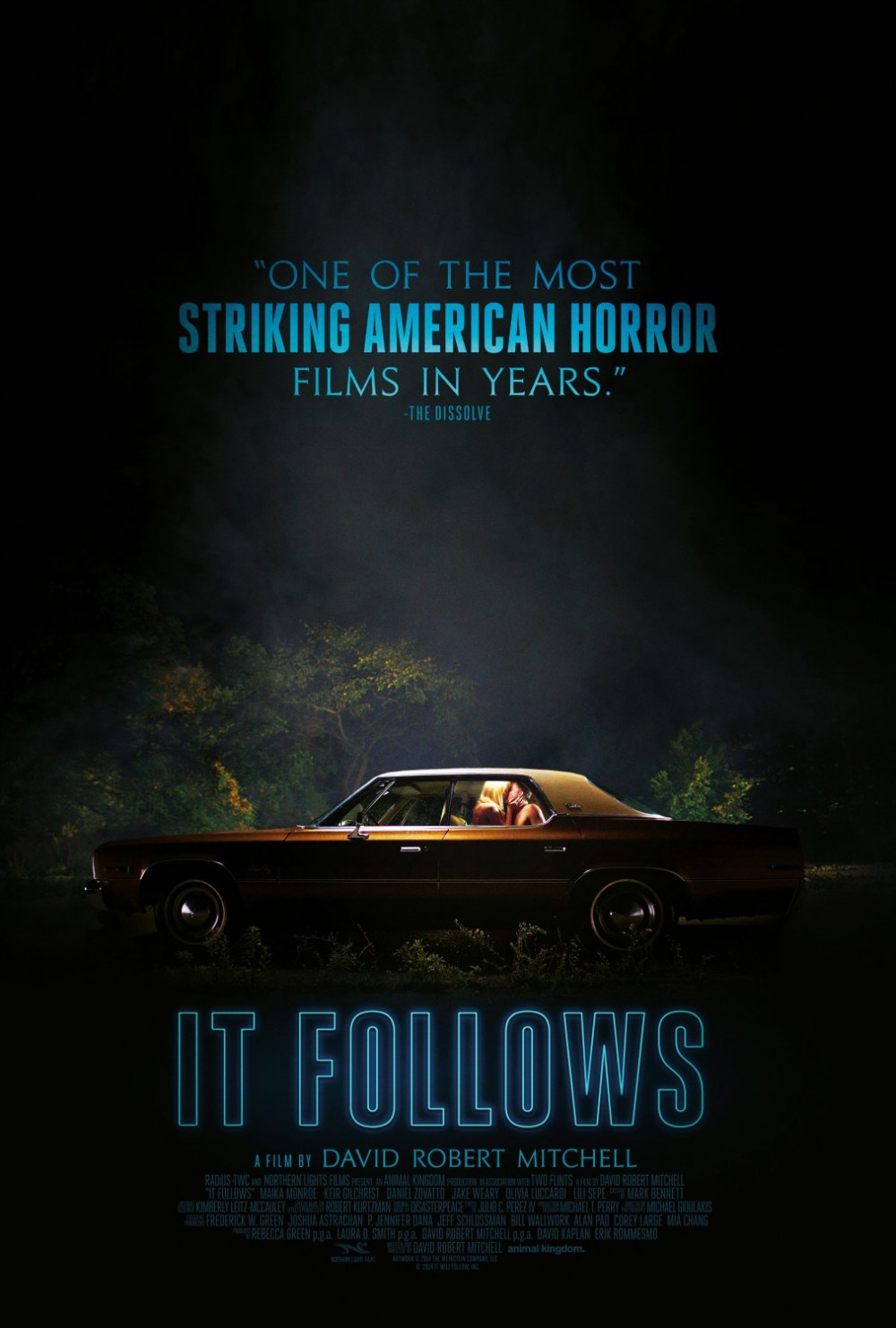
it-follows-poster

To me, “It Follows” was to 2015 as “Honeymoon” was to 2014; an infinitely creepy horror movie deserving of the attention many low-budget movies don’t always get. It’s a mesmerizing and terrifying piece of work which invites comparison to some of John Carpenter’s best films, and it’s smart enough not to reveal every single detail of its story. Like the best Hitchcock classics, it strings you along to where you keep guessing as to what’s behind the cinematic madness all the way to the very last frame.

“It Follows” opens up on a teenage girl fleeing her home in terror, and we’re not sure why. The next day she is found murdered and her body is contorted in ways which make it look like a yoga exercise gone horribly wrong. From there we meet Jay Height (Maika Monroe) who swims alluringly in the family swimming pool, and it’s hard not to be sucked into her realm as a result. After making out with her boyfriend Hugh (Jake Weary), he renders Jay unconscious and takes her to an abandoned building where he says he has passed on a curse to her. As a result, an entity which can only be seen by those who have been cursed will follow them, and once they are dead it will go after the person who gave it to them.

It’s an ingenious concept for any horror movie as this is the kind of curse which doesn’t invite an easy explanation. We can’t be sure of what the curse is, and as a result our imagination runs wild with endless possibilities as to how it can appear to us. Now I know a lot of moviegoers are desperate to have everything explained to them, and they will probably have serious issues with “It Follows” as a result, but I loved how this is a film which keeps its secrets close to the vest as revealing any of them could make the whole endeavor fall apart irrevocably.

This is only the second film from writer/director David Robert Mitchell whose previous credit was “The Myth of the American Sleepover.” I liked how he just immerses us into the lives of these young characters to where he has the viewer in a trance. It’s certainly one of the most atmospheric horror films I have seen in a while, and even the cheap scares thrown in have a stronger impact here than they do in the average scary flick.

Mitchell has given us a horror film with real down-to-earth characters which is very commendable as this genre usually benefits from having the opposite kind. Horror movies these days are typically reduced to having one-dimensional characters to where you find yourself rooting endlessly for the masked villain to decapitate them in the worst way possible, but this is not the case here. As a result, the horror feels a lot more real as these characters fight to escape from a deadly force only they can see.

Mitchell also has a very strong cast to work with as well. Chief among them is Maika Monroe who plays the movie’s main protagonist, Jay Height. Monroe was terrific in the criminally underrated thriller “The Guest,” and she succeeds in giving us a strong female heroine who is vulnerable but not too vulnerable to let this evil spirit take her down. Strong performances also come from Keir Gilchrist as Paul, Jay’s friend who has a not-so-secret crush on her, Lili Sepe as Jay’s sister Kelly, Daniel Zovatto as Greg Hannigan, and Olivia Luccardi as Yara.

In addition, “It Follows” features a very cool and utterly visceral electronic score courtesy of Disasterpiece. I grew up on the electronic scores of John Carpenter and Alan Howarth, and I think it’s great this kind of film music is making a comeback in movies like this, “The Guest” and “Ex Machina.” Disasterpiece has created a memorable score which is at times lovely and thoughtful, and at other times highly unnerving as it goes out of its way to sound like it will overload your stereo speakers with no mercy.

Mitchell only had a budget of $2 million to make “It Follows” with, and he certainly made the most of it because the movie looks like it cost so much more. Also, he got to film it in Detroit, Michigan, a city which, despite its problems, has proven to have a very unique look other American cities do not possess. This is a wonderfully creepy, suspenseful and terrifying movie which stands out among many others in its genre, and it leaves the viewer with a lasting impression as the ending makes clear the terror is far from over. And I don’t just say this because RADiUS-TWC, the company that distributed it, is already thinking about a sequel.

It says a lot about a movie which manages to maintain a strong level of suspense and tension from start to finish, and “It Follows” is just the latest example of that kind of cinematic experience which, these days, no longer feels all that rare to us.

* * * * out of * * * *

Save

Blu-ray Review: Anchor Bay’s ‘Halloween’ 35th Anniversary Edition

halloween-35th-anniversary-blu-ray-cover

Just when you thought Anchor Bay Entertainment had released the last edition of John Carpenter’s “Halloween” on DVD or Blu-ray, another one emerges to taunt the movie’s die-hard fans with the possibility of purchasing it. Now we have the “Halloween: 35th Anniversary Edition” which was released on Blu-ray and contains an all-new high definition transfer supervised and approved by the film’s cinematographer, Dean Cundey. With a couple of new special features combined with a few from previous editions, is it worth paying a few more bucks to own another version of this horror classic? Well, let’s find out…

Anchor Bay has released just about as many special editions of “Halloween” as they have of “Evil Dead” and “Army of Darkness,” so it’s hard to see what the point was of putting out yet another. But after watching this one, I can certainly see why. The colors on this high definition transfer look very balanced, and the movie looks far more vividly frightening as a result. It is a huge improvement over the 25th anniversary DVD Anchor Bay released as part of their Divimax Series as it proved to be hard on the eyes due to certain colors being far brighter than they needed to be. Seriously, this particular Blu-ray edition makes me want to watch “Halloween” over and over again as it made me feel like I had never watched it before, and I have seen this horror classic over a hundred times.

Among the brand new special features, the one I was surprised to see most was a brand-new commentary with Carpenter and Jamie Lee Curtis. That Carpenter would even consent to doing another commentary on “Halloween,” which he has long since answered every conceivable question about, is astonishing, but he sounds very enthusiastic here as he talks with Curtis about what went down during this movie’s making. It’s also great to hear Curtis’ thoughts on “Halloween” as we haven’t heard her talk too much about it in a long time. Carpenter’s commentaries are always more fun when he has someone to converse with, and he and Curtis share a lot of great memories here.

The other new special feature is the documentary “The Night She Came Home” which follows Curtis as she attends her first ever horror convention in Indianapolis, Indiana. Curtis talks about how she has stayed away from her past in horror movies because she was working on other things or being a mom, but now she feels the need to honor the fans who love “Halloween” so much because she now realizes just how strong the horror fan base is. It’s fun watching her sign autographs for fans who waited hours in line, and her generosity to them is genuinely sweet. The convention also proves to be a reunion of sorts as Curtis meets up with Charles Cyphers who played Sheriff Leigh Brackett, Brian Andrews who played the young Tommy Doyle, Production Designer Tommy Lee Wallace who would later go on to direct “Halloween III: Season of the Witch,” and filmmaker Nick Castle who was the first person to play Michael Myers.

As for the other special features, they are recycled from other previous editions. There’s the featurette “On Location: 25 Years Later” which looks at where “Halloween” was shot. Also included are the movie’s trailer, some TV and radio spots, and footage specifically shot for the television version. You’d figure Anchor Bay would make this another ultimate edition that would be jam packed with extras, but since this the umpteenth edition of this horror classic, I guess they didn’t want to make the previous editions seem altogether disposable. So for those who still own those editions, you should hang onto them as they contain a lot of extras and commentaries not to be found here.

Is it worth it to buy the “Halloween 35th Anniversary Edition” from Anchor Bay Entertainment? Well, it may depend on how much you love this movie. The remastered high definition transfer makes it look like it was filmed not too long ago, and watching it can quickly remind you of how frightening this horror classic is. You also get a nice booklet with interesting behind the scenes photos of the production and an essay by Stef Hutchinson which details why this movie still has a powerful impact on people years after its release.

The fact is none of the sequels or shameless imitators of John Carpenter’s “Halloween” can ever take away from the suspense and uneasiness it generated upon its release. I find myself revisiting this classic quite often, and this 35th anniversary edition makes me want to revisit it more and more. If you are happy with the “Halloween” special edition you currently own, then you probably won’t need this one, but you should at least check out how it looks here. For those who are still committed to buying every single incarnation of this movie Anchor Bay releases, then this one is definitely worth your money.

Halloween 4: The Return of Michael Myers

halloween-4-poster

WARNING: THIS REVIEW CONTAINS SPOILERS. DON’T SAY YOU WEREN’T WARNED!

Halloween 4: The Return of Michael Myers” is actually one of the best films in this long running franchise, and it did more than just drop a bunch of bloody good killings on us with little regard to everything else which makes a movie strong. There was actually some thoughtful work put into the screenplay, the acting is better than you might expect it to be, and it does have some very scary moments the other sequels seriously lack.

The “Halloween” movies often defy the timeline of events they set up for themselves because logic doesn’t always apply to horror movies. Despite the huge explosion which ended “Halloween II,” Michael Myers and Dr. Loomis somehow managed to survive. It never seemed likely either of them would have come out of the burnt wreckage without turning into shish kabobs which were left on the barbecue for far too long, but this sequel shows you can’t keep a doctor or an evil monster down.

“Halloween 4” starts off with a couple of doctors assigned to transfer the seemingly comatose Michael back to Smith’s Grove where he should have stayed from the beginning. But of course, Michael wakes up and kills his naïve caretakers who think he is nothing more than just another prison transfer. These doctors also make the mistake of mentioning how Michael has one living relative left, his niece Jamie. Guess where she lives…

Going into a description of the plot is tiring, but you know what happens from there on out. “Halloween 4” is genuinely scary at points. The first appearance of Michael through the reflection of the mirror definitely had me standing up straight, and childhood terrors like the monster under the bed are exploited to strong effect. The movie does play around with the clichéd moments we often find in horror movies, but then it manages to pull the rug out from under you. You think you have a good idea of what is going to happen, but the filmmakers smartly play on your misplaced confidence to pull a fast one on you.

“Halloween 4” was directed by Dwight H. Little who later went on to direct one of Steven Seagal’s best movies, “Marked for Death.” Little deserves credit for not just doing everything according to formula. What he accomplishes here isn’t groundbreaking for the horror genre, but he pulls off something stronger than your average slasher flick. Instead of doing the usual opening with the pumpkin, he fills the screen with symbols of the October holiday which eventually leads us into the dead of winter. With that, he perfectly sets the mood and atmosphere for this particular sequel. He remains respectful of the original and does the right thing by keeping Michael hidden in the shadows like Carpenter did in the original. When that mask of his peeks out of the darkness, it becomes even more unnerving than watching him tilt his head.

The writer, Alan B. McElroy, managed to finish the script just mere hours before the 1980’s writer strike began. Listening to his audio commentary from the Anchor Bay release, McElroy makes it clear he came to this film as a fan of the original and was not about to throw the usual crapfest at us. He also gives us characters we actually come to care about and who don’t always do the stupid things we expect them to do in the average horror flick. You even find yourself caring about that hunk of a man Brady (Sasha Jenson) even after we find him cheating on his girlfriend with the movie’s obligatory big breasted lady (who also happens to be the sheriff’s daughter no less).

In retrospect, “Halloween 4” was one of the last slasher movies which featured actors who looked and felt down to earth. After this sequel, the genre was invaded by beautiful models with bodies very well taken care of or surgically enhanced. Whether or not they could act was another story, one which usually didn’t matter to the financiers.

This one is also not as bloody or gory as the other sequels came to be. Granted, there are a couple of nice bloody shots which illustrate how creative Michael is at killing people after coming out of a long coma. On top of sinking his thumb into a doctor’s skull, he also rips a big hole in a beer guzzling vigilante’s neck. Actually, this does bring up a weakness in the movie which involves a subplot with a bunch of middle aged guys who are regulars at a local bar. They almost seem tossed in as an afterthought, and their own hunt for Michael leads them to do the dumbest things.

Watching Danielle Harris here is a little weird as she has since grown up and gone on to play a completely different character in Rob Zombie’s “Halloween” movies. She plays Jamie, the daughter of Laurie Strode who was said to have been killed in a car accident along with her husband (Curtis would later return in “H2O”). You have to admire any young actor who does a horror movie at the age of 11 because it’s like we’re asking them to become emotionally scarred for life. On top of having a great set of lungs, Harris instantly wins our sympathy gives this movie one of its scariest images.

Ellie Cornell, who plays Rachel Carruthers, does Jamie Lee Curtis proud. We’re not talking an Oscar winning performance here, but she gives us the heroic female character we want to root for as she goes from being vulnerable to Sigourney (“Aliens”) Weaver tough.

And, of course, we have the only returning actor from the original “Halloween,” the late Donald Pleasence. Having miraculously survived the fiery explosion which should have killed him were a highly profitable box office possibility not taken into consideration, Dr. Loomis has become absolutely single minded in his pursuit to destroy Michael once and for all. Even if Pleasance was slumming by doing this movie, he still played this role to the hilt and gave this particular entry a legitimacy which eluded future installments. Heck, it probably would have been criminal to do a “Halloween” movie without Dr. Loomis at that point as he was an essential part of this franchise.

Actually, there is another “Halloween” veteran who returns to the fold here: Alan Howarth. Along with Carpenter he scored “Halloween II” and “Halloween III: Season of the Witch,” and they also provided great scores for “Prince of Darkness” and “Big Trouble in Little China.” Howarth goes solo on this one, but even without Carpenter he composes a memorable and atmospheric score, and his opening theme to “Halloween 4” is one of the best pieces of music in the franchise.

Stunt performer George Wilbur plays Michael here, and he does good work as the heavy-breathing killer. While no one can touch what Nick Castle did in the original, it’s nice to see a Michael who more mobile than Dick Warlock’s was in “Halloween II.” Wilbur gives Michael a formidable look which strikes terror in us even when this murderous character is not onscreen. The thought of Michael Myers in this one is just as scary as seeing these characters come face to face with him, or it as Dr. Loomis describes him:

“You’re talking about him as if he were a man. That part of him died years ago.”

DANGER! DANGER! SPOLIERS AHEAD!!!

Now let’s talk about Halloween 4’s” ending. Michael has been shot dozens and dozens of times in a scene which reminded me of the scene from “Predator” when Schwarzenegger and company blasted a forest to waste with their massive weaponry. Everyone is back home and safe, but then a scream erupts from upstairs. Loomis runs up to find Jamie has stabbed her stepmother with a pair of scissors and is covered in blood, looking much like young Michael did after murdering his sister. Like Pleasance, you find yourself screaming “NOOOOOO!!!!!!” Harris holding those scissors ranks as one of the series’ most chilling moments. Indeed, the corruption of innocence is a terror that can be all too real onscreen as well as off it.

Now this could have led the franchise in an inspired direction, but the producers wussied out and instead found a way (they always do) to bring Michael back from the dead yet again. Perhaps the late Moustapha Akkad felt the fans would never accept any killer other than Michael himself. It’s a shame because this brilliant plot twist could have made the series even more frightening than ever before, but the demands of the box office always dictate just how much you cannot change a winning formula.

Regardless, “Halloween 4: The Return of Michael Myers” still proves to be a strong entry in the undying franchise, and this is especially the case when you watch the two sequels which followed it.

* * * out of * * * *


Tommy Lee Wallace Talks about ‘Halloween III’ at New Beverly Cinema

halloween-iii-poster

PLEASE NOTE: THIS ARTICLE CONTAINS SPOILERS ABOUT THE MOVIE.

Tommy Lee Wallace dropped by New Beverly Cinema on October 30, 2010 to talk about his directorial debut, “Halloween III: Season of the Witch.” This is the Michael Myers-less sequel of the long running franchise and it played as a double feature with “Trick ‘r Treat.” All the “Halloween” movie fans were in for a special treat as Wallace gave us more trivia about the making of it than we ever could have ever expected.

When Wallace was brought up after the movie ended, he admitted his reaction to watching it after so many years was that it resembled one of the strangest and most bizarre movies he had ever seen. The original plan for “Halloween III” was to work from an original screenplay by Nigel Kneale, best known for his work on the “Quatermass” series. What Kneale ended up writing was, as Wallace put it, “brilliant and deeply, darkly grim” and more of a cerebral, intellectual horror movie than your typical slasher fare. But it turned out everyone thought the overall story needed work, and Wallace said he and Carpenter wanted to make it more commercial and scarier for audiences. As a result, Kneale took his name off the movie as he felt the filmmakers would simply butcher all he came up with. Wallace did say that he really liked Kneale’s script and hopes to put it online someday in its entirety for all to see.

While making the movie, Wallace described himself and the crew as being under the gun as it was a low budget affair like most horror movies. Understanding how to do work on the cheap, he said all the “el cheapo” special effects taught him a lot about simplicity which turned out to be a great virtue.

As for Carpenter’s participation, Wallace said Carpenter gave him full autonomy as he himself always expected to have it on all his movies. Joe Dante, the director of “Gremlins” and “Innerspace,” was originally set to helm “Halloween III,” but he later turned it down when something else came up. Having worked on many of Carpenter’s movies, Wallace was originally offered the gig of directing “Halloween II,” but he turned it down as he saw no way to top the original. But upon being offered “Halloween III,” Carpenter and the late Debra Hill told him neither of them wanted to do a direct sequel as Carpenter hated “Halloween II.” With that in mind, Wallace jumped at the chance to direct it.

The only real barrier Wallace had to deal with before accepting the job was getting the blessing of Dino De Laurentis. Wallace had previously written the script for a movie De Laurentis produced called “Amityville II: The Possession,” and he said the one rule everyone needed to remember was “you do not fuck with Dino.” In response to Wallace’s request, De Laurentis begged him not do the film, but Wallace said he was determined to get De Laurentis’ blessing because he would have directed it anyway.

With “Halloween III: Season of the Witch,” Carpenter and Hill wanted to turn the franchise into an anthology of movies about the occasion of Halloween. Looking back, the original was really not about Halloween at all (the original title was “The Babysitter Murders”). But when it came to releasing this particular “Halloween” movie, Wallace said Universal Pictures did not do enough to prepare audiences for it. Sadly, audiences did not want something new. They wanted Michael Myers back and breathing heavy while slashing over stimulated teenagers.

One of the biggest influences on “Halloween III” was the 1956 version of “Invasion of the Body Snatchers” directed by Don Siegel. Like that one, this sequel was meant to be a pod movie and could not be mistaken as something nice. Wallace even wanted to shoot it in Sierra Madre where Siegel’s classic was filmed, but it didn’t look good enough. The production team had driven all over Northern California looking for the perfect small town to film in, and it took forever to find it. Wallace said they were never as lucky as they were with Carpenter’s The Fog.” Also, the town’s name, Santa Mira, is the same as the one used in “Invasion of the Body Snatchers.”

But the big difference between “Invasion of the Body Snatchers” and “Halloween III” is in the way each movie ended. Siegel wanted his film to close on a highway with star Kevin McCarthy screaming frantically, “THEY’RE ALREADY HERE! YOU’RE NEXT! YOU’RE NEXT!” Instead, “Invasion” ended the same way it began, in a police station. All this did was indicate to the audience everything was going to be alright. Wallace said the ending of “Halloween III” was dedicated to Siegel for what he tried to pull off, and it leaves the fate of the world up in the air which makes things far scarier as your mind was forced to imagine what could have happened. Universal Pictures, however, put pressure on Carpenter to change the ending to something more upbeat. When Carpenter asked Wallace if he wanted to change the film’s ambiguous climax, Wallace said he refused to do so and Carpenter defended Wallace’s decision to the studio.

Tom Atkins’ name in the credits as well as his first appearance onscreen generated a huge applause from the audience. When it came to casting “Halloween III,” Wallace said Atkins was already a part of Carpenter’s company of actors, and his performance in “The Fog” served as his audition for the role of Dr. Daniel Challis. Wallace then went on to explain how horror movies can easily be ruined by “pretty boy casting,” and he felt this didn’t need to be the case here. Atkins naturalistic performance is commendable considering much of what he has to deal with is utterly ridiculous. You also have to give him credit for wasting no time in bedding the main female character, Ellie Grimbridge, played by Stacey Nelkin.

Another actor who got a lot of applause was the late Dan O’Herlihy who portrayed the movie’s chief villain, Conal Cochran. Wallace described O’Herlihy as being perfect for the part, and he was always prepared and ready to go. He also said O’Herlihy was a man from the British Isle, Irish and was someone who was never afraid of getting sentimental. O’Herlihy’s performance was a fiendish mix of a friendly persona which is a cover for his grisly nature.

As for Nelkin, the first question from the audience was whether or not her character was a robot throughout the entire movie. Wallace said he honestly didn’t know and figured Cochran’s company was really good at making robots in the first place. Nelkin was a very appealing presence in “Halloween III,” and perhaps Roget Ebert put it best in his one-and-a-half-star review of the movie: “Too bad she plays her last scene without a head.”

Then there’s the movie’s commercial for the Silver Shamrock masks which features one of those annoying jingles which, like any other commercial, you cannot get out of your head. Alan Howarth, who composed the score along with Carpenter, was given credit for doing the jingle and putting it to the tune of “London Bridge” from “My Fair Lady,” but Wallace said it was his idea more than anyone else’s.

As for the voice on the jingle, it is Wallace’s. They were originally going to hire someone else, but when they found out the guy wanted $550, it was quickly determined they couldn’t afford him. Wallace got the job soon after and said he got into the mood by doing the smooth tone of a “stupid radio voice from the 50’s.”

Another audience member asked Wallace if there were any product placements in “Halloween III,” and he said there were not. Truth be told, this wasn’t really the kind of movie which would allow for that, and it was also clarified how no one was ever asked to move the can of Miller Lite closer to the camera.

“Halloween III: Season of the Witch” was designed to be a diatribe against consumerism, and it didn’t turn out to be a very elegant one. The movie cost $2.5 million to make and grossed about $14 million at the box office. While it did make a tiny profit, the sequel was considered a critical and commercial disappointment. Wallace said he fell into an abject depression for months afterwards as he felt he did a shitty job on the sequel and figured he would be consigned to movie hell.

Years later, however, Wallace discovered “Halloween III” had developed a cult following and a new generation of fans. He was stunned to hear a lot of people telling him they watch it every single year, and he said people continue to invite him to speak at annual horror conventions about it. Having been originally released in 1982, audiences have had plenty of time to reflect on the kind of movie it was and reevaluate it critically. While still not a great film by any stretch, it’s much better than its reputation suggests.

Certainly, there are other “Halloween” sequels that are far worse (“Halloween: The Curse of Michael Meyers” is the pits), and the moderator put it best when comparing the third movie to “Halloween: Resurrection:”

“Do you prefer this or Busta Rhymes?”

Save