‘Superman’ Five-Film Collection on 4K Review

The following review was written by Ultimate Rabbit correspondent, Tony Farinella.

The idea of being a superhero is something which appeals to people all across the world.  They want the chance to start out as an ordinary individual and transform themselves into something special and magical.  1978’s “Superman” is a perfect example of this, especially with its leading man, Christopher Reeve.  It’s an iconic role and performance which continues to stand the test of time.  It also achieved the rare feat of being both a financial and critical success.  When that happens in Hollywood, everyone is pleased as punch. It’s the magic formula Hollywood is always trying to achieve as they want to do quality work which is meaningful to an audience while also making a lot of money.

There are so many things which make “Superman” great.  Of course, as mentioned previously, you have the tremendous performance by the late, great Christopher Reeve. However, you also need a really, really effective villain, and it’s hard to find a better Hollywood villain than the legendary Gene Hackman as Lex Luthor.  He oozes with charisma, personality, and you love to root against him. As far as the supporting cast, it is filled with some of the greatest working actors and actresses in Hollywood history, such as Marlon Brando, Margot Kidder, Glenn Ford, Jackie Cooper, Terence Stamp, Ned Beatty, Jack O’Halloran, Maria Schell and Sarah Douglas.

It also doesn’t hurt when you have a director like Richard Donner behind the camera as well.  He knows how to pace the film, allow his actors room to breathe, and he is also respectful of the source material. There was also the magnificent score by the iconic John Williams. When you have all of the right pieces in place like Donner did such as the script, the actors and the budget, you have to stay on track and basically not screw it up. He was just the right man for this big budget affair.  During its release, it had the highest budget for a film at the time, coming in at $55 million.  It’s funny to hear that number now, considering how much budgets have increased in Hollywood since then.

What speaks to me about the first “Superman” film is the idea of having a double life and people not knowing who you really are.  During the day you are Clark Kent, a mild-mannered reporter, but you also have the ability to be Superman.  It shows we all have something special inside of us.  It is up to us to really find that, harness it, and use it for good.  Superman is your all-American, clean cut, good guy.  He’s very likable and effortlessly charming.  On paper, this idea might sound ludicrous, but because the filmmakers took it seriously and had the right actors and participants involved, they really had lightning in a bottle.  Even to this day, the film holds up incredibly well.  When you see the special effects, they were really ahead of their time and they helped pave the way for a lot of the effects we see today, only they are now taken up a notch. Most importantly, this film has a big heart and a big soul attached to it. This is why the film is beloved by so many.
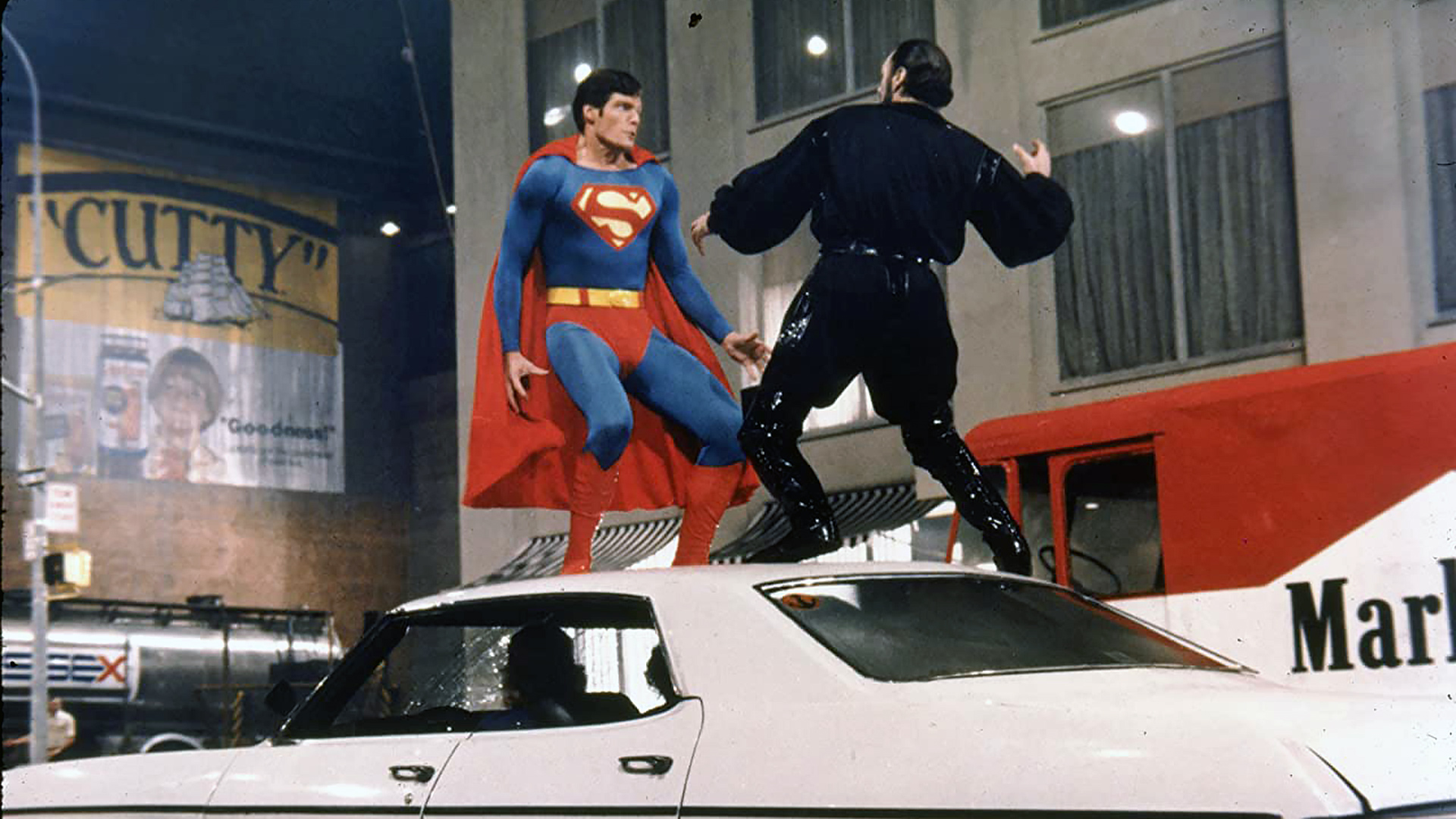
With this tremendous release from Warner Brothers Home Entertainment, we are also treated to “Superman II” in two different versions. We get the original theatrical cut by Richard Lester and the Richard Donner Cut on 4K. To this day, people still debate which version they like better and which is more worth watching.  If you ask me, it’s best to watch both versions.  I see things in Donner’s film I like more than in Lester’s and vice versa, but overall, I felt like Lester’s version was a much more polished, easy to follow, and complete film. Donner’s version is flawed with moments of greatness, and it deserves to be seen. Thanks to this set, you can watch both versions, which, as stated previously, I highly encourage you to do as I love a good film discussion.  Film is subjective and there is really no right or wrong answer. 

In “Superman II,” Mario Puzo is back once along with fellow screenwriters, David and Leslie Newman, again with a really good story, and this is a great thing for the audience.  All three really know how to flesh out a story and create unique and interesting characters. It doesn’t hurt when you have actors like Beatty, Kidder and Hackman completely invested in the material. While not as good as the first one, and it’s rare for a sequel to be as good as its predecessor, it’s still a very, very good movie. There is some great humor here, and even in a superhero movie where the stakes are high and we are in a fictional world, some levity is very much appreciated!  Sometimes it is nice to have a different vision and a new voice in a franchise while also staying true to what made the first film successful.  Richard Lester was not put in an ideal situation, but he made it work, and you have to give him credit for that.

By “Superman III,” it seemed like the magic was starting to disappear, and they totally shifted the focus of the franchise into a campy, goofy and comedic realm which really rubbed audiences the wrong way.  I understand they were going for something different, and they brought in Richard Pryor, but the script, the jokes and the material are just really, really bad. There is no denying that Pryor is a funny man with great comedic timing, but his abilities didn’t lend themselves to this film franchise. Overall, “Superman III” was doomed because of behind-the-scenes issues, script issues, and a film in search of the right tone.  The filmmakers seemed to have lost the plot all together as well as their love for the character and the franchise.  When a franchise has success, many times it is how the filmmakers handle that success which defines how it will carry on and continue.  It is clear they didn’t know how to handle success here.

It didn’t get any better with “Superman IV: The Quest for Peace.” It was so poorly made and received that they didn’t make another Superman film until 2006. As is often the case with sequels, they went cheap.  Even though Hackman returns and Kidder receives more screen time, this film was dead on arrival.  The plot is incoherent, messy, and just plain dumb.  It was a cash-grab sequel, and when you are focused on money over quality work, you end up with “Superman IV: The Quest for Peace.”  It’s a very frustrating film and incredibly hard to follow. As you can see with the “Superman” franchise, you have the law of diminishing returns.

4K Info: The “Superman” 5-Film Collection 1978-1987 is in a terrific box set with all the films getting their own individual dual 4K case which also includes a Blu-ray version of the them. I was really happy they didn’t stack the discs in the set here, as that is always a pet peeve of mine. I was also very happy they gave each film its day in court with artwork and its own individual dual case. “Superman” was previously released on 4K, but this is the first time the other four films have been released in this format.  You also a digital code for all of the films as well.

Video Info: If you already own the first “Superman” 4K, please know they have not added anything new to it here.  It’s the same “Superman” 4K that had been released in its standalone edition.  That being said, it’s hard not to be stunned and blown away by the beautiful Dolby Vision look of the original film.  I had not previously owned the first “Superman” film, so I had no qualms about there not being anything new here. It’s just something to keep in mind for those who already own it on 4K. Overall, this is far and away the best these five films have ever looked on home video.  They look sharp, clean and free of grain or mess. They have cleaned these films up very, very nicely.  I was very impressed with these transfers. Warner Brothers has really been knocking it out of the park with their releases this year during their 100-year anniversary celebration, and this “Superman” box set is no exception.

Audio Info: We are treated to Dolby Atmos on all five films which is fantastic news!  I am a huge fan of Dolby Atmos, and the sound is such a vital part of these films.  The audio sounds crystal clear, concise, and it comes in at just the right pitch without being too loud or in-your-face.  I’m always happy when I can leave it on one volume setting and still get the same impact throughout. That was the case with all five films. They also all come with subtitles in French, English and Spanish as well.

Special Features:

“Superman: The Movie” Special Features:

  Commentary by Ilya Salkind and Pierre Spangler

  The Making of Superman – vintage featurette

  Superman and the Mole-Men – vintage featurette

  Super-Rabbit – 1943 WB cartoon

  Snafuperman – 1944 WB cartoon

  Stupor Duck – 1956 WB cartoon

  TV Spot

  Teaser Trailer

  Theatrical Trailer

‘Superman II” Special Features:

    Commentary by Ilya Salkind and Pierre Spengler

    The Making of “Superman II” – 1980 TV Special

    Superman’s Soufflé – Deleted Scene

    First Flight

    Fleischer Studios’ Superman vintage cartoons:

        Superman

        The Mechanical Monster

        Billion Dollar Limited

        The Arctic Giant

        The Bulleteers

        The Magnetic Telescope

        Electric Earthquake

        Volcano

        Terror on the Midway

    Theatrical Trailer

“Superman II: The Richard Donner Cut” Special Features:

    Commentary by Richard Donner and Tom Mankiewicz

    Introduction by Richard Donner – featurette

    Superman II: Restoring the Vision – featurette

    Deleted Scenes

        Lex and Ms. Teschmacher Head North

        Lex and Ms. Teschmacher Head South

        The Villains Enter the Fortress

        He’s All Yours, Boys

        Clarke and Jimmy

        Lex’s Gateway

    Famous Studios vintage cartoons:

        Japoteurs

        Showdown

        Eleventh Hour

        Destruction, Inc.

        The Mummy Strikes

        Jungle Drums

        The Underground World

        Secret Agent

“Superman III” Special Features:

    Commentary by Ilya Salkind and Pierre Spengler

    The Making of “Superman III” – 1983 TV Special

    Deleted Scenes:

        Save My Baby

        To the Rescue

        Making Up

        Going to See the Boss

        Hatching the Plan

        The Con

        Rooftop Ski

        Boss Wants This to Go

        Superman Honored

        Gus’ Speech

        Hanging Up on Brad

    Theatrical Trailer

“Superman IV: The Quest for Peace” Special Features:

    Commentary by Mark Rosenthal

    Superman 50th Anniversary Special – 1988 TV Special

    Deleted Scenes:

        Clark’s Morning

        Jeremy’s Letter

        Superman’s Visit

        Nuclear Man’s Prototype

        Metropolis After Hours

        Lex Ponders

        Flying Sequence (Extended Scene)

        Battle in Smallville

        Battle in the U.S.S.R.

        Nuclear Arms Race

        Superman’s Sickness

        Red Alert

        By My Side

        Lark and Lacy Say Goodbye

        No Borders

    Theatrical Trailer

Should You Buy It?

Last time I checked, this set is going for about $90, which is a great price for five films. Granted, you are really paying for “Superman,” “Superman II” and “Superman II: The Richard Donner Cut,” so you need to own all of the Christopher Reeve “Superman” films if you are a completist like myself. I’ve heard a lot of people in the film community complain about some of the special features from other releases not being included on this set but they are included in the other Blu-ray releases.  This did not bother me as there are still plenty of special features to shift through here. I’m happy they included the Blu-ray discs for all of the films and didn’t just include the 4K’s.  The good films in this franchise leave me with a warm and fuzzy feeling.  When films make me feel this way and put a smile on my face, I’m a happy camper.  There is also something to enjoy about the total and complete absurdity of the bad films as well.  If you have a sense of humor and come in with the right mindset, you can enjoy them on the level of they are aiming at.  All the films come with Dolby Atmos tracks, which is a great perk.  My one minor nitpick is the fact that not all these films include Dolby Vision except for the first one.  However, in 2023, when physical media is hard to come by in stores but very much appreciated by us hardcore film historians and lovers, I don’t want to be too overly critical or negative over the little things.  Warner Brothers and other studios are really going all out to preserve important pieces of cinematic history.  We shouldn’t look a gift horse in the mouth.  This set comes highly recommended, and I enjoyed revisiting these films in 4K.  It gave me a whole new appreciation for these films, Christopher Reeve’s performance, and the intense feelings of happiness and joy the first two (three if you are counting the Richard Donner cut) films brought to me. You can’t put a price tag on that. This set comes highly recommended!

* * * ½ out of * * * *

**Disclaimer** I received a copy of this film from Warner Brothers to review for free.  The opinions and statements in the review are mine and mine alone.

Worst Opening Titles: ‘Superman IV – The Quest for Peace’

The opening credits to “Superman” and “Superman II” are among the best when it comes to movies. When Bryan Singer used this format for his “Superman Returns,” it felt like the return of a friend who had been gone for far too long, and the theme by John Williams is among the finest he has ever composed.

But then came “Superman IV: The Quest for Peace,” a sequel which was supposed to put this movie franchise back on track after the critical and commercial disappointments of both “Superman III” and “Supergirl.” Instead, we got a sequel which quickly became labeled as one of the worst motion pictures of all time. With the Salkind family abandoning the franchise and Cannon Pictures taking over, the budget got slashed in half do to their money problems, and everything came to look liken nothing but bargain basement deals or useless stuff which had been long since thrown in the trash.

As soon as the opening titles for “Superman IV” begin, we know it is going to be a rough ride even as Williams’ famous theme, conducted this time by Alexander Courage, is not enough to make our spirits soar. Even co-screenwriter Mark Rosenthal, whose audio commentary for this sequel I highly recommend, is quick to say the following in his opening remarks:

“You can tell from the very first credit that says Warner Brothers that something is terribly wrong in Metropolis.”

This is the Wal Mart, 99 Cent Store or Dollar Tree of opening credits as they look ridiculously cheap in ways the ones for the previous installments never did, and this proved to be quite the shock. Then again, perhaps they fit this sequel perfectly as the visual effects and sets look every bit as cheap as the opening titles. Watching them is heart breaking as they make clear that it is all downhill from here. No wonder this sequel was such a big bomb at the box office.

If you must, please feel free to check out the opening titles to “Superman IV: The Quest for Peace” down below:

William Friedkin Discusses His Career at American Cinematheque

On January 22 & 23, 2011 at the Aero Theatre in Santa Monica, American Cinematheque presented a tribute entitled “Strangle-Hold: The Gripping Films of William Friedkin.” Featured were four of the director’s most noted movies: “The French Connection,” “To Live and Die In LA,” “Sorcerer,” and “The Exorcist.” Mr. Friedkin was there both nights to talk about his work and filmmaking, and he was greeted by sold out audiences who gave him with a standing ovation.

It’s been a long road for Friedkin. Despite the many ups and downs of his long career, he still directs movies even though his work these days is constantly, and unfairly, stuck in the shadow of his greatest work. Back in the 1970’s, he gave us two of the greatest movies ever with “The French Connection” which has one of the greatest cinematic car chases ever, and “The Exorcist” which is as powerfully unnerving today as it was when it first came out. Since then, however, he was seen as stumbling both critically and commercially with movies like “Deal of The Century” and “The Guardian” to name a few.

But Friedkin has now rebounded with “Bug” starring Ashley Judd, and the re-release of “The Exorcist” which was a big hit despite it being readily available on video and DVD. Even his flops like “Sorcerer” and “Cruising” have been critically re-evaluated and gained strong cult followings in recent years. Today, he is directing Matthew McConaughey in “Killer Joe.”

Friedkin started off by remarking how the Aero Theatre’s marquee said “William Friedkin Live” and how glad he was to see that at his age. From there, he told a story about his friendship with the great writer/director Billy Wilder and how they had lunch together often at Johnny Rockets. At one point, Wilder said to him:

“You and I have something in common; we both want to make commercial films for a large audience. So don’t look for your films to get shown at the Cinematheque!”

It may have taken long enough, but American Cinematheque did come through for him!

When working with actors, Friedkin said he does not put his personal style on them, and that he always creates an atmosphere for actors to work in which allows their creativity to flow. If the actors come up with something better, he is more than willing to let them roll with it to see where it would take the movie. This aided tremendously in his job of deeply immersing the audience in the story as much as possible.

Some in the audience asked him if he had any advice to pass on to filmmakers. Friedkin was quick to the point:

“Don’t go to film school!”

Friedkin claimed he never had a single lesson in filmmaking, and he said everything he learned came from “the masters who broke the rules” like Orson Welles and Alfred Hitchcock. In fact, he encouraged everyone to get out of the classroom and watch all of Hitchcock’s movies. While they may vary in quality, he said the master of suspense’s genius is present in every shot he took.

Friedkin also encouraged aspiring directors to not even bother with the preview process or audience testing. None of his movies have ever been altered by these processes, and he really doesn’t like them anyway. Had “The Exorcist” been previewed, he said, it would not have ever have been released!

In selecting movies to make, Friedkin says the movie comes to him more than he goes to it. But the one theme which runs through each and every motion picture he has helmed is ambiguity. The works he admires the most are the ones which ask questions but don’t provide answers. As he sees it, the quest is far more interesting than the end of the journey as there are no ultimate answers, only great questions.

Friedkin also loves playing with the thin line between good and evil. Case in point is “The French Connection” where Popeye Doyle, played by Gene Hackman, is a racist and a womanizer while the drug dealer is a gentleman with manners and who loves his wife dearly. There’s only so much that separates the good guys from the bad ones, and movies like this serve as a very strong reminder of that.

Though his glory days might be behind him, William Friedkin remains a director with an unwavering vision on each film he does. This proves to be the case even in his weakest movies as even they show how fully in control of the craft he is. I look forward to seeing what he comes up with next.

Gene Hackman and Anne Archer Cannot Save ‘Narrow Margin’

Narrow Margin” was released in 1990, back when movie remakes were as rare as people owning cell phones. Yes, it is a remake of the 1952 film noir “The Narrow Margin,” and it tells the tale of a Los Angeles deputy district attorney tasked with keeping a witness to a murder safe from a pair of hitmen as they travel through Canada in a train. What we have here is a movie with a terrific cast, some great stunts and sharp cinematography, but it also doesn’t have much of a brain in its head as the characters make one ridiculously stupid decision after another.

The movie starts with Carol Hunnicut (Anne Archer) arriving at the Four Seasons Hotel in Los Angeles where she has been set up on a blind date with a lawyer named Michael Tarlow (the late and still missed J.T. Walsh). Things go fine between them until Michael has to take a phone call in his hotel room and invites Carol along with him, not wanting to leave her alone. But then well-known gangster Leo Watts (Harris Yulin) arrives along with his henchman Jack Wootton (Nigel Bennett) and doesn’t hesitate in accusing Michael of stealing money from him. Michael, overwhelmed by his guilt, confesses his crime to Leo who offers to forgive him, providing they never do business together again. But we all know that gangsters are not big on honesty, and Leo has Michael murdered right on the spot. But, of course, they have no idea Carol is hiding in the bathroom and has witnessed everything.

Like any person who knows how rich and crooked people get off too easy in the real world, Carol flees Los Angeles, and yet she is somehow easy to find as Deputy District Attorney Robert Caulfield (Gene Hackman) and Detective Sergeant Dominick Benti (M. Emmet Walsh) come to find her hiding out in a remote cabin in Canada. And as you might expect, it doesn’t take long for these three to realize the gangsters have followed them as they were dumb enough to leave a trail of breadcrumbs in their path. Dominick is killed, and Robert and Carol escape onto a train headed for Vancouver. But, surprise, surprise, they are trailed by a pair of ridiculously well-dressed hitmen determined to take them out, and the movie turns into a cat and mouse thriller as Robert tries to keep Carol alive despite their dire and claustrophobic circumstances.

Now “Narrow Margin” does take place in a time where technology was nowhere near what it is today, but it is hard to believe even back then that a person could easily disappear without much of a trace. The fact these gangsters have little trouble in following Robert to where Carol is hiding out shows what terrible preparation he and Dominick put into finding and keeping her safe, and these guys are public servants for crying out loud!

Then there are the two hitmen played by Bennett and James Sikking, the latter I remember fondly as the Captain of the Excelsior in “Star Trek III: The Search for Spock.” They come onto the scene dressed to the max in expensive suits and shiny ties which more than spell out to the audience they are bad guys on the prowl. I guess it is asking too much for these hitmen to dress like they are average passengers as doing so just might make them harder to detect. But no, these guys have to show to everyone just how rich and stylish assassins can be to where they are impossible to miss.

There is also the issue of those assassins failing to follow Hackman back to his cabin where they just might find Archer hiding. When you look closely at the screenplay, you will see it has plot holes Christopher Nolan could have flown that giant airplane from “Tenet” through. The characters keep making an endless number of idiotic mistakes, and it just drains much of the suspense and tension “Narrow Margin” hoped to have. There is also a character reveal towards the end, but you can see that one coming from a mile away.

It really is a shame because “Narrow Margin” has the benefit of two great actors headlining it. Gene Hackman is a lot of fun to watch in a role others would have played too broadly. He has a great scene where he faces off with the two hitmen and explains why he won’t accept a bribe to give up his witness. Hackman plays the scene in such a playfully devious way to where it serves as a reminder of why he is one of the best film actors ever. Put him in a bad movie, and he will still give a terrific performance in it no matter what.

Archer appeared in this movie not long after she co-starred in “Fatal Attraction,” a classic which had us all wondering why in the world would Michael Douglas cheat on her with Glenn Close. She makes Carol Hunnicut into a heroine who is both strong-willed and deeply vulnerable as she struggles to stay alive from one moment to the next. She also has strong chemistry with Hackman to where they make quite the team, and the fact they are unable to fully suspend your disbelief is not entirely their fault.

“Narrow Margin” was written, directed and photographer by Peter Hyams. One of his great strengths is in crafting action sequences which truly leave you on the edge of your seat. A car almost going over a cliff is a cliché used in many action movies, but Hyams makes it work to great effect here as watching it almost made my heart stop. There are also a number of great stunts performed on top of a moving train, many performed by the actors themselves. Hyams really knows how to keep audiences riveted to where it is almost worth watching this film just for the action sequences alone.

But in the end, “Narrow Margin” proves to be more laughable than exciting as the characters do far too many idiotic things we can all see right through. Its trailer made it look like a top-notch thriller you would be foolish to miss out on, but sadly this is not the case. When Hackman and Archer cannot save a movie with their strong performances, not much else can.

* * out of * * * *

No, I Haven’t Seen It Until Now: Bonnie and Clyde

I went into “Bonnie and Clyde” with the same mind set I had when I sat down to watch Tobe Hooper’s “The Texas Chainsaw Massacre.” I figured the passing of time dilute the immense power it possessed upon its initial release. Plus, already knowing the basic story, I felt I was more than prepared for the movie’s most controversial elements to where I did not think I would come out of it particularly disturbed.

But in the end, none of that mattered. “The Texas Chainsaw Massacre” still is an extremely unsettling horror film, but “Bonnie and Clyde” isn’t far off in the shocking department. It’s a brilliant character piece which follows the exploits of Clyde Barrow and Bonnie Parker as they make their way across America robbing banks, and of the people they pick up on their journey. It was also one of the first films to come out of the New Hollywood era in how it portrayed sex and violence in a much more visceral fashion. More than 40 years later, it still packs a powerful wallop, and nothing has taken away from its accomplishments.

Yes, this is another one of those movies “based on a true story,” a major pet peeve of mine as this term typically signals another real-life story undone by clichés and Hollywood formulaic conventions. This term, however, is not seen in the opening credits which is a major plus. Instead, we are presented with snapshots of the title characters which, while from a time long since past, feel very vivid. By introducing these two infamous people in this fashion, we are already drawn into their reality without questioning it much. I wish more movies today would try this tactic more often as it has me believing I am about to watch something out of the ordinary.

“Bonnie and Clyde” jumps right into the action as we come upon Bonnie (Faye Dunaway) listlessly resting in bed and clearly bored with her life as a waitress. When she suddenly spots the mischievous Clyde (Warren Beatty) trying to steal her mother’s car, she is immediately smitten and jumps right out of the house to join him. While in town, Clyde tells her he robs banks, and she questions just how serious he is. Clyde ends up proving it to her by robbing a store across the street, and he proudly shows off the loot he absconded with. From there, these two are on the run and crazy in love with one another.

What is shown onscreen likely doesn’t resemble complete historical accuracy, but Arthur Penn’s true aim was to present a more romanticized version of these two individuals who were as passionate as they were dangerous. The story takes place in the middle of the Great Depression when families lost much of what they owned, and criminals were treated like celebrities. This becomes apparent when Bonnie and Clyde hide out at an abandoned farmhouse when its owner comes by for one last look. It turns out the bank took his farm from him heartlessly, and the two bank robbers no longer see him as a threat but as someone who was thoughtlessly wronged. When they tell him they rob banks, the farmer sees them like they are coming to the rescue of folks like him. Now does any of this remind you of anything we are going through in this day and age?

But don’t mistake the romanticism of “Bonnie and Clyde” as being the same as glamorizing the criminal lifestyle. While Beatty and Dunaway look fabulous in their costumes, which quickly became fashion statements of the time, the violence shown here is harsh in its senseless brutality. The movie marked the first time a character got shot at and killed all in the same frame, and even today it is still shocking to watch.

This brings me to another big accomplishment of this classic film; the screenplay makes us empathize with these characters. Brilliantly written by David Newman and Robert Benton, with Robert Towne on board as a special consultant), the screenplay sucks us completely into the lives of these criminals to where we don’t get much of a perspective outside it. Now in real life we have the common sense not to be around these people, but the appeal of being so close to those who are considered famous is more enticing than we ever care to admit. Bonnie and Clyde are criminals, but we are seduced by their desire to lead a life that unrestrained by legal boundaries and filled with a strong desire to feel alive. Seriously, this devilish desire exists in all of us as everyone has a dark side.

With Beatty, I have long since gotten so used to seeing him as one of Hollywood’s elder statesmen. But watching him as Clyde wiped this image away from my consciousness for two hours, and I was instantly reminded of what a great and charismatic actor he was and still is. He must have had the time of his life playing this gleefully law-breaking criminal because it shows in his face throughout. Beatty inhabits Clyde with a wild abandon, fully accepting of the path this character has taken in life with little to no remorse.

Watching Faye Dunaway as Bonnie, it’s easy to see why this movie turned her into such a big star. Now I don’t just mean her first scene where she stands naked in front of her bedroom window as she stares seductively down at Beatty. What struck me was how she brought a fantastically crazed energy to Bonnie as she fearlessly takes this character through a throng of deeply felt emotions. Whether she is in sheer ecstasy or utter frustration over her circumstances, she fully inhabits Bonnie to where it’s impossible to catch her acting.

“Bonnie and Clyde” also marked one first movie roles for the great Gene Hackman who plays Clyde’s never-do-well brother, Buck. It’s immensely entertaining to watch him imbue Buck with such a combustible lifeforce, and it makes me miss his work on the big screen all the more. Seriously, he deserves a better cinematic swan song than “Welcome to Mooseport.”

I remember Michael Pollard from “Tango & Cash” in which he lent Sylvester Stallone and Kurt Russell his state-of-the-art van which they, unsurprisingly, destroy. As getaway driver C.W. Moss, I can’t help but wonder if he got typecast as a car expert or mechanic on the basis of his performance here. Whatever the case, I loved how he got all sucked into the fame this bank robbing duo were obsessed with, and the look of fear and confusion on his face when things go horribly wrong reflects our own. Like him, we slowly realize just how deep into the muck we have gotten ourselves into.

Estelle Parsons, who plays Buck’s wife, Blanche, won a Best Supporting Actress Oscar for her performance. Regardless, I have to say though I was with Bonnie in wanting to shut Blanche the hell up because she was constantly yelling throughout the whole film, and I can only take so much of that. Still, you have to admire just how far Parsons went with her character. If Blanche and Buck ever had a son, it would have looked and sounded a lot like Bill Paxton’s character of Hudson from “Aliens.”

“Bonnie and Clyde” also marked the film debut of Gene Wilder, and he gives the movie some of its funniest moments as Eugene Grizzard. When the gang steals his car, Eugene promises his girlfriend he will tear them apart. Of course, things don’t go quite as planned, and watching Wilder’s expressions throughout reminds us of what a brilliant comedian and actor he was.

Arthur Penn was not just looking to make an average gangster movie, nor was he showing violence for the sake of it. Even back in the 1960’s, there were already several movies like this one, and he had to find a way to make it stand out from the pack. By giving us the combustible elements of sex and violence, he made “Bonnie and Clyde” a true classic for the ages. There are never really and good or bad guys to root for or against here, and by its viciously bloody conclusion, we are emotionally drained at all we have witnessed. Whether or not you feel justice was served, you still can’t escape the feeling of loss presented here.

This movie certainly has had a huge influence on many other movies I deeply admire like Tony Scott’s “True Romance,” Oliver Stone’s “Natural Born Killers,” David Lynch’s “Wild at Heart,” or even Ridley Scott’s “Thelma & Louise.” The combination of sex and violence remains a potent one in some of the best films ever made, and I would like to think “Bonnie and Clyde” was the first one to make this clear to audiences.

I apologize for taking way too long to sit down and watch this one, but in retrospect, it was well worth the wait.

* * * * out of * * * *

William Friedkin Discusses the Creation of ‘The French Connection’ Car Chase

The French Connection car chase

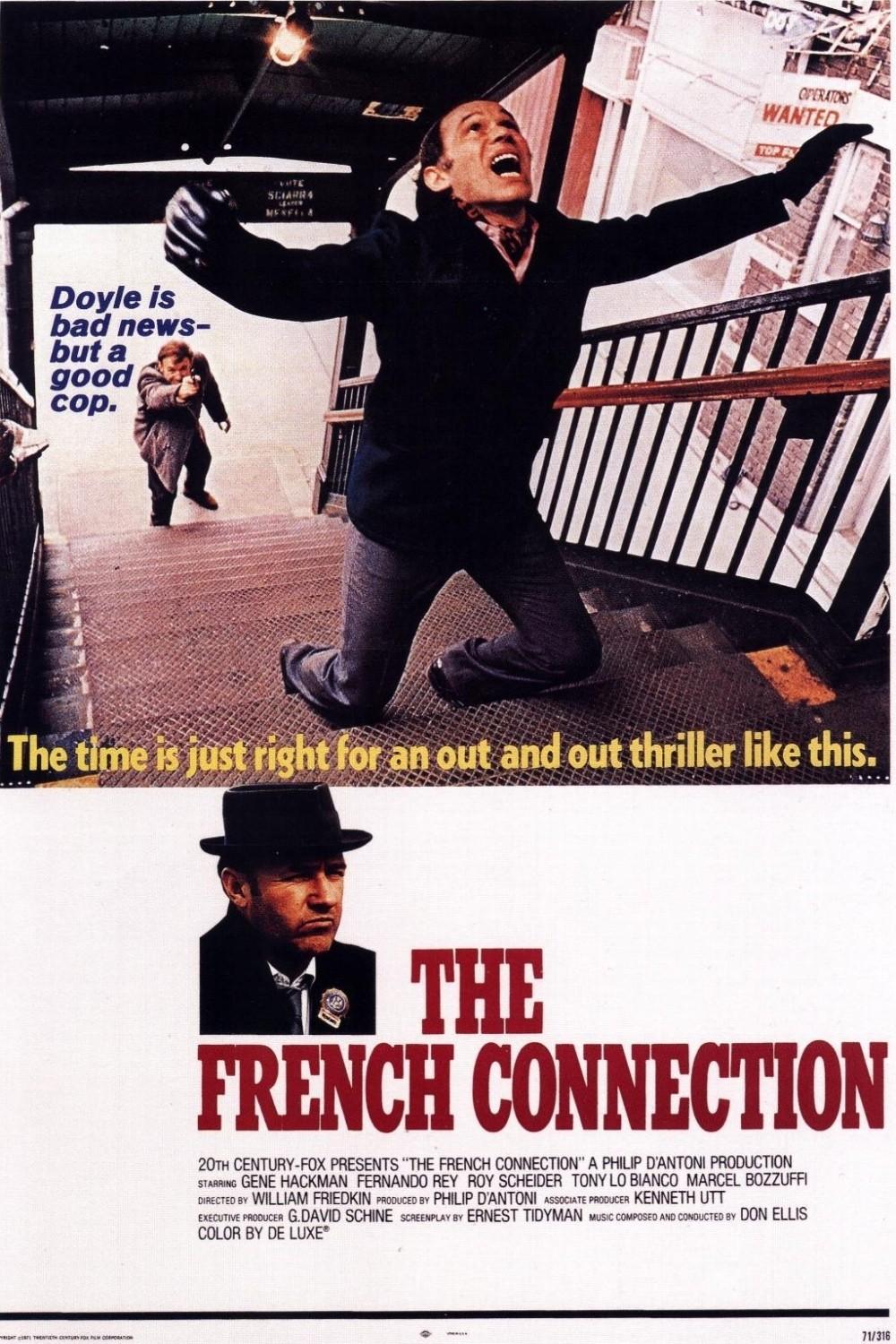
William Friedkin’s “The French Connection” was shown as part of American Cinematheque’s tribute to him, and he went into great detail about how the famous car chase came together. It is still one of the best car chases in cinema alongside “Bullitt,” and it’s the kind Hollywood doesn’t dare do anymore.

The French Connection movie poster

Actually, it turns out there was never a car chase in the original script for “The French Connection,” but Friedkin felt it needed one as this was a police procedural, and the audience would need a temporary release from it. Also, Friedkin didn’t do any storyboards to prepare for it. In fact, he has never done storyboards for any of his movies because he feels he has to see it in his mind. The shots captured on film come together from what he sees at the time, and he doesn’t even use a second unit to shoot any footage. All that you see on screen in “The French Connection” comes from life as it happened in front of Friedkin.

In coming up with the chase, he and some crew members walked down 50 blocks of New York streets to figure out how it would work best. As Friedkin kept walking, he suddenly felt the subway under his feet. Now logistically, he couldn’t do a car chase with a subway as it was underground, but it made him wonder if there were any elevated trains left in New York. The production team ended up finding one in Brooklyn, so Friedkin went to the Transit Authority to get their cooperation in pulling this chase off.

The first thing to figure out was how fast the trains could go. Friedkin said if they went over 100 mph, they couldn’t do the chase as it would be impossible for Popeye Doyle to follow the train by car. The train supervisor he talked to said the trains go at 50 mph, so what seemed impractical suddenly became possible. Not only did Friedkin want to have a car chase the train, he also wanted to crash the train for the chase’s climax. But the train supervisor said it would be too difficult because they had never had an elevated train crash or even heisted. Having heard all this did not deter Friedkin, and he planned to steal the scene if the transit authority’s cooperation was not going to be granted.

As Friedkin and his crew headed for the exit, the train supervisor suddenly said, “Wait a second. I told you it would be difficult. I never said it would be impossible!” He told Friedkin that if he were to help him with this, then he would need $40,000 and a one-way ticket to Jamaica. His reasoning was if the movie was to be done Friedkin’s way, he would be fired, and retiring to Jamaica was always in the back of his mind. Sure enough, the supervisor was fired, and he moved to Jamaica like he said he would, so it’s safe to say he lucked out.

In filming the chase, the shots were picked up just as they happened in real life. There’s no way they would ever be able to film a chase like this today without prior approval from the city, but Friedkin and his crew were young and reckless, and they unleashed mayhem New York never saw coming. There were not supposed to be any accidents while filming it, but there ended up being many of them which forced the crew to fix the car after each take. I’m pretty sure they ended up using more than one as a result. Friedkin ended up saying they did a number of things he would never even think about doing today, and that they were very fortunate no one got hurt.

Taking all this information into account, this car chase feels even more thrilling than when I first saw it. The way it was filmed was completely insane, and the fact they pulled it off at all was a miracle. When Gene Hackman finally brings the 1971 Pontiac LeMans he is driving to a complete stop, the sold-out audience at the Aero Theatre applauded loudly which shows how powerful the sequence remains today. “The French Connection,” like many of Friedkin’s movies, has deservedly stood the test of time.