Hello people. My apologies, I have not been writing much recently. I kind of hit a brick wall and have been a bit depressed about my current living situation. As a result, I am trying something a little different; I will be doing a movie review on camera. Sooner or later, it had to happen.
This review will be of Ridley Scott’s historical epic “Napoleon” which stars Academy Award winner Joaquin Phoenix as Napoleon Bonaparte, the French military commander and leader who came to prominence during the French Revolution, and his brutal military campaigns during the Revolutionary War are the tales of history which are impossible to forget, especially considering how it resulted in millions of lives lost. The movie focuses on Napoleon’s rise to power, and of his all-consuming relationship with Joséphine de Beauharnais, played in a fantastic performance by Vanessa Kirby (the White Widow in the “Mission: Impossible” franchise).
Scott’s “Napoleon” works best when it focuses on the tortured relationship between Napoleon and Josephine as Phoenix and Kirby make quite the acting pair whenever they are together onscreen. Watching them face off with one another is endlessly enthralling, and it helps to make up for Scott and company do not dig enough into Napoleon’s psychology. My problem is the film tends to keep him at an arm’s length distance, and I came out of it feeling like I could have learned more about the man. Nevertheless, Scott has crafted a four-hour cut of the film which will debut on Apple TV in the near future. That’s right, it will be streaming before we all know it.
Please check out the review below and subscribe to The Ultimate Rabbit You Tube channel if you have not already. It is not too long, and I did my best to make sure it only lasts a fraction of “Napoleon’s” running time which is 157 minutes.
The following review was written by Ultimate Rabbit correspondent, Tony Farinella.
In the interest of transparency, I must admit I either saw “The Nun” and it was so bad and I completely erased it from my memory, or I haven’t seen it at all. I’m leaning toward the latter. However, I’m pleased to report “The Nun II” was a very satisfying cinematic achievement. In fact, I need to go back and watch the original and see how I feel it holds up compared to this sequel. This is a film I went into with very low expectations, and it really impressed me with its visual style, its acting, and its effective use of mood and dread to tell a compelling story.
“The Nun II” opens with a scene that is sure to catch your attention and hook you right away. It’s a scene in which a priest is raised in the air and set on fire in a church located in Tarascon, France. This takes place in the late 1950’s. Our film then takes us to 1960 and the events following the original “Nun” film where we see Sister Irene (Taissa Farmiga) who is now located in Italy. From what I gathered through flashbacks, she survived a demon in the original film, so she’s well-versed in demon attacks and how to combat them. We also meet Maurice (Jonas Bloquet), a servant/janitor in France who is supportive and encouraging to a young student named Sophie (Katelyn Rose Downey) and her mother Kate (Anna Popplewell), a schoolteacher.
Sister Irene is called back into action when the Cardinal informs her of a number of deaths taking place all over Europe. He suspects they are at the hands of the demon Valak. Since Sister Irene survived the demon the last time, he believes she will be able to put a stop to this madness. She brings along Sister Debra (Storm Reid), as Debra is starting to question her beliefs and wants to see a real miracle. If there is anyone who can get her to believe, it is definitely Sister Irene.
While all of this is happening, the demon Valak keeps showing up and disappearing in visions and also in real life. I’m not a big fan of jump scares in cinema, but this film is very effective in knowing when and how to use them. They really got to me, which is not something that happens easily. In a lot of films, they tend to come across as premeditated, and you can see them coming from a mile away. Here, they really build up to and use them when you least expect. Director Michael Chaves also does a splendid job in creating a film which is moody, creepy and very unnerving. The film runs at 110 minutes, and they probably could have trimmed maybe 10-15 minutes off the running time to make it even better. Near the end, it feels like there were a few too many scenes thrown in there which weren’t entirely necessary. It’s still a good film, and a big part of that is the performance of Taissa Farmiga. She’s great at being vulnerable, tough and easy to like.
What I enjoyed most about this film is the fact it explained its backstory and history in great detail. In most horror films, they tend to leave out any backstory or character development. With Maurice, we understand why certain things are happening to him. We learn more about the demon Valak and his motivation for why he’s possessing and killing people. With Irene, we learn why she’s having visions of the demon. Even with Debra, we know why she has trouble believing in her faith and needs to see a miracle. The screenplay really knows the devil is in the details here (put intended), and in order to tell this story the right way, we need the protagonists and antagonists to be properly fleshed out.
All in all, people are going to see a movie like “The Nun II” because they want to be scared. As a scary movie, it succeeds because we are invested in the characters and seeing them succeed. There are high stakes here. They really took their time to build up to the jump scares and big moments. Lately, I’ve been finding myself more and more surprised by certain movies, which is always a delightful treat. This could have easily been a cash-in sequel, but they decided to make a worthwhile film that is worth your money and more importantly your time. Spooky season might be over, but you won’t be disappointed by the disturbing and eerie filmmaking on display in “The Nun II.”
* * * out of * * * *
4K Info: “The Nun II” is released on a single-disc 4K from Warner Brothers Home Entertainment. It also comes with a digital copy of the film. The film has a running time of 110 minutes and is rated R for action/violence, some bloody images, language and brief suggestive material.
4K Video/Audio Info: The HDR on this film is really, really potent. On darker films like this, it has a way of making the film look even scarier. There are tremendous spooky shadows throughout the film. It is also dark without being too dark. It’s one of the many things I love about 4K—even though this film looks bleak and otherworldly, it’s still a clean, flawless transfer. They didn’t overdo it by making it so dark and dreary you were unable to see what was happening on screen. We also get a really, really nice Dolby Atmos track, which pops during the jump scares. There are also subtitles in English, Spanish, and French. This is a top-notch release from Warner Brothers.
Special Features:
Demons in Paradise – featurette (5:35)
Handcrafter Nightmares – featurette (7:28)
Should You Buy It?
If you were a fan of the original “Nun” or even if you haven’t seen it, like myself, this is a great stand-alone release from Warner Brothers. There are moments where they stop and explain things if you haven’t seen the original, which is very helpful. The 4K is pitch-perfect with a really, really good Dolby Atmos soundtrack, and the picture quality definitely gets an A. There are only two special features here, and I would have certainly enjoyed a commentary track from the director. With all of that being said, if you are interested in buying this for the movie and for the 4K, I would absolutely recommend adding this film to your horror collection. I’ve always been a big fan of “The Conjuring” universe and their dedication to putting out quality horror films. While they don’t always succeed, they have way more hits than misses. This film has somewhat of an ambiguous ending, and I wouldn’t mind if they did a third film, as long as it’s done with the quality and care they devoted to this one. It’s truly remarkable what they have been able to do with all “The Conjuring” cinematic universe. They have a lot of interesting stories to pluck from, and they bring in creative and fresh writers and directors to bring unique perspectives to the series.
**Disclaimer** I received a copy of this film from Warner Brothers to review for free. The opinions and statements in the review are mine and mine alone.
I remember when Gaspar Noe’s “Irreversible” was released in 2002 and of the polarizing responses it received at the Cannes Film Festival and from audiences around the world. A rape and revenge story which, like Christopher Nolan’s “Memento,” is told in reverse and comprised of scenes done in long takes, it is still best known for two scenes of punishing ultraviolence: one in which Monica Bellucci’s character is raped in an underpass which lasts for almost ten minutes, and another where a man’s face is bashed in by a fire extinguisher to where he is no longer recognizable to anyone.
I never got to watch “Irreversible” when it played at a theater near me. Back in the day, I considered myself quite the adventurous moviegoer as I went out of my way to watch those films which did not often screen at the local multiplex because they were considered too disturbing for mainstream audiences. But after being so emotionally drained by “Breaking the Waves” and “Dancer in the Dark,” not to mention going through the cinematic equivalent of electric shock treatment that was “Requiem for a Dream,” I was not sure I could stomach what “Irreversible” had to offer, so I waited to view it on DVD where I could lower the volume or fast forward through the hard to watch parts.
Still, part of me regretted never having witnessed Noe’s unnerving film on the silver screen, and this is coming from someone who watched Larry Clark’s controversial “Kids” in a theater with his parents. But now, Noe has released a new cut entitled “Irreversible: Straight Cut,” and on top of it being remastered, it presents the story in chronological order this time around. The question, however, is if this cut will be just a mere gimmick.
The story remains the same with lovers Alex (Monica Bellucci) and Marcus (Vincent Cassel) going to a party along with Alex’s former boyfriend, Pierre (Albert Dupontel). But this straight cut starts with Alex and Marcus waking up after a night of passionate love making. I love watching this opening scene as the intimacy between these two characters, played by actors who were married at the time, as it is so lovely and unforced. So much attention has been paid toward those two unwatchable violent scenes that many forget about these scenes here. Seeing these two lovers together proves to be a wonderful sight as this intimacy is rarely shown enough in movies, and I came out of it feeling envious for Cassel as he got closer to Bellucci than I ever will.
From there, “Irreversible: Straight Cut” goes on a path which leads straight to hell as the road to it is always paved with good intentions. Alex is eager to bring Pierre along for the ride because she knows he gets along rather well with Marcus, and he still has feelings for her. Hearing Marcus and Pierre brag about who was better in bed with her played more strongly for me this time out in this chronological take. In fact, as we are thrust more deeply into one of “Irreversible’s” main targets which is toxic masculinity. Marcus is so consumed with rage over what happened to Alex that he is utterly impulsive and not using anything resembling common sense. Pierre is infinitely desperate to make Marcus see that he would be better off staying in the hospital with Alex rather than trying to seek vengeance and, even though I have long since seen the original cut, I found myself hoping Pierre would succeed this time around.
With “Irreversible: Straight Cut,” Noe has done an excellent job of making this version more than just a mere gimmick. The edits between each scene feel as seamless as they did before, and our attention is now glued to what may happen as opposed to what has already transpired. The more I watched this cut, the more I came to see how it dealt more with the uncontrollable impulses of man to where anything can happen, and this makes the final outcome all the more devastating. Truth be told, the events portrayed here remind me of all those moments I would love to get back as they created a level of damage I never intended.
As for the elongated rape scene, it remains as brutal and unnerving as ever. I did see one man walk out of the theater during it, and part of me expected to see more audience members to do so. I found myself looking away from the screen at times as I became increasingly enraged as ever at what the unrepentant pimp, La Tenia (played by kick boxing champion Jo Prestia in a truly fearless performance), was doing to Alex. There are few other motion pictures I have sat through where I wanted to see a certain character die a most painful death, and La Tenia is seriously deserving of such a fate.
At this point, I should make clear some facts about the rape scene as many of “Irreversible’s” detractors consider this film to be “pro-rape,” something I completely disagree with. The truth is, Noe was not sure how long the rape scene was going to last, and it turns out Bellucci was the one who ended up directing the scene as she wanted it to be as disturbing as possible. Also, Noe’s camera is constantly moving all over the place throughout “Irreversible,” but it remains paralyzed throughout the rape scene as he wants us to remain in Alex’s frame of mind instead of La Tenia’s. Had the camera moved along with every thrust of La Tenia’s body, we would have been in his mindset, and that would have affected the morality of this film in an inescapable way. In my mind, Noe justifies the rape scene in “Irreversible” because of the way he filmed it.
Seriously, “Irreversible: Straight Cut” reminded me of when I first watched “Deliverance” years ago. While many motion pictures are meant to be enjoyed, this one was made to be experienced even if it was against my will. There is no easy escape from the rage of revenge here as Marcus descends even deeper into a hell which Pierre desperately wants to keep him away from. While I have watched “Irreversible” several times before, I still found myself praying still for another outcome.
This film has also been accused of being homophobic as Marcus yells out many degrading insults to the patrons at the Rectum club, but there a couple of things to consider. Noe himself has a cameo as a Rectum regular who is busy pleasuring himself, and this was his way of showing he was on equal footing with characters he portrayed here. As for Marcus, all I can say is that when you find yourself in a state of intense anger or rage, you find yourself saying things you never thought you would ever utter.
As for Pierre, whose vicious actions end up giving him the worst outcome in this film, he represents a case study of deep repression as he keeps his emotions deep inside. But when he bashes that guy’s head in with the fire extinguisher, his repression ends up finding an exit in the worse way possible, and he ends up destroying himself in a way he could never have seen coming.
Basically, what I am trying to say about either cut of “Irreversible” is that Noe did not make this film simply to shock audiences. Yes, he went out of the way to make us feel uncomfortable while we watched it, but there is more substance to this film than we initially saw on the surface of it. In the end, it presents us with a tragedy we would be best to avoid in our own lives as it is anti-rape and anti-revenge more than anything else. If you do not believe me, then you did not look at this film closely enough.
In comparing the two cuts, I have to say I prefer the original cut more as its reverse structure carries more dramatic weight. As we come to see these horrific acts and what led to them, each preceding scene makes us think about what could have been done to avoid such horrific fates. Still, “Irreversible: Straight Cut” gives audiences something to chew on even as it takes things to a finale which is as bleak as can be. When it comes down to it, I am curious to see what people think about the straight cut, particularly those who have not seen either cut before this one. With a film like this, the responses to it prove to be endlessly fascinating.
Come to think of it, comparing “Irreversible” to “Deliverance” reminds me of the pieces of advice characters give in each film. In “Deliverance,” Jon Voight tells Burt Reynolds, “Let’s go back to town and, ah… play golf.” Imagine the horrors those men would have avoided had Reynolds heard Voight out. But when it comes to “Irreversible,” it features a terrible piece of advice which hangs over the film as Alex attempts to cross a busy street when she is told by a woman nearby:
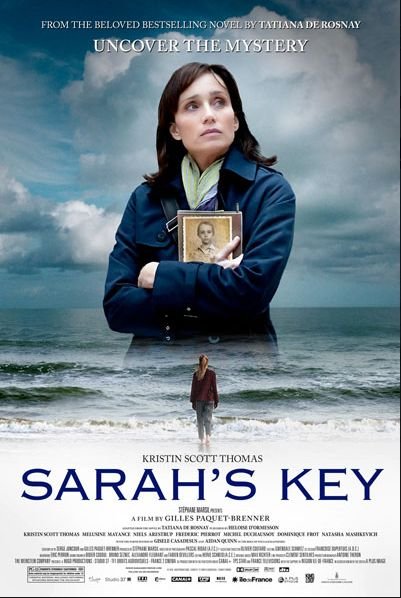
“Sarah’s Key” is what some would say is yet another movie dealing with the Holocaust and its impact on us all, but do not be fooled into thinking it is going to be the same old thing. Based on the novel “Her Name Was Sarah” by Tatiana de Rosnay, it ventures into this dark part of history from a different perspective as we watch the French army and bureaucracy aiding the Nazi party as they rounded up Jews and shipped them to Auschwitz; this event was called the Vel’ d’Hiv’ Roundup. As the story moves back and forth in time from 1942 to 2009, American journalist Julia Jarmond (Kristin Scott Thomas) works to solve a decades-old mystery which can no longer remain hidden, and these days we are all sick of things remaining hidden.
In 2009, Julia has moved into an apartment with her French husband and teenage daughter. She had previously written a celebrated article about the Vel’ d’Hiv’ Roundup, and he soon learns her husband inherited the apartment from his grandparents who came into possession of it during the 1940’s. From there, she becomes obsessed in learning about the apartment’s history, and she learns it was the scene of an unspeakable incident. Finding out the truth about this incident, however, proves to be extremely difficult as her family sees it as too damaging to reveal to the world at large.
Julia’s main focus is centered on a young girl named Sarah Starzynski (Mélusine Mayance) who hid her little brother Michel in a closet to keep him from getting rounded up by the Nazis along with everyone else. She makes him promise to stay in the closet until she returns, and she takes with her the only key which can unlock it. But Sarah soon realizes no one will be going back home anytime soon, and she escapes her captors in a desperate attempt to save Michel before it’s too late.
Like Stephen Daldry did with “The Reader,” director Gilles Paquet-Brenner makes the transitions between the past and present feel seamless to where it never feels jarring. He also avoids turning “Sarah’s Key” into a schmaltz fest begging for Oscar consideration which is quite the relief. By getting naturalistic performances from the cast, he creates an atmosphere which feels real and not exaggerated for effect. You end up getting caught up so emotionally in the story and its characters to where you do not feel like you’re watching just any motion picture.
Thomas is an amazing actress who never gets the same acclaim actresses like Meryl Streep or Viola Davis do on a regular basis. Maybe it is because her acting is not as theatrical, but Thomas’ strength is in inhabiting characters to where you never catch her acting. She pulls off a flawless American accent to where she makes the act look effortless, and she speaks fluent French ever so beautifully.
Attention must also be paid to Mélusine Mayance who gives a very believable performance as the young Sarah. Called upon to portray a child going through horribly nightmarish circumstances, Mayance holds her own amongst the adults, and she breaks your heart through her utter commitment to the character she portrays. Throughout, she makes you share Sarah’s desperation in getting to her little brother before someone else does, and she makes you feel her accomplishments and disappointments in every which way.
“Sarah’s Key” is one of those movies I find it hard to find any fault with it. Everything seems to fit together perfectly, and nothing ever appears superfluous to the story. While it treads the well-worn ground of Holocaust movies and of what happened to millions of Jews, it finds an interesting angle by looking at the complicity of the French in this atrocity. It never did get much of a release as it spent little time in theaters near you, and you will probably be hearing about it more about on physical and digital media. Here is hoping that it finds a bigger audience than the one it has already gotten to date.
This movie starts off simply enough with an elderly couple outside of their apartment in northeast Paris, having what looks like lunch and some wine as they are enjoying the long life they have had together. The wife then asks her husband, “is life a dream?” He responds, “life is a dream within a dream.” Seeing these two together in such a simple setting spoke to me of a couple who have lived what looks like a very successful life. It also proves to be the happiest scene this movie has to offer.
“Vortex” is the latest piece of cinema from Gaspar Noe, a filmmaker I very much admire and have no problem nor hesitation in defending. This particular movie is his most mature one to date, but do not for one second think he has lost a single ounce of his audaciousness here. With “Vortex,” he takes us on a cinematic journey which I can best describe as being unflinching as we follow this couple as their mental and physical health are on a permanent downward slope. Gaspar begins this movie with a dedication which states: “To all those whose brains will decompose before their hearts.” This is then followed by Françoise Hardy singing “Mon Amie La Rose,” a song about going from life to death. Suffice to say, you know from there that this movie will not have a happy ending, and there is no music score from Thomas Bangalter to elevate us out of the bleakness on display.
With “Vortex,” Gaspar goes out of his way to utilize the split screen approach, which Brian DePalma used to great effect in his movies, and a line is slowly drawn down between these two characters to where their existence together will never be the same. They go about their daily activities in what seems like the usual mundane way as the husband works on a book he calls “Psyche” which deals with movies and dreams, and the wife goes shopping at local stores near Stalingrad Station where they live. But as she travels through the aisles of one store, we see on her face how lost she is to where it quickly become clear she has no idea where she is at. Keep in mind, this is just the start of the story. We have yet to see how truly bad things will get.
As for the husband, the work on his book is constantly being undermined by his wife’s deteriorating condition which shows itself in the most horrifying of ways. In addition, he is suffering health problems of his own as his heart condition has him checking his blood pressure every other day. Their only hope is the help they get from their son, Stéphane (Alex Lutz, playing one of the few characters here with an actual name), but he can only deal with so much as he has problems of his own which includes raising his son, Kiki (Kylian Dheret), and recovering from his mental breakdown and a drug addiction which threatens to overtake him in the face of inevitable mortality.
We know Dario Argento best for being one of the best horror filmmakers ever which such classics as “Suspiria,” “Deep Red” and “The Bird with the Crystal Plumage” among others. As for Françoise Lebrun, she is a highly acclaimed French actress who has appeared in a plethora of movies, most notably in Jean Eustache’s “The Mother and the Whore.” Together, these two do not act their roles as much as they inhabit them. With the split screen setup, this makes perfect sense as every single moment in this couple’s time together counts for everything. Even the most mundane of details carries a lot of meaning as these two experience a deterioration neither is prepared to accept or fully deal with.
I also have to give Alex Lutz a lot of credit as well. Not only does he inhabit his role alongside Argento and Lebrun, but he never overacts in the slightest as his character of Stéphane has to carry the weight of his parents’ mental and physical demise all on his shoulders, and anyone who has been through a similar situation can certainly relate. Still, the scene where he relapses without even knowing his son is watching him freebase proves to be quite devastating.
With “Vortex,” Gaspar is not out to pass judgment on these two characters or those around them. Instead, he makes us follow them are inevitable journey to death which we know is coming. Is it cruel of him to do this? No, not really as we have a certain denial when it comes to the finality of life. We know it is coming, but who is prepared to deal with it? While we say we will be there for our loved ones when they breathe their final breath, who exactly looks forward to that?
Watching this movie, I was reminded of some dialogue from one my favorite television shows, let alone one of my favorite HBO shows, “Oz:”
“Let me tell you, dying is a lot harder on the living than it is on the dead. Death really only hurts those left behind.”
“Do we care for people when they’re sick because we actually care about them? Or do we care for them because when our time comes, we want someone to care for us?”
“The state’s attitude to the elderly, any elderly, in or out of prison is… hurry up and die.”
With “Vortex,” Gaspar is not out to suggest any course of action, but to instead offer us an unflinching look at a couple’s last moments before they expire. Even if I felt the urge, I could never look away from the screen as these two individuals breathed their last breaths. Now while it might sound like I am spoiling this film for you, I am not. Some films you watch to enjoy, and others are meant to be experienced. “Vortex,” like all of Gaspar’s films, is meant to be experienced more than anything else, and I applaud it for that.
I would also like to add how “Vortex” makes me want to look at my parents and tell them the following:
“If you ever get dementia, I will kill you. You understand?”
Filmmaker Lars Von Trier was once quoted as saying the following:
“A film should be like a rock in the shoe.”
That is certainly the case with “Vortex.” This is not the first Gaspar Noe film to give you this feeling, and it certainly will not be the last.
With his documentary “Where to Invade Next,” Michael Moore comes into it looking more run down than usual. It’s been a few years since “Capitalism: A Love Story” in which he railed against the economic order of America and the consequences of runaway greed, and since then he has weathered through numerous events including a divorce and a bout with pneumonia. However, he still has enough energy to continue his fight to make America a better place.
“Where to Invade Next” starts off with a brief history of America and the countries it has invaded, and it also makes clear how World War II was the last big war America ever won. Since then, America has been engaged in highly unpopular conflicts in Iraq and Vietnam, and it has suffered greatly in the wake of 2008 economic crash. In an effort to find ways to make America better, Moore decides to playfully invade other countries to steal their good ideas and bring them back stateside to be put to good use.
As always, Moore gives us a very entertaining time filled with unforgettable moments and laughs designed to stick in your throat when you realize how workers in other countries have it better than Americans. He interviews an Italian couple who describe in detail how they get eight weeks of paid vacation time, and they look utterly shocked when he tells them Americans only get two. There is a scene where he sits with a group of French children at lunch and sees how they are eating very healthy meals of the high-end restaurant quality, and none of them drink Coca-Cola. When those same kids look at the school lunches Americans have, they understandably recoil in disgust.
Yes, Moore is cherry picking facts here and all these countries seem to look rosier than they probably do outside of this documentary, but he admits early on he is there to “pick the flowers, not the weeds.” He’s not here to give us an in-depth overview of the places he visits, but instead to show how other countries treat their people and workers as compared to how they are treated in America. One country does not charge college students tuition, so the term “student debt,” a huge problem in America, has no real meaning. Another country offers its citizens a yearlong maternity leave as they feel the bond between a parent and their child must be formed as soon as possible. A lot of these ideas are frowned upon in the United States, and the documentary leaves you wondering why this is the case.
In some ways “Where to Invade Next” covers the same ground as “Sicko” as Moore talks with Americans who have since moved to other countries where they discover more opportunities than they ever had back home, and he talks with people of other cultures who react with horror as to how America handles education, health care and workers’ rights. It gets a little old after a while as he’s treading through familiar territory, but you have to applaud those educators who say America should do away with standardized testing.
The documentary does have one pivotal moment, however, when Moore visits Norway and talks with a father whose son was murdered. The man who committed the crime is about to be sentenced, but the father doesn’t wish him dead or yearn for revenge. His reasoning is it will not make his or anybody else’s life any better and will just crush his spirit. Now there are many people in America who think like this, but the whole “eye for an eye” saying in the Bible seems to be more preferable to the most vocal of its citizens.
Many prefer to label Moore as being “anti-American” among other things, but he’s still living in America and looking for ways to improve life for its inhabitants whether they are immigrants or natural-born citizens. Why doesn’t he just move to another country if he finds so many others to be better, you ask? Because he loves America and continues to speak out against those who greedily take away from the middle and lower classes just because they can.
Seriously, who in America thinks two weeks of vacation time is more than enough? There are many who work 40 hours a week and yet still live in poverty. Despite the advances of the Affordable Care Act, many in America cannot afford health insurance. Those who lost their jobs and savings have ended up taking jobs offering no benefits of any kind because they have little choice. If none of this bothers you, then you need to take a much more observant look of the country you live in. Many say America is still the greatest country in the world, but there’s more than enough evidence to suggest it is not even close.
More importantly, “Where to Invade Next” shows Moore at his most hopeful. He doesn’t have an axe to grind this time around and does not lash at anyone in particular. Considering how he comes to use the words of our last few Presidents against them, this never comes across as a liberal or a conservative documentary. This is one any audience can and should be able to appreciate even though it will mainly appeal to his base and not those outside of it.
But what’s especially invigorating about “Where to Invade Next” is it shows the American dream is still alive and well. Looking closely at other countries, Moore shows how their ideas have been shaped by ones which originated in America. Now if we could only make that dream a reality again in America, things would be much better.
“Where to Invade Next” may not be one of Moore’s best documentaries, but it is still very entertaining and will have you laughing as well as informed about the world around you. Moore does look beaten down after all these years, but he’s still there fighting for his home country and looking for ways to make it great again, unlike the current resident in the White House.
For those who still think this Oscar-winning filmmaker doth protest too much and should shut up, keep in mind this following quote from Oliver Stone’s “Born on the Fourth of July:”
“People say that if you don’t love America, then get the hell out. Well, I love America.”
“Bang Gang (A Modern Love Story),” just by looking at its trailer, seems like the French version of “Kids,” but that’s not even remotely true. Based on a true story, a fact we don’t discover until the end credits, it follows a group of ordinary teenagers who live in the suburban neighborhoods of France and participate in sex parties they refer to as “bang gangs.” In the center of the sexual shenanigans is the beautiful George (Marilyn Lima), one of the main organizers of these parties and who experiences some intense inner turmoil. After being spurned by her would-be boyfriend Alex (Finnegan Oldfield) who goes after her best friend Laetitia (Daisy Broom), George begins feel increasingly isolated from everyone around her even as the parties become increasingly reckless. In short, this story will not end well. Or will it?
This movie marks the feature film directorial debut of Eva Husson whose previous credits include the short films “Hope to Die” and “Those for Whom It’s Always Complicated.” Many consider her one of many directors to emerge from the world of music videos, but she will be quick to silence you on that. Born in France, Husson earned an M.A. in English literature from the Sorbonne, and she would later move to America to pursue an M.F.A. at the American Film Institute. She did make some music videos along the way, but her focus has always been on writing and directing feature films.
With “Bang Gang,” Husson has pulled off an impressive debut filled with strong performances by a mostly non-professional cast, and she is aided by the lush cinematography of Mattias Troelstrup as well as the atmospheric music score by White Sea.
I got to talk with Husson while she was in Los Angeles to promote “Bang Gang (A Modern Love Story” which she described as “a movie about teenagers falling in love in the midst of a sexual apocalypse.” She explained how she pulled off the long tracking shot at the movie’s beginning which lasts for several minutes, why she put the term “based on a true story” at the movie’s end instead of the beginning, and she pointed out how the project was inspired by stories involving American teenagers and not French ones. She also spoke of why she had her cast watch Paul Thomas Anderson’s “Boogie Nights” and Lars Von Trier’s “Melancholia” before the film shoot began.
Please check out the interview above.
AN ULTIMATE RABBIT NOTE: This video interview was recently updated to eliminate any copyright issues which were never intended, and to make it available to the widest audience possible.




 The Ultimate Rabbit