Daniel Franzese Talks About ‘Bully’ at New Beverly Cinema
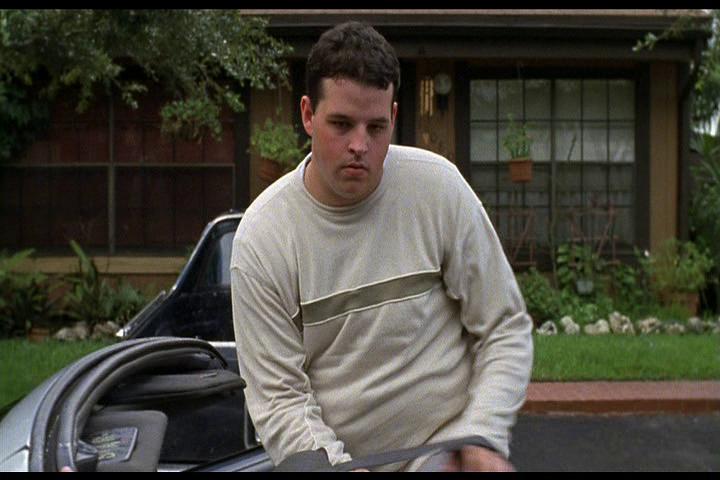
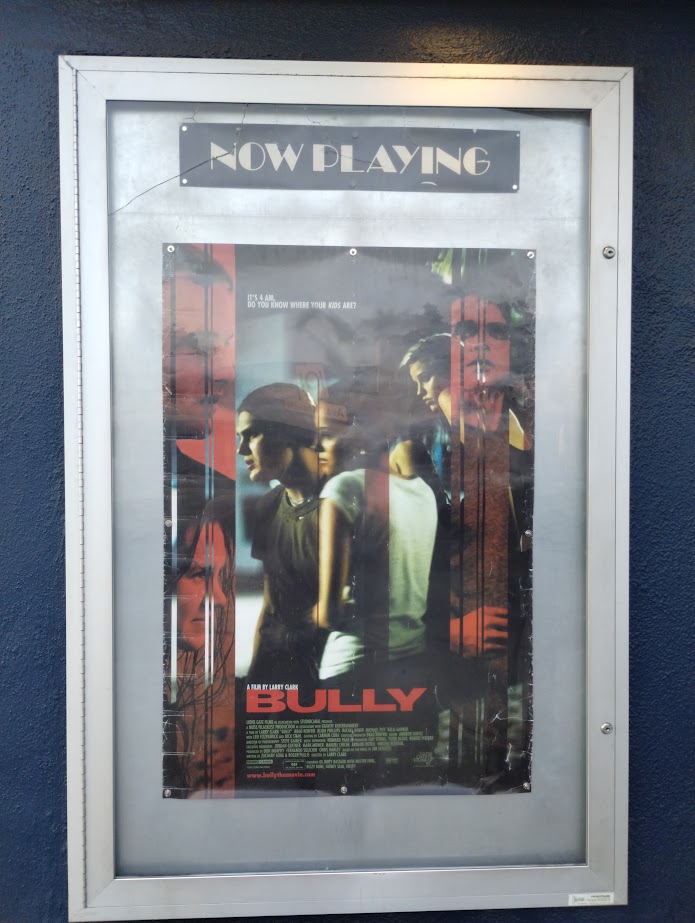
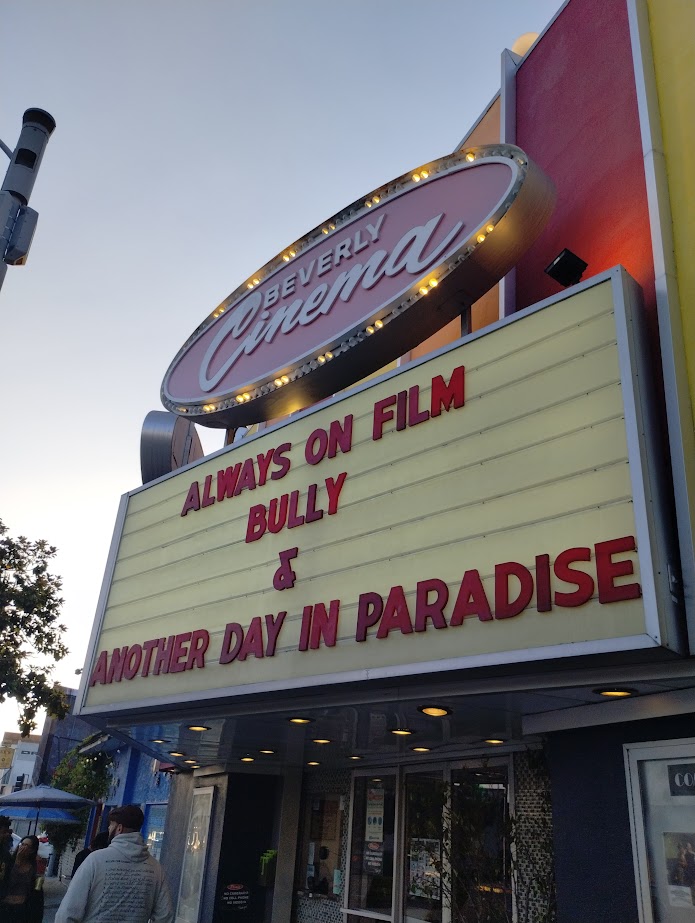
On August 12, 2025, New Beverly Cinema presented a Larry Clark double feature of two of his films: “Bully” and “Another Day in Paradise.” Before “Bully” unfolded on the silver screen, actor and filmmaker Joel Michaely brought out a special guest: Daniel Franzese who played Derek Dzvirk. “Bully” was Daniel’s film debut, and it quickly earned him his SAG card. Daniel thanked Joel for being there and remarked how he killed Joel once in a horror movie entitled “Cruel World” where he shot him in the head.

Daniel said “Bully” was the first time he ever got to hold a screenplay in his hands, and he talked about meeting the casting director, Carmen Cuba, at his audition.
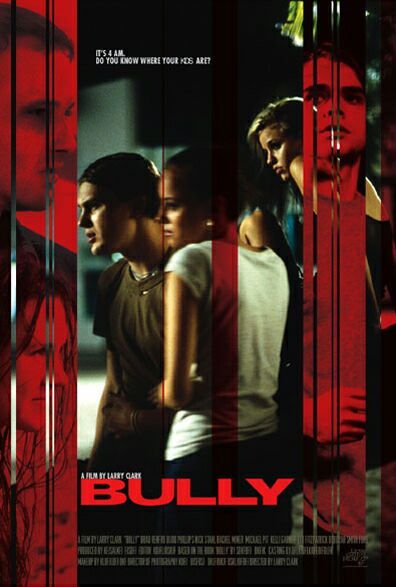
Daniel Fransese: She was like, “Do you wanna see who you are going to play?” I said okay, and she opened up the true crime novel (written by Jim Schutze), and I looked exactly like the guy. And I was just like, oh shit! I can actually get this! So, it was very scary and nerve wracking.”

Rumors are that the set of “Bully” was a crazy one, and being that this was Daniel’s first film as an actor, you can understand and appreciate his feelings at the time.

DF: I’m a pretty easy-going guy, and I am also a theatre guy and a standup comedian. I’m used to being around other people, and I am good at getting along with different personalities. But this movie was next level. we are getting ready to do fittings and start our first day of this movie, and Larry (Clark) is screaming because Brad (Renfro) was in jail for trying to steal a boat. He’s screaming, “This was three years of my life! This kid’s not going to ruin it!” He’s throwing papers and I was like, whoa! That was day one and you can just imagine how the stress level got worse from there.

From there, the discussion went to the late Brad Renfro who played Marty Puccio in “Bully.” Brad first gained worldwide attention at the age of 12 years old when he was cast as Marcus “Mark” Sway in Joel Schumacher’s cinematic adaptation of John Grisham’s “The Client.” Like many people on this planet, let alone actors, he died at far too young an age He was only 25 years old, when he passed away after a drug overdose. Daniel talked about working with Brad.
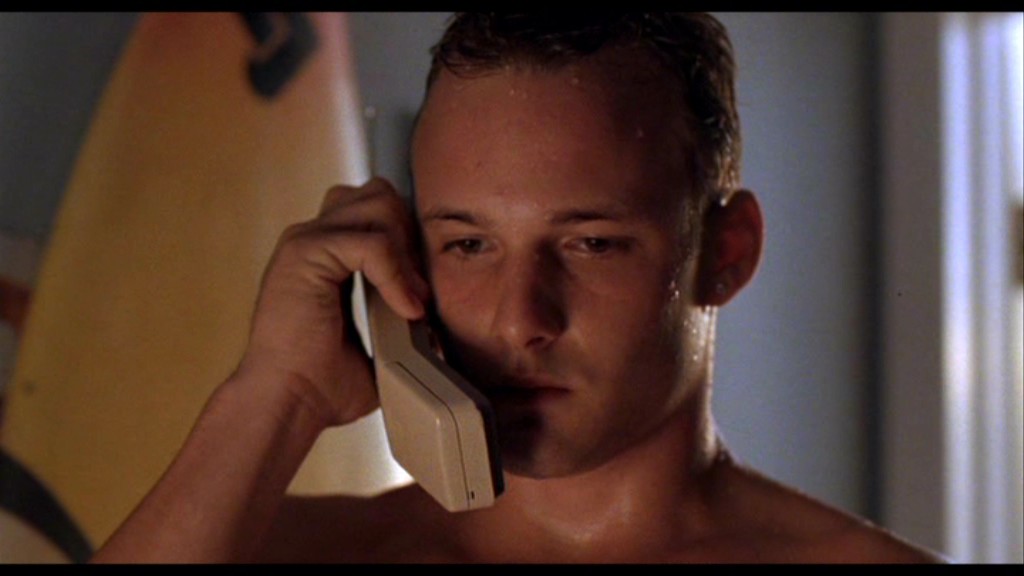
DF: Brad was great. I think he was like one of those golden retriever type people. Not evil, but dangerous. We were doing the table read for the first time, and Brad showed up wearing a white tank top completely soaked in lighter fluid. He came in saying, “I’M TRYING TO GET THE BARBECUE TO GO!” It was like, whoa! He was from Knoxville and had like that “Jackass” sensibility where you didn’t know what he could do, but I don’t think he ever had a mean bone. His intentions were always nice. If anything, he partied too much, and he once told me that at 12, he made hundreds of thousands of dollars to do “The Client,” and he was getting a lot of his drugs and stuff from family members as a kid. I don’t think he got a fair shot. If anything, the reason why I advocate for younger people in Hollywood or talked about my experiences on this movie which were crazy, I was never speaking from a victim place. I was speaking from a place of advocating for people like Brad who didn’t have anyone saying anything for them. I just think, we’re making art. It doesn’t have to be that crazy. We don’t have to be stealing boats or going nuts on sets to produce good material.

After “Bully,” Daniel went on to appear in many films, but he may still be best remembered for playing high school social outcast Damian in 2004’s “Mean Girls.” Like Joel and myself, I wondered what it was like going from an independent film to a studio movie where everybody is expected to be on their best behavior.

DF: I just don’t think the 2000s will be looked upon as a time where it was easy for people on movie sets. I really don’t. People always ask me all the time how to get their kid in Hollywood, and I say don’t. I waited until I was at least in my 20’s (before going to Hollywood), and that’s the only thing which might have saved me. A lot of our contemporaries are not around with us anymore or are in a crazy state. It was a rough time. I can’t say it was easier or better, but I think it’s better now.

Regardless of the crazy set, Daniel made it clear to the New Beverly audience what the experience of making “Bully” was like, and of how the filmmakers strived to capture the spirit of the true story it is based on.
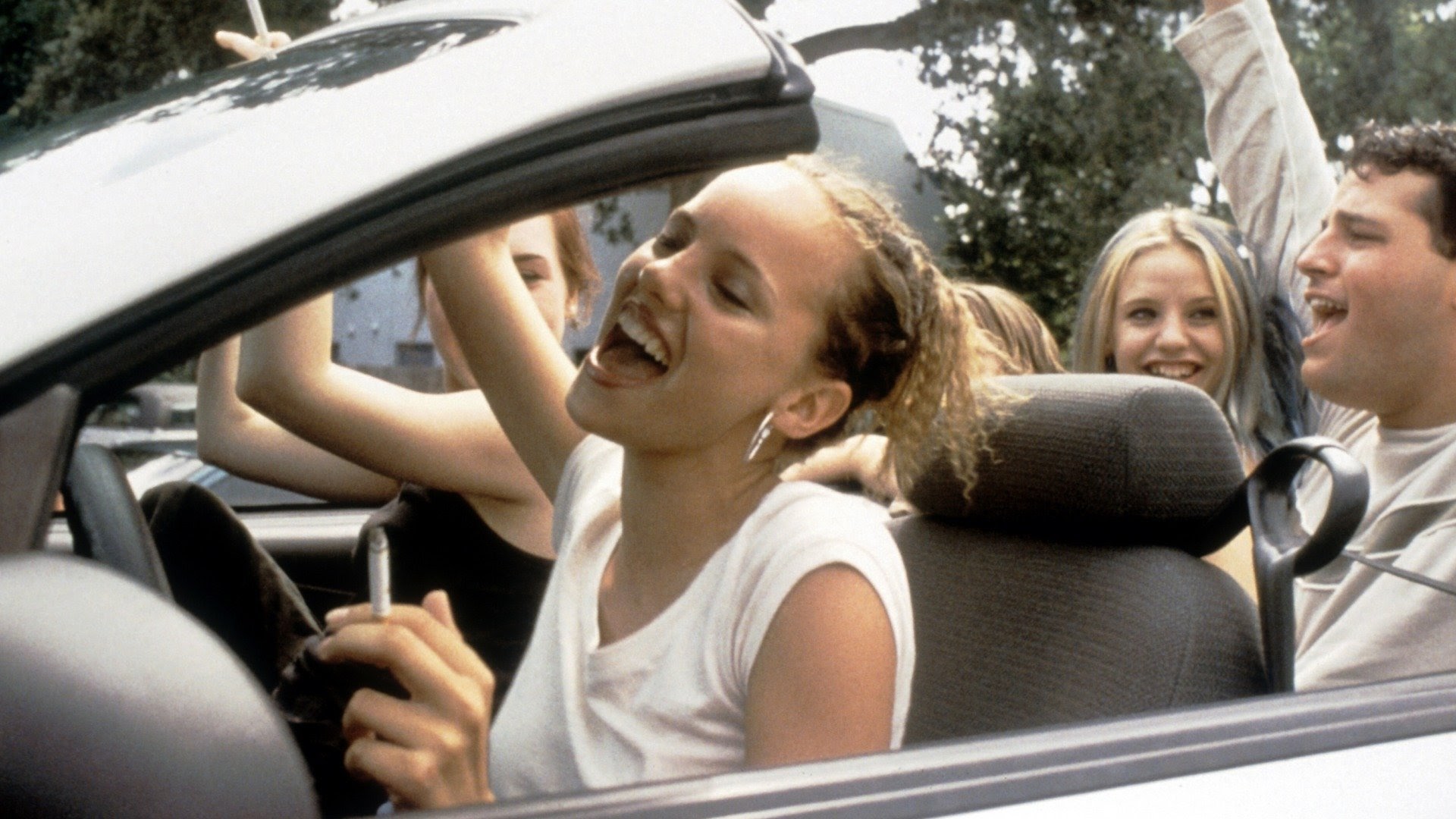
Bully (2001) Directed by Larry Clark Shown in foreground: Bijou Phillips

DF: On a positive note, though, this movie was awesome. It was so fun to make. Larry was cool, the people I was working with were all like people from Thrasher Magazine, it was just like bad ass people. They did shoot in the real locations; it was the real apartment complexes, and it was the real Pizza Hut (we shot in).

Daniel also made it clear how he was the only local hero for hire in Larry Clark’s “Bully.”

DF: They were scouting locations for the gay clubs, and I was just a young kid just figuring that stuff out and performing at the clubs with people I was in musical theatre with and stuff like that. They were like hey we’re making a movie, and I’m like I’m an actor! I had no idea it was going to turn into this. Carmen Cuba, she discovered a lot of people, and I give her all the credit for plucking me out of obscurity and putting me with these people.

An audience member told Daniel that he was from South Florida, and this led Daniel to talk about when he worked at The Gateway Theater in Fort Lauderdale as a kid. a year later, “Bully” premiered there. Daniel found his road from being an usher to a working actor to be honestly insane.

DF: I was there at the theater going, would you like the popcorn combo? I am a movie lover. I worked at Blockbuster (Video), I worked at movie theaters, that’s all I did. Until I was able to support myself as an actor, I was either an usher in theatre or worked at movie theaters. It (“Bully”) was shot in Fort Lauderdale and the whole crew got their premiere at the movie theater where I worked at. So, whoever served me popcorn today, keep writing your scripts.

Like many, Daniel Franzese considers New Beverly Cinema to be one of his favorite places in Los Angeles, and that it was extra special for him to see “Bully” being screened there on 35-millimeter film. To see films presented there in their original format, something often not available to movie buffs in most places, means a lot to him.
James Franco Undergoes One Hell of a Transformation in ‘Spring Breakers’

James Franco in Spring Breakers

WRITER’S NOTE: This article was originally written in 2013.

It almost shouldn’t work. James Franco as a Florida-based rapper in Harmony Korine’s “Spring Breakers?” Just the thought of it sounds utterly laughable as we are so used to him playing such clean-cut characters in the “Spider-Man” trilogy, “Rise of the Planet of the Apes” and “Oz the Great and Powerful.” But then again, he did play the ultimate stoner in “Pineapple Express,” so there is that. In the end, while Franco does have some laughable moments as the crazy rapper Alien, the role allows him to give his best performance in a movie ever since his Oscar nominated turn in “127 Hours.” There’s no doubt as to how much research Franco did, and this is one of the first great actor transformations of 2013.

After watching “Spring Breakers,” you desperately want to find out what made Franco take on this role as it is so very different from any he has played previously. Clearly, he was drawn to working with Korine who is best known for writing the screenplay to the highly controversial “Kids,” and maybe he has a thing for rap music which we did or did not know about. But in a conversation with Roger Moore of RedeyeChicago.com, Franco discussed one of the main reasons why he chose this particular project.

“None of us had ever experienced spring break, really,” Franco said of himself, Korine and the rest of the cast. “Actors who start their careers early miss some key experiences in life. I didn’t go to prom. Well, I was dating a theater nerd so we went to a theater festival back in Aspen, Oregon instead. I experienced prom, for the first time, on film. Same with spring break. This is my spring break. And I was over 30 when I got around to it.”

Many have said Franco based Alien on the rapper Riff Raff (and this includes Riff Raff himself), but the actor said his main inspiration for the character was another rapper named Dangeruss. Dangeruss is a local Florida rapper who is still relatively unknown, but he lived in the same area of Florida which Alien lives in and has the same kind of lifestyle. Franco ended up writing a long essay which was featured on the MTV website, and in it he explains how big of an influence Dangeruss was on him.

“I met Dangeruss through Harmony,” Franco wrote. “Before I went down to St. Pete to play Alien in ‘Spring Breakers,’ Harmony sent me innumerable videos and photos as references for my character. He drowned me in them. Harmony is a master of online research. Once he chooses a location to shoot, it turns out he is also a master at finding the most interesting and odd local places and characters. One of the last videos Harmony sent me was of a white guy in dreads, sitting in his car, rapping about Dope Boyz. This turned out to be Dangeruss, a local rapper who Harm had met at an audition and knew immediately that he was the real deal.”

“The same day I arrived, Harmony had me visit Danger at his apartment,” Franco continued. “I was surprised when we pulled into a rather nice sprawling housing development, country-club style, with fountains and manicured grass. I think there was even a driving range. When I met Danger, he was tall, thin as a stick, covered in tats and humble as hell. He was willing to help in any way. He told me about growing up in the bad part of town and having poetry as his only recourse when things got ugly. His involvement with the street and his involvement with hip-hop developed simultaneously. ‘While Peter Piper was picking peppers, I was selling yola at the corner store.’ His lyrics are the highly autobiographical chronicle of surviving on the streets of St. Pete.”

Then there’s the question of where Franco got those cornrows done. Looking at someone with cornrows, it makes me think of how painful the process of getting them must be as it involves a lot of hair being twisted around in unusual directions. However, in an interview with GQ, Franco described to Matthew Serba what it was like having them done.

“We had a local artist down in St. Petersburg, Florida do it,” Franco told Serba. “I think it took about five hours total, only because we had to try different cornrow configurations. It doesn’t hurt that much, but it does get very itchy because you can’t get them wet.”

Korine himself has stated in an interview with Joel D. Amos of Movie Fanatic of how impressed he was with Franco’s transformation into Alien. It turns out that the two of them spent a lot of time working on the character even before the cameras began rolling, but once Franco arrived on set, Korine was stunned at what he was witnessing.

“I couldn’t believe it,” Korine told Amos. “I spent a year just sending him images and talking to him, designing the character. I never saw him do it. He didn’t want to rehearse. When he put in the cornrows and the gold teeth and I heard the accent… I was like ‘whoa.’ He was a maniac.”

James Franco’s performance as Alien in “Spring Breakers” is really just another reminder of what an amazing actor he can be when you give him the right material to work with. While he may be getting more attention for the box office blockbuster “Oz the Great and Powerful,” it’s this movie which is bringing him the critical raves he deserves. Watching here makes you excited for what he has in store for us next.

SOURCES:

Roger Moore, “James Franco finally gets his spring break,” RedeyeChicago.com, March 21, 2013.

James Franco, “James Franco: The Inside Story of My ‘Spring Breakers’ Gangster,” MTV.com, February 20, 2013.

Matthew Serba, “Last Night…Talking Cornrows with James Franco,” GQ, May 1, 2012.

Joel D. Amos, “Harmony Korine on James Franco in Spring Breakers: What a Maniac!,” Movie Fanatic, March 21, 2013.

Mad Monster Celebrates 30th Anniversary of ‘Jaws 3-D’ with Guests

Jaws 3D Mad Monster poster

Okay, “Jaws 3-D” is not a great movie (I’m being generous here), but I couldn’t pass up the opportunity to see it on the big screen where it was being shown in 3D. I had seen it on television so many times and kept wondering if the experience of watching it with the extra dimension would make it more exciting. Mad Monster put together the 30th anniversary screening for this much-maligned sequel together at TCL Chinese Theatres in Hollywood back in 2013, and they presented fans with a beautiful DCP 3D print to watch. I have a hard time believing the 3D effects looked as good in 1983 as they did that evening.

In addition, Mad Monster also brought along guests who were involved in the making of “Jaws 3-D:” director Joe Alves, screenwriter Carl Gottlieb and producer Rupert Hitzig. All three were eager to talk about the making of this sequel, but they never did discuss how it was received when it was released 30 years ago.

The original plan for the third “Jaws” movie was to make it into a spoof to be called “Jaws 3, People 0.” Plans for this, however, fell through due to conflicts with Universal Studios, and this led to David Brown and Richard Zanuck resigning from the studio. Alves remarked how the pre-production on “Jaws 3-D” showed how smart Hollywood executives are. Of course, he said this with a bit of sarcasm.

“They really didn’t want to make ‘Jaws,’ and we fought to get that made. They tried to stop it four times,” Alves said of the executives. “’Jaws 2,’ after they fired the first director, they closed it down and Verna Fields (who won the Best Editing Oscar for “Jaws”) and I had to convince Ned Tanen (then President of Universal Studios) that we should go ahead and make it. And then here comes the third one, and they think so much of their biggest movie that they title it ‘Jaws 3, People 0’ which means they are making fun of their most successful film.”

Fields, who later became Vice President of Universal Studios, contacted Alves and told him, since Brown and Zanuck left, the rights to “Jaws” were sold to Alan Landsburg, a television producer best known for “That’s Incredible,” and he was making a mess of everything. Fields asked Alves to talk with Landsburg, which he did, and Landsburg offered him the chance to produce the sequel. But having worked 100 days as a Second Unit Director on “Jaws 2,” Alves was far more interested in directing it. But the conversation became very interesting when Landsburg told Alves of what his plans were for this sequel.

“I said you have to think about making a big shark,” Alves told Landsburg. “And he said, ‘oh no, no, no, no, no. I just want to use real sharks from what I have from ‘That’s Incredible’ and mechanical people.’ So that’s how great the thinking was when this production started.”

Alves then went to visit various aquatic parks for research, and he came across an underwater exhibit which was in 3D. He thought it was great and loved the depth of the technology being used. After exiting the exhibit, he started to think about the possibilities of filming “Jaws 3” in 3D.

“With ‘Jaws 3-D,’ you accomplish two things,” Alves said. “You take the onus off the third because there were very few thirds back then; I think ‘Rocky III’ was the only one at the time. And then you introduce a fresh look at it (the franchise). I went home and did a shark drawing in 3D and I took it to Landsburg and to Sid Sheinberg, and he looked at it and said, ‘Can I have this?’ I said ‘Sid, you’re President. You can have whatever you want! I just got to show it to Lew Wasserman first.’ I got the directing job and that’s how it started.”

Gottlieb had written the screenplays for the previous two “Jaws” movies, but he originally was not brought on board to write the third. The original script was credited to the late, great Richard Matheson whom Gottlieb said he great respect for, but at the same time he found his script to be “problematic” at best. As a result, the studio called him to see if he could help them out once again.

“When Joe (Alves) and Rupert came on, they all agreed on me,” Gottlieb said. “I had done the other two under difficult circumstances, and they said, ‘Can you do it again?’ So off I went to Florida and looked at Sea world, surveyed the situation and thought, yes I can do the script.”

Once everything was ready to go, the cast and crew proceeded to Orlando, Florida to film “Jaws 3-D,” and Gottlieb said the only food down there was “deep fried, refried or just fried.” Making the movie proved to be challenging not only because they were filming in 3D, but also due to the fact they were dealing with water and a big shark. Alves described the process of working with 3D to the audience.

“We worked with one film and not two cameras,” Alves said. “You take and split 35mm film one way that you have a proportion that is really difficult to compose. A shark is very difficult to get out into the audience because it has a dorsal fin. If you cut the dorsal fin off, you could float it right into the audience. You could take a snake through it, but as soon as something hits that frame it jumps back. So, the shark could come out as far as the dorsal fin and that was it.”

Hitzig went into further detail about the complexities of working with 3D back in 1983.

“This film was so different because we were so awed by the concept of 3D, but you only see in 3D those frames that work; you don’t see the ones that don’t work,” Hitzig said. “Now there is a point of convergence, and the two lenses of the camera have to be put into convergence. So if I’m focusing on you and you’re in vertical in the back, then I’m focused on you but you’re gonna be two images in the back. Joe had to watch out that there were no verticals in the back because they were going to be too strong. So we go to the motel room in Orlando and we would be watching the movie and going ‘that shot is beautiful’ and ‘oh no!’ Our eyes would go cross eyed or walleyed and we ducked to the floor. Nobody was looking at the performances. So, after the third week, I put a sign in the motel room that said ‘just when you thought it was safe to open your eyes – Jaws 3-D!’”

Now its 30 years later, and 3D has come back to life thanks to new technologies which have made it far more effective than ever before. Then again, not everyone is a big fan of 3D and many are tiring of seeing every other movie with the extra dimension. Gottlieb shared with us his thoughts on 3D.

“I haven’t seen it (‘Jaws 3-D’) in 30 years and I’m looking forward to it,” Gottlieb said. “Every 3D movie is an experience, and sometimes I like to see them twice; once in 3D to have the stuff whizzing by, and a second time flat so that I can enjoy the story and the performances and everything else without the distractions of shooting for effects.”

Before the screening of “Jaws 3-D” began, Hitzig wanted to remind the audience of something.

“Remember that its 30 years ago,” Hitzig said. “We didn’t have CGI, we didn’t have video editing and everything was cut on film which was a problem with 3D. I remember in the very beginning, Sid Sheinberg said, ‘If you can get the shark to come through the screen and land in the audience’s lap, we’ll all be rich. So try and get that shark (which was so huge) through that little screen.’ Instead of CGI, we had to composite on videotape and then go back to 3D which was almost an impossible technical stunt. It’s not an apology, it’s just a realization of what you’re going to see.”

Alves also remarked on a conversation he once had with film critic Gene Shalit.

“I had talked to him on ‘Jaws 2,’ and he wanted to know what we were doing on the third one,” Alves said of Shalit. “I was showing him the 3D stuff and was saying, ‘If it was a snake I could get it into the audience.’ A couple of years later I happened to be working on another movie and I saw Gene and he yelled over, ‘It should have been a snake!’”

Gottlieb left us with one last technology note.

“This script was typed on a typewriter. Fingers on keys, an IBM electric, clickety-clack, clickety-clack.”

Well, “Jaws 3-D” will never go down as one of the finest motion pictures ever made, but watching it reminded us of how much better it is than “Jaws: The Revenge.” Plus, seeing it in 3D made the experience more fun than without it, and this is saying a lot because these days 3D isn’t worth the extra money. The film may not have been a critical success, but it still did turn a profit at the box office and people have not forgotten about it. Big thanks to Joe Alves, Carl Gottlieb and Rupert Hitzig for taking the time to talk about their experience making “Jaws 3-D.”