Of the documentaries released in 2017, “City of Ghosts” is one of the most important to witness. It follows the journey of “Raqqa is Being Slaughtered Silently” (RBSS), a group of anonymous activists who came together after their peaceful hometown was taken over and decimated by ISIS in 2014. What results is a film which is as astonishing as it is harrowing to sit through. We watch as Raqqa goes from being a town whose inhabitants celebrate weddings for a whole week to one laid in ruins as the radical terrorist group ISIS uses every weapon available to suppress the population and silence those who would speak out against them. Despite being threatened by one of the greatest evils in the world today, this group of citizen journalists continue to stand up against the atrocities ISIS has committed, and the images they have captured show just how far they will go which includes executing the father of one of the journalists.
“City of Ghosts” was directed by Matthew Heineman who previously gave us “Cartel Land,” a documentary which examined the ongoing drug war at the U.S./Mexican border and of the vigilante groups fighting the Mexican drug cartels. Heineman was inspired to make a documentary about RBSS after reading an article about them in the New Yorker, and he managed to gain their trust very quickly to where it didn’t take long for filming to begin. We watch as these journalists and activists flee their homeland and struggle to keep their spirits up as the threat of death continues to hang over them no matter how far they manage to get away. Also, we view the horrifying footage they have captured of the horrific acts ISIS has committed in Raqqa which includes executing and crucifying its citizens in public view. What is shown cannot be easily erased from our minds, but these crimes of humanity need to be seen as this threat needs to be stopped, and the actions of RBSS need to be commended in a time when journalism is being attacked by those who do not want to hear the truth.
It was an honor to speak with Heineman while he was in Los Angeles to talk about “City of Ghosts,” and he spoke of how he became inspired to create this documentary as well as the current state of the war in Syria which will hopefully end sooner rather than later. Check out the interview below as well as the documentary’s trailer. “City of Ghosts” will make its streaming debut on Amazon starting October 13, 2017.
With movies like “Lovely & Amazing,” “Friends with Money” and “Please Give,” Nicole Holofcener has firmly established herself as a filmmaker with a unique voice. In a time where romance and relationship movies are being critically and commercially crucified, her films are wonderfully refreshing as they feature characters who feel real, are remarkably down to earth and have flaws we can all understand and relate to. Even if you think her films deal with familiar subjects and situations, the attention Holofcener gives to her characters and the actors who play them make you feel like you are experiencing a story you have never watched before.
Her film “Enough Said” is no exception to this, and it stars Julia Louis-Dreyfus as Eva, a professional masseuse and single mother who is slowly getting back into the dating game. While at a party, she meets Albert (James Gandolfini, in one of his last performances), and the two find themselves forming a deep connection very quickly. Things, however, get complicated when (SPOILER ALERT) Eva discovers that one of her patients, Marianne (Catherine Keener), is actually Albert’s ex-wife. Throughout their sessions together, Marianne has been giving Eva many different examples about what a lousy husband Albert was, and this makes Eva wonder if her first impressions of Albert were the right ones to have.
I talked with Holofcener while she was doing press for the “Enough Said” digital release, and the movie itself has since received various nominations from the Golden Globes, the Independent Spirit Awards and the Screen Actors Guild Awards. During our interview, I got to find out how she comes up with such wonderfully unique characters, what it was like for her to work with the late James Gandolfini, and we also talked about Catherine Keener who has appeared in most of her films and how their creative relationship has evolved from their first film together.
Ben Kenber: “Enough Said” is fantastic and one of the best films of 2013. With this and “Please Give,” I really love how your movies deal with characters that are down to earth and have flaws like everybody else. Most romantic movies usually don’t have that, but your films are among the exceptions.
Nicole Holofcener: That’s very nice. Thank you. That’s what I’m going for.
Ben Kenber: With “Enough Said” and the other movies you have made so far, how do you come up with such unique characters?
Nicole Holofcener: I have no idea (laughs). I mean they’re kind of an amalgamation of people I know and people in my imagination. I guess, by going very specific, sometimes I’ll focus on a character’s habit or a quirk or a mannerism or something irritating or something specific. I started with the Sarah character (played by Toni Collette) in this movie with the fact that she has made problems that started with a friend of mine who said she left bracelets on the kitchen counter, and she finds them in the kitchen and how much that annoys her and why she won’t simply ask her housekeeper not to do that. Then I have Sarah, and it’s like everything kind of falls into place after that, not easily. I’m not saying it’s easy, but it informs who that person is and what her issues might be. And then all of a sudden, she had this whole story with her housekeeper and it ended up being a good scene, but it started with the bracelet on the kitchen counter. So very specific, I guess. By going very specific and individual. When I read a script, I hate it when they say things like, “Sarah, 35, driven, type A, but inside falling apart.” It’s like, well then, you don’t even have to read what happens because you’ve already been told who she is.
Ben Kenber: This looks like a movie which sticks very closely to the script you wrote, but was there any improvisation used by the actors?
Nicole Holofcener: Yeah, absolutely. The story is very much the script as written, but they (the actors) ad-libbed all over the place, and I got rid of some and I kept some. But they had the freedom to do that especially because they were so funny and smart. They changed things but not the story.
Ben Kenber: The characters are so down to earth, and everybody seemed so relaxed onscreen. How did you manage to get such naturalistic performances from your cast?
Nicole Holofcener: They were sedated. I just gave everyone a Xanax every day. If only it could be like that (laughs). Some days were more relaxed than others but, as they say, the director sets the tone. I’m pretty relaxed, and while I take directing seriously, we’re not in a war zone. I try to have a good time and help people feel safe and relaxed so that they can give vulnerable performances and trust me. I try to earn their trust, and then I try to help them feel comfortable.
Ben Kenber: Well it definitely looks like he succeeded in doing so.
Nicole Holofcener: Well that’s good.
Ben Kenber: I do have to ask you about the late James Gandolfini because this is a great role to see him in. It shows audiences there was more to him than Tony Soprano. People should’ve known this before “Enough Said” came out, but the movie makes it clear to those who couldn’t get “The Sopranos” out of their heads. What was it like to work with him?
Nicole Holofcener: It was great to work with him. It was often challenging. He asked a lot of questions. I think we were sometimes mutual pains in the asses, but in a very affectionate way. He’d look at me like, “C’mon!” I’d look at him like, “C’mon!” He was playful and very hard-working, very self-effacing and sweet, shy. The crew loved him. He was very friendly and warm toward the crew which was very nice and so was Julia (Louis-Dreyfuss). So, I had a very relaxed family kind of feeling.
Ben Kenber: Yeah, you definitely get that from watching the movie. Catherine Keener also stars in this movie as Marianne, and you’ve worked with her several times in the past. How has your working relationship with her evolved from the first time you worked with her to this one?
Nicole Holofcener: Well, the first time I worked with her I was kind of scared. She had more experience than me. It (“Walking and Talking”) was my first feature, and I was pretty intimidated by her. But she was very giving and warm, and that’s why we continue to work together. We’ve gotten to know each other so well, and discovering how wonderful she is, every part, just made me want to work with her again and again. And now that it has been so many years, it’s a short hand. Even though she’s still great, I’m not intimidated by her anymore (laughs). She can still be a little scary.
Ben Kenber: Keener is a terrific actress, and the rapport between you and her really shows with each movie you work together on.
Nicole Holofcener: Good, yeah. It’s a pretty special relationship, definitely.
Ben Kenber: Well, I really, really liked this movie a lot. I really gravitate towards movies with very down-to-earth characters. I usually avoid romantic movies like the plague, but with movies like yours where you can really relate to the characters and the problems they experience in life, they really stand out in a wonderful way. “Enough Said” is one of those movies.
Nicole Holofcener: I’m so glad. I hope that people who avoid romantic movies will watch this one for the same reason (laughs). Thanks, that’s good.
I want to thank Nicole Holofcener for taking the time to talk with me. “Enough Said” is available to own and rent on DVD, Blu-ray and Digital.
Just as the found footage movie looked to be taking its final breath, “The Houses October Built’ came along and provided horror fans with a unique angle on it as a group of friends ventured across America in search of the ultimate haunted house attraction. While the movie ended with these friends suffering a fate not all that different from what Gene Bervoets experienced in “The Vanishing,” “The Houses October Built 2” shows them to be alive and also internet superstars thanks to the videos of them being buried alive on YouTube. Vendors are now offering to pay them to visit Halloween haunts, and Zack, Bobby, Mikey and Jeff jump at the opportunity to cash in on their celebrity. Brandy, however, opts out as the trauma she suffered in the first film is something she is still coping with.
But alas, the Blue Skeleton, the group which takes the extreme haunt to another level and who kidnapped the group in the last film, are hot on their tails as they look determined to top everything they pulled off before. The stakes are raised even higher when Brandy changes her mind and decides to join her friends. But as they get closer and closer to the ultimate Halloween haunt known as Hellbent, one has to wonder if these friends will once again survive their haunted house travels, or will they instead meet their doom.
It was a pleasure speaking with “The House October Built 2’s” director, writer and star Bobby Roe recently, and he was joined by his co-star and co-writer Zack Andrews. As the original ended on an ambiguous note, coming up with a sequel must have been a serious challenge for them as you have to wonder what could possibly motivate these same characters to do another round of Halloween haunt exploring after the horrors they previously experienced. Both Bobby and Zack explained how they came up with the sequel, how they managed to find a way to get Brandy to rejoin her friends, and of the kind of Halloween haunts they wanted to explore this time around.
Check out the interview below:
Ben Kenber: This is a sequel I never thought would ever be made considering how the first film ended. With part two, you answered some questions which some may say would have been best left unanswered. When you were making the original, did you have a sequel to it in mind?
Bobby Roe: The haunt world is so huge, and we just wanted to be able to… Expanding is probably the primary goal of a sequel, expanding the world, and hopefully that is done with the Blue Skeleton. I know the ambiguity of the ending of part one is a real pro for some, and then for others, without having a bow on it, it was a real problem. So hopefully this part two services everyone. In some ways, it’s just about, at the end of the day, how extreme can you get.
Zack Andrews: I think the original stands on its own, but Bobby’s and my vision was always to have that kind of as an intermission and then have part two kind of pick up at that place and continue to tell the story and, as he was saying, that world is so big. In the first movie, we go to big businesses but they are more ma and pa operations. And in this film, as you can see, we kind of expand the world and end up at the Zombie Pup Crawl with 30,000 people. Just being able to see Halloween in a bigger scope, we continue to do that in this world.
Ben Kenber: After the first movie, you became celebrities to these Halloween haunts, and we can see this in part two. Did the first movie make going to these haunts easier or more challenging?
Bobby Roe: Sometimes it is more challenging because, if they recognize us, people try to up their game or at least make sure they are extra scary. Sometimes for us, we are thinking how far are people going to go. We received emails weekly since the first film came out which asked us to come and visit.
Zack Andrews: The community is… There are all these little families who come together to put these haunted houses on, and everybody has been really receptive to us through the first movie and the second movie. I think it is a win – win situation because they respect what we are trying to do by making the movie, and we respect their business. We love meeting all these people and coming into their world, and it feels like, so far, they like having us.
Ben Kenber: It certainly looks like they love having you guys around. When you were filming this sequel, did you talk with these Halloween haunt people ahead of time to let them know what you were going to do, or did you proceed incognito and went from there?
Bobby Roe: We had to go the legal route and get permission, but I think a lot of times they let us have free range which is really important because some of the sets were really beg. The owners, there is a lot of gratitude towards them because they have allowed us this blank slate on their haunts, and hopefully in return it brings a lot of business to them as well.
Ben Kenber: It’s amazing how big some of these haunts are, especially the haunted hay ride.
Zack Andrews: Oh yeah. It had thousands and thousands of people every night. That haunted hay ride was pretty awesome.
Ben Kenber: With this sequel, you are clearly moving on to bigger game as these haunts are much bigger than the ones we saw in the original. Were there any criteria you set for yourselves in terms of selecting haunts this time out?
Bobby Roe: It was important for us and to the characters’ story in there because of Brandy’s situation. Her deal for coming along is no haunted houses, so I think the guys try to loophole that by going to these more events until things go awry. So, to make her a little more comfortable, and we know that’s kind of a watermelon to swallow for the audience, why Brandy would come back having gone through the trauma that she did in part one, with her newfound success, with money or with whatever that you would think that character would eventually be brought back would ease her in. With these dark mazes and indoor haunts, as amazing as some of them are, they kind of bleed together on-screen. We thought using the Zombie 5K or the pub crawl would kind of give it a different range, and we made sure that it didn’t feel as episodic or that you were watching the same haunt over and over again. We wanted to make sure that didn’t happen.
Ben Kenber: I really dug the Marilyn Manson quote you opened this movie with: “Times have not become more violent. They have just become more televised.” What made you decide to use that quote?
Bobby Roe: We started part one with a quote that we felt summed up the entire movie really well, and that was the quote “I’m not afraid of werewolves or vampires or haunted houses. I’m afraid of what real human beings do to other real human beings” (Walter Jon Williams). That was what part one was, and I think for part two, this quote summed up everything we talked about, and I just thought it was very interesting on top of it being an influence on us and the macabre horror world as well. We always really liked Marilyn Manson.
Ben Kenber: Considering what the characters, especially Brandy, went through in the first film, it must have been very tricky to come up with a good story line in which they would go through a situation very similar to what they endured before. How long did it take you to come up with a good reason for Brandy to rejoin the group while writing this film?
Zack Andrews: Well we knew this, as Bobby said earlier, would be the biggest watermelon to swallow. Why in the world would she do this again? We show up at her house, and I would think that it’s kind of the roll your eyes moment of okay you are just going to convince her, so it was important to us to try and be as authentic as possible and have Brandy just say no, and then we go out on the road on our own. But when we can’t do what we have set out to do because they are not going to pay us, that felt like an authentic way to call back and do a little begging and pleading because that’s how this would go down in real life (laughs).
Bobby Roe: Exposition in found footage is very tough. If you play by the rules, it’s very hard to give people those side stories where there shouldn’t be a camera. We had early on in the script that she needed money for school, her mom was sick, things like that, and they just become heavy-handed than they would in a normal narrative. So we kind of just went the more organic route and just had her say no, and then when she’s coming around we understand that money comes into play. Hopefully you understand the chemistry and the love for everybody as friends, and I think she’s coming for Zach and I because we need it. She’s coming along and being a good friend, and at the end of the day the simplest answer is sometimes the correct one. So hopefully people understand her journey and why she came along with us.
Ben Kenber: This sequel has a number of different POV’s from the characters, Blue Skeleton, and of course the drone. What was it like balancing out those various POV’s?
Bobby Roe: Well you still have to be conscious of where the camera crew has the camera. If you have seen the movie, you can understand a little bit more, call it our cheats, about certain ones, but for the most part we played by the rules. The drone was a character, and we showed the opening of the drone and that Jeff got it as a present. We thought it would be really cool to have him pilot it in the RV, so all these great wide established shots that you see in every other movie with helicopters, why can’t you do that in found footage while you’re driving? We were able to drive it from inside the RV as long as the drone stays within a certain range from us and follow us and tail us. So that’s very realistic, so why can’t we get those big pretty shots that you can in these giant features? We wanted to make sure that it made sense and that you believe in it as an audience and who’s filming this. As long as you make the drone a character, then hopefully we have a bigger and wider scope in part two as much as we can get. When there were 30,000 zombies in Minneapolis, we wanted to capture that the best that we could, and that was from the sky.
Ben Kenber: Do you see yourselves making a part three?
Bobby Roe: The haunt world is so huge and vast that the story is not done as long as the Blue Skeleton is growing, and hopefully at some point the legend of the Blue Skeleton starts to grow bigger. There’s much more story to tell, and there’s definitely a lot more haunts to show.
Ben Kenber: Have you thought about going outside of America to other countries to explore their Halloween haunts?
Zack Andrews: No comment.
Bobby Roe: We have thought about that. Without saying too much, we went over to ScareCON in London and spoke to a bunch of haunted house owners last year and it was really cool to see their take on a holiday that’s way bigger in America, and they really embrace this culture all year. It’s not just Halloween. We experience some things over there I think people would want to see.
I want to thank Bobby Roe and Zack Andrews for taking the time to talk with me. “The Houses October Built 2” will open in theaters and be available On Demand/Digital HD on September 22, 2017.
Lake Bell made a name for herself as an actress in television on “Boston Legal” as well as in movies like “It’s Complicated” and “No Strings Attached.” In 2013, she made her feature film directorial debut with “In a World…” and it showed her to be as talented behind the camera as she is in front on it. She now returns to the director’s chair with the comedy “I Do… Until I Don’t” which she also wrote and stars in as Alice. The story revolves around three couples who are at various points in their relationships, and they end up becoming subjects for a documentary directed by the highly regarded, yet hopelessly pretentious, filmmaker Vivian (played by Dolly Wells). What follows is a well-acted, written and directed movie which looks at marriage and asks if it is an institution worth preserving or instead worthy of a reboot.
Bell was joined by actor Ed Helms at the “I Do… Until I Don’t” press day held at the London Hotel in West Hollywood, California. Helms plays Alice’s husband, Noah. As the movie opens, the two of them have been married for 10 years, and they begin to wonder if boredom has become an overriding factor in their relationship as they discuss the possibility of having children. Just when you think you know where their relationship is heading, things end up taking an unpredictable turn.
I spoke with Bell about how the screenplay seemed to come together organically and how it evolved from when she started writing it to where she finished it. With Helms, we discussed how wonderfully he and the other actors worked with one another as their chemistry onscreen is never in doubt.
Check out the interview below, and be sure to check out “I Do… Until I Don’t” when it arrives in theaters on September 1, 2017.
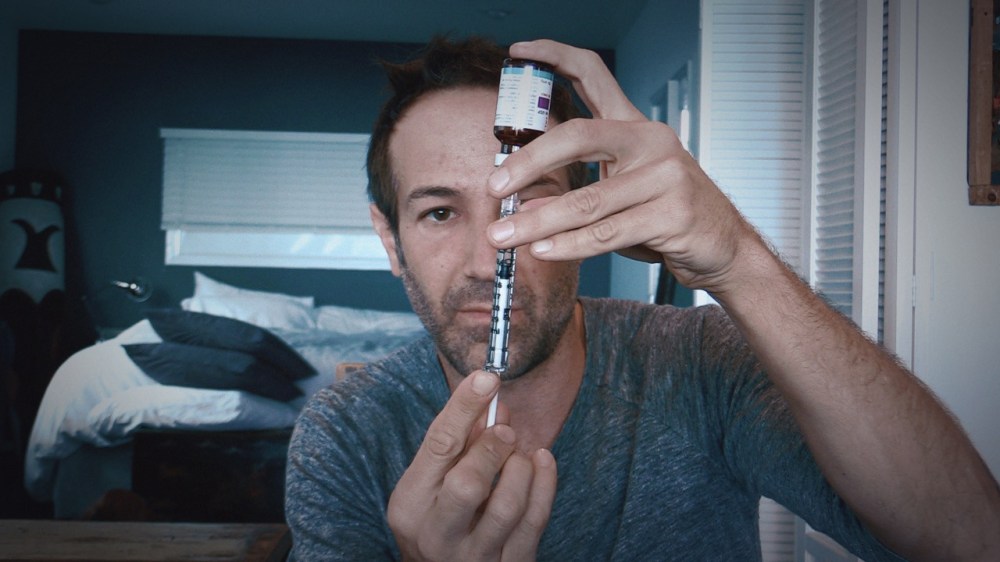
Actor, writer and filmmaker Bryan Fogel first came to the world’s attention with “Jewtopia,” a play he co-wrote and starred in which went on to become one of the longest running shows in off-Broadway and Los Angeles history as it was seen by over a million viewers. Now he is set to reach an even larger audience with his documentary “Icarus” which will debut on Netflix on August 4.
“Icarus” follows Fogel as he went on a mission to investigate doping in sports. Like Morgan Spurlock in “Super Size Me,” he becomes the main experiment of his own documentary as he dopes himself with performance enhancing drugs to observe the changes they have on his body, and to see if he can avoid detection from anti-doping officials. By doing so, he aims to prove the current process of testing athletes for performance enhancing drugs does not work in the slightest.
During this process, Fogel comes to meet Dr. Grigory Rodchenkov, a pillar of Russia’s “anti-doping” program who aids the filmmaker in avoiding doping detection through various processes which include being injected with various substances as well as collecting daily urine samples which will be smuggled from one country to another. But as Fogel becomes closer with Rodchenkov, he soon discovers the Russian is at the center of his country’s state-sponsored Olympic doping program. From there, “Icarus” goes in a different direction as it delves deep into Russia’s program and discovers the illegal activities go all the way up to the country’s highest chain of command which includes Vladimir Putin. The deeper this documentary goes, the more aware we become of how truth can be an easy casualty as others die under mysterious circumstances.
I had the opportunity to speak with Fogel about “Icarus” while he was in Los Angeles to promote it. He spoke about the documentary’s evolution from being a simple exploration into sports anti-doping programs to becoming a geopolitical thriller where witnesses are forced to go into hiding. Also, he spoke of how Lance Armstrong’s admission of using performance enhancing drugs was merely a needle in the haystack as many athletes were utilizing the same chemicals and threw him under the bus to save their own careers.
Sean Combs, a.k.a. Puff Daddy, is many things in life: a rapper, mogul, actor and businessman whose strong work ethic came about when he was a young boy. Following his time as an intern at Uptown Records, he came to form his own label, Bad Boys, which became a highly influential foundation for hip-hop and developed the careers of many artists including the late Notorious B.I.G. Combs’ image in the media, however, has been constantly pigeonholed into something which is not altogether true, and with the documentary “Can’t Stop Won’t Stop: A Bad Boy Story,” he looks to correct this so the world at large can see him for who he really is.
Directed by Daniel Kaufman, “Can’t Stop Won’t Stop” shows Combs at his most open and vulnerable as we learn how he became a millionaire at the young age of 19 and learned to navigate the real of corporate business. We come to see how the Bad Boy family he helped bring about filled his need for a family as he felt he never really had one before, and discusses how his world was forever shattered when the Notorious B.I.G. was murdered. We also see Combs get a Vitamin B12 shot right in the butt, and if this doesn’t show open he is willing to be on camera, then I am not sure what will.
“Can’t Stop Won’t Stop” also documents the Bad Boy artists reuniting for a 20th anniversary concert at the Barclay Center in New York which was put together in a mere three weeks, an insanely short schedule for any show to be assembled in. Among the artists, some of whom have not performed live for years, include Lil’ Kim, Mase, Faith Evans and Mario Williams among others.
I was lucky enough to speak with Combs while he was in Los Angeles, and we talked about how challenging it was for him to let go of the control he has over his image for this documentary. In addition, he also discussed the fun he had in sending up his own image in “Get Him to the Greek” and, in echoing what Nina Simone once said about being free means having no fear, admits to the place he finds himself being the most fearless in.
Please check out the interview above. “Can’t Stop Won’t Stop: A Bad Boy Story” opens in Los Angeles and New York on June 23, and it will be shown exclusively on Apple Music starting on June 25.
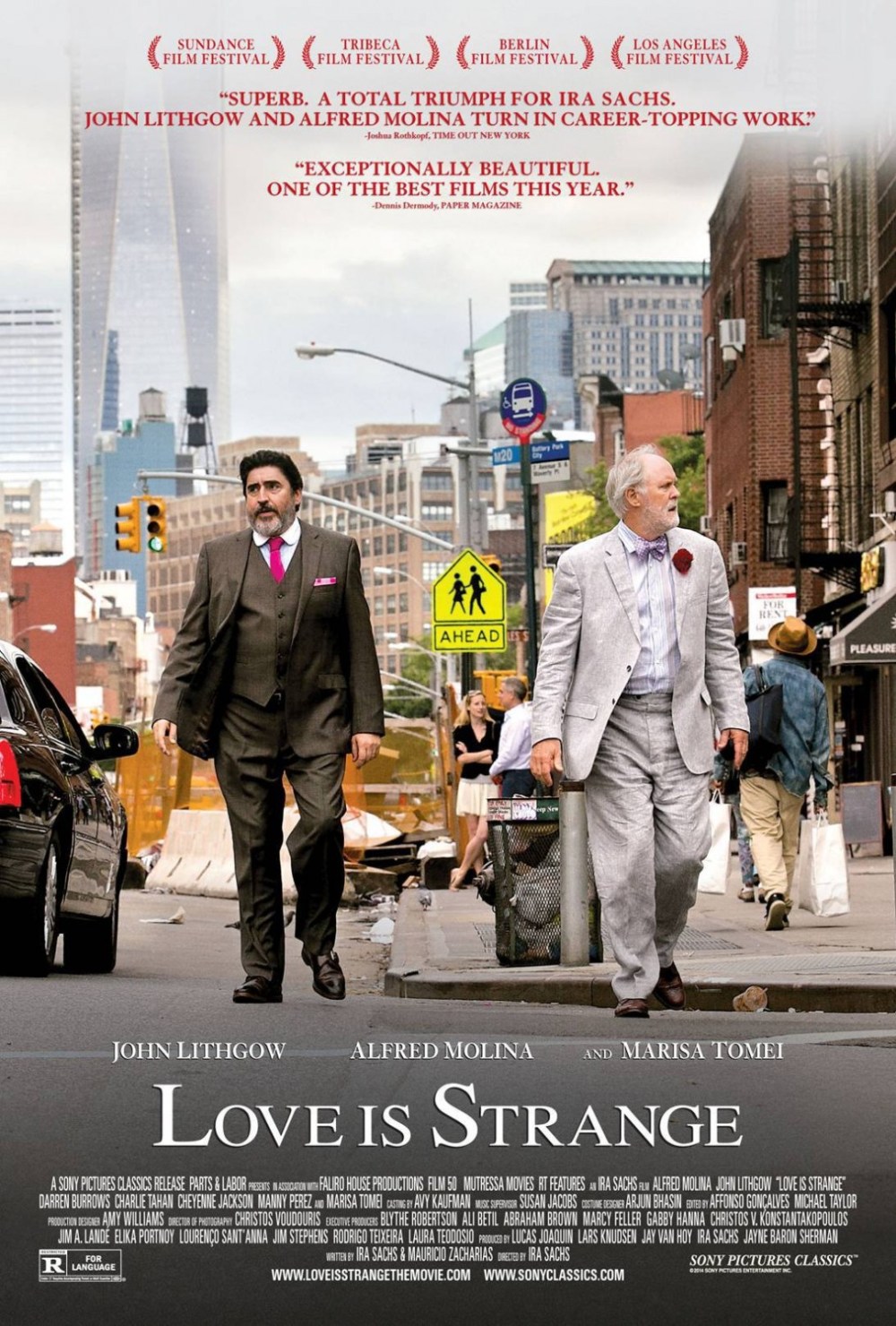
Ira Sachs’ previous films have dealt with the dangers of being in love and how it can feel like an illusion, but his latest film “Love is Strange” has him dealing with love in a more positive fashion. It focuses on a gay couple, George and Ben (played by Alfred Molina and John Lithgow), who have been together for over 30 years. When gay marriage is made legal in New York, they finally get married and are super excited about starting a new chapter in their lives together. But things quickly change for them quite drastically when the Catholic school where George teaches decides to terminate his employment upon discovering he married Ben, and this forces them to spend time apart for the first time in years as they search for cheaper housing.
I very much enjoyed talking with Sachs over the phone while he was doing press for “Love is Strange.” The movie not only chronicles the challenges these newlyweds face, but of the impact that their situation has on the family and friends closest to them. During our interview, I asked Sachs how he goes about keeping his characters in the movie down to earth, why he decided not to get political considering the issues involved, and why he decided this time to make a different movie about love than he had previously.
Ben Kenber: This movie has such a wonderfully organic feel to it. How do you go about keeping the characters in the story feeling so down to earth?
Ira Sachs: That’s a nice question. I try to be as open as possible to my collaborators and to the city and to the situations that are in front of me. I think of directing as not so different to acting in a way in that my job is to listen and respond organically and authentically, and you have to do that 1000 times a day when you make a film. But if you situate yourself in a place which is most open and attentive, you have to be very observant as well. I think it creates something that has the organic feeling you’re describing.
BK: John Lithgow and Alfred Molina are both brilliant in this film, and they have been friends for a long time. The rapport they have together onscreen feels just wonderfully natural. Did you have to do a lot of directing with them, or did you just let them loose?
IS: We made a pact, the three of us, that we were going to create a certain kind of texture for their relationship that was going to be different than what either actor had been asked to do in a long time. There was a level of realism and naturalism and simplicity that the roles called for. These are really modest man, Ben and George, but they maintain a confidence as individuals that I felt was very much what I witnessed in John and Alfred, and I wanted the film to share that confidence. So we had this kind of agreement that everything would be kept to a very delicate tone, and both actors are known for their larger qualities in terms of performance. What I wanted to do was rein that in, and I think that allowed for some new things to appear.
BK: What I really admired about “Love is Strange” is it could have been a polemic about intolerance and that, even with gay marriage now a reality in many states like New York, we still have a way to go for achieving equality in life. But this movie is more humane and very objective in how it views the different forces which threaten to tear these two characters apart.
IS: My interest as a director is to depict the intricacies of relationships and of intimacy, and that includes romantic relationships as well as family and community. In this case it also includes the city of New York. I set out to make a romantic film about New York. I’m also as a director at bit of a historian meaning that my job is to be accurate about the time that I live as well as my characters, so the kind of pulled from the headlines quality just gives the film shape in a certain way. I like to think of myself as a neo realist, someone who is interested in making the ordinary of everyday lives extraordinary. For me that should in addition also include some amount of documentation of the details of these characters’ lives in a way that’s very specific.
BK: One performance in particular I really wanted to point out was Charlie Tahan’s who plays the temperamental teenager Joey. It’s always great when you get an exceptional performance from a child actor because they are not always easy to get, and the character has a nice arc throughout the movie. What was it like working with Charlie?
IS: Well, to me he is the revelation of the film because we don’t know him, and what we’re actually discovering is the birth of a great, great actor. I felt like there was conversation when we were shooting the film about Leonardo DiCaprio in (“What’s Eating) Gilbert Grape;” it’s that kind of performance. It’s so open and so honest and so raw and so easy. There’s just this ease and I think that was something that impressed all of us, more experienced filmmakers and actors on set, about Charlie was how naturally it came. He is an experienced child actor. He’d been in “Charlie St. Cloud” with Zac Efron. He was the voice of the kid in “Frankenweenie” so he worked with Tim Burton. He wasn’t plucked from nowhere, but he came in and gave an audition that was breathtaking.
BK: Charlie said you really knew how to write for kids and that you really understood them and what they went through. Did Charlie stay close to the script and was there anything specifically that he added to it during shooting?
IS: Well the script is a blueprint for the emotions you hope to reveal, so actors add everything. I’m quite specific about the script and it is a very written film and it’s constructed through the screenplay, and yet I search for a kind of emotional improvisation on set that has to be very, very fresh and real. So I don’t rehearse my actors before we start shooting. We talk, we spend some time with each other, but I’ve never heard the line said nor have the other actors. What it gives the movie is a kind of freshness. I think two words that should be banned from the set are “subtext” and “motivation” because when you’re speaking to those things, you’re trying to pin down the impossibly ineffable of any one moment.
BK: Another performance I really loved in this movie was Marisa Tomei’s. Not only does she bring a naturalness to her role, but she’s also able to communicate so much without saying a word. What was it like watching her pull that off?
IS: She’s like this quiet storm because she’s so focused as an actress. There’s a scene where she has no dialogue and she’s in bed with her husband and she’s got a lot on her mind, and as a director you just watch and you think, “She’s writing paragraphs for me.” She thinks so much while doing so little. I think what was exciting about this role for Marisa, and I think what makes people connect to it, is that she was allowed to play a woman of her experience and her intelligence, and she wasn’t asked to do anything other. In this case, Marisa is the fulcrum of the story; she’s the generation in the middle. The film is really about these multiple generations: the older couple, Marisa and her husband (played by) Darren Burrows who were very much in the middle of their lives, and Charlie Tahan who’s playing in adolescent learning about love for the first time. But it all kind of centers on Marisa and she is in a way a stand-in for me, the artist who is watching these things and trying to figure out how to act.
BK: Your previous films “Delta” and “Keep the Lights On” tend to deal with love as an impossibility or an illusion among other things, but “Love is Strange” sees it in a much different light. What made you decide to do a story on love in this particular way?
IS: I think I’ve changed a lot in the last 10 years. My previous films were all about characters trying to understand themselves, and they were films of self-discovery. I think it was very much what I personally was involved in, trying to understand who I am and become comfortable with who I am, and that took a long time. In my 40’s things have been different and I feel much more at ease, and I think that has created the possibility of new kinds of relationships. I’m married and my husband and I are raising children, but it’s not just the kind of signifiers that imply change. It’s something much more internal, and I think the film is about the internal qualities of love which are so distinct for each of us.
BK: Since this is a low budget independent movie, I imagine you had very little time in which to shoot it in. How did this affect you overall as a filmmaker?
IS: I’m a producer on all my films as well as the writer and director, and I always create the situation where I have the economic means to create the aesthetic objects that I need so my sets are very calm. I’ve made films that cost $200,000 and I’ve made ones that cost multi-million dollars, and the experience is not too different. If you’re doing your job right as a filmmaker, you have what you need.
BK: Regarding Alfred Molina’s character of George, it’s interesting because the Catholic school he teaches at doesn’t seem to mind his relationship with Ben much until the two of them get married. Later on in the movie, George has a great line where he says, “Life has its obstacles, but I’ve learned early on that they will always be lessened if faced with honesty.” What inspired that line?
IS: I think it speaks to the heart of the film. The film is in some ways about education with a small e. What do we teach each other? What is our responsibility? How as a culture do we carry on our values? What do we share in relationships and as parts of family? Also, the film speaks to how loss impacts individuals not just in terms of rights but in terms of experience. You can imagine George as a teacher being somewhat, to me, like what Alfred Molina is as a person which is you want to be your best self around him, and those are the kinds of people that I have known whether it be my parents or… I was very close to a sculptor who was 99 when he died, and at 98 he began his last work which was of a teenager with his backpack, and to me the idea that he was reaching for creative opportunities at that age was something I could learn a lot from. I feel that the film talks about those kinds of educations, and I think that when you’re young you don’t realize that your parents are people and that your grandparents are also. I think this film is about perspective and how we begin to recognize that people in our family are actually human beings with their own stories.
I want to thank Ira Sachs for taking the time to talk with me. “Love is Strange” is now available to own and rent on DVD, Blu-ray, and Digital.
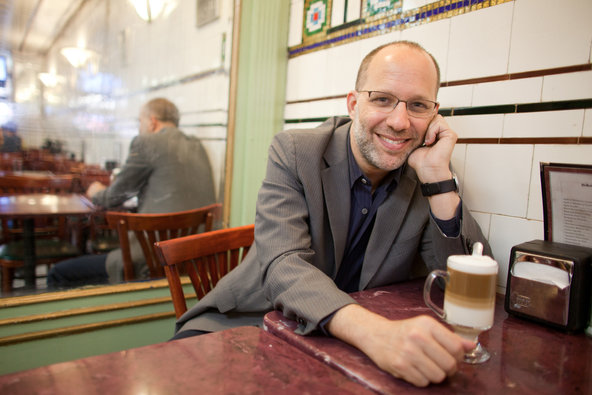
Photo courtesy of the New York Times. Poster courtesy of Sony Pictures Classics.
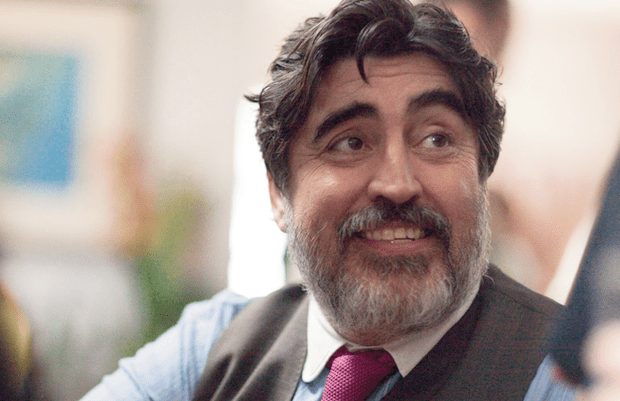
He has played a variety of characters in movies like “Raiders of the Lost Ark,” “Prick Up Your Ears,” “Boogie Nights,” “Spider-Man 2” and “Not Without My Daughter” to where it seems like he can play anybody (and he probably can). Now Alfred Molina takes on a more intimate role in Ira Sachs’ “Love Is Strange” where he plays George, a Catholic school music teacher who, as the movie starts, marries his lover of 39 years, Ben (played by John Lithgow). They have a joyous ceremony, but once word reaches the school of George’s wedding, they subsequently fire him. This leads to a great deal of upheaval in the newlyweds’ life as they are forced to sell their apartment and spend time apart for the first time in years as they search for more affordable housing. The situation weighs very heavily on George to where he feels like he’s failing Ben and everyone around him.
It was a great pleasure to speak with Molina while he was doing press for “Love Is Strange.” It turns out that he and Lithgow have been friends for many years, so the fact that they have great chemistry onscreen should be no surprise. In addition, I also asked Molina about how sees the world of independent filmmaking today, why Stanley Kubrick’s “Spartacus” inspired him to become an actor, and of what it was like to shoot this film without any rehearsals.
Ben Kenber: Since you and John Lithgow have been friends for a long time, did the chemistry you two developed onscreen come easy to you?
Alfred Molina: Yes, it did. I think the advantage of being friends with John, having had a relationship as friends, helps us both in a way. For me, it just meant there was shorthand already in place. There was an ease and a rapport and a relaxation between us that was very easy and also very conducive and helpful for the roles we were playing. I think we would’ve still enjoyed the fact that we are friends if we had been playing adversaries in a movie or a good guy, bad guy. But the fact that we were playing a couple in a long-term relationship, I think our history as friends only helped and sort of aided that.
BK: What I really liked about this movie is that what the characters go through is quite ordinary, but it takes on a different feeling here. We don’t see enough movies these days about regular ordinary people, and the problems the characters go through here feel quite epic.
AM: Yeah. People lose their jobs, people lose their homes and it’s always bad news. But it happens very often for the most trivial of reasons, and I think the fact that Ira Sachs and (co-writer) Mauricio Zacharias created a couple who, by their very ordinariness, when this crisis happens to them, it takes on epic proportions. And like most crises that happen to ordinary people it becomes huge because normally in our own lives we don’t have the power or the means to overcome them quite so easily. It takes time and I think the fact that George and Ben are, for all intents and purposes, a very ordinary and a very anonymous couple adds to the strength of this story.
BK: I also wanted to congratulate you on receiving the Spotlight Award from the Creative Coalition at Sundance for your work in independent films. How do you think the world of independent films is faring today? Has it gotten easier to make them or harder?
AM: Well, I think it all depends on one’s perspective. Independent moviemaking is always a challenge. I think whenever you’re working on projects that don’t have immediate commercial appeal and you’re working outside of the studios, especially on low budget films where you’re really scrambling to raise $2 or $3 million to make a movie or however much it is, you’re working under all kinds of restrictions and challenges and the biggest one of course being time. You don’t have time. You very often don’t have time to absorb any mistakes or any accidents or anything that happens that kind of works against your schedule, so it’s always a challenge. But I think the fact that there are so many independent movies finding an eager audience means that there’s something being done right and well. There is an audience out there for good stories. There’s an audience out there for well-made, well-crafted, sincere movies about real people in real situations, and I think the reason why there’s an audience is because of the way cable TV, for instance, has welcomed movies. So many directors and writers and actors are now working on cable shows because that’s where some of the best movies are being made where young directors are getting the chance to make their films and tell their stories. The relationship between the product and the audience has changed a lot. There was a time when you were working on television that you were very much the guest in someone’s house. But now cable has changed all that because you’re paying for it. Also, our TVs have gotten bigger so it’s like watching a movie, and if you’ve got a 50-inch screen in your front room, the ratio is pretty typical of a small movie house. You can be watching movies at home and I think that changes the dynamic between the product and the audience, and there’s an audience out there for small films. The independent industry lurches from one crisis to another, and in those ups and downs there’s some great movies being made.
BK: I’ve talked with a lot of indie filmmakers recently and they usually get a shooting schedule that’s 30 days if they’re lucky, but those schedules keep getting shorter as time goes on.
AM: That’s right, yeah, because making movies gets more and more expensive. But there will always be an independent director, writer, actors who want to continue to work in that milieu because ultimately that’s where the most interesting stuff is happening. I can only speak for myself, but I think that’s where the best films are being made.
BK: Your character of George has a great line in this film where he says, “Life has its obstacles, but I’ve learned early on that they will always be lessened if faced with honesty.” I think it’s very interesting in that George teaches at a Catholic school and has for many years, but the school doesn’t always respect the individual that he is.
AM: Absolutely, and I think that’s a great shame for anyone who’s in the same position as George; losing your job or losing your home or being chastised by society in some way because of who you choose to love and who you choose to spend your life with. As a heterosexual that’s something I’ve taken completely for granted. I can take it for granted that I can love whoever the hell I want and no one can stop me, but my gay friends have only recently begun to enjoy that right. So I think that’s why lines like that in the movie are terribly important and very, very resonant not just for gay men and women but for everybody. I was talking today with John (Lithgow) about how… He’s only been to a few gay weddings in recent years, but we both found them incredibly moving. Weddings are moving anyway. Anybody who confidently stands up and says I want to spend the rest of my life with this other person is making a very dramatic and a very moving and emotional statement, but when it’s two gay people you know that it’s not just full of the romantic and emotional power of the moment. It’s full of years, sometimes decades, of struggle to reach that point, so it has even more significance.
BK: That’s a very good point. In recent years, we’ve had movies like this and “The Kids Are All Right” which are about gay couples, but the fact the couples are gay becomes irrelevant because they deal with the truth of what married life is like and the struggles which come with it.
AM: You ask anyone who’s active in any kind of human rights or equal rights campaign and I’m sure they would say that their ultimate goal is to no longer have to have conversations like this where one sexuality is no longer relevant. Whenever I come across any kind of vaguely homophobic sentiments I’ve gotten to ask people, “When did you first realize that you were straight?” It’s amazing the reaction that gets because they don’t know how to answer, and the truth is that no one should have to put up with being asked that.
BK: I once read that you said you have to believe in what you’re saying in the same way your character does. Whether it’s Mother Teresa or Adolf Hitler you’re playing, you have to portray them honestly and accurately regardless of whether they were good or bad. A lot of actors like to change material to where it suits them better, but I liked what you said because it goes the fact that the part is not about you, it’s about the character you’re playing.
AM: I’ve always regarded my job as being about serving the character regardless of who the character is. At a certain point taking on a job and then once you signed the contract and taken the money then saying “oh by the way I don’t think my character would say this” or “I don’t think my character would be like this,” that’s a conversation that one should have before you sign the contract and take the money. Once you have committed to something, you should be committing to the same things that everyone’s agreed on. Just as an act of creativity, you’ve got to give the same amount of dedication to whether you’re playing Adolf Hitler or Mother Teresa.
BK: I also read you were inspired to become an actor after watching the movie “Spartacus.” What was it specifically about the movie which inspired you so much?
AM: You know, I don’t know myself. It was so long ago and I must’ve been about nine years old when the film came out. I just remember coming out of that film just knowing that’s what I wanted to do. I don’t mean I wanted to be a gladiator, but I just wanted to be doing that; making films, being in films. I’m not quite sure what it was that prompted that, but it was a very powerful feeling.
BK: There were no rehearsals of scenes when it came to filming “Love is Strange.” How did this affect you as an actor?
AM: Well it was an interesting process really because normally you have rehearsals and work things out. I would hate for you to think that it was due to a lack of preparation; it wasn’t that. Ira Sachs, our director, came to the project impeccably prepared. What he didn’t do though was that he didn’t have us rehearse the scene and then play into the camera what we had rehearsed. He just wanted us to go into the take with the camera running and to just discover it in the moment. That was a very refreshing way to work, I loved it. I’m looking forward to doing it again. It’s very rare that directors give you that kind of freedom and also, given the fact that we were under the severe constraints in terms of time and money, it worked out well.
BK: “Love is Strange” seems to give the audience a very unique look at New York whereas other movies tend to portray it as a crime ridden place among others things. Would you say this movie gives a more accurate view of New York than other recent films have?
AM: Well, I think it’s as accurate a view of New York as any other movie. I don’t think the view of the city that the movie has is a negative one by any means. The city looks beautiful in this movie especially in that last sequence with that sunset and the two young characters on their skateboards. It’s a beautiful, beautiful ending to the film. Because it’s the most photogenic city in the world, any film that takes place in New York has to deal with New York as a character in the film. There’s nothing nondescript about New York. It’s a unique looking place. No other city in the world looks quite like it, so I think it’s something any filmmaker has to embrace.
BK: The interesting thing about the way Ira Sachs frames this movie is that it could’ve taken a huge political stance but he doesn’t which feels quite appropriate. He’s not taking issue with anybody, but he’s takes good observations of the Catholic doctrine and how it affects certain people.
AM: Yeah, absolutely. It’s not a political film; it’s not a diatribe on the state of gay culture or the Catholic Church. It’s a domestic story. It’s a love story set against some real events that happened to real people, and I think it makes some very wry observations about the city and about New York real estate and about the conditions a lot of people live under. It’s not a message movie. What drives the movie is a kind of deep humanity.
I want to thank Alfred Molina for taking the time to talk with me. “Love is Strange” is available to own and rent on DVD, Blu-ray, and Digital.
He received critical acclaim for his film “Berberian Sound Studio,” and now British filmmaker Peter Strickland follows it up with “The Duke of Burgundy.” Now while the title might have you believing this is just another stiff period piece, it proves to be anything but that. It stars Sidse Babett Knudsen and Chiara D’Anna as Cynthia and Evelyn, two women with a keen interest in butterflies who are involved in a sadomasochistic relationship. Despite what sounds like a harsh situation, Cynthia and Evelyn are very much in love with one another and enjoy playing the roles of the dominant and the submissive. But as Cynthia begins to yearn for their relationship to become a more normal one, Evelyn becomes increasingly obsessed with playing the submissive to where it becomes an addiction which cannot be easily fulfilled.
I got to speak with Strickland over the phone while he was doing press for “The Duke of Burgundy,” and we talked about how the movie is not what it appears to be. Strickland described how he achieved the movie’s beautiful look, what he wanted to see onscreen in regards to a sadomasochistic relationship, and of the challenges of shooting a six-minute scene in one take.
Ben Kenber: “The Duke of Burgundy” is a fascinating and mesmerizing movie, and what I liked about it was that while these two women are involved in a sadomasochistic relationship, it still feels like any other relationship in terms of how it runs on routine and gets run down by it as well.
Peter Strickland: Yeah. Ultimately what I found really interesting was that one of them is doing that out of the purest joy. There are two levels: one level is the joy of sex which makes us happy but also the joy of feeling desired I think especially as she’s (Cynthia) feeling that she’s getting older, but only have so much mileage to that. To me the film is about anybody who’s in a relationship with someone who has different needs and how you navigate those and how you find compromise, and I think coercion leads into it somehow. To be honest I was making the movie as a way to argue that afterwards or at least have discussions about who should compromise. Should it be one person doing things to somebody else that they find distasteful? It doesn’t matter what that thing is. It could be the most basic sexual acts. Or should the other person compromise and just withhold their desires and not express themselves? I don’t have the answers to that. I’m just showing this domestic drama really.
BK: Yeah, in any relationship those questions of who’s going to compromise the most comes up. In the end when you take away the sadomasochistic elements it really is like any other relationship.
PS: Yeah, I think so. And I think that, despite some of the harshness, there was a tenderness there as well. What I wanted to do was to start the first 10 minutes like your classic 70’s sexploitation film which would serve that kind of fantasy where they are all in character where the stern mistress is the stern mistress but then somehow unpeel that, and I want to see that stern mistress in her pajamas. I want to see her snoring at night, I want to see her get her lines wrong and miss her cues just to see what ticks underneath that somehow.
BK: This movie has such a beautiful look to it. It looks like it was shot on film, but I read that you actually shot it digitally. How did you make The Duke of Burgundy look like it was shot on film?
PS: That was Nicky (Nowland, the Director of Photography). He has literally been shooting on film for many, many years and he has been shooting stuff since the 60’s so he’s got a good feel for that. We were very close to shooting on 16mm but we just didn’t quite… We could’ve applied for more money, but the more money you get, the less control you have. So, we kept the budget around $1,000,000 pounds which meant I had complete control, but the consequence of having complete control is that we had to make cuts, so film was the first one to go. Nick can talk more about it in terms of the lenses he uses which were older lenses which I think were uncoated. That haze machine is quite important for him in terms of having this very diffuse quality to the whole movie. But also during the scenes where Evelyn is having her sort of excitable moments he was using doubles and mirrors so all that is done in camera, and I think we just did a lot of trial and error just moving the camera and moving the actors. Sometimes you have two doubles crossing into the mirror and crossing into another mirror and cover that up with the haze machine, and that really has a certain tasty look that’s reminiscent of the 70’s. We didn’t want to try too much to go down that route. Now you can make film looked distressed and so on, and that was the danger of sort of being a pastiche. We just wanted to do the most beautiful job we could, and I think the production design played a huge part in that and the costumes played a huge part as well.
BK: The movie kind of looks like it takes place in the 70’s, but in the end, it could be taking place in any time period. Was it your intention to leave the movie’s time period ambiguous?
PS: I wanted it to be kind of like a fairytale in that you don’t know where it is, you don’t know when it is, and you don’t know how in the hell they make their money to live in that place. It’s all those things that fairytales have been in a sense. Hopefully, you’re not worried about social elements of class or gender. There’s no counterpoint in that sense, so hopefully you’re just immersed in the dynamic of it. What was important as well was to be open to the fact that other people enjoy these practices so it doesn’t feel like this unusual activity. It’s kind of normalizing it so it’s not about treating it like it’s this odd thing. It could be any act in that sense, it’s just one person doesn’t like it, that’s all.
BK: I also got the impression that you designed “The Duke of Burgundy” to mislead viewers in a way starting with the movie’s title. Also, with the relationship between Cynthia and Evelyn, it looks like Cynthia is the dominant one, but it turns out to be the other way around.
PS: Yeah. Very subconsciously, I knew people wouldn’t watch the film so I just tried to make it like this kind of tasteful period drama, but I think it was kind of like a perverse pleasure having one concession to a masculine presence especially given that, being a male director, you can’t avoid that element of it. I’ve seen a lot of films on that subject, not everything, but I think what often happened was they would prop up the fantasy of masochism and never show the dominant out of character. What I wanted to look at was the idea of the masochist controlling the whole scenario, and the whole paradox is controlling the situation where you are controlled by someone else. The whole paradox of the submissive controlling the dominant is that it is being dominated on her terms. It’s exploring all these dynamics I guess.
BK: One of my favorite scenes is where Cynthia and Evelyn are in bed, and you see on Cynthia’s face a yearning for something normal in their relationship. The acting by Sidse Babett Knudsen who play Cynthia is extraordinary. How did you go about directing that scene?
PS: That was a weird one. There wasn’t enough space for me in the bedroom, so I directed it from the bathroom. Normally I talk to the actors in person but there was just so many wires that I had to sort of shout to them from the bathroom. Obviously, we spoke about it prior to that. In one sense, it was quite easy to do because of the whole dynamics of it, but it was very difficult in another sense because we had to do it in one take. If you get one line wrong, you have to go again. There’s a weird kind of meta thing going on because obviously if one line goes wrong for Evelyn’s character it’s gone wrong for her, and if one line is wrong for me it’s gone wrong. Since there was this double pressure, I actually think it was quite easy to do that scene. It was quite tense because it was actually six minutes long, and even though we got it in one take at the very end it was just too long. It’s a weird thing because when you’re on set time just flies by, and when you look at it at in the edit room out of context you think, oh my god this is so long, it’s just not working anymore. So all that effort to do it in one take was just kind of wasted; we had to do it like a sort of insert cut. But yeah, that scene kind of sums up the film: to being ordered to order someone. It sounds kind of preposterous but it’s really an interesting part of human nature.
BK: The music score by Cat’s Eyes is wonderful and sounded very unique. What was it like working with the band on the score?
PS: I loved working with them. They are really, really, really talented and woefully overlooked. Hopefully that will change now. They come from very different disciplines. Rachel (Zeffira) comes from a classical background and Faris (Badwan) comes from this rock ‘n roll, experimental background, and they just complement each other really well. They’re completely fine if it’s not right; they’ll just keep going. The main thing at the beginning is just setting them up for the right mood and just playing the music. In hindsight, I feel a bit guilty sometimes that maybe I’ve gotten too attached to some piece of music, but I think it was setting the mood for them and discussing the instruments they would use. I remember I put Mozart’s Requiem over that long montage towards the end, and I knew I shouldn’t do it because it’s such an obvious piece of music and everyone’s used it. Then Rachel just came on and said, “I don’t care. I can just write my own requiem.” It was just an amazing piece and I didn’t miss the Mozart at all. I assume that they will be asked a lot more to do soundtracks. I bought their first album in 2011 and it just blew me away. They’re the first band that made me say, “Okay this is The Carpenters if they were doing music now without any kind of ironic take or pastiche.” I highly recommend the first album they did. I was really, really lucky that they said yes (to working with me).
BK: It’s compelling to think that the use of butterflies in this movie serves as a metaphor for the relationship between the two women, but it’s my understanding that you never actually intended that to be the case.
PS: No, not really. I’m not a big fan of putting the audience through that (laughs). For me, it was a framework for the film. Obviously, there are connections you can make, but you can do that with anything if you wanted to because of the metamorphosis and the cataloging of the insects. But there’s something about the absence of these insects when they’re emigrating and their hibernating which really added to the atmosphere of this very autumnal love story where you just feel it might be coming to an end. And that last lecture that Cynthia gives with the mole cricket going into hibernation really connected with Evelyn’s dormant desires. So, you really feel this extreme hibernation that is coming.
Thanks to Peter Strickland for taking the time to talk with me. “The Duke of Burgundy” is now available to own and rent on Blu-ray, DVD, and Digital.
On the surface, “Miss Lovely” might look like a typical Bollywood movie, but this couldn’t be further from the truth. It’s a Hindi feature film which digs deep into the sordid back alley of India’s film industry of the 1980’s which churned out countless horror and soft-core porn movies. In the midst of this sleazy atmosphere are the Duggal brothers, Sonu (Nawazuddin Siddiqui) and Vicky (Anil George), who are among the most prolific producers of trashy C-grade films for Mumbai’s underground market. But while Vicky has no problem with what he does, Sonu is desperately looking to escape this underground reality. When he meets the beautiful actress Pinky (Niharika Singh), Sonu sees not only his chance for escape but also the opportunity to make a real romance movie with her as the star. But as he works to make this a reality, he ends up going down a road from which there is no return.
“Miss Lovely” was directed by Ashim Ahluwalia who is said to be part of a new generation of Indian filmmakers who prefer to avoid working with Hindi film stars, and his films have been described as unconventional in how they blur the lines between documentary and fiction. This is certainly the case here as Ahluwalia’s film deals with an industry he has seen up close, and he invites us to journey into its murky depths. It was originally supposed to be a documentary, but when Ahluwalia couldn’t get those working in the C-grade film industry to be involved, he decided to make a fiction film instead. What results is an unforgettable motion picture which is as unsettling as it is intoxicating to sit through, and it’s one of those movies I sarcastically describe as being good fun for the whole family.
I got to speak with Ahluwalia while he was out to promote “Miss Lovely,” and he was super excited to talk about it as the movie looks at an industry which has long ceased to exist due to changes in technology and the widespread availability of pornography on the internet. It was fascinating to hear him talk about this as filmmakers today are dealing with a shift in technology from film to digital, and it’s a shift many are not quick to embrace.
Ben Kenber: I was blown away by it and it was not at all what I expected. It’s more of a movie you experience than just watch.
Ashim Ahluwalia: Exactly. I think that’s really a good way to describe it.
BK: I especially liked how you shot this movie on Kodak Super 16 and 35mm film as it gives the movie a really rough feel which in turn captures the sleazy nature of the business these characters are engulfed in.
AA: Yeah, it was also about the end of celluloid. The whole period that these films were made in was kind of the end of celluloid and then you have VHS replacing it. In a way, that was the precursor to the digital age and this whole way of consuming sleaze I guess. It just moved to the internet in the 2000’s and then that was the end of that. So I think a lot of it has to do with this material that was so critical in the way these films are made and consumed. It’s crazy to think that they were shooting that sleaze on 35mm (laughs), and now people would just die to get their hands on that kind of access to celluloid, so it’s pretty much part of what the film is about.
BK: Now some have suggested that “Miss Lovely” is part of a new wave of Indian cinema. How do you feel about the reaction this movie has had so far?
AA: It has random individuals doing random things and they’re not really connected, and that has more to do with the fact that now people are more exposed to cinema and they’re getting excited by what’s happening in the rest of Asia and the possibility of digital, etc. I think this whole idea was kind of overblown. It was sort of a moment when they were trying to tie everything together. I think “Miss Lovely” is a very odd film honestly. It’s not unique. It’s not odd just to India; it’s just odd generally because it’s such a hybrid film. It’s just taking very comfortably in a way that most art-house movies don’t just take it from the musical, taking from a 50’s noir, taking from sex horror, taking from porn, maybe documentaries or experimental films and stuff like that. I don’t think it represents a new specific type of film from India, but I think this is definitely a moment where there is new stuff and it’s not just Bollywood, Bollywood, Bollywood.
BK: To be honest, I’m not too familiar with Bollywood films…
AA: Well you’re lucky (laughs).
BK: I think the closest I’ve come to Bollywood so far is “Slumdog Millionaire,” but I’m not sure if that counts.
AA: Well yeah but it’s borderline Bollywood honestly. New Bollywood is kind of like that.
BK: How difficult was it to re-create the Mumbai of the 1980’s as you remember it?
AA: It was really hard because most of the places were being bulldozed as we were shooting them. So sometimes at a location, half the building was already knocked down and we just got them to hold for like a week until we shot a scene. It was literally shooting the last remnants of that kind of 80’s one-hour hotels and cabaret halls and stuff. I would say that about 60 or 70% of the locations are gone now and it’s not even been two years. It becomes kind of a document of those places and that kind of time. It doesn’t exist anymore.
BK: I read that you were not looking to romanticize or do a parody of the 1980’s. How did you manage to keep yourself from doing that?
AA: Well I think there’s sort of like a hipster 1980’s thing and I really wanted to stay away from that. I didn’t want to just make like fetishes of all those little 80’s objects. For me, the reason is because I spent a year and a half hanging out with a lot of these people from the C-grade industry because I initially wanted to make a documentary. So, by the time I was done with that one-and-a-half-year period, it was very hard to poke fun at anyone because these are people that you spent so much time with and saw so intimately. It was hard to caricaturize them.
BK: During the movie, we don’t see a lot of the real world outside of the one the Duggal brothers inhabit. When it does intrude on their sleazy underworld, you feel almost as lost as the characters do as they desperately try to escape their circumstances.
AA: Yeah, it’s kind of claustrophobic. I wanted the film to be like this kind of maze that you were trying to get out of and you can’t. The whole point is this kind of escape ends up being a fantasy of a film that could maybe get you out of there, but it’s sort of like endless passageways that lead into other passageways. It’s just a very interior, claustrophobic kind of environment which I think, for me, I relate to that. When you work sometimes in film you feel like that. You don’t have to really only work in secret cinema, but sometimes a bad day job can be like that. So, I think that idea of you were always trying to escape but you can’t, I like that somehow.
BK: This is your first feature film as a director, and your previous film was a documentary. What was the transition like for you from making documentaries to directing an actual feature film?
AA: The first film I made was “John & Jane” and that was a documentary, but it was shot on 35mm and looks more like a dystopian sci-fi film than a documentary. Somebody told me that my documentaries look more like fiction and my fiction looks more like documentaries, so I’m really interested in this idea of what a fiction film is and what a documentary is. “Miss Lovely” is not a conventional or traditional film. It’s still quite loose in terms of its language and it’s quite experimental, so I don’t find much difference. I feel like I could slip in and out between these two worlds quite easily in some ways.
BK: You once said that the raw energy of these C-grade filmmakers reminded you of why you set out to make films in the first place. What was it specifically about them that reminded you of that?
AA: Well I think what happens is that when you start working in any capacity like in an industry or an environment, what ends up happening is that you become quite jaded as a filmmaker. You’re just like always thinking about how do I get money, do I put it in this thing, if I put this person in it then I get this money and then if I work with that person then I get this distribution, etc. I think what ends up happening is that you lose that energy and spirit of why you really love cinema. You don’t watch films anymore because you’re so jaded by it. But when I experienced these guys making films, although the films are very bad admittedly, the way that they would make the films would be so like run and gone. It would be like, “Oh are we running out of film stock? What we do? The actor’s not available? Get another actor to stand in for the guy.” So the character is now played by a different actor, or if you don’t have a shot then you put a stock shot in, or the police are coming into the building so you have to finish the scene like within 15 minutes. The whole anarchic energy of the way the films are made really reminded me of what independent film should be; just making it with such passion. It’s like the passion is going to make the film happen. It really inspired me in a way to just make something which I really love with some degree of madness and passion which I think sometimes gets filtered out of you.
BK: I’m always waiting for the independent film world to explode again like it did in the 1990’s.
AA: Yeah exactly, and then you see how it’s just been co-opted and it feels like such a tired kind of thing.
BK: The characters in “Miss Lovely” are basically composites of the people you met in this industry. You said you originally wanted to do a documentary, but a lot of the people you talked to didn’t want to be involved in it because of the illegal nature of what they were doing. How accurate is this movie to those types of filmmakers?
AA: A lot of the people that were going to be in the documentary initially, I got them to just play themselves in the background. So all the background characters are all like real C-grade people. All the secondaries are actually people that, when I cast them in a fiction film, were like, “Okay I’ll do it.” But they didn’t want to be in the documentary somehow. So, a lot of those real elements I just kind of brought back into this movie in another way through another backdoor and just brought the realism back into it.
BK: That’s surprising to hear that they did find a way to be in this movie without compromising their true identities.
AA: Yeah, and as long as they were in costume they felt like they weren’t revealing too much of themselves, but they were playing themselves essentially. That just gave the whole thing a bona fide genuine authentic atmosphere that is just almost impossible to re-create artificially with actors who don’t know anything about that world. I felt it just brings another energy to it.
BK: The cast is just spot on with their performances. What was the casting process for “Miss Lovely” like?
AA: Well a lot of them are real people that, when you meet them, are so performative anyway. There’s a midget casting director, the little guy, and when I met him he was just so charismatic when he was talking to me about what he did. He is actually a casting director in real life, so he just had to do what he always does and he was really comfortable. A lot of them were really comfortable around the cameras somehow. It’s almost like they were waiting all their lives to be in front of the camera, and suddenly they just did that thing. And of course, if I gave somebody lines, finally they would never remember the lines but they would do their own thing which would be better than the lines I wrote. I would be like, “Yeah let’s just keep that. It’s much better.”
BK: All the actors seem to have a wonderfully natural quality whenever they appear onscreen. It’s like there inhabiting the roles instead of just playing them, and it really sucks you into the atmosphere of the movie even more.
AA: Well that’s because a lot of them really are those people, so that’s partly it. And the others who were more professional actors were now having to match their performance with someone who’s so bona fide and so real that they are like, “S—t! I need to get better at what I’m doing because I’m looking fake now in relation to this person.” So, putting nonprofessional and then professional actors in the same space together creates a very interesting dynamic.
BK: “Miss Lovely” reminded me a bit of the Coen Brothers’ film “Barton Fink” as both movies have protagonists who really want to make a difference in the industry they’re working in, and then they see their dreams get shattered in the worst way possible.
AA: Yeah, I like that film a lot actually. That’s a very atmospheric film. The atmosphere is very much a character in the film, and it’s not just about the narrative. It’s just about the texture of that space and stuff. It’s a good reference I think.
BK: Another movie reminded me of was “Boogie Nights” and the scene where the producers are talking to Burt Reynolds about switching from celluloid to videotape since it’s a lot less expensive.
AA: Yeah. I think probably there are similar interests from filmmakers because we grew up in a certain time and a certain place, and you’ve seen this shift happen to digital and it’s such a radical change in terms of what it means to make a movie or what a film even is. I think it’s all about a certain generation of filmmakers grappling with the shift.
I want to thank Ashim Ahluwalia for taking the time to talk with me. “Miss Lovely” is now available to own and rent on DVD, Blu-ray, and Digital.






 The Ultimate Rabbit