Paul Verhoeven and Company Revisit ‘Total Recall’ in Hollywood
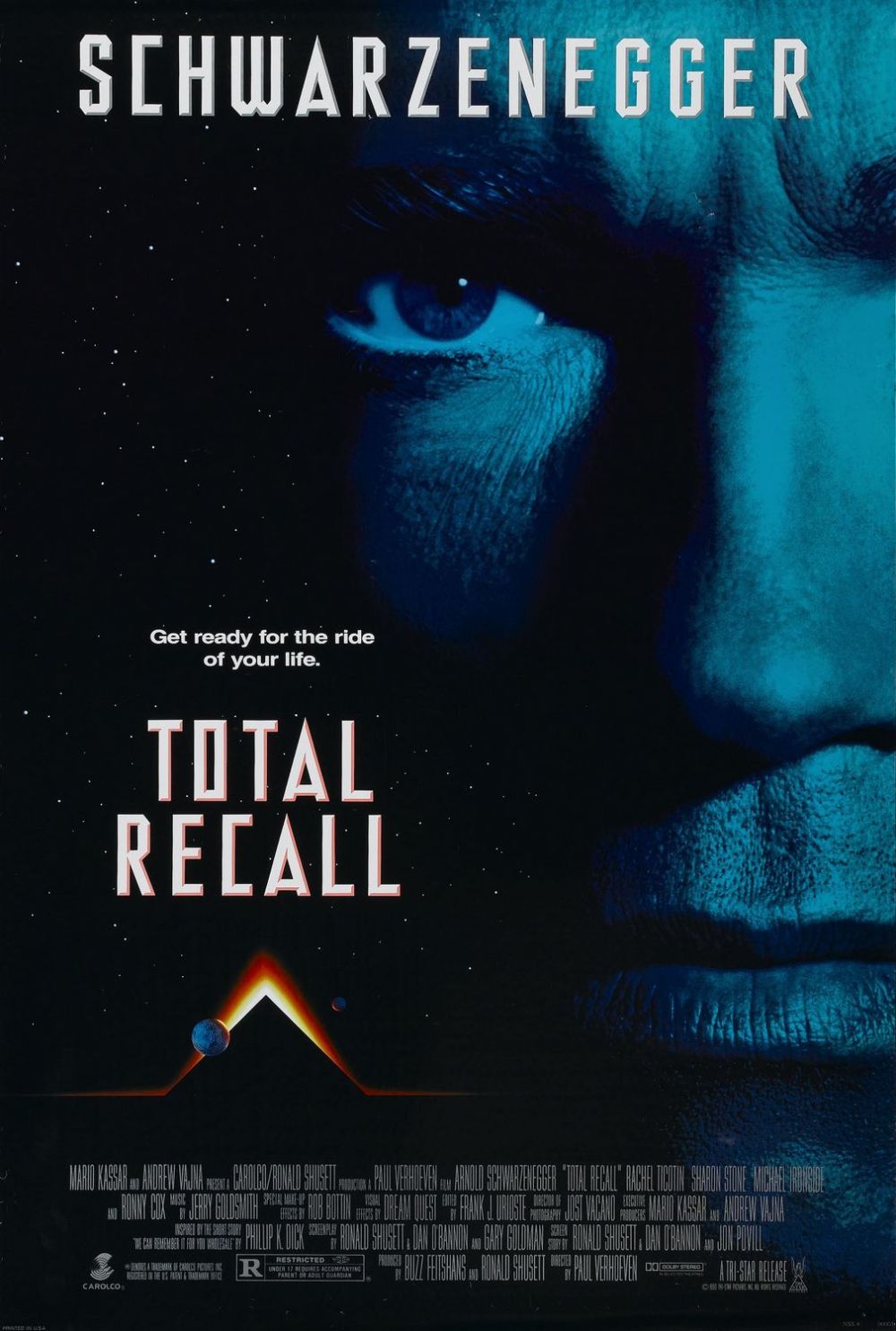
Total Recall movie poster

On Friday, August 24, 2012, Dutch filmmaker Paul Verhoeven dropped by the Egyptian Theatre in Hollywood where American Cinematheque screened a 70mm print of his 1990 movie “Total Recall.” Joining Verhoeven for a Q&A after the movie was two of its screenwriters, Ronald Shusett and Gary Goldman. They discussed the rigors of making the movie, and of how the script eventually made its way out of development hell.

As we all know by now, “Total Recall” is loosely based on the Philip K. Dick short story “We Can Remember It for You Wholesale.” Shusett said he and the late Dan O’Bannon, writer of “Dark Star” and “Alien,” bought the rights to the story back in 1974, and they completed their first draft in 1981. From there it was set to be made into a movie, but the project kept falling apart time and time again. Filmmakers like Bruce Beresford and David Cronenberg had worked on it for a long time but eventually pulled out due to creative differences or studios canceling the project because of its enormous budget.

“Everything kept falling through over and over again,” Shusett said. “Sets were built, but then the project kept getting canceled because it was too expensive. Back in 1990, this was considered to be the most expensive movie ever made. I wanted to keep all those sets that were built from being torn down, and I asked one studio executive how I could save them. He responded that I should change the movie’s name to ‘Partial Recall.’”

Verhoeven got involved in “Total Recall” because Arnold Schwarzenegger had picked him to direct after seeing “Robocop.” Schwarzenegger had actually been interested in doing the movie for a long time and had encouraged Carolco Pictures producer Mario Kassar to buy the rights to it from Dino De Laurentis whose film company had gone into bankruptcy. The movie had already gone through many drafts, and it took one specific scene to pique Verhoeven’s interest:

“I came to the scene where Dr. Edgemar (played by Roy Brocksmith) visits Arnold’s character on Mars and tells him that he’s not really here,” Verhoeven said. “In that moment you are not sure if what you’re seeing is real or a dream, and that got me really excited because none of the movies I had made in Europe ever had a scene like that. What Edgemar tells Arnold is that what he is experiencing is not true, so we had to prove it wasn’t true again.”

Working with Carolco Pictures on “Total Recall” was “paradise,” Verhoeven said, as they never forced anything on the filmmaker other than actors they hand-picked to star in their movies. He also said the beauty of Carolco is that they never subjected him or the movie to test screenings. Verhoeven went on to make “Basic Instinct” and “Showgirls” for Carolco, and then the gigantic flop that was “Cutthroat Island” ended up forcing the company into bankruptcy.

Schwarzenegger was set to be the star of “Total Recall” no matter who directed it, and Verhoeven said he was perfectly fine with that. Changes in the story had to be made though as his character was originally an accountant. Verhoeven and the screenwriters ended up changing his profession to that of a construction worker as they all agreed you could not go around Arnold.

Verhoeven also pointed out how having Schwarzenegger in “Total Recall” made the movie “very light” which was great because, as put it, “the straight way of telling the story would not have worked.” This has been further proved by Len Wiseman’s remake of the movie which even Verhoeven admitted “wasn’t good.”

The main problem with adapting any Philip K. Dick story to the silver screen is that they are basically told in two acts, and finding a third act proved to be very difficult.

“I got really scared because there had already been forty drafts written, and we could never seem to figure the third act out,” Verhoeven said. “It eventually came down to Hauser (Schwarzenegger’s secret agent character) always being the bad guy as it gave us somewhere to go.”

One audience member asked Verhoeven how Sharon Stone got cast in “Total Recall:”

“Sharon came in the first day of casting, and after a half hour I was convinced she would be perfect as Lori,” Verhoeven said. “Once we were filming the movie, however, I came to realize what she could do as an actress. After one fight scene where she almost kills Rachel Ticotin’s character and Arnold aims a gun right at her, she quickly changes moods in what seemed like a heartbeat. It was Sharon’s final scene before her character was shot that made me want to choose her for ‘Basic Instinct.’”

Goldman told the audience movies like “The Matrix” and “Inception” wouldn’t have happened without Verhoeven’s pushing the idea of the dream in “Total Recall.” The audience applauded this sentiment loudly, and the movie still holds up well more than twenty years after its release. It’s a shame the producers of the recent remake failed to realize what made the original so good as one of them described Verhoeven’s movie as being “kitsch.” That producer is now eating their own words in the wake of the remake’s critical and commercial disappointment.
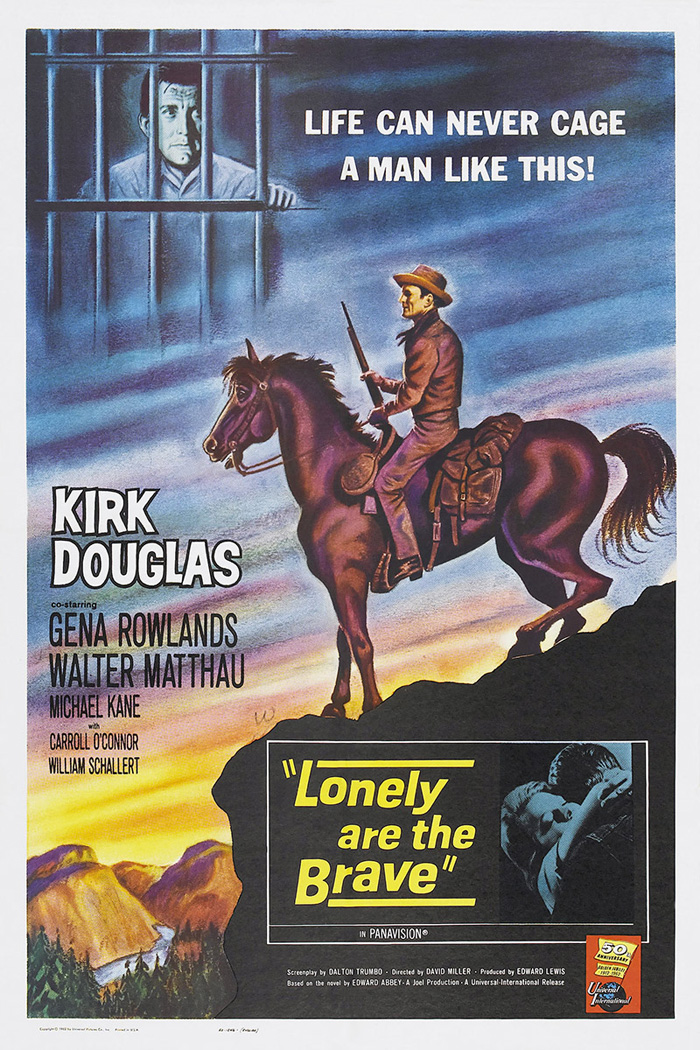
Kirk Douglas Looks Back at ‘Lonely Are The Brave’

lonely-are-the-brave-poster

The Ultimate Rabbit would like to wish Kirk Douglas a very happy 100th birthday. It is an age few people ever reach, and this is a man who has survived so much in his lifetime: Hollywood, anti-Semitism, a stroke, a helicopter crash and, tragically, the loss of a son. Still, Douglas persevered in spite of many obstacles thrown in his path, and in his 90’s he continued to work as an actor and a writer. The man who was Spartacus has reached a milestone which needs to be celebrated, but it should be no surprise he has lasted as long as he has. Happy Birthday Kirk!

The following article is of an appearance he made in Hollywood a few years ago in which he talked about one of his most enduring motion pictures.

“The best actors disappear into their roles, but icons always keep part of themselves onscreen. Every one of his characters makes hard choices as a figure of integrity. Not always a good guy, not always a bad guy, but a real guy.”

Those were the words writer Geoff Boucher used to introduce legendary actor Kirk Douglas who made a special appearance at the Egyptian Theatre on September 19, 2012. American Cinematheque was screening “Lonely are the Brave” in honor of the movie’s 50th anniversary, and Douglas was greeted with a thunderous and deserved standing ovation. Douglas thanked the audience for coming to see this movie which he made fifty years ago. He also added, “Don’t ask for your money back!”

Boucher pointed out how Douglas has made so many great movies, but this one in particular really stands out. In the movie, Douglas portrays John W. “Jack” Burns, a cowboy from the Old West who refuses to become a part of modern society. “Lonely are the Brave” is based on the book “The Brave Cowboy” written by Edward Abbey, and Douglas recalled being so intrigued by the character and his horse (Whiskey) and how the book spoke strongly about the difficulty of being an individual today. Douglas did, however, say his major problem was by the end of the movie the audience was “rooting for the horse instead of me!”

There was also talk about Dalton Trumbo who wrote the screenplay for “Lonely are the Brave” and whom Douglas had previously worked with on “Spartacus.” Trumbo was one of the Hollywood Ten who refused to answer questions from the House Committee on Un-American Activities regarding their alleged involvement with the Communist Party, and he ended up spending 11 months in prison for contempt as a result. It was Douglas who helped Trumbo get a screenwriting credit on “Spartacus,” and he said he hated the injustice of what Trumbo was put through. Douglas’ latest book “I am Spartacus! Making a Film, Breaking the Blacklist” deals with this extensively.

Douglas made it clear how after reading Abbey’s book, he felt there was no one who could do a better job of adapting it than Trumbo, and it is said he found Trumbo’s screenplay for “Lonely are the Brave” to be perfect to where he didn’t change a single word of it.

Boucher also brought up that Douglas had some problems with “Lonely are the Brave” when it came out, and this was especially the case with the movie’s title:

“The book was called ‘The Brave Cowboy’ and I didn’t want that title,” Douglas said. “I wanted to call it ‘The Last Cowboy,’ but the studio which had the money insisted on ‘Lonely are the Brave.’ And I said, what the hell does that mean?”

Douglas has more than earned his status as an acting legend in Hollywood. Old age has not slowed him down one bit as he just finished a one-man show, released a new book, and took the time to appear at the Egyptian Theatre to talk about “Lonely are the Brave” which really is one of his very best movies. He finished his talk that evening by expressing his respect for actors who help other people, and of how he finds it sad that the media prefers instead to concentrate on the more “racy” things they do.

Boucher remarked at the amazing journey that Douglas has made from being “The Ragman’s Son” to going to all the places he has been and of having worked with all the great people he has worked with, and he commended the actor’s career for being guided not just by talent but integrity. That sentiment was shared by everyone in the audience in attendance as we were all very happy to see Douglas there, and he told them he was “glad and happy” they all came to see him and “Lonely are the Brave” which came out fifty years ago.

Alan Howarth Discusses Working on Film Scores with John Carpenter

alan-howarth-photo

A screening of John Carpenter’s “Assault on Precinct 13” at the Egyptian Theatre in Hollywood brought out a number of guests such as Austin Stoker who played Lieutenant Ethan Bishop and Douglas Knapp who was the film’s director of photography. But the one guest I was really interested to hear from was Alan Howarth, the composer and sound designer who collaborated with Carpenter on a number of his film scores from “Escape From New York” to “They Live.” Howarth even took the time to do a live performance of his and Carpenter’s music, something I never thought I would ever see in my lifetime.

During the Q&A, Howarth talked about how he came to work with Carpenter, their process for scoring his films and his favorite film scores of the ones they worked on together. Howarth wasn’t actually on board for the original “Assault on Precinct 13” though he did work on a remastered version of the soundtrack for it and “Dark Star” for BuySoundtrax.com. It wasn’t until he worked on his first big film when he became inadvertently acquainted with Carpenter.

alan-howarth-and-john-carpenter

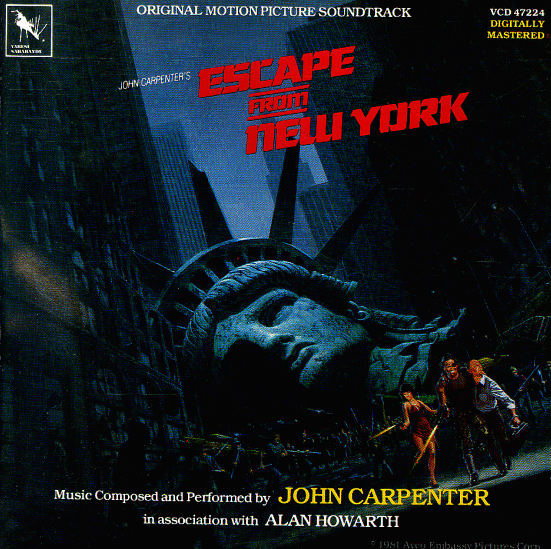
“I came on board at ‘Escape from New York,’ and that was kind of happenstance because my very first movie, less than a year earlier, was ‘Star Trek: The Motion Picture,’” Howarth said. “I had come on as the sound designer and created the sounds of the Enterprise like the warp drive and the transporters and stuff like that. The picture editor from that movie, Todd Ramsay, his next assignment was ‘Escape from New York,’ so I had slipped him some cassettes and he knew I was a musician. John had worked with another fellow on ‘Halloween,’ Dan Wyman, and there was some change up there, and so literally the guy comes over to my little, rented house in Glendale and set up in my dining room. It was nothing formal. I sat down and I played him a few things and he goes, ‘okay, let’s do it.’ That was it.”

“John always wanted somebody who knew about the technology,” Howarth continued. “In fact, a couple of times I tried to explain to him how it worked and he was all, ‘I don’t want to know that. It’s your job to make it work, make it in tune, and when I push down the note the red light is on.’ So that’s where I started, but he’s a collaborative person. I love working with people. I’m from the bands and rock & roll. I was one of those people. So, it was really great and my first film score was ‘Escape from New York.’”

escape-from-new-york-soundtrack

From there, the two of them worked on several projects all the way to “They Live.” As he continued discussing the work he did with Carpenter, we came to discover he played a larger part in Carpenter’s film scores than we ever realized.

“Next, he went off to do ‘The Thing’ and they wanted to make ‘Halloween II,’ so again John said, ‘I’m going to be busy. You’re going to have to do Halloween.’ Same thing, so I did ‘Halloween II’ and I used his original ‘Halloween’ music, overdubbed it and created new stuff.”

After “They Live,” they seemed to part ways for reasons Howarth never explained, but it gave him the confidence to start scoring films on his own. Of course, he was still eager to get Carpenter’s blessing when it came to a franchise the director never planned to start.

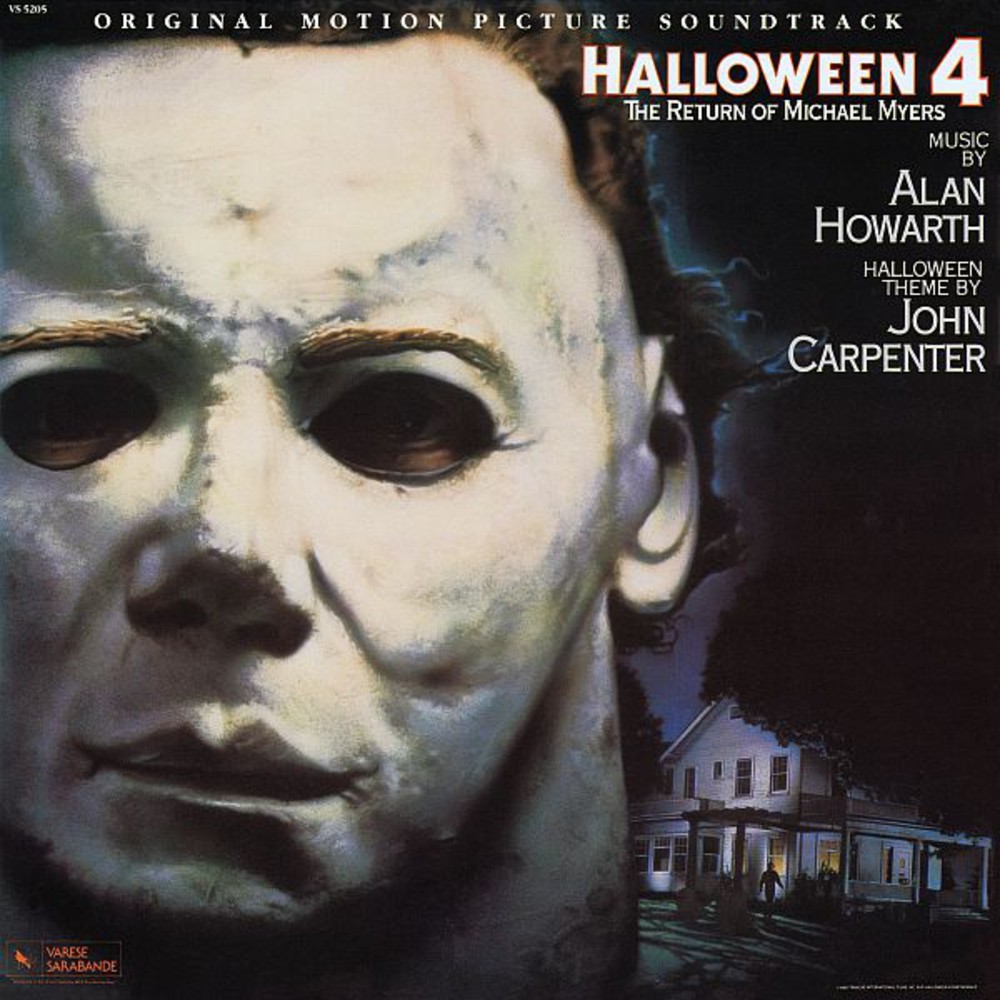
“I found out they were going to do ‘Halloween 4’ and I said to John, ‘they asked me to do this and you’re my buddy and I want to do something with this.’ He said sure, so I wound up doing ‘Halloween 4, 5 and 6’ and that really launched me as a composer which is what I love to do the most, and as we are in a world of economic stasis, I had to do it all by myself. As you see, this is my studio right here. It’s all down to a laptop and a guitar and some recorders when it used to be a million dollars’ worth of stuff. Not that that stuff isn’t valuable, but you can do without it now,” Howarth said.

halloween-4-original-soundtrack

One audience member asked which of the scores he did with Carpenter is his favorite, and the answer was a little bit of a surprise.

“I think ‘Halloween III’ because it was really an artistic departure for both of us, and ‘Big Trouble in Little China’ is the most produced and has the widest range,” said Howarth. “We had rock and roll and scary things and chases and this whole Asian influence, so it was really a broad scope of things. That’s one of my favorites.”

halloween-iii-soundtrack

Like many in the audience, I was eager to hear how Howarth and Carpenter would go about working on a score. Did they start working on it before shooting began? Did they work on it after shooting was finished? Did they think about the music while making the film? We hear how composers spend so much time preparing the perfect score for a movie, but Howarth made his process with Carpenter sound quite simple.

“It’s all one big jam. It’s improvised,” Howarth said. “Sometimes he would come in with a theme in mind. I’d set up the piano before he came over and started something. A lot of it we just made up on the spot. In fact, I introduced him, because I’m a technical person, to the synchronization between a videotape and a tape recorder. It almost seems like we were the first to do it. Before that, everything was done with a stopwatch. So, you would make a cue that was three minutes long and kind of set a tempo, and then you would go back and literally copy it on a Moviola and fool around with the scene.”

“This was the first time you could watch the movie and play at the same time, so he referred to that as the electronic coloring book which made it even easier to improvise,” Howarth continued. “Through that whole period we also benefited from the evolution of electronic music instruments, so from analog synthesizers and a 24-track machine to midi and digital sequencers, these scores had a new installation in the progress of musical instruments, so it’s almost a chronology or a music lesson in the gear.”

Another audience member asked Howarth how long he and Carpenter would jam until they found something they really liked. His answer illustrates how fast these two worked on their music.

“We did a cue a day,” Howarth said. “One quote I always get from John, and it’s just really true, he said, ‘Alan if you want to be a director you only need two important words, yes and no. Just be very decisive. Even if you say no today or yes today and tomorrow, you change your mind. You got twenty or thirty people that are taking direction, and you don’t want to leave them in a lurch, so it’s better to just be decisive.’ So, it was a couple of times we did something and came back and said that wasn’t working, but it wasn’t very often.”

Having worked in movies and music all these years, Howarth clearly has a wide knowledge of musical instruments and electronics. When asked what he would consider as the go to synthesizer, Howarth’s answer shed some light on how far musical technology has come over the years.

“I chose all the gear and I arrived at being a fan of the Prophet 5,” Howarth said. “It sounded good, but the other reason was that it was the first programmable synthesizer. Prior to that, you had to literally make little diagrams of where all the knobs and switches were to get back to the same sound, so this was the first time you could do something and save it. That really moved things forward a lot, and I brought in the programmables and the sequencers.”

One big question many had about the music Carpenter and Howarth worked on was the score to Carpenter’s remake of “The Thing.” This was Carpenter’s first big studio movie, and it allowed him to work with his all-time favorite composer Ennio Morricone. However, when you listen to the score, some it sounds like it was done by Carpenter and Howarth, and this is especially the case with the movie’s main theme. Howarth went into detail about who really composed the score to “The Thing.”

“They (Carpenter and Morricone) took a meeting, and he (Morricone) saw a little bit of the footage and he scored his score,” Howarth said. “He comes back and, of course, how does John talk to his hero about what just went down and where he wants to go? And there’s a translation issue between English and Italian and all this other stuff. So John played the stuff we did for ‘Escape from New York’ and he says, ‘Can you do something like this?’ Ennio goes back for a second pass now with keyboards, and that’s where ‘The Thing’s’ theme came from. So it’s Ennio Morricone doing John Carpenter really. At the very end after all that, there was one more pass on about four or five cues where John came over for just an afternoon and we did some cues that kind of sound like ‘Christine’ that you can tell is basically our synth stuff. So basically, it took three scoring passes on the show to get it.”

the-thing-soundtrack

It was a real treat to have Alan Howarth talk about his musical collaboration with John Carpenter. The film scores they worked on are among my favorites of all time, and I never get sick of listening to them. Howarth continues to work as a film composer, and his more recent credits include scores for “Backstabbed,” “The Dentist” and “House at the End of the Drive.” Here’s hoping we get to hear more scores from him in the near future.

Molly Shannon revisits Mary Katherine Gallagher and ‘Superstar’ in Los Angeles

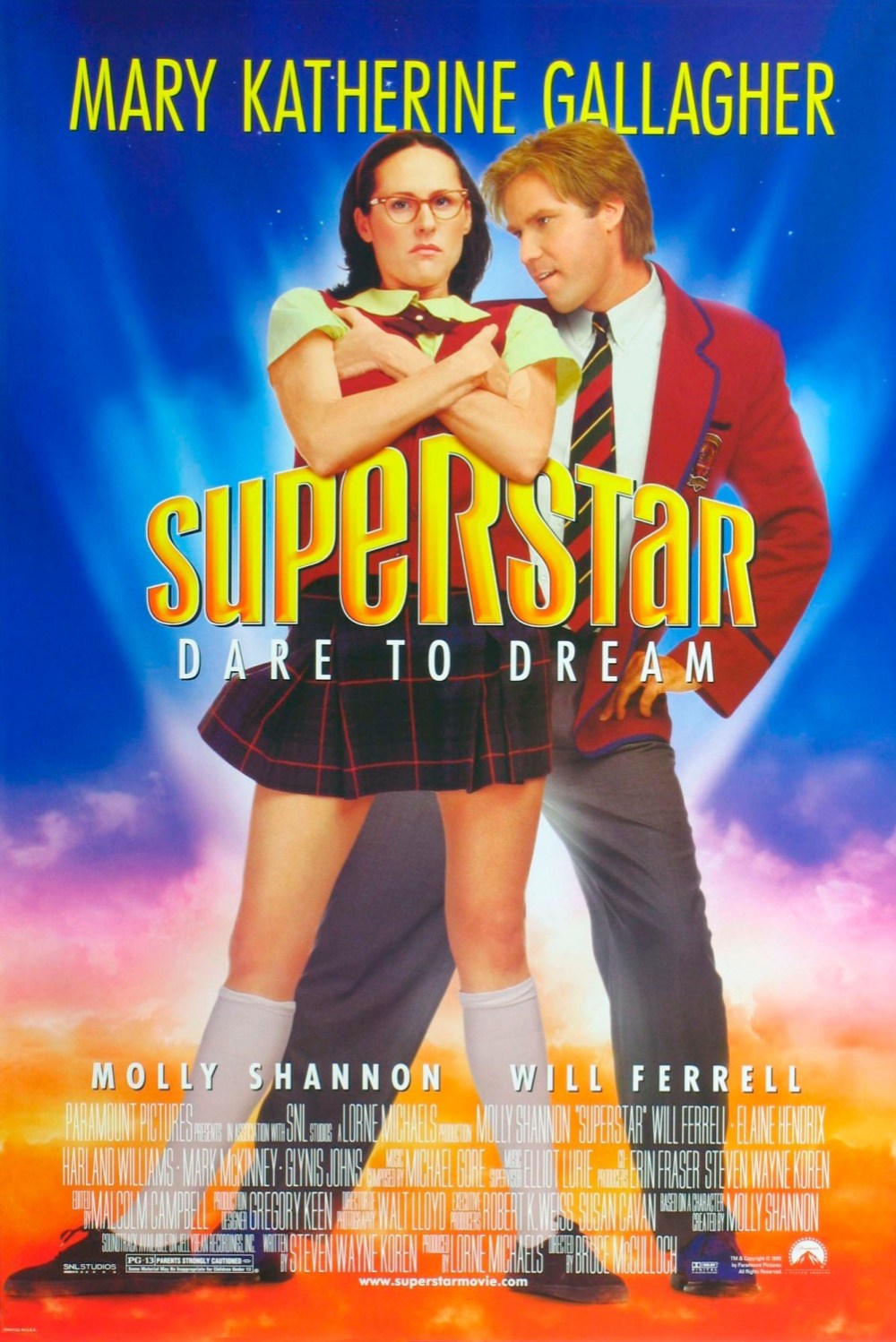
Superstar poster

Molly Shannon had quite the run on “Saturday Night Live,” giving us such hilarious characters like the 50-year-old Sally O’Malley, self-proclaimed “Joyologist” Helen Madden, “Goth Talk” co-host Circe Nightshade and “Delicious Dish” co-host Terri Rialto. But her best character by far was the social outcast Catholic schoolgirl Mary Katherine Gallagher whose severe mood swings and love of TV movies she would always do monologues from still have us in hysterics to this day. Mary’s popularity became so huge to where she eventually got her own movie called “Superstar” in which she attempts to live out her dream of getting a kiss from the most popular guy at school, Sky Corrigan (Will Ferrell). Despite a middling reception upon its release in 1999, the movie has since earned a cult following.

Shannon got to revisit Mary Katherine Gallagher and “Superstar” when American Cinematheque, in partnership with Alamo Drafthouse, screened the movie at the Egyptian Theatre in Hollywood. Joining her was the movie’s director Bruce McCulloch and its screenwriter Steve Koren. Shannon, who hasn’t aged much since her “SNL” days, was all smiles and showed no hesitation in doing Mary’s signature “Superstar” pose to the delight of the audience.

The first question on everybody’s mind was how Shannon came up with Mary Katherine Gallagher, and she replied the character was originally a version of herself, albeit a very exaggerated one. Like Mary, Shannon attended Catholic school, was never really comfortable there and got very nervous when going to confession. She also said the idea for Mary putting her fingers into her armpits came from a friend of hers she used to go on vacation with in Palm Springs. They were at the age where body odors began emanating from their bodies, and Shannon’s friend got her to smell her armpits and vice versa. Shannon also added she is no longer a practicing Catholic.

McCulloch, best known for being on “The Kids in the Hall,” originally turned down the opportunity to direct “Superstar.” Shannon at the time was co-starring opposite Drew Barrymore in “Never Been Kissed,” and Barrymore begged her to go after him and stop the airplane he was on from taking off. McCulloch said his reason for turning down this movie was because he was scared he wouldn’t be able to deliver the goods. He was also concerned he would be taking on another person’s project as well as their life and a significant part of that person’s career. Still, Shannon managed to track McCulloch down and he agreed to direct.

Koren had worked with Shannon on “SNL” and had written the Mary Katherine Gallagher sketches, so it seemed appropriate that the two of them wrote the screenplay for “Superstar.” Actually, it was Lorne Michaels who was “really into the movies,” as Koren put it, who wanted to see Mary get her own film. Koren said when writing the screenplay, it came down to thinking about the history of Mary and where she came from. After that, it was about giving the screenplay a three-act structure and going through a number of rewrites to where they had too much material. In the end, McCulloch said they managed to simplify things by making “Superstar” into a girl movie about finding yourself and of Mary getting her first real kiss.

McCulloch remarked how Shannon never wanted to stop even after shooting 11 takes of the same scene due to the ferocious energy she brought to Mary. He found this to be refreshing as other actors he worked with were not like that. In fact, he even recalled when he finished a third take with an actor and wanted to do another, and the actor looked at him and asked, “Don’t you have it yet?”

One of the many things we love about Shannon’s portrayal of Mary is how fearlessly she threw herself into the physical comedy and crashes into any and every object in her path. Shannon said she grew up watching John Ritter on “Three’s Company” which became a huge inspiration for her. She also added she always made sure to stretch out beforehand and that physical comedy can be very dangerous when doing it with another person.

Shannon also confirmed that when it came to making out with the tree, it was never sterilized beforehand. McCulloch even added he “had to pull her off that goddamn tree” more often than not.

As for her favorite moments in “Superstar,” Shannon said one of them was when Mary was watching the television movie “The Boy in the Plastic Bubble” starring John Travolta as it proved to be her escape from sadness. She also loved the scene where Mary was in her bedroom talking about her breasts as it reminded her of when she was a little girl and thought about “bras” and “big boobs” most of the time.

When “Superstar” was released in 1999, Shannon admitted to seeing it in the theater “so many times.” She kept thanking God for the opportunities given to her, and she reveled in the audience’s reaction to the movie. At one particular showing, she remembered a little boy who saw her and then quickly looked at the screen and then back at her. He leaned over to his mom and said, “Mom, I think that’s the girl in the movie.”

Each of the night’s guests had worked on “SNL,” and an audience member asked how hard it was for them to leave the show. McCulloch recollected that after a season or two he wasn’t sure if he wanted to come back, and he later moved on “The Kids in the Hall.” Koren replied he left when he was hired to be a writer for “Seinfeld,” and it was very tough on him emotionally to move on from “SNL.” As for Shannon, she said she loved the show and wanted to leave while still in love with it. She had nothing planned when she left, and her reasons for leaving were more personal as her father was dying from cancer. Quitting the show allowed her to spend more time with him before he passed away.

It was great to see such an enthusiastic audience come out to see “Superstar” at the Egyptian Theatre. Shannon proved to be a delight as she has lost none of her enthusiasm for Mary Katherine Gallagher or acting. It was also a lot of fun to see McCulloch and Koren share their insights about the movie’s making as it proved to be better than its reputation suggests. As for where Mary would be today, Shannon is convinced she would be in a lot of therapy, but she also hoped Mary would have found love. Regardless, there’s no denying that after all these years, Mary is still a superstar.

Copyright Ben Kenber 2016.