Exclusive Interview with Justin Weinstein on ‘An Honest Liar’
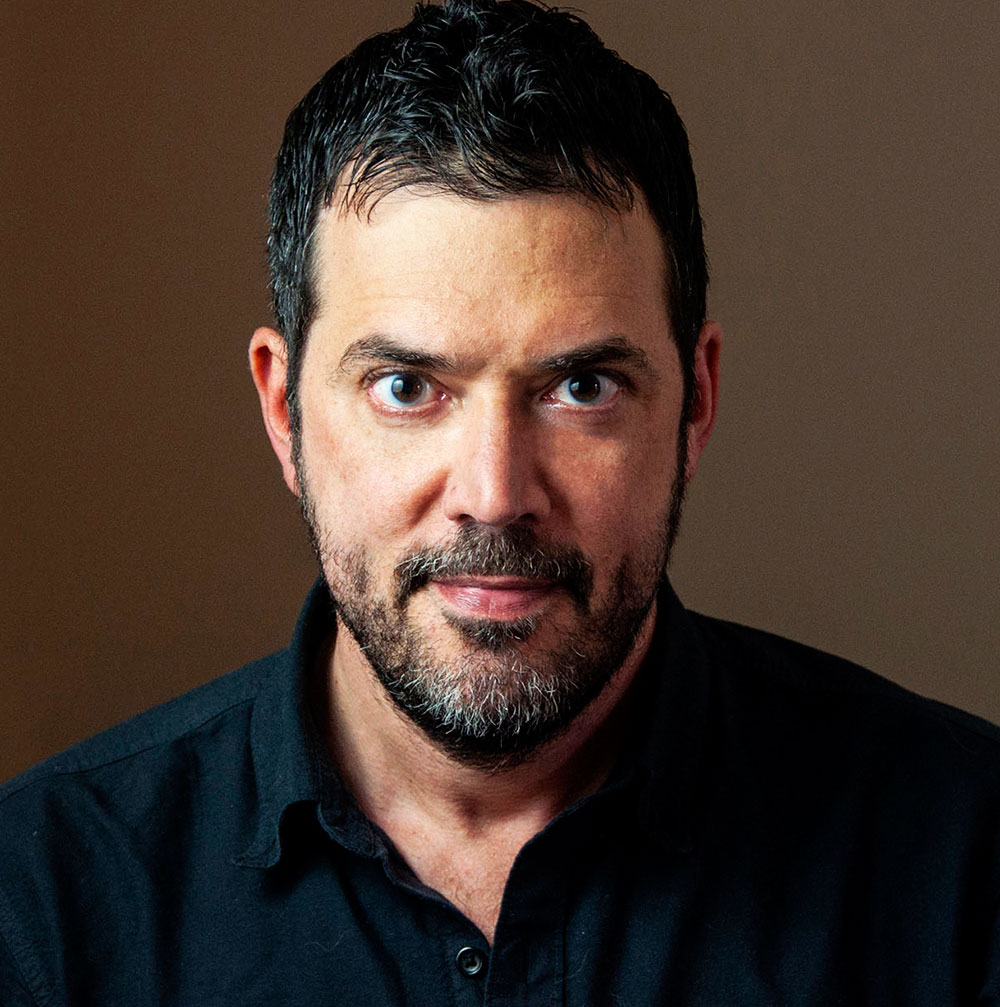
Justin Weinstein photo

In 2015 there were many incredibly fascinating documentaries released, and one of them was Justin Weinstein’s and Tyler Measom’s “An Honest Liar.” It looks at James Randi, a world famous magician, escape artist and renowned enemy of deception. Randi started out his career as a stage magician with aspirations to be the next Houdini. After retiring he went on to publically expose famous psychics, faith healers and con artists who were deceiving people for their own benefit. But things take a shocking turn when it is revealed that Randi’s partner of 25 years is not all he appears to be, and it leaves the audience wondering if Randi is the deceiver or the deceived.

“An Honest Liar” is available to rent or own on Blu-ray and DVD, and it offers the documentary’s fans a treasure trove of special features to check out. There are two commentary tracks to listen to: one with the directors and the other with Randi himself. There’s more about Project Alpha, the elaborate hoax Randi orchestrated where two fake psychics were planted in a paranormal research project and who led others to believe they were for real. In addition, there are deleted scenes as well as extended interviews with Penn & Teller, Alice Cooper, Banachek and Ray Hyman.

I got to speak with one of the co-directors of “An Honest Liar,” Justin Weinstein, over the phone, and we had a great talk about this documentary’s making as well as the challenge of making any documentary in this day and age. Weinstein is a Brooklyn-based filmmaker who was the executive producer on “Bronx Obama,” and he was also a writer and editor on “Being Elmo: A Puppeteer’s Journey” which won the Special Jury Prize at the 2011 Sundance Film Festival.
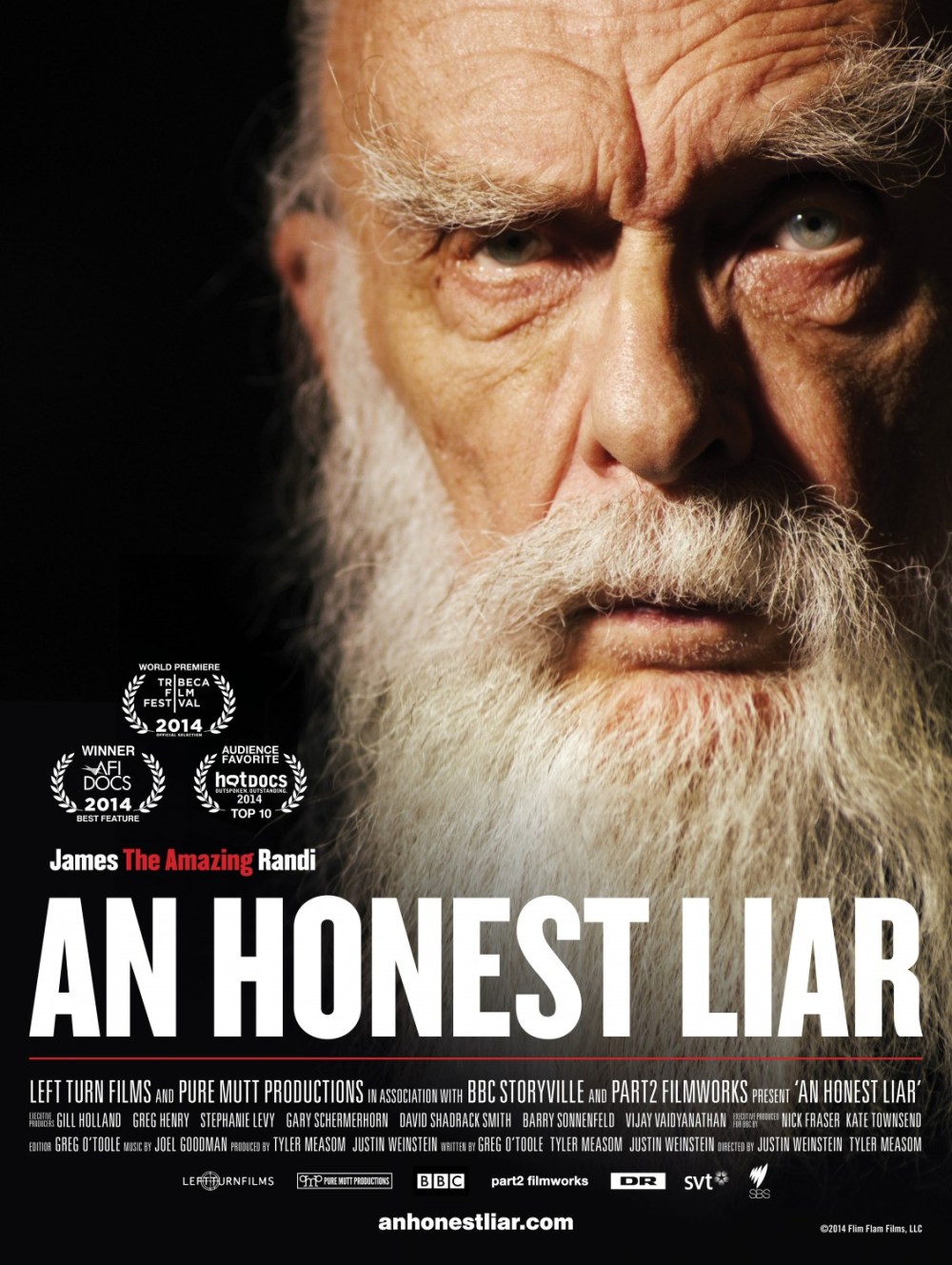
An Honest Liar poster

Ben Kenber: How did “An Honest Liar” change from how you envisioned it before filming to what it eventually became in its finished form?

Justin Weinstein: That’s a great question. We originally started out thinking that the film would be as much about skepticism as it is about Randi. Before we even started filming we thought about what we can do here, and we were interested also in the skeptic movement because there is a very avid movement and active almost religious evangelical group of skeptics with their own charismatic leaders. So we thought that was interesting and our working title began with Skeptic. Of course we were going to deal with Randi’s history, but we were planning to look more at the contemporary skeptic movement as well. But then something happened Randi’s partner got arrested. In doing research and talking to people and going through Randi’s history, there were a lot of interesting disparities. He’s a storyteller and a performer, and when you’re a storyteller and a performer often the best stories are not exactly what happened. And so Randi has kind of bent the truth at times in order to be more effective at what he does, which ironically is being a truth teller (laughs). So we were starting to get interested in the levels of deception, truth, honesty, and a kind of inherent irony with the truth teller bending the facts. Once his partner was arrested, we realized that there is something else bigger thematically here. So we went back and watched Orson Welles’ “F is for Fake” and that really solidified our thinking about the film and that its subject is deception. Above all else that’s the through line. I mean it’s about Randi, but it’s really about truth and deception as well. I knew I wanted to play with the audience and have there be something deceptive in the nature of the film itself. Most people think that documentaries are the truth, and we all know that’s not really the case or rather that they’re one form of the truth. So all these things gelled and helped us focus the film in the direction that it ultimately took.

BK: One of the ad-lines for “An Honest Liar” is if James Randi is the deceiver or the one being deceived. We live in times right now where it feels like we are all being deceived in one way or another, so that’s an interesting way to look at it.

JW: Yeah, and it also working on a couple of levels because it’s not clear right away whether Randi was deceived by Deyvi/Jose, and there’s also a scene in the film where I apparently deceive Randi as a filmmaker. The film came out about the same time I think as “Merchants of Doubt” which is another film about deception actually. (The magician) Jamy Ian Swiss is in that as well. Deception is of fundamental importance in what, to me, forms a lot of the problems that we have today whether it’s political, self-deception or other people pretending something is true when it isn’t.

BK: “Merchants of Doubt” is another terrific documentary and almost as good as “An Honest Liar.” Doubt is a big thing now, and I have had some strong debates with people who are guided more by religion than actual facts.

JW: Well that’s what got Tyler and I interested in this to begin with. I was brought up a secular Jew and was always interested in science and film. When I went to college in Ohio, in my Freshman year I took a genetics class and people stood up and walked out and screamed at the professor, “You’re gonna go to hell for teaching this!” And I was like, “Huh? What?” I remember the first time where I actually spoke to people who believed that dinosaurs didn’t exist and that dinosaur fossils were a plot. I was like, “Wait a minute, what’s going on here?” I transferred to film school and went into doing documentaries, and a lot of my work has been around that subject. I worked on a Peter Jennings doc where I dealt with UFO believers, and it just really fascinates me how people can come to believe things that are demonstrably untrue or just hold onto faith in something for which there is no tangible evidence. Tyler, my co-director, was brought up a Mormon in Salt Lake City. He went on a mission and converted people to Mormonism before he realized that he was being duped and lied to, and he left the church. So that was definitely, as filmmakers, part of what we found fascinating about the subject and wanted to explore.

BK: One of “An Honest Liar’s” most interesting moments is when people start turning against Randi even after he has proven others to be fraudulent in their methods. It seems like many people would rather believe in the illusion rather than face up to reality.

JW: Yeah, I learned this early on when I was debating people in an academic space between creationists they know and evolutionists. At a certain point, and this was when I was 17 or 18, my professor pulled me aside and I said that I couldn’t understand it. There’s evidence. How can they not accept the evidence? What I came to understand was that people create a kind of bubble, a worldview that works for them. If you poke a hole in the bubble no matter small it is, then the whole thing will collapse. So it requires these mental gymnastics to keep the structure of that bubble intact. Over the years making this film people would come up to us, email us and offer us services. Somebody from Paramount Pictures would be like, “Come and finish your film here. I was a born again Christian and I was sucked into all of this, and then I saw one of Randi’s videos on You Tube and someone gave me a book of his and that opened my eyes and changed my life.” He’s had that effect on thousands and thousands of people and it’s always amazing to see how thankful people are. People travel for hours and days to meet him in person to thank him because he changed their lives. It’s really stunning. At the same time there is a whole population of people out there who don’t know him. He’s not the hugest star. He was famous in the 50’s and 60’s and then the 70’s and 80’s with Uri Geller. One of the things we were hoping to do with the film was also to show a fascinating and really important person people deserve to know more about.

BK: Many wonder why a biopic of Randi’s life has not been made, but it makes more sense to tell his story through a documentary because it seems to be a more honest way to introduce this “liar” to a public not familiar with him.

JW: It’s funny because a few of his stories have been stolen. There was a movie with Steve Martin about faith healing called “Leap of Faith,” and then there was something with Robert De Niro where they steal the whole “hello Petey can you hear me” (“Red Lights”), and that’s right out of Randi’s life. There have been other people who had approached him to make a documentary, but I don’t think any of them seemed right. I think both Tyler and I have some films under our belt and we are coming at it from the right angle, so he trusted us.

BK: How open was Randi to doing a documentary? Was he ever hesitant to go into certain areas of his life?

JW: He said at the very beginning, “If we’re going to do this, we’re going to do I warts and all,” and so he was very willing to be open. Right after his partner was arrested it was just unclear what would happen and what was happening. There was a little bit of caution, but as soon as things started coming out both he and his partner just decided that honesty is the best policy. He was very giving with his time. At one point he was upset and you see it in the film, but now he says that he’s glad that we included it because he wants people to see that even he sometimes grapples with the truth that we’re all human.

BK: You also managed to get an interview with Uri Geller which is amazing because he was one of Randi’s chief targets throughout the years. Was it tough getting an interview with Uri, and how open was he to talking with you?

JW: It’s funny. We sent him an email and said we were doing a documentary on Randi and that he has been a big part of Randi’s life and we would love to interview him. We got an email back from his lawyer saying, “Well my client has had a very contentious history with Randi and we want to know exactly how you are going to portray him and the questions you are going to ask.” And Tyler and I looked at each other and we were like, “Screw that!” I never write out a list of questions when I do interviews, I do it conversationally. We have enough of Geller in archive videos. We didn’t need him on camera. So we replied and said we don’t write questions, we got enough in the history to do it without him and he is open to speak for himself. So if he wants to do it great, if not no worries. And then the phone rang and it was Geller who was like, “Oh I’d love to!” So as soon as we threatened to pull the camera away, he ran toward it. Randi said the most dangerous place to be is between Uri Geller and a TV camera. He was very gracious, he was very nice and he was game.

BK: In regards to the Blu-ray/DVD release, what special features are you excited for the fans of the documentary to check out?

JW: There were so many great stories that we couldn’t fit in. With Project Alpha, the two magicians who infiltrated the paranormal study, that went on for two years and they were a couple of high school teenage boys who were away from home and getting into trouble. So there are a few stories from that we couldn’t fit in time wise to the film, but we kept them as bonus scenes. There are a few more Project Alpha tidbits, and the extended interviews are also really great. You can hear Penn and Teller, or rather just Penn, talk about his impressions of Randi because Randi is one of Penn’s biggest heroes. He is very articulate about why Randi deserves the praise that he gets and what is special about his life.

BK: Speaking of Project Alpha, Barry Sonnenfeld now has plans to make a movie about that. What are your thoughts on that?

JW: We’re thrilled. Barry saw the film and loved it, and he immediately recognized Project Alpha as its own great story. We met with him and agreed to work together. He’s a very talented filmmaker who started out as a cinematographer on the Coen brothers’ films but then did “Get Shorty” and “Men in Black.” He’s a great match for the material. It’s kind of a buddy, slightly supernatural period comedy-ish thing, so we’re thrilled to be working with him. We hope to get something up on the big screen with him.

BK: “An Honest Liar” was made with the help of Kickstarter and a lot of grassroots support. Could this documentary have been made without that grassroots support?

JW: That’s a good question. We raised a good amount of money via crowd funding, but our budget was much higher. The money we raised was not enough to make the film on its own by any means so it wouldn’t have been sufficient. However, without it, it would have been much more difficult and I’m not sure it would have been possible without it. In fact, most likely it would not have been possible without crowd funding unless we really cut a lot of corners, and it probably would have been a different film. Documentary funding is always hard to come by especially in the United States. In many other countries there are government funding programs, there’s state money, and in the United States there is no such thing. So you have to do a lot of work applying for grants, but mostly grants that are available tend to be for social issues and ideological films. They are subject oriented about underrepresented populations and minorities, so making a film like this, and it is an issue oriented film, it’s not the kind of issue that grant foundations like. It looks like a biography to most people, so we didn’t have those sources in funding available to us and it’s a shame. I think we made a decent film and I think a lot of foundations which had seen the film after it was made have said, “Oh, well that’s something we could have supported.” They prioritize their money, so crowd funding is almost essential to documentary filmmaking. It’s a shame. It really sucks.

I want to thank Justin Weinstein very much for taking the time to talk with me. Be sure to check out “An Honest Liar” on Blu-ray or DVD as those special features are every bit as entertaining as the documentary itself.

Copyright Ben Kenber 2015.

De Palma

De Palma poster

When it comes to interviews, filmmaker Brian De Palma always seems rather remote or looks like he would rather be somewhere else. In an interview about “Redacted,” he flat out told the interviewer he was simply there to sell his movie, and the interviewer replied perhaps De Palma was enjoying his company. To this De Palma replied, “I don’t think so.” So aside from him crushing the interviewer’s ego, his reply illustrates how uncomfortable he gets when talking about his movies. Perhaps this is why he has never done an audio commentary on any of them to date.

But this is the real joy of watching the documentary “De Palma” as he seems more than willing to spill the beans about his life and the inspirations behind his work. It also helps that it was directed by Noah Baumbach and Jake Paltrow, filmmakers De Palma has been friendly with for several years. Whether he’s talking about his greatest works like “Carrie” and “Scarface” or facing up to his critical and commercial disasters like “The Bonfire of the Vanities,” the revered filmmaker holds nothing back as he discusses each of them with a sense of humor which shows how he’s dealt with the movie industry and the way it has treated him over the years.

Now De Palma has often been accused of ripping off Alfred Hitchcock, and the documentary does start off with scenes from “Vertigo,” a movie now considered to be the greatest ever made. De Palma said he was so compelled by “Vertigo,” and we can see how this particular Hitchcock film influenced much of his work. However, the documentary gives us a deep overview of his films and how he drew inspiration from other filmmakers like Jean-Luc Goddard. He also explains the purpose of using split screen as it allows the audience to put everything together for themselves.

One of the real treats of “De Palma” is how it looks at the director’s upbringing, something we haven’t heard much about in the past. He never had much of a relationship with his dad, he says, who was an orthopedic surgeon which had him growing up around a lot of blood. This certainly explains why blood has played a big part in his movies whether it’s the prom scene in “Carrie” or the chainsaw scene in “Scarface.” We also get to see actor Robert De Niro, who appeared in De Palma’s movies “Greetings” and “Hi, Mom,” at the start of his career long before he played Al Capone in “The Untouchables.”

From there, we get to view his movies in chronological order and of how his work as a filmmaker evolved from one decade to the next. Now granted, this might make certain viewers a little impatient as they might want to skip ahead to his stories about “The Bonfire of the Vanities” or “The Untouchables,” but it’s sitting through the others before them that shows De Palma’s evolution as a filmmaker and how he managed to pull so much off despite intense pressure from studio executives and the MPAA.

Looking at these descriptions, “De Palma” may sound like just another talking head documentary. In a way it is, but to dismiss it as such would be unfair. De Palma is such an interesting guy on top of being a brilliant filmmaker, and I loved how he looks back at his triumphs and struggles with an almost gleeful sense of humor. He has been through a lot of heartbreak and struggles throughout his life, and it’s kind of a relief to see him laugh at some of the darker moments he was forced to endure.

What both Baumbach and Paltrow have pulled off is more than just the average documentary on a filmmaker you often see on cable. They present us with something which feels more like a friendly conversation with someone who is not always so open, and it’s a real pleasure to sit back and hear him talk. At the same time, “De Palma” also provides us with a look back at the great filmmaking period that was the 1970’s and how that period will never be repeated again. Then again, I have no issue with people proving me wrong there.

But perhaps most importantly, “De Palma” shows us a filmmaker who managed to stay true to his own voice despite working in a business which, as he puts it, makes you lose your own way. Even as he began working with bigger budgets and movie stars, he still tried to stay true to what he wanted to accomplish, and you come out of this documentary admiring him for that. And unlike other filmmakers who were stubbornly resistant to changes in technology, he was quick to utilize them whether it was high definition filmmaking in “Redacted” or the advent of music videos in “Body Double.”

There are many surprises and interesting bits of trivia to be found throughout “De Palma,” and I would rather you discover them for yourselves. What I can tell you is that this is one of the best movies, let alone documentaries, I have seen so far in 2016. It is infinitely interesting and a must for movie buffs and aspiring filmmakers. Whether he intended to or not, Brian De Palma has provided us with a master class in directing many would be smart to watch as the movie business is one which can tear an auteur’s vision apart out of fear or for the sake of profit. But here’s a man who, for better or worse, has done things his own way and continues to do so from one movie to the next.

And while it may be wishful thinking, here’s hoping it will give studio executives enough of a reason NOT to remake “Scarface.” We’ve already seen what others have done to “Carrie” for crying out loud.

Copyright Ben Kenber 2016.

* * * * out of * * * *

Exclusive Interview with Gusmano Cesaretti about ‘Take None Give None’

Take None Give None poster

2015 proved to be a great year for documentaries with unforgettable ones like “Amy,” “An Honest Liar” and “The Wolfpack.” Now there’s another terrific documentary to check out called “Take None Give None” which is about the Chosen Few, an outlaw motorcycle club based in South Central Los Angeles. Directed by Gusmano Cesaretti, a producer on many of Michael Mann’s films, it chronicles how this motorcycle club, the first multi-racial club of its kind, formed and is bound by the strength of their brotherhood. The documentary also follows the club’s struggles as they deal with the LAPD which raided their clubhouse and unfairly branded them as a criminal organization in the media.

“Take None Give None” had a special screening at the Museum of Contemporary Art in Los AngelesMuseum of Contemporary Art in Los Angeles, and it was sold out and filled with people of all kinds as well as members of the Chosen Few. When it ended, one of the club’s members stood up and said, “Tell people about this movie so that they can see who we really are.” This was met with a thunderous applause from everyone in attendance.

I got to speak with Cesaretti over the phone about “Take None Give None” which he filmed with co-director Kurt Mangum over a three-year period. Cesaretti described how he became acquainted with the Chosen Few, how he managed to get an interview with one of the LAPD cops who went undercover to infiltrate the club, and of how working with Michael Mann served to help him on this project.

Gusmano Cesaretti photo

Ben Kenber: Congratulations on the documentary. This proved to be a real eye opener about the Chosen Few. How did you first become acquainted with this motorcycle club?

Gusmano Cesaretti: Well I saw some of those guys riding motorcycles about 25 years ago on the Pasadena freeway and I pulled over next to them with my car and I said, “Hey! Pull over, I want to talk to you.” And they pulled over then I told them, “I like the way you look. Everything about it is great. I love the way you were riding the bike.” They weren’t just riders, they had pride for some reason. So I told them I would like to take some pictures, and they invited me to the clubhouse. I went over there and it was amazing to see all these great amounts of people and they were all nice. I walked over with the camera and everybody started looking at me and saying, “Hey what are you doing? Oh yeah take pictures of me! Take pictures of my bike!” It was really great. They were friendly, they were open to anything and to me it was fascinating. They were a great people and then I started going there every other week and kept taking photographs and so on in support. Then in 2011, because they were talking all the time about their rides and how important they were for them and being together in like a brotherhood, I said I would like to film one of your rides. So I organized a ride for them where we went through South Central and on the freeways and then through downtown, and then after the ride they started really talking to me and said that we should make a record of all this. That’s when I started doing the documentary, and we just finished (laughs).

BK: When you first started shooting the documentary, how did you envision it and how did it evolve from that point to where it is now?

GC: That’s a good question. When I first started the documentary I had no idea because when you make a documentary you really don’t know which way you’re going. I feel you’re doing it for a year or two (laughs) and then you would have all the information you ever need to create a storyline. We recorded about 48 hours (of footage), and when we finally decided to edit it was like a nightmare because you’ve got listen to all these conversations and all the recording we did. It took months but then you know what’s going on, and then we put a big roll of paper on the floor of my studio and started writing down the scenes. It was crazy. A lot of different cameras were used. It took me about a month to figure out the storyline, and then even during the process of editing there’s always changing this, putting back this and taking this off. It was a very challenging process but I learned so much.

BK: When it came to filming the documentary what formats did you utilize?

GC: We did a lot of stuff with the Super 8 riding the bikes here and there and we used other film. We used Cannon, we used Sony, etc. But the problem when we did the editing, because of all the different formats and all the different cameras, it became now we gotta do this, now we gotta change this and now we have to download everything into this. It was really crazy, but it worked because I shot it in a very cinema verite way. I didn’t want to commit to any style. And the way I interviewed those guys it was like, “Tell me the story.” I didn’t ask any questions because I wanted them to talk and tell me from their point of view. So that’s usually the way I prefer to do my photography; I connect with people and establish a relationship even if it’s for a moment, and I need to start a relationship if I want to get the image that I need.

BK: When the Chosen Few’s club gets raided, we get to see how the media really twisted their identity of proportion. Then they got evicted from their building which had a huge impact on the neighborhood because things were a lot safer when the club was around.

GC: Correct. What was interesting about the Chosen Few in South Central is that it’s really about the cultural of Los Angeles. It’s not necessarily about the bikers, it’s about their lives. The clubhouse was open for all the members and friends and people and visitors like me. There were probably a lot of undercover cops going there too, I’m sure, just to check and make sure that they were okay. But the thing is this; there were always old people there. It wasn’t just the club for the motorcycle people. It was older people who used to sit there all day long and have conversations with their friends, and when they lost the clubhouse a lot of these old people died because they didn’t have a place to go. They were like homeless people practically, and that was really sad to see that happen. All the members too, they felt homeless. They felt like the police were trying to take their identity away. They didn’t have the energy that they used to have any more, so it was extremely sad.

BK: Speaking of the police, you did manage to get an interview with one of the undercover cops who infiltrated the Chosen Few. Was that a hard interview to get?

GC: No actually. I have a friend that is a cop and I said to him, “Look I’m doing this documentary and I would like to interview the police that did the raid.” He said, “Yeah I’ll find him for you.” So he took a couple weeks and then he called me one night and said, “I got the guy.” I talked to him and he was very interested to do it, and we got together and did it. He was actually a nice cop. He was very open and he also told me the truth. What he was saying was real.

BK: It was nice to have the cop’s perspective of the raid as well as the Chosen Few’s as it manages to balance things out.

GC: Yes, yes. It’s a big club and not everybody’s an angel, you know what I mean? But that’s the same in any other big company like Google. There’s always somebody messing up things and in the club a lot of those guys come from the gangs, most of them. Being in the club was like upgrading their lifestyle and they got a job, but they are still connected with the streets and the gangs. There will always be somebody doing a little bit of this and little bit of that and a little drug dealing, but most of them are really wonderful, nice people. The theology of the Father, Lionel Ricks, is amazing. He started the club because he didn’t have a family and he wanted to have a family. That’s beautiful. What really fascinated me the most was that Lionel Ricks started the club in 1959 and then integrated it in 1960, and this was before the civil rights movement. He was able to bring blacks and whites and Mexicans and Chinese and a couple of people from Syria together without any political or powerful stuff like Malcolm X and Martin Luther King and all those people afterwards. He did it very simple and in a naïve and beautiful way with the motorcycle. That’s amazing to me. Think about it, he brought people together with a motorcycle! And that was when I said, “Okay we gotta do this,” and they were all excited about doing a documentary. We got all these great people to interview and the Father. The Father right now is very sick and in the hospital, and I hope he’s going to get better. But I did show him the documentary about a month ago when we finished editing. I went over to his house and showed it to him, and he had tears in his eyes and said, “It’s good. It’s real.” And I said, “Great! Thank you!” He really loved it.

BK: You worked a lot with Michael Mann on his movies. How did your experience working with him help you in making this documentary?

GC: Well I think making a film is completely different from making a documentary. The only help that I got on this film from that world is the camera guys that I worked with, and they are my friends and they came and helped me. With film you have a script and you got the actors and you have time to keep repeating and filming a scene a scene until it comes to where you want it. When you do a documentary the moment is right there. You are shooting this, you turn your head and you see something and you shoot that. You don’t know what’s going on and you’ve got to be aware of what is going on around you, so it’s really different. For me, this was a totally unique experience.

BK: Was there anything you wanted to include in this documentary that you were not able to?

GC: We got to a point where we said okay we gotta finish this project, so there were maybe a few more people that I wanted to interview that we never got to. There was a guy who did an amazing wheel stand. He did a wheelie and he was supposed to come over one night to do a performance for us while we were shooting in South Central, but the guy couldn’t make it and never showed up. And that was another thing that I wanted to include because it’s beautiful and its part of the art of being in control of the motorcycle. When somebody does something like that in a beautiful way it was nice to visually put it into the documentary, but at the same time it wasn’t that kind of a documentary. It was more about the feeling of the individuals and the members and everything that came from their hearts and communicating to the outside world and saying here we are. This is what we are. We are not what people think, we are what we are.

I want to thank Gusmano Cesaretti for taking the time to talk with me. Please feel free to check out the movie’s website at www.takenonegivenonethefilm.com, and be sure to check out its social media pages on Facebook and Twitter.

Copyright Ben Kenber 2015.

Exclusive Interview with Steve Hoover on ‘Almost Holy’

Almost Holy poster

Almost Holy” is one of the most harrowing documentaries I have seen in years as it follows the efforts of Gennadiy Mokhnenko, a Ukrainian pastor, who helps the drug addicted kids lost in the streets of Mariupol, Ukraine. After the Soviet Union fell, social services in Russia were severely cut to where many of its citizens fell into a life of drugs and prostitution, and Gennadiy pulls them off the street to give them the help they need at his Pilgrim Republic rehab facility. While many view him as a hero, others consider him a vigilante for his unorthodox tactics. The way he sees it, he doesn’t need anyone’s permission to do good deeds, and the documentary invites us to make up our own minds about him and what he does.

“Almost Holy” was directed by Steve Hoover whose previous works include the critically acclaimed documentaries “Blood Brother” and “Seven Days.” I got to speak with him while he was in Los Angeles.

Ben Kenber: How did you first become aware of Gennadiy?

Steve Hoover: I had friends who worked on an assignment in Ukraine doing a promotional piece for a nonprofit and they were traveling to a lot of different cities in Ukraine, and their last stop was Mariupol at Pilgrim with is Gennadiy’s rehab center. They were forewarned that this guy was fascinating and to not revert too much onto him, and the way they’ll describe is not intentionally, but he stole the show for them. They detoured from the project and followed him for several days and just filmed everything, and they described Gennadiy as having loads of stories and he just talked and captivated everybody in the room. These are friends of mine that I work with and they came back to Pittsburgh where I am based after that trip and they were like, “You have to see this guy. He’s open to being in a documentary and he has years of archival footage. Do you want to direct it?” And I was like, “Well, why don’t you direct it?” Anyway, they offered it to me to direct, so that’s how I got connected to Gennadiy and things went from there.

BK: What I found fascinating about “Almost Holy” is that you never judge Gennadiy. There are reasons to judge him especially when it comes to the way he gets kids into his rehab program. How were you able to keep a very objective perspective while making this documentary?

SH: I wanted people to have a similar experience that I had. I didn’t want them to have my exact experience. I found that I walked into this situation thinking that I knew and understood the story, but as documentaries go you never do. In general, I’m interested in people’s motives and complications of people’s motives, and I like to explore why people make the decisions they make because I find people so easily boil people’s motives down to very simple things. I just don’t think that’s ever the case. Why Gennadiy does what he does, there is not an easy answer for that. I think he’s somebody you could frame in a lot of different ways. People have made him look very heroic, and I wanted people to see what I saw and didn’t want to give people answers because I don’t ever feel confident in being like here’s how you should think or here’s how you should think about this person. You don’t have to do any work, just react emotionally to this.

BK: How would you say your vision of this documentary evolved from when you first started shooting it to when you were editing it?

SH: I think because my friends that had met Gennadiy had limited exposure to him, they thought the story was something. So what they communicated to me was what I thought the story was going to be; that Gennadiy only stays in Mariupol and pulls kids off the streets and rehabs them. That was what I thought I was walking into. I didn’t have personal correspondence with Gennadiy beforehand, so the first time I saw him was the first time I ever talked to him. Some people will do extensive talks with the subject to try to figure out if this is worth it, but I just fell into Ukraine which, for me, was fun because it was this exploration and it was very much an adventure. I quickly started to realize that the story was more interesting than that. How does he get more interesting than adopting homeless kids and rehabbing them? His story had evolved with the needs and problems of his city and what was around him, and I came to realize that adopting kids from the street through these night raids was a back story and that it was so much more ill-defined which made him more developed and interesting. When we started the conflict hadn’t happened. There wasn’t even like, “Oh now’s a good time to do something in Ukraine because there might be a conflict.” There was nothing. That all dramatically impacted the narrative of the film because the conflict forced its way into everybody’s lives in Ukraine, so for a while I wasn’t sure. In the middle of it there’s the Euromaidan revolution and I was like, I don’t think we need to get into that. But it just kept creeping closer and closer and then it just was on the doorstep and in his life and everybody’s lives. At first it was like okay, I can avoid this, but then I realized how much it actually helped the story because here you have a figure who cares deeply about Ukraine and has been an advocate, a social worker and a lot of makeshift things. Whether it’s the prettiest execution of those offices or makeshift offices doesn’t matter. He’s somebody who was trying to make a difference in his country, and all his years of work is now being threatened by a force he can’t control and that became more interesting to me. That’s how it changed.

BK: The documentary has a wonderful industrial score by Atticus Ross, Leopold Ross and Bobby Krlic. Did you work with them closely on the score, or did you let the composers just work on it on their own?

SH: We had sent Atticus some clips of Gennadiy as a work in progress and said this is what we’re doing, would you be interested in being a part of this? He took interest for his own reasons, and he’s somebody who is creatively beyond me in what I do. He has incredible sensibilities and is someone you could absolutely trust. I was interested in seeing how these visuals inspire him and what he made of them, and he would send me bits of his work and his inspiration. The way I like to work is exactly like that, where composers would give me music. My last film had six or seven different composers and I only knew one of them personally. The great thing is Atticus had been working on it at his own time and pace based out of inspiration. Atticus, Leopold and Bobby, they provided a really excellent pool of material that I felt was inspired by the industrial backdrop of Ukraine. It’s interesting because there are definitely darker, bleak and intense moments, but there also these moments of hope in the score. There are moments that bring such character to the film. It was great working with him (Atticus) creatively. It wasn’t just like, “Hey what are your thoughts on the score?” I looked to him a lot for feedback on picture and on the edit, and he was very involved and very helpful. I respect his creative sensibilities a lot.

BK: The documentary also has the wonderful privilege of being executive produced by Terrence Malick. How did Malick become involved?

SH: With our last film we had worked with Nicolas Gonda who is also an executive producer on this film, and he is Terrence Malick’s producer. So we worked with Nicolas and, similar to developing a relationship with Atticus for the film, we had some work in progress and basically pitched the idea of creating an executive producer relationship for Nicolas and Terrence Malick. They took interest, so that’s basically how it happened.

BK: How many years did you shoot this documentary over?

SH: The film covers years, and a lot of that is due to Gennadiy’s archival footage. He had footage from 2001 to roughly 2008, and then we came into the picture in 2012 and shot. I wrapped the edit at the beginning of 2015, but I was still pulling news sources and things like that. So we were with the story for three and a half years.

BK: Are there any movies for you that helped influence the style of this documentary?

SH: I think more in postproduction. There’s a movement within documentary and creative nonfiction to make documentary films seem more dramatic and entertaining or to just push the creative boundaries of documentaries, so I like those ideas and those sensibilities. My last film was kind of a happy accident. I was sort of rebelling against polished productions because I had been doing commercials and music videos for years, and I wanted to do something that didn’t matter what the picture looked like and was more heart. I didn’t know very much about documentaries towards the end of that. I was like, what if I could care about the image but still give it heart or authenticity? So that was sort of what drove a lot of my creative decisions with “Almost Holy.” I wanted it to be more classic filmmaking. I didn’t want to bring the slider or certain things. I just wanted it to feel like a classic film with just traditional lockdowns and nice shots as much as possible. We were on the go a lot so that didn’t always work out, but even with when people were talking I made sure we always had two cameras running to film it like a narrative film so that I could cut dialogue later so you could feel the conversation like you would in a film.

BK: That’s interesting because a lot of directors come from the world of music videos and commercials, and it seems to be that that world is more about style than anything else. So to escape from that has got to be very fulfilling in a sense when you come to a documentary like this. Would you say that is the case?

SH: Yeah. With the last film that was very much the case, and then with this one it was kind of like marrying the two worlds. I have these years of experience with the crew that I work with, and these guys are very talented. What if we applied all of that in a running gun setting? Everyone adapted very well to it. We were in places where we had a minute to set up our shots and we would be stuck on a lens and we just made do, but I feel like it was very rewarding. It was hard, it was really hard. It was basically five filmmakers and then six people with the translator trying to make this happen. We had an insane amount of gear, but everyone pulled their weight and I think they did a fantastic job.

I want to thank Steve Hoover for taking the time to talk with me. Please visit the “Almost Holy” website to find out how you can view it (www.almostholyfilm.com).

Copyright Ben Kenber 2016.

Exclusive Interview with Timothy Kane and Annika Iltis on ‘The Barkley Marathons’

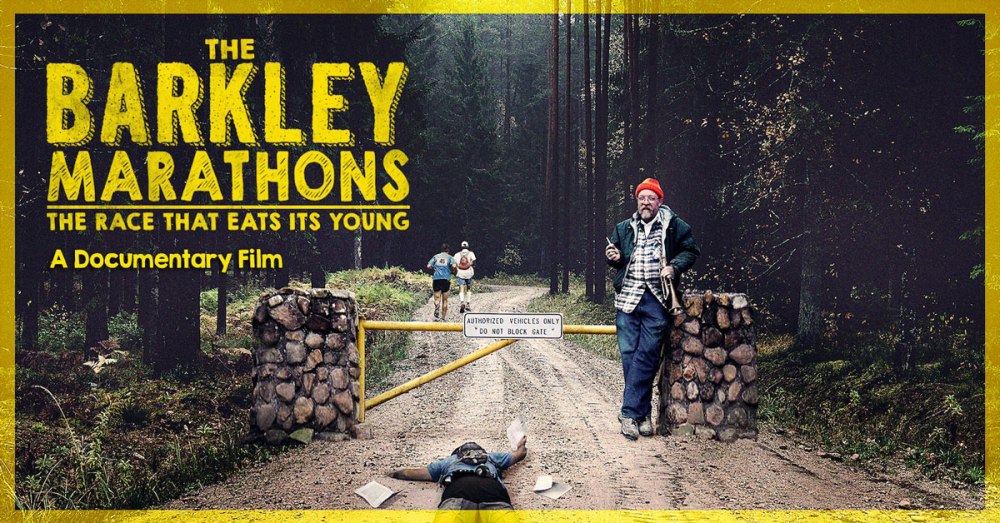
The Barkley Marathons poster

There are marathons, there are ultra-marathons, and then there is the Barkley Marathon. If you haven’t heard of this one that’s okay because, like “Fight Club,” the number one rule is you don’t talk about it. But that’s bound to change after you watch the documentary “The Barkley Marathons: The Race That Eats Its Young” (please take its subtitle seriously). It sheds light on this race which has developed a cult following over 25 years and gives its participants 60 hours to complete the equivalent of five marathons. Once you watch it, it will be very easy to understand why, out of the hundreds who have run it, only 13 people have actually completed the entire thing.

“The Barkley Marathons” introduces us to the event’s co-founder, Lazarus Lake, a man who is as idiosyncratic and unpredictable as the race itself, and he approaches the proceedings with an almost devilish sense of humor. Hundreds of people apply for it, but only 40 are accepted. Those accepted get a letter of condolence informing them they have been selected and only have to pay an entrance fee of $1.60 and bring with them a t-shirt or license plate from their home state or country. It all takes place at a park in Tennessee where the start time is not revealed right away, and the race begins at a yellow gate when Lazarus lights up a cigarette. What happens from there is really something to witness.

Directing this documentary were first-time filmmakers Timothy Kane and Annika Iltis, both of whom had worked as camera assistants on “Mad Men.” I got to speak with them and they described what inspired their decision to find out more about the Barkley Marathon and of the numerous challenges they faced throughout filming.

Ben Kenber: The documentary was inspired by an article you read called “The Immortal Horizon.” What was it specifically about that article which spoke to you the most?

Timothy Kane: Well when we read it we didn’t know anything about the Barkley at all and had never heard of it. We also didn’t know anything about the author, so everything was kind of new to us. We read it in the Believer magazine and what we learned was that Leslie (Jamison) was really, at that time, just a fiction writer and this piece on the Barkley was her first journalistic nonfiction piece. So when we read it, it really had a narrative style to it. It read kind of like fiction that it made it even, you know, more impossible to believe than just the facts do alone. Her writing really piqued our interest and made us want to get on a plane and go to Tennessee and find out what it was all about.

BK: I heard it was really hard to track down Lazarus Lake. How did you manage to find him?

TK: Well that’s sort of inside information.

Annika Iltis: Yeah, we’re trying to keep their anonymity as much as possible. In the opening of the film we say we’re going to tell you the truth but the truth is malleable. As much as it is a documentary and everything that you see in there happened, we tried to keep the Barkley world the same as when we started the film, and I think part of that is keeping Lazarus’ privacy and Raw Dog’s privacy as much as possible. Of course we know this film will probably change that.

BK: The way people describe the Barkley Marathon, it’s a lot like “Fight Club” in that the number one rule is you don’t talk about it. There must been a lot about the marathon that you could not include in this documentary, but how much of it percent wise did you manage to get in this film?

AI: In terms of like the geography of it, a very small percentage. I think it’s hard to say even what percentage it would be because over 26 miles of the loop, or 26.2 miles, we had about seven camera operators during the shoot. We moved around a little bit, but we did everything with Lazarus’ blessing and we only went to places that he was happy with us going to and that wouldn’t affect the runners’ navigation and that wouldn’t affect the race as much as possible. But we weren’t interested in running alongside them. That was never something that we wanted to do. It wasn’t something that we’d want to watch either. A lot of the action really happened around the gate. What we got was great for the film we were making.

BK: Regarding the seven camera operators, were they ever visible to the runners or were they put in spots where the runners couldn’t see them?

AI: They were visible, but all the places that they were placed were places where that were obvious points along the course. So navigation wise it was very obvious to where the runners knew where they were along the course that when they saw a person with a camera, they weren’t like hey there’s a person there so I must be going in the right direction. They knew where they were. And there weren’t many of us; it was a very skeleton crew. We kept it simple, and because of that we were able to get a deep part of the action without overwhelming people.

BK: What was the most challenging part of making this documentary for you two?

AI: (Laughs).

TK: There were so many things. Annika, one of the first things she mentioned was the vastness of the terrain. Trying to navigate around it was a challenge, and trying to be at the right place at the right time over a 20-mile square area through six or seven mountain ranges, that was a major challenge. It was a challenge to gain the trust of the runners. That was a big thing early on for us to try to make sure that they understood what we were trying to do. We’re trying to be as respectful of them as possible and to not affect their race. They worked hard to get there and we were just guests, so we didn’t once do anything that would jeopardize their experience.

BK: Were the runners open right away to being filmed or did that take a lot of trust building tween you and them?

TK: We did on the first registration day a lot of interviews and Annika was instrumental in getting a lot of those, and at that point there were definitely some people who were maybe nervous about the race coming up but were not sure what we were doing. In hindsight I’d say there was a little bit of hesitancy, but once they started running I would say that everybody was so focused on what they were doing that they really didn’t take much notice of us which was good for us.

AI: And once they knew what kind of film we wanted to make, which was basically capturing the soul and spirit of the Barkley more than exposing its secrets, then people were on board.

BK: It was interesting because part of me wanted to see more of the course, but after a while it’s easy to understand why you don’t see that much of it. Plus, it is said that the course changes from year to year.

AI: Yeah it does change most years. We were lucky to have one of the runners; he was going to wear a Go Pro camera throughout the course and offered up his footage, so we got to see parts of the course through that. But honestly to keep the narrative structure of the film and the pace of the film, we really wanted the film to feel like you were actually there watching this race that weekend and feel like you are part of the Barkley. So to keep that going I don’t think we could’ve put more of the course in there because it just would have been more running footage and more landscape footage, and we weren’t interested in that. We wanted to keep the narrative pace up.

BK: But even though we don’t see much of the course though, we do see what it does to the runners’ bodies as they come back with dozens of scratches on their legs. It doesn’t take long to feel how painful those scratches are.

AI: Yeah, that’s all from the briars. They are pretty rough and there’s just so many hours running on your feet and with moisture. You see that part in the film. It’s very difficult on the human body but also mentally for the runners, so we tried to capture that as well.

BK: Another thing I liked was how it showed that even though many of the runners don’t finish the Barkley, you still have to pat them on the back because at least they still gave it a shot and finished one loop. There’s something to be said for that.

AI: I think anyone who actually makes it to the starting line there has already accomplished a lot because that’s not the easiest thing to get there. Part of what was really important to us while we were focusing in on different people was including people with the varying idea of success and failure. We wanted to make sure that we showed all of those points because it is a very personal thing how people view their own accomplishments there, and that was a big part of the Barkley and why we focused on the various people that we did.

BK: Have you kept in touch with any of the runners since finishing this documentary?

AI: Oh yeah, we are in touch with quite a number of them. We’ve been back to the Barkley almost every year. We missed last year, but almost every year since we get in touch with a lot of folks, we see the ones we can and, as silly as it is or maybe not, we feel sort of a part of this thing now because it’s a very unique experience and having been there for three years is something we look forward to every year. I think the people that we’ve met in the experience of making the film is really, for us, the greatest accomplishment probably.

BK: It would be interesting to see a sequel to this documentary showing what the experience of running the Barkley has had on the runners’ overall lives, and that’s regardless of whether they finished it or not.

AI: It’s interesting because honestly I don’t think it really affected most of their lives very much, and that’s because it’s a very personal thing that they do. Most of the people who go out there are not doing this for any sort of a claim by any means. They are doing it for a very personal reason. Most of them have high level degrees in science and engineering, they have regular lives and they go back to work on Wednesday or whatever day of the week it is. They can talk about their experience, but I think in their daily lives this is just something that they did and then they go on and do the next thing which is amazing but that’s the kind of person who goes out and tries this.

BK: Did either of you have to pay the $1.60 fee or a license plate in order to get permission to film this documentary?

AI: (Laughs). I don’t think we did actually. We talked about it. We did bring lots of chocolate. We paid a lot of other tolls probably over the past four years to get through all the hurdles that we had to get through, but Lazarus did not require any of those items from his (laughs).

BK: Both of you came to this project after finished filming season five of the show “Mad Men,” and you’ve said that this was a great opportunity for you to create your own material. How fulfilling was it to go from working on someone else’s material to working on your own project?

TK: It’s hard to say. It’s almost like we are still so close to it. We are still in awe of so much of the work that’s going on that it might take a little bit of time to pass before we can really look back on it and see what we learned from it. We certainly learned a lot, but in terms of doing a film it’s something that we sort of dove into and it’s basically taken up all of our free time for four years the way a passion project does I guess. It’s really pushed us to new limits. We had a lot of creative battles back and forth with each other, and those things are interesting and hopefully we’ve grown as people and as filmmakers.

BK: Many documentary filmmakers I have talked to have said that it usually takes a number of years for their project to come to fruition in terms of filming it and then finding distribution for it. Did you have any idea of how long it was going to take to make this documentary?

TK: We had no idea, but we didn’t put a time limit on it because the nature of our work, being sometimes 70 hour weeks, we would have to take full chunks of time off, like six months at a time. In some ways we were tired of working on the movie every day, tired of talking about it at work trying to push something forward, but in terms of moving forward with the narrative of the editing or whatever needed to be it was very difficult to start something because we had such little time. You would start something and then all of a sudden you would have to get ready to go to sleep or go to work. I think if you had told us it was going to take four years we may have thought twice about it. But we do get this from everybody that does documentaries, and as a matter of fact a lot of people told us that’s not long at all.

AI: That’s like an average actually. We’re probably on the short side of the lifespan of a documentary in terms of getting it out there.

I want to thank Annika Iltis and Timothy Kane for taking the time to talk with me. Please visit the doucmentary’s website at www.barkleymovie.com to find out how you can watch it.