WRITER’S NOTE: This interview took place back in 2015.
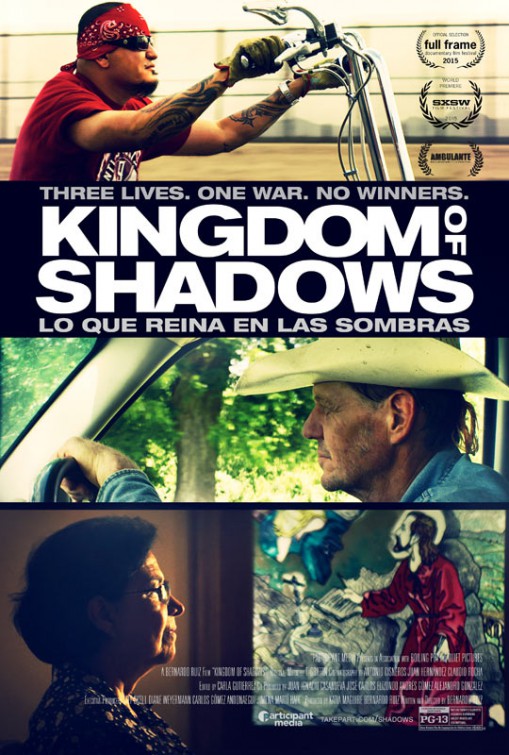
The U.S.-Mexico drug war is one many of us watch from a distance, but the documentary “Kingdom of Shadows” forces you to look at the war more closely than usual as it puts a human face on the damage left in its path. Director Bernardo Ruiz observes the ongoing conflict through the perspectives of three individuals: activist nun Sister Consuelo Morales who prods government officials to take action against the drug cartels who have kidnapped many people, Texas rancher and former drug smuggler Don Henry Ford Jr. who offers a descriptive context for the evolution of drug trafficking, and undercover agent turned Homeland Security officer Oscar Hagelsieb who offers a unique perspective on America’s role in the drug war. The majority of what we see takes place in Monterrey, a devastated and violence scarred town in Mexico that Oscar felt less safe to be in than when he was a soldier in the Middle East.
Watching “Kingdom of Shadows” is deeply moving and unsettling as we see how vicious the war on drugs has become, and it makes the intense thriller “Sicario” feel all the more real and unnerving in retrospect. Bernardo takes a real close look at the cost of this war from both the U.S. and Mexico sides, and he gives us an unflinching look at the human rights crisis it has generated and which only recently made international headlines.
I was among a group of reporters who got to sit in on an interview with Bernardo Ruiz and Oscar Hagelsieb while they were in Los Angeles to promote “Kingdom of Shadows.” Bernardo also directed the documentary “Reportero” which chronicled a veteran reporter and his colleagues at a weekly newspaper challenging drug cartels and corrupt local officials during an unprecedented wave of violence against journalists in Mexico. Oscar’s life began in a drug infested neighborhood where he was raised by undocumented parents, and despite having been an undercover officer for several years, he explained why he was more than willing to show his face in this documentary.
Bernardo talked about the kind of resistance and challenges he faced in making “Kingdom of Shadows,” and he explained why he introduced Oscar the way he did. Oscar was asked how he manages not to take his work home with him, and he explained why the legalization of marijuana will cause the drug war to become even more violent.
Please check out the interview below, and you can also check out the trailer as well. “Kingdom of Shadows” is now available to own and rent on DVD, Blu-ray and Digital.
Recently, I was listening to an episode of Mick Garris’ podcast “Post Mortem” in which he talked with those involved in the horror genre who are currently walking the picket lines for the Writers Guild of America strike. In his conversations with Leigh Whannell, Darren Lynn Bousman and “Fright Night” director Tom Holland, I came to see how those who make scary movies are the nicest and most kind in the business as they constantly wish the best for one another. In any other part of Hollywood, jealousy typically rears its ugly head to an infinite degree as insecurity remains a constant.
I was reminded of this while watching the documentary “Hollywood Dreams & Nightmares: The Robert Englund Story” as it brings together a plethora of horror actors and filmmakers such as Eli Roth, Tony Todd, Lance Henriksen, Adam Green and Lin Shaye among many others. But regardless of their love of horror films, they are mainly here to talk about the actor who originated the role Freddy Krueger in Wes Craven’s “A Nightmare on Elm Street.” What results is a documentary which delves deeply into Englund’s career and ponders whether is best to be known for portraying one character or many.
Directors Christopher Griffiths and Gary Smart take their sweet time looking over Englund’s acting career, and it is great to look at when he started as this is something I have not seen enough about, His parents were not keen on him becoming an actor as they felt he was destined to become a lawyer. Hearing this, it kind of sounds like he had Kurtwood Smith’s character from “Dead Poets Society” as a father (“You’re going to Harvard, and you’re going to be a doctor”). Nevertheless, he idolized Steve Allen, and the acting bug bit him really hard.
While he was determined to become a stage actor, thinking it would be a fair business (no business ever is), he eventually made his way to Hollywood where he made his film debut in “Buster and Billie.” It was interesting to learn that he was typecast for years as a southern redneck for years, and his breakthrough role turned out not be as Freddy, but instead as resistance leader Willie. This brought him worldwide fame, playing one of the nicest aliens in a show filled with devious ones. And then came the child murderer who haunted and killed the younglings on Elm Street. From there, audiences around the world would quickly forget he ever placed nice guys.
Back in the 1980’s, there was no escaping Freddy Krueger as he was literally everywhere. On top of appearing in “A Nightmare on Elm Street” and its many sequels, there was also the television series “Freddy’s Nightmares,” and I believe there was even a rap album. I mean, let’s face it, everyone had a rap album back in the 80’s. Whether it was a good rap album or a horrifically awful one is open to debate.
This is the part of the documentary I was especially interested in because, while Englund never lacked for work in the 80’s, I wondered how he felt about being known for this character more than any other he has ever portrayed. As actors, we yearn to have a career like the ones Meryl Streep and Robert De Niro have as they continue to have the fortune to portray a sublime variety of characters to where it appeared as though they could play anyone and anything. But being typecast seems like a lifelong prison sentence to where no one will let you get paroled in this lifetime.
While I hoped Griffiths and Smart would have dug deeper into Englund’s typecasting as it clearly had an effect on the work he was able to do outside of Elm Street. He makes clear at one point about how he was forced to turn down several roles because of his involvement in the franchise which built up New Line Cinema, and that must have wounded him more than we see here.
An example of this typecasting comes when Englund and others talk about his role in “The Phantom of the Opera” in which he plays another horribly disfigured character, but one who is madly in love with a soprano singer and kills others to steal their skin and apply it to his mangled face.. And yet, when this particular film was being released, its American poster featured a picture of him as Freddy taking a mask off. While Englund was trying to do something a little different, Hollywood still played it safe by reminding audiences he was Freddy.
But the real surprise and satisfaction I had with “Hollywood Dreams & Nightmares” was seeing how Englund looks at his fame as a “happy accident.” Whereas some actors have been desperate to escape the horror genre, Englund has found a wealth of opportunities within it which he may not have gotten elsewhere. Even in movies like “The Mangler,” “Wishmaster,” “Urban Legend,” “2001 Maniacs,” “Hatchet,” “Zombie Strippers” and “Behind the Mask: The Rise of Leslie Vernon,” he has had the good fortune to portray a variety of characters to where you have to envy what he has accomplished in his long career.
Also, this documentary makes it very clear how nice a guy Englund is in real life. This shows in the way he talks and acts around others, and from the various participants who are interviewed throughout. While he may have a dark side, and everyone does by the way, it’s usually the nicest people who end up portraying the most devilish of characters. Some may disagree, but judge not lest ye be judged.
And again, the horror community on display here seems like a great group of people as everyone speaks warmly of one another. Considering how maligned a genre it has been made out to be by many critics and the touchiest of individuals, we see how it deserves to be taken much more seriously. Whether you like horror films or not, the majority of them are not crap or easily disposable.
While this is not a groundbreaking documentary in any way, shape or form, “Hollywood Dreams & Nightmares: The Robert Englund” gives us a memorable portrait of an actor who never set out to be a horror icon but became one out of sheer luck and with the help of engine oil he put into his hair for his Freddy audition. Watching Englund here reminds me of how actors can never really prepare their careers as they may end up in a far different place than they ever dreamed. Like the Rolling Stones said, you can’t always get what you want, but if you try sometime, you just might find you get what you need.
One more thing, I do hope Englund gets to play Freddy Krueger one more time. His appearance on “The Goldbergs” should not be the character’s swan song. Maybe they could do something along the lines of “Logan” where we see an old age Freddy. Hey, maybe even a musical would work. Just get Baz Luhrmann to direct it and it will be spectacular! I can see it now:
WRITER’S NOTE: As the opening paragraph indicates, this article was originally written ten years ago.
On June 27, 2012, singer and songwriter Paul Williams along with filmmaker Stephen Kessler appeared at the Nuart Theatre in support of their documentary “Paul Williams Still Alive.” After its conclusion, both men were greeted by a packed audience that had been deeply moved by what they just witnessed. The documentary follows up with Williams years after his enormous success back in the 1970s, and it finds him experiencing happiness and fulfillment in life he didn’t have back then.
Kessler has described making this documentary as “a labor of love,” but Williams quickly pointed out that it didn’t start that way. Their relationship when filming began was an uncomfortable one, but Williams eventually warmed up to Kessler, and their strong friendship proved to be very authentic as they talked with the audience at the Nuart. Kessler even went out of his way to say the following:
“I’ve never said this in front of people before, but you (Williams) were brave to do this movie.”
No one in the audience disagreed with this assessment. Williams described this as a “warts and all documentary” that shows him at his best and worst. One particular sequence, when he was co-hosting Merv Griffin’s talk show while on drugs, was one he originally wanted to be cut out as he was terribly afraid of what his kids would think about him. His son Cole, however, was in the audience, and when asked about what he thought of the documentary, he said, “It’s great dad!”
Kessler made it clear he had no intention of putting himself in this documentary, and he even said he “can’t stand movies that do that;” directors becoming the subject of their own films. His increased participation in “Paul Williams Still Alive,” however, helped to illuminate the songwriter much more than it would have without him. While Kessler keeps going back to the past, Williams looks to the future instead.
When Williams was asked when he reached his bottom as an alcoholic, he responded it happened when he started looking out the window for what he called the “tree police.” He even joked and said, “You know you’re an alcoholic when you’ve misplaced an entire decade.” What made him say this was the embarrassing truth that he forgot for a time that Ronald Reagan was once President of the United States.
Since becoming sober, Williams says he now knows what it feels like to be around people he feels safe with. He has also entered into what he calls his “Paulie Lama” period of life as he goes out of his way to pull people off of bar stools, and that he would be thrilled to work at the Betty Ford Center if asked.
1992’s “A Muppet Christmas Carol” marked the first project Williams ever did sober, and he remembered going into it feeling very scared. But after he finished working on it, he found he was able to approach his work in a more productive way:
“Success for me has to be about authenticity and honesty. Today I have to trust that I am enough. Never again will I ever let tension and my ego keep me from writing songs.” The emcee of the Nuart told us not to ask either of the two how much “Paul Williams Still Alive” cost to make or when it will come out on DVD. This is because he wants to see it again with as a big an audience in the midst of all these summer blockbusters being thrust at us. It is certainly one of the sweetest documentaries you will ever see, and to see Williams today is to see a man very comfortable with who he is and who does not need another cup of fame to feel better about himself.
Going into this documentary, I thought it would be one of those great comeback stories of a fallen celebrity who gets their dormant career resurrected through the help of one die-hard fan. But while filmmaker Stephen Kessler seems intent on reminding the world of what this gifted songwriter has given us, “Paul Williams Still Alive” is not that kind of documentary. Instead, it’s a story of a man whose life was run into the ground by a strong addiction to fame and drugs, and of his journey back to a place of happiness and fulfillment he is ever so thankful for today. This is not an artist looking to make a comeback, but of one who appreciates what they have to where not much more is needed than that. As a result, this makes “Paul Williams Still Alive” one of the sweetest and most life affirming documentaries I have seen in some time.
Kessler is best known for having directed many popular television commercials and “Vegas Vacation,” a sequel which rated high in test screenings, but still turned out to be a dud. Kessler starts off this documentary recounting how he grew up being such a big fan of Williams and of how the songwriter seemed to be everywhere in the 1970s. Williams appeared on “The Muppet Show,” made numerous appearances on television shows such as “Beretta,” and he became an incredibly popular guest on “The Tonight Show” with Johnny Carson. On top of that, he composed the music for “The Muppet Movie,” the cult classic “Phantom of The Paradise,” and eventually won an Oscar along with Barbara Streisand for the song “Evergreen.”
Somewhere along the line, Kessler assumed Williams had passed away at far too young an age. But while ordering one of Williams’ albums on the internet one night, he discovers to his surprise that the singer and songwriter is still very much alive and continues to create and perform music throughout the world. From there, Kessler makes it his mission to make a movie about Williams in an effort to let the world today know how much of an impact his music has had on all of us and still does to this day. Remember, he was a featured artist on Daft Punk’s “Random Access Memories.”
Kessler started filming Williams when the songwriter visited Winnipeg, Canada where a fan convention for “Phantom of The Paradise” was taking place. This collaboration gets off to a rocky start as Williams shows a sharp reluctance to being filmed. There’s even a moment where he is singing in a San Francisco nightclub and gets the house manager to dim the lights so Kessler can’t get a good view of him onstage. As for Kessler, his solution to this problem provides this documentary with one of its funniest moments.
In some ways William’s reluctance is refreshing because, in a time where we are constantly flooded with reality shows with people becoming famous just for the sake of being famous, he is not keen about being part of this. In fact, it doesn’t take long to see he is not the least bit interested in becoming famous again like he once was as he has described the pursuit of fame as being in his own words, “pathetic.” As this documentary goes on, the narrative focuses much more on the person he is today, a much healthier human being who is humble and thankful for what he has.
“Paul Williams Still Alive” does give us a brief biography of the songwriter and of how he grew up with an alcoholic father who made him sing “Danny Boy,” and that his being so short ended up ostracizing him from his classmates at school. He comes to blame his lack of height on hormones being injected into him early in life. This was done to make him taller, but it ended up having the exact opposite effect. After moving out to Los Angeles to become a film actor, he ended up finding success as a songwriter which eventually turned him into a huge celebrity. The attention it gave him was something he came to live for, and it would eventually become an even bigger addiction for him than drugs.
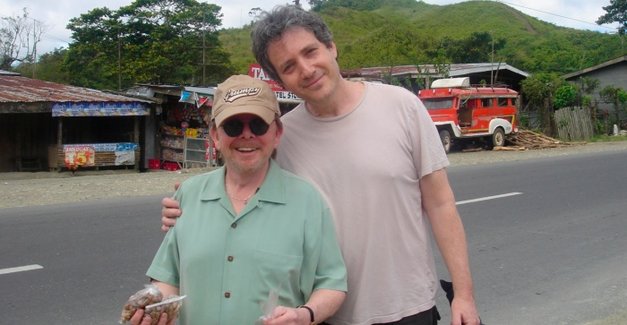
As time goes on, Williams eventually warms up to Kessler, and this becomes clear during a trip to the Philippines. Williams even encourages Kessler to join him in front of the camera instead of just staying behind it, and that is saying a lot. Now this might have proven disastrous as “Paul Williams Still Alive” could have ended up becoming more about the filmmaker than his subject, but Kessler’s increased involvement proves to be a major plus. The relationship between these two men helps to define Williams as he is today.
While Kessler constantly looks to the past, Williams only wants to look forward. The one scene which makes this clear is when Williams watches himself guest hosting Merv Griffin’s talk show. Clearly high on drugs and making an absolute fool of himself, the realization of what he was doing back then forces him to stop watching the rest of the footage. The person Williams was back then is so different from who he is today, and the pain which crosses his face over his embarrassing past deeds is impossible to hide.
Near the end, Williams gives Kessler a whole bunch of videotapes he has in storage, having no idea of what’s on them. One particularly disturbing video has Williams celebrating Christmas with his family, and then later going upstairs to film himself getting high. Watching this illustrates just how far down the songwriter’s drug addiction took him and, looking at him today, it’s almost like we’re looking at a completely different person.
It should be clear by now that Kessler is not out to embarrass Williams in the slightest. Instead, his intention is to bring the songwriter back to the world’s attention, and this is a noble intention indeed. Williams is the same man who wrote the song “Rainbow Connection” for Kermit the Frog, “We’ve Only Just Begun” for the Carpenters, and “An Old-Fashioned Song” and “Rainy Days and Mondays” for himself. Heck, he even did the music for “Emmett Otter’s Jug Band Christmas,” one of my favorite holiday specials ever.
Today, Williams continues to make beautiful music which deals with themes like love, loneliness and alienation, and he definitely deserves to be recognized for the countless music contributions he has given us. Maybe not everyone has forgotten who he is, but we do need to be reminded of what he has created.
Now some have accused “Paul Williams Still Alive” of not including more of his music, but this documentary is not intended to be a career retrospective. In actuality, it becomes more about how Williams is a better, not to mention a far more interesting, human being today compared to when he was an overindulgent celebrity. He has been clean and sober for over 20 years, and he is even a certified drug and alcohol counselor. Looking back, it seems as though he lives to be a counselor more than he wants to create new music, and that is saying a lot.
With “Paul Williams Still Alive,” Kessler has given us far more than the average showbiz documentary. He has given us an individual worth appreciating who, while having made some serious mistakes in life, has come out of it on the other side a proud and happy person. All of this is all accomplished without Kessler ever trying to be manipulative or play at our heartstrings unnecessarily. This is a warts-and-all documentary which doesn’t hide anything, and I came out of it with not just a deep respect for Williams, but also for his healthy perspective on life.
During a time which sees certain celebrities desperately grasping for whatever fame is available to them, here is one who has found the happiness we all mistakenly thought we would get when we became a super star in everyone’s eyes. In the end, “Paul Williams Still Alive” is more about what it means to be happy, and Williams has more than earned the happiness he has today. Like he says, he does not need “another cup of fame” to make him a satisfied man.
I have never been to a Rolling Stones concert before. Shame on me for constantly missing out on the opportunity to see them live. Every tour they go on always feel like it will be their last. Even if no one gets all that excited about their recent albums, no one would dare miss seeing them perform onstage. Years after they formed, they still sell out seats like crazy in concert, and some are willing to pay hundreds of dollars to get a decent seat. Heck, as long I have my binoculars with me, I am confident I can get a good view for less than what most people pay. But then again, I still have to spend a lot of money for even a crappy seat at a concert. Come to think of it, I haven’t been to a concert in a long time. Maybe I am saving up too much money!
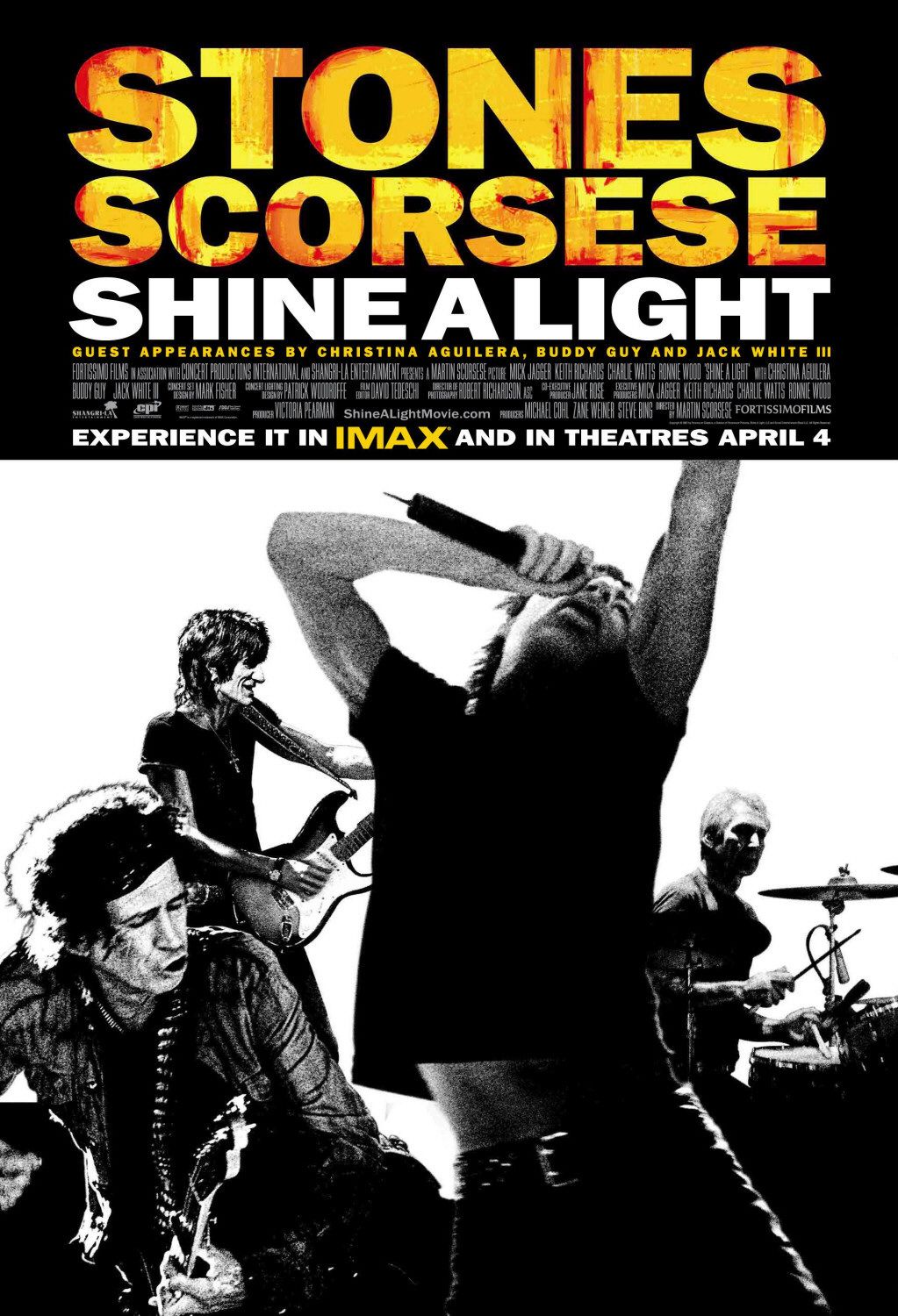
Anyway, I caught the Rolling Stones documentary entitled “Shine A Light” which was directed by Martin Scorsese. Not only that, but I saw it in IMAX where movie screens don’t get much larger, visuals are never more visually extraordinary, and sound systems capture every single sound no matter how small. At I write this, this may be the closest I ever come to seeing a Rolling Stones concert, but it was still quite the experience. Even after being around for 40 or 50 years, they still put on one hell of a show like few others can. The band members have been beset in the last few years with legal and medical problems. Drummer Charlie Watts had a cancer scare, Mick Jagger continues to father too many children, and Keith Richards continues to astound medical experts everywhere who expected him to be dead by now. But here they are, and they are rocking as hard and with as much love as ever.
Oscar winner Martin Scorsese (it is so nice to finally say this) is a master of musical documentaries, having directed one of the greatest ever with “The Last Waltz” which was about The Band at their very last concert ever and of how they (or Robbie Robertson anyway) wanted to get off the road before the road claimed their lives. “Shine A Light,” however, is not at a film about a band on its last legs. Instead, it is about a band which continues to play with the same love, passion and excitement they had when they started making music so many years ago. It is not an in-depth documentary about the band, but instead a celebration of one of the greatest rock bands ever and their music which even I cannot ever get sick of.
We see the band and Scorsese going over the details and where the cameras are going to be at this documentary’s start. There is even a moment where Scorsese is talking with Jagger via speakerphone and of how Jagger is worried all the cameras will be distracting not just to him but to the audience as well. Scorsese and cinematographer Robert Richardson don’t even get the set list of songs until just seconds before the show begins. Jagger and the band keep going over what songs to play, having so many to choose from. The one thing I have to give them credit for is how they don’t start off the show with one of their most well-known hits like “Start Me Up” or “Sympathy for The Devil.” I guess you could say it makes this more unique than hundreds of other concerts they have performed.
This particular concert was filmed at the Beacon Theater in Manhattan, New York over a two-night period. When “Shine a Light” starts, it only appears as a small square on the enormous IMAX screen. I thought to myself, why did I spend $16 dollars to see this in IMAX? I could have seen it on a regular movie screen and saved myself a couple of bucks, you know? We see the band meeting with Bill and Hillary Clinton and also with Hillary’s mom. Hillary looks very happy here, so this all happened before her current presidential election. This turns out to be quite the star-studded event as Bill Clinton introduces the band himself, as this concert is actually a benefit for the awareness of climate change (which is very real everybody). If you look closely enough, you can see Bruce Willis out in the audience wearing a yellow hat.
But then the concert starts, and the picture goes from a simple box on the IMAX screen to encompassing 100% of it. From then on, we are instantly taken in at how the Rolling Stones is one of the greatest rock bands of all time. They may be eligible for senior benefits, but you wouldn’t know it from the way they perform. During this documentary or concert movie if you want to call it that, we get to see footage of the band from the past. Between songs, we see Jagger in a black and white interview in which he admits how he is surprised the band has lasted as long as it has. And that’s after the band has been together for two years, and he thinks that they will remain together for another year at best.
Seeing the band come onstage and perform their hearts out is inspiring. Age has not affected their love and passion for music, and I think it’s what makes this documentary especially good. No, it doesn’t get deep into the personalities of the band members and what makes them tick. Still, it does show how, even in their old age, they play rock and roll brilliantly. Even Keith Richards, who always looks like he might just keel over any second, still plays the guitar like a master. One too many cigarettes has not taken away from this man or his singing, and he gets his on solo and sings to us like a well-seasoned blues man.
This concert also features some well-known guests performing with the Stones. Among them are Jack White of The White Stripes who sings along with Jagger on “The Loving Cup.” White is no slouch on the guitar or on vocals, but we should have known this after the albums “Elephant” and “Get Behind Me Satan.” But the big treat was when Buddy Guy, one of the great bluesmen guitarists, came out to jam with the band. Richards was clearly a big fan because, at the end of the song, he ends up giving Buddy the guitar he was playing on. You can even hear Richards telling Guy, “It’s yours!”
Even Christina Aguilera is here singing with Jagger to a song which was first written and performed before she was even born. I haven’t bought any of her albums, but there is no doubt she has one hell of a voice. Does she even need a microphone? Her voice alone probably powered the extremely bright lights at the Beacon. That’s how good she was when she sang with Jagger and the others.
Kudos also goes out to the Rolling Stones for being backed up by an array of fantastic musicians. Among them are Darryl Jones of Living Color fame who has been the bass player for the band for over a decade now. There is also the great piano player Chuck Levell, and you may remember him brilliantly stealing the spotlight from Eric Clapton on his Unplugged session on MTV. Granted, the Rolling Stones don’t need all these people to sell out shows, but it certainly adds to this cinematic experience.
Scorsese and Richardson do a great job lighting the band and keeping up with them as they do their thing. The other thing which really added to this experience was the sound system in the IMAX theater I watched this film in. On top of the pristine visuals, the surround sound stereo system sucked you into the experience and made you feel like you were part of the crowd. You felt like people were clapping to the left and to right of you, and even behind you. There were points where I started looking around me to see if the people in the audience were applauding, or if it was just the sound from the film.
This all reminded me of when I saw “U2 3D” a couple of months earlier on the same IMAX screen. The 3D effects made you feel like you were in the middle of the concert. When people put their hands up onscreen, I almost told them to put them down so I could see. Then I realized it was all onscreen and not in the audience. Even though “Shine A Light” was not filmed in 3D, it didn’t need to be. I got sucked into this experience to where you can say you really felt like you were at this concert. It was also a loud film too, and this made me wonder why I didn’t bring any earplugs with me.
In the end, I’m glad “Shine a Light” was not a simple documentary which delved into the psychology of the band members and how they survived the record industry and drugs. The movie is about the fact of after so many years, the Rolling Stones continue to rock harder than ever. This is as certain as Johnny Depp’s character of Jack Sparrow from the “Pirates of The Caribbean” movies was based largely on Richards. It does not, nor should it, matter how old these guys are, but that they rock on with the same love they always have had for rock and roll. You can hear it in their music and see it in their eyes. Jagger continues strutting across the stage as though he was still in his 30’s, Richards still plays the guitar without missing a beat, Wood plays a mean slide guitar, and Watts beats away at the drum as if nothing ever serios ever happened to him. Why does age matter when you have passion for what you do?
I hope I have the same love and passion in what I do as they do in music at their age. I’m pretty sure I won’t need a boatload of drugs to get there, and even Richards would agree with me on this. Or maybe not. I guess it doesn’t matter. Or maybe I should just shut up for now…
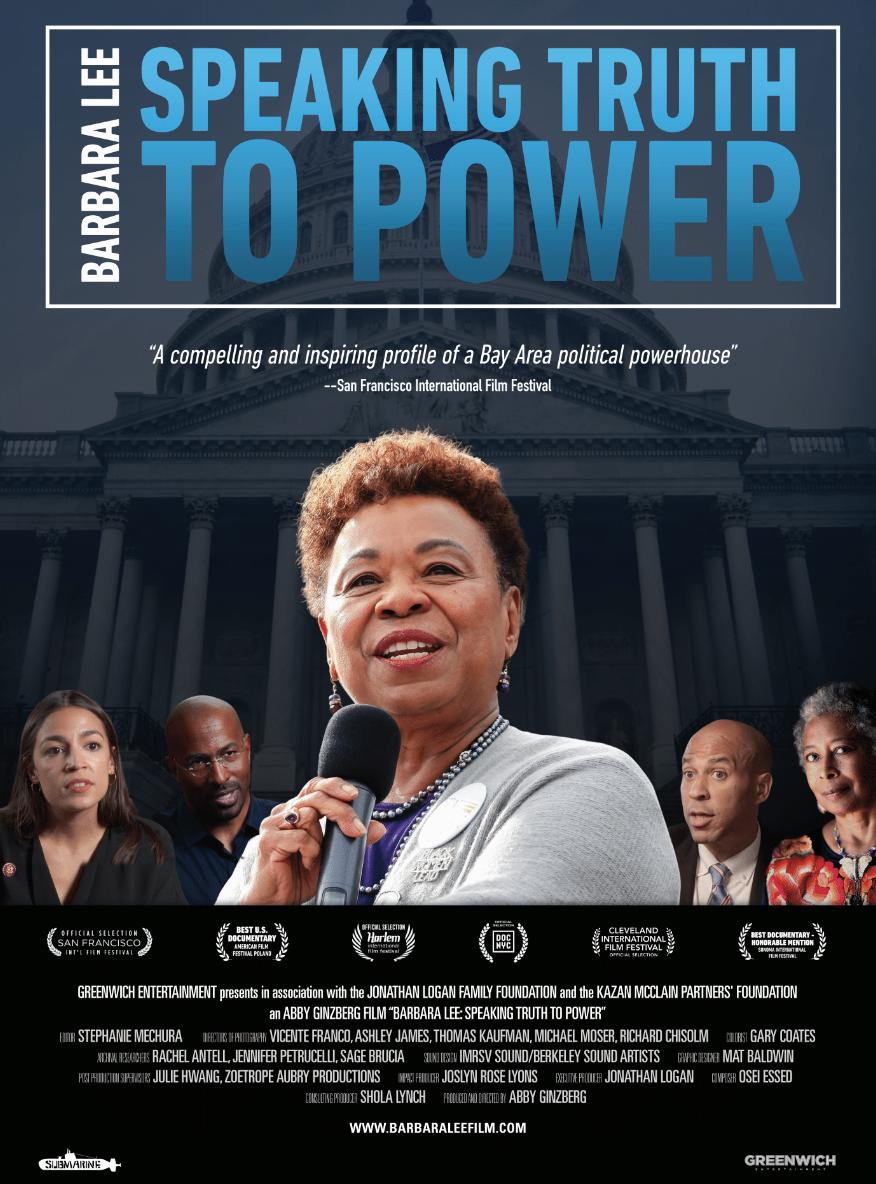
With “Barbara Lee: Speaking Truth to Power,” filmmaker Abby Ginzberg has given us one of the most memorable feature length documentaries of 2021. It introduces us to American politician and social worker Barbara Lee who currently serves as a United States Representative for California’s 13th congressional district, and this is someone we should now about. She has served in Congress for many years now and remains a strong voice for human rights, peace, and economic and racial justice in America and around the world. As Barbara’s story unfolds, we learn of her many experiences which shaped her life and beliefs such as volunteering for the Black Panther Party and escaping an abusive relationship. We also get testimonials from various politicians, journalists and other well-known individuals such as Cory Booker, the late John Lewis, Alexandria Ocasio-Cortez, Van Jones, Danny Glover and Alice Walker, all of whom cite her as a tremendous inspiration to them and others.
More importantly, Ginzberg shows how Lee has remained steadfast and true to her beliefs to where she is not worried about popularity. While politicians mostly vote along party lines and are more concerned with their corporate donors instead of their constituents, Lee is not one to merely obey those in power. This is made especially clear when we see her oppose George W. Bush’s resolution granting the President unlimited war-making authority as it did not include much in the way of specifics and was, as she put it, “too broad.” In addition, she was the only representative in Congress to vote against this resolution. While everyone else was beating the war drum, Lee did not succumb to the cries for vengeance as she issued this stern warning to her colleagues: “Let us not become the evil we deplore.”
I got to speak with Ginzberg and Lee recently about the making of this documentary. Ginzberg herself has been a filmmaker for over 30 years, and her movies are about tackling discrimination and the legal profession. Her works include “Soul of Justice” which is about federal district judge Thelton Henderson, “And Then They Came for Us” about the forced incarceration of Japanese Americans during World War II, and “Soft Vengeance” which documents the life of anti-apartheid freedom fighter Albie Sachs. With “Speaking Truth to Power,” she is keen in making Barbara Lee’s existence known to the world at large.
During this interview, the two discussed why this is not meant to be a chronological or linear documentary, Lee expressed her thoughts on President Joe Biden’s recent extension on the moratorium for renters, and they talked about what needs to be done about homelessness and the war on drugs in America.
“Barbara Lee: Speaking Truth to Power” will arrive in theaters on August 20, 2021. In Los Angeles, it will be playing at Laemmle’s Royal Theater in West Los Angeles, and there will be a Q&A with Lee and her son following the 4:30 pm showing on August 21st. In Northern California, it will be showing at Shattuck Cinemas in Berkeley, and at the Roxie in San Francisco. Barbara will appear at the Roxie after the Thursday showing on August 26th. It will play in theaters for one week, after which it will be available to stream on Amazon and iTunes.
Please feel free to check out the interview below as well as the trailer for the documentary. And remember, stay woke!
After a year and three months, I finally got the opportunity to sit in a movie theater, in this case the Nuart in West Los Angeles. While many seats were taped off as social distancing rules are still in effect, it was nice to sit down in one of my favorite places to be as I have been away from it for far too long. Furthermore, being able to take my mask off to enjoy buttered popcorn along with a Barqs Root Beer made the experience even more special as I had ever reason not to indulge myself in these things as I am trying to lose a few pounds to say the least.
The movie which finally brought me back into a movie theater was “Moby Doc,” a documentary about, and I quote IMDB’s description here, the “trailblazing electronic musician and animal rights activist” whose music we hear on the radio, in TV commercials and in movies, several of them directed by Michael Maan, every day, Moby. But while I went into this documentary thinking it would be the average kind of its genre, both Moby and director Rob Gordon Bralver have given us one which is intentionally defiant of normal documentary rules, and what results is something which goes far deeper than the average episode of VH1’s “Behind the Music.”
“Moby Doc” starts off with Moby in the present day talking directly to the camera about how we think if we have “the right amount of money, the right amount of recognition, you will find perfect human happiness. But I tried, and it didn’t work.” Not many artists who have been through what he has experienced in terms of finding fame and then suffering a precipitous drop from it can say this as their lives often get cut short at such a young age. Moby, however, has come out on the other side a humbled human being who has found a peacefulness and happiness in life which, as we learn, has often eluded him.
Through the use of animation, crude stick puppets and a troupe of actors Moby has cast to portray his parents, we learn about traumatic his upbringing was as his father ended up committing suicide by driving his car straight into a brick wall, and the relationship he had with his mother was dysfunctional at best as he could not always reach out to her the way he wanted to. What’s even worse is how years later Moby missed her funeral because he slept in after an evening filled with drugs and alcohol. Judging from the animated images shown to us in the aftermath, lord knows if he has yet forgiven himself for this transgression. Heck, I still am haunted by a memorial service I wanted to attend but didn’t as the dates got mixed up in my head. As a result, I still have yet to find any closure on it.
One thing I really liked about “Moby Doc” is how it shows the importance of the arts in a person’s life. Moby freely admits how the act of making music was like a “form of self-healing” to where I believe how it saved him. When it comes to things like music, acting and writing, they really do lift the spirits of those who feel out of place in a society which does not automatically welcome them. I hope those school districts which are considering cutting art classes from their curriculum will watch this documentary and think second thoughts about doing so.
Seeing Moby discover music and how to mix music together is done through the use of home movies which feature him during a time when he had hair. The time when he lived in an abandoned factory seems frightening as he recounts all the horrible things which happened there including people getting murdered, but we also see how he evolved as an artist and a musician in this space to where it makes sense how it provided him with some of his happiest memories in life. This is especially the case when he compares these memories to the times when his ever so famous, and those times cannot compare despite all the wealth and attention fame brought him.
When it comes to “Play,” which is still Moby’s best-known album, its success remains astounding as it came after one of his biggest failures, “Animal Rights.” He was on the verge of quitting the music business and getting a real job, something many artists would be quick to consider as a permanent defeat to their ambitions. But while “Play” started off as a slow seller, it emerged as the equivalent of the Energizer bunny as, while that one kept going and going, the album kept selling and selling and selling…
As Moby delves into the amazing success “Play” gave him, he also is quick to describe how his follow ups did not sell anywhere as well, and this led to an increased desperation in him which many of his friends came to see as a case of complete narcissism. There’s even a scene where we see Moby getting tortured as if he were like Bruce Campbell at the beginning of “Army of Darkness,” and a lyric from Eminem’s “Without Me” song keeps getting said over and over; “Nobody listens to techno!”
Throughout this documentary, Moby and Bralver keep pulling the rug right out from under us as they want to keep the audience off-balance, and it is like John Cleese whenever he is on “Monty Python’s Flying Circus” and saying at any given moment, “And now for something completely different.” Things move from one scene where Moby discusses his problems with a female therapist to another visual of him standing in a desert or some other isolated place to where we are reminded of how lonely fame can be.
Some may find the use of the various visual motifs and the non-linear style distracting or perhaps too artsy fartsy, but I found it to be extremely effective in digging deeper into Moby’s life as his work as a musician takes him out of his depressive depths to extreme success and then to devastating lows which made him consider suicide even at the height of fame. Thank goodness for us and him that windows in certain upscale hotels are not big enough for a human being to fit through.
But what really hit me hard about “Moby Doc” is when he talks about how he felt much happier creating music in the abandoned factory than he was when “Play” was selling millions upon millions of records. His point of how we strive for certain things like fame and fortune, thinking it will bring us the happiness which we believe is constantly eluding us, proves to be fruitless is something we cannot deny as he has seen it all and has come out of everything as a relatively sane human being, or as sane as anyone can hope to be in this day and age. It is this state of mind which not everyone gets to as many would be, as Paul Williams once put it, asking for a second cup of fame.
These days, Moby fights for vegans and has recently released the album “Reprise” which, as Peter Gabriel did with “New Blood,” contains orchestral and acoustic arrangements of songs from his long career. Some of those arrangements are featured here in this documentary, and they force you to look at his songs in a different way as not everything about them could have been seen on the surface.
It is nice to see an artist like Moby get a second chance in life. Some get so caught up in the realm of fame and fortune to where they cannot connect with any other human being in life, and this constitutes a tragedy which I hope people in general avoid. But while some artists like Amy Winehouse met a tragic end, he still lives on doing what makes him feel happiest and most fulfilled. Here is hoping others like him can see through the clouds and not get caught up in the shallowest of things.
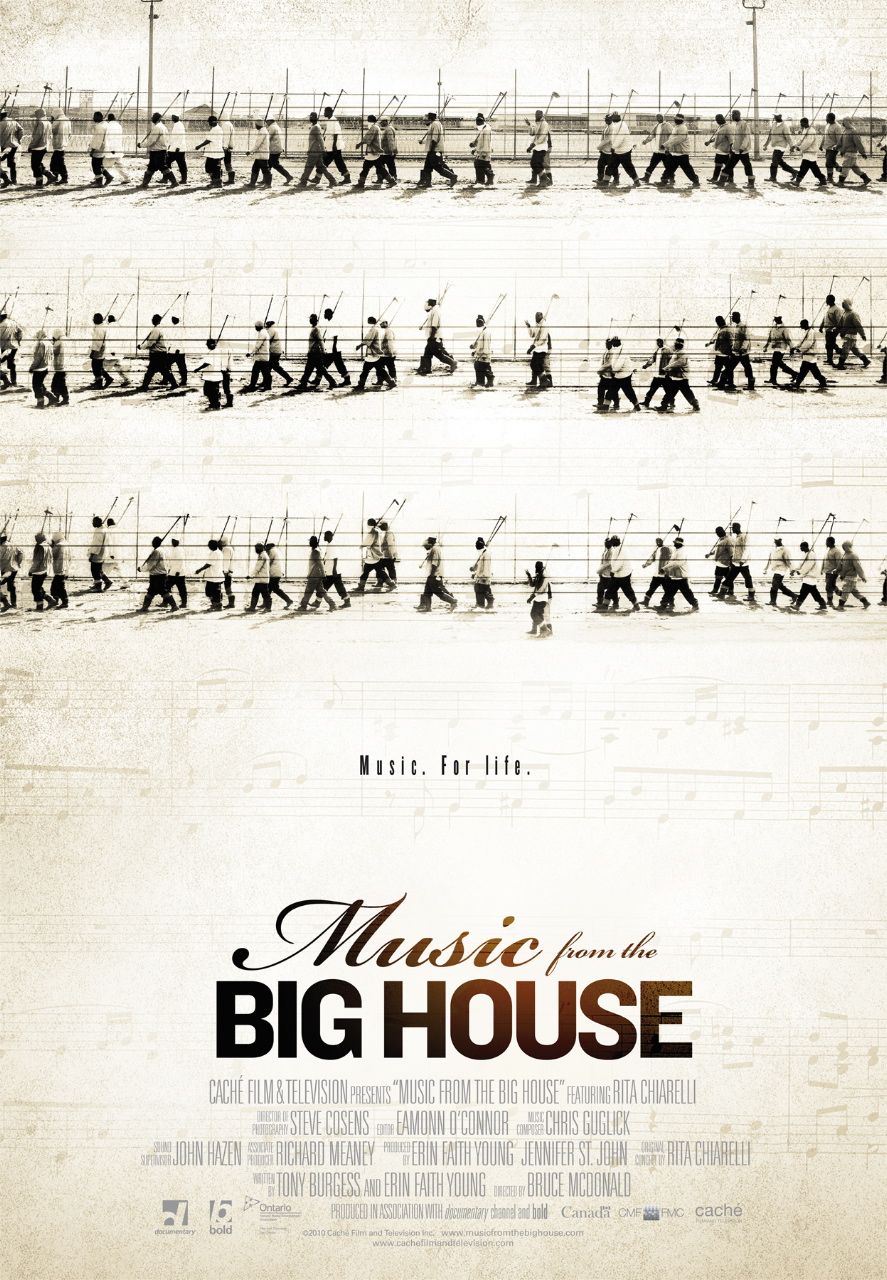
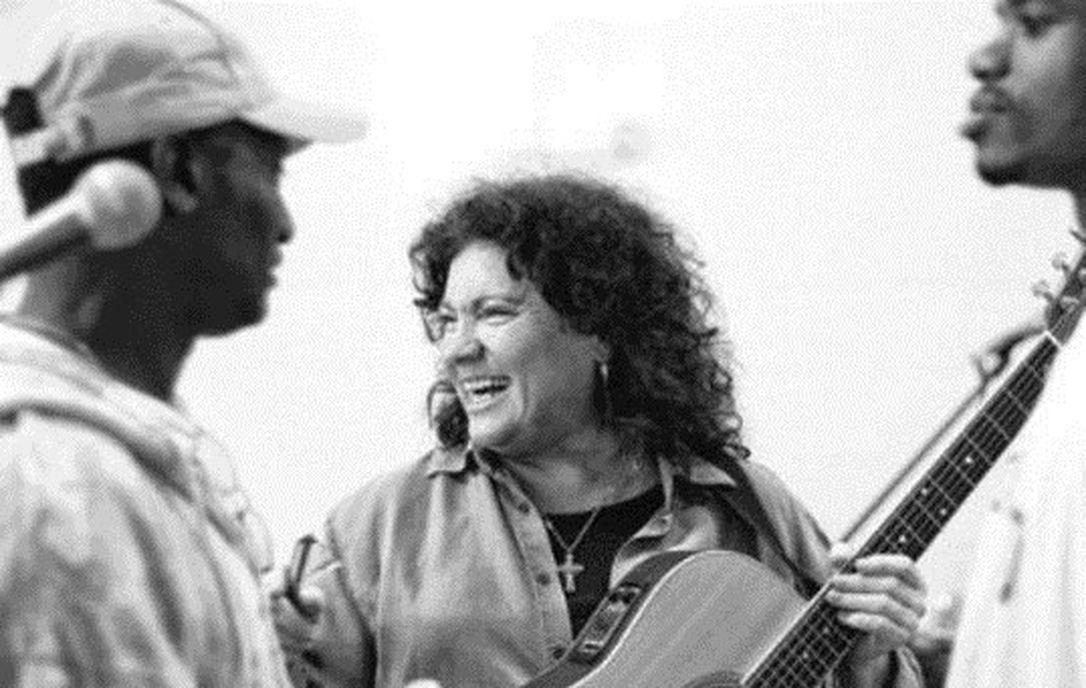
“Music From The Big House” follows Rita Chiarelli, or “the goddess of Canadian blues” as she is known, as she visits what is considered to be the birthplace of blues music: Louisiana State Maximum Security Prison (a.k.a. Angola Prison). What she finds once there is a number of inmates who have long since found solace through their love of music, and this leads her to stage a concert at the prison with them. But unlike when Johnny Cash did his performance at Folsom Prison, Chiarelli performs with the inmates instead of just for them.
Cinematographer Steve Cosens originally filmed this documentary in color, but the decision was later made to show it in black and white which suits this documentary perfectly. McDonald goes over the history of this prison which was at one time known as the bloodiest in America. The descriptions given to us of how it operated years before gives you a picture of what hell on earth must seem like. The fact the filmmakers and Chiarelli were allowed access inside this prison is amazing to say the least, and it almost seems like a miracle they made it out of there as well.
We get a chance to meet the individual inmates who end up playing in the concert, and they are a fascinating bunch. It is not until the very end when we are told what crimes they have committed which got them sentenced to time behind bars, and this was a smart move on the part of the filmmakers. By not learning of their crimes right at the start, we are forced not to judge them ahead of their musical performances. Some of them do allude to their crimes without too many specifics, and one in particular hints at how he isn’t apologizing for what he did because he’s not sure he is yet.
Some might consider this project to be a self-serving one for Chiarelli so she can get good press and sell a lot of records, but that is not the case. Her love for blues music is never in doubt, and those who have seen her perform live can verify what a powerful musical presence she can be. Those not familiar with her work will be blown away by her performances, and there is no forgetting her once the lights go up. There are also moments where Chiarelli questions why she is doing this concert as she’s not blind to what these felons have done to earn long prison sentences. Still, none of it deters her from performing with them in what turns out to be a joyous occasion, and the kind many do not expect to see from hardened inmates.
Speaking of the concert, we do get to see a lot of it here. The musical numbers are utterly invigorating, and the audience I saw this documentary with couldn’t help but clap along with the music. They even applauded at the end of the songs and for good reason; the music is incredibly thrilling to take in even if you are not a fan of the blues. I haven’t been to many movies over the years where the audience really got into what was onscreen, so this is not a cinematic experience I am going to forget any time soon.
“Music From The Big House” is one of those small movies, let alone documentaries, which deserves a bigger audience than it has already received thus far. While you could just get away with buying the soundtrack (and please do buy it), this documentary invites more than one viewing, and it would make a wonderful double feature with the Talking Heads concert film “Stop Making Sense.” You will not be able to keep your feet still while watching either film, nor should you.
WRITER’S NOTE: This article is about a screening which took place on June 13, 2012.
Canadian blues artist Rita Chiarelli made a special appearance at the Aero Theatre in Santa Monica to talk about the documentary “Music From The Big House.” Directed by Bruce McDonald, it follows Chiarelli as she goes inside the Louisiana State Maximum Security Penitentiary to perform with inmates who share her love of music. Chiarelli’s appearance was part of her tour with the documentary which has her traveling to 60 cities in 70 days for post-screening Q&As and performing the blues, and she blew us away with what she had to say as well as her music.
Moderating the Q&A was Richard Matson of Matson Films, the company distributing “Music from the Big House” in the United States. His first question for Chiarelli was how she managed to persuade the prison to let her in, and she said she had to be “very charming.” She admitted to having many meetings with the warden and other prison officials in Louisiana and managed to gain their trust over time. Putting it very bluntly, she said, “They let me in… and they also let me out.”
One audience member asked why the documentary was shot in black and white, and Chiarelli said cinematographer Steve Cosens originally shot it in color. However, it was decided later on to take the color out as everyone thought this was really how the movie should be seen. The way Chiarelli says she saw it, black and white “carried the story more” and made it “truer to its meaning.”
Chiarelli also added how the whole documentary was shot in just two and a half days and that everything done “was a first take.” Everything we saw on screen was “totally how it went down.”
Another person asked why the prison had so many African-Americans and young men incarcerated there. Chiarelli responded that 80% of the population in Louisiana is black and added “whatever that speaks to, that’s what’s going on.” She also said the laws in Louisiana are “very strict” and that it is the only state in America which still operates on the Napoleonic Code which allows more in the way of judgment calls than anything else.
One thing I wondered about, as did others, was why the crimes these inmates convicted of and serving time for were listed at the end of the documentary. We don’t know exactly what they had done to be behind bars while watching, but we do get hints at times of what landed them there. Chiarelli stated this was done so we “wouldn’t judge them before meeting them.” She and McDonald wanted us to meet the inmates first, get so see them in their present state and show how their love of music elevated their souls, and then we got what she called the “nitty gritty” of their crimes.
Chiarelli said she found it hard to ask the inmates what they did as it felt “rude to ask.” Her hope was they would eventually “open up by choice” and they would trust her and the filmmakers to tell their story.
Chiarelli finished her evening at the Aero Theatre by performing some songs from “Music from the Big House” live, specifically “Rest My Bones” and “These Four Walls” which she wrote after the making of the documentary was completed. She certainly has a great set of pipes on her, and her passion for blues music is beyond measure. It is this same passion which is shared by the inmates onscreen, and it makes for one of the most exhilarating musical documentaries you could ever hope to see.
Now I am sure many of you have long since become familiar with this story. On October 13, 1972, a young ruby team from Montevideo, Uruguay, boarded a plane which was going to take them to a match in Chile. Their plane ended up crashing on a remote Andean glacier, its fuselage torn off and wings shorn. Anticipating they would be rescued, they waited in the snowy wreckage for help, but none came. When they ran out of food, they were forced to eat from the bodies of those passengers who had died. Eventually, two passengers managed to breach the treacherous Andes Mountains and brought help to their teammates left stranded in what was left of the plane. Out of the 45 passengers on that plane, only 16 survived. They were stranded on that glacier for 72 days. The fact any of them survived is nothing short of a miracle.
This story caused a sensation when first presented on the news, and many focused more on the sensational aspects of what happened, namely the cannibalism or reports of it. It was later documented in the 1973 bestselling book “Alive” written by Piers Paul Read. I have not read the book, but I did see the movie it was based on back in 1993 which starred Ethan Hawke. I remember watching it with my brother, and we both dug the seriously nasty plane crash which opened it. The movie was okay, but even with a screenplay by John Patrick Shanley of all people, it got weighed down by an endless variety of clichés. There did not seem to be any real tangible way to really get at how those rugby players truly felt while they were stranded on a glacier which they seemed destined to die on. How could they anyway?
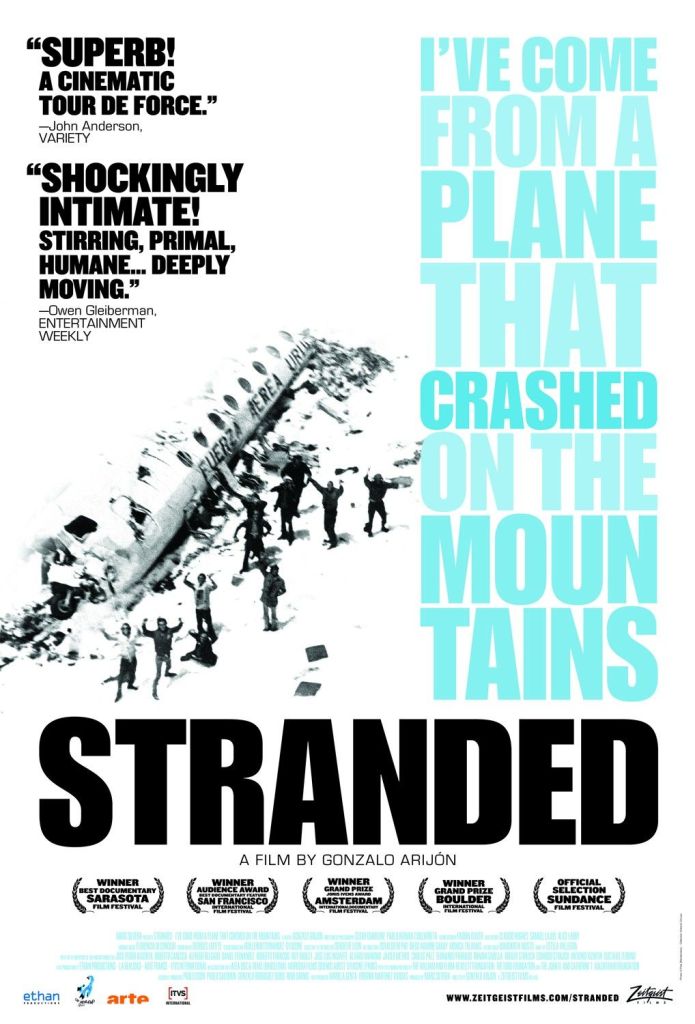
Decades after this plane crash occurred, we got a documentary about it entitled “Stranded: I’ve Come from A Plane That Crashed on The Mountains.” This one has the advantage of having all the survivors from the crash participate participating in interviews in which they recount all the horrors they were forced to endure, and it was directed by a documentary filmmaker who also happened to be a childhood friend of theirs, Gonzalo Arijon. Through archival footage, interviews and reenactments of the events, Arijon succeeds in creating a shockingly intimate look at what these people went through in order to survive, and it puts us right into the mindset of the survivors in a way no movie or book, however well written it was, could. It proved to be one of the most astonishing cinematic portraits I have ever seen about survival, and it has stayed with me ever since I first watched more than a decade ago.
A documentary with reenactments almost sounds like an oxymoron. Certain other documentaries like “American Teen,” which came out in the same year, have been accused of restaging events that happened to the people, and it threatened to take away what felt truly real about it. The director of the movie, Nanette Burstein, admitted to restaging one event regarding a text message, and it did make for a good emotional moment, and I really do not blame her for doing so. I bring this up because the reenactments and restaging of events in “Stranded” serve to illustrate how incredibly desolate the circumstances were for these people, and they are necessary to show the way they survived. Plus, there is not a lot of archival footage for Arijon to work with, and without the reenactments, I am not sure he would have had much of a documentary.
The archival footage consists of photographs which were taken before and after the crash, and they are haunting to see as they show who these people were and what they ended up becoming. There are also some interviews shot with the survivors after they are rescued, and the audience reacted strongly when the interviewer asked them how they managed to survive. Their response to this at a later news conference brilliantly spells out why they did what they did.
The issue of cannibalism, if you really want to call it that, is handled very sensitively here. The reactions of the survivors to eating the flesh of those who have died goes through a variety of emotions from revulsion of even thinking about it to determination to survive and see their families again. But in the end, who are we to judge them for what they did? These were people pushed to the brink of madness and did whatever they could to survive, and “Stranded” puts us right in their mindset as they made their decision to eat from the bodies of their teammates. Do not even think you would have done things differently because you have not been through what they had. If you want to get cynical about it, those teammates were already dead, so they did not have a lot of say in the matter.
But the most astonishing moments in “Stranded” come from the survivors themselves. Their recollections of what they went through are still very vivid to them to this very day. The participation they gave to this project was invaluable, and we see them with their spouses and children as they go to revisit the site of the crash and go over what happened with them. What they do here is very brave, and their willingness to talk about what went on is beyond commendable. While this documentary may seem more about death than anything else, it is really more about survival and the power of the human spirit. It is also about the power of friendship and how indestructible it can be even in life’s worst moments.
With the aid of Arijon’s work, we see specifically how the survivors remember all the details of what happened. We see them lose their friends and of how they died, and of the ways they survived which included punching each other constantly so the blood would circulate better in their bodies. The moment we see those three men, which later became two, breach the Andes Mountains, we feel their desperation as well as their dwindling feeling of wanting to survive. All of these elements provide us with the most intimate portrait of this plane crash they could ever hope, or want, to get.
2008, the year in which “Stranded” was released, proved to be a tremendous year for movies set in the coldest of environments. During the summer, we got “Frozen River” which took place in the subzero weather of upstate New York. A few months later, I watched “Let the Right One In” which observed the tender relationship between a young boy and a female vampire in a frigid suburban neighborhood of Sweden. The details of these ferociously cold climates are almost completely dwarfed by the barren coldness which this documentary focuses on. Some of us are spoiled by the elongated summers we have in certain parts of the United States, but nothing we have experienced thus far will ever seem as cold as it is here.
“Stranded” gave me one of the most powerfully absorbing cinematic experiences I back in 2008. It is at turns thrilling and harrowing and, in the end, it is utterly inspiring as some of these passengers just refused to give up and die. Gonzalo Arijon brilliantly succeeds in capturing the events of this situation in a way no other filmmaker could, and it will stay with you long after you have finished watching it.



 The Ultimate Rabbit